Dagobah: The Longest Night of my Life

Planning ahead for Italy this April has got me thinking about the last time I travelled solo, now almost a decade ago.

When I was eighteen years old, my mother gave me a copy of Laurie Lee’s As I Walked Out One Midsummer Morning and a map of northern Spain. I joined the dots and bought myself a one way flight to Santander, planning to walk south as he did, until I reached the Mediterranean Sea.

It didn’t exactly pan out like that, but it was and is to this day one of the toughest and most formative adventures I’ve ever made in my life.

Travelling solo is not for everyone. You’ve got to be comfortable with your own company for long periods of time. You have to be able to think on your feet and adapt to whatever happens around you, because nobody is going to look out for you but yourself. Most importantly of all, you need to be brave. You’ll hear plenty of stories about the kindness of strangers, but nine times out of ten, it’s a case of shy bairns get nowt; if you aren’t prepared to talk to people, the loneliness birds will start to circle.

That’s what happened to me, all those years ago. My Spanish was good – more than good enough to hold my own in a conversation – but my courage was lacking. The bottomless charisma that comes almost by osmosis from working in a private school hadn’t sunk in yet, and I would have rather bitten my own tongue than enter into a conversation with a stranger. Consequently, I spent the greater part of those four and a half weeks in what can only be described as a state of monastic silence.

As a rule, I’ve tried to find a travel partner on every adventure since, as there are few things more reassuring than good company on the road. Back then, halfway through my gap year, I was cut off like never before: everybody I knew was either at university, at work or halfway across the globe on gap years of their own. So I didn’t have much choice.

I was young, inexperienced, and woefully naïve about how much I ought to be spending daily on food. Little wonder, then, that when I came home I was dangerously underweight. That first encounter with solo travel taught me a lot, but most of all it taught me never to skimp on food. Ever.

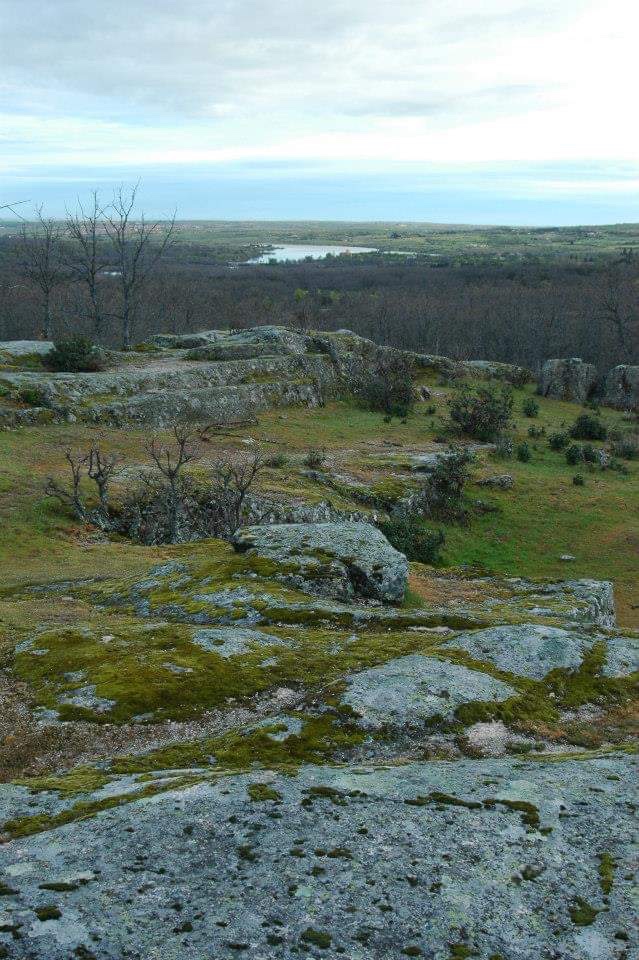
Looking back, it’s so easy to focus on the negatives, largely because of how didactic they all were. One stands clear above the others like a lonely mountain. Sleeping rough in the mountains above Madrid with nothing but a sleeping bag and a rucksack for a pillow. That endless night will be with me forever. Let me paint it for you.


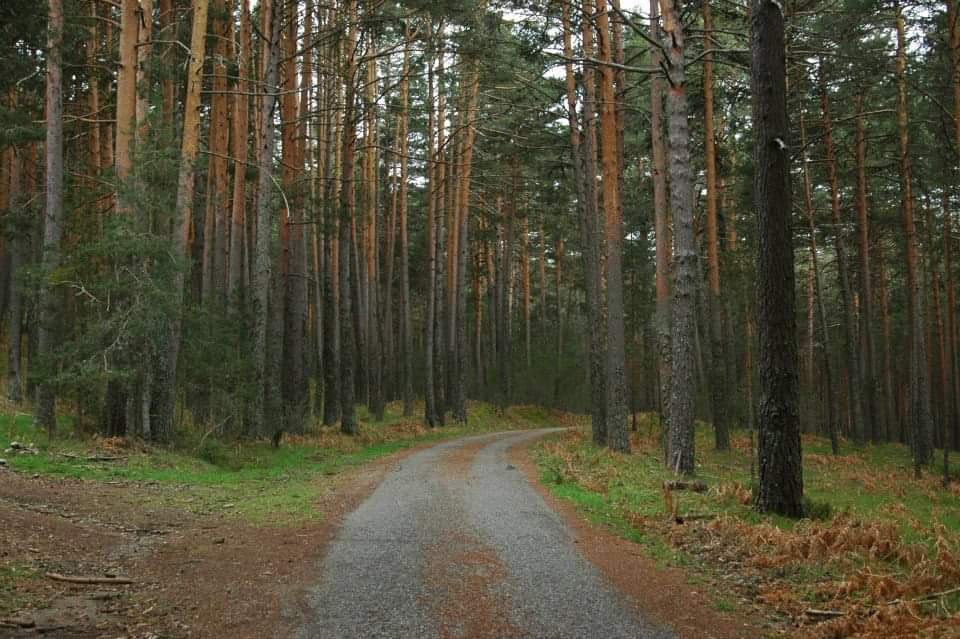
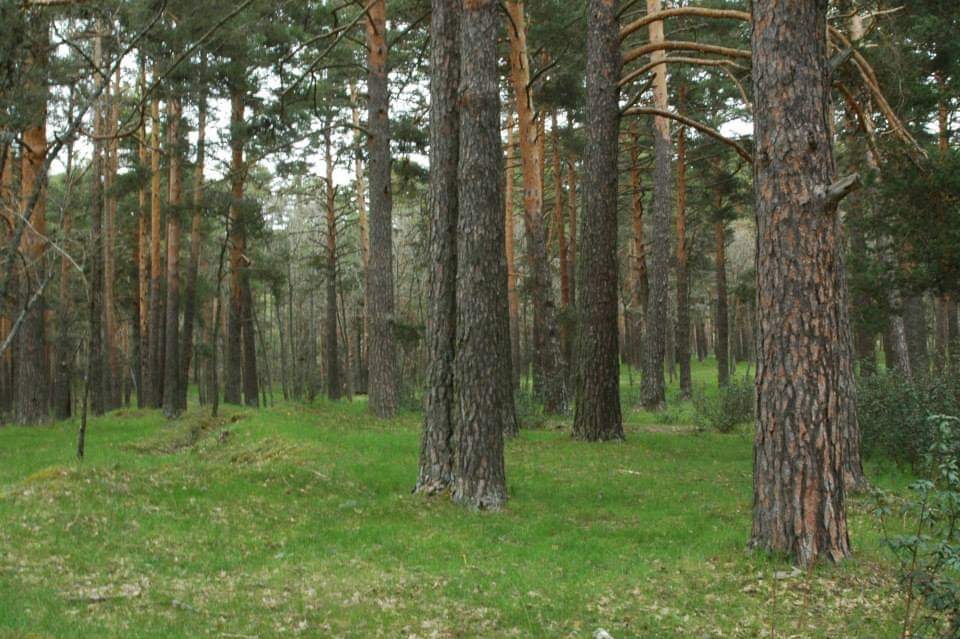
Picture it. A patch of relatively stable ground in the heart of a dark pine forest, on the lower slopes of the mountains. At least two hours’ walk from the nearest settlement. Pine needles where the grass doesn’t grow, and the roots of the trees poking out of the ground here and there like toes in the sand. The light fading as dusk sets in, no sunset, just a gradual darkening of the grey light between the trees as the world before your eyes starts to fuzz and crackle like static on an old television. From somewhere far off, a raven croaks, and once or twice, an owl.

You put your head on your rucksack and try to shut your eyes, but sleep doesn’t come. Maybe it’s because it’s still light out there. Minutes feel like hours. You turn on your iPod and ration a few songs to pass the time. Maybe fatigue will get you in the end. But it doesn’t.

Night falls, but there’s no moon. The ground under your sleeping bag is cold. Wet. It sinks through the lining and into your skin. Your teeth are chattering. You put on all the clothing you’ve brought; three layers of socks, two sweaters and a makeshift scarf. It doesn’t stop the chattering. Then there’s the gentle sound of rain as the clouds roll across the mountainside, scattering water through the trees.

You check your watch. It’s only been twenty minutes. It’s still only just after nine o’clock. Most Spaniards aren’t even in bed at this time. You ration some more music.

The darkness is almost absolute. You can only just make out the silvery light of the trunks of the nearest trees, lit by the ghost of the moon, buried deep in the clouded night. The patter of rain echoes through the whole forest.

Suddenly, a harsh bark breaks the silence. It shouldn’t scare you out of your wits, but it does. You freeze, listening, half expecting – wait! There it is again. It’s a roe deer, you know that. You’re sure of it. You’ve heard that barking cry so many times before back home. It’s just a deer. Harmless. But what good is that knowledge when you’re wrapped up in a sleeping bag, alone, and nobody knows you’re up there? And what if you’re not so sure? What if it’s something… else?

It’s funny how the mind plays tricks on you in the darkness. How quickly you can unravel. For a time I am certain I had managed to convince myself it was not deer but wolves I was hearing – that ancient terror of the deep forest that all of us carry, buried deep inside.

The barking goes on for hours. Or maybe minutes. The minutes feel like hours. The hours feel like days. Time seems to have slowed to a crawl. The night is endless. No moon, no stars, no light from the distant towns. Just the static darkness that creeps through the trees, and the rain, the endless, endless rain.

You count the barks. You count sheep. You call home, consider bailing there and then. You talk to yourself, argue with yourself. You turn to God, perhaps for the first time. You swear. You laugh. You cry. You drain the iPod to zero to keep your spirits up, trying not to picture the prowling things between the trees that your eyes are so keen to paint.

Sleep is fleeting: a minute or two of semi-consciousness here and there, leaving you more and more tired, and yet less able to find that rest you now desire above all things.

And when the dawn comes, that first blessed grey light between the trees, you don’t even care anymore how little you’ve slept. You hardly notice the gnawing aches in your legs, or the numbness in your teeth from all the chattering. You’re just overjoyed to see the light once again – because there’s a magic in the dawn that is timeless. The darkness is on the run, and there’s a new day on the way. Dawn was ever the hope of men.

Looking back now, there’s so much I didn’t do that I know I should have done. I didn’t tell anybody where I was going. I didn’t pack enough food. And any of you with even a little camping experience will have spotted one glaring absence: never mind the obvious lack of a tent, I didn’t even bring a roll mat. No wonder I spent the night shivering.

One thing’s for certain: there’ll be no repeats of that night in the Guadarrama, not in Italy, not ever. I’ve had some long and painful nights in my life, but that one stands head and shoulders above the others. I don’t think I’ve ever felt more alone. But that makes it all the more powerful a memory. It’s a lightning-rod for my fears. Whenever I’m feeling down for whatever reason, I think of that night in the mountains. I was miserable, I was lonely, I was terrified – but I survived.
In the old Star Wars stories, Master Yoda went into exile on the swamp world of Dagobah, a planet with a strong connection to the dark side of the Force. Hubris had laid his order low and taken everything from him; only by humbling himself in isolation and communing with the dark was he able to understand it – and, in so doing, learn to rise above it all.

At some point in our lives, we all need to be brought to our knees, if only to understand who we really are when it all falls apart. I wouldn’t say I look back on that night with pride – the whole enterprise was nothing short of madness to begin with – but it did settle once and for all what I believed.

Darkness is not something to run from. It cannot be escaped. There’s darkness in all of us, as sure as shadows lengthen in the light. But, like a shadow, it must be faced head on if you would not be afraid. We have to confront our fears if we wish to understand them – and to understand how we react it to them. And to face your demons, whatever and wherever they may be, you need your starlight. I call that starlight Hope.

Hope and despair. The light and the dark. All that I am today is built on that bedrock. Hope is my raison d’etre, my polestar, my core value if you will, and it was forged in that endless night on Guadarrama.

Travelling alone can be tough – especially if you’re inclined to sadistic escapades like sleeping rough in the mountains like I was – but I can think of few better ways to find the meaning of life.

And if you’re wondering why I put myself through that ordeal, there’s a perfectly logical answer: there’s a chapter in my book where my protagonist is abandoned in the wild, and my English teacher once told me to “write only about what you know”! The things we do for art…

I don’t expect anything nearly as dramatic in Italy. Heck, I’m mainly going to fill some pages in my journal. But I am going with a hopeful heart once again, to feel that brush with the world beyond.

And to find a better Margherita pizza than the ones they make at Lirios. Maybe. BB x
Island

It’s going to sound strange, but one of the hardest things about working in a school for me is seeing so many groups of children buddying up, being the best of friends and generally having a wonderful time of it. It’s heart-warming, soul-stirring… and also a little sad, when I stop to think about it. It makes you reflect a lot. Of course, there’s the odd kid like me in the ranks, but they’re (fortunately) very much in the minority.

Let me tell you what I mean.

School is a transitional stage. A crucial stage in life, granted, but a fleeting moment in the blink of years. The friends you make at school are, in all likelihood, bound to slip away into the ether over the years, like treasured childhood toys. Those that stick around are the fruit of a particularly strong friendship, and I don’t think it would be too far-fetched to state that that kind of friendship is slipping away too in the digital age, when anyone and everyone is attainable at the touch of a button. Nothing that’s precious is that easy.

Like I said, transitional. Your classmates are seldom your friends for life, especially if you move away. So it’s hardly practical to feel a little envious of the friendships your students have… Right?

Nonetheless, I confess that I do. Teaching brings you into contact with so many amazing, bright young things. Kids that make you laugh. Kids that make your heart melt with their kindnesses. Kids that blow your mind with the things they know. There’s more than one student of mine I’d point the finger at and say to myself ‘I would definitely have hung around with him if I went to school with them’.

This attitude is more than partly my fault. I’ve been a solitary individual since I was tiny, knowing myself better than I ever knew anybody else. That was probably born out of stubborn selfishness, but it’s developed into a keen understanding of my limits, my desires and my needs that I’m truly grateful for. That, paired with a blunt adherence to the honest truth, no matter how painful, doesn’t necessarily make for good friend material. But then, neither does the mindset; the constant searching for a best friend, that most unattainable of treasures. I don’t half wonder whether, like I did with my Princess, I set my standards too early on with the equally fictional Gabriel.

Growing up in a village was a major roadblock, unassisted by the fact that I went to a grammar school miles away, with the result that all of my friends lived on the other side of the county. My little brother managed it. I didn’t. There were certainly no kids in my village that I knew well enough to call ‘friends’; the few that I did know vanished one by one in an absurd streak of bad luck, and those left closest to me in age were the ones who chased me out of town once when they saw me out and about with my camera.

I wasn’t a loner. I always did have a large circle of friends, about whom I could flit easily. But I don’t know whether I ever truly fitted in. A social chameleon with a painful self-awareness. In those circles I usually played the role of second-fiddle, third wheel, the one on the outside looking in. The tag-along to a pair of solid mates. The boy in an otherwise all-girl friendship circle. The singleton in a group of couples. A constant crush of ‘Do you ever feel left out?’, ‘Is it them or me?’, ‘What am I doing wrong?’. I was doing a lot of running away back then. What I needed was a male role model, a camaraderie. Something to glue the works. My dad’s operatic circle and disinterest in outdoor activities hadn’t left me with the best preparation for the masculine environment of an all-boys school, even a long-haired, arty grammar school for boys.

Estranged at the age when sex, cars, football and a dozen other deeply uninteresting things became the talk of the day, I gave up on men and turned to women in search of a best friend. My justification was that the conversation level was generally better. I stand by that.

I guess I messed up somewhere. I surprised everyone by dating a girl and ‘not being gay after all’. I lost her for reasons beyond my control. In that year and a half – two, if you count the moping – I managed to ignore my former companions and lost out on the solidification of lasting friendships. I was left floating and I had nobody to blame but myself.

Here I am, seven years later, still floating. I’ve met so many wonderful people and made so many amazing friends, but that mythical best friend continues to elude me. That person who is always there. The one that makes me laugh. One I can always rely on. One who understands my passions and my many idiocies and can counter them or let me learn from my own mistakes when needed. There are at least three people in my life who answer to that description, and one of them is my mother, but my life choices have separated me from them for the foreseeable future.

My problem is that I think too much. I know me, and so far knowing myself has led me to distance myself subconsciously over the years in the knowledge that one day I’d be leaving England for my grandfather’s country. It’s made me isolate myself for my own good and prevented me from ever desiring or even understanding any kind of relationship that lasts less than forever and involves less than total trust. I’d like to blame a handful of people who openly told me they couldn’t trust me as a kid for that last one. But I am what I am, and what I am needs no excuses. Take it away, Gloria Gaynor.

I expect it’s the final hurdle that’s brought on this wave of introspection. What I should really be doing is packing, or better still working out what I can chuck so that I can feasibly get everything else home. Stuff. It truly is the bane of our lives. BB x

The Many Faces of Lisbon

For a city that’s only a few hundred miles from the Spanish border, Lisbon and its environs could hardly be less Spanish. I guess I naively went in expecting Portugal to be no more different from Spain than, say, Germany is to Austria, or England to Ireland. Once again, yours truly demonstrates his supreme capacity for some Langton-style bullshitting.

This is a very last-minute holiday, even by my standards. Bus tickets bought, hostels booked and maps drawn less than twenty four hours before departure. And this time I don’t even speak the language. Either I’m getting more confident or more careless. So far, so good, so I’ll assume the former.

Lisbon is really quite something. As capital cities go, it’s a treasure. It’s not too big or crowded so as to set a country bumpkin like me off, and it’s not too small so as to be lacking in life or things to do either. On the contrary, for its size, it’s positively crammed with interesting sights to see. And with the Lisbon Card on hand – a natty little device that gives you free access to all forms of public transport for one, two or three days – getting around the place couldn’t be easier. Heck, it’s even entertaining to ride the Metro just for the sake of it, with that kind of freedom.

It’s also a tantalizingly great location for one of my favourite hobbies: people-watching. Capital cities tend to have a wider racial mix than country backwaters, so this is something that never fails to amaze me, but Lisbon’s got a damned beautiful pot-pourris of ethnicities going on. West African immigrants, in all their multicoloured splendour, rub shoulders with Berbers from the Rif and the Portuguese themselves, who are surprisingly different from their Hispanic neighbours. Beetle-black eyes, lemon-gold skin and blonde hair are a lot more common here than the dusky Moorish beauty of the Spanish south. As in Extremadura, I find myself trying to imagine these people dressed in seventeenth century clothes, wandering the streets of a pre-earthquake Lisbon or setting foot on the shores of the New World and beyond in the Age of Discoveries.

Forgive me that splurge into racial obsession. I’ve always been hooked on the beauty of the various peoples of our world. For every shade except my own, in fact. A reverse racism in the truest sense of the word. Fortunately, I’ve since learned to love my own nation for all its flaws, recognizing my angst for what it was: angst, some dim leftover from when my ego was torn to shreds in the wake of my first relationship. The healing process sure has been long enough in the completion.

Lisbon, Benjamin. You’re supposed to be talking about Lisbon.

I took a train out of town to the former royal retreat of Sintra, up in the mountains above the city. Once again you’ll find yourself in a world away from picture-book Iberia: with all the pine forest-covered granite slopes and the pink and yellow spires of the Neuschwanstein-esque follies poking out of the trees like decorated Turkish delights,  you might as well be in Austria. That, and Portuguese sounds decidedly Eastern European with all those zh and sh sounds. The gigantic überfolly that is the Palacio de Pena, the last word in Romantic architectural orgasm, looked just too ridiculous to be true on arrival, so I settled instead for the Castelo dos Mouros, the old Moorish lookout sat astride the Boulder-strewn hill opposite. Sometimes it’s simply easier to stick to what you know.

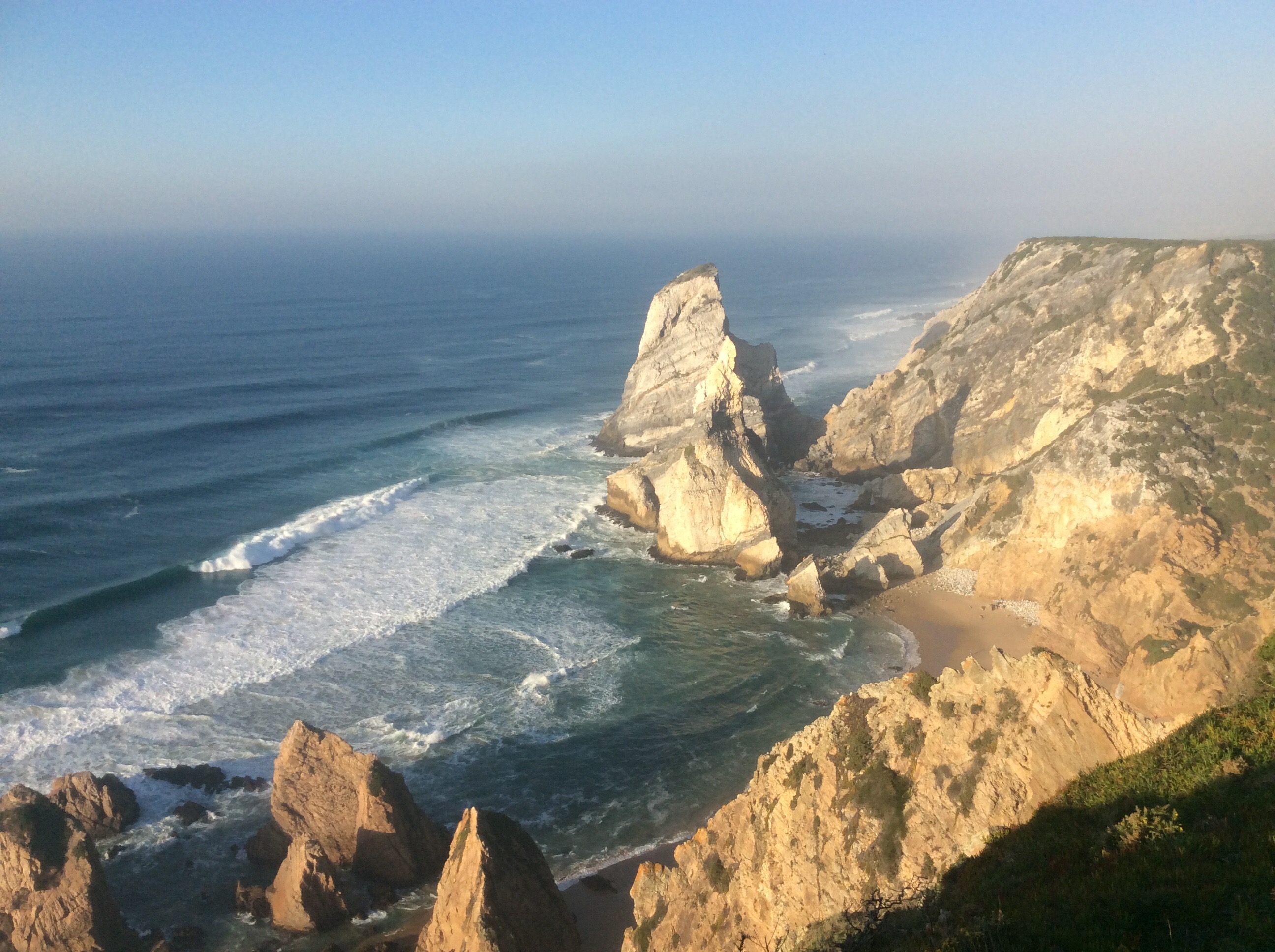
Best moment of the day goes to my main reason for coming this far west: not for Lisbon per se, but the windswept cliffs of the Cabo da Roca, Europe’s most westerly point. The headland itself was crowded – it being a gloriously sunny Saturday afternoon – so I wandered off in search of one of the cliff top trails. But for a couple of abandoned motorbikes, a young couple braving the steep, winding track down to the beach and a man piloting his camera-drone over the cape, I had the coast more or less to myself. It’s funny how most people rarely stray beyond the main sights, especially when the outskirts are almost always far more rewarding. See below if you don’t believe me.


Stunning. The sunset itself, salmon-pink and ablaze, was twice as beautiful again. The trouble is, it’s one thing to look on such beauty alone and quite another to have somebody to share it with. Here at the Cabo da Roca, as in Sintra, and on the train, and the Metro, and the banks of the Tagus, and every row but mine on the bus from Spain, I find myself looking out on a world of couples from my island. A decent half-hour’s meditation on the clifftop helped to doctor my heart a little, but it’s an unavoidable fact that humans are sociable creatures. We’re not supposed to be alone. Traveling is my primary means of fighting back against a world that rejects or friend-zones me at every turn, but it’s not supposed to be that way. So there, high on the cliffs, I contented myself with writing an imaginary letter from my princess to her lover. One day, if I should be so lucky, I’ll find the One who’ll hit the road with me. One day

Lisbon, Benjamin!

Shaking off the loneliness birds, I decided to investigate the famed brilliance of Lisbon nightlife. It’s definitely worth sampling, if you’re ever in the area. I suppose it’s no different than what you might find in London or Paris, but it blew me away. And let me tell you, after two and a half months of Reggaeton, it was a dream come true to have some Justin Timberlake, Uptown Funk and Notorious B.I.G blasting through the speakers. I ended up in a dance-off with a group of Guineans and it was insane. You know you’ve made it in dance when a black guy commends you on your moves. Box ticked.

Oh! But here’s a funny story for you. This ought to lighten the mood. You see, in a town the size of the one I live and work in, everybody knows everyone else, and the general atmosphere is overall more familial than friendly. And since I’m a rookie to city-hopping, I’m guilty of several major faux-pas, like putting my shoes on the bed and ignoring traffic lights. But tonight’s really takes the biscuit. I decided to take a side-alley detour back to my hostel and, in doing so, wound up in a rather seedy part of town; the outskirts of the clubbing district, in retrospect. I found myself alone in the street and thought it odd enough until two women came about the street corner (yes, you can kind of see where this is going.  I, funnily enough, couldn’t). They looked a little lost, and when one of them waved me over, I took my earphones out and asked what I could do to help. The answer I got was a husky ‘babe, you’re so beautiful’.

I don’t think I’ve ever run faster in my life.

The bus is pulling into Coimbra. Aveiro can’t be too far away now; another hour and a half, tops. I’ll close this report for now so that I have something to say in my next post. Até logo, morangos. BB x