Lost Souls

Calle de San Millán, Madrid. 21.03.

The gates of Hell are open night and day / smooth the descent, and easy the way.

Virgil, The Aeneid

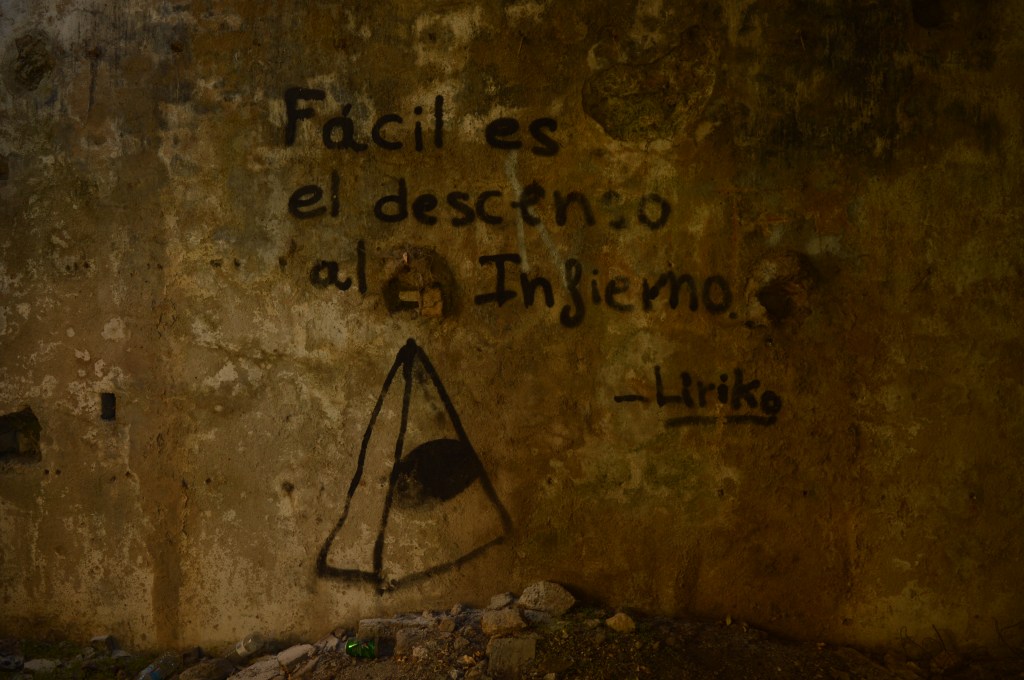
At the foot of the mighty bridge that spans the gorge over the Río Tajo in Ronda, the yellowing ruin of an old pumphouse steadily crumbles into oblivion. Trees grow out of its windows and human and animal detritus clusters against its walls, as though they shrink from the searching light of the world beyond. Abandoned spots like this would be covered in graffiti in England; profane scribbles and indecipherable tags whose meanings will fade from the world long before their makers. A single graffito marks the eastern wall. Of all things, it is a quote from Virgil.

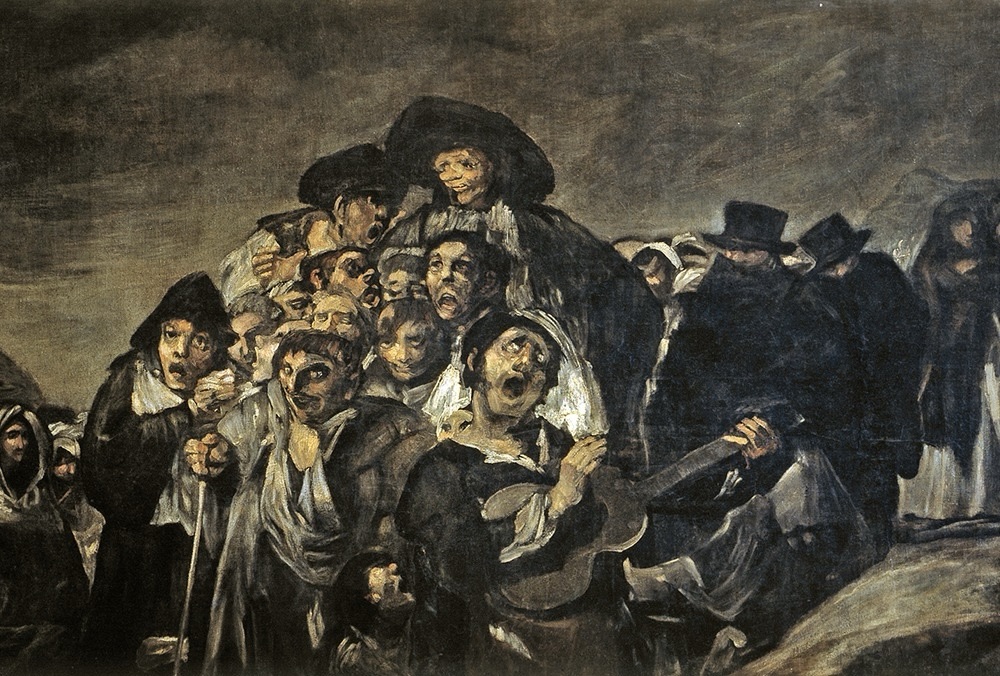
The memory came into my head as I stood before Goya’s Pinturas negras in the depths of the Prado, bewitched – and not for the first time – by the unfettered darkness on the canvas.


In the opinion of this jaded wanderer, there are few artists who can hold a candle to Goya, an artist whose style was shaped – or, perhaps, perfected – by the ravages of one of the darkest periods in Spain’s history.

The Prado does a fantastic job at telling his story. On the top floor, illuminated by the brilliant natural glow of several skylights, his early works shine with an innocent halo. Paintings such as El quitasol and La vendimia tell of a happier time, when Goya was young and using his gifts to make a name for himself in the circles of the rich and powerful, as many an artist had done before him for generations.

Descend to the ground floor, and some of his younger naïveté is stripped away like a layer of paint to reveal a cunning eye for detail and social commentary. Unlike the illustrious royal portraits by Titian and Velázquez which grace the walls further down, Goya’s subjects are painted as they are, without any false veneers of lustre or glory. Maja vestida has a cute smile, but she is a pale imitation of Maja vestida, whose knowing expression betrays a far greater honesty.

And then you descend to the basement. The lights dim. War comes to Spain, Goya’s former patrons flee for their lives, and the country descends into chaos. Goya sees it all and sketches furiously. The illness that robbed him of his hearing pushes him into a deeper, darker school of thought, and his subjects trade their rosy cheeks and playful smiles for pallid masks and devilish grins. At the same time, the faces become much more recognisably Iberian, replacing the stateless Western mannequins who previously adorned his tapestries. Still a master of light, Goya now perfects its dexter side, drawing on the darkness of the maddening world around him, culminating in the macabre frescos of the Quinta del sordo. The sunken, bulging eyes of Saturn and his gaping maw stare out of the canvas with a malice that is at once pitiful and horrifying.

An American girl is toured swiftly around the room by her imperious mother, the latter commenting loudly on the broader collection ‘back home in Washington’. A Latin-looking schoolboy fills out a couple of questions on a worksheet on one of the paintings and moves on. Two young parents push their infant child by in a pushchair. They cast Saturn a brief glance and move on, a little faster. A gallery official in black and red watches from a corner, but nobody needs reminding that photos are not allowed in here. Goya’s demons still have the power to strike terror, two hundred years later.

Out in the daylight, Madrid goes about its business. My footsteps take me back into the heart of the city. There are a lot of indios about: current estimates hold that they make up one in seven of the capital’s population. In the city centre, I’d wager the ratio is even higher. Pizarro’s pigeons have come home to roost.

In a side-street, two officers of the municipal police search a couple of North African men, who have their hands on their heads – “Qué hacéis por aquí?”. A carton of box wine lies discarded in the road, ignored by a street sweeper who is watching the scene unfold over his shoulder, sweeping the same dust in circles.


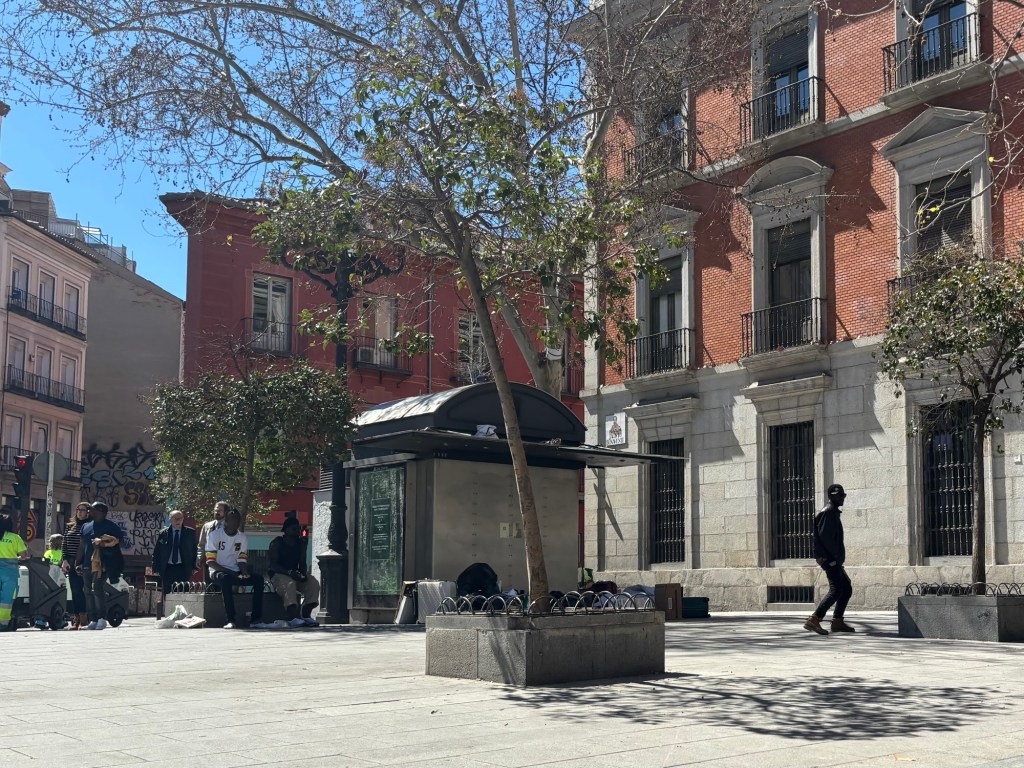
In Plaza Santa Ana, a small group of Africans have laid out their wares on white blankets and try to flog what they can to passers by in reluctant, almost disinterested tones. Clutched in their hands at all times are the ropes fastened to each corner of the blanket, ready to be drawn up in a moment’s notice. These unfortunate hawkers are known in Spain as top manta, and are usually more in evidence in the larger cities along the coast: Barcelona, Valencia, Málaga… wherever careless tourist money can be found.


It crosses my mind, as it has before, to strike up a conversation with one of them. To get their side of things. To hear their story. Something checks me: a sense that unfriendly eyes are watching. I scan the square.

Sure enough, standing in the shade of a plane tree at the edge of the square is their overseer: a surly man in a Cameroonian football shirt. He appears motionless, but his eyes are fixed on the street vendors, who occasionally return his gaze, like nervous shorebirds before a sleeping crocodile.

My speculation becomes flesh when one of the hawkers approaches him with what seems to be a question. The conversation is obviously not an amicable one, and the overseer is on his feet and shouting, followed swiftly by his companion, a big chap with dark shades and a military-style beret. The overseer barks at the hawker and sends him packing. “No eres más que un puto negro.” It’s a loaded insult, but since it’s contained, hurled from one immigrant at another, nobody seems to notice. Madrid’s shoppers continue about their business. Tourists sink half pints of Mahou and Amstel mere yards away. A lost soul staggers to keep his balance, either too drunk or too drugged up to pay the scene any heed. The two Latino vagrants sleeping rough in the shade of a nearby bush hardly bat an eyelid. One stirs slightly, the other draws on his cigarette, casting a gentle orange glow in the shadows.

As I turn down a street toward the city centre, I see a police car slowly crawling toward the square. I turn around, but the top manta touts have already got wind of the impending threat: their bags are slung across their shoulders and they are retreating into the shadows. They will be gone long before the police arrive.
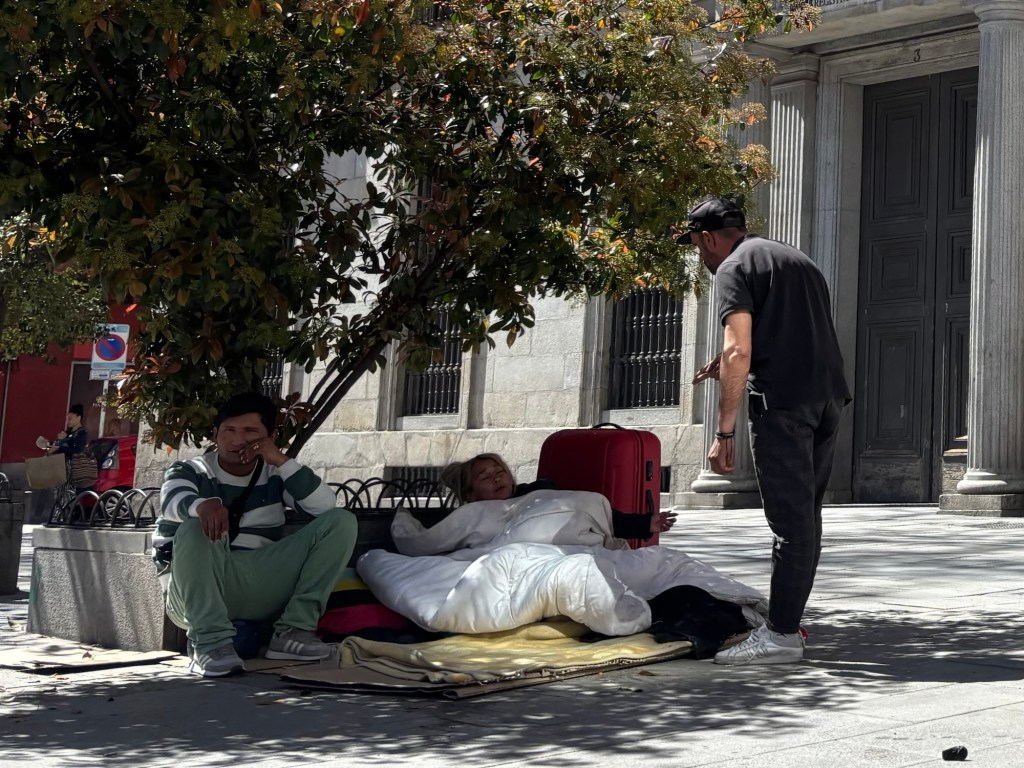

Goya’s Madrid is a dichotomy: a place full of light and consequently of shadows also, of rosy-cheeked beauty and ugly avarice. This is no less true now than it was two hundred years ago: it just wears Adidas trainers now.
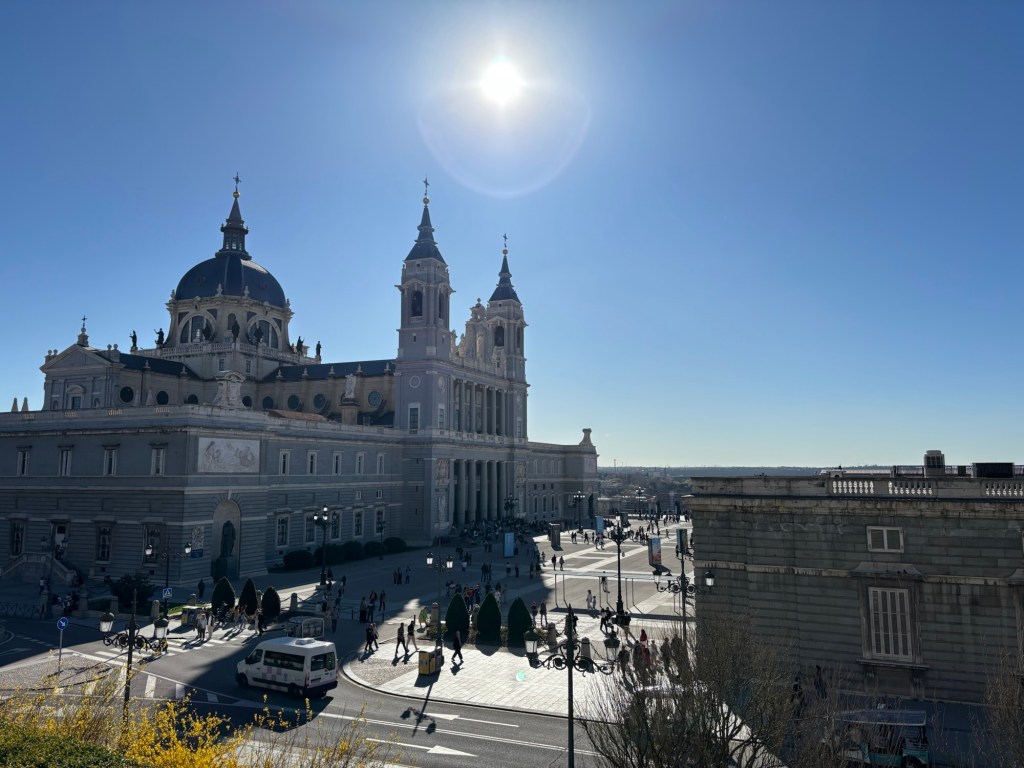

Tomorrow I leave the capital behind and make for the windswept coast of Galicia. I have never been much enamoured of cities, being inclined to agree with the author M.M. Kaye, who described them as “the breeding places of the very worst aspects of humanity”. My destination is the Costa da Morte – the Coast of Death – the wrecking place of many a luckless merchant sailor. But its name is deceptive: for me, it is a place of unfiltered light and hope.

The gates of hell are open night and day / Smooth the descent, and easy is the way / But to return, and view the cheerful skies / In this the task and mighty labor lies.

Virgil, The Aeneid

The mighty labour has begun. There are still fragments of my heart in need of healing after last year’s American adventure. Hard work and endless endeavour have been a good palliative, but they are not the solution. Finisterre healed my heart before. It will do so again. I am sure of it. BB x
Dagobah: The Longest Night of my Life

Planning ahead for Italy this April has got me thinking about the last time I travelled solo, now almost a decade ago.

When I was eighteen years old, my mother gave me a copy of Laurie Lee’s As I Walked Out One Midsummer Morning and a map of northern Spain. I joined the dots and bought myself a one way flight to Santander, planning to walk south as he did, until I reached the Mediterranean Sea.

It didn’t exactly pan out like that, but it was and is to this day one of the toughest and most formative adventures I’ve ever made in my life.

Travelling solo is not for everyone. You’ve got to be comfortable with your own company for long periods of time. You have to be able to think on your feet and adapt to whatever happens around you, because nobody is going to look out for you but yourself. Most importantly of all, you need to be brave. You’ll hear plenty of stories about the kindness of strangers, but nine times out of ten, it’s a case of shy bairns get nowt; if you aren’t prepared to talk to people, the loneliness birds will start to circle.

That’s what happened to me, all those years ago. My Spanish was good – more than good enough to hold my own in a conversation – but my courage was lacking. The bottomless charisma that comes almost by osmosis from working in a private school hadn’t sunk in yet, and I would have rather bitten my own tongue than enter into a conversation with a stranger. Consequently, I spent the greater part of those four and a half weeks in what can only be described as a state of monastic silence.

As a rule, I’ve tried to find a travel partner on every adventure since, as there are few things more reassuring than good company on the road. Back then, halfway through my gap year, I was cut off like never before: everybody I knew was either at university, at work or halfway across the globe on gap years of their own. So I didn’t have much choice.

I was young, inexperienced, and woefully naïve about how much I ought to be spending daily on food. Little wonder, then, that when I came home I was dangerously underweight. That first encounter with solo travel taught me a lot, but most of all it taught me never to skimp on food. Ever.

Looking back, it’s so easy to focus on the negatives, largely because of how didactic they all were. One stands clear above the others like a lonely mountain. Sleeping rough in the mountains above Madrid with nothing but a sleeping bag and a rucksack for a pillow. That endless night will be with me forever. Let me paint it for you.


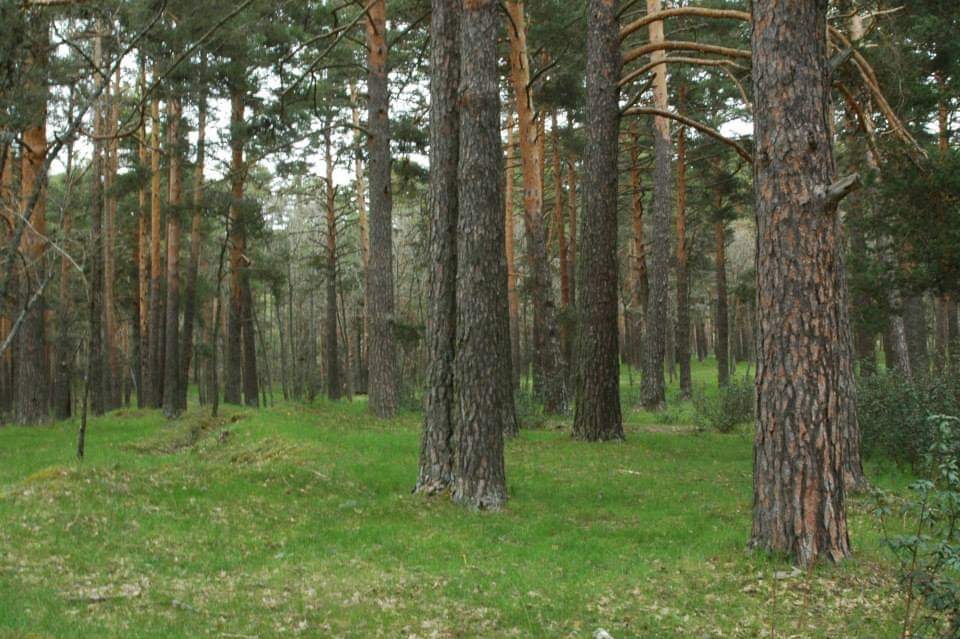
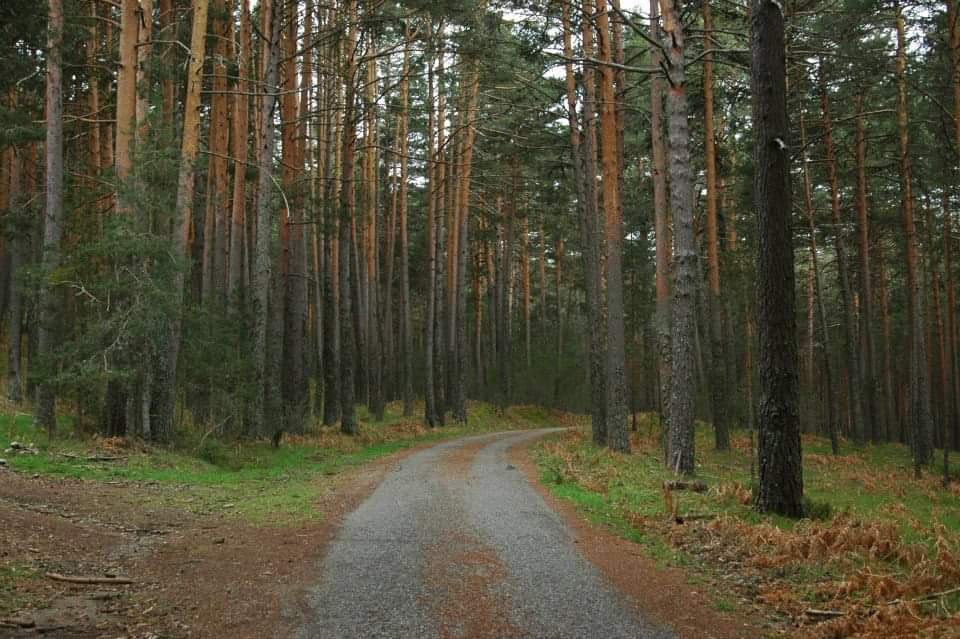
Picture it. A patch of relatively stable ground in the heart of a dark pine forest, on the lower slopes of the mountains. At least two hours’ walk from the nearest settlement. Pine needles where the grass doesn’t grow, and the roots of the trees poking out of the ground here and there like toes in the sand. The light fading as dusk sets in, no sunset, just a gradual darkening of the grey light between the trees as the world before your eyes starts to fuzz and crackle like static on an old television. From somewhere far off, a raven croaks, and once or twice, an owl.

You put your head on your rucksack and try to shut your eyes, but sleep doesn’t come. Maybe it’s because it’s still light out there. Minutes feel like hours. You turn on your iPod and ration a few songs to pass the time. Maybe fatigue will get you in the end. But it doesn’t.

Night falls, but there’s no moon. The ground under your sleeping bag is cold. Wet. It sinks through the lining and into your skin. Your teeth are chattering. You put on all the clothing you’ve brought; three layers of socks, two sweaters and a makeshift scarf. It doesn’t stop the chattering. Then there’s the gentle sound of rain as the clouds roll across the mountainside, scattering water through the trees.

You check your watch. It’s only been twenty minutes. It’s still only just after nine o’clock. Most Spaniards aren’t even in bed at this time. You ration some more music.

The darkness is almost absolute. You can only just make out the silvery light of the trunks of the nearest trees, lit by the ghost of the moon, buried deep in the clouded night. The patter of rain echoes through the whole forest.

Suddenly, a harsh bark breaks the silence. It shouldn’t scare you out of your wits, but it does. You freeze, listening, half expecting – wait! There it is again. It’s a roe deer, you know that. You’re sure of it. You’ve heard that barking cry so many times before back home. It’s just a deer. Harmless. But what good is that knowledge when you’re wrapped up in a sleeping bag, alone, and nobody knows you’re up there? And what if you’re not so sure? What if it’s something… else?

It’s funny how the mind plays tricks on you in the darkness. How quickly you can unravel. For a time I am certain I had managed to convince myself it was not deer but wolves I was hearing – that ancient terror of the deep forest that all of us carry, buried deep inside.

The barking goes on for hours. Or maybe minutes. The minutes feel like hours. The hours feel like days. Time seems to have slowed to a crawl. The night is endless. No moon, no stars, no light from the distant towns. Just the static darkness that creeps through the trees, and the rain, the endless, endless rain.

You count the barks. You count sheep. You call home, consider bailing there and then. You talk to yourself, argue with yourself. You turn to God, perhaps for the first time. You swear. You laugh. You cry. You drain the iPod to zero to keep your spirits up, trying not to picture the prowling things between the trees that your eyes are so keen to paint.

Sleep is fleeting: a minute or two of semi-consciousness here and there, leaving you more and more tired, and yet less able to find that rest you now desire above all things.

And when the dawn comes, that first blessed grey light between the trees, you don’t even care anymore how little you’ve slept. You hardly notice the gnawing aches in your legs, or the numbness in your teeth from all the chattering. You’re just overjoyed to see the light once again – because there’s a magic in the dawn that is timeless. The darkness is on the run, and there’s a new day on the way. Dawn was ever the hope of men.


Looking back now, there’s so much I didn’t do that I know I should have done. I didn’t tell anybody where I was going. I didn’t pack enough food. And any of you with even a little camping experience will have spotted one glaring absence: never mind the obvious lack of a tent, I didn’t even bring a roll mat. No wonder I spent the night shivering.

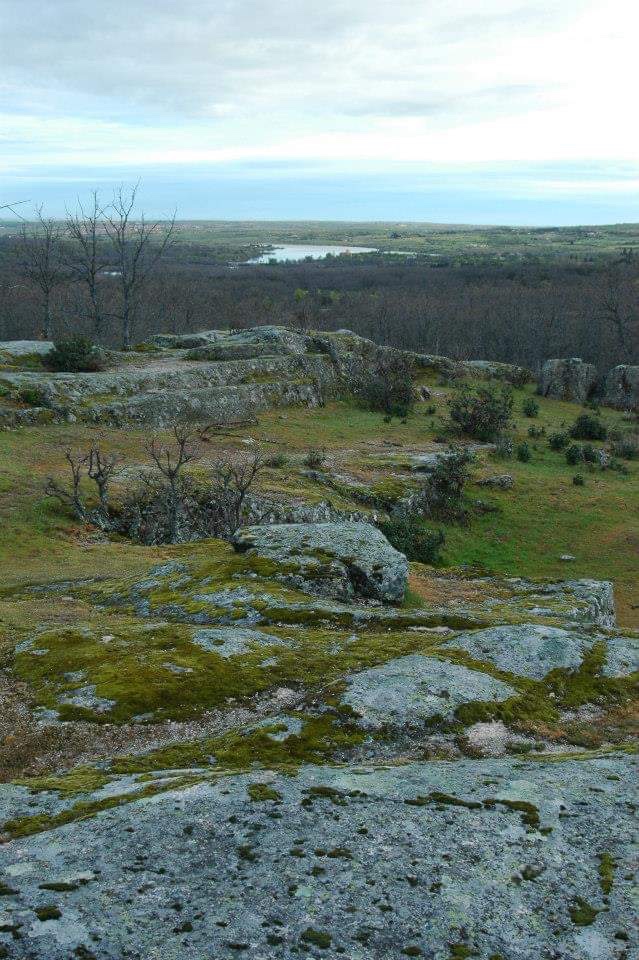
One thing’s for certain: there’ll be no repeats of that night in the Guadarrama, not in Italy, not ever. I’ve had some long and painful nights in my life, but that one stands head and shoulders above the others. I don’t think I’ve ever felt more alone. But that makes it all the more powerful a memory. It’s a lightning-rod for my fears. Whenever I’m feeling down for whatever reason, I think of that night in the mountains. I was miserable, I was lonely, I was terrified – but I survived.

In the old Star Wars stories, Master Yoda went into exile on the swamp world of Dagobah, a planet with a strong connection to the dark side of the Force. Hubris had laid his order low and taken everything from him; only by humbling himself in isolation and communing with the dark was he able to understand it – and, in so doing, learn to rise above it all.

At some point in our lives, we all need to be brought to our knees, if only to understand who we really are when it all falls apart. I wouldn’t say I look back on that night with pride – the whole enterprise was nothing short of madness to begin with – but it did settle once and for all what I believed.

Darkness is not something to run from. It cannot be escaped. There’s darkness in all of us, as sure as shadows lengthen in the light. But, like a shadow, it must be faced head on if you would not be afraid. We have to confront our fears if we wish to understand them – and to understand how we react it to them. And to face your demons, whatever and wherever they may be, you need your starlight. I call that starlight Hope.

Hope and despair. The light and the dark. All that I am today is built on that bedrock. Hope is my raison d’etre, my polestar, my core value if you will, and it was forged in that endless night on Guadarrama.

Travelling alone can be tough – especially if you’re inclined to sadistic escapades like sleeping rough in the mountains like I was – but I can think of few better ways to find the meaning of life.

And if you’re wondering why I put myself through that ordeal, there’s a perfectly logical answer: there’s a chapter in my book where my protagonist is abandoned in the wild, and my English teacher once told me to “write only about what you know”! The things we do for art…

I don’t expect anything nearly as dramatic in Italy. Heck, I’m mainly going to fill some pages in my journal. But I am going with a hopeful heart once again, to feel that brush with the world beyond.

And to find a better Margherita pizza than the ones they make at Lirios. Maybe. BB x

Afterglow

Walking home from work this evening I found myself unnaturally aware of the night sky. Normally in the corner of West Sussex where I live, the skies at night are impressive, and you can see all the constellations of the season with a clarity you wouldn’t expect to find so close to London. Last summer I even saw a comet shining a brilliant blue as it shot across the sky overhead. But tonight the clouds were low, and a strange, eerie light hovered along the horizon on either side of me: a greenish-yellow to the north, hanging over the distant lights of London, and a more unholy bluish-green patch of cloud to the south, indicating a floodlit pitch somewhere below. Elsewhere along the skyline, similar patches of tarnished gold and green light made the night a rather sinister shade of grey. Somewhere in among the phosphorescence, the glow of an almost-full moon went unnoticed.

When I lived in Spain as a child, I remember a night when several towns in the area decided to take part in a five-minute power-cut. I believe it was in protest about climate change, or energy wastage, or something along those lines. Our town sat atop a lonely hill in the middle of a great valley ringed by mountains. Villages were few and far between, and the nights were dark enough even with the interference of the thousands of twinkling yellow streetlamps. But one night, for five minutes, it was even darker still. My mother took me up to the square at the top of the hill to look out upon a world blanketed in a darkness it had not known for decades, perhaps even centuries. I was only twelve years old, but it made a deep impression on me. I have never forgotten the quality of the darkness, the stars that shone so brightly that in memory they seemed almost like suns – which is perhaps not so very far from the truth.

We spend a lot of time discussing the irreversible damage we have done to our oceans, how we have choked the earth and its rivers with our plastics and detritus, but it is far deeper and more sinister than that. Man’s quest to vanquish his fear of the dark is well on the way to robbing us of our natural light. In some parts of the world, it already has.

It is not so much our desire to ape that concerns me – our fierce instinct to twist the natural into the artificial – because I know that story. It is the fable of the Emperor and the nightingale. Tragically, as is often the case with stories meant for children, it seems the moral was lost on us a long time ago – a modern-day version would no doubt have the Emperor plug simply his iNightingale in to recharge. No, it is our desire to outdo. The go one step beyond. To beat nature at her own game, like a petulant child insisting they are old enough to look after themselves. I am reminded of another children’s story concerning a devil’s mirror, that sought to make a mockery of all that it looked upon…

When you spend weeks going over the pollution topic of the iGCSE and IB exams with your foreign language students, it’s easy to forget the creeping damage of light pollution, if only because we choose not to see it. Light is good. It shows us the way, it helps us see where to go. It makes us comfortable and it keeps us safe. So perhaps it is a loss we must bear. What is, is what must be. But I do wish, on nights like these, when the clouds are low and heavy and stained with the unholy afterglow of the city, that I could go back to the night of the power-cut, when the night was clearer and more beautiful than any light show I have ever seen. BB x

YearAbroad (430)

Stargazing in La Siberia, May 2016


Searching for God

I’m not a Christian. At least, not in the truest sense of the word. Insofar as my upbringing is concerned, I guess I don’t fall under any category other than Church of England, but when the occasional questionnaire gets handed my way, I tick the box marked ‘agnostic’ without a second’s thought. Only if that’s not an option, and it usually is, Christianity gets my vote over the ‘no religion’ box. Why does this matter? Because today I found myself, once again, in a position where it made more sense to come down on one side of the fence. ‘Christian’ simply makes a lot more sense than ‘no religion’. Strong words for a not-so strong belief, don’t you think?

Let me explain (you’d better get comfortable). I was baptised as a Christian. Church of England. Standard fare. I had a fairly regular English upbringing. I attended a Church of England primary school. I went to church every Christmas and Easter, like almost everyone else. The only minor difference was that my parents both had various musical roles in their respective churches, which meant that I probably spent more time in church than most kids my age. It just so happened that one of them was Canterbury Cathedral, where my dad was a lay-clerk. I guess you get a little blasé about that kind of thing when evensong is a biweekly venture. Not to mention all the school carol services held there. It certainly made the local church back home seem a little small by comparison, though I have warmer memories of that. When I was little I went to church every other Sunday, or at least when Mum played the organ. The memories get a little fuzzy sometimes; this is reaching quite a way back into my childhood. I remember only that I used to sit behind the choir near the organ pipes, and you could hear the organ humming long after everyone had filed out of church and Mum took her hands off the keys. Between that and the old gas heater glowing a dim red in the corner, I have this musty image of your run-of-the-mill Church of England parish tucked away in my head. That’s my strongest memory of the early days, at least. Nothing particularly special. I wasn’t even old enough to sit in the choir then, but I knew most of the hymns well enough, especially the ones they used to roll out on the projector at school. Morning has Broken, for one.

Fast-forward on a few years and it gets a little more interesting. Moving back to England from a year abroad in Spain finds me singing in the church choir in my new home town. It’s nothing more than something to do, I suppose, as I have little else to do at the weekends but go birdwatching down at Stodmarsh or Sandwich Bay – I’m still too young to be thinking about girls or going out – but it pays my first wages, and it feels ‘sort of right’. Right enough to take that next C of E step and decide to get ‘confirmed’. It’s not as big a deal as it is over in Spain, with the sailor suits and all the bells and whistles that go with it, but like I said, it seemed like ‘the right thing to do’. And the other kids in the choir were a lovely bunch, too.

Then along comes my early teenage years, a girlfriend and the beginning of a new approach: evangelicalism. She got me into it, I suppose, but it was something I took to with relish. Prayer and worship, spiritual healing, speaking in tongues… It was a brand new world and I loved every second of it. Ever heard of Soul Survivor? That kind of thing. It was a far cry from ‘open your hymn-books to Hymn no. 348‘ or what-have-you, at the very least. I might even go so far as to say that, for a little while, I even believed it. But it was the people that really made it for me, not the spiritual side of it. Just like playing the violin, the practising of which I had come to loathe, it was more the sense of community that went with it that I craved: the orchestra over the recital, and the worship group over the prayers. I guess you could say I built my house on the sand. Little wonder, then, that it all came crashing down with the end of that relationship. Coincidentally, it was raining that night, too.

I wandered for a while. I asked a lot of questions. I even stopped saying prayers at night, realising that most of them had been selfish anyway – especially the later ones. If not selfish, then love-blind at the very least. Eventually I returned, somewhat shame-faced, to my local church youth group, whom I’d abandoned for almost a year and a half. That was where I met Seth and Jenny Cooper, the Walmer Parish, and Katherine, that everlasting beacon, who showed me that there was more to life than a constant search for answers. For a little while longer, I continued to carry the flag, stronger than before. I was happy. But it was not to last. A series of unfortunate events came as the second hammer blow to my faith. I started to read about the Empire, and all the horrors that had been wrought in the name of God. My brother was assaulted on the way home from school. And Katherine, ever the kindling flame, went out of my life. A few weeks later, I gave up altogether.

As a true Christian, that was my final chapter. I had another fling with the Church in Uganda – ain’t no party like an African Baptist Prayer and Worship Party – but that was little more than a dalliance. Back in England, on the gap year that seemed like it would never end, faith eluded me. Mum, on the other hand, found her way to the Catholic Church and embarked upon what she has described as the ‘road her whole life had been leading towards’. I coveted that, I suppose. It wasn’t her new-found happiness of hers that I wanted, but that contented state of mind. Structured. Ordered. At peace. At one. Something that I’ve struggled with in all the hypocrisies of my life for the last seven years. Her faith gave her life a new meaning. I’d been looking for that meaning for a while with no such luck. People say that ‘finding yourself’ is the first step on the road to that level of understanding. If I could have ‘found myself in Africa’ as so many jokingly think I did, I’d probably have more of an idea as to where exactly I am right now. Unfortunately – or perhaps fortunately, as God knows how lost I’d have been – I didn’t, and the search continues. Right up until last night, when I found myself sitting in an Iraqi church, listening to a Californian preacher explaining the meaning of John 3:16 whilst a translator conveyed it to the congregation in Arabic. Talk about a new way of looking at things!

Now we come to the heart of the matter. I’m not a Christian, like I said at the start. I might have been once, but for a token gesture or two of late, I’m not labelling material at the moment. I can go through the motions like a mynah bird, of course, but that’s got more to do with habit and observation than anything else. That, and a burning desire to believe, whenever that day comes. Until it does, everything seems false. To pray to a God you don’t believe in with all of your heart, with all of your soul – does that not seem a bit ingenuous? That’s not to say I’m not religious, though. Given the choice I’d rather be spiritual than to disbelieve entirely. I’ll put it this way: there’s a hole in my heart that’s waiting for faith. I just haven’t found it yet.

I’ve had this discussion/argument with Andrew recently. I put it to him that I’d be happier not knowing all the answers; that sometimes it’s better to stop asking questions and to have a little faith in what you can’t see; that some things, like as not, are necessarily beyond our understanding. It goes against a great deal of my character, and I think he took umbrage at that, but it’s a principle I try to stick to, and as far as I’m concerned it’s connected to the most fundamental principle of all: hope. I swear by it. There is no greater sin in my book than despair. I might not have the staying power that others prize – indeed, if something is beyond my capability (or, more often, interest) I’m more likely than not to throw up my arms and walk away – but I never truly give up on the inside. And as long as that’s the case, I’d like to believe I still have a chance.

Faith lies somewhere along the road, of that much I’m sure. Wherever it may be is, for the time being, beyond my understanding. And that’s not a bad thing. I tried to find it out here, but for all the strength of the community and the goodwill of the people, it continues to elude me. Maybe I’m being picky. Maybe I’m looking too hard. I don’t know. I’ve just got to keep trying.

I leave you (and this gargantuan post, which is approaching essay length as the clock strikes twenty minutes to midnight) with the only Bible verse I’ve consigned to heart, as it speaks to me on much the same level as it ever did five years ago, when first I found it:

The light shines in the darkness, and the darkness has not overcome it.
John 1:5

I wonder whatever happened to Katherine? I hope her light is still shining brightly for the rest of the world, wherever she is. BB x