The First Hurdles

I knew it. My Arabic is every bit as rusty as I thought it was. Over the last twenty four hours I’ve jumbled kalimāt with ma3kulāt, completely ignored the feminine –īn ending, let sentences slide into the oblivion for lack of vocabulary and resorted to a mixture of French, Spanish and English to fill in the gaps. How people manage to stay on top of six or seven languages at once baffles me; four is troublesome enough.

And so begins the third and final stage of the Year Abroad. The afternoon call to prayer is sounding as I write, cutting over the Camarón playing defiantly from my earphones; two months in Tetouan, a small city on the northern coast of Morocco. Arabic is back with a bang in my life. It’s an early start for me tomorrow at Dar Loughat, my new school, though not so much so now that the clocks have gone back for Ramadan. Registration, a placement test and, like as not, the first class.

I’ve been here for a little over a day now, and though Tetouan is only a stones throw from Tarifa, it’s a very different world from the land across the Strait. And it’s not just the Arabic. Even mealtimes are a challenge, and Ramadan hasn’t even started yet. I’m all up for eating with my hands, but it’s a good deal more technical than I thought it was. Naturally, I made a bit of a mess of it last night. Somewhere in the recesses of my memory, I recall a similarly awkward attempt in Uganda, where the ‘natural fork’ – using your thumb and three fingers – is the done thing, but that got forgotten somewhere between the purple lightning and the mountain gorillas. Priorities.

Letting in the morning light through my bedroom window is also ‘not good’, something I hadn’t anticipated. Morocco is a long way from the Middle East, but some of the old Arab customs cling on here. 

Determined not to lapse into last year’s old habits, namely falling back on English whenever possible, I’ve taken a dive and lodged with a Tetouani family. For someone who really values his own freedom, that was a difficult decision to make. But when the other Arabists come back in October with an average of six months apiece in an Arabic-speaking country, I’ll be left floating, so as I said before, it’s my prerogative to push myself. And what better way than to live with a Moroccan family?

It’s not easy. I reckon I understand less than half of what they say to me, even though it’s in fusHa (when they speak Dārija to each other, I don’t understand a word). I tend to latch onto the first word I recognise and wrestle with that until I have some idea of what’s going on. More often than I should, I find myself using a French word coupled with a pathetic expression to make up for the words I’m missing. When it comes to conversation, which is – for now – rather one-sided, my contributions consist of a series of nods and noises of understanding. And I’m still very much at the stage where I’m constantly getting caught out by questions.

All of this is a bit disheartening after that triumphant C2 in the CEFR Spanish exam. It’s like I’ve been reset to zero, sent back to the starting line just before the end of the 1500m. No, it’s worse than that: it’s like that painful childhood moment when you’ve been playing Pokémon for five hours and then you turn the game off without saving, and after all the cussing and swearing you know you’ve no choice but to retrace your steps or give up and walk away.

I was an odd kid. Nevertheless, the spark that flared in me in my first year at university is blinking in the dark. There’s a reason I came out here alone, early, immediately. I’m not about to give up on Arabic. Far from it. I’m determined to make this work, to be reinspired. Dear Kate found inspiration in Jordan where I found only creeping despair. But this is round two, and I’m coming back fighting. I fought hard to come here and now I have to earn it. I have to show the downcast Ben from last year who’s boss. That’s easy to say now, before the course has even begun, but that’s what it’s all about: a positive attitude. And having the awe-inspiring cliffs of the Rif Mountains does help. A lot.

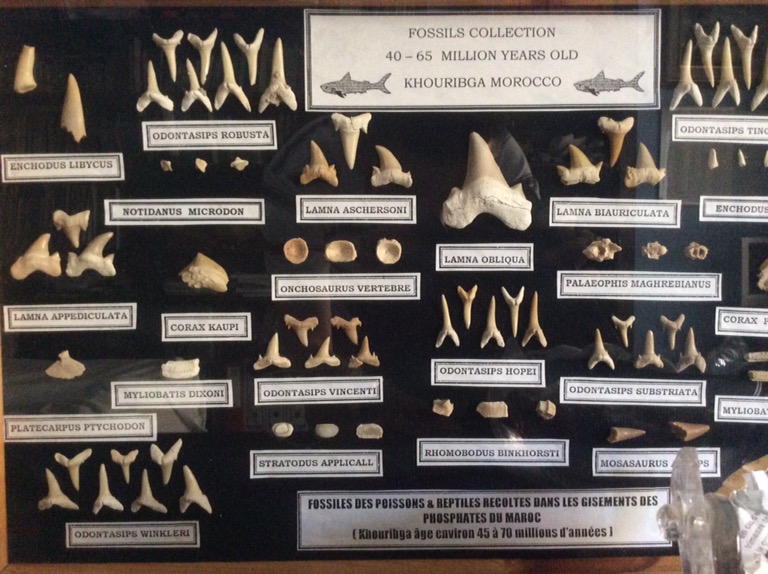
All this and more has been said before, so I won’t sweat it. I haven’t yet got out to explore Tetouan beyond this morning’s trip to the market, so I’ll tell you a bit about my room. It doubles as a library. There are books in at least four languages spread out across a bookshelf that stretches along the length of one wall; Ibn Khaldun’s Muqaddima and Ibn Battūta’s Rihla, Pablo Neruda’s Confieso que he vivido and a French history of the alliance between Moulay Ismail and Louis XIV. There are also fossils everywhere. Trilobites, ammonites, corals and seashells, sharkteeth and even a gigantic bone of some description. My hosts – or one of them, at least – are avid naturalists. You could say I’ve landed on my feet. It’s also got a desk, a luxury I was denied both in Spain and in Jordan and – heaven above – it’s got WiFi. Weak WiFi, but at least it’s there.

No bones about it: this is definitely a step-up from last year’s overpriced two-room flat with the haunted washing machine and the worksite next door. BB x
Bebida 10

It’s a Wednesday afternoon. I’m back in the staff room as per, not doing anything particularly noteworthy, other than watching Armstrong and Miller and catching up on old Have I Got News for You episodes over a 60c cup of chocolate más espeso. For some reason it’s almost always bebida number ten; it’s as though the man upstairs is reminding me that it’s become too rigid a routine, and that sooner or later things have got to change.

Wednesday in particular is a very routine day. It starts late, with a lie-in and a little reading before my 10.05 class, the first of two hours of 2º ESO. The first class is large and potentially rowdy, but rarely causes a headache – and, if I’m using the whiteboard (something I’ve learned to rely on less and less), has me returning to the computer every thirty seconds to cancel an automatic shutdown that seems to have plagued the model for the last two months. The following class usually has me on my own for the first twenty or thirty minutes, which results in absolute chaos; I do declare that the thirteen/fourteen threshold is quite possibly the very worst stage of adolescence (though that’s nothing ground-breaking in itself). Worse is that at least three of the students are always desperately trying to silence the rest, proving that this particular subaltern does have a loyal following even when I’m left in charge of the ship.

I then have half an hour before my next class, over at the private school, with the tinies of lower primaria. Whilst they can be just as destructive as their Monday peers, there’s a far greater chance of them doing something like work in my weekly session with them. And they’re absolutely adorable. The first five minutes are basically me trying to wade to my desk through a sea of hugs.

Which makes the following fifty-five minutes of crowd control a little easier.

The last two classes of the day, the upper tiers of the private school Cambridge English course, are an endurance course of a different breed – that is, holding back laughter. They’re an uproarious lot. The First group are one step away from speaking like native English speakers, I swear, so an hour with them (or forty minutes, since they’re twenty minutes late without fail every week… ‘went home for lunch’ is the excuse) is more akin to a conversation at school with a group of kids four years below you. It has its fair share of jokers, as does the following class, which is usually a little more low-key… though it has its moments. Today’s golden crown goes to ‘motor-water’, because jet ski ‘didn’t sound very nice’.

And then I’m here. The Meléndez Valdés staff room. With an empty plastic cup and my novelling notebook, planning my surprise entry into a class I’ve been given back after a three-month absence. You know you love your job too much when you are offered the chance to work one hour less for the same pay and you kick up a fuss about it for three months.

I can only hope they take their lesson on time travel as well as the others have. Beginning the lesson with Hitler phones goats turns out to have been a good idea after all. BB x

Holy Gridlock, Batman!

I remember saying a couple of days ago that I was going to take it easy and travel less this year, beginning with Semana Santa. Predictably, that failed almost as soon as the words left my mouth. I’m now sitting at ease on the balcony of a cute little hostel in Córdoba, having spent the last four days traveling in a large triangle around Andalucía, from Matalascañas to the Great Mosque. It’s the Easter equivalent of last term’s ‘square puente’ to Lisbon, Aveiro and Salamanca. Only this time, I’m not alone, and it’s been a barrel of laughs from start to finish.

I’ve told you about El Rocío. Let’s start with Seville. Seville is one of those cities that I’ve always thought rather overrated. It’s the Spanish equivalent of Frozen; people come back from it raving about what they’ve seen to such an extent that by the time you get around to going to see it yourself, it’s difficult not to be disappointed. Unlike Frozen, however, it’s worth digging in and opening your eyes a little.

DSC_0983

No, I’m not the biggest fan of Frozen. Something to do with Elsa’s dumbstruck ‘of course, love!’ remark, as though love were entirely alien to a Disney film and its target audience… and let’s not forget that ubiquitous Let it Go.

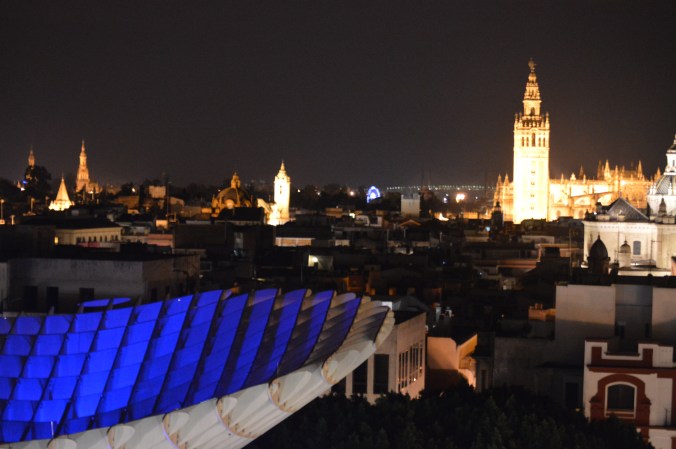
I’m sidetracking. As usual. I’ve been very blasé about Seville all year, using it largely as a transit between Villafranca and other southern destinations – mainly Olvera – and never visiting the city for its own sake. Mistake. If you can find a place to stay for the night in Seville, do. Especially in Semana Santa. Having the freedom to see the city by night as well as by day is a treat not to be overlooked.

DSC_1053

In my current adventures I’m joined once again by fellow traveler/blogger Brocklesby, spending half of her Easter holidays down south. Traveling with a companion can be infinitely more entertaining than going solo, especially when you’re both new to the place, but it’s been super-helpful acting as a kind of lemming-guide. I’m something of an old hand with Sevilla and Córdoba, having spent about a month apiece in each of them when you add up the days, so – with the fifty-fifty assistance of the Arch Deceiver aka HERE Maps – I’ve been acting as a guide. It’s a lot of fun to introduce somebody to all of your favourite spots, as well as the main sights, but best of all you get to try things out that you never quite found the gumption to do alone, like this museum or that ice cream parlour. It’s a blast and I should travel in twos or threes more often.

DSC_1036

Travelers to Seville in Semana Santa should be warned: bring a compass, a map and/or plenty of patience. Navigation is made almost impossible by the processions. In most of the smaller towns, these are usually nocturnal affairs of some eighty metres in length that take five or six minutes to pass, and good seats can be had by simply racing ahead by several streets and waiting by the side of the street.

DSC_0988

Not in Seville. Not only is everyone in town in on the secret, so is the tourist population, both of which are immense. On top that, the processions themselves are enormous, trailing as many as three streets at a time and taking all of an hour and more to pass – and there can be as many as six happening simultaneously across town.

Understandably, this turns something as simple as crossing a street into a labour of Heracles. It’s a circumstance where shortcuts really do make long delays, and itinerant penitants and busy streets make the heart sink. I distinctly remember saying that ‘if you see Jesus, you’re screwed’; blasphemous, perhaps, but in accurate reference to the fact that the float bearing Jesus is almost always followed by the Virgin Mary some thirty minutes later, meaning that Jesus marks the very epicentre of the gridlock. Thanks Jesus.

DSC_1073

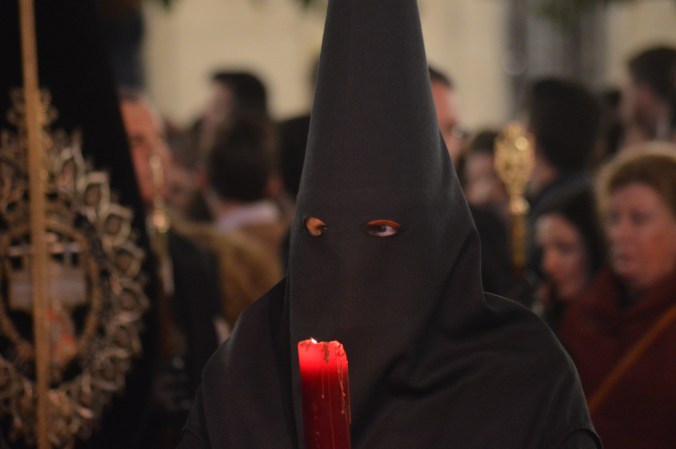
That being said, it’s something you have to watch at least once. And whilst it may not be all that much fun to watch the tips of the penitents’ colored hoods sailing by over the heads of a pushy multitude, if you can get yourself to the front, it’s surely one of the human wonders of the world to behold.

DSC_1107

I’m not a pushy person. I think I’m too English. So it would take a miracle to get me to the front of the queue. But God, or Fate – or an unusually benevolent Murphy – had other plans tonight. Having said that it would be ironic if we ended up walking down a street and coming face to face with a procession headed in our direction, that is exactly what happened, and with the grand finale, no less. We tried to duck out of the way through a gap in the multitude, but the Guardia closed it off and shoved us unceremoniously back into the crowd – which put us, quite by accident, right at the front. It suited us just fine, but it must have bothered those who’d been there long before us something awful.

DSC_1173

It might not have been as soul-stirring as the Olvera madrugada procession – which goes on all through the night and involves no small amount of mountain-climbing – but it was a genuine privilege to behold from such a premier position.

I’ll be back next year. Most certainly. A lot of Spaniards claim to be rather impassive on the subject of Semana Santa, but their dogged adherence to an age-old tradition far more authentic than any search for chocolate eggs says otherwise. I, like Hemingway and Irving before me, am yet another foreigner hopelessly entranced by the magic of it all; only, I’ve at least a quarter of Spanish blood in me, so I’m not a total stranger. I’d like to think that counts for something. BB x

Pilgrim

That’s the first time I’ve ever walked twenty kilometres to get home after a night out. Suffice to say, I also sincerely hope it’s the last. Talk about a walk of shame…

Why did I do it? Because I could? Very possibly. I think it was more the thought of sitting shivering in the dark until the nine thirty bus that made me decide to walk the distance. It certainly wasn’t stinginess on my part; the Almendralejo bus fare is a paltry 1,31€. Perhaps I thought I could beat the earliest bus back to Villafranca on foot. That’s vaguely logical… in a very roundabout-Ben-way-of-thinking. But then, it was five forty-five in the morning. I don’t think I had any real sense of what I was doing. I just remember saying to myself “Alright, let’s do this” before marching off into the darkness like a low-budget Leeroy Jenkins.

As the crow flies, it’s just under twenty kilometres from Almendralejo to Villafranca. I had to take a detour to cross the motorway, so I reckon I clocked just over that. At night the distance looks deceptively close; the twinkling orange lights of the polígono merge with those of the hospital in the middle of the two towns, presumably so situated for industrial accidents in the field. Most of it is traced by the Via de la Plata, the pilgrim road to Santiago from Seville, so it wasn’t exactly a challenging hike. It’s also probably the first time I’ve been sincerely grateful for the vast, empty flat of the Tierra de Barros: navigation is as easy as pie when the nearest hills are a good forty kilometres behind your destination. 

The whole walking-at-night bit didn’t bother me in the slightest. I’d put that down to a six a.m. lack of awareness too, but then, it never has. Of all the things that frighten and frighten horribly in this world, I’ve never been afraid of the night. I learned a long time ago to consider night as just another shade of the day. It’s the same world, only somebody turned off the lights. No deep-seated fears of a shadowy assault or mugging either: I do believe that even the dullest criminal mind would have more sense than to be lying in wait in the countryside in the small hours. The countryside is safety. It always has been, in my eyes. In fact the only mildly unsettling thing in the whole walk was the occasional startled growls of the caged dogs in the farmsteads that dotted the early stages of the route. Alsatians, most of them. It’s a popular breed here. I remember saying to myself “Why can’t you people just keep cats?” and not for the first time. 

Besides the dogs, the soundscape of the early morning Tierra de Barros was really quite magical: roosters crowing, ravens croaking, the tinkle of a pipit overhead and, from somewhere far across the plains, the lonely cry of a stone-curlew. All of this as the sun rose dim and yellow into the clouds on the horizon. My feet might be punishing me two days later, but I don’t regret that walk for an instant. I just don’t think I’ll be repeating it all that soon. It’s a bit like that Spain north-to-south adventure of mine a few years back: it was there, it had to be done, and I did it. Now I can move on.

I don’t think I even stopped for one second to consider what I’d do if it started to rain. The forecast for the weekend was set to bucket it down. I guess I forgot all about that. That I will blame on my fatigue. If it had rained, I’d have been well and truly drenched, and in my best clothes, no less. Why is it that I’m always wearing my best clothes when I set out on these ridiculous adventures? At any rate, it did; a royal thunderstorm hit on the following night, sheet rain, lightning and all the works. Luckily by then I was holed up in my apartment with a cola cao and The Mummy: Tomb of the Dragon Emperor on TV. Someone up there likes me.

I’d like to think that it’s due to foolish misadventures like this that I get to see a side of Spain that most modern travelers simply pass over. You could be forgiven for thinking that Spain, like much of Europe, was fully humanised a long time ago: the sweep of olive plantations and vineyards in the Tierra de Barros certainly gives that impression. But all you have to is close your eyes and listen: the world survives on the fringes. The stone-curlews of these tilled fields and the mournful plovers that ply the once-pristine sands of the raped Costa del Sol hark back to an older Spain, one more ancient than even the oldest of the moorish forts that dot the distant hills. It puts me back in touch with that world to hear them again, just as though I were playing a record from a forgotten world.

It’s not a purely avian nostalgia. As I arrived on the fringes of Villafranca I saw another scene from a bygone age: a muddle of tents positioned about a small campfire where a couple of ragged-looking men stood cooking a light breakfast. Spain’s native gypsies (if such a term is not a misnomer) are a heavily romanticized lot and were mostly squeezed out if their old ways by government programs decades ago, but this new generation of travelers – Romanians, mostly – have taken their place. When I say tents I don’t mean the bright canvas of a modern traveler, nor the UNICEF-stamped donations you might encounter in a war-torn country. These ones might have been cut out of a picture book from the 1930s. Situated on the very fringes of the town, hidden from sight by the town’s waterworks, it’s the very definition of a gypsy encampment. And I thought such echoes had long since faded into history.

You don’t see them in Villafranca proper. The only encounters I’ve had with them so far have all been in Dia supermarket, where they are instantly recognizable by their clothes, by their language and by their complexion; a rich, ochre-brown, marbled like the soil. I’d like to get to know them, to know why they’re here, where they came from and what other stories they might have brought with them, but the townsfolk only have dirt to say on their account. And in my propensity for romanticising the underdog, am I really any better?

Seeing the Romanian encampment made me think of home for some reason, but I was really too tired by then to dwell on it for long. It was purely because I was still moving that I didn’t collapse from fatigue; on the two occasions I paused to get my bearings my head began to spin and I very nearly dozed off. It was only later that night, when sorting through my music collection and The Land Before Time‘s Whispering Winds came on, that my thoughts took me home again. I cried. Profusely. I always do when I hear that one. Damn you, Don Bluth, for producing a film that still brings tears to my eyes some twenty years later. Damn your genius.

Many auxiliares use the holidays to go home to be with their families. Some of my closest friends out here have done just that. It’s a very sensible move, but it’s only when I stumble over such memories that I remember how vulnerable and human I really am. Whispering Winds is on my iPod for exactly that reason; 1608 times around I can put my weaknesses aside and soldier on alone, but there’s that 1609th song that’s there to remind me that neither home nor family is ever truly put aside.

I won’t be seeing home until August. I won’t have time to do so until then, since the third and final leg of my year abroad across the Strait begins almost as soon as I’m done here. Fortunately my parents are coming out to visit me in a couple of weeks, so I don’t have to. I won’t deny that I’m looking forward to having a car at my disposal – being in Europe’s bird capital and relying on public transport is nothing less than tortuous – but more than that, I miss my parents. And there’s absolutely nothing wrong with that. Sometimes I need to remind myself of that. There’s only four of us left; my family is precious to me, no matter what impression my aloofness might give.

A lot of things have happened over the past year. Some good, some not so good. Now that I’ve got the time, I’m retreating for a couple of days to the one place in the whole world that makes me truly happy. It’s a place that has answers… of a sort. My rock, my cradle, my very own Shangri-La. BB x

The Line Must Be Drawn Here

Yes, that’s a Picard line. No, I’ve never watched even a single episode of Star Trek. However, it’s famous enough to transcend that particular level of pop culture, and it suits this past weekend just perfectly.

What with flight week drawing closer (I’m giving myself until the end of this week to buy my flights for good), I’m getting money-savvy and making fewer travel plans. And me being me, that’s resulted in a knee-jerk spontaneous Moroccan adventure with a few Spanish friends and a Semana Santa celebration in Córdoba. The former is largely reliant on my two friends actually getting back to me, so in a way I’m none too bothered whether I end up crossing the Strait or not – I’ll still be heading to Tarifa for the weekend anyway – but it’s there on the table and I’ve budgeted accordingly.

This term has been no less sparing on the adventure front, but I have been a lot more sensible money-wise, forking out on only one big adventure per month: Madrid in January, Cantabria in February and Tarifa in March. Accepting that I’m coming back for at least two years more after Durham has removed me of my desperate need to see all Spain whilst I can and that’s been a very healthy decision on all counts. It means that (with the exception of rent) I rarely need to draw anything out of my account: my weekly private lessons cover groceries and all other expenses, as well as buying the majority of my travel expenses. To fill the time, I’ve allocated at least one or two weekends a month to being sociable in Almendralejo, something I didn’t do nearly enough last term and am currently making up for lost time.

DSC_0015

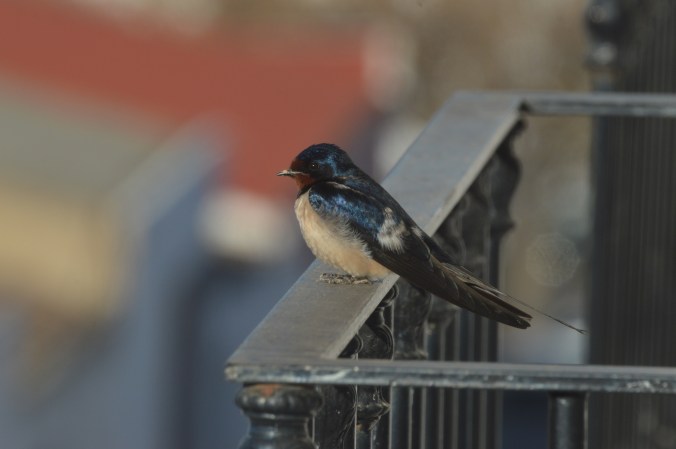
It’s been a big weekend for swallows – there’s a few here to stay now!

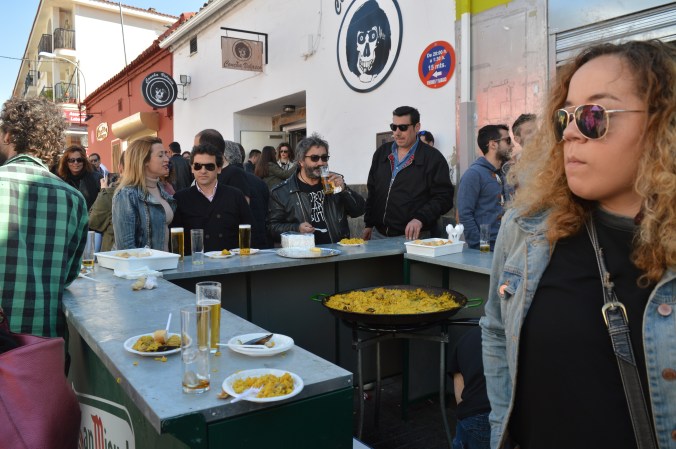
Almendralejo is a bigger town than Villafranca and as a result there’s a lot more to do, especially on the nightlife front. This weekend was the twenty-second anniversary of one of my usual haunts, the Concha Velasco, a kitschy bar decorated with Gothic props (most of them from a film set) and plenty of Goya paintings. It’s usually playing a selection of 80’s rock and it’s a nice place to chill before or after a dance. To celebrate, they were holding a concert for a few local bands, beginning with a free paella and caldereta lunch in the street.

DSC_0020

How long do you think a concert lasts? Four or five hours, perhaps? I’ve been playing in concerts for most of my life and the longest was about five. Not this one. There were about four acts and each one had a two-hour set, there or thereabouts. Due to start at half five, things finally got moving at around ten to six. That’s normal.

First up was the band we had come to support, with our friend Miguel on electric guitar. I’m told it was their best gig yet. I’ve only seen them perform this once and I’m sold. Rock is one of the last frontiers of music that I haven’t really reached into and I’m sold on a few of them. Beginning with the theme tune from Back to the Future sold me and I enjoyed the set immensely – and still found time to take some snaps. Consider me now a fan of Spanish 80’s rock (ed. BB, will you ever learn to be normal?)

I felt pretty voiceless and worn out when the set was over so Fran and I set off to De Blanco, a quieter local, for a change of mood and a few early birthday drinks. Having gorged on all the freebies on offer at lunch, I forgot dinner completely, which was a mistake for several reasons. The most obvious was the effect of a single rum and coke (ron barceló). Having been teetotal until this year, my alcohol tolerance still isn’t brilliant, and I felt rather dizzy for about half an hour. Motoring through a bowl of fizzy sweets the bartender brought didn’t help in the slightest. Fortunately, we weren’t in a hurry to get anywhere and I regained my senses after a time. Still, I know what I’m not doing in future.

One of the strangest things about being English abroad is the simple novelty of being English. Apparently it’s motivation enough to strike up a conversation, and this was just another example. A trio of Spaniards sitting next to us joined us after a few minutes out of curiosity and ended up inviting us out to go dancing with them at another nightclub, Almen’s Whisky A Go-Go. Apparently there was supposed to be a star from Spain’s Gran Hermano turning up, but whether she did or not, I have no idea. At any rate, there was no sign of her by ten to four in the morning, at which point Tasha and I returned to Concha to see if we could catch the end of the last set for the night.

Remember what I said about concerts? Well, here’s the thing. The fourth set hadn’t even started when we got there. At four in the morning. A DJ and saxophone duo (who knew?). This is probably the first time I’d heard a full set without even a single reggaeton number – all dance, from start to finish – and I went into a creative overdrive of at least half an hour before I ran out of ideas and returned to simple jives. The result was that several of the crowd were egging me on for the rest of the night every time I began to run out of steam. At about half five the five hours of almost non-stop dancing, ten hours of music, general fatigue and more pressing hunger began to wear me down. Tasha insisted that I could keep going and kept me fuelled on glasses of water, and I’d like to say that on any other night I’d have willingly stuck it out until the end… but we had been going for almost ten hours, and I hadn’t eaten since three o’clock the previous day. In the end we retreated at the ‘early’ hour of six o’clock for a quick bite to eat at the kebab shop opposite and then, gratefully, I crashed on Tasha’s sofa and slept.

Until the Breast Cancer fun run woke me up at nine o’clock the following morning, that is. I’ve been recovering sleep ever since.

Here’s to a more relaxed weekend to kick off the Easter holiday this weekend. I could do with it. BB x

Splash: Fear in a Hoodie and a Baseball Cap

I was sitting in the park sketching when one of the local malotes loitering around the bridge lobbed a brick at me. It fell short by a few feet and landed with a heavy splash in the water, but the message hit home. I took my blonde hair and foreign appearance out of firing range and returned to the safety of my room to listen to a podcast on South African townships in peace.

It’s a sad fact of the world that one of the things that scares me most is my own generation. It always has, far more than all the villainies of our world. The romantic in me would like to point out that I’m currently living in the land that birthed both Cortés and Pizarro, those butchers of the New World, as well as the most ferocious wing of the Spanish Inquisition… but I’d like to think I’ve got more than enough common sense to eliminate any racial motivations behind this morning’s unfortunate brick incident. The simple fact of the matter is that it’s a world I just don’t understand. And, to quote a Batman villain (for want of a better source), ‘you always fear what you don’t understand’.

Why? What’s the point? What would lead anyone to revel in a deliberate act of aggression? If it’s a misplaced act of pumped-up testosterone, I disown my sex here and now. I just don’t get it. Maybe it’s because I’m British and I’d rather die than tread on somebody else’s toes. Or perhaps it’s because I’m the kind of person that bursts into tears over King Kong or The Green Mile. I guess I’ll just have to content myself with the simple fact that everyone is different, for good or ill. Without fear and violence, how would we define that which is good?

As a kid I remember being chased by thugs from down the road when I was out with my camera watching buzzards. The same suspects called “carol-singing” a few weeks later – a six-second, tuneless rush of We Wish You a Merry Christmas for which they expected payment – and pointed me out as ‘that kid with the sick camera’. At the time I had no idea what he was on about; ‘sick’ as an adjective meaning ‘impressive’ had developed in the nine months I’d been out of the country and it caught me unawares. I still find it substandard as a slang term. France’s verlan is simply streets ahead, no pun intended.

It’s this bastardization of words, of filling the English language with redundant dual-meanings, that bothers me. Standard has come to mean excellent. Lad has come to mean exemplary individual and gay has been a blanket, one-size-fits-all insult for as long as I can remember. Especially the latter, since it’s been used on me since I was at primary school. It shouldn’t have offended me in the slightest, since it was neither true nor (I hope) intended as such, but the ignorance of it all has frustrated me for years.

Who am I to comment? I’m a relatively privileged white middle class English boy with two jobs in a country where most of my generation struggle to find one. Is it any wonder they’re angry? A small part of me occasionally resurfaces at moments like these, telling me to mind my own business and go home. But then, it’s a hateful phrase and one that’s no match for my own curiosity. Honestly, if it weren’t for my aforementioned issues with causing trouble, I’d have all the fittings for a journalist.

Nevertheless, here I am, holed up in my room. It’s less shock than the warmth of my bed that’s keeping me from going back to the park now, but it’s had me thinking; doubly so over my South Africa plans. What right have I to fork out on a self-styled adventure to a country where my own brick-dodging incident pales in comparison to the terror of the townships? A younger me would have cited white-guilt all day. These days I simply wonder whether or not the problem is seeing us and them in the first place.

And strangely enough, it’s only left me keener than ever to go there.

In that sense, it’s not the hooded youth I’m afraid of. It’s the potential for violence in all of us. We are, by record if not by roots, a violent race. It’s our imperative as a species to overcome that and nurture our caring side, which is certainly not unique to us in the animal kingdom. A line in one of my favourite books says ‘there’s so much human suffering that the whole world should be wailing’. She’s right. But if we all become so afraid of ourselves by drawing lines in the sand that we have to live in compounds like today’s South Africa, what kind of a world are we leaving for those who come after us?

The drone buzzing about overhead just crashed to earth with a loud smack right at the feet of the malotes. The kids to whom it belonged ran to collect it none the wiser to their jeers. A lesson in bravery from two seven year-olds.

I’m keener than ever for South Africa. Fears must be faced, not avoided. It won’t rid me of all of my fears, but it might just put my troubles into perspective. BB x

Be Kind, Rewind

My primary function over the last week has been more akin to a substitute CD player than a teacher. The Epiphany term is drawing to a close and mock exams are very much in fashion. The trouble is, the school’s CD players are acting up, and have been for years. I was called in to help – in my free time, I’ll have you know – to ‘improvise’ a brand new listening text for them on the Tate Modern.

And I’ll also have you know it was totally worth it. Whipping up a different, two-minute text on the same subject to suit different ability sets every time might sound dull, but as a writer I found it deliciously challenging. And as a former Langtonian, to whom improvisation comes quite naturally (for want of a better term beginning with B), it’s something I’m rather good at.

I’m now quite used to doing favors for my school. I feel I owe it to them every time I get a lesson off (which isn’t often, but it does happen from time to time). But that’s a mercenary approach: it’s more because I simply love what I’m doing. If I didn’t have these occasional hankerings to go adventuring at the weekends, I don’t half wonder whether I’d throw my day off out the window and work Fridays as well. It’s not as though I don’t already come into school on the occasional Friday almost hoping to be asked to take a lesson. I really must be a few screws loose.

I appreciate that I’ve been damned lucky to have landed such a jammy set-up. I wouldn’t say it’s the best shift in the world – the kids are about as rebellious as you might expect from teenage Spaniards – but it comes very close. I’m still going to strike out for somewhere new in the year after Durham – and I’m thinking one of either Aragón, Andalucía or a different part of Extremadura – but I’m almost 100% set on coming back to Villafranca in September 2018. I mean that. It’s not the most exciting place in the world to live, but it’s a wonderful place to be from a people perspective. The only thing I lack is a friend circle of people my own age, and that’s due in part to my Olvereñan fatalism and my awareness that this was always going to be a year in transition; perfect for getting a taste, impossible for laying down roots.

Sadly, I’ve become painfully aware that there’s only ten teaching weeks left. It was Brocklesby who alerted me to that; beforehand, I’d barely given it thought. That does mean ten more weeks of new lesson plans, of riotous primary classes and of absent teachers, but the ups outnumber the downs.

And best of all, it really is spring now. I forgot to wear my hoodie to sleep last night as I’ve been in the practice of doing since October (Spamish duvets are stupidly thin) and I didn’t notice until I put it on this morning. Spain’s about to put on her very best dress and I can’t wait to see what her stylist has done with her this year. BB x

  
PS. One of my colleagues just came to the staff room to tell me that despite the difficulty of the text, quite a few of them actually overachieved, so it shows they were listening after all. Which is kind of what you’d hope in a Listening exam, but there you go. It’s little things like that that make my days! They were also shown the artwork which I chose to talk about, which just so happens to be an old enemy of mine. It’s Andre’s Equivalent VIII (The Bricks). I’ve met it once before. The students hated it. The teacher hated it. And if I’m perfectly honest, out of my entire art class of 2011, I couldn’t stand it either. Great minds, eh?

Ned Stark was Wrong

Two weeks ago I saw the first martins wheeling about over the bus station. Last week the first swallows began to arrive and the lonely stork on the chimney of the old factory was joined by his mate. This weekend the chiffchaffs have finally joined in on the dawn chorus and, whilst it’s hardly been what you’d call wintry around these parts, today suddenly feels decidedly spring-y. The sun is blazing away in a sky of cloudless blue and everybody is out in the town square, soaking up the good weather and generally having a good Sunday of it.

The truth of the matter is, quite honestly, that winter has simply not come this year.

DSC_0733

Maybe I’ve been in the north of England for too long, but it stills feels like I’ve been cheated of a season out here. Extremadura is, as its name suggests, a land of extremes: of fiercely hot summers and bitterly cold winters. There are people in Villafranca who remember whole years when it never rained at all. It has rained here, but not often; about four or five times since I arrived, all in all. And whilst the presence of the cranes is a sure sign that it’s winter somewhere, it looks a great deal more like spring right now. The cherry blossom is already in bloom, over a month early, which is more than can be said for the unseasonably early arrival of the migrants. I think I’ll head on down to Tarifa next weekend to check on how things are going in the Strait. If spring has come early anywhere, it’ll be there for sure.

Which reminds me, I really must go looking for the cranes before they leave.

DSC_0736

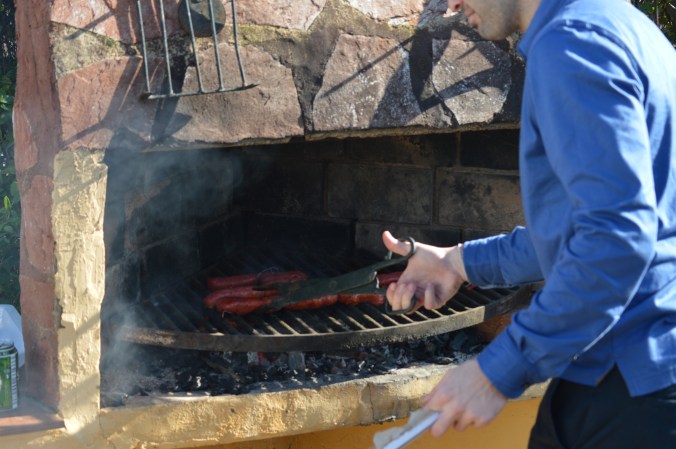
To celebrate the gloriously early return of spring (alright, so that wasn’t really the reason), a local friend and our would-be guide, Jesús, threw a barbecue gathering in his casa de campo out in the vineyards of the Tierra de Barros. A casa de campo is a real Spanish boon that I’m still struggling to translate. Country house might work, but that conveys a sense of grandeur that most such buildings – merely glorified sheds where your average town-dwelling Spaniard stores his produce, spare furniture and ‘all the shit that doesn’t go anywhere else’ – simply do not have. Ask a Spaniard to show you their casa de campo and you’ll quickly see why Spanish houses are so ludicrously tidy.

DSC_0650

A common mistake that foreigners make is that these are dwellings in their own right. Far from it. They’re almost all two-room bungalows, equipped with sofas, plenty of chairs and a kitchenette, purely for the purposes of hosting summer gatherings like the one Jesús held yesterday. The locals will pay regular visits to their campo, especially during harvest season when they’re more practical than pleasurable, but most of them would never stay in one. It’s simply not done. Would you sleep in the tool-shed?

DSC_0646

Jesús had invited a fair crowd, with an equal balance of Spaniards and guiris, the latter representing England, Wales and three American states. The Almendralejo crew, in all but name. I had the audacity to avoid them almost entirely last term, stopping by only twice, for fear of being sucked into an English-speaking failure of a year abroad (I speak enough English for my job). That was poorly done indeed. Quite unlike the infamous all-English compounds in many a Spanish town, the Almen lot are very much half and half. As the most fluent of the guiris (a title the Spaniards themselves have given me and which I cherish above all other compliments), I get more than enough practice in my grandfather’s language as the ultimate go-between and little could make me happier.

DSC_0655

Although, that said, the copious offerings of grilled chorizo, crackling and manchego cheese on offer yesterday did a damned good job of it.

DSC_0660

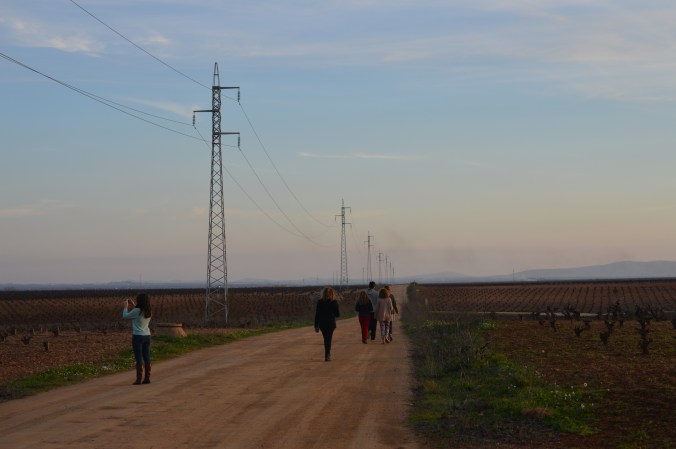
No campo gathering would be complete without una vueltecita, or stroll. Jesús’ casa de campo is just off the Vía de la Plata, the lesser known northbound Camino de Santiago and the old road from Seville to the silver mines in the Asturias. We didn’t stroll particularly far, but then, you don’t have to; the Tierra de Barros is so vast and flat that you can see for miles in all directions. It’s hard to imagine when you compare it, but the village of Hornachos, sat astride the high Sierra which shares its name, is as far from Villafranca as Walmer is from Canterbury. Twenty seven kilometers, or fifteen miles, there or thereabouts. And you can see one from the other. It’s that flat.

DSC_0672

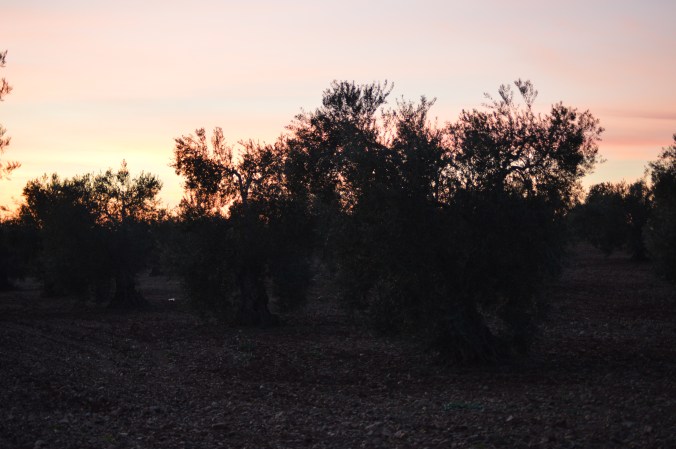
We didn’t find any unicorns (don’t ask) but we did find two very excitable dogs and an emu. And a characteristically gorgeous sunset over the olive trees.

DSC_0700

Andalucía, that dusky southern beauty, might have stolen my heart years ago, but honest Extremadura is doing her hardest to win me over and very nearly succeeding. If I end up returning to this land of endless steppe, of Kings and buses named after Zeus’ lovers and home of quite possibly the hardiest of all of Spain’s assistants (I maintain that you have to be at least a few screws loose to choose Extremadura as your home for a year), it wouldn’t surprise me in the least.

DSC_0717

Carnaval is coming, but it’s not here yet, and before that yawns our second five-day weekend; the best we get by way of a ‘holiday’ besides Christmas and Easter compared to the French assistants (a necessary sacrifice, I suppose, for being in a superior country). I’ll sign off before the Spanish blood in me goes to my head. BB x

Wrapped Up for Christmas

The end is nigh. I woke up nice and early this morning for one final lukewarm Spanish shower, shaved and set out in perfect time to make my 9am class… Only to find it empty. It must be Christmas.

I’m not really complaining. I’ve only had a few dud lessons like this over the course of the first term and they’ve all been in the last few weeks, when you can see them coming a mile off. I’ve heard plenty more horror stories from other assistants finding themselves with nothing to do all too often. That doesn’t stop the professional in me going in to school regardless. Hey, there’s free internet there – that’s as good a reason as any.

I should point out that today is my last full day in Spain… for a fortnight. In fourteen days exactly I’ll be back for Reyes Magos and the Cabalgata parade in Olvera, but primarily for Ali’s birthday and our weekend together in Madrid to see El Rey León. Before all that, I’ve a grace period I hadn’t planned on to see my brother, my parents and a cavalcade of old friends, most of whom were under the impression (as I was) that they wouldn’t be seeing me until September 2016. And, of course, to work on the drawing.

I’m sticking to my guns, though. Next year I’m in it for the long haul, in every sense. In truth, Christmas in Spain was never a certainty, but Easter most certainly is. Ain’t no way I’m spending even a second away from this country when it’s at its most beautiful.

I promised you all a summary, didn’t I? I’ll doubtless have a grand old 2015 review penned as the year draws to a close, but for now, I’ll stick to summing up the ups and downs of my first year-long stint as a teacher:

  • Improvised lessons are the best

Fail to plan, plan to fail, right? Wrong. Expect, and expect to be disappointed, as me mam would say. Some of my best lessons so far have been the ones where I’ve gone in with an idea on the day and simply improvised. By the end of the week, it’s usually matured into a fully-fledged lesson in its own right. By contrast, lessons where I’ve gone in with every minute blocked out with various exercises tend to fall dead in the water when one little aspect derails the entire flow, be it because the students were too quick – or, as is more often the case, too chatty.

  • Spanish seven to eight year olds are (mostly) demons

I didn’t sign up for primary teaching. I nearly did, but I didn’t. When my colegio scheduled me for two hours of primary a week and my instituto stepped in to reshuffle my timetable to their favour, I thought I’d dodged a bullet. A second reshuffle landed me back in the hot seat. I mostly look at teaching as something fun that I’d happily do for free, but at least one of those two hours a week is definitely a test of endurance that I only submit to for the cash. It’s not as bad as that one time I tried looking after those Iraqi children, but… I’ll put it this way. Given that Monday, a three hour day (less than a third of my usual workload), is nonetheless my least favourite day of the week is testament to the raw power of those kids. Without them, I dare say there’d be almost no catch at all to this post.

  • Speak up

If you aren’t comfortable with something, say it. That’s something I’ve never been very good at. I’d never describe myself as proud – if I once was, that side of me was mauled seven years ago – but I’d still rather soldier on on my own. That’s not the way to do it. Regular feedback is a good thing, especially as far as teaching is concerned, as you’re there for the kids’ benefit and not your own.

  • More money, more problems

I budgeted on maybe two hours of private lessons a week on top of my earnings from my instituto posting; a reasonably paid, casual fourteen-hour week. Instead, I’m burning the candle at both ends on a thirty-hour week, working two schools, two bi-weekly private groups and three one-to-ones, also bi-weekly. It takes in the dollar, no doubt, but it doesn’t half make for an intense four-day week. And to think that I’d originally planned on working evening shifts at a third school.. Coming back alive from this year abroad could well be a priority.

  •  You’re an assistant, not a teacher…

So says my instituto. Sure, most of them are happy to take a back seat and let me have the run of the place for an hour every time, but rarely on my own. That they’ve never bolstered me with the assistance of a guardia (supply teacher) means I must be doing a good job, which is reassuring, but the support network is very real. I never have to worry about discipline, grammar or marking, for one, which means all I have to do is the teaching itself; all the pros and none of the cons.

  •  …unless you’ve been told otherwise

That’s all well and good at the instituto. Elsewhere, I’m expected to take classes alone, and to cover everything besides: full explanation of grammar, discipline and the occasional bit of homework. Don’t get me wrong, it’s great practice, but as I’ve mentioned before, there’s at least one class where I could really do with a little help. There’s a reason people train as teachers.

  • Keep your personal and professional life separate

When you work in a town as small as Villafranca – especially if it’s as fond of gossip as this lot are – it’s easy to feel like the eyes of the world are on your every move. And they are. As my colleagues put it, I’m “controlado”. You won’t have to think too hard about that one. I’ve split mine down the middle, going out in Cadiz and working in Badajoz, with all of Sevilla as a buffer zone. It works. It doesn’t stop my kids hunting me down on Instagram, though. How they found me in the first place is quite beyond me.

  • Knowing their names is the key

Alright, so when you’re dealing with ten classes averaging twenty-five to thirty in number, putting names to faces is a Herculean task. I think I know the three or four best and worst kids in each one, and the others tend to blur into one. But at my second school, thanks partly to the register and mainly to the smaller classes (six to fifteen a throw), I’ve memorized almost all of them by name – and boy, does it pay dividends. It may only be a small move, but it means the world to them when they realize you’ve taken the trouble to remember. That, and it beats pointing and saying ‘uh… You’ twenty odd times an hour.

  • Sacrifice is only worth it if you’re prepared to bargain

I had to give up my day off on Friday to rehearse a Christmas number with two of my younger groups and then to see it carried out in the concert that night, scuppering any plans I’d had to explore Plasencia with my mum, who’d come to visit. It’s a testament to how much I’ve improved in this profession that I didn’t simply take it lying down as I might have done before; I had the sense to negotiate, as it were, for a day off of my choosing at some point next year. I’ve been collecting favors by working overtime at my other school with the aim of visiting Olvera a day early to make good on an invitation to spend a day working at my former primary school. It should be obvious, but don’t make sacrifices unless there’s something to be gained.

  • Spanish living is ridiculously cheap

Seriously. 150€ a month on rent. 25€ a fortnight on food (and that’s splashing out). Eating out well for 10€ a throw. And all that for the luxury of living out in the sticks. I don’t know how I’m ever going to readjust to English pricing…

Who knows what the new year will bring? With any luck, a new camera… it’s time I got back into my SLR game. Until then, I’ll be taking a well-earned break from teaching for a good three weeks. Hasta enero, España. You’ve been good to me. I mean that x