Camino XV: Grañón

Albergue Cuatro Cantones, Belorado. 20.57.

The grand majority of Camino guidebooks operate in such a fashion that some towns become natural starting and finishing points. At 21km from Nájera, Santo Domingo de la Calzada is a perfect example (with your average pilgrim walking around 20km a day). On the one hand, this is a very good thing, as it means any deviation from the recommended staging posts may give you a feel of the Camino as it used to be. On the other, it means that some towns soak up all the trade and leave the others dry. So how do you fight the industry?

Grañón has the answer: by being the most memorable and unique albergue on the entire Camino de Santiago.


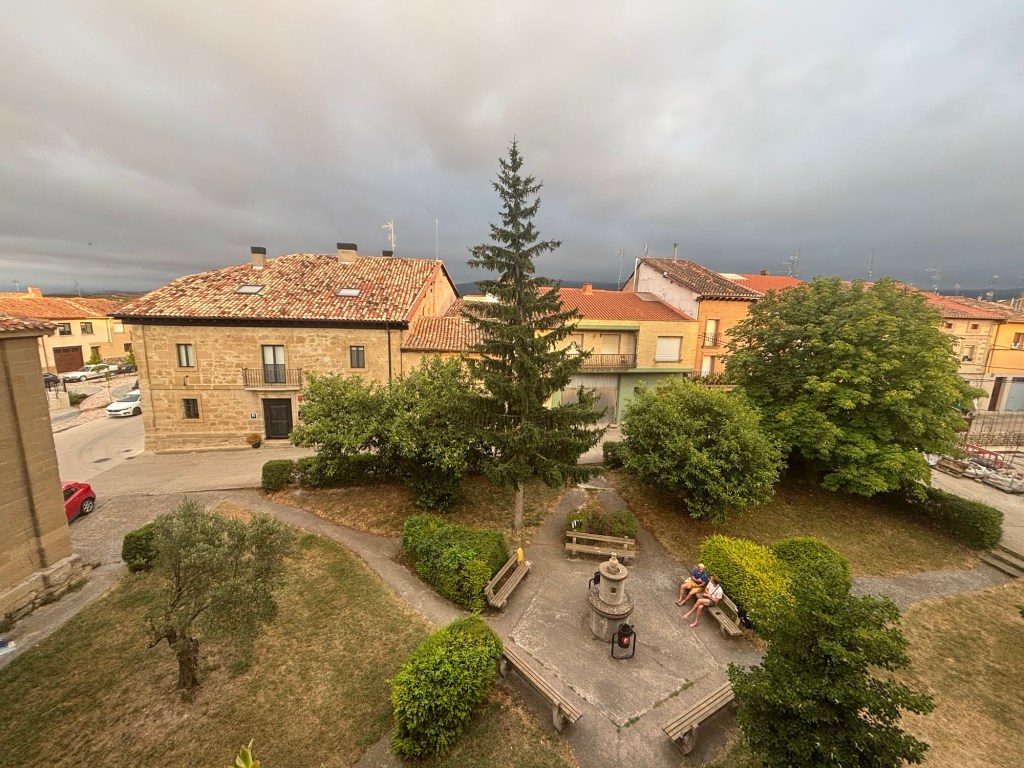
After leaving Santo Domingo just before midday, I used the last of the cloud cover to beetle across the plains for a further 6km to Grañón, feeling slightly guilty that I was abandoning my Camino family again but confident that I was making the right decision – I’d missed Grañón before out of ignorance, and I wasn’t going to do so again in full knowledge.

Upon arrival I was greeted by the hospitaleros Kevin and Juan Manuel, a Chinese-Australian and a sevillano. For the first hour and a half it was just me and three Koreans, and it looked to be a rather cosy night ahead, but then Alex showed up, followed by Audrey, Alonso and Talia, and then Johan and Max. For whatever reason (possibly the clouds) they’d all decided to push on to Grañón after me. I must have sold it pretty convincingly without meaning to. My heart was lifted and I was tremendously grateful.

I fell into conversation with Juanma in the garden who asked after my Camino story, I told him about my grandfather and the grim fate that had befallen my great-grandparents, both victims of Franco’s regime – one murdered, the other dismissed and sent into a sort of internal exile. I’ve told this story so many times that it’s become second nature, but that’s the first time it’s drawn tears in a listener. Juanma explained that it had touched him deeply: his family, and so many others in Andalusia, had suffered a similar fate after the Civil War, which left thousands of families across the country broken, scattered and changed forever.

I’ll make a beeline for any Spanish accent, wherever I can find one, but I will always have a soft spot for an Andalusian. He was the only person thus far to recognise my Virgen del Rocío wristband for what it was, which was a tremendously good start for me: it’s not often one encounters a fellow devotee of the Mother of the Marshes on the Camino (or even another Catholic, but that’s another matter).


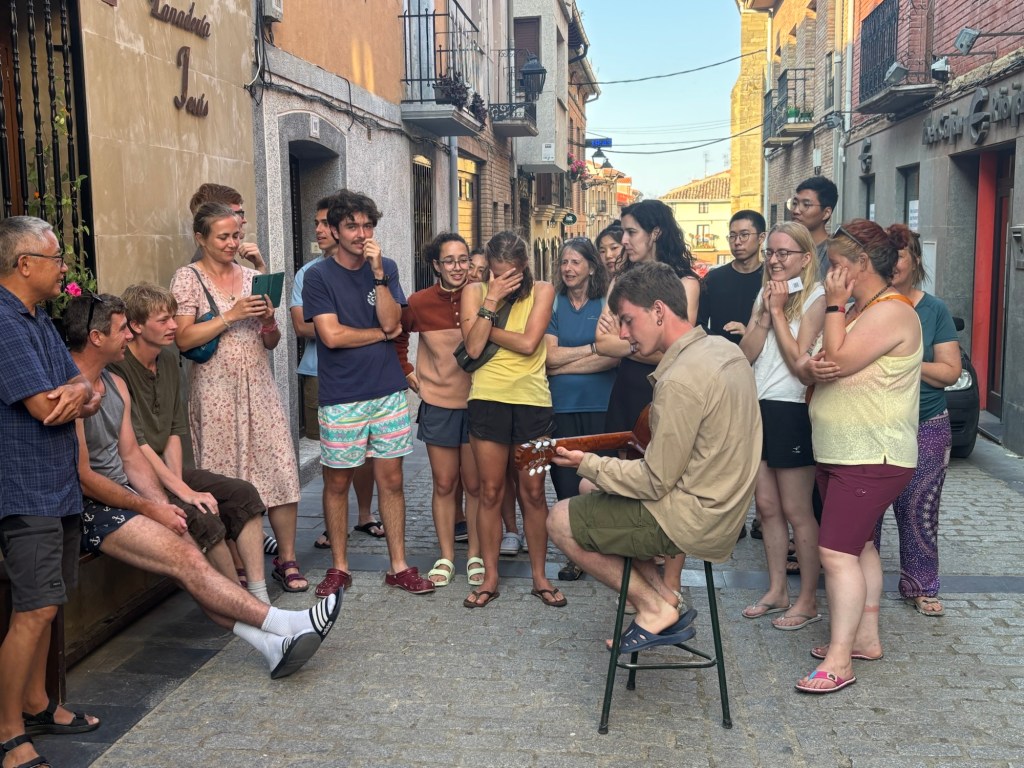
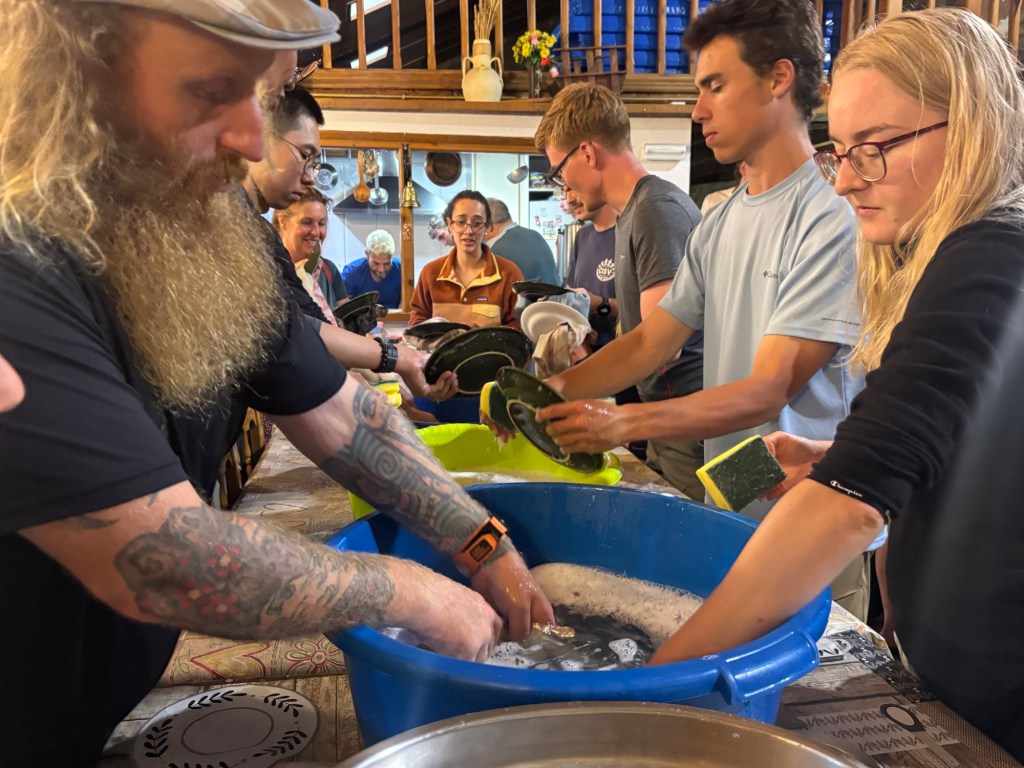
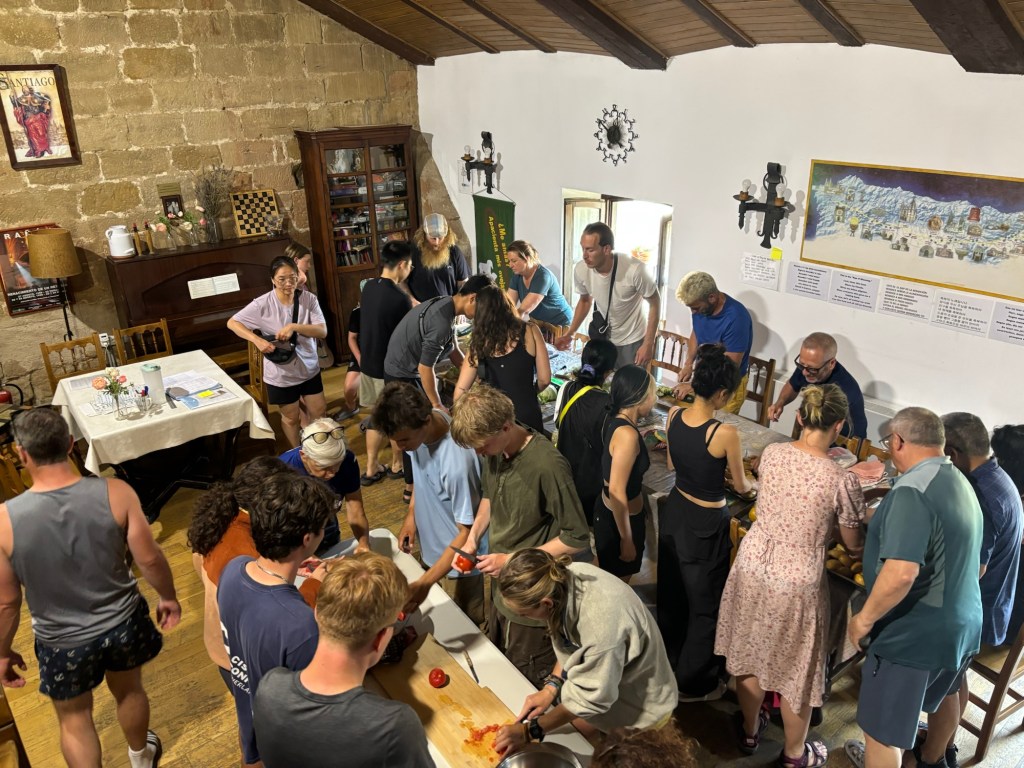
After preparing dinner – where for some reason I was assigned the role of sous chef and tasked with handing out jobs and ordering the entire operation – the hospitaleros requested some music. Johnny, an Irishman, was one of two who could play the guitar, but his repertoire and mine were worlds apart. The other guitarist, a young Danish kid fresh out of school, had only been learning a few months. So (not for the first time in my life) I ended up singing a cappella the only song I could think of that works: Pata Negra’s Yo me quedo en Sevilla.

It’s a gypsy love song to the city of Sevilla itself, and one that I’ve known since I first heard it on my mother’s Rough Guide to the Music of the Gypsies aged seven or eight. Back then, of course, my language skills weren’t really up to scratch, and I knew the song as “Single Feather”; my little brother and I used to run around the house holding a pheasant feather or something like that when it was playing in the old CD player. Ironically, it’s been a mainstay of my repertoire ever since, and one I usually wheel out if I’m called upon to sing in moments like this.

It’s amusing enough to be mistaken for a Spaniard because of the way that I speak, but delivering a gypsy ballad with all the frantic passion and duende that I can muster is both an ego trip and an out-of-body experience. I don’t think I have any gypsy blood at all, but the music speaks to me on a deeper level, touching my heartstrings in its dance through the blossom-scented squares of Sevilla.

God knows what the other pilgrims made of it but the Spaniards were impressed.


Later, after Mass, we had to go to the village bakery to collect our potatoes, as the albergue has no oven. There followed a strange ritual where we had to sing for our supper, divided up into nationalities. The Italians did two numbers (one I didn’t catch and Bella Ciao) and the Spanish committee (to which I defected) was psyched up for a tongue-in-cheek rendition of La Macarena, but since we were almost entirely hospitaleros (yours truly temporarily excluded), we were let off the hook. The English-speaking team (about 75% of the pilgrims, including my family and all the Koreans, Germans, Slovenes and Japanese) came up with… uh.,, Twinkle Twinkle Little Star.

Turns out they could easily have done Bohemian Rhapsody, but they didn’t organise in time. Never mind! One way or another, we got the potatoes.


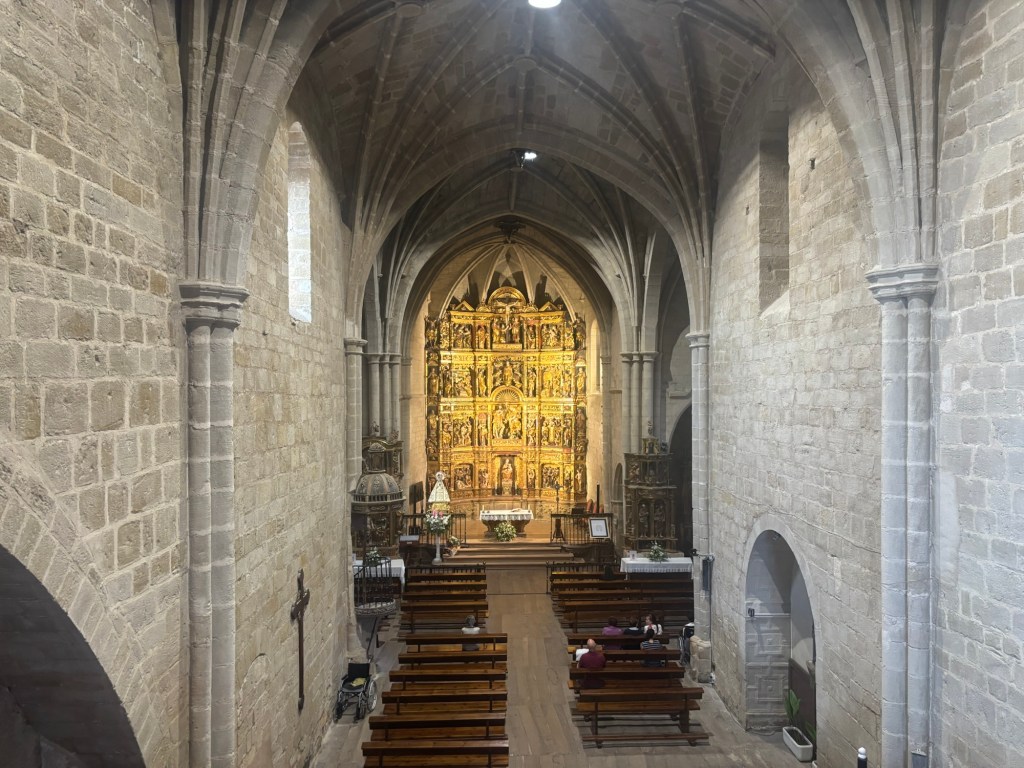
After dinner, we went back into the church for a candlelit reflection in the choir. Prayers in multiple languages followed by the passing of the flame (the “pilgrim candle”) where we had a chance to say something: a reflection, a prayer, a wish for the Camino. Most of them just said “Buen camino” and passed it on. I held on for a good couple of minutes, I think.

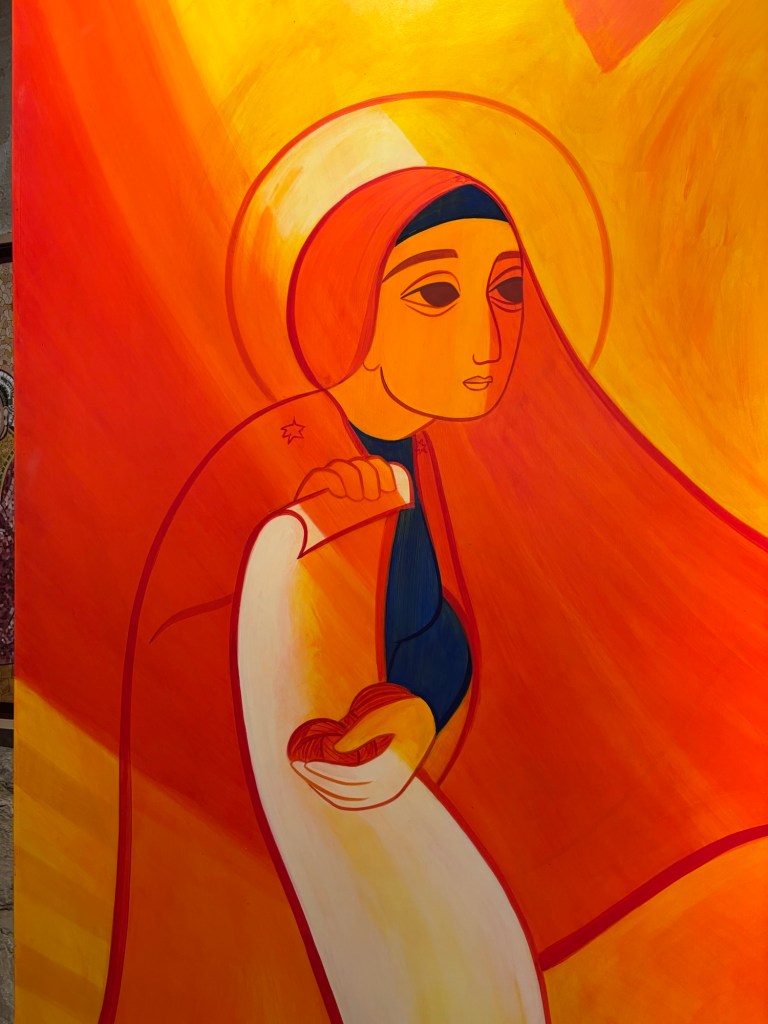
I prayed out loud – something I don’t do all that often. It felt like the right thing to do. I prayed for my grandfather, José, and my great-grandparents, Mateo and Mercedes. I prayed for David, the father of one of my closest friends, for whom I have chosen to walk the Camino this year. I prayed for all of us, for a safe and spiritual road to Santiago. I prayed my thanks to God and to La Virgen del Rocío for all she has done for me this year: through heartbreak and healing and natural wonders, she has always been there to guide me.

Maybe it was a bit much. That would be very me. But it was (and may easily be) one of the only chances to worship together on the Camino and I took it with both hands.


I’d just brushed my teeth for bed when Juanma asked for a favour: he was taking over the albergue as hospitalero the day after and wanted help with translating his script into English. I worked it out with him from a notebook in a bar in town over a caña while he ordered his “usual” (a Maxibon ice cream).

We discussed a lot of things. Why there aren’t many Spaniards on the Camino (they’re all on bicycles, competing against each other to complete it in the fastest possible time). Why there are so many Koreans (it’s nationally regarded as a major CV booster, as well as a temporary solution to widespread youth unemployment). And where the Germans, who used to be everywhere, have gone (the Via de la Plata and the Via Mozárabe, to avoid the crowds on the Francés).


I’ll have more to say later about our next stop, I suspect. But I wanted to get this all down now while it’s fresh in my mind. It’s taken at least an hour, but it has killed the time and allowed me to stay and wait for the others to wake up, and that’s no bad thing. BB x

Camino XII: Tormentón

Albergue Parroquial de Santiago, Logroño. 19.20.

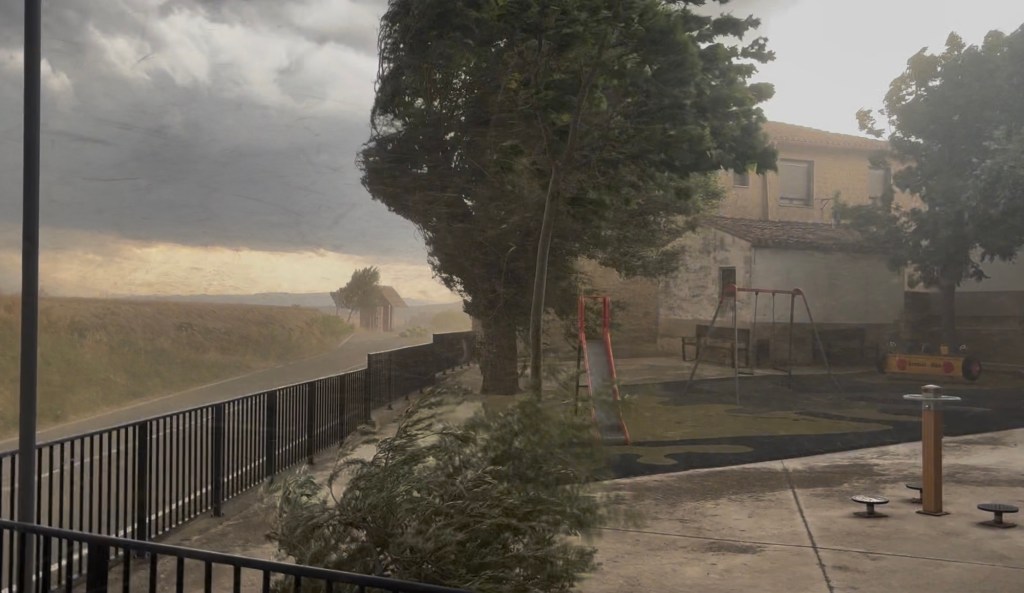
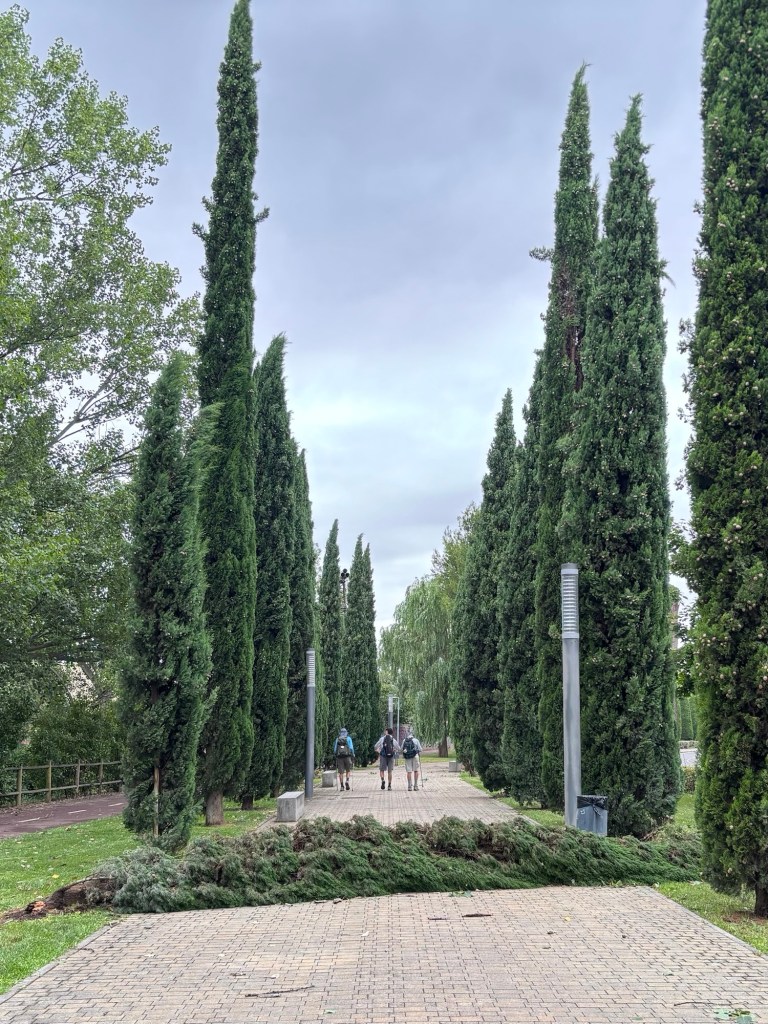
Last night, quite out of nowhere, a summer storm swept across the north. No rain, no hail; nothing but the unfettered might of the wind. One moment the sun was shining, the next the wind had reached gale force and the shutters were slamming against the windows as a dirty vortex of dust, leaves and debris slammed into Sansol like a hurricane.

It didn’t last long – five minutes, tops – but it darkened the sky, and lightning bolts fell in silent flashes all through the night.


When I left Sansol the following morning, after a long night of waking dreams, it was to a battered world. A pool full of leaves. Branches uprooted and cast across the path. Trees felled. A solitary stone curlew cried its mournful call in the darkness amid the devastation. Perhaps it’s the same bird I heard six years ago. As I tiptoed through the debris, I nearly stepped on a baby toad, almost invisible amid the scattered stones.


It’s a fair hike from Sansol to the next town, Viana, but it is the last stop before Logroño, which you can see from the hills long before you get there. This is also where we say goodbye to Navarra and the last glimpse of far-off Aragón, before they disappear behind the hills for good.

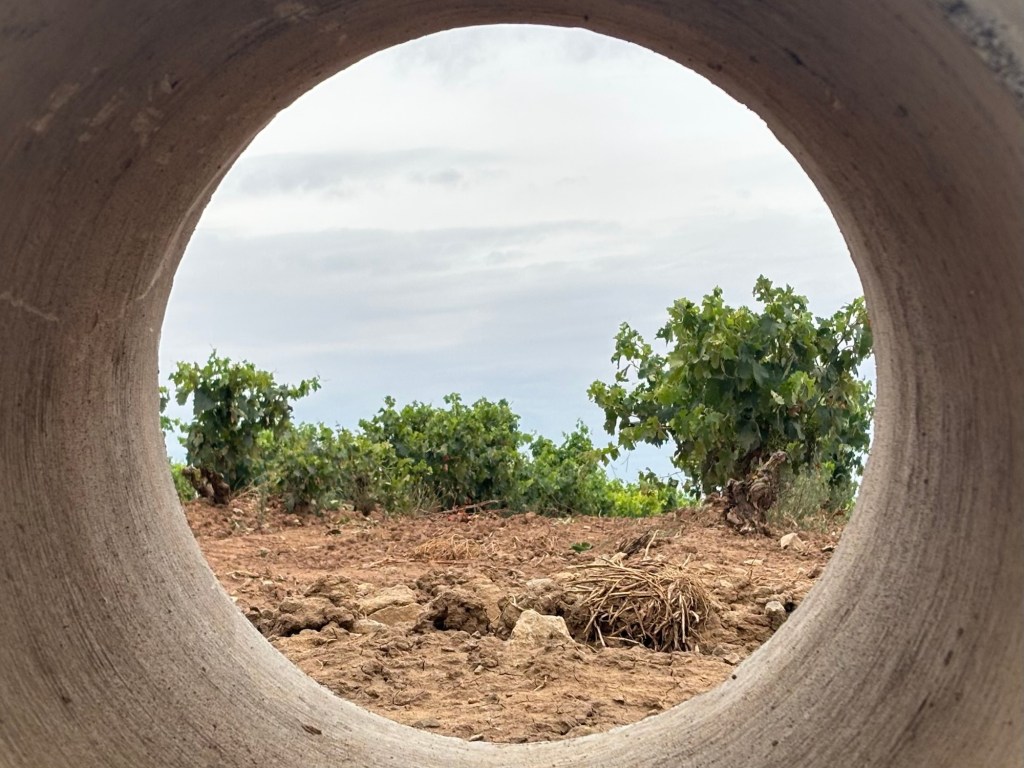
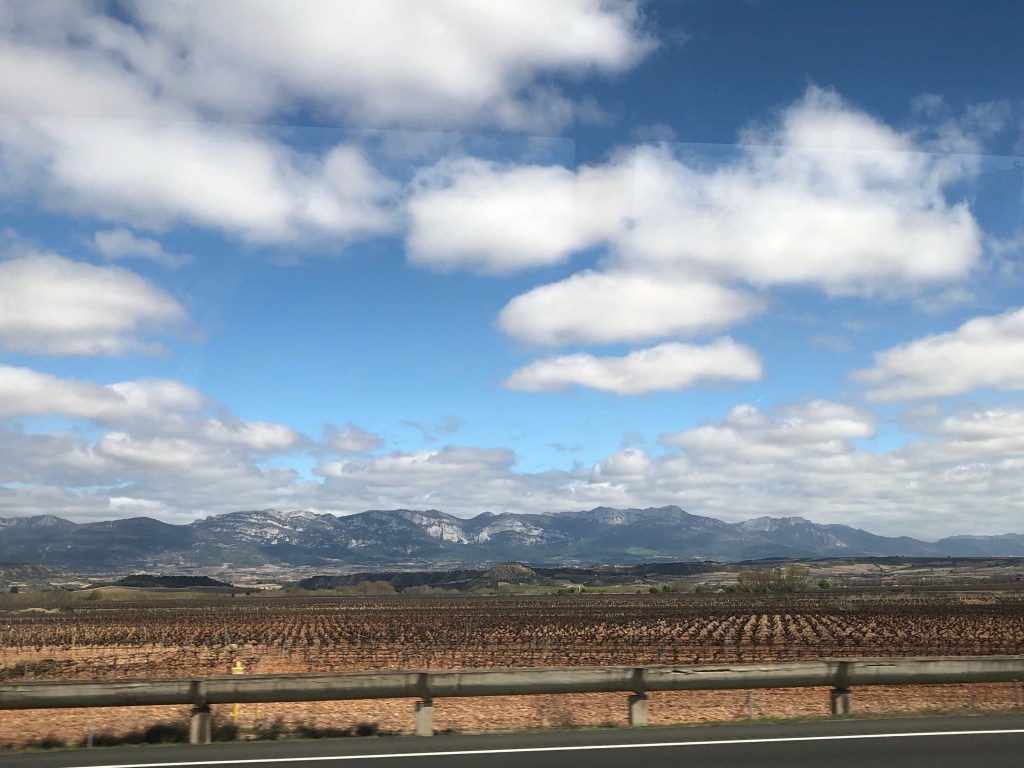
We’re now in the wine country of La Rioja – the rolling fields of wheat are still with us, but they’re interlaced with green vineyards now. Rioja wine is famous the world over, so it should come as no surprise that one of Spain’s smaller regions can’t handle the demand all on its own. In fact, most of the grapes that make a good Rioja actually come from neighbouring Castilla La Mancha, one of Spain’s largest regions, before being processed here. La Mancha produces its own incredible wine (which, realistically, should be up to the same standard), but it isn’t quite as famous as the world-renowned Rioja. One day, perhaps.


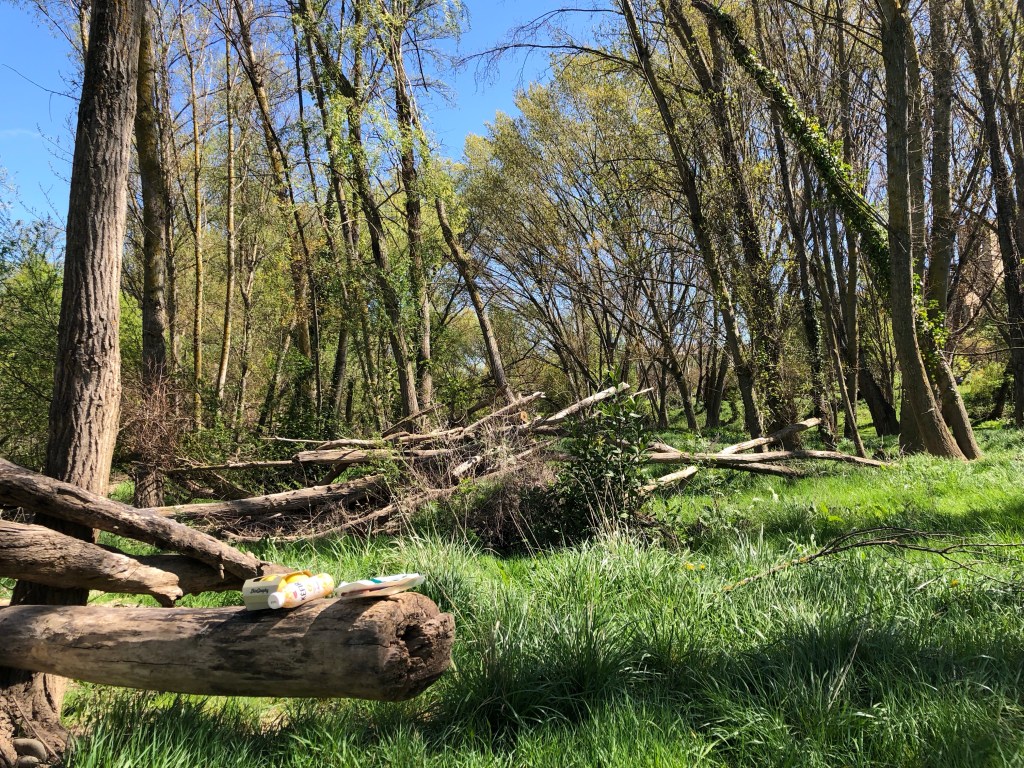
The wind picked up again as I reached Logroño. I didn’t much like the look of the clouds, and it looked like the storm had done even more damage here than in Sansol. Several of the trees lining the Ebro river had been ripped up by the roots and lay where they had fallen across the pavement. A quick glance at the Spanish news implied that it had looked even worse this morning, so perhaps they just hadn’t got around to fixing the park yet.


A flash of electric blue caught my eye as I crossed the bridge – a kingfisher. Who could ever lose that sense of wonder at such a sight? It didn’t hang around for long, but long enough for me to see it dive into the river in a halcyon blur before speeding away downriver.

It was still a good three hours until the Albergue Parroquial opened its doors, so I stashed my luggage in a locker which I hired for 6.50€ and set out to explore, unencumbered. It costs about the same to have the Jacotrans couriers deliver your rucksack to the next town for the day, but I felt a lot less guilty about this minor transaction. It’s difficult to justify lugging a whopping great backpack around a museum, after all.

The rain came down while I was in the Museo de La Rioja, so I managed to dodge the worst of it. It wasn’t as impressive as the collection in Jaca or Santa Cruz de Tenerife, but I was rather taken with one of the paintings, which featured a blonde Virgin Mary. I don’t think I’ve ever seen her painted with blonde hair before. Jesus seems to have more colourings than a Pantene catalogue, but Mary is pretty consistently dark-haired, so this one stood out for… well, looking so odd. Beautiful, but… odd. Like an understudy. Was she the artist’s unrequited love, I wonder?


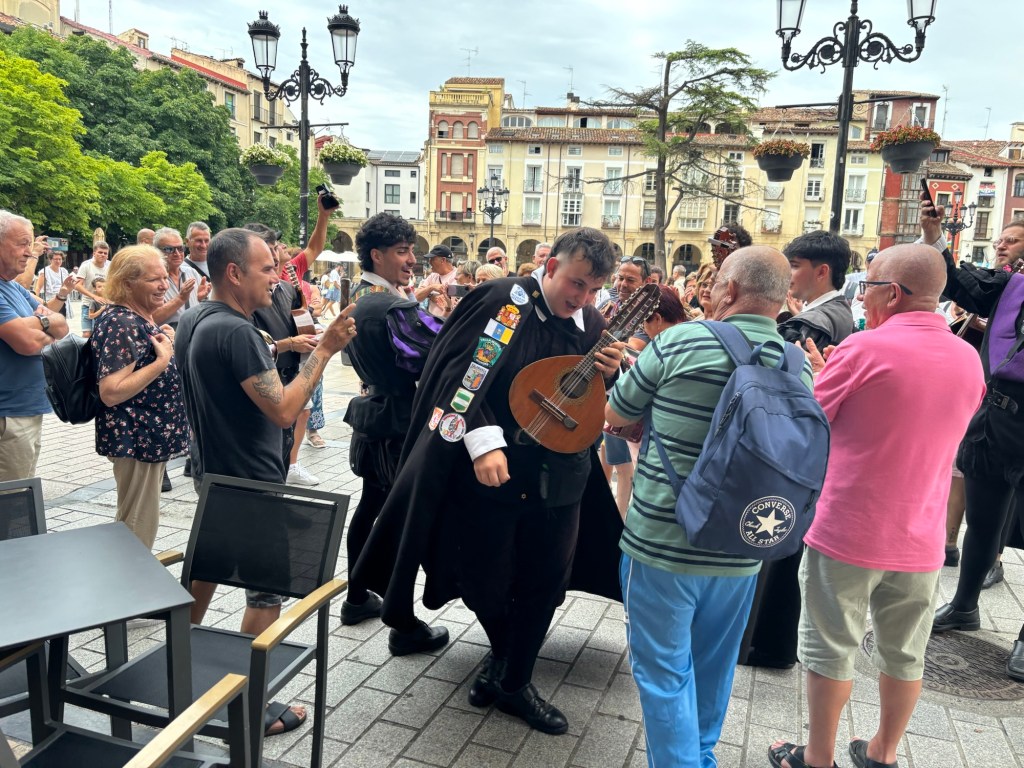
Once the rain had cleared, I grabbed my bag and checked in, before nipping back out for another wander. A tuna band was in town, dressed in their usual medieval splendour and serenading ladies left and right.


I’ve always loved tuna bands. If I’d done an Erasmus year or studied abroad, which was my original intention, I’m pretty sure I’d have launched myself at one. My uncle Rafael was in a tuna in his university days, and I suspect my grandfather and great-grandfather were also involved to some degree. It’s a tradition that goes back to the 13th century, so it’s a little bit grander than the a cappella groups that have taken the university music scene by storm. However, it is limited to Spain, and it is fundamentally a social and busking enterprise, so it’s not likely to break into a world championship anytime soon. After all – surely the real prize is a smile from the serenaded lady in question, be she twenty-one or seventy-three!


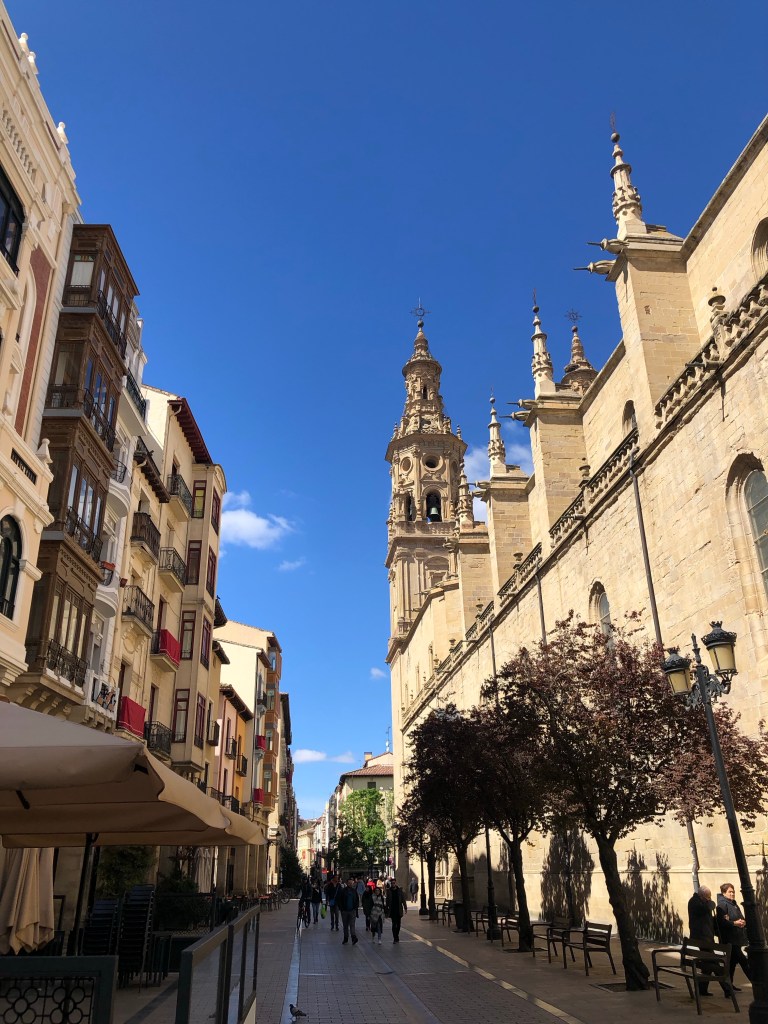
Logroño’s tapas street was absolutely packed, and with good reason: it’s famous for its gastronomy (not just the wine), with around fifty bars serving tapas and pintxos all within the city centre. There were at least six stag/hen do’s in town, all with matching t-shirts (together with one fairy godmother and one Jafar) so I was quite relieved to have a communal dinner with the other pilgrims at the Albergue Parroquial.

Dinner was a lovely affair, and a linguistic hurdle for me, constantly switching between English, French, Italian and Spanish. Sometimes I get bugged by the language barrier (I’m not fluent in Italian), but it does me a lot of good to listen and learn as I walk.

Tomorrow is still up in the air. I have in mind a rest day of sorts, going only as far as Navarrete. I’m not a huge fan of rest days, but I figure I might need it if I’m going to stay fit and healthy on my feet for the next four weeks. It might also be nice to shuffle the pilgrim pack a little. I haven’t really found my scene yet.


It’s gone twenty past ten. The Slovak flirt in the next bunk has finally stopped yapping away with the American girls and gone to bed. I should head, too. I might change my mind and make for Nájera tomorrow, or I might not. I’m still undecided. And that’s the best thing about the Camino. It allows me to be free. Every day. If only every day could be like this. BB x

Camino I: Plus Ultra

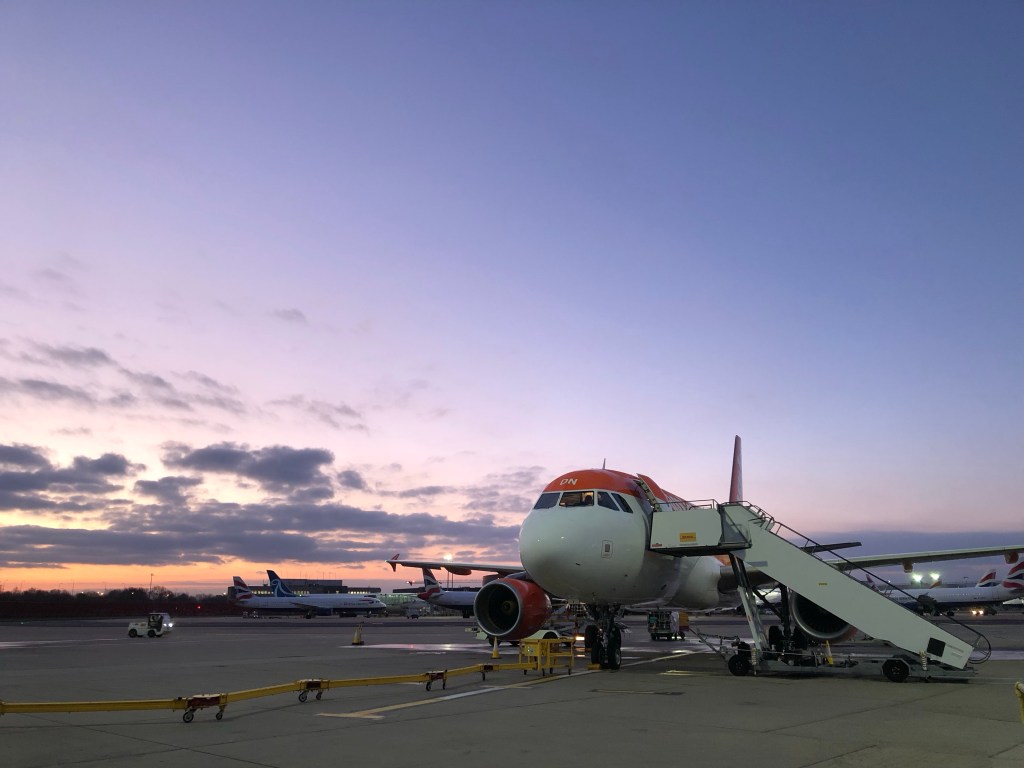
6.15am, Gatwick North Terminal

I left over an hour and a half to make my flight this morning, but I could easily have done it in less. Even with the extras (a few more items of clothing than originally planned in case of inclement weather), I’m traveling lighter than ever. Who’d have the fuss of a suitcase when the open road is so inviting?

I think I must have raced to the gate in my eagerness. It was almost deserted for some time when I got here. Only two or three others joined me in my vigil: a Spanish girl chaperoned by her mother, a Greek/English couple (yes, I googled the man’s passport symbol – call me a nosy Parker but the square cross had me stumped) and a woman who from her accent could only be Basque: one side of her head shaved, brow furrowed, a black hoodie emblazoned with the slogan ‘DESIGNED BY AN IMMIGRANT’ in block white capitals.

No tannoy for this flight – the attendant called out Bilbao almost as quietly as I did trying to call a student over in the canteen last week for his poor choice of language. She only changed her tune to ‘Speedy Boarding Only’ when the first six or seven of us were clear. Sometimes, just occasionally, it pays to arrive ahead of schedule.


10.18am, Bilbao Intermodal Bus Station

I’ll say this much for Bilbao Airport: it’s a lot less hassle than Gatwick. All in all I don’t think it took much more than fifteen minutes between touchdown and the shuttle bus.

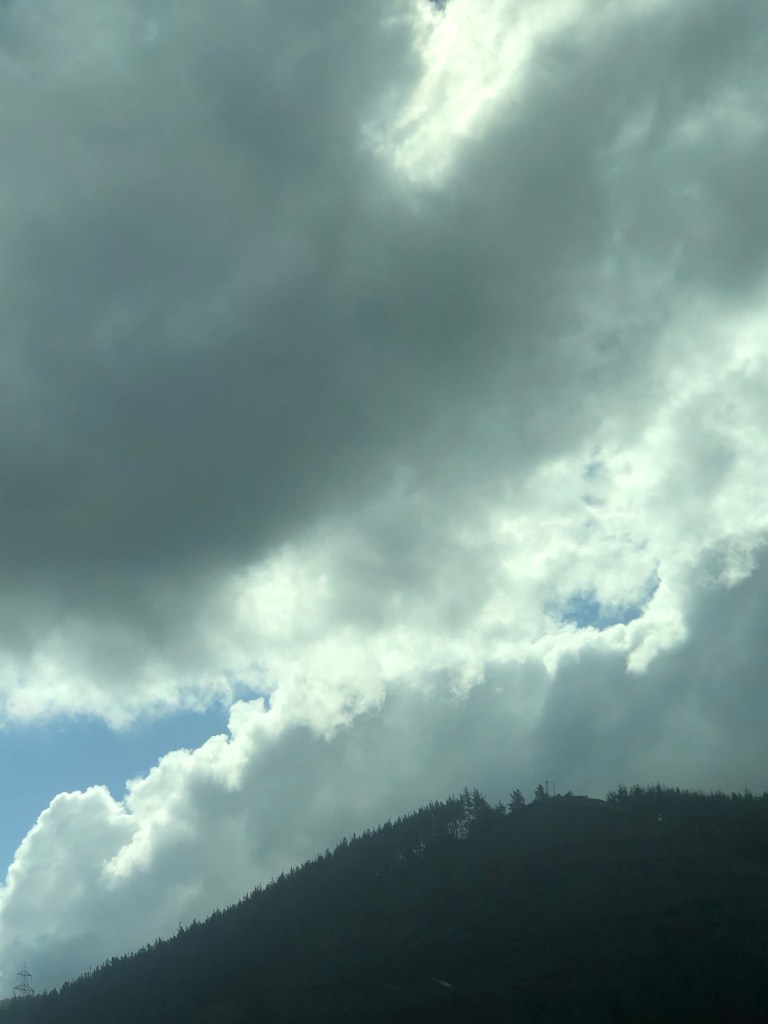
As I thought, the skies over Bilbao when we landed were clouded, grey and low. They always have been on my visits to this corner of Spain, to the extent that clouds and the Basque Country are virtually inseparable in my mind. The Spanish author Miguel Delibes once said that the sky over Castile is so high because the castellanos themselves put it there from staring at it so much. While my kith and kin chase the coy heavens plus ultra, always in search of the new, the ever practical Basques bring the skies down to their level, coveting the Viscayan rain and wrapping their dark forests in mist and cloud. I don’t expect to be free of that shroud until we reach the frontier.


11.56am, near Pobes

I’m now racing south on the Bilbao-Logroño bus, basking in the intermittent glow of the Spanish sun. Craters of blue have started to appear in the sky as though punched through by some celestial artillery, and still the Basque line of defence holds.

Here below, the landscape is changing. The military ranks of pines encamped around Bilbao suddenly give way to a gentle blanket of beech trees. Patches of brilliant green herald the coming of spring to these hills, and limestone crags scar the mountains like bones – first in uniform grey, then bleached with that warm golden stain that is so evocative of Spain’s highlands.

And then, suddenly, the dark hills of the Basque Country fall away and the plains of Castile are all around me: a forgivingly flat golden country, nestled between the high crags north of Haro and the snowbound peaks of the Sierra de Cebollera to the south. Castles and monasteries dating back to the time of a real frontier sit atop the hills and knolls like childish imitations of the limestone cliffs behind, the handiwork of the greatest craftsman of all.

And there, racing over the fields near an Alcampo petrol station, is my first swallow of the year. It’s only a fleeting glimpse as the bus races on past a bodega and a Lidl in quick succession, but it’s enough to make my heart soar – higher still than those Castilian skies.

I’m drunk on all this scenery, in case that wasn’t obvious (the overblown choice of a frontier semantic field was probably a dead giveaway). Rehab is the usual cure. However – to keep in line with this post’s choice of imagery – sod that for a game of soldiers. I have a week and more to wander around my grandfather’s country once again. I can’t think of a better rehab than this.


5.27pm, Albergue Santiago Apostol, Logroño

Logroño is climbing back out of its siesta. I’ve spent the afternoon here and there, though perhaps more here than there. Here being the Albergue Santiago Apostol, the same place I stayed when I last did the Camino four years ago. The only thing that seems to have changed is the stamp for my pilgrim’s passport. That, and I’ve come alone this time.

The albergue is quiet. I’ve only crossed paths with a handful of other pilgrims: Joan i Laura, a couple of peregrinos from Girona, a French family of three and a German family of four. I expected the Camino to be busier during Semana Santa, but I guess if you have a week’s holiday you’d do the stretch that can be done in a week or less – that is, the last 100km from Sarria. Out here in La Rioja, it’s likely to be rather quiet.

That will make for a rather soul-searching experience, which is no bad thing!

I’ve gone for dinner and breakfast at the albergue, 1) to make sure I actually eat and eat well and 2) to meet some of the other pilgrims ahead of the 31km stretch tomorrow. And also 3) because, at 16€ for dinner and breakfast, it’s a steal. I hadn’t forgotten how affordable the Camino is, but it is nice to rediscover, as it were.

I ate my lunch (chorizo and queso curado in a fresh barra de pan) under a beech tree on the bank of the Ebro river. Spring may be slow in coming to England but she’s been here a while already. The beak-clicking display of the local storks can be heard every so often, even from the albergue, though a drumming woodpecker in the park was giving them a run for their money.

English and Spanish birdsong combined on the riverbank. Blackcaps, wrens and blackbirds supported a local chorus of serins, short-toed treecreepers and wrynecks. I don’t think I’ve seen (or heard) a wryneck since my first stint in Villafranca back in 2015, but I hadn’t forgotten its call. After scanning the branches for a minute or so I tracked it down to a lightning tree just a few metres from where I was sitting. They really do look bizarre, the way they move about mechanically, looking for all the world like the clockwork nightingale from Hans Christian Andersen’s fairy tale. The wryneck kept me company for most of my lunch and only took off when a dog walker came by, carrying an African grey parrot on his arm.

I’ll try to catch the first of the procesiones tonight. ‘It’s only Monday,’ said the hostalero at the desk, alluding to the fact that the pinnacle of Semana Santa is toward the end of the week. Even so, my pride as a Spanish teacher is at stake (I have just been teaching the topic to my Year 10s) and besides, I’m a fanatic for the pasos. You can blame my year in Andalucía for that. I’ll also see if I can’t locate the local legend of the Bookseller of Logroño that fellow English traveler George Borrow recounted in his book on the Gypsies of Spain, published a little under two hundred years ago – because what’s an adventure without a quest of some description? BB x

Where to next…?

It’s getting mighty cold here in Tierra de Barros. I went to sleep clutching at my knees and somehow managed a decent night’s rest, only to wake up and find I’d left the window slightly ajar. I think I need to invest in a winter duvet more than a bike. I’m still not used to this system of alternating between summer and winter duvets. I almost miss the English climate. Almost…

We’re now three weeks away from the end of term. Yes, term ends on the 22nd December, and this year that falls on a Friday. Late, but not too late. Today’s a regular Monday. I’m sitting in the living room, easily the warmest room in the flat, having just turned the heating off after a generous couple of hours’ life-giving warmth. I have a private class with the kiddos at six (hopefully they’ll behave better this week – but then, they are only three years old), and I need to go shopping, as when I went this afternoon it took picking up the first item in the fruit and veg aisle for me to realise I’d left both my cash and my card at home.

So what’s to do? Well, it’s the time of year when I need to start thinking about where I’d like to be next year. Amongst other cards I have on the table – up to and including the JET programme in a few years’ time – the original plan still stands, which is to carry on with the British Council assistant jig for another year, albeit this time not in IES Meléndez Valdés, 06220 Villafranca de los Barros, Badajoz. The school has been wonderful to me and I could hardly have asked for a better host for two years, but I ought to spread my wings and discover somewhere new whilst I can. After all, Spain is a kingdom of many worlds: Extremadura may be one of her most beautiful, but there are other jewels in the crown!

So, for my own benefit – and for those who are interested in applying for the programme – I’ve decided to go through each region, in alphabetical order, to assess the strengths and drawbacks of working in each. Coming back to Villafranca was easy… it’s time to step back into the unknown!

(Ed.: I’ve used my own photos where possible – Andalucía, Cantabria, Extremadura and Madrid – but the rest are various stock images!)


Andalucía

DSC_0208

Where: South
Weather: Hot
Dialects: No (though Andalú, the regional accent, might as well be)
Visited?: Yes (far too often)

Ah, Andalucía. My old homeland! And, until recently, the region of Spain I knew best. In many ways the ‘classic’ Spain that comes to mind, Andalucía is – understandably – very oversubscribed as a destination. The Americans tend to have their eyes on it, and thanks to their system, which allows preferential treatment to consecutive-year assistants, they tend to end up there eventually, too (after doing time in equally beautiful backwater regions). Andalucía isn’t necessarily more spectacular than any of the other regions, but it offers a lot more bang-for-your-buck over the distance it spans: cities like Granada, Córdoba, Cádiz, Ronda and Sevilla ooze Romantic charm, and then there’s the natural beauty of the Alpujarras, Doñana National Park, the Sierra Morena and the all-too-often-overlooked beaches of the Costa de la Luz. It’s a fantastic region in which to fall in love with Spain, but because it’s so well known, it can be difficult to escape… unless, of course, you end up in somewhere like Olvera.

Probability: 7/10

Aragón
Where: Northeast
Weather: Cold
Dialect: Aragonese, Catalan (only in the high north and west)
Visited?: Yes

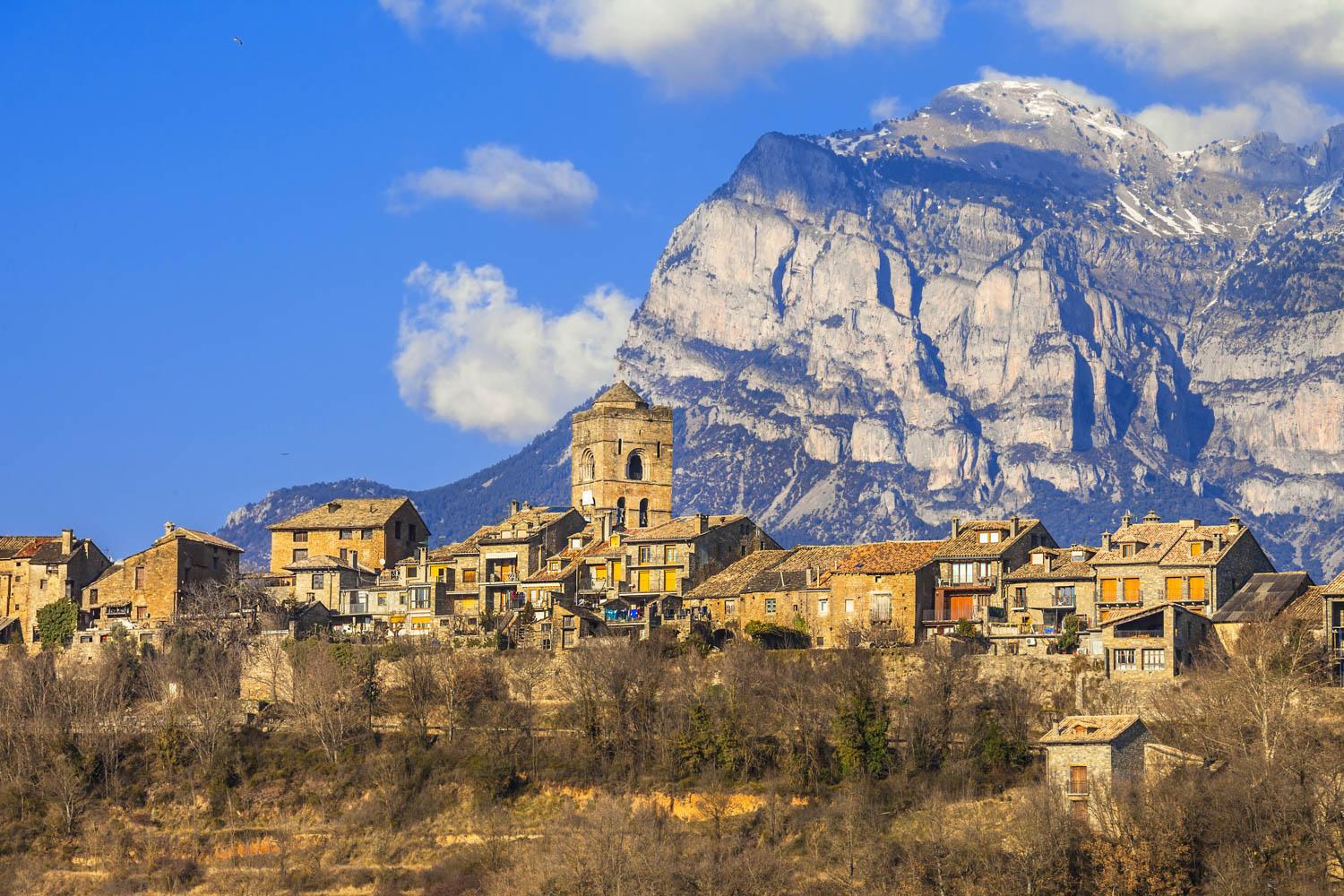
Alright, so a service station and a brief visit to Calatayud don’t exactly count as visiting Aragón per se… Aragón is a lot like Extremadura. Lots of people pass through it on their way to somewhere else. Zaragoza is probably its most famous city, but what of the rest of the region? Huesca in the north plays host to some of the most beautiful Pyrenean landscapes out there, and Teruel would kindly like to remind you that it does exist, despite what the rest of Spain will tell you. Aragonese, a local dialect, survives to the present, but as Spanish is the only ‘official’ language, there’s no cause for concern. High on the Spanish plateau, it gets mighty chilly in winter, but it is also the home of the Comarca de Monegros, a vast expense of semi-desert. And, like Extremadura, its comparatively unknown status makes it a very good place to go native.

Probability: 8/10

Asturias
Where: North
Weather: Cold
Dialects: No
Visited: Yes

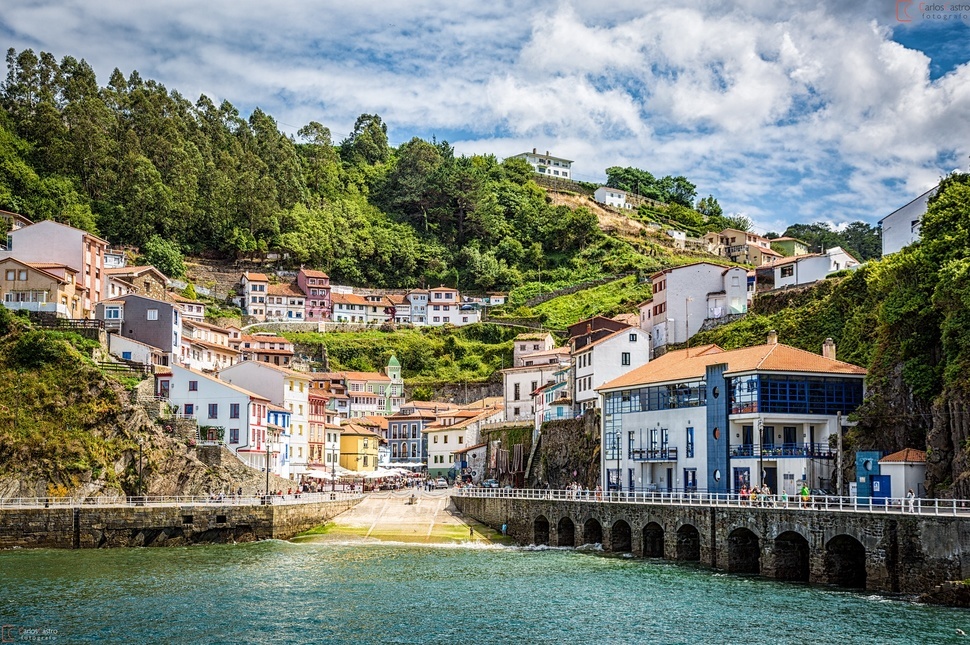
A popular choice amongst second-years, Asturias is where modern Spain was born. With pretty seaside towns, Alpine comforts and forested hills that actually go brown in autumn, in some ways it’s the perfect antidote to the Spanish south. For those used to endless heat, readily available paella and Moorish castles, it can seem like a very different world… which it is. The Spanish is very clear here, and it has some of the most beautiful beaches on the peninsula, even if they aren’t exactly the warmest. It’s a little harder to get to, but Santander’s airport offers cheap flights and is only just across the border. It is, however, a little on the expensive side.

Probability: 8/10

Cantabria
DSC_0201

Where: North
Weather: Cold
Dialects: No
Visited: Yes

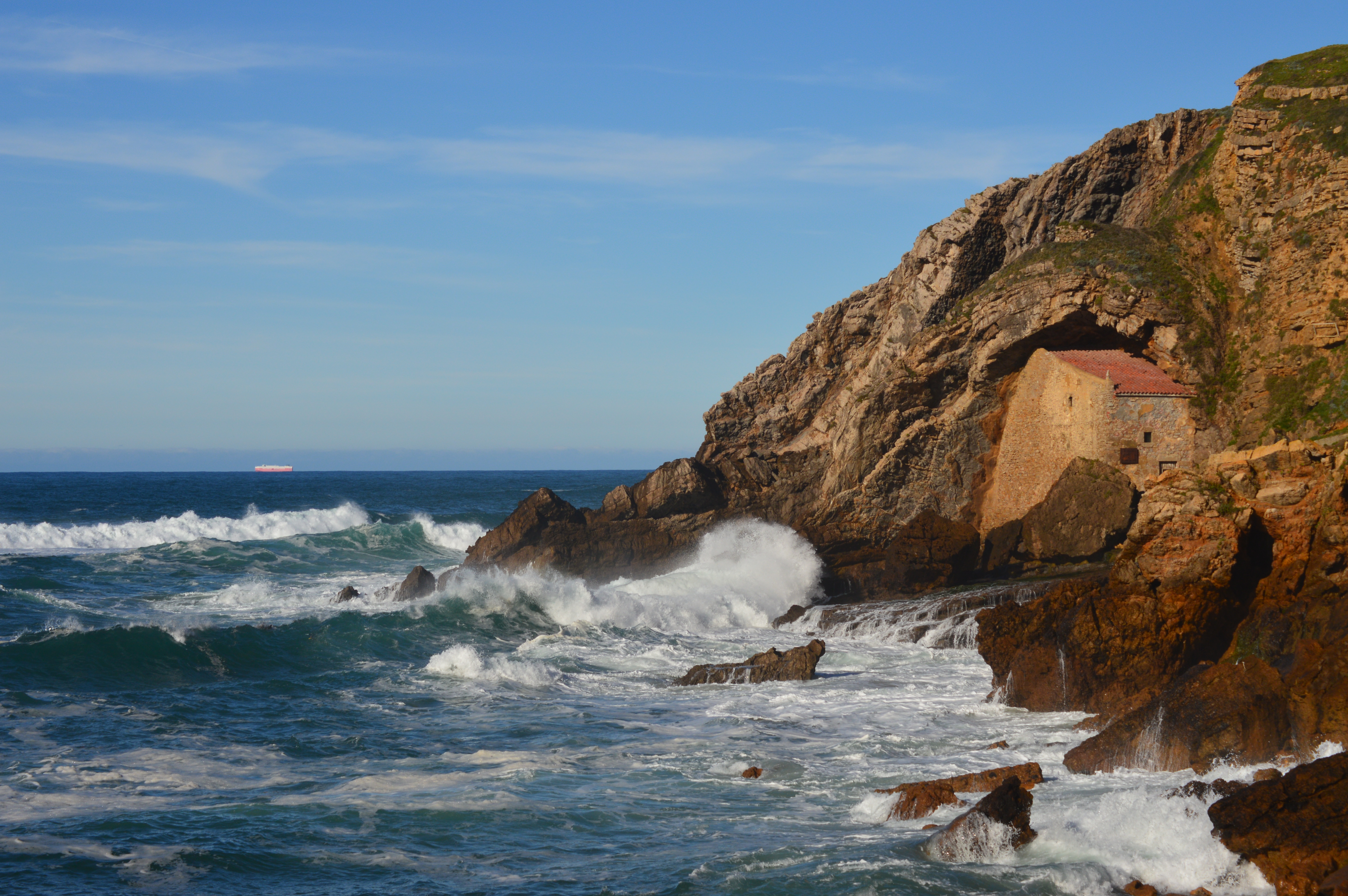
Cantabria, after Andalucía and Extremadura, is the region of Spain I’ve visited the most. No, scratch that. Technically speaking, Santillana del Mar is the third region of Spain I’ve visited the most, as for some reason I ended up there on all three occasions. A marginally less mountainous version of Asturias, Cantabria is a good choice for the British auxiliar who doesn’t want to leave behind too many creature comforts. Quesada pasiega, a local speciality, is unheavenly good (like most of the Iberian peninsula’s takes on the custard tart), and the stereotype is true: I’ve seen more cows and tractors here than in any other part of Spain. It doesn’t have the quasi-African feel of the south, but what it does have is a cheap and reliable train network, which is a huge plus in any world.

Probability: 5/10

Castilla La Mancha

Where: South-central
Weather: Hot/cold
Dialects: No
Visited: Yes

Like Aragón, Castilla La Mancha is a region I can hardly claim to have visited, having spent just a few days in Toledo a few years back. If Andalucía is the Spain sold to tourists, Castilla La Mancha is the one you find in picture books. It’s Don Quijote country, and any bus ride from Madrid to the south will show you that: seemingly endless fields stretch as far as the eye can see, dotted in various locations with mountain ranges and the iconic windmills (see Consuegra, above). It’s also, coincidentally, the land of my ancestors; my grandfather was from Villarrobledo, a town near Albacete. An immense region where it is very easy to go native, but perhaps not the most awe-inspiring on offer. Toledo, however, is easily one of the world’s most beautiful cities…

Probability: 4/10

Castilla y León

Where: Northwest
Weather: Cold
Dialects: Leonese (in León province)
Visited: Yes

Make no bones about it. Castilla y León is gorgeous. It has its less interesting parts (the Camino de Santiago goes through them), and is in part a mirror of sister-province Castilla La Mancha to the south, but drawn across the meseta are some of Spain’s most striking landscapes. The Duero river gorge is breath-taking, as are the old Roman gold mines of Las Medulas (see above), and the granite-strewn scenery to the north of Burgos looks like something out of a Lord of the Rings film (but then, this was where El Cid was born). Here they speak the ‘purest’ Spanish, so you’ll have absolutely no problems with the language here. It’s clear, crisp and, whilst no slower than the usual Spanish machine-gun delivery, easier to understand than, say, any of the southern accents. The cuisine is also spectacular; in my humble opinion, most of Spain’s best food is its earthy, country food, and you’ll find a lot of it here. The cities of León, Burgos and especially Salamanca are wonders in their own right. Just watch out for the slow-burning Leonese separatist movement.

Probability: 8/10

Cataluña

Where: Northwest
Weather: Warm
Dialects: Catalan (official language)
Visited: Yes

This year would have been a very interesting year to be working in Spain’s black-sheep region. Even after the failure of Puigdemont’s half-hearted rebellion, I suspect it’d be worth a punt for the next few years. I’ve been to Barcelona a couple of times; school trips on both occasions, so I’ve barely begun to scratch to the surface of the place. The Costa Brava is undeniably beautiful, with stunning Mediterranean coves and sparkling white beaches. The Catalonian interior, however, is what grabs me: like neighbouring Aragón, Cataluña has some spectacular mountains. This is Serrallonga’s country, and I’d sure like to find out some more about the gang warfare between the Nyerros and the Cadells of old… if it weren’t for the language barrier. Now more than ever do I regret taking a Persian module over Catalan at university! You should bear in mind that Cataluña’s relative affluence makes it a little more expensive than the other comunidades, especially so in Barcelona itself. But if you’re after a more cosmopolitan experience, this is the place for you!

Probability: 6/10

Ceuta and Melilla

Where: North coast of Morocco
Weather: Hot
Dialect: No (though strong Arabic presence)
Visited: No

Despite the fact that I lived in Tetouan for an entire summer last year, I never did visit Ceuta. For one reason or another, something always came up to stop me going. Which is a shame, really: as the Spanish territories go, they’re pretty unique. Expect a very Moroccan vibe, with the North African kingdom literally within a stone’s throw at any given moment. If it weren’t for their size and the general cost and difficulty in getting to and from them if I ever wanted to travel, I’d probably sign up right away. It would, at the very least, give me an excuse to keep my Arabic polished. Most of the placements are in the two cities, though, which is a bit of a turn-off for me.

Probability: 4/10

Extremadura
DSC_0546

Where: West
Weather: Hot/cold
Dialects: No
Visited: Yes

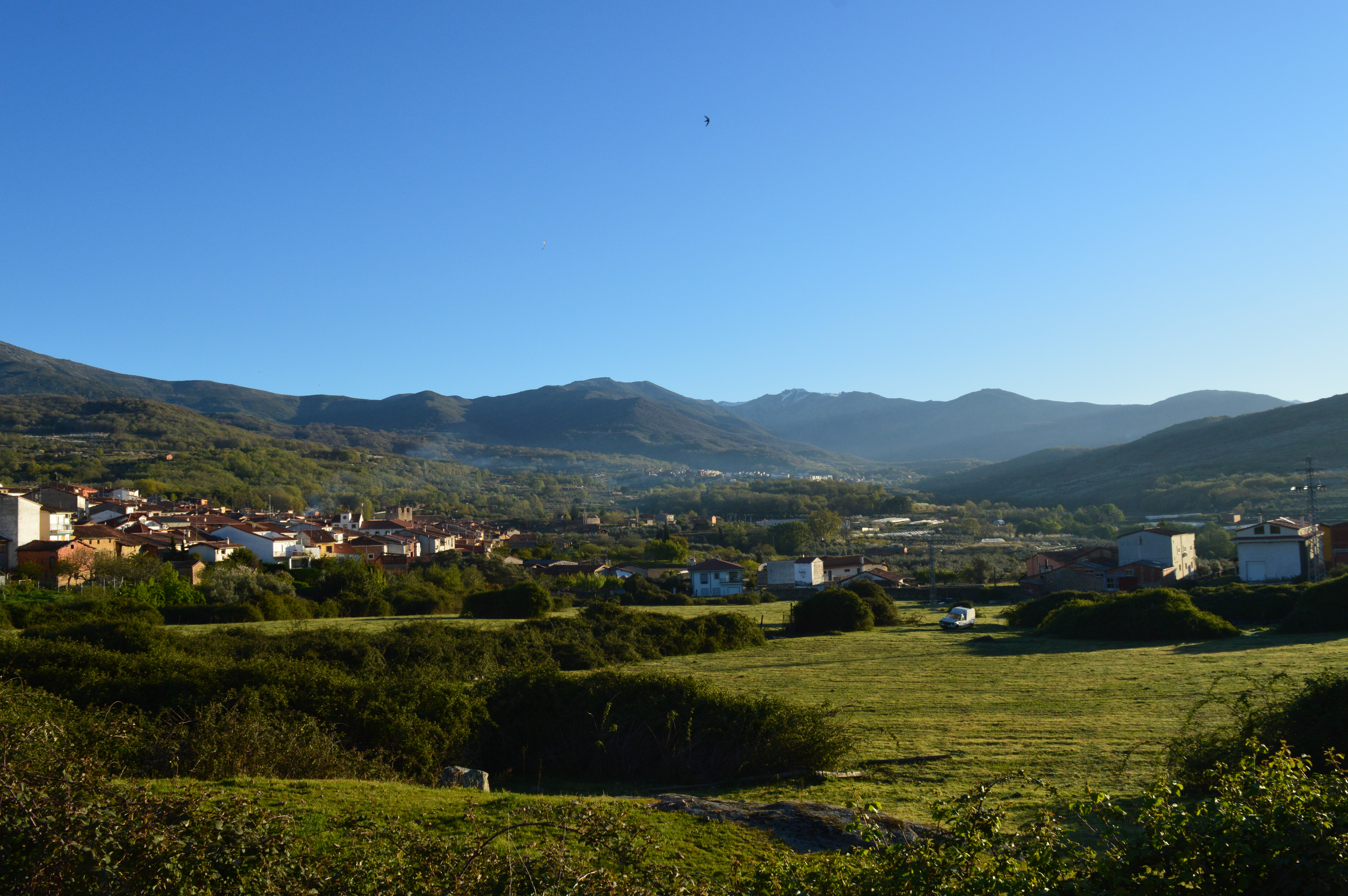
Of course, I could always stay put, but ask for a more northerly location: specifically, the green hills of Cáceres. There’s no denying Extremadura is by far my favourite region, and with good reason: it’s wild, it’s still relatively undiscovered, it’s lacking in other guiris and the people are some of the friendliest I’ve ever met. Plus, La Vera. Plus, Hornachos. Plus, the book. Heck, I’d stay just to be closer to Tasha and Miguel, who were pivotal in my return to Villafranca this year. With its welcoming vibe and its off-the-wall auxiliares, it’d be my top recommendation to anybody, though I’d concede you have to be prepared to be out in the sticks to be here. For me, however, it’s something of a safe option, and I’d much rather use this chance whilst I have it to explore some more of my grandfather’s beautiful country. Even if Extremadura is the best. Period. I’ll be coming back to this place for the rest of my life.

Probability: 7/10

Galicia
Where: Northwest
Weather: Cold
Dialects: Gallego (official language)
Visited: No

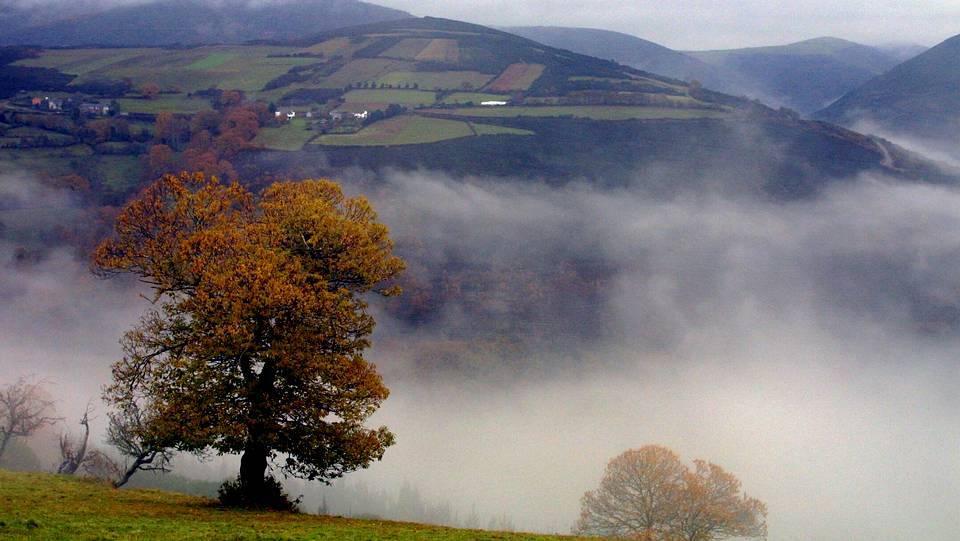
It rains a lot. Now that we’ve got that out of the way, let’s look at Galicia. Galicia is the Ireland of Spain, where the country’s Celtic roots are strongest. I mean, when their folk bands deliberately cover songs made famous by The Corrs, the ties are hard to miss. Galicia is about as far from the Spanish south as you can get on the mainland, in both distance and culture. Gallego is a thing, but I’m not above learning a new language. The word on the street is that the auxiliar programme there is one of the best in the country, if not the best. That, combined with the cheapness of living and otherworldliness that this region offers, make it the standout competitor for my attention this time around. And I never thought I’d consider it, which makes it all the more appealing. After all, I had no idea what or where Extremadura was, once upon a time. I’d very much like Galicia to be my next miraculous discovery.

Probability: 9/10

Islas Baleares

Where: Mediterranean Sea
Weather: Hot
Dialects: Catalan
Visited: No

Mallorca, Menorca and Ibiza. Party destinations in summer… and for the rest of the year? Well, EasyJet and Ryanair are always offering such cheap flights that there must be something to do there in January… right? If it weren’t for the fact that they’re islands, I might seriously consider the Baleares. But I like having room to manoeuvre, and I don’t know whether I’d feel trapped on an island. Plus, they speak a lot of Catalan there. Once again, I wish I’d not gone chasing Persian down the rabbit hole.

Probability: 2/10

Islas Canarias

Where: Off the west coast of Morocco
Weather: Hot
Dialects: No
Visited: No

First things first: it’s quite a long way from Spain. The Canary Islands, like the Baleares, can seem a very remote posting. Cheap flights are readily available to the UK and elsewhere, thanks to a steady flow of tourists, but I’m not sure I’d be thrilled if I were posted there – not least of all because it’s quite difficult to distance yourself from the touristic side, upon which the Canary Islands depend. I wouldn’t mind going in search of the islands’ Houbara bustards though, or taking a stroll in the misty laurel forests of the Garajonay National Park.

Probability: 3/10

La Rioja

Where: North
Weather: Warm
Dialects: No
Visited: No

I’m going to be perfectly honest. I know next to nothing about La Rioja, except for the fact that it’s a small region with a justifiable fame for its wine. Given its positioning, I expect it’s a little more pricey than what I’m used to, but don’t hold me to that. I’ll leave you to discover La Rioja in my stead.

Probability: 2/10

Madrid
DSC_0341

Where: Central
Weather: Hot
Dialects: No
Visited: Yes

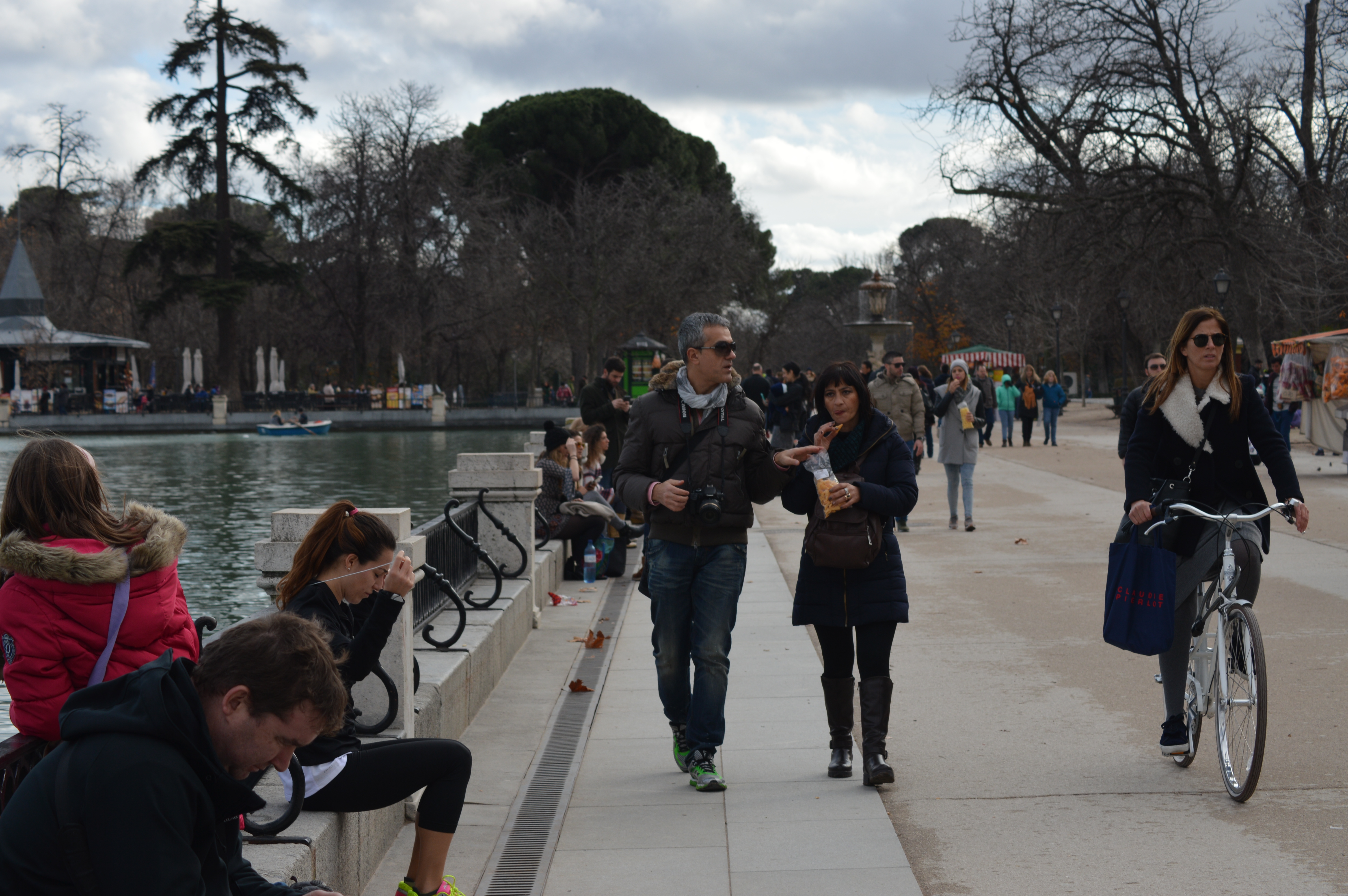
One word. No. The surrounding countryside of Madrid is unquestionably beautiful, no doubt about that, but I would rather leave the country than work in Madrid itself. As cities go, Madrid’s not so bad, but I’m a country boy; cities are for visiting, not for living in. Auxiliares posted in Madrid earn 1000€ instead of the usual 700€ to compensate for the higher living costs and also work 16 hours per week instead of 12, though after calculating the going rate for private lessons and such, I don’t half wonder whether that’s entirely fair – or even financially viable. No; for me, Madrid is just too big a move. I’d recommend the Sierra de Guadarrama, El Rey León and the Parque del Retiro, though (pictured).

Probability: 1/10

Murcia

Where: Southeast
Weather: Hot
Dialects: No
Visited: No

This year’s auxiliares are complaining about the fact we haven’t been paid for October and November yet. If what I’ve heard about Murcia is true, the auxiliares posted there are never paid on time. Murcia is one of Spain’s hidden gems: like Aragón and Extremadura, it often gets overlooked because it has more glamorous neighbours that have more of what it has and better. In Murcia’s case, that’s Valencia and Andalucía. I know a few lovely people from Murcia and I’d love to visit one day, but as year on year it becomes a larger wing of Almeria’s enormous European greenhouse, I find myself drawn to the greener, wilder parts of Spain.

Probability: 4/10

Navarra

Where: North
Weather: Cold
Dialects: No
Visited: No

A former kingdom in its own right (which, you could argue, is an accolade held by most of the Spanish realms), Navarra sits at the feet of the Pyrenees as a less extreme though equally wondrous region in the Spanish north. A friend of mine was based in Tudela last year and had a great time there, so it seems to be to be a good place to work. Like the Canary Islands, it’s also more popular with Brits than Americans, so expect less encounters with scotch tape, candies and Fall. It’s also rather well situated, allowing easy access to several of Spain’s more attractive destinations.

Probability: 6/10

País Vasco

Where: North
Weather: Cold
Dialects: Basque
Visited: Yes

The Basque Country got a positive makeover recently in the film Ocho Apellidos Vascos and its sequel, not doing away with but helping to redirect attention from the ETA bombings of the past to the more attractive aspects of Basque culture. If the Catalans are independent, it’s nothing compared to the Basques, whose regional language – Euskera – is so far removed from Spanish that it feels as though you’ve skipped five countries rather than one region. Situated in the industrial north, the Basque Country plays host to much of Spain’s industry (just look at all the Basque banks), and is therefore afforded a more affluent lifestyle. That makes it more expensive, which is a drawback, but many would argue it’s worth it. The Basques are, after all, the stuff of legend…

Probability: 5/10

Valencia

Where: East
Weather: Hot
Dialects: Valencian
Visited: No

There’s a good deal more to Valencia than the corruption and the coast, even if that is the image most people have. I’ve never made it to El Cid’s triumphal city, it never having been quite on my radar, and though I have many friends who have been up and down the coast, I’ve never quite felt the pull to go. Another more costly region, Valencian – a variant of Catalan – is widely spoken here, though Spanish is also used in its capacity as the kingdom’s official language. It played a large role in the expulsion of the Moriscos though, and that’s something I’d like to look into, albeit over a short period of time. Maybe for holidays, but for me, not for work.

Probability: 3/10


I’m more or less decided on the northwest, but I’m still open to ideas. Now that Senegal is an option for language assistant placements, it’s that little bit harder to say no to the world beyond Spain (that would have turned my world upside down if it had been an option in my second year. I would very probably have dropped Arabic, studied French and continued to wing it with Spanish). However, a promise is a promise, and I’m determined to do what I can to become truly fluent in Spanish, however long it takes, wherever it leads me.

The deadline for next year is 12th February 2018. I have a couple of months to decide. BB x