When I set out for Peru next week, the number of bird species I will have seen in my lifetime will be a clean five hundred. I’d like to say I’m not usually the record-keeping sort, but that would be pretty unbelievable. The fact that I’ve kept this blog going for the best part of eleven years says otherwise. It’s not that there’s anything wrong with list-keeping, but it does border on the nerdier, birder side of birdwatching, and there is a lingering part of me that still raises a wary eyebrow at the prospect of becoming an anorak. However, since Peru is generally considered one of the world’s finest destinations for birdwatching, I thought I’d cave in for a change, do a little spring cleaning and get my affairs in order before I go. And that means working out just how many birds I have seen over the last thirty-two years or so. It took me a few days to collate the various lists I have held onto over the years, and longer still to whittle down some of the more fanciful additions that may or may not have been added in haste, leaving me with a perfectly square total of five hundred species exactly. It’s a start.
I have been very lucky. I haven’t been as committed to my old hobby as others my age, but even so, my travels have afforded me encounters with a number of species I might otherwise never have seen: pygmy cormorants in the silent marshes around Torcello, Berthelot’s pipits in the Teide caldera and Rwenzori double-collared sunbirds in the clouded hills of Uganda’s Bwindi Impenetrable Forest. I thought I’d share a few of my favourite encounters below.
Griffon Vulture
Vultures are far and away my favourite creatures on the planet and I make no secret of that. Cinerous, Egyptian, Palm Nut, White-backed, Hooded or Griffon – I’m not fussy. Something about their enormity, the way their wingtips spread wide like fingers, the silence with which they rule the skies… It’s spellbinding. They’re easily the fondest memory I have of my year in Spain when, aged eleven, I traded herring gulls for griffons for a year. I think I can be excused for being occasionally distracted in class when a tawny giant with a nearly three-metre wingspan happened to be passing by the window. I still get the shivers when I see that silhouette, so I’m keeping my fingers crossed for an even greater shadow in the sky when I go in search of an Andean condor in Peru’s Colca Canyon.

Nightjar
Something of a late discovery for me and inseparable from the Camino de Santiago, where it is the nocturnal yin to the diurnal yang of the stonechat – since both species seemed to follow me all the way from the French Pyrenees to Santiago. Nightjars can be found in the UK, but I’ve never seen them, despite searching the forests and heathlands where they are said to breed. On the Camino, however, one is so often up before the break of dawn that it’s virtually impossible not to run into these cryptic creatures at some point. Their endless churring sound must be very strange indeed to those who aren’t aware of its maker, sounding more like a giant cricket or a miniature UFO than a bird. Reports from Manu NP indicate that there may be nightjars to be found along the Madre de Dios river – I shall be keeping my eyes open.
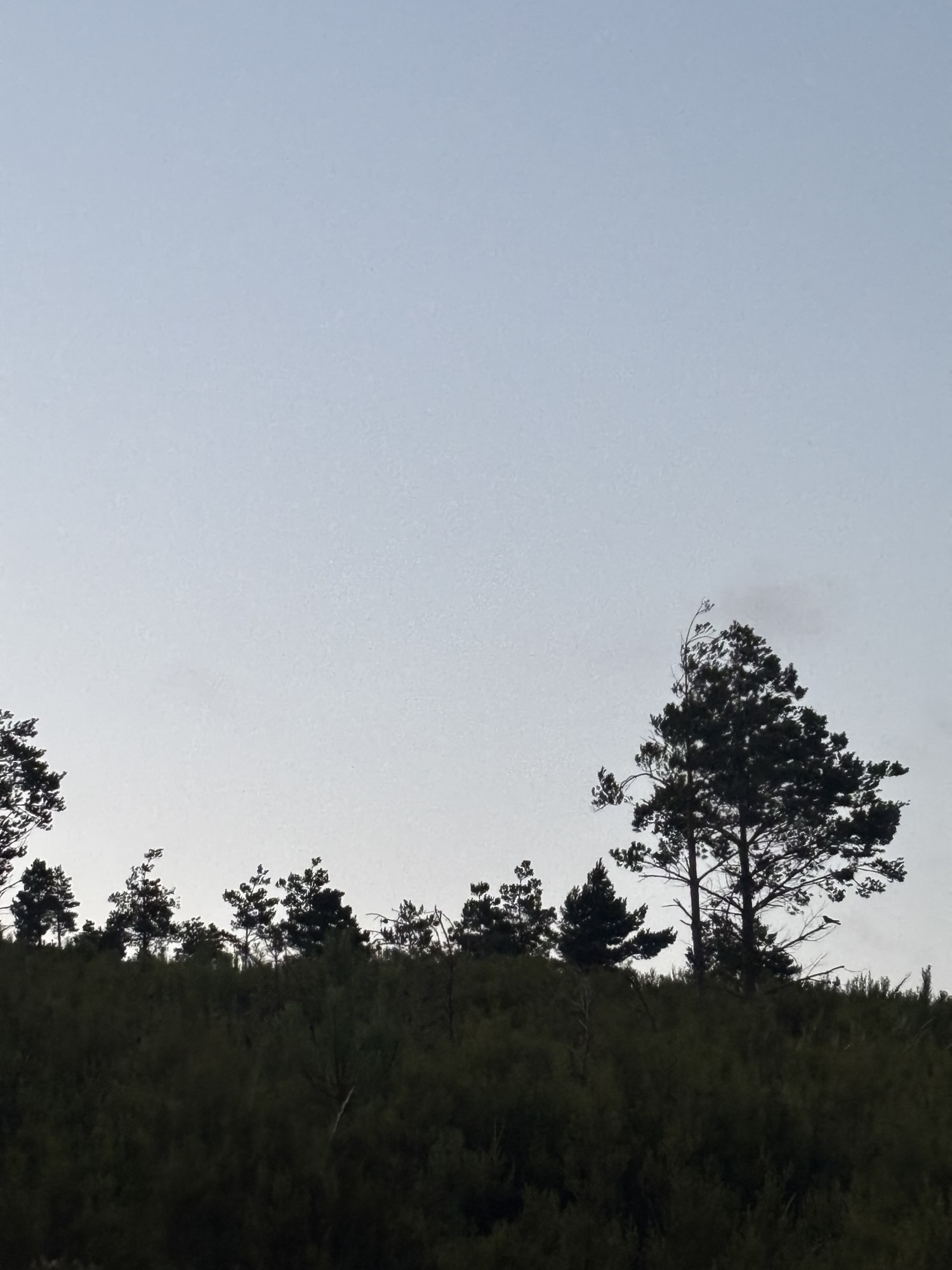
Abyssinian Roller
I could have put any number of the more than two hundred and fifty species of bird I saw in Uganda on this post, but this one takes the top spot because of our story. Having never had any luck with European rollers in Spain, I was amazed to learn on the very first day of my stay in Uganda that there was a particularly handsome Abyssinian roller in the neighbourhood. But I’ll be damned if I thought photographing it might be a cinch – the bird gave me the run-around for most of my three-month stay, fearless and indifferent to my presence when I didn’t have my camera to hand and skittish in the extreme when I came prepared, as though it were camera-shy. In the end an act of God intervened on my behalf: an explosion of winged ants in the neighbour’s garden brought every winged insectivore within a hundred miles to the yard. With more than forty kites to worry about, plus a host of other raptors including shikras, lizard buzzards, grey kestrels and falcons, the roller had his mind on other things and I was able to get in a good shot or two. Sometimes it’s hard-fought encounters like that one that make a photo more compelling than all the editing in the world.
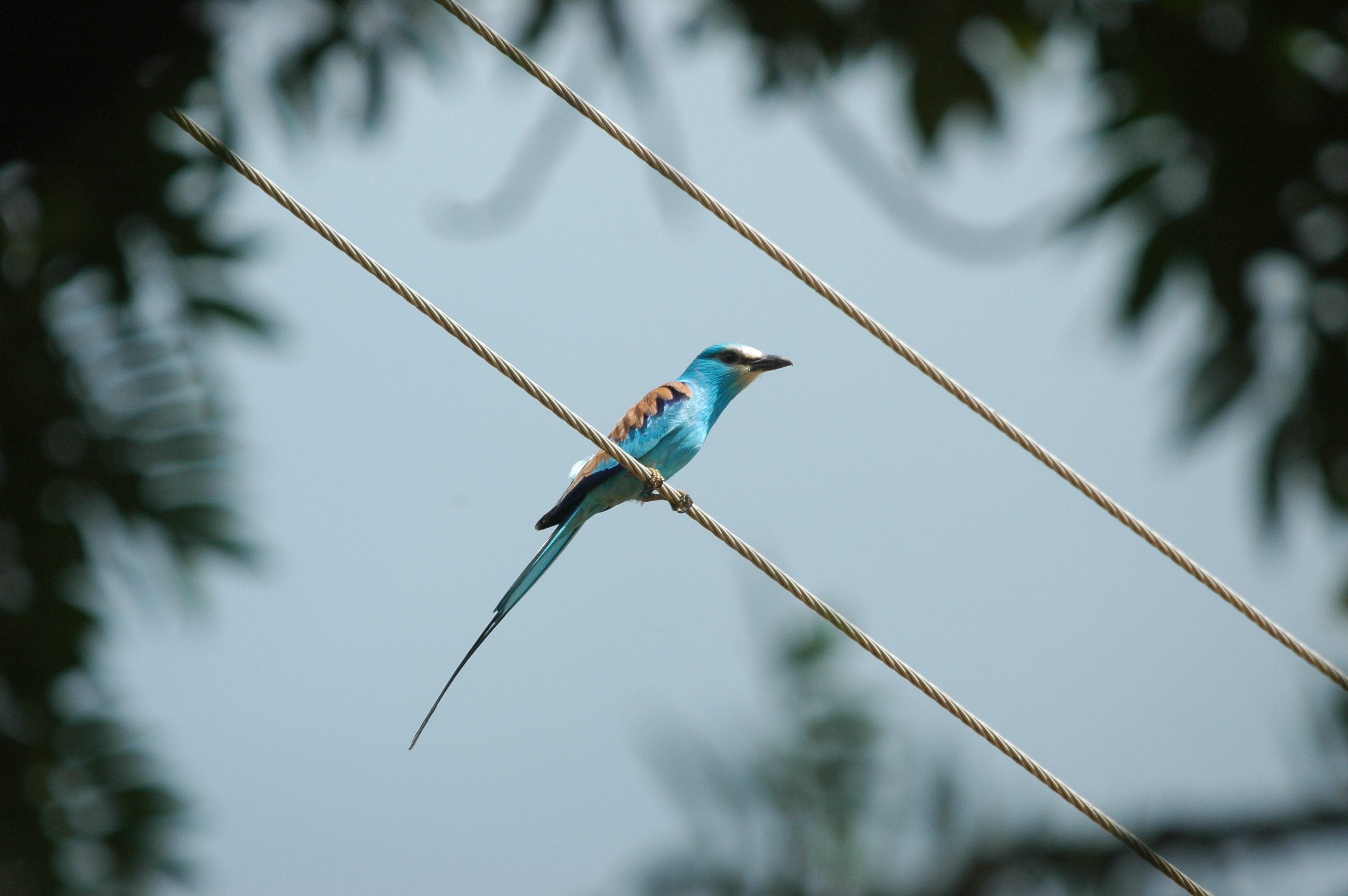
European Bee-Eater
Much like the roller, the bee-eater is an explosion of colour in avian form – at least, to a British birdwatcher’s eye, since most of our native birds are rather drab by comparison. They’re incredibly captivating creatures to watch as they flit through the air like oversized moths, but it’s their call that I love the most: a cheery whirrup that heralds the spring in Spain just like the merry twitter of the swallow in Britain. The sound alone makes me feel warmer – it takes me back to the sands of El Rocio and the dusty scrubland between the Madre de las Marismas and the Palacio del Acebron. One day, it may be warm enough for bee-eaters to colonise the UK. They have bred here with occasional success in the last few years, but it remains to be seen whether they will follow the example of the egrets and move in for good. A part of me hopes they don’t – they are far too tied to my image of Spain as a special paradise. Some things you should have to travel to behold, to see with your own eyes. That’s what I think.
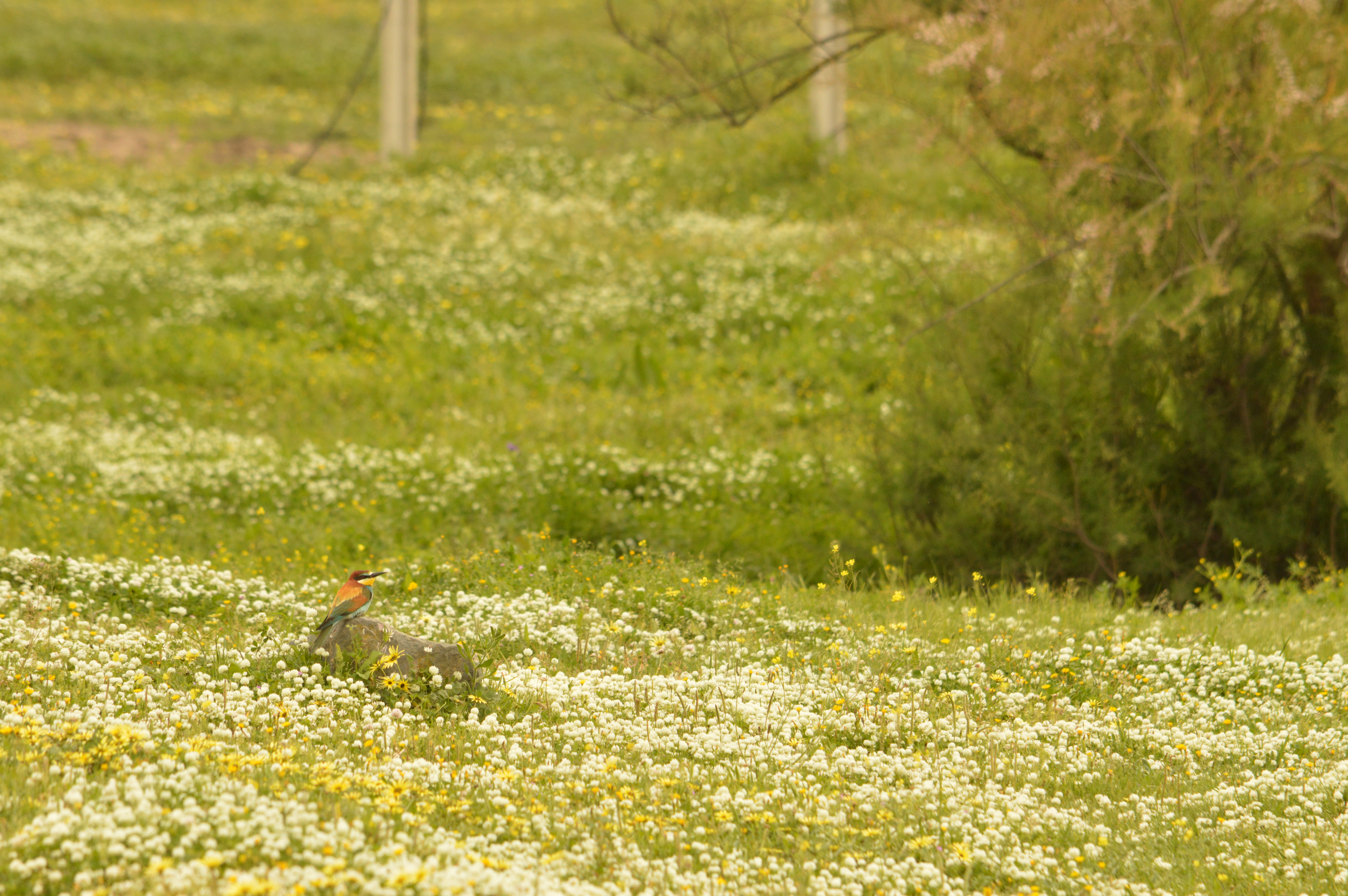
Purple Swamphen
What list would be complete without one of my all-time favourites – the bird that probably kickstarted my obsession with Spanish birds? The purple swamphen is unmistakeable: a moorhen on steroids, with bigger feet, a bigger face-shield and a bigger attitude. I saw them first in El Acebuche, but since then I have found them in several other places: the rice paddies of the Brazo del Este, Uganda’s White Nile river and under the Roman Bridge in Merida. Like griffons, they lose nothing with each successive encounter, and I confess that my eyes are always on swivel-stalks whenever I’m crossing the bridge in Merida in the hope of catching one of them in the reeds below.
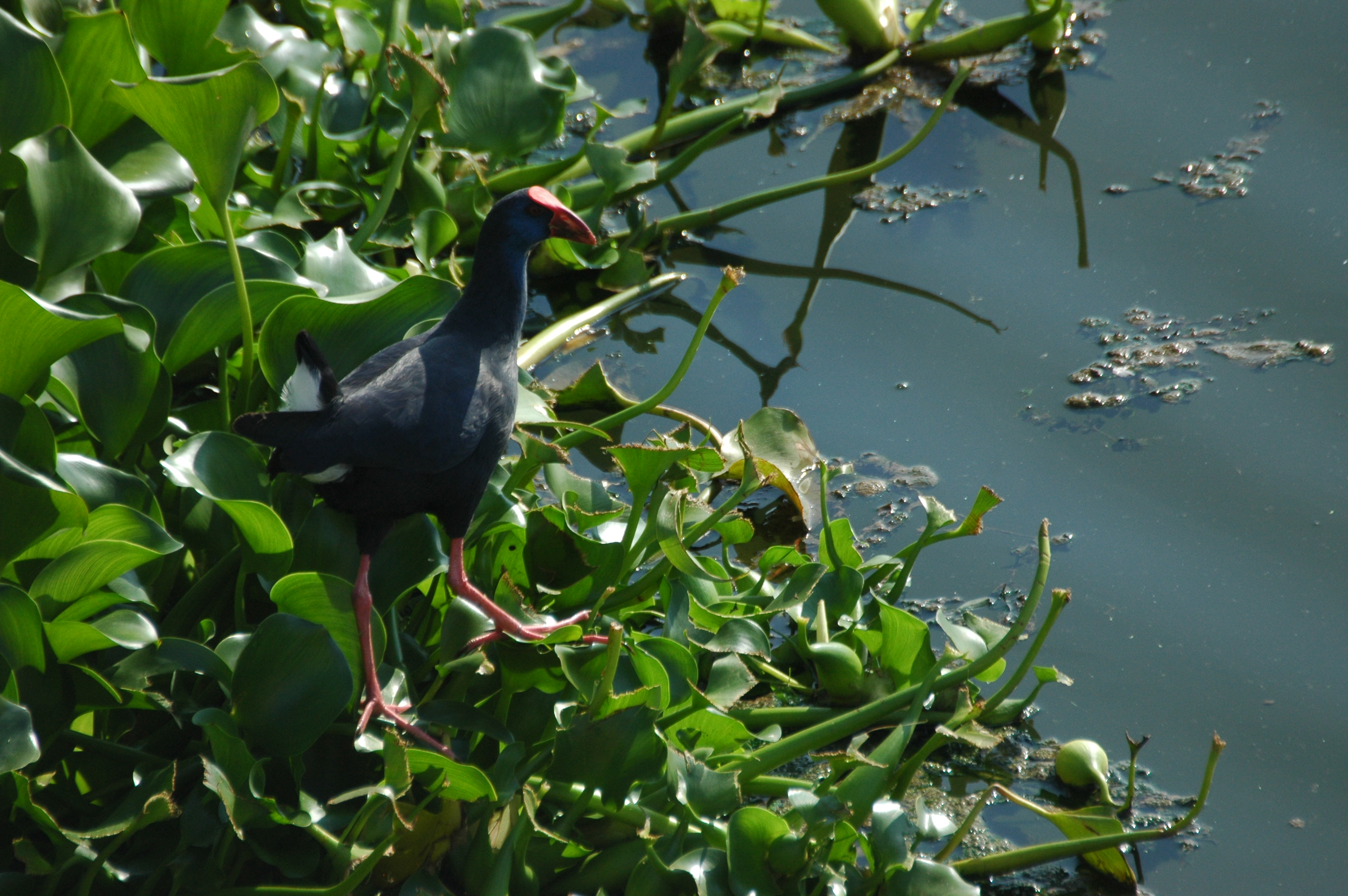
Red and Black Kites
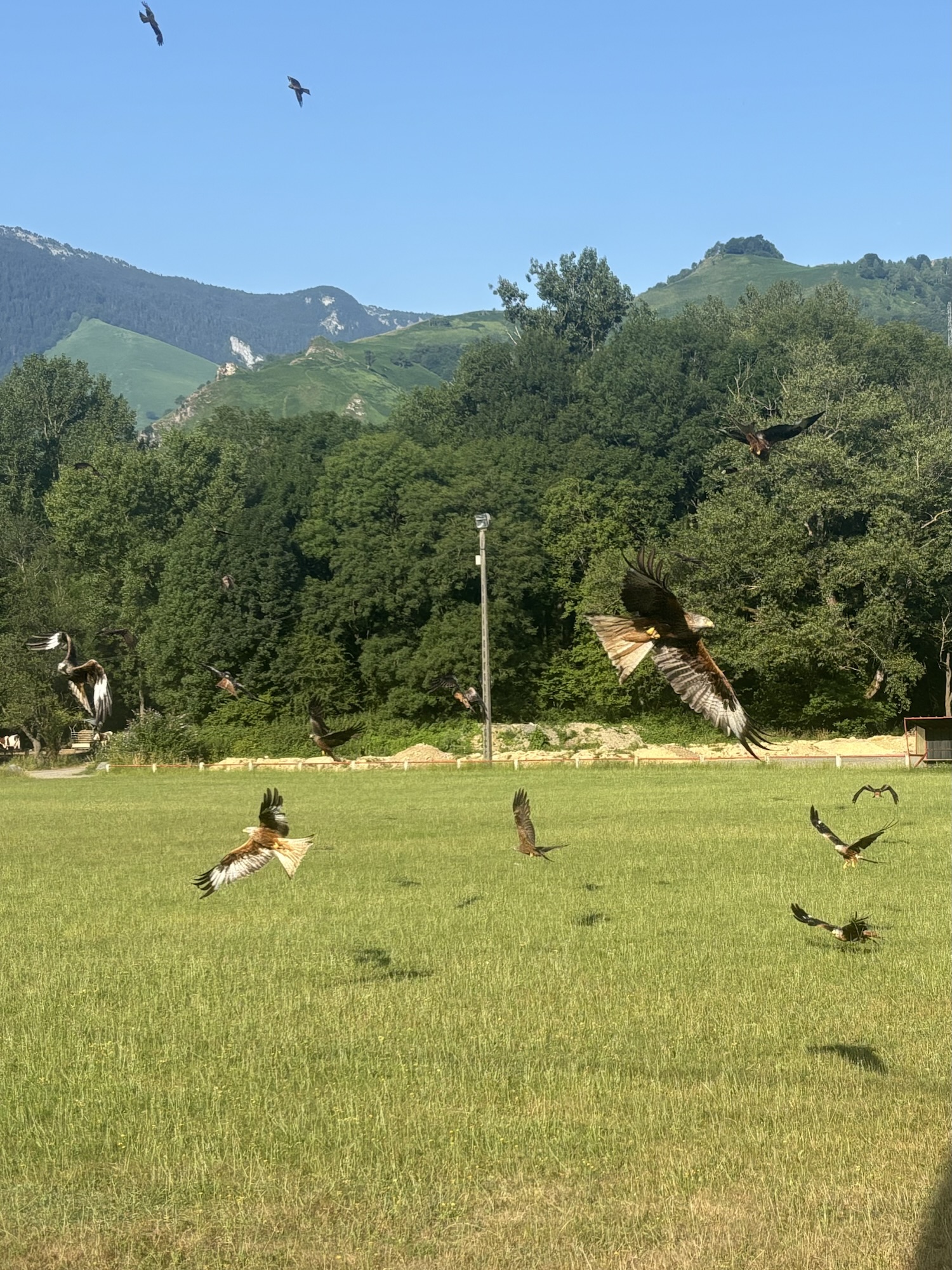
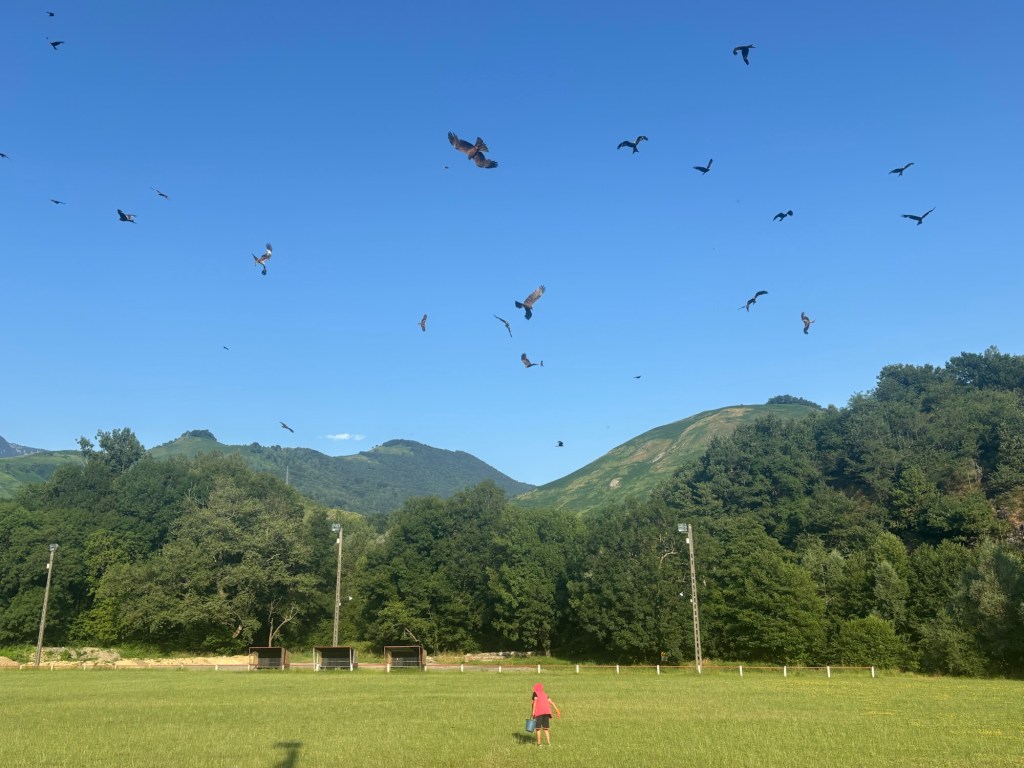
WordPress won’t let me upload the images I have of the hoopoe, Iberian magpie and Montagu’s harrier, which would bring the total to ten, so I will have to finish with another old favourite: the kite. Specifically, it’s black kites that have always held sway in my heart, due to their association with the Elysian stone-pine forests of the Raya Real, but since red kites have pretty much exploded in number in the UK in my own lifetime, they’ve earned a spot in this list too. Despite nearly twenty years of active pursuit, I have yet to take a decent photograph of a black kite (in my defence, I have often been without my camera when the right moment presented itself). Had I brought my DSLR with me on the Camino last summer, I would have had the opportunity of a lifetime when I stumbled – quite by chance – upon a feeding frenzy for the local kite population in a rugby field a day’s march from the Spanish frontier. But, I didn’t, so I just took a few photos on my phone and watched the spectacle.
Kites are something of a bait-and-switch story for me. Since their whistling call was used in the BBC’s Land of the Tiger whenever vultures were on screen, I came to associate that sound with those kings of the sky. It wasn’t until I was much older that I realised that vultures are pretty much silent (when they’re not squabbling over a carcass, that is), but by then the spell had already been cast. I would travel all the way to the Raya Real just to hear that sound. Of course, I’d go for more than that: the music-box melodies of a nightingale, the flute-song of a golden oriole, the oop-oop-oop of a hoopoe, the beak-clacking serenade of a stork and the descending whistle of a woodlark. But even if all those voices should fall silent, leaving nothing but the trill of a kite, I’d still make that journey. That’s how precious a single sound can be.
T minus one week. It’s getting closer! BB x





 The Book of Barnabas