Elemental

Praia do Mar de Fóra, Fisterra. 12.31.

An enormous storm is moving in off the Atlantic. That’s what it says on the El País headlines on my phone. The signs were clear this morning: the wind was up and the waves were agitated, as though some supernatural force were stirring beneath the water out beyond the cape. Or maybe that’s just because I finished reading The Leviathan today and I have sea monsters on the brain.

That and the old English saying about red skies in the morning being a sailor’s warning.
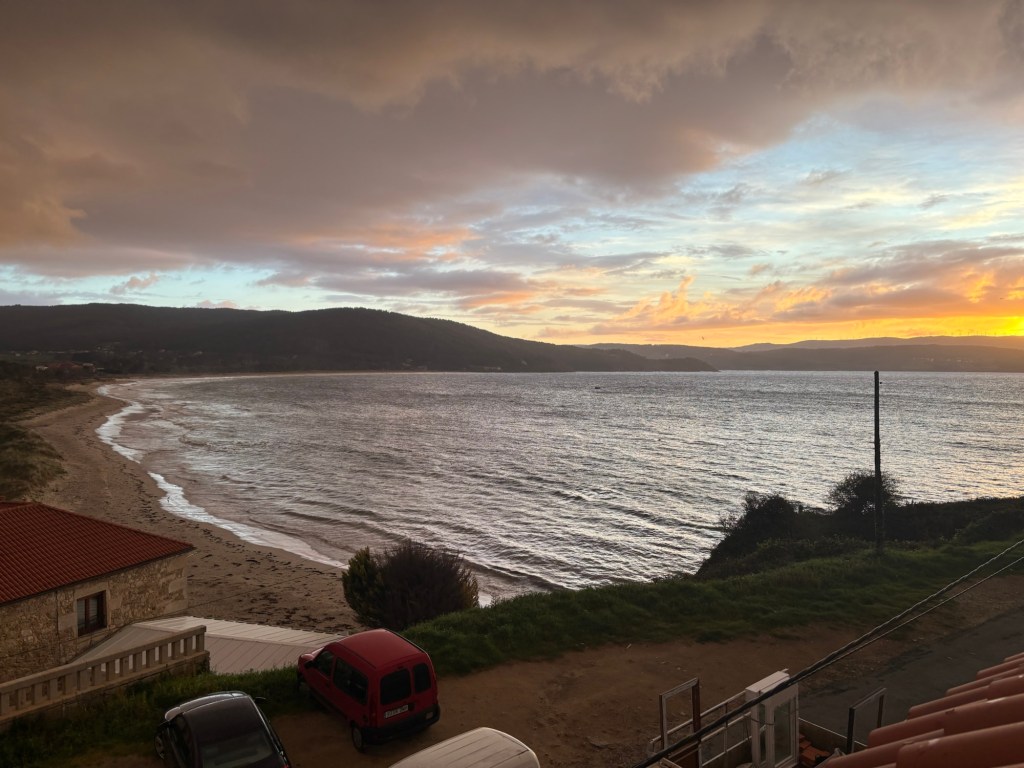

I didn’t come all the way out here to hide away from the elements, so once the worst of the morning’s rain was over, I nipped into town, grabbed an empanada and made for the Praia do Mar de Fóra on the west side of the cape. There were still a few clouds stretched across the sky, but none so ominous as those that were splashed across the news from the Canaries this morning. I sat on a boulder with my feet in a small stream and ate my lunch in peace, having the entire beach to myself for the second day in a row.
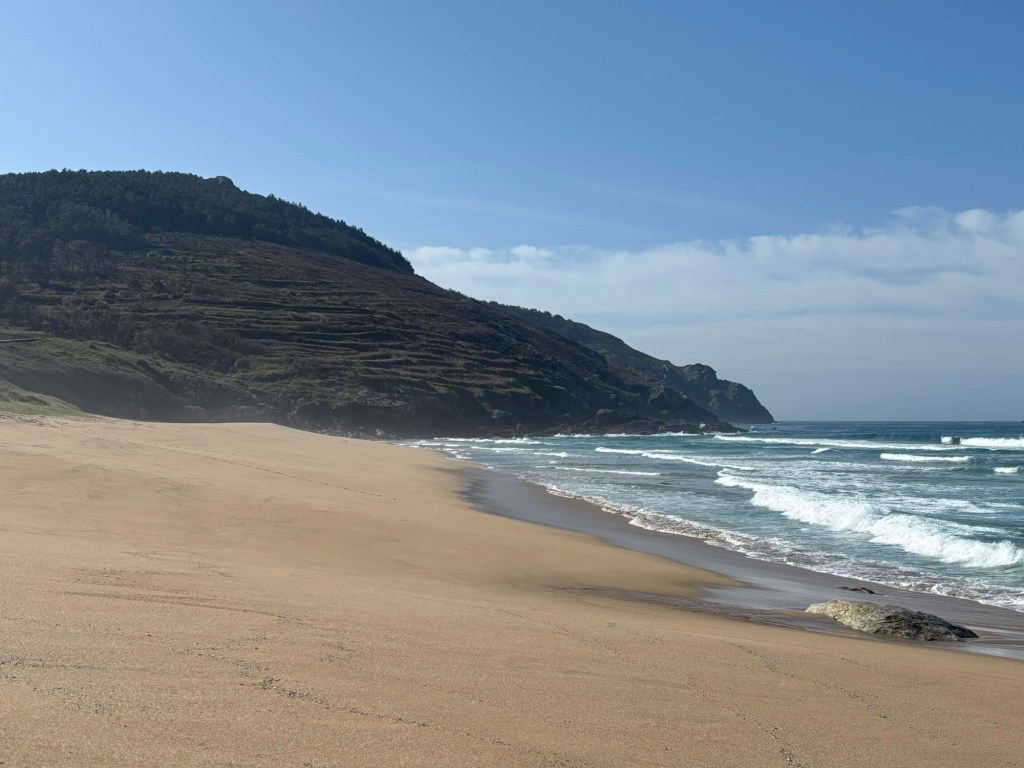

It’s easy to forget that there aren’t that many places in England where you can appreciate the full force of the Atlantic. Most of the English coastline looks out across the North and Irish Seas or the British Channel, and none of those are in the same league as the Great Western Ocean. From my post at the edge of the beach, I can see the sea mist rolling in with each crashing wave. Some of the waves collapse before they hit the shore; others swell while they’re still far off, hulking and dark and full of threatening force.

The ancients believed that Poseidon, God of the sea, was the ultimate force behind the power of the ocean. As well as the deity responsible for waves and quakes both terrestrial and marine, he was also the lord of horses, perhaps stemming from an even older association between horses and the sea. Poseidon is believed to have fashioned the first horse from the waves in an attempt to win over the people of Athens, who ultimately spurned his gift in favour of the olive tree offered by Athena, a far more practical gift for a seafaring folk for the myriad properties of its wood and fruit. And then there’s the parallel between the nature of horse and ocean, both extremely volatile – at one moment calm and beautiful, at another restless and powerful, stirred into action by some powerful emotion.

It’s thought that some of these beliefs come from seeing the shapes of horses’ heads as the foaming crests of the largest waves catch the wind before they break upon the shore. Before the unfettered force of the Atlantic bearing down on this little bay like a besieging army, it’s not hard to see the likeness to an elemental cavalry charge in the surf.
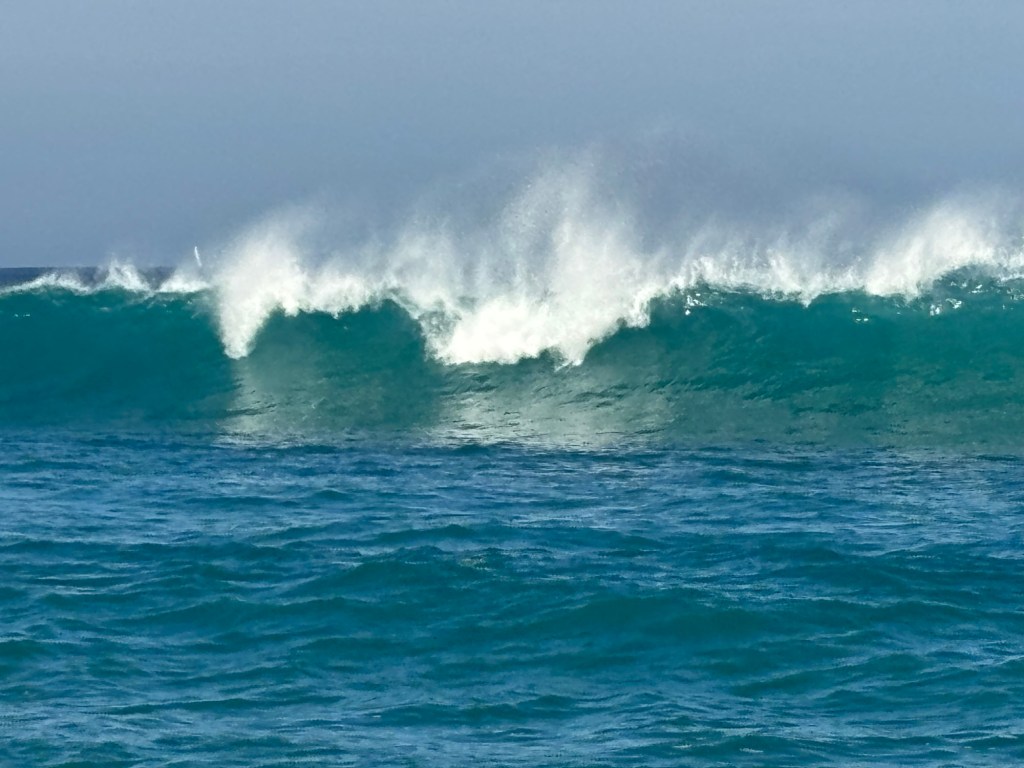

I had most of my lunch and readied to scale the cliffs. A half-beaten track snakes its way up the slope – a snake with a sadistic habit for traveling in a straight line, that is. The cliff climbs 200m in less than a kilometre, so I had plenty of opportunities to stop and take in the beauty of the bay (or, alternatively, a breather).

As I began my ascent, a couple of waxbills saw me off, a bizarre African immigrant in this Celtic corner of the world. I found the half-eaten corpse of a guillemot a little way up, the only one of its kind I saw, though they do still breed here at the westernmost corner of their range. For the rest of the climb, I was followed by a pair of red-billed choughs, an incredibly acrobatic bird which seems to delight in its ability to fly like few others. Now hanging in the wind, now plummeting into the abyss before unfolding their wings and climbing back out of their death-defying dives, they appear to perform these feats of gravitational defiance for the sheer thrill of it, since they serve no practical purpose whatsoever. The peregrine falcon employs a similar tactic to strike its prey out of the sky, but while I did spot one wheeling overhead, it wasn’t hunting today.

Far out to sea, the occasional gannet soared by, its wings just above touching the crests of the waves. They were shadowed now and then by the squat-bodied shags leaving their crude nests to fish; beautiful creatures in their own right, but ugly, misshapen imitations before the slender, powerful wings of the gannet. Down below, just metres beneath their colony, the Atlantic roiled in aquamarine anger between the cliffs.

It was a dizzying spectacle with both my feet (and my hands) firmly planted on the ground. Goodness knows how the choughs see such a sight and feel compelled to hurl themselves at it, as though defying the gods themselves. But then, I was never much fond of rollercoasters either.


The cliff path works its way up to the watchtower of Veladoiro, where the wind howls through the bars of its iron-framed mast, before skirting the edge of a pine forest so perfectly arranged it must have been planted here as a windbreak for the villages in the valley below. The lithe shapes of lizards and at least one snake dart across the path ahead of me, and I find the snapped-off tail of a slow worm that obviously wasn’t fast enough, though by the wearing at the severance point it seems to have been there for at least a day.

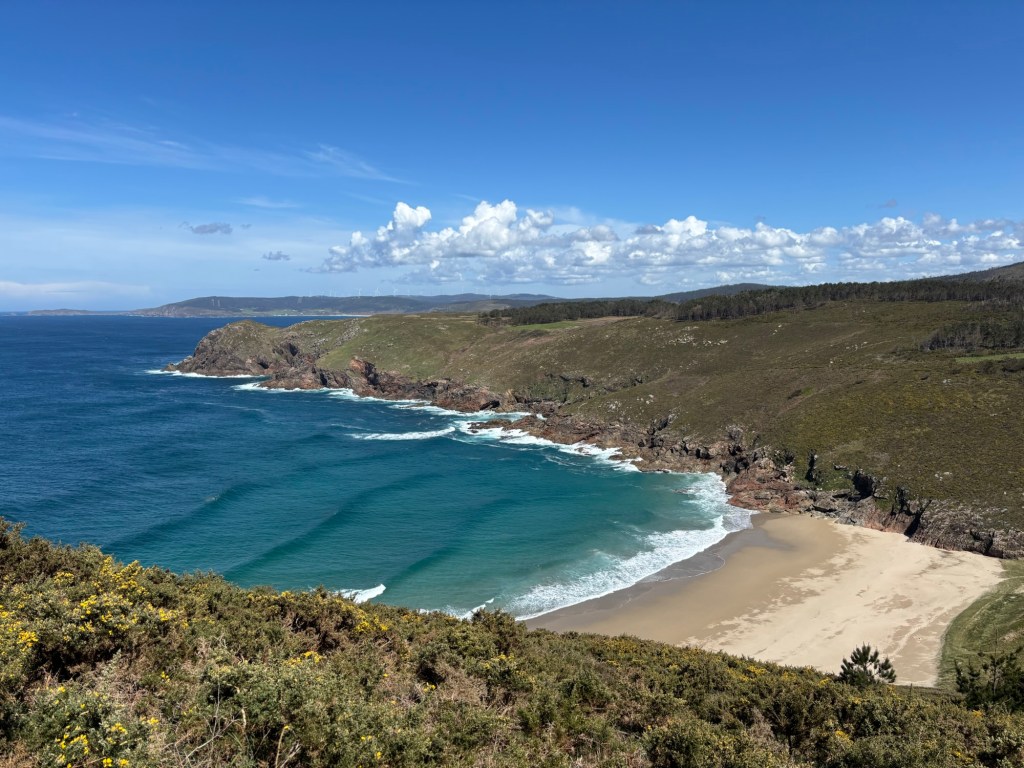
At the edge of the forest I come across a hidden bay: Praia da Arnela. It’s hard to tell from Google Maps why this pristine beach isn’t more of a magnet, but the answer is obvious to the naked eye: it can only be reached by a steep descent from an offshoot of the nearby hamlet of Vilar de Duio. I haven’t brought a towel, and I don’t think I’d fancy climbing back up the cliffs even if I had, so I content myself with watching the waves roll in from the clifftop instead.

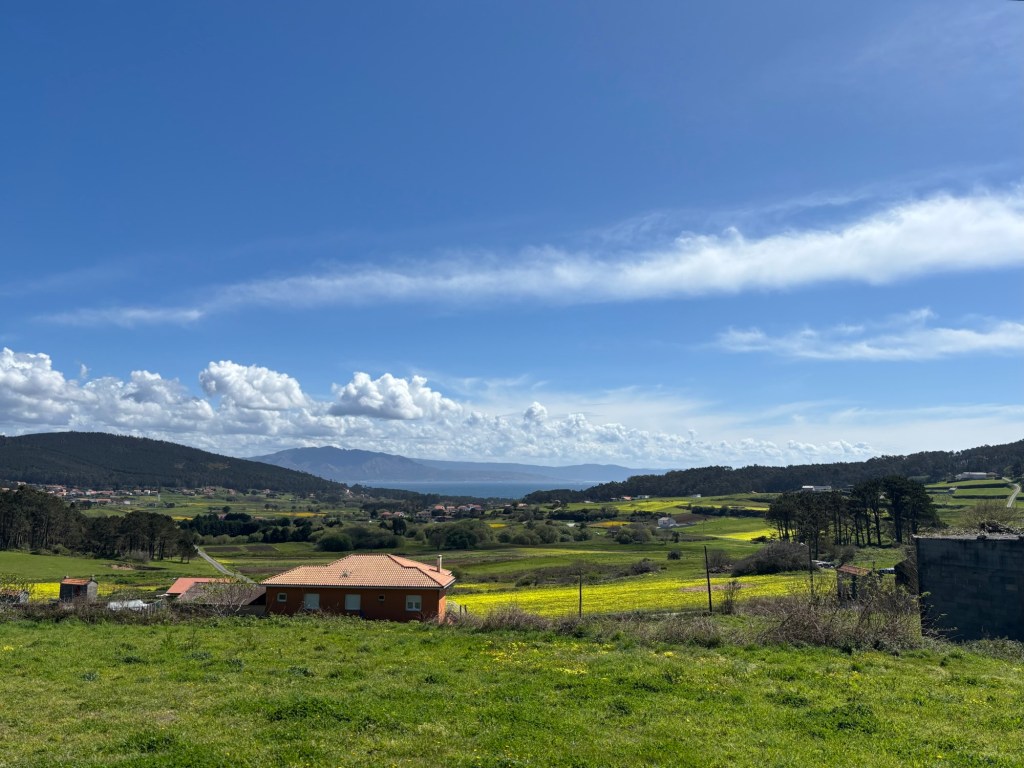
Turning my back on the sea, I start to descend into the interior. The fields of buttercups nestled between the forests on either side of the cape shine in two distinct shades of yellow: one a warm gold, the other a brighter, almost greener yellow. American and European, perhaps, though I’m not sure which way round. A single swallowtail butterfly dances into the field, its own golden wings lost in the shining petal sea.

The last time there was a great Atlantic storm, some of the mighty monarch butterflies were blown across the sea to our shores. I think that was in 2016, as I recall seeing one or two in Morocco and then, even more bizarrely, in Kent within that same summer.

Sometimes I wonder if esoteric anecdotes like these are worth recording. But perhaps it serves a greater purpose, as naturalists the world over try to understand the forces of the world around us by drawing together tiny threads such as these.

Back at Langosteira, I remove my sandals and continue along the beach barefoot. The relief as the waters rush over my tired feet is like nothing else. There are no swimmers out – it’s much too early in the year – but I’m happy to have my feet in the water again.

A single dunlin races ahead of me along the shore, a straggler from the traveling group of five that I saw from my window yesterday, perhaps. It will soon be on its way north to its breeding grounds in the Arctic circle. Much like the swallows who sing merrily from the telegraph wires in the fields here, you have to marvel at the courage and strength of these little wanderers who travel many thousands of miles each year, defying the elements to answer a call beyond their understanding: the call to come home, wherever that may be.

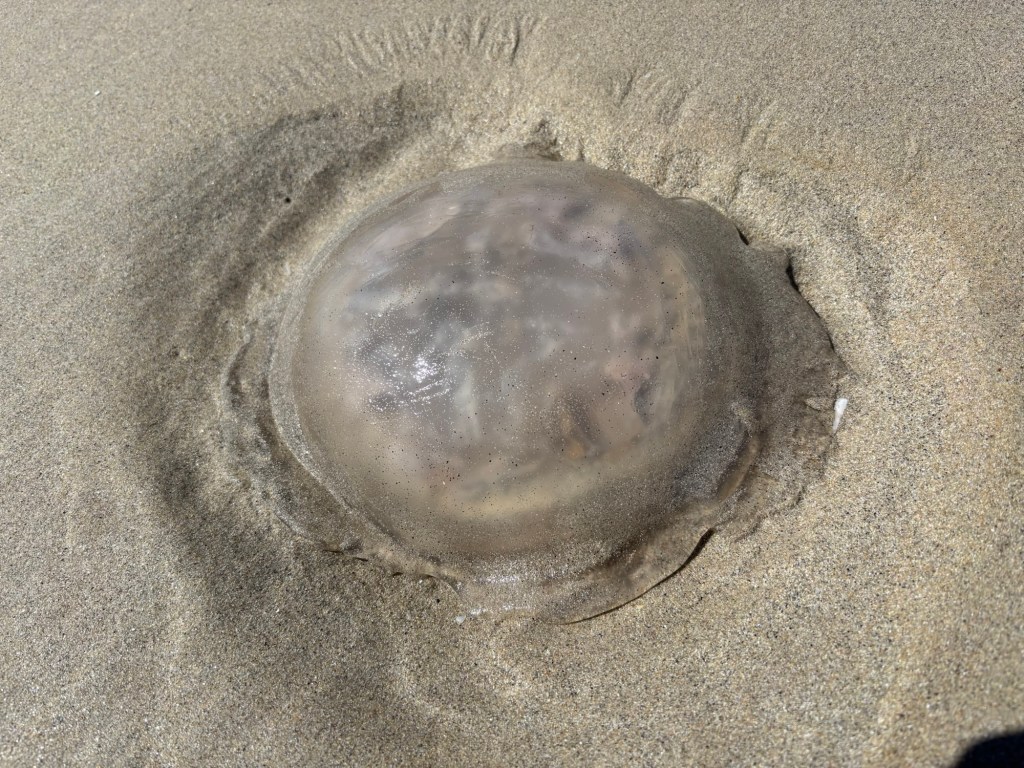
A less fortunate wanderer lies stranded in the sand, glistening in the sunlight: an enormous jellyfish. Not a false jelly like a man-o’-war, nor even a lion’s mane by the colour of it, though it’s hard to say with any degree of certainty, as some marine predator has already devoured its trailing tentacles, leaving the flabby and presumably inedible bell behind. A hollow has pooled about it where the waves have dug it a grave, after a fashion. On the off chance that it might still be alive, I carry it back to the tideline and lower it back into the water. The tide spits it back up again and it lands on its head, motionless. An ancient creature, practically unchanged since a time before life moved over the land, humbled by a force older than the world itself.

I’m back at the pensión now and taking a well-earned rest. There is Wi-Fi here, but it doesn’t reach quite as far as the last room in the corridor (which happens to be mine) so I’ve been using data to patch up the gaps. Quite a lot, by the looks of things, as it takes my app a long time to do the maths – longer than me, and that’s saying something. I’m feeling like it might be a good excuse to get an early night tonight, as I’ve got a few late ones coming up, so I’ll make the most of it while I can. BB x
For the Glory of Jellyfish

Tuesday 12th July, 11.13am
Hassocks Station

I needed to get out. While it was ultimately my decision to come back south to my flat and cut myself off once again – and I stand by that decision – it’s all too easy to go stir crazy in here on my own. I was angling on getting out and seeing friends for a couple of days, but as my plans fell apart, I’ve had to take the reins myself. So I decided to strike out for the coast. Brighton always makes for good writing, that perfectly bizarre city.

It’s clearly a school trip day today. The train south from Three Bridges was absolutely rammed with saaf Landan kids in high-vis jackets, their beleaguered teachers sitting close at hand, identifiable for the throbbing veins in their temples if not by their lanyards. Standing room only. It’s kind of noisy in the gangway, so I pop my headphones on. The Spinners’ Rubberband Man cancels out some of the angrier verses the kids are throwing around from their phones. I don’t understand the unbridled rage in that kind of music, much less its magnetic appeal to kids. Give me the laidback fun of the seventies any day.


12.40pm
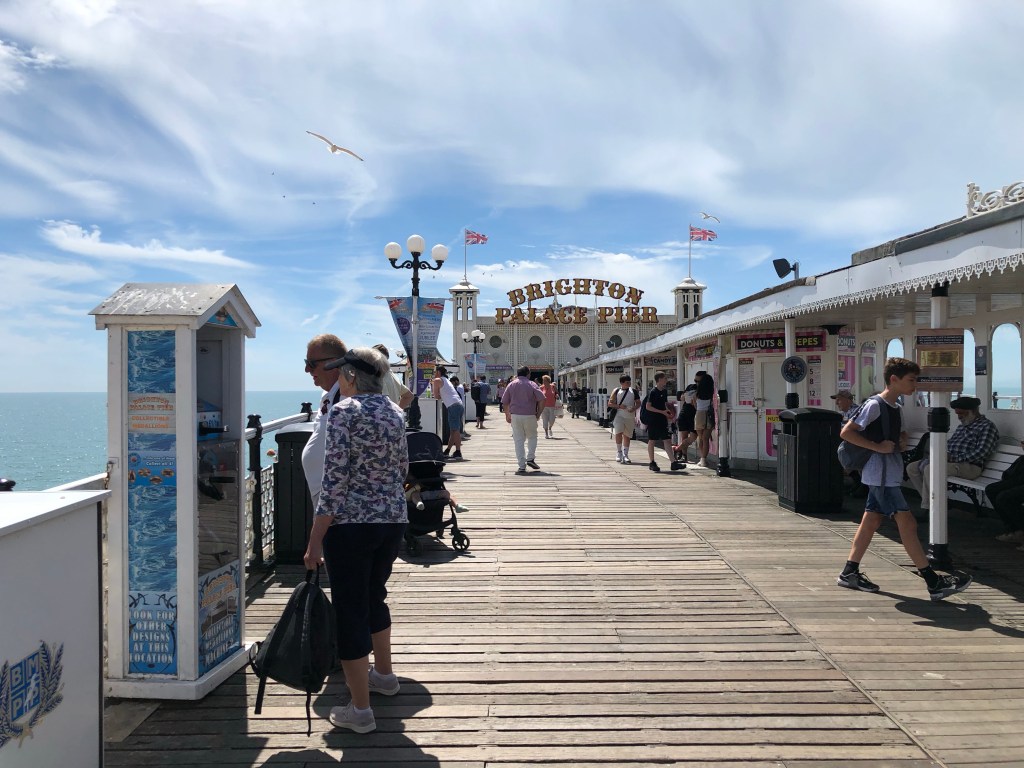
Brighton Palace Pier

Somehow it took me all of an hour to get from the station to the pier. Time slips through my fingers in a bookshop. It’s as though Waterstones operates in its own dimension. That could well be because I’ve become a lot more tactical when it comes to book-buying, taking the time to really get a flavour for a book before deciding to add it to my collection. As a general rule, any and all books on Spain (pre-20th century) go straight into the basket, but I’ve genuinely reached the stage now where if I don’t have it, it’s not worth having. There’s still a wealth of material out there in Spain in Spanish, but with Spain’s ludicrous stance on FBP, shopping for books over there is simply not economically viable. At the moment I’m trying to pick up my European reading challenge where I left off a few years ago, so I sought out a Ukrainian book to add to the collection today. I thought I was onto a winner with Sholem Aleichem’s Tevye the Dairyman – the forefather of Fiddler on the Roof – only it turns out, predictably, my mother already bought the book years ago. Still, no matter. That’s one more book I can feel better about giving away someday.


1.27pm
Brighton SeaLife Centre

Yes, I visited the aquarium. Don’t judge! When I was a kid I used to love going to aquariums – or the more ecologically-sound sealife centres, as they are so often called these days. Nausicaa across the Channel in Boulogne was a personal favourite, but Hastings’ SeaLife Centre came a very close second.

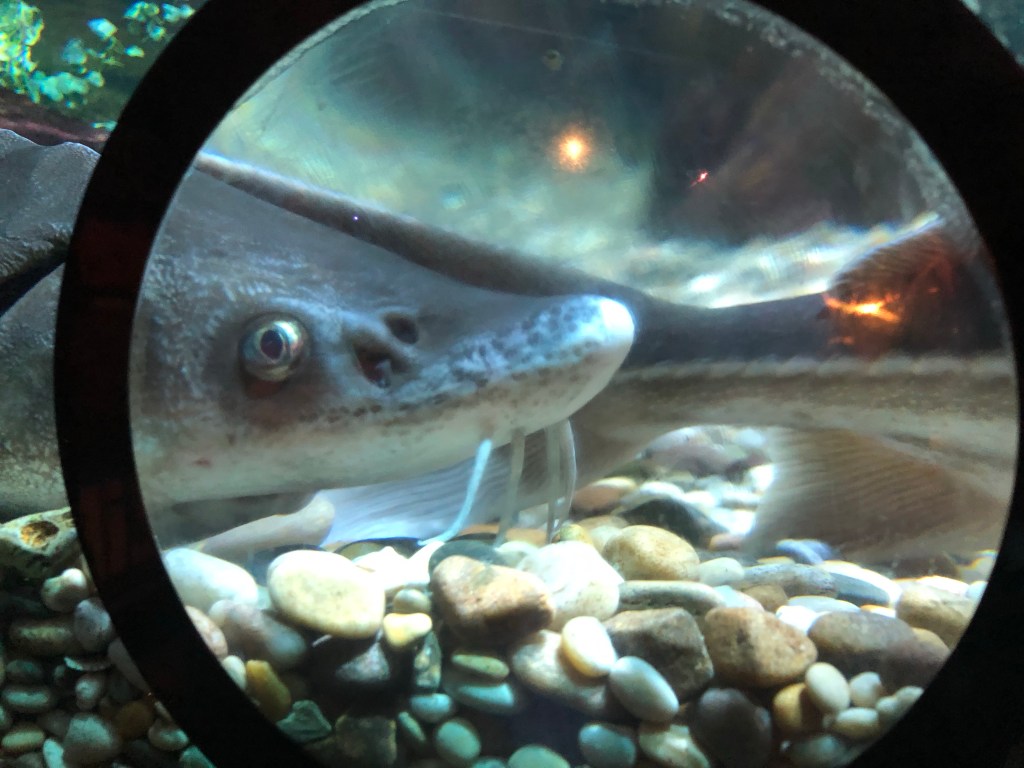
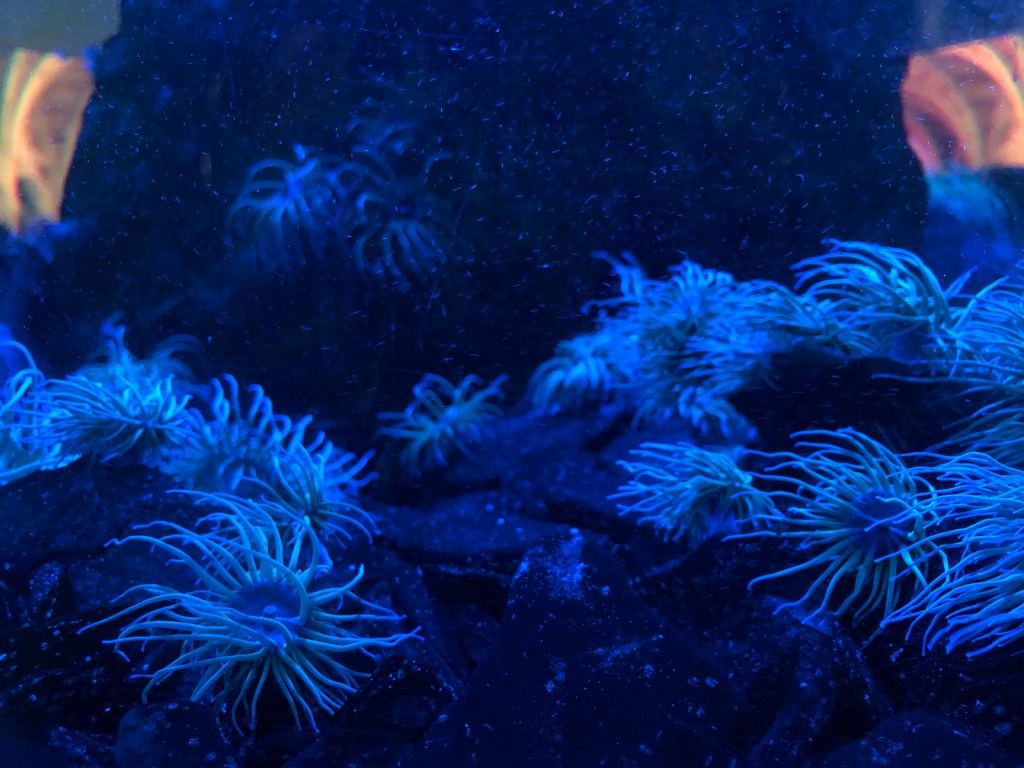
It was pretty much deserted. A large primary school group came in after me, but they never made it any further than the cafe housed in the original Victorian aquarium. I felt like a kid again and challenged myself to name the fish whose names I’d furiously memorised more than twenty years ago. For some crazy reason it’s all still there. From loach, tench and trout (easy mode), to snakelocks anemones, garden eels and corkwing, rainbow and cuckoo wrasse (standard) and on to pacu, Bloody Henrys and discus fish (hard mode). It’s a safe bet that the reason I had such a hard time learning anything in science class was because that part of my brain was stuffed full of animal trivia. If only biology had been about animals and not plant cell structure…! Who knows, I might have gone on to study it. As it is, I was bored stiff and let it go as soon as I could.

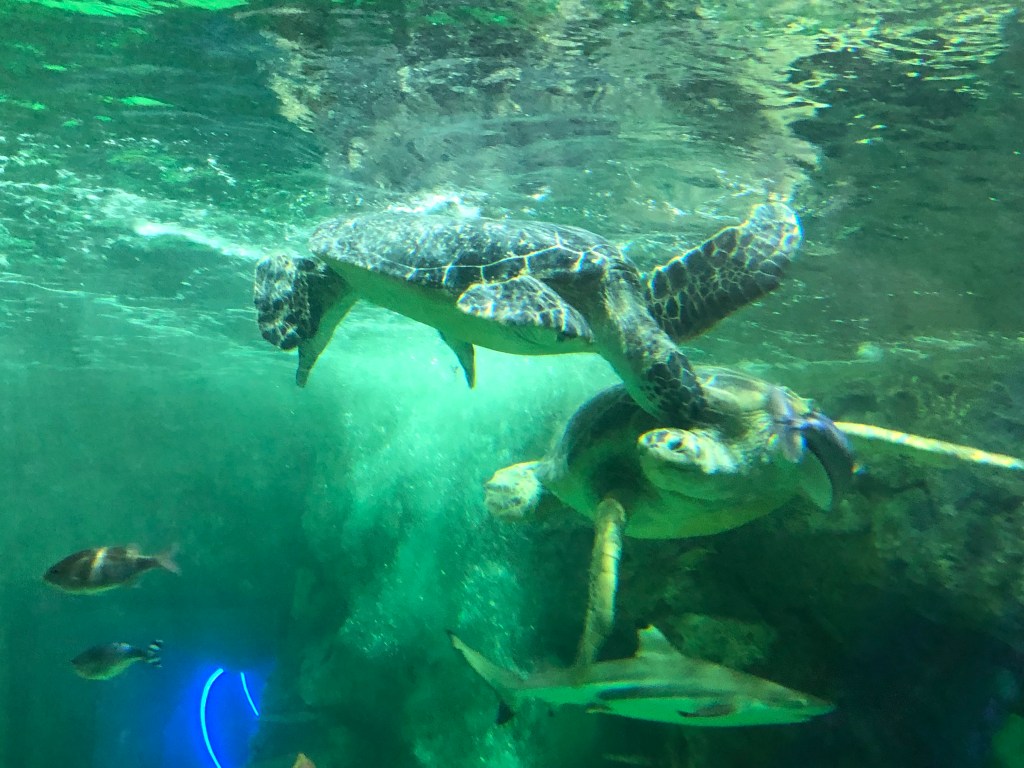
I stood and watched the turtles for quite a while. I don’t think I’ve ever seen a live sea turtle before. My god, they’re huge. Nature found a perfect recipe over 100 million years ago and decided ‘yep, that doesn’t need any more work’. Like sharks, turtles have been around for millions of years. Watch a turtle fly through the water and you’re reminded of how pathetically short our time on this planet has been by comparison. Only, these turtles looked a little stereotypic. One bit the other on one pass. Creatures can develop odd behaviours when they’re cooped up in small quarters. Maybe that’s a window into what’s happened to me in my flat this summer!

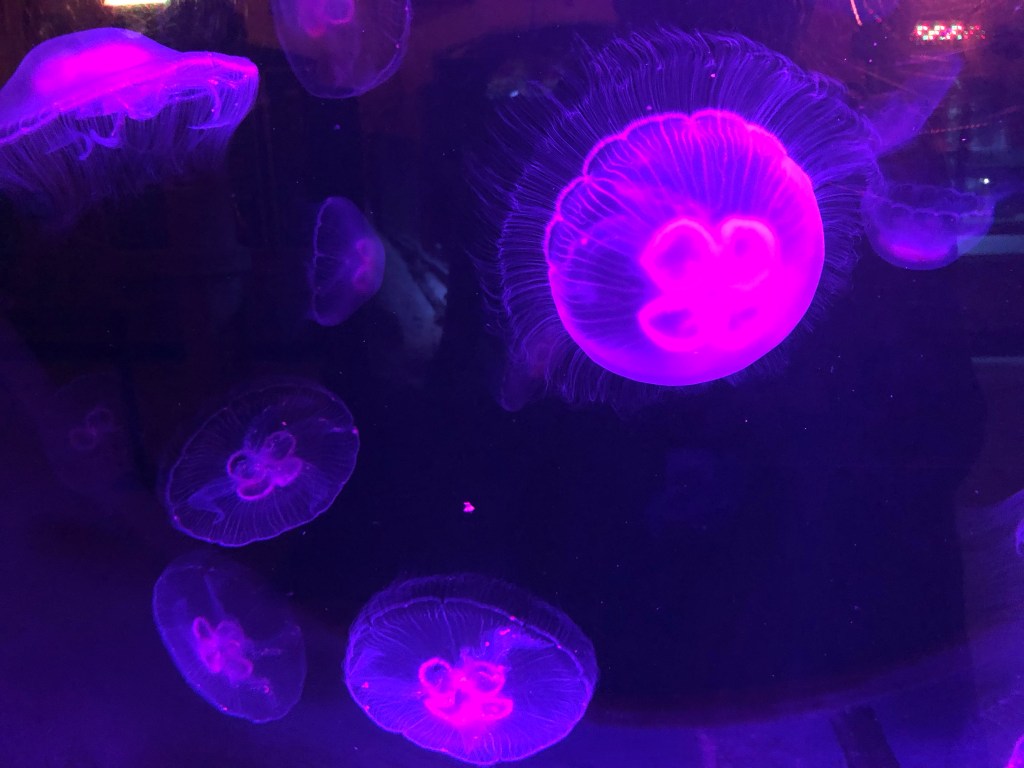
On to the jellies. I could have come here for the jellyfish alone. They’re absolutely mesmerising to watch in flight, pulsing slowly through the water, their hair-like tentacles trailing behind them. Another perfect life form that has seen millions of years of evolution come and go. Almost all sci-fi flicks imagine aliens from other planets as bipedal if not all-but human in appearance (Doctor Who and Star Wars are the prime examples), but if I were a betting man, I’d stake a fair amount on extra-terrestrials looking more like jellyfish than man. Isn’t it rather selfish of us to assume that ours is the perfect life form when turtles, sharks and jellyfish – hell, even cockroaches – have outlived us by millions of years? And on that note, I’d better clear out of here before I sell out mankind to the invading jellies faster than Kent Brockman.


2.58pm
Artists’ Beach

After nearly betraying humanity over a jellyfish and admiring the beautiful world beneath the waves for an hour, I promptly went outside, climbed the steps up to the palace pier and ate a battered fish with chips and vinegar. The irony was fortunately lost on the hoarse chippie vendor, who barely got the order numbers out in a grating voice. A group of girls next to me got their orders in after me, but somehow got their orders out first. £8.20 for fishcakes and chips seemed a bit steep compared to the £5.40 deal just 200 metres from the pier, but it was good quality, and since I barely managed to finish it, I didn’t have to wash it down with a tot of buyer’s remorse.

Brighton was packed with graduands this afternoon, red-faced and sweating in their full academic dress for the 28°C degree heat. If they opted for modesty, the other beach goers didn’t get the memo. British flesh on florid display, ranging from lobster-red to milk-white. A few lucky sightseers with bronze skin seemed to walk a little taller, but they were definitely in the minority. Lifeguards, street vendors and tramps made up the rest. Folk who have little choice but to soak up the sun.

Freeze frame. I pop the chip-box in the bin and look around – and really look. Yuppies in “gap-yah” pants and strappy tops. A lady in a wheelchair, and two women at the traffic lights who get to discussing behind their hands how she might have ended up there (the kind of curiosity my generation loves to hound out as aggression). Goth-types with nose rings, vape-sticks protruding from their fingers. On that note, cryptic vape ads everywhere (what on earth is the appeal?). A squadron of Korean cyclists suiting up on the sidewalk. A cormorant flying east along the coast. The indefatigable enthusiasm of the man selling rides on the motionless merry-go-round. A boy with what looks like rickets going by. The blonde girl in her thirties singing her heart out to a crowd of beachgoers enjoying a late lunch. Nobody is looking up at her.


3.35pm
Preston Park Station

The train home is much emptier, but I still walk the length of the train to find a carriage to myself. I pop the headphones back on as the train begins to pull away and Manu Dibango comes on. Sax City, Africadelic and Soul Makossa. Dibango was one of the victims of COVID two years ago. Like Marvin, James and Luther, that’s one more of my favourite artists who I’ll never get the chance to see live (or alive, for that matter).

During the Gospel Choir debacle, I spoke to a colleague and asked for their thoughts. They said they had thought a lot about the issue of music in a post-BLM world, and questioned even having been to a soul music gig as a white person. That messed with my head for months. It’s not that I don’t rate musicians who look like me, but give me a choice between Ed Sheeran and Fela and it’s Fela every time. Pop is catchy, but disco is eternal – it just keeps on giving, fifty years later. Folk is clever but Soul finds notes that folk just can’t. And highlife is surely a candidate for the most feel-good music genre on the planet. How can you deny yourself the chance to listen to such wonders on account of a feeling of awkwardness?

I’m all for better representation in the music industry. It needs it. I just hope we don’t end up carving ourselves up into islands where we can only listen to people who look like us, think like us, talk like us. And I mean that literally as well as musically. Social media is doing that already. It’s a dangerous path we’re treading, and I hope we can weather the storm that’s coming.

Would you look at that. I’m back to sermonising. I think I was doing better with committing acts of high treason for the conquering jellyfish. Time to go. Blppp blppp blpppp. BB x