Wailing World

“Sir, what’s your opinion on Russia v Ukraine?”

In the vocabulary of a child, it sounds harmless, like a friendly football match. It tears away the shock and the hysteria. It tells a story of immediate information, of children monitoring the dawn of war on the screens of their smartphones. It seems almost absurd, watching a war unfold in real time.

I couldn’t answer the student because I don’t know enough about what’s going on in Ukraine to give anything like an informed opinion of my own. My meddling with Russian affairs amounted to nothing more than a short-lived attempt at after-school Russian classes in my sixth form days. The two other chaps in the class went on to study Russian at Oxbridge. I had no such intentions. I happened to be studying the Russian Civil War in A Level History, I was intrigued by the art style of the Soviet propaganda machine and felt like learning a new language. Not for the first time in my life, I felt like a foolish hobbyist amongst eager professionals. I don’t think I ever made it to the second class.

I chose to focus on Arabic instead, for equally casual reasons. I didn’t want to be a spy, or a civil servant, or an ambassador. I don’t have the cunning or the sense of national pride. All I wanted to do was to read my history books, and to draw back the curtain on al-Andalus. I had the chance to explore an entirely different world, and I took the other road. God only knows where my life might have taken me had I made it to that second Russian class.

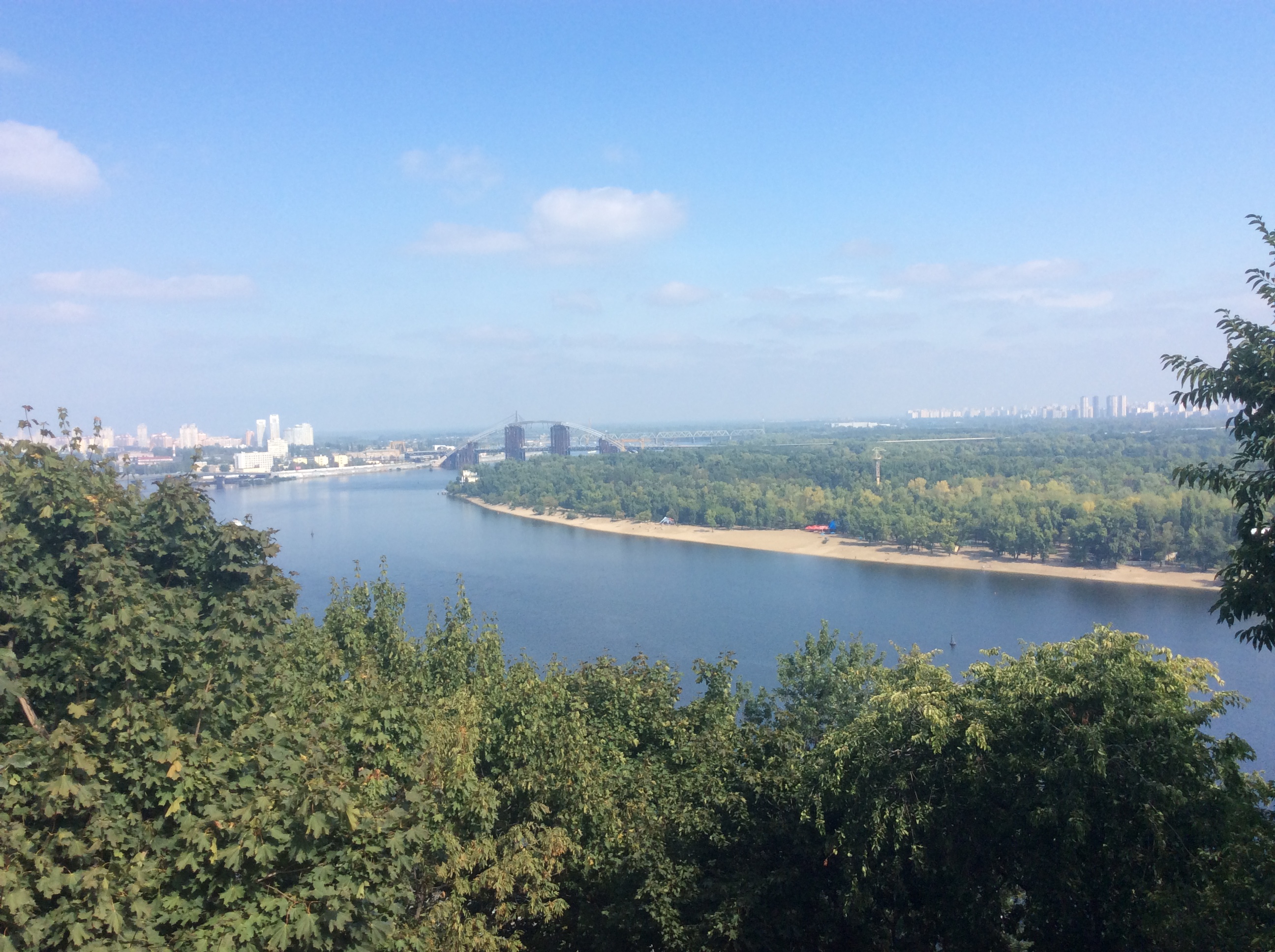
As the fighting intensifies in Kiev, I remember flashes of my brief stop in the city almost seven years ago. Bearded, sweat-scarred and looking forward to coming home, however briefly, after two trying months in Amman. The decision to take advantage of a twelve-hour layover and make a flying trip out to Kiev from Boryspil Airport was a fool’s fancy on my part, as it so often is, but it did mean that I got to see with my own eyes a city that is now in headlines around the world.
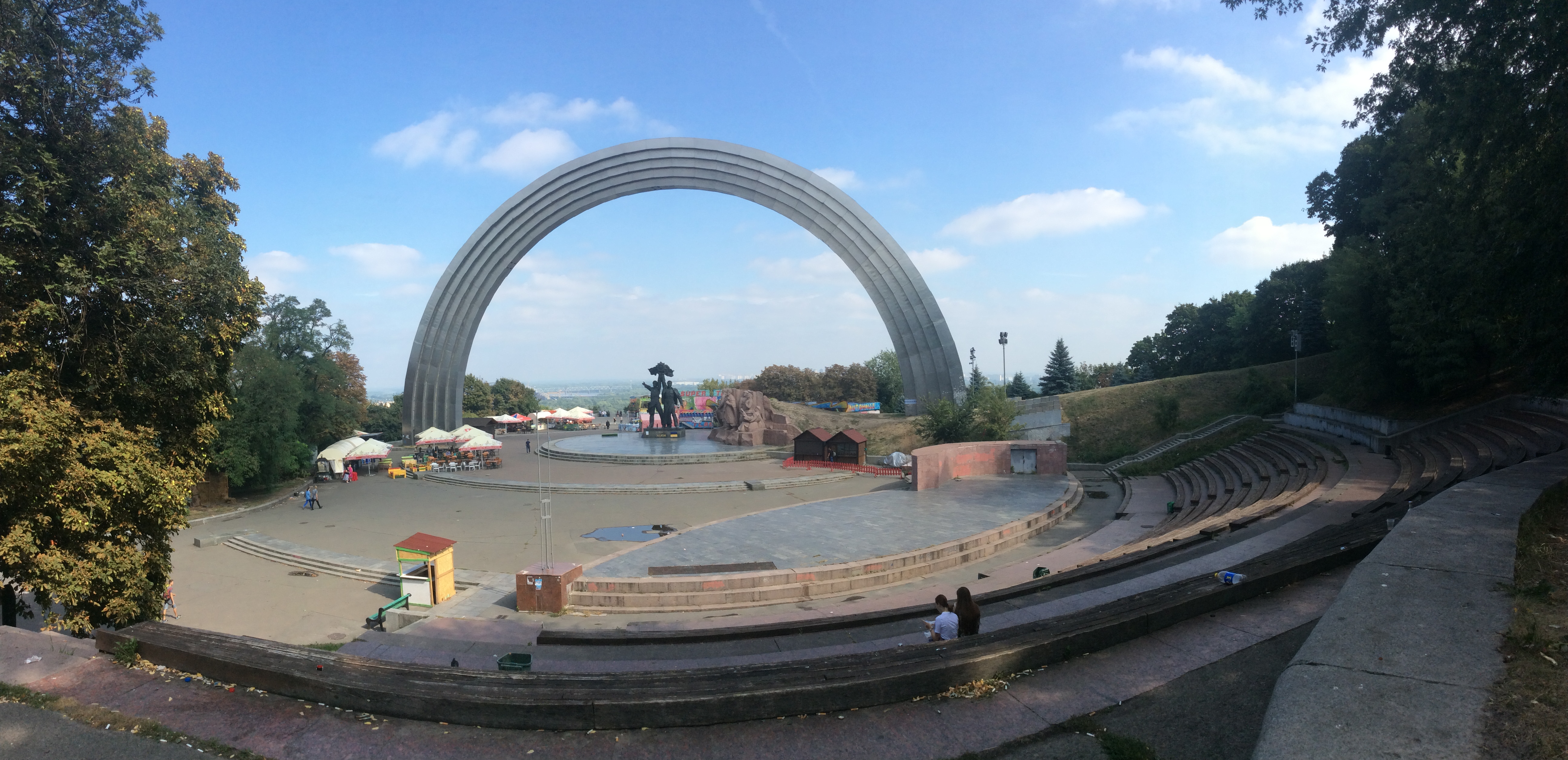
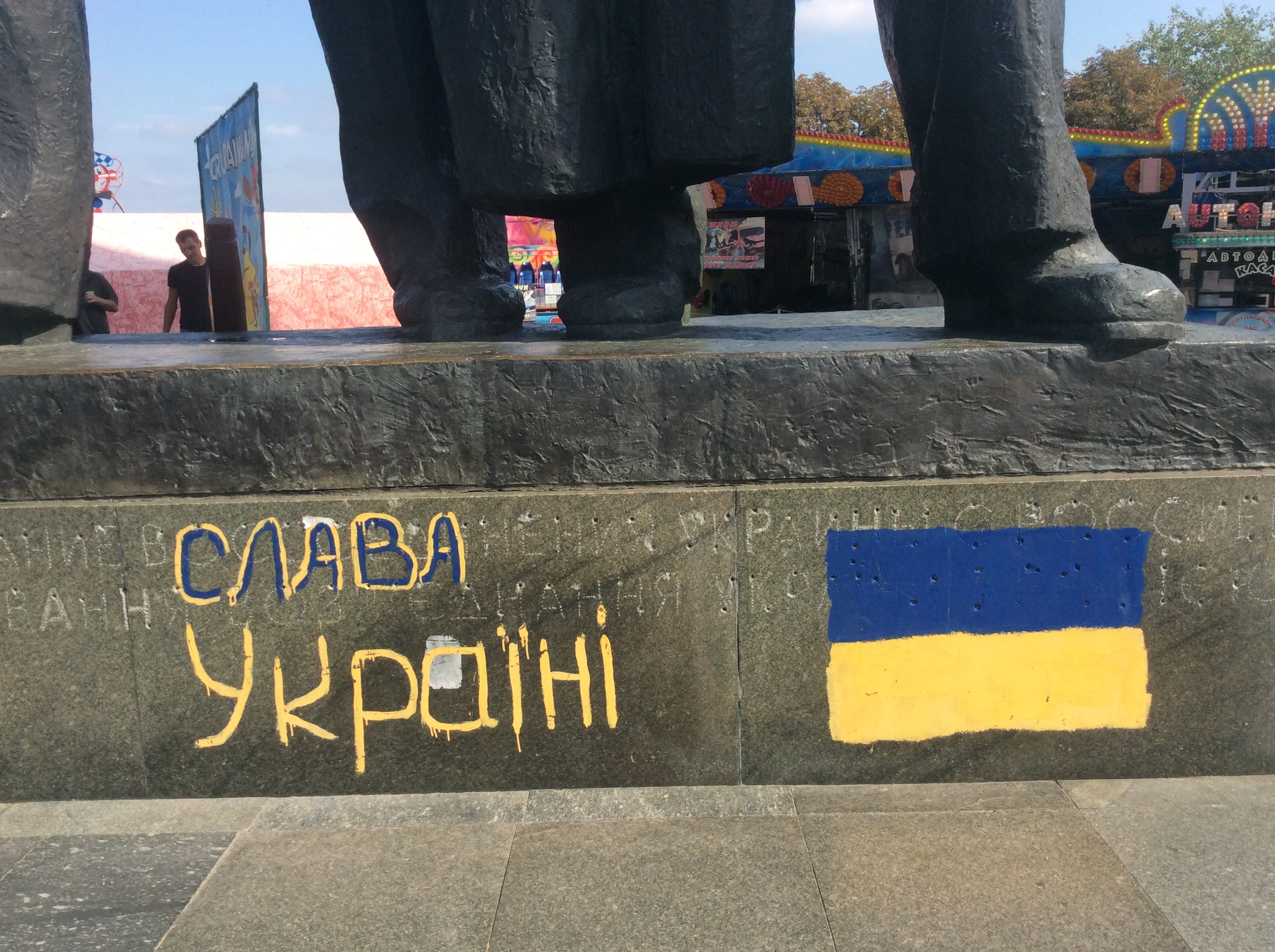
That was back in 2016, only a couple of years after the Revolution of Dignity and the subsequent annexation of the Crimea. The city was quiet, but the stress lines were there to see, if you looked closely. Beneath the People’s Friendship Arch, a monument to Russian and Ukrainian unity, a messaged daubed in Cyrillic: “Slava Ukraini” – Glory to Ukraine. The nationalist call-sign, forbidden during the years of the Soviet Union.
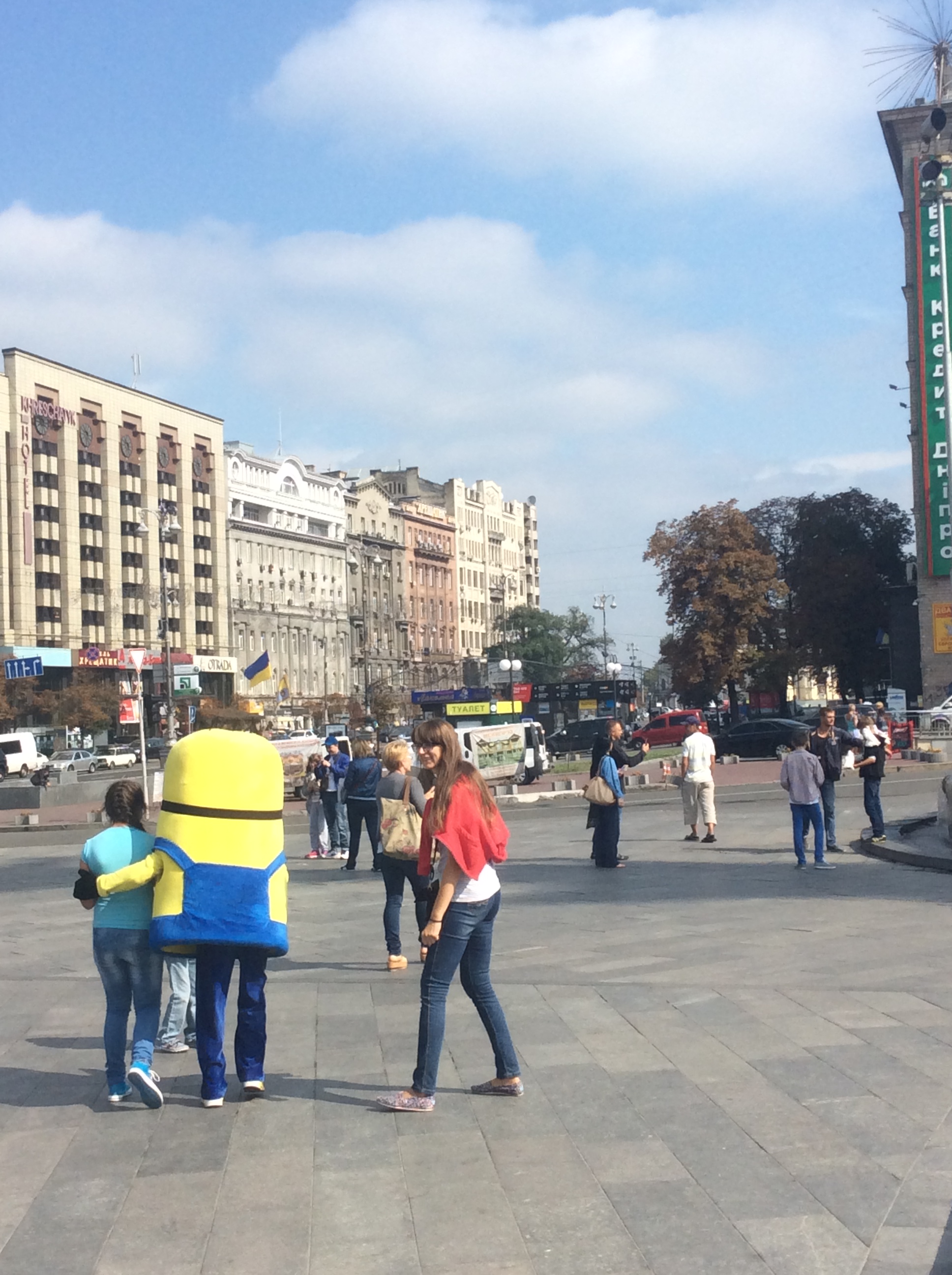
The blue and yellow of the national flag was everywhere, almost as fiercely ubiquitous as the rojigualda in the months following the 2017 Catalan rebellion. Even the street artist dressed as a minion in the Maidan Nezalezhnosti (Independence Square) seemed intentionally patriotic.
The blue and yellow from the city streets of Kiev has since fanned out across the web. Profile pictures bear its bicoloured hue. Thoughts, prayers and shares tell the story of the conflict to millions. And while part of me feels this is the way things should be, there’s something that keeps cropping up that I feel the need to talk about.

As is becoming customary in the Instagram Era, there’s just as much anger on my social media feed about the underrepresentation of conflicts happening elsewhere in the world as there is about the fighting taking place in Ukraine. For every “thoughts and prayers” post there’s a story bemoaning how much less of a fuss was made over Israel’s actions in Palestine, or the Indian occupation of Kashmir, or the assault on Yemen, as though one ought to be losing one’s head every time a gun is fired anywhere around the world. All of them immensely valid causes, no more or less than the chaos unfurling in the land of the Rus right now. Still, the phrase “pick your battles” comes to mind, and perhaps I’ve never used it more accurately. You can’t fight every war.

War. It’s not a word I’m used to using in the present tense, jaded as we are in the West by decades of relative peace. Thousands of us – maybe even millions – have never known what war means beyond what we studied at school. There’s a strong argument against the virtue-signalling “thoughts and prayers” response trending across social media, but maybe that’s just the knee-jerk reaction of a generation so far-removed from war that the word has all but lost its meaning.

Thoughts and prayers for the people of Paris after the Notre-Dame fire. Thoughts and prayers for the people of Afghanistan. Thoughts and prayers, but never enough of them, and never going to all the right places at the right time.

There’s so much human suffering that the whole world should be wailing.”

Joy Chambers, My Zulu, Myself

Taking the colonialist argument off the table, just for a moment, I don’t know whether we’re even capable of feeling a genuine sense of outrage at every injustice there is in the world – even my generation, which does a very good line in being outraged and incensed at everything. Every injustice, though? How can you fight for every cause and still remain true to your own beliefs? That much pain would be enough to tear the soul apart. It’s bad enough being a bleeding heart about the natural world – which, when the chips are down, is the first thing people forget to care about.

Fight, by all means. Resist. Shout about the things you care about. But pick your battles, and don’t attack those who didn’t come when you called, just because the fire in their hearts was not burning so bright.
What’s my opinion, then? Bewilderment. Jaded bewilderment, like so many of my generation. Bewilderment at the aggression. Bewilderment at the inaction. Bewilderment at the comparison to the Sudetenland saga I’ve heard so many times this week.

I studied the Soviet Union for years, but I’m no nearer an answer than any other armchair expert – probably because of my innate aversion to 20th century history, having studied it to the exclusion of every other century at school. Before I speak out, though, I will do what I do best. I will read. I will research. I will inform myself, as we were so often commanded to do during the BLM movement. I will speak to those who know more than I do, when the time is right.
While the world watched the city of Kiev, five islanders returned from the Chagos Archipelago in the Indian Ocean. It was their first independent trip home since they were forcibly removed by the British authorities during the 1970s as part of a deal to secure Mauritian independence. Mauritius wants its territory back. The Chagossians just want to go home.

Just one more injustice to add to the pile. Perhaps the whole world should be wailing – but for whom? Our world is full of people who think differently, and long may that be so. I will defy my generation and risk the use of a colonial poet to conclude, because I do believe Kipling had the right of it in this verse… BB x

Oh, East is East, and West is West, and never the twain shall meet,
Till Earth and Sky stand presently at God’s great judgement seat,
But there is neither East nor West, Border, nor breed, nor birth,
When two strong men stand face to face, though they come from the ends of the Earth!

Rudyard Kipling, The Ballad of East and West

The Trouble with WhatsApp

By the time this blog post reaches you, it’ll have been several hours since I finished writing this article. In a world where so much of what we do is instant, from long-distance communication to microwaveable dinners, it’s both painful and exhilarating to be stuck on what seems like a desert island in the wavestorm. Perhaps even a little rebellious, too. So, in a way, quite a bit like sex. But what do I know?

I’m currently living in a very comfortable two-bedroom flat on the edge of town, just a three minute walk from school and a seven minute walk to the nearest supermarket. During the week I share it with a flatmate some ten years older than me who returns home to his family every weekend, leaving the flat all to me if I’m not traveling. That’s just to give you some background detail. We agreed early on that there wasn’t much point in getting internet for the flat, despite his having access to a discounted deal, as we have no mainline phone, but chiefly because there’s free internet whenever we want it at school.

That means one thing: I live under a communication curfew. When school finally shuts its doors at half past nine, I’m off the grid until the following morning.

To my knowledge there are two other WiFi access points in town, if you don’t count all the cafés and bars: there’s the hotspot in the town park, and the WiFi service operated by the town’s youth hostel. I’ve been leeching off both for the last month, but neither are reliable. The park is a very hit-and-miss affair; sometimes there’s WiFi, sometimes there isn’t. Usually, there isn’t. The albergue is normally operational, but it’s a longer walk, and you have to be inside the front door to get a good signal, and that just looks plain suspicious. Which it is. I only play that card these days if I’m out of all other options and really need to contact somebody.

The crux of the matter is that I’m leading a largely internet-free existence. I’m not fully weaned of the system by any stretch of the imagination, but I’ve taken the first few steps.

For one thing, YouTube no longer dominates my spare time the way it used to. I haven’t even accessed YouTube since I left England some four weeks ago. Nor do I have the option to spend hours trawling Facebook for whatever reason I used to do so. And since nobody out here ever uses SMS – this is a world where WhatsApp has well and truly taken over – my contact with the outside world is limited to an average of an hour a day: which, when you think about it, is still more than what you need. In an hour you can send and reply to a few messages, check your emails, Google a query that might have been troubling you and still have time to check the news. Anything more than that is unnecessary.

The trouble, as I’ve already mentioned, is WhatsApp. The whole world seems to turn on it, and Spain in particular has taken a really obsessive shine to it. All communication happens through WhatsApp. ‘Join our WhatsApp group’, ‘envíame una WhatsApp’, ‘don’t bother with Facebook, I haven’t checked mine in weeks, message me on WhatsApp’… I hear the same lines every day, unfailingly echoed word for word, like quotes from a cult film. It seems to be the only way people keep in touch, both personally and professionally. Even my colleagues among the staff have their own WhatsApp group, which swamps me with some three hundred new messages each time I’m back in wireless range. I asked a class to guess how many messages they send a day – upon investigation, every single one has both a smartphone and WhatsApp – and got the answer five hundred. As an absolute minimum.

I don’t know whether it’s the same in England, because I never could get WhatsApp on my old phone, so I never bothered. It’s an undercurrent I’ve done without thus far. And I don’t know whether, like Facebook, eBooks and Instagram, I’ll get sucked into the mire like everyone else in time, but I hope not. Face-to-face conversation is so much more worthwhile, worth waiting for. Surely there’s no need to go on talking into the small hours, firing round after round of thumbs-up, smileys, voice clips and the rest of the arsenal? I’m a very chatty bean when I want to be, but only if I’ve anything worth saying – small talk is something I’ve never really mastered, let alone understood – and anything worth saying is worth saying face-to-face. Cue Thumper: ‘If you can’t say something nice, don’t say nothing at all’.

The hypocrisy of my argument is this blog, of course. But as I said before, these posts are usually conversations with myself more than informative insights – as well as being my university job.

I thought I’d broach the subject because I had a particularly fulfilling debate with my Seniors class on this and other subjects last week. I had them explain to me the Spanish attitude to the online world and their stance on the blight of WhatsApp. They’re all well and truly connected, but they were at least able to recognize the foolishness of it. A few observations from my students, for the record:

  • Facebook is for older people. (This is notable because that’s how it was, once upon a time, in the UK, before it became a social staple for everybody from eleven and up.)
  • Instagram is only for artistic photos, not for food. (Preach.)
  • Checking in should be solely a holiday feature, if you ever use it.
  • WhatsApp is a problem, but it’s unavoidable – and cheaper than SMS.

In my internet-free evenings, I’m getting a lot more done than I used to. I’m reading more. I’m writing more. I’m even watching the odd film on TV. The news suddenly means a lot more to me, now that I’m not getting it ticker-tape-style every second. And the conversations I have with the people I live and work with on a daily basis are so much more entertaining for the silence between each encounter. News is fresh and comes in a wave, and I enjoy that. It’s a hermit life, but I’ve always been rather partial to that kind of existence.

Please don’t take this as a holier-than-thou condemnation of the rest of the world. I’m the one at fault, the Luddite, the Philistine; as usual, it’s probably yet another case of ‘it’s not the rest of the world, it’s you’. (More’s the fool I am for having left my weekly shop to a Sunday, when everywhere is shut… Tch. Catholic countries. Looks like lentils and rice for dinner once again…) What it is is a welcome break from the year abroad whines and shines that we’re all bombarding you with right now, though you might read it as a wake-up call to myself and others as well, before we’re all swamped by the touch-talk phenomenon of the twenty-first century… if you’re so inclined.

If you made it all the way to the end of this tirade, all I can say is I admire your stamina, and thank you for your patience – I had quite a lot to get off my chest! I’ll leave the musing and tell you all about this past weekend’s adventures as soon as I find a way of getting my photos off my old SLR. In the meantime, I’ll reward your endurance by giving you a final insight into something sweeter.

This coming weekend I’m finally returning to my old hometown of Olvera, some nine years after I left for England for good. I can’t wait to see my old friends again, as I was still a child when last I saw them, but there’s one in particular I’d dearly like to see. She was a good friend, and one of the only ones I haven’t yet got back in touch with, for whatever reason. But I’m saving all nine years of stories for when I see her, like something out of the fairy tales I spend my life writing. It’s childish, foolish and more than a little bit wet, but it’s a damned sight more real than a buzz in your pocket. That is the reality of it, and that’s this year’s big project: breaking free. BB x