Casa Tunki, Cusco. 14.12.
I can’t believe what I’m seeing in the news today. It’s like the world is going to Hell. Here in Cusco, you’d never know there was a terrible war taking place far away, over the mountains, across the ocean and the great sea of sand. Trump might have a habit of talking big game, but he is backed by the mightiest nation on the planet. I fear for the people of Iran.
As if I didn’t already feel cut off from everything that is going on, I am about to go off grid for six whole days. I don’t imagine there’s much signal in the Amazon rainforest, and I would rather not use up my phone battery trying to find out. During that time, Peru will elect its next president and Trump’s deal with have to be met – or else.
Once again, I find myself wondering with no small amount of irony that the most dangerous stretch of my South American adventure will be the layover in New York.
But isn’t that what this was all about? To get away from it all for a bit – from work, from loneliness, from the depressing chaos of global politics?
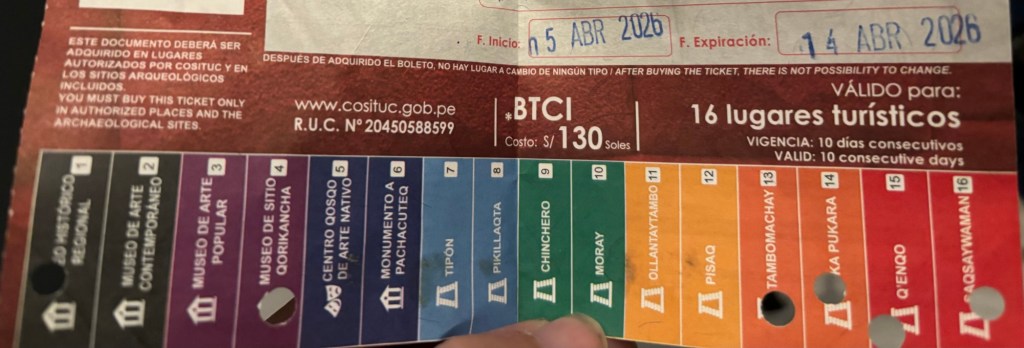
Having bought the boleto turístico, and with one day more in Cusco than I’d originally planned, I decided to go all in. 130 soles for 16 sites may sound good, but at 20 soles each, the average traveler is more likely to save money by paying at each site. Some are far away, like Tipón and Pikillaqta, four are in the Sacred Valley, one of them is in the middle of a roundabout in one of the busiest streets of downtown Cusco and two of them are art galleries.
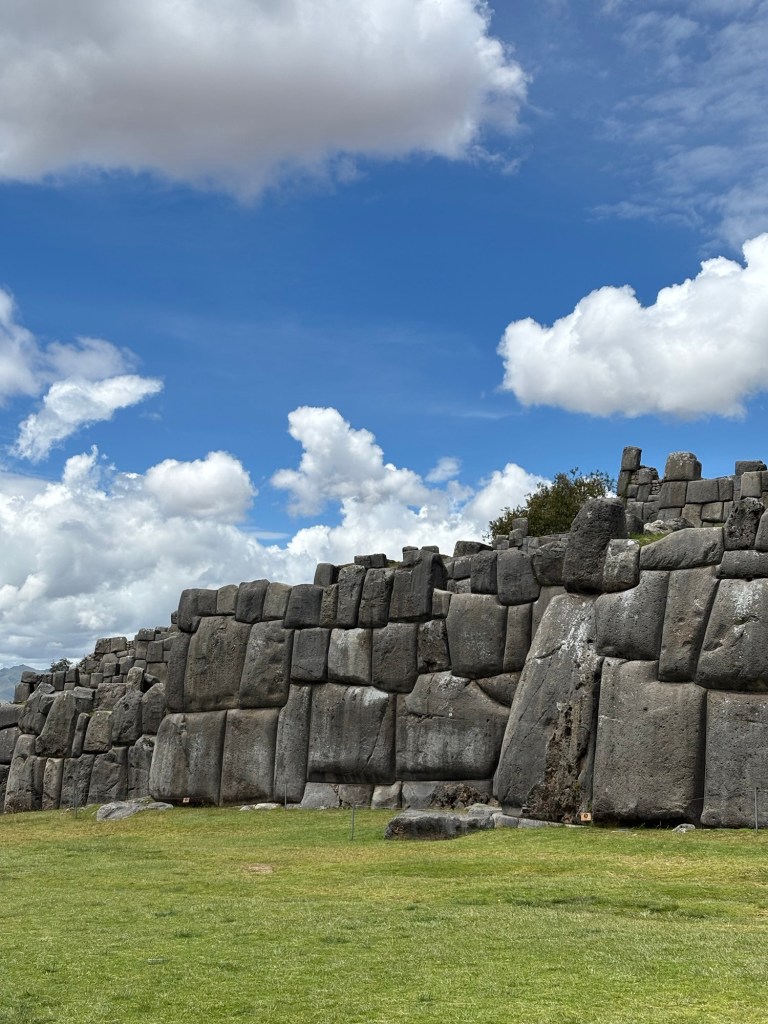
However – I bought the ten day pass, so now I have to get my money’s worth. Tipón and Pikillaqta are too far away to be reached without hiring a guide and a vehicle, but I reckon I can do everything else on this ticket. At least now it feels like a proper challenge!
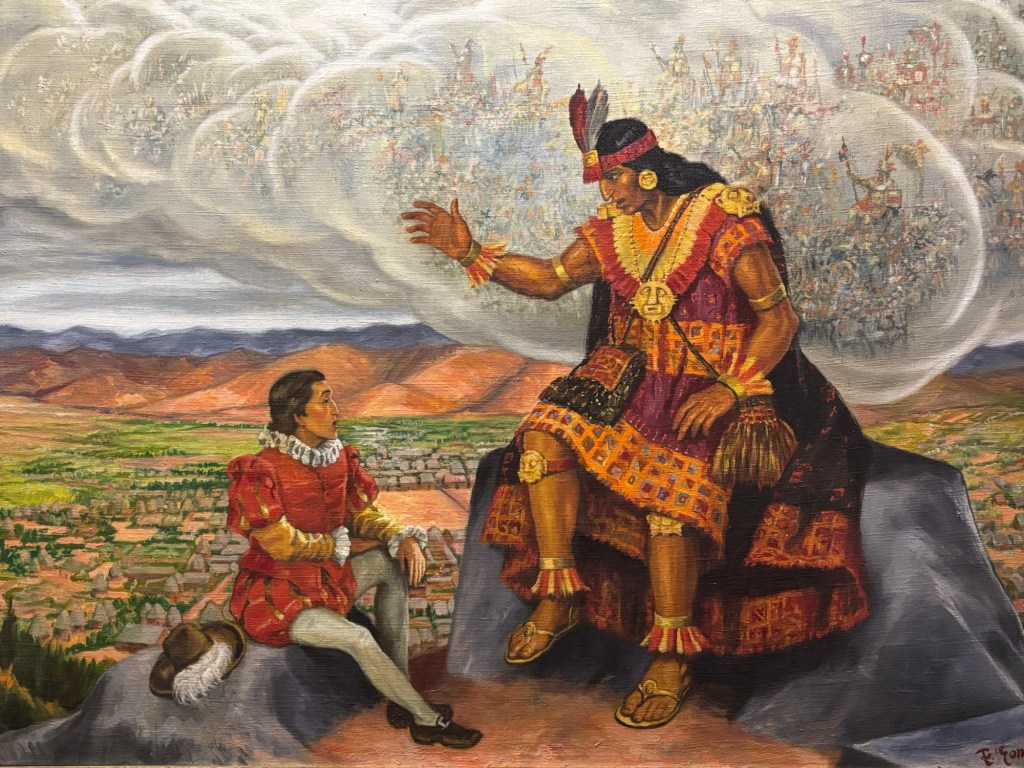
With Sacsayhuamán already achieved, first on my list was the Museo Histórico Regional. It’s worth visiting solely because it was the house of the incredible Inca Garcilaso de la Vega, a 16th century Peruvian nobleman for whom the expression “main character energy” might have been coined. Though Spanish by birthright, he was also the great-grandson of the Inca Huayna Capac, one of the last rulers of the Inca Empire known as the Tahuantinsuyo. Raised primarily by his Inca mother and uncle, he developed a profound admiration for his heritage and, assisted by the lavish education his Spanish father provided for him, he became the first great writer of the Americas. At 21, he left Peru for Spain, fought for the Crown in the Morisco Rebellion, and published many books about his native land and its people.
Understandably, El Inca is venerated here in Peru as both a defender of the native people and one of Cusco’s most illustrious native sons, whose works were influential for many famous statesmen and philosophers.
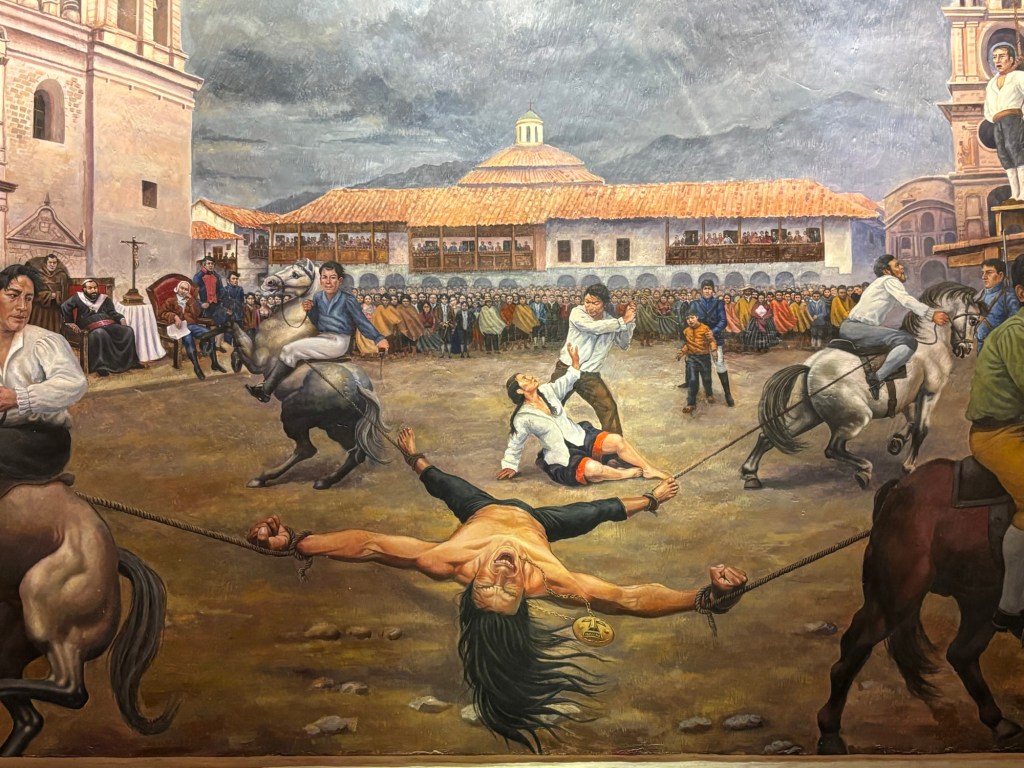
Another of Cusco’s greatest heroes is Tupac Amaru II, also of royal descent, who started a rebellion against the Spanish after witnessing multiple abuses of power at the expense of the indigenous peoples of Peru through his work as a muleteer. Unlike El Inca Garcilaso de la Vega, however, Tupac Amaru met a grisly end, torn apart in a public execution in Cusco’s Plaza Mayor as a punishment for his resistance.
It’s worth noting that Tupac Amaru II was the first public figure to abolish the slavery of Black people in the Spanish Americas. Perhaps that’s one of the reasons why Afeni Shakur decided to give her son the name of this legendary figurehead of indigenous resistance, knowing that such a powerful name could only inspire the young 2Pac to great things.
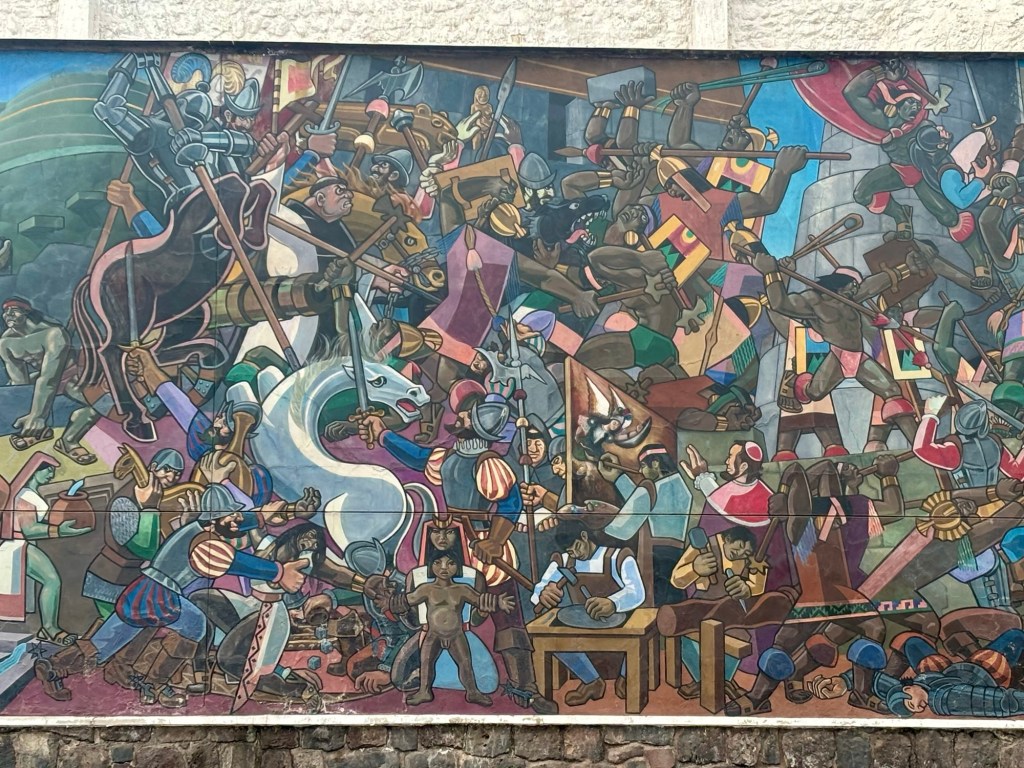
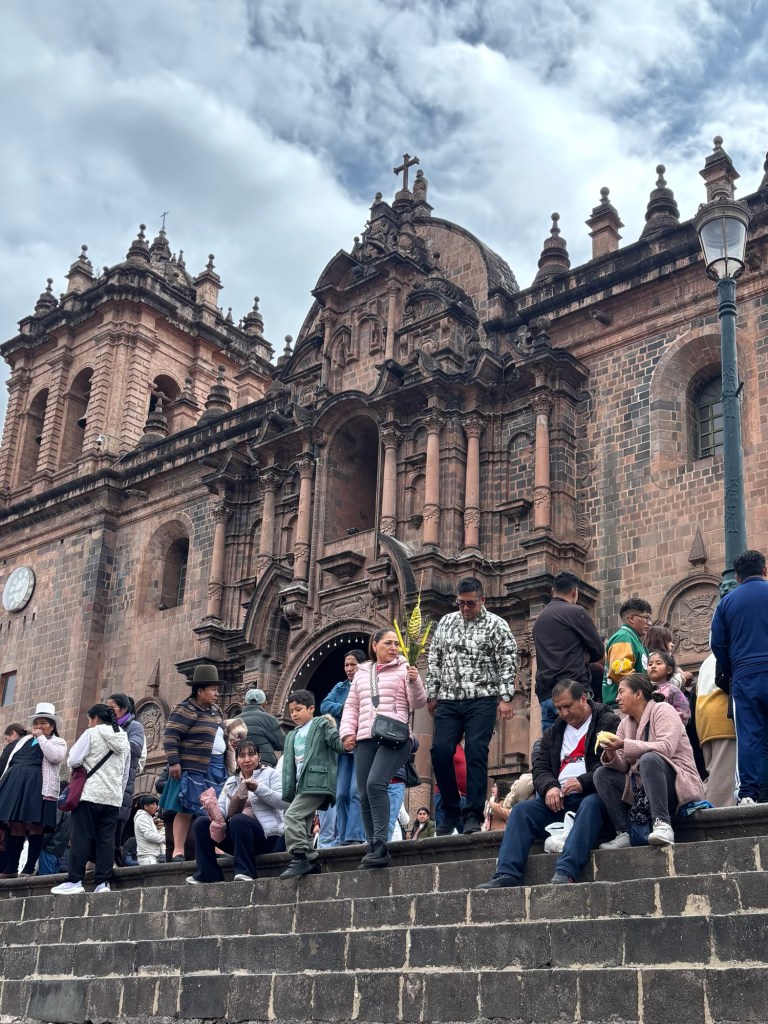
While it’s not on the list, I had to head downtown to find the enormous mural I’d seen on my way into town on my first night. I love a mural, especially when it tells a story, and one day I’d love to see Diego Rivera’s historical paintings in Mexico City. But for now, Cusco has its own retelling of the history of its people.
There are just so many details to pick up. The way the Spanish soldiers merge with the bodies of their horses, like centaurs, in imitation of the confusion the mounted soldiers caused among the natives, who had never seen a horse before. The war dog held on a chain by a Cistercian monk. The conquistadors gambling with dice over their stolen gold. The indigenous painter portraying the scene as a righteous conquest aided by a winged Santiago, under the instruction of a Spanish cleric. The bolas weapons of the Inca and the Spanish cannon.
You could read a hundred accounts of the Spanish conquest of Peru and still learn more from a painting like this.
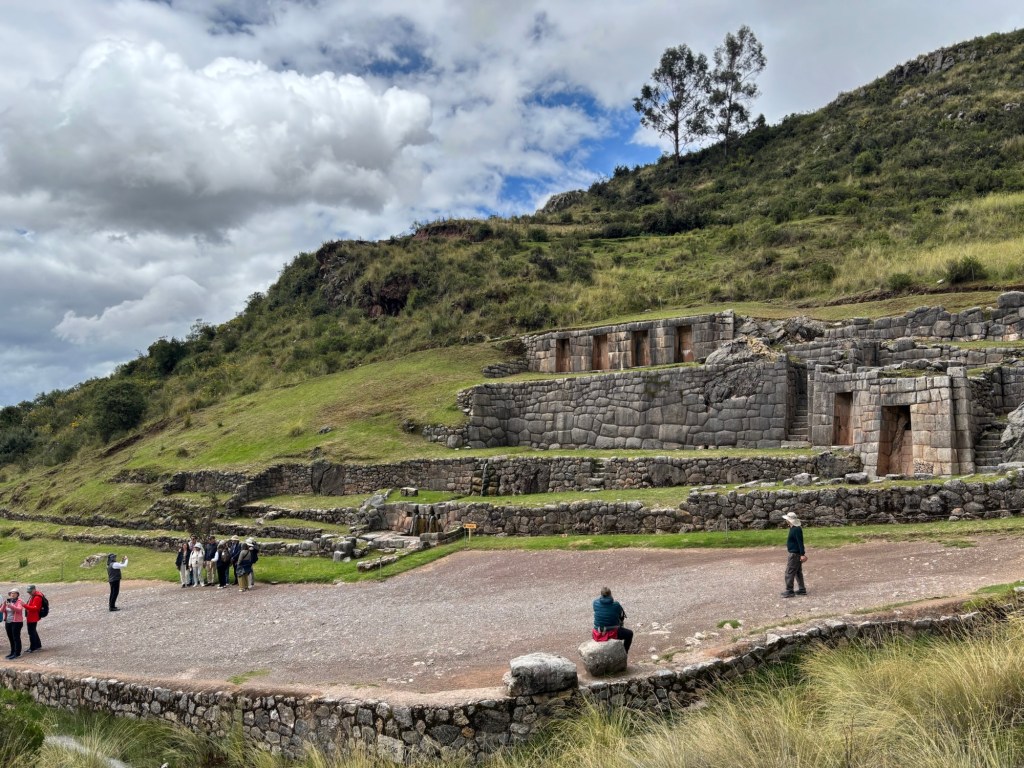
This morning, I ticked off another two on the list: Puka Pukara, the Red Fort, and Tambomachay, the Resting Place. You’ll be offered a visit to these by any of the guides hanging around Sacsayhuamán, and they’re well served by the white servicio turístico vans – but, me being me, I decided to walk there.
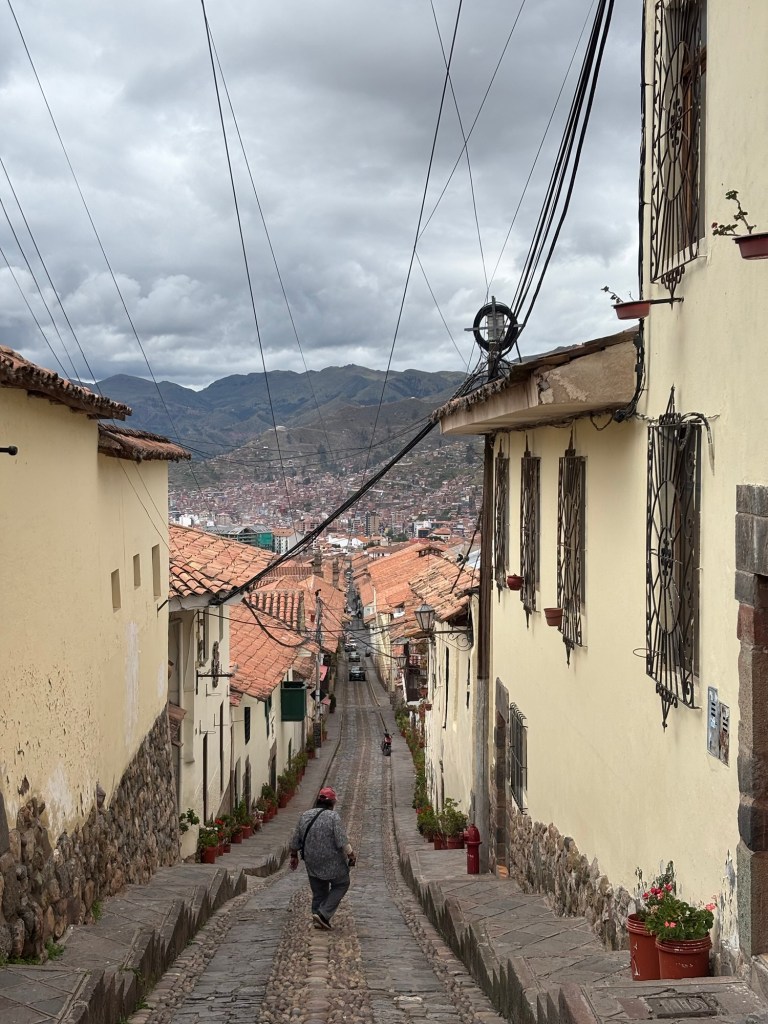
It’s not that far. Tambomachay, the further of the two, is about an hour and a half from the centre of Cusco. It is mostly uphill, however, and I was lucky the weather was on my side: be it a favour of the Lady of the Marshes or no, I was protected from the sun by a merciful cover of cloud all the way there and back. I had my rosary on as I often do when I’m not sure if the road is safe or not, so I’ll chalk it up to a little divine intervention.
Even on foot, I still got there before the bulk of the morning’s tourist traffic arrived. It was worth the hike – steep though it was – to see a part of Cusco that I might otherwise have missed.
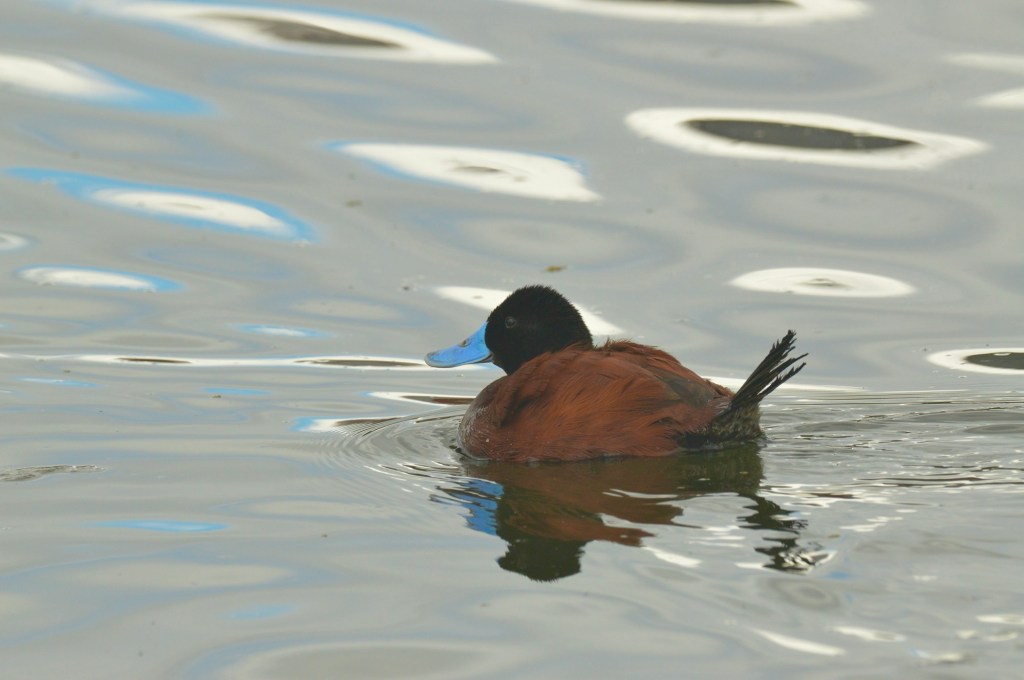
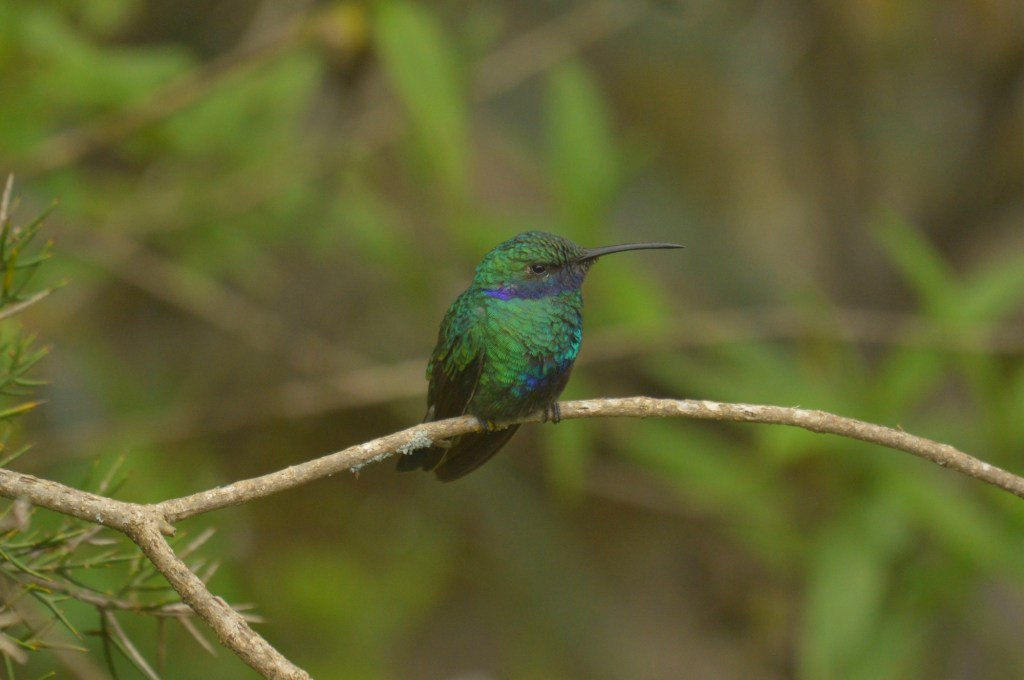
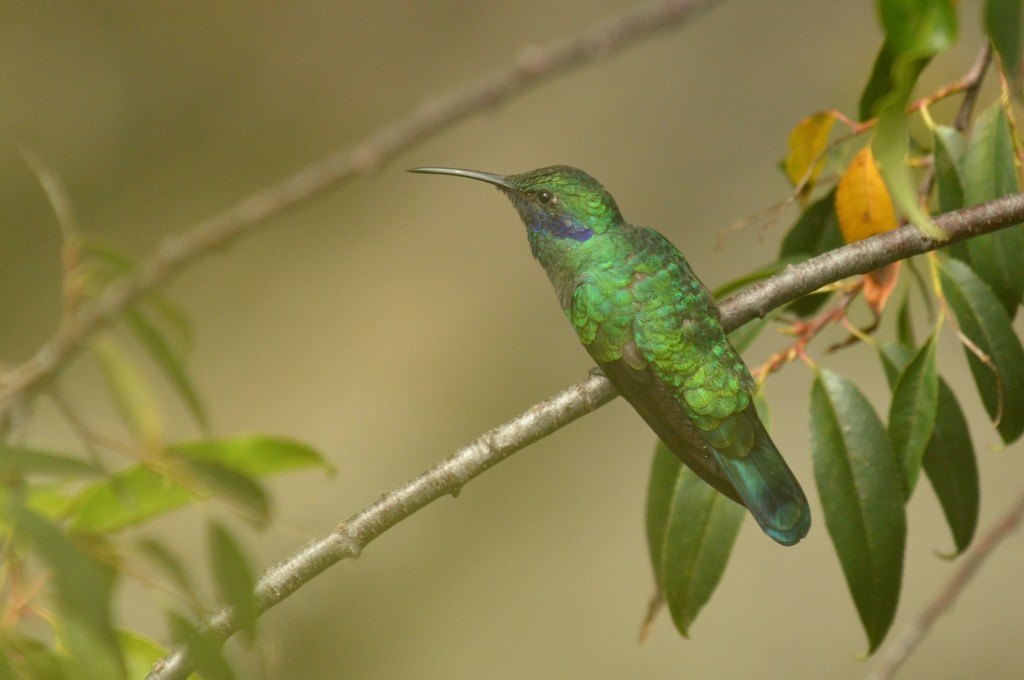
It also gave me the chance to check out Huayllarqocha’s small wetland reserve, which will have to be my substitution for Huacarpay. I didn’t see any of the grebes that supposedly live here, but I did see an Andean flicker (an American species of woodpecker) and a number of Andean ducks, a smart relative of the Ruddy Duck that can be found in North America.
Now that I’ve had some rest, I should go and pick up my washing from the lavandería down the road. After that, I should pack for tomorrow, before checking out the two art galleries and, with any luck, a performance of local music and dance at the Centro Qosqo de Arte Nativo.
I’m not sure if you’ll hear from me tomorrow. Like I said, going into the Amazon may well mean going completely off-grid. Either way, I’ll try to keep writing. The next six days are likely to be red letter days, both here in Peru and out there in the wider world.
Hasta la próxima. BB x
 The Book of Barnabas