Morito

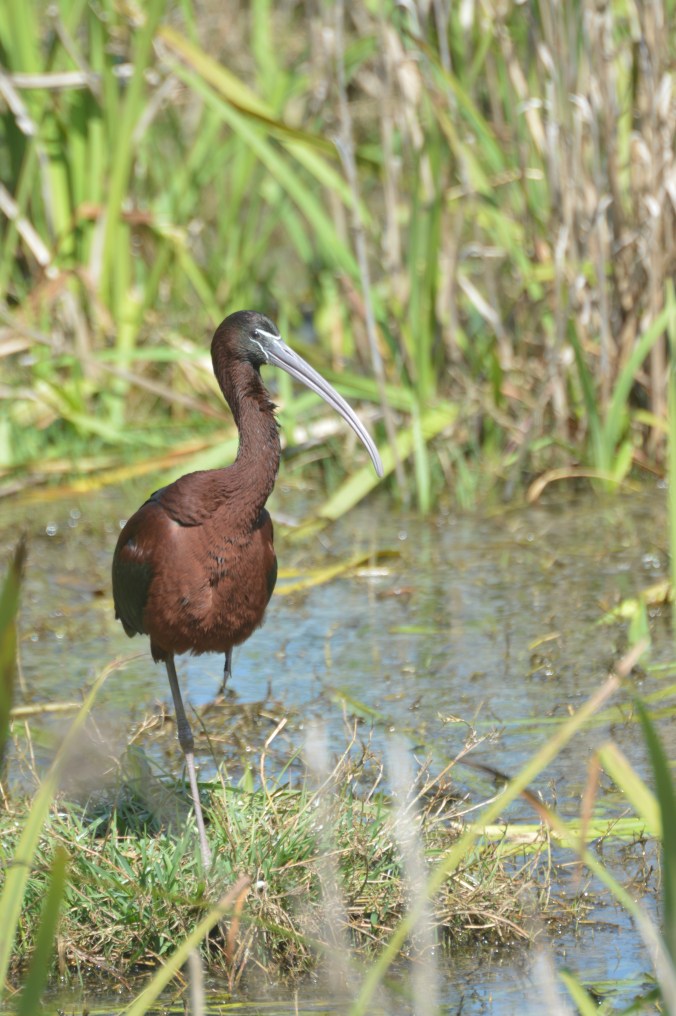
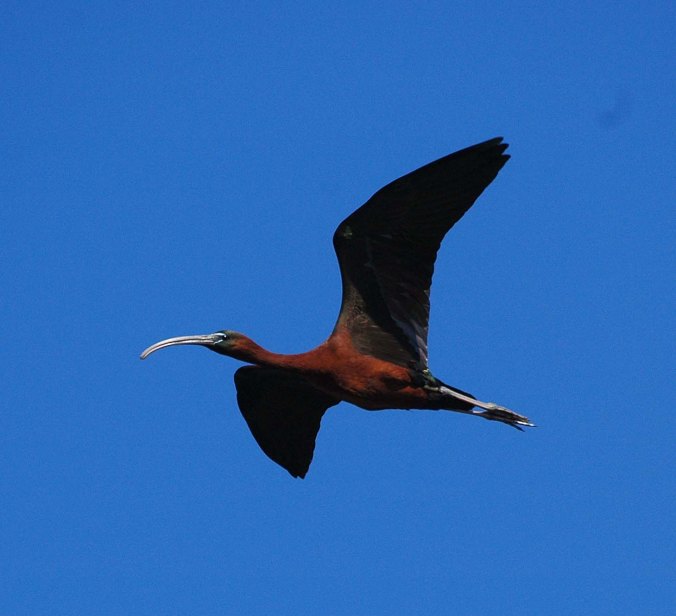
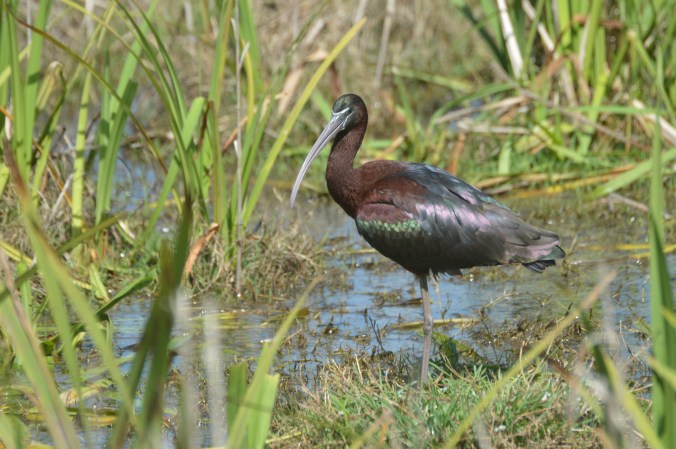
Little Moor. That’s one translation for one of Spain’s most beautiful natural treasures, a gaudy creature of swamps and marshes that we know as the glossy ibis. Dressed as it is in chocolate brown with feathers that flash green and purple in the sunlight, it’s easy to see how this characterful bird got its name: its very being evokes another world, one that lies across the Mediterranean sea, of men of small stature dressed in jewels and shimmering silks. The Moors and their Spanish kingdom are long gone, but there are hints of that world all around to this day – if you know where to look.
DSC_0608

You can spot a flock of ibises from a long way off by their colour alone. The wetlands in which they live, such as the Doñana National Park, teem with white herons, egrets, spoonbills and flamingos, all of which stand out a mile against the Spanish skies. Down on the ground, however, the ibis is a good deal more conspicuous, rummaging around in the water in groups that can number as much as a hundred strong. Like their wading cousins, ibises fly in a loose V-formation. It’s quite a sight to watch them going to and from their roosts as the sun sets at the end of the day, with flocks departing in waves for the security of the trees. I’ve lost count of the number of times I used to stand on the rusty fences that border the village of El Rocío to watch hundreds of ibises, egrets, herons and ducks all making their way into the park interior.

You might think a bird as beautiful as the ibis would have a beautiful voice to match. You’d be wrong. As is so often the case in the world of birds, the best feathers do not necessarily mean the best voice. Ibises, like flamingoes, have a very inelegant call, low and grunting, not too dissimilar to a cow on helium. They make a whole host of other sounds at their roost sites, but I’ll leave you to discover that for yourself. It’s quite the experience. And, I might add, quite the smell, too.
3436175734_527e434ac8_o

These are the ibises that the Egyptians worshipped. Thoth, the Egyptian god of wisdom, was often portrayed with an ibis’ head. According to one legend, a plague of winged serpents descended upon Egypt every spring, only to be stopped at a mountain pass by scores of ‘ibis birds’ which devoured them all. Herodotus claimed that the birds of this particular legend were jet-black, which points towards the morito. This leaves their close cousins, the stately sacred ibises, in a bit of a fix; and if you have ever seen their kind rummaging around in refuse dumps as they are wont to do, their smaller, darker morito appears far more worthy of worship.
DSC_0663

Morito surely is a fitting name for such a princely creature. Spain has a long love-hate relationship with its African past, which centuries of church doctrine and cultural genocide have failed to quell. Al-Andalus faded into the fabric of history centuries ago, but it left behind the ibis, and it soothes my heart a little to think that maybe, just maybe, I am watching the spirits of that most beautiful and industrious past when I see a flock of moritos flying by.

BB x

Paradise Lost and Found

I wish I could tell you I’d read Milton’s poems, from which I’ve shamelessly adopted the title of this post. I haven’t. But even if I had, I doubt a throwaway quote here or there would be necessary. I’m in a place that fills me right up to the top with pure and simple happiness, gives an edge to my writing hand and recharges my well-worn batteries. Paradise has a name and though this one may sound like a cross between a stud and an aviary and smell like a sweet mixture of manure and marshwater, it’s perfection for a country boy like me.

DSC_0314

El Rocío. More correctly known as Aldea del Rocío, as that is exactly what it is: a village. It may be the size of a small town, but looks can be deceiving: over half of the townhouses are empty for the larger part of the year. Once a year in May, El Rocío plays host to one of the largest, loudest and more colourful celebrations of the Iberian peninsula, the Romería deal Rocío. As many as a million Spaniards, dressed to the nines in rustic splendour, descend upon the village from all over the country to pay homage to the Madre de las Marismas, El Rocío’s very own Virgin Mary.

DSC_0390

This is a very big deal. Accommodation in that week is normally booked out months in advance, if not years. To give you some kind of idea, have a look at the price hike in this particular hostel below:


My mental maths isn’t brilliant, but I’d say that’s at least ten times the price I’m paying per night, if not twenty. That gives you an idea as to just how popular the festival is.

Semana Santa, on the other hand, is a minimal affair. A couple of special Masses and a single daytime procession on Holy Friday. So what on earth am I doing here now?

DSC_0520

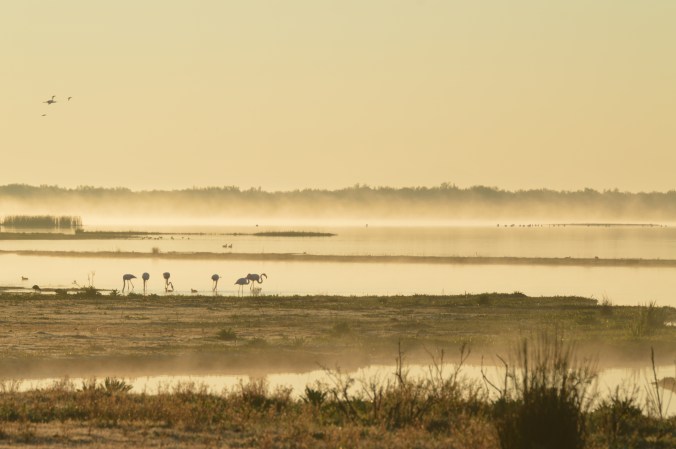
The answer is all around me. El Rocío is drop-dead gorgeous, but better still is the countryside that surrounds it: the skirts of Doñana National Park, one of Europe’s most beautiful remaining wildernesses. Sandy forests of stone-pines stretching into the infinite. Scrubby heaths awash with colourful spring flowers of yellow and white and powder blue. Shimmering lakes and marshes teeming with flocks of noisy flamingoes and an eternally blue sky that almost always has at least one kite whirling about in the distance, whistling a beautiful trill into the mix of carriage bells, chattering swallows, whirrupping bee-eaters and the incessant oop-oop-oop of a hoopoe. This place is as close to paradise as this world allows. It’s also a place where absolutely everyone wears a cap or riding boots or both, so it suits me down to a T. Especially now, when my hair is a triple-crown disaster of a birds’ nest and in bad need of a cut – and therefore hidden under my very own flat ‘at.

I won’t bore you to death with five hundred words about my birdwatching adventures. It’s not a passion that everybody understands. What I will say about it is that it is deeply rewarding, endlessly unpredictable and that Doñana National Park is the very embodiment of that unpredictability. I swear that it’s different every single year, and I’ve been coming here for the best part of a decade now. In some years it’s half-drowned in rainwater, in others mild after a dry winter. I’ve seen boar, deer and mongooses in one year and never again since. The same goes for the gallinules, herons, pratincoles, harriers and marsh terns; each of them in one good year apiece, but never together. This year’s treasure is the glossy ibis, a Doñana regular that I’ve never been able to get that close to… until now.

DSC_0608

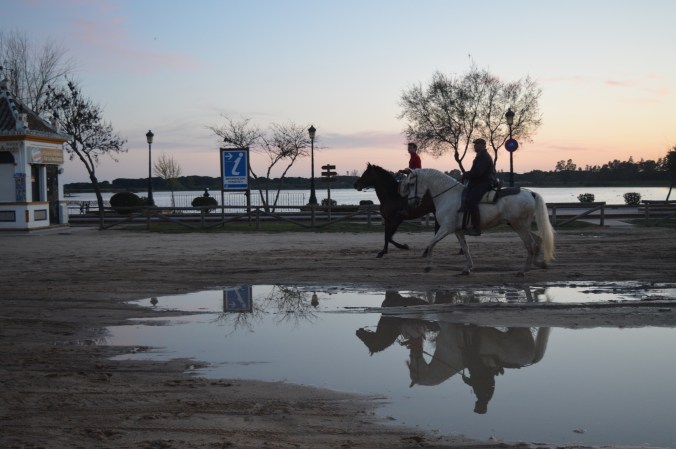
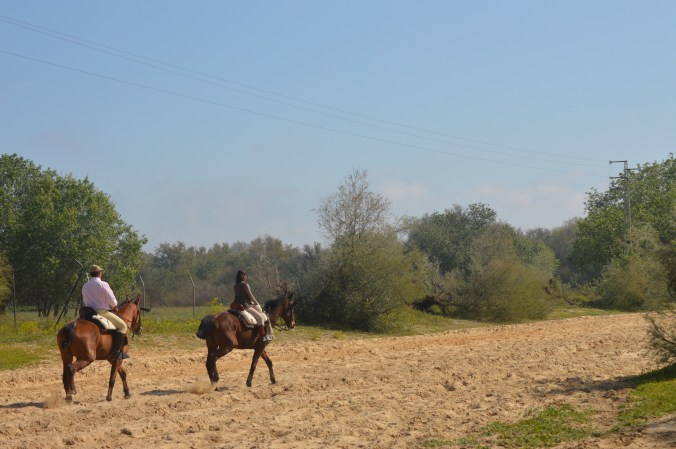
Doñana is one of those places where I can sit and do nothing and watch the world go by without feeling in the least bit guilty. Time just seems to stand still here. That the entire populace of El Rocío seems to prefer the saddle to the driving seat goes a long way to entrenching that romanticism, naturally, but there’s a similarly timeless feeling to be found in sitting in the shade of a stone-pine on the Raya Real and listening to the wind. Every once in a while the blue-winged magpies cease their chattering, the hoopoe calls it a day and all that you can hear is the dry whisper of the wind. It’s spellbinding. Like Merlin to Morgana, I’m ensnared. But it is a very beautiful enchantment.

DSC_0792

At some point I’m going to have to turn my feet back in the direction of town and head for the bus stop (this town’s not big enough for a bus station, especially since they diverted the main road). This morning I was almost keen to move on, in that snug-in-bed-with-a-good-book way – this one’s Shadow of the Moon by my favourite author, M.M. Kaye – but three steps outside and I was entranced once again. Oh, to live here and to spend my days in the saddle! I get romantic notions of owning an Andalusian stallion called Suleiman and riding about the stone-pine woods with the One, whoever and wherever she may be.

That’s quite enough of that. I’ll see you in Seville. BB x