The white IKEA bookcase in the corner of my bedroom holds my most treasured memories: cherished books from my childhood, photo albums fit to bursting and hand-written diaries that stretch back as far as 2012. One of these last, spineless and soft around the edges, features a Van der Grinten map of the world: an eighteenth birthday present from a friend. It contains the tales of my adventures in Uganda, the first teaching post I ever held. As I open it, a handful of photos fall out: a vulture, a much younger me in Kyambura Gorge and the misty mountains of Bwindi Impenetrable Forest. Memories come flooding back. Come with me down memory lane, and I’ll take you on one of the most breath-taking adventures I ever made.
19th September 2012
According to my diary, it was an early start. My alarm clock woke me up at 3am, and while I was dressed and ready to go, my companions were a little slower on the uptake. Can you blame them? I sat on the concrete porch of the little house in the garden of the Bishop’s residence, watching the stars. There is no night quite like the African night. It is a deeper black than you can possibly imagine in the West: enlightenment has left our world overlit. Without streetlights to pollute the sky, the heavens sparkle with an ethereal light that has not been seen in most of Europe for over a century. I counted more than twenty shooting stars before our driver arrived and whisked us away into the dawn.
The Langton Four – that was what they called us. We were the first student representatives to visit our partner school in Boroboro in the once troubled north of Uganda. There had been staff exchanges in the past, but with the Lord’s Resistance Army waging a private war in the region for the last two decades, the idea of any kind of student involvement was limited to non-uniform days until my final year at school. When the opportunity suddenly presented itself, I practically bit their arm off. I read the required BBC article on David Cameron’s threat to withdraw aid to Uganda over and over again, and I turned up to my interview with a portfolio of printed photographs (which I still have). I suppose I was hoping to angle my way in as the team journalist. The team was chosen on the night of the interviews and my name was among the four. I still think of it as one of the happiest nights of my life.
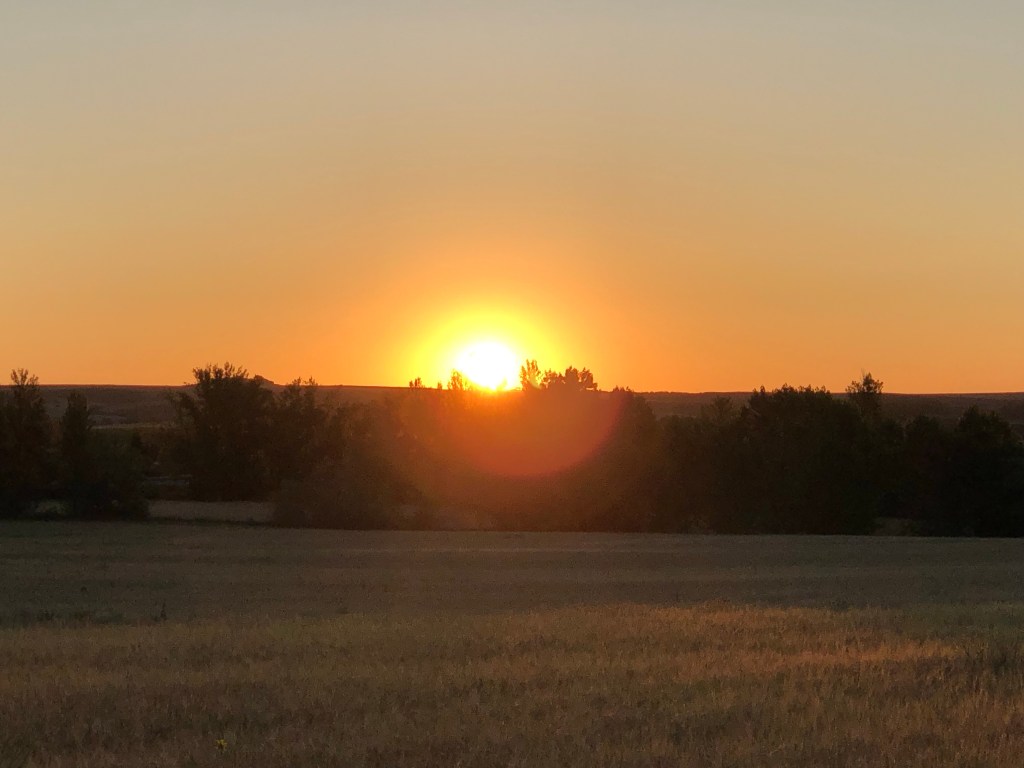
The sky began to glow red around 6.40am, and the sun was up moments later. African sunrises really are like the opening to Disney’s The Lion King – that is, visibly quick. Maddie got out for a run in the morning light – we had been on the road for two hours already – before we reached the town of Purongo, a collection of red-walled houses and small businesses on the northern edge of Murchison Falls National Park. This was our Ugandan “welcome wagon”, as it were: a trip to Uganda’s first national park at the end of our first week at the school. Getting in was complicated by the print-date of my US dollars – the Uganda Wildlife Authority (UWA) had taken the decision to refuse any dollars printed before 1981 – but on this occasion they let it slide. We were joined by Robert, one of the park rangers, which brought the total in the car up to seven. I drew the short straw and ended up on the left-side of the middle row, landing a window seat that looked straight into the rising sun.
We learned within the first half-hour of our safari that it was wiser to keep the windows closed: the tsetse flies that share a home with Africa’s megafauna have a taste for human blood, when they can get it. Forget the harmless bluebottles that hurl themselves at your window: tsetse flies are another beast entirely. They’re loud, they have a bite like a needle, and they’re very hard to kill once they get into the car, despite their size, which is considerable. They clung to the glass like remoras for most of the morning, just waiting for somebody to wind down the window for air.
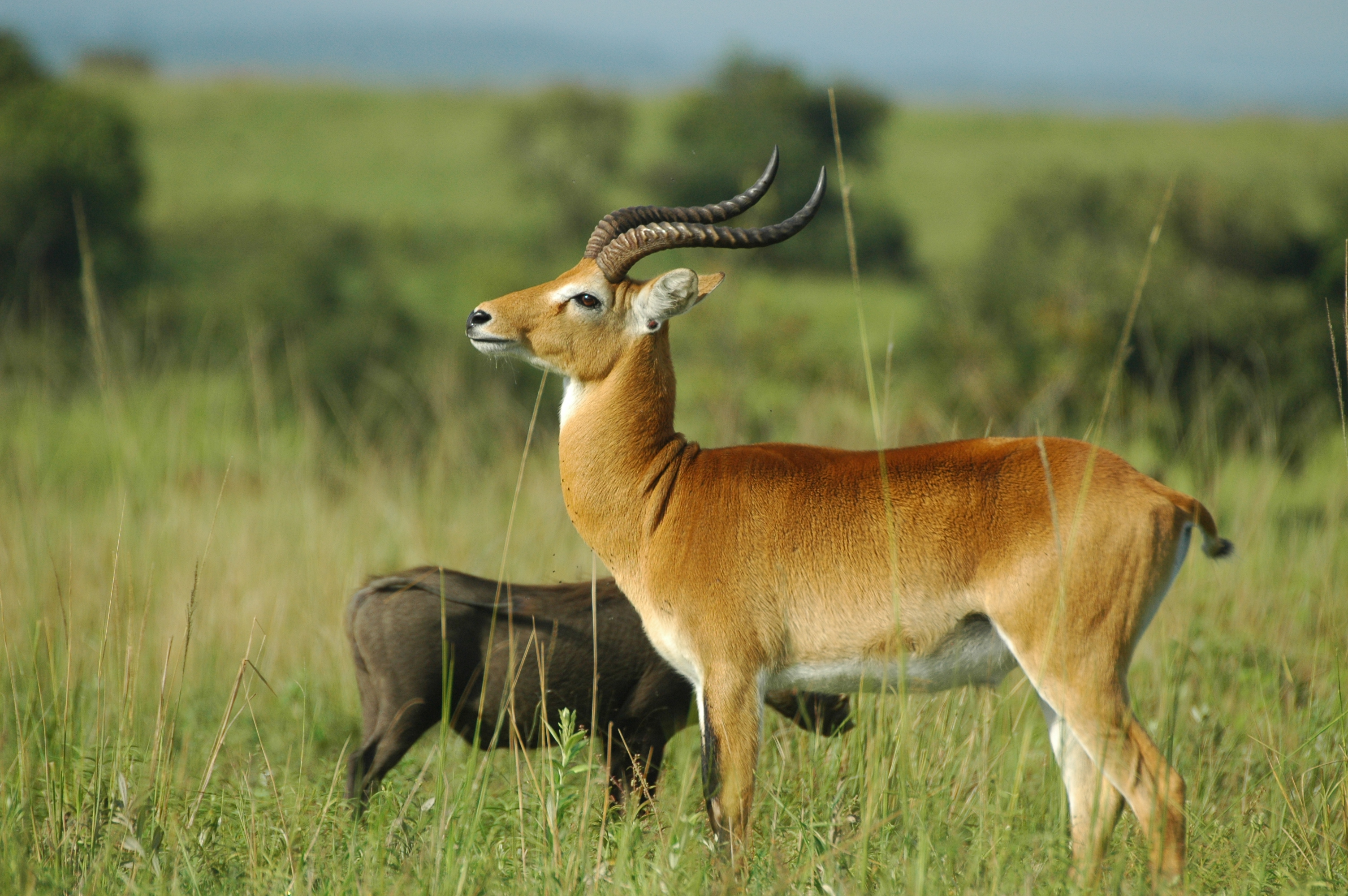
The first of the park’s larger inhabitants came into view just beyond the gates in the form of a herd of Ugandan kob, a stocky antelope that with the crowned crane forms one half of the Ugandan coat of arms. It was a modest start to the safari, and I was a lot more interested in the bizarre-looking hartebeest standing in their midst. With a head that might have given birth to the expression ‘why the long face?’, they look too warped to be real, like a badly stretched photo on a student PowerPoint. It spooked when the car came to a stop and bolted. They seem more skittish than other antelope species: though I saw several of the strange beasts during my time in Uganda, I never did get a good photo of one.
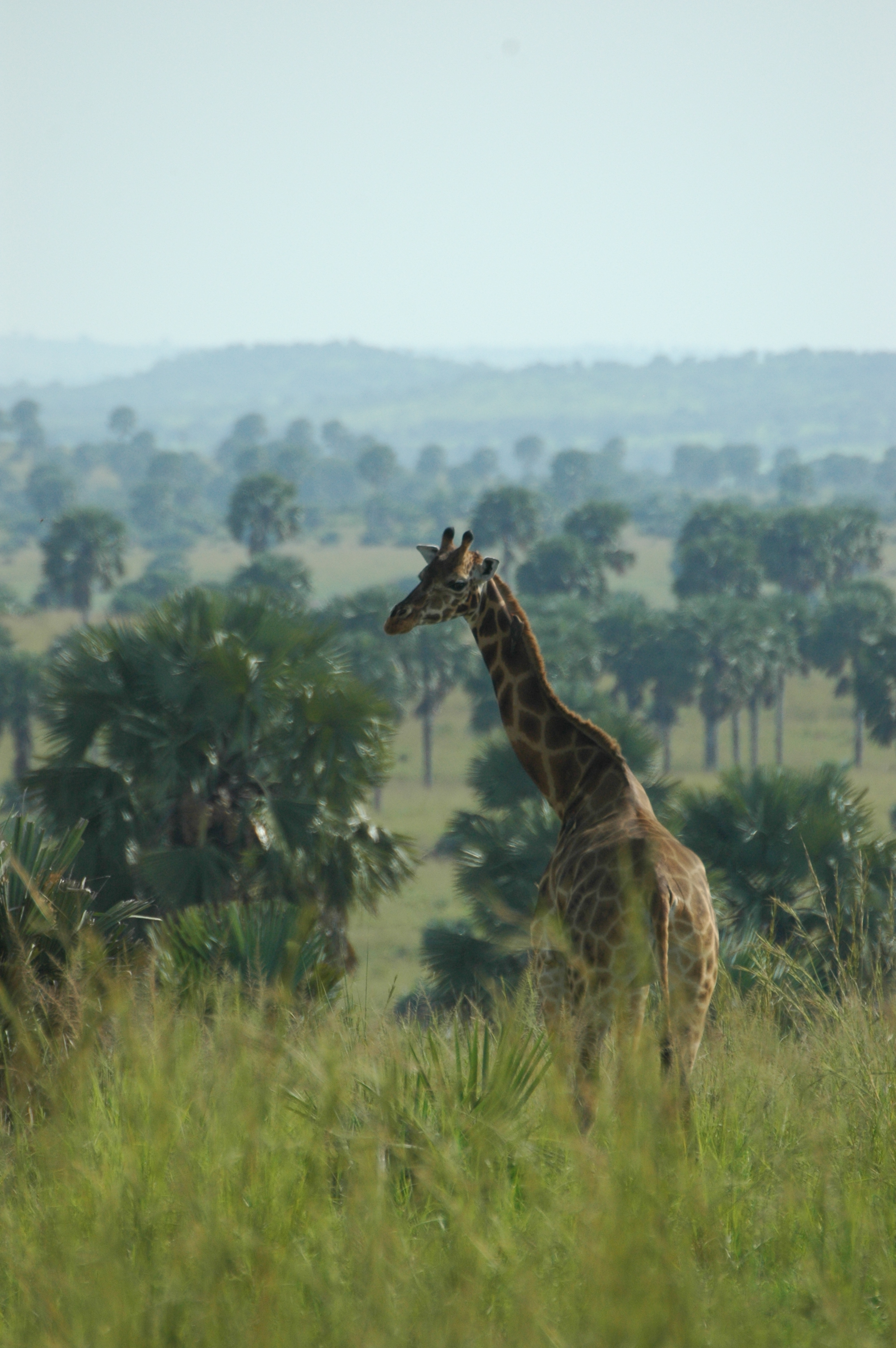
We didn’t have to go much deeper into the park before the park ranger pointed out a giraffe. He needn’t have bothered: at over five metres tall, they aren’t exactly hard to spot. Murchison Falls NP was one of the last holdouts of the giraffe in Uganda, after war and poaching drastically reduced their numbers in the last century. The giraffes that can be seen in Uganda are the nominate species, known as Nubian giraffes, and could once be found as far north as Egypt. Back in 2012, they were still known as Rothschild’s giraffes – they were reclassified in 2016 – so it looks as though they have been “decolonised”, dropping the name of a wealthy British banker and zoologist in favour of a name that conjures up their former homeland. Murchison Falls itself was similarly renamed under the Ugandan dictator, Idi Amin Dada, though the fact that he was the brains behind the switch may account for the fact that the park formerly known as Kabalega Falls has since reverted to its old colonial title, for better or for worse.
We reached Paraa around midday, where the Victoria Nile cuts right through the hearts of the national park. We missed the ferry by minutes so we parked up on the riverbank and waited for it to return under a thick cover of cloud. My friends had to stop me from getting too close to the water, as a large pod of hippos were dozing just metres from the bank. Some estimates hold that hippos are responsible for around 500 deaths a year, making them one of the more dangerous creatures on the continent – though not as dangerous as Africa’s snakes, which claim thousands of victims every year. I think I was actually more interested in the gangling jacana that was bobbing around at the water’s edge, but that’s by the by. Just like me to miss the wood for the trees.
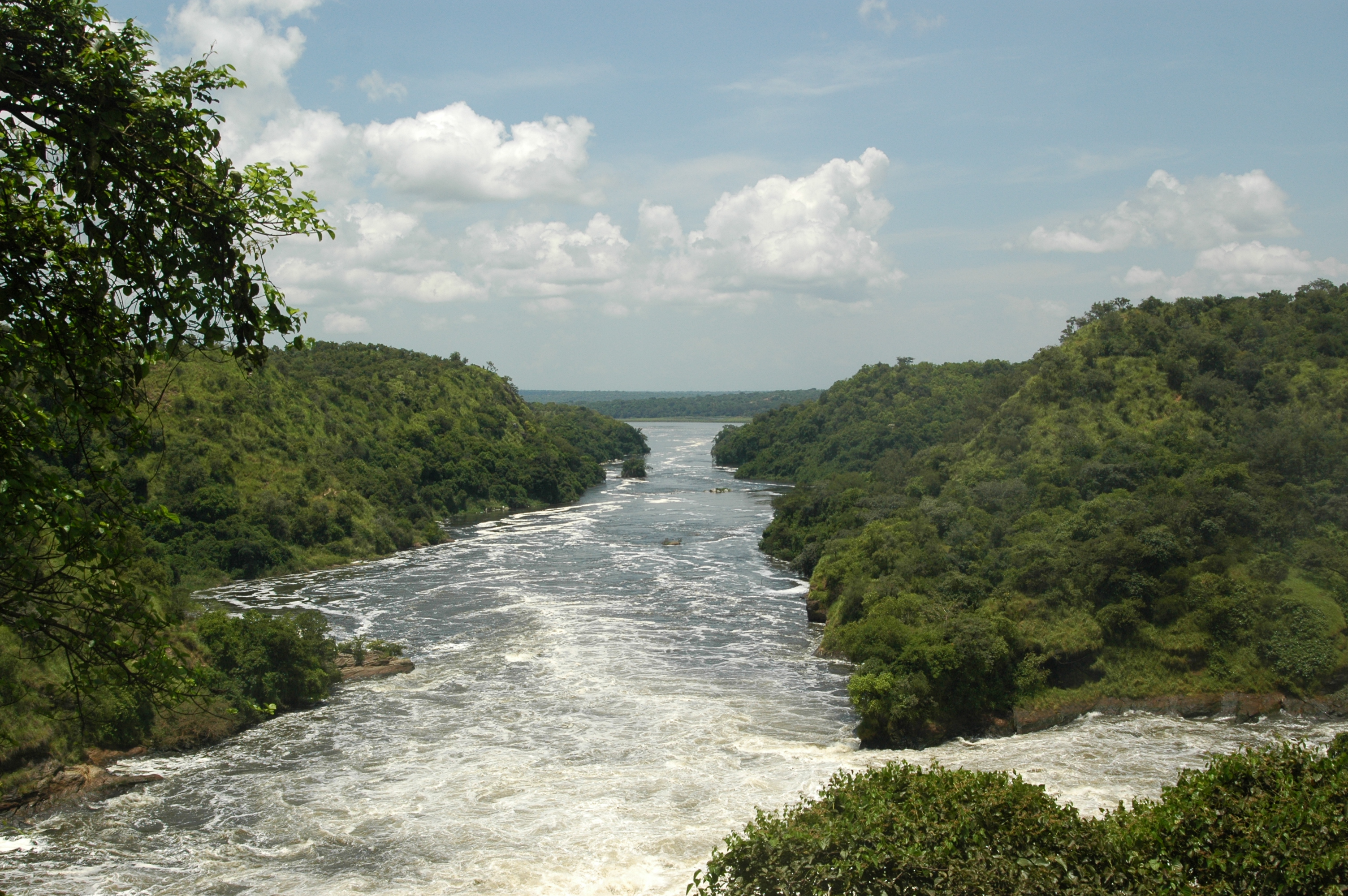
From Paraa, it’s a bumpy ride to the falls for which the park is named. I’ve described them in my journal as “royal”. Kabalega – Amin’s preferred name for the falls – comes from Chwa Kabalega II, King of the Bunyoro people who call this corner of Uganda home, so it’s not a poor choice of an adjective. Hailed by the UWA as “the world’s most powerful waterfall”, the Nile is forced through an eight-metre chokepoint, creating a thunderous spectacle as the full force of the world’s longest river is hurled into an abyss known as the Devil’s Cauldron. It really does have to be seen to be believed.
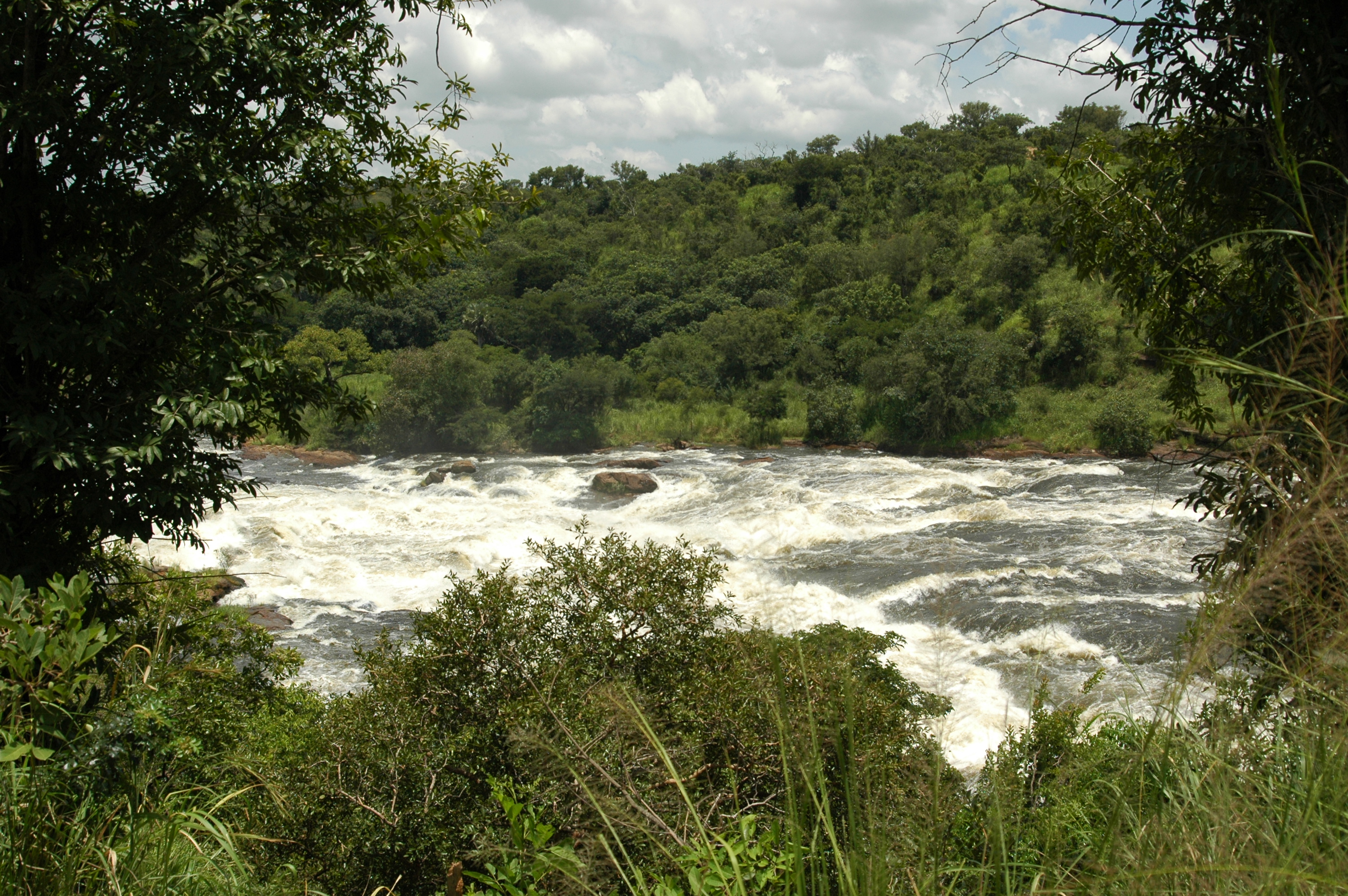
It’s incredible to think that this mighty river winds its way all the way up to the Mediterranean. For centuries, the origins of the Nile were a mystery to the Western World. The Banyoro knew of the great river, of course, but they would have been just as surprised to know that the river that thundered through their kingdom watered the deltas of the pharaohs, some two thousand miles to the north. It might seem strange that the source of such a historically important river remained a mystery well into the nineteenth century, but as the early explorers discovered, the Nile is a treacherous creature that holds onto its secrets with a jealous force almost as strong as its flow: once you reach Sudan, the river becomes heavily overgrown, making navigating by boat near impossible, and stands of reeds and papyrus hug the banks so densely that, in some parts of its course, it obscures the river entirely from view.
The Ancient Romans had a saying, Nili caput quaerere, “to seek the head of the Nile”, which meant to attempt the impossible. It’s possible the saying originated with the Emperor Nero who did just that, tasking a small expeditionary force of his Praetorian Guard to find the legendary source in the first century AD. The historical accounts claim they made it as far as Southern Sudan before finding their passage blocked, but some claim they may have made it as far as the thundering waterfalls of northern Uganda. It’s a strange thought, to picture the Praetorian Guard standing here, staring in awe at the falls in the same spot that shadowed Winston Churchill, Ernest Hemingway, Humphrey Bogart and, much later, myself.
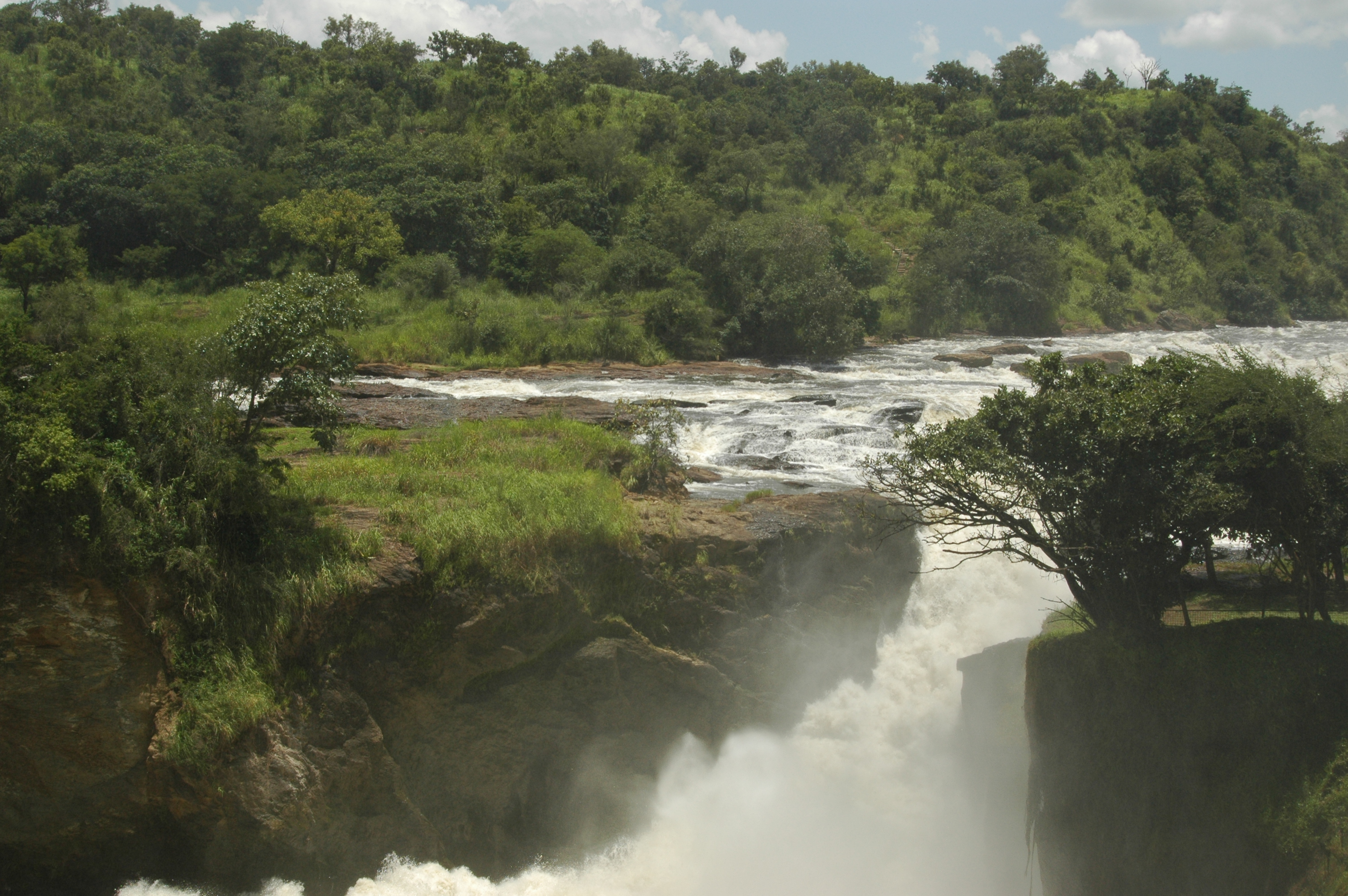
What the photos don’t show is the spectacular double rainbow that forms over the Devil’s Cauldron as the Nile thunders through the gorge. We saw the falls shortly after a brief spell of heavy rain, so the force of the flow was especially ferocious. Two weeks later, when the full force of the wet season came down, it would have been near impossible to get as close to the falls as we got without being blasted with the spray. Apparently, these can sometimes be seen at night, when the moonlight is exceptionally strong: these are called “moonbows”, and have been spotted by birdwatchers who come here looking for the bizarre pennant-winged nightjars that nest in the surrounding forest. We didn’t stay long enough to find out, but I’m sure it must be a beautiful sight to behold.
The first thing I ever saw in Africa was a waterfall. The connecting flight from Heathrow to Addis Ababa rode the clouds for most of the journey, but shortly after waking up on that first morning, the clouds parted for just a moment, revealing a jaw-droppingly beautiful mountainscape, with a silver river launching itself over the edge of a high cliff the colour of bronze. Victoria Falls is the one that comes to mind for most, but for me, it’s a toss-up between Murchison Falls and that nameless cascade that first stopped my heart all those years ago. Maybe I should go in search of more waterfalls!
Honestly, I’m getting the travel bug just writing this. I think it’s time I blew the dust off the travel section in my library and started cooking up a plan. I know I’ve had a grand adventure this year to the States, and I’m grateful, but after a slightly abortive early finish, I feel like I haven’t quite sated the travel bug this time around. Let’s see… if I can pass my driving test, I think I will reward myself with another grand adventure – only next time, I will do it for me. It certainly makes for fun writing! BB x














 The Book of Barnabas