Excuse the late entry – I’ve chosen to be sociable today and have spent most of the afternoon in the company of fellow pilgrims from around the world. It’s been a welcome change after nine days of silence! But a promise is a promise, and I have a duty to uphold! So here’s today’s report.
I was up early this morning – five to four, to be precise. Falling asleep around ten didn’t help my sleep pattern, I guess. I couldn’t quite justify striking out for Estella so soon – it is only just under 22km from Puente La Reina – so I dawdled until five, at which point several pilgrims were already getting ready to go. Again, I dawdled, not wanting to arrive in Estella with two hours to kill before being able to jettison my rucksack, so I carved the names “Niña” and “Pinta” into my sticks (after Columbus’ ships – the Santa María, the third of the trio, is my rosary). It’s not especially visible, as all I had to hand was a kitchen knife, but it’s a start.
I was one of the first to strike out, but I gradually let a fair number of pilgrims overtake me. I stopped frequently; waiting for the sunrise at Cirauqui, sketching a lonely cemetery, grabbing a tortilla sandwich at the same bar I ate in when I walked this path with my mother six years ago. I also managed to collect a few stamps, which is always a plus.
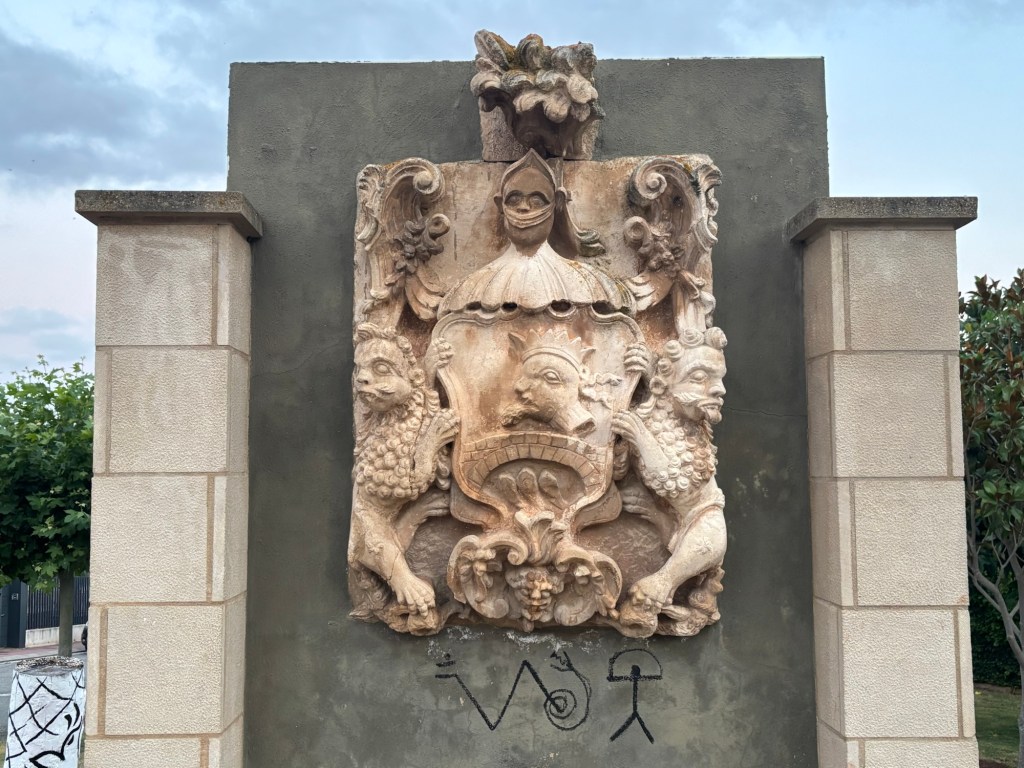
I spent a lot of time today looking at the decorations on houses and doors, which suddenly become more elaborate upon entering the Basque territories. Many houses bear a heraldic crest, and around here the motif of the knight’s helmet with the visor raised is fairly common. In heraldry, this is usually the sign of high-ranking nobility. Many of medieval Spain’s most prominent nobles were of Basque extraction (or Basque adjacent), like the Mendoza, Loyola and Haro lines.
Curiously, scratched beneath one of these crests were two symbols. One is easily recognisable as the Índalo, an ancient fertility symbol from Spain’s southeast. The other is… well, I’m not entirely sure. I’m fairly certain it’s an invention by the artist who left the Índalo, in much the same style, with what seems to be a serpent drawn out of the end. Graffiti usually has a point to make – I wonder what it could mean?
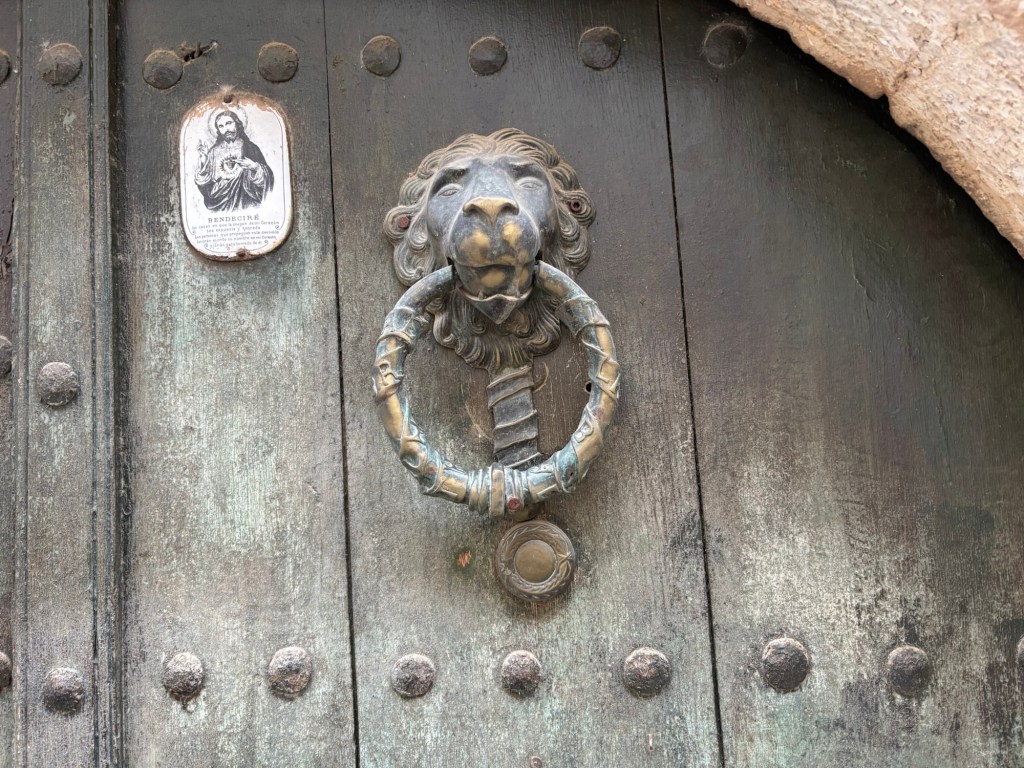
I couldn’t help noticing the door knockers as I passed through Cirauqui. My mother used to fill memory cards with photographs of these things, which in the south (and here) often take the shape of a woman’s hand holding a metal ball, known as a Hand of Fátima. It’s an ancient Moorish motif used to ward off the evil eye, and appears in a lot of Mediterranean and North African jewellery. The lion’s head – a style much more familiar to those of us who live on the other side of the Pyrenees – does much the same thing, warding off evil spirits with its frozen roar.
I am, of course, reading far too much into this. I imagine your average Joe (or José) probably doesn’t consider how effective this or that door knocker will be at warding off evil spirits. Still, it’s one of those things that’s so deeply embedded into our psyche that we don’t even realise we’re doing it. Like Christmas, in a way. Most of us don’t give thanks to God for the birth of Jesus Christ on the 25th December, but that doesn’t stop us from opening presents and celebrating late into the night.
I spent so much time hobnobbing with fellow pilgrims this afternoon that I didn’t really get to explore Estella much. It was also a sweltering 36°C, which didn’t exactly encourage an afternoon wander. Fortunately, I stayed here for two whole days the last time I came through, so I’ve seen all of Estella and its charms before.
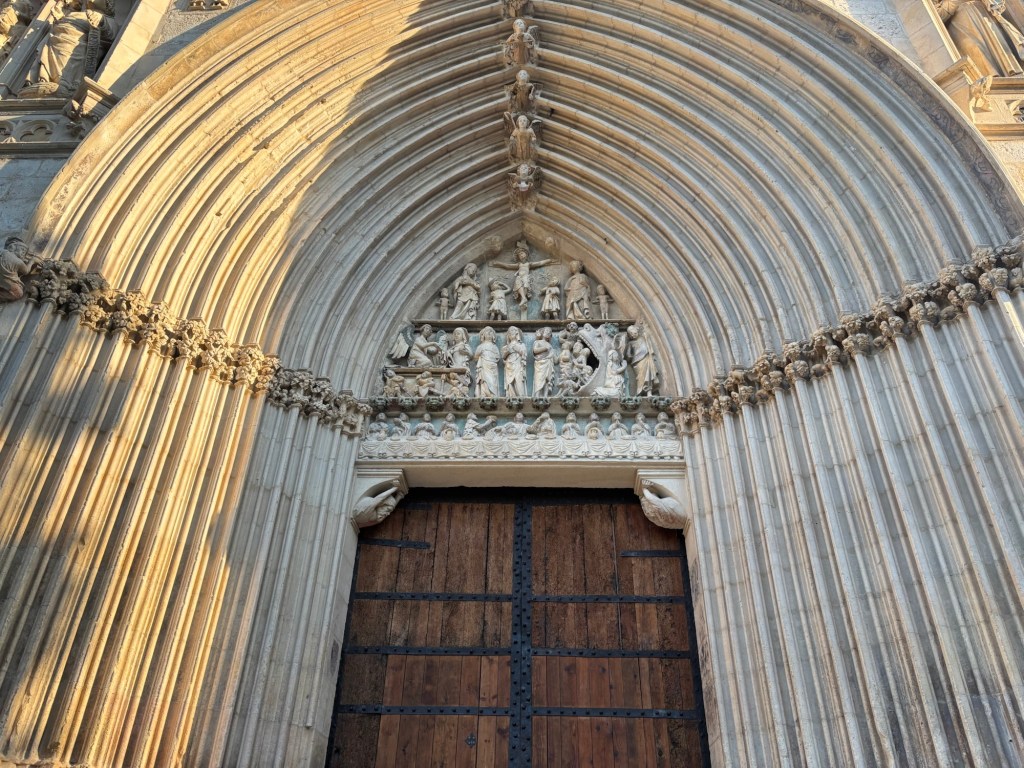
One thing I did seek out, though, was the remarkable archway of the Iglesia del Santo Sepulcro. It caught my attention today for the same reason it did all those years ago: the horrifying maw swallowing sinners, and dragging them into Hell.
This motif is not unique to Estella. It can be found all over Europe. I’m fairly sure I saw one in Bordeaux last week. It’s known as a Hellmouth, and it can be found in Anglo-Saxon artwork at least as far back as the 8th century. It’s thought to be a representation of the “Crack of Doom”, the Day of Judgment – crack having a dual meaning in English, being both a harsh sound (like a thunderbolt or trumpet blast) and a chasm or pit. It may even have ties to an old Scandinavian legend of the Fenris Wolf, who was destined to swallow up Odin, the Allfather, and thus the world entire.
It’s certainly funny to think that such an English (read: Anglo-Saxon) blend of Christian and pagan imagery should find its way onto the doorway of a Spanish church, over a thousand kilometres to the south. It’s just one more reminder of the power of a good story: dropped in the right place, and told in the right way, it can send ripples that cross entire oceans.
Tomorrow I make for Los Arcos, a town I bypassed last time in favour of the ice baths of Sansol. Let’s see what I missed! BB x
There’s no two ways about it. I’m a total Semana Santa junkie. If it wasn’t for Semana Santa falling within the school holidays for the first time in years, I probably wouldn’t be here at all. Given the choice, I’d be nowhere else for Holy Week. Spain – and especially Andalusia – simply does Easter like nowhere else in the world. The only reason I haven’t followed a procession all night this time around is on account of being in a swarming city. One day, if God should see fit to grant me that privilege, I should like to take my uncle up on his offer and serve the family’s cofradía as a costalero. That would be the only way to put a seal on my obsession with this phenomenal custom.
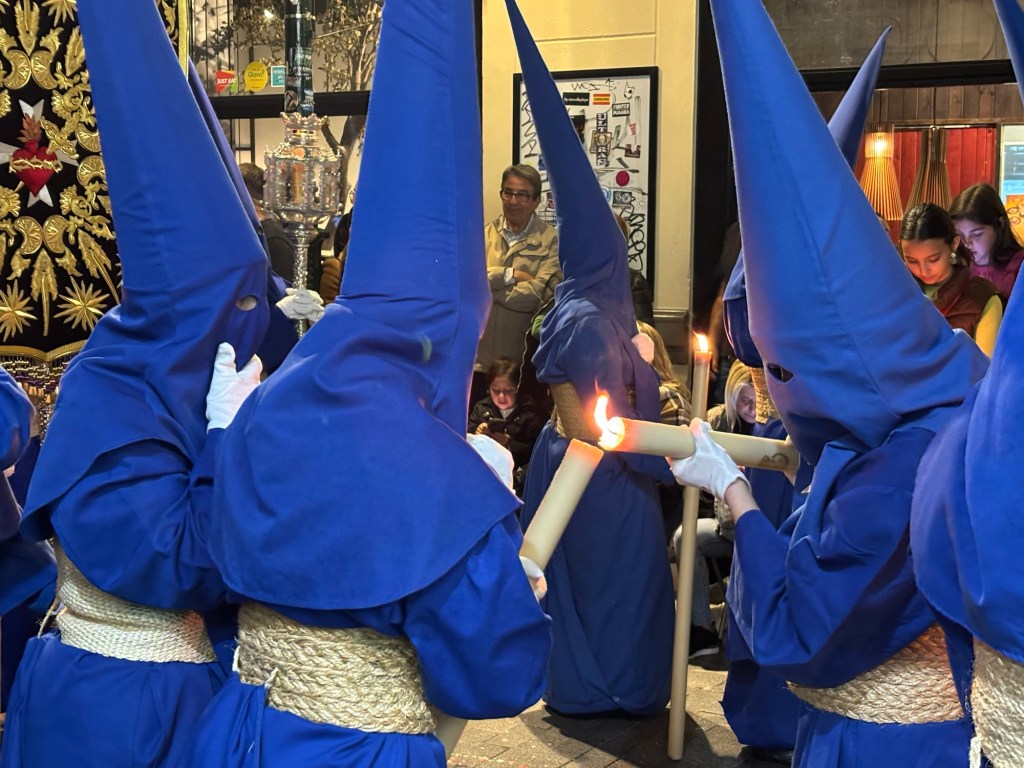
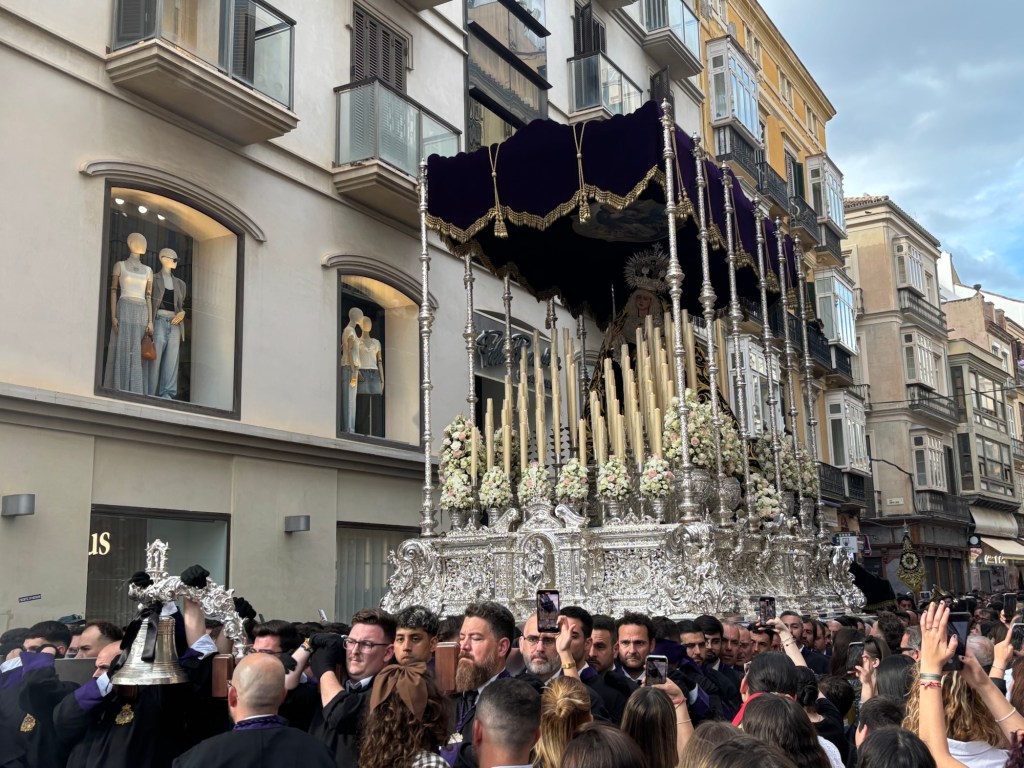
I was only half an hour off the bus back from Gibraltar when I was back out on the streets to catch the Wednesday night pasos. I didn’t have to go far: the Brotherhood of Nuestro Padre Jesús “El Rico” y María Santísima del Amor had just left their parish and were looping back around the Plaza de Merced. The rank and file nazarenos were dressed in robes of deepest blue, but some of them wore white cloaks emblazoned with the red badge of the Order of Santiago.
In their train was a group of women in black, wearing the traditional mantilla, a gesture of solidarity with the grief of the Virgin Mary. Known as manolas, they are a relic of a time before women were allowed to participate in the usual Easter celebrations, such as wearing the capirote or carrying the pasos. Until as late as 1987, it was forbidden for women to don the hood, and it wasn’t until some time after that it became common practice for them to do so. These days, wearing the mantilla is something of a badge of honour for young women, knowing that they are keeping an ancient tradition within a tradition alive.
I allowed myself an hour’s respite – mostly to charge my phone – before heading back out into the night to see the processions by candlelight, when they truly come into their own. I was lucky to get a spot at all. Being such a major annual event, many malagueños know to stake out a spot early to get a good seat – quiet literally, in fact, as a number of the principal routes were lined with foldable deckchairs from eight o’clock in the morning!
Málaga’s guiris don’t seem to be huge Semana Santa junkies. By nightfall, they had mostly retreated to their hotels, leaving the streets to the locals. As such, with a couple of exceptions during the night, the dominant language in the street was that wonderfully ebullient andaluz, best spoken a gritos. My mother likes to collect sugar packets from cafés, and Spain has a quaint habit of decorating theirs with quotes. The only one that has always stuck with me is the incredibly Spanish ‘lo que vale la pena decir se dice a gritos’ (whats worth saying is worth shouting), which is probably one of the most Andalusian statements around. And to think I once found their accent impenetrable and annoying…! Heresy. Now it’s nothing short of music to my heart.
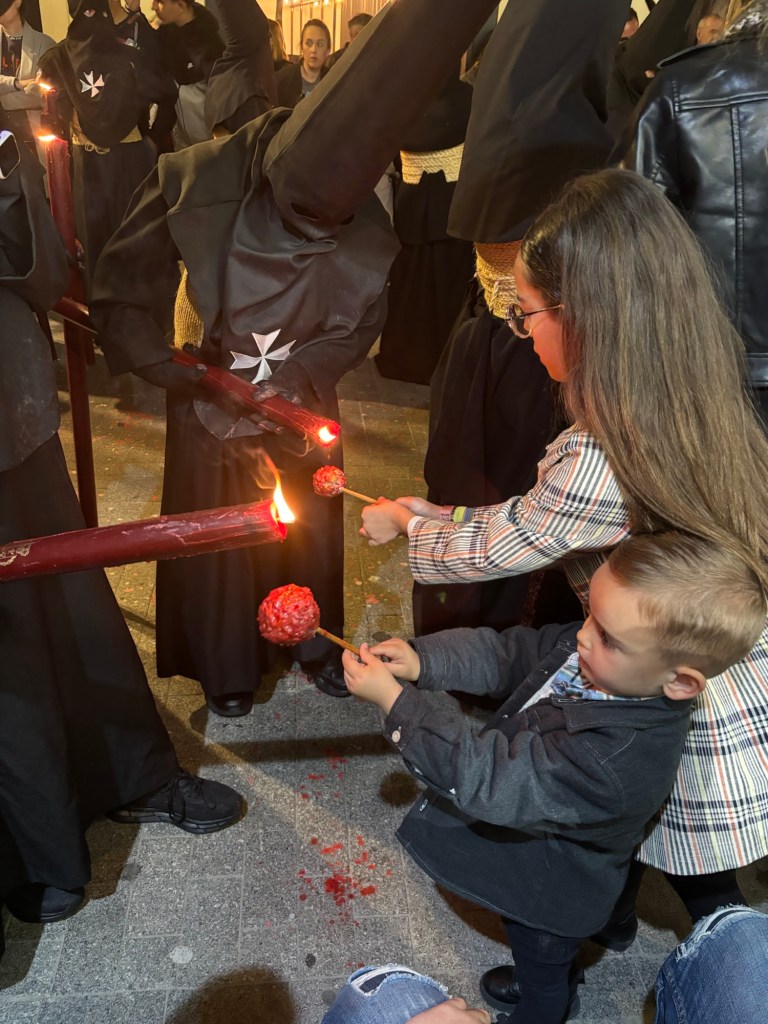
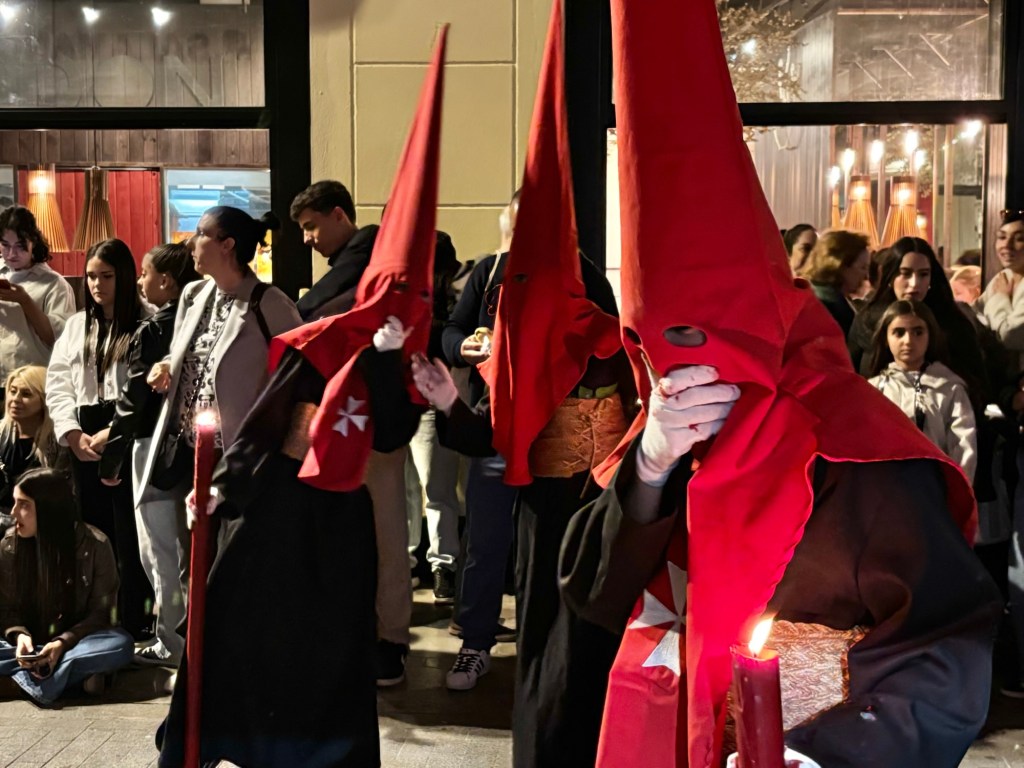
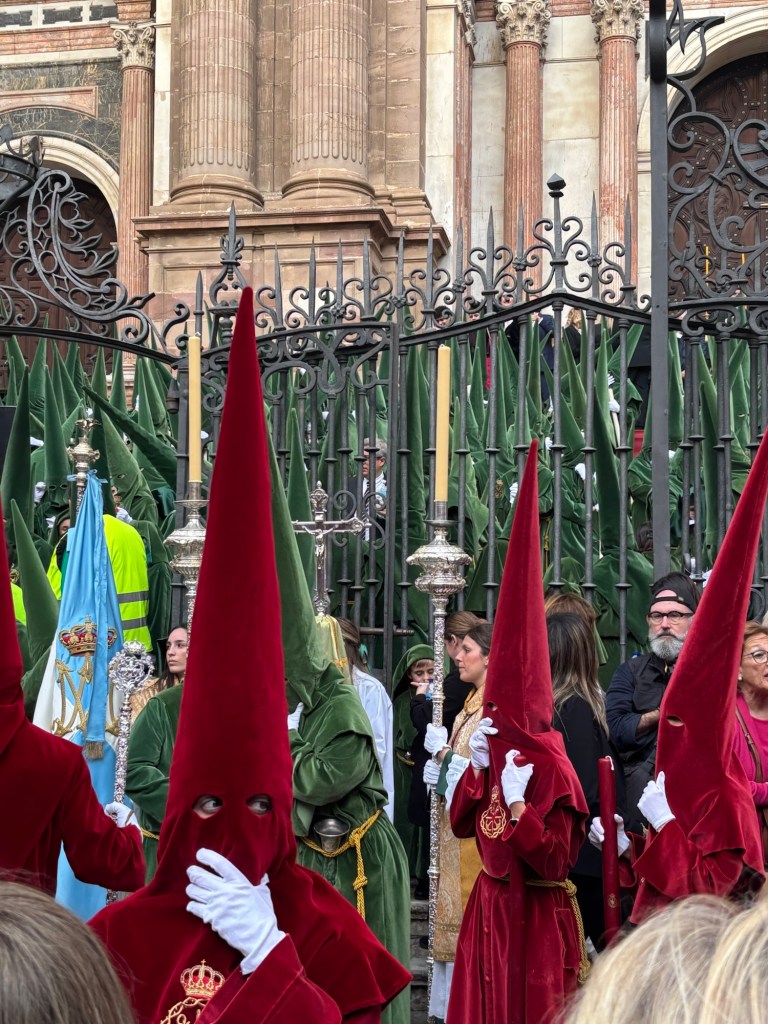
Another beautiful tradition of Semana Santa is that of the bola de cera. As the sun goes down, the nazarenos light their long candles – hardly necessary in a city as well-lit as Málaga, but an essential part of the spectacle. They need to be long to last the night, and it’s for this reason that the nazarenos all wear gloves, to stop the hot wax from dripping onto their hands.
In Andalucía, there’s another layer to it. Every time the procession comes to a halt, children run out into the street and ask the nazarenos for the wax from their candles.
They collect it on little sticks with a coin attached to the end – or using last year’s wax balls, if memory serves – and compete to see who can get the biggest ball of wax by the end of the night. It’s an old way of keeping the younger children entertained during the long hours of the processions, which usually go on well past midnight.
Honestly, it’s just incredibly endearing to see how wholesome this little game is. Sure, Spanish kids love their mobile phones just as much as (if not more than) English kids, but you don’t see a lot of English kids collecting wax or playing with spinning tops in the streets. I still have very fond memories of playing dodgeball and pilla-pilla in the streets with my friends when I was growing up out here. There’s just a bit more variety in the games that Spanish kids play. I want that world for my kids, if I should be so lucky to have children of my own someday.
There was a bit more of the behavioural policing tonight that I’m used to seeing in the pueblo: silver-staffed nazarenos striding over to give a ticking off to younger penitents who might have broken rank for a moment to gossip or talk with friends and family in the crowd. I’m always amazed by how quickly the nazarenos are recognised by their peers in the street, but then, if a ewe can tell its own lamb from its call alone, is it is so hard to imagine that a mother can tell their child from their eyes or gait? Perhaps not. We may not have the heightened senses of some of our animal friends but we are mighty indeed.
The one transgression that wasn’t being quite so closely monitored was the clustering of nazarenos around the glow of a screen at every stop – particularly in front of the Irish bar, where a large telescreen was playing the Real Madrid/Arsenal game. One nazarena was accompanied by her boyfriend, her black robes and his hoodie bathed in green light by the game on his phone, while a cluster of six nazarenos stopped to catch up on the replay, courtesy of one of the costaleros.
It was obviously an important game (what do you expect when Real Madrid are playing?) and it ended in a crushing 2:1 defeat for Real Madrid, but thanks to the greater task at hand of the procession, you wouldn’t have noticed. That said, I suspect that a Spanish victory might have been very noticeable: Spaniards don’t celebrate in silence.
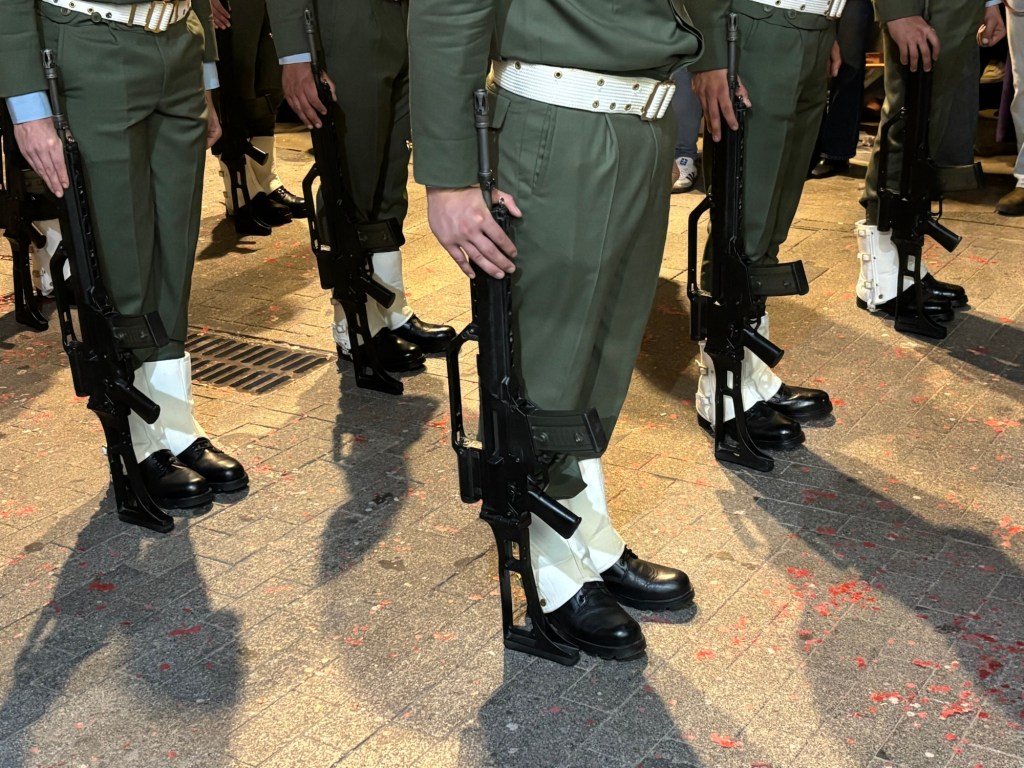
To round out the night, a wing of the Spanish Army – specifically its Almogávar paratroopers – paraded by, accompanying their image of the Virgin Mary on her journey through the city. Lots of Spaniards come to town to see the Legion, but the Almogávares were a bloody good warm-up act, performing a number of impressive drills and acrobatics with their weapons as they marched.
Like a lot of military terms – including our own admiral – the word almogávar is Arabic in extraction, deriving from the word al-mughāwir, a light infantry raiding unit used by both the Moors and the Spanish during the Reconquista. Spain owes a lot to its Islamic past, from saffron and stirrups to rice pudding and the police. Slowly, I think the country is starting to appreciate its coloured past a bit more.
I’d better leave it there, or I’ll have bored you stiff with Semana Santa stuff – and I’ve still got one more night’s work to report! So stick around – the best is yet to come! BB x
Eighteen years ago, some family friends came out to visit us and spend a walking holiday in the sierras of southern Andalucía. That’s when I first saw the Rock.
Since then, it has loomed large over so much of my work. It was a talking point in my Year 13 Extended Project Qualification on the Islamic Legacy in Spain. It served as an illustration on the front of my final dissertation on Pedro de Corral and the Spanish founding myth at Durham University. It’s been a subject for discussion in goodness knows how many A Level, IB and GCSE classes I’ve taught over the years, and it’s going to feature once again in the talk I’m delivering next week to the local Hispanic society on Spain’s Islamic History.
The Rock. Calpe. Tariq’s Mountain. One of the two pillars of Hercules. The key to the Mediterranean. Gibraltar has gone by many names over the centuries, indicating its enormous cultural footprint. So it’s easy to see why the Spanish get so cut up about the fact that this relatively small peninsula belongs, not to either of the countries that can see it – Spain and Morocco – but to the United Kingdom, an opportunistic seafaring nation that snapped up the city in 1704 during the War of the Spanish Succession. It was Spain – or rather the Spanish crown – that officially ceded the peninsula to Great Britain. It has been a decision they have regretted ever since.
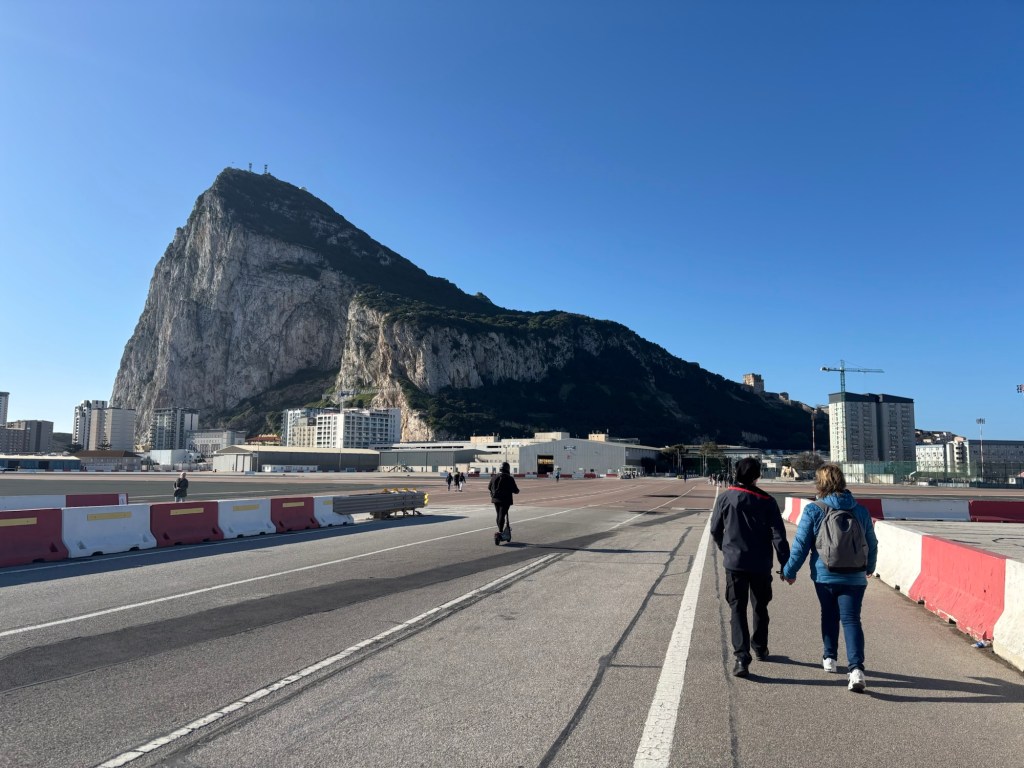
Modern-day Gibraltar is a very strange place. You cross a staggeringly short airstrip and enter a completely different world – like a jigsaw piece from a different puzzle that fits, but looks totally out of place. It’s as though somebody has taken a slice of an English county town and dropped it incongruously on the Spanish coast. Not even the tourist-infested Costa del Sol matches its otherworldly vibe.
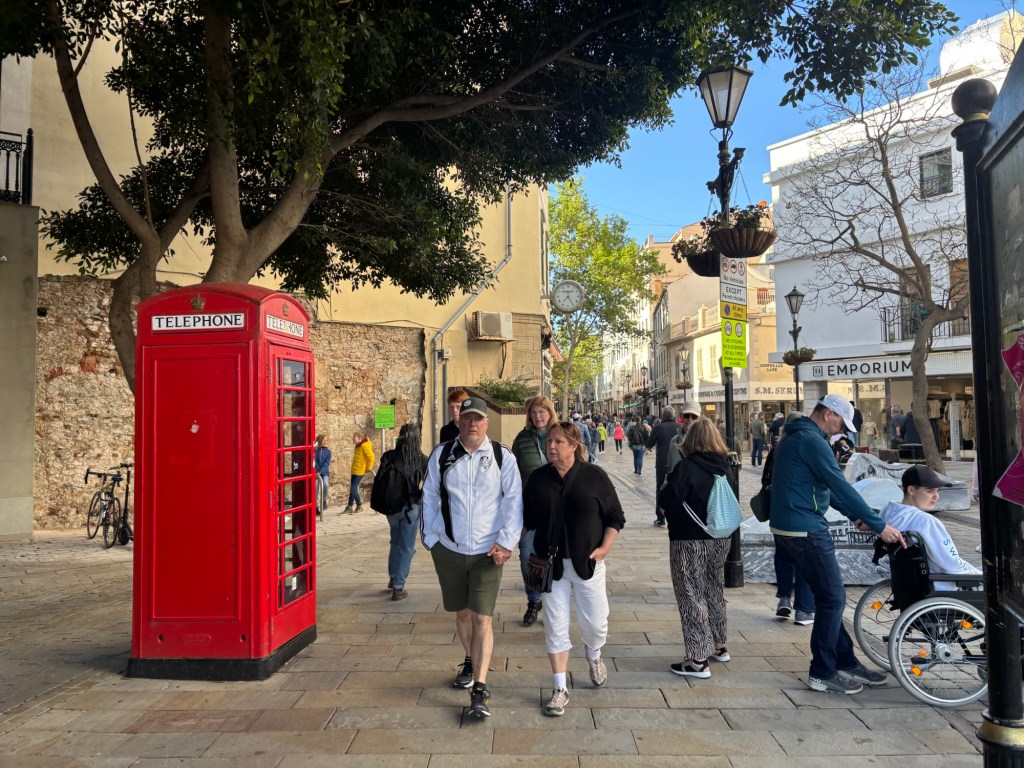
Red postboxes. English traffic signage. Curry, gin and Cadbury’s. Pubs bearing the faces of Lord Nelson and Queen Victoria. Even the layout of the high street is unmistakably English. If Spain truly wants Gibraltar back, it will have some serious landscaping to do.
As I recall, we were short of time on my last visit here. The bus from Málaga made the trip down the coast in record time, so I had all of six hours to explore – almost all of which I spent walking. My phone seems to think I’d clocked twenty-one kilometres by the end of it… which, given my roundabout route through town, to Europa Point and up and down the Rock, is probably not too far from the truth.
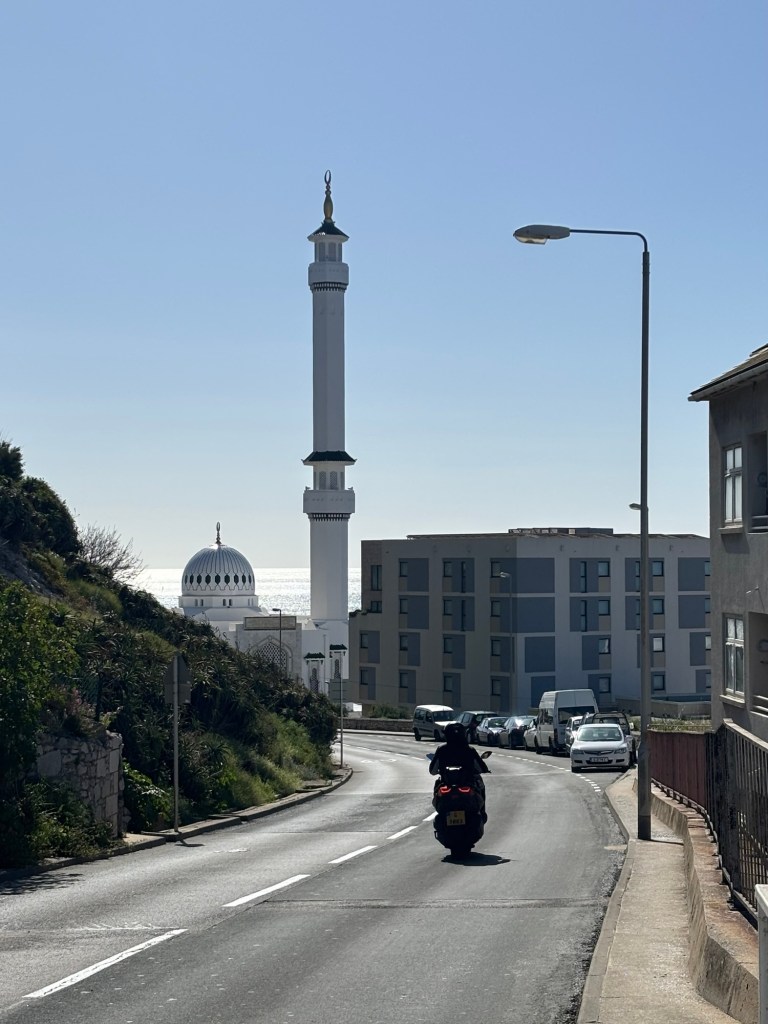
Hidden away at Europa Point is a symbol of the British subversion of the terms of the Treaty of Utrecht: the Jews’ Gate Cemetery, where many of its former rabbis are buried, and the Ibrahim al-Ibrahim Mosque, one of the largest in a non-Muslim country. Tucked away here on the south side of the rock, they’re not immediately obvious from the Spanish side, and while the mosque may be a recent addition (built in 1997), it’s thought that the cemetery was put there to conceal the presence of Gibraltar’s Jewish population from prying Spanish eyes. The Treaty of Utrecht was quite clear on the matter:
Her Britannic Majesty, at the request of the Catholic King, does consent and agree, that no leave shall be given under any pretence whatsoever, either to Jews or Moors, to reside or have their dwellings in the said town of Gibraltar.
Great Britain, unsurprisingly, largely ignored this clause of the Treaty, and Gibraltar has been a haven for a small enclave of Jews ever since. Lately, it seems a Muslim population has also returned to the Rock – large enough to warrant a sizeable mosque funded by the Saudis – fuelling some dissent from the Spanish side.
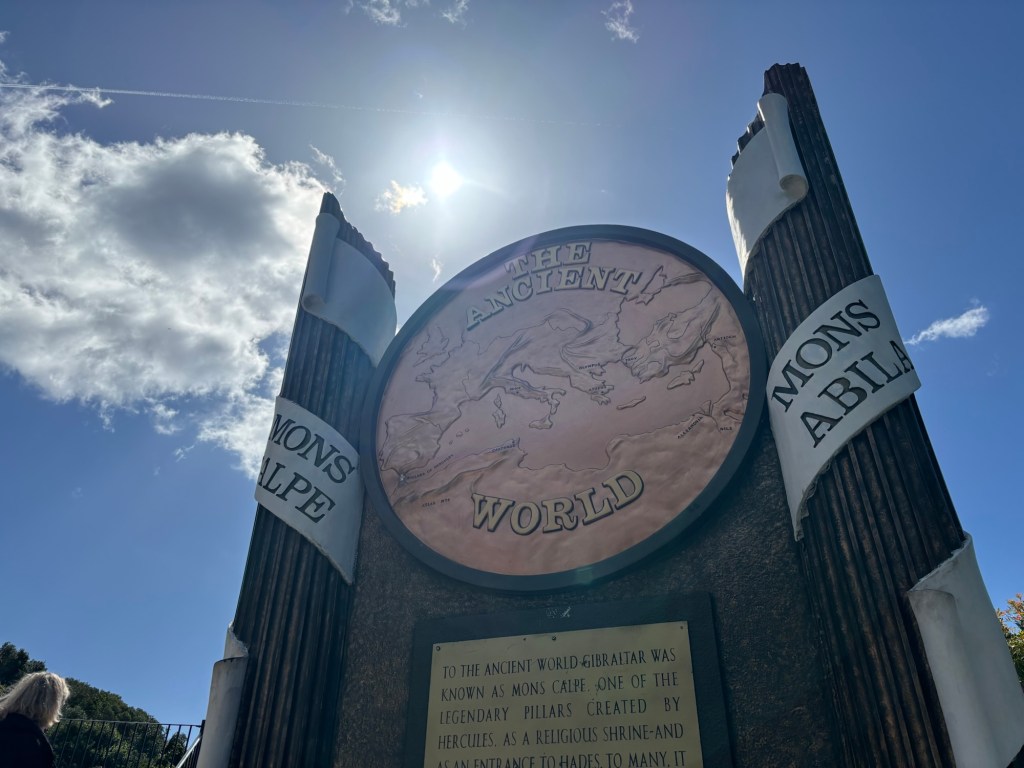
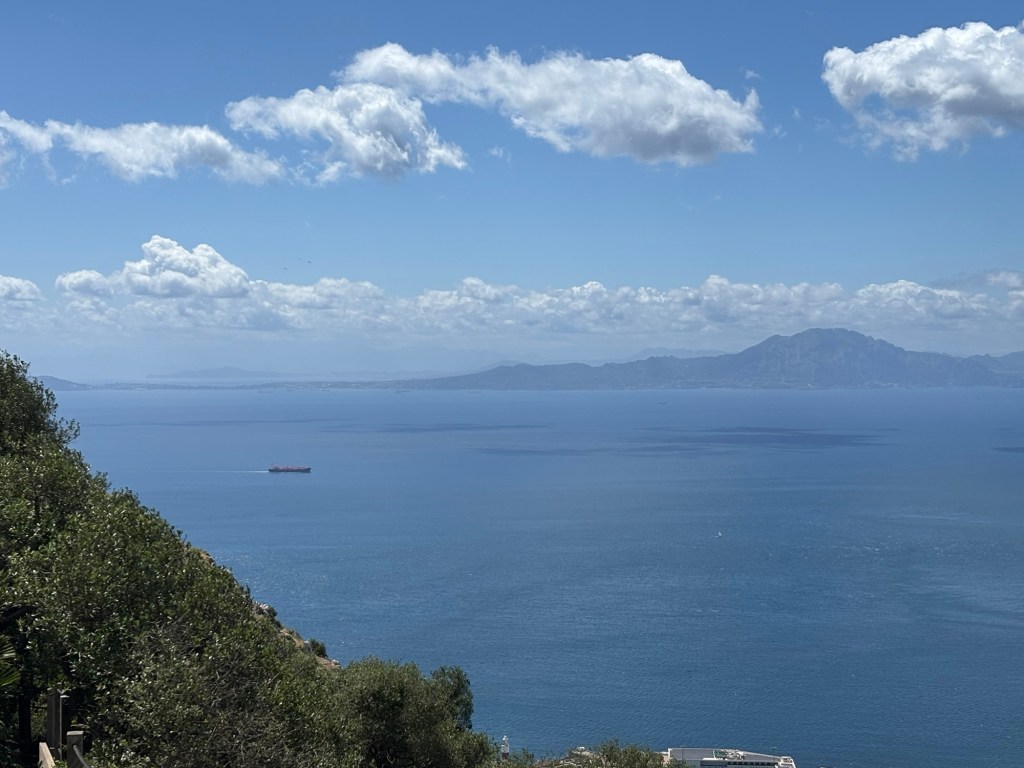
As you start to climb the rock at Jews’ Gate, the view across the Strait to the South becomes even more spectacular. What makes it all the more special to me is that I know those mountains very well, albeit from the other side, having climbed a few of them myself when I lived in Tetouan. I could just about see Ghorghez in the far distance, as well as the peninsula of Ceuta, but Jebel Musa is the most recognisable, being the most likely candidate for the southernmost of the Pillars of Hercules, the twin mountains that stand like sentinels at the mouth of the Mediterranean.
There’s an awful lot of lore here. The legend has it that the Greek hero Heracles split the original mountain in two in order to clear a passage to his tenth labour, the capture of the cattle of Geryon. While he was here, at the edge of the known world, he supposedly founded a city that would later become Seville. That’s why the Greek hero features so prominently in Spanish folklore – and on the Andalusian flag, for that matter. The legendary pillars themselves are on the Spanish cost of arms, emblazoned with the mantra ‘plus ultra’ or “further beyond” – the defiant Spanish response to an older inscription left on the rocks by the civilisations of old, non plus ultra, warning of the emptiness beyond: an emptiness that Christopher Columbus famously disproved in 1492.
Nowadays, both of the pillars bear the names of the two Muslim commanders who led the invasion of Spain: Musa bin Nusayr, the governor of Ceuta, and his subordinate, Tariq bin Ziyad. Though Tariq was executed on Musa’s orders for his hasty invasion (it’s not every day a raid turns into a regicide), it’s his name that has gone in history as Jebel Tariq – gradually mangled into Gibraltar.
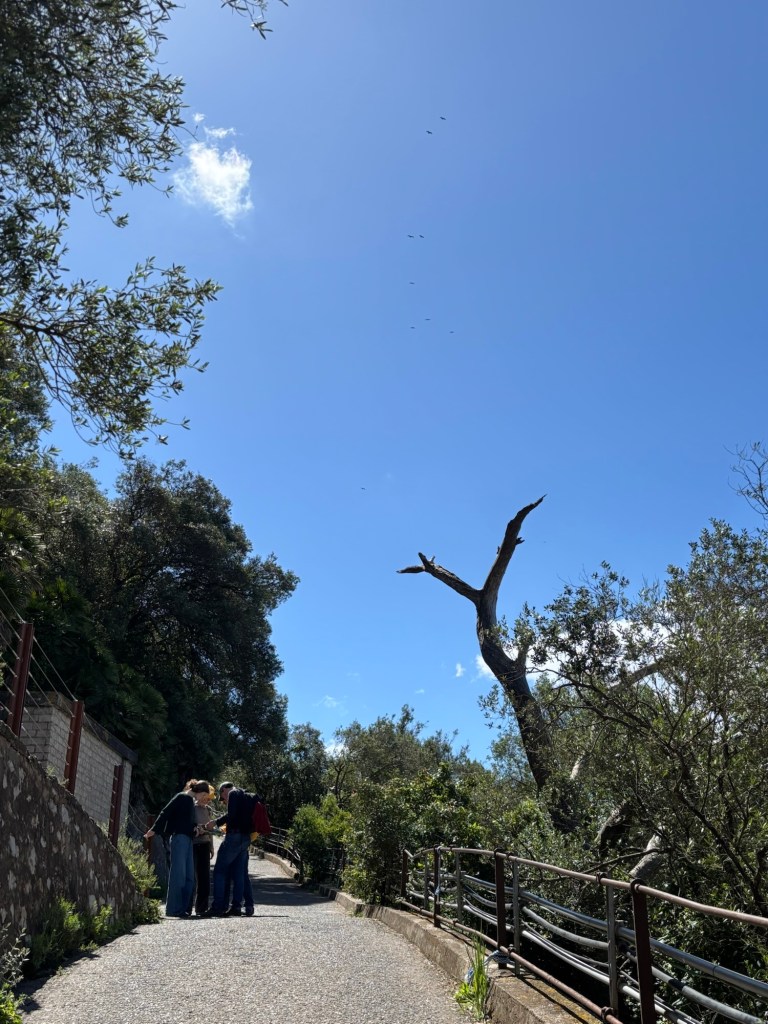
Being so close to Africa, Gibraltar is a natural (and phenomenal) place to observe the annual migration of birds traveling to and from their breeding grounds in spring and autumn. It’s especially good in spring, as the birds ride the thermals on the Moroccan coast and soar across the Strait with hardly a wingbeat, gradually descending and sometimes arriving on the European side at eye level.
My camera was a dead weight as it had run out of power shortly after arriving in Gibraltar, and I’d plum forgotten to bring the charger (which I could have used here, since Gibraltar uses English sockets). All the same, I could observe some of the migrating birds with the naked eye. I clocked around thirty black kites as I climbed the Rock, along with a number of honey buzzards and black storks. I thought I heard some bee-eaters, but they turned out to be an audio recording hidden in the bushes at the park’s entrance. How odd!
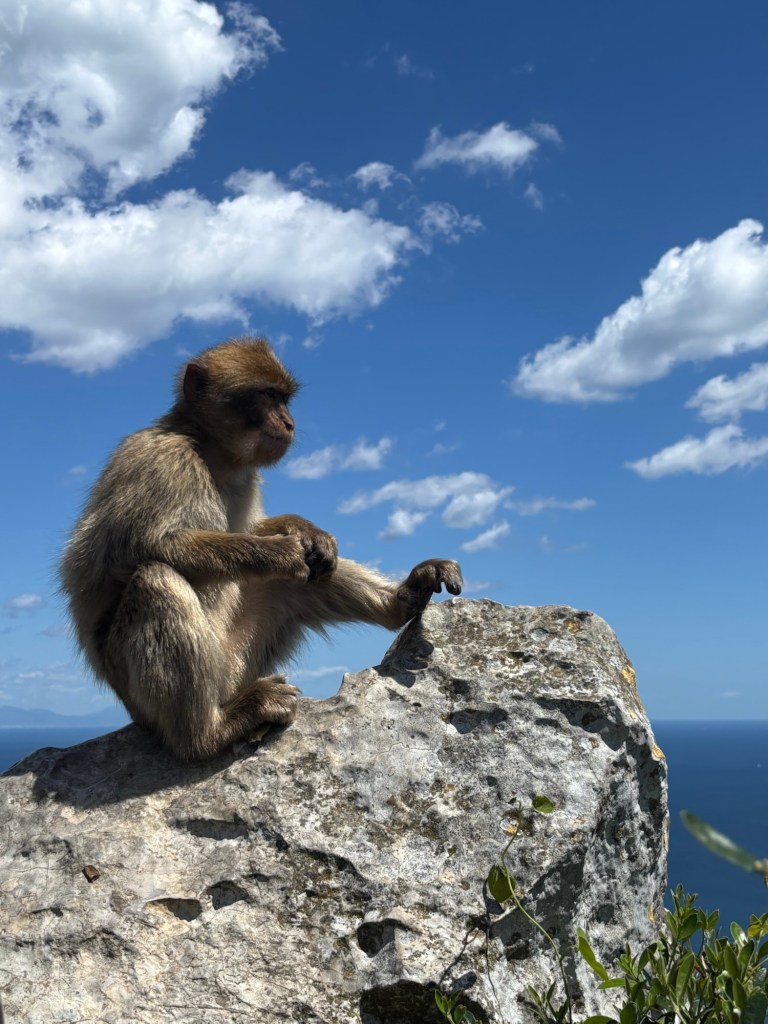
Let’s be honest, though – I came here to see the monkeys!
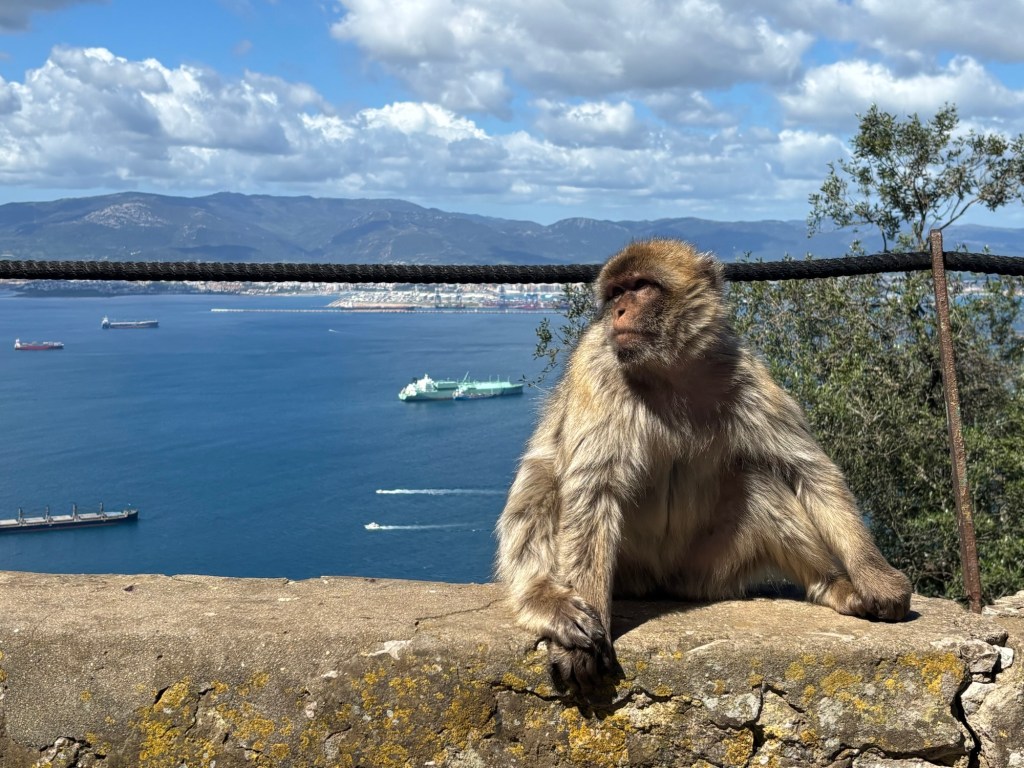
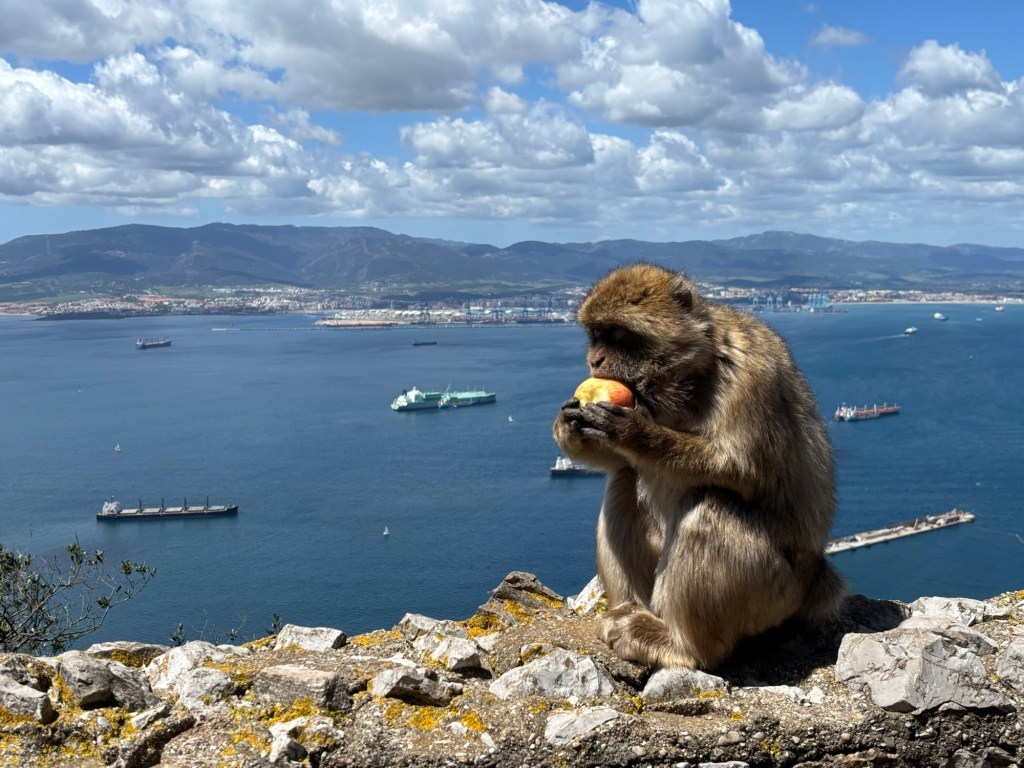
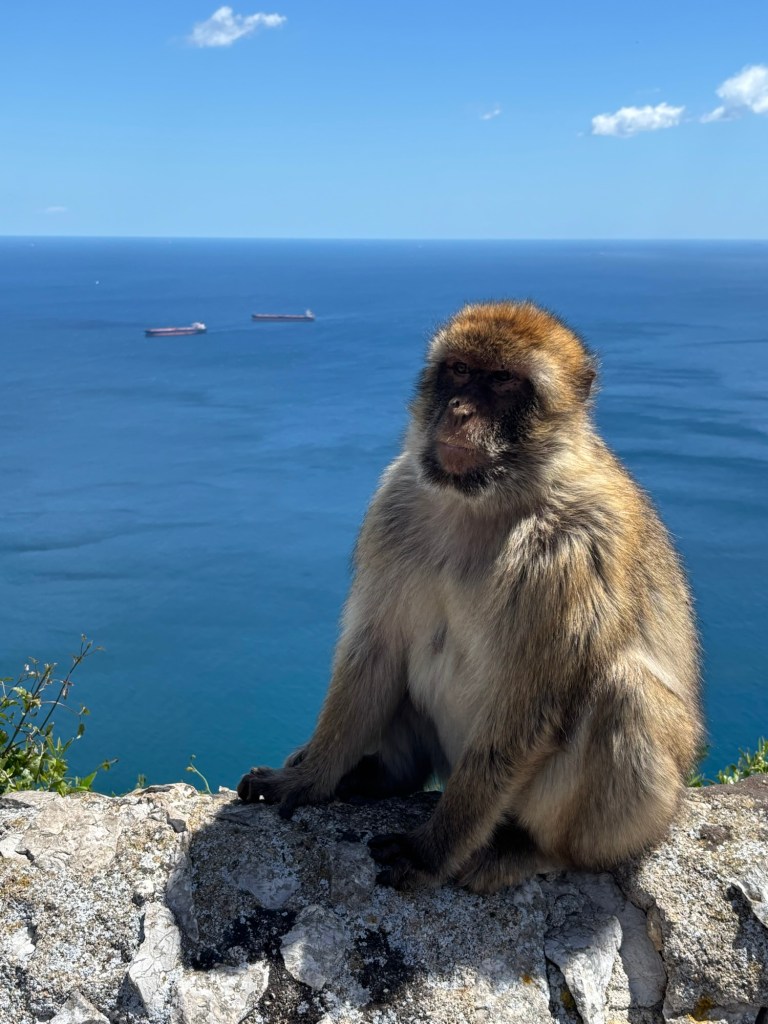
The Barbary macaque is the only species of monkey that you can find in the wild in Europe. The fossil record shows that they were once found across Europe during the Ice Age, but they can now only be found in the Rif Mountains of Morocco – and here in Gibraltar. It’s almost certain that these aren’t the last survivors of the European population, but rather a group brought over by the Moors (and later restocked on the orders of Winston Churchill himself). Nevertheless, they’re as much at home here as they are in the cedar forests of the Atlas Mountains across the Strait. Perhaps more so, since there are so many hapless tourists just asking to have their lunch stolen.
There’s plenty of food left out for the macaques every day, but there’s a further incentive for keeping your snacks under a close watch: it’s illegal to feed the monkeys, punishable by a fine of up to £4,000. That won’t stop them from trying to snatch what you’ve got, edible or otherwise, but it’s best to avoid any cases of mistaken identity by keeping your food and drink out of sight.
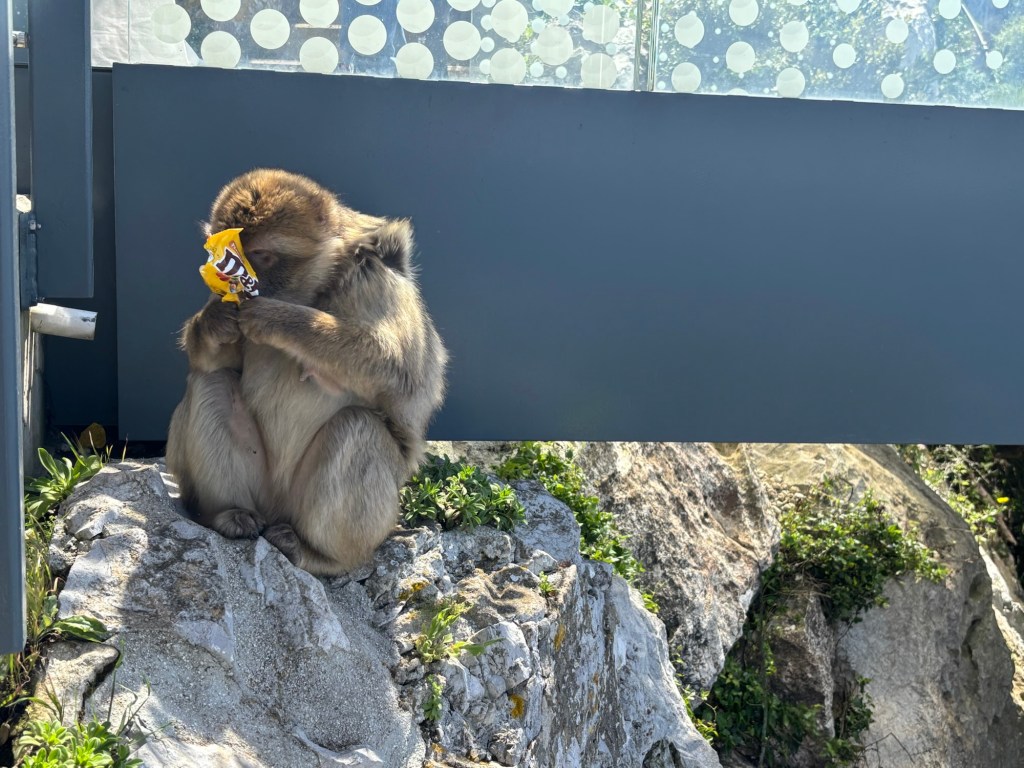
This one by the Skywalk was scoffing something that definitely wasn’t official monkey food. I wonder what they make of M&Ms? Do you suppose they taste any better to a monkey’s palate?
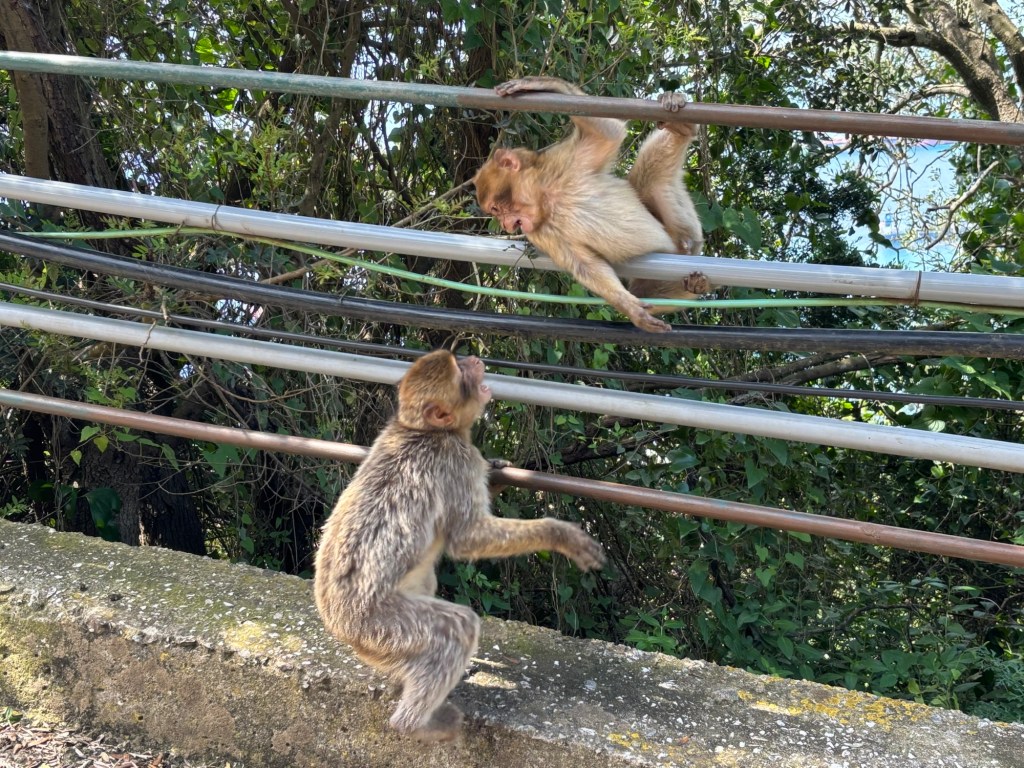
It’s a bizarre experience, walking around the Rock and seeing wild monkeys wandering about the place, like some African safari. The long lines of white tourist taxis crawling along the Queen’s Road and stopping for their passengers to take photos only add to the experience. Not that the macaques seem to mind overmuch – the youngsters are quite happy to play undisturbed.
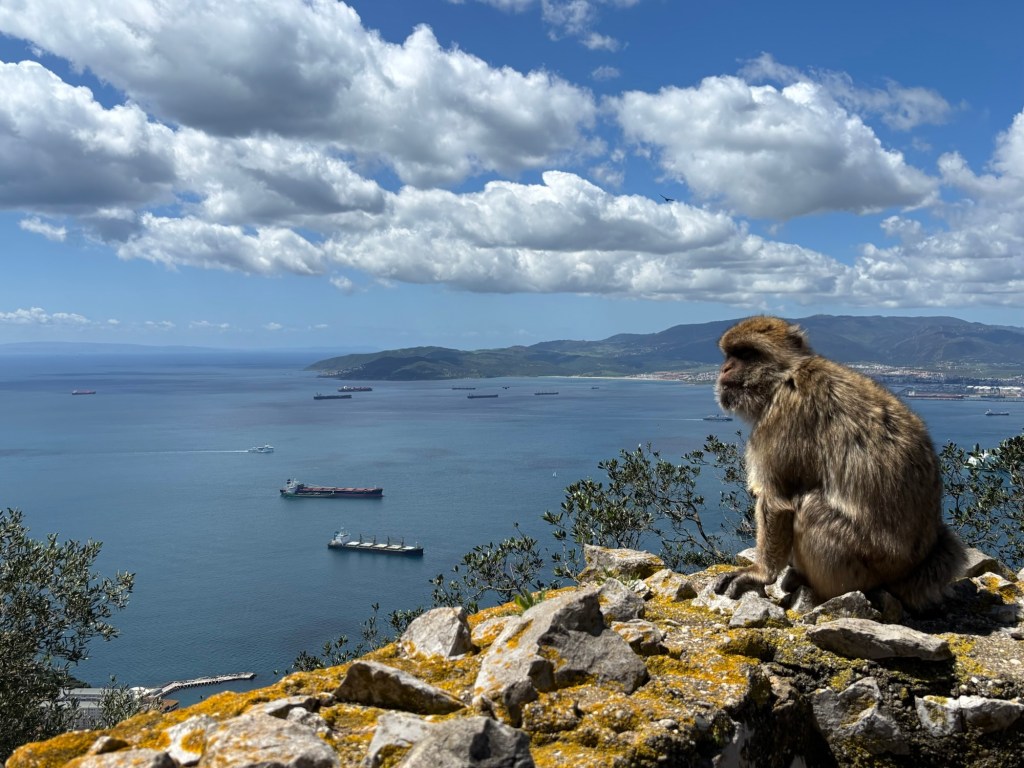
Alonso del Portillo, the first Spaniard to include Gibraltar in his chronicles, referred to the macaques as the “true owners” of the Rock, occupying its eastern face since “time immemorial”. Even so, I wonder if their not so inhuman brains ever stretch as far as thoughts of that land on the other side of the sea, where the rest of their kin can be found? They certainly seem to spend a lot of time looking out that way.
I’ve always been a keen naturalist, but my especial love for primates goes back to my time in Uganda, where I had the privilege of seeing mountain gorillas up close. That seems a more logical place to start, since it probably doesn’t stretch back as far as my last visit to Gibraltar, when one of the macaques welcomed me to the Rock by shitting down the back of my hoodie as I left the cable car.
No cable car this time – and no shit either. Cause and effect! (And also a financial dodge, as the cable car costs an extortionate 19€…)
The only downside to not taking the cable car was the climb back down the Rock. I took the steps down the Charles V wall, a 16th century fortification against the Barbary pirates who once plagued these waters. They’re bloody steep, they can only be walked down (or up) in single file, and there’s the added hazard that the macaques use them as well – and they don’t like to be cornered.
Fortunately, by the time I came down, it was well past noon and most of the macaques were dozing off the midday sun. These two barely batted an eyelid as I carefully stepped over them. I hope the tourists I passed at the bottom coming down were as considerate.
A local legend has it that Gibraltar will only fall when the monkeys go – much like the English legend about the ravens and the Tower of London. And just like the ravens, the government has stepped in to prevent that superstition from coming to pass in times of crisis. Winston Churchill had their numbers bolstered during the Second World War when their numbers dwindled to just seven individuals – no doubt relying on his friendly relations with the infamous Thami El Glaoui, the self-styled Lord of the Atlas Mountains.
El Glaoui was a wily tribal chieftain and the son of a slave who, through a number of deft political manoeuvrings, came to rule much of modern Morocco. He is said to have counted Winston Churchill as one of his close friends. I wonder what he really thought of the eccentric British bulldog? Or of his decision to resupply the apes to keep a British legend alive? In Morocco, these beautiful creatures are often caught and forced to perform in market squares for the amusement of tourists. At least here in Gibraltar they don’t have to wear humiliating dresses or chains and can claim the Rock as their home.
Unsurprisingly, it’s getting late. That took a long time to write. I should get some sleep, but the Guardia Civil are processing tonight and I’d love to see that before the Legion arrives tomorrow. And that really should be a special way to end my adventures. What a journey it’s been! BB x
I’ve arrived at the final destination of my journey: Málaga, ancient port city of the Phoenicians, Carthaginians and Moors and holiday hotspot of choice for thousands of guiris. It’s an odd place for a self-professed country boy like me to end the trip, but there’s a method to my madness: Spain’s foreign legion comes to town to accompany the Semana Santa processions on Thursday, which is a mighty spectacle, and what better a place to wind up my unofficial investigation into Spain’s mass tourism blight than in than the place where it all began, decades ago?
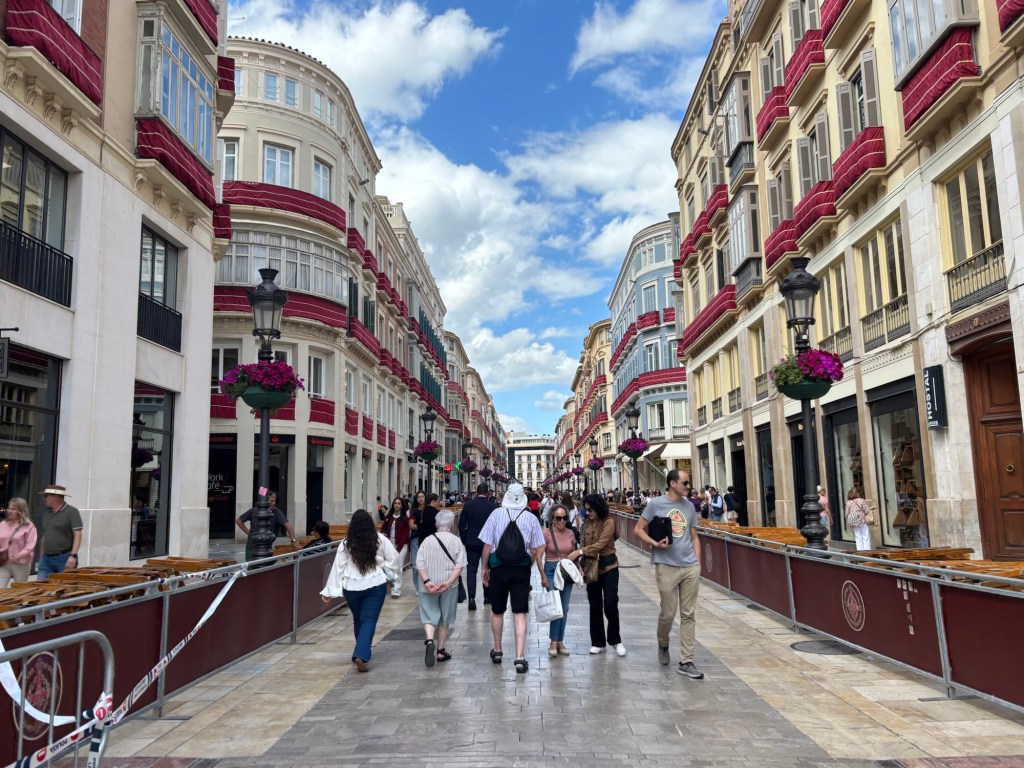
Doñana feels a long way from here. It’s quite easy to walk down a street in Málaga and hear no Spanish whatsoever. I set a timer and managed to clock a maximum of seventeen minutes before I heard a sentence in Spanish on my way to my accommodation: of the foreign languages in town, German was by far the most common, followed closely by Dutch and English.
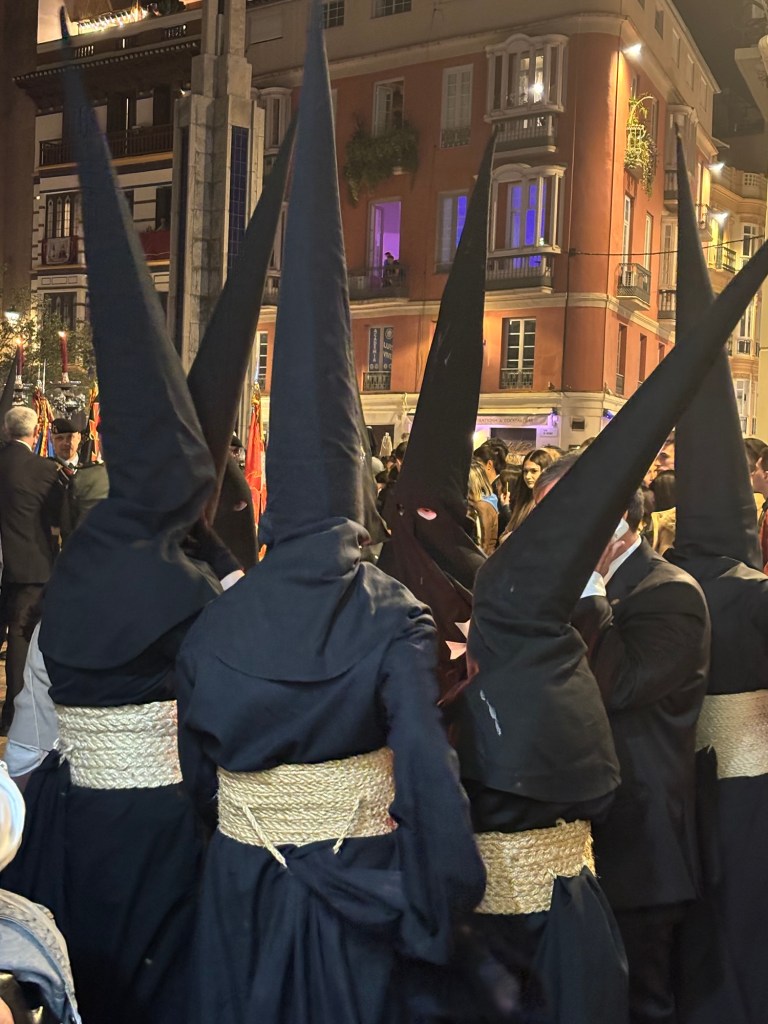
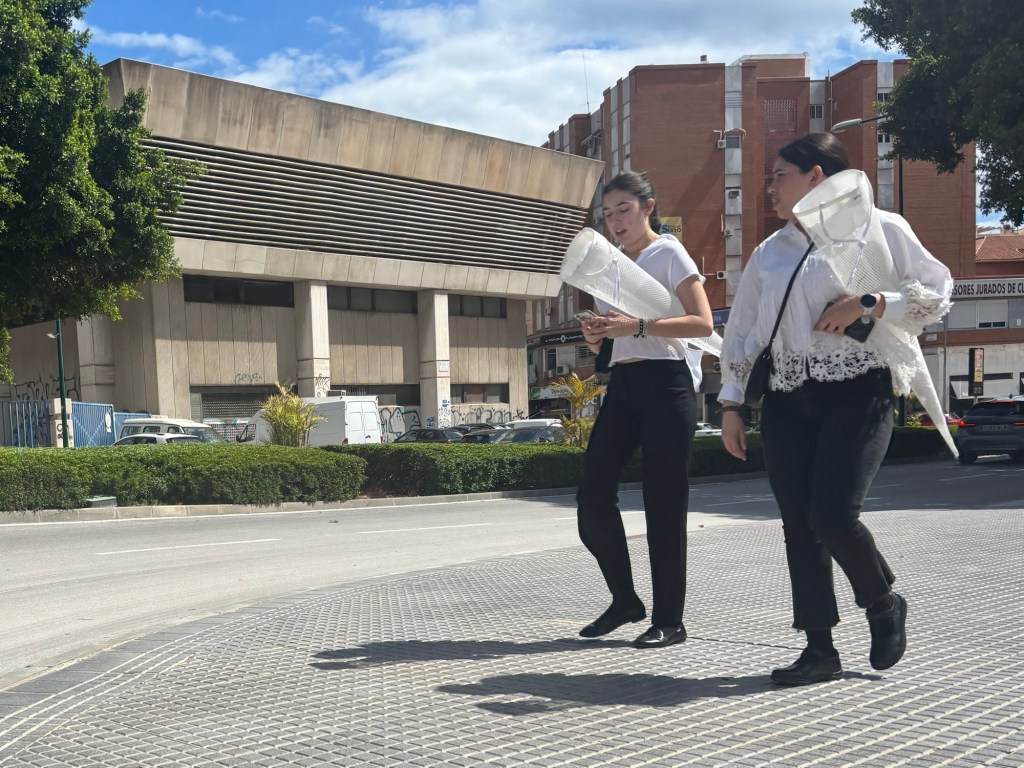
The simple explanation might well have been that the locals had better things to do this afternoon than mosey about the high street: Holy Week begins in earnest today, and those Spaniards I did see were dressed in their Sunday best, or carrying musical instruments, white peaked caps or wire cones for the hoods of their capirotes.
Málaga, together with Sevilla and Jaén, draws in the largest number of spectators for its Holy Week processions: last year, the additional income from Semana Santa alone was an eye-watering 393 million euros in the space of a week. As it stands, around 80% of the city’s accommodation options are at full capacity. Some of that is down to the fact that Holy Week coincides with the school holidays in the UK, but a great many of those tourists will be Spaniards, for whom the processions are far more than just a spectacle.
For the average tourist (or even the irreligious Spaniard), Semana Santa can be something of a headache, both literally and logistically. The passage of the nazarenos and their enormous floats, numbering as many as six hundred penitents, can prove an unorthodox and lengthy roadblock, with the longest processions taking more than thirteen hours to conclude. You have to admire the zeal of the nazarenos for such a stakeout, especially those who do the whole thing blindfolded, barefoot or dragging chains, but it does have the effect of turning the streets of the old town into a live action render of the Snake game on the old Nokia phones: time it wrong and you can end up trapped between the undulating tail of two processions at once.
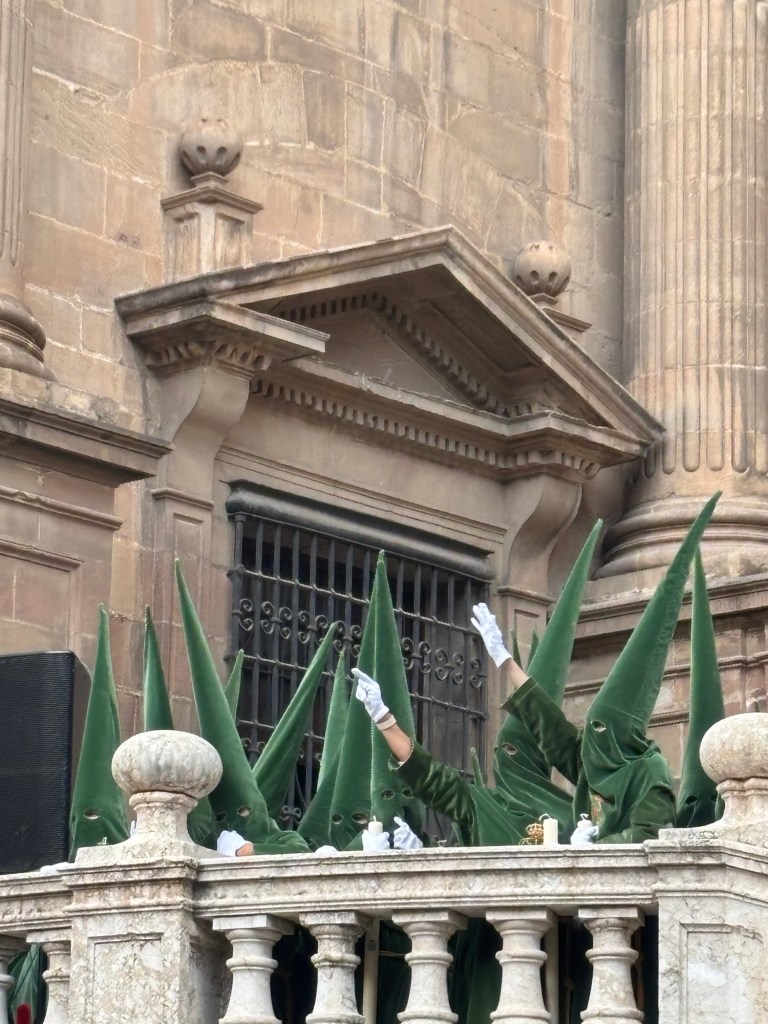
I couldn’t get anywhere near the Gitanos, one of the city’s most spectacular processions, as the crowd was five or six lines deep against the barriers, so I sought out the Estudiantes gathering outside the cathedral instead. Dressed in red and green, indicating their affiliation with Christ or the Virgin Mary respectively, the Estudiantes are the youngest of Málaga’s brotherhoods, drawing on the city’s youth for its members.
That much was plain from the behaviour of the nazarenos, who seemed a little less austere than I’m used to, popping up their hoods to drink from plastic bottles and waving at family members in the crowd. Perhaps it detracted from the magic, but then, my previous experience of Semana Santa is largely a small-town affair, where the sacred traditions of uniform anonymity are usually taken very seriously indeed. I’ve seen nazarenos scolded by their leaders for so much as looking into the crowd.
Málaga is notorious throughout Spanish history for its rebelliously liberal nature, so perhaps it’s unsurprising that their take on the Holy Week processions is a little more familiar.
If I had a euro for every time I’ve had to explain away the comparison between the nazarenos and the villainous Ku Klux Klan – to students and Americans – I could probably afford another couple of nights of this holiday. The comparison seems far more obvious when the colour of their costume is white, of course – and I’ve seen unprepared American tourists jump out of their skin at the sight of the procession.
The simple answer is that Klan, among their myriad other crimes, purloined the outfit from here. The actual origins of the capirote are arguably darker still: they were originally known as sambenitos and were worn by the victims of the Spanish Inquisition, or rather, those victims granted the “mercy” of a quick death by strangulation for recanting their heretical ways and accepting Jesus. Those who didn’t were burned alive.
The different colours of the hermandades or brotherhoods may have originated in the designs on the sambenitos of the accused, indicating the crime they had committed or the fate for which they were destined. It’s believed that the Spanish started to make a connection between anonymity, penitence and overt professions of faith, and adopted the sambenito for use by those seeking to make penance during Holy Week as early as the 16th century. Certainly, by the middle of the 17th century, its use had become widespread, developing steadily into the tradition we now see today.
That makes the sambenito somewhere between two and three hundred years older than the robes of the Klan, who only officially adopted the ceremonial white robes under their reorganisation as the Second Klan in 1915.
So hopefully that puts the matter to bed.
I’ve never been troubled by their appearance, having encountered the nazarenos long before I learned about the KKK at school, but the procession isn’t without its issues for me. Something I’ve had to face here is my aversion to crowded spaces. It’s not agoraphobia, but it’s probably not far off.
In many ways, I feel more Spanish than English, but in one I am on the other side of a cultural gulf: I cannot stand the hustle of a crowd for the life of me. Spaniards seem to enjoy the hypersocial element of a giant conglomeration: there’s a thousand possible conversations to be had, a hundred new friends or connections to be made, and always the chance to enjoy something together – be that food, music, a joint or a spectacle. While an Englishman’s home is his castle, the Spaniard’s natural environment is in good company.
Good company is fine, but I have my limits, and it isn’t my idea of fun to be pushed, jostled and elbowed about by a massing crowd for the best part of a couple of hours. Semana Santa has always been a sombre, intimate affair in my previous encounters in Olvera, Villafranca and Villarrobledo. Here in Málaga, it is anything but.
The omnipresence of the police – all of them armoured and heavily armed – is a constant reminder of just how big the crowds are. They flank the processions, pushing the milling crowds back when they step out of line to take a selfie in front of the pasos (an affliction which, though it pains me to say, is very much a Spanish trend). One couple just kept trying, leaning into the paso as it passed so close that the costaleros – already carrying more than five thousand kilos on their shoulders – had to actively sway more to the right so as not to collide with them.
Crowds have a nasty habit of getting to me, as does selfishness, and it all got a bit much. Hemmed in by the processions, however, I had no choice but to either wait it out or duck into a restaurant until the way was clear. I chose the latter option.
I’ll have another shot at the processions tomorrow. I have gone from zero to sixty in the blink of an eye, coming from the total quiet and solitude of Doñana to… this. It will simply take a bit of getting used to, that’s all.
Until then, I have my books. Far too many of them. Thank goodness for extra bags on flights! BB x
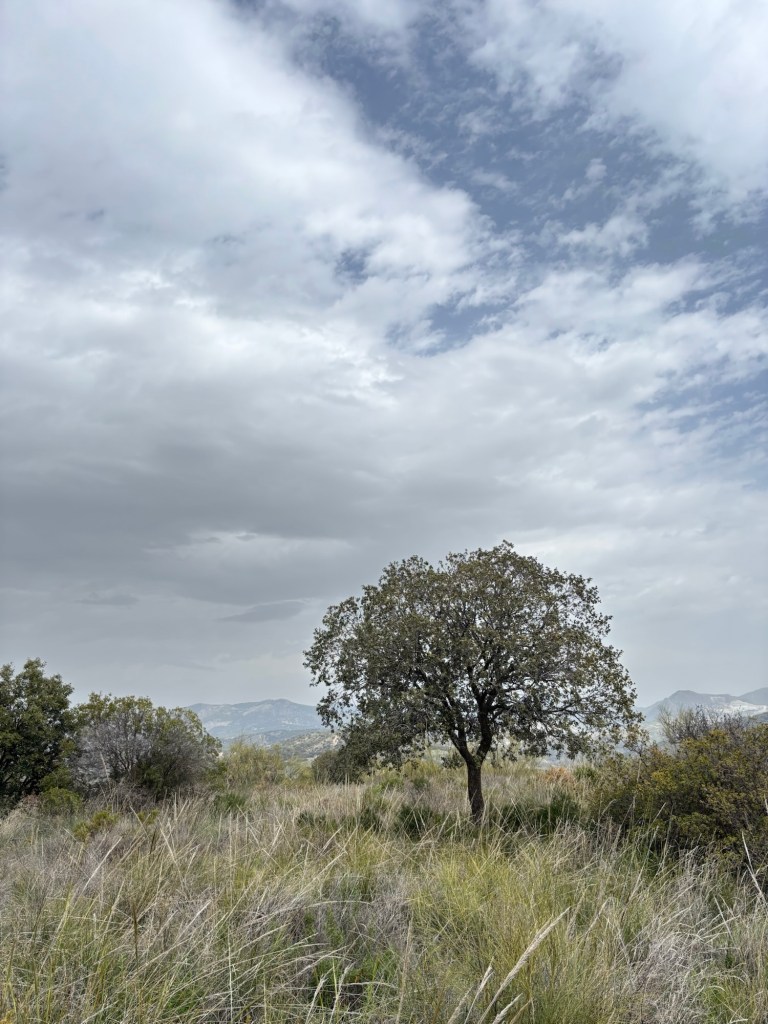
They call it the Cerro del Sol, but the sun is hidden behind a white haze of cloud. It covers the snowy peaks of the Sierra Nevada so indistinctly that it’s hard to see where the snow stops and the clouds begin.
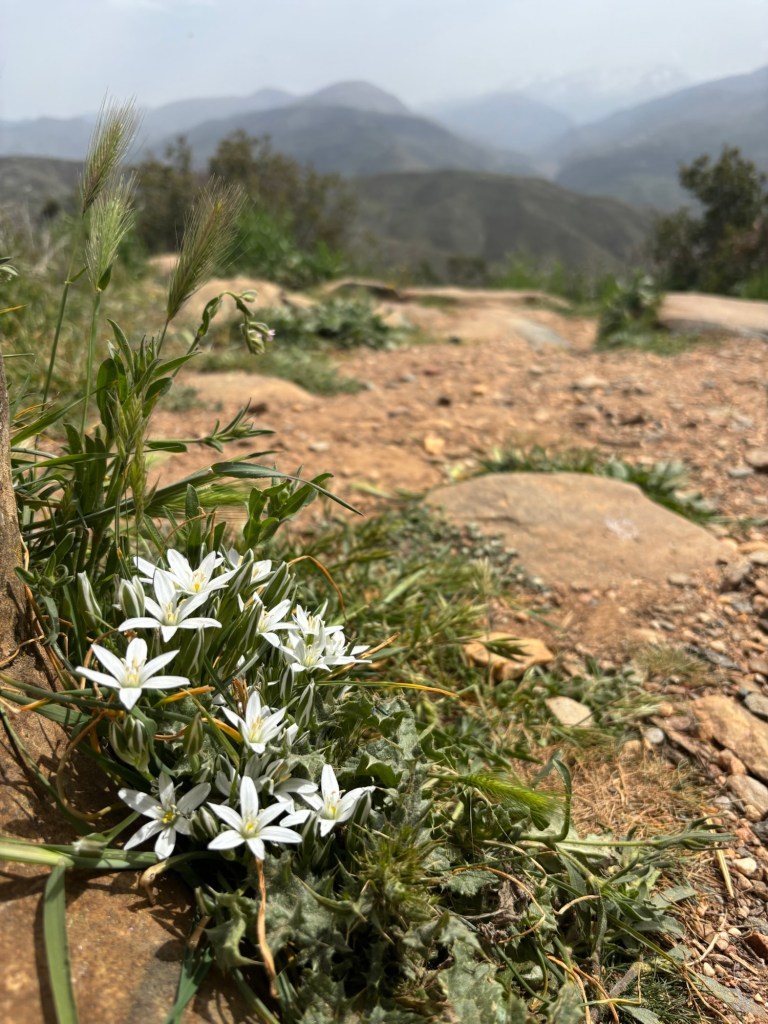
It’s pretty quiet up here. There’s a general soar of traffic on the road up to the skiing station of Pradollano in the Genil valley below, but beyond that – and the occasional rev and growl of some larger engine – it’s just me, the butterflies and the birdsong up here. Mostly fritillaries, coppers and marbled whites, though I did see a beautiful swallowtail float by a moment ago, before I put my cardigan over my head to shield my eyes from the white glare of the sun. It shines brighter than the garden Star-of-Bethlehem at my feet. Such a beautiful flower – I’m not sure why I never noticed them before.
I’ve come up here to write – and to heal. I didn’t sleep well last night. Some wounds, it seems, take a long time to mend. So I’m up in the quiet of the dehesa, in the hills east of Granada, soaking in the best palliative that nature can offer. Herself.
The occasional buzz of a fly. The twitter of a pair of pallid swifts racing by. The summery buzz of a grasshopper and the chuk-chuk-chukar of a partridge somewhere in the scrub far below.
A couple of Sardinian warblers are engaged in a territorial dispute in the broom bushes below, rattling off their warnings like Gatling guns. And always and everywhere, I can hear the song of blackbirds – an ever-present symbol of Granada.
This is the Dehesa del Generalife. I suspect the Moorish sultan of old must have come hunting here with his retinue in the days of al-Andalus, as these hills are teeming with small game: wood pigeons, partridge and rabbits (I didn’t see the latter, but this is absolutely their kind of terrain). What a sight that must have been: the Moorish sultan and his hawks, looking up at the snowy peaks of the Sierra Nevada and across the Vega of Granada.
It’s far too easy to see why this place bewitched the Romantics and scores of travelers back in the day, before the modern tourist trade sank its teeth into the place. Well, here’s a corner of Granada they haven’t spoiled: quiet, ancient, magical. Sure, it’s an hour’s hike from the Alhambra, but some things are worth the trek.
On my way up here this morning, I paid a visit to the Capilla Real to see the tombs of Fernando and Isabel, the Reyes Católicos. I figured I’d made the voyage to El Escorial to see the other kings and queens of Spain, so I ought to pay my respects to the ones who started it all.
A surly security guard at the door gave me a long, hard look as he waved me in and warned me not to take any photos. I indicated the notebook and pencil in my hands and asked if I could sketch. He didn’t reply. His stoney expression might have been cast in the same marble as the sarcophagus behind him. I guess he didn’t see the joke.
It’s funny how some people get so uppity about tourists taking photos, but nobody ever seems to mind a sketchbook. I’ve stood on street corners for up to an hour sketching and nobody bats an eyelid, but whip your phone out in some places and there’s hell to pay.
I bought a couple books in the gift shop (I needed some reading material and they were relatively cheap, by Spanish standards) and climbed back up the Carretera Empedrada through the Alhambra forest, where I stopped to check in my flight for next week and sort out tomorrow’s bus to El Rocío. An enormous tour group of German pensioners ambled by. There must have been at least sixty of them, perhaps more. They were followed not too far behind by two outings from a Spanish private school – recognisable by the distinctive shade of blue uniform that is so popular with colegios privados out here.
That figure of eight thousand a day I heard yesterday really does seem more believable when you stop for a while and watch the tourist traffic.
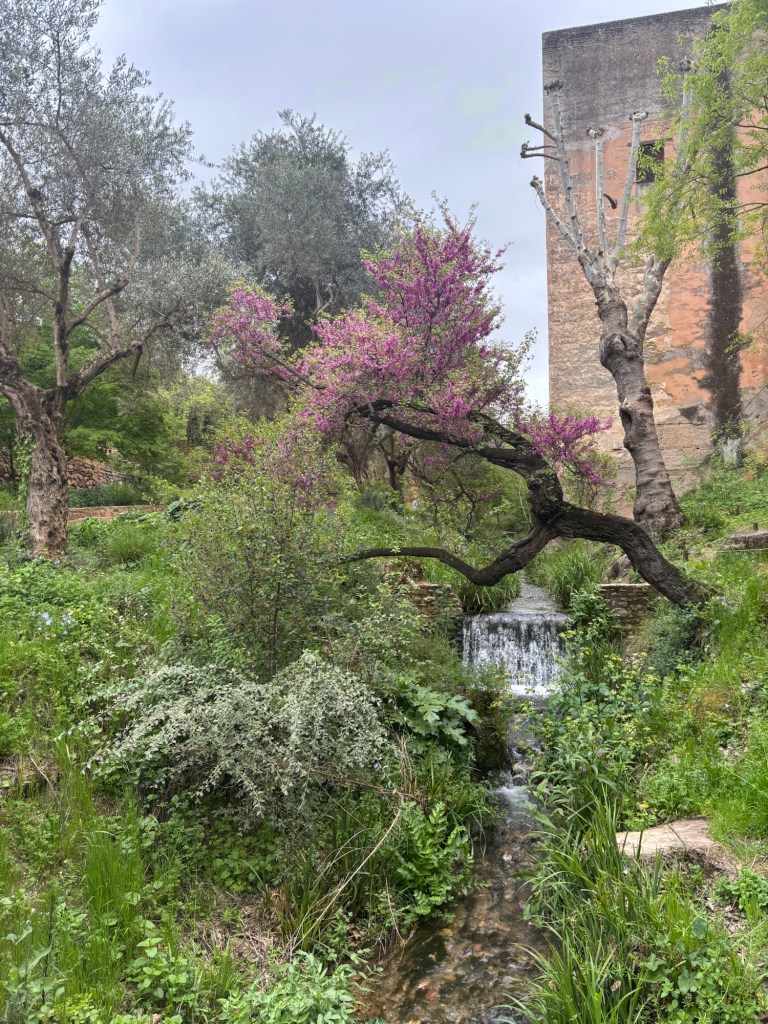
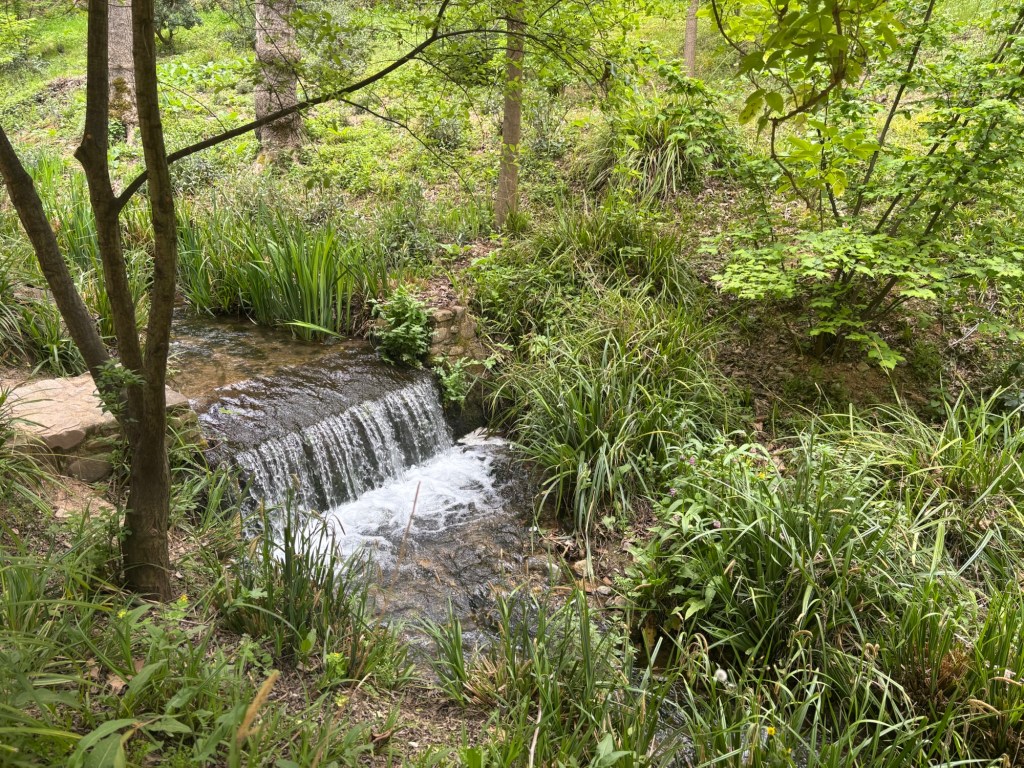
A short amount of time in the wilderness was enough, so around midday I dusted myself down, left the swallowtails to their games and headed back the way I came. When I came to the Alhambra, I took the right fork this time, following the Cuesta del Rey Chico down along the Acequía Real. It’s a steep descent (and an even less forgiving ascent) but it follows one of the main water channels right down to the Darro, so you’re accompanied all the way down (or up) by the most beautiful sound of running water. The Alhambra’s watchtowers serve as waymarkers: the Tower of the Captive, the Tower of the Judge, the Tower of the Peaks, and the Tower of Comares, the seat of the Sultan of old. The Sultan and his family may be long gone, but their waterworks are still running as they did then, six hundred years ago.
As I came down the hill, a thought came to me that had come several times now since I arrived in Granada. Who would not defy the world for such a place? Who would not have fought off the very hordes of Hell itself to defend this paradise on Earth? And what greater heartbreak can there be than to be banished forever from a place that was more than just a home, to know in the very depths of your heart that you had lost the keys to Heaven itself?
It’s not hyperbole. I’m merely paraphrasing the laments of the Andalusian poets of old when Granada fell to the Christians in 1492. It puts my own petty broken heart into a much-needed broader context. There was a sense of loss here far greater than anything a single heart can withstand. I have felt the tremors of it before in Sevilla and Córdoba, but nowhere stronger than here, the last bastion of the Muslims in Spain. Such a raw outpouring of emotion leaves a mark. Ghost stories would spring from it in more credulous parts of the world. Here, it is an indistinct melancholy – something in the air that once was, and is lost forever in all but memory.
Writing two hundred years before Granada’s demise, al-Rundi’s lament for the fate of Sevilla captures the grief:
A pretty lady, splendid as sunlight, Her beauty just like coral and jewels bright, Dragged off by infidel for rape most vile, Her heart perplexed, she’s crying all the while.
Abu al Baqa’ Al-Rundi, Ritha al–Andalus
I wonder how the Muslim tourists to the Alhambra feel upon seeing such a place? There do not seem to be as many as I remember.
One week remains. Tomorrow, I make for a place that has always been close to my heart: my Granada, my Jannah, my paradise on Earth. It looks like it will be a rainy weekend. But nothing could put a damper on the thought that I will see that place again, after all this time: El Rocío. BB x
Like most days where I crammed far too much into one day, this one is going to be difficult to write about. I’ve had writer’s block for the last few hours just trying to get started. So I’ll try to go over the highlights.
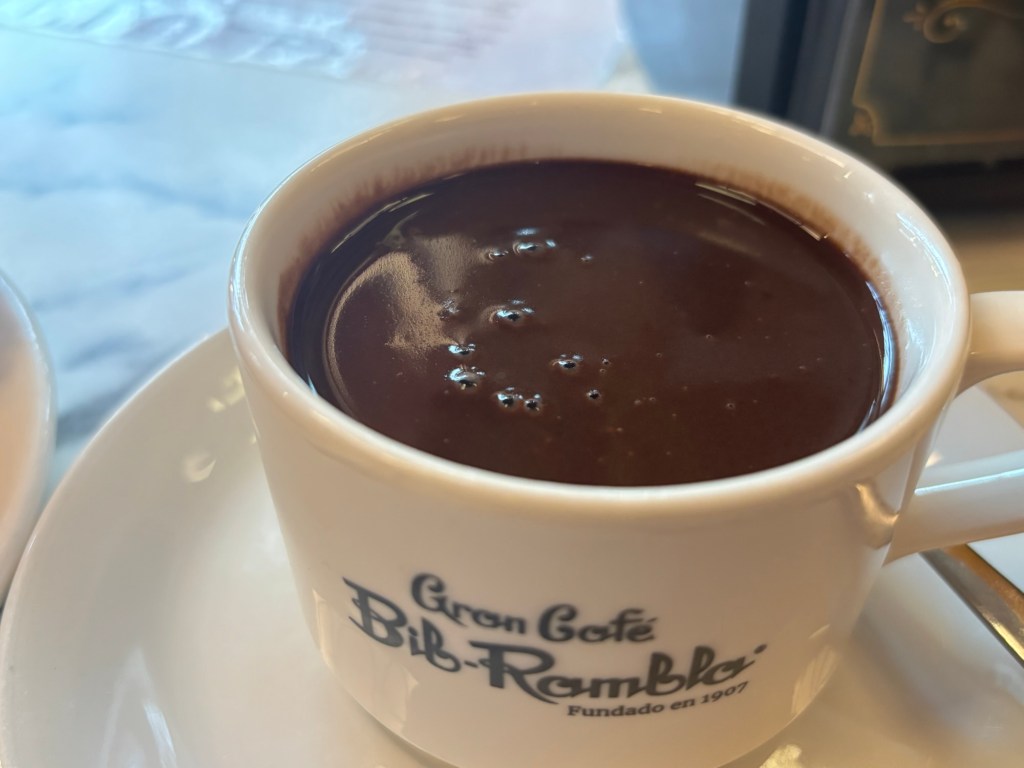
This morning began with a side of churros con chocolate at Café Bar Bib Rambla, an old haunt of my mother’s when she was on her travels around Spain back in 1988. It was just as good as she described it. Churros are definitely a once-a-year treat – I can’t quite justify any more than that – but Spain’s fondness for warm liquid chocolate is definitely something I share. I needed to kill some time (and break down some paper money into loose change) between the wash and dry cycles in the laundromat, so it was good to kick back and relax in a café that has stood the test of time.
After wrestling with the laundromat and coming away with a clean load of washing (yay!), I went back into the city in search of my Alhambra ticket. Along the way, I dropped in on the Cathedral, hoping to see Fernando and Isabel – and completely forgetting that they’re not interred within Granada’s cathedral at all, but in the Capilla Real next door. There’s a separate entry fee of 7€ for each, coming to 14€ if you want to do both. Of course, if you have the Alhambra card (which I also completely forgot I had bought) then both are covered. So I felt a little bit gulled.
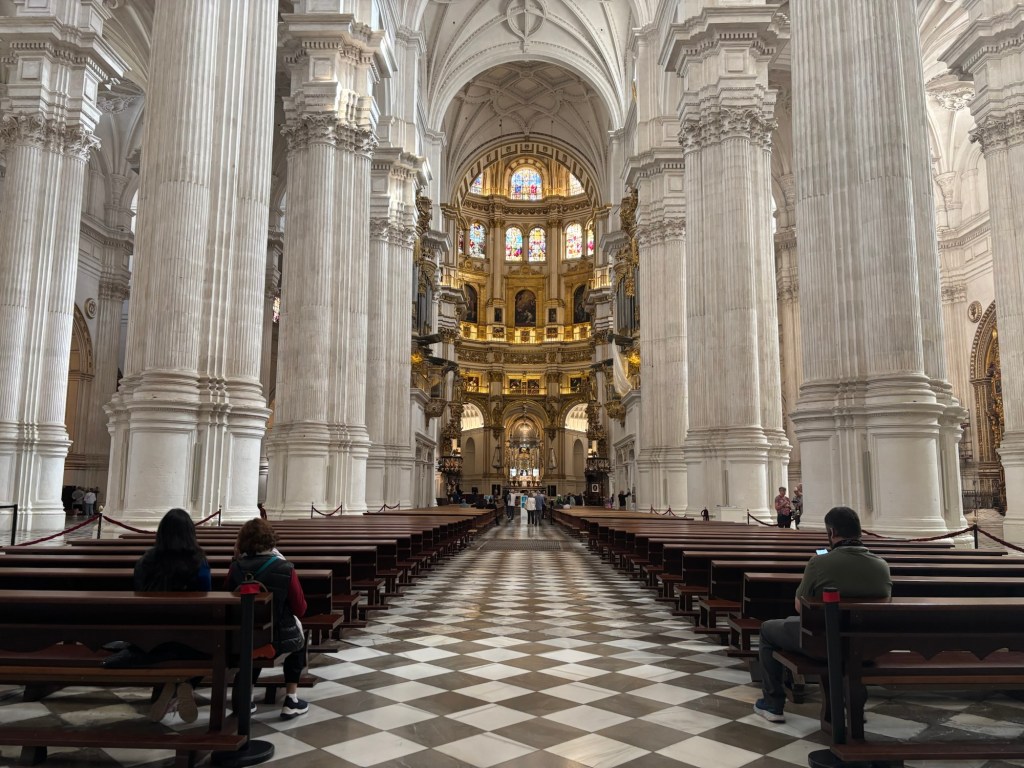
Granada’s cathedral is… well, I’ve heard it said that it’s one of Spain’s most beautiful, but I’m not convinced. So many of them look the same, and while it may have its merits, it suffers from the same problem as the Cathedral of Córdoba: it’s sitting in the shadow of something truly unique and far superior in style. Santiago de Compostela boasts a spectacular cathedral, as do Salamanca, Barcelona and León, but Granada… I won’t get on my high horse about it, as my feelings are rather strong.
I popped into the Palacio de los Olvidados, mainly to check out an exhibition on the Inquisition (a long-term interest of mine) but also to investigate their collection of colourful art prints of Federico García Lorca, Spain’s greatest poet. I don’t know his works nearly as well as I should, so I’ve bought a couple for my classroom to inspire me – and the kids, of course. There’s a good possibility that he and my great-grandfather knew each other, as both belonged to poetic circles in the same part of the country and espoused left-wing ideals at the beginning of the 20th century – before the regime got to them both.
That alone should give me cause to dig a little deeper, but it’s the revelation that he was a musician – this has come far too late for a self-professed Hispanophile like me – that has really stuck with me. I must read his Poeta en Nueva York when I get home.
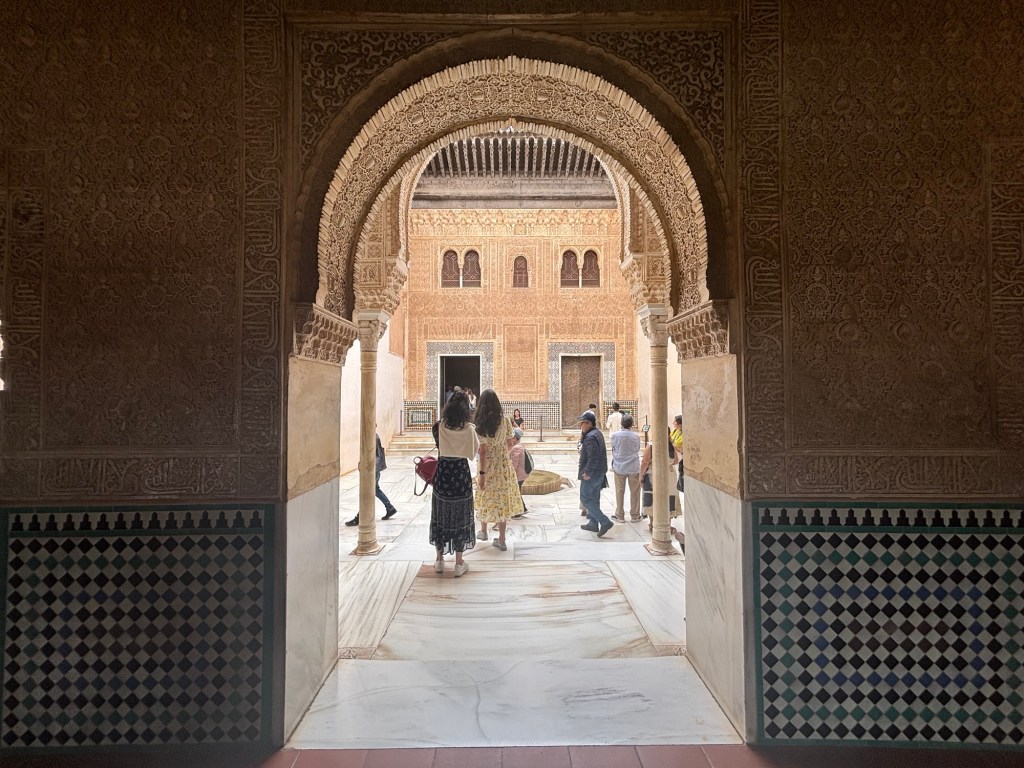
By the time I got up to the Alhambra, the brilliant blue skies of the morning had been concealed behind a glaring white haze. Thank goodness I got my winning Alhambra photos years ago, or I’d have been really quite miffed. No, this time, I relied upon my sketchbook. I spent almost half an hour in the Mexuar, the modern entryway to the Nasrid palace complex, sketching the stucco archway overhead.
A neat trick to carrying a sketchbook is that you can listen in on guided tours without looking like you’re obviously listening in. Another neat trick I have up my sleeve is that language is no barrier: in the half-hour that I spent in that spot (and another half-hour by the reflecting pool) I got the drop on an Italian tour, two Spanish tours, a French school group and their guide and a couple of English tours. I didn’t catch a word of the Polish tour, but six out of seven isn’t bad.
Did you know that the Alhambra receives – on average – around eight thousand visitors per day? That makes it not just one of Spain’s most popular tourist attractions, but an incredibly difficult job for the palace’s restoration team. Given proper care, floor tiles can last up to a hundred years until they need replacing. But let’s face it, your average tiled kitchen floor isn’t being manned by eight thousand new cooks every single day of the year.
In times gone by, men like Washington Irving had to step in to stop tourists from chipping tiles and plasterwork off the walls to take home. These days, it’s all the security guards can do to stop the school groups and Korean selfie seekers from leaning against the pillars and posing against the walls, rubbing away pieces of the past with every vanity shot.
Seriously – the number of peace-sign poses that some of the tourists were throwing… You’d think they were wandering around a Comic Con event rather than a medieval Islamic treasure.
Once, this place was even brighter. The faded beige stucco on the walls would have been covered in a rainbow array of colours, some of which can still be seen in the cracks in you look close enough. The lavish gold leaf and furnishings are, of course, long since gone, stolen by treasure hunters from the time of the Sultanate right up until the late 1800s. There were once carpets and drapes all over the place, too, but these were removed by the conquering Spanish as a fire hazard in an early concern for health and safety. I remember reading somewhere that they also had the floor lowered as the windows were too close to ground level, but don’t quote me on that. The Alhambra has been restored and modified so many times since its construction that it’s probably a far cry from what it originally looked like: a ship of Theseus or Washington’s axe, depending on which take on that metaphor you prefer.
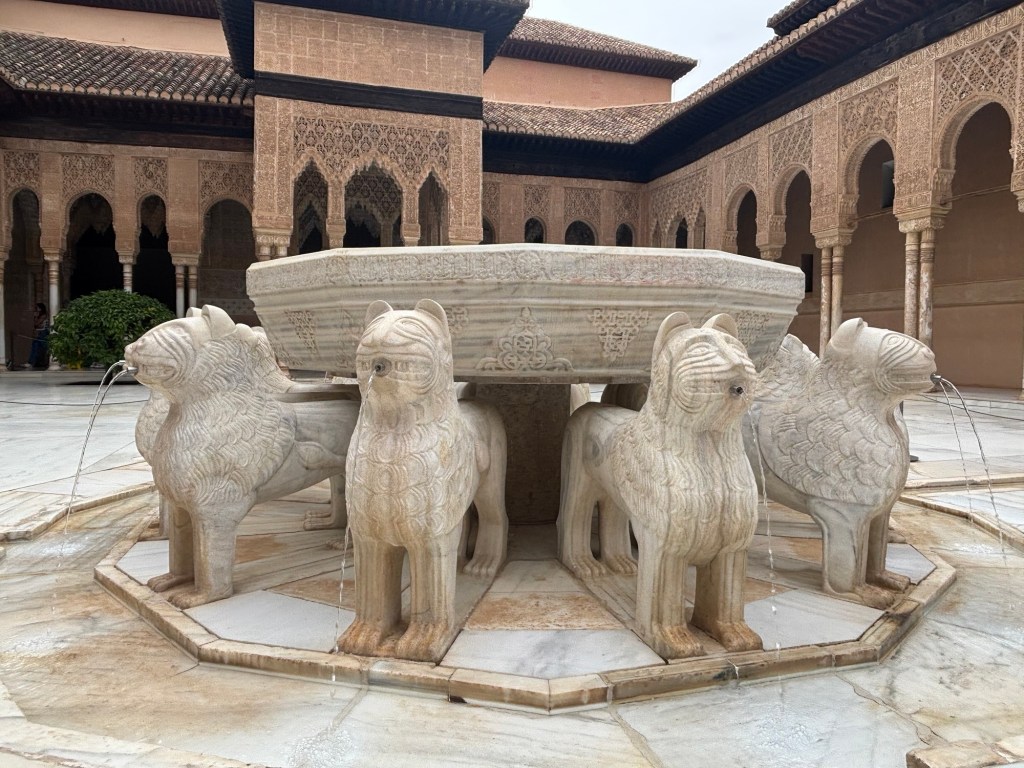
I’ll tell you what was jolly nice, and that was seeing the Court of Lions. It was under heavy scaffolding when I last came here in 2011, so it was the only first-time experience I had on the tour. This enigmatic feature of the Alhambra really stands out, especially as depicting the physical form is usually proscribed in Islam. The fountain and its accompanying lions have long been a symbol of the Alhambra, though they were a late addition to the complex. It’s thought that they weren’t Islamic in origin at all but rather Jewish, as the fountain is believed to have come from the house of the Jewish poet Yusuf ibn Nagrela. The logic checks out: there are twelve lions in all, one for each of the tribes of Israel, and two bear the triangular insignia of the tribes of Judah and Levi on their heads.
It is, at least, an interesting theory.
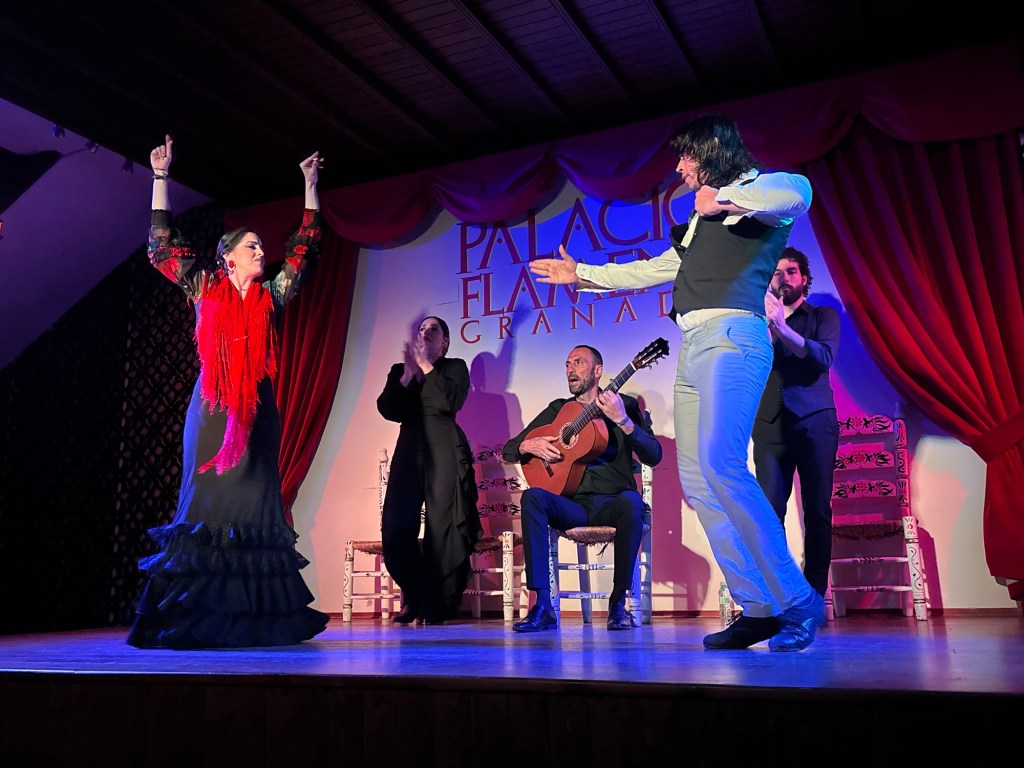
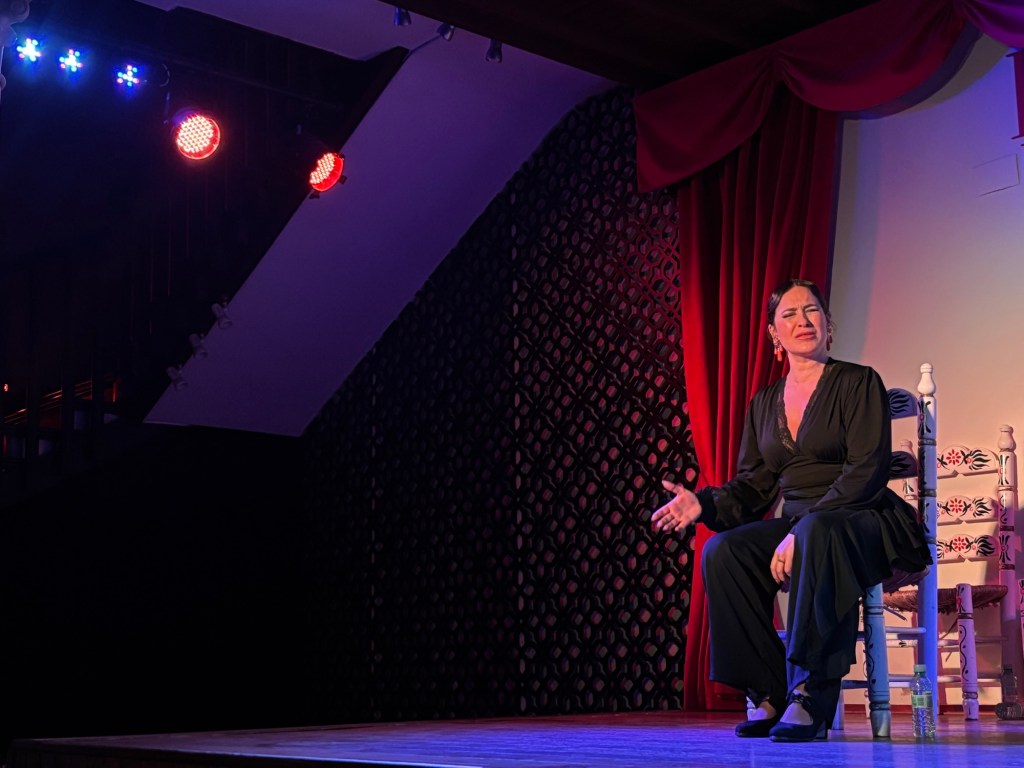
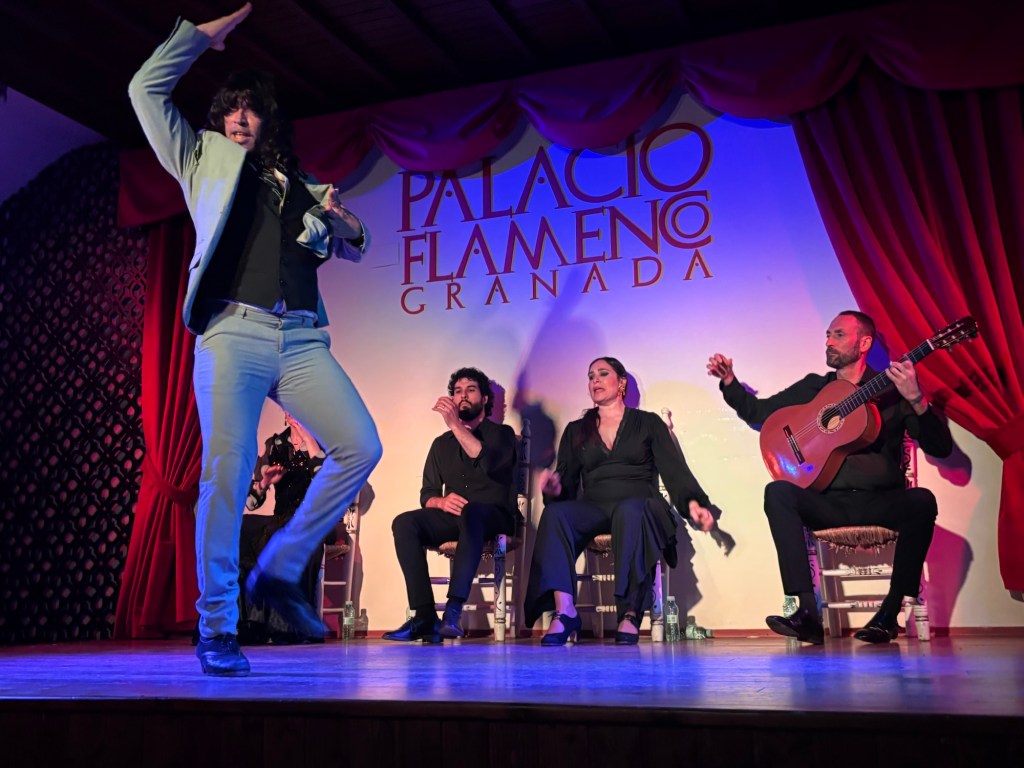
My visit was cut short by the fact that I’d booked myself in for a tablao flamenco at the Palacio de Olvidados – yes, I caved in. And I am so very glad I did. I was worried that I’d find a lot of half-baked flamenco in town, but this was nothing short of spectacular.
There’s a depth to flamenco that just isn’t there in a lot of other folk music forms from around Europe: a heart-rending, wailing passion that can only be truly understood by the descendants of a people cast out and rejected everywhere they went. This is the soul of the gypsy on full display: naked, passionate and rebellious.
You could argue that the same case means white people can’t sing gospel music. I’d listen. Goodness knows I’ve had to table that argument before. But just because you don’t belong to a culture that produces a certain kind of music, that doesn’t mean it can’t move you.
I’ve no gypsy blood at all – as far as I know !but Flamenco moves me. It had always moved me. For whatever reason, Flamenco shoots straight to my heart and draws tears from my eyes. There’s a rawness to it, a gutsy, authenticity to its passion that is hard to find elsewhere. The voices of the singers tremble and fragment like a scream or a wail, and sometimes that’s exactly the point.
Don’t forget: the gypsies weren’t just ostracised, they were actively hunted as subhumans for years. Spain’s gitanos were the subject of hatred, scorn and outright violence since they arrived in the peninsula shortly before the fall of Granada. Being beyond the law, as it were, they were frequently targeted for enslavement, either in the mines or as galley slaves, which was essentially a death sentence in all but name.
In 1749, King Fernando VI organised the Gran Redada – the Great Gypsy Round-Up – with the express purpose of wiping out the country’s gypsies once and for all. Though not a genocide in the strictly modern sense, as the plan was to imprison rather than execute, the Redada’s stated aims of separating the male and female Roma and thus preventing them from “bringing about another generation” amount to the same thing.
And that’s just Spain. Holland and some German territories held heidenjachten (literally “human hunts”) until at least the 18th century, showing just how far the dehumanisation of the European gypsy could stretch.
Small wonder, then, that there is so much pain and anguish in the voice of the gitano. There’s centuries of agony to draw on.
Not to be dismissed is their footwork. Flamenco is as much a dance as it is a music form, and perhaps more so. There is no stately rhythm to follow, no pattern to predict: flamenco flows like water, where every drop runs its own course to the finish. Here, the dancers seem to lead the musicians. The eyes of the singers and the guitarist were on the dancers’ feet at all times, anticipating their every move.
I was enthralled. I adore flamenco. I love its maddening rhythms, its utter freedom, its unpredictability. Perhaps that’s the naturalist in me: it’s nature in musical form. I wouldn’t be the first to compare flamenco to a wild bird or beast and I won’t be the last.
Right – that’s quite enough for one day. Time to go and explore some book shops before they close. BB x
Pizzería La Toscana, Santa Cruz de Tenerife. 19.55.
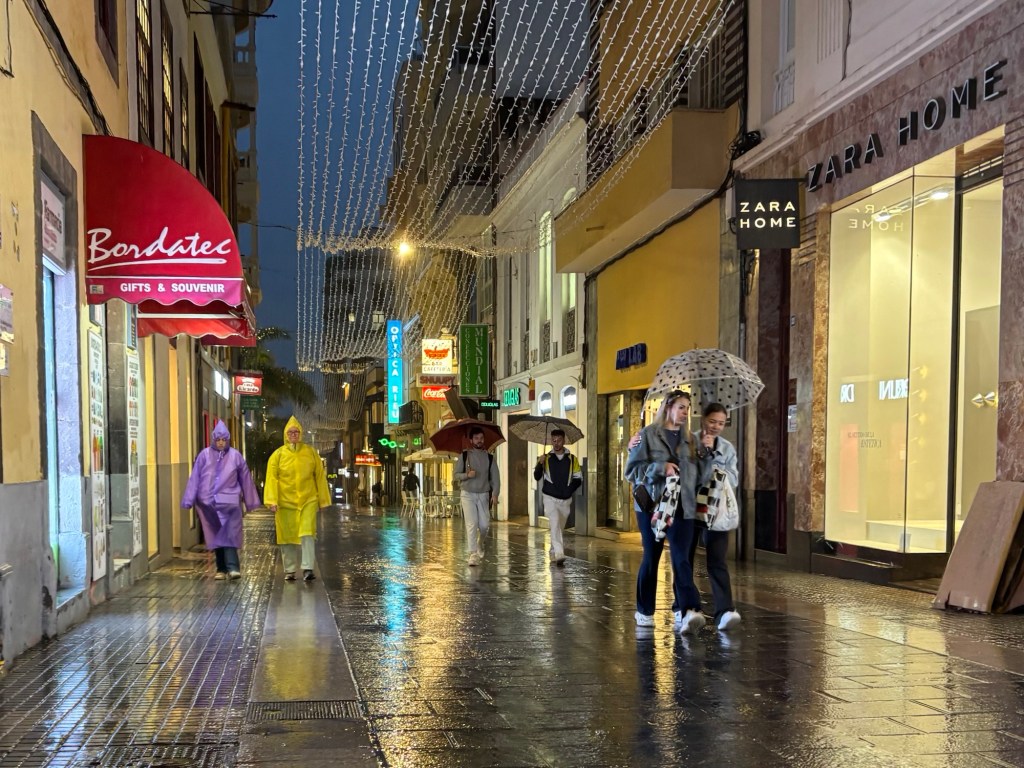
It’s raining here in Santa Cruz. There are quite a few guiris about – they’re the ones wearing shorts and popped-collar polo shirts despite the lowering grey skies – but they’re nowhere near as numerous as I thought they’d be. There are snatches of German, Dutch and Estuary English drifting from restaurants, but Spanish is by far the most common language spoken in the street. I find that encouraging, somehow.
Santa Cruz is a world away from the Elysian bliss of Chinyero. It’s a busy, 24/7 port town sandwiched between Tenerife North Airport and the tourist resorts of the south coast. Its harbour, one of the busiest in Spain, is a major stopover for cruise ships plying the Atlantic, just as it was for the early European voyages to the Americas, riding the Canary Current in a wide arc to the Caribbean. It’s one of the two capitals of the Canary Islands (the other being Las Palmas) and as such commands a sizeable proportion of the island’s population: nearly half, by some estimates. Like the greater part of Granada, the city began as a military camp, built by the Spanish in 1494 during their campaign against the Guanches / invasion of the island, depending on your sympathies.
It can seem like a characterless tourist metropolis at first, but there’s a lot to see once you start to scratch away at the surface.
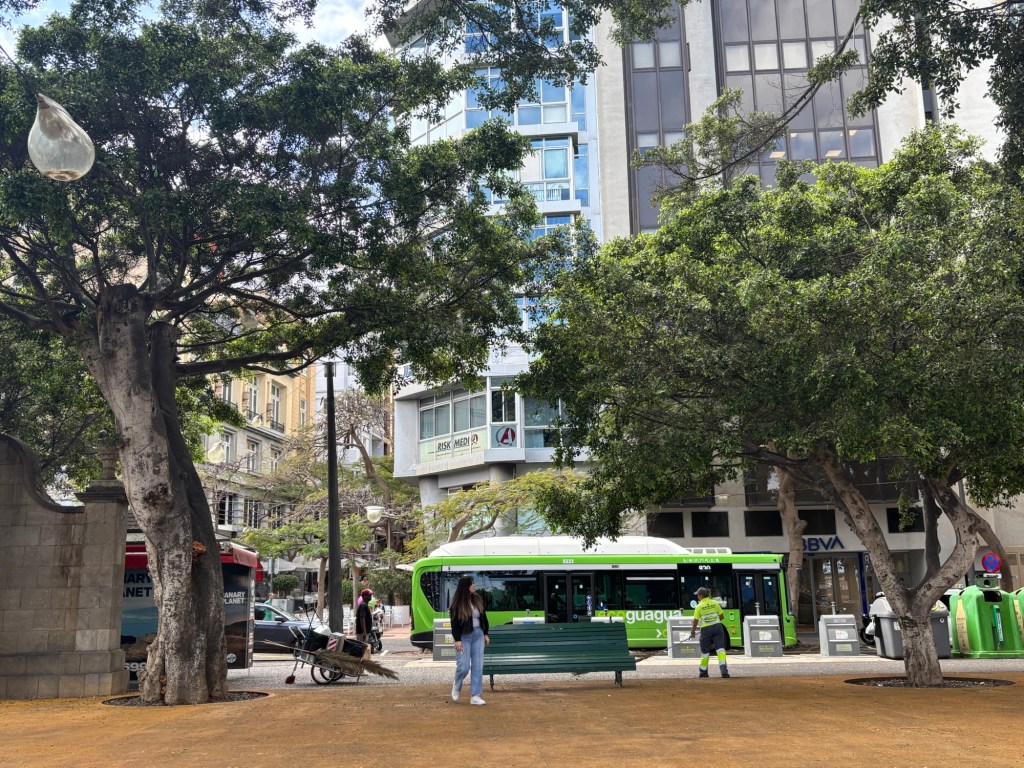
The Plaza de España is a good place to start. In most Spanish cities, a square with the same name is usually right at the heart of the city. Here, it’s on the seafront. A guagua goes by, proudly displaying its green credentials (more than 70% of its fleet are hybrid vehicles). Opposite the bench where I’m sitting, a sanitation worker in a matching shade of green has eschewed conventional tools for a palm branch, a far more traditional (and renewable) method for street-sweeping. Alongside the usual plane trees – an effective biofilter used across Europe – a number of more exotic trees spring up out of the parks and gardens, including a few isolated dragon trees. Santa Cruz is wickedly green, as cities go: more than 80% of its municipal territory is a natural area, largely due to the Anaga Park which shoots up to the heavens from the city’s edge. In ecological terms, here is a city that is punching above its weight.
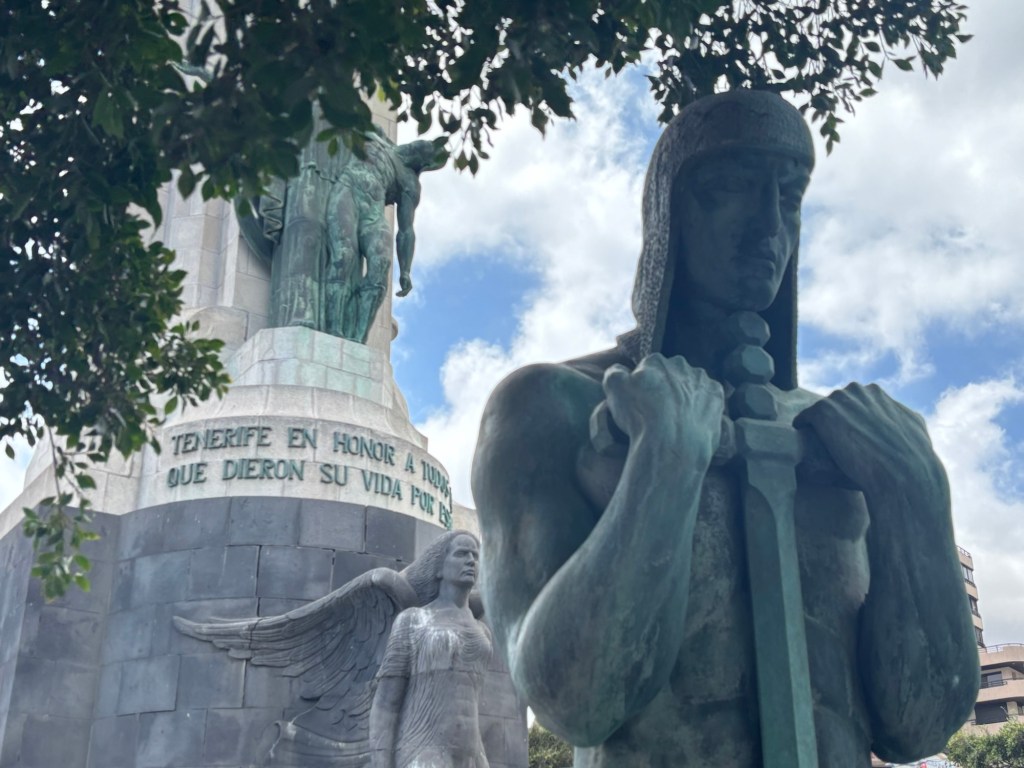
Next to the Plaza de España is an imposing sculpture, flanked by two silent watchmen: el Monumento a los Caídos, one of several Monuments to the Fallen that can be found across Spain. These sprung up under Franco’s dictatorship and many – including this one, if the stories are to be believed – were built using the forced labour of political prisoners. As such, there’s an ongoing campaign to have the monument altered to reflect the changing political landscape as Spaniards come to terms with the legacy of the dictatorship, nearly fifty years after Franco’s death.
It’s worth winding the clock back even further. What of the Guanches? Does this monument also honour those who gave their lives for Spain by taking these islands by the sword? I’m not one for presentism – it’s utterly absurd to judge the actions of those long dead by the quicksilver standards of contemporary ideologies – but I do think their story needs to be remembered.
One place that tells that story is Santa Cruz’s MUNA, the natural and archaeological museum. Don’t be put off by the reviews – it’s an incredible collection, but there are clearly a lot of half-arsed British tourists who visit and expect their monolingualism to be catered for, which is both arrogant and imbecilic. It’s also only 5€, which is a steal compared to some of the rates charged by similar museums in the UK… especially when you see what it contains.
The ground floor has an interesting feature on the formation of the islands, as well as some of its wildlife and how it came to be there. The first floor houses a collection of animals and insects (including a very large collection of butterflies) as well an array of archaeological finds from around the Canary Islands, from prehistory through to the time of the Romans and right up to the Spanish conquest in 1494.
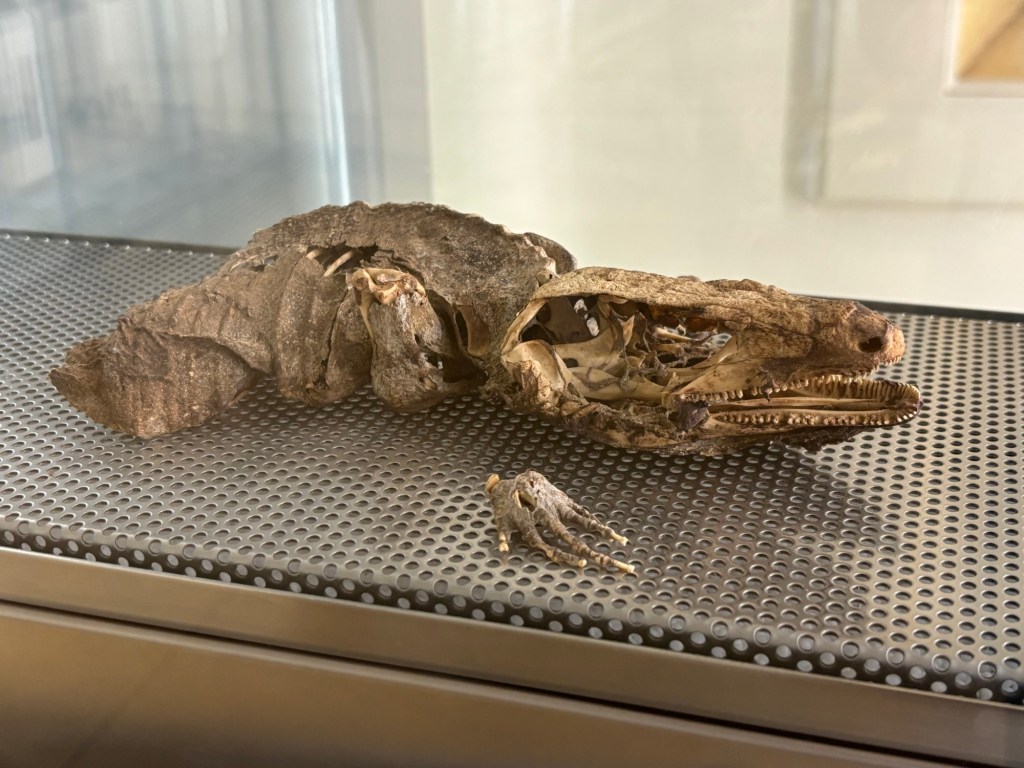
There are a few mysteries still waiting to be solved that the museum nods to: were there once ostriches on the islands? What happened to the giant tortoises? Were the islands named after the seal colonies, or the large dog skulls found on the island? Did the giant lizards disappear, or did they simply shrink over time? And were the Canaries the inspiration for the Hesperides, the islands at the edge of the world where Heracles performed his penultimate labour?
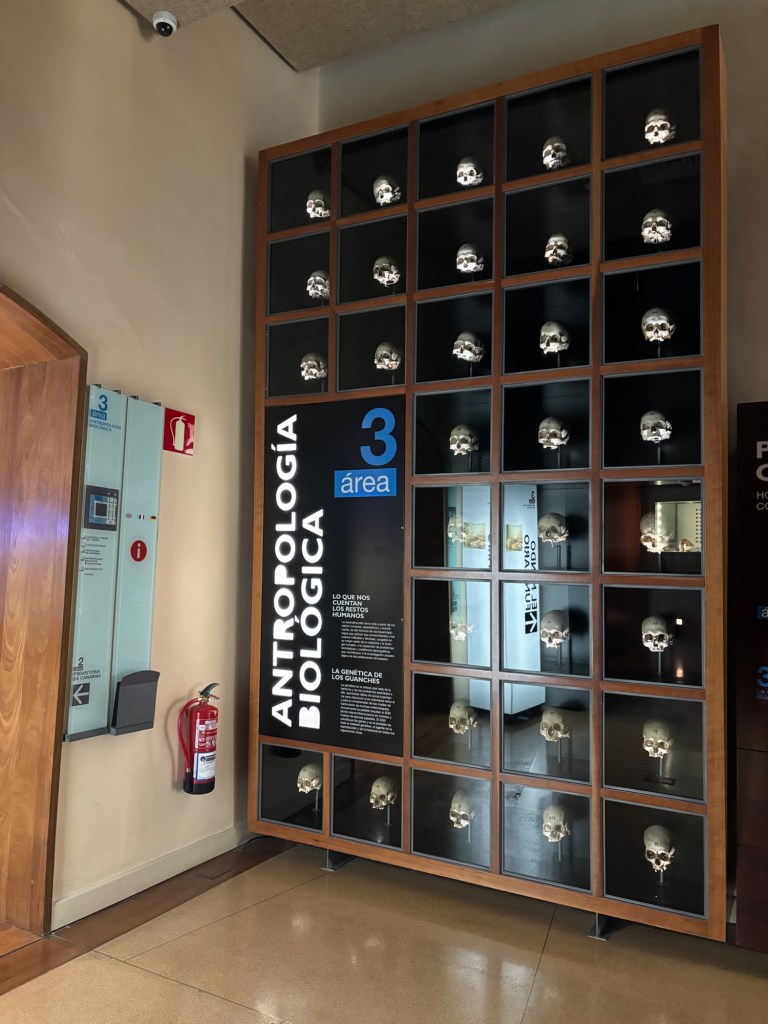
Something more flesh (though perhaps less blood) than these mysteries can be found on the second floor, where the MUNA keeps its most precious artefacts of all: the mummies of the ancient Guanche people.
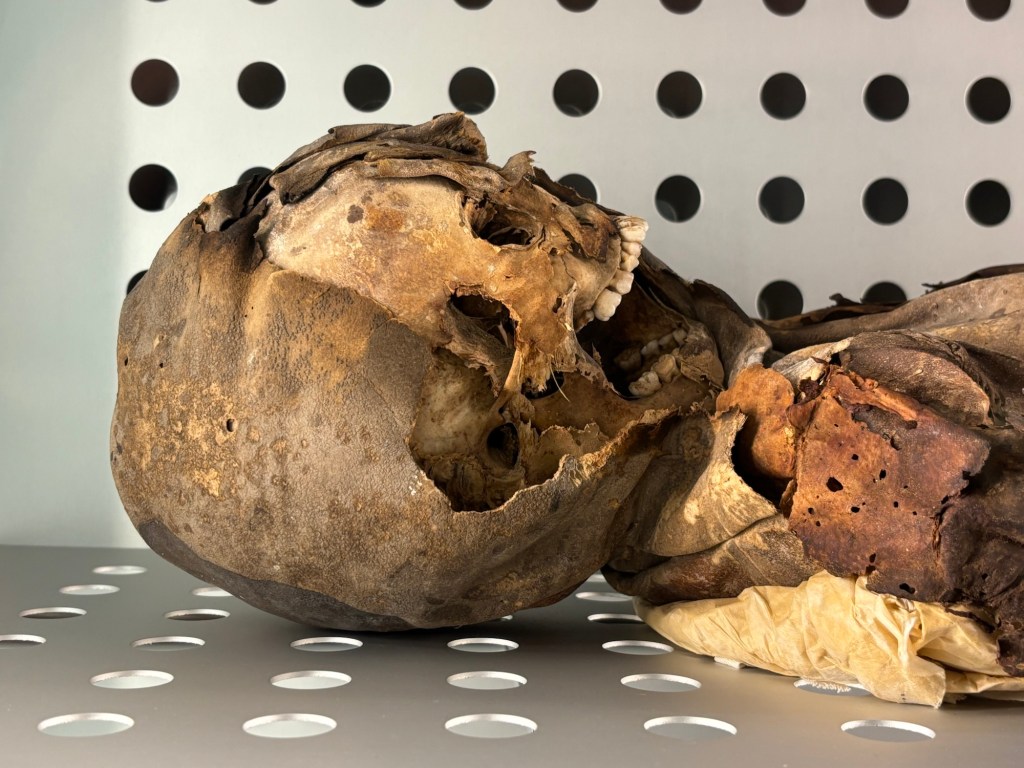
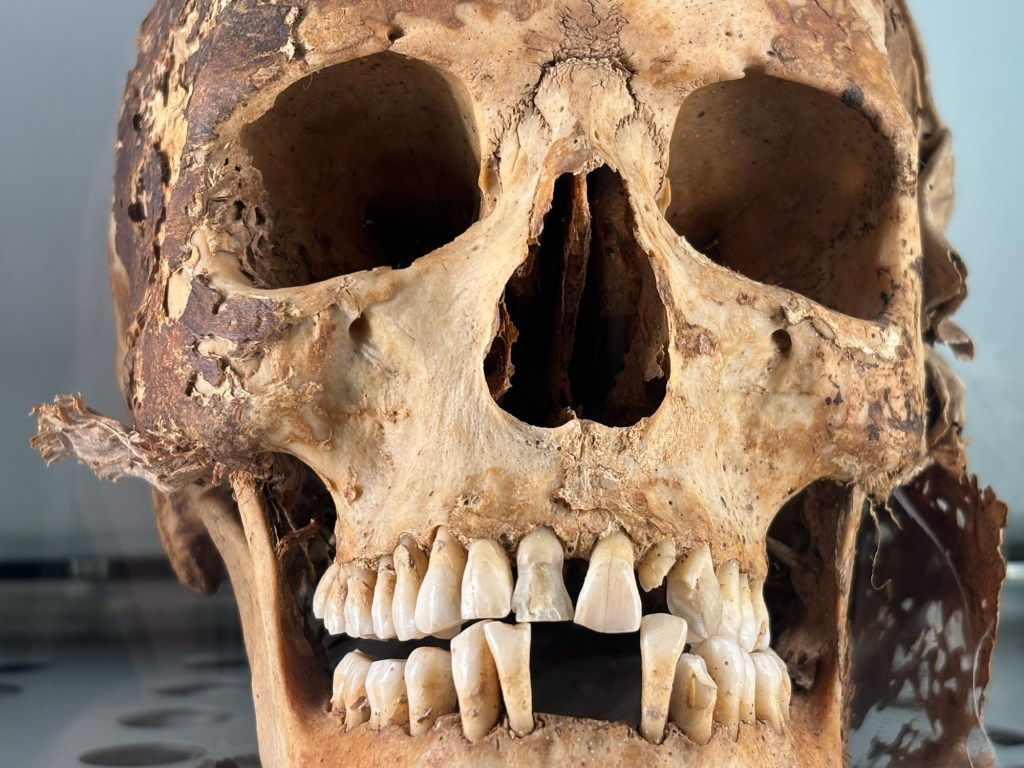
Before the Spanish came, the ancient Guanches of Tenerife had a custom not too dissimilar to the ancient Egyptians of mummifying their dead. Their origins along the Mediterranean coast of North Africa may go some way to explaining this practice, though it does not appear to have been a universal custom across the islands. Some of the mummies are in an incredibly well-preserved state, displaying most of their teeth and a full head of hair after nearly a thousand years. Wrapped in goatskin hides and concealed within caves and necropolises around the island, they have weathered the passage of time remarkably well.
Time, perhaps, but not the passage of man. Napoleon’s invasion of Egypt led to the discovery of many ancient Egyptian tombs and their treasure, which was one of the factors that started the 19th century archaeology boom. Guanche artefacts – including their mummified skeletons – were part of this mania. For hundreds of years before that, mummies found on the island had been dug up and carried off by enterprising scavengers. One tomb, Uchavo, was said to have contained nearly one hundred mummies when it was discovered. Mere days after the news broke out, the public broke in, taking with them – of all things – an enormous number of lower mandibles, which seem to have been the most valuable (and probably transportable) part of the mummies.
It’s for this reason that so many of the remaining skulls housed within the MUNA are missing their jaws. As to where these ended up, that’s anybody’s guess: doubtless they are now scattered far and wide, not just across the island but around the world.
Who were they? Such care was taken with some of the dead that they must have been menceys or kings of the Guanches. Mummification was a royal prerogative in ancient Egypt, so it stands to reason that the Guanches might have thought along the same lines.
While Tenerife has made some successful overtures for the return of its dead – with two returning from as far as Argentina – at least ten of the Guanche mummies are still held in collections around the world, with six in Paris, and one each in Madrid, Cambridge, Göttingen and Canada.
Nobody knows how many others may be out there, or in what state they may be in, but it is likely to be at least in the double figures. Sadly, most of those transferred to Germany were lost – along with many other relics of the ancient world, including the remains of the enigmatic spinosaurus – during the allied air raids in World War Two, which saw a number of museums razed to the ground. A Viking funeral, then, for a Guanche king or two – though perhaps not what their families had envisioned for their journey to the afterlife.
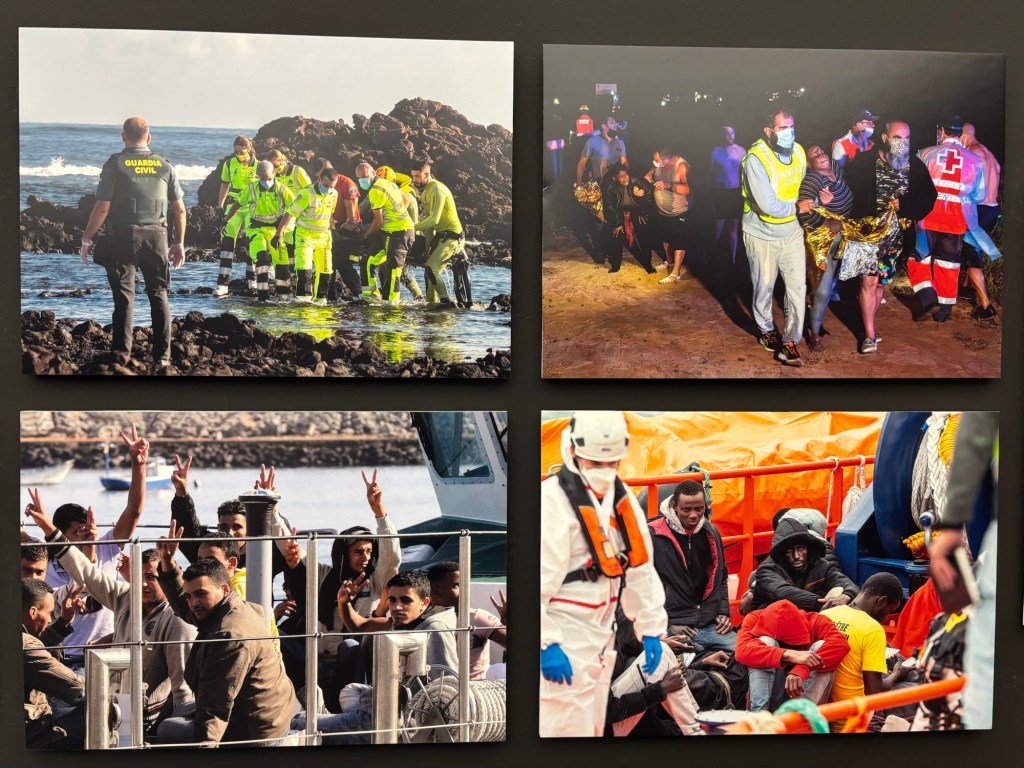
A fitting coda to the fate of the Guanches can be found in a temporary exhibit in the museum’s basement. Here, in a large and well-lit room, is a collection of a more modern tragedy: the African migration to the Canary Islands. Known as the ruta canaria, it is one of the most dangerous immigration routes in the world, since those making the trek in simple dugout canoes are at the whims of both the sun and the Canarian current which, if poorly timed, will carry the little boats out into the merciless wastes of the Atlantic Ocean. Most who make it that far will perish long before their boat washes up on the coast of the Americas.
This is, of course, how the first Canarians arrived in these islands many years ago, but with tighter security around the shorter but in some ways even more treacherous Mediterranean crossing, many African migrants continue to put their lives on the line to reach European soil – even if that soil is closer to Africa than any European territory. It’s also a growing concern: 2024 saw the largest number of migrants yet arriving on the shores of the Canary Islands at 46,843.
Behind each number is a harrowing personal journey, which is just as likely to end in misery or a body bag as it is in success. And even when they get here – what then? Do they find the Europeans any more welcoming than the countries they left behind them? What do they make of the hordes who descend upon these islands in the summer, riding in and out on cheap flights without a care in the world?
In one corner of the room there is a small exhibit, positioned almost exactly three floors below the Guanche mummies. It consists of an empty body bag on a rocky beach, scattered over with photographs like votive offerings. It’s a reminder that the dead who wash up on these shores, though faceless under black polyethylene veils, are not mere numbers, as the politicians would have you believe, but people whose journeys have come to an end. It’s our duty, if not our right, to make sure that their stories go on, so that their sacrifices are never forgotten.
The Guanches might be long gone, along with the giant rats and tortoises who came here before them, but the story of migration in these islands goes on. BB x
A shadow lies upon his tomb, in Moria, in Khazad-dûm. The Company stood silent beside the tombs of the kings of old. There were many recesses cut in the rock of the walls, and in them were large iron-bound sarcophagi of black marble. Frodo and the Company stood in awe, but Pippin felt a compulsive urge to reach for his iPhone so that he might share the spectacle on Instagram. He held it aloft, and for a moment it glimmered, faint as a rising star struggling in heavy earthward mists, and then it issued forth a minute heart of dazzling light, as though Eärendil had himself come down from the high sunset paths with the last Silmaril upon his brow.
“No photos!” barked the security guard, gesturing wildly in Pippin’s directions, before muttering a loaded “turistas” under her breath.
In the year 1563, Felipe II ordered the construction of an enormous palace in the foothills of Monte Abantos, partly to commemorate his victory over the French at the Battle of San Quintín, partly as a country retreat where he could hunt big game, but perhaps most importantly as a necropolis for the Hapsburg line. Here, entombed within the bowels of the largest Renaissance building on Earth, lie the remains of almost every king and queen of Spain of the Hapsburg and Bourbon lines.
To get here from Madrid, you have to catch a bus from Moncloa. Spain is steadily catching up to the rest of the world as a cashless country, but most of the local bus companies are still coin-operated. I was delayed by an hour because my first attempt to board was a flop: the driver thought I said “puedo cobrar” instead of “comprar” and wagged a finger at me, saying “yo cobro, tú pagas”. Granted, I had a cold, but I’m pretty sure I made myself clear. I was honestly so ruffled by his wagging humour that I forgot I did actually have a ten euro note on me, so I got off the bus and went in search of breakfast and a cash machine – and a few plasters for my wounded ego.
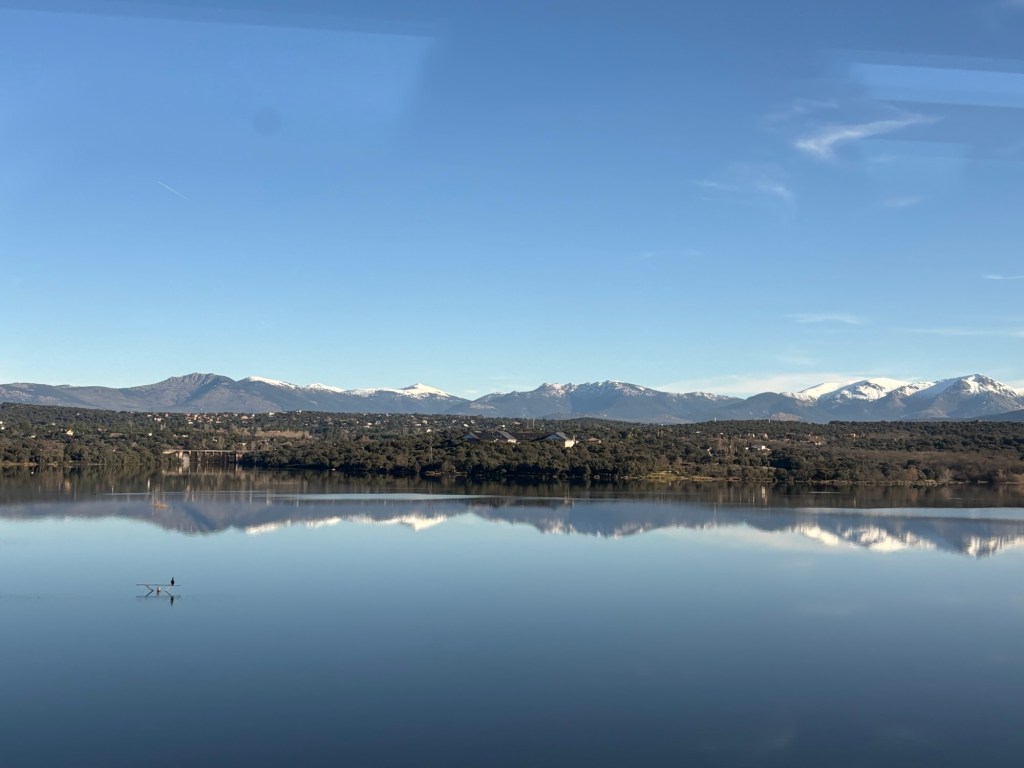
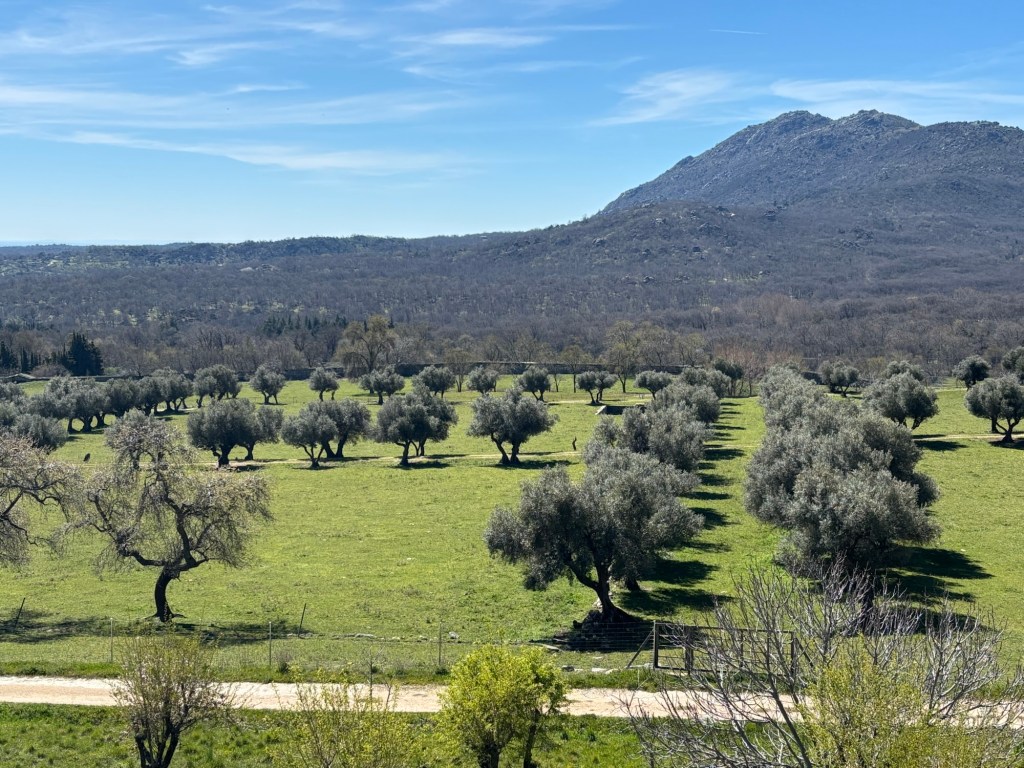
The next bus driver wasn’t a wisecrack, so I had a very enjoyable ride across the dehesa. To the north of the road to El Escorial, the snowbound peaks of the Guadarrama rise up out of the plain, its mantle pure and unspoilt by the ski-lifts and stations that criss-cross similar ranges in Central Europe. At one point, the road crosses the Valdemayor reservoir, and on a cloudless day such as this, the mountains rise again into the mirrored surface of the blue waters.
The centrepiece of El Escorial – as is so often the way with Spain’s grandest architectural treasures – is an enormous basilica, featuring a collection of saintly portraits, painted ceilings and a gilded reredos of jasper and red granite that stands an eye-watering 92 ft tall. As if that weren’t enough, the high altar is watched by the sentinel eyes of life-size bronze sculptures of Felipe II and his father, Carlos V, and their respective families, eternally offering their prayers to God above the crypt where their bodies are interred. It’s no great leap of the imagination to compare El Escorial to the Valley of the Kings: should it fade into memory someday, the discovery of the altarpiece alone would be an archaeologist’s field day.
The comparisons don’t end there. Much like the triumphal engravings of Ramses’ victory at Kadesh in Abu Simbel and Trajan’s Column in Rome, El Escorial’s “Sala de Batallas” (Hall of Battles) testifies to the martial prowess of the Habsburg line, depicting the greatest victories over the French, Moors and other enemies of the dynasty across over a hundred metres of fresco. That’s ten times the length of my mega drawing and eight times the height. I clearly missed my calling by four and a half centuries.
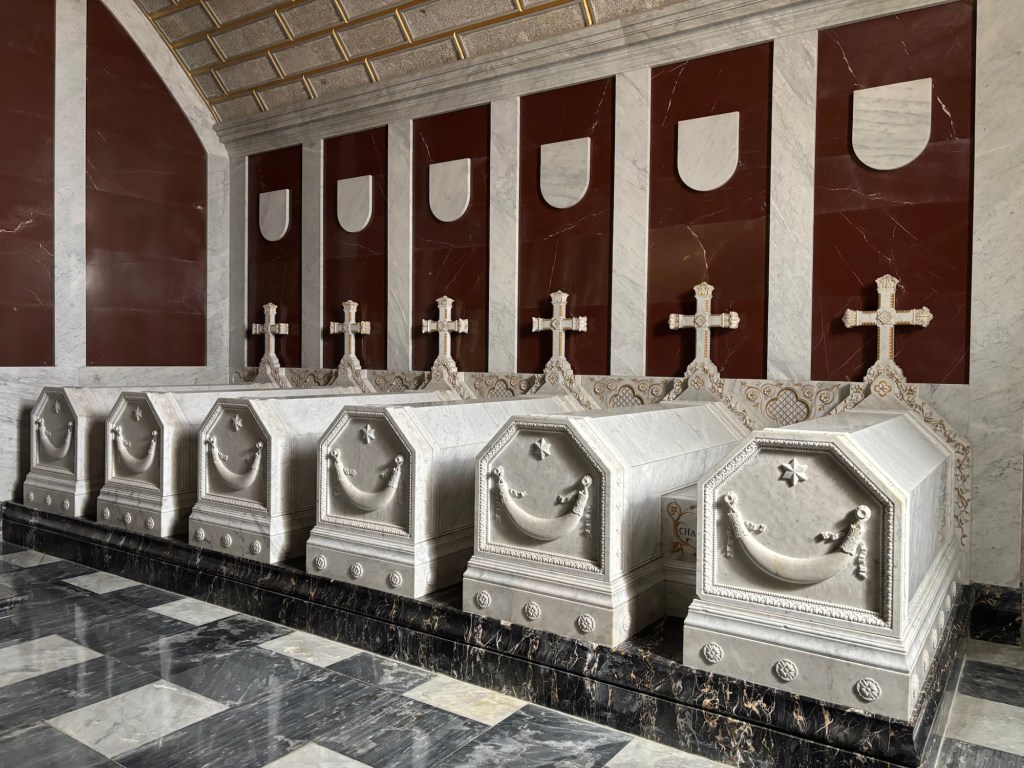
As well as a hoarding place for countless royal artefacts (including one of the largest collections of holy relics in the world, numbering around 7,500), El Escorial is most widely known as the final resting place of Spain’s monarchy from the early modern period on. These most haunting treasures of the royal palace can be found in the innermost depths of the palace complex, entombed within vaulted marble sarcophagi that contain the remains of princes, consorts, bastard sons and daughters and other high-ranking members of the Hapsburg line, right the way up to the present. The blank headstones above the sarcophagi in the last rooms sit waiting for Juan Carlos’ relatives and their progeny.
If that weren’t chilling enough, one of the rooms features an enormous marble monument to those of royal blood who perished before puberty, marked with A or B to differentiate between the Austria and Bourbon clans. With their famous predilection for morganatic marriages, it’s perhaps no surprise that so many infantes never made it to adulthood.
In the deepest reaches of all, far below the palace itself, is a golden chamber called the Panteón de los Reyes. This is the Habsburg Holy of Holies, where the bodies of the kings and queens were laid to rest: from Carlos V, who oversaw the conquest of the America’s and the birth of the Spanish Empire, all the way up to Alfonso XIII, exiled in 1931 by the short-lived Spanish Second Republic. In a single 360° turn you can see them all. There can be few places in the world quite like this, where you are quite literally encircled by the tombs of the kings of the past.
In such a sacred space, photos are, quite naturally, forbidden – but that didn’t stop a couple of Korean and American tourists from trying. I just carried out a quick sketch in my journal and was done with it. Nobody ever seems to mind the sketching. I wonder why that is?
Outside, the air is a lot less oppressive. A number of articles describe the location as “austere”, and I can imagine that in the grip of winter it may well be, but under the warm spring sunshine it is anything but. A cool wind blows down from the snowy mountains, but it is accompanied by a warmth in the air, sweeter with the scent of cherry blossom. Crag martins and wagtails twitter merrily over the pool, and in the dehesa beyond, I saw (and heard) a family of one of Spain’s most beautiful birds of all, the Iberian magpie, a relic of the Ice Age whose nearest living relatives can be found in eastern China. As I watched them hopping around in the branches of the nearest tree, a little owl flew into sight, calling to its partner in the valley below.
Finally, the greatest sight of all. As I made my way back to the bus station, a lonely black shadow came down from the mountains, casting an unmistakeable silhouette against the intense blue of the Spanish sky: a griffon vulture, the true king of these mountains. They were here long before the Hapsburgs and will be haunting these hills long after they have been forgotten.
I have been fascinated with vultures since the first time I saw one. That boyish glee I get when I see that shape in the ether hasn’t gone away after twenty years. I don’t think it ever will.
Austere? The building, perhaps, in true counter-reformation style, but the location? Hardly. I don’t think Felipe needed much convincing. If I had all that Habsburg money floating around, I’d have wanted to end my days here, too. BB x
Warsaw is a strange town. For a European, at least. It’s like looking at a replica – which is not so far from the truth at all, as the city was razed to the ground with unparalleled savagery on Hitler’s orders. It seems absurd that I stayed in buildings in the US this summer that were older. But, there we are. It’s a testament to the Poles’ love for their capital city that they rebuilt the place brick by brick, presumably at no small expense.
I’ve come to the centre of the Old Town in search of amber for my mother, to replace a pair of cherished earrings lost long ago. I wanted to visit the Polish Jewish Museum and the Warsaw Uprising Museum, but as luck would have it, those two museums – and only those two – are closed on Tuesdays. So I do one of my usual make-it-up-as-you-go walking tours instead.
The usual global parasites that infest the heart of Europe’s ancient cities have been mercifully kept outside the old town walls: the lurid glare of the Hard Rock Café, Costa coffee and the Golden Arches can be seen from its outermost streets, but no further. Along with the usual array of anachronistic American college jackets with Warsaw splashed across them, quite a few souvenir shops appear to be selling tee-shirts with the city’s name in Star Wars font. One even has a chibi Darth Vader next to the slogan “I love Warsaw”. It seems a little tasteless to have a man infamous for his hatred, wanton destruction, ruthless repression and stormtroopers (and who isn’t even the obvious real life counterpart) associated with a city like Warsaw, but perhaps the irony was lost on the designers.
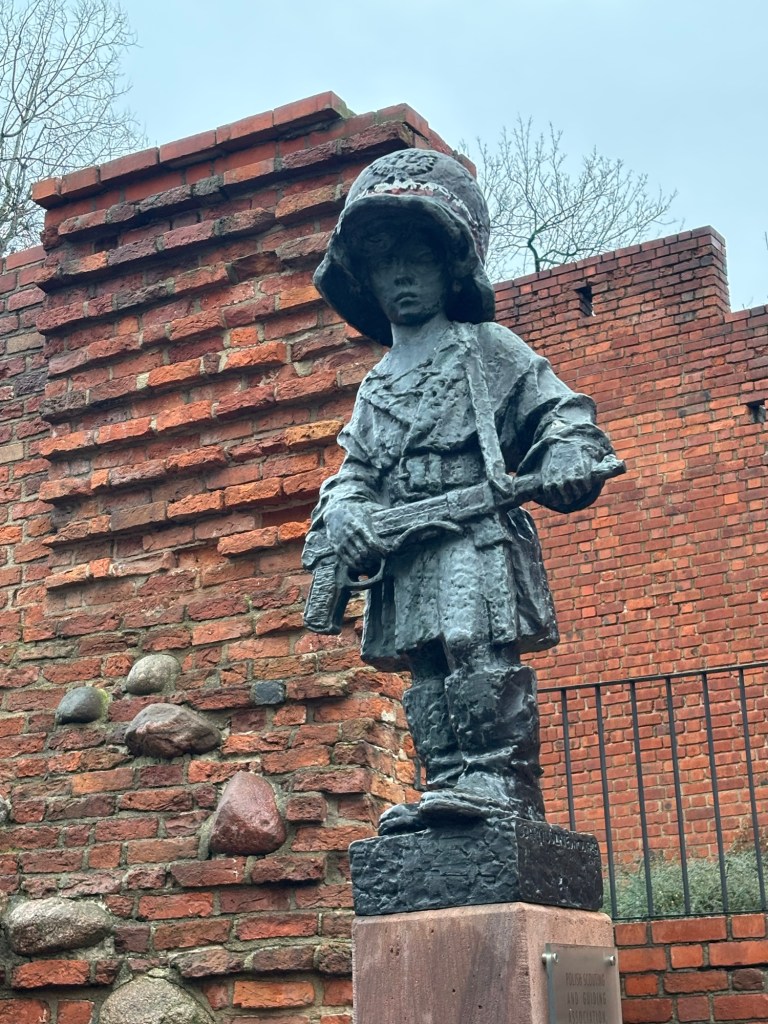
Not far from the city centre stands a miniature statue atop a plinth, just outside the city walls. It depicts a child soldier, an anonymous victim of the Warsaw Uprising. It is a stark reminder of just how young the rebels were: the average age of the insurgents was only seventeen. One has to hand it to the incredible courage of the Poles for standing up to the might of the Third Reich, when they were all but trapped under the heel of the Führer’s jackboot.
Nothing remains of the Jewish ghetto, which was considerable. Similar ghettos in Spanish cities are minute by comparison, despite Spain once housing a not insignificant percentage of the world’s Jews. There are nods to what once was: a metal plaque cuts across the road in places, marking where the perimeter walls once stood.
In a park nearby, a woman in a fur coat walks her dog. I arrive one minute too late to catch the start of the changing of the guard, but I do see the new sentries move into position beside the Tomb of the Unknown Soldier. A fire burns steadily in an iron grate between them. The chosen shelter for the tomb is the last remaining piece of a former palace complex, of which only three arches survived the destruction of war. A short wall on either side of the square bars access to what looks like an excavation site. Beyond that, the yellow squares of ceiling lights gleam from behind the glass of the office buildings. I have always been curious as to what it might be like to work in one of those places, though it’s the same kind of curiosity I harbour for how it might feel to tumble over a cliff or to sink to the bottom of the ocean. Perhaps I’m happier not knowing.
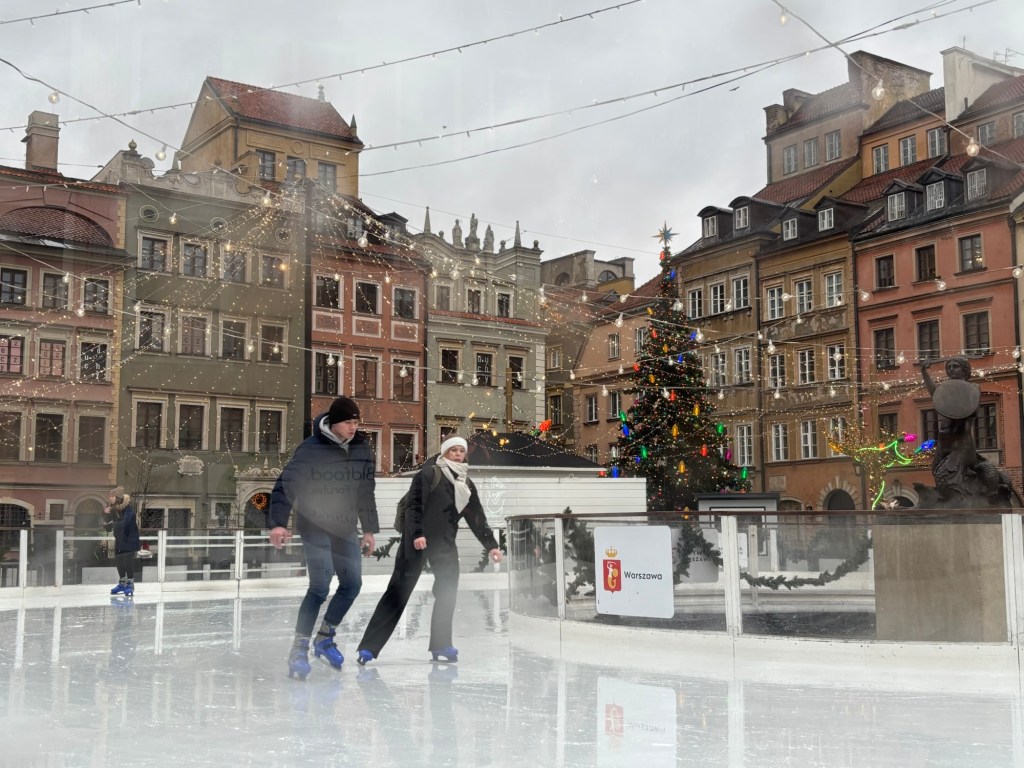
Night falls. Warsaw puts her Christmas clothes on. I consider going without supper, but one of the restaurants in the old town does flaki and I can never say no to offal. This time I can savour it in peace, without the tutting and sermonising of the vegetarian globetrotter who was so judgemental of my taste before. The pierogi are probably a bit much and I can’t finish them all, but I do an honest job of it. I suspect that flaki appeals to me because tripe stew isn’t too far from the Spanish dish of callos or any number of dishes I have eaten in Uganda and Morocco.
Back at the hotel, I have a lot of time to think. I pack my bags. I watch Polanski’s The Pianist and try to picture those things happening right beneath my hotel window, some eighty years ago. I tell myself I mustn’t sell myself so cheaply anymore, apologise to a few matches on Hinge and unmatch. I take a shower and read back through the blog to happier times, to the Camino, and wonder whether that ought to be my next grand adventure. After all, the end of the Camino isn’t the end of the road. It’s just the start of the next one. BB x
There’s a small oak tree that grows beside the boarding house. It shed its leaves a couple of weeks ago, briefly covering the tarmac in a golden-brown carpet, before the groundskeepers swept them all up into the back of a truck and took them away to the tip. A beautiful gift of death tossed into the trash. Word must have got around, in that silent way that trees have, as so many of the trees around the school have since held jealously onto their leaves well into the usual falling season. My oak, stripped to the skin, looks cold. Winter will soon be here and it has lost its coat.
The world seems a little darker right now. It’s not just the longer nights. The news is full of it. Abuse in the Church of England. Treachery and death in the Middle East. A self-confessed day-one-dictator returning to the White House. Politicians who once laughed at the Man spinelessly throwing in their lot behind the future power base. Shadows creeping over Ukraine. I expected to see more of it on my social media feed, but there’s been surprisingly little said about the US elections. Perhaps the folks I know have listened to the voices in the wind and decided that now is not the time to voice their concerns online. Perhaps they vented their frustration elsewhere. Or perhaps – and I suspect this to be the grim truth – most of them just didn’t care overmuch.
There’s a quote often attributed to the Anglo-Irish philosopher Edmund Burke that runs along the lines of ‘evil triumphs when good men do nothing’. As is the way with so much these days, there’s almost no evidence that he actually said such a thing. We have learned to doubt everything. In that light, how can you blame a nation for putting their confidence in a self-confessed liar?
Burke did, however, say something similar, albeit a lot more profound:
When bad men combine, the good must associate; else they will fall, one by one, an unpitied sacrifice in a contemptible struggle. Thoughts on the Cause of the Present Discontents (1770)
He might have been writing a little over two hundred and fifty years ago, but he might just as well have been describing the world as it is today. It is always rather chilling when the voices of history stretch their pale and clammy hands into the present.
Until we learn to put our differences aside and work together – even with those with whom we do not, cannot or simply will not see eye to eye – our future will be in somebody else’s hands. Until the educated West accepts this reality, there will be no end to the head-scratching and the bewilderment. I have beat upon this drum since my schooldays, where it was doubtless drummed into me by my teachers, but I still believe this to be true: that you should always be prepared to listen and engage in conversation, no matter what you believe. Cancel culture does not work. It just fans the flames of those who feel their needs are being ignored and their voices silenced. We are marching into an increasingly intolerant age, and it worries me that those who fight for tolerance’s sake are among the vanguard, whether they know it or not. Men like Trump ride into power on the backs of such virtue-signallers.
I’m reading my way through a number of books to try to see the world through somebody else’s eyes. It’s my way of dealing with the situation – particularly when my profession is to help children to make their way in the world. I’ve started with Douglas Murray’s The Strange Death of Europe in an attempt to understand the growing immigration frustration in my country (having been an immigrant myself, however briefly). Ilan Pappé is in the wings. I can’t say I agree with everything I read, but it’s broadening my perspective a little more, and that’s no bad thing.
In the spirit of remembrance, they read the list of names of former students of the school who lost their lives in the two world wars in front of the war memorial yesterday. All of the numbered fallen had one thing in common: not a single one had died on the field of battle. Died in a collision during training. Run over by a lorry near base camp. Killed by an explosive during a training exercise. Shot down by friendly anti-aircraft fire after returning from a successful mission. The senseless waste of war was never more plain. When I was younger I had the morbid suspicion I would see another such great war in my lifetime. It was only ever a whimsy, but these days I am not so sure.
Some of the students were dressed in their military uniform. I had a grim vision of a towering cenotaph. Etched into the cold marble slab were names from every corner of the globe. I hope it does not come to that.
On closer inspection, my little oak has not lost everything. Not yet. A few golden leaves have held onto life, a full fortnight after the rest bowed to the inevitable. It just so happens that they are growing on the branch that reaches closest to the light. I wonder if that is what is keeping them alive.
We can’t give up hope. Hope is one of the things that makes us human. As winter draws near and the world darkens a little more every day, remember to hold on to the light in whatever form that takes for you. It is a warm and precious thing. BB x











 The Book of Barnabas