La Línea de la Concepción. 15.37.
Eighteen years ago, some family friends came out to visit us and spend a walking holiday in the sierras of southern Andalucía. That’s when I first saw the Rock.
Since then, it has loomed large over so much of my work. It was a talking point in my Year 13 Extended Project Qualification on the Islamic Legacy in Spain. It served as an illustration on the front of my final dissertation on Pedro de Corral and the Spanish founding myth at Durham University. It’s been a subject for discussion in goodness knows how many A Level, IB and GCSE classes I’ve taught over the years, and it’s going to feature once again in the talk I’m delivering next week to the local Hispanic society on Spain’s Islamic History.
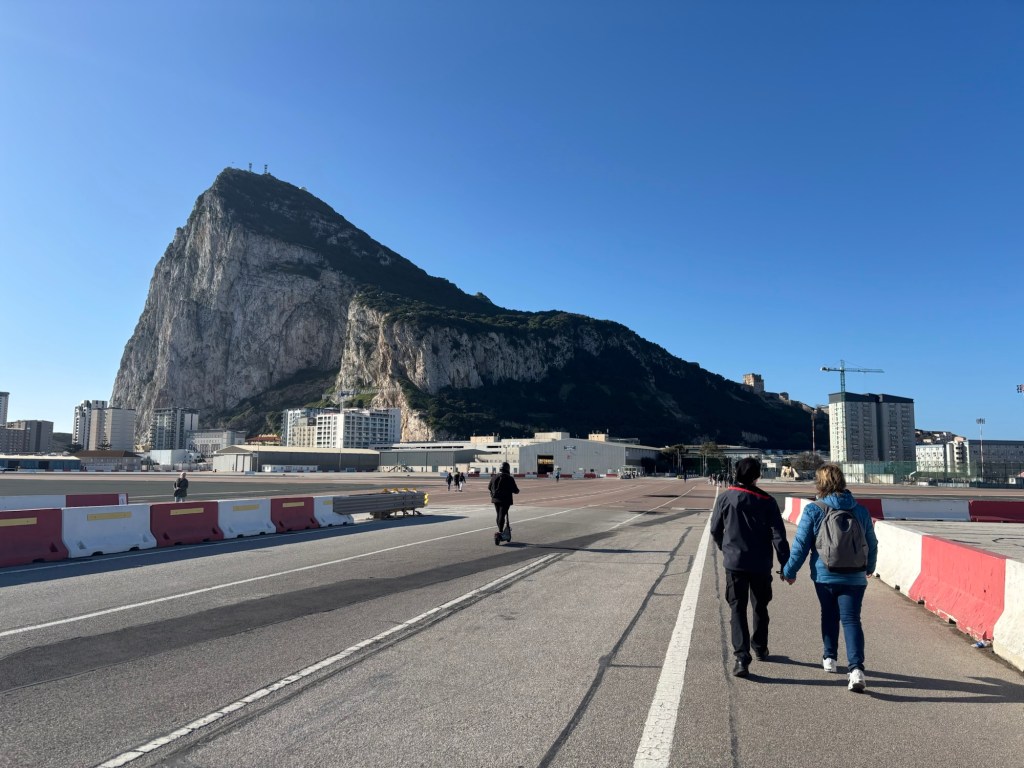
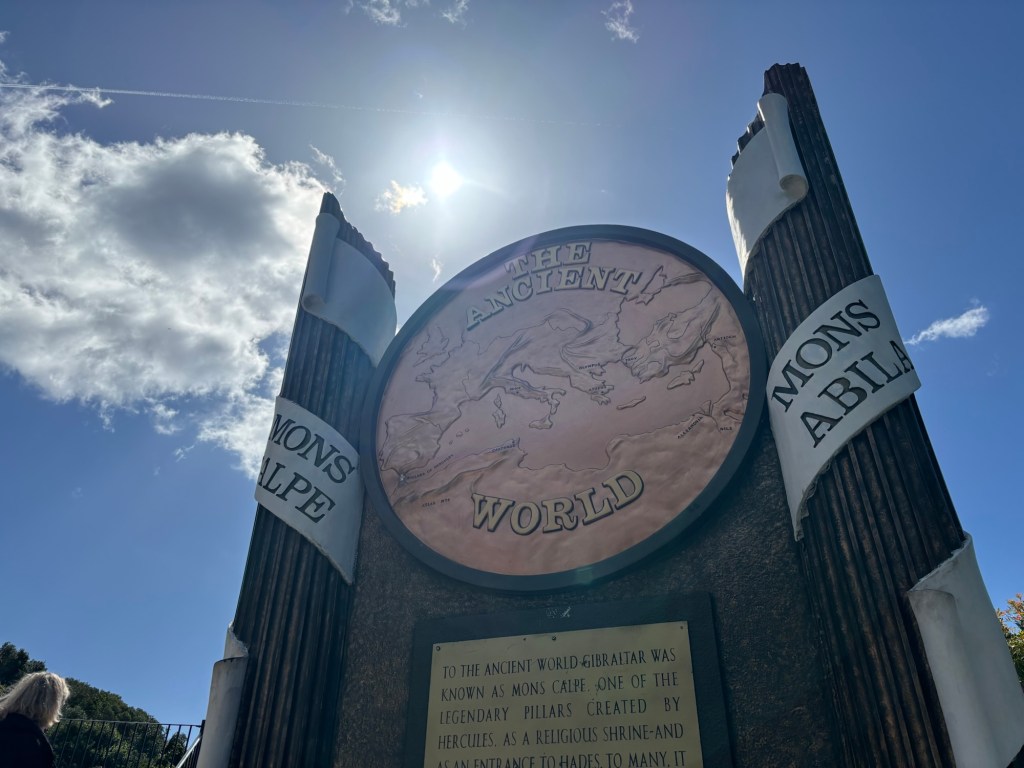
The Rock. Calpe. Tariq’s Mountain. One of the two pillars of Hercules. The key to the Mediterranean. Gibraltar has gone by many names over the centuries, indicating its enormous cultural footprint. So it’s easy to see why the Spanish get so cut up about the fact that this relatively small peninsula belongs, not to either of the countries that can see it – Spain and Morocco – but to the United Kingdom, an opportunistic seafaring nation that snapped up the city in 1704 during the War of the Spanish Succession. It was Spain – or rather the Spanish crown – that officially ceded the peninsula to Great Britain. It has been a decision they have regretted ever since.
Modern-day Gibraltar is a very strange place. You cross a staggeringly short airstrip and enter a completely different world – like a jigsaw piece from a different puzzle that fits, but looks totally out of place. It’s as though somebody has taken a slice of an English county town and dropped it incongruously on the Spanish coast. Not even the tourist-infested Costa del Sol matches its otherworldly vibe.
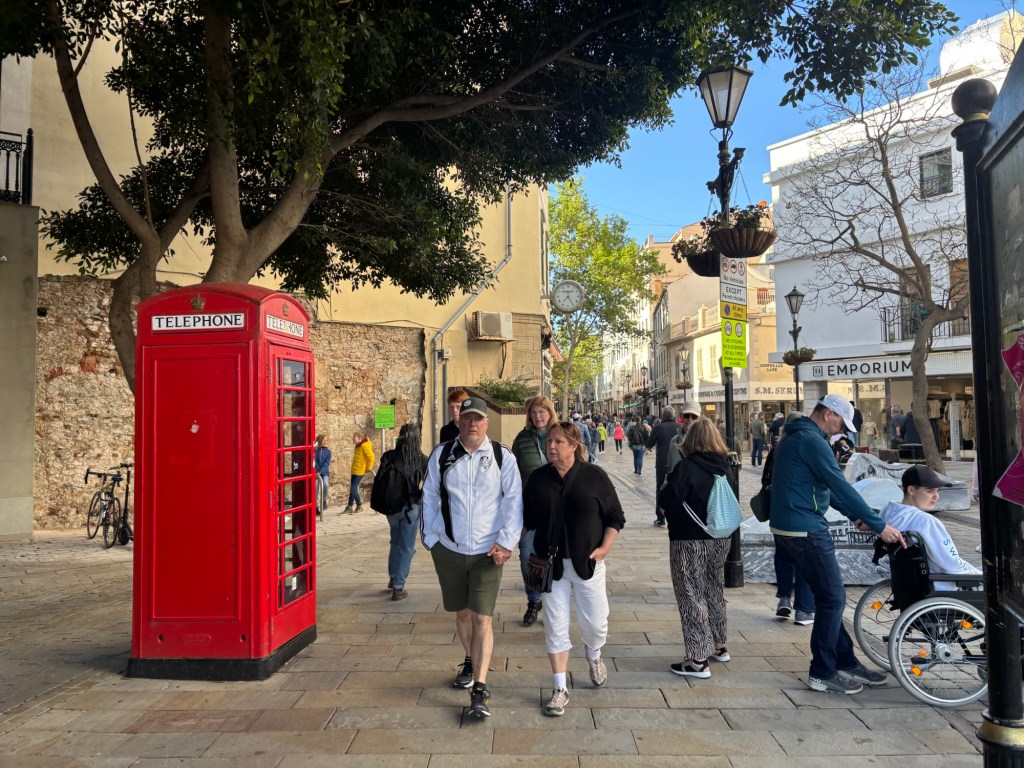
Red postboxes. English traffic signage. Curry, gin and Cadbury’s. Pubs bearing the faces of Lord Nelson and Queen Victoria. Even the layout of the high street is unmistakably English. If Spain truly wants Gibraltar back, it will have some serious landscaping to do.
As I recall, we were short of time on my last visit here. The bus from Málaga made the trip down the coast in record time, so I had all of six hours to explore – almost all of which I spent walking. My phone seems to think I’d clocked twenty-one kilometres by the end of it… which, given my roundabout route through town, to Europa Point and up and down the Rock, is probably not too far from the truth.
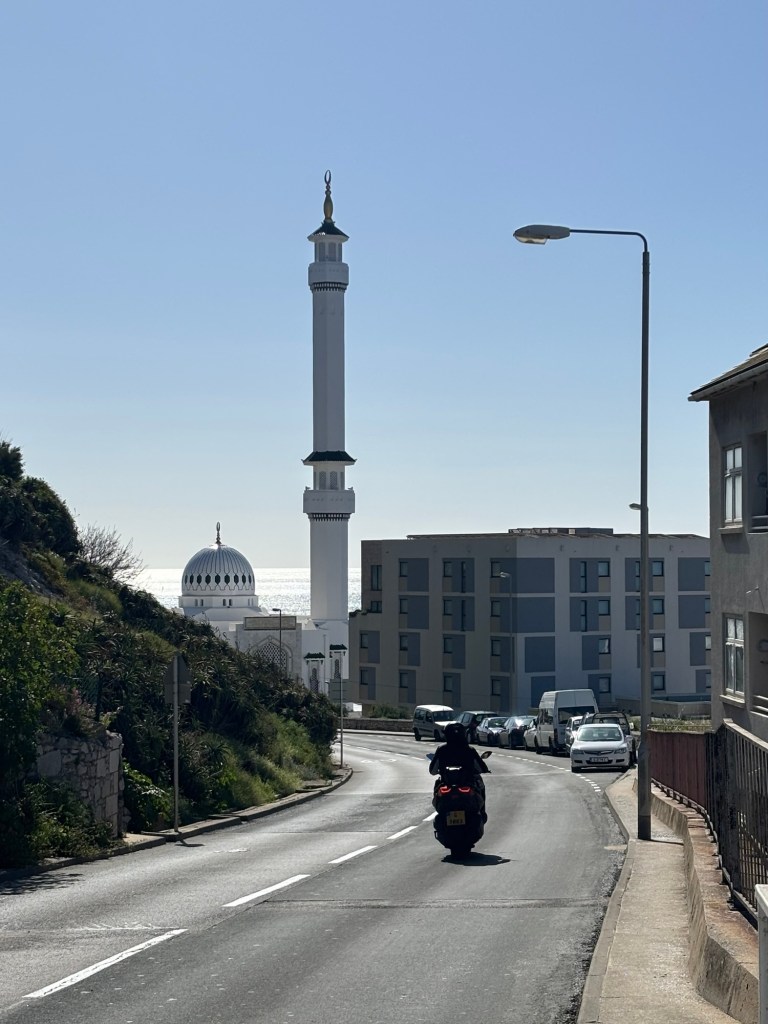
Hidden away at Europa Point is a symbol of the British subversion of the terms of the Treaty of Utrecht: the Jews’ Gate Cemetery, where many of its former rabbis are buried, and the Ibrahim al-Ibrahim Mosque, one of the largest in a non-Muslim country. Tucked away here on the south side of the rock, they’re not immediately obvious from the Spanish side, and while the mosque may be a recent addition (built in 1997), it’s thought that the cemetery was put there to conceal the presence of Gibraltar’s Jewish population from prying Spanish eyes. The Treaty of Utrecht was quite clear on the matter:
Her Britannic Majesty, at the request of the Catholic King, does consent and agree, that no leave shall be given under any pretence whatsoever, either to Jews or Moors, to reside or have their dwellings in the said town of Gibraltar.
Great Britain, unsurprisingly, largely ignored this clause of the Treaty, and Gibraltar has been a haven for a small enclave of Jews ever since. Lately, it seems a Muslim population has also returned to the Rock – large enough to warrant a sizeable mosque funded by the Saudis – fuelling some dissent from the Spanish side.
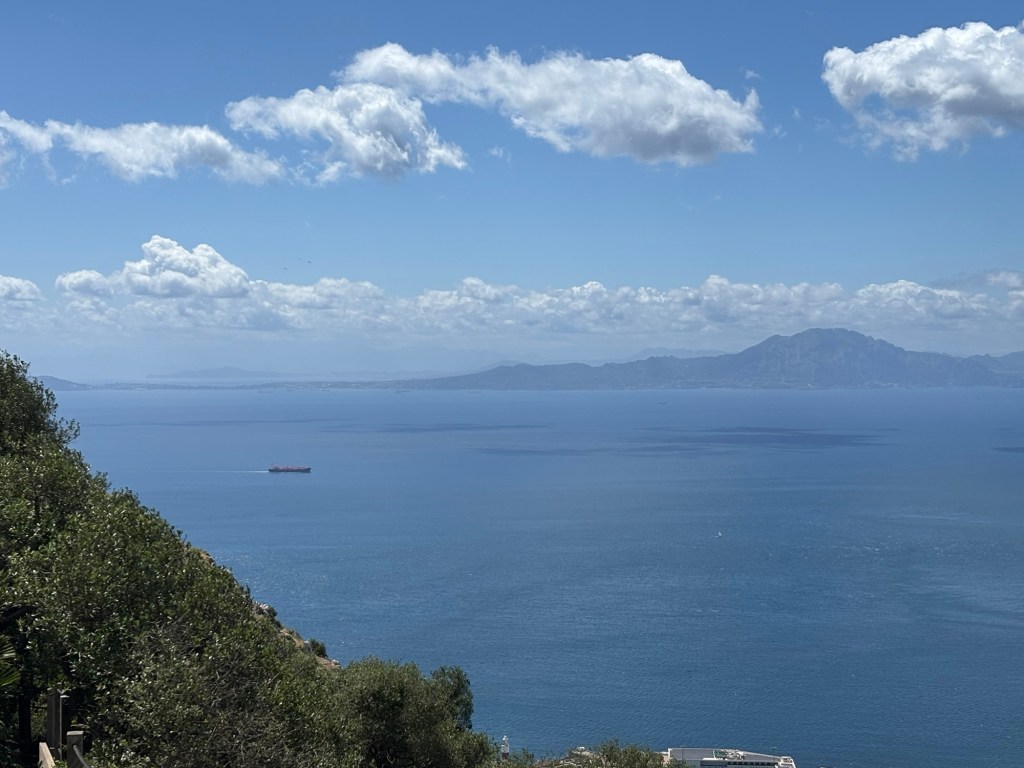
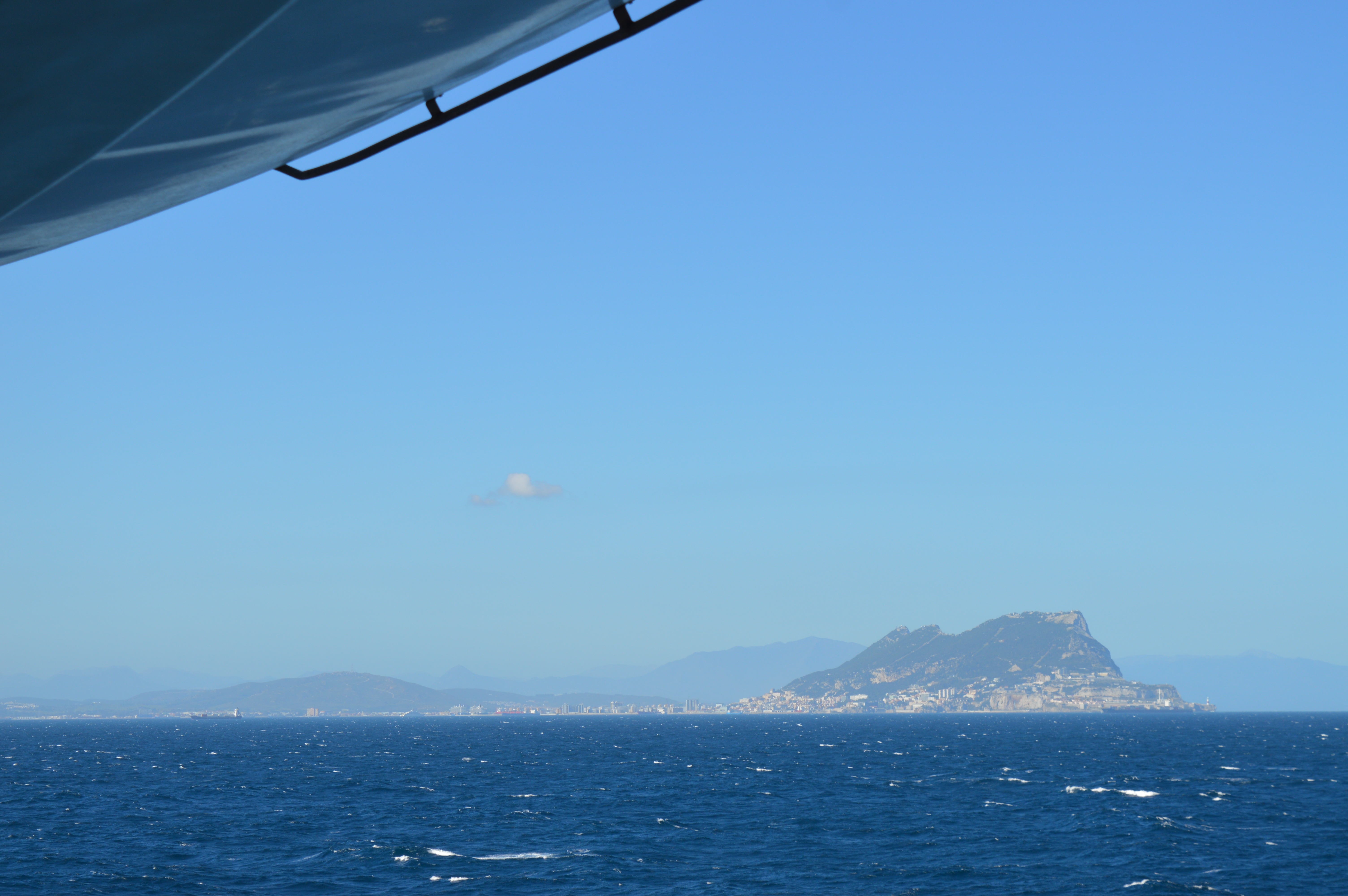
As you start to climb the rock at Jews’ Gate, the view across the Strait to the South becomes even more spectacular. What makes it all the more special to me is that I know those mountains very well, albeit from the other side, having climbed a few of them myself when I lived in Tetouan. I could just about see Ghorghez in the far distance, as well as the peninsula of Ceuta, but Jebel Musa is the most recognisable, being the most likely candidate for the southernmost of the Pillars of Hercules, the twin mountains that stand like sentinels at the mouth of the Mediterranean.
There’s an awful lot of lore here. The legend has it that the Greek hero Heracles split the original mountain in two in order to clear a passage to his tenth labour, the capture of the cattle of Geryon. While he was here, at the edge of the known world, he supposedly founded a city that would later become Seville. That’s why the Greek hero features so prominently in Spanish folklore – and on the Andalusian flag, for that matter. The legendary pillars themselves are on the Spanish cost of arms, emblazoned with the mantra ‘plus ultra’ or “further beyond” – the defiant Spanish response to an older inscription left on the rocks by the civilisations of old, non plus ultra, warning of the emptiness beyond: an emptiness that Christopher Columbus famously disproved in 1492.
Nowadays, both of the pillars bear the names of the two Muslim commanders who led the invasion of Spain: Musa bin Nusayr, the governor of Ceuta, and his subordinate, Tariq bin Ziyad. Though Tariq was executed on Musa’s orders for his hasty invasion (it’s not every day a raid turns into a regicide), it’s his name that has gone in history as Jebel Tariq – gradually mangled into Gibraltar.
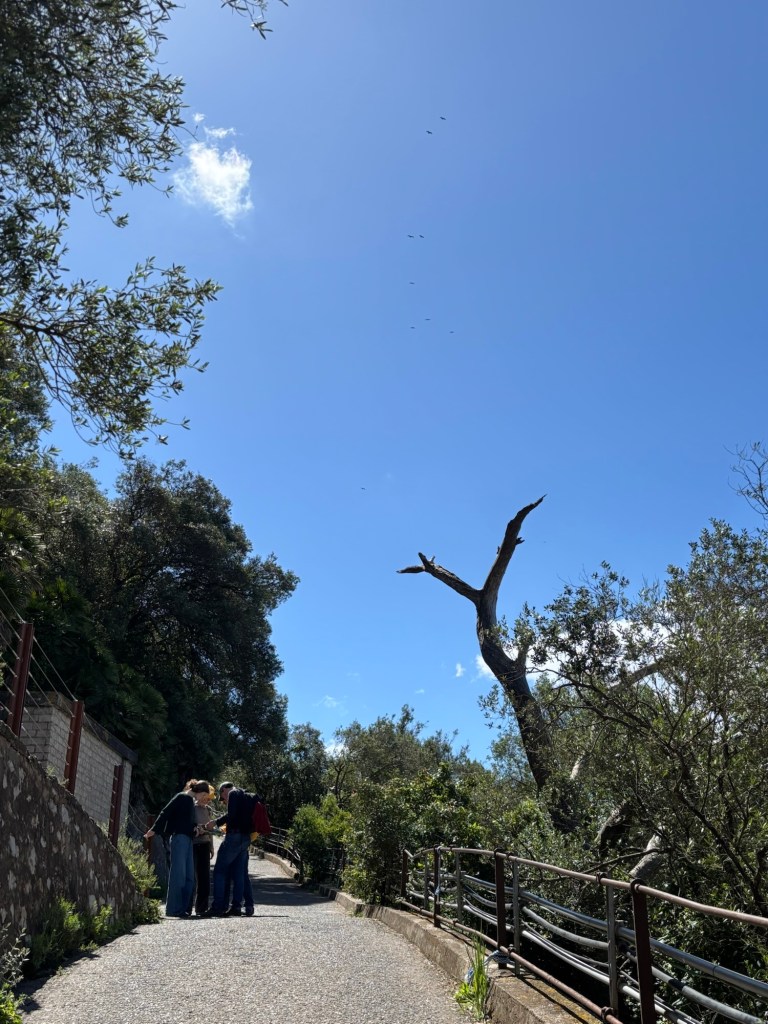
Being so close to Africa, Gibraltar is a natural (and phenomenal) place to observe the annual migration of birds traveling to and from their breeding grounds in spring and autumn. It’s especially good in spring, as the birds ride the thermals on the Moroccan coast and soar across the Strait with hardly a wingbeat, gradually descending and sometimes arriving on the European side at eye level.
My camera was a dead weight as it had run out of power shortly after arriving in Gibraltar, and I’d plum forgotten to bring the charger (which I could have used here, since Gibraltar uses English sockets). All the same, I could observe some of the migrating birds with the naked eye. I clocked around thirty black kites as I climbed the Rock, along with a number of honey buzzards and black storks. I thought I heard some bee-eaters, but they turned out to be an audio recording hidden in the bushes at the park’s entrance. How odd!
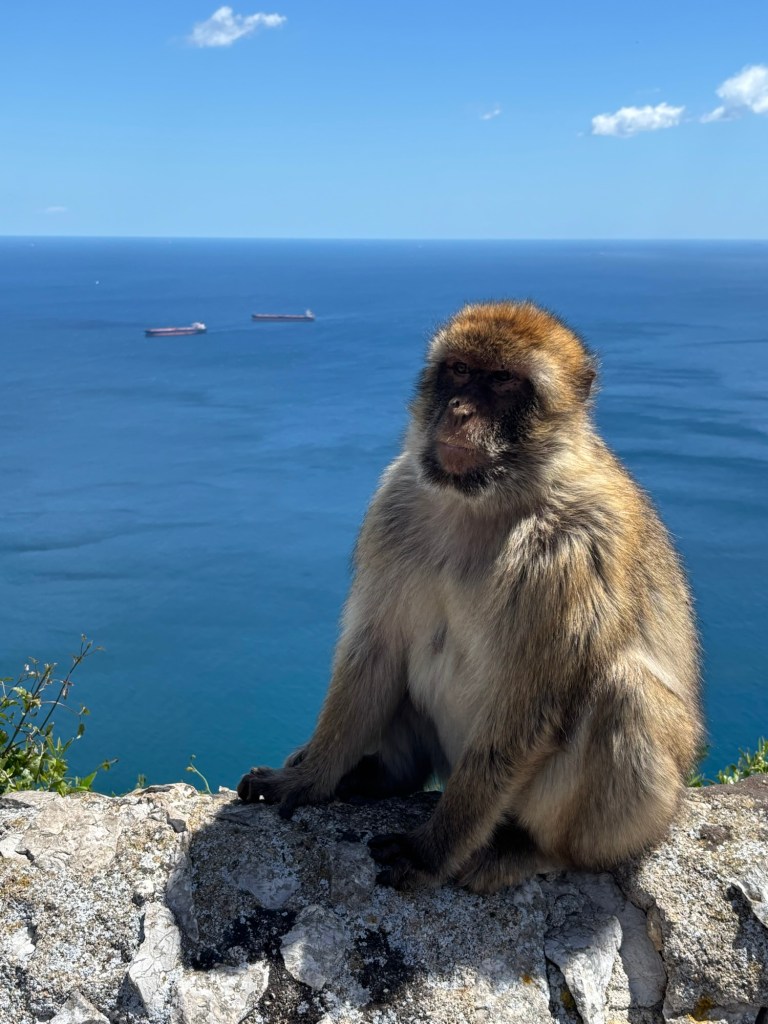
Let’s be honest, though – I came here to see the monkeys!
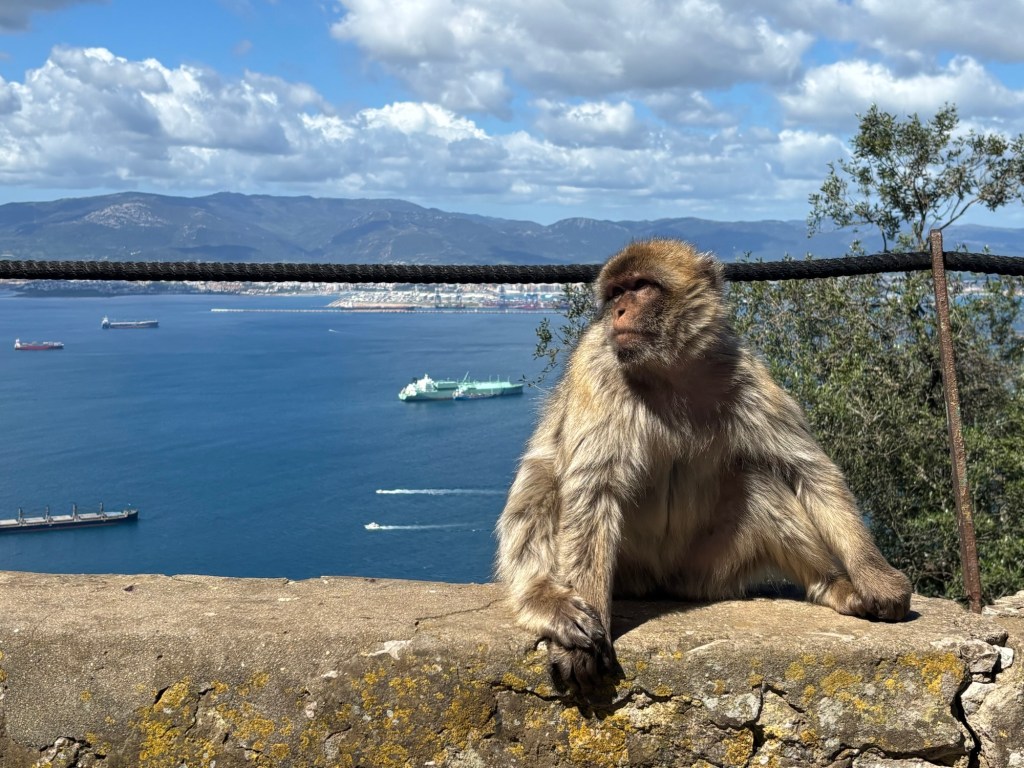
The Barbary macaque is the only species of monkey that you can find in the wild in Europe. The fossil record shows that they were once found across Europe during the Ice Age, but they can now only be found in the Rif Mountains of Morocco – and here in Gibraltar. It’s almost certain that these aren’t the last survivors of the European population, but rather a group brought over by the Moors (and later restocked on the orders of Winston Churchill himself). Nevertheless, they’re as much at home here as they are in the cedar forests of the Atlas Mountains across the Strait. Perhaps more so, since there are so many hapless tourists just asking to have their lunch stolen.
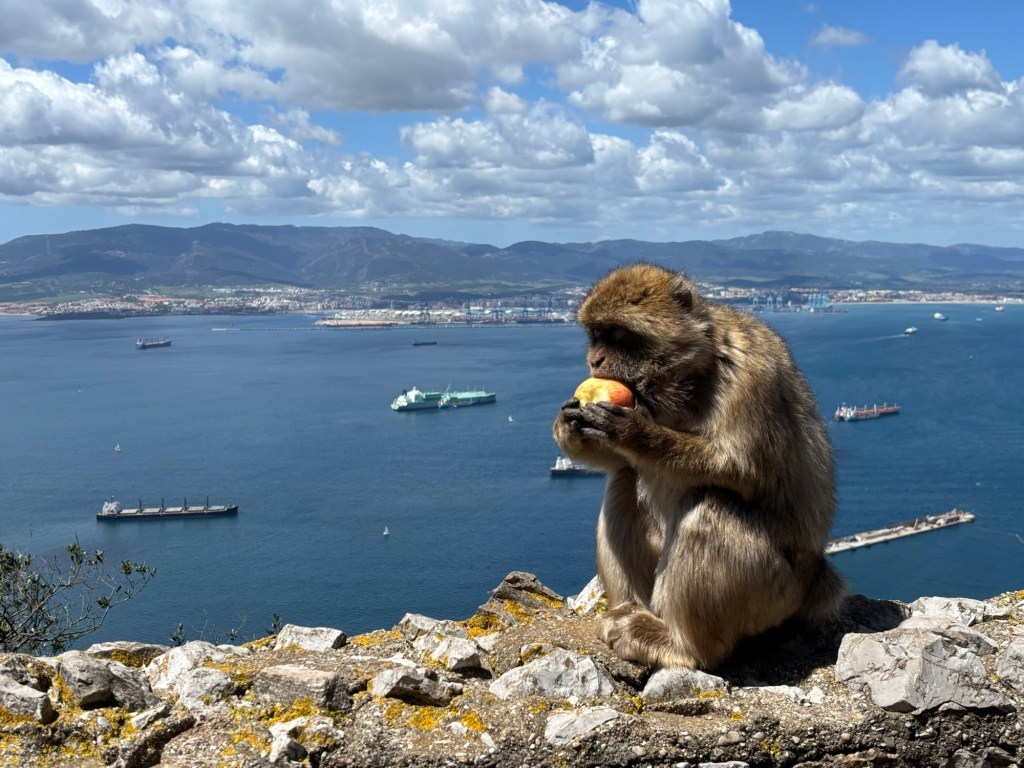
There’s plenty of food left out for the macaques every day, but there’s a further incentive for keeping your snacks under a close watch: it’s illegal to feed the monkeys, punishable by a fine of up to £4,000. That won’t stop them from trying to snatch what you’ve got, edible or otherwise, but it’s best to avoid any cases of mistaken identity by keeping your food and drink out of sight.
This one by the Skywalk was scoffing something that definitely wasn’t official monkey food. I wonder what they make of M&Ms? Do you suppose they taste any better to a monkey’s palate?
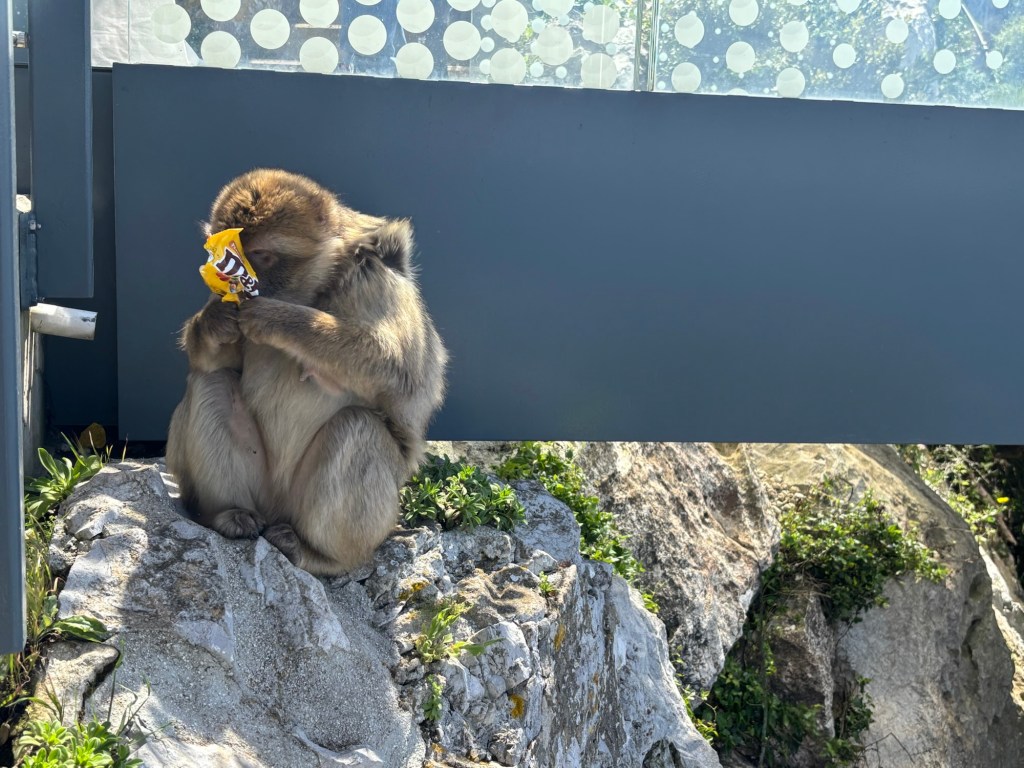
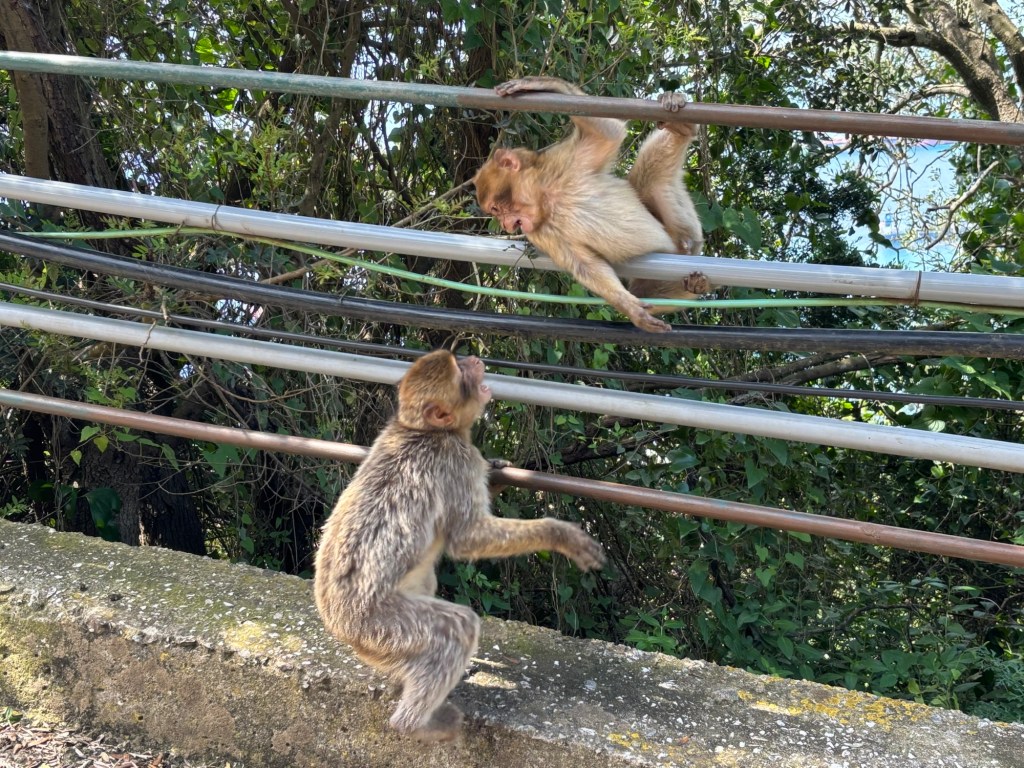
It’s a bizarre experience, walking around the Rock and seeing wild monkeys wandering about the place, like some African safari. The long lines of white tourist taxis crawling along the Queen’s Road and stopping for their passengers to take photos only add to the experience. Not that the macaques seem to mind overmuch – the youngsters are quite happy to play undisturbed.
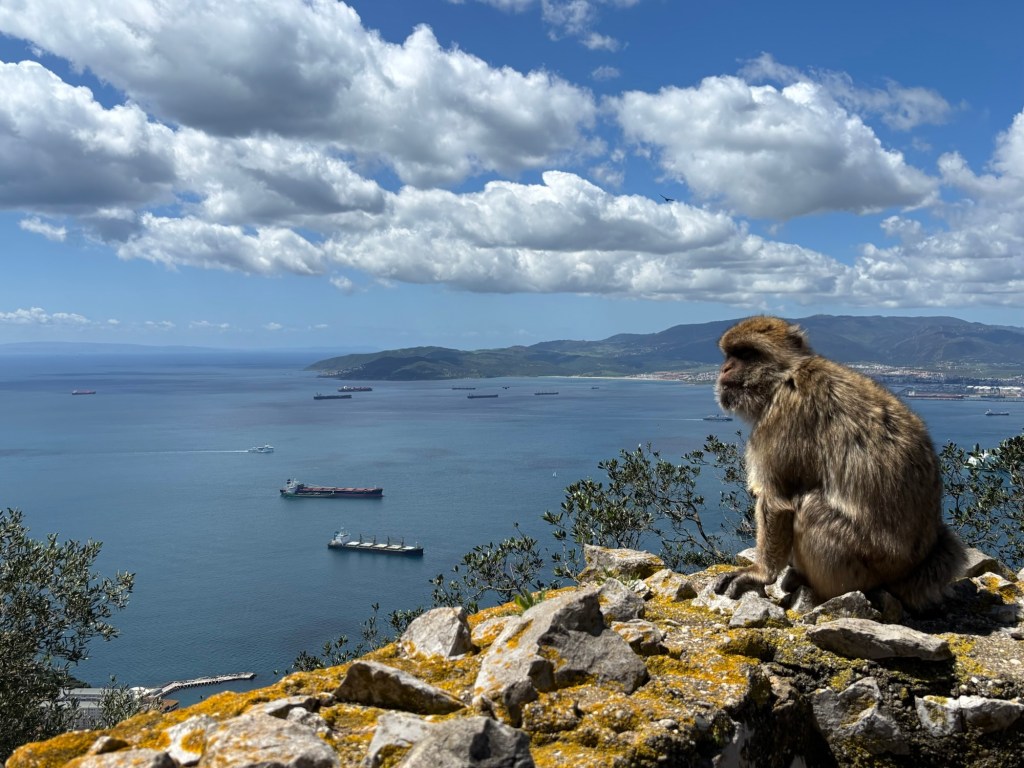
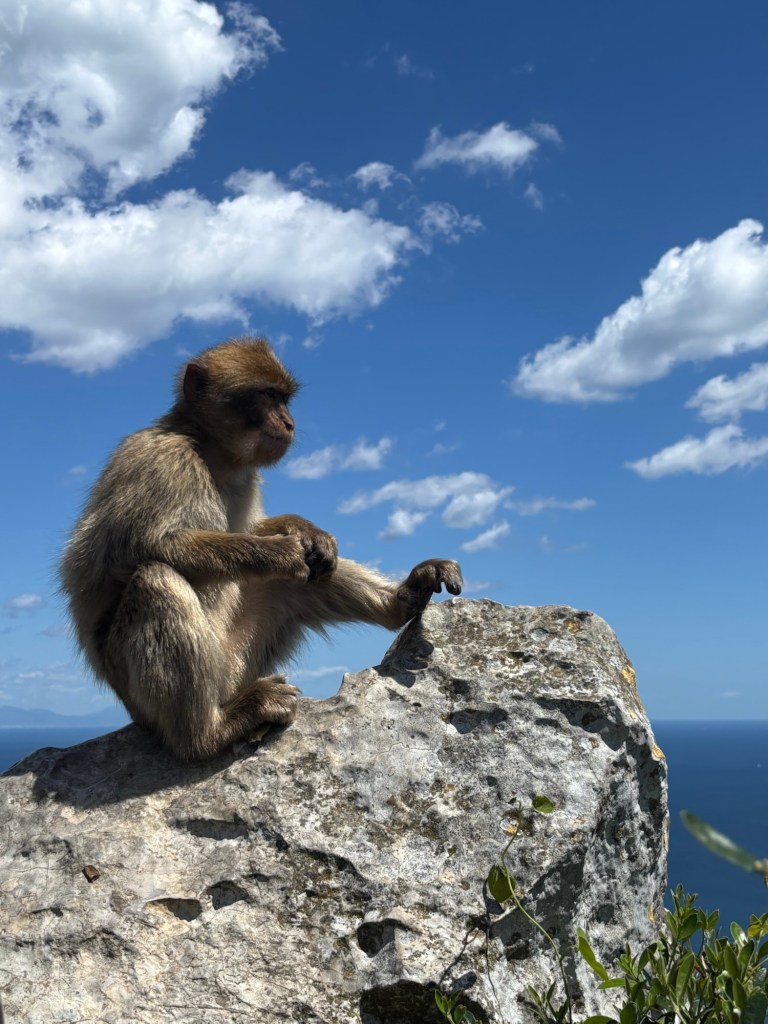
Alonso del Portillo, the first Spaniard to include Gibraltar in his chronicles, referred to the macaques as the “true owners” of the Rock, occupying its eastern face since “time immemorial”. Even so, I wonder if their not so inhuman brains ever stretch as far as thoughts of that land on the other side of the sea, where the rest of their kin can be found? They certainly seem to spend a lot of time looking out that way.
I’ve always been a keen naturalist, but my especial love for primates goes back to my time in Uganda, where I had the privilege of seeing mountain gorillas up close. That seems a more logical place to start, since it probably doesn’t stretch back as far as my last visit to Gibraltar, when one of the macaques welcomed me to the Rock by shitting down the back of my hoodie as I left the cable car.
No cable car this time – and no shit either. Cause and effect! (And also a financial dodge, as the cable car costs an extortionate 19€…)
The only downside to not taking the cable car was the climb back down the Rock. I took the steps down the Charles V wall, a 16th century fortification against the Barbary pirates who once plagued these waters. They’re bloody steep, they can only be walked down (or up) in single file, and there’s the added hazard that the macaques use them as well – and they don’t like to be cornered.
Fortunately, by the time I came down, it was well past noon and most of the macaques were dozing off the midday sun. These two barely batted an eyelid as I carefully stepped over them. I hope the tourists I passed at the bottom coming down were as considerate.

A local legend has it that Gibraltar will only fall when the monkeys go – much like the English legend about the ravens and the Tower of London. And just like the ravens, the government has stepped in to prevent that superstition from coming to pass in times of crisis. Winston Churchill had their numbers bolstered during the Second World War when their numbers dwindled to just seven individuals – no doubt relying on his friendly relations with the infamous Thami El Glaoui, the self-styled Lord of the Atlas Mountains.
El Glaoui was a wily tribal chieftain and the son of a slave who, through a number of deft political manoeuvrings, came to rule much of modern Morocco. He is said to have counted Winston Churchill as one of his close friends. I wonder what he really thought of the eccentric British bulldog? Or of his decision to resupply the apes to keep a British legend alive? In Morocco, these beautiful creatures are often caught and forced to perform in market squares for the amusement of tourists. At least here in Gibraltar they don’t have to wear humiliating dresses or chains and can claim the Rock as their home.
Unsurprisingly, it’s getting late. That took a long time to write. I should get some sleep, but the Guardia Civil are processing tonight and I’d love to see that before the Legion arrives tomorrow. And that really should be a special way to end my adventures. What a journey it’s been! BB x
 The Book of Barnabas