Underdog

It’s been quite a ride, following the tail end of the UEFA Euro Championship this year. I’m no football aficionado by any stretch of the imagination – I probably sound like Roger Nouveau’s soccer fan from The Fast Show when I’m ever foolish enough to air an opinion about the Beautiful Game – but I do make a point of checking in once the quarterfinals are underway. Apart from anything else, in a European context, the politics behind the scenes can become very interesting.

This year’s final was a contentious one for me, having both English and Spanish heritage, but I confess myself a Spanish supporter from the off. Never mind their superior performance, I had a lot riding on a Spanish victory and the impact it would have on what is currently a very divided nation, particularly when the Spanish team’s leading lights Yamal and Williams – both the children of immigrants – became a rallying flag for both sides of the political divide.

England played tenaciously last night, but Spain were far and away the stronger side. What saddens me the most is that the match ended in more or less the same disappointing fashion as the last Euros. And I’m not talking about Southgate or the players, who I thought did a phenomenal job.

I’m talking about the reception. About us, as a nation, and how we respond to failure.

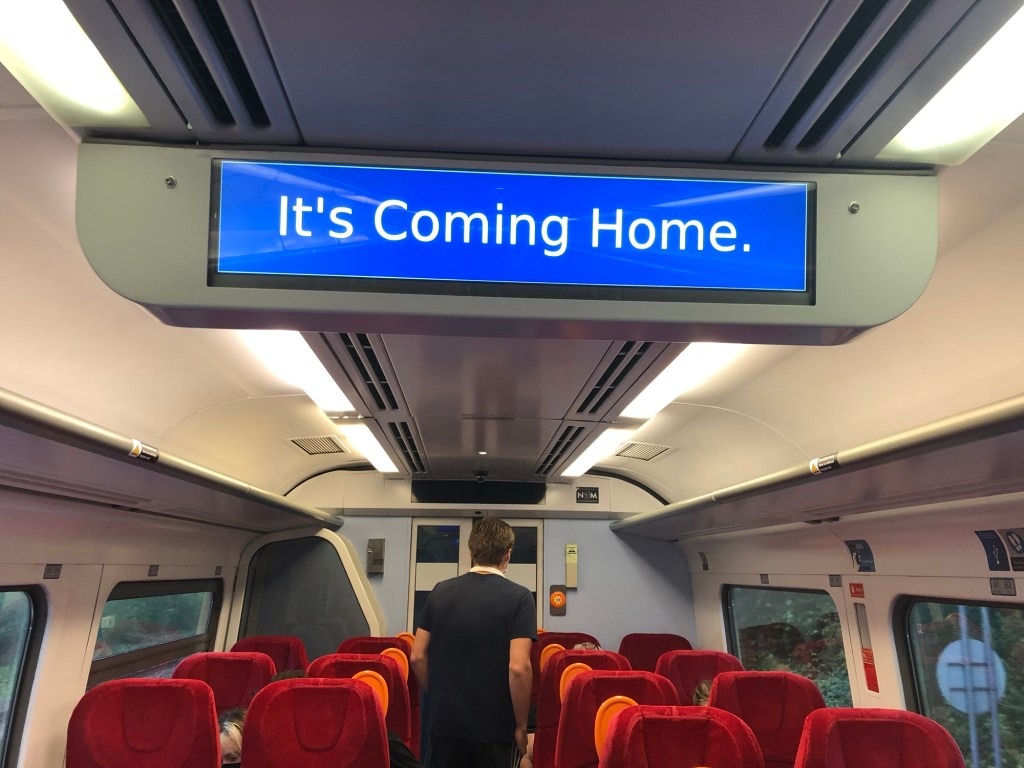
Let me take you back to 2021, when Italy dashed England’s hopes of “football coming home”. The nation held its breath during the penalties, before breaking out in disgusting eruptions of prejudice and wounded pride when Rashford, Sancho and Saka all failed to score. I very nearly missed my train home for a mob of red-faced England supporters, beer in hand, chanting all the various Italian dishes that “you can shove […] up your arse”. It wasn’t all that long ago that English football clubs were banned from European competitions for six years after a riot at the Heysel Stadium disaster left thirty-nine dead and around six hundred injured. The Liverpool fans – the worst offenders – were banned for longer still.

We are infamous for the rowdy behaviour of our fans, even beyond Europe: it is telling that the Japanese creators behind Pokémon Sword and Shield (set in a fictionalised version of England) decided to make Team Yell, the box villains of the game, a bunch of noisy, troublemaking hooligans (co-incidentally headquartered in what can only be a fictionalised version of Liverpool).

Things have cooled off a little since then, but our scrappy mentality still remains.

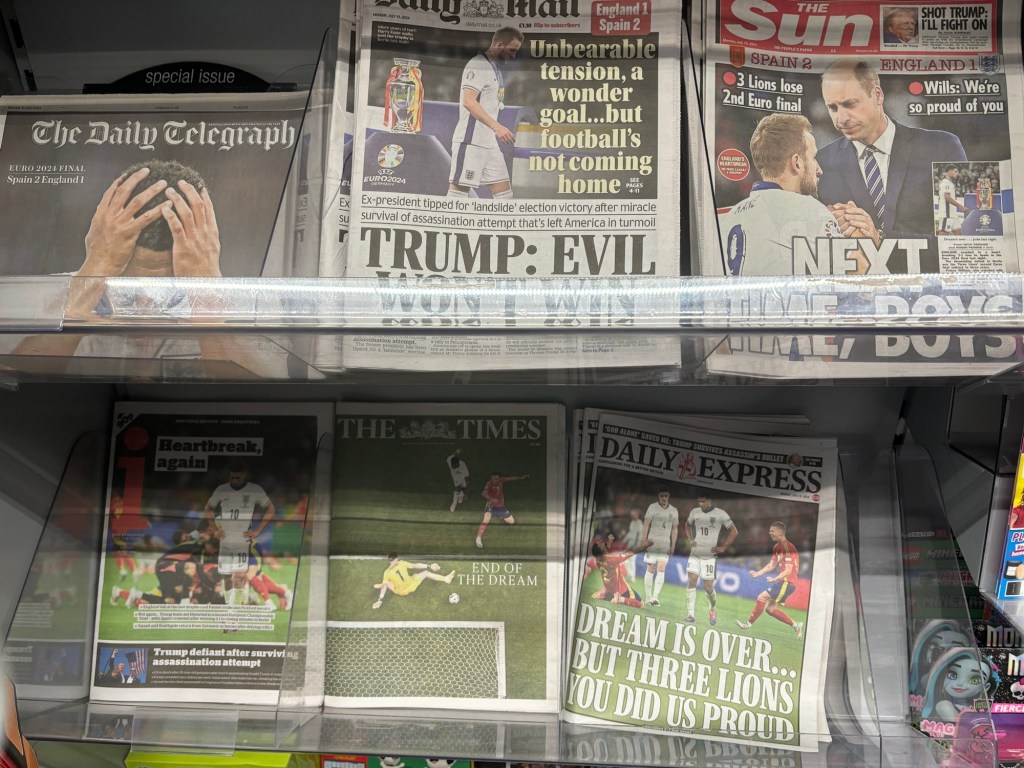
For several days leading up to the final, articles in papers and online were chock-full of references to England’s last cup victory in 1966. Others carried images of Southgate’s hangdog expression, patiently awaiting an end to England’s “58 years of pain” like a state-sponsored Greyfriars Bobby. If it weren’t for the assassination attempt on US Presidential candidate Donald Trump, there would have been room for little else in the media on this side of the Atlantic.

Simply put, we love to play the underdog. As a nation we take some kind of gloomy satisfaction in being the scrappy candidate, the ever-hopeful outsider long starved but nevertheless confident of victory. Perhaps it feeds into our psyche as a little island nation on the edge of a great continent.

A casual glance at the Spanish media in the run-up to Sunday’s game says a lot. I had to dig quite deep into my El País subscription to find an article on the upcoming game (in all fairness, it was competing for airtime with Alcaraz’s equally impressive showing at Wimbledon). That’s not to say that the Spanish cared less for the outcome – quite the opposite, in fact, as my social media feed was awash with ecstatic scenes from Spain mere seconds after the whistle blew – but as a nation they simply don’t make as much of a drama out of the whole affair as we do.

Poor Southgate came in for an immediate hounding after the game. How did he reflect on another heartbreak? Why did he bring Kane off? Is it one disappointment too many? Quite rightly, he fielded the questions as best he could and asked for time for his players who were “hurting” – as anyone would be with such a crushing weight of expectation bearing down on them. Southgate himself remarked that Spain were the better side, and yet the aftermath commentary over on BBC Sport reeled off a cutting self-critique from pundits and armchair experts alike.


We have a morbid obsession with our own failings. Unlike our American cousins, whose hope for the future is always burning bright, we revel in our own mediocrity and the gritty reality it entails. Just compare the US Office to the UK version and you’ll see what I mean.

English pundits and commentators have a nasty habit of discussing their players’ failings during match commentary in a way that is almost uniquely British. Watch a Spanish football game (or any Latin American game for that matter) and there’s no trace of that. I suppose we grow up on a steady diet of cynicism over here: a lot of our finest humour revolves around scathing remarks and cutting witticisms, and that naturally finds its way onto the pitch. Some of our infamous football chants are pretty witty, others are downright abominable and the best are a combination of the two. It’s hard for somebody who is such an acolyte of the waspish humour of the British Isles to properly critique this approach when I find the alternative really rather stale, but one can’t help but listen to the human touch of the Americas and wish we had a sunnier disposition every now and then.


I went off on a proper tangent there – I guess that’s even more proof that journalism was never really on the cards for a career. I guess the point I want to end on is that we could stand to focus less on our own failings and celebrate instead the success of our rivals, who are, after all, living in the same world and sharing the same love for a sport which really does bring the world together. The behaviour of our footballers has come such a long way since the debauchery of the 90s, but some of the fans still have much to learn.

England will make it someday – I know it will. Until then I’m very much of the opinion that if football should ever come home, it will do so like a vampire – once it’s invited! BB x
Half Time

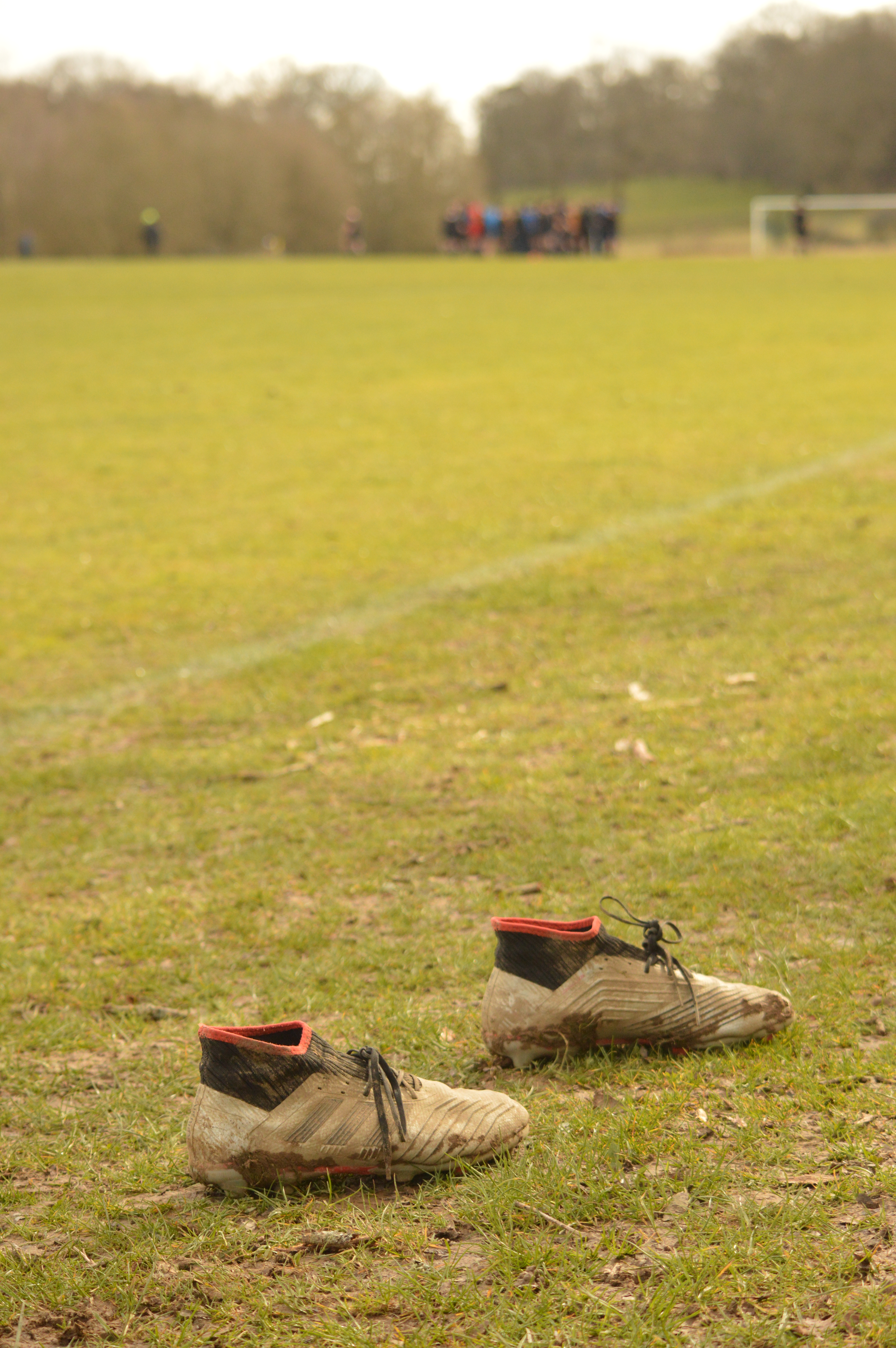
Saturday afternoon finds me out on the side lines, camera in hand, supporting the boys. We put up a valiant fight and place third, thanks to a surprise goal and some seriously impressive goalkeeping. The ball comes my way at some point and I aim to block it, but apparently the ball was way over there and my leg was somewhere else. One of the boys saw fit to rib me about it in house later. I can laugh it off now as I did then. Football has never been my forte, or any other sport for that matter.

Working in a boarding school has got me more invested in sports than I ever was at school. There’s something magnetic about watching your charges do themselves and their team proud, whether they win or lose, that I never really felt when I was obliged to play the game. It’s not that my parents didn’t try to get me into sports when I was younger – goodness knows they tried their best – it’s just that then, as ever, it wasn’t in my interest. Which is why I’m here, not far off the age of thirty, and I still couldn’t name you more than about ten footballers at best. Somewhere along the line it seemed a great deal more important to consign to memory the sight and sound of every single feathered animal in the UK. I guess my excuse for stretching myself thin with the things I do – making music, speaking five languages, writing books and knowing my way around the natural world – might be construed as compensating for the fact that I could never do the one thing that comes naturally to most boys… that is, kicking a ball.

I can’t really remember a great deal about my sports lessons at school. If the truth be told, I’m pretty sure I used what cunning I had back then to wangle my way out of sports for good by the time I was sixteen. I think it was along the lines of “rehearsals for a musical” that I managed to stretch over two years. At least in my first year at school I was given an excuse when an angry sixth former stoved in a few lockers, including mine, with my sports kit trapped blissfully inside. Two memories alone remain: being made to play on through a blizzard in woefully short football kit, and the humiliation of being made to keep attempting the high jump until I was finally able to clear it – by which point it was almost level with the mat. And while I’d normally pull a face at using the same verb twice in succession, “being made to…” sums up my sporting experience pretty well. Understandably, this air-headed naturalist wasn’t ever really at home on the sports pitch.

Which is why it’s all the more surprising to me that I get such a kick out of supporting my boys in their games at the weekend.

Because leopards never change their spots, I turned my camera skywards a couple of times on the buzzards that came drifting over the pitch, as I once did during the summer fixtures a decade ago. Spring is here and the birds are pairing off already. There’s a part of me that sighs, but a sunnier, more hopeful side that smiles, and I cross my fingers and I hope theirs is a successful pairing. Successful being the appropriate word, since happiness seems out of sorts. We still don’t know for sure whether birds feel emotions like we do, but I’d like to think they have something close to it. You see hints every so often that they might: a swallow mourning beside its partner’s tiny body, crows sliding down snow-bound rooves, choughs hurling themselves from great heights seemingly for the sheer thrill of it.

It’s uplifting seeing the smiles on my boys’ faces during a game, and I find myself wondering whether that’s the same electric feeling you get after a concert, or from sighting one of our island’s most beautiful creatures riding the spring thermals. And now the sun is out again, I might just go for another heart-healing walk in the Weald. The forest weaves a magic that never dies. BB x

Diamond in the Rough

This week started just about the same way as every week begins, with me waking up to the sound of my seven o’clock alarm, with the morning’s first class just an hour and a quarter away, and finding myself struck with the weekly conundrum that is ‘now, what am I going to teach today?’.

For the first three weeks I had some stellar lesson plans, but we’re filing into my fifth working week here now (I told you before, my observation week became my first teaching week) and my tried-and-true classes have come and gone. Four down, twenty-seven to go. Since in school I teach across the age-groups, from six to twenty-two, I have to split my material in half depending on their ability, which requires two new lesson plans each week. Not exactly a challenge, per se, especially when several of those are shared between groups, meaning it’s possible (and highly recommended) to recycle material; but it’s a weekly problem, after a weekend spent traveling, partying or what have you, that on Sunday night the question is always there on the tip of my tongue as I bed down for the night. What am I going to teach them today?

Today I thought I’d brave it and try literature on the kids. Foolhardy, I know, especially after my last attempt at sparking some creativity amongst the would-be dullards, but I’m not about to give up on them yet. To spark their interest – and since I’ve just spent most of the weekend reading the tale – I kicked things off by drawing a blackboard-sized Moby Dick on the board, complete with scars, harpoons and rigging. Most of them had heard of it, but understandably, none of them had actually read it.

Well, not quite. One of them had.

I did a little double-take at this and made him explain the plot to the class. The way he put it, in English, a language that is not his own, told the tale better than Herman Manville (personally, I found the text hard-going, turgid even, though the story itself was impeccable). Better yet, he beat me to it and cited Manville as the author. I thought I’d let him sit on his laurels for a while and ask the others for any books they’d read recently, but they just stared blankly at me, as though I’d asked them if they’d like to spend the rest of the day doing quadratics. Moby – the pseudonym I shall forthwith use for this very literate kid – had his hand up the whole time and went on to tell me about Bram Stoker’s Dracula, Jules Verne’s Around the World in Eighty Days and Edgar Allan Poe’s The Tell-Tale Heart. That he had read them in translation is beside the point. This is a boy of fifteen who’s busy working his way through the classics.

As I was struggling to elicit some kind of interest from the rest of the class – who, as you might expect, were getting visibly bothered by Moby’s contributions – my colleague spent the hour taking notes of other writers that he might enjoy, amongst them Arthur Conan Doyle and Charles Dickens. One of Moby’s companions lost it and complained loudly that it was unfair that only Moby was talking. My colleague and I soundly brought him down a size by repeating that all I was asking for was a story any of them had read, and that as Moby was the only one who was willing to talk, they only had themselves to blame for their silence. I opened the floodgates a little by allowing them to tell me about a film or television series they might have seen, but on that inch they took a mile and missed the point completely; three accounts down the line I had to remind them that match reports, game shows and reality TV are not stories, and consequently didn’t count.

Pushed into a corner, one kid looked very chuffed to say he thought his favourite TV show, a Spanish version of Match of the Day, was far better entertainment than any book he’d ever read. Granted, he probably hasn’t read very widely – I hadn’t at his age – but for good measure I told him that a show where two obnoxious early retirees discuss what happened, what might have happened, what should have happened and what might happen next time in a football match for an entire hour could hardly be as entertaining as a decent read. I could have done worse, of course, but I held back. Most of it went over his head anyway, as it was supposed to. I’m not foolhardy enough to let my personal prejudices against the tedium that is the world of football discussion ruin my relationship with my students, who already know I’m none too keen on it.

As you might have guessed, I was getting pretty frustrated by this point. I’ve learned to mask it after a month of teaching these kids, but it’s still pretty galling when you ask a simple question and all you get in return is twenty-three gormless expressions. But Moby came back with the goods, stating that he hadn’t read any books in English yet, but that over Christmas he was going to try with Tolkein’s The Lord of the Rings. You’ve got to hand it to the kid; starting to read in a foreign language with Tolkein…? That takes guts. My parents are prolific readers and they can’t stand his writing, and sadly they’re not alone (though I, for one, can’t get enough of the stuff).

In the other establishment I work at there are several kids like Moby in every class; students who are well-read, well-cultured and whose English is streets ahead of their companions. It’s the norm in a private school. And teaching in both private and state has its merits. But kids like Moby make the state school experience so much more worthwhile, for all the challenges. Here is a boy who, despite everything, is working his way through the literary greats for the pure pleasure of it, with his mind bent on attending university in Toronto of all places. It’s kids like Moby who remind me just why it is that I love teaching. Because for all the sour looks, disinterest and gossipping that goes on, when there’s at least one kid who’s shining with promise there’s a reason to go on. Obviously you can’t cater to that one child alone – if it were that simple, everyone would want to be a teacher, I think – but as long as you know that what you’re dealing is going towards somebody’s personal development, that’s reward enough for all your travails.

As for me, I’ve got a fair amount of catching up to do. Moby Dick was this weekend’s read; The Adventures of Tom Sawyer and Robinson Crusoe await, along with Allan Quatermain (after a two-month hiatus). Maybe I’ll recommend King Solomon’s Mines to Moby when I next get the chance. It’s certainly one of my favourites. BB x