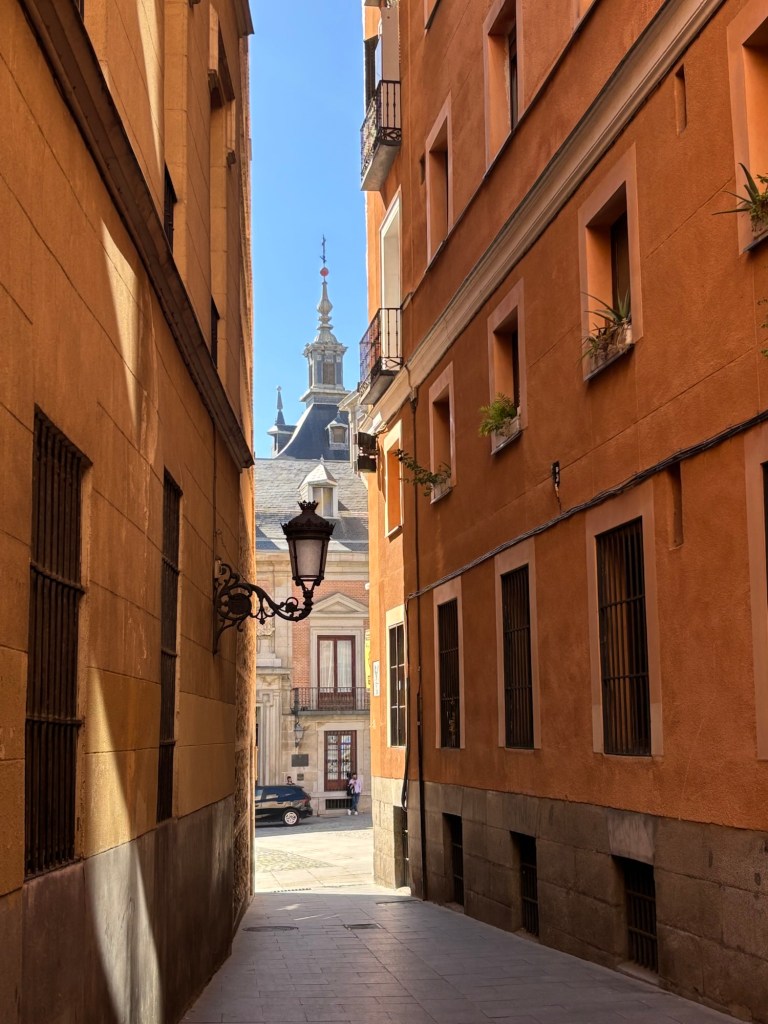
The sun is just starting to set beyond the skyline. Down in the street below, Madrid’s colourful denizens are out for an evening paseo, dressed to the nines to the last man (and woman). The rumble of motorbikes is a constant accompaniment to the general hubbub and the occasional police siren soars above it all every now and then. The lodgings I’ve managed to snag come with a balcony that looks out over the crossroads below, so I’m treating myself to the noise of Madrid for a few days before retreating to the quieter shores of Finisterre, at the end of the world.
The capital is much as I remember it from my last visit, several years ago, though it makes a change to see the place under the warm spring sunshine rather than wrapped up in the chestnut smoke of winter. It’s inching toward 20°C outside, but the madrileños are still going about in puffer jackets and (fashionable) greatcoats as though it were 5°C. I haven’t brought any heavy-duty winter wear as I have to carry everything with me from Madrid to Galicia to the Canary Islands and beyond on this latest adventure, but I might pick up a few Spanish clothing supplies while I’m here in the city. I haven’t overpacked, for once.
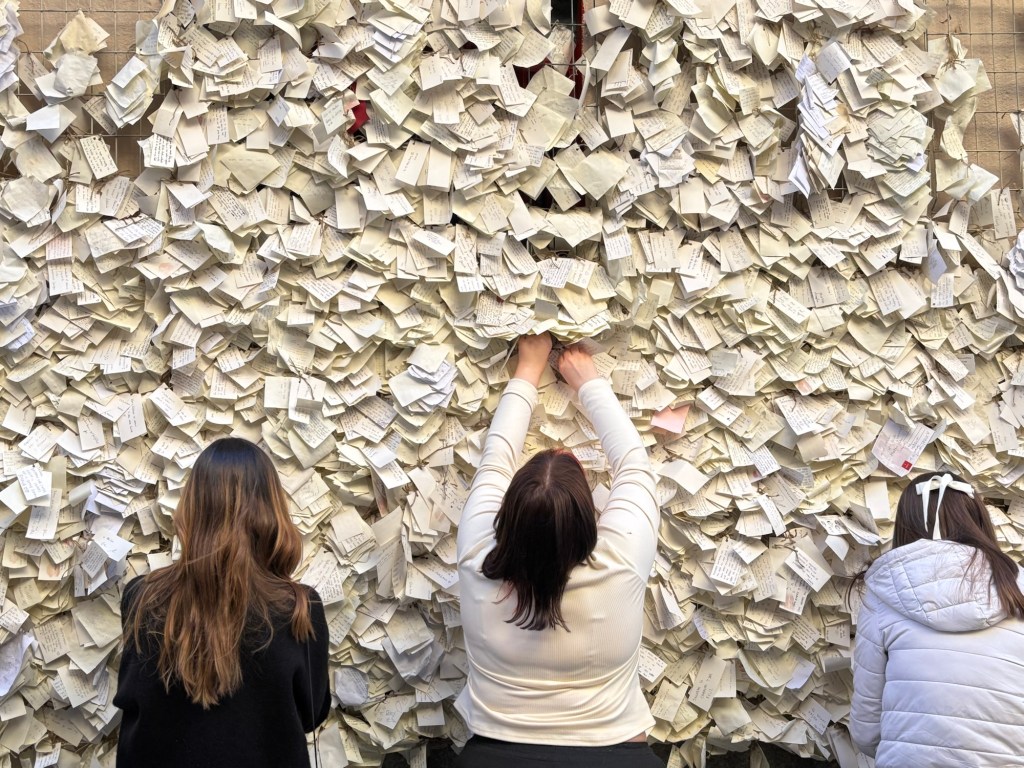
During the course of my wanderings I stumbled (quite by accident) upon the Tienda de Deseos again. I found this strange corner of Madrid last Christmas, its walls covered with the scribbled desires of a hundred passers-by fluttering in the winter wind. Last year there were quite a few lonely hearts on here. This year there seem to be a lot more general “wishing for all the best in life” requests. I made a wish last year to find her – “wherever she may be”. This year I was a bit more specific. Beautiful though it was, I don’t think I’m quite ready for another trans-Atlantic situationship.
Even in the heart of the capital, there are clear signs that spring is here. The cherry trees lining the Calle del Arenal are dressed all in white. The swifts are here early, too – they must have come hurtling in on the wings of the rainclouds, because I’ve never seen the Río Manzanares so full.
There were a few posters on some of the bollards advertising an anti-hate march in defense of the Trans community, which I really ought to have stuck around to watch, as it’s one of the A Level topics for Spanish at the moment. A smaller group of protesters were picketing the Corte Inglés just off Sol, sporting the usual V for Vendetta masks and carrying telescreens displaying the slaughter of fish off the Spanish coast. Nobody seemed to be paying them much attention.
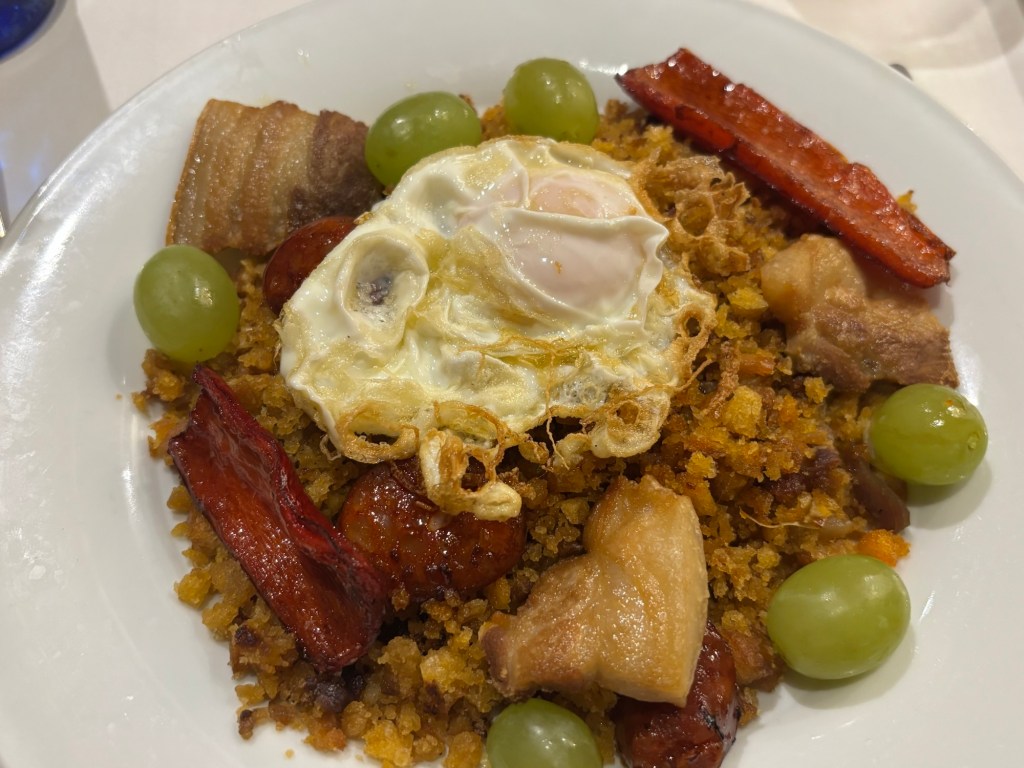
I treated myself at dinner with a rather upmarket restaurant modelled on Arturo Pérez-Reverte’s Capitán Alatriste books – dishes, decor and all. It didn’t disappoint one bit. I had my first migas in seven years and tried cochinillo for the first time. It was incredible, even though my taste buds hadn’t quite recovered from the usual end of term knockout cold.
On my first grand adventure across Spain many years ago, food was a luxury I rather recklessly decided to do without. Now that I have the means, I intend to make good on that dreadful error by exploring the best dishes the country has to offer as I go. I haven’t found any callos yet, but they’re on my list!
Please excuse the rather humdrum post today. I haven’t had any grand escapades yet! The real adventures start tomorrow… BB x
Alright, so the primary reason for my trip to the States is to soak up the music out here. Yes, I’m perfectly aware that I could have saved a little and gone to Glastonbury, but frankly the idea of camping out in a field with thousands of party-goers sounds like Hell on Earth to me. I’m quite happy chasing a more traditional, more intimate range of older styles out here in the States. That’s why I’ve shelled out on a couple of jazz-themed events this afternoon. But before that, there’s one other major reason I decided to kick off my American adventure in Louisiana. The Bayou.
I’ve got a thing for swamps. I spent weeks of my childhood clomping around the misty reedbeds of Stodmarsh in search of bitterns and marsh harriers, while anybody else my age with half a brain was honing their social skills at the park or on the pitch. The Easter holidays required a ritual voyage to Doñana National Park, the ‘Mother of the Marshes’, which became something of a Mecca of mine. So to come to Louisiana and not pay a visit to the Bayou would be foolishness in the extreme.
Of course, it isn’t all that easy to get into the Bayou proper without a boat, or a car for that matter. Fortunately there are a lot of offers on the table to take you out of New Orleans and into the swamps. I threw in my lot with Cajun Encounters – it looked to be far and away the best one going.
The bus picked me up from outside the hotel shortly after eight, giving me plenty of time to wolf down breakfast. The driver, though not a tour guide himself, did a brilliant job pointing out the sights as he took us through the residential districts of New Orleans and out into the wilds of Slidell. The devastation of Hurricane Katrina is remarkably apparent, even twenty years on: together with the hulking wrecks of houses and ships, the skeleton of New Orleans’ only amusement park can still be seen arching above the trees, while the bizarre Fisherman’s Castle on the edge of Lake Pontchartrain remains the only building to have survived the floodwaters intact.
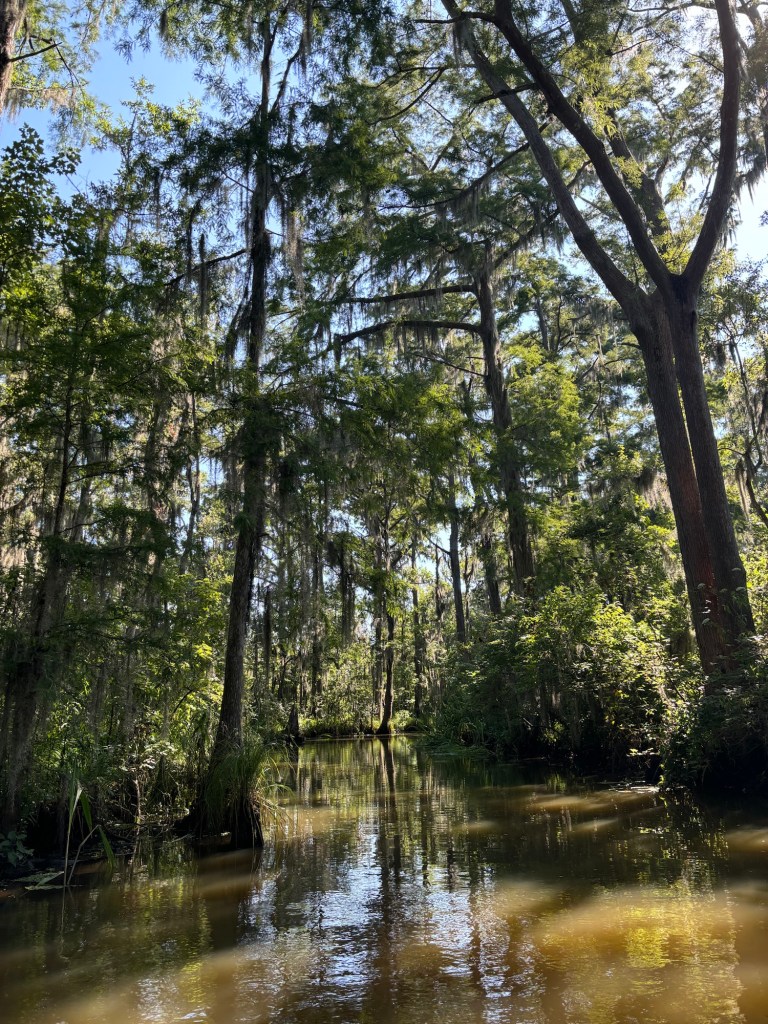
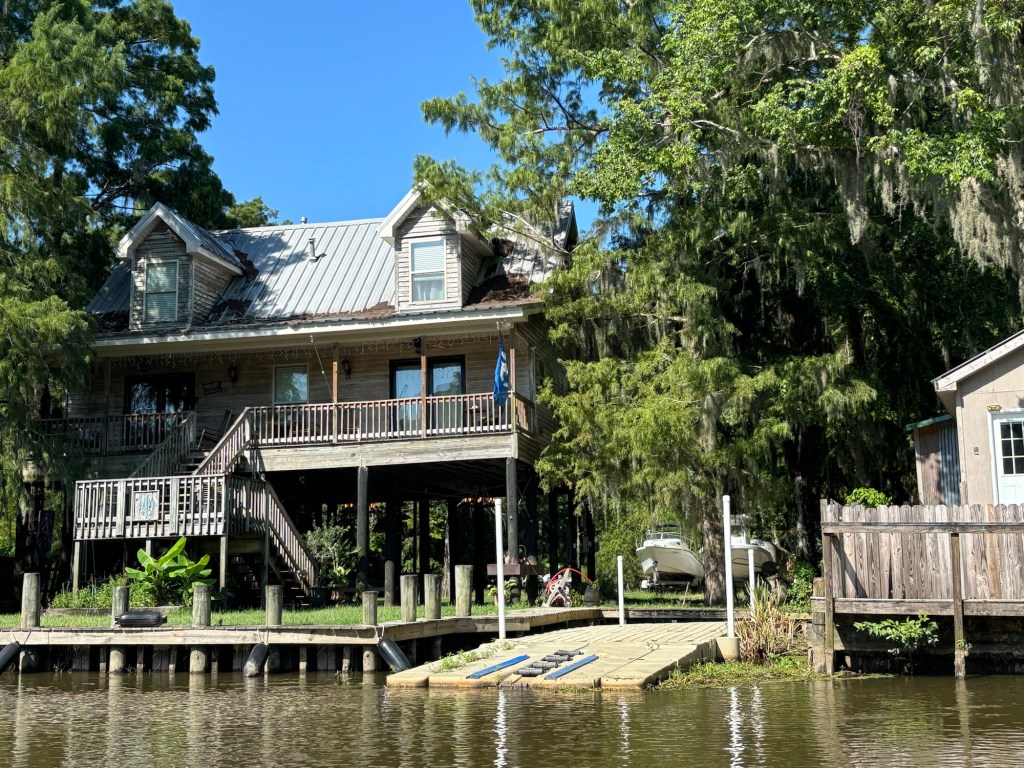
The tour begins beyond sleepy Slidell on the bank of an inlet of the Pearl River, where the swamp-folk came pearl fishing many years ago. The six of us in my boat were assigned the formidable Captain Zander, a former warehouse packer and a true Cajun to boot. To say we drew the winning ticket would be an understatement. As well as being a no-nonsense authority on the Bayou, he seems to know just about everybody out on the Pearl River – including Cindy, one of the biggest gators in the swamp.
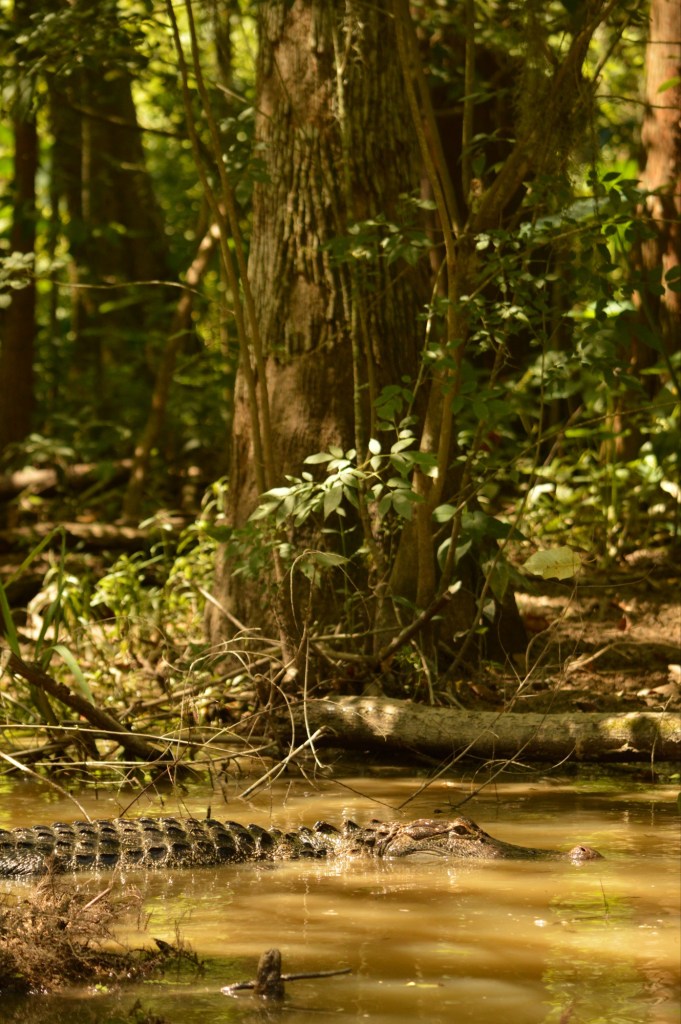
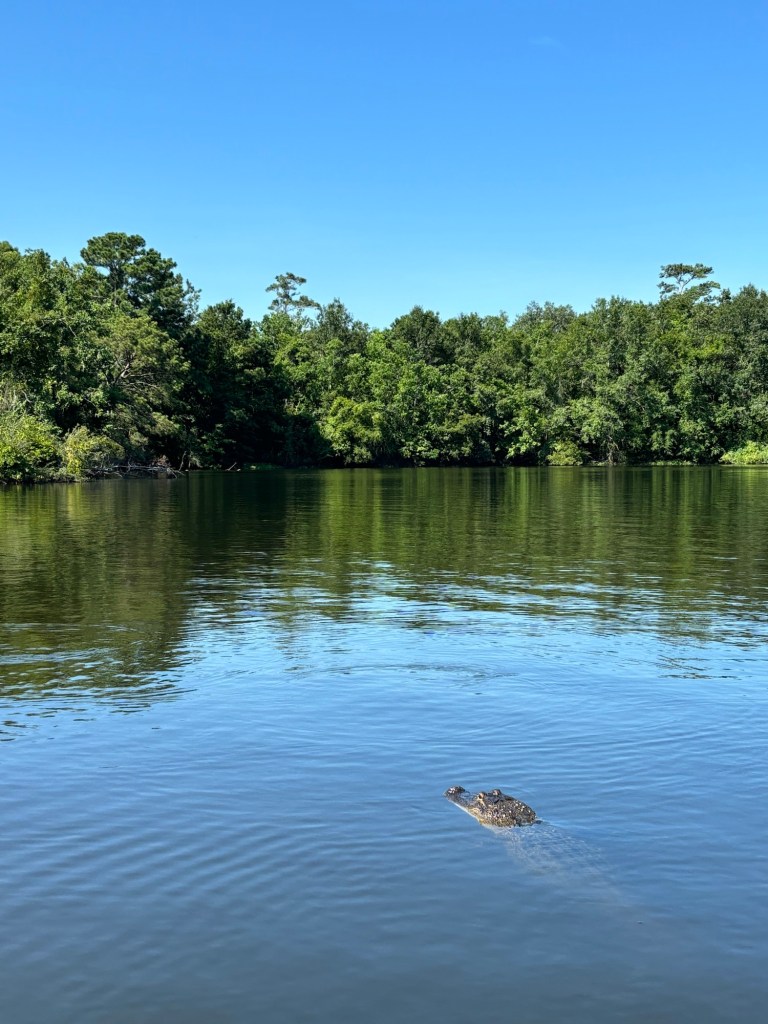
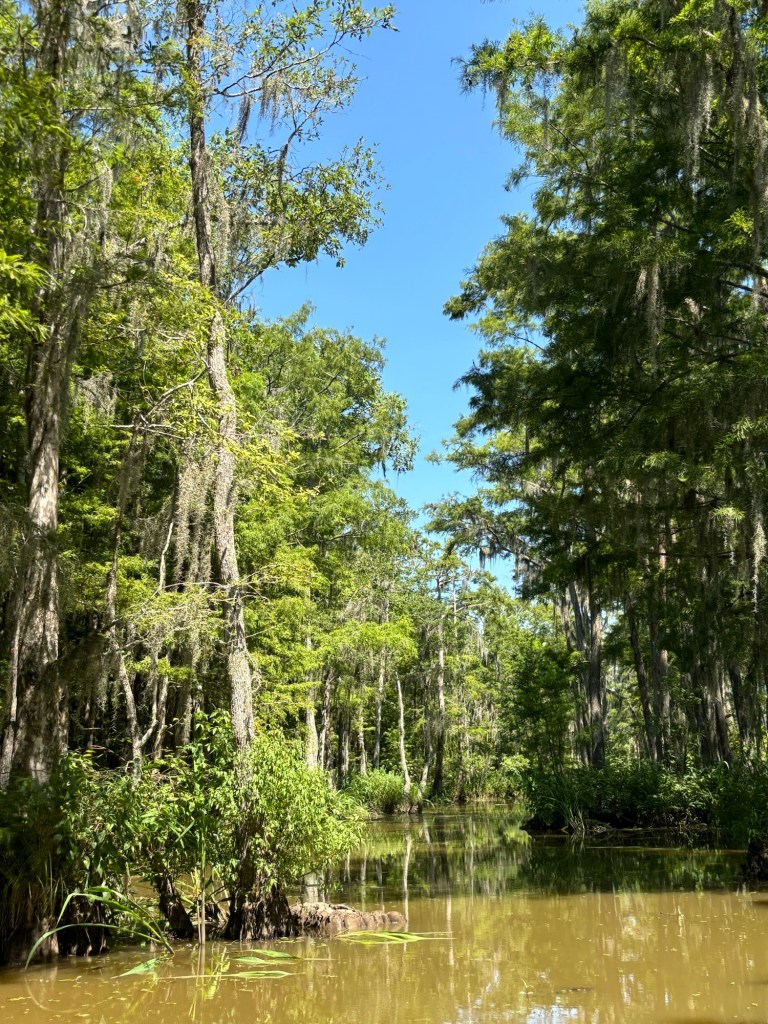
You’d be surprised how quickly you get used to the presence of the alligators. I must have counted around forty by the end of the outing, from amber-skinned yearlings to hulking, black-scuted beasts, visible only by the unmistakeable silhouette of their snouts just above the water. Before you know it, you feel as though they’re just part of the scenery!
When I was a kid I had a picture book that listed the American Alligator as endangered – which is true, as back in the 90s it was facing the very real danger of extirpation. Since then, however, the environmentalists have stepped in to throw the spirit of the Bayou a lifeline, and they have returned in force: more than a million can now be found in the Louisiana swamps alone.
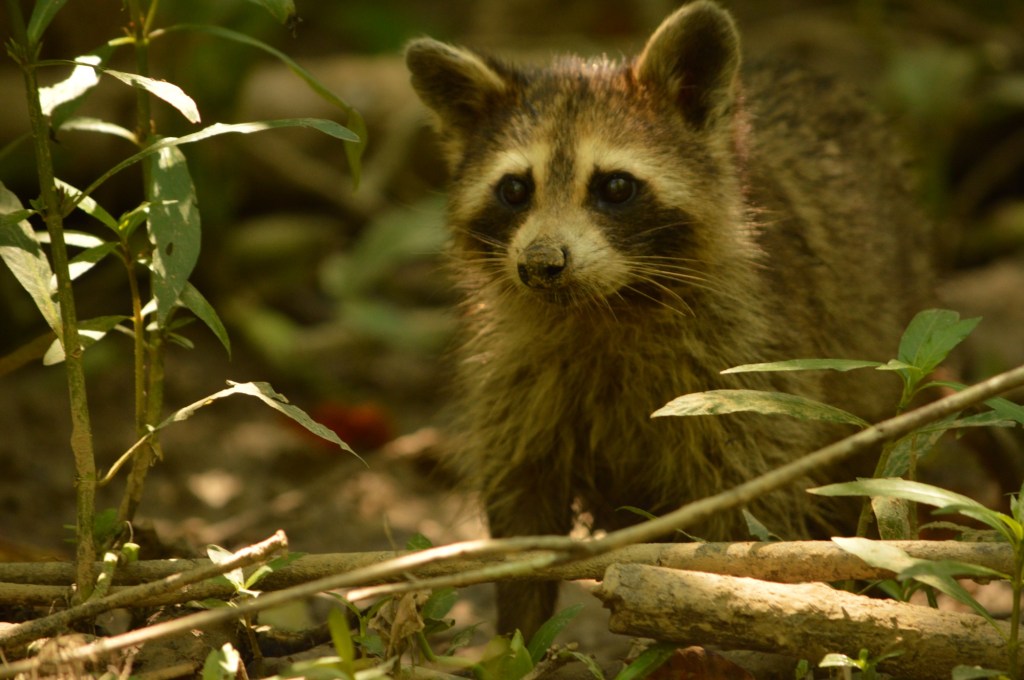
Summer is one of the best times to see Louisiana’s gators, but the heavy foliage can make it harder to see the other denizens of the Bayou. All the same, over two hours I clocked wood ducks, whistling ducks, a pair of high-flying anhingas, several ospreys, green, yellow-crowned and black-crowned night herons, roseate spoonbills, cattle and great egrets, a single great blue heron and, in one of the deeper inlets of the Pearl River, a family of raccoons – a real American experience!
It really was quite something to drift along the snaking rivulets that cut through the Bayou, shielded from the merciless Southern Sun by the trailing beards of Spanish moss hanging from the cypress trees – named neither for their origin or their species (being neither Spanish nor a type of moss) but for their resemblance to the long grey beards of the first Spanish explorers to pass through these swamps hundreds of years ago. I wonder if Cabeza de Vaca and his brave company passed through here on their odyssey?
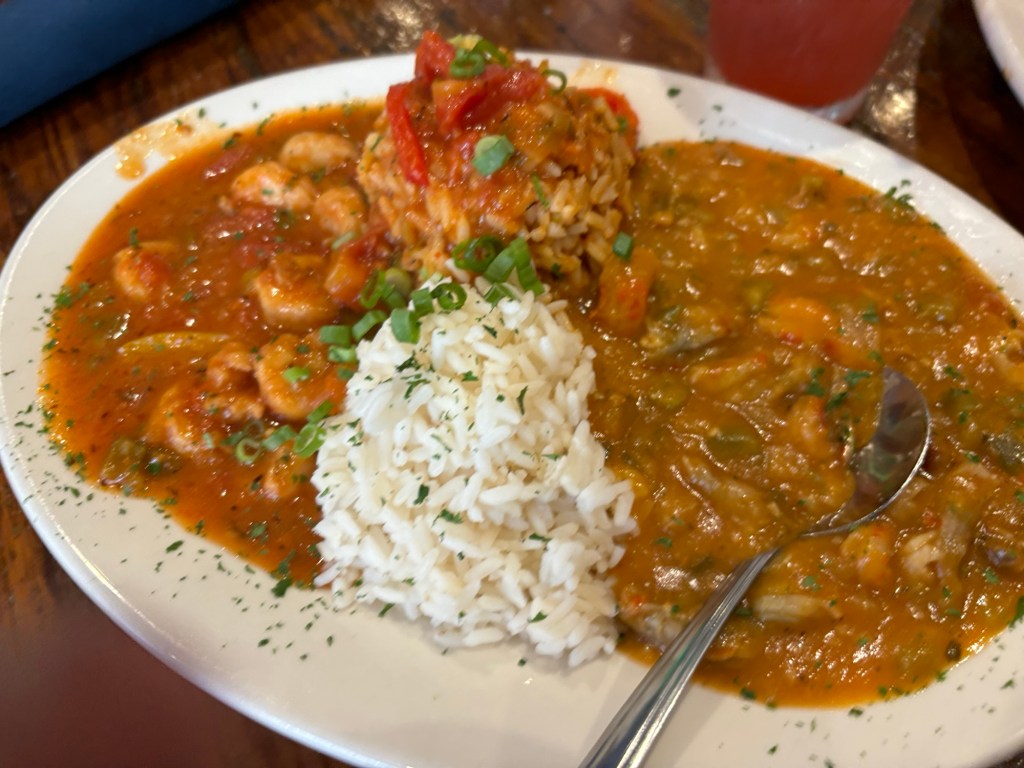
Back in New Orleans, I grabbed some lunch at Mr Ed’s Oyster Bar, following a tip-off from my Uber driver. It’s easy to shell out on your first meal in another country when you don’t know how things work, and I ended up with a starter that could have fed three as well as a main and a drink – before factoring in the inevitable 20% tip expected in the States and, of course, the inescapable taxes. That said, one cannot come to New Orleans and not try the food, and I have to admit the crawfish étouffée has shot up into the top ten foods I’ve ever tried. It was absolutely sensational. Didn’t feel brave enough for the oysters just yet, but maybe next time!
When I came back to the hostel, it was to find that Room 302 was being taken in hand: three Mexican labourers were hard at work uninstalling the ceiling tiles to address the leaking air-con unit, which meant I had to linger in the lobby until they were finished.
I had the shock of my life after they left, when I returned to the room to find my locker open and all the contents removed, with the exception of two shot glasses from Prague (a gift for a friend). Clothes, camera, the cash my students gave me as a leaving gift – all gone. In a blind panic I took the stairs at a run to find the receptionist and let them know what had happened… only to get a knowing smile and a ‘forgive me’ gesture.
Turns out they’d moved all my belongings into a new room while the works were being done and hadn’t found me yet to tell me.
Crisis averted – at the expense of a couple of years off my life! I’m not generally that fussed when it comes to losing things on my adventures – one less thing to carry and all that – but as this is my first time in the States, I’d rather be prepared, not to mention have enough clothes to wear for the next few weeks! BB x
Tonight, for the first time in over two weeks, I have a room to myself. More than that, I have a bed with cotton sheets. It’s amazing how a life lived on the road makes you so grateful for something we take for granted in this day and age. That’s the magic of the Camino, I guess!
I was up before my alarm this morning, but only just. When it did go off, I was up and dressed in a matter of minutes. I did delay long enough to have my modest breakfast of a couple of pastries, a flat peach and a Cacaolat drink, but by 5.40 I was out the door, staff in hand, and determined to beat both guidebook and Google Maps’ suggestions for travel time. The former hypothesised a ludicrous 5 1/2 hours, whereas the latter recommended a more reasonable 4 hours and ten minutes from O Pedrouzo.
Setting off so early meant that for half the trek I was in the dark, but that doesn’t bother me. In fact, I’ve got so used to navigating my way home through woodland paths by night after late trains from London over the years that I’ve become quite comfortable moving around in the darkness. The snap of twigs or the call of some night creature cannot unsettle me like it once did. And so, once I’d got ahead of the five or six torch-wielding pilgrims on the road, it was just me, the night and the nightjars.
I had a lot of time to think on the Camino, and it’s these quiet early morning stretches that make you think the most. Today, perhaps more than ever with the end in sight, I felt the spirit of my grandfather walking by my side. It is for him that I walk this road, in his name that I say a prayer every day. Every step is a step closer to a man I never knew, and yet one who has been a guiding light all of my life. Naturally, it has me thinking a lot about my own mortality. The darkness will do that to you. Like my mother, I do not fear death. Suffering, pain, naturally. But not death. There’s a chance, however slight, that in death my spirit may join with those of my kin, in whose borrowed light I have walked all the days of my life. Death is just the start of the real Camino, just as pilgrims are always told the Camino starts when you return home with what you have learned. A further journey toward the light, then. That can’t be so bad.
The roar of a plane taking off overhead woke me from my reverie as I rounded Santiago’s airport, and with the rising sun, the birdsong carried away all thoughts of the other world as the blue dawn drew me on through hill and forest to the edge of the apostle’s city.
I set a ferocious pace this morning, stopping for nothing but the odd shoe in my sandals, with the result that by the time the twin spires of Santiago appeared on the horizon at Monte do Gozo, I had shaved a full hour off Google’s cautious estimate. In the end I made the nineteen kilometre trek in a little over three hours. Not bad for a morning’s work – and since I was in town before nine, I arrived bang on time to collect my compostela (the pilgrim’s certificate) as soon as the office opened on the hour.
There was a small queue already waiting, and some were there for the Finisterre credential (apparently that’s a thing), but as it’s a lower priority, they were shunted to one side. I was given the number eleven – auspicious, as it’s my birthday – and called to the desk within minutes. They must have been anticipating a tidal wave of pilgrims today, because they had pre-printed the forms and dispensed with the questions. Which is just as well, as I was prepared to defend my choice of name, but in the end I didn’t have to say a word.
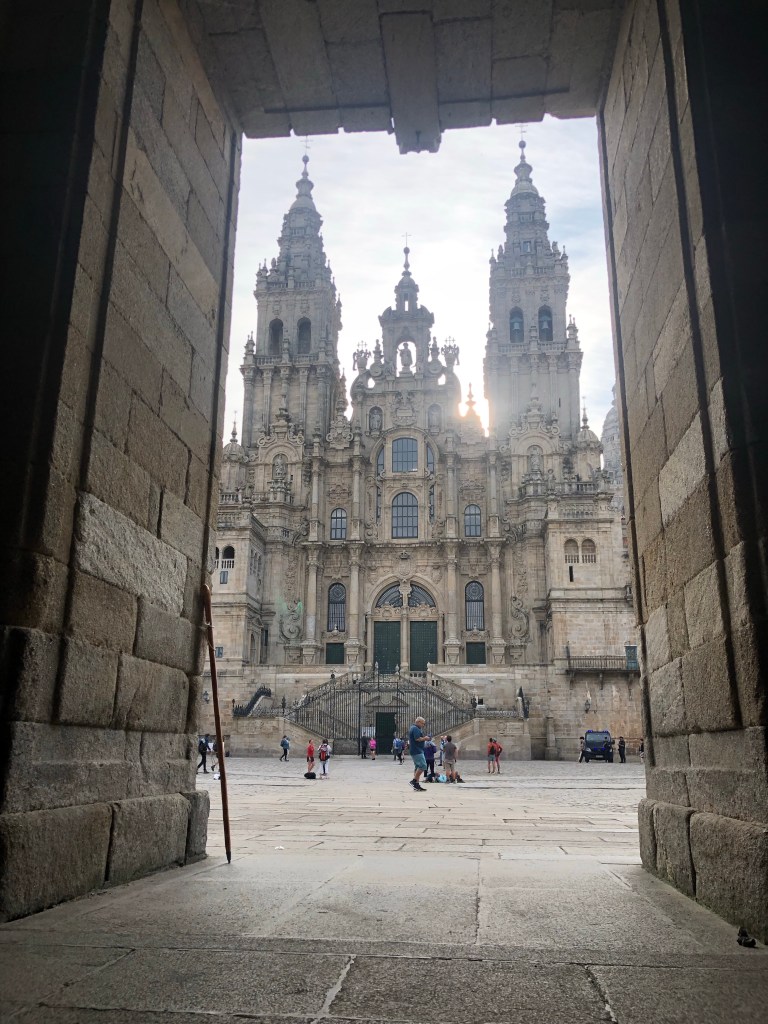
With my compostela in hand, I lingered for a while in the Praza do Obradoiro, watching the pilgrims come and go. Most of the travelers with whom I shared the road earlier on should rock up tomorrow, though Simas got here yesterday, and I’m told Louis the Belgian was in town last night too.
After collecting one last stamp ahead of the four spaces saved for the Finisterre finish, I met up with Simas and we grabbed a bite to eat at Bar La Tita at the recommendation of a Georgian friend of his. And what a find! The tortilla is some of the best I’ve had on the Camino, it comes free with a drink, and keeps on coming with more drinks…! England, watch and learn!
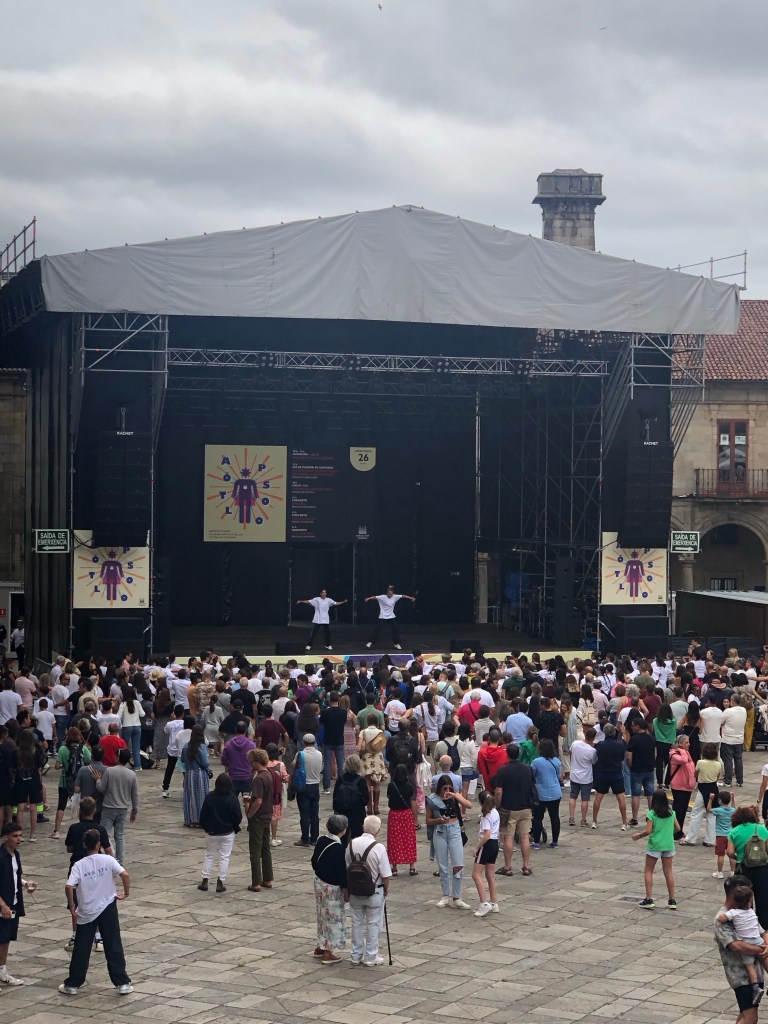
I tried to make midday Mass, but missed out by literally two spaces, so I decided to come back later and head for the albergue instead. I was waylaid by an urban dance-a-thon which I shamelessly got involved with (they were playing Everybody Dance Now, Candy Shop and various other dance/hip hop classics, how could I say no?). Yes, I appreciated the irony of a tour guide explaining how in holy years a pilgrimage to Saint James’ tomb will cleanse the soul of all sins, while 50 Cent’s chant ‘if you be a nympho, I’ll be a nympho’ reverberated off the cathedral walls. But I had a good time!
I checked into the Seminario Menor and spent most of the early afternoon dozing off. Frankly, after averaging 28-30km a day every day for two weeks and more, I think I’d earned it.
I wandered into town for six, well ahead of the 7.30pm pilgrims’ mass, but ducked into the cathedral as soon as I reached it and took a seat near the front anyway. I killed time with my sketchbook, and from one moment to another the organ above was blaring and the priests of Santiago were processing in, arrayed in coats of black, white and red, the real tricolour of Spain. After weeks of spoken Mass, it was a welcome change to have sung Mass once again, and since they provided use with an order of device, I could finally follow along, too. Bach’s Toccata and Fugue came bellowing out of the organ to finish, and after saying one last prayer for my family, I took my leave of Santiago’s cathedral.
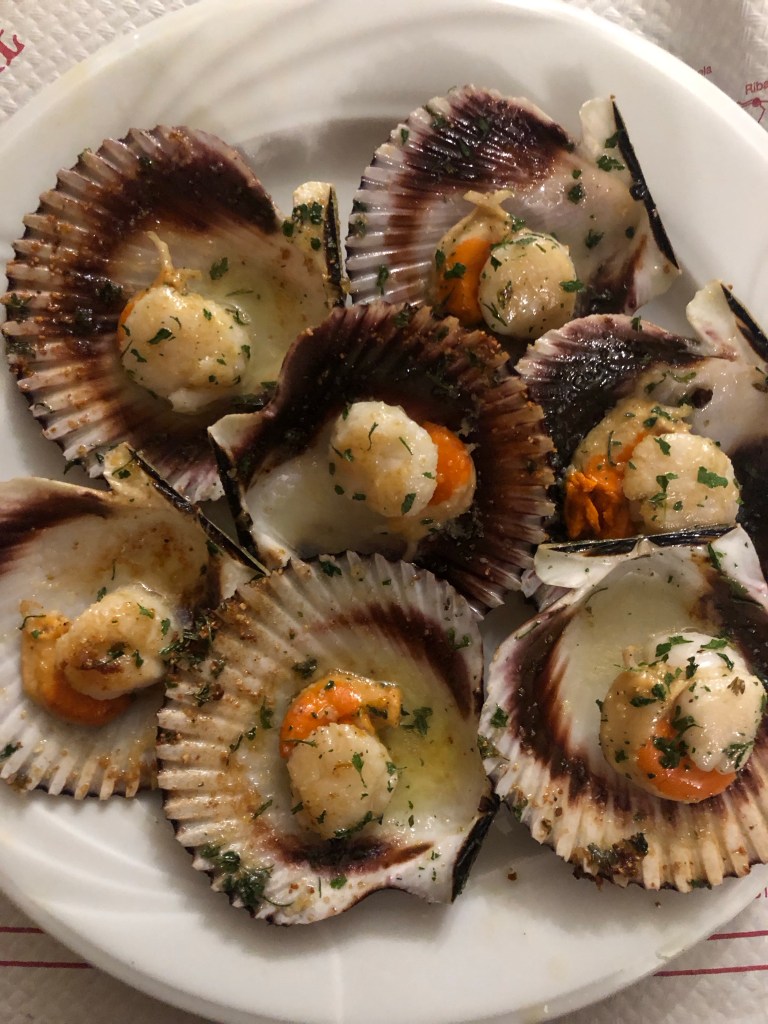
After skimping on lunch I figured I deserved a treat for making it here in record time – that, and a single communion wafer makes for a poor supper. So I popped into one of the bars on the busy Rúa do Franco and, eyeballing a good’un (O Barril), I ordered a surf and turf dish: zorza (Galician pork in pimentón) and zamburiñas (the iconic scallops of the Camino).
I finished the night on a little ritual with the scallops. They came in the perfect number: seven. One for each of the companions who have lit the road of the Camino for me like stars in the night sky.
I toasted each one in turn. First, my mother, who first introduced me to the Camino and walked most of the first leg with me. Second, to Paz, an Argentinian woman who was my first companion on the road over the Pyrenees in that first assault on the Camino four years ago. Third, to Simas, my final companion on the road, and the only recurring light this summer who could keep pace with me (and in so doing, ground my wandering thoughts for my own good). Fourth, fifth and sixth, to my three stalwart companions on the road this spring: Sophia, Mikkel and Lachlan, with whom I would have gladly walked this road to the end and back, and whom I have carried with me in my heart this summer. And last, but certainly not least in my thoughts, to José, my grandfather, without whom there would be no Camino.
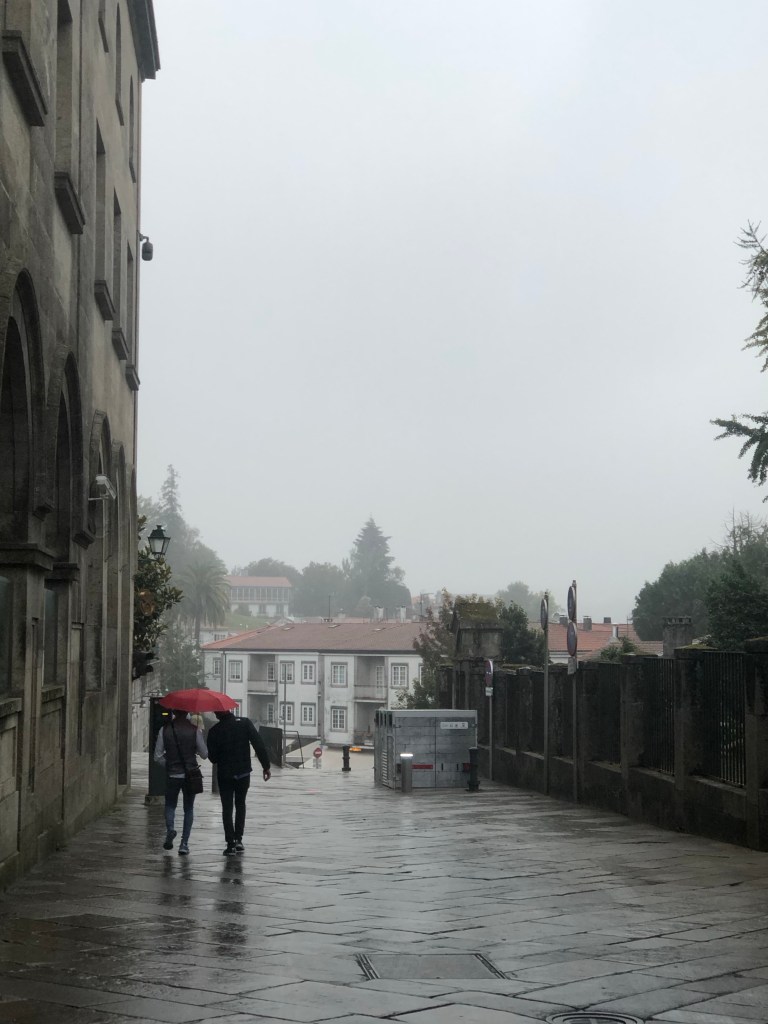
Tomorrow is a new day. Santiago de Compostela glitters under a cloud of gentle rain, and my back is relieved to be free of its shell for two days. It’s time to explore this jewel of a city! BB x
I was woken from my afternoon nap by the melody to Greensleeves, of all the pieces in the world – the guitarist from Villafranca must have caught up to me. Now that my pace has slowed a tad, it’s likely I’ll be running into a few familiar faces over the next couple of days.
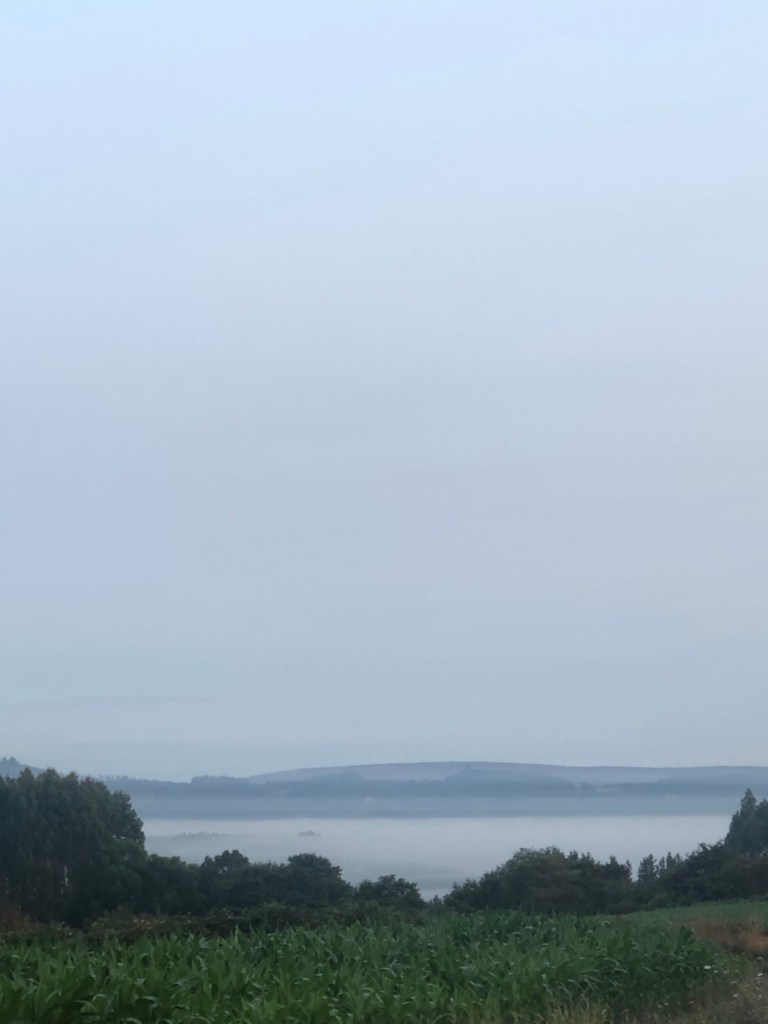
I set off late from Airexe this morning, being its sole inhabitant for a couple of hours after the Belgian pilgrim set off at five thirty for Ribadiso. I was in much less of a hurry, still mulling over whether to dawdle in Vilar de Donas and wait to see the peerless medieval murals of its famous church. Even at the disgracefully late departure time of 7.30am, the whole world was steeped in a sea of mist, from which only the tops of the trees and the hilltops of the valleys beyond emerged like the ruins of a sunken world, much like Portomarín yesterday.
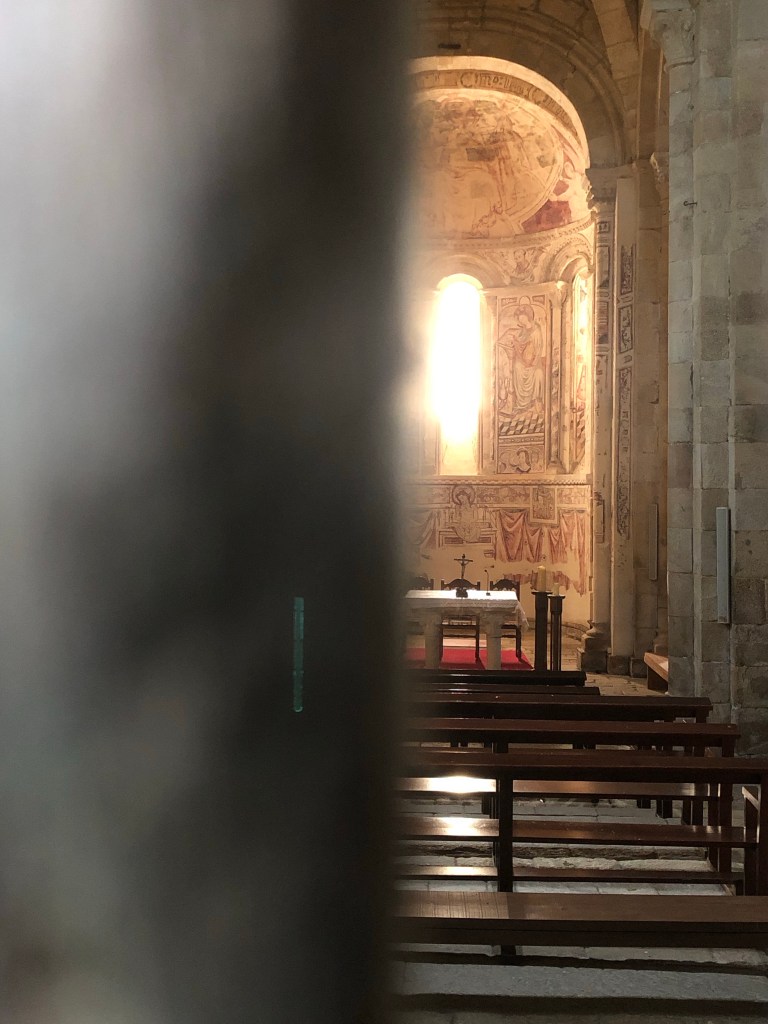
I decided to make for Vilar de Donas in the end, seeing as it would be a relatively short one today (23km) and I had time to kill. It’s a small detour of 2km to the north from the hamlet of Portos, but you’ve got to time it right. I arrived shortly after 8am, and while the internet and guidebooks give various times, for the record, the church is open from 12.00, and no earlier. A local electrician told me I could seek out the ageing sacristan who lives in a house nearby and ask, but as it was still so early, I decided it would be best to leave him be – not least of all as he is in his mid-nineties! I did, however, get a reasonably good view of the church through a crack in the door, and I can only conclude that the 12.00 opening time is a crying shame: the church is at its most magical in the morning light, when the rising sun throws down a golden beam across the floor through the opaque marble window. I’ll have to come back and see this marvel again sometime.
The road to Melide cuts through a number of forests, from carefully planted rows of pine and silver birch to the once-so-alien stands of eucalyptus, which are such a feature of the Galician landscape. Most magical of all, however, were the truly ancient forests that the Camino traverses, with wildly twisting branches and an undergrowth so dense it would need a machete to pass through.
Sometimes the arching trees seem to create tunnels, as though intentionally sheltering the pilgrim road as they must have done for over a thousand years and more. The colourful turigrinos passing through had their heads down on their phones, unfortunately, but the marvel wasn’t lost on those few true peregrinos left on the road.
I reached Melide shortly after one in the afternoon, but it was twenty past by the time I found the albergue – by which time a horde of turigrinos (a pejorative term used by pilgrims to describe the sudden mass appearance of tourists sharing the pilgrim road for non-spiritual reasons) had descended, which meant my first queue for an albergue municipal of the whole Camino. Given that this is often a Camino staple in high season, I should really consider myself lucky!
More than lucky, however, I was certainly hungry, having eaten little more than the last of the homemade biscuits for breakfast this morning. Melide is famous for its pulpeiras – restaurants specialising in the Galician speciality, octopus – and the name thrown around for the last few days has been Pulpería Ezequiel, an award-winning family business on the high street. A ración of the famous pulpo costs 11€ and is more than enough to sate the appetite – and it really is sensationally good. Do drop by if you’re passing through. There are plenty of other options, but Ezequiel himself must have been cutting and chopping octopus all morning, since that was what almost everybody seemed to be ordering! One wonders just how many octopuses (octopi?) the Galicians get through each day, never mind the Spanish at large…
I’ll try to catch a pilgrim mass this evening, as there was none to be found last night. I’m still deliberating whether to shoot for Santiago a day early on Sunday, but we’ll just have to play that one by ear. Until the next time! BB x
After yesterday’s long walk from León, today’s itinerary was mercifully short. Astorga is only 15km from Hospital de Órbigo, but it’s such a friendly city and so well set up for pilgrims that it’s worth a stay – if for no other reason than to rest up for the next couple of days of hiking as the Camino climbs into the Montes de León.
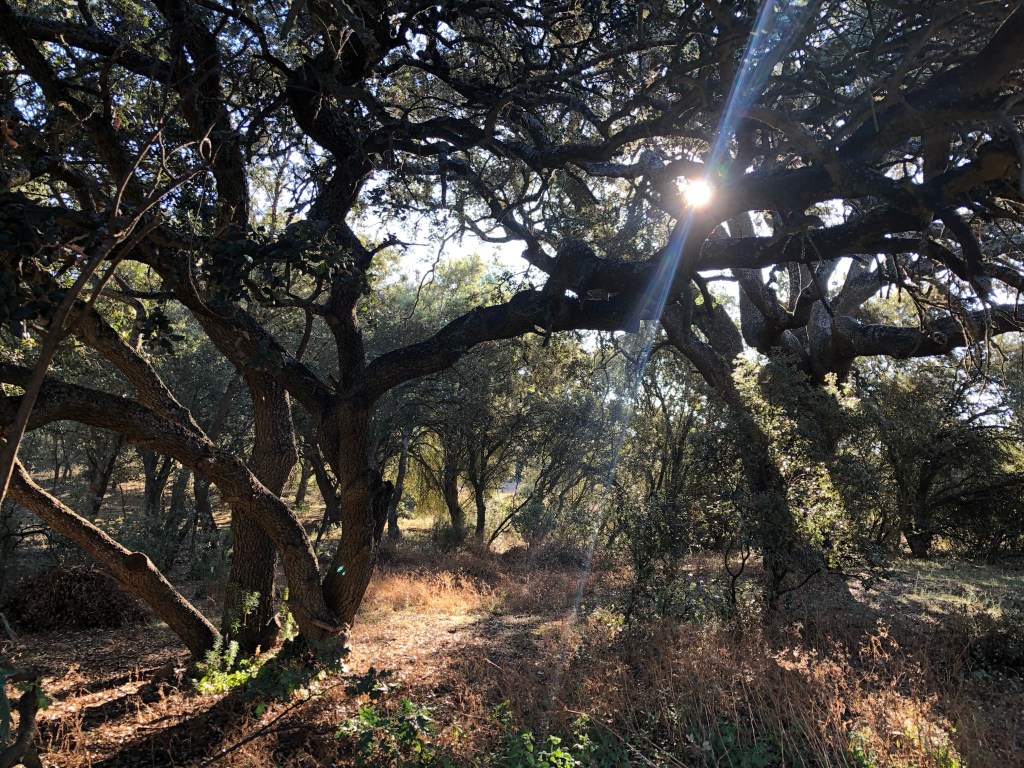
I set out later than usual this morning, since Google and the guidebook were suggesting only 3-3.5 hours’ walk to Astorga. To kill the time, however, I took a detour in search of an ancient oak tree said to grow deep in the old forest north of Valdeiglesias.
Joined on my random quest by Anna-Marie, a Danish ceramist from Aarhus, it took half an hour to track down the location (with a little help from Google Maps). A local out walking his dog was justifiably baffled by my madcap mission but it was a good excuse to have a chat in my favourite language.
We found the spot where the tree was supposed to be, but whether we found the tree or not is anybody’s guess. The trailing lichen from every branch certainly made the forest look considerably older than the others I’ve passed thus far, but that probably has more to do with the health of the forest and its relative altitude above the last kilometre of the meseta.
The jury’s out on the tree. Still, it was an adventure!
Anna-Marie took a break and I pressed on, making a mental note that our detour left us over an hour behind the other pilgrims. Once again, I had the Camino to myself, which meant that I was much less inclined to pause at the couple of rest stops I encountered. Which meant I gave the Casa de los Dioses a miss, though it looked like more of a hippie love-in than even this crazy shaman could handle!
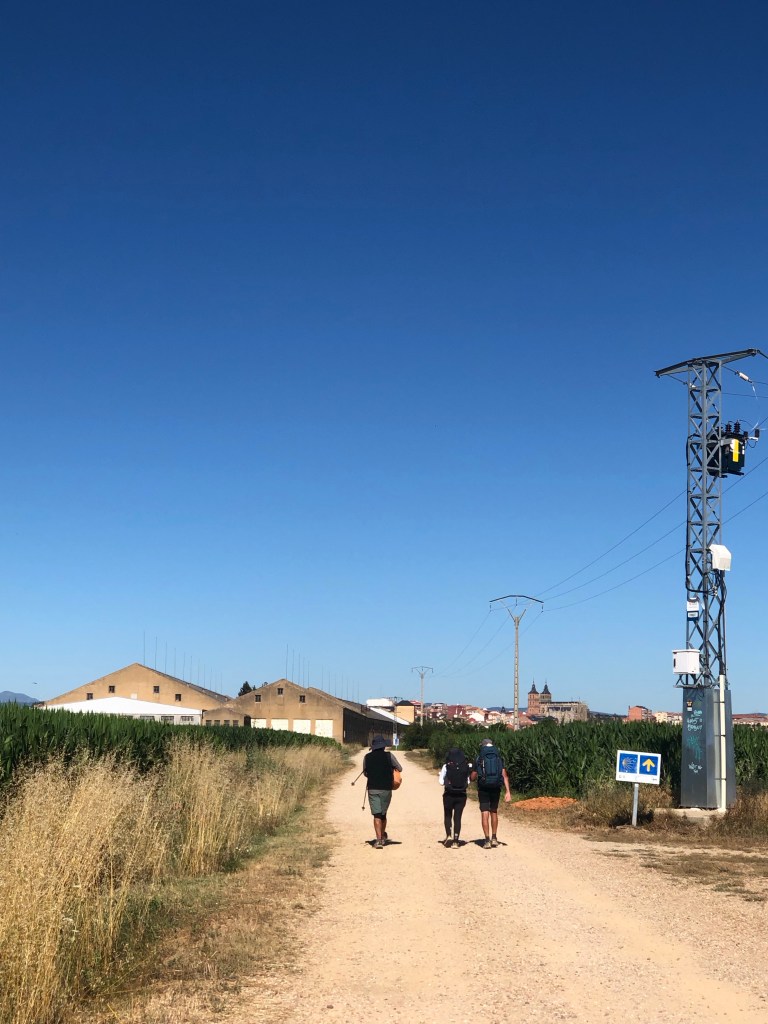
I must have gone like the clappers (or they must have breakfasted long), because I wasn’t all that far out of San Justo de La Vega before I caught up to a familiar bunch: Tadeo, Christophe and Estrella. It was good to have company for the final stretch, so I slowed down my pace and fell into step.
We made it to Astorga on the back of Tadeo’s wonderful singing voice and Estrella’s remarkable knowledge of Spanish ballads (apparently they pop up here and there in Korean dramas – who knew?).
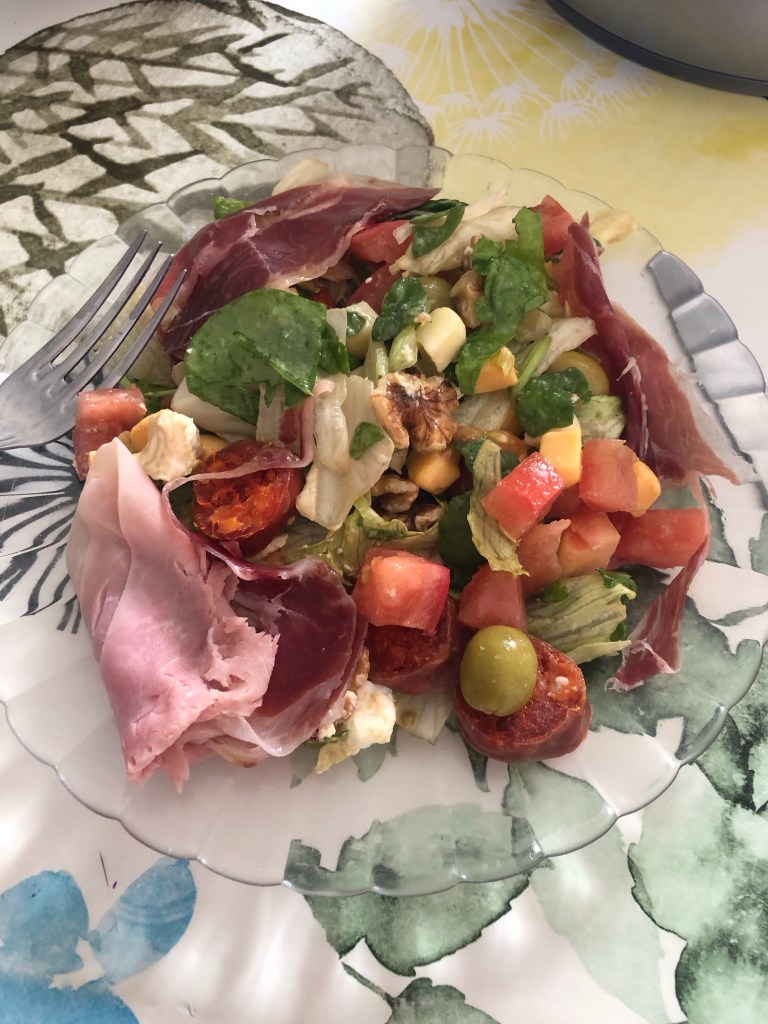
In lieu of a menu peregrino – which can get a bit samey – we bought supplies at a local supermarket for a communal salad. And what a salad! I haven’t even so much since starting the Camino. Good food, good company, good language practice and great exercise. There’s really very little to fault the Camino.
Unless you don’t like Italian. Because there’s a lot of Italians on the Camino! They must be the biggest demographic out there by a country mile… BB x
Our four-day stay in Lisbon has come to an end. We devoured our final pastéis breakfast in the hotel room as the café was already full. We checked out shortly before twelve and took our leave of Belém for the city. Now Portugal is racing by outside in a grey-green blur of clouds, cork-oaks and tarmac. We have our bolo-rei for the 5th (a large, ring-shaped cake for the celebration of the coming of the Three Wise Men), which is a nice change; I don’t think I’ve had a gateau-de-roix since primary school.
But that’s enough of that. Let me get to the meat of the article.
Lisbon isn’t the easiest place to find a good spot to eat at six o’clock on New Year’s Day (nowhere is, I guess, but it was our lot to be in Lisbon at that time on that day, and Lisbon, it must be said, has a lot more choice than Belém). Or at least, that’s what all the websites said. It turns out that most of that was fake news – a highly appropriate term, whoever coined it first – as there were a fair few establishments open for business. Unfortunately, the local cafés and bars were not among them. Seeking a semblance of affordable quality in the inner city, we took a side street and were instantly set upon by three jockeys, all hustling for our custom. Out of sheer boredom if nothing else, we settled for the woman in the puffy pink coat who asked us ‘just to look’ at the dodgy photograph of a grilled sea-bream she was thrusting before our noses. Typically you can get two results from such establishments: sleazy-greasy service, or a surprisingly satisfying meal. So we went for that one.
I’ll be honest. The food was decent. I’d have been a better judge if I didn’t have the cold of the century, reducing the capabilities of my already abysmal sense of smell to that of a clogged vacuum cleaner, but for a place that offers patatas with every dish and actually serves up potatoes instead of chips, I’ll give them a star for honesty. But it’s not the honesty for which you should visit. It’s the staff.
The staff of Restaurante Cadete are far and away the establishment’s USP. Why? Well, primarily because there’s absolutely no way of knowing that they work there. Everyone has their own look. On the outset they might all be the clientele, and it’s only when they jump you with a notepad that you realise they’re on the job. The lady in pink was Russian and her hustle style was practically Moroccan in its friendly push-push ‘just to look, just to look’ way. One waiter, a charming Asian lad in a striped jumper, delivered our order with a cheery, eloquent manner. Another waitress in a purple turtleneck sweater said not a word as she tidied away our meal. But the cream of the crop was the chirpy chappie dressed in a smart beige coat with white chinos, a blue tie and a small tuft of blond hair. He might have been Polish, or German, or something else, if not Portuguese. I honestly took him for a street performer as he stumbled over to take our order, given his whimsical charm and gauche dress. I haven’t ever seen a waiter bring the card machine and pretend it’s a phone before handing it over before, and I might not again. It seems childish but, at the end of a long day, it was immensely entertaining. Dinner and a show. What more could you ask for?
We never met the chef (one rarely does), though I’m willing to bet he was a character as well. For sheer personality, I’d give the place a 4/5.
Work starts again a week tomorrow. I wonder what adventures the new year will bring? BB x
I haven’t been traveling much recently. A combination of earnest novel-writing, job hunting, private lesson planning and musing over where to buy a cheap bike have conspired to keep me here in Villafranca for the time being. This year I’m working just the one job (proof that, even in the best of all possible worlds, experience isn’t always the best guide), so I have some four hundred euros less per month to live on. Weekend adventures have become what they always were, at heart: a luxury. Sometimes, however, an opportunity presents itself which cannot be turned down for love nor money. Biff’s visit to Seville last week was just such an opportunity.
How I managed to make it through the entirety of my last year out here labouring under the belief that I couldn’t cancel my private lessons for my own benefit is a mystery to me. I rescheduled my Thursday guardería session, packed my things as the WiFi man finally showed up (hello Murphy, long time no see) and hopped on the afternoon bus to Seville. It felt so good to be on the road on a Thursday afternoon. Previously I was working right up to the wire on a Thursday, so that the weekend began on a Friday morning. This year siestas are a thing, and I wonder how I ever managed without them. They’re the perfect solution to early mornings, late nights and post-weekend fatigue. The blinds in my room are a work of genius: at a basic level, they let in the morning light through little gaps in the shutters, which you can close off completely, leaving the room completely dark. I’m enjoying the shelter now, and I know I’ll appreciate all the more when this country heats up again come May next year… that is, if it ever cools down sufficiently for that to be a noticeable change (it’s almost November and it’s still pushing high twenties here).
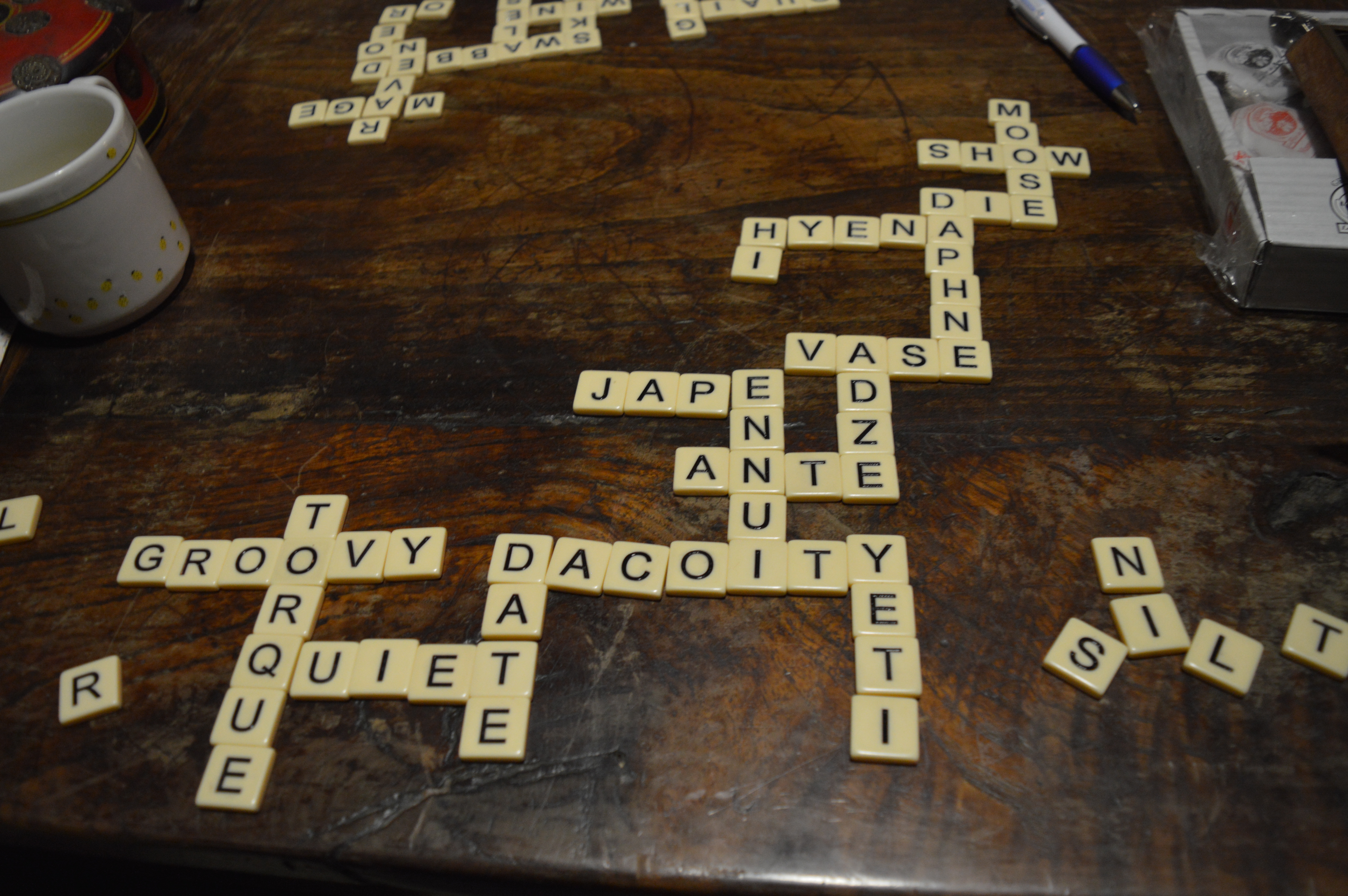
After weeks of ESL games, I leapt at the chance to spar on an equal footing. Biff inducting me into Bananagram, which is something like the bastard child of Scrabble and a crossword. My passion for complicated and obscure words dragged me down a lot, but it made for some visually appealing results, win or loss.
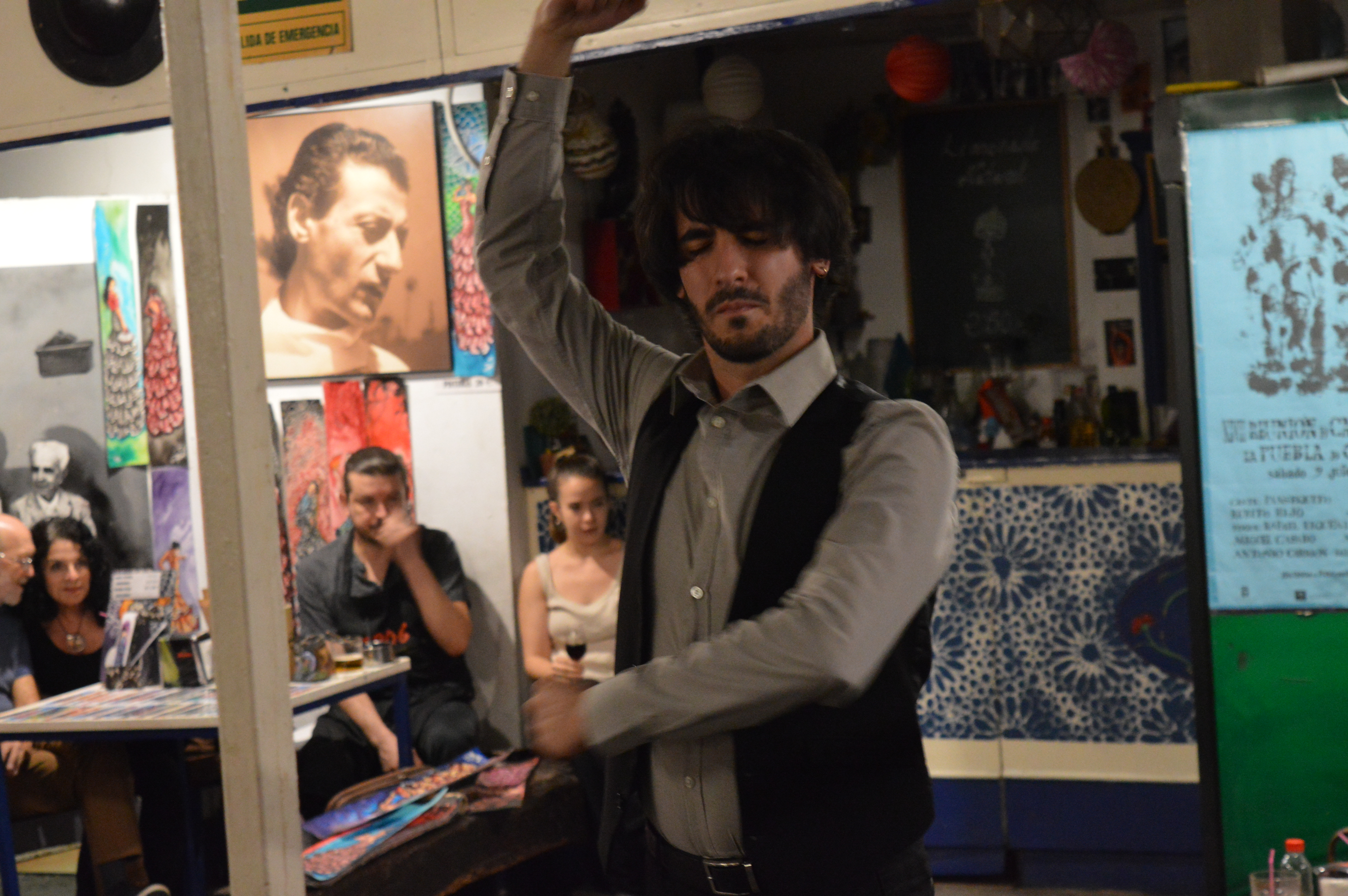
But I didn’t cancel my private class to play Bananagrams all weekend. I’ve been moving in and out of Spain for several years now, so it’s always a pleasure to see my grandfather’s country through fresh eyes. Biff hadn’t been here since our school’s music tour to Spain back in 2006. I’m not sure why I found that so hard to grasp. But it’s chiefly because I had new eyes to look through that I got to see a side of Seville I’d never seen before. Palmeras are delicious, persimmons aren’t half bad and, if you’re looking for flamenco off the beaten track, you can do a lot worse than La Carbonería…
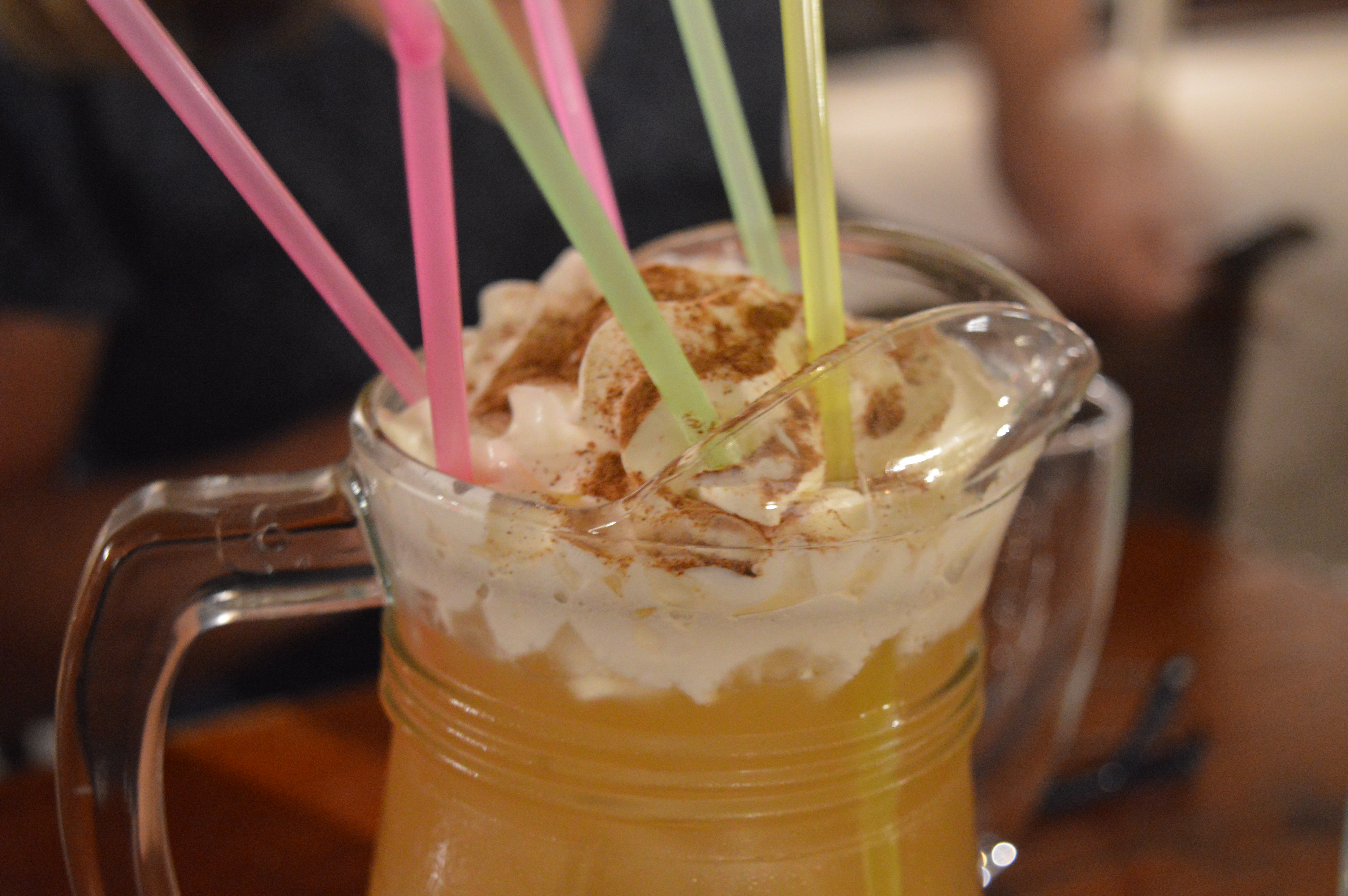
I work by the rule of three. Once is happenstance. Twice is coincidence. Three times is a message (or interest, if we’re talking about catching somebody’s eye). And three recommendations to visit La Carbonería from three different sources – the head of Chemistry, my flatmate and Biff’s AirBnB host – was too obvious a message to ignore. So, with a glass of agua de Sevilla in hand (that stuff is deadly), we nabbed a table near the performers and were treated to a decent forty-five minutes’ set.
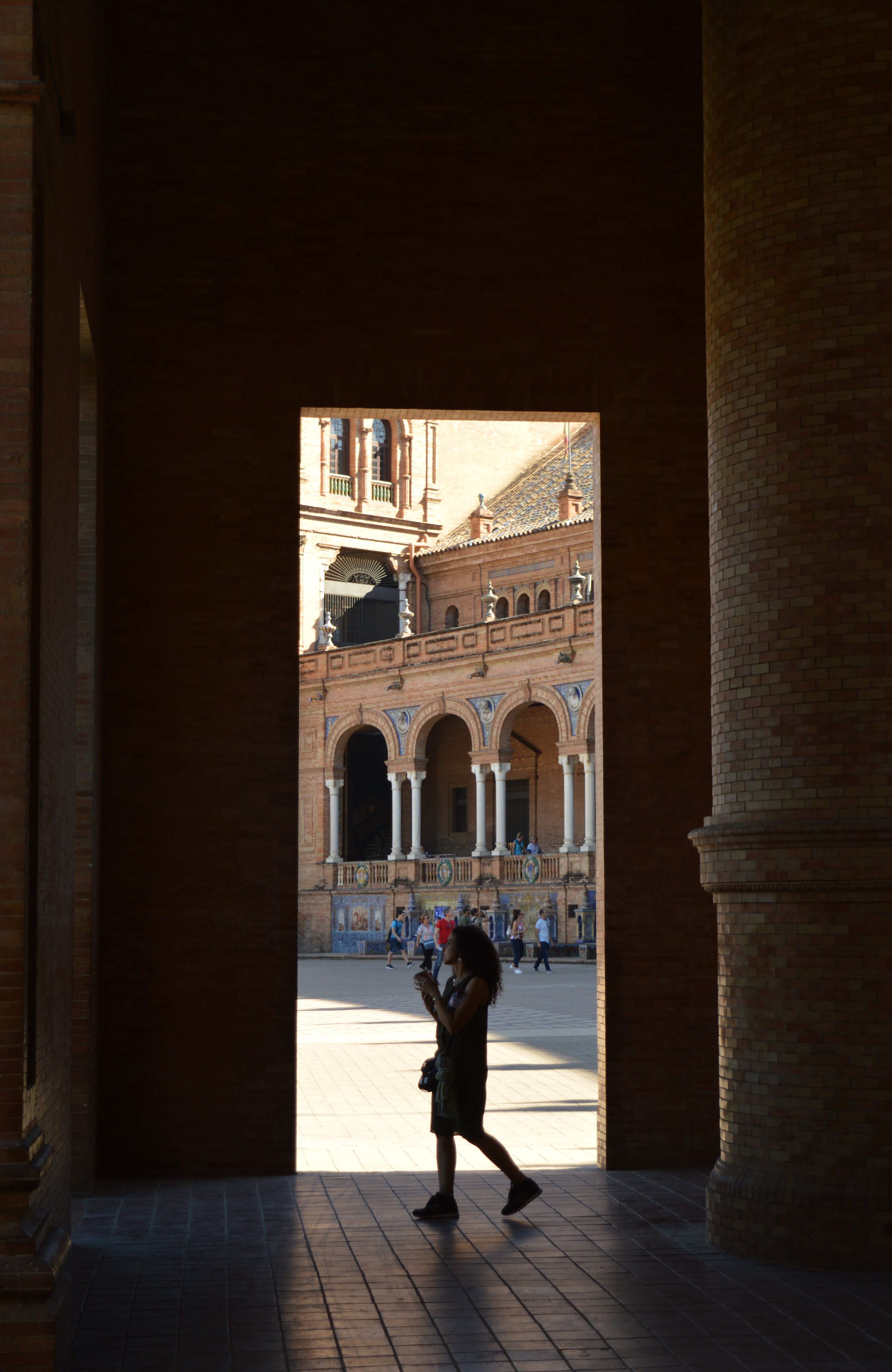
It was nice to have the time to wander about Seville at leisure. So often I’ve been running through Seville, waiting for a bus, or a plane, or something along those lines. There was a demonstration in the Plaza de España by the police for equal pay, watched from the shade by a mounted division. Catalonia was being stripped of its powers, so I think the police had other things on their mind. It felt weird, to stand in the plaza and see the cities and regions of Spain painted on the panels all around, knowing that up north the kingdom was pulling itself apart. Just like the Paris attacks, it was hard to believe such a thing was possible under the Spanish sun. Babies in pushchairs followed the protesters, Latin tourists snapped photos, gypsies danced for pennies on the steps. Life goes on.
Fortune favours the interested. Go on a wander about town and you never know what you might find. I’ve seen a Mario Kart stag do, a gypsy wedding and an errant griot here. On our journey in search of a tapa or two, I saw a nun with a stuffed-toy octopus in her backpack. You never know what you might find.
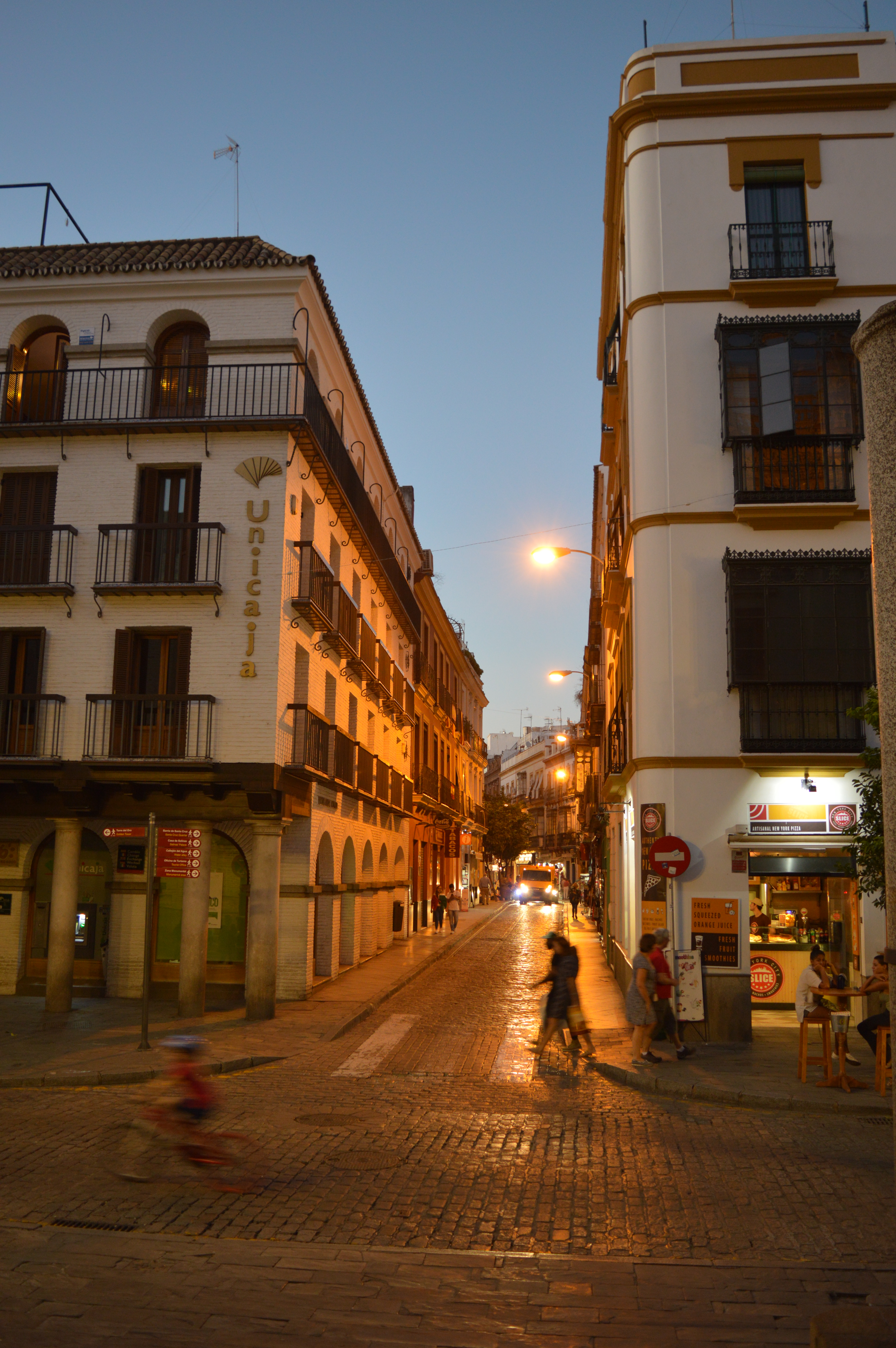
Seville’s streets are beautiful by night. Some parts look like France, others look like Spain, and others central Europe. I suspect it’s the trams that make it look like central Europe. The monk parakeets that live in the palm trees and the ring-necked parakeets that nest in the alcoves of the various churches jostle for space, and the screeches of the latter make the place sound eerily like London every once in a while, though it’s not quite cold enough at night. The chestnut vendors are out and about. When the nights are colder, the steam rising from their wheeled stands will complete the picture. I hope they’re about in Córdoba, too. I’d like to buy a bag of them and eat them on the Roman bridge as the sun goes down and the lights on the mosque come up.
It’s been a mad week. Over the last week I’ve had to fret over dwindling career prospects, squeeze answers out of a class that don’t appear to have improved at all in two years, hurdle a new wave of needlessly ambiguous admin, wrangle with pushy internet dealers and, to top it all off, deal with a flatmate and a friend who could still disappear at any given moment should a better offer arise. It’s not been easy. The first few weeks of term are always an uphill struggle but I’ve never known one week quite this bad.
Five days of mental block were torture. None of my attempts at writing came to fruition. I needed a break. I had to get away from it all. And Fate, as she often does in such situations, came up with the goods. At the end of an afternoon spent filling in forms for Student Finace and the local Junta – and venting my hysteria through last week’s Have I Got News For You – an offer to join the other auxies for a Halloween Party came through. I ummed and ahhed and was on the verge of turning it down when I had one of my spontaneous urges and decided to go for it. I had no time to prepare an outfit, so I came as an un-ironed shirt. Perhaps that’s the least of the small-world horrors I’ve had to deal with this week, but it was easier to explain.
It was an enjoyable if tame night, for which I was truly grateful. I had the chance to discuss my music withdrawal issues with a kindred spirit, and to gather opinions from the new auxies on their new home. I also got to put my dancing shoes on at Concha when Billie Jean came on. I needed that. But most importantly of all, I got to spend some quality time with two of the brightest stars of the Tierra de Barros, Tasha and Miguel.
If I needed a reaffirmation that I had made the right choice in coming back to Villafranca and not striking out somewhere new, this was it. These two are perhaps the greatest of all reasons for my return. Vultures, Hornachos and migas were waiting, but these two goofballs were a greater lure yet. And it isn’t often you can so easily allow yourself the luxury of moving your workplace to be near to your friends.
We spent the day in Mérida, where Fate once again showed me a kind hand for my spur-of-the-moment decision. Because I spent time with Tasha, I learned that the Junta needs a stamp from the bank and a paper copy of our ICPC, which have to be mailed, not emailed. Even though I went to the Orientation days this year, that detail wasn’t spelled out, nor was it included in the emails. It’s a good thing I spent Friday morning hunting for envelopes and stamps, albeit for a different purpose. If the man at the estanco hasn’t been so dishearteningly begrudging at surrendering two rows of stamps rather than the twenty I was asking for, I might have used them all. Forewarned is forearmed.
She also demonstrated a knack for knowing my desires by meddling with Miguel’s car’s CD player. The Red Hot Chilli Peppers CD kept pausing, so he put on a Galician band who played the unmistakeable lullaby-dream of Erin Shore, albeit to the name of Romance de Novembro with Galician lyrics – this, after gallego has been so on my mind after my parents’ visit this week. Fate, or whatever it is that organises these things, sure knows what she’s doing. At twenty-three years old, I still cling to the storybook belief that everything that happens happens for a reason. It’s hard not to see the lines when you want to.
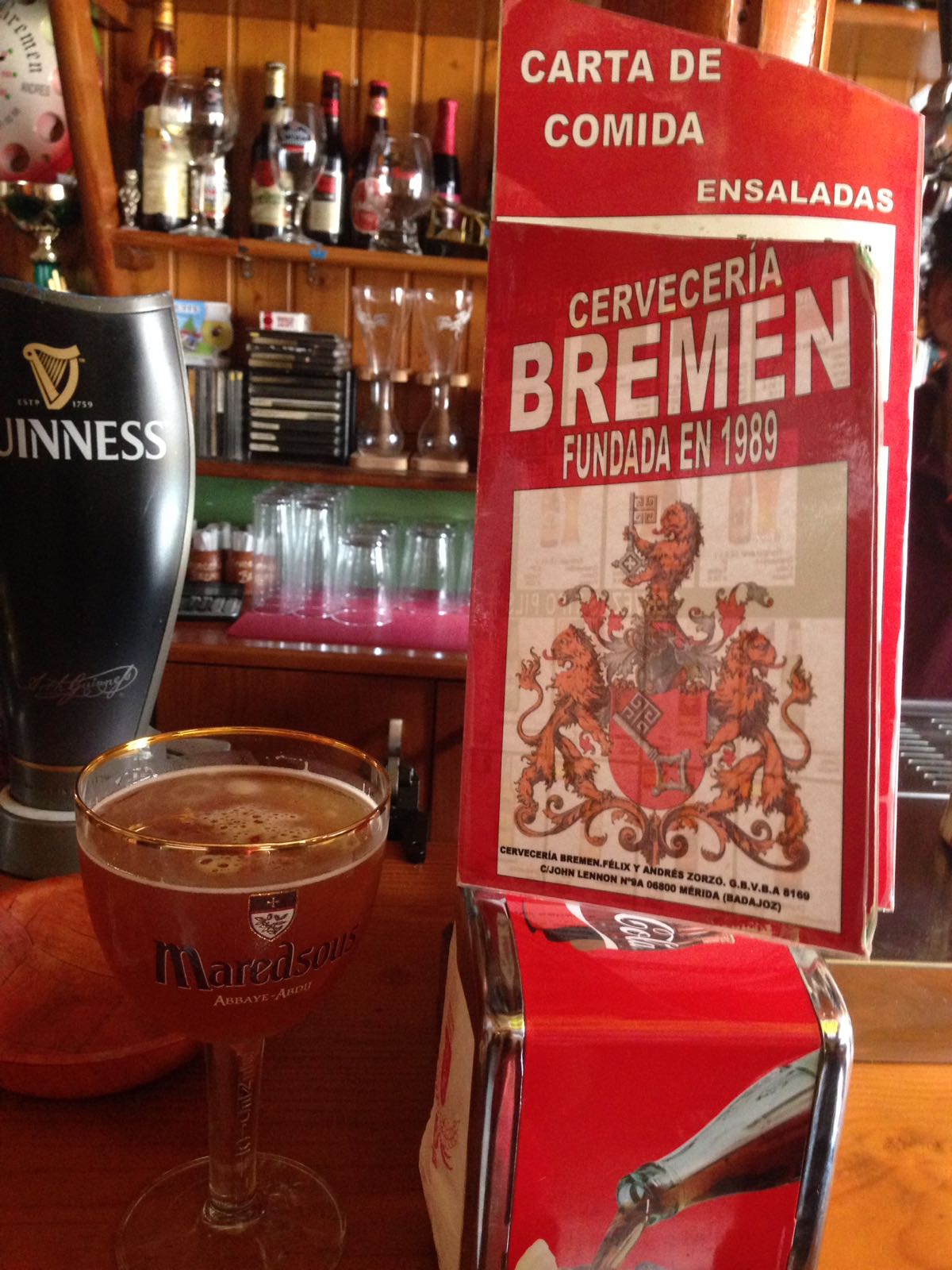
We had a couple of beers in a Bremen-themed bar on the curiously named John Lennon Street, complete with memorabilia of the former Beatle plastered on the wall beside buxom stein-bearing belles and German insignia, whilst the bartender bemoaned the loss of jobs in the wake of Catalonia’s defiant pursuit of independence. Spanish flags still hang from balconies across the region a week and more after the Día de España celebrations, in solidarity with a nation that’s being pulled apart by old wounds. My beer tasted like strawberries and wasn’t unpalatable. I guess beer is like tea, coffee and sitcoms: unappealing at first, but you learn to appreciate it over time. Effort leads to endurance, eventually, enjoyment.
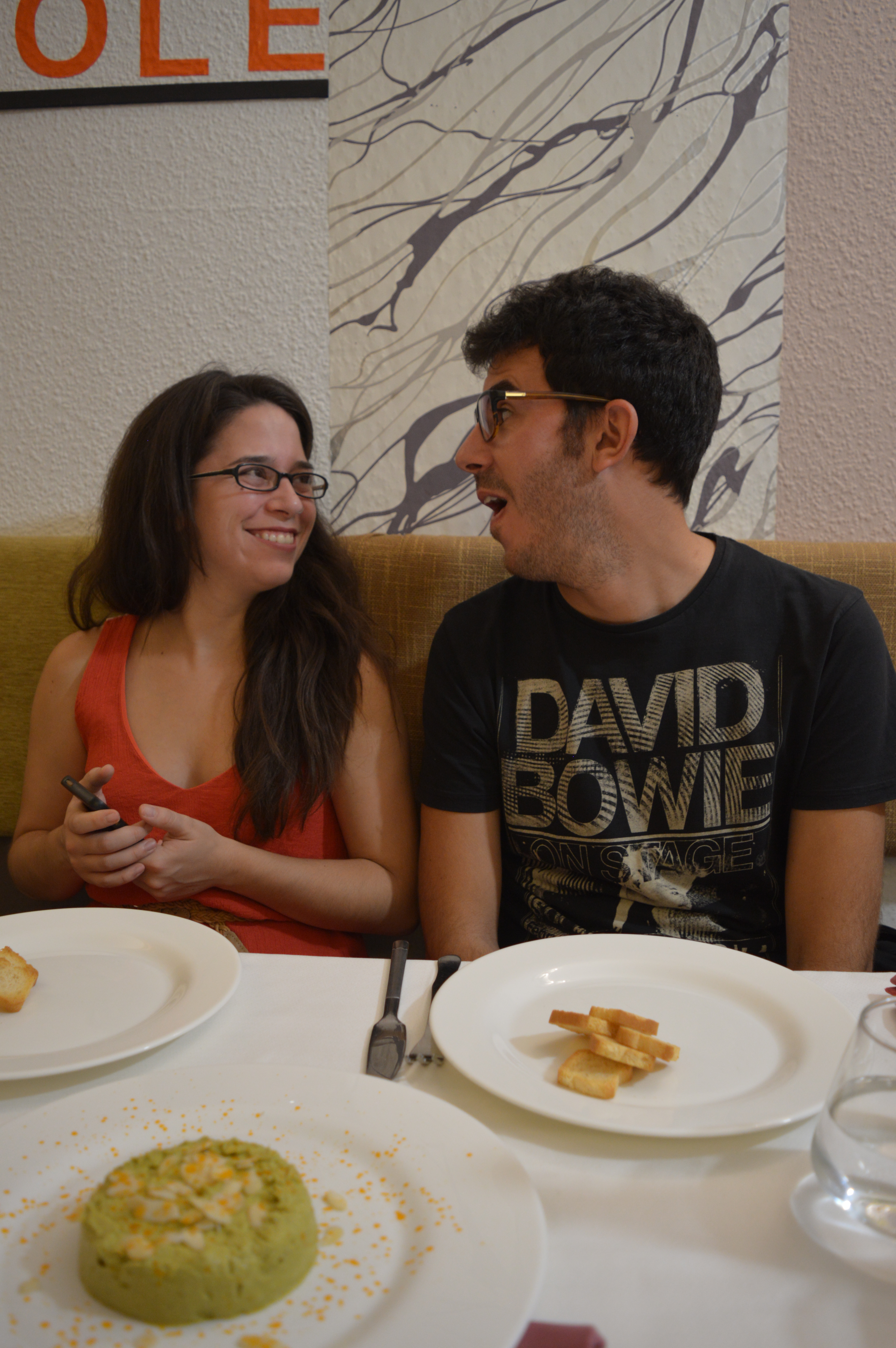
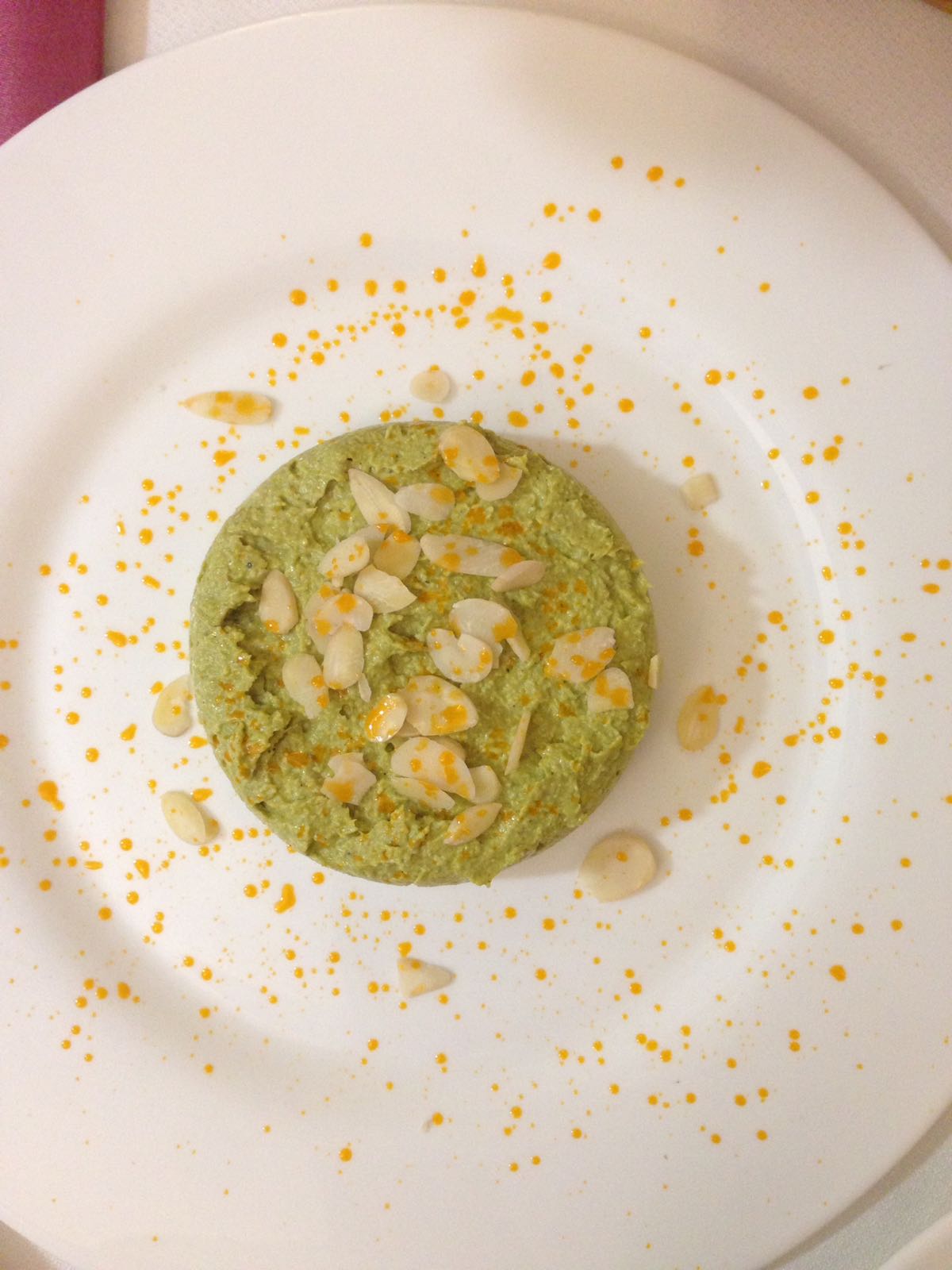
Lunch was superb. We visited La Taberna del Sole on the recommendation of a student of Tasha’s and we were not disappointed. Four courses (including a green asparagus and almond pâté and the ever-reliable croquetas de jamón) left us fit to bust, and at under twenty euros a head, it was a steal for a fancy lunch. The city is finally opening up to me.
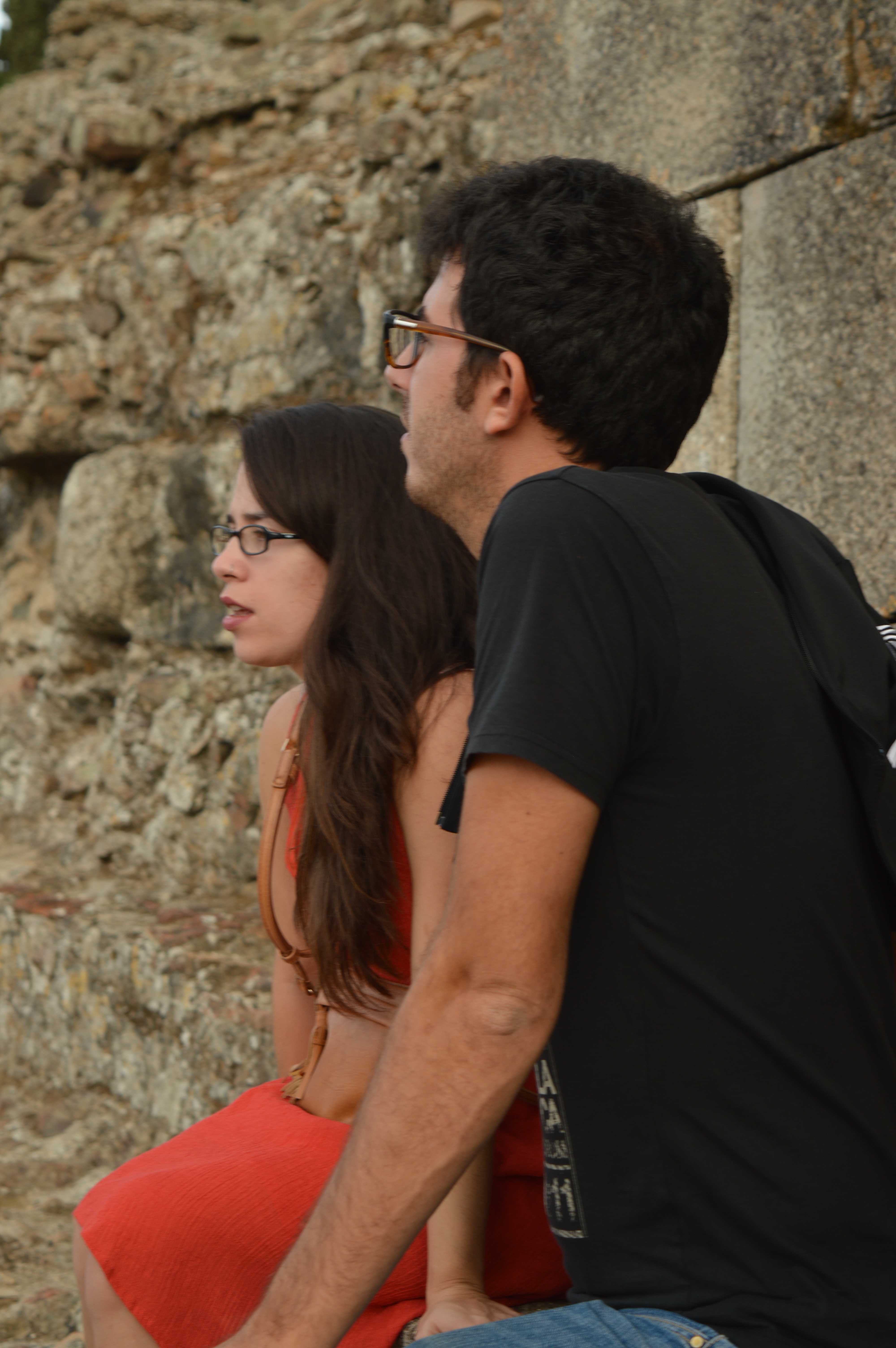
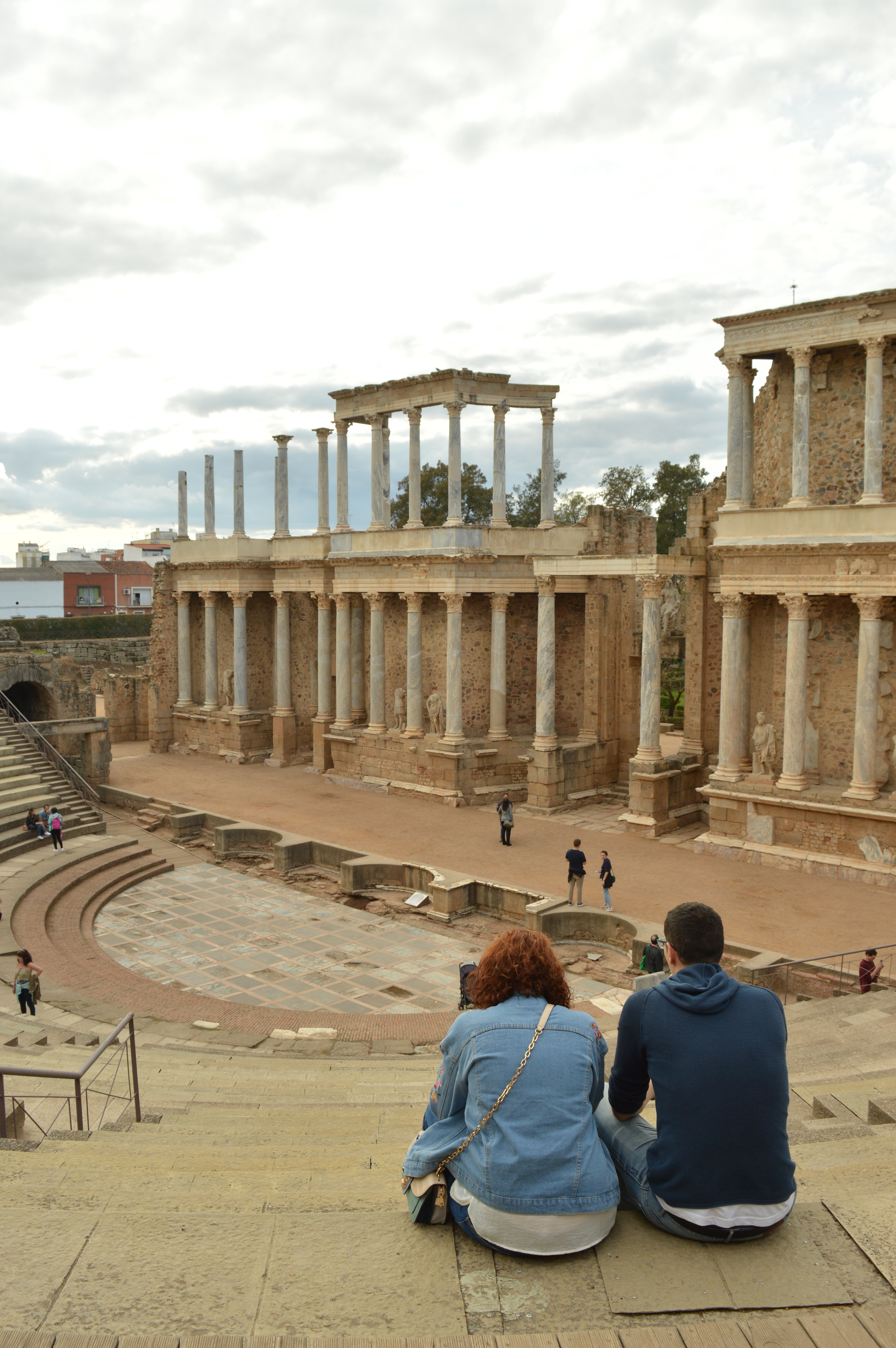
Despite having already lived here for a year, I never visited Mérida’s famous Roman theatre. Tasha and Miguel thought it was high time that was remedied. I guess I’m spoiled from having wandered the ancient beauty of Jerash and Petra, but Mérida’s reconstructed theatre complex is nothing to be scoffed at. It’s hard to believe it was all but underground a few decades ago, back when the city was confined to the north bank of the Guadiana and the Los Milagros aqueduct still marked the northern edge of town. Stradivarius and Burger King now adorn the old streets, rubbing shoulders with the Temple of Diana and Saint Eulalia’s basilica. Times are changing quickly here.
The amphitheatre is equally impressive. Complete with a sunken arena that wouldn’t look out of place in an episode of Pokémon, the building is in remarkably good nick for its age. It’s always a little hard to tie the two together, the sophistication of the Roman Empire and the bloodlust of its citizens who paid to watch men and beasts kill each other. Man, the noblest of all beings, and the one who delights most in killing his own kind. In Rome we see man for what he truly is, perhaps. A vainglorious hypocrite.
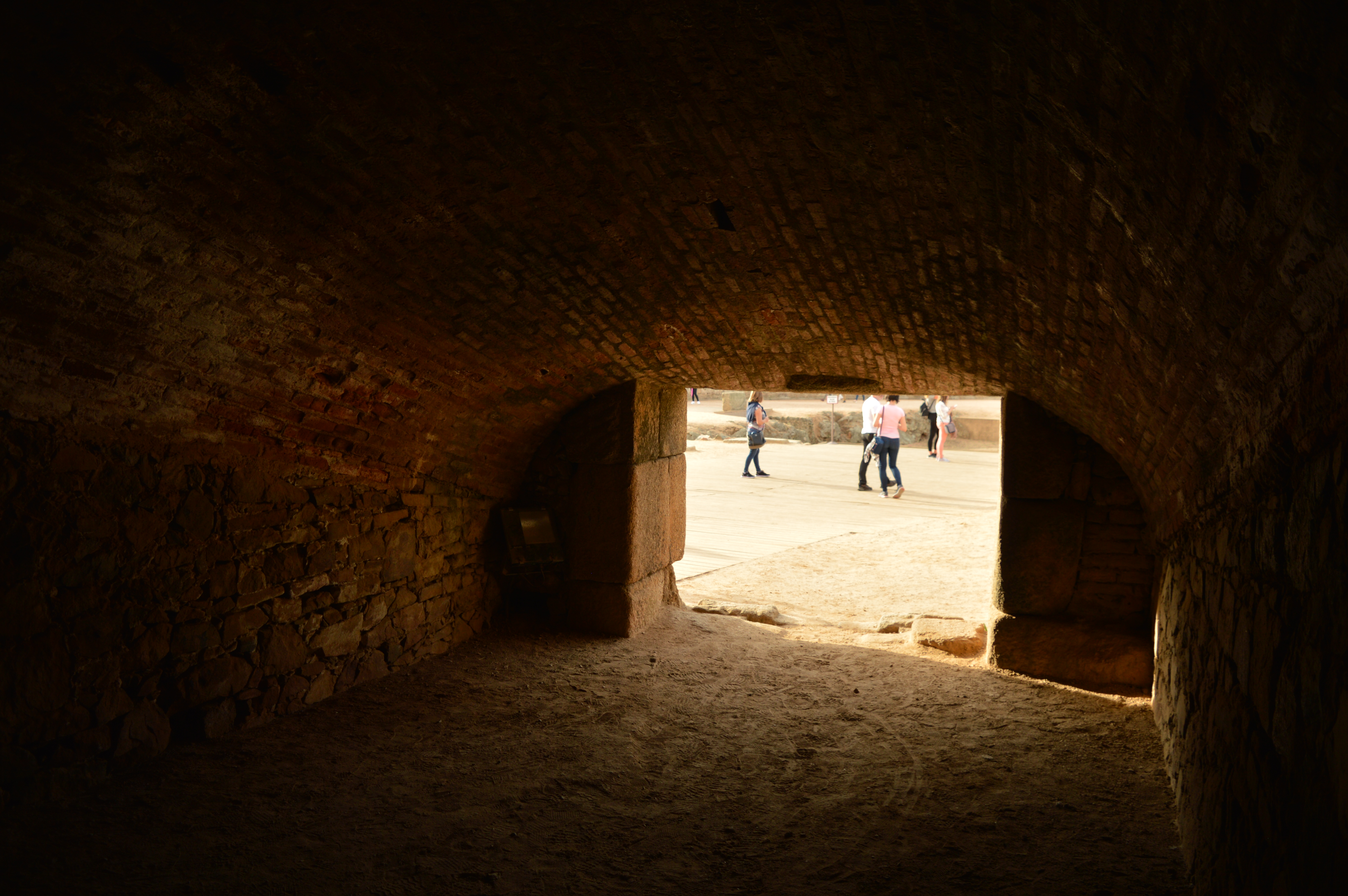
I entered via the dens where the wild beasts were kept for venato fights, ducking low so as not to bang my head on the way out like I had on the way in. I wonder what unwilling denizens of the Empire were caged here for the sport of a Roman carnival: boar from the surrounding hills, bears from the Cantabrian hills, lions from across the Strait… Maybe they even had aurochs here, mighty shadows of the toros bravos that still fight on in the Roman games of a land that saw fit to preserve them. I wonder how many beasts in all lost their lives in this arena.
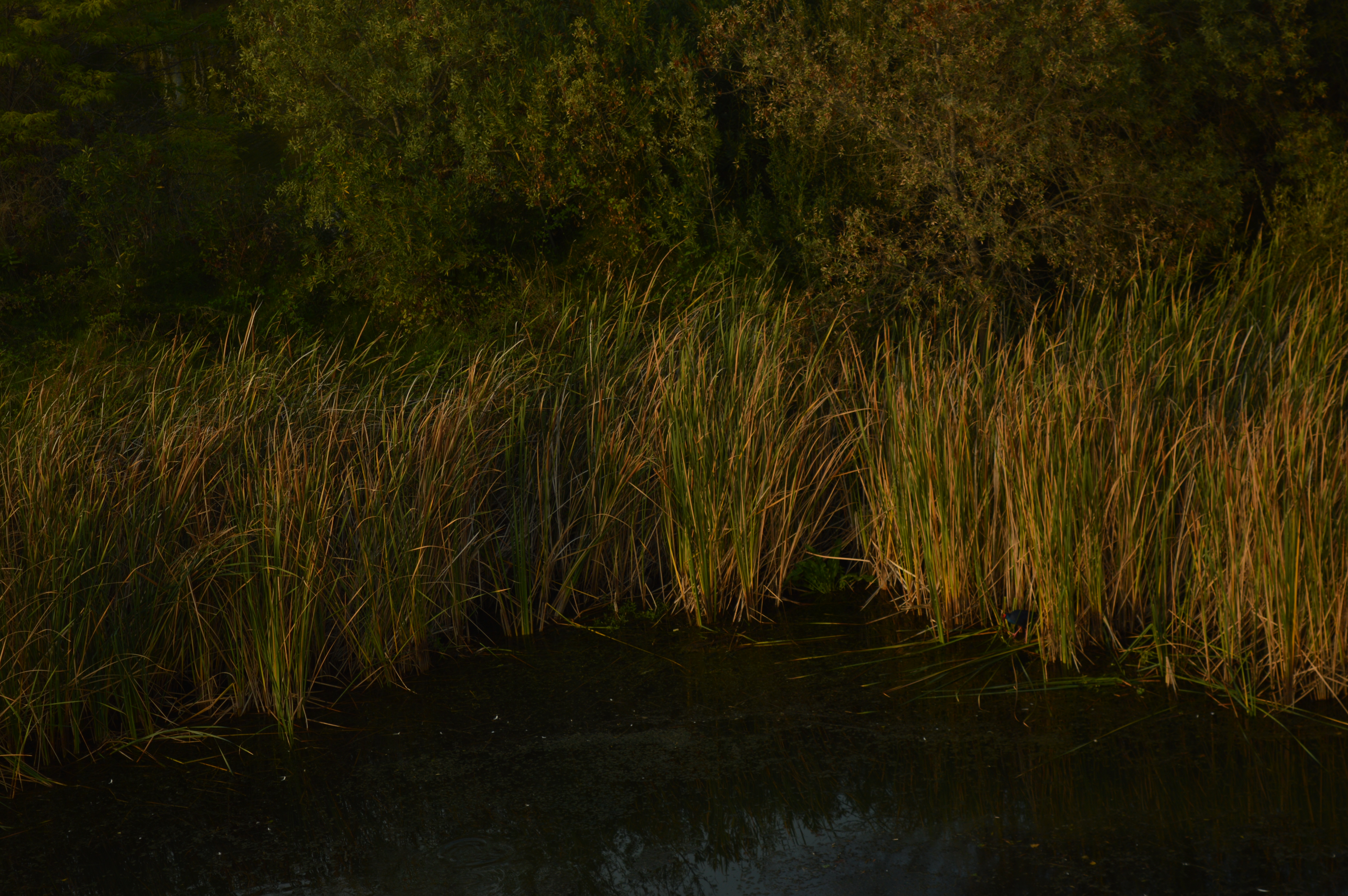
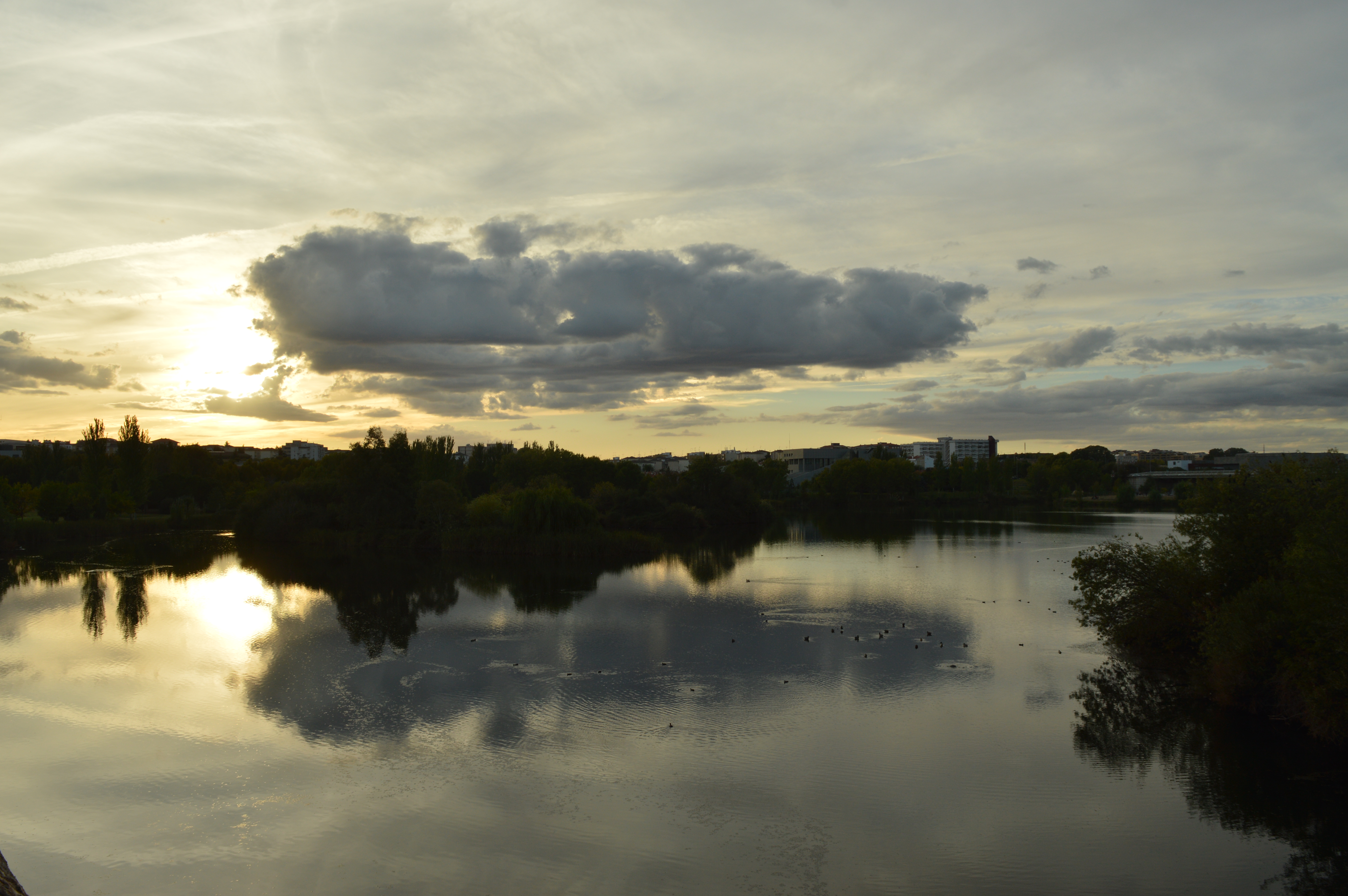
We crossed the Roman bridge on the way home. I looked, I listened and I spotted the swamphen that often haunts the reeds on the island, gnawing away at a reedstem clutched between its gangly toes. I wonder if it’s the same bird that I so often saw here two years ago? It always brings a smile to my face to see it, and it was a pleasure doubled to share it was my friends. Durham had its goosanders. Mérida has her curious calamón. Overhead, the impressive silhouette of a black vulture glided noiselessly to the west. For all the fury and doubt that the modern world brings in its wake, there is such beauty left in the old world.
The storm has passed. The last of the rain fell during the night. I woke up this morning and opened the window to a cold breeze that had not been there before. I smiled. Everything seems better in the cold light of day. I can do this. Autumn has come at last. The long, dry Extremeño summer is over. BB x
NB. It’s a pain when you have to write a blog post twice. This time it was because I wanted to italicise Have I Got News for You, erased it by accident, and, when Undo didn’t return them, rebooted to save the effort of writing those six words again. This will all be so much easier when WiFi finally comes to the flat in just under two weeks’ time…
It’s funny, the difference a day can make. Twenty four hours ago I’d have been tempted to title this post ‘Man vs Food II’ and it would have come across as a rather negative, Ben-gets-defeated-by-dinner-again sort of post. Right now I’m a little groggy, having just woken up from a much-needed afternoon nap, but the high that’s kicked this post into action has taken Monday’s negative finish and given it a firm kick out the door.
Coming back from Rabat and a more relaxed attitude to fasting has thrown the first two weeks’ routine off the rails, I confess. Apparently one of the various excuses for not abiding by the fasting laws – besides illness, pregnancy and being on one’s period – is travel. As a non-Muslim I’m under absolutely no obligation to fast, and it was only because it seemed the logical thing to do that I started fasting in the first place, but it has since occurred to me that there’s no shame in backing down over a light lunch here and there.
There’s a lot of misconceptions about Ramadan. It’s a bit like the phrase Allahu Akbar: people tend to take it on face value. Here’s a really eye-opening insight I picked up today from a friend of mine. The Akbar part can be comparative or superlative, and if you let the media and its endless portrayals of gun-touting rebels carry you away, it’s easy to assume that it’s a gesture of defiance; ‘Allah is greater than any other (false) God’. In truth – or at least, in this interpretation of it (which I fully endorse) – it’s a simple reminder to the faithful that God is greater than whatever it is you’re doing right now. Harmless, right? Now that’s a pretty effective call to prayer. Better than a couple of church bells, at any rate.
Back to Ramadan. As far as I can tell, Ramadan isn’t about denying yourself food; it’s about getting closer to God. Fasting is just one way of focusing on such matters, reminding you daily of your obligation to the man upstairs. It’s that drive that gives believers the strength to persevere. I’m not a Muslim, so it’s little more than an act of respect or cultural appropriation on my part to act like the world around me. Fasting isn’t easy: I challenge anyone to try throwing their daily routine amiss with that two o’clock suhūr and still trying to get up for seven for that fifty minute walk to class. Faith is a greater fuel, however, and it’d be foolish of me to fight on without it. One day, I hope, I will find my way to God, but until then I would only be going through the motions, playing at mimicry. I’ve always been frustratingly stubborn, but on some matters the light, I find, is a little easier to see. Faith is one of those areas.
So without further ado, it’s out with the false scruples and in with the £2 tajines.
Now that the shackles are off, I’m going to tackle the meat of this post (there’s a knee-jerk reaction in pun format, if there ever was one). After a solid two hours’ research on the Barbary pirates, I ducked out of Dar Loughat this afternoon with comrade Alex to investigate our options for lunch. For the first time in two weeks I actually felt really rather hungry today, not to mention nursing an odd, woozy feeling in my head. In the latter I wasn’t alone; there were a fair few complaints about fatigue today across the board, even more than might be considered normal during Ramadan. The only difference is that the Levante has been blowing warm and strong all day, that westerly wind that’s supposed to dull the senses and even drive men mad. Believe what you will, I was tired and hungry. Alex offered to show me a local joint he’d uncovered and I was game.
Over lunch – a ridiculously cheap and delicious kofta stew – Alex shared a little of his knowledge of Egyptian Arabic with me. Something clicked upstairs, something that’s been dormant for a long time. Here was a guy who had had just as many years at the Arabic game as I, but one who, like my Parisian classmate, had beaten the language into submission over the course of time through a combination of drive and maintained interest. I found myself inspired to go home and study, and that takes some doing. Between the two of them, they’ve shown me that it’s not impossible to get to grips with the grammar. I’m no pessimist, but I do need reminding of my own capabilities from time to time.
It’s taken two and a half weeks to get to this stage. Two and a half weeks out of eight and only five remain. But I’m here at last. That’s what matters. And I haven’t even started the culture classes yet.
Watch out Arabic. I’m going to take you down. Just you wait and see. BB x
I never saw it coming, but the biggest challenge of living in Morocco is not the language at all. Above and beyond case-marking and getting your head around an Arabic variant that freely borrows French and Spanish words, rendering it almost four languages at once, is the challenge of eating. And whilst I consider myself reasonably proficient at keeping myself well-fed, these first few days in Morocco have rocked me to my core.
The problem, of course, is tied up with living with a family.
Before I set out on my ridiculous trans-Iberian adventure three years ago, I had the appetite of a wolverine. Always eating, ever snacking, stuffing myself with huge quantities of food that I was somehow able to finish in one sitting. Luckily for me, I remained as thin as a beanpole. Something to do with age, a penchant for going on long walks and a good metabolism. I was lucky.
2013 changed that. The whole Santander to Almería adventure was in a constant state of flux – I don’t think the exact route was entirely clear until it was over – and in the mayhem of sleeping rough in the mountains and navigating by compass and a map dated from 1978, I forgot to eat. That Spanish adventure killed my appetite for good.
Ever since, it doesn’t take much to fill me up. Which is a positive boon, when you think about it, but a major snag when it comes to lodging with an Arab family. I expect it’d be the same just about anywhere in the world, but Arab hospitality is deservedly famous. In amongst all of the Arabic that went over my head, I’ve heard my hosts say more than once that they think I’m not eating well. Not for want of trying – Moroccan food is amazing – but I’ve yet to finish a meal. The quantities are enormous, and the whole eating-with-your-hands thing is frustratingly technical. It slows me down to the point where I’m only halfway through a meal by the time the others have finished eating. Naturally, I’m much too stubborn to accept the cutlery they offered – it’s shameful, like resorting to English abroad – but I can’t help but wonder whether by trying to adapt in one way I’ve only set myself another challenge.
And I need to learn. Eating with one’s hands is the done thing in so many parts of the world, not least of all my beloved Africa. I’ve given myself a week to learn to do it properly; after that, I may resort to a knife and fork, if only to be eating well. It’s Ramadan, after all. It would make no sense at all to be fasting and eating less than usual at the same time. That’s idiocy on another level.
The fasting thing is good, though. It felt right, somehow, getting up at two with the family to eat suhūr together. It adds a new sense of structure to the day. They were all fast asleep when I left the house this morning, which you might expect from a total of five hours’ sleep, but I had class to go to. Fortunately, it’s only a forty minute walk, and that takes you through the medina and last the Royal Palace. It’s a really lovely walk, and it feels better off the back of having fasted with the Tetouanis.
All of this is very easy to say now, on the noon of the first day. Left to my own devices, I doubt I’d make much headway. But with the family watching I’m willing to try. Ramadan helwa, as they used to say in Jordan. And anything that’s got something to do with helwa can’t be that bad. BB x









 The Book of Barnabas