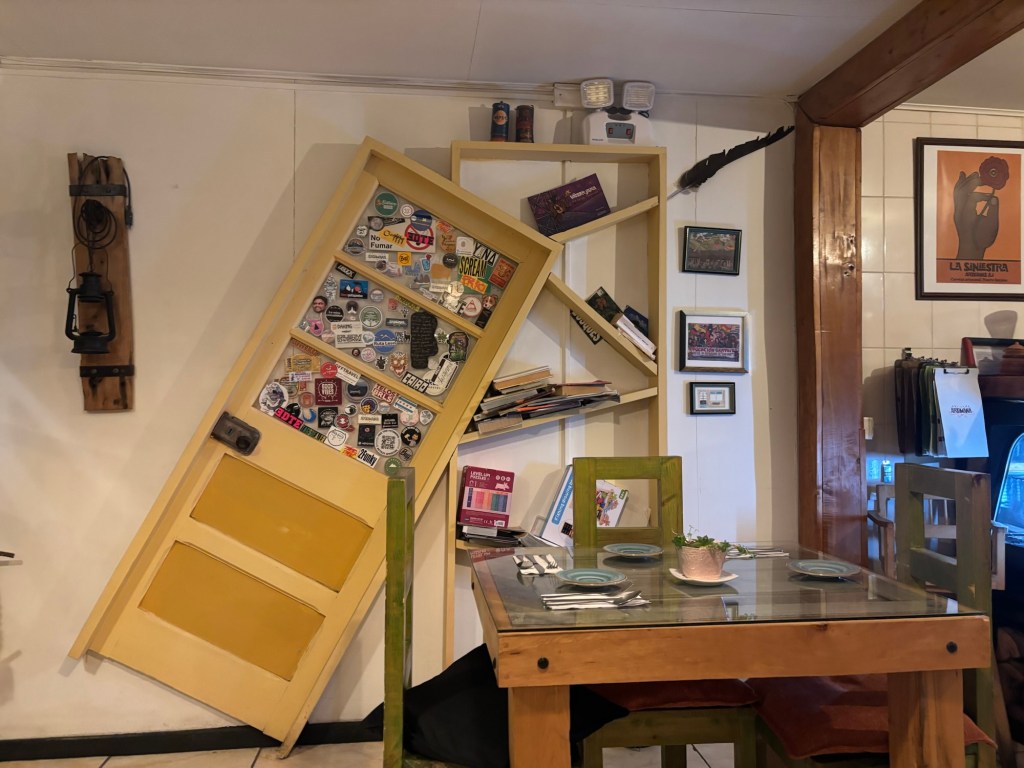
Café Artimaña, Puerto Natales. 20.30.
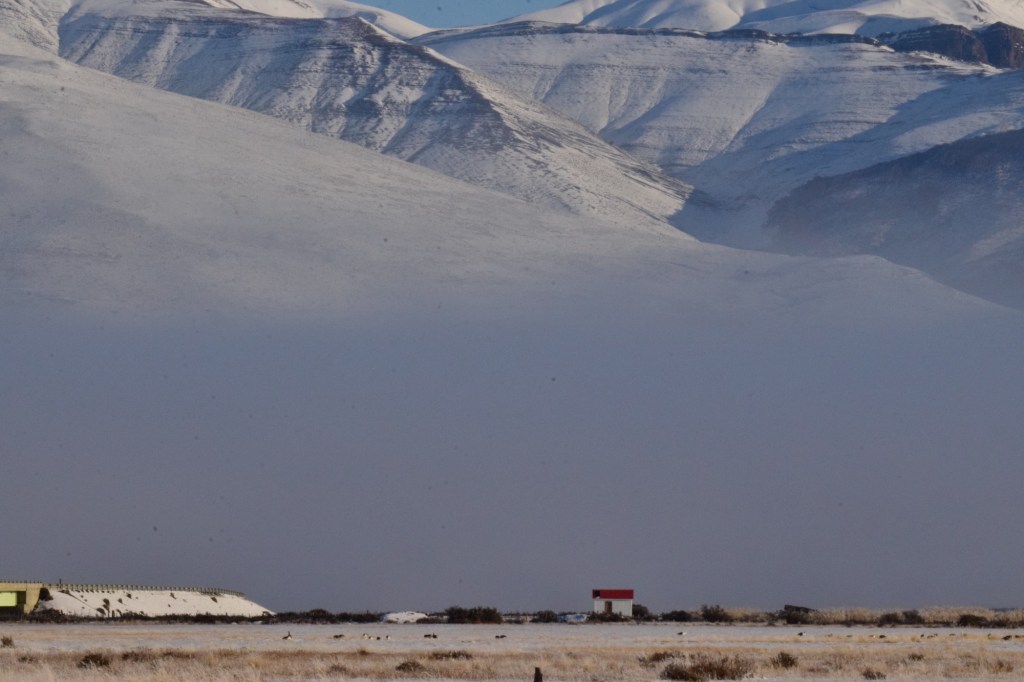
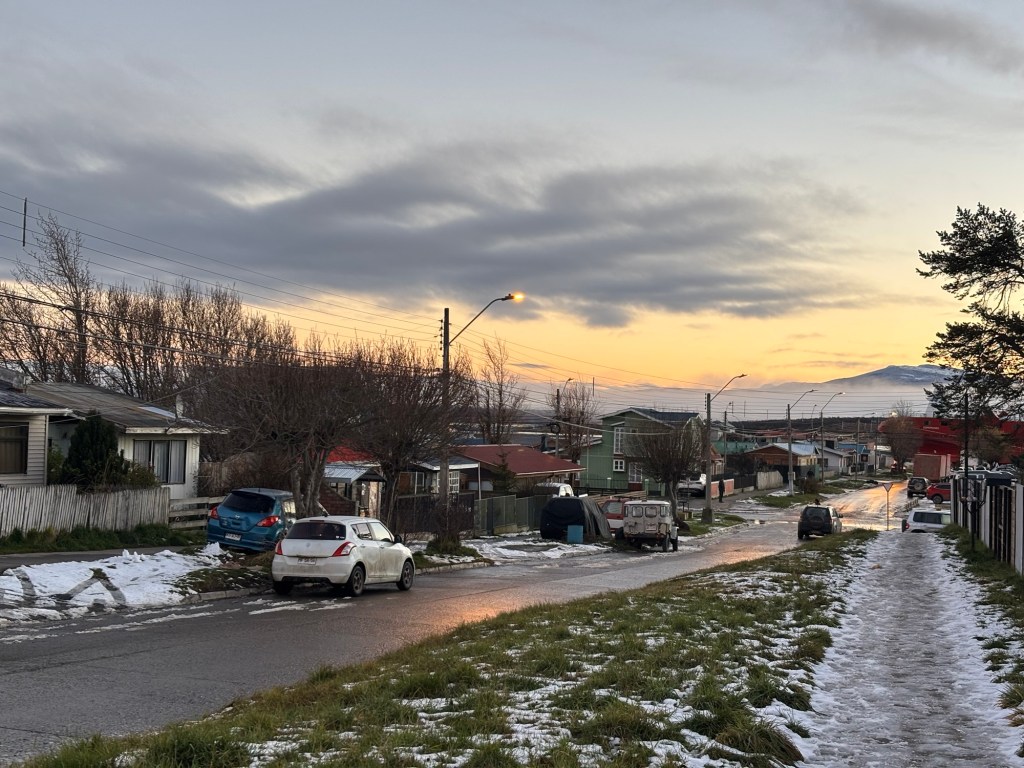
The weather is fickle. It’s still pretty cold out, but it’s warmed up enough not to need more than two layers on when leaving the house. The snow has largely melted away in Puerto Natales and the surrounding countryside, revealing for the first time the vast golden fields of Patagonia. It’s always a bit sad when snow melts, like coming to the end of a very special story, but if the forecast is to be believed, it will be back tonight.
I still can’t believe my ridiculous lucky streak in timing this adventure to coincide with the very first snowfall of winter – and all the magic that followed, right up until the last throw of my expedition today. Right up to the wire.
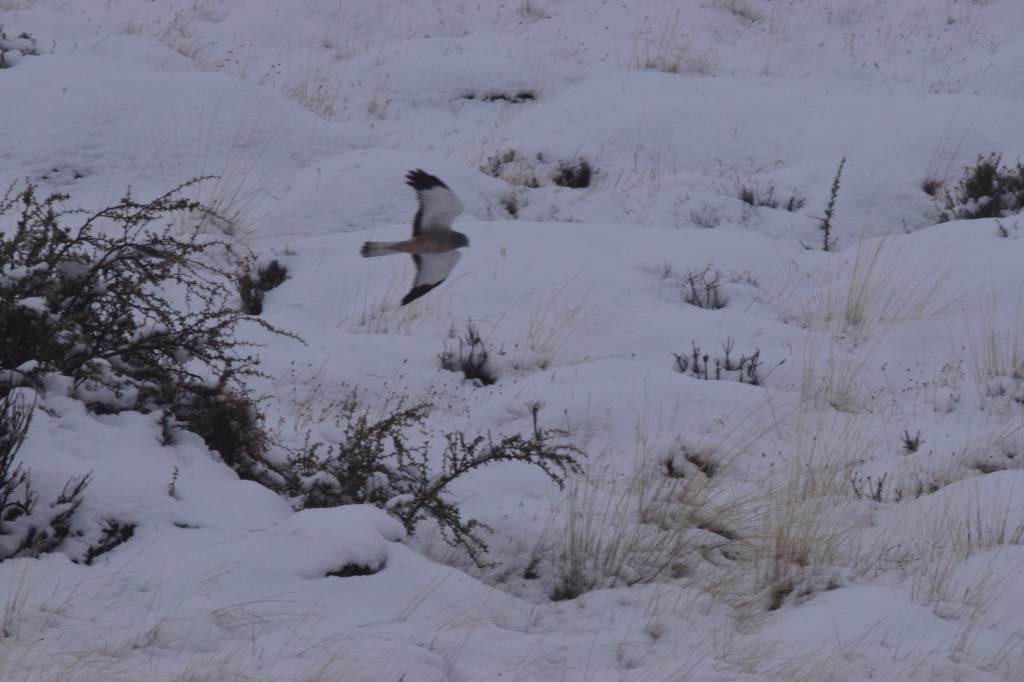
Fabián picked me up just after seven thirty as usual and we set out into the darkness. Beaming his thermal camera to his phone, we spent much of the twilight hour searching for life in the snow. It was eerily quiet this morning. A single caracara was our only find, shivering in the cold at the side of the road.

And not without reason: the temperature had dropped to a biting -10°C, worsened by the all consuming oblivion of a snowborn fog and an icy wind coming up off the lake. Even the lights of oncoming cars didn’t become visible until long after their engines were heard rumbling down the road.
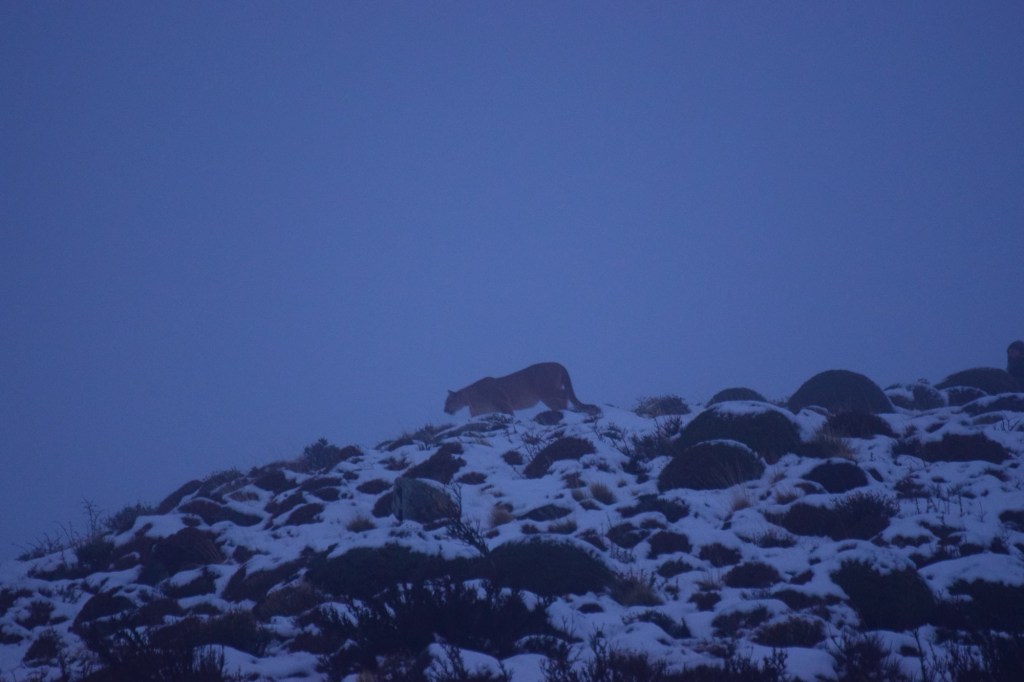
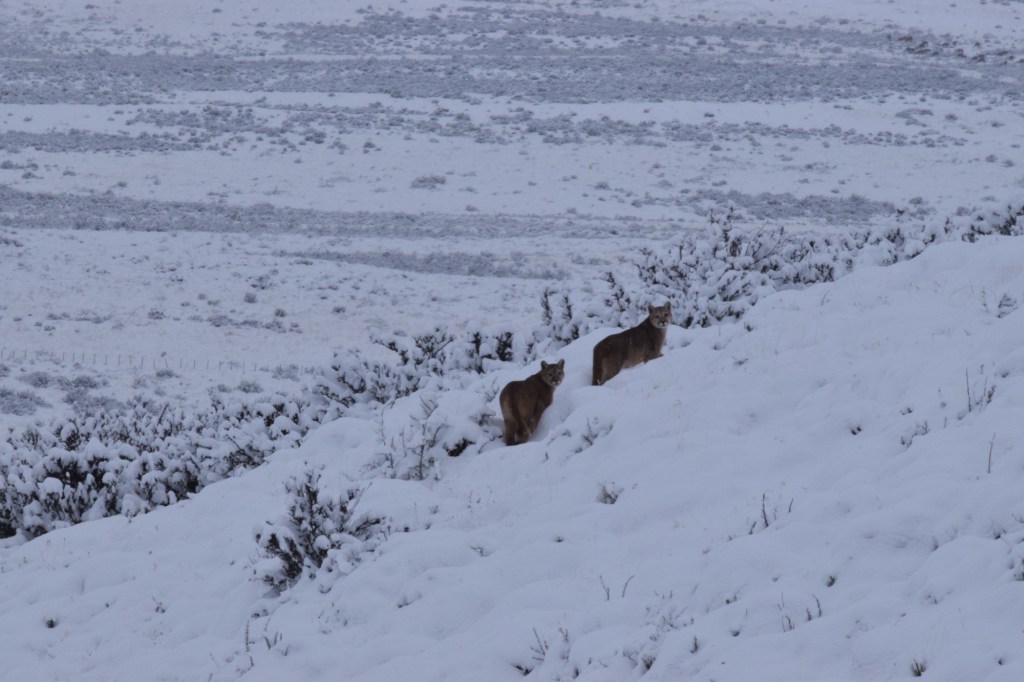
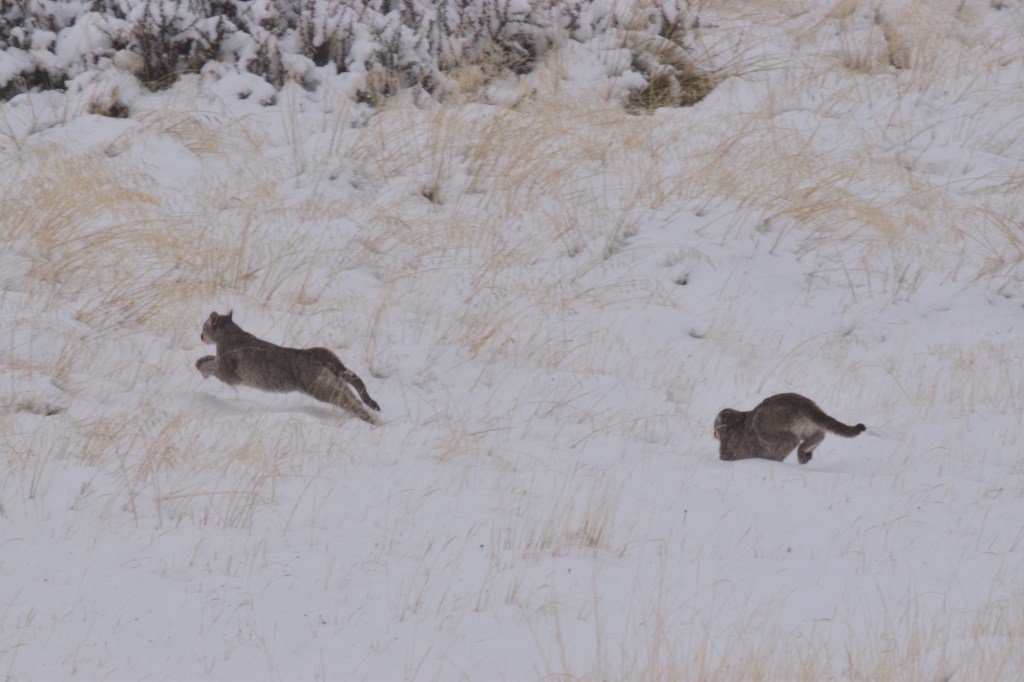
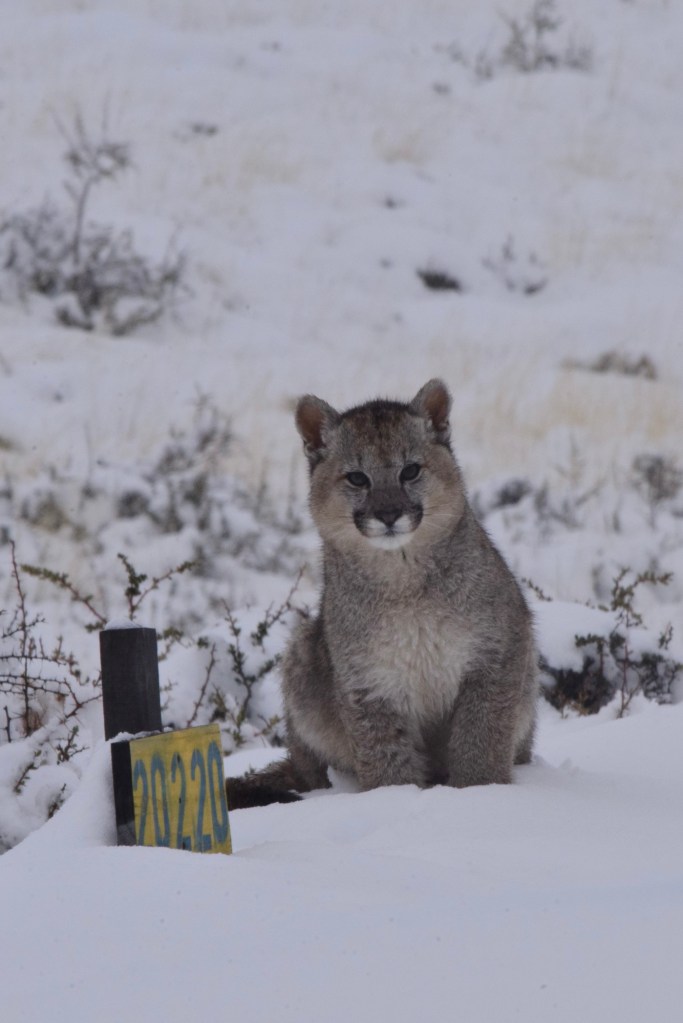
We had quite a scare while looking for Escarcha and her cubs. The thermal camera picked up two glowing dots on the hillside not far from where we’d left them yesterday: one large, one small. One of the trackers went up into the fogbound hills to get a closer look and radioed in to confirm it was Escarcha and one cub. For a painful half hour, there was no sign of the second cub at all – until it came out from behind a rock where it had been hiding, much to everyone’s relief.
Winter may be beautiful, but it is terribly hard on the animals that live here – especially the young. Hopefully, Escarcha’s cubs make it through the winter so they can find territories of their own in this desolate idyll.

Escarcha took her cubs higher up into the gloom, which showed no signs of lifting anytime soon. Fabián suggested an alternative itinerary up at Laguna Azul, on the eastern edge of the national park, so we left the fog and set back out into the brilliant light.
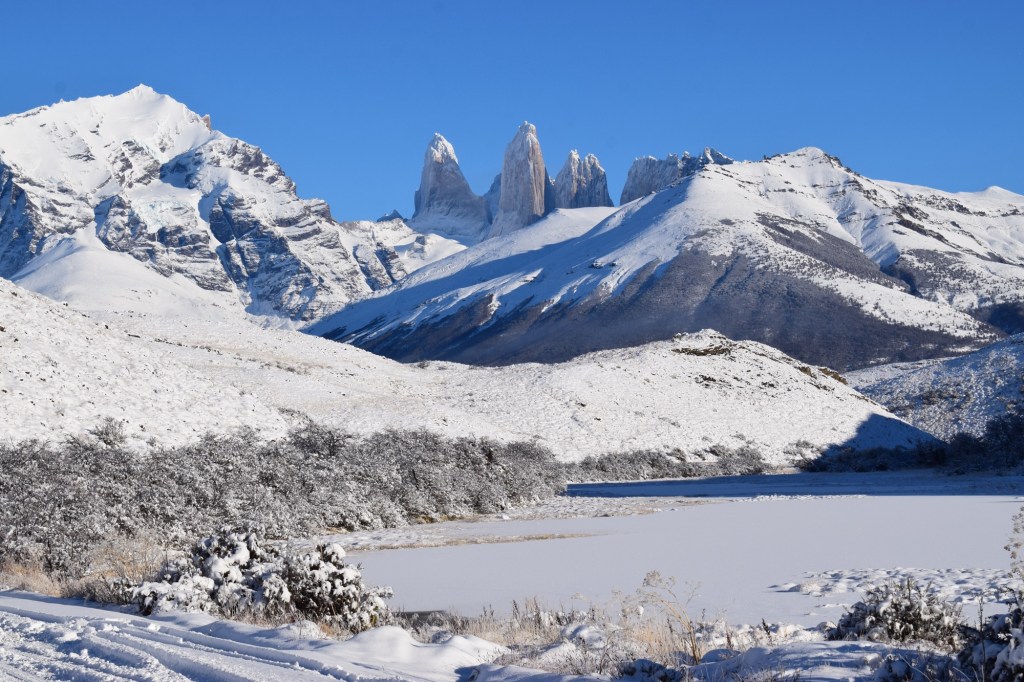
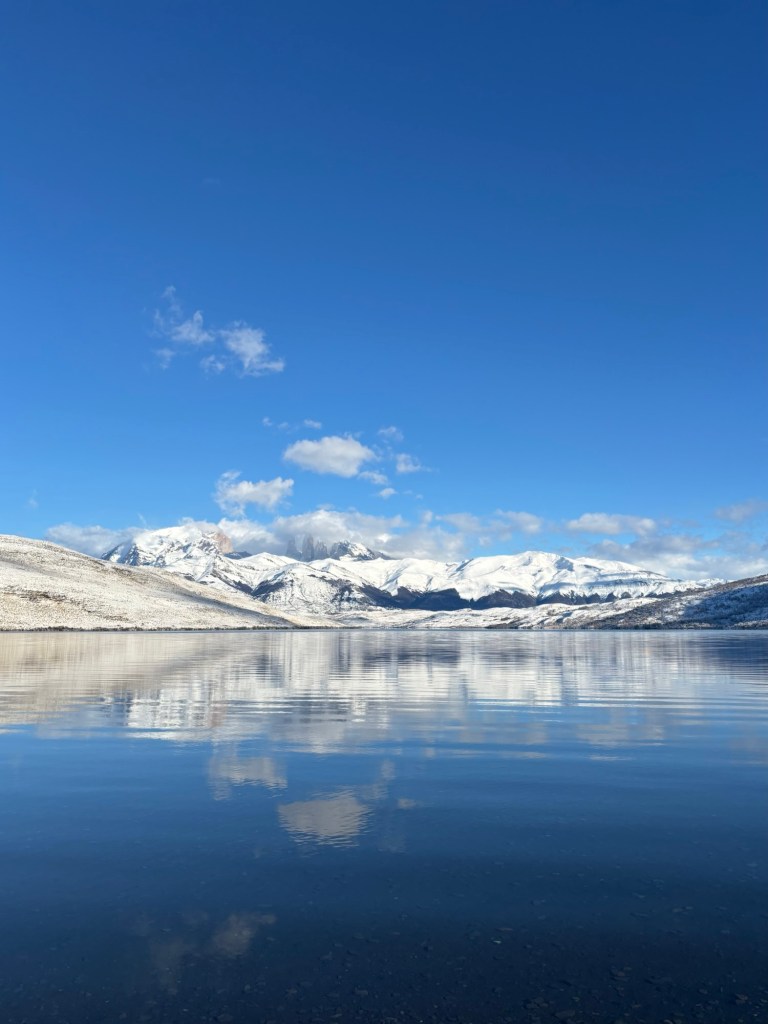
Laguna Azul offers a tremendous view of the world famous spires of Torres del Paine across the surface of its crystal waters, though they were more often shrouded in cloud than not.
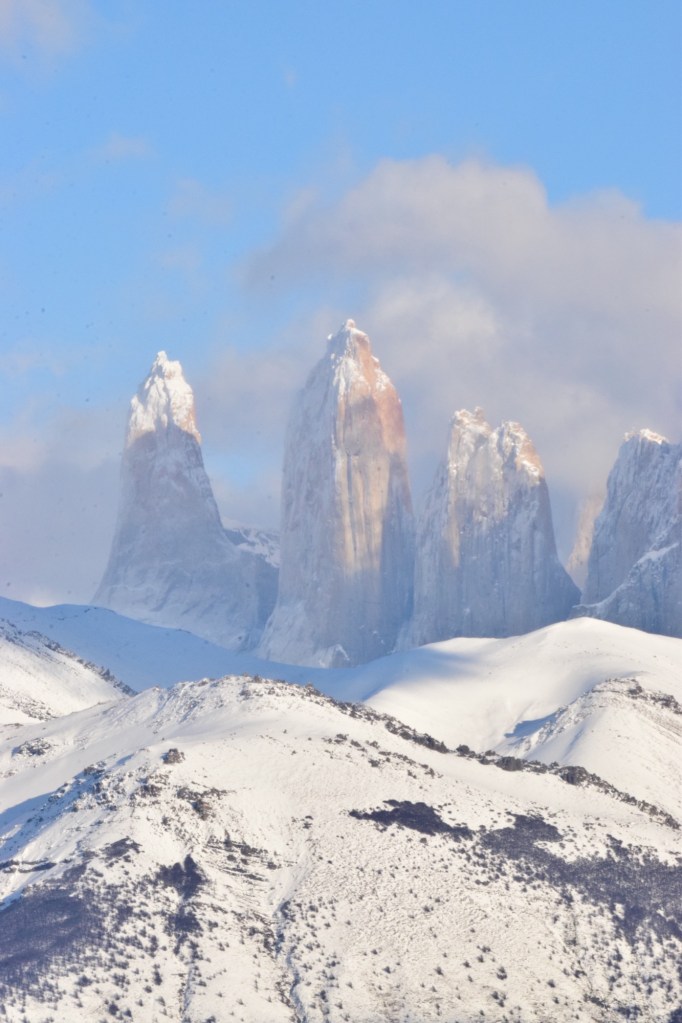
The towers themselves are every bit as breathtaking as you have heard. Unlike Petra (which I was arguably less exposed to before I saw it) the Torres del Paine lose nothing in reality, despite the fact you’ve probably seen them a thousand times over on the covers of photography magazines, NatGeo special editions and South American travel guides. Glowing red and white in the morning light, they might be the exposed teeth of some ancient titan, or the thrones of South America’s lord of the skies, the condor.
Fanciful imaginings on my part. Paine is a Tehuelche word meaning “blue”, in honour of the colour of the peaks in the grey morning, or the icy glaciers that lay at its feet.
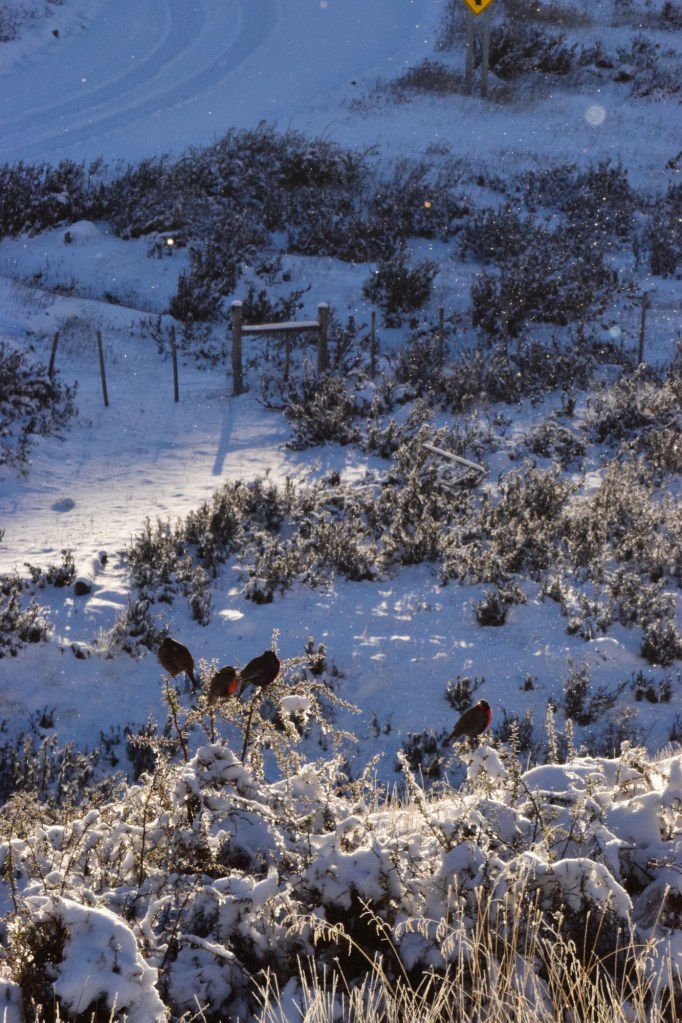
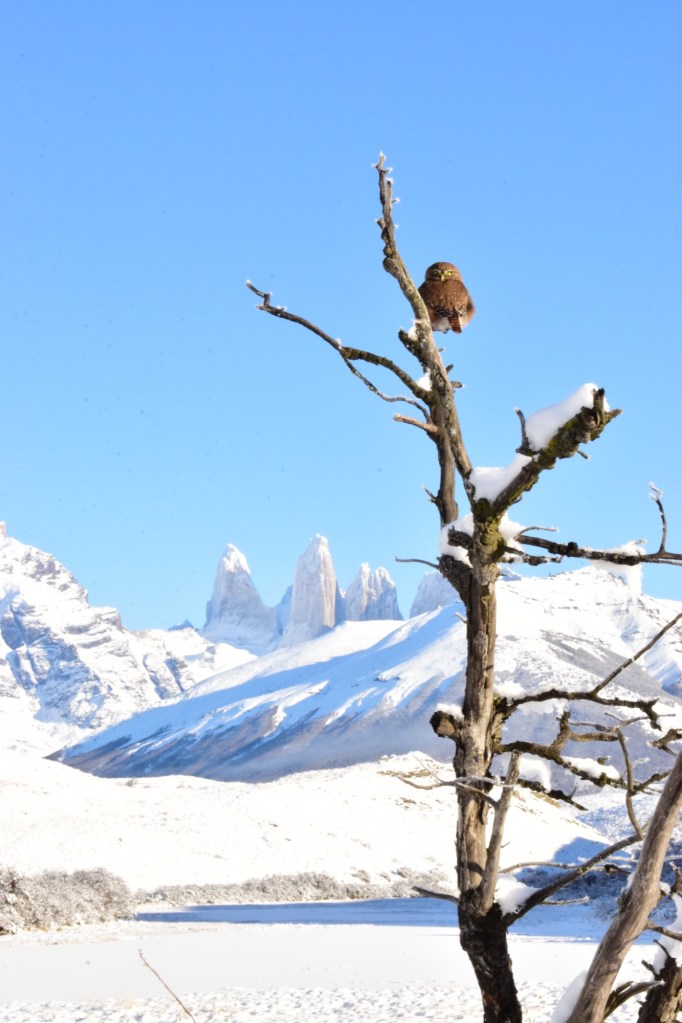
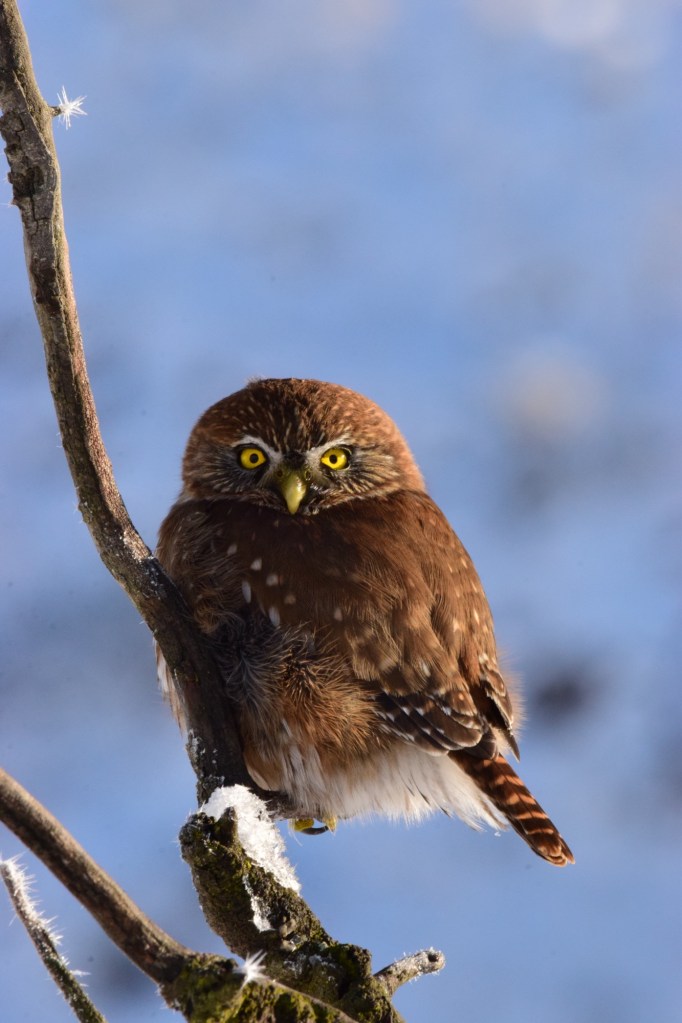
Fabián’s mission was to find a tucúquere, a Magellanic horned owl, or the more well-known Patagonian speciality, a Magellanic woodpecker. But the forests around Laguna Azul were silent – completely silent. We found another chunchito (pygmy owl) watching us from the top of a dead tree, along with a couple of colourful rayaditos, but the snowy forest showed no other signs of life.
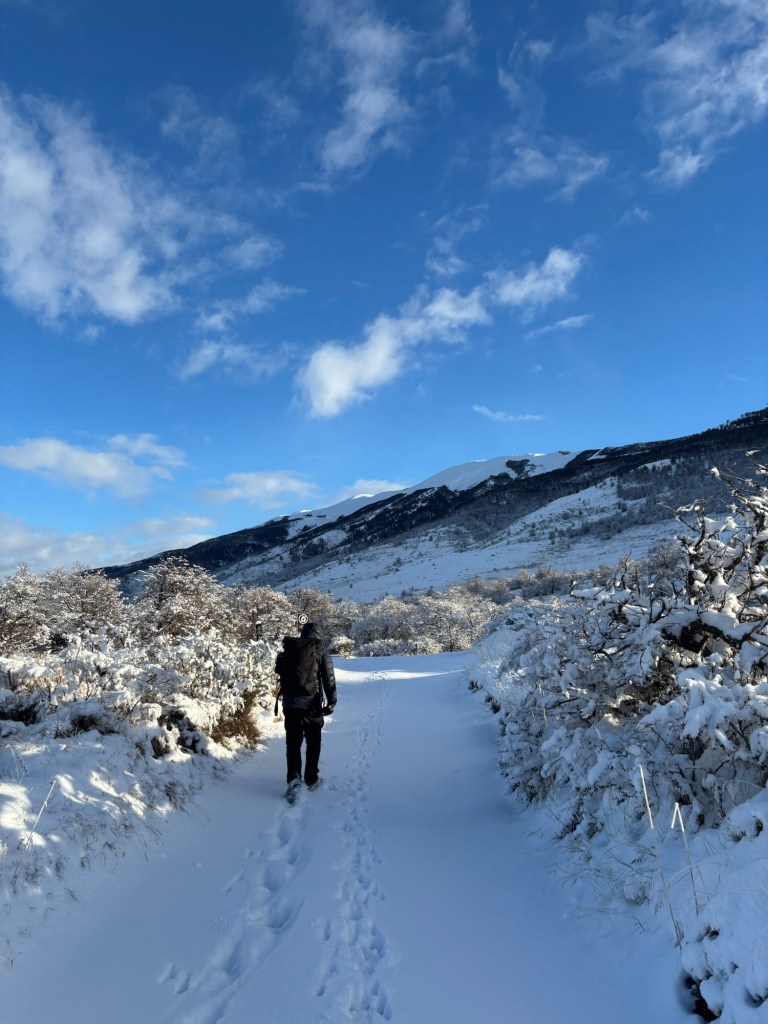
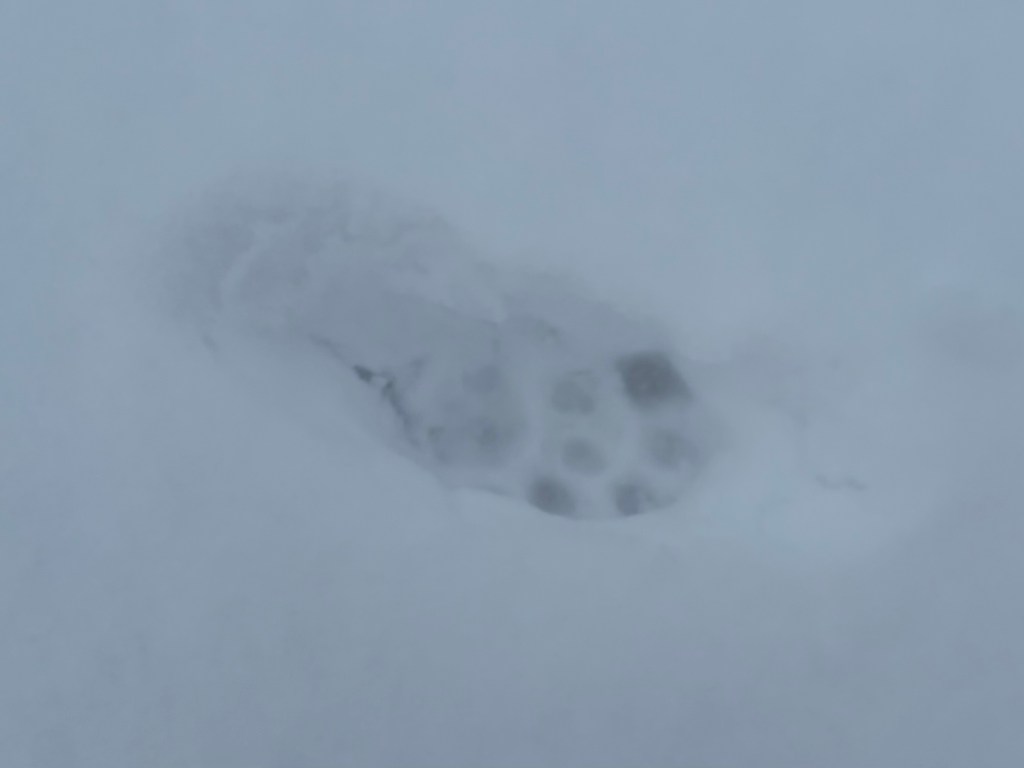
Perhaps they were all hiding from the creature that left these tracks in the woods: an enormous male puma, whose trail we followed for about an hour as it weaved through the woods, occasionally doubling back to investigate the older trails of a couple of younger female pumas.
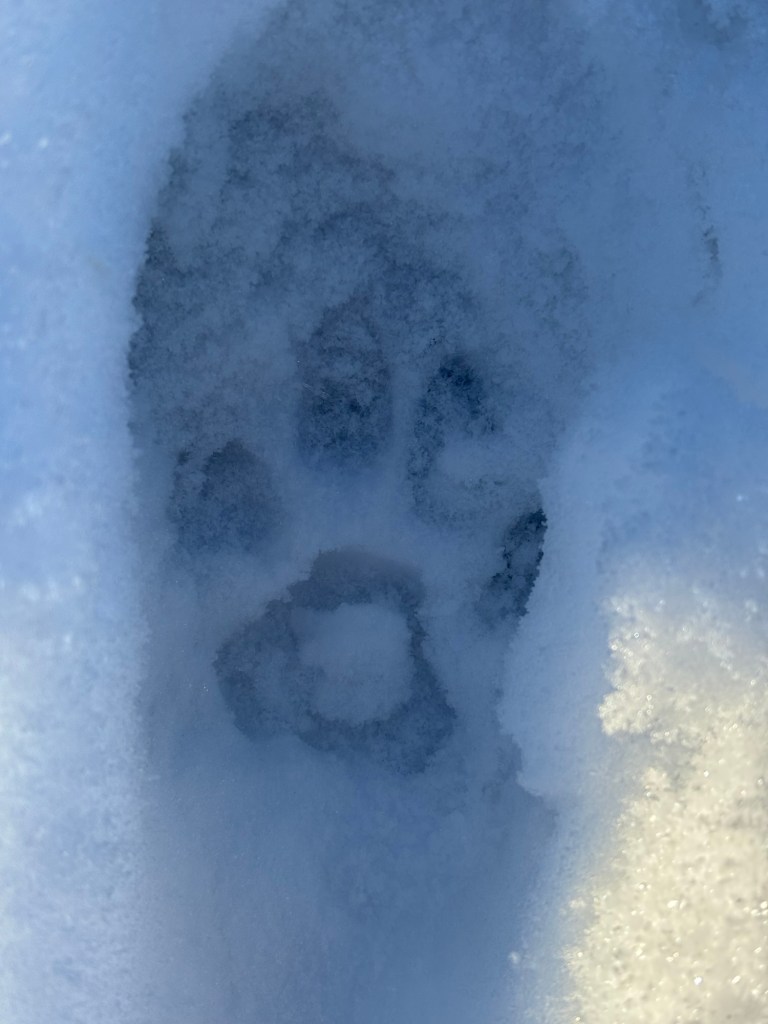
Out on the lake, I finally tracked down a creature I missed in Peru. We have grebes in Europe, but the huala or great grebe – the largest of its kind in the world – is a truly magnificent bird, reaching the size of a cormorant. Curiously, as I descended to the lake’s shore to get a closer look, it actually came closer to the shoreline rather than diving and emerging much further away, as grebes are inclined to do.
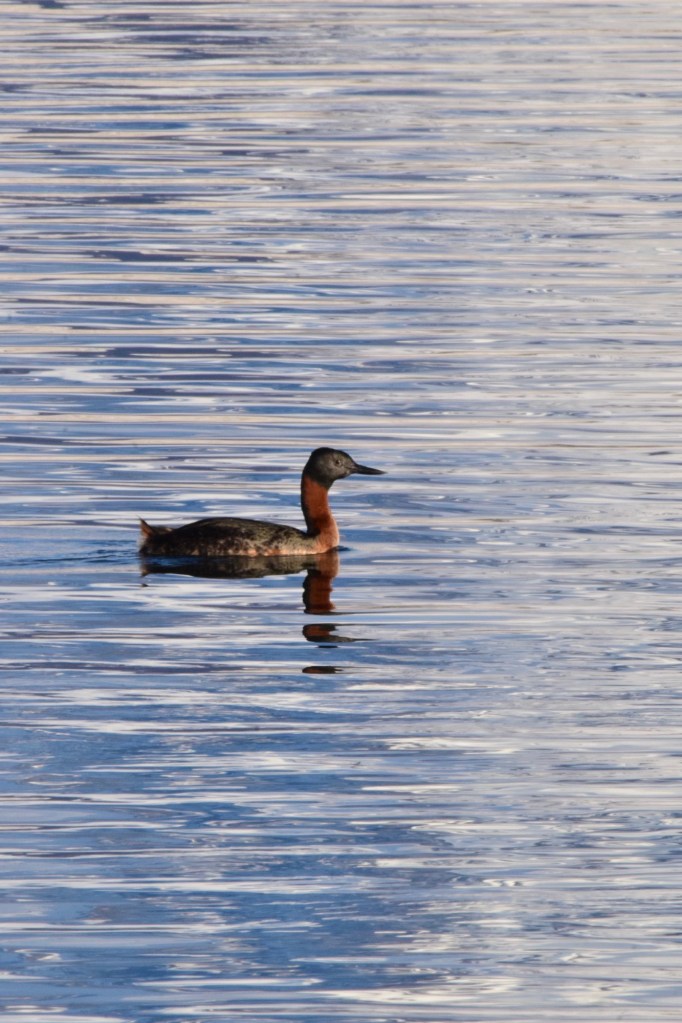
Back in the car, Fabián checked in with his fellow trackers over the radio. Nobody, it seemed, had had any luck with pumas since Escarcha and her cubs went up into the hills. So we stopped for a snack lunch next to the thundering falls of the Cascada del Río Paine, where the meltwaters of the park’s mightiest river came hurtling down a series of cliffs amidst menacing curtains of sheet ice.
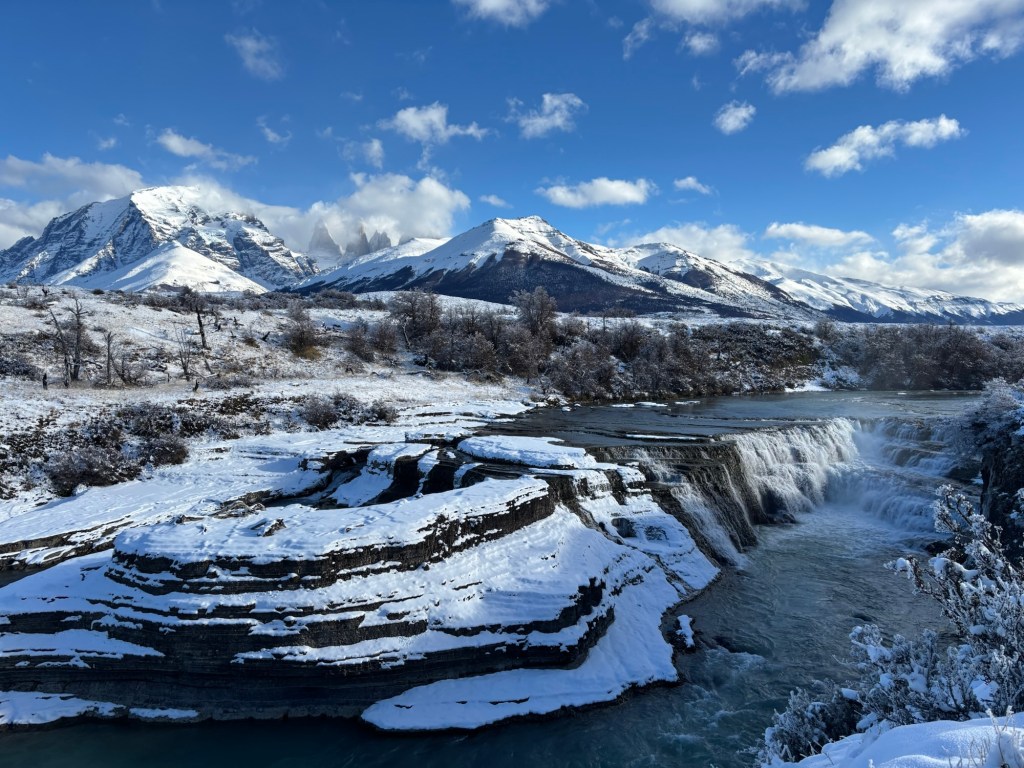
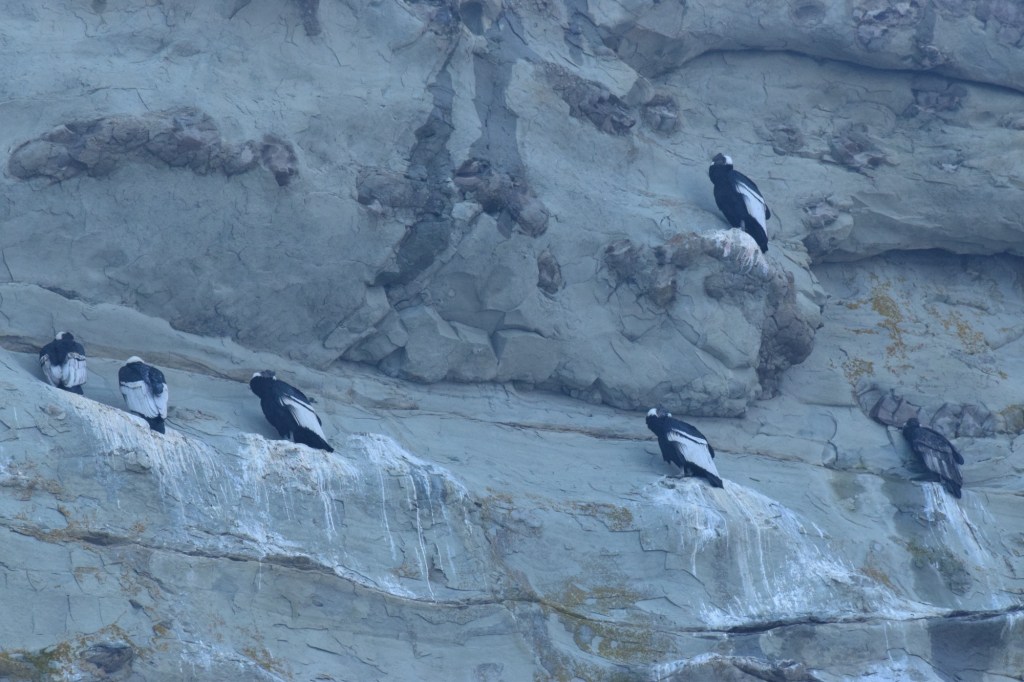
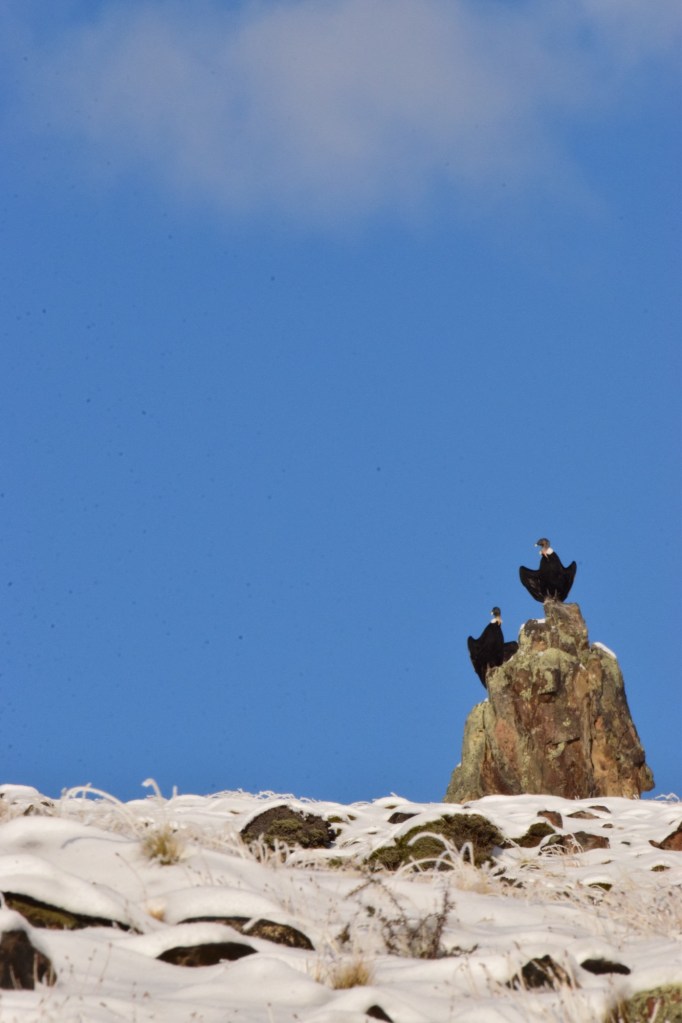
We picked a lucky spot. Two handsome condors sat up on the hilltop, sunning themselves in a posture that must have convinced the ancient Inca that the condor truly was a messenger (and worshipper) of the Sun.
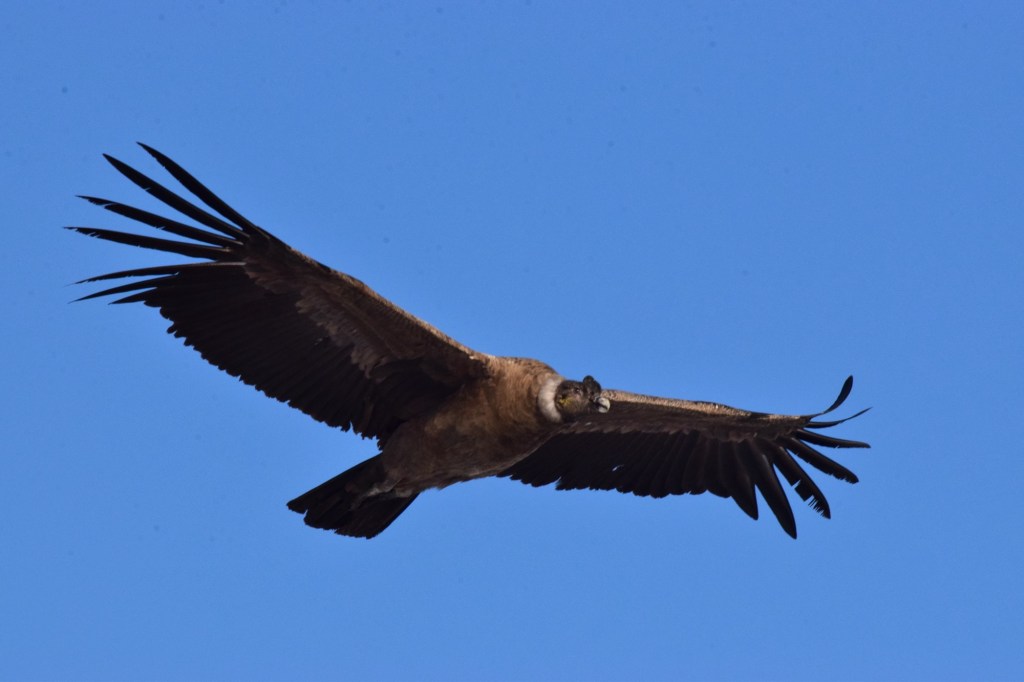
The waterfall must be a reference point for the condors in their navigation, because no fewer than sixteen came flying right overhead on their way up the valley, some of them soaring so close you could hear the rush of wind in their enormous wings. They were mostly youngsters, yet to don the full black robes and smart white collars of their elders.
For me, that would have been the perfect ending to a wonderful three days: a close encounter with one of my favourite creatures in the world – again – but Patagonia was not done with us. Not yet.
The radio crackled to life as we were driving back to the south road: ‘La Petaca está en la carretera’. Fabián stepped on the gas, overtaking two trucks in the snow like a rally car and forking right back up the road to Lago Sarmiento.
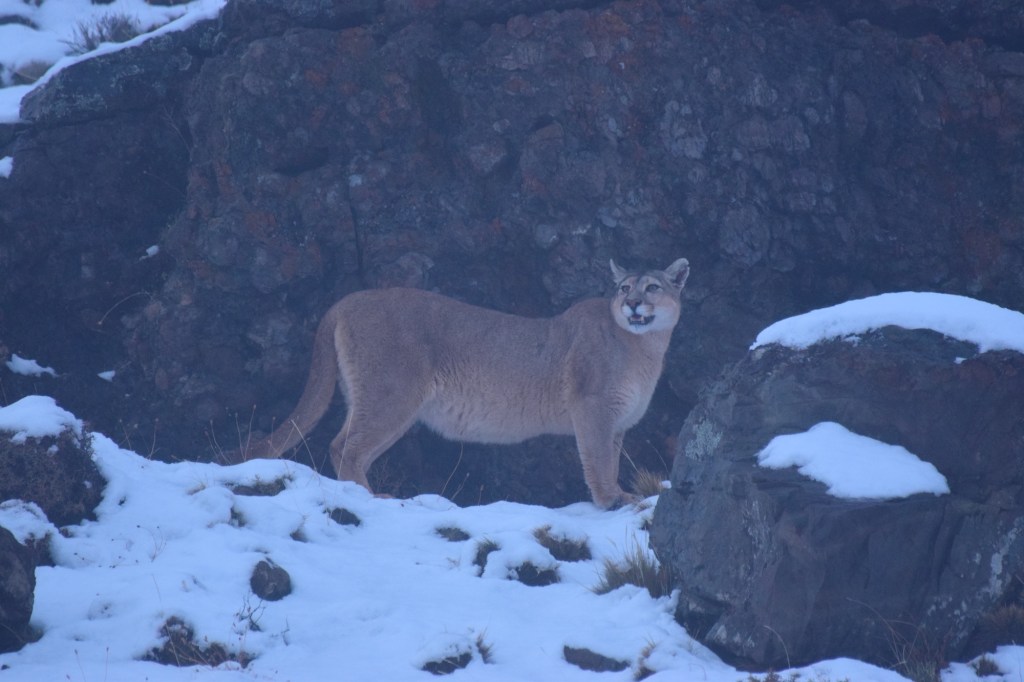
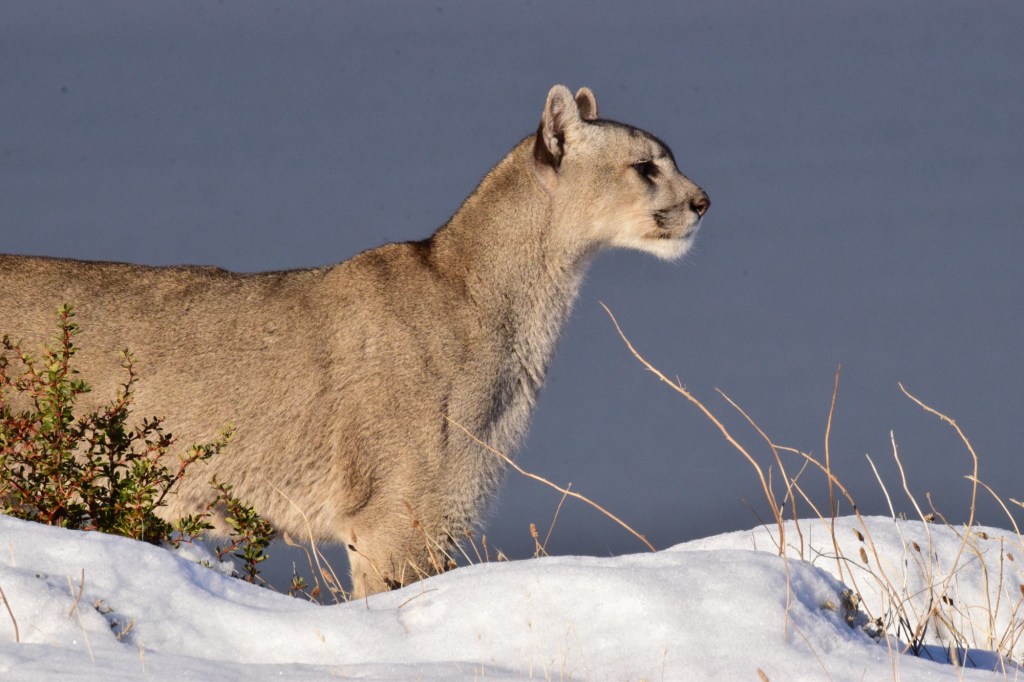
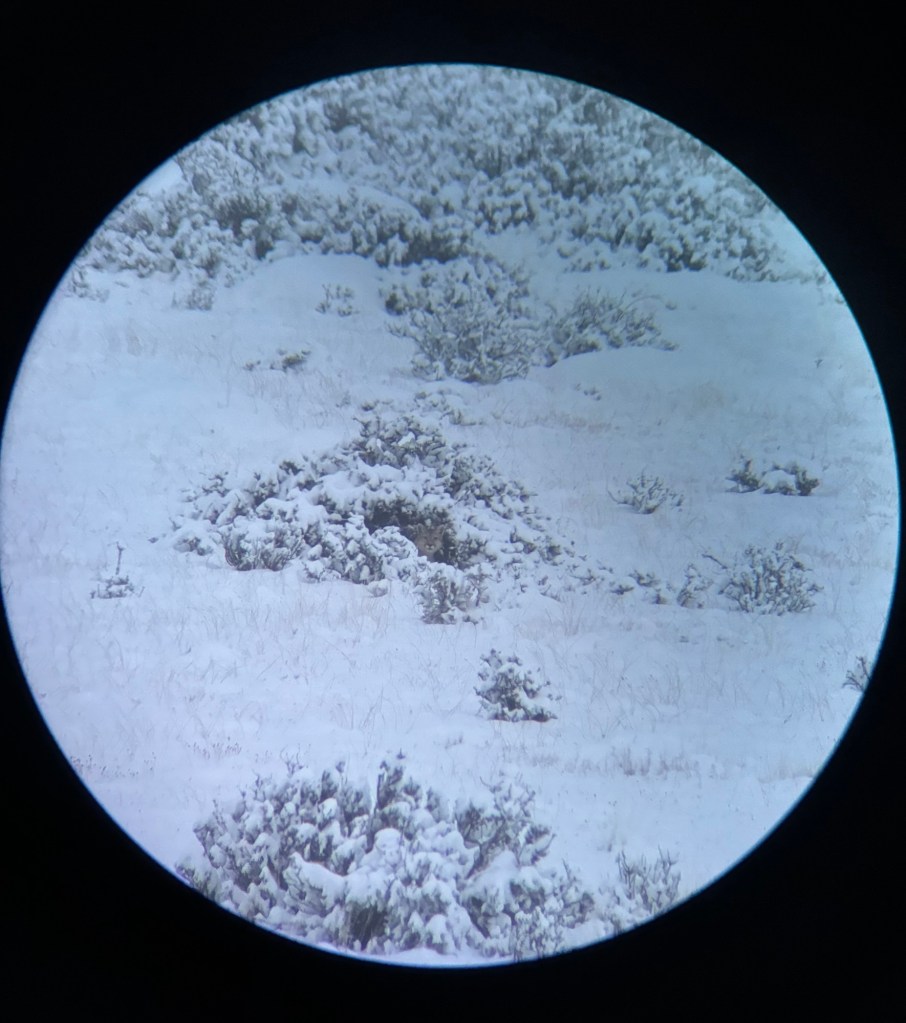
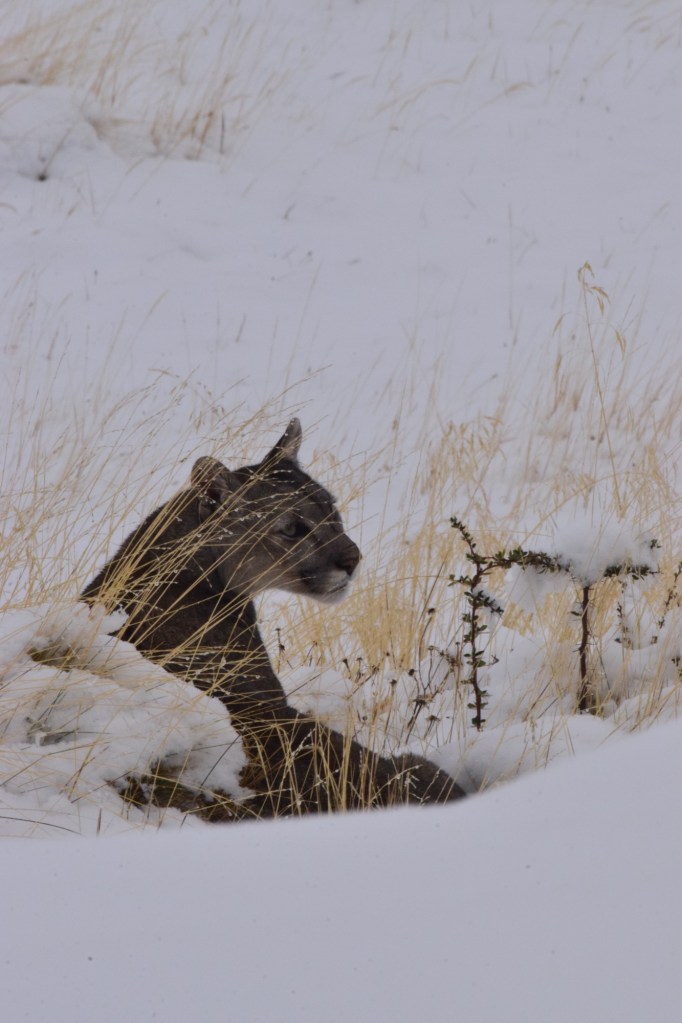
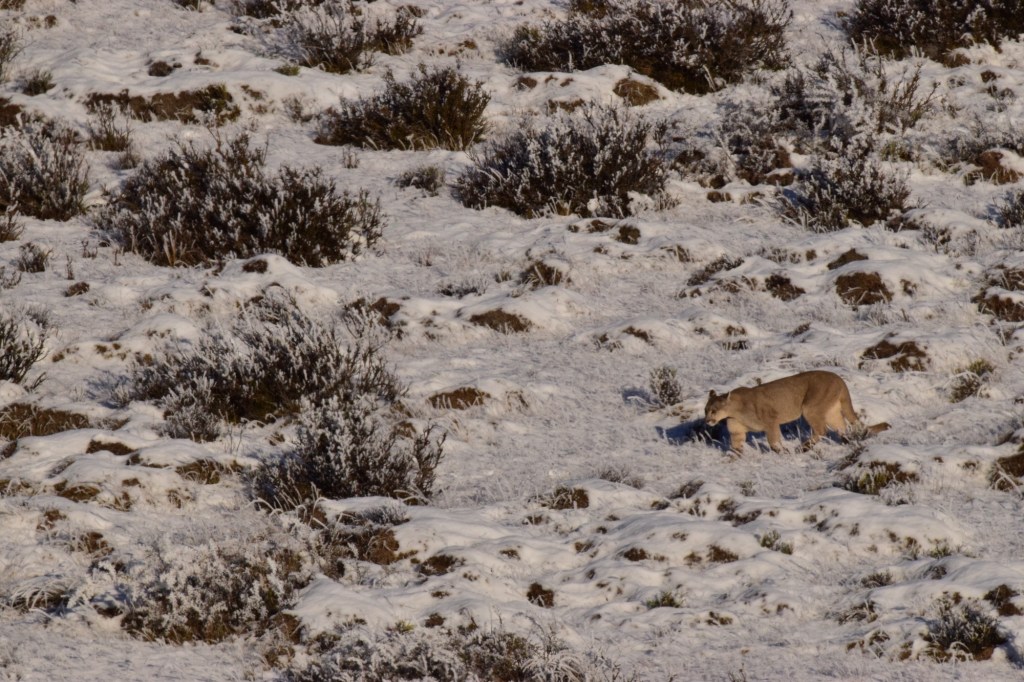
The fog had finally cleared, having hung over the lake almost all day, and one of the trackers had located Petaca, the dominant female and the park’s most famous puma, following the scent trail of Escarcha and her cubs: her progeny. By the time we got there, she had slipped off the road and into the scrub, but we were still able to spot her without too much difficulty.
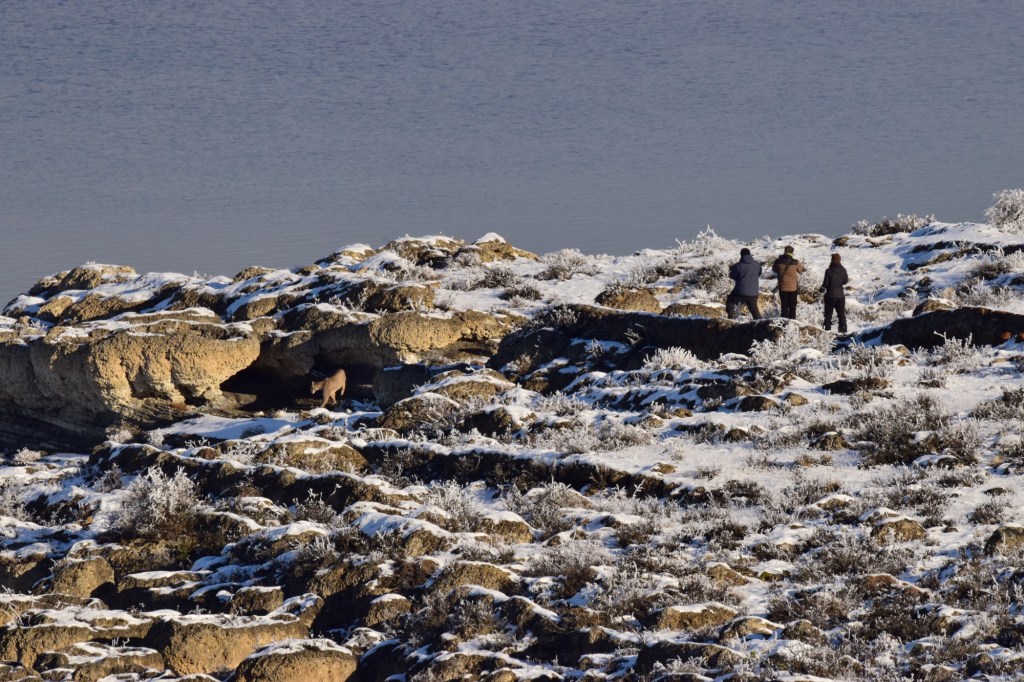
Not for the first time, I was disappointed with the behaviour of some of the tourists and their tracker, who came down from the road to move in as close to Petaca as possible. If she had wanted to come back up the hill, she was cut off constantly by this group that kept cutting ahead of her to get more and more photos of the big cat approaching head-on. Fabián was just as ticked off as I was (I really do appreciate a guide who puts the animal first, and not the client). Surprise surprise, the tracker was one of the ones we’d sparred with a few days prior, telling us to back off as they were there first. Go figure!
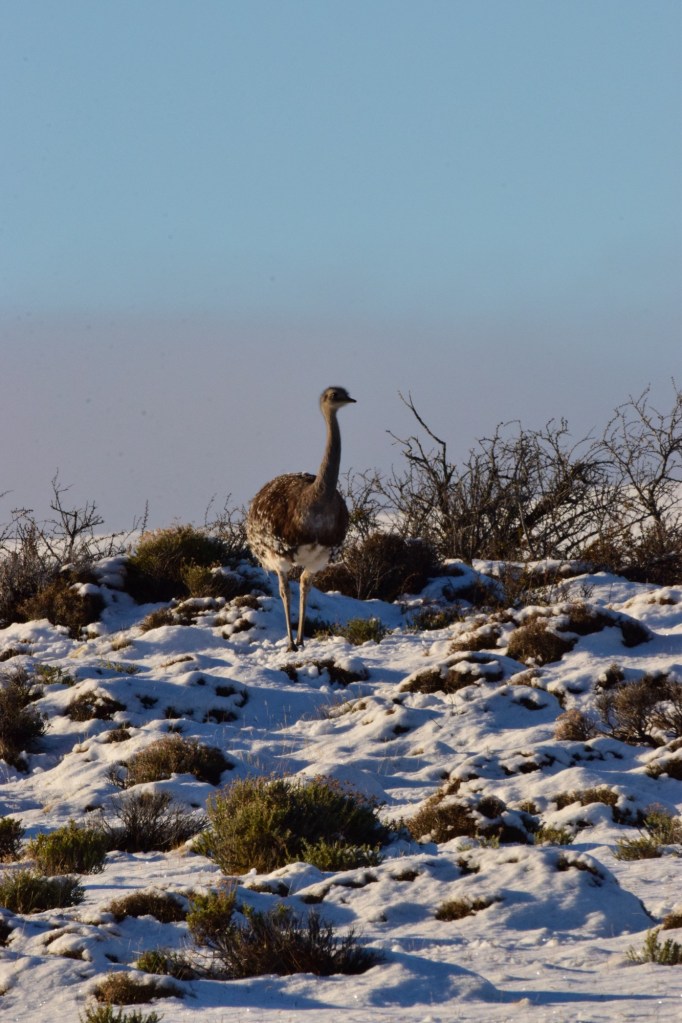
I believe that the key to magical wild encounters is patience, understanding and a healthy dose of luck. If that had been that, I would have been perfectly happy – we had already seen so much of the pumas over the last two days. I was ready to hit the road and maybe find some ñandúes on the way home.
And then Petaca reappeared.

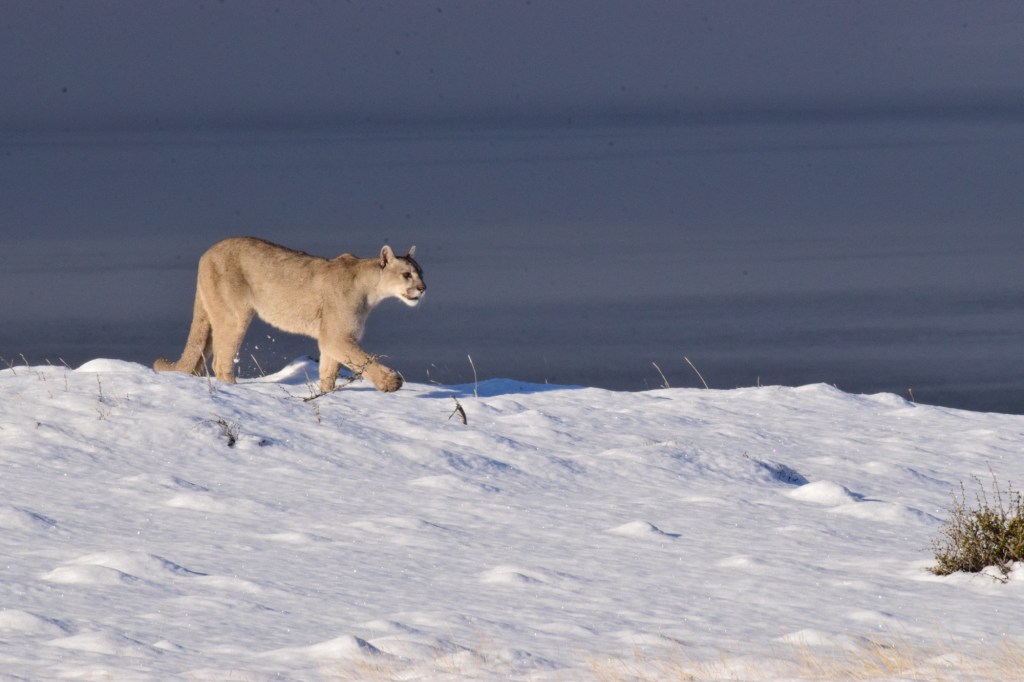
With the shimmering waters of Lago Sarmiento behind her, she hardly cast a glance in our direction as she padded her way along the hillside toward the road, following Escarcha’s trail.
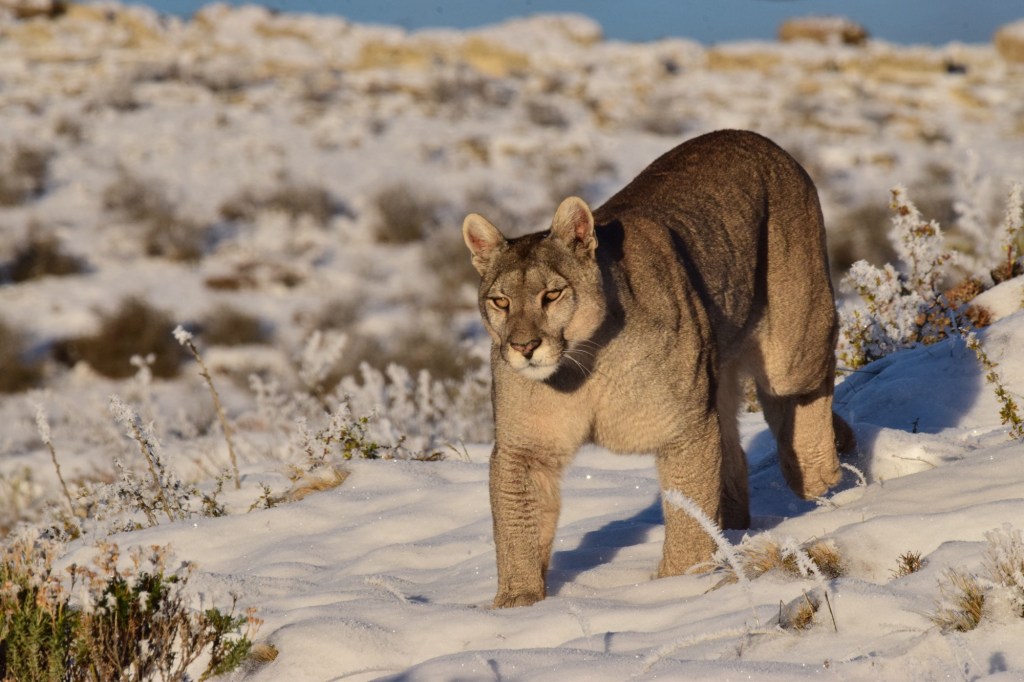
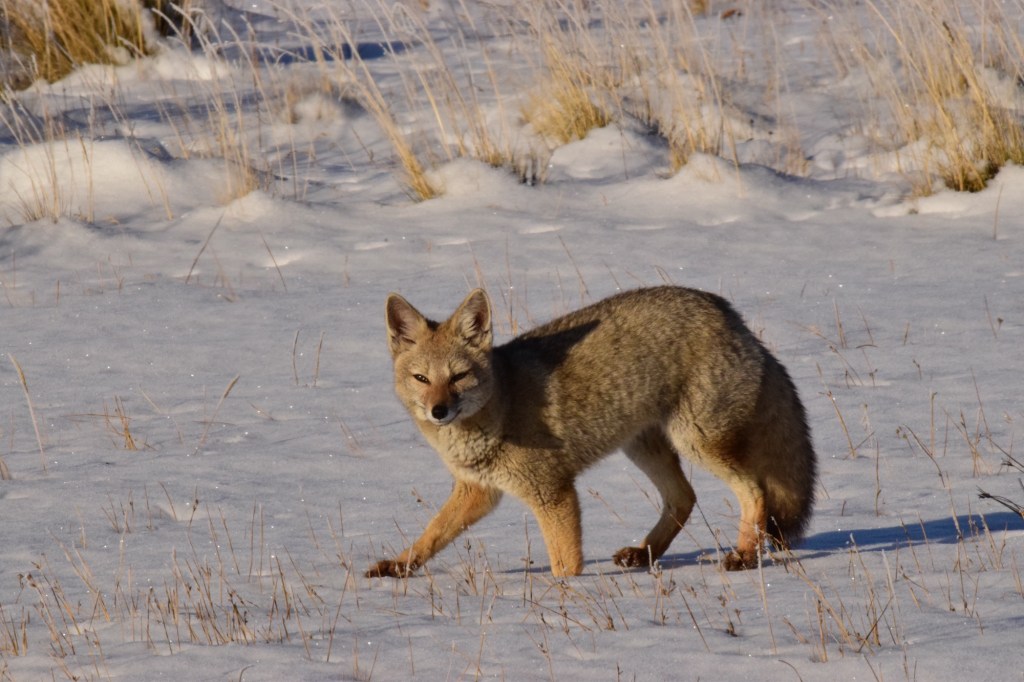
With no further obstructions to her path, she came right up to the road, mere metres away. At such a distance, you could really appreciate the power in those mighty paws. Here is an animal that didn’t struggle once in the snow like the fox and the geese from yesterday: she almost seemed to glide across the surface of the frozen hill.

I thought the fence between the road and the hill might prove a barrier, but not for this apex predator. In a single move she leapt nimbly up onto the wire and then launched herself onto the other side, just a few feet away.
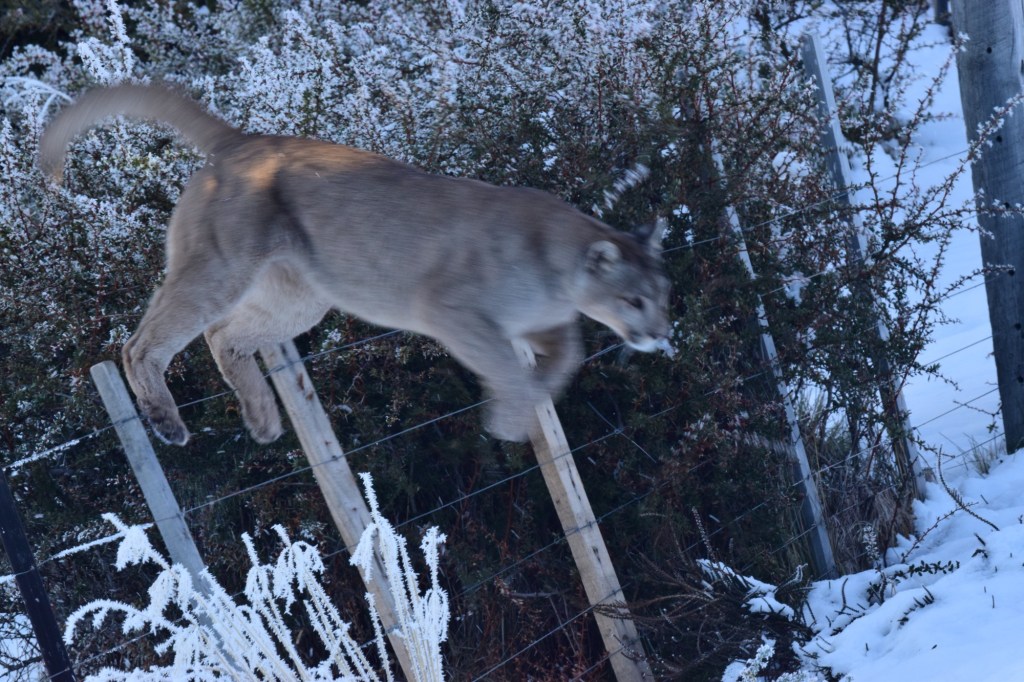
Having cleared the road, Petaca climbed up into the hills toward the setting sun and disappeared among the frozen scrub. What an incredible encounter! And what a way to finish a superb three days’ tracking in Patagonia!
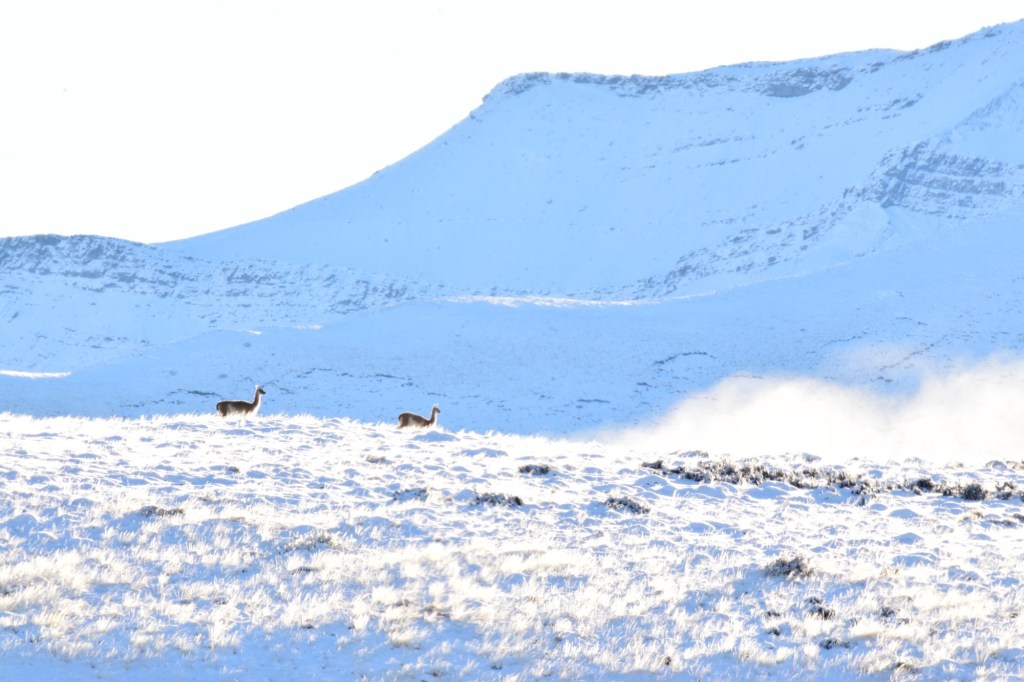
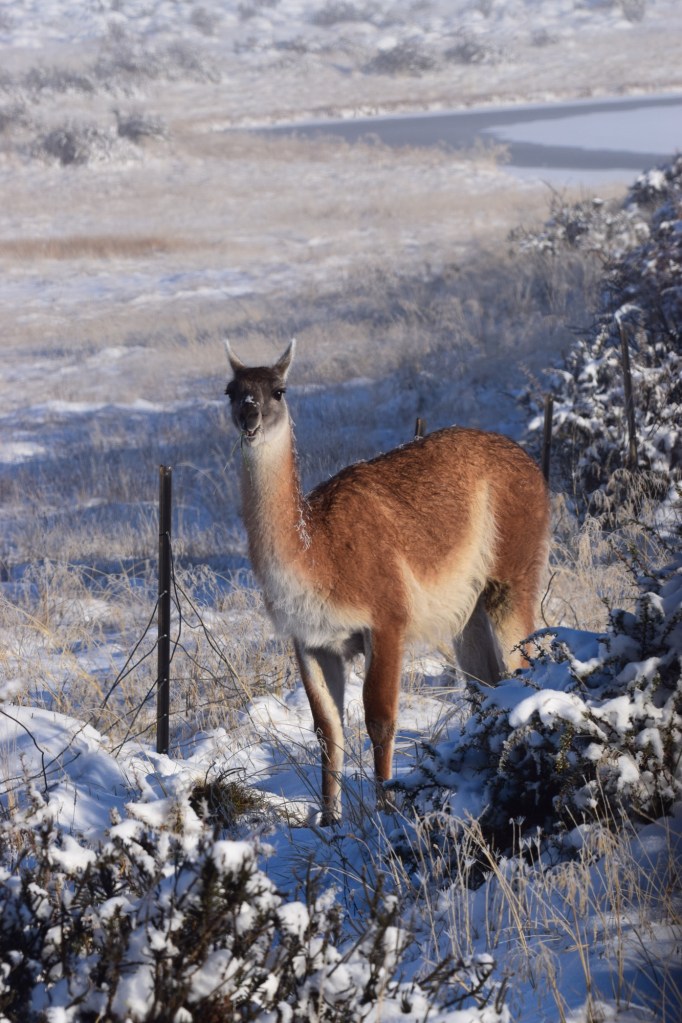
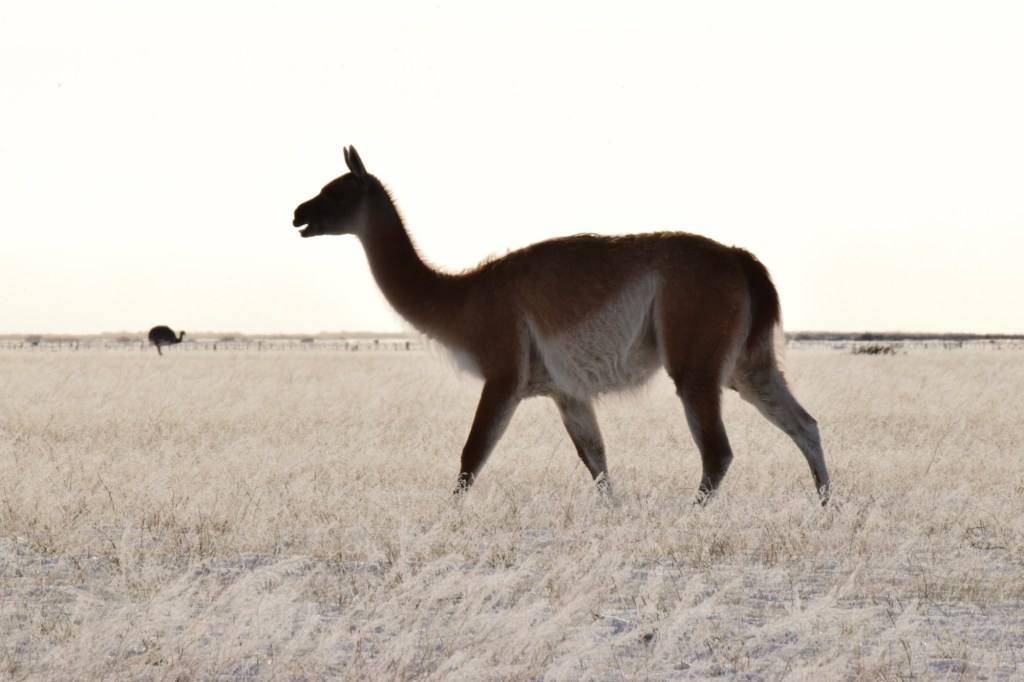
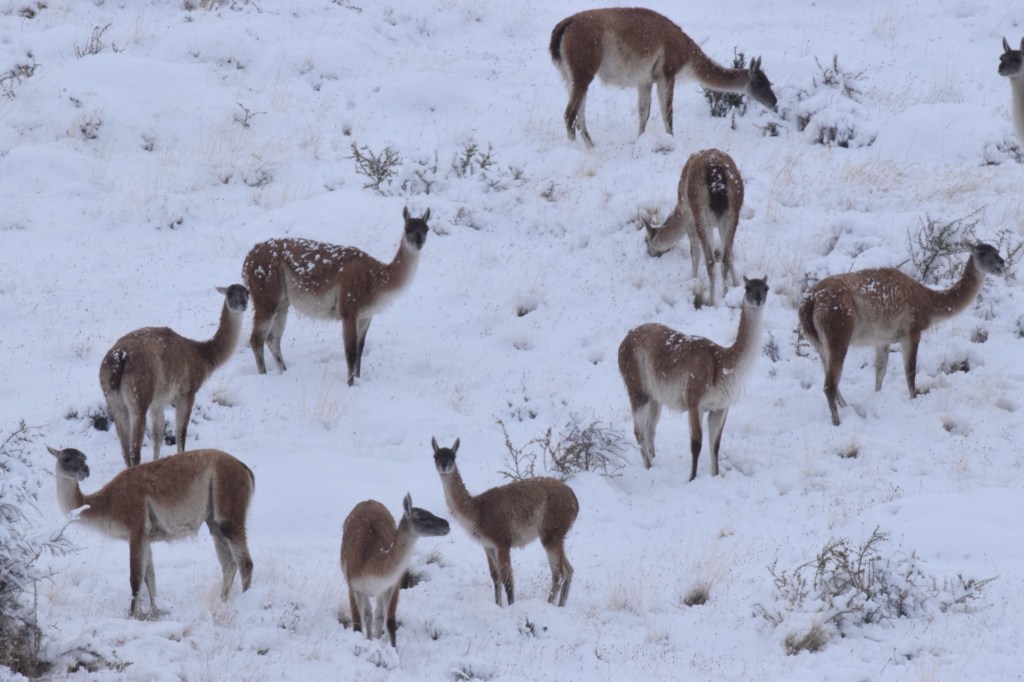
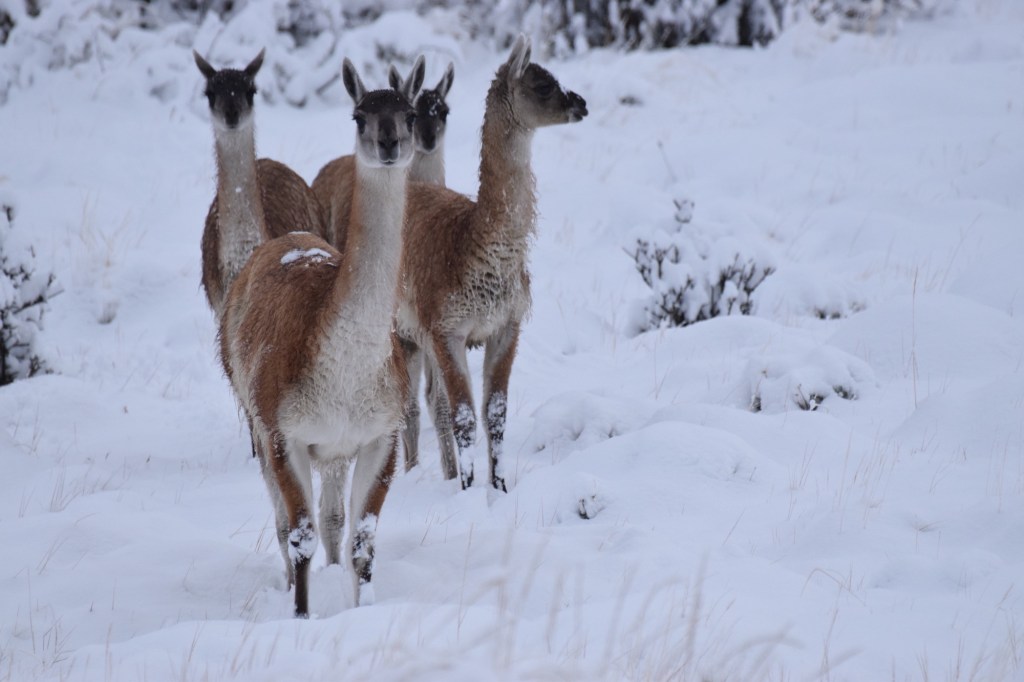
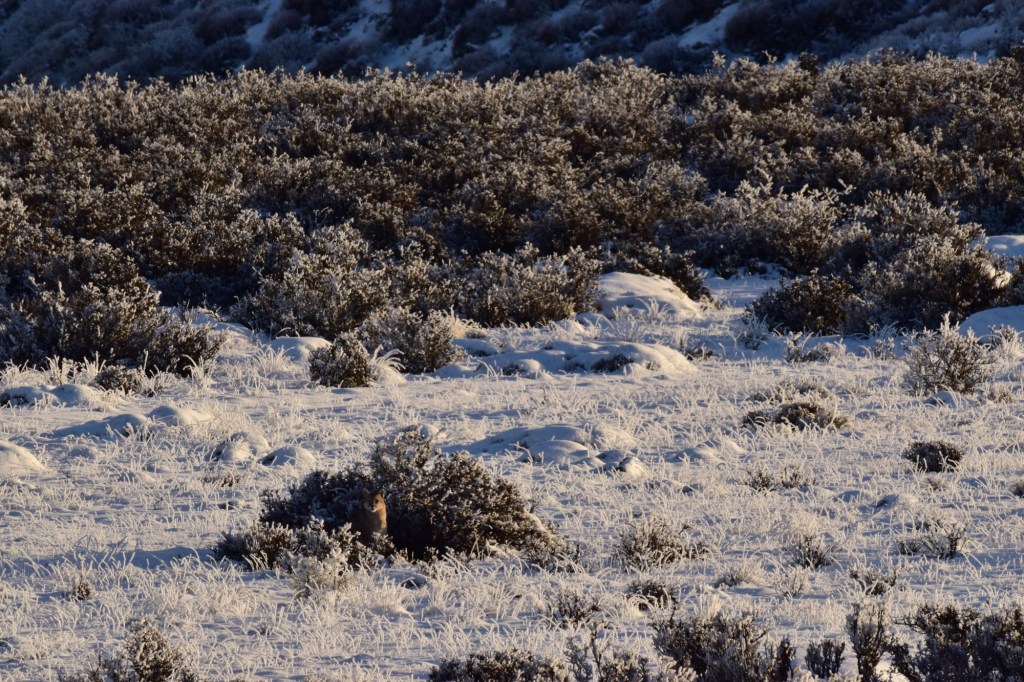
On the way back, we found the unnamed young male in the same spot he had been when we first saw him on Monday. It felt fitting that the last puma of the trip should also be the first. We might very nearly have witnessed a hunt, as a lone guanaco was headed right his way, until a passing truck spooked it into heading in a different direction.
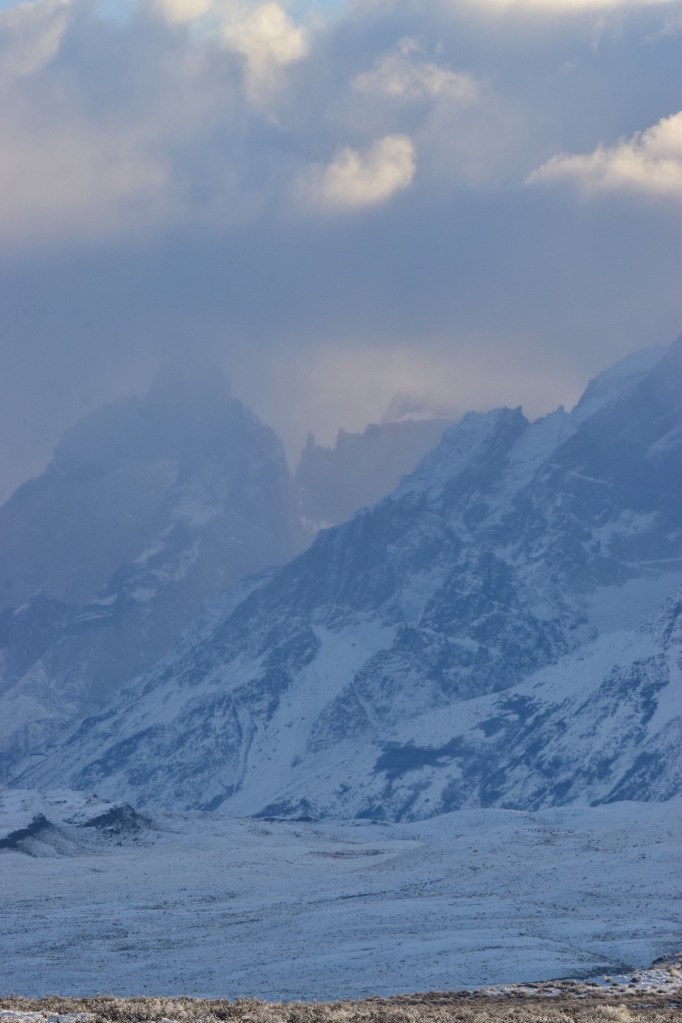
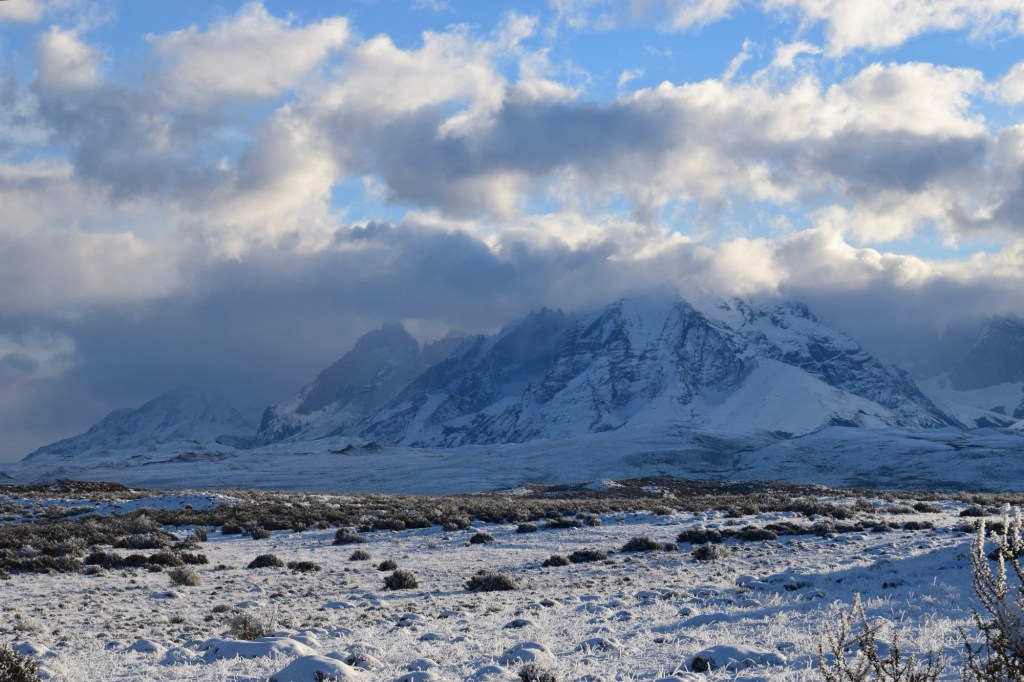
The tour I had booked for tomorrow into the heart of the park itself and the Cueva del Milodón was sadly cancelled due to low numbers by the time I got back, so this will be my last time in Torres del Paine. Magical, then, that it should end with a view of the mountains at their most impressive, with ominous yellow and grey clouds rolling across its summit, turning the blue mountains of the Tehuelche all kinds of magical colours. Who could not lose their heart to such a sight?
I’ll take it easy tomorrow and explore Puerto Natales properly. There’s so much human history here that I could so easily overlook, and it will need more than a morning, I think. BB x