Camino XVIII: Festivals and Fetuses

I’m sitting at a table for one at the Bar Sevilla in the Plaza Mayor in Villafranca del Bierzo, after a 37km trek across the Valle del Bierzo this morning. I ordered a pizza almost without thinking, and now I’ve had a closer look, the menu del día looks fab. But, the caldo gallego and pig’s ears will have to wait until I’m in Galicia proper. The important thing is that I eat decently tonight, as I walked a lot today, and I’ve got a fair bit of climbing to do tomorrow.


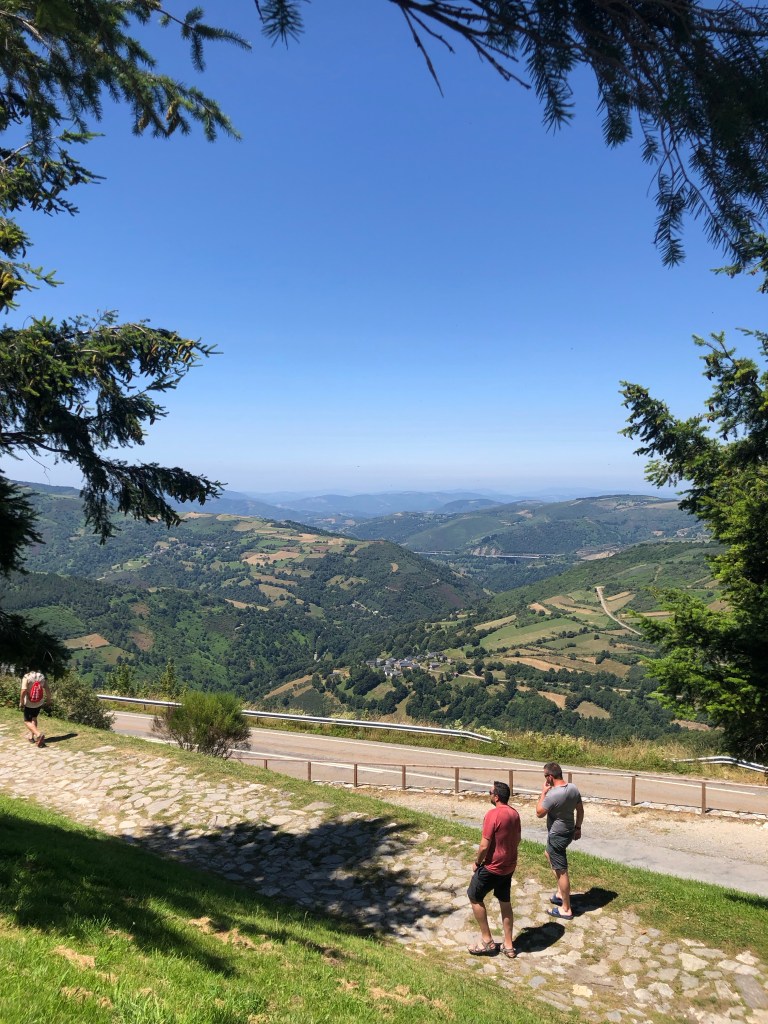
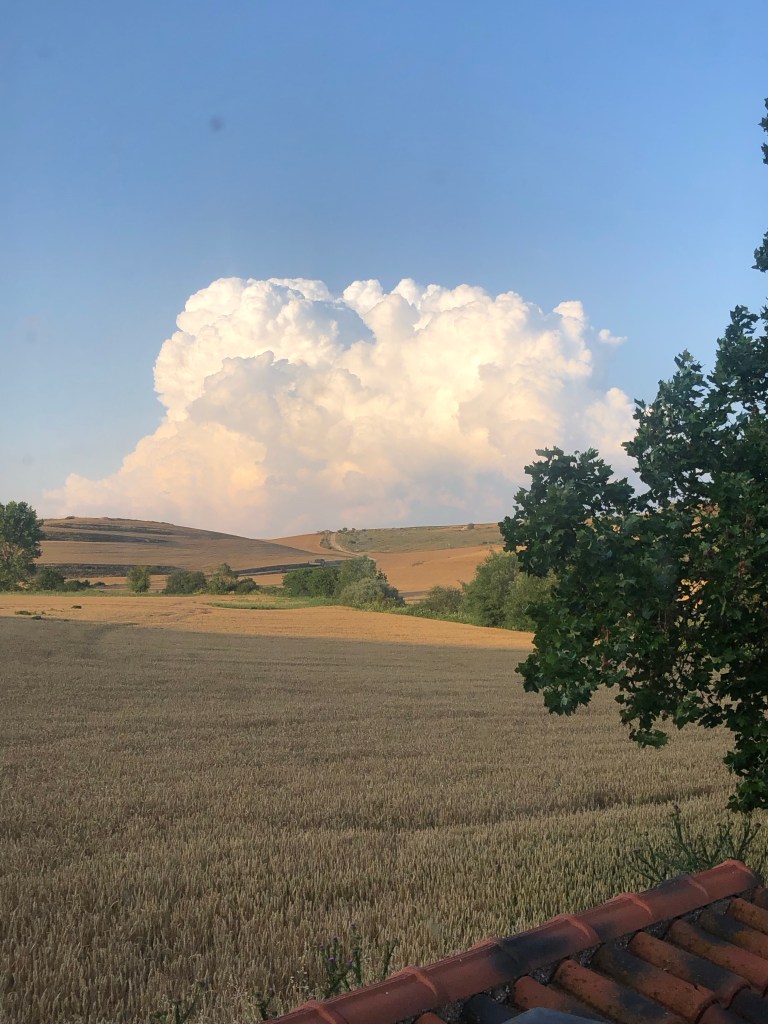
I allowed myself a slightly later start this morning as breakfast was on offer at the albergue. I took the opportunity to make myself a sandwich for the road and warm myself up for the road ahead with a Cola Cao substitute, which was needed – it was quite a scramble down the mountain from El Acebo to the valley floor. If ever there were a bad day to be deprived of a good hiking stick, it was definitely today.

On the plus side, the mountains held the rising sun at bay long enough for me to get clear of the mountains, so I had a fairly cool descent. It’s always quiet high up in the mountains before sunrise, but the cheery song of blackcaps, the trill of a robin and the eerie, extraterrestrial whirr of a nightjar from somewhere in the valley below kept me company all the way down.


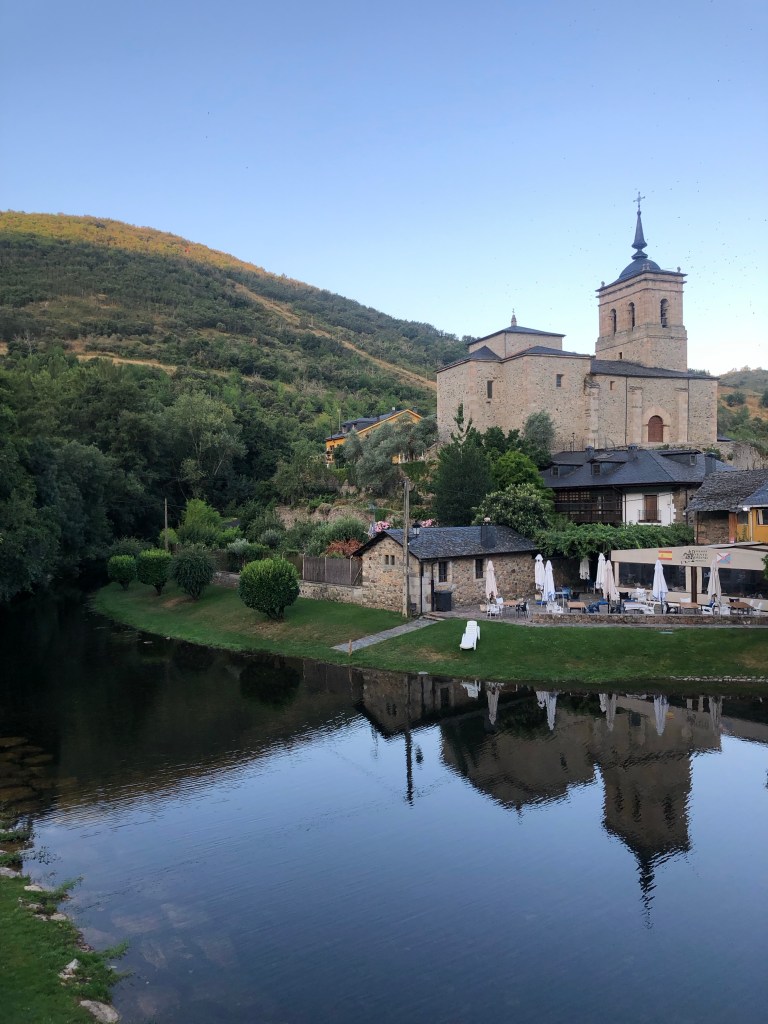
Molinaseca was a stunning slate-roofed chocolate-box town, albeit frozen in time by the fact that it was 7.30am on a Sunday morning when I arrived. Like Castrojeríz, it had a big sign declaring its status as one of the ‘pueblos más bonitos de España’, and I guess it deserves that title. I’ll just have to come back sometime – I’ve already marked it in my Camino guide for next time.


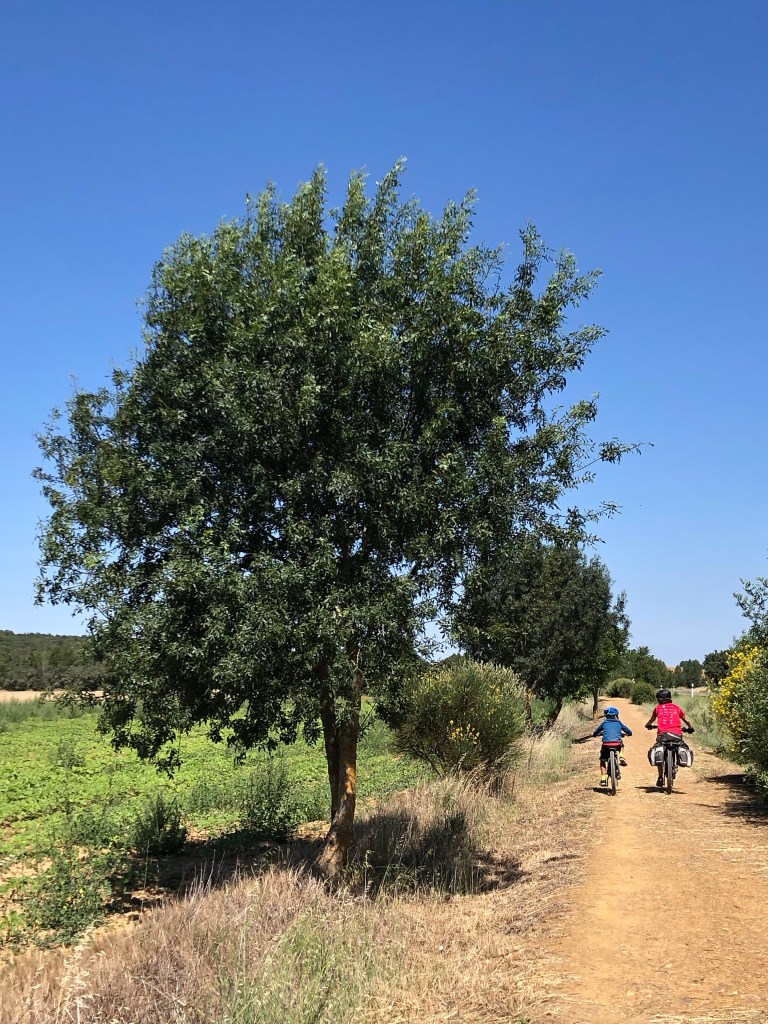
I managed to clear Ponferrada and its extensive suburbs in just over an hour. Rather than follow the way-marked route I made a straight shot through the heart of the city, following what must once have been the original Camino down an arrow-straight road called Calle Santiago that didn’t move an inch left or right until it had cleared at least two outlying towns. After that, the Camino reappeared and, once the minor matter of the motorway had been cleared, it led down into the green vineyard valley of El Bierzo.

I stopped for a drink and ate the sandwich I’d plain forgotten about in the shade of an oak by a stream. A few pilgrims were having a similar pause in the next town, but other than ducking into a church for a stamp and a prayer, I didn’t really stop for much longer than fifteen minutes all morning.

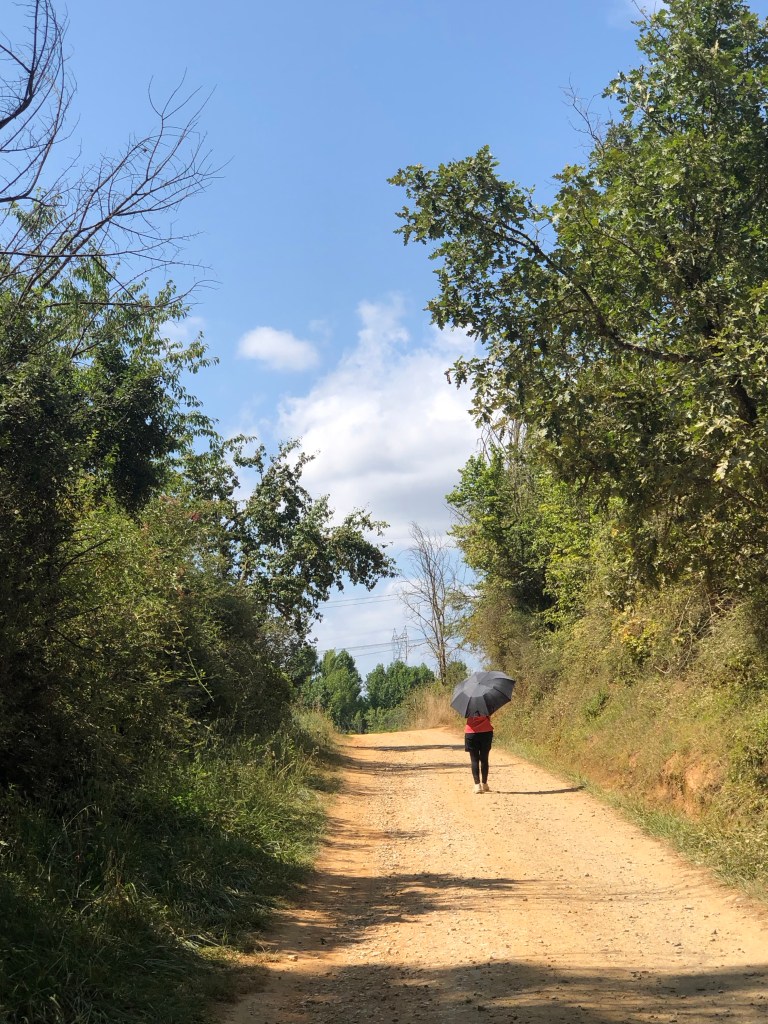
Finally, a few kilometres short of Villafranca, a few pilgrims came into view – always a promising sight. You can spot the Koreans a mile away: they’re often covered from head to foot, gloves and socks and all, to avoid tanning the pale skin that is so valued over there – or so they tell me. One was even carrying a parasol. Then again, am I any more sane for wearing no protective gear on my head or eyes whatsoever? (Ever since I lost a treasured flat cap years ago, I don’t do hats…)


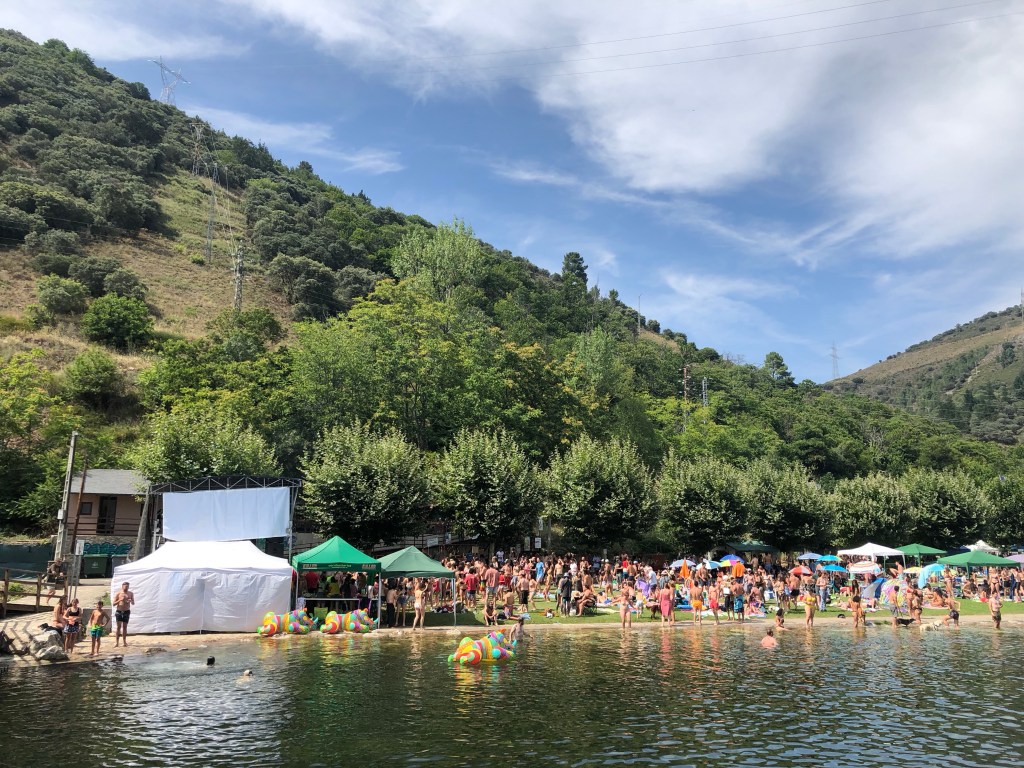
Villafranca del Bierzo seemed quiet when I got here, but I’d only got a few groggy minutes into my afternoon nap when I became vaguely aware of a throbbing bass from somewhere beyond the church on the opposite hill. One of the bicigrinos (cycling pilgrims) told me he’d heard there was a festival in town, so I tagged along with an American pilgrim and went to have a look.

I’m not quite sure what to make of it still. Did I miss a turning and end up back home in Brighton, or was it Woodstock? All I really remember is an endless stream of seriously groovy Afrobeat rhythms sailing across the river from a crowded lawn, where a stage had been set up, and a frantic crowd of party-goers in varying states of undress – with swimwear being as formal as it got, and starkers being the standard. They seemed to be having the time of their lives, but I felt more than a little voyeuristic, so I went back into town to find a less hedonistic way to spend the afternoon. Free weed, fire jugglers and naked breasts wherever you look might be a standard summer if you’re a festival follower, but I’m on pilgrimage here!


That being said, I could have picked a holier spot than the local natural history museum.

Set up by the Pauline Fathers, a religious order, it’s a small museum that contains a number of curios like Hispano-Roman and 17th century Spanish coins, fossils and crystals, an enormous collection of seashells and an impressive array of stuffed animals, with the quality of the taxidermy (and labelling) varying considerably.

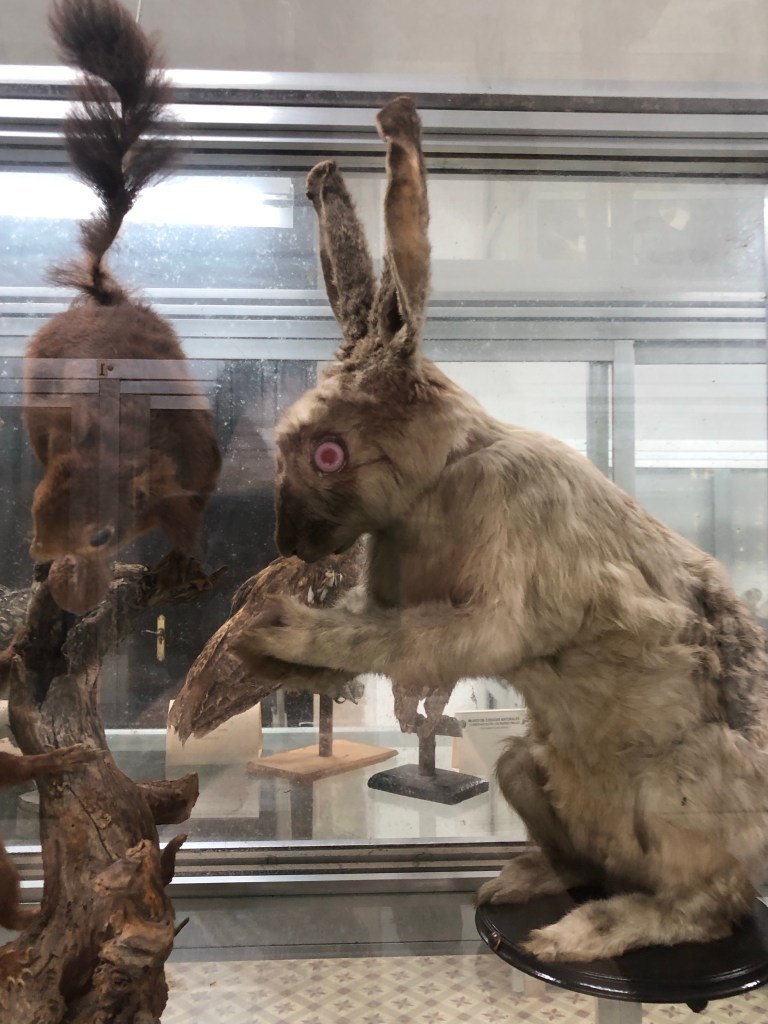
Some of the exhibits are unique to the museum, thanks to the collector’s taste for the bizarre. There are a number of mutant animals, including a two-headed goat (with two vestigial legs poking out of its back), a lamb with one head but two bodies, and a piglet with a similarly unfortunate birth defect. An enormous albino hare with bright red eyes threatened to knock the eyeless dolls of Mansilla from the top spot of creepiest museum artefact, and while the bird collection was clearly the work of an ornithologist, it’s always surprising how easy it is to botch a stuffed cat.


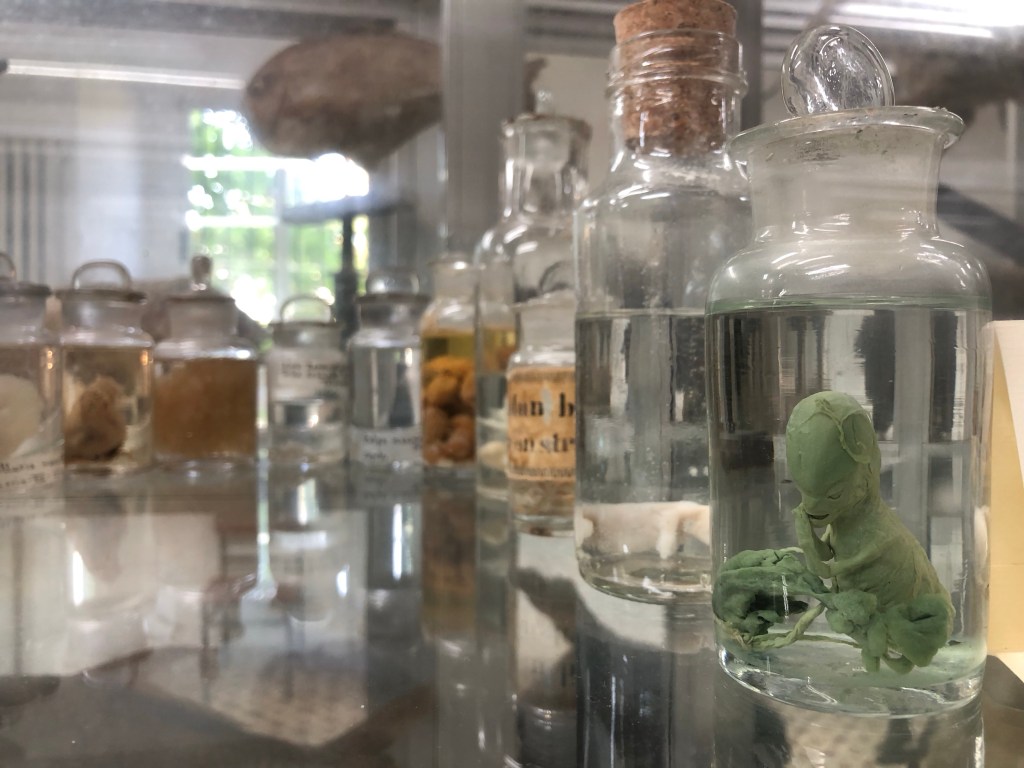
But perhaps the most disturbing exhibits were the specimens in the vinegar bottles. You expect to see the usual array of frogs, snakes and crustaceans in these soulless bottles, their contents looking a lot healthier of complexion than their stuffed neighbours, albeit a lot less alive. But while pickled geckoes was definitely a novelty, the two human fetuses on display were a nauseating shock. That the museum is housed inside the church of San Nicolás, and the collectors in question were monks, only adds to the disturbing nature of this particular exhibit.

Definitely worth a visit, but not for the faint of heart.


For a change of scene, I dropped in on the Colegiata de Santa Maria. Unlike the usual friendly old parishioner in charge of pilgrim stamps in churches along the Camino, a young lad in his late teens loitered near the desk inside. He looked as though he would have preferred to be at the festival which could still be dimly heard through the church’s stone walls, but was very well-spoken and wished me well on the road, so perhaps I misjudged him.

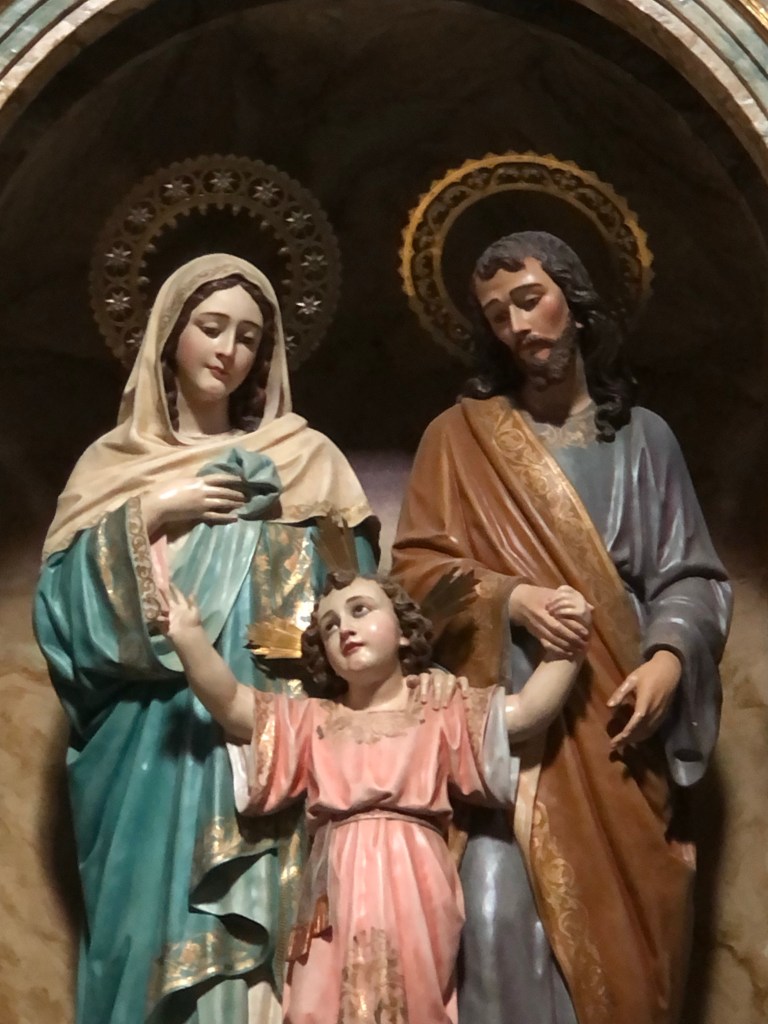
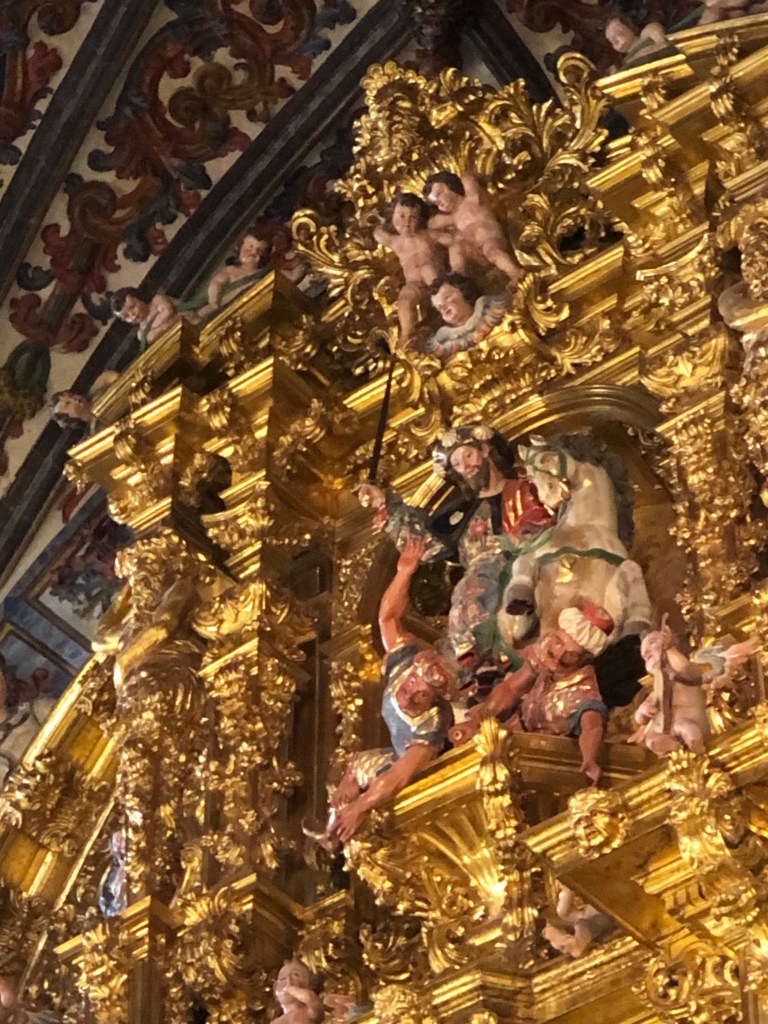
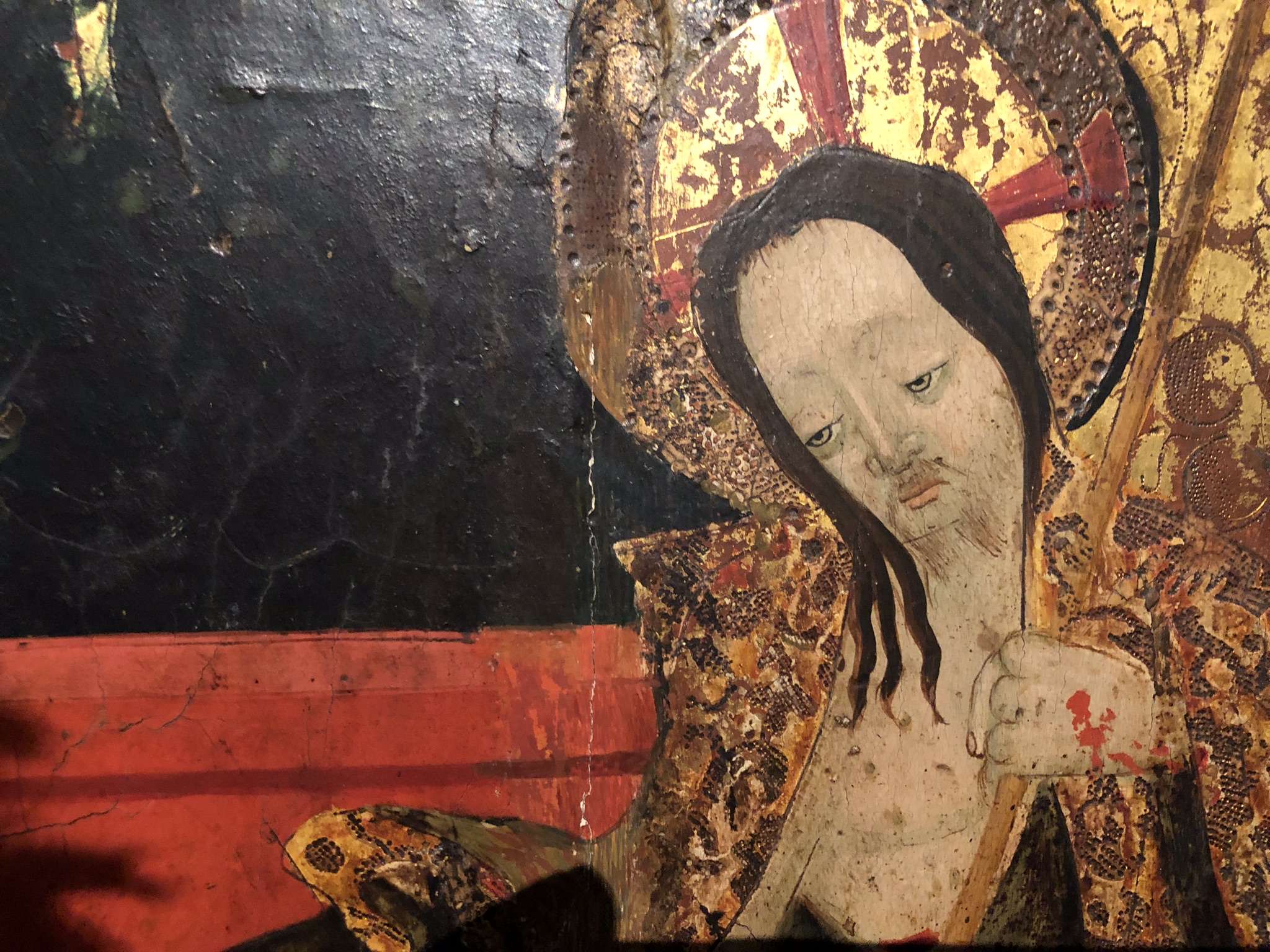
All I’ll say is to end on is that my last lap of the building took me to an image of La Sagrada Familia: Joseph, Mary and Jesus. I don’t think I’ve ever seen all three depicted together as a family so, and I was genuinely struck for a minute or so. The Bible talks a lot about Jesus coming down and becoming Man, but it stands to reason he was a Child before that. And in a country so intrinsically Marian in its devotional practices, it was quite something to see Joseph standing shoulder to shoulder with his wife, the halo about his head just as radiant as hers. The likeness between father and son – or at least the son depicted as a grown man elsewhere in the church – was an interesting detail.


Was the artist trying to make a statement? After all, the short form of José (Spanish for Joseph) is Pepe, which is the same sound as two P’s, standing for ‘padre putativo’ (probable father). Or maybe he just wanted to tie the son of God that bit closer to man on Earth. In any event, I was moved.

Tomorrow, I make for the frontier. I will either stop at La Faba, the last Leonese outpost before Galicia, or climb the last couple of kilometres up to O Cebreiro and be over the border by nightfall. Either way, I’m looking forward to a shorter day. Catch you later! BB x

Camino XI: Sunflower State

It’s taken four days, but I’ve finally caught up with a “scene” – fellow pilgrims I can vibe with, that is. One of the strange constants of the Camino is the difference a single day can make. For three days I’ve stayed in hostels that were almost empty. After doing two days’ walking in one, for the last two nights I’ve been all but rubbing shoulders. I guess that mad 45km trek to Carrión yesterday paid off. Falling in and out of sync on the Camino can completely alter your experience.


Yesterday was a long day. After starting at 5.50am and reaching Carrión by 3.30pm, I had barely finished my blog for the day when I was swept along to Vespers, then a musical meet-and-greet, then Mass, before tracking down dinner in a nearby hostal. I was bloody efficient, even if my feet were killing me!

In summary, Carrión de los Condes is a must, and the Albergue Parroquial de Santa María totally lived up to its expectations as a highlight of the Camino. The nuns who serve at the albergue were not just the friendliest community I’ve met so far, they also got the guitars out and led all the pilgrims and the visiting Christian youth mission group, Jatari, in a singalong welcome event. A really unique Camino night and definitely one you should try not to miss!


If yesterday morning’s early start was a shock to the system after a few sluggish days, this morning was a full gear up. I was up at five when people started moving around, but within five minutes they’d all packed up and gone, stripping the beds and everything. I was still thinking of taking a rest day in Carrión at this point, but seeing the conviction of the other pilgrims gave me a boost and so I strapped on my sandals, pre-applied some blister plasters (prevention is better than cure) and set out.

Only this time, for once, not alone! My first companion on the road today was Carlos, a translator from Baja California, who walked with me until at least as far as the legendary food van (which I completely overlooked – one for next time). I defaulted to Spanish and we talked about the importance of sign language for a bit.

Along the way we fell into step with an American mother and daughter from Virginia, Elaine and Catherine, one powering on ahead, one following at a distance behind. I was asked why I’m on the Camino, which requires the full ten minute story about my grandfather José, but I’m getting pretty good at telling that story by now. At my merciless pace I ended up in step with Elaine and we came to a stop a couple of hours in to allow Catherine to catch up.

While waiting I met Alan, a Dreamer from Britanny, who had received enlightenment on the Camino in the form of a dream to set up his own donativo (donation-based hostel) back home in France. We swapped in and out of French and English where necessary, until bumping into another American, Chris from Wisconsin, and switching back to full English just before Calzadilla, where I was able to use a little Portuguese to order my first tortilla breakfast of the Camino from the Brazilian owners of the Camino Real bar.

Seriously, a humongous thank you to all the language teachers I’ve had over the years. Days like today make me remember how much I owe the lot of you!

The late breakfast stop was a real culture shift from the last three days of bombing it without stopping to the next albergue. I must have spent an hour shooting the breeze with some of my companions from the morning’s walk!


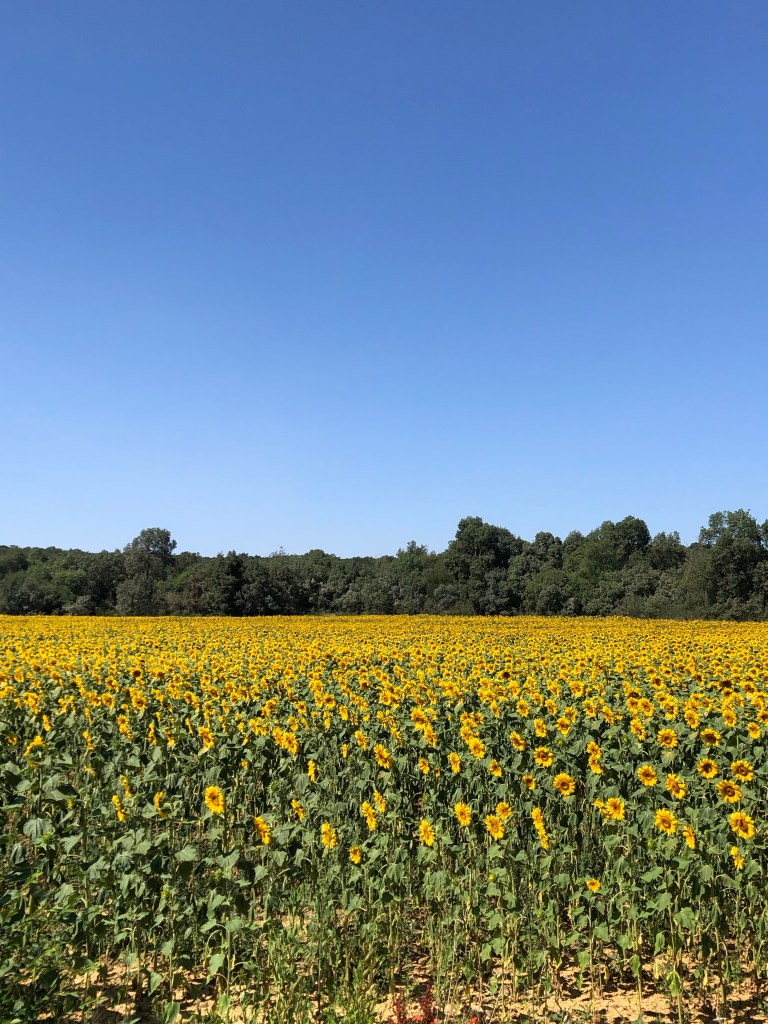
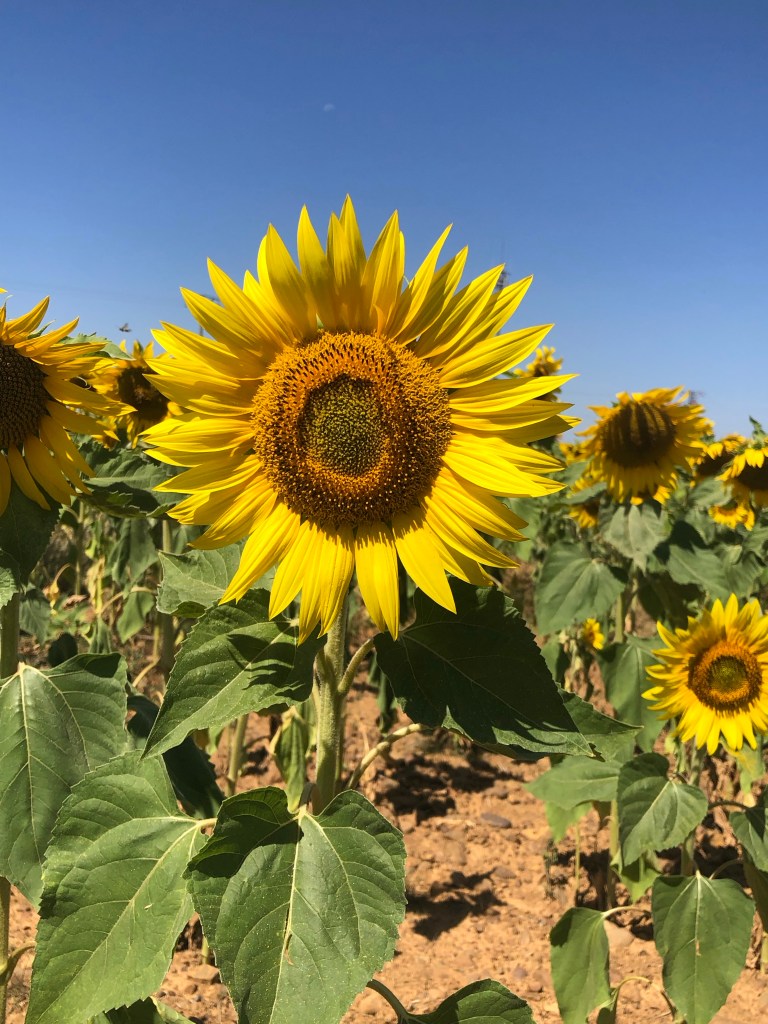
From Calzadilla, the remaining nine kilometres of the road marches past more sunflowers than I’ve ever seen in my life. With the sun at my back, as it almost always is on the Camino (if you’re walking in the morning, which is when you should get most of it done), the sunflowers were practically beaming at us the whole way, like fans cheering on a racer. None of them reached the height of my mother’s steroid sunflower (fed on a bizarre animal feed), but there was enough variety to resemble a crowd.


Basic high-school metaphors aside, they were a welcome sight after three days of wheat fields. 53% of the photos I took today are of sunflowers, which definitely makes sense.

One of the pilgrims today said walking the Camino was like following the seasons, which each stage a different time of year. I guess the meseta is the height of summer. One thing is certain: as the Camino pushes always westwards, you do always have the sun at your back. If you should get lost, it’s a safe bet that as long you position yourself with the sun behind you, you’ll find your way back to the road eventually. Perhaps that puts all of in a sort of sunflower state, looking for the sun every morning and keeping it at our backs. It would certainly be pretty merciless to do the reverse and walk into it for six hours a day!


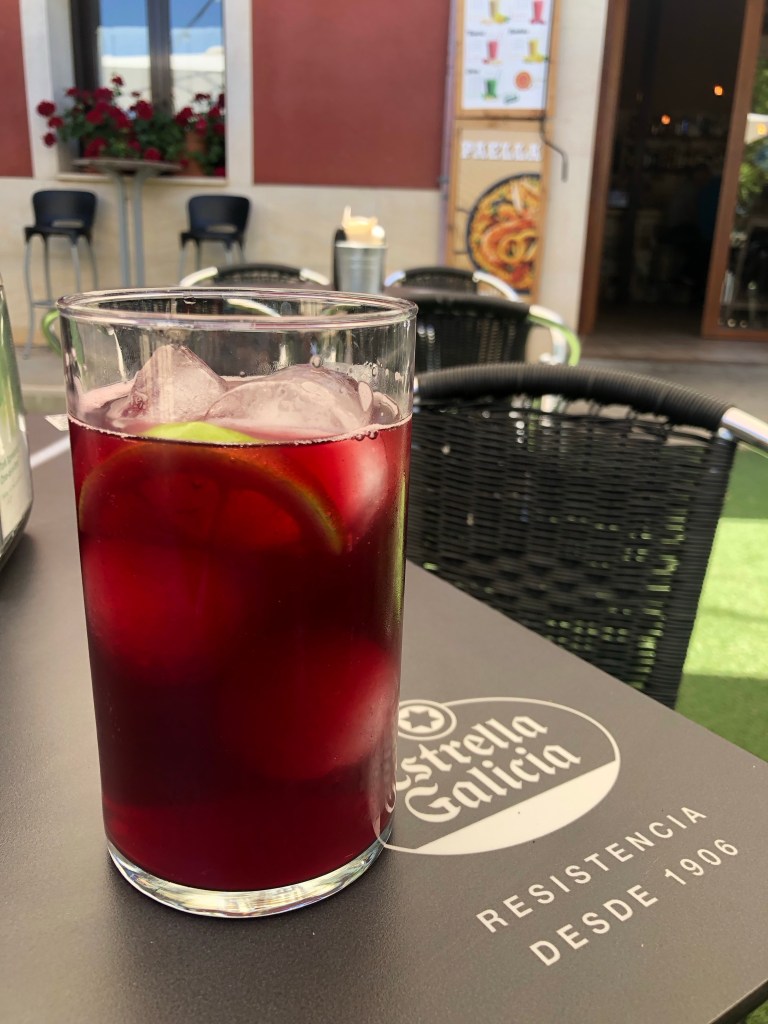
Shortly before Lédigos I caught up with my final companion for the day, Bridgette from Brisbane. By this point it was nearly twelve and the sun was beginning to work on us like an anvil, so when she suggested stopping for a drink before the last three kilometres I was more than game. A quick pit stop turned into a three hour rest over iced tinto de verano, and I was in no hurry to move, even when the clock threatened half past three and Bridgette considered a fifth glass of wine. But eventually we got a move on and cleared the last three kilometres to Terradillos in less than twenty minutes, to find the albergue less than half full, meaning we could snag an empty room. It just goes to show that arriving early isn’t always necessary! Though I expect it will become more of a thing as we get closer to Galicia…


It’s good to have company at last. It will make for less reflective and more anecdotal blogging, but that’s probably good for me and for you too, dear readers! After all, there’s only so many times I can spin a yarn about Montagu’s harriers and vast skies… BB x

Camino IX: Sticks and Stones

I spoke too soon last night. Around five o’clock, not too long before Lourdes, the hostalera, set off for home for the night, a bearded Frenchman arrived de la nada and set down his kit for the night. Antoine, from the town of Évian-les-Bains (of bottled fame), had walked a hell of a way to get to San Bol: not only had he walked a whopping 45km from Atapuerca that morning (bypassing the city of Burgos entirely), but he had started his Camino from his front door, making this his eighth week on the road. I’ve only ever met one other pilgrim on such a trek, a real rag-and-bones German who had gone for a walk with his dog and kept on going. Antoine, however, looked as though he had only set out yesterday. It was as good an excuse as any to practise my French, which isn’t nearly as rusty as I thought (though I did have to think how to say the number seventy-five), and it was good to hear a fresh perspective on what’s going on in France right now from a Frenchman.

I watched the sunset over the meseta from the porch and ended up having a very engaging chat with a local man from Iglesias with the most original name of Porfirio Celestino. He had come up on his bike to see if the new trees had grown in this spot, but also to check on his beehive, which he had been told to rejig by an expert. We had a laugh about our shared experiences as teachers and tried to outdo each other’s collection of oldy-worldy names like Araceli, Guadalupe and Diosgracias (the latter being my great-great grandfather’s Christian name). I think I won with the latter, he laughed so heartily. Wouldn’t you, if your parents named you Thanks-Be-To-God?


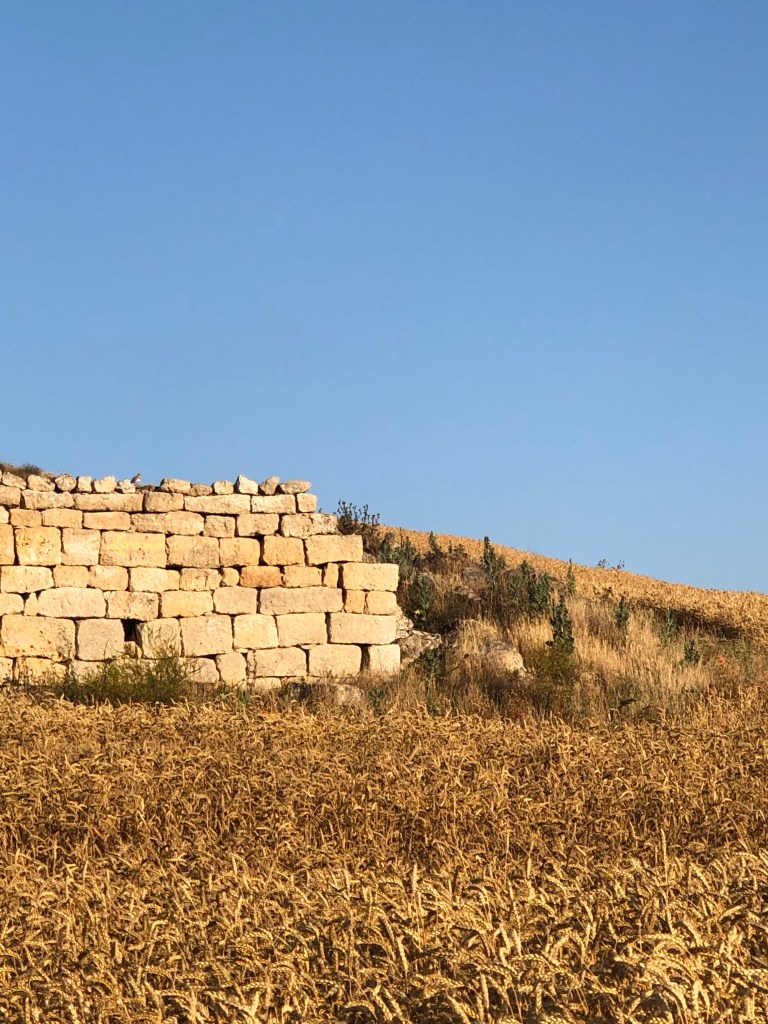
I allowed myself a later start this morning. Later being 7.45am, which is a perfectly respectable time to set out. The sunrise was nothing short of magical, and it was all I could do not to linger longer. I can’t recommend the Albergue de San Bol more highly. It was a perfect introduction to the Meseta and blissfully immersive. A partridge climbed up onto one of the many piles of rocks to serenade the valley as I set out, the twin flags of Spain and Iglesias fluttering in the cool morning breeze. There are lots of piles of rocks like that around. I guess they’re removed periodically from the fields to make plowing considerably easier.


Hontanas was deceptively distant. I would have found it quite a slog under the midday sun had I attempted it yesterday, but in the morning light it was a very pleasant walk. Wild flowers line the luminous Camino right the way across the Meseta, adding dashes of crimson, cornflower blue and violet to the shimmering seas of gold.

At one point, high on the plateau above Hontanas, I seemed to be absolutely surrounded by quails. I couldn’t see a single one – they’re tiny, incredibly well-camouflaged and very rarely flush when cornered – but I could hear them all around. Their three-stop whistle can carry for as far as a mile, but if you can hear their childlike ‘—aauWAH’ it’s a good sign that they’re nearby. Quails and turtle doves are fast becoming the soundtrack to the meseta, and that puts a serious spring in my step.

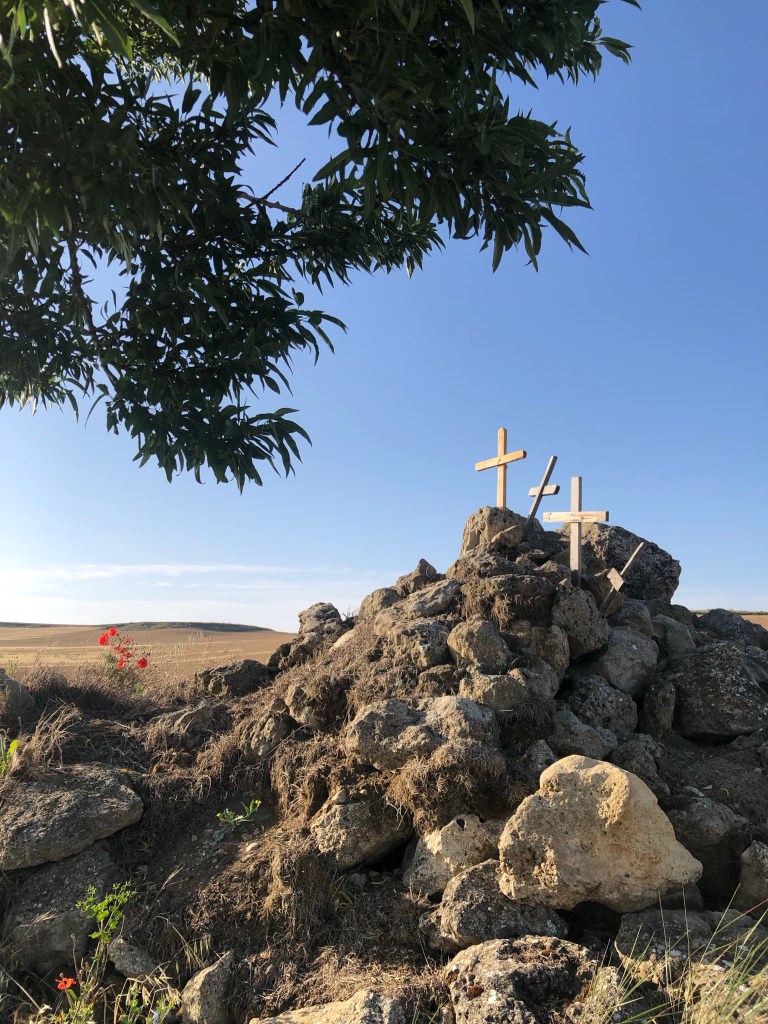
I’ve passed a couple of roadside graves today (not pictured for obvious reasons). They were quite a common sight on the first couple of days of the Camino, where the mountain pass can be dangerous under the wrong conditions, and tended to be Asian or Latin American in origin. Out here in the middle of the Camino, however, the meseta proves a challenge that isn’t always insurmountable, claiming Spaniards and even the hardy Dutch. I try to say a small prayer at each one I pass. By the looks of the painted stones at their feet, I’m not the only one.


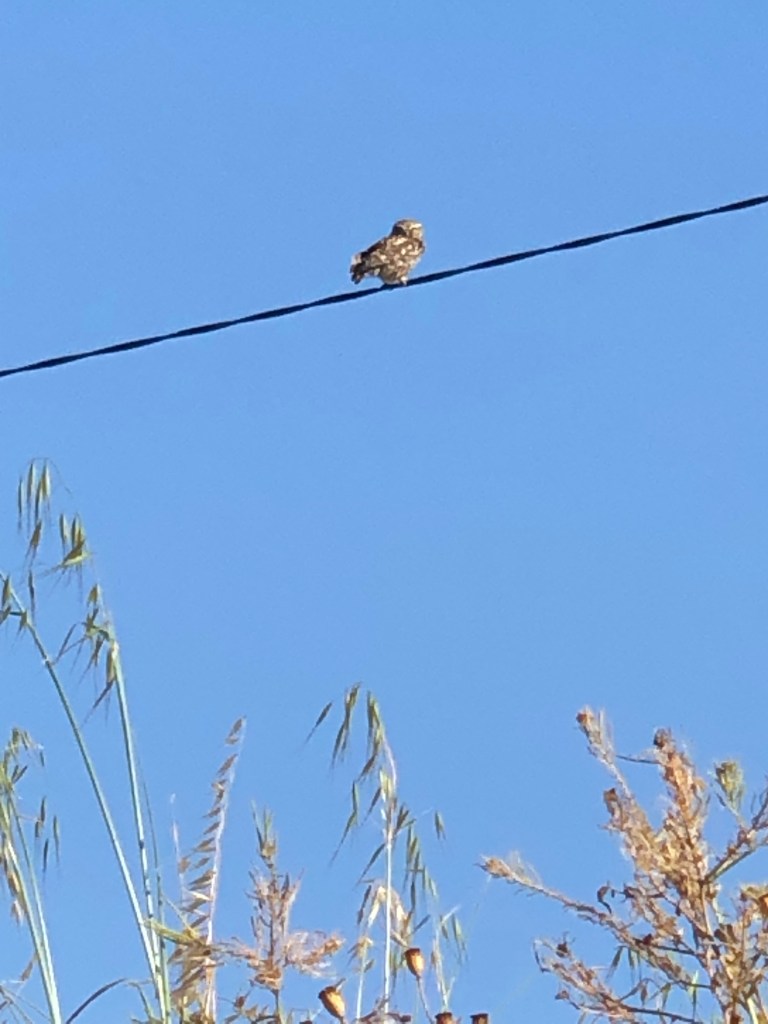
Hontanas seems to be a magnet for pilgrims. A sizeable number had stopped for breakfast at the first café, leaving the road ahead clear. I had only a few cents left in my wallet, but I still spent a good ten minutes there, though that was because I caught sight of a little owl perched on the wire opposite the café. I deliberately didn’t bring my camera as it would have been one belonging too many on the road, but I regretted that decision more than once today – my phone camera simply doesn’t do justice to the beautiful little thing!


After Hontanas the Camino crosses and then follows a wooded stream for a couple of miles. Here, once again, I came across one of my favourite sights of the route: the silver, scythe-like wings of a harrier. It caught me completely by surprise as I came up a low hill, and I could see the yellow rings of its eyes before it jinked and soared away down the valley.

I thought I’d lost him, loitering for a few minutes to see if I could spot where he went, but not five minutes later I saw him up ahead, quartering the valley floor. Kites are graceful, but harriers – especially the silver-grey males – are in a whole other league, drifting over the fields like black-fingered phantoms. He disappeared behind the trees as I drew near, and then re-appeared clutching a fair length of straw in his talons, to take back to his nest in the wheat-fields, no doubt.

Some things, I guess, are worth going solo for. Seriously, I could get used to encounters such as these.


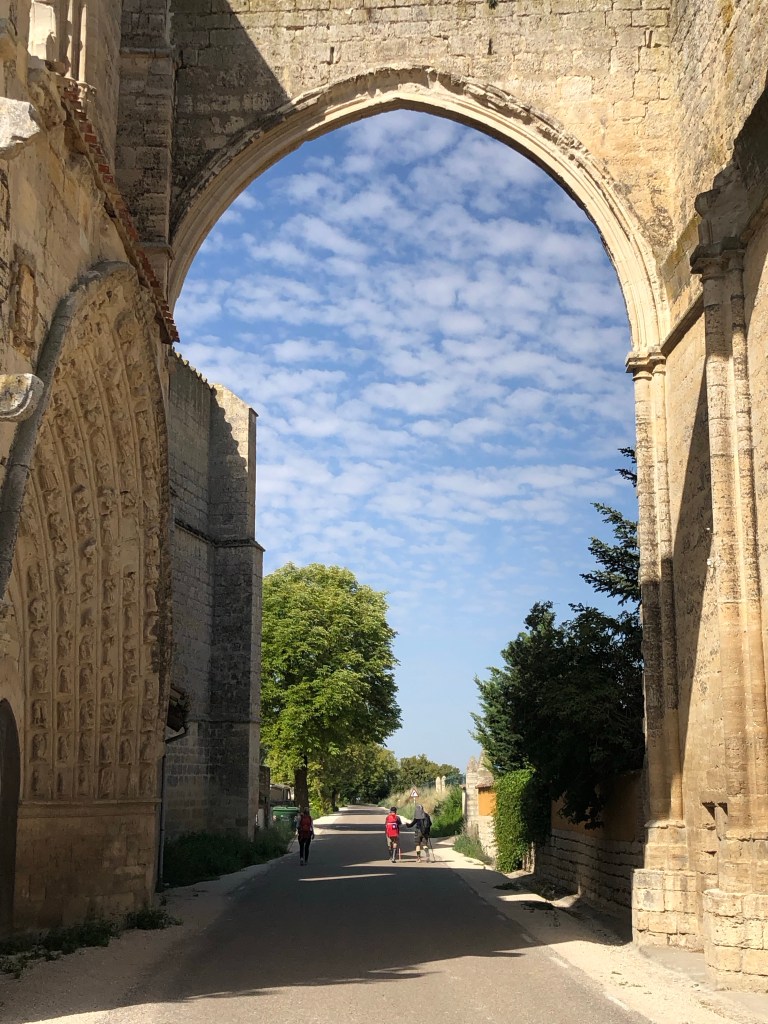
At the end of the valley, the road cuts right through the imposing ruins of the Monasterio de San Antón. So cleanly, in fact, that the main road runs beneath two of its great stone arches. There’s a tiny albergue here and a chance for a bonus stamp (at last!), but I was quite content to just explore for a bit, not being in any particular hurry.


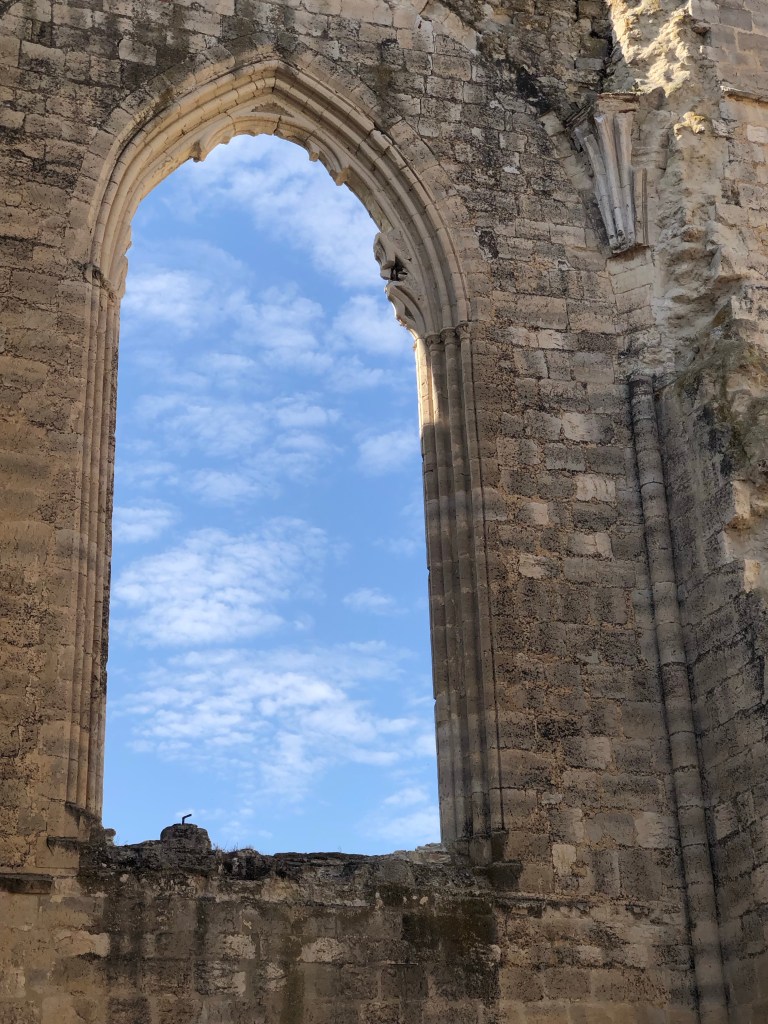
There are plenty of old churches along the Camino, but this ruined monastery is rather special – not least of all because of the way its hollow windows open out onto the endless blue of the Castilian skies beyond. I’m going to run out of adjectives for the sky long before I’m clear of the meseta, because it’s my constant traveling companion, but I’ll do my best to keep it original!

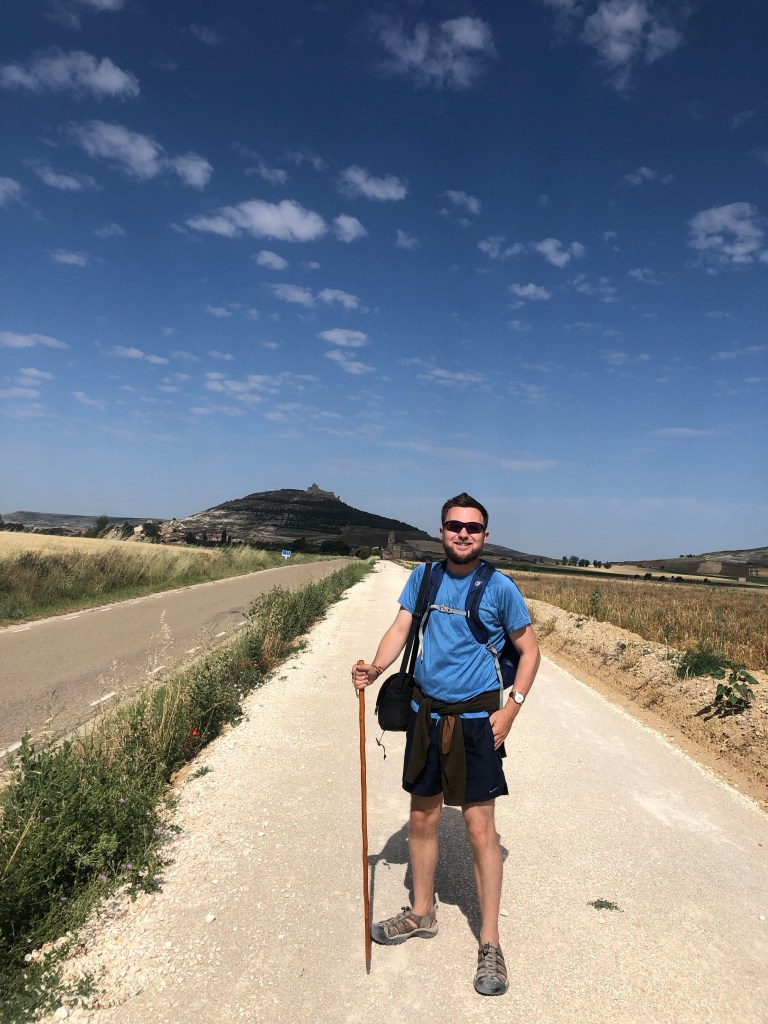
Best of all, they had a box outside the albergue for unwanted objects to take away. I’ll have a few of my own to offer before long, but my eyes lit upon a beautiful Aragonese walking stick from Ordesa National Park. I’ve blown the dust off it and put it to good use. With any luck – if it isn’t pinched along the way – it will take me to Santiago, and perhaps beyond.


From the monastery, the hilltop castle of Castrojeríz comes immediately into view. It’s still a good hour’s walk until you reach the town proper, but it has to be one of the most scenic approaches of the Camino so far. I offered to take a photo for three Japanese pilgrims and they repaid the favour, meaning I will have at least one photo to show I walked the Camino this summer!


Well now, I’m here in Castrojeríz, and the kindly hospitalera has just returned from the hospital in Burgos. Her husband, with whom she runs the albergue, is currently walking the Camino himself. After a very light dinner last night I treated myself to a menu del día at a local mesón-restaurante. The barman must have clocked my La Mancha shirt because he brought out a lovely red wine from Tomelloso, just down the road from my family’s home. They didn’t have any sopa castellana – apparently it’s too hot for that – but the salmorejo he recommended was fantastic. So don’t worry, Mum, I’m eating very well out here!

I’ve showered, made the bed and claimed another stamp, so now that I’ve finished writing I’ll have a short siesta before buying supplies and exploring the hilltop castle this evening. What a perfect routine! BB x

Easter and El Cid

Ending any stage of the Camino is always a sad experience. I think I’d managed to put it out of my memory last time, but it came back to bite this morning. I guess it’s the routine sense of purpose the Camino provides so effortlessly: wake up, eat, walk to your next destination, wash your clothes, eat, sleep and repeat. You never need to worry about planning ahead, and that allows you to focus on the small pleasures: conversations on the road, birdsong in the morning, the joy of taking off your sandals at the end of the walk. Life can seem a little lacking in purpose when you step out of it.

So, unwilling to surrender entirely to sorrow, I strapped my sandals back on and set out to explore the beautiful city of Burgos, city of Spain’s greatest hero of all time: Rodrigo Díaz de Vivar, El Cid.


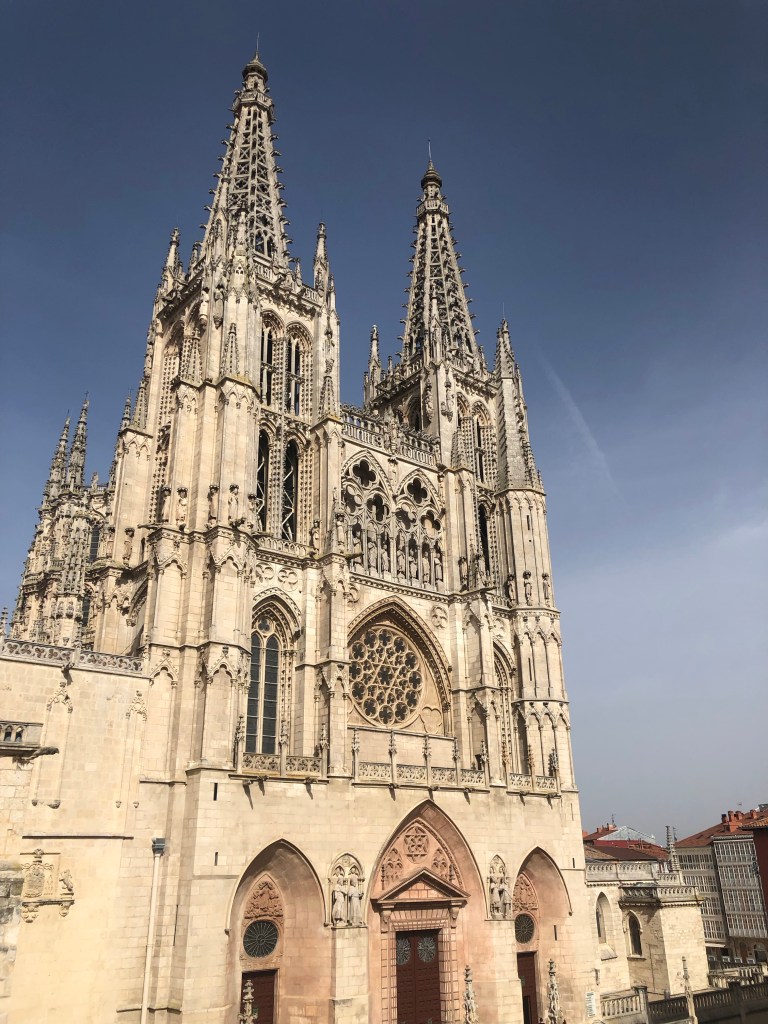
I went to Mass in the cathedral. There were two celebrations taking place in the chapels at the front of the cathedral ahead of the misa solemne. I opted to attend one of the smaller ones. For my sins I haven’t always been to church on Easter Sunday since becoming a Catholic, so it was extra special to turn that around here in one of Spain’s most beautiful cathedrals. Even if it did mean staring up at one of the least subtle icons of Santiago Matamoros.


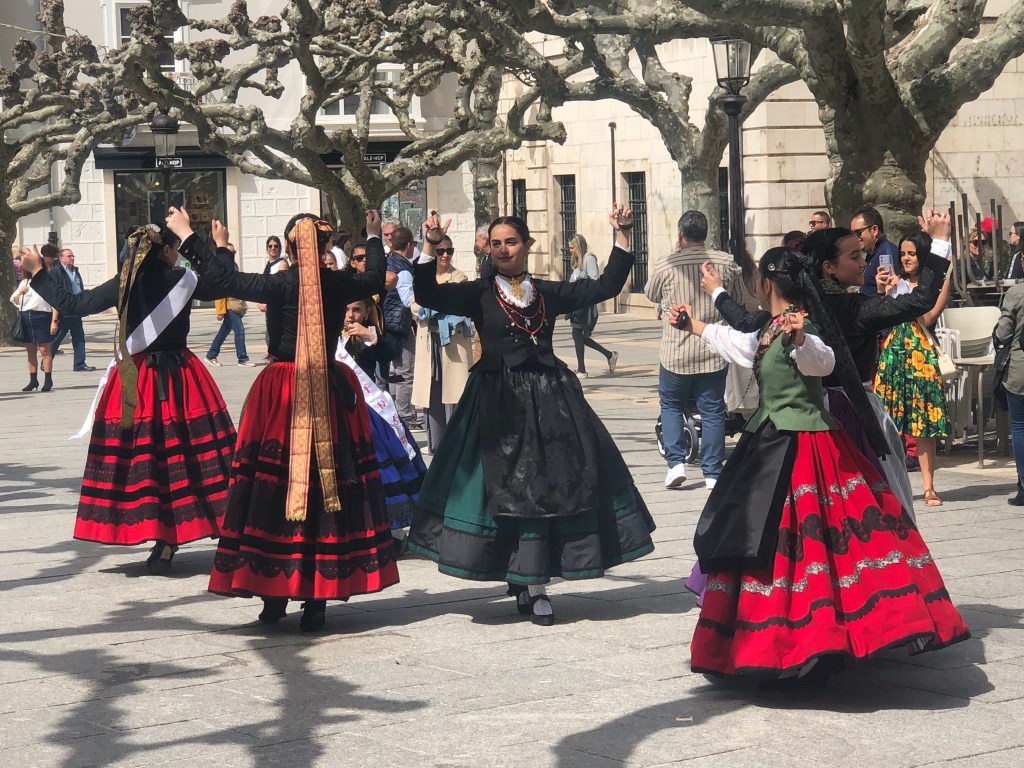
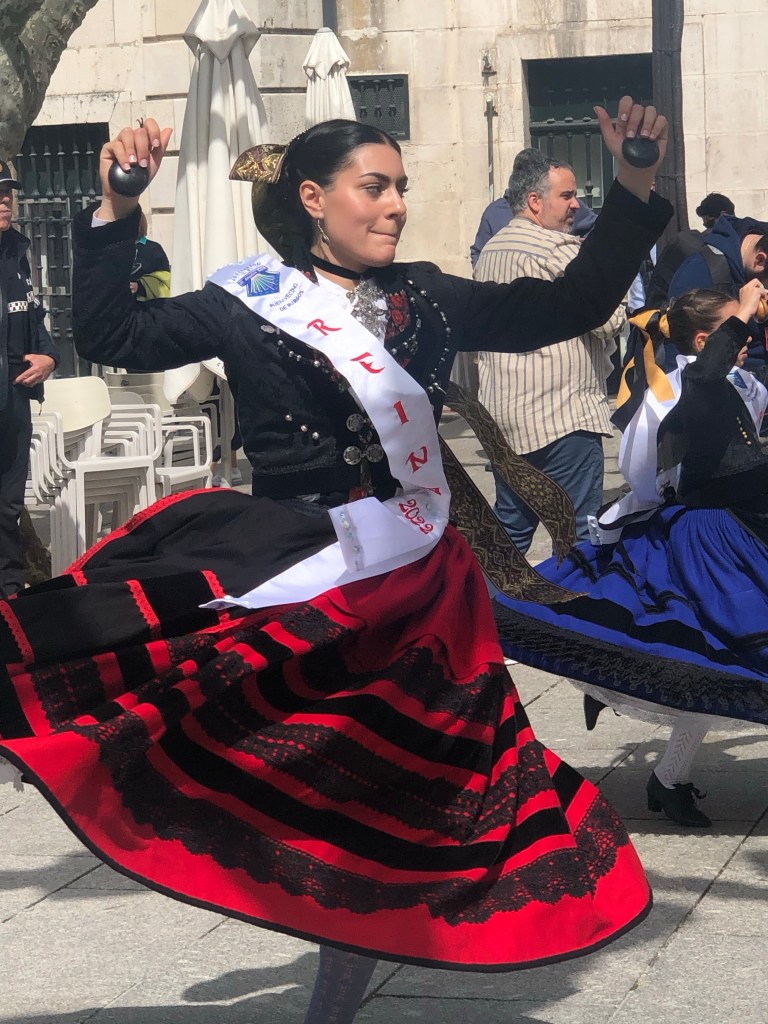
While soaking up the sunshine on the bank of the Arlanzón, I heard the sound of bells. A colourful procession was making its way down the Paseo Espolón, trailing a happy crowd of Sunday pedestrians. Gone were the solemn drums of the nightly pasos: the air was thick with the clean sound of hand bells and castanets. Gone too were the hoods that had so spooked the American pilgrims: these celebrants were welcoming the Easter season in with golden ribbons in their hair.


I’m a bit of a purist when it comes to Semana Santa. In the same way that I prefer enigmatic bulerías to happy-go-lucky sevillanas, I’ll always take the dark mystery of the nightly processions over the happier parades that bookend Semana Santa, Domingo de Ramos and Domingo de La Resurrección. Even so, the addition of an advance guard of local dances (in local dress) is a very nice touch: I don’t think I’ve ever been moved so by Easter Sunday’s celebrations.


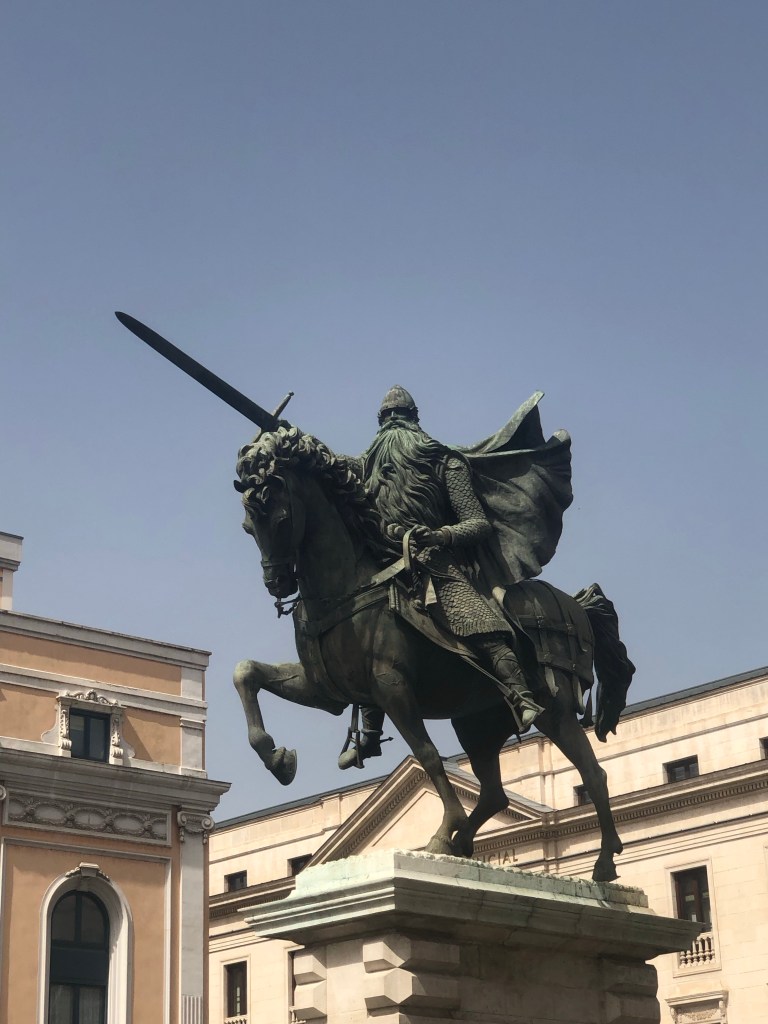
Leaving the celebrants behind, I made for the Puente de San Pablo, which is, frankly, a less than impressive name for what should really be called the Puente de los Héroes. Watching the passing traffic from eyes of stone are the primary characters of the Cantar del Mio Cid, among them Alvar Fáñez, his lieutenant and nephew; Jimena Díaz, his wife; and Abén Galbón, his Muslim friend and lord. At their head on the north bank stands the Cid himself, an imposing figure astride his war-horse Bavieca with the sword Tizona in his hand. I’ve been obsessed with the legend of El Cid since I was a boy, and none of that has faded as I approach thirty. I still get a giddying kick in the guts at the sight of that statue. Whatever the real Rodrigo Díaz might have been – warlord, mercenary, king in all but name – I will always be a fan of the legend. It is, truly, one of the greatest stories to come out of Spain.


It occurred to me that I had not actually been inside the cathedral proper on my last visit ten years ago, so I decided to make good on that this time. After all, it isn’t every day you get to pay your respects at the resting place of a real-life legend – and at half the price, as a peregrino (5€ with a credential – that’s a steal!).

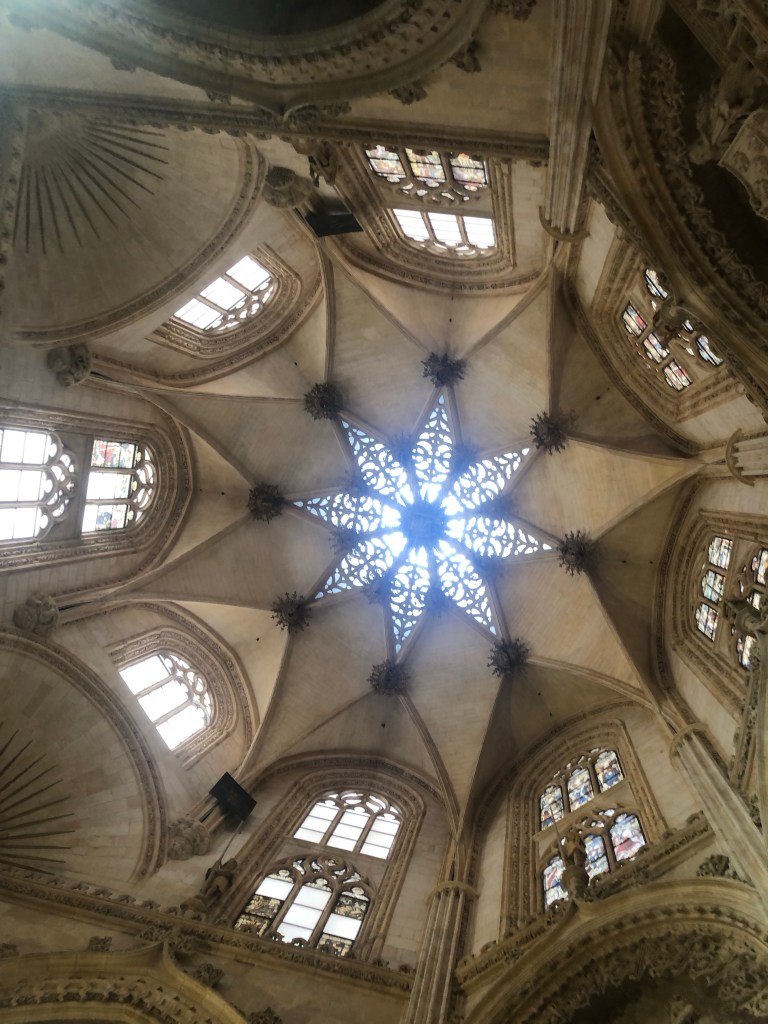
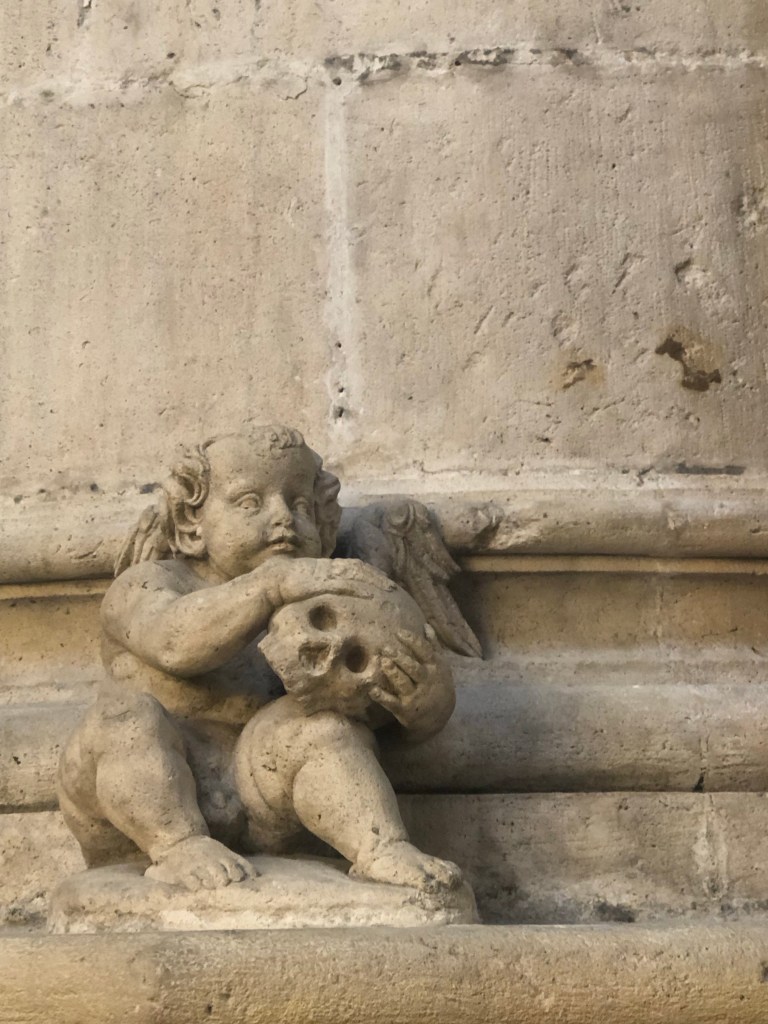
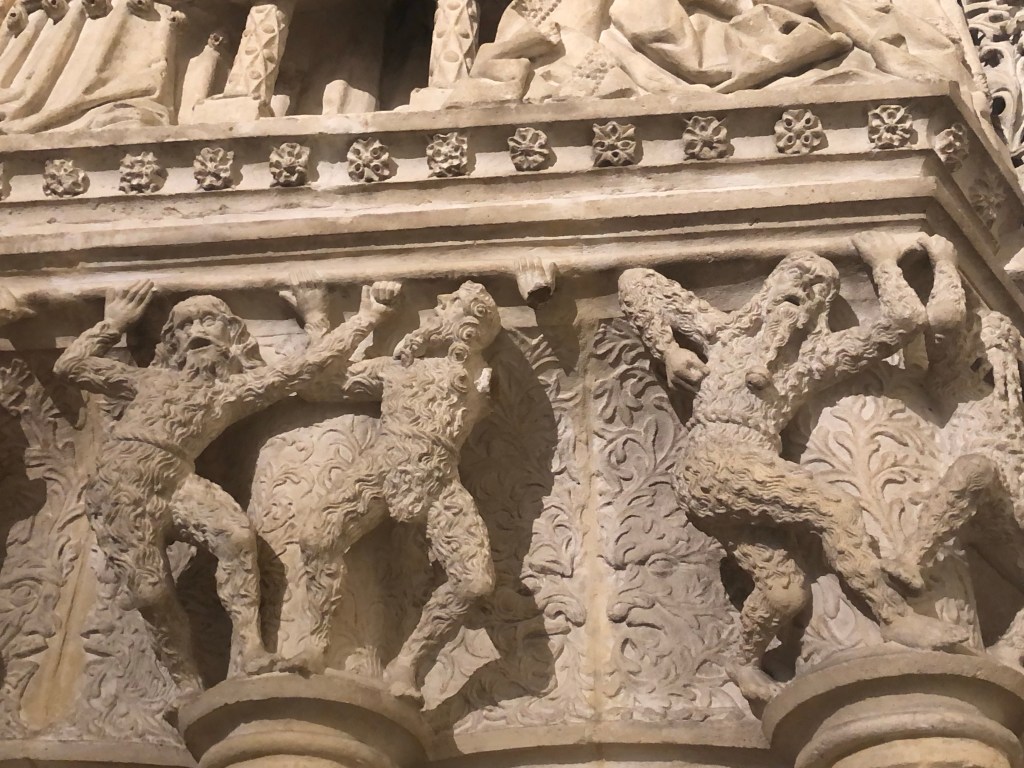
Now, I’ve spent my life in and out of cathedrals – I know Canterbury’s so well I could probably navigate it blindfolded – but Burgos is something else. I’ve heard people say it’s more impressive outside than in. While it’s easily one of Spain’s most breathtaking cathedrals to behold, the interior of Burgos’ cathedral is no slouch. Come for the tomb of El Cid (or what remains of his the French didn’t loot as trophies during the Peninsular War) but stay for the incredible stonework. There really is something to see at every turn, from starburst-like windows in the upper vaults to stone carvings of skulls, savage beasts and wild men.


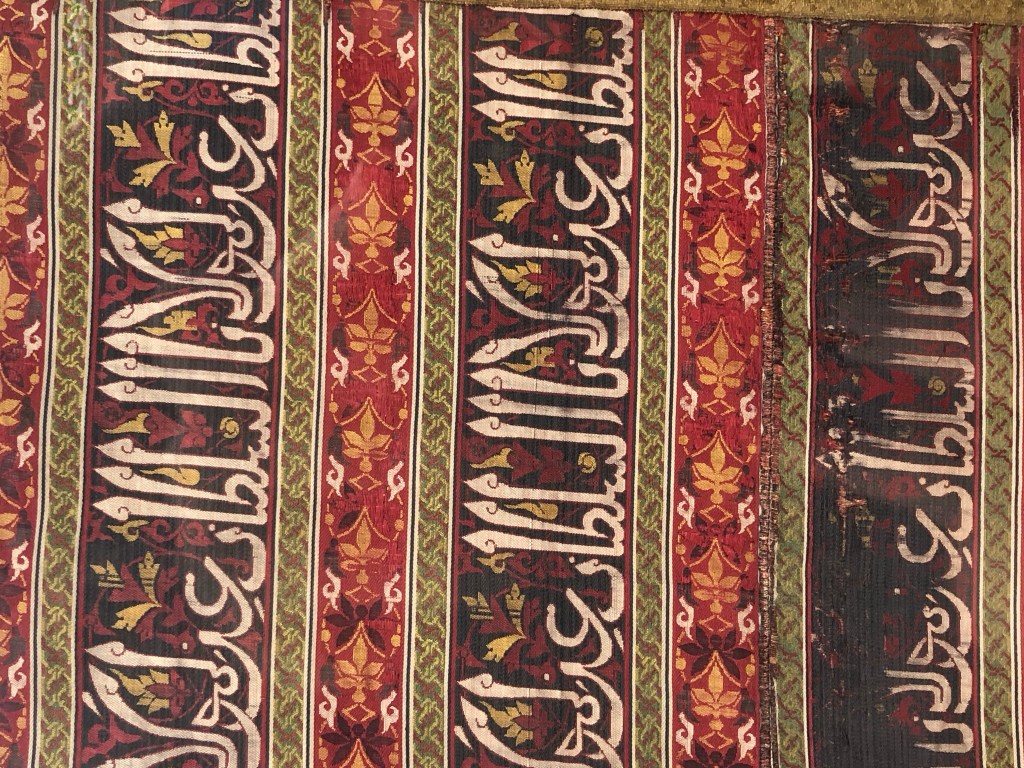
The treasure rooms in the lower chambers also hold a number of interesting relics, including the Cid’s legendary chest of sand, the silver hand of Saint Thomas A’Beckett (of Canterbury, of all places!) and a beautiful Moorish cloak emblazoned with the motto “Glory to the Sultan”. I wasn’t expecting to see any Moorish treasures so that last was an unexpected bonus!

With my tour of the vaults complete I popped into one of the only food stores still open and had a snack dinner of mejillones en escabeche – a solo travel staple of mine – overlooking the cathedral. A pair of ravens circled the twin spires for about an hour, their usually impressive stature dwarfed by the Gothic masonry. I couldn’t get into the bottled tinto de verano I bought on a whim – foolishly, I didn’t think to check if it would need a bottle opener. It’s still sitting unopened on my beside table as I write.


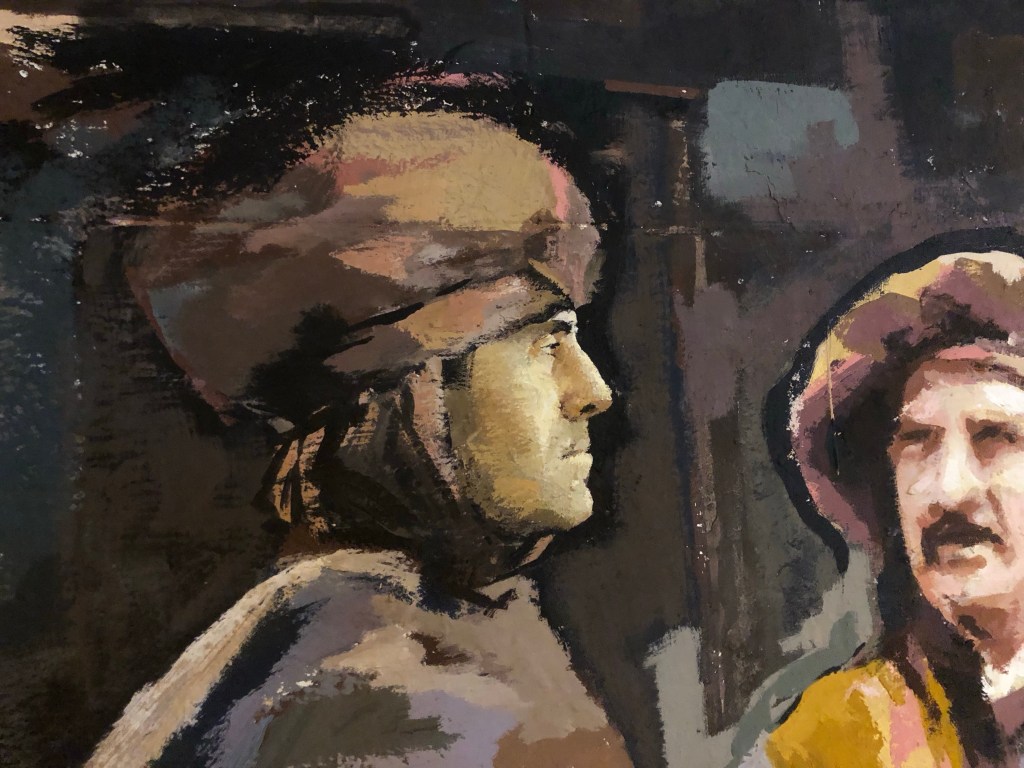
Finally, I went out for a beer with Francisco, the Mexican from the hostel. He was keen to draw my attention to a mural near the bar, where the Cid once again leapt off the page of legend into life. I was most impressed to see one detail in particular: the moros watching from the corner were striking for how un-Moorish they looked. Why, without their turbans, they might just as easily have been as Castilian as the other citizens of Burgos.

Which is exactly the point. We can be fairly certain that, by the time of the Cid (the mid to late 11th century), many if not most of Iberia’s Muslims would have been native to the peninsula for generations, not the lean, bearded Syrian stereotype that is so often thrown about when painting this period of history. Major props to the artist – it’s a brave stroke but a necessary one.


I have now made landfall in Bilbao. I’ve scouted the bus and train stations and they seem navigable enough. Tomorrow, I strike out for the highlands that followed me all the way along the Camino. I’ve had two days to recover and my feet are feeling much better. One final challenge stands between me and my flight home. Let’s hope I’m up to it! BB x

Camino II: Dawnbreaker

Holy Week got off to a flying start last night outside Logroño’s cathedral, Santa María de La Redonda. It isn’t always easy to tell which towns will have a serious procesión, but for the record, Logroño goes the distance. It looked as though all the brotherhoods were out in force last night, garbed in white, red, green, black and blue. Crucially for me, they also beat out the same halting drumbeat from my memories of Holy Week in the south. Not every town does it, but you’ll notice if they do: it’s the ever so slightly delayed drum roll during the march that, once you hear it, you can’t unhear. It’s the suspense of the last days of Jesus’ life, as his followers waited to see if he would save himself. At least, that’s one way of reading into it.

I had supper with a rather awkward American, the only other guest for dinner at the albergue. He wasn’t even staying there, but appeared to have wandered in looking for a menu peregrino (the cheap three-course fare offered to pilgrims on the Camino). He had his reservations about how sociable people are on the Camino and pined for the quieter stretches, and from his less than satisfied reaction to the ‘vegetarian option’ he’d asked for, I couldn’t help wondering what he was doing out here. He was quick to want to fact check my anecdote about his home state of California being one of the only places in the world named for a fictional location (it takes its name from the mythical island in Montalvo’s 16th-century chivalric novel, Las sergas de Esplandián) but I won’t begrudge him for it. After Trump and the fake news boom, who’d trust anyone?

I was definitely one of the first out of town this morning. Though I passed some pilgrims on the road a few hours in, from the speed at which they were walking I suspect they’d been lodging one or two towns ahead. As a result, I had pretty much the whole 30km hike to Nájera to myself – including the first hour and a half before sunrise, which is always one of the most magical times to walk the Camino.

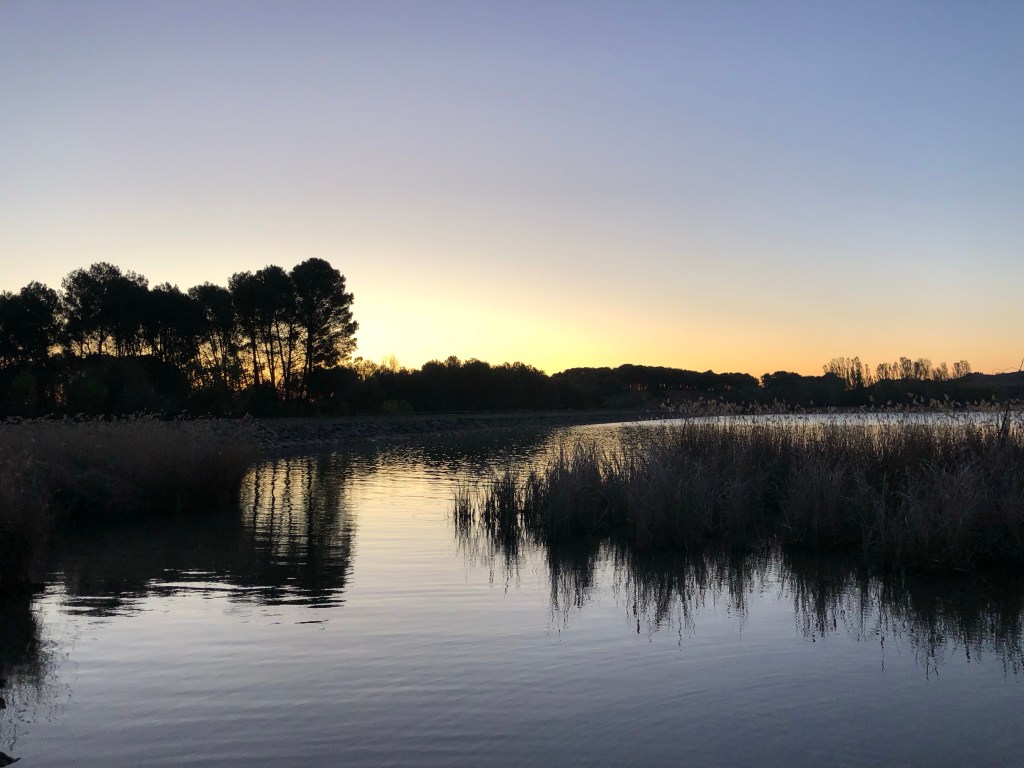
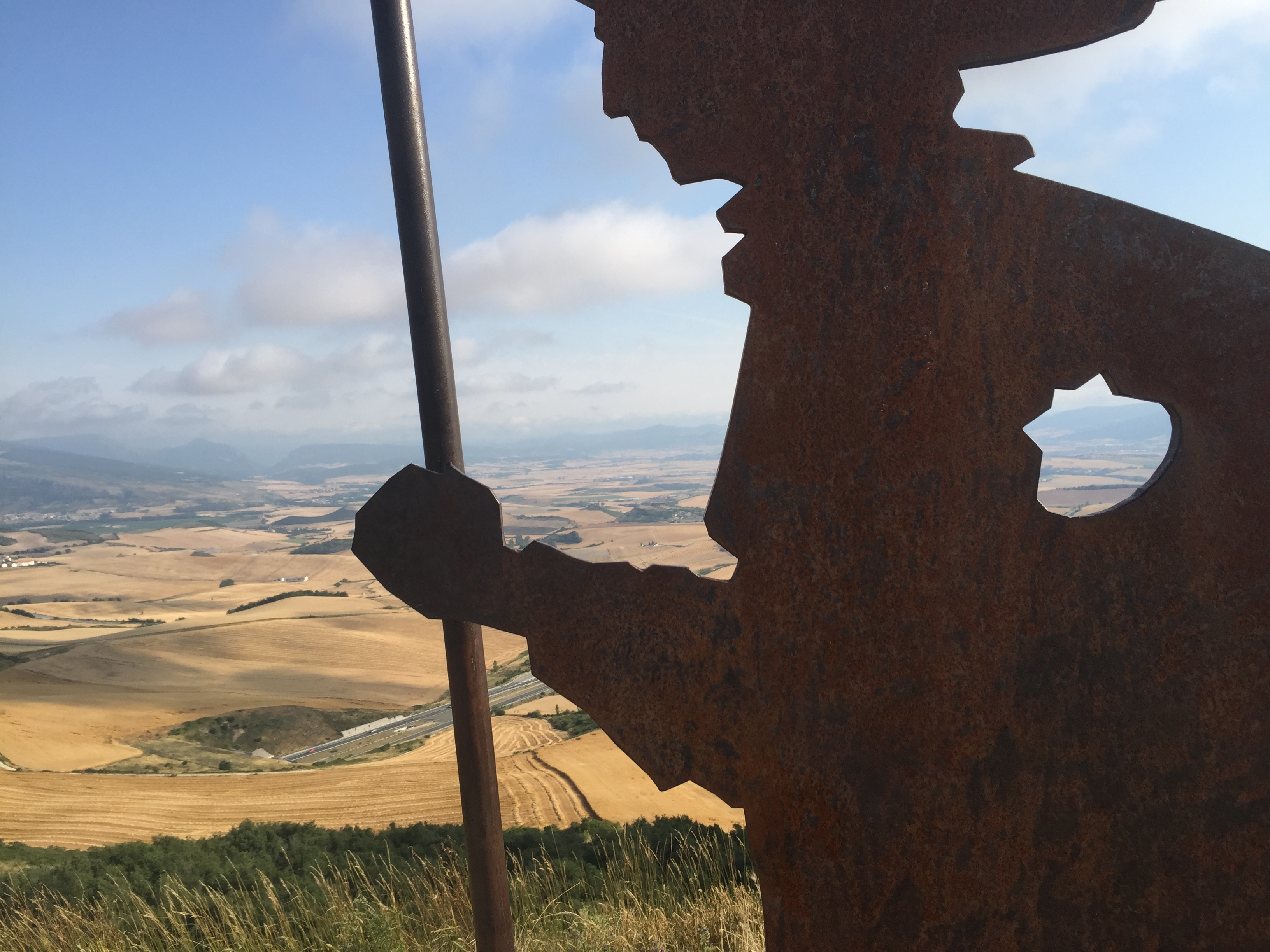
Approaching the Laguna de Grajera from the east, I counted about six or seven night herons flying in from their roost somewhere beyond Logroño. You can just about make out the silhouette of one of them in the photo above, as dawn was starting to break. There were rabbits everywhere – more than I’ve ever seen in this country – and the morning sky was alive with the songs of blackbirds and larks. I could have waited for company at any point, but I do love to have that part of the day to myself. Self indulgent, perhaps, but worth indulging all the same.

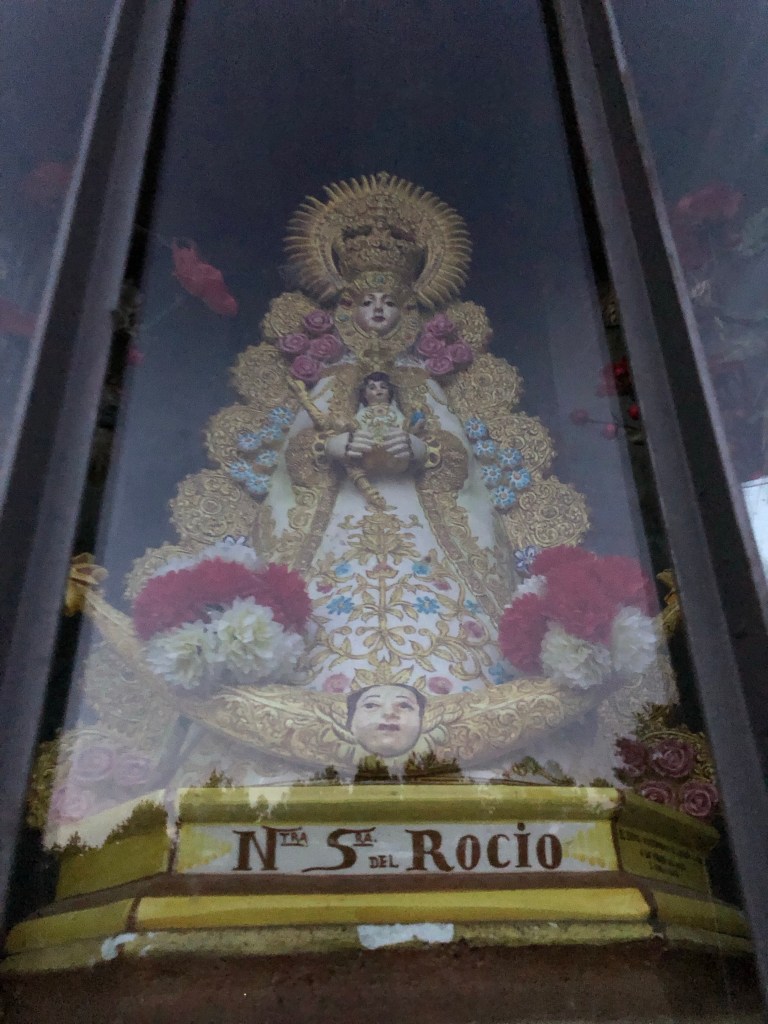
There was even an icon of Nuestra Señora del Rocío on the lakeside. Whether or not I sang her into existence through various repetitions of Las llanuras ardientes and El Rocío es un milagro as I was walking is conjecture. It felt special to find her here, so far from her usual haunt in the marismas down south.

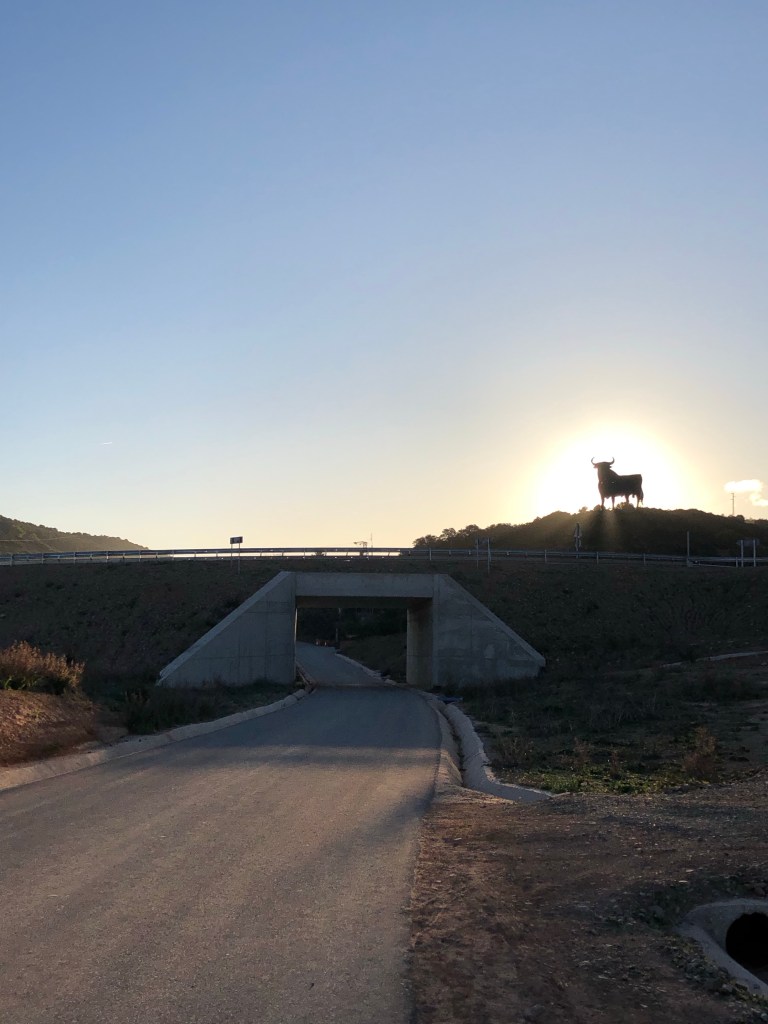
Now, while I needn’t have set off quite so early (the 8 hours in the guidebook is a joke, the trek is at the very most 6h30 with a stop for lunch) I did have my reasons, and one was to catch a very specific angle of the sunrise at just the right moment.

At the brow of a hill to the west of the laguna stands one of the famous Osborne bulls for which Spain is so famous. By the time I got clear of it – at around 8.20am – the sun was almost exactly behind it. I could not have timed it better. Point and shoot!

The rest of the walk was pretty straightforward. The ruins of the old pilgrims’ hospice at San Juan de Acre were picturesque and the Camino itself, though it cleaved close to the road on occasion, was quiet and easy underfoot. I let a couple of Dutch pilgrims overtake and continued to have the road to myself. The Sierra de Cebollera remained cloudbound for most of the walk, and I kept my hoodie on until I reached Nájera – it simply wasn’t hot enough to justify fewer layers, and that’s not bad thing!

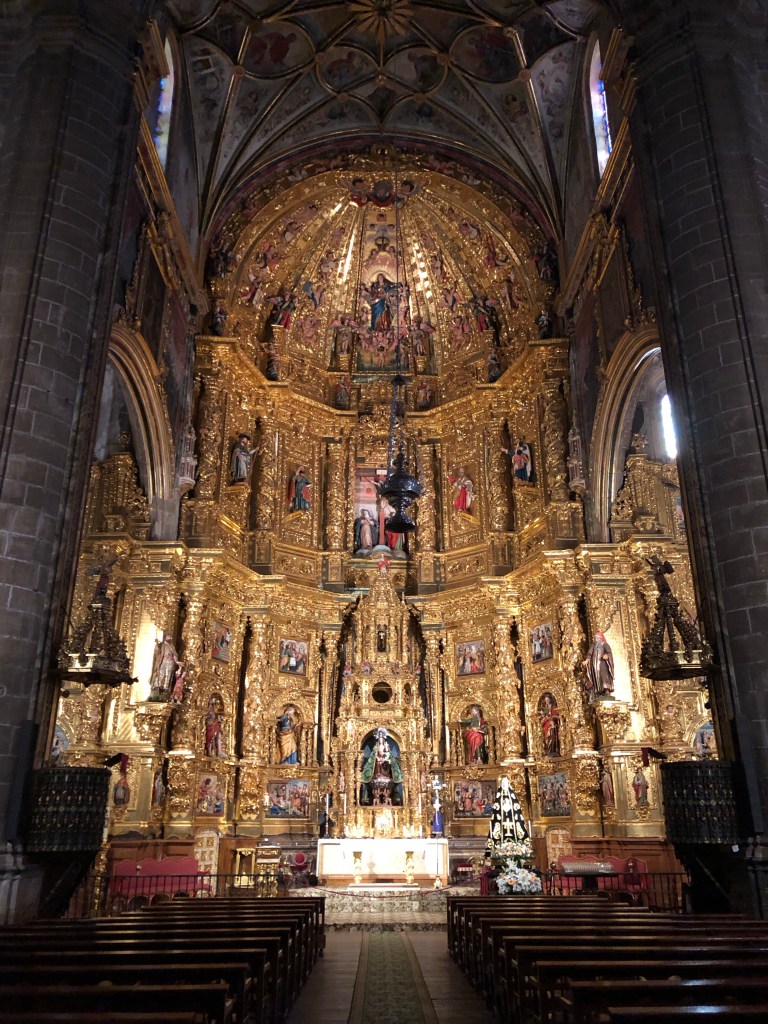
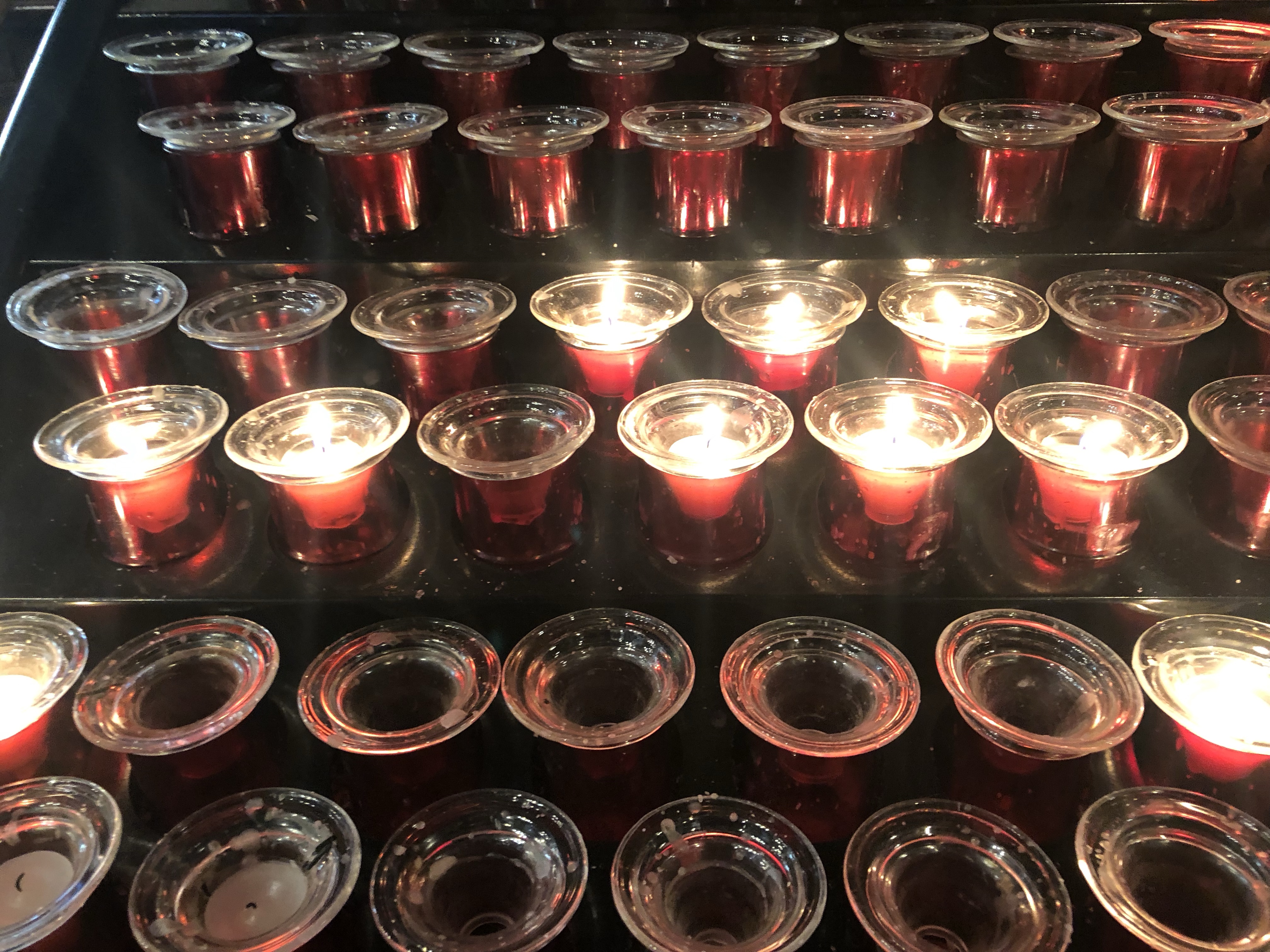
Navarrete was stunning – easily one of my favourite stations on the Camino so far. The church is a classic Spanish affair: pokey and generic on the outside, and an immense explosion of heavenly gold within. I lit a candle for abuelo, left a story in the visitor’s book, sang through Thomas Morley’s Nolo mortem peccatoris (since there was nobody there) and moved on.

From Navarrete, the final stretch rolled across the hills before sloping down toward the cliff face of Nájera. Legend has it the French hero Roland fought a Syrian giant on one of these hills in a single combat that went on for days, but I was happy enough to see the familiar silhouette of the giants of my childhood: griffon vultures, circling high above the meseta in the distance. I didn’t keep a tally, but there were raptors everywhere today. Kestrels and kites – both black and red – and buzzards and booted eagles, these last in both white and brown. Since it’s still early enough in the season, some of them were displaying still, climbing high and then plummeting down in a sharp V with wings tucked in. Between that and the flute-song of woodlarks that followed me for the last hour before Nájera, I have been in seventh heaven all morning. Oh Camino, I have missed you!

The Albergue Municipal is filling up. Maybe I’ll meet some of these people later. But for now, I’ve done my write-up for the day and I could use a little shut-eye before I seek further adventures in Nájera this evening. Until the next time, folks. BB x

Peregrino Soy

Last night, according to the Beeb, there was a planetary parade. After yesterday’s exceptional conditions – the first day of spring in every sense – it would have been easy to spot from home. That the news decided to report the phenomenon exclusively in the past tense was a kick in the teeth. At the very least it would have been something to write about before the holidays. A warm-up exercise, so to speak, since that’s usually when I have the time to write. I bent the usual dry spell of the summer holidays to my will last year, but this year’s summer break is looking to be all about wheels with little to no time for anything else. Knowing I have to spend a great deal of the summer learning to drive is a pain in the neck, albeit a necessary one, and it’s naturally got me thinking about all the things I’d rather be doing. Fortunately, at this point in my life I can limit all those things to one thing and one thing only, and that’s the job I didn’t finish two years ago: the Camino de Santiago.

So, in my typical stubborn fashion, I’ve thrown caution to the wind and booked a return flight to Bilbao to pick up where I left off over the Easter break. Peregrino soy, volando voy.

Last time I made the trek I got as far as Logroño before having to fly home for both a house move and my pre-PGCE literacy and numeracy test. That’s somewhere between a quarter and a fifth of the total distance (780km). And though I’m not a fan of re-starting things if I can help it, it does feel like one of those treks that ought to be made in one, if you can.

Realistically, it takes about a month to walk the whole Camino, from Saint-Jean-Pied-de-Port to Santiago de Compostela. A month of 5am starts and 12pm finishes, racking up around 20km a day before noon with afternoons spent resting, exploring and talking to fellow pilgrims. It’s an experience like none other. Everyone is on the same road, but no two people started in the same spot or with the same motivations. You fall into a healthy routine after a couple of days, and yet every day is different.

People come from all over the world to walk the Camino. For the first couple of days, I tagged along with three Italians and an Argentinian. We parted ways at Estella when I stayed behind, enchanted by the Basque town. You could easily walk the Camino in a month, but there’s so much to see and do that it’s worth stopping every so often to see all the towns along the pilgrim route have to offer – and your feet will appreciate a day off after five or six days’ walking. Since I’m traveling within the parameters of a two-week holiday I don’t have all the time in the world, so I’ll try to follow the same pattern this time around: five or six days of solid walking, broken up by a decent night’s sleep in somewhere that isn’t an albergue at either end. That tends to be a good idea.

My credencial, or pilgrim’s passport, is already sitting on the coffee table, open at the last stamp. My sleeping bag is rolled up and ready to go and I’ve ordered a good quality rucksack as the one I used last time is at my parents’ place – and it was falling apart after more than a decade of use. For a sense of continuity, I’ll aim to stay at the same place where I came to a stop last time. My Spanish colleagues at work expressed some dismay at the idea of doing the Camino at this time of year – “pero oye, esto se hace en verano” – but I’m going to trust my instinct on this one.

I’m well aware that I’m heading out in none other than Semana Santa, the holiest week in the Spanish calendar. As well as adding to the colour of the Camino nights, with all the reckless passion of the pasos, it may well make for a busier (and more Spanish) Camino than usual. But after a couple of safe and highly-organised school trips, I’m more than game for a proper adventure. And few things provide quite like the Camino.

Bring it on! BB x

Rome IV: Popes & Palms

Bloody hell, but that was unnecessarily early start. The trip to Fiumicino Airport (8€ on the shuttle bus from Via Crescenzio 2) was on time and completely hassle-free, so I arrived with four hours to go until my flight – a new record in caution. Still, better early than late! It gives me time to relax and put yesterday morning into words.


All I can say to start with is believe in your own luck for a change. Because Sunday morning’s adventure wouldn’t have happened at all if I hadn’t taken a chance.

One of the main reasons I came to Rome and stayed until this morning was because of the very real chance of seeing the Pope deliver his Palm Sunday Mass in St Peter’s Square. That’s not the kind of opportunity you pass up on if you can help it. Unfortunately, the information on the internet is vague, conflicting and genuinely quite hard to track down. Most of it implies you need to apply for a ticket directly to the Vatican via fax (!!), sometimes as early as three months in advance, to be in with a chance of securing a “coveted” ticket. At least, that’s what all the tour companies say. By Saturday night, I’d more or less given up on the whole affair and planned to go for a morning walk down the Via Appia instead.

Turns out the internet is wrong. So here’s me setting the record straight.

Contrary to what you may find online, you do not need a ticket to attend the Palm Sunday service in the Vatican City. It’s free and there’s no need to book!!!

I rocked up in my casual clothes with my picnic packed for the Via Appia and thought I’d check to see what was going on in VC and before I knew what I was doing I’d followed a whim and chanced the security barriers. They scanned my bag, found only a punnet of olives, a punnet of strawberries, breadsticks and some other snacks… and let me pass.

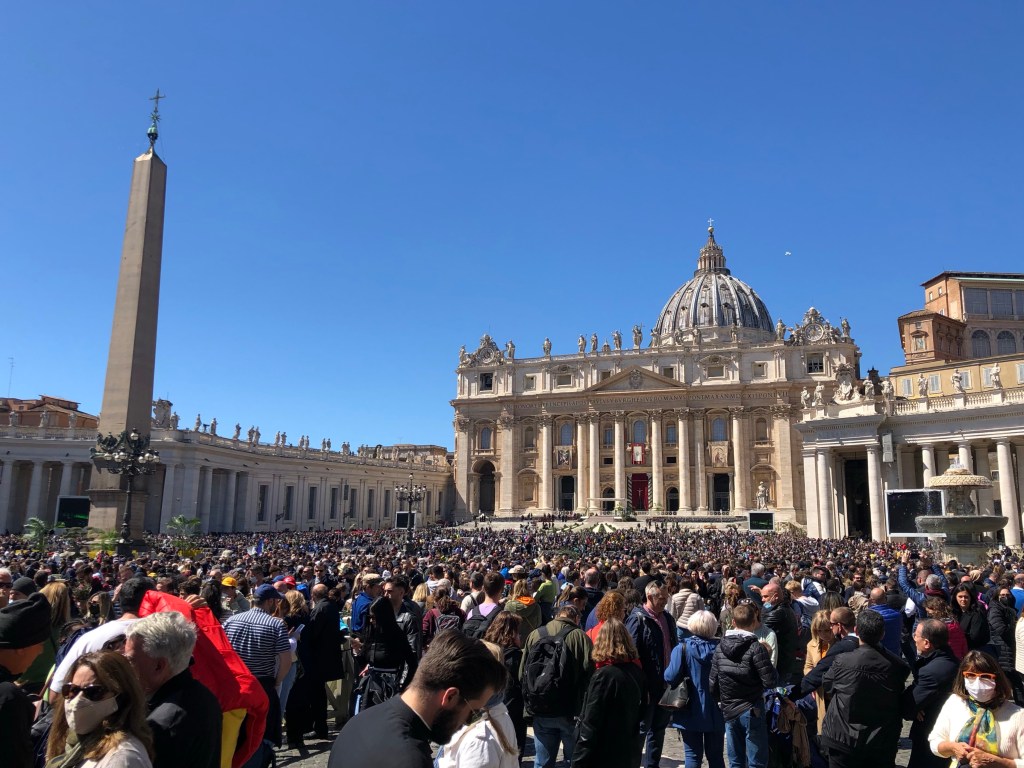
As it was still only 8.20am, St. Peter’s Square was still relatively empty. Thousands of chairs had been set up overnight, along with the temporary barriers raised around the central obelisk and the wind rose, but other than a small crowd settling into the first block of seats the pickings were good. I found a seat near the front of the second block, just two rows back from the barrier and strategically positioned behind two families who’d put their children in the seats directly in front, giving me a perfect view over their heads to the Papal seat. If I’d planned to come I could have arrived sooner and snagged the best seats in the house, but for a spur-of-the-moment decision I really lucked out.

By the time the warm-up Ave Marias were being chanted (in Italian, the real lingua franca of the Vatican), the seats on either side of me had been taken: by a diminutive group of Indian nuns on my right and a large Eurasian woman and her daughter on my left. I would have been squashed throughout the service had the nuns not seen on one of the telescreens that there were still five empty seats in the front block and gone charging off for a better seat, and my other neighbour left during the Communion after realising she was holding up the entire row by being the only one not going up for communion. By the end of the service, I had more room than I knew what to do with!

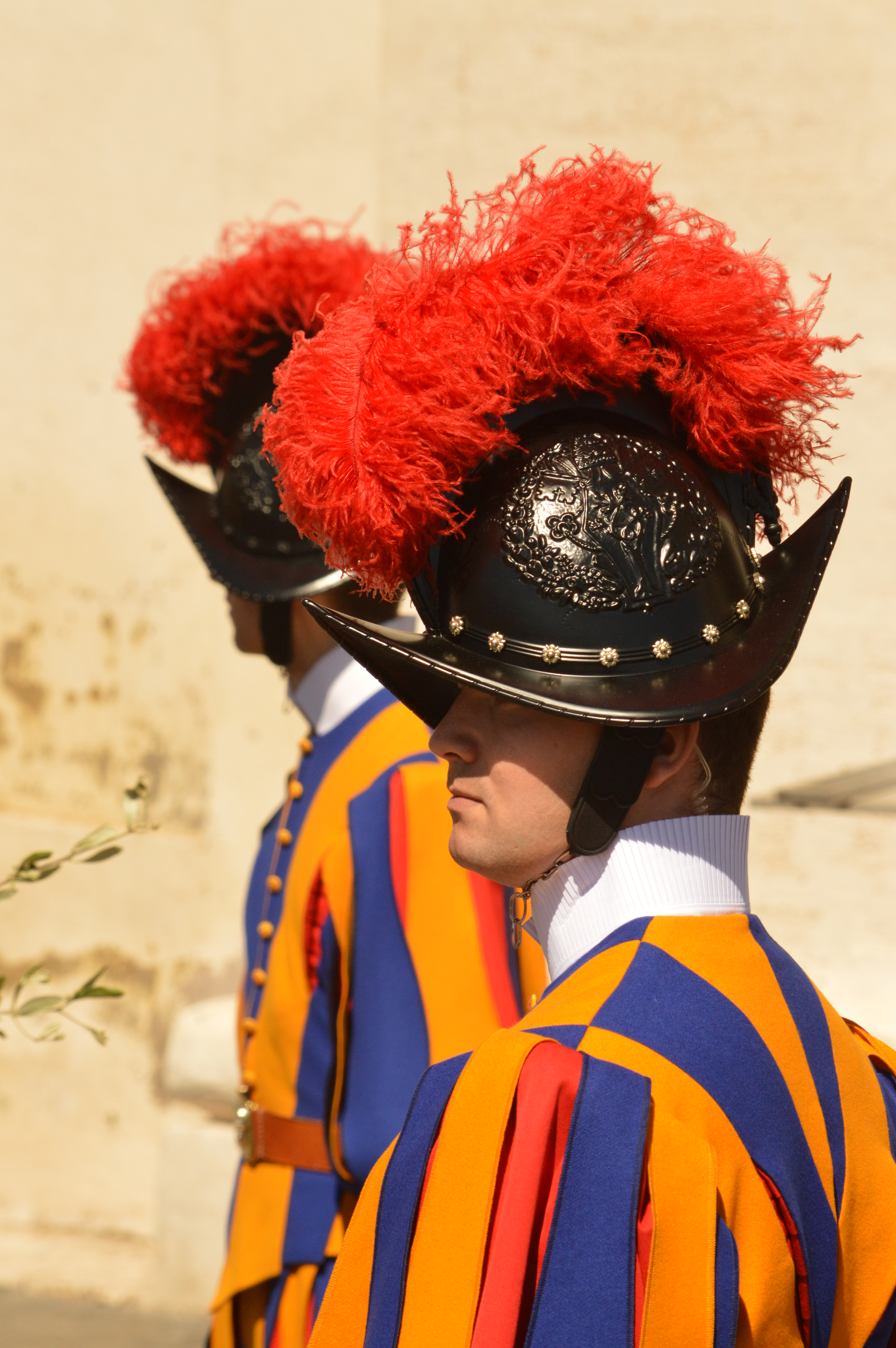
The Swiss Guard were quite a sight to see in their full regalia: plumed morion helmets, black capes worn about their landsknecht-esque striped uniforms and, at least in the hands of those guarding the cardinals’ seating area, impressive halberds, their tips flashing in the sun. I’m not sure if they’re more visible if you take a walk through St Peter’s basilica or the Musei Vaticani, but I certainly hadn’t seen them until now, so it was worth coming even if only for that!

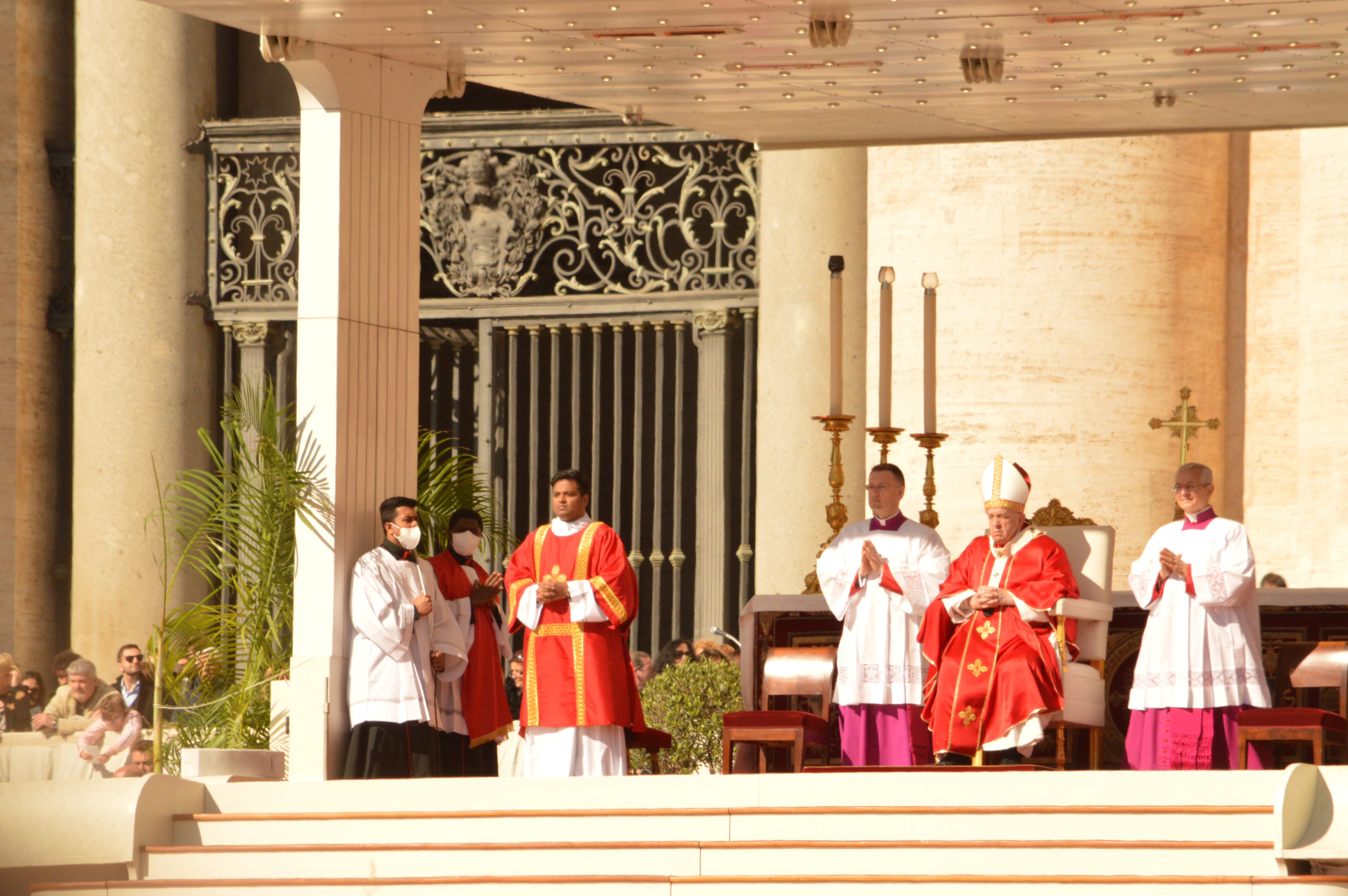
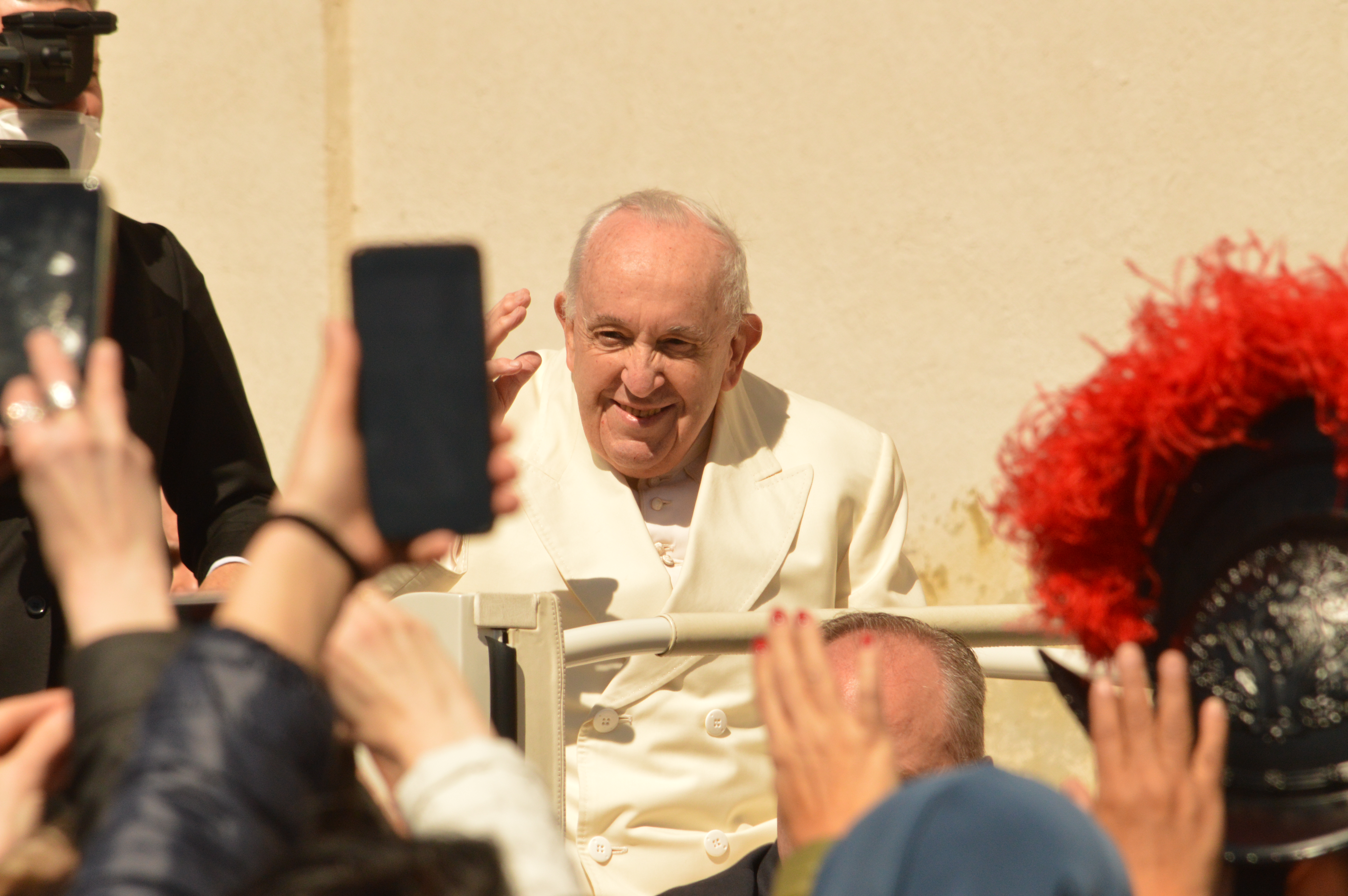
And of course, Pope Francis himself, dressed in regal red until the end of the service. Since my wanderings tend to take me off the beaten track, the list of famous people I’ve encountered is downright pitiful, but this has got to rank right up at the top – like Pope Francis did in 2013’s Time Magazine. Seeing the warm smile of the humble head of the Catholic Church at such close quarters was a once-in-a-lifetime event, truly… I couldn’t help taking up the cry of ‘¡Viva el Papa!’ raised by the Colombian family in front of me. His humility is what makes him so inspirational to me – that a man in so important a position should have no qualms making apologies for centuries-old abuses of power by his institution, or reject the majesty of status outright while still holding true to the core values of the church. I might not have gone to such lengths for a different Pope, but for Francis, my feelings were genuine. What an inspiration!

I’ve also never seen a Palm Sunday service quite like it. Multilingual (there were readings in Spanish, English, French, Portuguese, Mandarin and Malayan, as well as Italian) and multifaceted: the song of Jesus’ arrest by Pilate and his Passion was performed by various cantors with the full choir as the voice of the crowd. Faith through storytelling through song… now that’s more like it! It was like watching a passion play of old – and in a very real sense, I suppose that’s exactly what it was. They’ve been doing the same thing here in this square for well over a thousand years.

The Pope ended the service with a reminder to care for the poor – ever at the heart of his urbi et orbi message. When I left, I saw that in the merry exodus from the square, some misguided pilgrims had smashed right through a street vendors’ wares, knocking them in all directions. As I approached, several strangers gathered round to help the man set his little stall back to rights. Just as there are those who profess to do good and look no further than their own backyards, so too are there people out there prepared to help their fellow man, whoever that may be. That gives me hope. To quote a famous film set in and around the Vatican City:

Religion is flawed, but only because man is flawed.

Dan Brown, Angels and Demons

I’ve made it to the pueblo and a much-needed week with my cousins. It’s been fun wrangling with Italian, but these lips were meant for speaking castellano, hombre. Until next time! BB x

Rome II: Vatican Two

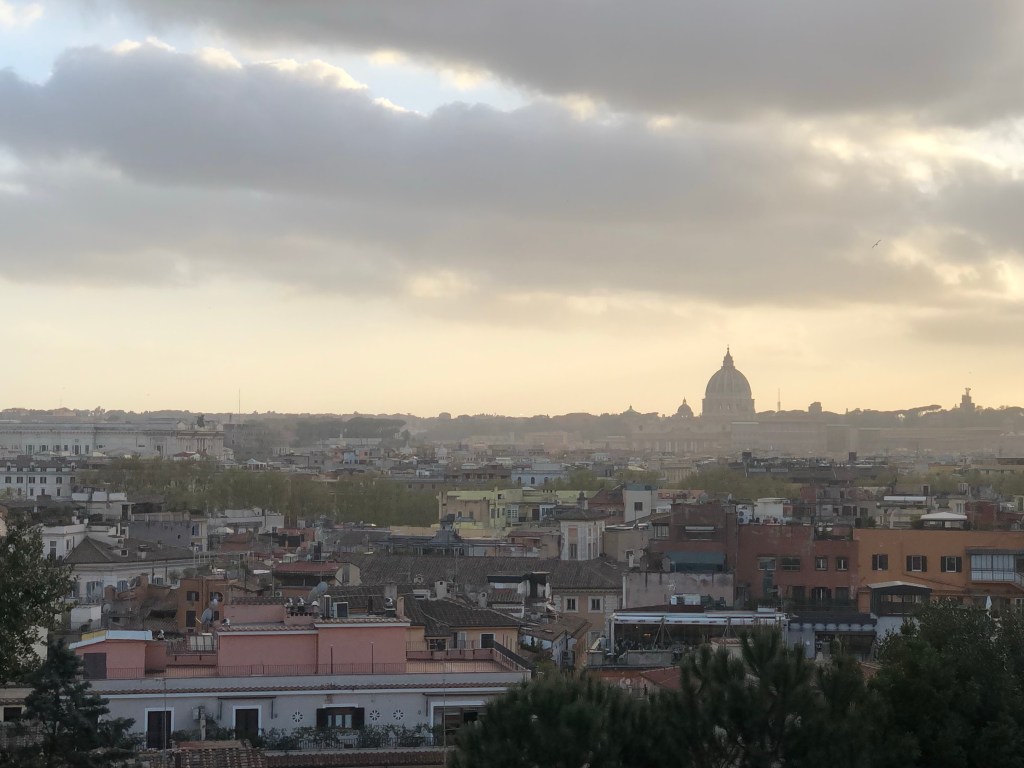
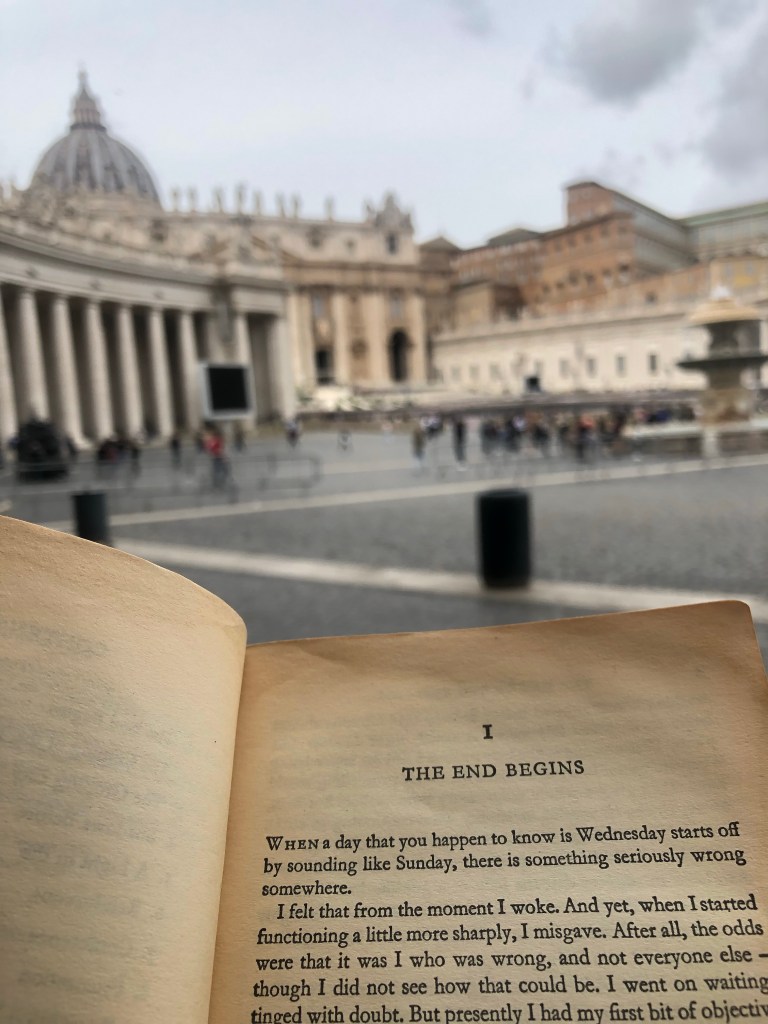
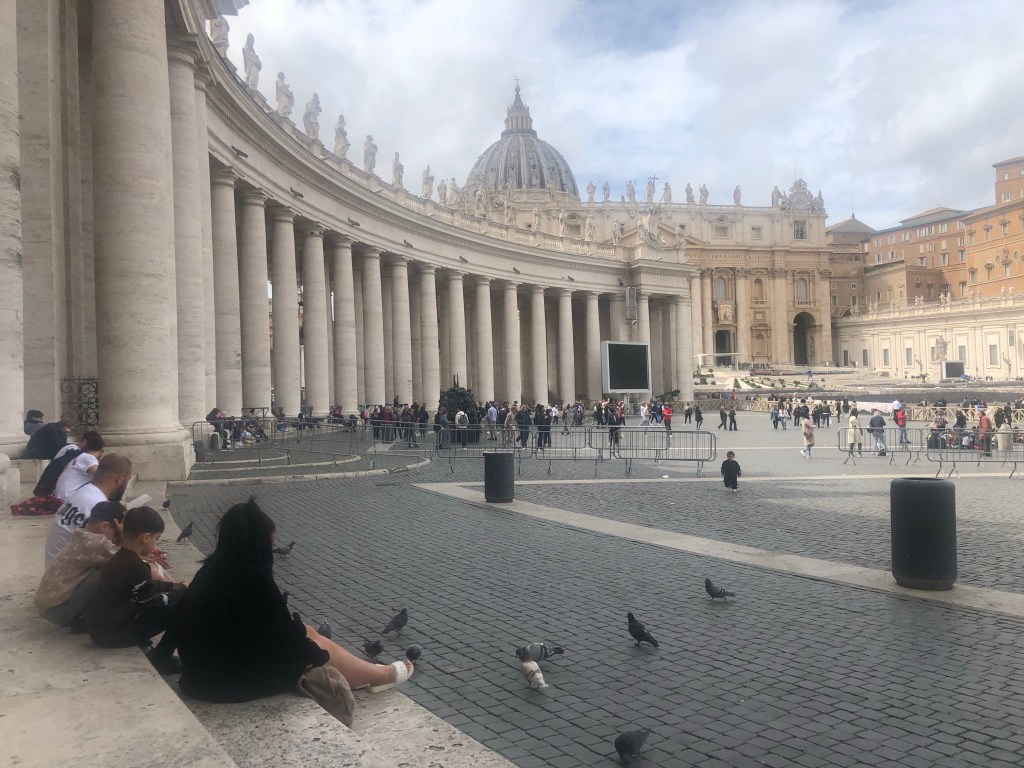
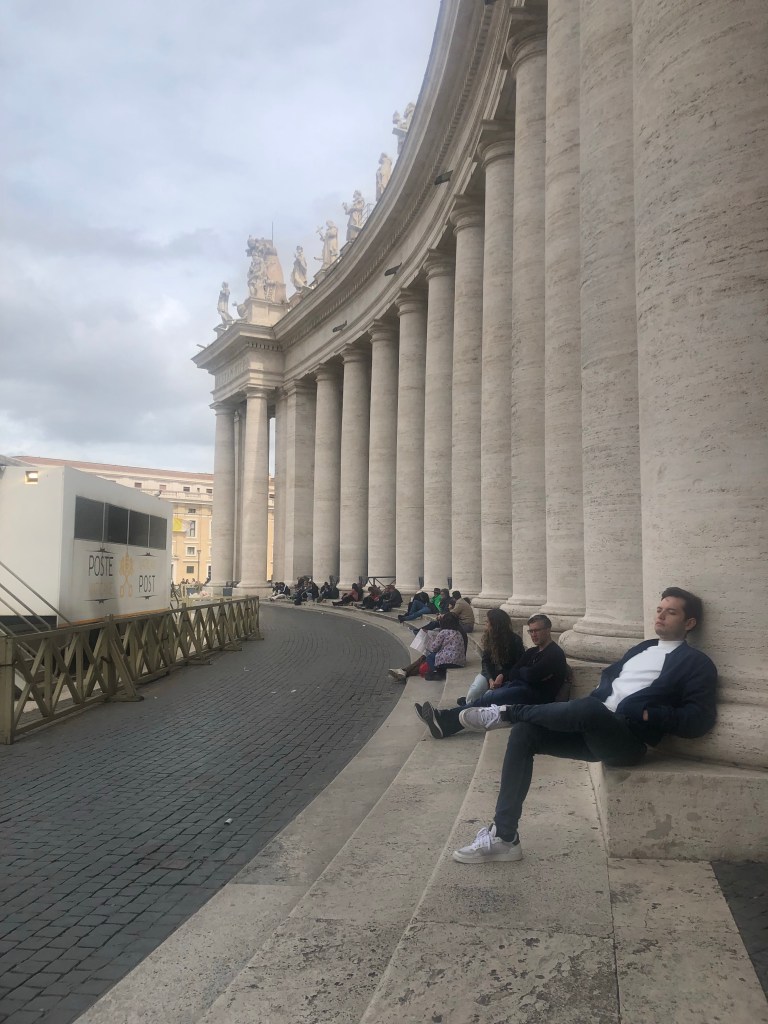
13.25. The surging throng of visitors to the Vatican Museums is steadily beginning to thin out. I could still probably count a thousand or more within the pillared walls of St Peter’s Square, but the morning rush is almost over. From my outpost under the statue of St Philip, I can see most of the piazza, except for the part obscured by the Vatican Post Car parked a few feet away. The postman came to pick up the mail around 11.30, some two hours ago. Since then I’ve been watching the visitors, tuning into the various languages around me and observing the interactions of the many thousands who pass through the Vatican every day. You could call it snooping, I suppose. I prefer to think of it as people watching. As I leaf through the first chapter of Triffids – my solo traveler’s Bible – I try to capture everything I see around me.

Two very well-heeled girls have been taking photographs of each other in front of the pillars for at least half an hour now. One of them is kitted out in a striking tea green trouser suit; the other is more noticeable for her red hair. Let’s call them Green and Red. I imagine what they’re trying to do is one of those time-lapse images for this or that social media network, since Red keeps strutting backwards and forwards in a highly artificial manner, flickering her hair over her shoulder and looking back to Green’s phone. The Vatican City seems an odd place for a glamour shoot, but then, what do I know? It’s a changed world.

A toddler is having the time of his life chasing pigeons in front of me. He’s so caught up in the chase that he keeps falling flat on his stomach, but the brave little soldier hasn’t cried once. He just gets right back up and charges headlong into the flock, giggling wildly and scattering the panicked sky-rats in his wake while his parents watch and mum takes a film on her phone.

After the people and pigeons, the next most numerous living thing here in the Vatican is the city’s gull population. Apparently they’re only a recent arrival: until as recently as the 1970s, gulls were a rare sight this far inland. Now they’re everywhere, raiding bins, snatching bread from hopeful pigeons and circling St Peter’s basilica like dirty angels – or do I mean vultures?

Three locals have dropped by with a pizza box for a snack lunch in the square. It seems the obvious spot for a lunch break: the domed sky is immense – you have to really open up your eyes to take it all in – and there’s always something going on here. A few minutes ago a woman was screaming something on the other side of the square – I never did see her face nor did I catch what she was shouting about over the cascade of the fountain, but from her constant used of “ustedes” I’m going to guess she had that evangelical fire that you only find in Latin American Catholicism.

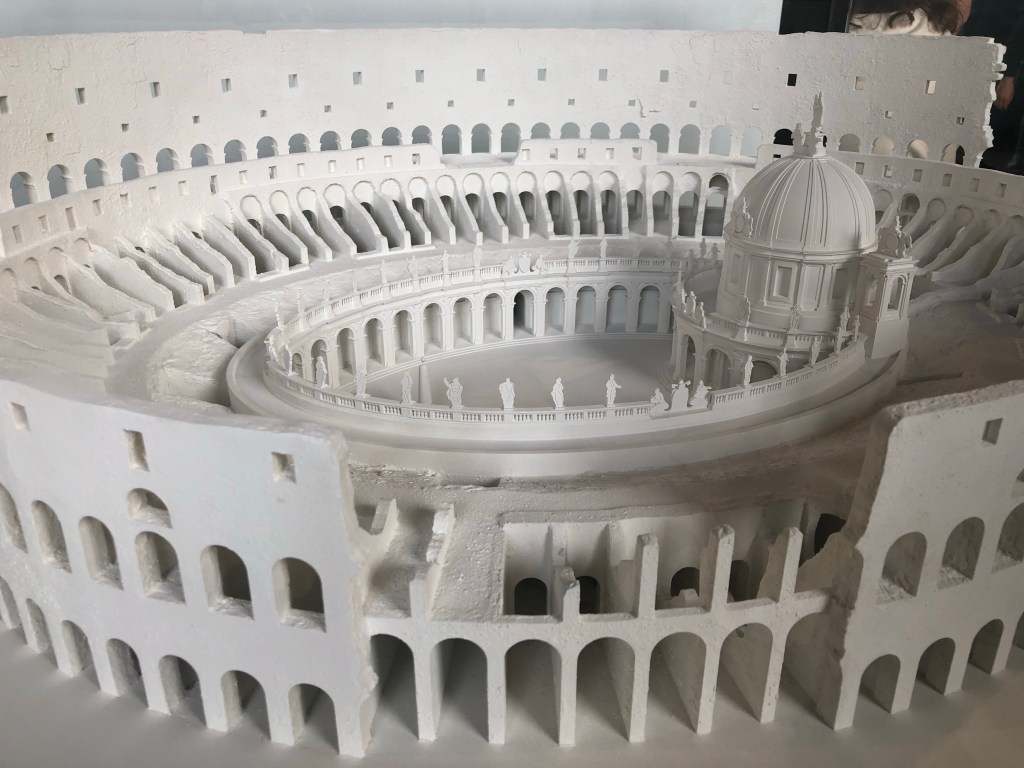
Did you know there were plans to turn the Colosseum into a church? Fortunately they were abandoned many years ago, sparing Italy the shame that Spain has to bear in the desecration of its greatest Islamic treasures of the Alhambra and the Great Mosque of Córdoba.

Well, perhaps not entirely. A casual walk around Rome reveals that many of its ancient churches are carved out of the bones of other Roman carcasses, perhaps most notably the basilica of Santa Maria degli Angeli e dei Martiri, housed in what was once an impressive frigidarium. Still, it’s worth remembering that this fate is probably what saved it from the twitching fingers of the stone-thieves that reduced many of Rome’s treasures, including the Colosseum itself, to the picked and dismembered skeletons we see today.

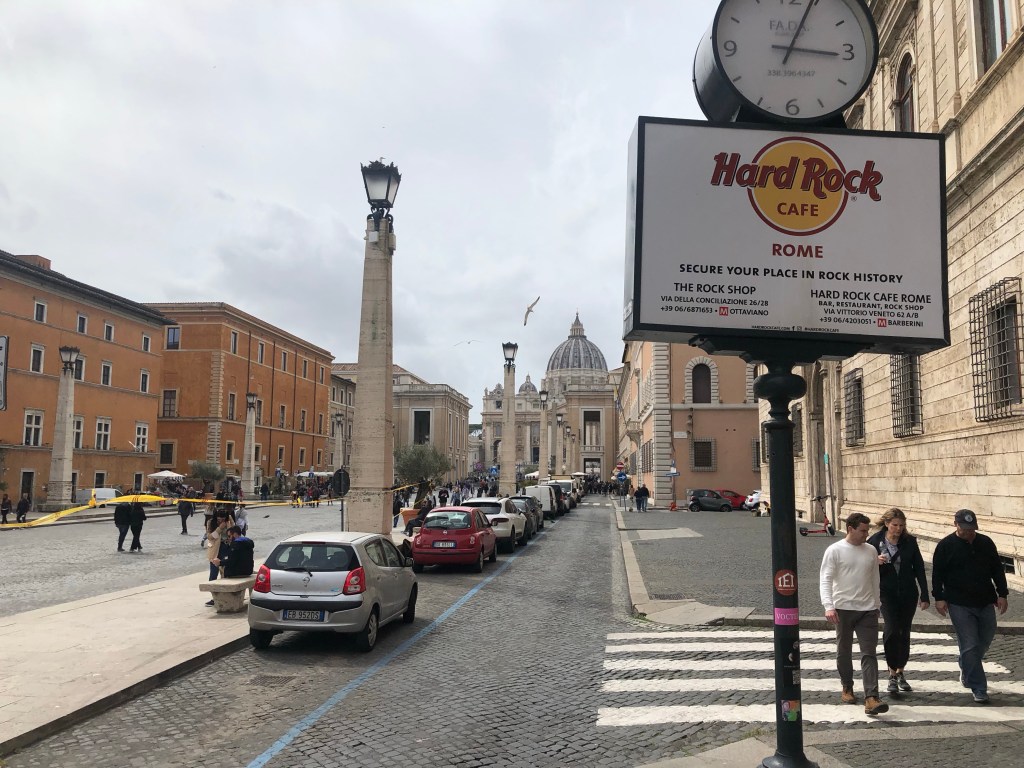
These days the Church has lost interest in “reclaiming” ancient wonders for Christ. Now it’s faithless corporations like Hard Rock and MacDonalds that play Columbus in the ancient places of the world, stamping their flags as close to the action as possible so as to draw in their customers like spiders. In that sense there’s not an awful lot of difference between them and the hawkers offering line cuts in St Peter’s Square at “special special” prices. They’re simply out to make a quick buck at the expense of the next band of pilgrims. It is a little disheartening that the first shop down from St Peter’s Square on the Via della Conciliazione sells branded British tee-shirts.

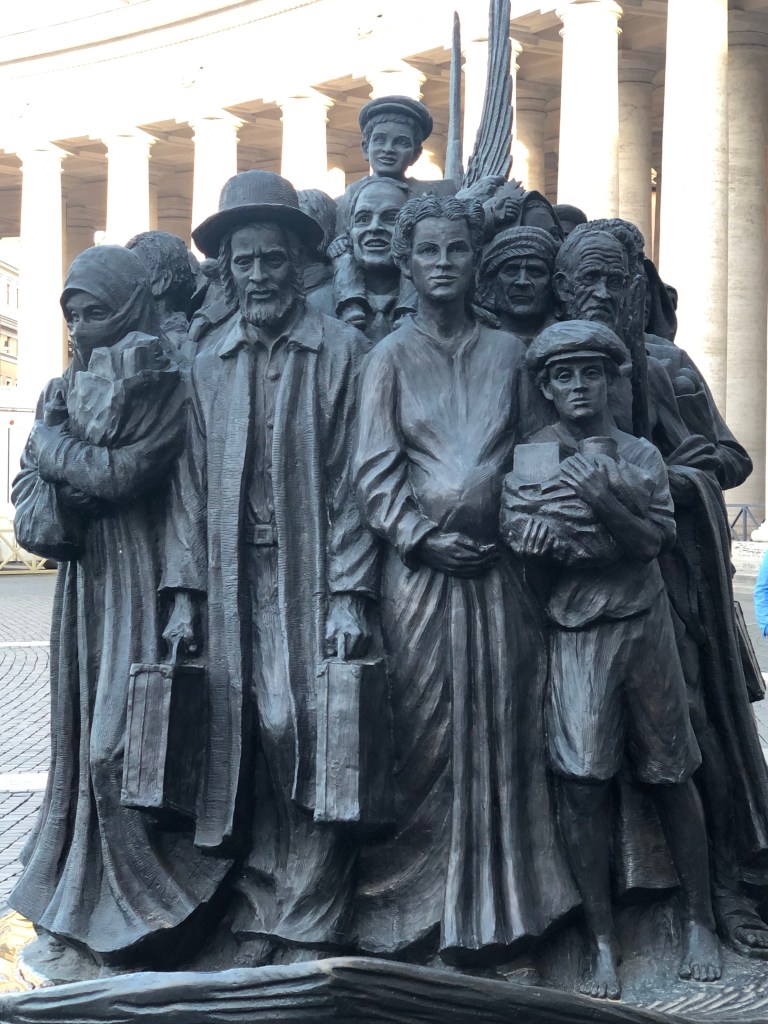
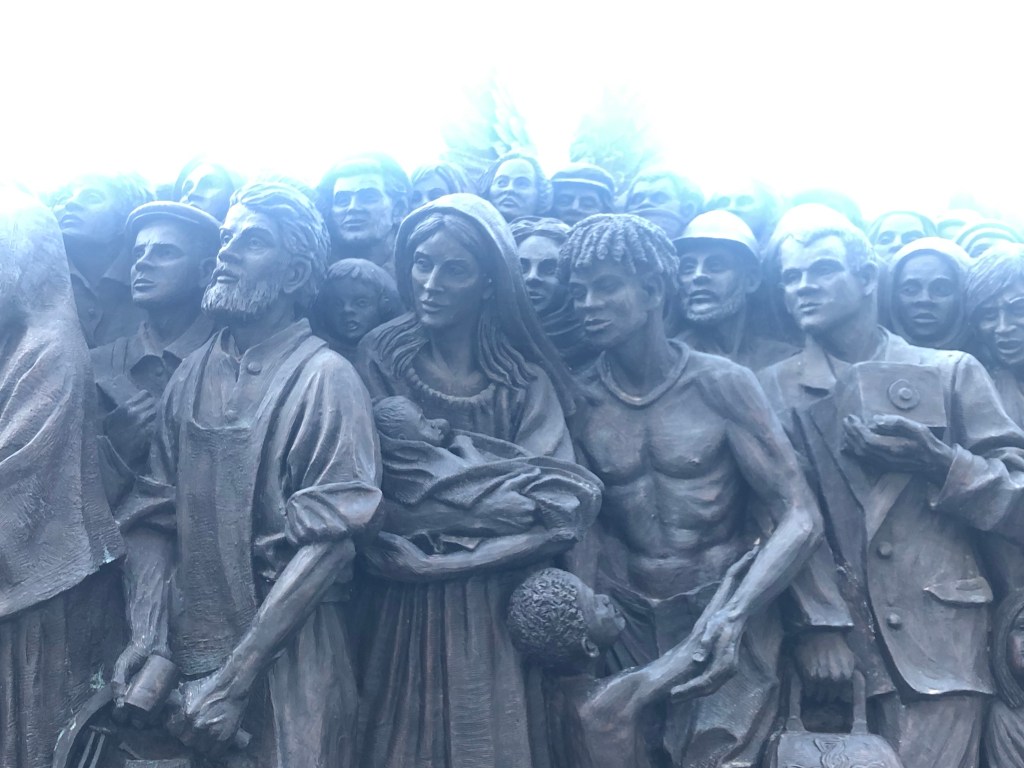
Speaking of which, the newest addition to the square is drawing a steady crowd. Timothy Schmalz’ Angels Unawares depicts a muddled group of refugees from every corner of the globe and drawn from across several ages in history: a Syrian mother and child, a Polish Jew, a family of African migrants, even a Native American nobleman. In a square full of righteous saints and martyrs, it’s a necessary homage to the real sufferers around the world: the everyday folk whose worlds are turned upside down because somebody somewhere thinks their world view has the right of it.

It’s 14.30. I’ve kept my vigil here for over four hours, and now I’m getting peckish. My feet, however, are immensely appreciative of the break from yesterday’s constant Roman around (ha ha). Time, I think, for a spot of lunch. BB x

Keep the Faith

Last night, in a return to pre-COVID tradition, we celebrated Tenebrae in the Abbey Church. With the latest wave of infections sweeping the staff and students, I’ll admit I had my doubts I’d be able to go up and sing as I used to with a house to run, but my housemaster very kindly stepped in, allowing me to bolster the tenor line. It’s hard to overstate the importance of making music in my faith: singing is an act of worship. Perhaps that’s why I didn’t go to Mass when the churches opened last year, while the ban on singing was still in place – how could I practice my faith without lips to speak? I remember saying as much to one of the school’s youth chaplains once, who remarked that I ought to rethink my approach to faith. Was he right? I don’t think so. I think everyone’s path to God is individual. Mine just happens to be through music, which, all things considered, is hardly surprising.

I spent a great deal of my childhood in and out of churches. My mother played the organ for the village church when I was very young, and I remember sitting (probably not so quietly) next to the pedals, listening to the growling hum of the organ long after the last notes faded into the stone walls. Later, during my short spell at a prep school, I spent two nights a week up in the organ loft of Canterbury Cathedral while my father sang for the cathedral choir. What was undoubtedly an incredible privilege became routine – that is, until a Victorian-minded parishioner who happened to look up one week decided that children were better “seen and not heard” and my brother and I were unceremoniously ousted, forced to sit in the quire thereafter.

Perhaps that was God’s will, because twenty years later, I still jump at the chance to stand in just such a stall and tangle with some sacred music. There’s really nothing quite like it.

I have a somewhat unorthodox relationship with God. If it were a Facebook status, I might just go for “It’s complicated”. Somewhere deep within, my spiritual compass spins toward Israel. Maybe it’s the stories my mother brought me up with or the belief we both share that our ancestors were among the many thousands of Spain’s Jews who converted to hide from the Inquisition, many hundreds of years ago. It would go some way towards explaining the ferocious proclivity for the arts borne across the generations by my ancestors, at a time when intellectualism was unwise and even dangerous. Millán-Astray’s battle cry of “muera la inteligencia” in 1936 – around about the time my grandfather was born – hardly seems out of place for a country where, for hundreds of years, it was better to hacer mala letra than open your mouth and betray your wits. Our own Michael Gove gave us an uncomfortable reminder of this dark past when he claimed the British had “had enough of experts” in the lead-up to Brexit.

I can hold my head up high every day as a teacher knowing that I am the next in a long line of teachers, all of whom dabbled in music and poetry and art. Were they really Jews, though? I’d like to think so – I really would – but I have no proof of that. I have barely enough solid proof of my connection to my grandfather, never mind a connection to a Hebrew ancestry that may or may not have ever existed. The silver Star of David I sometimes wear beneath my suit is no heirloom, but rather a keepsake from a Jewish silversmith in Cordoba; a reminder of the terrible fate suffered by the Chosen People in a land far from home that was once their paradise. Will I ever know for sure? I doubt it. But some things you see with your eyes, others with your heart. This is one of those things the heart sees. Something you have always known or believed with little to no provocation. I believe because I cannot be sure. It’s the weakest of arguments, the merest of threads. But about such threads, Faiths are often weaved into being.

So why am I a Catholic? With such silent conviction, how can I stand there in the darkness, singing Christian verses and watching the candles going out to mark the extinguishing of Jesus’ light and life from the world, a little under two thousand years ago?

I am a Catholic because I would make the same journey as my family. Whether or not my ancestors found their way to the Christian God through awe or terror, I would take that road that they took. And there is something fundamentally grounding about faith. Standing as one with my students and singing songs that have been sung for hundreds of years… you feel a power, there, echoing down the generations. It’s all the more powerful when you see the date at the top of the copy reaching back to the middle ages. One imagines one’s voice reaching up to the heavens and mingling with the voices of those who came before you on its journey across the stars. Perhaps that’s what the choir of Heaven is: the echo of thousands of years of collective prayer through song. I’d like that.

I might also point out that the Catholic church represents an important bastion against the foe, since modern Christian music is, to my ears, quite possibly the wettest, most uninspiring drivel ever produced. It clearly works wonders for some, but it does nothing for me. Give me plainchant any day. A colleague once joked that one of his greatest fears was that he should reach the pearly gates only to find that Mozart and his kin are nowhere to be found, and Hillsong reigns triumphant. It’s a joke (and a nightmare) I share. But that’s a story for another time.

I am also a Catholic because Faith is a journey of forgiveness. Noli mortem peccatoris. Those were the words of power that spoke to me last night, as the last of the candles were snuffed out. I do not want the death of the wicked. I bear no ill will against those shadows who persecuted my people, because there is too much hate in the world already. I wept on the shores of the Dead Sea years ago at the sight of the sun going down over the Holy Land, knowing I was not yet ready to see it with my own eyes. Jerusalem evades me still: the last time I tried to make that journey, a little hiccup called Covid-19 came thundering in.

Finally, I am a Catholic because of what it stands for. Katholikos. Universal. It chimes with me in much the same way that the Arabic expression ahl al-Kitaab – people of the book – called out to me in my Arabic studies, many years ago. The world is immense and no two people are the same, and I think it’s as foolish to expect everyone to share the same faith as it is to expect to find two identical grains of sand on a beach: the closer you look, the more you’ll find yourself doubting. But I have built my faith upon doubt rather than surety, because that, to me, is what faith is all about. Believing in the light when all the world is darkness because your heart tells you to do so. Fate may be the master builder of the temples of our lives, but hope is the cement that holds the stones together. I believe in that light and in that hope. And in my heart I know I would go on hoping, though every light in the world were extinguished as they were last night, one by one.

In three days’ time I set out for Italy on my first solo adventure in a long time. Venice will inspire, no doubt, but it’s Rome I’m especially excited to see. I hope I can catch some music there during my stay. I could use some of that ancient magic after what has been quite a long term. BB x

Quote Unquote: ORIGIN by Dan Brown

Image result for origin dan brown

This week’s attempt at escapism was even lazier than usual, since it required no actual reading on my part but rather dipping in and out of the Audible app on my phone during the emptier moments of the day. You might call it “tactical” escapism, though I suspect it’s still just another tired synonym for procrastination. This week I decided to go for a writer I have somehow managed not to read thus far, that being Dan Brown, author of the best-selling Da Vinci Code. What can I say? The film came out before I got around to reading the book, and Dan Brown doesn’t exactly cut to the chase. Origin, one of his more recent works, does not yet have a film adaptation in the works, so it was one that had to be read. The fact that it takes place in Spain had nothing to do with it.

And on that humongous white lie, let’s dive in. Oh, and before you read on, I might add ***SPOILER ALERT***  (because it’s not an easy book to pick apart without giving away some pretty critical spoilers).


If you’ve read/seen The Da Vinci Code or Angels and Demons, you’ll already be familiar with Brown’s clever plots. Expect the same in Origin. In fact, expect a lot of what you’ve seen before: a highly suspicious bishop, a strong, silent-type hit-man with an agenda, a glamorous female sidekick, a mind-blowing secret that you have to wait until the end to discover, and Doctor Who levels of sci-fi explanation. Edmond Kirsch, a billionaire futurist and Elon Musk by another name (Musk even gets a nod at one point), announces to the world that he is going to change what it means to be human (another moment Doctor Who fans might be familiar with), but is shot by a hidden assassin before he can make his ground-breaking reveal. It’s up to Robert Langdon, Kirsch’s one-time mentor, and the director of the Guggenheim Museum and future queen of Spain, Ambra Vidal, to finish the job, racing against the clock to deliver Kirsch’s discovery to the world. Perhaps the most interesting feature of the novel is Kirsch’s supercomputer, a sentient AI known as Winston, who guides the protagonists towards their goal with godlike success.

I’ll admit, I expected a little more from Origin than I got. I wasn’t actually all that bothered by the familiarity of the storyline, but for a book dealing with religion on Spanish soil, I couldn’t help feeling a little disappointed when the Muslim and Jewish characters were killed off early on and nothing was made of this. Fair enough, Spain is a primarily Catholic country, but Angels and Demons made such an exciting use of the spectre of the Illuminati that I went into Origin expecting some dark vestige of Spain’s bloody history to raise its head. Instead we got the Palmarian Church – an innovative introduction to most of us, but given its role in the story, hardly the most threatening or thought-provoking of obstacles. All the same, I enjoyed Brown’s modern, pop-culture-imbued writing style, as it is so far-removed from my usual material, which I am increasingly coming to see as verbose and out of touch (though the travel writings and adventure novels of the late 1800s and early 1900s will always hold a position of glory in my heart for the lexical skill of their writers).

I haven’t mentioned the role played by the Royal Family of Spain, largely because it is so insignificant to the main plot that it might as well have been a soap opera flickering away on a TV in the background. The ghost of Franco was conjured up – but for just a moment. Barcelona loomed into view – but nothing was made of the Catalans. The Spanish Inquisition was mentioned several times, and a terrorist attack on Spanish soil was explicitly detailed – but there was only ever one religion truly under fire all along. Brown has always been good at misdirection in his plots, and he was subverting expectations in Origin like Rian Johnson did with the new Star Wars movies.

The big reveal? Not as mind-blowing as I anticipated, I guess – but then, Kirsch set the stakes very high. When the truth came out at the end, I was surprised it unsettled the Parliament of the World’s Religions so much that they considered prematurely sabotaging his discovery before it could go public. I’m not all that firm a believer myself, but I didn’t find myself questioning my faith once: Kirsch’s expositions on the seventh kingdom and the origins of mankind were insightful, but not exactly earth-shattering. By this point in our history, a future where we share the world with, or perhaps even cede it to the silent sentience of artificial intelligence is more or less inevitable. What started out as a plot device for a 1970s sci-fi nightmare is now almost a matter of fact. My question is, why should that kind of knowledge shake the foundations of the faithful?

My journey with Catholicism is still in its infancy. That comes from growing up in a country which threw off the “shackles of the papacy” a long, long time ago. Though I live and work in a Catholic enclave, it is precisely that, an enclave. It’s easy to forget that, beyond the bubble, most of my countrymen don’t go to Mass on a Sunday, meatless Fridays aren’t the norm, and many of the rules and expectations that seem so normal seem out of date if not alien. Everybody has their own take on their own religion. For me, it’s a family affair. It’s my way of reaching out to my grandfather, a man I never knew, and to my cousins, uncles and aunts in Spain. It’s a way of sharing in that rich and beautiful legacy of ages. Futurists and scientists like Brown’s Edmond Kirsch take great delight in tearing down the temples of the ancients, but what are they doing if not building glass temples of their own in their stead, just as humans have delighted in doing for all time? Religion isn’t about rules and false truths. It’s about love.

My experiences as a student at a Kent grammar school, where daggers-drawn atheism was almost a state religion, actually gave me more of an appetite for a faith of my own. Ironically, my highly opinionated contemporaries pushed me towards God more readily than any beaming, hot-chocolate touting, guitar-strumming Christian Union friends ever did. I suppose what I objected to more than blind faith and the endless four-chord songs about some heavily distorted Western Jesus was the hostile rejection of hope, which has ever been my most treasured of core values (there’s a modern buzzword if ever there were one). And yes, in case it isn’t clear already, modern Christianity and I aren’t exactly a match made in heaven. Somebody once put it to me that Christian music adapted to suit a modern audience. Call me old-fashioned, but I’d take a hymnbook over guitar worship any day. I appreciate the staggering irony in that statement as a devotee of Gospel music, and I’m afraid I’ll have to hold up my hand as an all-too-human hypocrite on that count. For me, Gospel music has never been about a white Jesus who loves everybody, rather about bridging the gap between worlds and reveling in the rage, the sadness and the hope together with the joy of faith. Because that’s what faith is: perseverance in the face of insurmountable adversity. Kirsch, like many characters from my own past, went head to head with the world’s believers with a smug smile, believing he could sweep away the dark religions so that sweet science could reign. In doing so, he betrays his humanity: there are many for whom the most bitter of blows fall like rain upon their faith. Faith is not founded on facts. It comes from a deeper well.

I am one of those for whom the great questions – where do we come from? Where are we going? – have never held all that much interest. For most of our history, mankind has sought to make itself master of all things, seeking the logic and the reason behind everything in an attempt to bend it to his will, to subjugate it, for knowledge is power. And while I love to learn new things, I am no Kirsch. For me, the real beauty of faith is in the great mystery. There are some things that will forever be beyond my understanding. And I’m ok with that. It’s not so much “Jesus, take the wheel”. It’s more of a “I’m mysterious, folks. Deal with it.” Sometimes – as Rowan Atkinson’s character says in the 2005 film Keeping Mum – all we need is a little grace.


Favourite scene:

The chase scene in the Sagrada Familia was pretty spectacular. Brown knows how to pick a good setting, that’s for sure. There’s always something terrifying about the idea of fleeing from a searchlight – some “flight” instinct, buried deep, from a time before flashlights when we ran, ducked and weaved to get out of eyesight of predators who were after our blood, perhaps. Those were always the levels in video-games that scared me the most (Zelda: Wind WakerMetroid Fusion, Harry Potter etc). I digress. Brown’s assassin had a gun and had just killed a man with his bare hands, but that torch in his hands was his most frightening weapon by far. To survive, Langdon and Vidal had to keep in the shadows. Add that to their escape taking place within a cathedral as bizarre and unorthodox as the Sagrada Familia and it makes for a truly terrifying pursuit.


Favourite character:

Winston is far and away the standout success in Origin. Think HAL voiced by Stephen Fry. Educated, intelligent and eerily human, Winston is immediately likable from his first appearance. In fact, I found him such an interesting character that I felt a real sense of loss when Langdon and Vidal lost contact with him at a certain point in the narrative. I had my suspicions about the whole monte@iglesia affair, but the twist that he was the mastermind behind it all hit me like a sucker punch. I didn’t stop liking him for it. In fact, I found him an even more interesting character by far. And that recurring trait of his awkward laugh was a stroke of genius: endearing in its first appearance, terrifying in its last. Origin could be criticised for being a recycling of Brown’s old plots, but his Oxford-educated HAL makes it worth every page.


Favourite Quotes:

“The devout can always benefit from listening to non-believers. It is in hearing the voice of the Devil that we can better appreciate the voice of God.”

Zeus, more than any other god, resisted his own extinction, mounting a violent battle against the dying of his own light, precisely as had the earlier gods Zeus had replaced.

“I’ve been taking confessions for fifty years. I know a lie when I hear one.”

img_4392