Camino XIII: Milady

Albergue de Peregrinos de Nájera. 12.59.

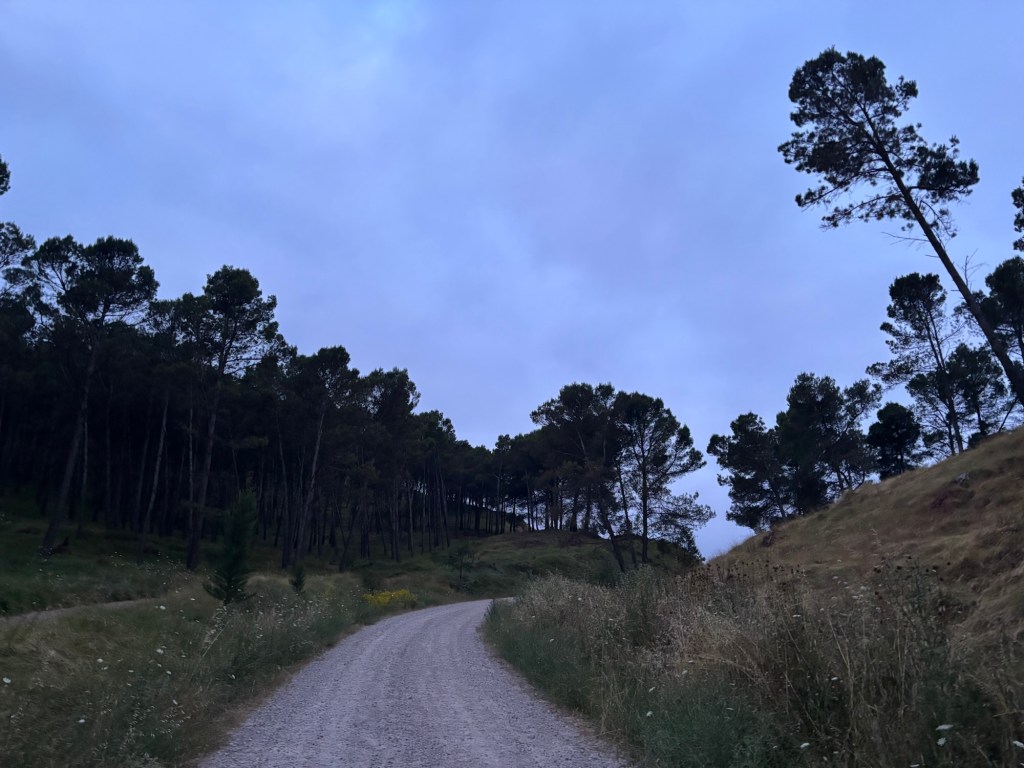
I was supposed to take the day off today, but as it’s a Sunday, nothing is open. No shops, no museums, zilch. So, since my intention to use my rest day to restock was somewhat redundant, I set out at the relatively tardy hour of half past six for Nájera.

Logroño must have been partying late into the night, like Jaca last week. There were more than a few amorous couples locked in each other’s arms in front of doorways on the streets running off the Gran Vía. The average age a Spaniard is able to leave home is now in the mid-thirties, which must make dating considerably more complicated here: the sexual revolution has happened, society has caught up, but the financial reality has got Spain’s youth in a stranglehold.


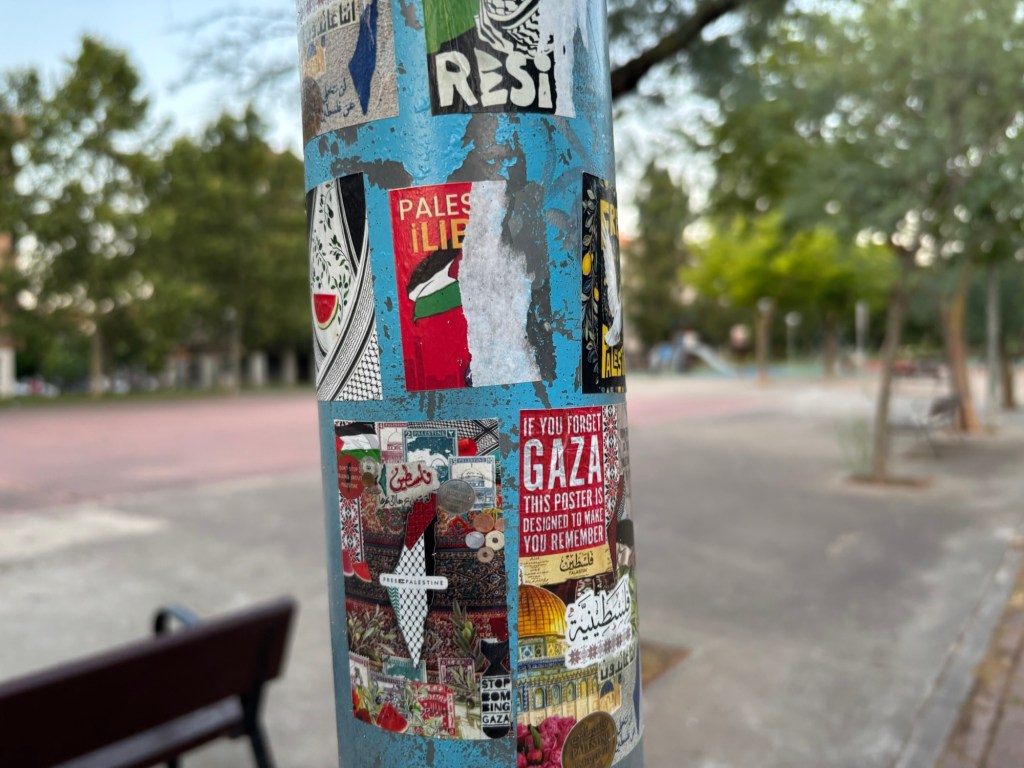
There are still Palestinian flags everywhere you go. It probably chimes with the mindset of the average liberal peregrino, but there’s another reason they’re so ubiquitous in this stretch of the Camino: we’re still in the Basque territories. And if any people are more likely to sympathise with an oppressed nation under the heel of a supposed colonising force, it’s the Basques, whose own freedom-fighting/terrorist organisation, ETA, only stopped its violent methods in the 1990s. I’ve seen one prayer in Hebrew for one of the captives still held by Hamas along the Camino, so it’s not entirely one-sided, but the Palestinian flag is far and away the most common flag along the entire Camino so far.


I reached the Parque de la Grajera about an hour after leaving the city. I was early enough to catch the night herons that seem to hang around the place. They have a somewhat patchy distribution across Europe, but they were here when I last did the Camino from Logroño to Burgos in the spring of 2023, so I was glad to see them again.

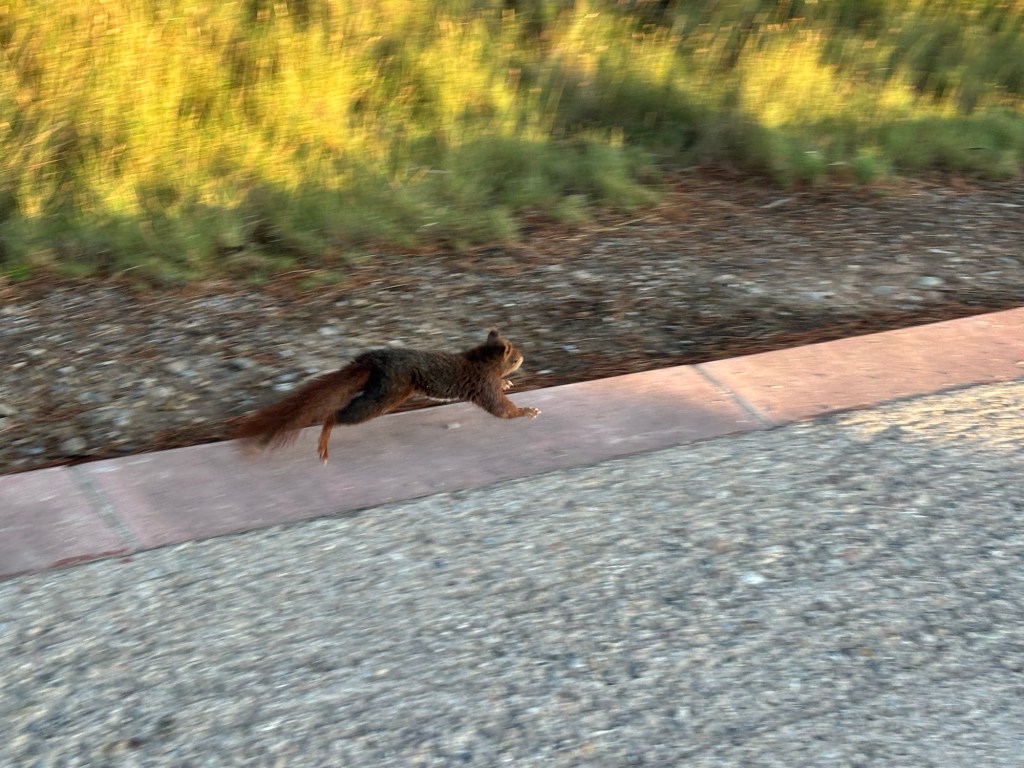
They were much too far off for a photograph, but the park’s red squirrels were a lot more obliging. Without the invading greys to worry about, they seem a lot more confident around people here, and so I was able to get quite close – or rather, it came quite close to me on its jaunty sortie across the bridge.


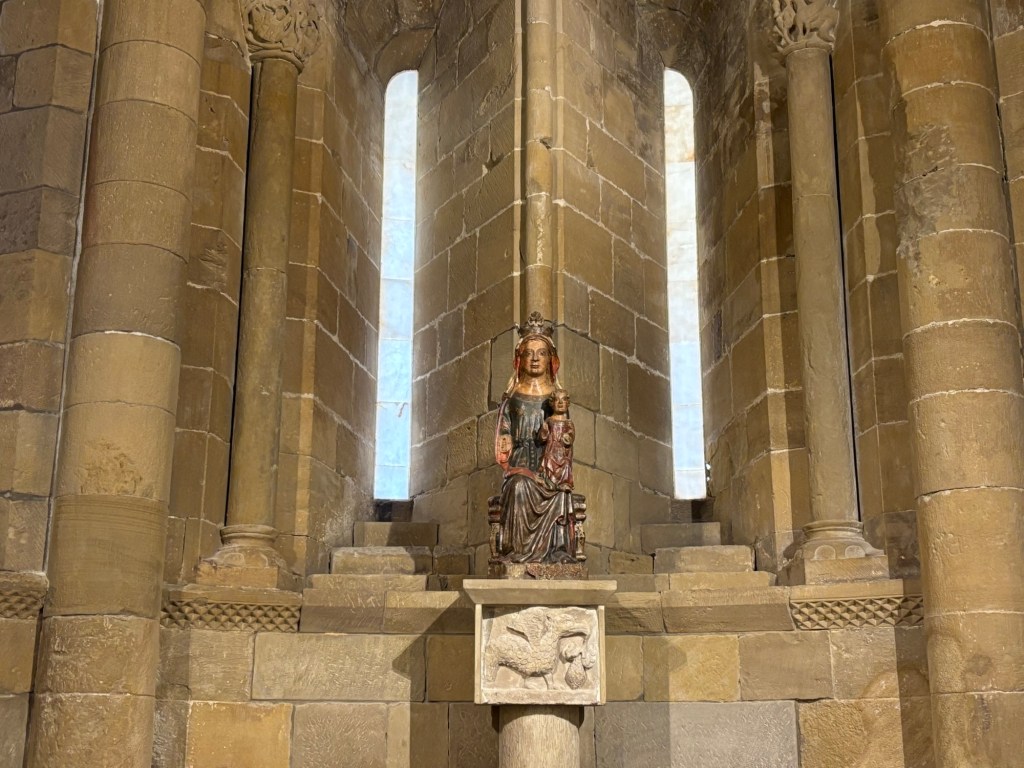
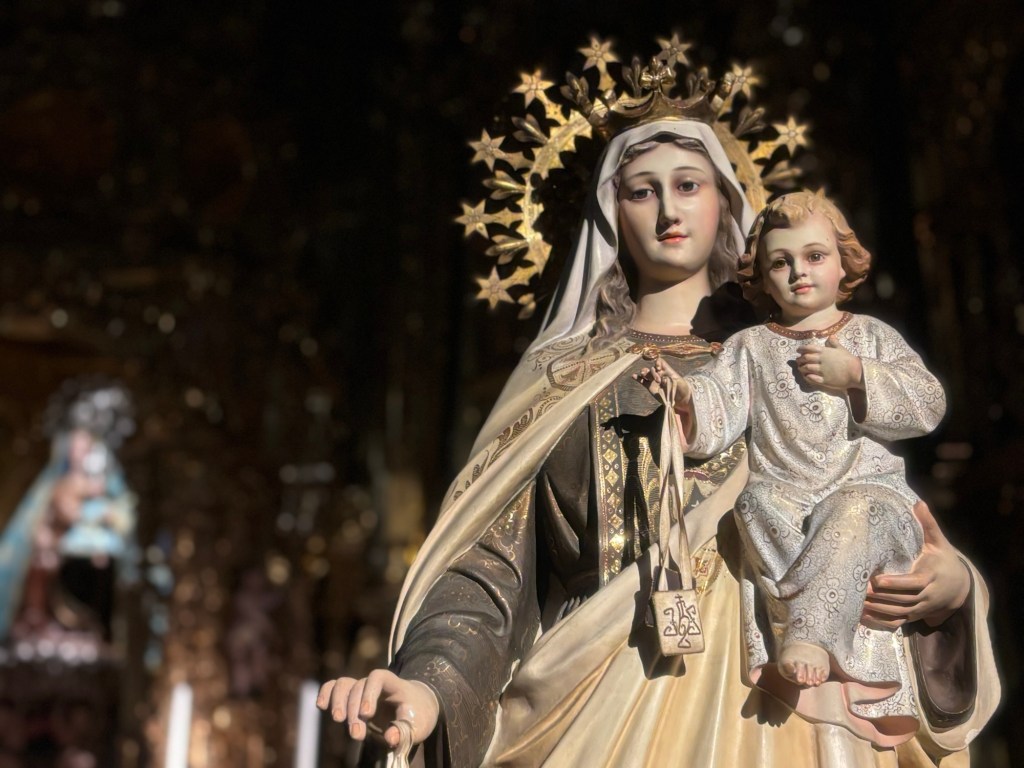
Today’s route featured a small pilgrimage of its own, to the shrine of La Virgen del Rocío. She is, in the humble opinion of this devotee, one of Spain’s most beautiful incarnations of the Virgin Mary. She certainly knows how to pick out a home, with her sanctuary within the Elysian marshes of Doñana National Park far to the south… and here she is, watching over a lagoon in La Rioja.

I remain convinced that it was partly her intercession – and that of the natural paradise where she resides – that healed me at last from last summer’s heartbreak, and it is partly because of that intercession that I am walking the Camino this summer… to say thanks. I owe her that much.


There were more squirrels to keep me company around the edge of the lagoon, including a boisterous couple that were quite unfazed by my presence, chasing each other up and down the trees on the edge of the lake. You have to travel quite some way in the UK to see these endangered creatures, since the American greys drove them out, but here they’re much more common.


La Virgen del Rocío is, among her other titles, a water spirit of sorts. Maybe that’s why she speaks to me more than the other incarnations across Spain that I’ve encountered: El Pilar, Remedios, Guadalupe… I’ve always felt some sort of connection to marshes and wetlands. It may seem odd that Mary, a woman from the hill country of Southern Galilee, should have such a devoted following in the wetlands of southwest Andalusia, but there it is.

El Rocío is the Spanish word for dew, and the Marian association with the Morning Star – Venus – as the herald of the rising sun is almost as old as her worship as the Mother of God.

I’ve often wondered whether the various Marian cults across the Mediterranean aren’t simply evolutions of the Roman tradition of the lares – guardian deities assigned to individual places – or perhaps even the Celtic peoples before that. In that light, it’s easy to see why other Christians find certain aspects of Catholicism hard to understand. But I think we’re all reaching for the same thing. Many Protestants would say they’re reaching for a more personal relationship with Jesus.

Well, what could be more personal than feeling an intense connection to God through a place that is so close to your heart?


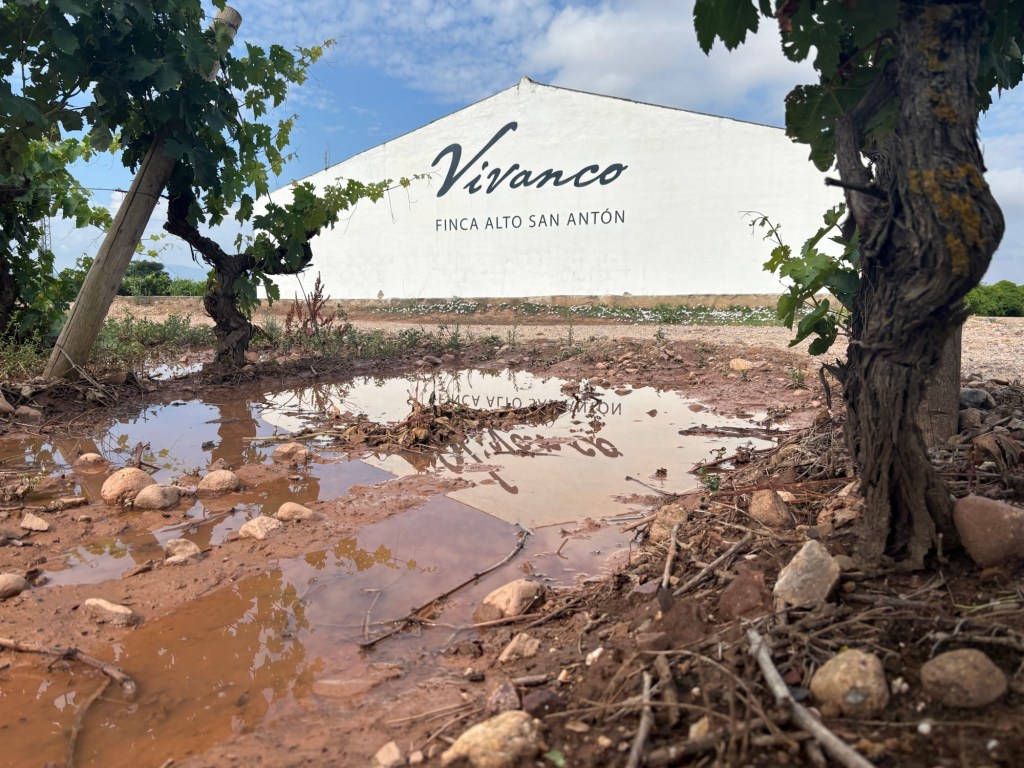
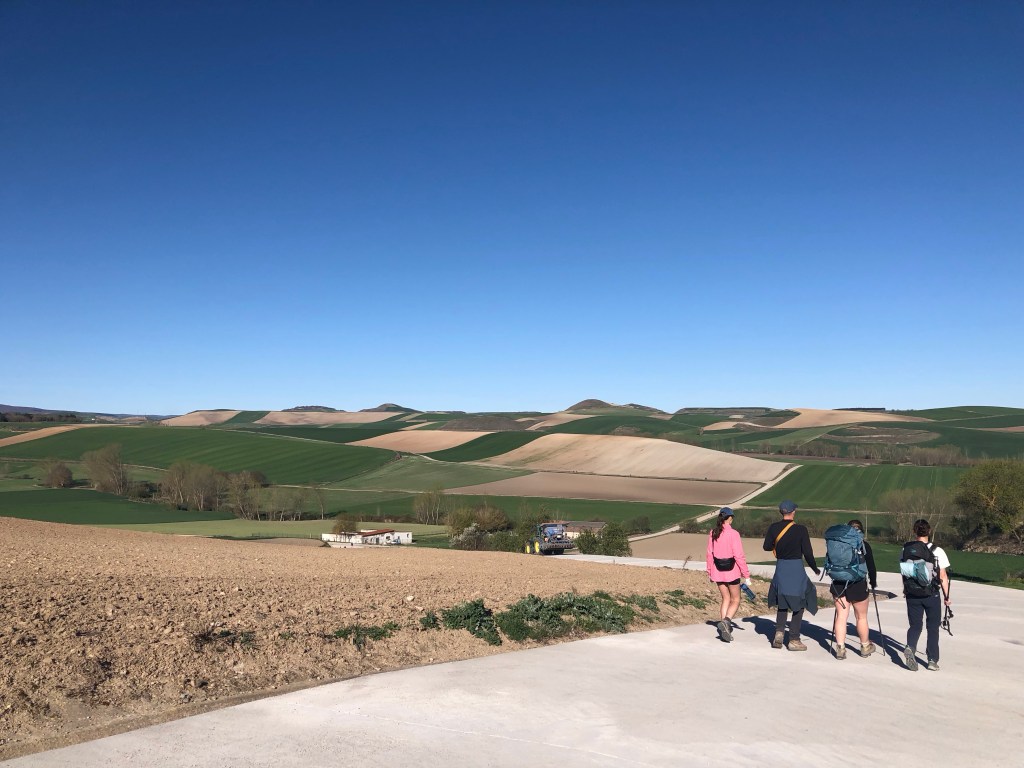
West of Navarrete, the Camino meanders through a vast network of vineyards: a reminder that the tiny autonomous community of La Rioja punches above its weight in wine production (even if it can’t meet the demand on its own). It’s a 29km walk from Logroño to Nájera, but an easy one, and I was in town shortly after 12pm from a 6.30am start. I call that good going.


Reunited with the young folks tonight after an Irish exit and a hiatus of two days. Time for a sociable pizza night! I think I’ve earned it. BB x

Camino IV: The Dark World

Casa Mamré, Jaca. 20.08

Well, first of all, dinner last night was phenomenal. Heidi, one of our hospitaleros, cooked up an absolute smorgasbord supper, and still under the banner of donativo. I hope the other pilgrims also tipped generously, because it must be really hard to whip up a spread like this without the generous donations of the pilgrims themselves. Remember, donativo doesn’t mean free – pay what you can, and what you feel the place deserves!


I was one of the last to leave this morning, as I was hoping I might score a few more stamps in churches along the way. as a matter of fact, they were all shut – every single one of them – so I needn’t have dawdled. I did only have 19km or so to go today, though, so I was in no hurry.

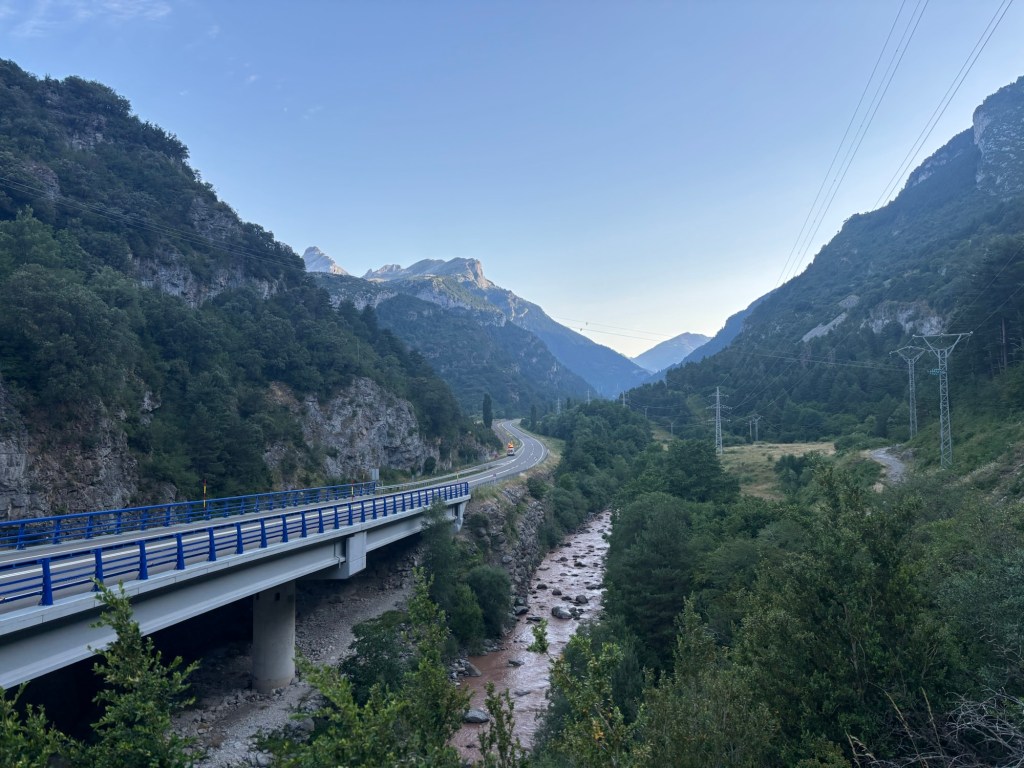
Leaving Canfranc behind, the Camino follows the river through the Valle de Aragón all morning, only turning away for the ascent to Jaca at the end of the road. What was only a mountain stream yesterday is already a powerfully flowing river, carving an impressive series of gorges in the granite along its course.


The next town along is Villanúa, where you are confronted with a strange sculpture in the shape of a many-limbed tree stump. On closer inspection, it’s actually an abstract representation of the women of Aragón who were persecuted for the crime of witchcraft during the Middle Ages. A single face carved into the structure drives the message home. There used to be a rope hanging from one of the branches, in a nod to one of the favoured methods of execution of witches, but it looks like that was removed.


During the Middle Ages, Aragón was knee-deep in tales of witchcraft. The Inquisition tasked itself with purging the region of heretics – a very broad umbrella that encompassed Protestants and “Judaizers” as well as witches – but such was the strength of belief in the occult in this remote and mountainous corner of Spain that witchcraft remained a talking point until as late as the 19th century, as can be seen in the pinturas negras of the Aragonese painter, Francisco de Goya.

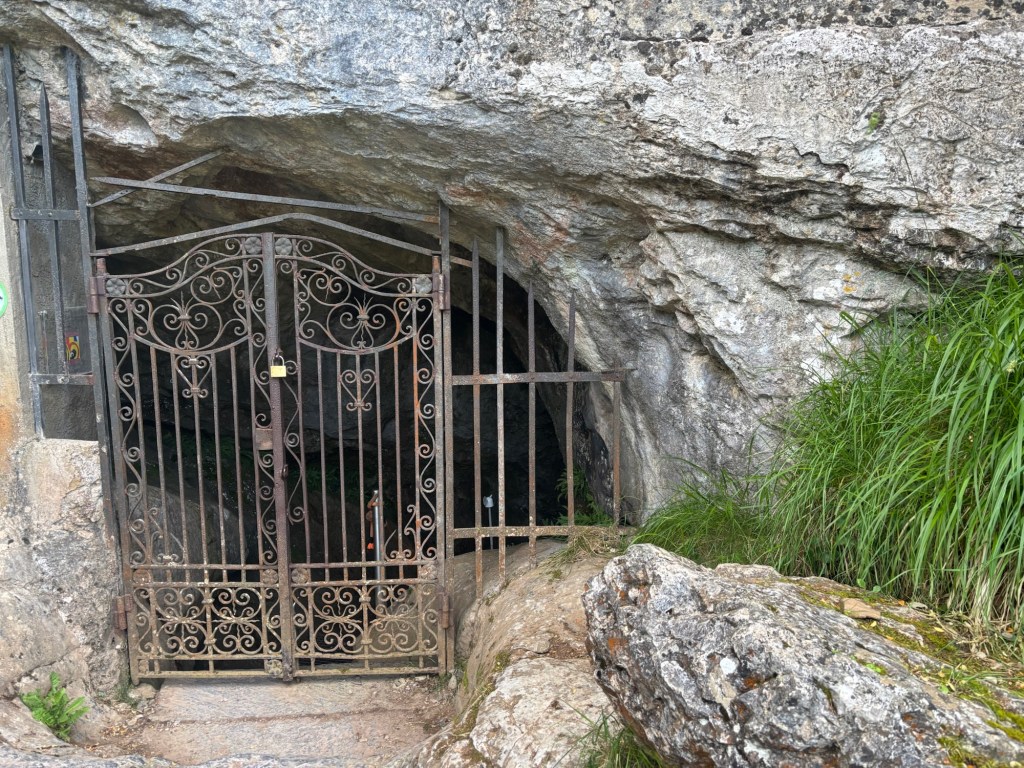
The reason Villanúa comes into this can be found just off the Camino a hundred metres or so before entering the town. A series of steps cut into the rock lead up to a cave, accessible only via a guided tour. You can feel the chill of it as you climb towards it, and while there are plenty of perfectly reasonable scientific explanations for the drop in temperature near a cave mouth, it’s easy to see why such a place might have instilled a sense of fear in the ancients. The steps go deep, and in its heart is a large cavern lit by a great hole in the ceiling. It is believed that this was where the witches of Villanúa came to practice their akelarres – Witches’ Sabbaths – summoning evil spirits and bathing naked in the moonlight.

Of course, it’s just as likely that most (if not all) of those accused of witchcraft in the Middle Ages were completely innocent. Some local pedant seems to think so, anyway, adding a footnote to the information, claiming the accused were “too busy being burned and hanged by the misogynists of their time” (#romantizandomasacres).

It may well be true, even if it does take away from the mystery, but it’s worth bearing in mind that curanderos – folk healers – were frequently called upon throughout the Medieval period, especially in times of environmental stress. It’s plausible that some of the so-called witches really were trying to bring about some kind of change in their own way.

For me, it’s never been about their innocence. Whether or not they were witches is of no consequence (though I’d rather believe they were). The real demons of the story are the ones who were so strangled by their own fear that they saw fit to send these unfortunate souls to their deaths.

Either way, peregrino, if you feel a chill on your approach to Villanúa, it might just be the lingering malice of the Cueva de las Güixas on your left.


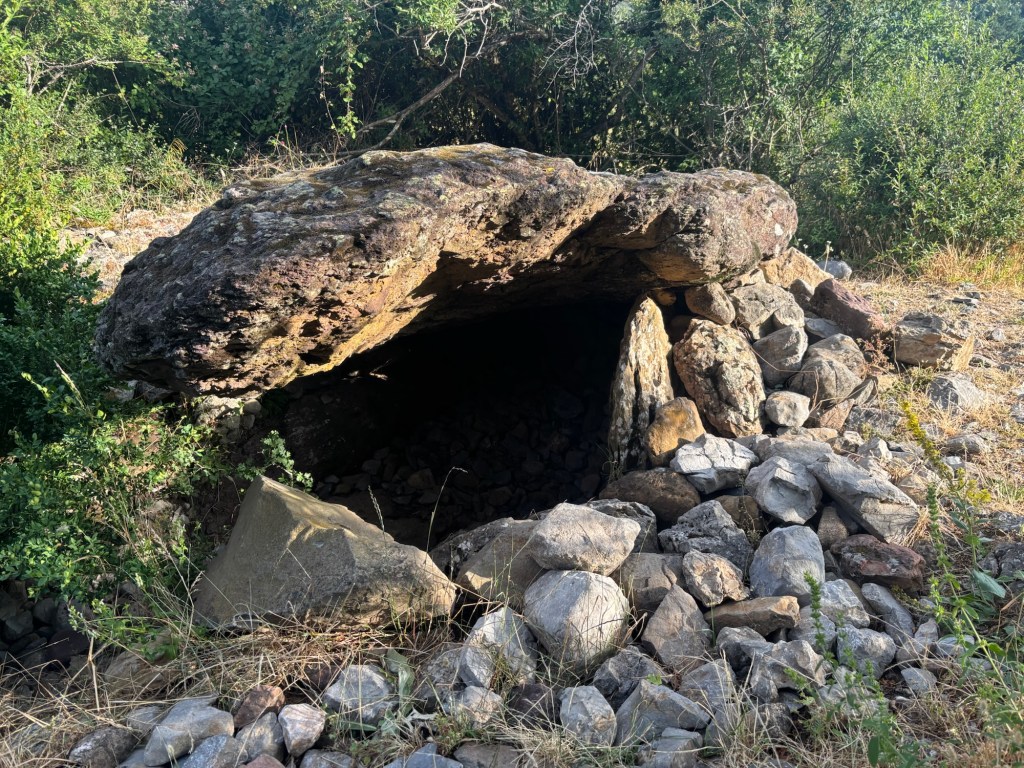
I had to double-back today, not because I’d forgotten something, but because I’d missed something rather special. The boulder-strewn fields before Villanúa harbour more than just witches’ grottos. There are older and more mystical relics by far, though I’d wager the average pilgrim completely passes them by, fatigued as they are from their three-hour climb down from the mountains.

It’s a dolmen – an ancient burial site from the Stone Age. There are quite a few of these in the area – large stones (or megaliths) being plentiful in the Pyrenean basin – but at least one can be visited from the Camino without too much effort. Dolmens like these can be found all over Europe, from the islands of the Mediterranean to northwestern France and Britain. In a way, they are just as much a symbol of the Camino as the yellow arrows, since they mark the westward expansion of our earliest ancestors as they moved west across Europe, until they could go no further.


The remaining fifteen kilometres or so to Jaca are easy to follow, if a little rocky underfoot. I’d spent so much time exploring the caves, dolmens and ruins of long-abandoned villages that I now had quite a long march beneath the risen sun, and my feet were definitely starting to complain after yesterday’s exertions. So, for once, I plugged in and listening to an audiobook – William Golding’s The Inheritors – as a way to push on. I hoped I might pop in on a few churches along the way, but as I suspected, they were all shut, so I got to Jaca by midday without further delay. Mariano, the musical madrileño from the albergue in Canfranc, had got there just before me, but we still had a little wait before the dueña showed up to let us in.


I bought lunch for myself and Mariano (I’ve had an easy ride with others treating me so far, and it’s only fair to share), before giving myself an hour or so to explore Jaca. The cathedral is austere but impressive, as Spanish churches often are, but its real treasures were in its Diocesan museum. At 3€ for pilgrims – with a stamp for the credencial thrown in – it’s a steal, especially when you see what it contains.


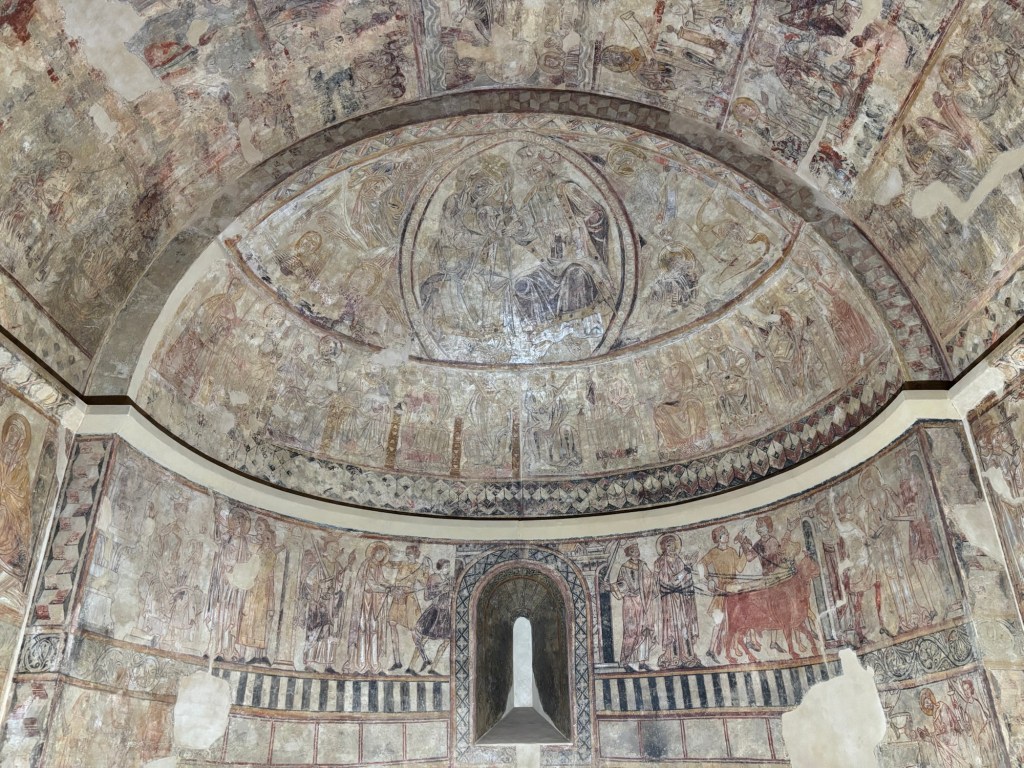
These Halls of Stories are bewitching beautiful, recreating scenes from the Bible for the illiterate masses while the holy words were kept in the jealously guarded secret language of the elite, Latin. I’m not normally one for religious art – the Renaissance obsession with ecstasy in its subjects is a major turn-off for me – but anything Gothic or earlier and I’m all in. The world was a darker and more mysterious place back then – and doesn’t that make it so much more interesting?


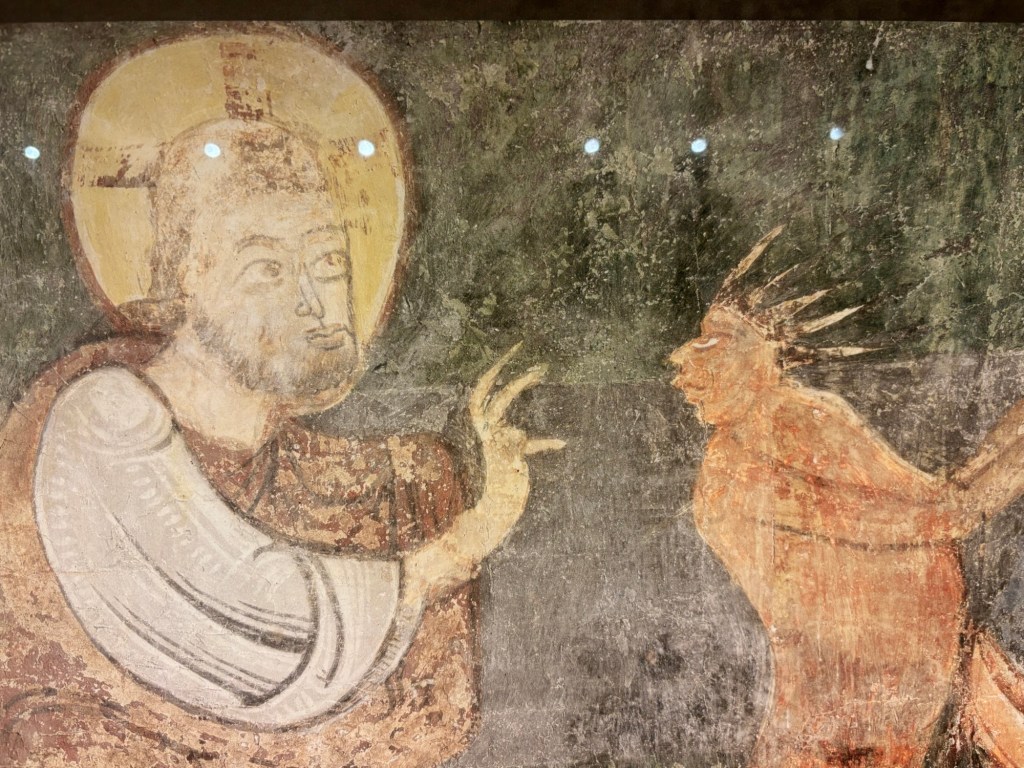
Latterly, I’ve become a lot more interested in ancient depictions of monsters, and the Devil definitely falls into that bracket. It took me a little while to realise the crowned imp in the image above – a detail from the mural of Bagüés – is a representation of Satan. I wonder what their reference was? With the red skin, narrow eyes and the feather-like crown, he almost looks like a Taino Indian, but that would be anachronistic in the extreme – these paintings were created four hundred years before Columbus sailed to the Americas.

Are there elements of Pan, the pagan god of the wilderness? It’s no secret that the goat-legged minor deity had a huge impact on the Christian devil, with the early Christian scholar Eusebius of Caesarea claiming the two were one and the same in the 4th century. Pan represented all that Christianity sought to suppress: vice, sin and animal instincts, crystallised in Pan’s half-beast limbs.

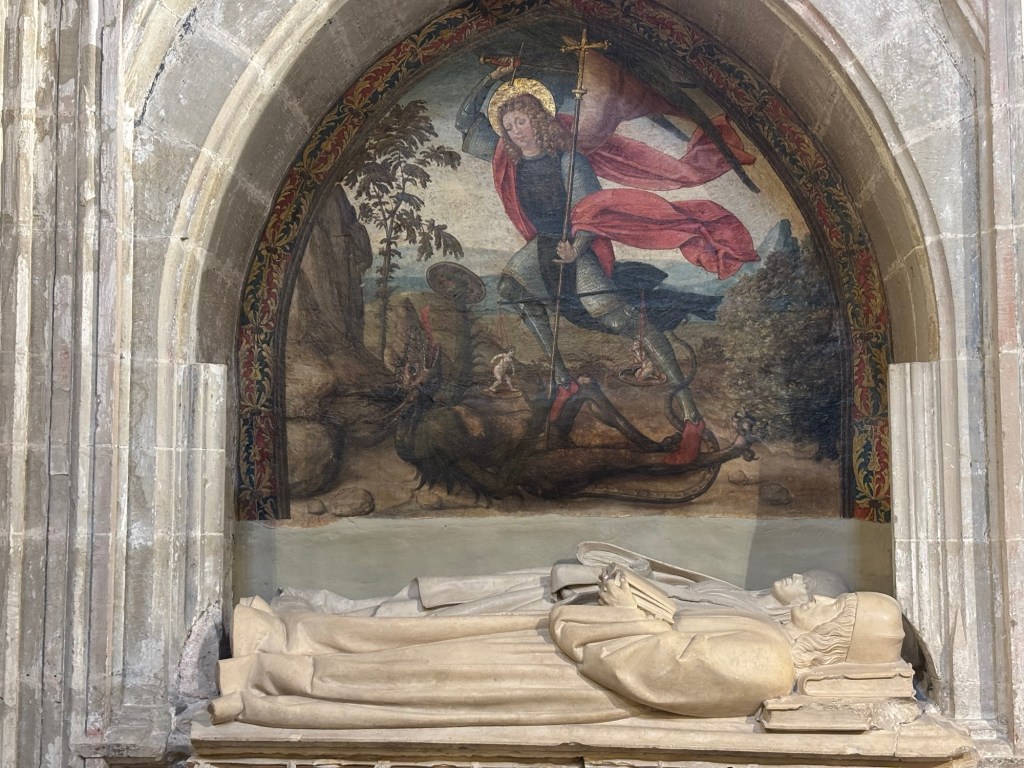
It’s not always goats, either. Traditional depictions of the devil often feature scaly or bird-like legs, akin to a chicken or a hawk. Most paintings of Saint Michael feature the Archangel standing triumphant over the body of a demon, and it’s easy to see the inspiration in these paintings: pigs’ ears for greed, scaly skin for the deception of the serpent, and thick, knotted talons for the eagle, one of the most feared and respected predators of the ancient world (if you’re not convinced, just look at how many world flags feature an eagle).


The references are much clearer here, but what of the Red Devil from the Bagüés mural? He has neither the goatee beard nor the cloven hooves. Who was the artist’s muse? Perhaps we’ll never know.


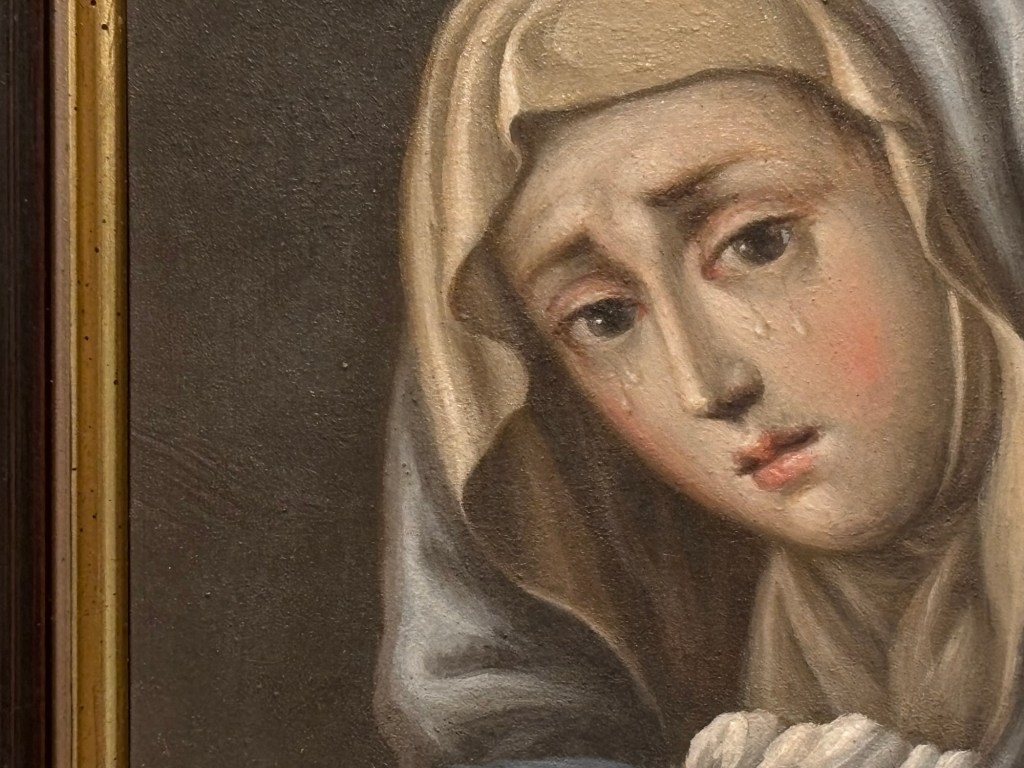
As I worked my way round the exhibit to the exit, a solitary face caught my attention. Or rather, a pair of eyes. Amid a wall of depictions of a saintly and contented Mary – Inmaculada, Asunción, Madre de Diós – a little painting of Dolorosa follows you with its eyes, which are bloodshot and full of tears. Her Son, arrested by the religious authorities and sentenced to death for the crime of working miracles, was crucified before a baying crowd.

Over a thousand years later, the same story played out again and again across Europe, only now it was done in Christ’s name. There must have been a thousand Marys who watched their sons and daughters befall a similar fate. And still it plays on.

Critics may say the Catholic Church puts far too much emphasis on the doom, gloom and damnation, but there is wisdom in the Catholic acknowledgement of the darkness. We might have been created in God’s image, but that does not make us perfect, and history tells us that some of us stray very far from the path when we try to be perfect.

Mary’s grief is eternal: it ripples across time.


Wow, that got pretty heavy. Check back in tomorrow for some more light-hearted adventures across Aragón! BB x

The Long Road


It’s been nearly a year since I left my post at Worth School and moved to the West Country. I’m supposed to be making a start on my Year 9 reports tonight, but it’s my birthday, for pity’s sake – I could use a break. Between house duties, calendar committee meetings, end of year speaking exams, invigilation, improv workshops and regular teaching, I’ve barely had time to sit down today.

The summer holidays are drawing near. My original plan was to spend them learning to drive, but I’ve kicked that can down the road for another year. This year has been hard work, and the last thing I need is to give myself something to dread once a week for every week of the summer holidays. I’ve never been good at doing things I don’t enjoy, and I really don’t enjoy driving. My last instructor was a vocal and humourless Brexiteer, who reminded me a lot of the father of an ex-girlfriend, and just a few lessons with him pretty much put me off driving since.

It’s a hurdle I definitely need to overcome, but not this summer. I need something uplifting after the manic year I’ve had, and I firmly believe there’s no cure like the Camino. So tonight I’m booking my flight to Bordeaux so I can do what I’ve never really done before: a full run at the Camino Francés.

Well – I suppose that’s not strictly true. I’m planning to start in Somport this time and begin with the Camino Aragonés, joining the Camino Francés proper a week later. I’ve also pencilled into my plans to travel north from León via the Salvadorana to Oviedo and then walk the last stretch along the toughest and oldest of all the Caminos, the Camino Primitivo. It will take me around six weeks, in all likelihood. Six weeks that will be tough on the feet but good on the heart. Six tiring but purposeful (and very affordable) weeks in the most beautiful country on earth, meeting people from all around the world and telling stories. What’s not to like?

I will, of course, be back to journaling as I go, so expect a flurry of activity on here towards the end of this month. You can follow me on my journey if you’d like. There’ll be stages that I’ve done before, but it’ll be a very different cast of characters this summer, and it’s so often the people that make the stories.

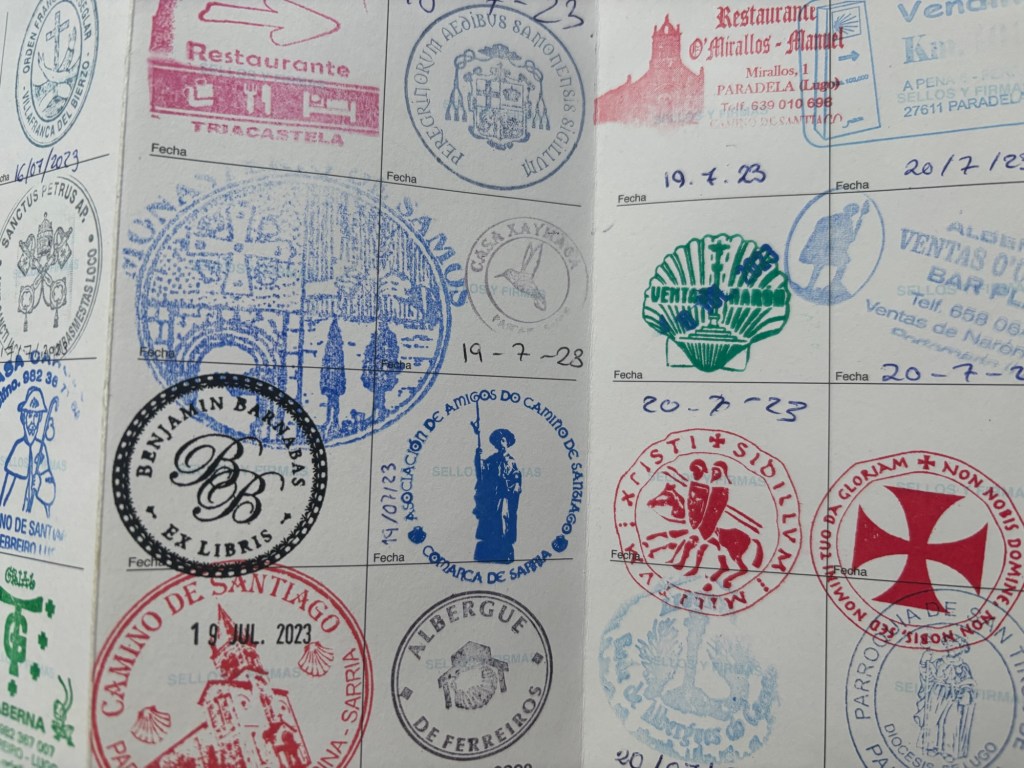
It’s also now mandatory to collect two stamps a day, so I’ve already ordered my credencial. I’ve ordered three, on the logic that the two I had last time only just got me to Fisterra, and that was with careful rationing toward the end – and over a fragmented span of five weeks. Over six, I can afford to go stamp-hunting with a little more reckless abandon. And who doesn’t love the stamp-collecting element of the Camino?

Escapism? Absolutely. But for once, perfectly justifiable. I don’t say it often, but I could use a holiday. BB x

For the Legion

Departures Lounge C, Malaga-Costa del Sol Airport. 9.18am.

My adventure is drawing to a close. In a matter of hours I will be back in the familiar settings of my flat. Sometimes, at the end of a holiday, I’d be feeling glum at this point. There’s a bit of that right now – I’m never overly happy to leave this country behind. But it’s been such an incredible three weeks that I have no regrets whatsoever, so I’m going back home with a full heart and a nauseatingly broad smile. Not even the British weather waiting for me when I get home could take that away from me.


I was up early this morning to check in to my last pensión of the trip. Nowhere is open for check-in at 8 o’clock in the morning, but I was suspicious about the link I’d been sent asking for confirmation payment up-front, and wanted to dot the I’s and cross the T’s in person. I was right to be cautious: their Booking.com account had been hacked, asking customers for a down payment that “might not be the same as on the website” – in my case, a fare ten times the amount agreed. Thank God I went in person to sort things out. God helps those who help themselves, or so the saying goes, but I’d like to think that La Virgen del Rocío is still watching out for me.

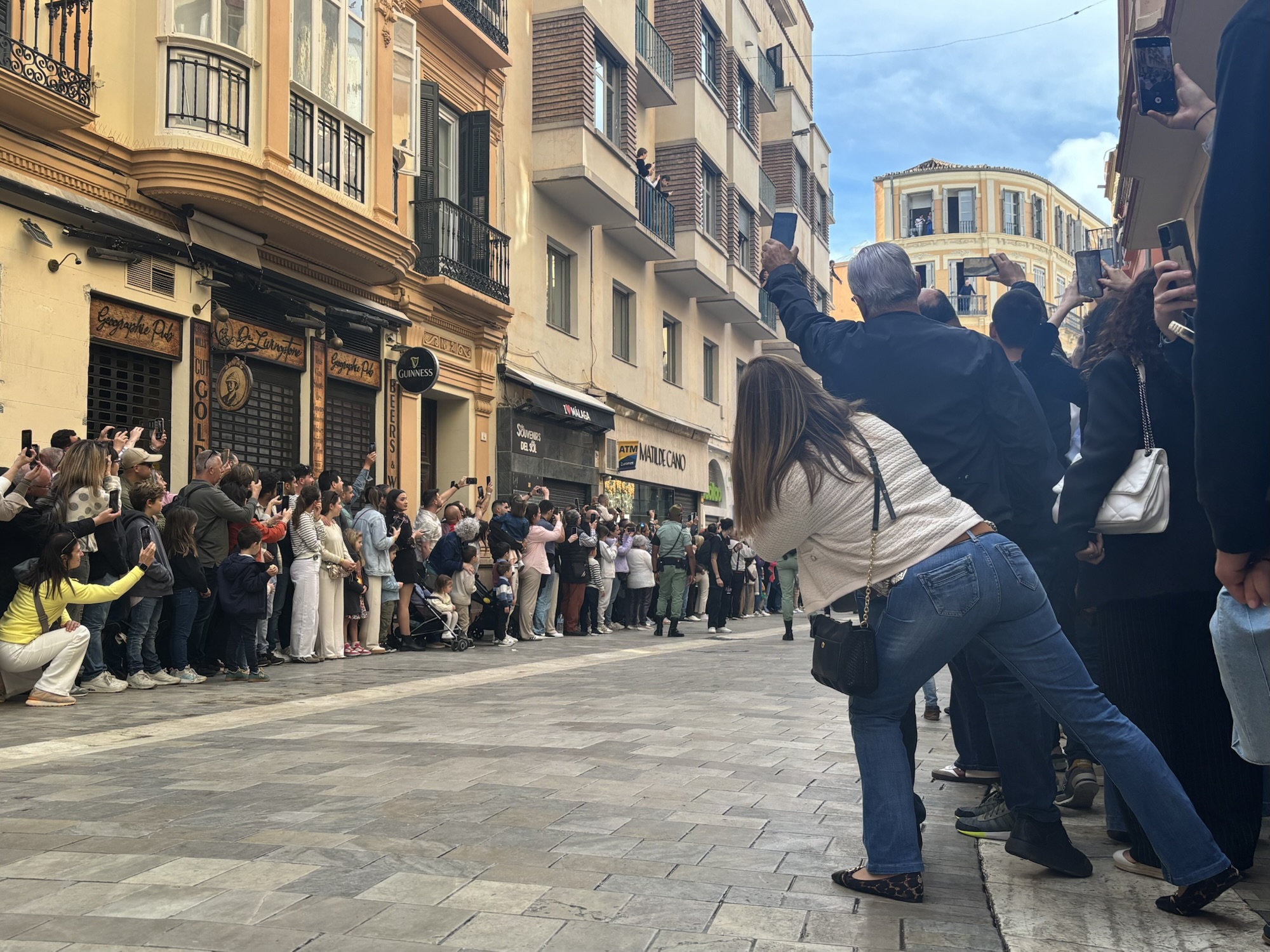
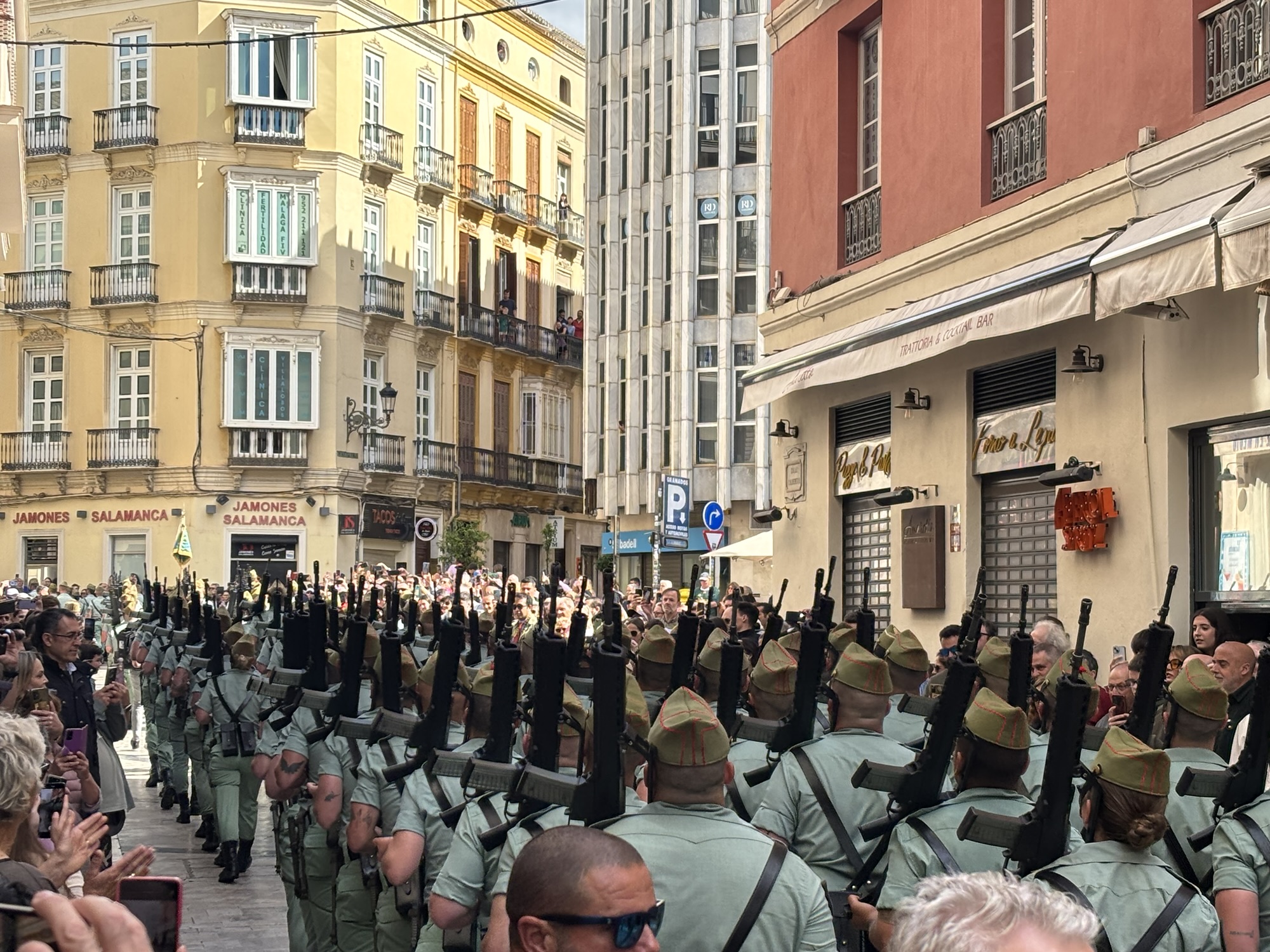
With my mind at ease, I had my last chocolate con churros of the trip and then set out to see the Legion, who had just disembarked and were on their way to their casa de hermandad west of the river. Once again, I was lucky to find a space to stand, since by the looks of things the entire city had turned out to welcome the troops.


La Legión, also known as the Tercio, is one of the most famous wings of Spain’s military. Though modelled on the French Foreign Legion, a similarly fearsome fighting force, la Legión is not as foreign as its name might imply: Spaniards comprise the vast majority of its troops, with Latin American and citizens of other Spanish-speaking countries making up the rest. This was the unit that Francisco Franco commanded, a mighty and highly professional unit used with devastating effect against the Republican forces during the Civil War. My allegiance should be straightforward – my great-grandparents were Republicans, and my great-grandfather Mateo was a victim of the regime that La Legión helped to put into power – but even I have to admit that I thought them impressive as they paraded through the city, belting their battle hymn, El novio de la muerte, at the top of their lungs.

The past is the past. Hate has to find the hands that it knows, and I’m not one for grudges. I’m also a Catholic who bloody loves a good spectacle, and the Legión certainly provides.


In one last stroke of luck, when I came back to the pensión to check in, the receptionist asked if I would rather “dormir o ver la procesión”: somebody had cancelled just minutes before I arrived, and a balcony room had suddenly become available. As a good friend once said, “you can sleep when you’re dead” – so I snapped up the balcony room. My pensión of choice looked out over Calle Especería, which just so happened to be the primary conduit for all but one of the eight pasos making their way through the city. Not only would I be able to watch the processions from the comfort of my room, I would be able to do so without having to deal with the inevitable crowds, now at their greatest in number as Semana Santa reached its summit. I really couldn’t have been dealt a better card.

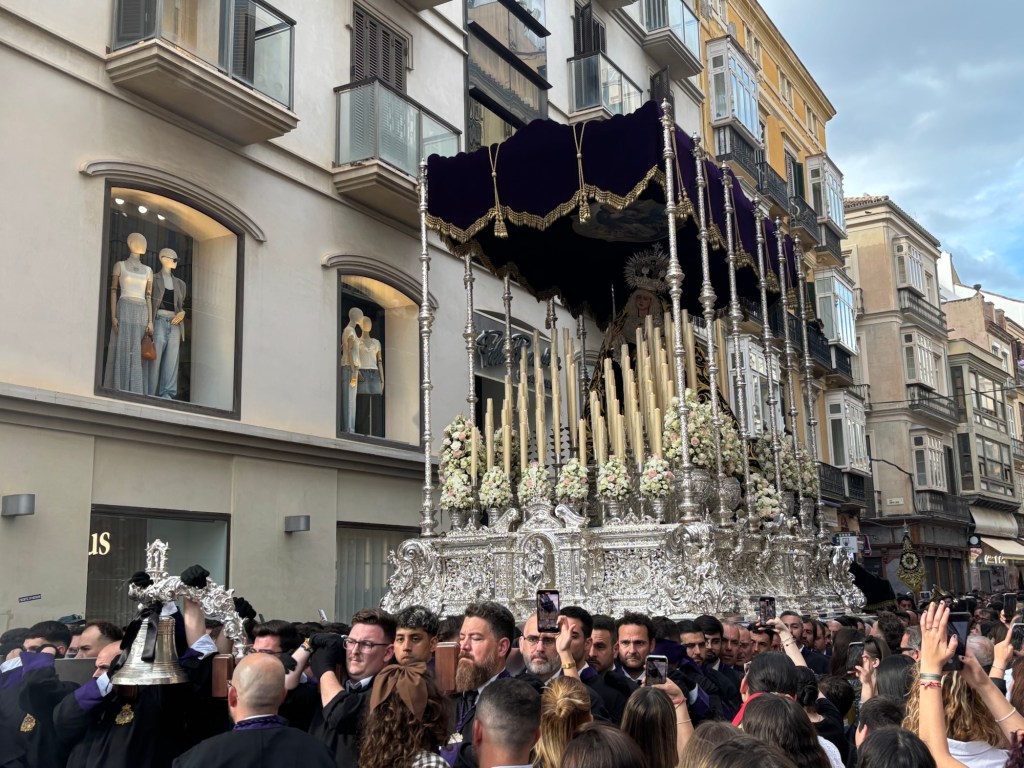
The first paso arrived shortly after half past five, at which point the street below became impassable. It’s just as well I had supplies, because one procession followed another – it would be past one o’clock in the morning before the last procession had come and gone, and the spectators walling the street with it.


From my vantage point on the second floor, I could see a lot of things I hadn’t noticed before. Like the old-fashioned jugs each paso carried with it, appearing suddenly from beneath the tronos every time the procession came to a halt to provide relief to the weary costaleros. As the night went on, the train on the dresses of the Virgin Mary got longer and longer, and many of the costaleros were entirely reliant on the sound of the llamador (the bell at the front of the trono) and the voice of the capataz (the man in charge of guiding the costaleros) to know when to stop and when to go.


The Legión arrived a great deal sooner than I expected. I’d just popped back inside for a drink when I heard the first verse of El novio de la muerte (literally, The Groom of Death) and had to double back. I must have only seen one of the four tercios (divisions) of the Legión this morning, because they seemed to have quadrupled in number. Led by their officers, the nazarenos of their brotherhood and a number of standard-bearers carrying golden flagpoles, it had all the trappings of a Roman triumph. I guess that’s part of the look they were going for. Either way, it was quite something to watch from on high – especially the way their marching steps fanned out in a perfectly synchronised wave from the left.


I experienced my first genuine saeta shortly before midnight. There is little that can compare to a proper saeta: it is, in essence, a religiously inspired solo piece, sung by a spectator who feels so moved by the emotion of the procession that they put their feelings into song. The origins of the saeta are unclear, but they’re thought to have derived from a fusion of Islamic calls to prayer and Jewish psalmodies with old Franciscan processional hymns. In Andalusia, the region most commonly associated with the practice, they have a strong connection to flamenco, which becomes immediately obvious when you hear the wailing style of the singer and their wild gesturing toward the paso, which must by tradition come to an immediate halt when a saeta begins.

I’ve seen saetas before, albeit slightly less impressive – the kind where somebody stands in front of the church and reads from a score. Not this one. This came from the heart and soul of a man in his sixties, who was leaning half off his balcony and crying out to both El Cristo and La Virgen with every ounce of duende that his spirit could muster. It was really something to behold, and it had the whole street in silent rapture – which, with hundreds of people lining both sides of the street below, only made it all the more impressive.


There’s something about the music of Semana Santa that is fundamentally powerful. It could be the wailing solos played on the keyed trumpets with that quality of vibrato that is so ineffably Hispanic, often associated with bullfights and Mexican standoffs. It could be the way that the drumbeats make your very heart tremble within you as they reverberate off the walls of the narrow streets, or the way that one of the drumrolls is always delayed, producing an effect that is almost hypnotic. But I think a lot of it comes down to the fact that the music is modal – that is, a music form phased out by the Protestant Church as it was felt to be “too ornate” for worship.

You can say what you like about the quality of modern Christian worship music, but as far as I’m concerned, the moment that this kind of music was deemed “too distracting” was the moment that the decay set in. In the opinion of this author, there’s nothing that Hillsong and its ilk could ever do to even come close. Semana Santa is an endless replay of the last week of Jesus’ life, with all of the grief and pain and none of the vapid Jesus-we-love-you-ness that marks a lot of modern Christian music. That’s one of the reasons I have a thing for Gospel music, too: while it also indulges in giddying joy, it draws on the shared pain of its creators to delve into the dark heart of suffering in ways that Hillsong just can’t. There are three hundred and sixty days in the year to celebrate the joy of Jesus’ resurrection, but Semana Santa focuses the lens on the five days where he suffered most terribly. It’s a memento mori, a reminder of the relatable human mantle that Jesus took to suffer and die for the sins of mankind, and of the grief of a mother over the death of her son. Christ the Lord is Risen Today seems almost farcical by comparison (especially if you’ve seen the infamous John Daker video, which I have far too many times). By making worship music more accessible by simplifying its structure, they ripped out its soul.

Spain is a country that has experienced a tremendous amount of religious rage and repression, arguably more than any other in Europe if you factor in the tumultuous conquest and reconquest by Christian and Muslim overlords and the religious persecution that followed over a period of seven hundred years. So the suffering evoked by their saetas and processional marches is very, very real. In some parts of the country, the music isn’t enough: there’s a town in Extremadura where the penitentes bind themselves to crosses in a simulation of the crucifixion and do some of the procession on their knees, while the most devout Spaniards will even follow the processions with crowns of thorns of their own, or whip themselves as they march down the street. The suffering becomes as much a performance as the music itself. Church attendance may be on the wane here just as much as it is everywhere else, but in Semana Santa, you’d be forgiven for thinking that the official statistics were wrong.


La Virgen de la Esperanza and her bearers returned home shortly after seven o’clock in the morning, almost an hour before sunrise and just before I walked past on my way to the train for the airport, after a nine hour march through the city. In a few days it will all be over, and the city will return to normality until the whole process starts all over again in a year’s time. But I have bottled as much of the magic as I can and am returning to England with my head and my heart ringing with the rattle of snare drums and the wail of trumpets. I have been reminded in no uncertain terms that it is here in Andalusia that it all began, when my parents made that mad decision to move out here for a year, and my future was lashed forever to this wild and passionate corner of a wild and passionate country.

I’ll be back. So help me God, I’ll be back. BB x

Brotherhood

Calle Especería, Málaga. 16.40.

There’s no two ways about it. I’m a total Semana Santa junkie. If it wasn’t for Semana Santa falling within the school holidays for the first time in years, I probably wouldn’t be here at all. Given the choice, I’d be nowhere else for Holy Week. Spain – and especially Andalusia – simply does Easter like nowhere else in the world. The only reason I haven’t followed a procession all night this time around is on account of being in a swarming city. One day, if God should see fit to grant me that privilege, I should like to take my uncle up on his offer and serve the family’s cofradía as a costalero. That would be the only way to put a seal on my obsession with this phenomenal custom.


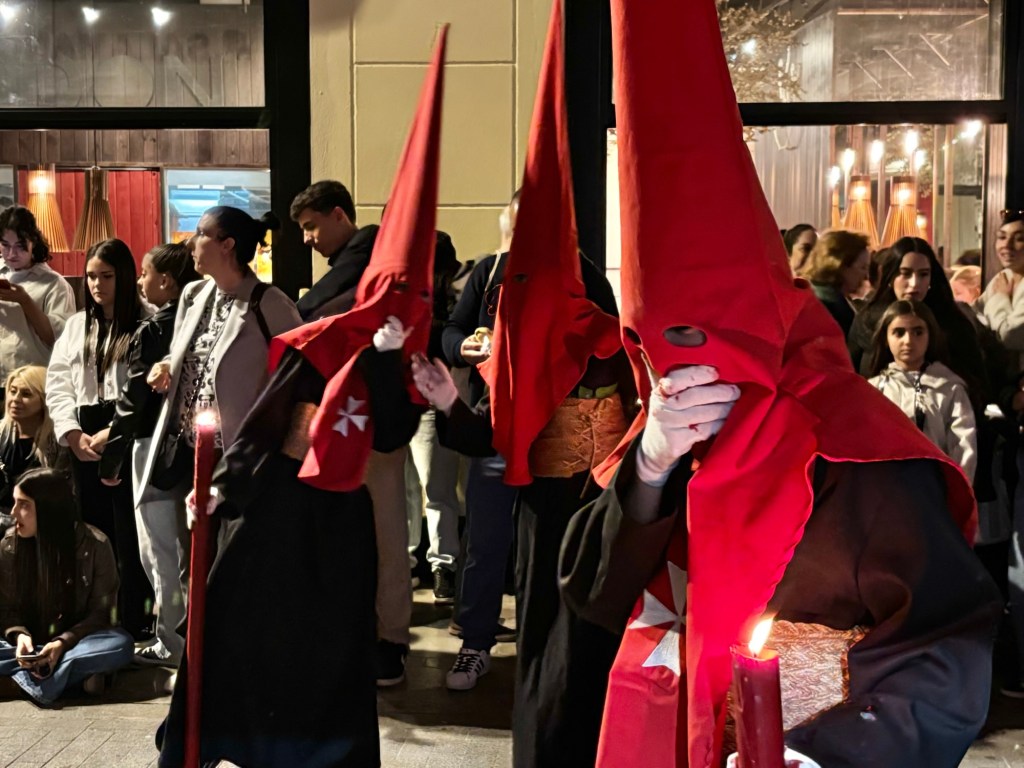
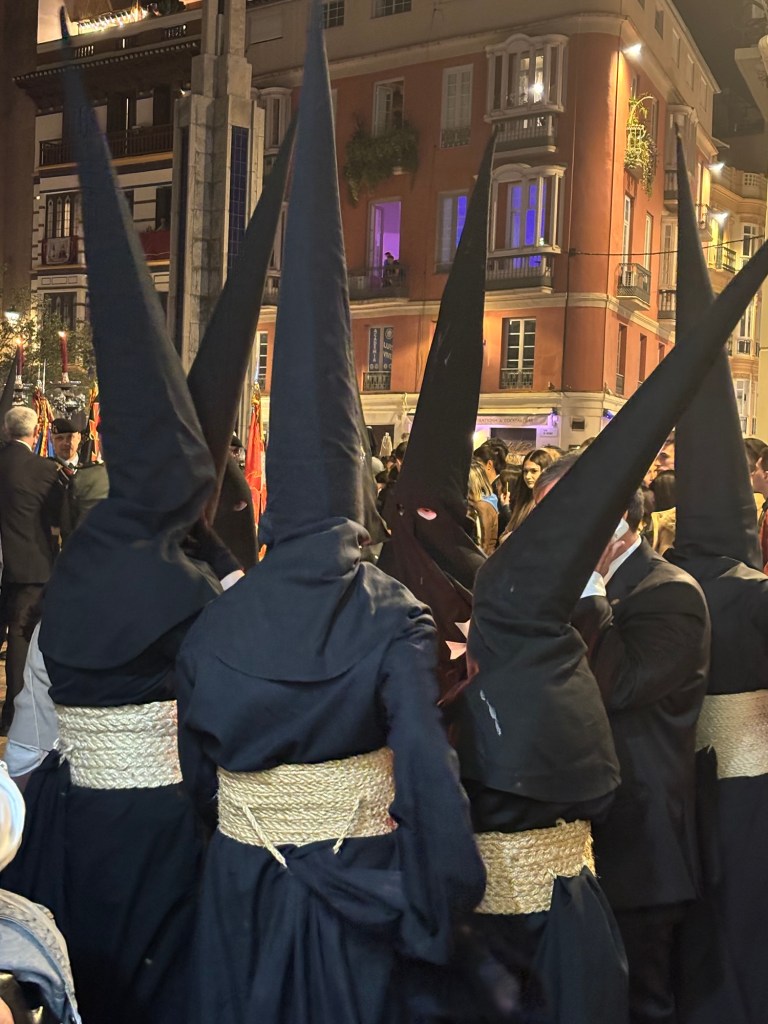
I was only half an hour off the bus back from Gibraltar when I was back out on the streets to catch the Wednesday night pasos. I didn’t have to go far: the Brotherhood of Nuestro Padre Jesús “El Rico” y María Santísima del Amor had just left their parish and were looping back around the Plaza de Merced. The rank and file nazarenos were dressed in robes of deepest blue, but some of them wore white cloaks emblazoned with the red badge of the Order of Santiago.


In their train was a group of women in black, wearing the traditional mantilla, a gesture of solidarity with the grief of the Virgin Mary. Known as manolas, they are a relic of a time before women were allowed to participate in the usual Easter celebrations, such as wearing the capirote or carrying the pasos. Until as late as 1987, it was forbidden for women to don the hood, and it wasn’t until some time after that it became common practice for them to do so. These days, wearing the mantilla is something of a badge of honour for young women, knowing that they are keeping an ancient tradition within a tradition alive.


I allowed myself an hour’s respite – mostly to charge my phone – before heading back out into the night to see the processions by candlelight, when they truly come into their own. I was lucky to get a spot at all. Being such a major annual event, many malagueños know to stake out a spot early to get a good seat – quiet literally, in fact, as a number of the principal routes were lined with foldable deckchairs from eight o’clock in the morning!


Málaga’s guiris don’t seem to be huge Semana Santa junkies. By nightfall, they had mostly retreated to their hotels, leaving the streets to the locals. As such, with a couple of exceptions during the night, the dominant language in the street was that wonderfully ebullient andaluz, best spoken a gritos. My mother likes to collect sugar packets from cafés, and Spain has a quaint habit of decorating theirs with quotes. The only one that has always stuck with me is the incredibly Spanish ‘lo que vale la pena decir se dice a gritos’ (whats worth saying is worth shouting), which is probably one of the most Andalusian statements around. And to think I once found their accent impenetrable and annoying…! Heresy. Now it’s nothing short of music to my heart.


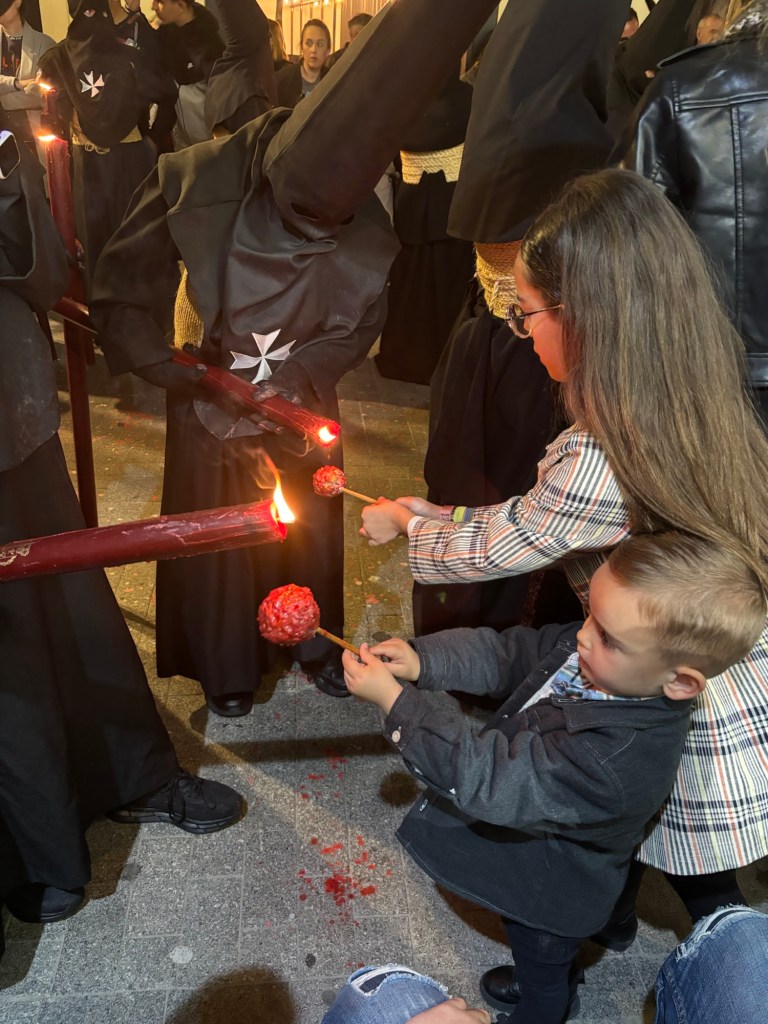
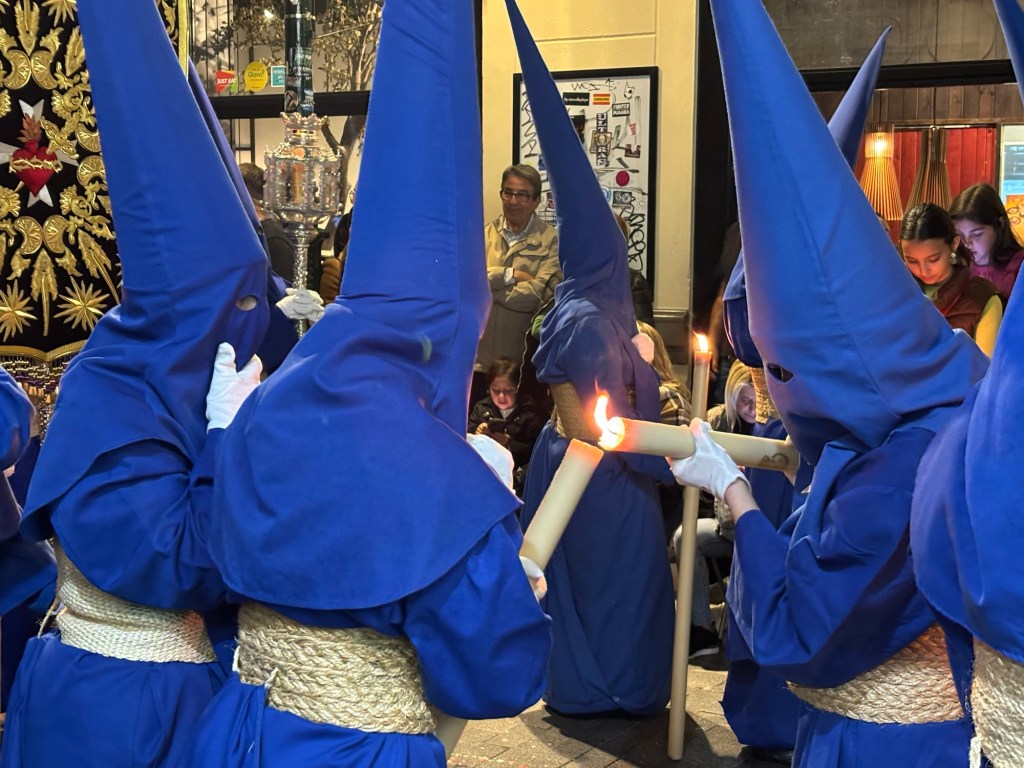
Another beautiful tradition of Semana Santa is that of the bola de cera. As the sun goes down, the nazarenos light their long candles – hardly necessary in a city as well-lit as Málaga, but an essential part of the spectacle. They need to be long to last the night, and it’s for this reason that the nazarenos all wear gloves, to stop the hot wax from dripping onto their hands.

In Andalucía, there’s another layer to it. Every time the procession comes to a halt, children run out into the street and ask the nazarenos for the wax from their candles.


They collect it on little sticks with a coin attached to the end – or using last year’s wax balls, if memory serves – and compete to see who can get the biggest ball of wax by the end of the night. It’s an old way of keeping the younger children entertained during the long hours of the processions, which usually go on well past midnight.


Honestly, it’s just incredibly endearing to see how wholesome this little game is. Sure, Spanish kids love their mobile phones just as much as (if not more than) English kids, but you don’t see a lot of English kids collecting wax or playing with spinning tops in the streets. I still have very fond memories of playing dodgeball and pilla-pilla in the streets with my friends when I was growing up out here. There’s just a bit more variety in the games that Spanish kids play. I want that world for my kids, if I should be so lucky to have children of my own someday.


There was a bit more of the behavioural policing tonight that I’m used to seeing in the pueblo: silver-staffed nazarenos striding over to give a ticking off to younger penitents who might have broken rank for a moment to gossip or talk with friends and family in the crowd. I’m always amazed by how quickly the nazarenos are recognised by their peers in the street, but then, if a ewe can tell its own lamb from its call alone, is it is so hard to imagine that a mother can tell their child from their eyes or gait? Perhaps not. We may not have the heightened senses of some of our animal friends but we are mighty indeed.


The one transgression that wasn’t being quite so closely monitored was the clustering of nazarenos around the glow of a screen at every stop – particularly in front of the Irish bar, where a large telescreen was playing the Real Madrid/Arsenal game. One nazarena was accompanied by her boyfriend, her black robes and his hoodie bathed in green light by the game on his phone, while a cluster of six nazarenos stopped to catch up on the replay, courtesy of one of the costaleros.

It was obviously an important game (what do you expect when Real Madrid are playing?) and it ended in a crushing 2:1 defeat for Real Madrid, but thanks to the greater task at hand of the procession, you wouldn’t have noticed. That said, I suspect that a Spanish victory might have been very noticeable: Spaniards don’t celebrate in silence.


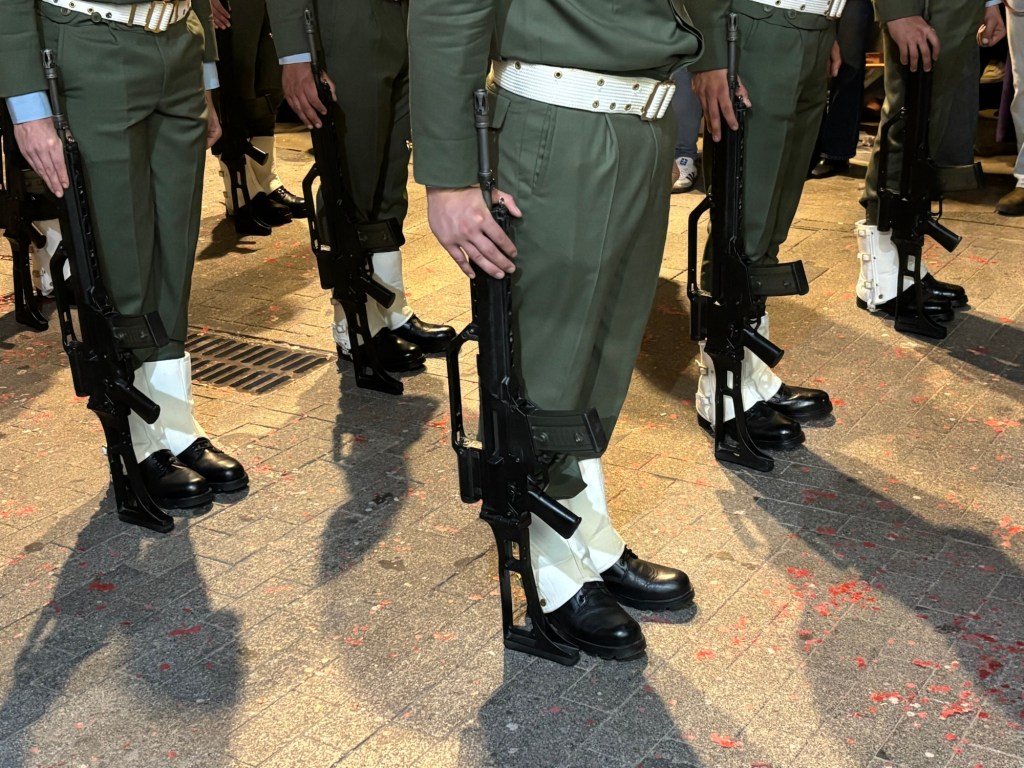
To round out the night, a wing of the Spanish Army – specifically its Almogávar paratroopers – paraded by, accompanying their image of the Virgin Mary on her journey through the city. Lots of Spaniards come to town to see the Legion, but the Almogávares were a bloody good warm-up act, performing a number of impressive drills and acrobatics with their weapons as they marched.

Like a lot of military terms – including our own admiral – the word almogávar is Arabic in extraction, deriving from the word al-mughāwir, a light infantry raiding unit used by both the Moors and the Spanish during the Reconquista. Spain owes a lot to its Islamic past, from saffron and stirrups to rice pudding and the police. Slowly, I think the country is starting to appreciate its coloured past a bit more.


I’d better leave it there, or I’ll have bored you stiff with Semana Santa stuff – and I’ve still got one more night’s work to report! So stick around – the best is yet to come! BB x

The Captive

Plaza de la Merced, Málaga. 21.30.

I’ve arrived at the final destination of my journey: Málaga, ancient port city of the Phoenicians, Carthaginians and Moors and holiday hotspot of choice for thousands of guiris. It’s an odd place for a self-professed country boy like me to end the trip, but there’s a method to my madness: Spain’s foreign legion comes to town to accompany the Semana Santa processions on Thursday, which is a mighty spectacle, and what better a place to wind up my unofficial investigation into Spain’s mass tourism blight than in than the place where it all began, decades ago?


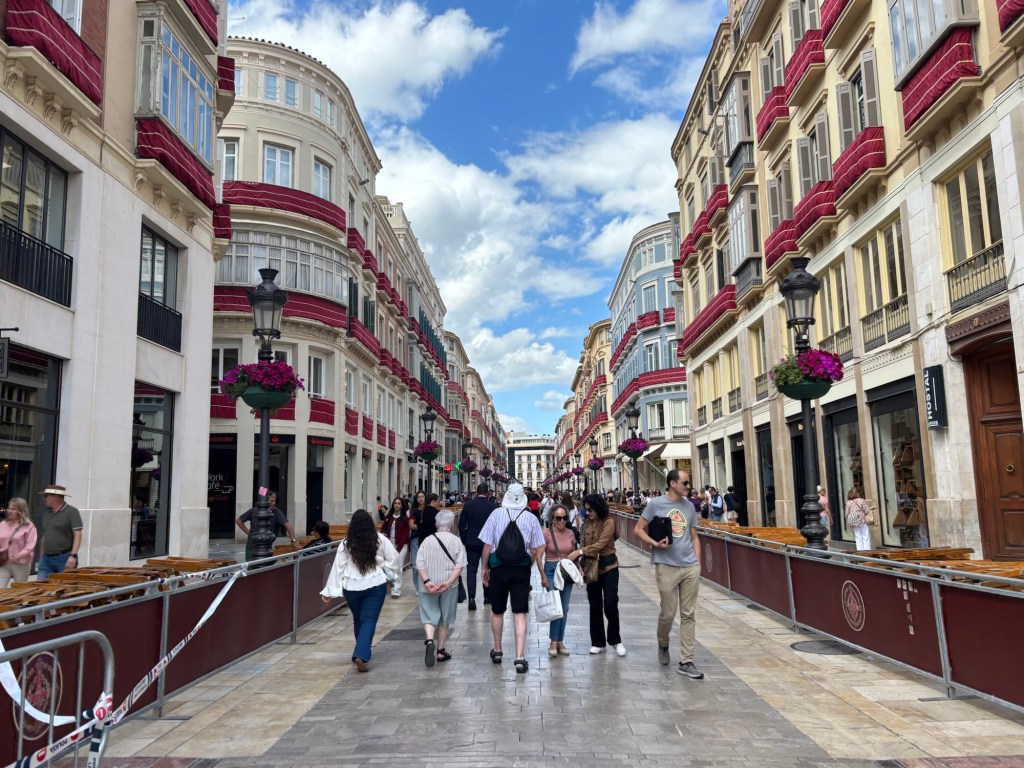
Doñana feels a long way from here. It’s quite easy to walk down a street in Málaga and hear no Spanish whatsoever. I set a timer and managed to clock a maximum of seventeen minutes before I heard a sentence in Spanish on my way to my accommodation: of the foreign languages in town, German was by far the most common, followed closely by Dutch and English.

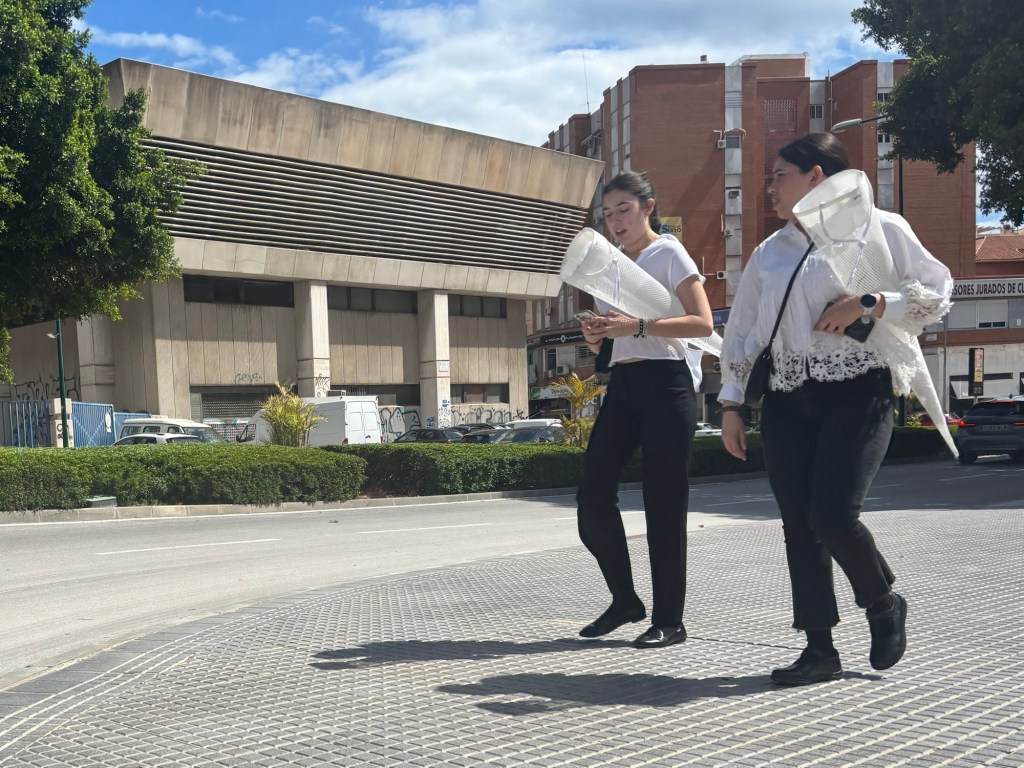
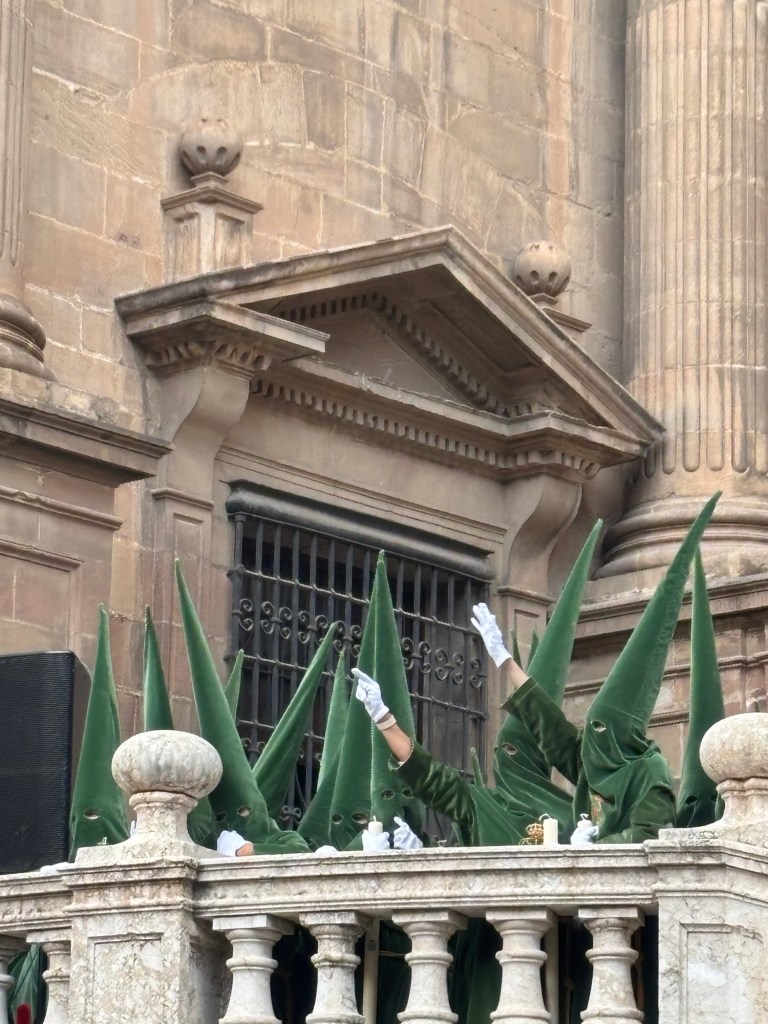
The simple explanation might well have been that the locals had better things to do this afternoon than mosey about the high street: Holy Week begins in earnest today, and those Spaniards I did see were dressed in their Sunday best, or carrying musical instruments, white peaked caps or wire cones for the hoods of their capirotes.


Málaga, together with Sevilla and Jaén, draws in the largest number of spectators for its Holy Week processions: last year, the additional income from Semana Santa alone was an eye-watering 393 million euros in the space of a week. As it stands, around 80% of the city’s accommodation options are at full capacity. Some of that is down to the fact that Holy Week coincides with the school holidays in the UK, but a great many of those tourists will be Spaniards, for whom the processions are far more than just a spectacle.


For the average tourist (or even the irreligious Spaniard), Semana Santa can be something of a headache, both literally and logistically. The passage of the nazarenos and their enormous floats, numbering as many as six hundred penitents, can prove an unorthodox and lengthy roadblock, with the longest processions taking more than thirteen hours to conclude. You have to admire the zeal of the nazarenos for such a stakeout, especially those who do the whole thing blindfolded, barefoot or dragging chains, but it does have the effect of turning the streets of the old town into a live action render of the Snake game on the old Nokia phones: time it wrong and you can end up trapped between the undulating tail of two processions at once.


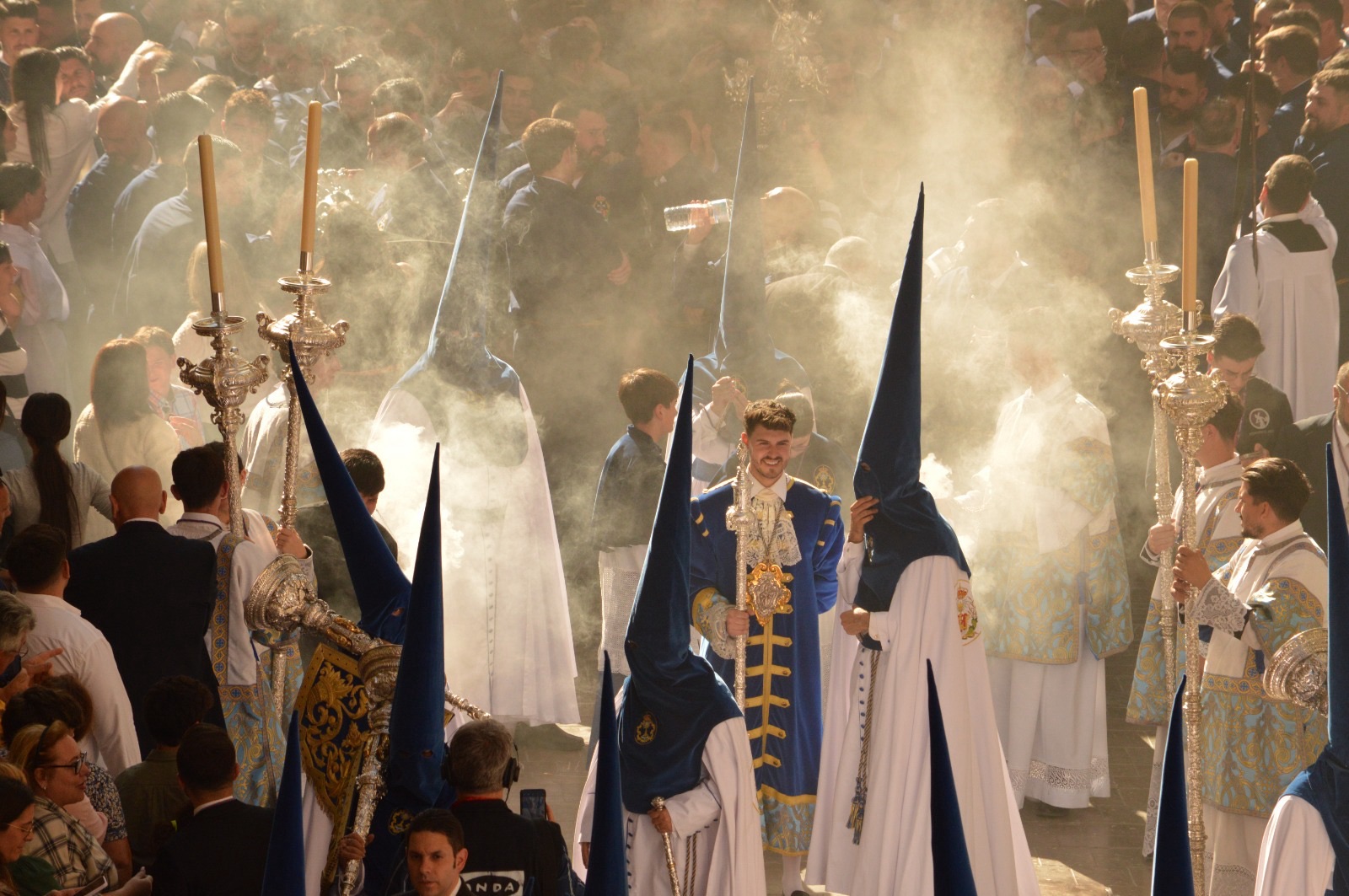
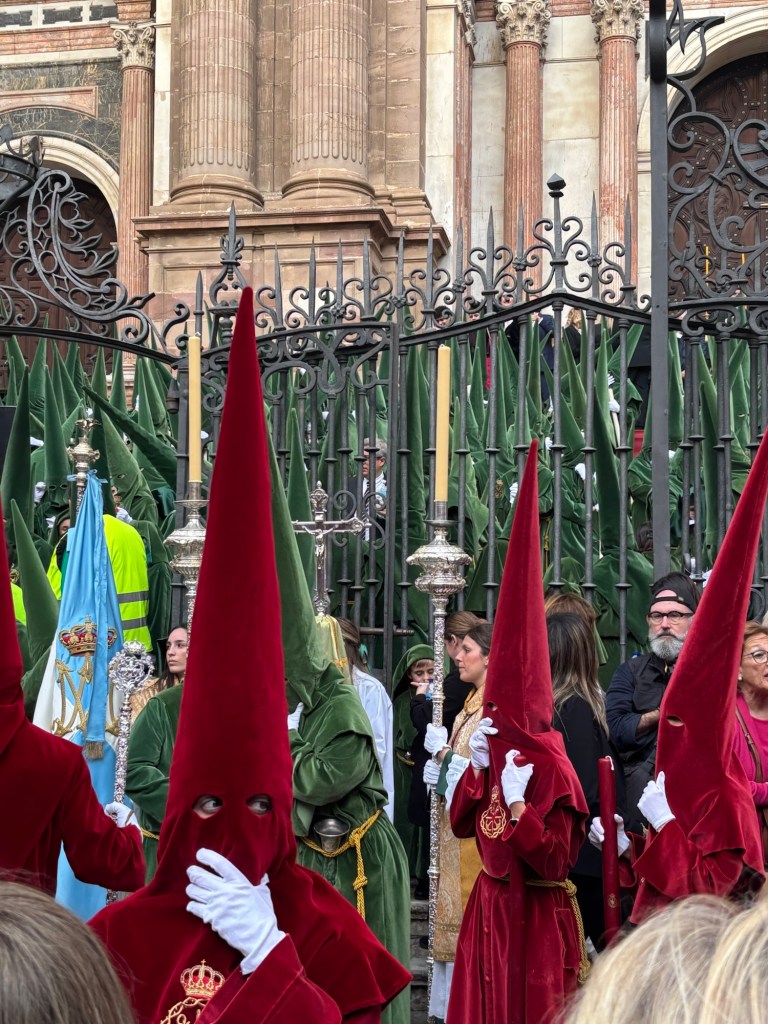
I couldn’t get anywhere near the Gitanos, one of the city’s most spectacular processions, as the crowd was five or six lines deep against the barriers, so I sought out the Estudiantes gathering outside the cathedral instead. Dressed in red and green, indicating their affiliation with Christ or the Virgin Mary respectively, the Estudiantes are the youngest of Málaga’s brotherhoods, drawing on the city’s youth for its members.

That much was plain from the behaviour of the nazarenos, who seemed a little less austere than I’m used to, popping up their hoods to drink from plastic bottles and waving at family members in the crowd. Perhaps it detracted from the magic, but then, my previous experience of Semana Santa is largely a small-town affair, where the sacred traditions of uniform anonymity are usually taken very seriously indeed. I’ve seen nazarenos scolded by their leaders for so much as looking into the crowd.

Málaga is notorious throughout Spanish history for its rebelliously liberal nature, so perhaps it’s unsurprising that their take on the Holy Week processions is a little more familiar.


If I had a euro for every time I’ve had to explain away the comparison between the nazarenos and the villainous Ku Klux Klan – to students and Americans – I could probably afford another couple of nights of this holiday. The comparison seems far more obvious when the colour of their costume is white, of course – and I’ve seen unprepared American tourists jump out of their skin at the sight of the procession.

The simple answer is that Klan, among their myriad other crimes, purloined the outfit from here. The actual origins of the capirote are arguably darker still: they were originally known as sambenitos and were worn by the victims of the Spanish Inquisition, or rather, those victims granted the “mercy” of a quick death by strangulation for recanting their heretical ways and accepting Jesus. Those who didn’t were burned alive.

The different colours of the hermandades or brotherhoods may have originated in the designs on the sambenitos of the accused, indicating the crime they had committed or the fate for which they were destined. It’s believed that the Spanish started to make a connection between anonymity, penitence and overt professions of faith, and adopted the sambenito for use by those seeking to make penance during Holy Week as early as the 16th century. Certainly, by the middle of the 17th century, its use had become widespread, developing steadily into the tradition we now see today.

That makes the sambenito somewhere between two and three hundred years older than the robes of the Klan, who only officially adopted the ceremonial white robes under their reorganisation as the Second Klan in 1915.

So hopefully that puts the matter to bed.


I’ve never been troubled by their appearance, having encountered the nazarenos long before I learned about the KKK at school, but the procession isn’t without its issues for me. Something I’ve had to face here is my aversion to crowded spaces. It’s not agoraphobia, but it’s probably not far off.

In many ways, I feel more Spanish than English, but in one I am on the other side of a cultural gulf: I cannot stand the hustle of a crowd for the life of me. Spaniards seem to enjoy the hypersocial element of a giant conglomeration: there’s a thousand possible conversations to be had, a hundred new friends or connections to be made, and always the chance to enjoy something together – be that food, music, a joint or a spectacle. While an Englishman’s home is his castle, the Spaniard’s natural environment is in good company.

Good company is fine, but I have my limits, and it isn’t my idea of fun to be pushed, jostled and elbowed about by a massing crowd for the best part of a couple of hours. Semana Santa has always been a sombre, intimate affair in my previous encounters in Olvera, Villafranca and Villarrobledo. Here in Málaga, it is anything but.

The omnipresence of the police – all of them armoured and heavily armed – is a constant reminder of just how big the crowds are. They flank the processions, pushing the milling crowds back when they step out of line to take a selfie in front of the pasos (an affliction which, though it pains me to say, is very much a Spanish trend). One couple just kept trying, leaning into the paso as it passed so close that the costaleros – already carrying more than five thousand kilos on their shoulders – had to actively sway more to the right so as not to collide with them.

Crowds have a nasty habit of getting to me, as does selfishness, and it all got a bit much. Hemmed in by the processions, however, I had no choice but to either wait it out or duck into a restaurant until the way was clear. I chose the latter option.


I’ll have another shot at the processions tomorrow. I have gone from zero to sixty in the blink of an eye, coming from the total quiet and solitude of Doñana to… this. It will simply take a bit of getting used to, that’s all.

Until then, I have my books. Far too many of them. Thank goodness for extra bags on flights! BB x

Camino XXIV: Darkness into Light

Tonight, for the first time in over two weeks, I have a room to myself. More than that, I have a bed with cotton sheets. It’s amazing how a life lived on the road makes you so grateful for something we take for granted in this day and age. That’s the magic of the Camino, I guess!


I was up before my alarm this morning, but only just. When it did go off, I was up and dressed in a matter of minutes. I did delay long enough to have my modest breakfast of a couple of pastries, a flat peach and a Cacaolat drink, but by 5.40 I was out the door, staff in hand, and determined to beat both guidebook and Google Maps’ suggestions for travel time. The former hypothesised a ludicrous 5 1/2 hours, whereas the latter recommended a more reasonable 4 hours and ten minutes from O Pedrouzo.

Setting off so early meant that for half the trek I was in the dark, but that doesn’t bother me. In fact, I’ve got so used to navigating my way home through woodland paths by night after late trains from London over the years that I’ve become quite comfortable moving around in the darkness. The snap of twigs or the call of some night creature cannot unsettle me like it once did. And so, once I’d got ahead of the five or six torch-wielding pilgrims on the road, it was just me, the night and the nightjars.

I had a lot of time to think on the Camino, and it’s these quiet early morning stretches that make you think the most. Today, perhaps more than ever with the end in sight, I felt the spirit of my grandfather walking by my side. It is for him that I walk this road, in his name that I say a prayer every day. Every step is a step closer to a man I never knew, and yet one who has been a guiding light all of my life. Naturally, it has me thinking a lot about my own mortality. The darkness will do that to you. Like my mother, I do not fear death. Suffering, pain, naturally. But not death. There’s a chance, however slight, that in death my spirit may join with those of my kin, in whose borrowed light I have walked all the days of my life. Death is just the start of the real Camino, just as pilgrims are always told the Camino starts when you return home with what you have learned. A further journey toward the light, then. That can’t be so bad.


The roar of a plane taking off overhead woke me from my reverie as I rounded Santiago’s airport, and with the rising sun, the birdsong carried away all thoughts of the other world as the blue dawn drew me on through hill and forest to the edge of the apostle’s city.

I set a ferocious pace this morning, stopping for nothing but the odd shoe in my sandals, with the result that by the time the twin spires of Santiago appeared on the horizon at Monte do Gozo, I had shaved a full hour off Google’s cautious estimate. In the end I made the nineteen kilometre trek in a little over three hours. Not bad for a morning’s work – and since I was in town before nine, I arrived bang on time to collect my compostela (the pilgrim’s certificate) as soon as the office opened on the hour.

There was a small queue already waiting, and some were there for the Finisterre credential (apparently that’s a thing), but as it’s a lower priority, they were shunted to one side. I was given the number eleven – auspicious, as it’s my birthday – and called to the desk within minutes. They must have been anticipating a tidal wave of pilgrims today, because they had pre-printed the forms and dispensed with the questions. Which is just as well, as I was prepared to defend my choice of name, but in the end I didn’t have to say a word.

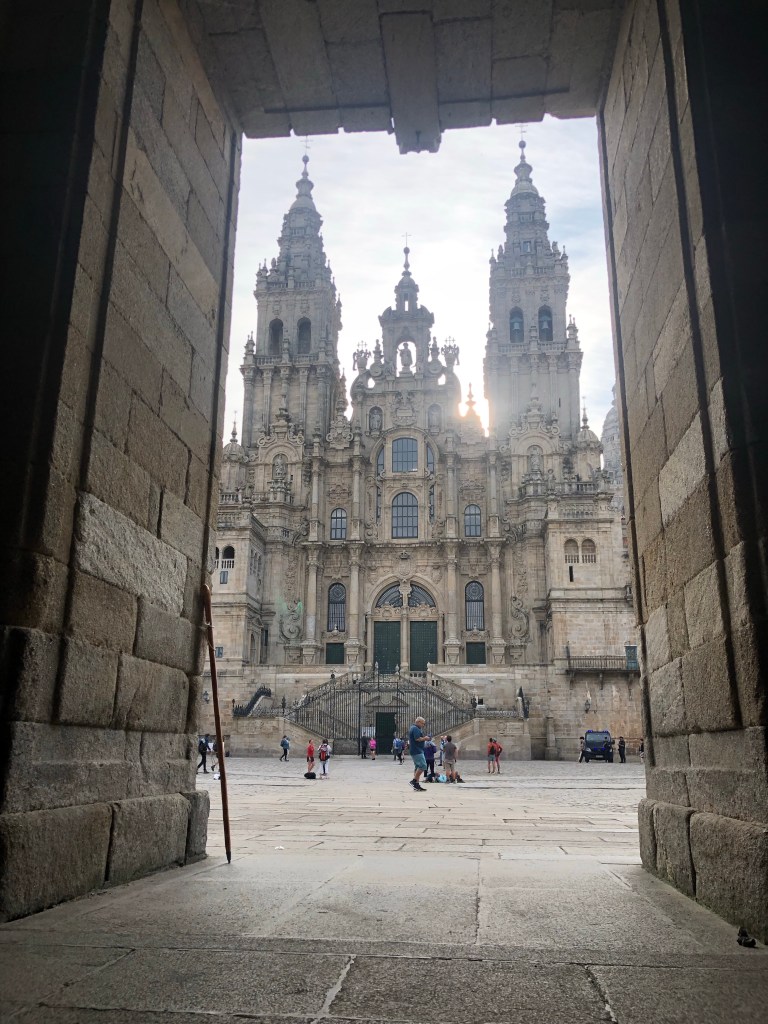
With my compostela in hand, I lingered for a while in the Praza do Obradoiro, watching the pilgrims come and go. Most of the travelers with whom I shared the road earlier on should rock up tomorrow, though Simas got here yesterday, and I’m told Louis the Belgian was in town last night too.


After collecting one last stamp ahead of the four spaces saved for the Finisterre finish, I met up with Simas and we grabbed a bite to eat at Bar La Tita at the recommendation of a Georgian friend of his. And what a find! The tortilla is some of the best I’ve had on the Camino, it comes free with a drink, and keeps on coming with more drinks…! England, watch and learn!

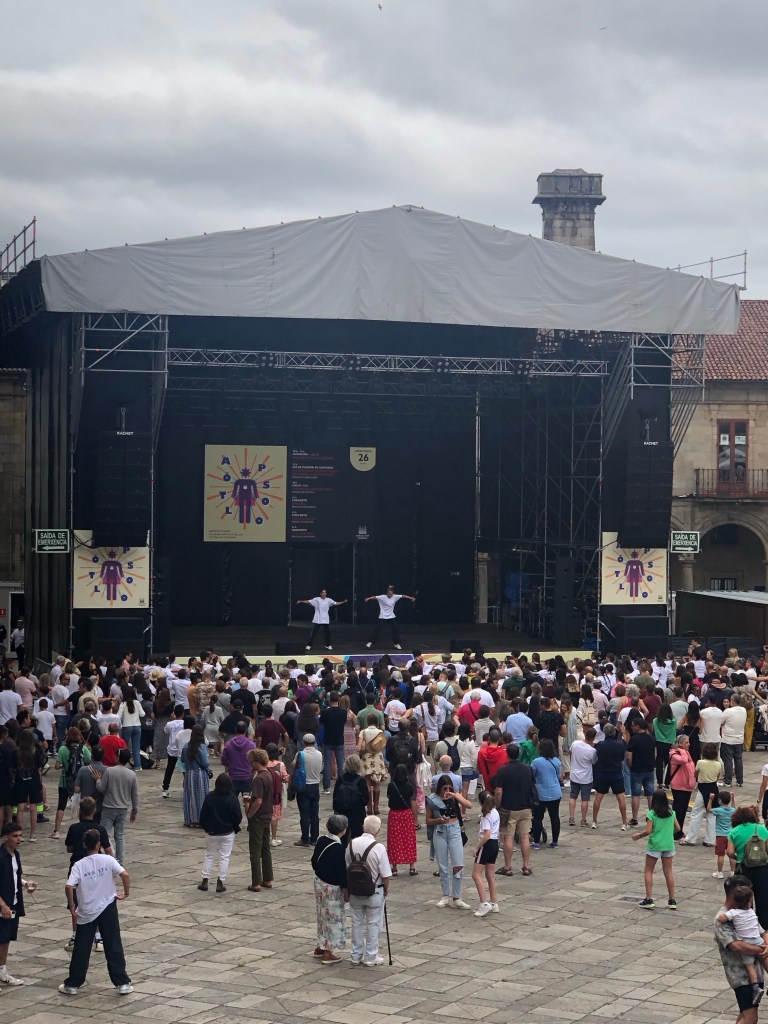
I tried to make midday Mass, but missed out by literally two spaces, so I decided to come back later and head for the albergue instead. I was waylaid by an urban dance-a-thon which I shamelessly got involved with (they were playing Everybody Dance Now, Candy Shop and various other dance/hip hop classics, how could I say no?). Yes, I appreciated the irony of a tour guide explaining how in holy years a pilgrimage to Saint James’ tomb will cleanse the soul of all sins, while 50 Cent’s chant ‘if you be a nympho, I’ll be a nympho’ reverberated off the cathedral walls. But I had a good time!


I checked into the Seminario Menor and spent most of the early afternoon dozing off. Frankly, after averaging 28-30km a day every day for two weeks and more, I think I’d earned it.

I wandered into town for six, well ahead of the 7.30pm pilgrims’ mass, but ducked into the cathedral as soon as I reached it and took a seat near the front anyway. I killed time with my sketchbook, and from one moment to another the organ above was blaring and the priests of Santiago were processing in, arrayed in coats of black, white and red, the real tricolour of Spain. After weeks of spoken Mass, it was a welcome change to have sung Mass once again, and since they provided use with an order of device, I could finally follow along, too. Bach’s Toccata and Fugue came bellowing out of the organ to finish, and after saying one last prayer for my family, I took my leave of Santiago’s cathedral.


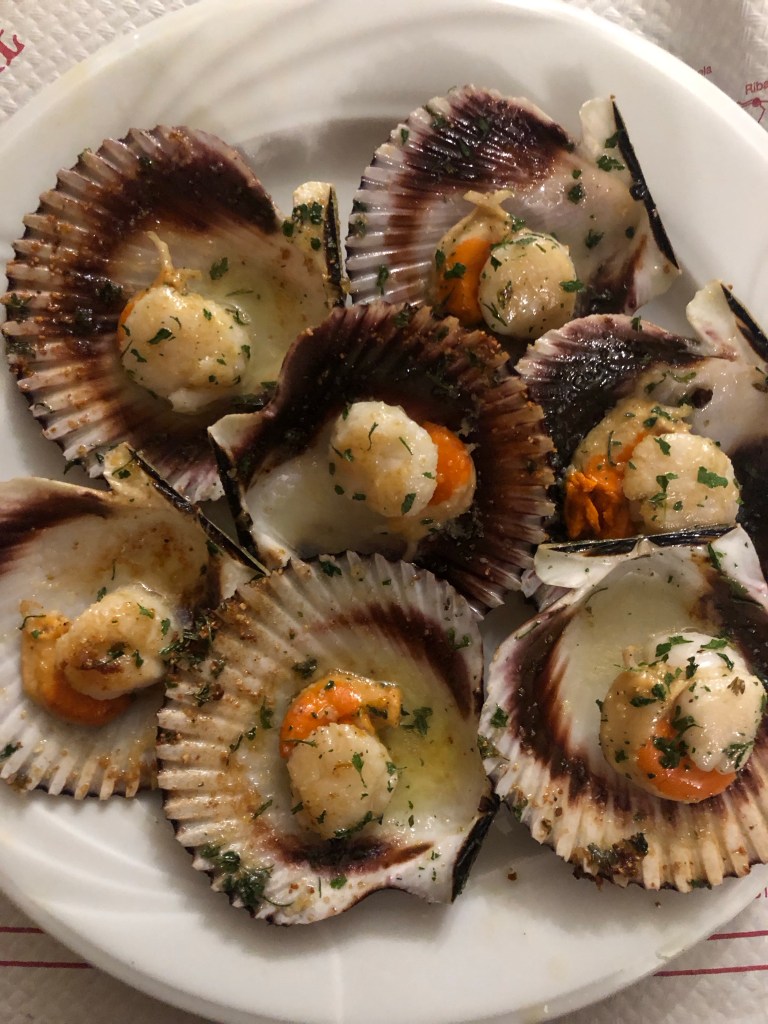
After skimping on lunch I figured I deserved a treat for making it here in record time – that, and a single communion wafer makes for a poor supper. So I popped into one of the bars on the busy Rúa do Franco and, eyeballing a good’un (O Barril), I ordered a surf and turf dish: zorza (Galician pork in pimentón) and zamburiñas (the iconic scallops of the Camino).

I finished the night on a little ritual with the scallops. They came in the perfect number: seven. One for each of the companions who have lit the road of the Camino for me like stars in the night sky.

I toasted each one in turn. First, my mother, who first introduced me to the Camino and walked most of the first leg with me. Second, to Paz, an Argentinian woman who was my first companion on the road over the Pyrenees in that first assault on the Camino four years ago. Third, to Simas, my final companion on the road, and the only recurring light this summer who could keep pace with me (and in so doing, ground my wandering thoughts for my own good). Fourth, fifth and sixth, to my three stalwart companions on the road this spring: Sophia, Mikkel and Lachlan, with whom I would have gladly walked this road to the end and back, and whom I have carried with me in my heart this summer. And last, but certainly not least in my thoughts, to José, my grandfather, without whom there would be no Camino.


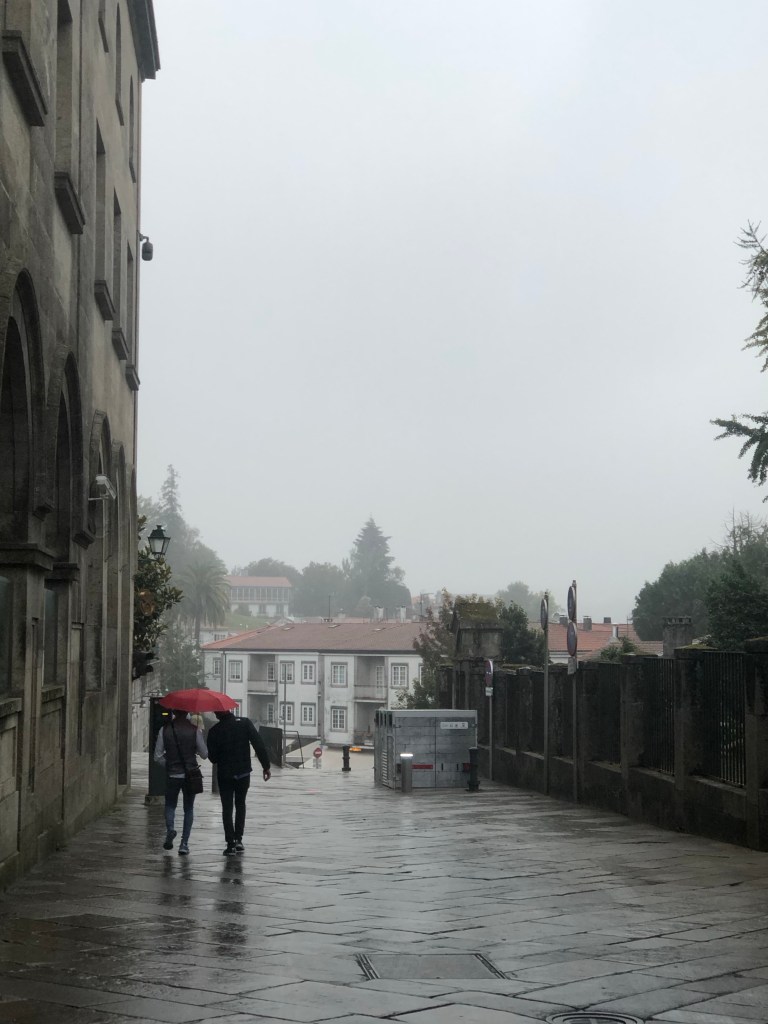
Tomorrow is a new day. Santiago de Compostela glitters under a cloud of gentle rain, and my back is relieved to be free of its shell for two days. It’s time to explore this jewel of a city! BB x
Camino XXII: Suckers

I was woken from my afternoon nap by the melody to Greensleeves, of all the pieces in the world – the guitarist from Villafranca must have caught up to me. Now that my pace has slowed a tad, it’s likely I’ll be running into a few familiar faces over the next couple of days.


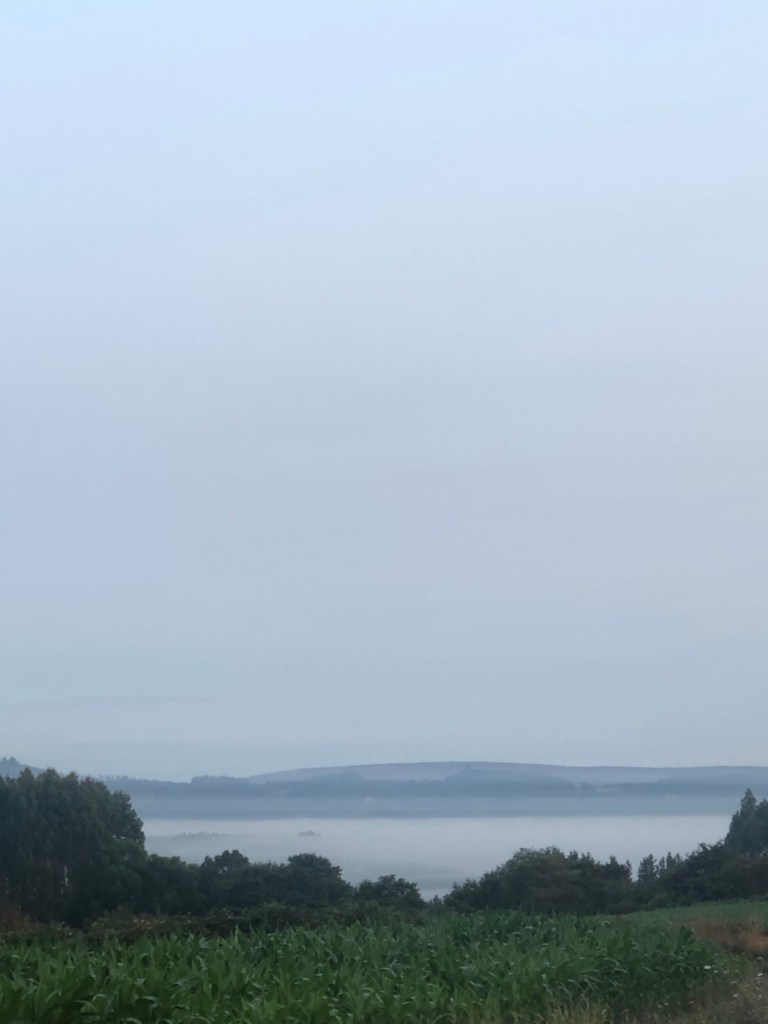
I set off late from Airexe this morning, being its sole inhabitant for a couple of hours after the Belgian pilgrim set off at five thirty for Ribadiso. I was in much less of a hurry, still mulling over whether to dawdle in Vilar de Donas and wait to see the peerless medieval murals of its famous church. Even at the disgracefully late departure time of 7.30am, the whole world was steeped in a sea of mist, from which only the tops of the trees and the hilltops of the valleys beyond emerged like the ruins of a sunken world, much like Portomarín yesterday.


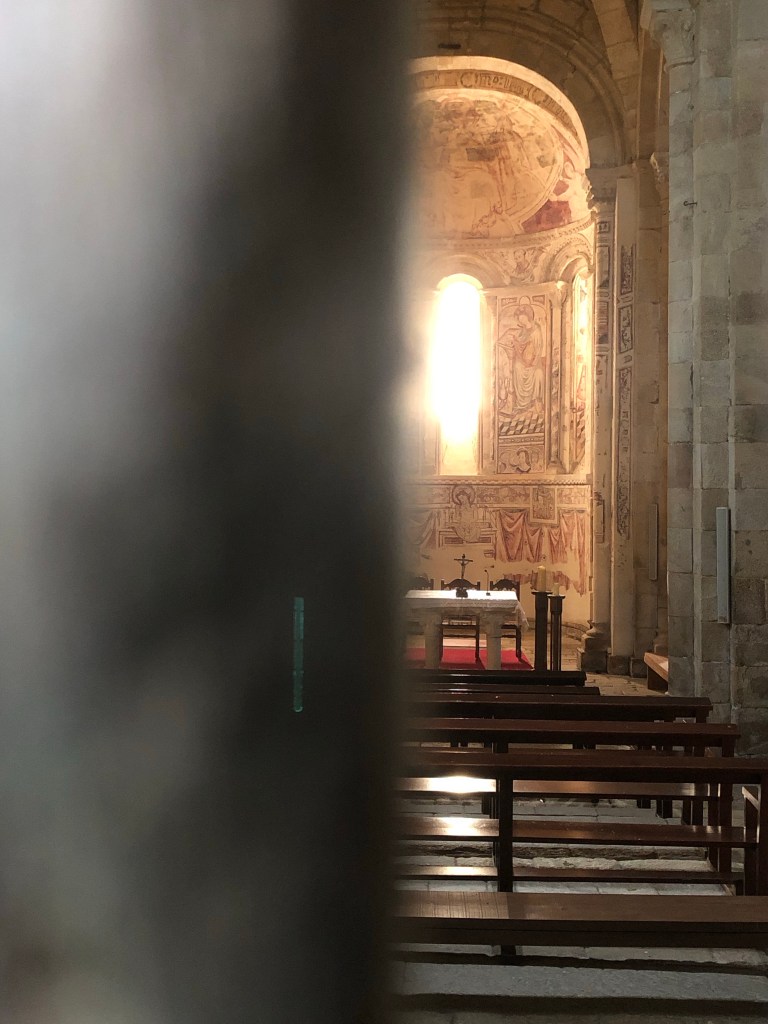
I decided to make for Vilar de Donas in the end, seeing as it would be a relatively short one today (23km) and I had time to kill. It’s a small detour of 2km to the north from the hamlet of Portos, but you’ve got to time it right. I arrived shortly after 8am, and while the internet and guidebooks give various times, for the record, the church is open from 12.00, and no earlier. A local electrician told me I could seek out the ageing sacristan who lives in a house nearby and ask, but as it was still so early, I decided it would be best to leave him be – not least of all as he is in his mid-nineties! I did, however, get a reasonably good view of the church through a crack in the door, and I can only conclude that the 12.00 opening time is a crying shame: the church is at its most magical in the morning light, when the rising sun throws down a golden beam across the floor through the opaque marble window. I’ll have to come back and see this marvel again sometime.


The road to Melide cuts through a number of forests, from carefully planted rows of pine and silver birch to the once-so-alien stands of eucalyptus, which are such a feature of the Galician landscape. Most magical of all, however, were the truly ancient forests that the Camino traverses, with wildly twisting branches and an undergrowth so dense it would need a machete to pass through.


Sometimes the arching trees seem to create tunnels, as though intentionally sheltering the pilgrim road as they must have done for over a thousand years and more. The colourful turigrinos passing through had their heads down on their phones, unfortunately, but the marvel wasn’t lost on those few true peregrinos left on the road.


I reached Melide shortly after one in the afternoon, but it was twenty past by the time I found the albergue – by which time a horde of turigrinos (a pejorative term used by pilgrims to describe the sudden mass appearance of tourists sharing the pilgrim road for non-spiritual reasons) had descended, which meant my first queue for an albergue municipal of the whole Camino. Given that this is often a Camino staple in high season, I should really consider myself lucky!

More than lucky, however, I was certainly hungry, having eaten little more than the last of the homemade biscuits for breakfast this morning. Melide is famous for its pulpeiras – restaurants specialising in the Galician speciality, octopus – and the name thrown around for the last few days has been Pulpería Ezequiel, an award-winning family business on the high street. A ración of the famous pulpo costs 11€ and is more than enough to sate the appetite – and it really is sensationally good. Do drop by if you’re passing through. There are plenty of other options, but Ezequiel himself must have been cutting and chopping octopus all morning, since that was what almost everybody seemed to be ordering! One wonders just how many octopuses (octopi?) the Galicians get through each day, never mind the Spanish at large…


I’ll try to catch a pilgrim mass this evening, as there was none to be found last night. I’m still deliberating whether to shoot for Santiago a day early on Sunday, but we’ll just have to play that one by ear. Until the next time! BB x
Camino XX: Angels and Demons

It’s 6.18am on Wednesday morning. I didn’t get any time to write last night, as it was nearly midnight by the time I was in bed, for reasons which I shall endeavour to explain.


Before leaving O Cebreiro this morning, I decided to climb Cebreiro’s peak, where a lonely lichen-covered cross looks out over the layered hills and valleys to the east. It was scored up its sides with a thousand little grooves, into which a thousand small coins had been slotted. Time and the elements had worn down their edges, and some grooves were empty – perhaps the work of quick-fingered pilgrims over the years. From the summit, you can see all the way to Foncebadón, offering one final glimpse of the faraway meseta before the descent into the rolling hills of eastern Galicia.


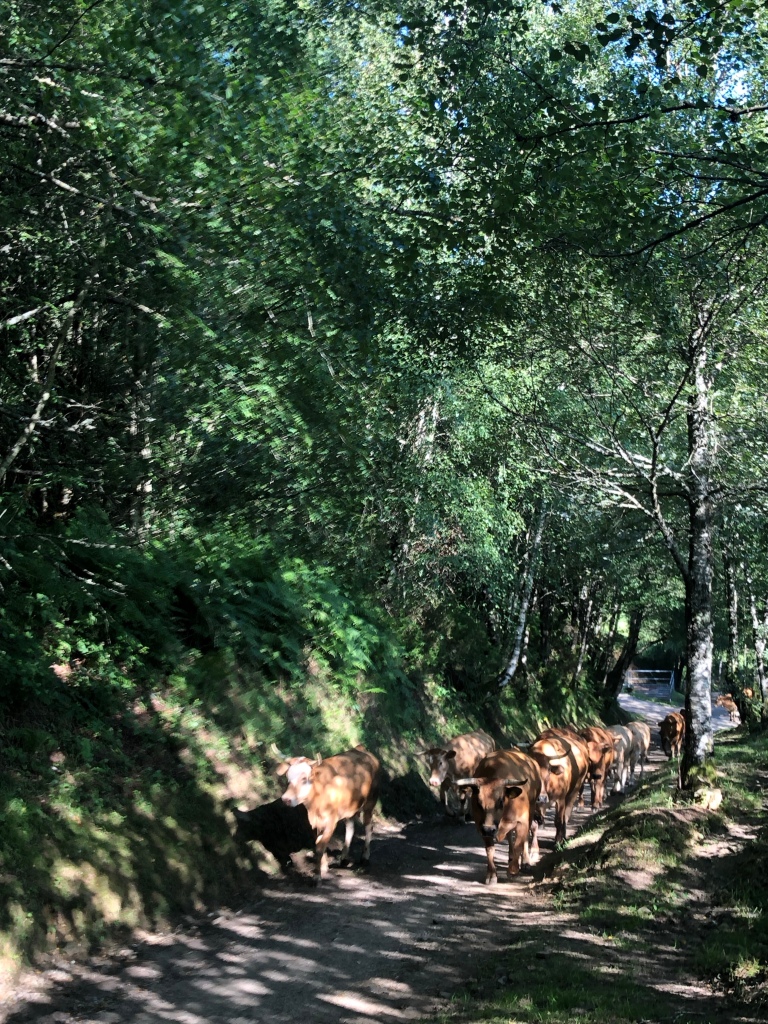
I walked and talked a fair amount this morning, sharing the road first with Simas, then with a Catholic mother and daughter from Ohio, then with three more Ohio boys, then finally Simas again until Triacastela. Along the way we hit another Galician roadblock (read: cows), met the first of what will presumably be many school trips (this one a sixty-strong outing from Mengíbar, Jaén), and talked about American history, which is always really eye-opening when it comes from Americans themselves.


At Triacastela, after a hearty breakfast of empanada, zumo and Cola Cao, the road forked north and south. Simas and I parted ways here: he headed north and west over San Xil to the hamlet of Calvor, and I took the south road to Samos, on the recommendation of Bridgette, the Australian pilgrim I met just over a week ago.

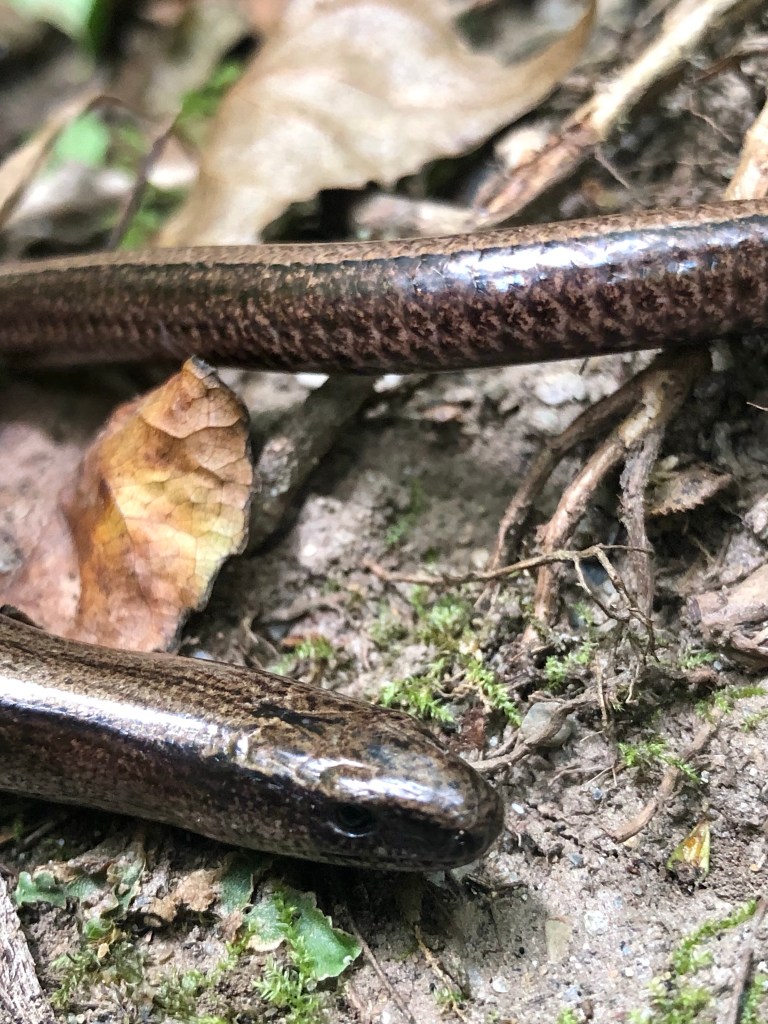
The road to Samos is beautifully remote. The Americans from lunch yesterday zoomed by on rental bikes – some calling out with a cheery buen camino, some not – but other than that I walked the road alone. Seeing as I had plenty of time, with the Samos albergue opening late, I dawdled a lot, leaving the Camino at one point to explore the woods that sloped down to the river Oribio. I had to be careful where I set down my backpack, after almost stepping on a slow worm that lay perfectly still near the riverbank. I have fond memories of finding this false-lizard on the grass-heap at home as a child, so it was nostalgic to find one here, deep in the Galician valleys.


Galicia has avoided most of the ferocious heat that is ravaging the rest of the peninsula – unlucky pilgrims at the Pamplona stage would have endured 46°C heat after midday – but the UV rays must have been just as fierce, because I definitely caught the sun before reaching Samos. However, all the prickling in my arms could not detract from the beauty of the countryside I was passing through: the tiny hamlets like San Cristovo do Real with their dragon-spine slate roofs and empty streets were like something out of a picture book of a Spain that has long since disappeared.

With the last hill before Samos in sight, the tinkling of a bell broke the silence. I overtook a Spanish pilgrim a minute or so later, carrying a stick to which a small bell was fastened, releasing a merry jingle with every step. If he’s walked all the way from St. Jean with that, he must have the patience of a saint. Or perhaps it’s a deliberate act of penance on his part.

The Monastery of Samos, my destination (and digs for the night), is a stunning jewel of the Camino and seriously worth the detour if you reach Triacastela too soon. The hospitalero, a talkative chappie from Madrid in a black triskel tee, was very friendly, apologising in his own way for the lack of traffic. ‘In July I should be turning people away,’ he explained, ‘but this year there are almost no Spaniards on the Camino, only foreign tourists. Nobody has the money anymore to spend four or perhaps even two weeks on the road.’

There’s a general election on the 23rd – you can hardly miss the posters along the Camino, as though pilgrims were a vital demographic – and I expect a change of government. In which direction, though, I cannot say. It’s an exciting time to be in Spain.

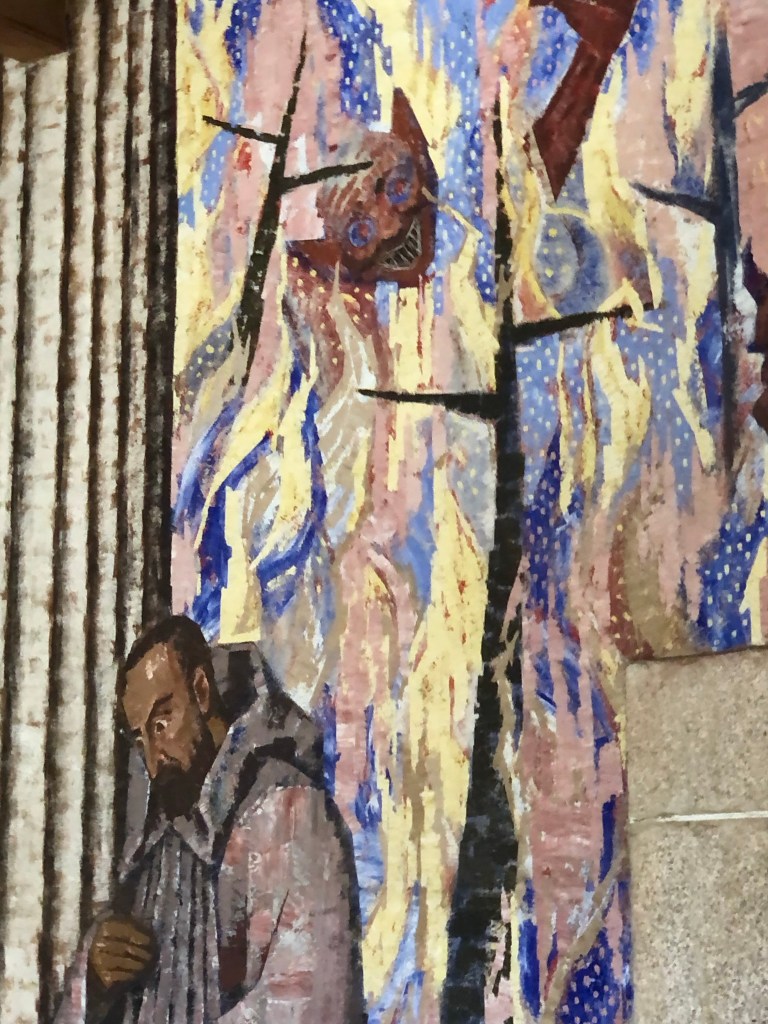
After a short siesta, I tagged along with two jolly pilgrims from Albacete and a couple of stragglers from O Cebreiro to a guided tour of the monastery, while the Chinese pilgrim and her curiously dressed German companion who arrived after me went looking for somewhere to drink. Our guide was very knowledgable and the complex was mind-blowingly beautiful in places, despite having been gutted by a fire in the early years of the last century. Like the walls of the albergue, giant paintings stretched along the corridors, depicting scenes from the life of Saint Benedict. As is often the way, the artist used the faces of contemporaries as his models. Some were local figures, some notable monks of the order, and some were members of Franco’s cabinet. Surprisingly, silver screen stars Charlton Heston and Sophia Loren even made a cameo appearance at one point!


But by far the most intriguing paintings were of the occult: devils, demons and dark spirits grinning and leering amidst the serene countenances of over a thousand years of Benedictine worshippers. There’s nothing like it in the Abbey back home, but even if there were, I’d have been just as transfixed. Isn’t there something deeply intriguing about the fascination with the dark held by those who cling to the light?


I bought a few souvenirs in the gift shop, staffed by two of the eleven monks who reside at Samos. They were pleased to hear I worked at a Benedictine school in England and we had a lovely little exchange while I obtained some homemade biscuits for the road ahead, and a new rosary for the road beyond.

Dinner at the Hotel A Veiga was sensational, and far and away the best menu peregrino I’ve had on the whole Camino, including the previous two stints this spring and back in 2018. The arroz con leche was heavenly and the churrasco (and all the sauces they brought with it) was divine. I ate better than I have in days – which is just as well, because I would need all the energy in the world an hour or so later.


When I got back to the albergue, it was already five to ten, so I packed for tomorrow and got my things ready for bed. I thought I’d pop outside and use the erratic signal (nonexistent inside the albergue) to book my flight home next week and write up my blog, and catch up with the two pilgrims from Albacete I met earlier on, but fate had other ideas.

Not five minutes after the hostalero grabbed his bag and left without a goodbye, the waiter from the bar across the road came and asked for our help: the German pilgrim was causing a scene and trying to pick a fight with the other punters. Miguel, the larger of the two Manchegos, followed her back to the bar and was back in five minutes, half aiding, half dragging the German across the road to the albergue. He was in a dreadful state, reeling and tottering in every direction, and evidently suffering the adverse affects of too much drink and too many drugs. It was all we could do to get him to sit down without falling over backwards, and he turned hostile every time he heard Spanish, making childish imitations of what he heard and bookending every line with a violently delivered ‘motherf*ckers’ or, more charmingly still, spitting at whoever spoke last. The only practical solution seemed to be to talk to him slowly in English, which he seemed to command well enough to tell us all the things he wanted to do to the waitress in the bar.

The waitress returned shortly and asked for her phone, which she had lent to the pilgrim so he could call home. He got aggressive and insisted it was his, so Miguel had to wrestle it off him. He then fell back and cursed the night sky and the three of us for about half an hour, stoping only to say the word ‘mamasita’ every minute or so, chanting it in a suddenly calm and lobotomised voice as though in a trance.

Eventually, Miguel and I decided the safest place for him was his bed. I prepared a bed for him at the other end of the room, right next to the bathrooms, while Miguel and Diego hauled him to his feet and carried him inside. Between the three of us we got him to the bathroom and stood by for ten minutes to make sure he didn’t hurt himself, and then managed to get him into bed, from which – mercifully – he did not get back up.

Ten minutes later, the unexpected arrival of two locals from the petrol station that is curiously twinned with the monastery almost undid our hard work, when they tried to fix the adjoining door to the garage by slamming it to several times, unaware or uncaring for the sleeping pilgrims just a few feet away. The German swore loudly after every bump in the night, until sleep finally found him – and turned him into a human onboard motor, snoring loud enough to wake the whole monastery, if not just the room in which he lay.


But now I must put down my phone and set out. It’s going to be busy from Sarria onwards, and the sun is already high in the sky. Until next time! BB x
Camino XIX: Over the Border

Well, here I am in Galicia, just about the only part of Spain that isn’t suffering the ferocious heatwave that is sweeping across Europe right now. With temperatures soaring into the 40s in a red wave from Madrid to the south, I’m more grateful than ever for the merciful Atlantic winds that keep Galicia fresh and green. Santiago certainly picked his spot with Spanish summers in mind…


I didn’t sleep much last night, though I must have dreamed a fair amount. I’m pretty good at waking myself up on command, because I knew I needed to be up in time to charge my phone (the sockets were all in use when I got back last night) and lo and behold I was up without provocation at two in the morning.

I’m already used to functioning on less sleep than is healthy from my work in a boarding school, so when five thirty came around I was already on the road. The vending machine gobbled up my euro and gave me a self-satisfied LISTO! when all it gave me was a plastic cup and a deceptive whirr that most definitely did not produce any hot chocolate… but, serves me right for using a vending machine.

I was sorely tempted to join the less than 1% of pilgrims who take the Dragonte route up through the mountains this morning, but as yesterday was a Sunday, I hadn’t been able to buy supplies, so I chose caution over valour and took the basic route. If I’d had my faithful stick I might have chanced it, but… it is what it is.

I did, at least, have the sense to stop for breakfast at a bar in Trabadelo, where the tortilla was decent, the napolitana was delicious and the Cola Cao was divine.


I’ll say this much, it might be the basic option, but it’s a lot better a route than it looks. On a map it seems to follow a road almost all day, which it does, but with the construction of the A-6 Noreste motorway, pretty much all the traffic took the high road, leaving the Camino almost devoid of cars. And since even the sight of a car at the moment makes me think of the intensive course that may or may not be coming my way when I get back (it’s proving hard to find an instructor who’s free), that was some relief!


The Valcarce river flows alongside the Camino for most of the route, providing a gurgling backdrop to the walk. I kept my eyes open for otters, which are sometimes seen in the river, but I didn’t see any. I did see the other thing I was looking for though: a dipper, just as I left the road at Las Herrerías. The characterful little things are a feature of most highland rivers in Spain, if you keep an eye out for them.

It wasn’t easy to catch on camera, but I found considerably more willing subjects in a gang of long-legged Spanish chickens further up the road. The way they were going, they looked as though they might have been making the pilgrimage themselves! Though I was briskly disillusioned when the rooster started sizing himself up to me, squaring off like a boxer in a title fight. Feeling a hard pass on letting him test his spurs on me was a good move, I left them be.


After the picturesque village of Las Herrerías, the real challenge begins. A 600m climb and then some stands between you and O Cebreiro, the first town beyond the border, and boy are the first few hundred metres a challenge. Thank God I played it safe this morning and took the easy route! It’s a beautifully forested climb, but a climb all the same…


After La Faba (where the fountain water is so deliciously cold that my bottled water needed jettisoning immediately) the Camino climbs ever higher through one last stretch of forest and then up into the sunlit highlands of Castilla y León’s final outpost. I must have gone on ahead of the others, because I only passed a few intrepid pilgrims up here. It might not have been heatwave material, but the sun was high up by this point and the lizards were out, including the giant green occelated kind that used to fascinate me as a kid. Most of them were well under cover before I saw them go, but one lingered long enough for me to see where it was hiding. Can you see it?


La Laguna was little more than a cluster of farm buildings, and after that it’s only a few more hundred metres up to the border. I did have one unexpected roadblock in the form of a wayward herd of cows, whose youthful cowherd was desperately trying to coax away from the path. The cows had other ideas, and it took a few minutes to get by.


A colourful stone statue marks the border. Now I’ve set foot here in Galicia, there are only two comunidades autónomas left in Spain which I haven’t explored: Murcia and the Canary Islands (assuming one doesn’t count the Moroccan enclaves of Ceuta and Melilla). I almost stepped on a stoat that shot out of the verge on the final climb up to O Cebreiro, and while it was much too fast for a photo, the views from the top of the mountain absolutely screamed for one – or several.


I managed to beat Google’s initial suggestion by forty-five minutes, but since the albergue didn’t open until one, I had a sitting nap and waited – my feet were just dead.

I had lunch with a random assortment of new pilgrims, mostly Americans, in a hotel-restaurant-giftshop affair. How to put it politely… I’ve had more tolerant company for lunch. Most of the Americans I’ve met abroad have been the most refreshingly open-minded and charismatic characters I can recall. This bunch were memorable only for their moans. Two of them were off on one for the full hour about how rude the Spanish are, slating the food, the service and the hostaleras, all while unironically claiming their status as Americans entitled them to fair treatment.

I excused myself to go to the bathroom. I paid my fare and apologised to the chef. I did not go back.

Fortunately, my faith in America was restored by the welcome return of a meseta pilgrim, Simas. A chat over a half pint with another open-minded pilgrim was just what the doctor ordered. Bumping into two more Catholic Americans while paying the bill was an added bonus.

Mass in O Cebreiro’s 6th century church was really special. The priest spoke from the heart, juggling several languages throughout, and blessed us all with holy water and words of power. At the pilgrim’s benediction at the end, I volunteered to read the closing prayer when an English speaker was required. Perhaps I just wanted to read a prayer for my fellow pilgrims, or perhaps it was a subconscious dig at the fact that, Americans aside, there was only one inglés in the room. (If that was it, God, please forgive me that little victory!)

As a parting gift, the priest gave us each a little stone with the yellow arrow of the Camino. I’m holding mine now, its tiny yellow arrowhead forking through my fingers to the northwest.


Now I’m watching the sun set over the rolling hills of Galicia. It’s been a long day, but a good day. Simas and I will make for Triacastela tomorrow, while others shoot for Sarria in a mad rush to Santiago. Here’s to eveybody’s journey – may they find what they’re looking for! BB x

P.S. I have a new stick!!! (It was only 10€ and after today I’m not chancing the last 140km without one!)