Camino XIII: Milady

Albergue de Peregrinos de Nájera. 12.59.

I was supposed to take the day off today, but as it’s a Sunday, nothing is open. No shops, no museums, zilch. So, since my intention to use my rest day to restock was somewhat redundant, I set out at the relatively tardy hour of half past six for Nájera.

Logroño must have been partying late into the night, like Jaca last week. There were more than a few amorous couples locked in each other’s arms in front of doorways on the streets running off the Gran Vía. The average age a Spaniard is able to leave home is now in the mid-thirties, which must make dating considerably more complicated here: the sexual revolution has happened, society has caught up, but the financial reality has got Spain’s youth in a stranglehold.


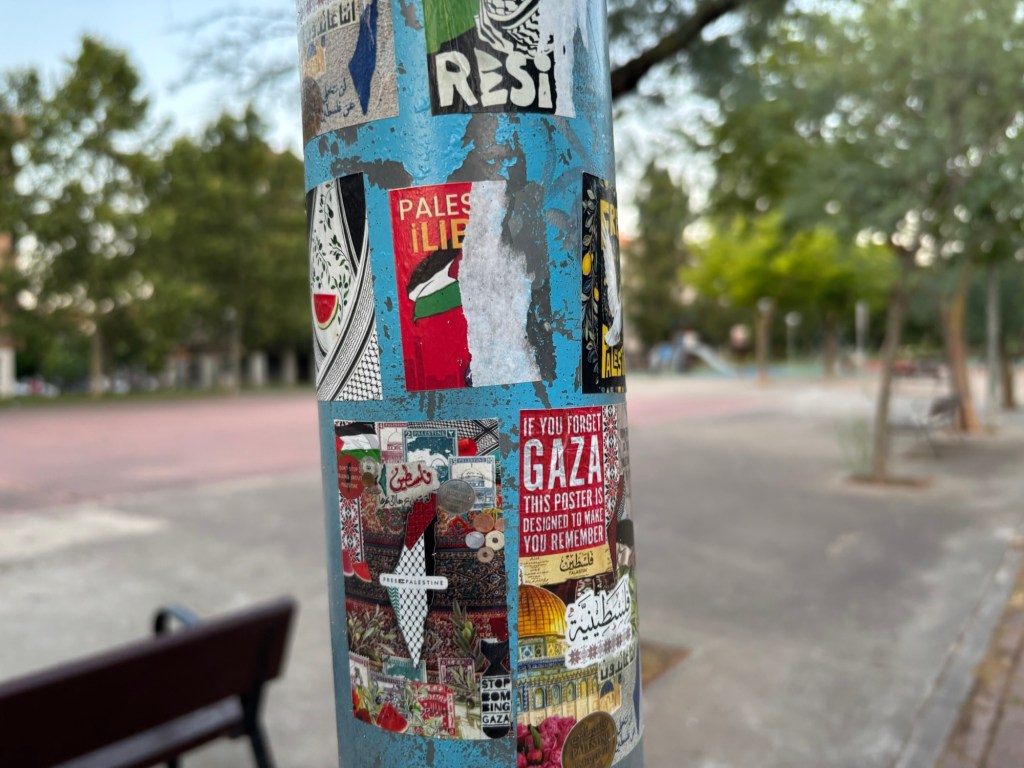
There are still Palestinian flags everywhere you go. It probably chimes with the mindset of the average liberal peregrino, but there’s another reason they’re so ubiquitous in this stretch of the Camino: we’re still in the Basque territories. And if any people are more likely to sympathise with an oppressed nation under the heel of a supposed colonising force, it’s the Basques, whose own freedom-fighting/terrorist organisation, ETA, only stopped its violent methods in the 1990s. I’ve seen one prayer in Hebrew for one of the captives still held by Hamas along the Camino, so it’s not entirely one-sided, but the Palestinian flag is far and away the most common flag along the entire Camino so far.

I reached the Parque de la Grajera about an hour after leaving the city. I was early enough to catch the night herons that seem to hang around the place. They have a somewhat patchy distribution across Europe, but they were here when I last did the Camino from Logroño to Burgos in the spring of 2023, so I was glad to see them again.

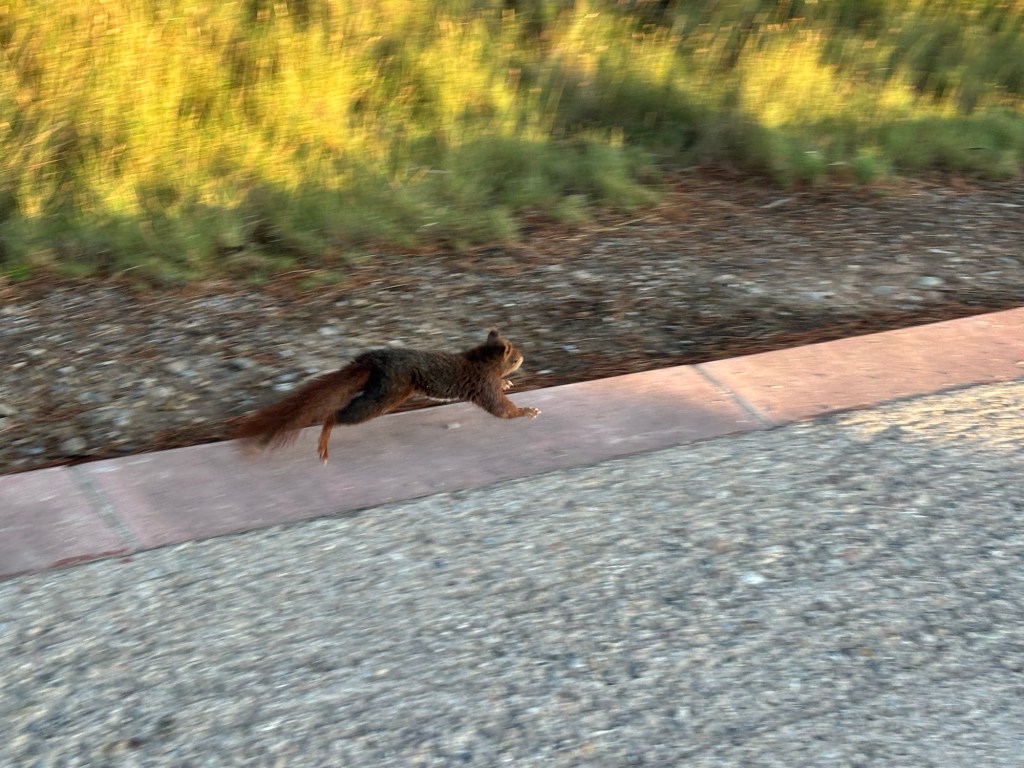
They were much too far off for a photograph, but the park’s red squirrels were a lot more obliging. Without the invading greys to worry about, they seem a lot more confident around people here, and so I was able to get quite close – or rather, it came quite close to me on its jaunty sortie across the bridge.

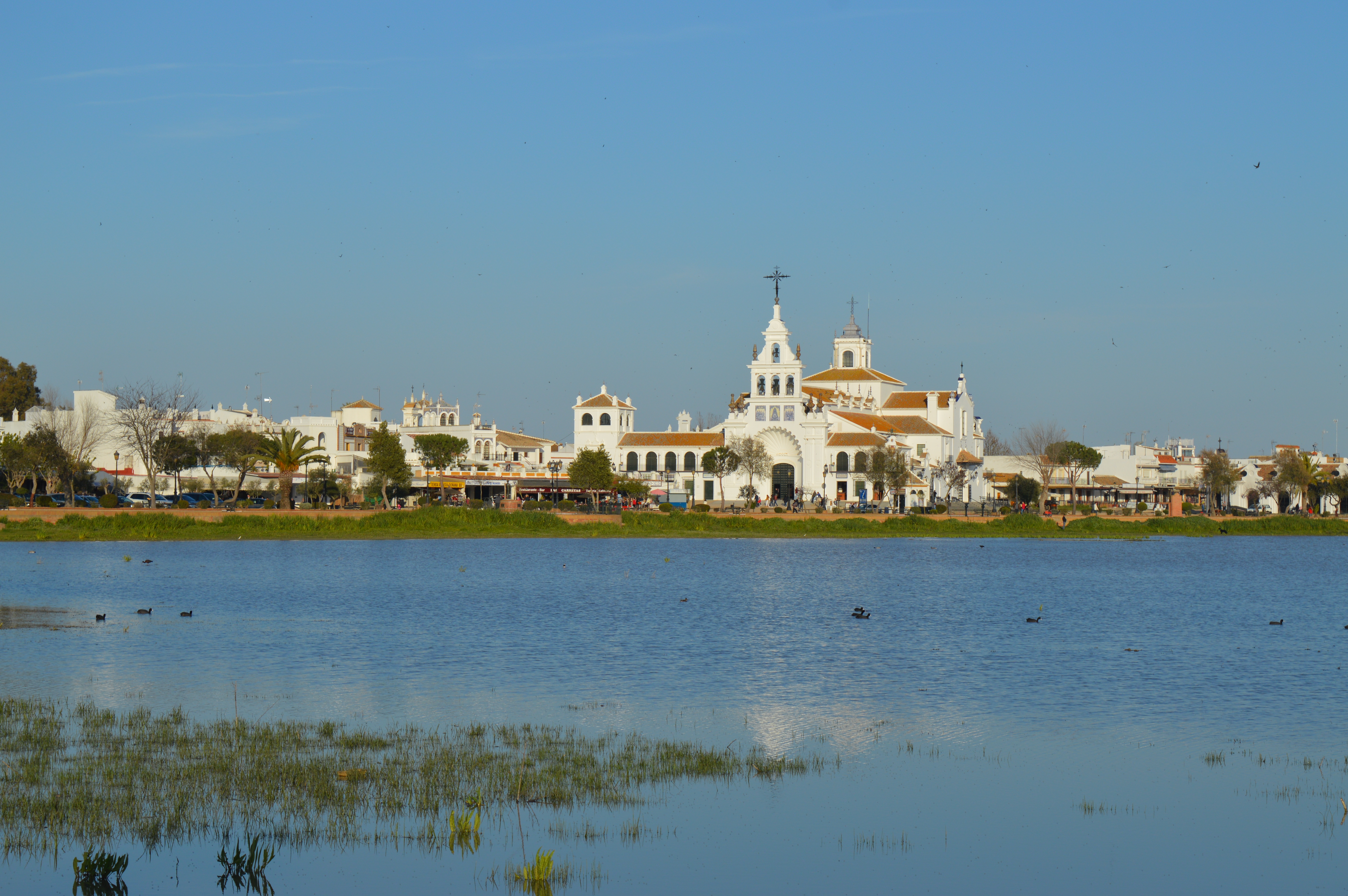
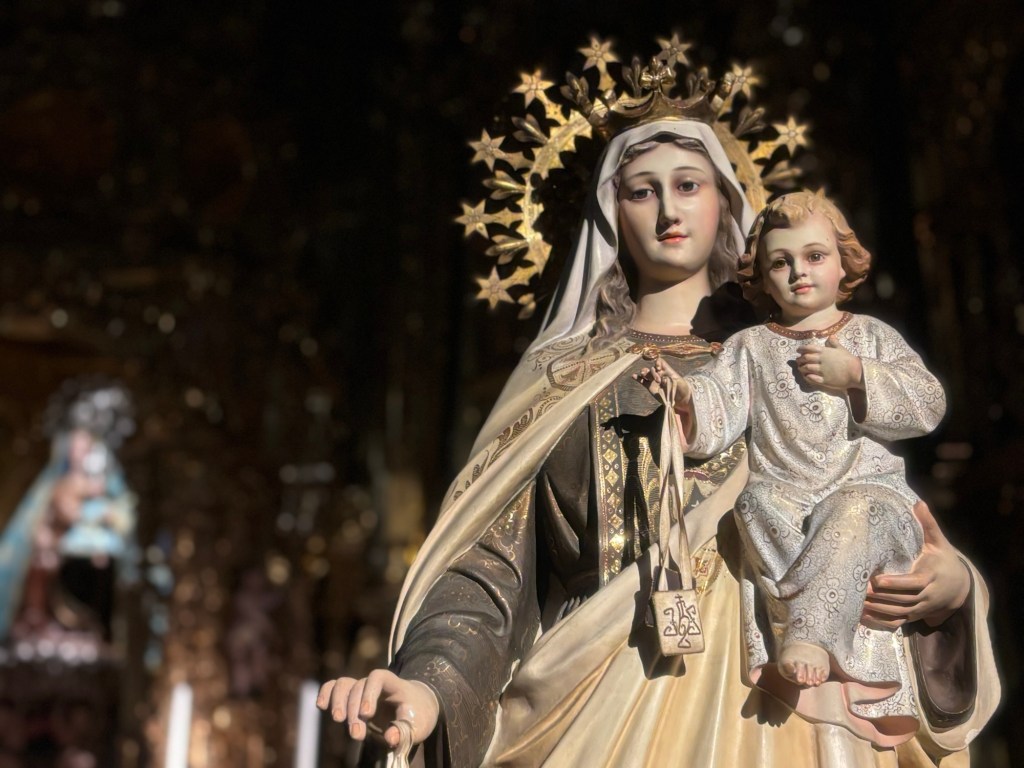
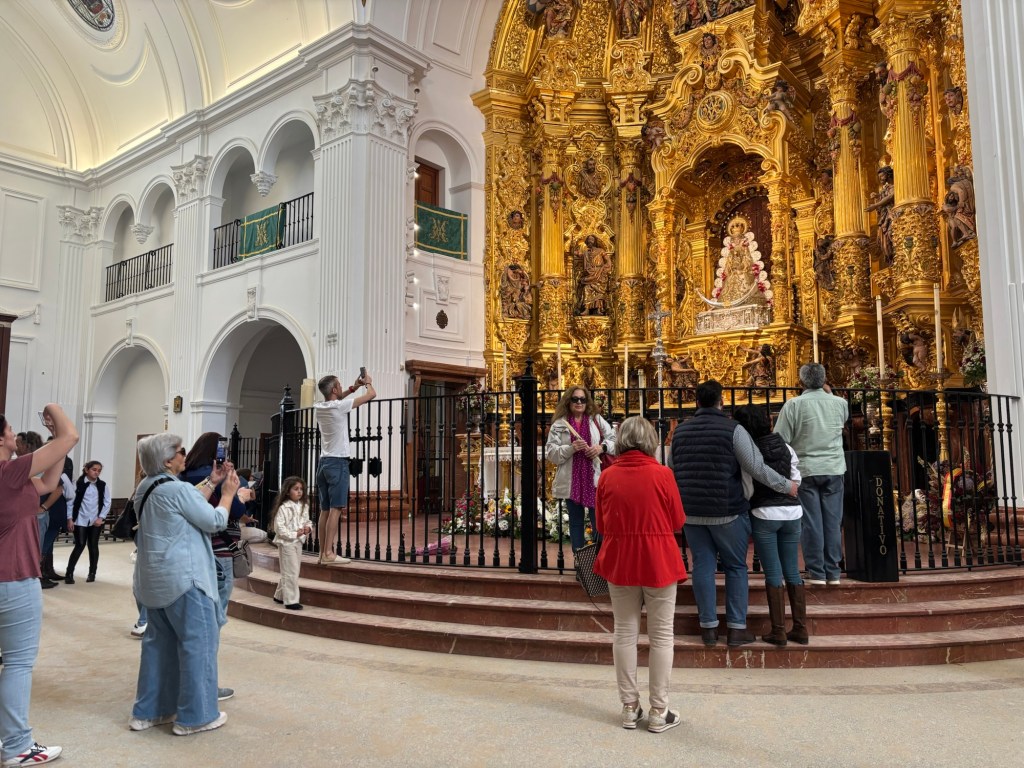
Today’s route featured a small pilgrimage of its own, to the shrine of La Virgen del Rocío. She is, in the humble opinion of this devotee, one of Spain’s most beautiful incarnations of the Virgin Mary. She certainly knows how to pick out a home, with her sanctuary within the Elysian marshes of Doñana National Park far to the south… and here she is, watching over a lagoon in La Rioja.

I remain convinced that it was partly her intercession – and that of the natural paradise where she resides – that healed me at last from last summer’s heartbreak, and it is partly because of that intercession that I am walking the Camino this summer… to say thanks. I owe her that much.


There were more squirrels to keep me company around the edge of the lagoon, including a boisterous couple that were quite unfazed by my presence, chasing each other up and down the trees on the edge of the lake. You have to travel quite some way in the UK to see these endangered creatures, since the American greys drove them out, but here they’re much more common.


La Virgen del Rocío is, among her other titles, a water spirit of sorts. Maybe that’s why she speaks to me more than the other incarnations across Spain that I’ve encountered: El Pilar, Remedios, Guadalupe… I’ve always felt some sort of connection to marshes and wetlands. It may seem odd that Mary, a woman from the hill country of Southern Galilee, should have such a devoted following in the wetlands of southwest Andalusia, but there it is.

El Rocío is the Spanish word for dew, and the Marian association with the Morning Star – Venus – as the herald of the rising sun is almost as old as her worship as the Mother of God.

I’ve often wondered whether the various Marian cults across the Mediterranean aren’t simply evolutions of the Roman tradition of the lares – guardian deities assigned to individual places – or perhaps even the Celtic peoples before that. In that light, it’s easy to see why other Christians find certain aspects of Catholicism hard to understand. But I think we’re all reaching for the same thing. Many Protestants would say they’re reaching for a more personal relationship with Jesus.

Well, what could be more personal than feeling an intense connection to God through a place that is so close to your heart?

West of Navarrete, the Camino meanders through a vast network of vineyards: a reminder that the tiny autonomous community of La Rioja punches above its weight in wine production (even if it can’t meet the demand on its own). It’s a 29km walk from Logroño to Nájera, but an easy one, and I was in town shortly after 12pm from a 6.30am start. I call that good going.
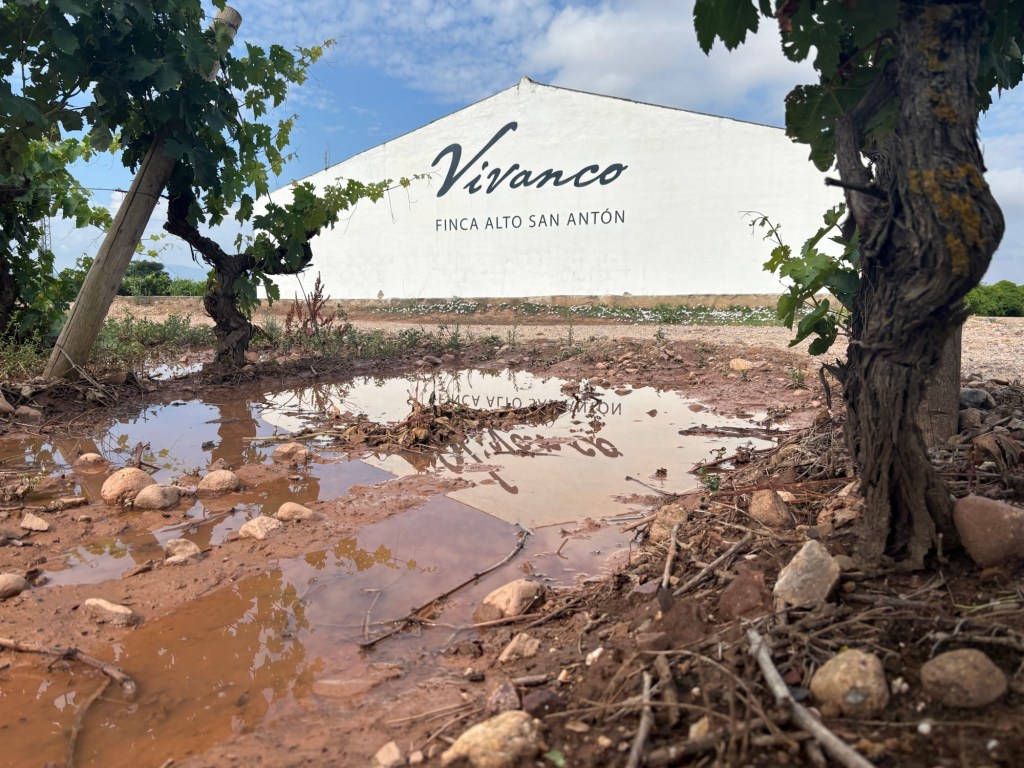

Reunited with the young folks tonight after an Irish exit and a hiatus of two days. Time for a sociable pizza night! I think I’ve earned it. BB x
The Mother of the Marshes

Casa Los Tres Aires, El Rocío. 14.01.

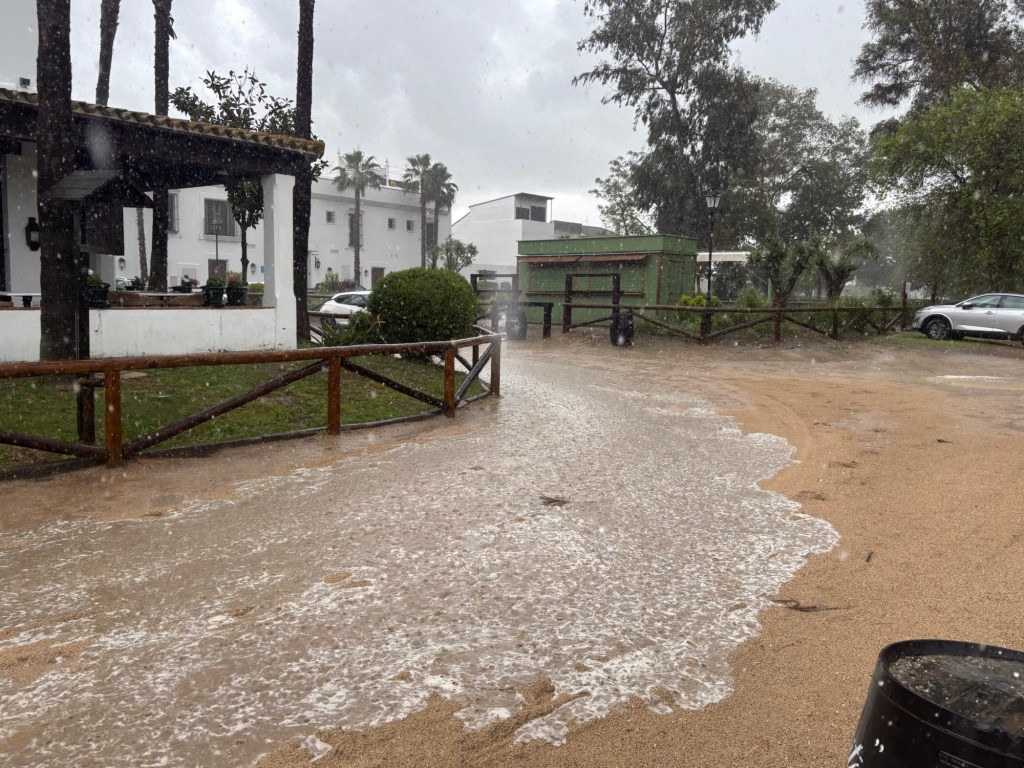
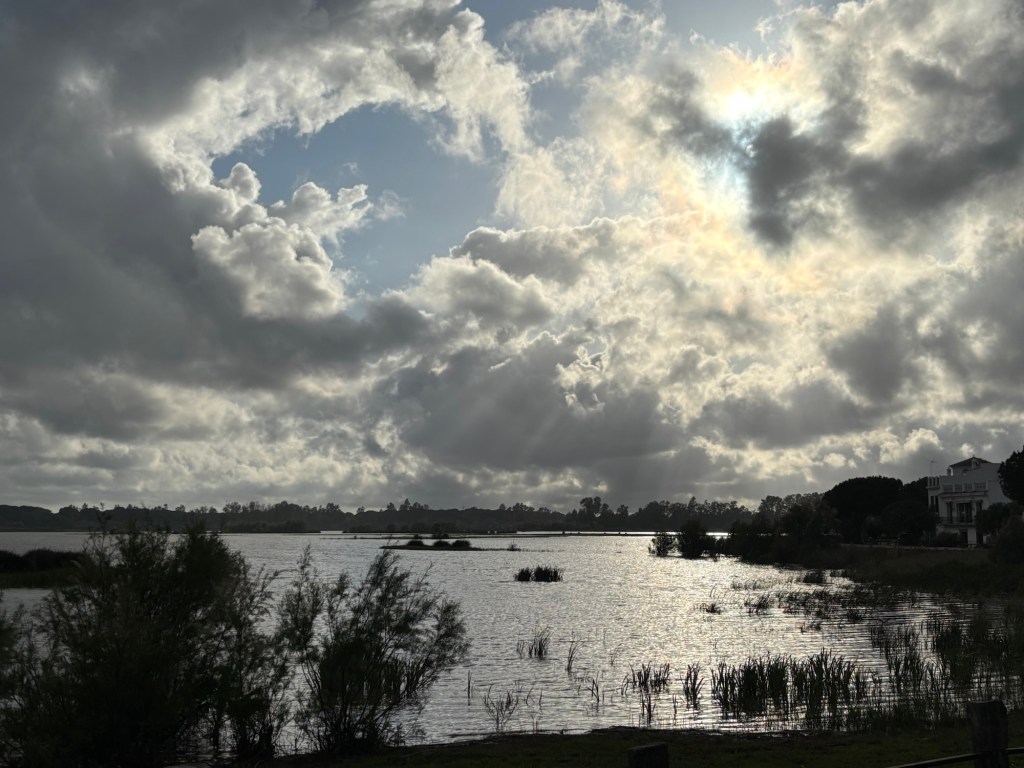
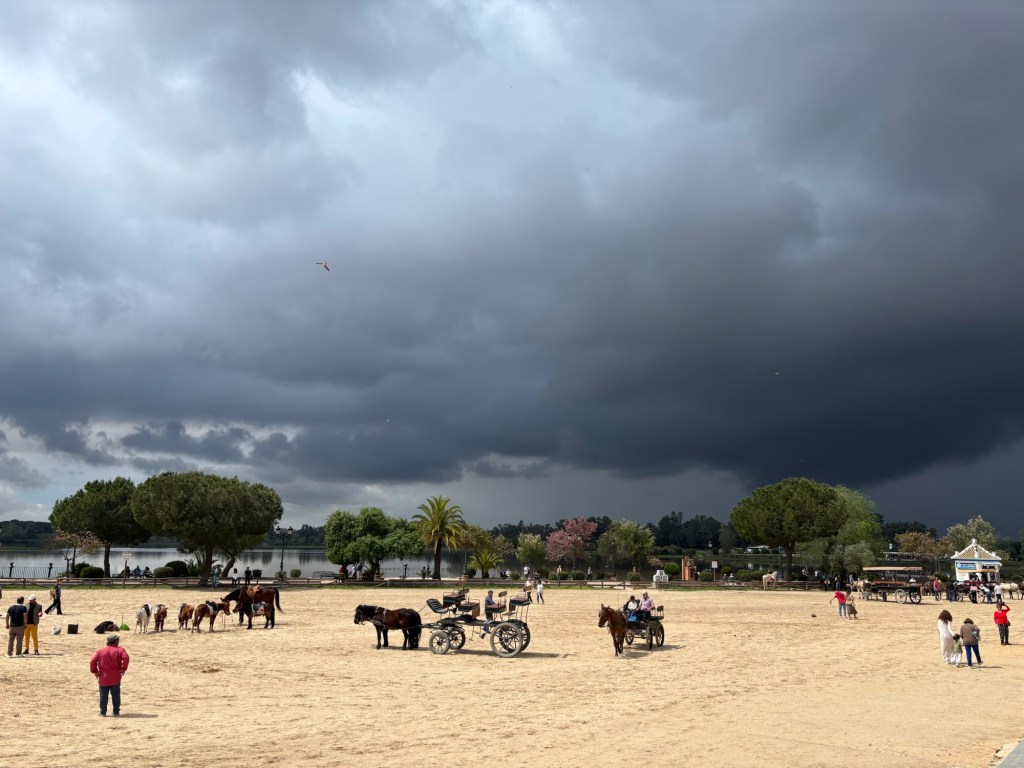
The long-promised rains have arrived. Buckets of it. It began with a sudden gust of wind in the palm trees and a ripple over the lagoon, turning the mirrored surface of the water into a sea of silvery sand dunes. Some of the locals wandering in the square turned to the west and pulled their jackets about them. The savvier ones pointed and moved toward the shelter of the church. Then the darkening sky turned a pale grey, and the trees beyond the road disappeared behind an advancing sheet of rain. Just as the church bell chimed for half past, an almighty drumroll of thunder sounded in response and the heavens opened, and down it came: sheet rain, a wall of water, turning the sandy streets of El Rocío into rivers in a matter of minutes. By the time I made it back to my casa rural I was soaked to the skin – and more alive than I’ve ever been.


Some devotees of La Blanca Paloma – the White Dove, the nickname of the Virgen del Rocío – believe that her sudden appearance in the branches of an olive tree in the marshes of Almonte was a manifestation of the divine. More sceptical minds might be persuaded that the image was simply one of many hidden away from the conquering Moors and scattered across the countryside, forgotten until their chance discovery by bewildered countryfolk. Whatever you choose to believe, the Virgen del Rocío exerts a powerful influence over the town and its surroundings, bringing more than a million pilgrims to her shrine every year.

One legend has it that the townsfolk prayed for her intercession during the Napoleonic invasion, hearing that a raiding force of French soldiers was heading for the town. For whatever reason, they never made it as far as El Rocío, turning back at Pilas, just shy of thirty kilometres away. Maybe it was the unforgiving terrain of the marshes – or maybe it was the watchful power of the Virgen. Who knows? The fact remains that the village of El Rocío was untouched by both the Napoleonic War and the Civil War in the following century, a conflict which tore almost every town in Spain apart. It’s easy to see how many have come to believe that some great force watches over these marshes, shielding them from harm.


It hasn’t been able to protect them from everything. While it’s incredible to see Doñana restored to life, it’s important to bear in mind how it got into the state it was in: this time last year, the news were all full of woe, decrying the death of one of Europe’s last great wetlands as its life was slowly sucked out of it. Why, you ask? Climate change may be part of it, but the blame lies almost entirely at the feet of the monstrous theft of the land’s water by the agropiratas.

These mercenary industries have set up shop in the outskirts of Doñana and, over the last two decades, they’ve been draining its aquifers to grow strawberries on an industrial scale. Strawberries are a very water-hungry fruit, and the results have been catastrophic, causing the water supply to cascade, lakes to dry up and the local extinction of a number of species that can be found almost nowhere else, including the white-headed and marbled ducks, the salinete (a fish found only in Doñana) and the eel – formerly abundant and now almost completely eradicated from these marshes.

I could do a lot more for charity’s sake, but there are two causes I will not budge from. I will never visit Malta, on account of their refusal to abide by European laws concerning the protection of migrating birds (they still practise the vile tradition of bird-liming), and I will never buy strawberries from Spain, knowing what damage they are causing here. If only we could go back to a time before globalisation, when people were more patient, and prepared to wait for strawberries to be in season, for a short time each year…


It’s still raining out there. It cleared up for a few hours, and then the storm clouds came back with a vengeance. March 2025 has been one of the wettest months in Spain since records began, putting an end to four years of minimal rainfall. It hasn’t been unprecedented: the flash floods that swept through Valencia in October and claimed 232 lives are still a very recent memory. Even so, taken as a whole, the average rainfall over the last five years is still well below the average. Spain will need more consistent rain if places like Doñana are to survive in the long run.

That, and decisive action from the government on the villainous agropiratas and their strawberry farms.


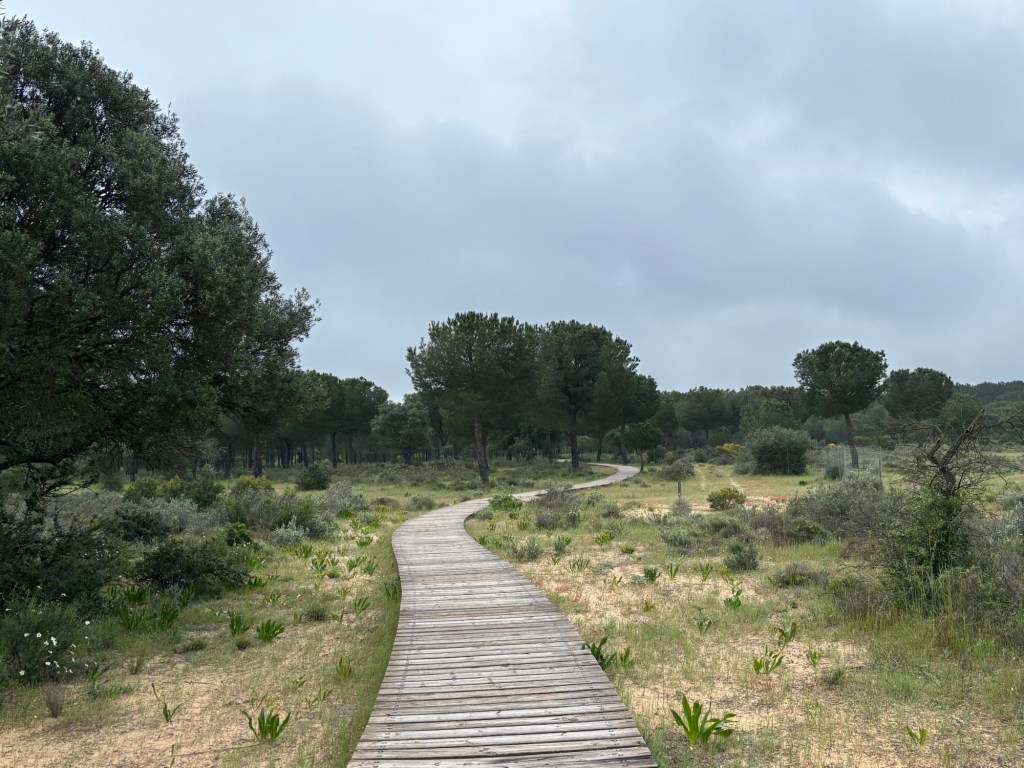
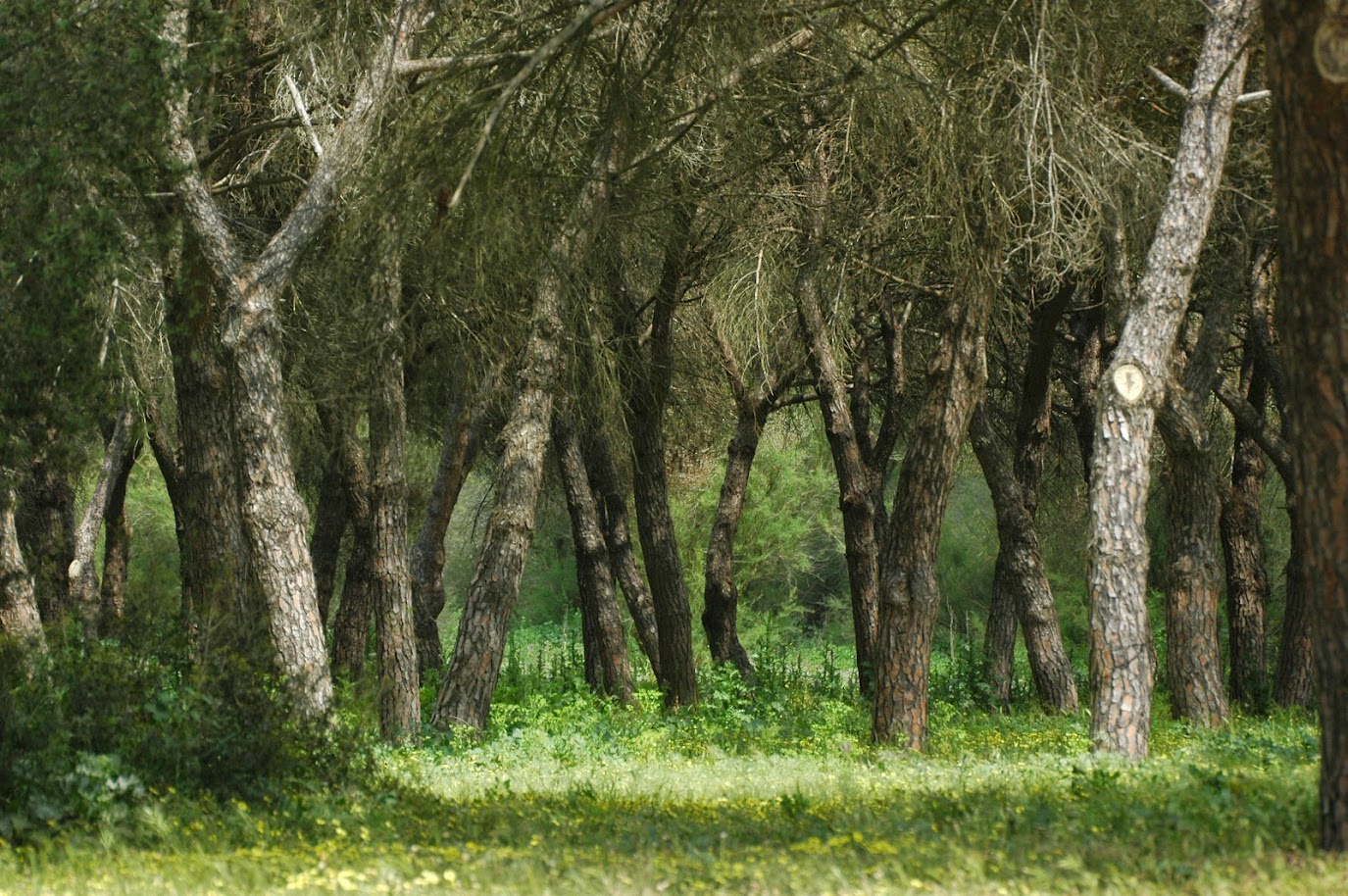
I wanted to make the most of the park’s rebirth, so I went for a long walk in the pine woods of La Rocina to the south of El Rocío. A boardwalk trails stretches for five kilometres along the side of the river that feeds into the Madre de las Marismas, the lagoon that sits under the eye of the Virgen del Rocío. Like the Raya Real, this place is very dear to me: I used to come here as a boy and look for bee-eaters, hoopoes and scarab beetles in the scrubland at the trail’s northern edge.


My sense of smell – mercifully restored after a debilitating cold had me in its grip at the start of my travels – was assailed on all sides by Spanish lavender and curry plant, and every bush seemed to harbour a nightingale. I even saw one, singing high in the branches of one of the pines – a fairly impressive feat, since these master ventriloquists have the uncanny ability to seek out the most acoustic spots in the forest, whilst also remaining invisible to the naked eye as they perform their vast repertoire. I’ve included a recording I took below – have a listen and you’ll see what I mean.


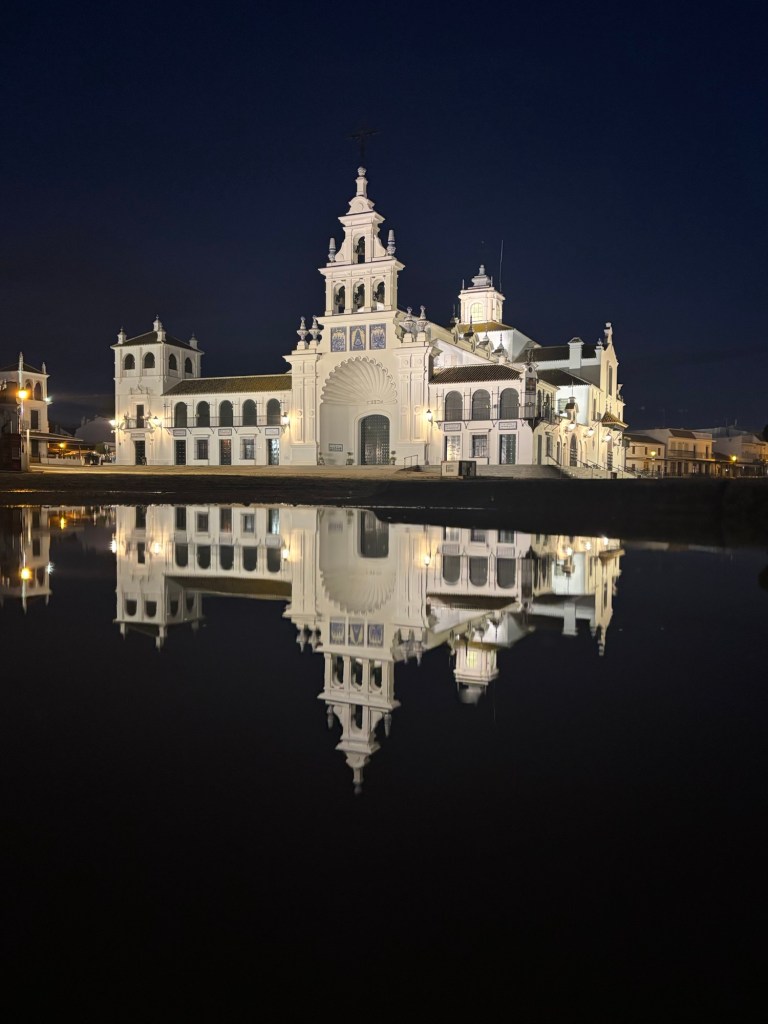
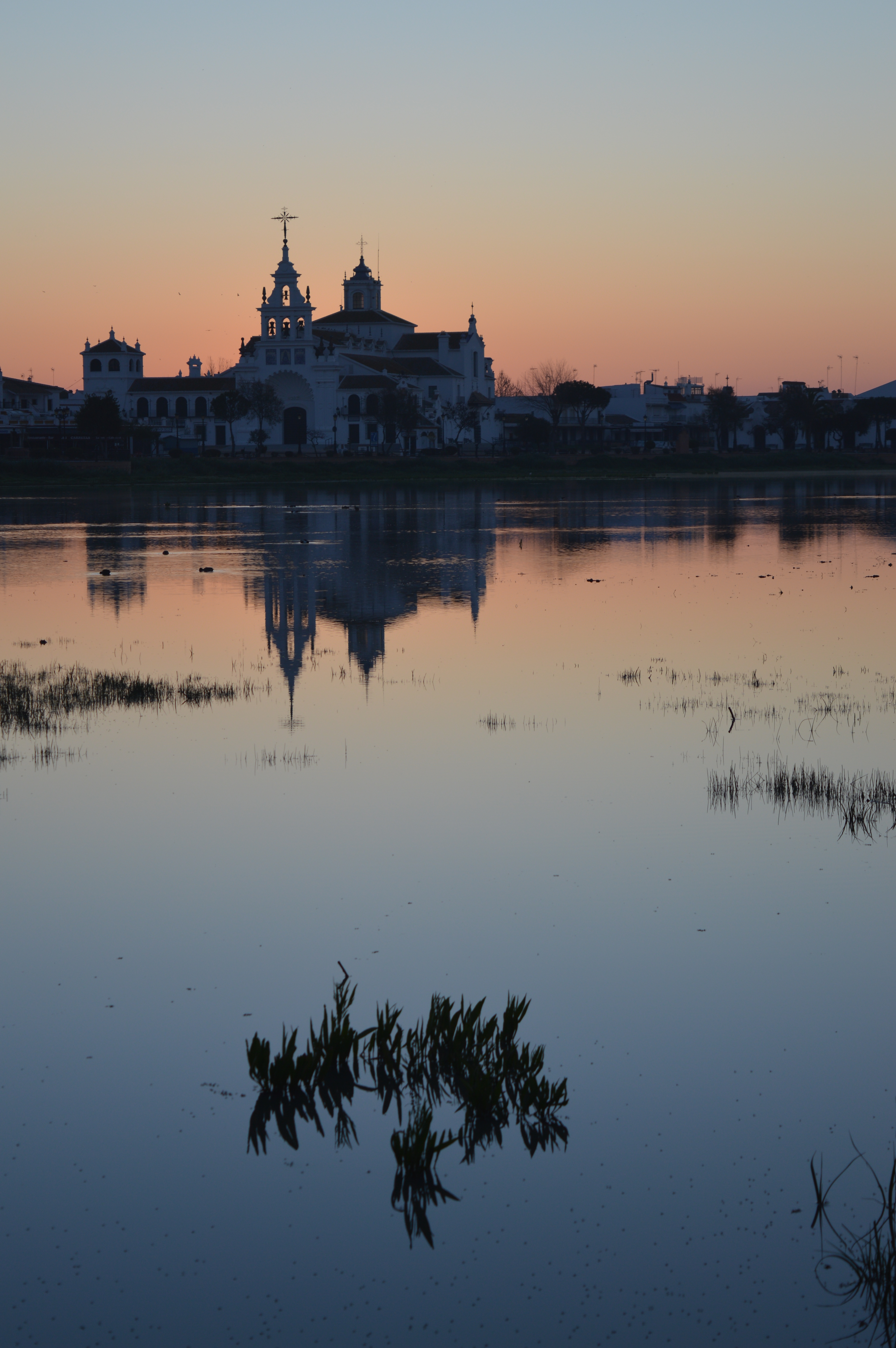
I spent my last evening in El Rocío enjoying boquerones fritos and an incredible torrija – a Semana Santa speciality – in Restaurante La Canaliega, watching the sun set over the Madre de las Marismas. The town’s drains were working overtime to deal with the rivers that had formed in the streets, but there was still enough water in the main square to form a second lagoon, reflecting the Ermita’s unique shell-shaped doorway.


I would have traveled a thousand miles to see just this view, but the Virgen del Rocío saw fit to show me her rarest treasure of all on the day I arrived. I have come away with a new rosary of hers, so that I can offer my thanks wherever I am, and so that there will be some piece of her influence wherever I go.

I used to get the stuffing knocked proverbially out of me at school for defending my stance on faith, in spite of being a “rational thinker”. I stand by my beliefs to this day: I do think the world is a better place with a little more love and little more mystery. On the one hand, I adore the pursuit of knowledge for its own sake: the ability to look up at the stars and know their names.

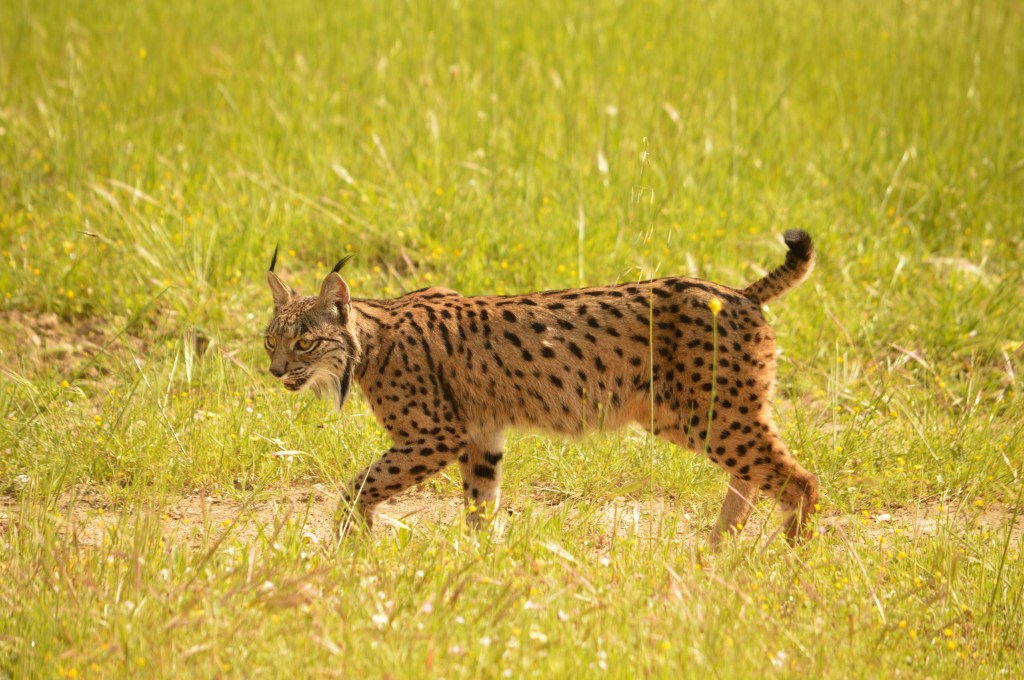
But I also think it’s important to value the wisdom of the ancients. I may not be able to see the shape of a lion up there, but somebody must have done once to call a constellation Leo. And though it took me a long time to find Lynx, it’s taken me a lot longer to find the animal in the flesh. This year, Doñana – and whatever mystical force presides over these marshes – saw fit to show me a glimpse. You can call me credulous if you like, but that’s enough to make a man like me believe.


Not for nothing is the lake named the Madre de las Marismas: the Mother of Marshes. Doñana is feminine in every way, from its name to its essence: a provider, a life-giver, faithful, fickle and generous in turn. I have always said that Spain is my greatest love – but it’s probably fair to say that Doñana is that love crystallised into one place.

I have been gone too long. I must return someday. The fight to save these precious marshes goes on. BB x
Under the Lightning Tree

La Raya Real, El Rocío. 17.16.

There’s a place in Austria called Zell am See that’s a magnet for Muslim tourists because it supposedly matches a verse in the Qur’an that describes jannah, the paradise promised to the faithful. I’m not sure that’s strictly true, as I’ve never been able to track down that specific verse (or anything like it, for that matter), but that hasn’t stopped 70,000 tourists from the Gulf from holidaying in Zell am See every year, propagating what was, I am quite sure, a devious but highly effective marketing strategy.

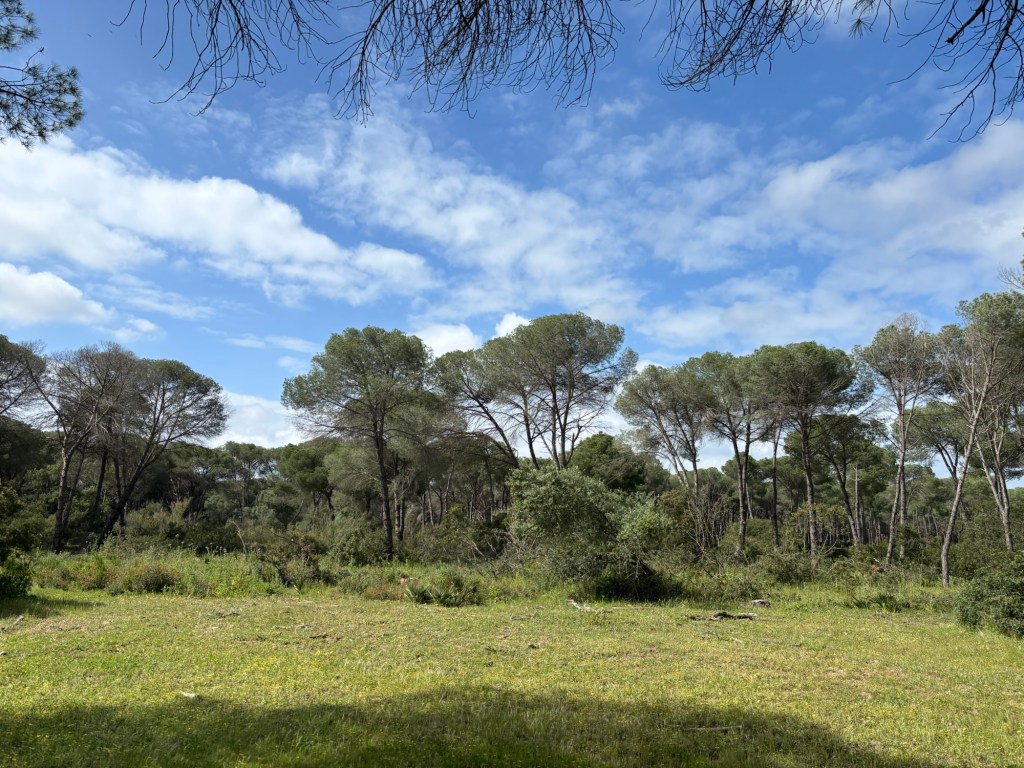
Now, snow-capped mountains mirrored in a clear lake might do it for some people, but for me, if there truly is a Paradise on Earth, it’s where I’m sitting right now: on a grassy verge of the Raya Real, between the stone-pine forests of the Doñana National Park and the silver-bladed fields of Matasgordas.

This is Heaven. It was when I first discovered it when I was only eleven years old, and it has been ever since.


I’m not ashamed to say I nearly wept when I got off the bus and set foot in El Rocío. It’s been nine years since I last came here – almost to the day. This unique little town on the edge of the Madre de las Marismas is probably not at the top of everyone’s list of Spanish must-sees, but it is unshakeably at the top of mine. I believe I described it then as having the smell of a mixture of a stud farm and an aviary, which isn’t far off, but doesn’t quite do it justice.

Ah, but I was writing in retrospect then. Let me tell you what I can see and smell and hear from where I’m sitting. I’ll leave the judgement of its Elysian qualities up to you.

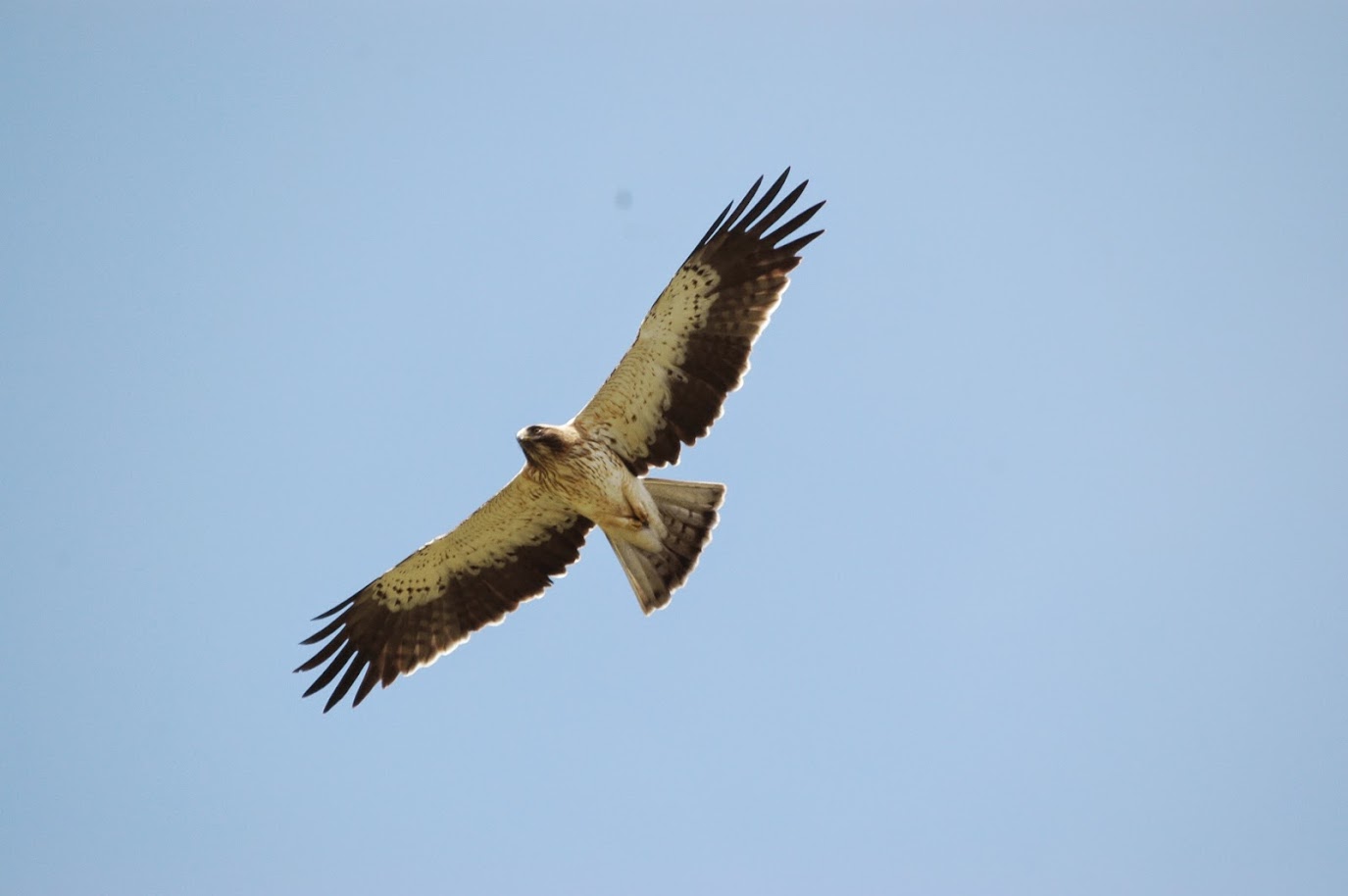
Sight. First, there’s the sunlight. Everywhere. Warm, spring sunlight chasing the iron-grey storm clouds into the west. Huge white clouds rush to take their place, and between them are enormous gaps of blue ether. Every time I look up, there’s a bird of prey up there somewhere: usually a black kite, but sometimes a buzzard or a pair of booted eagles.

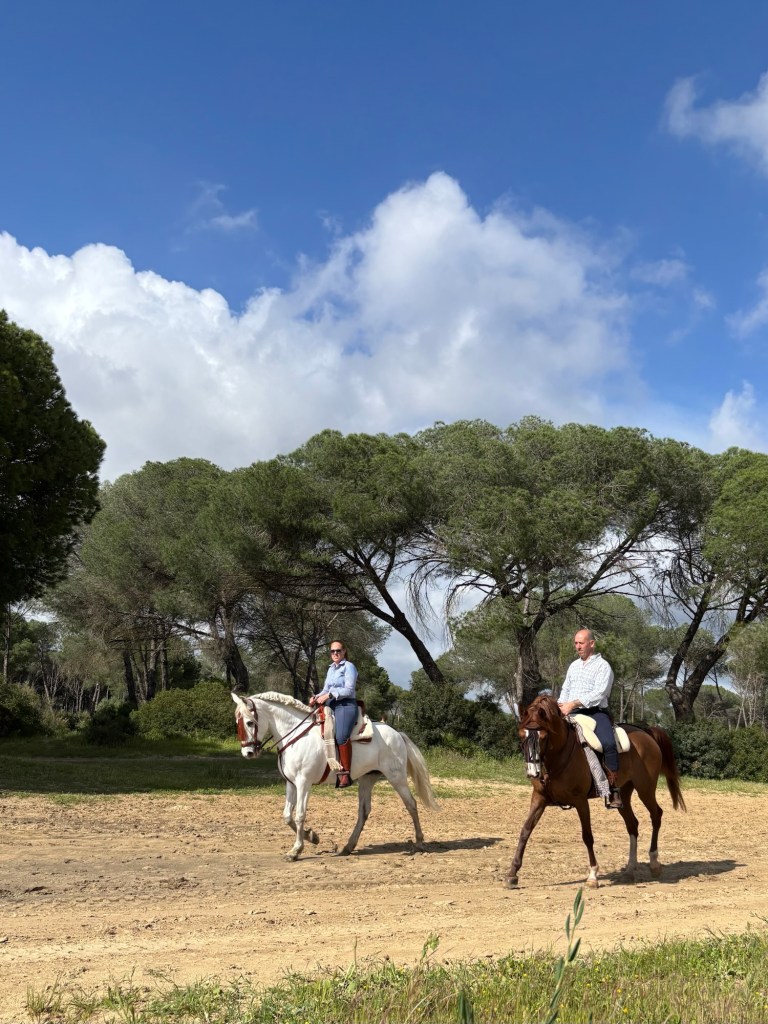
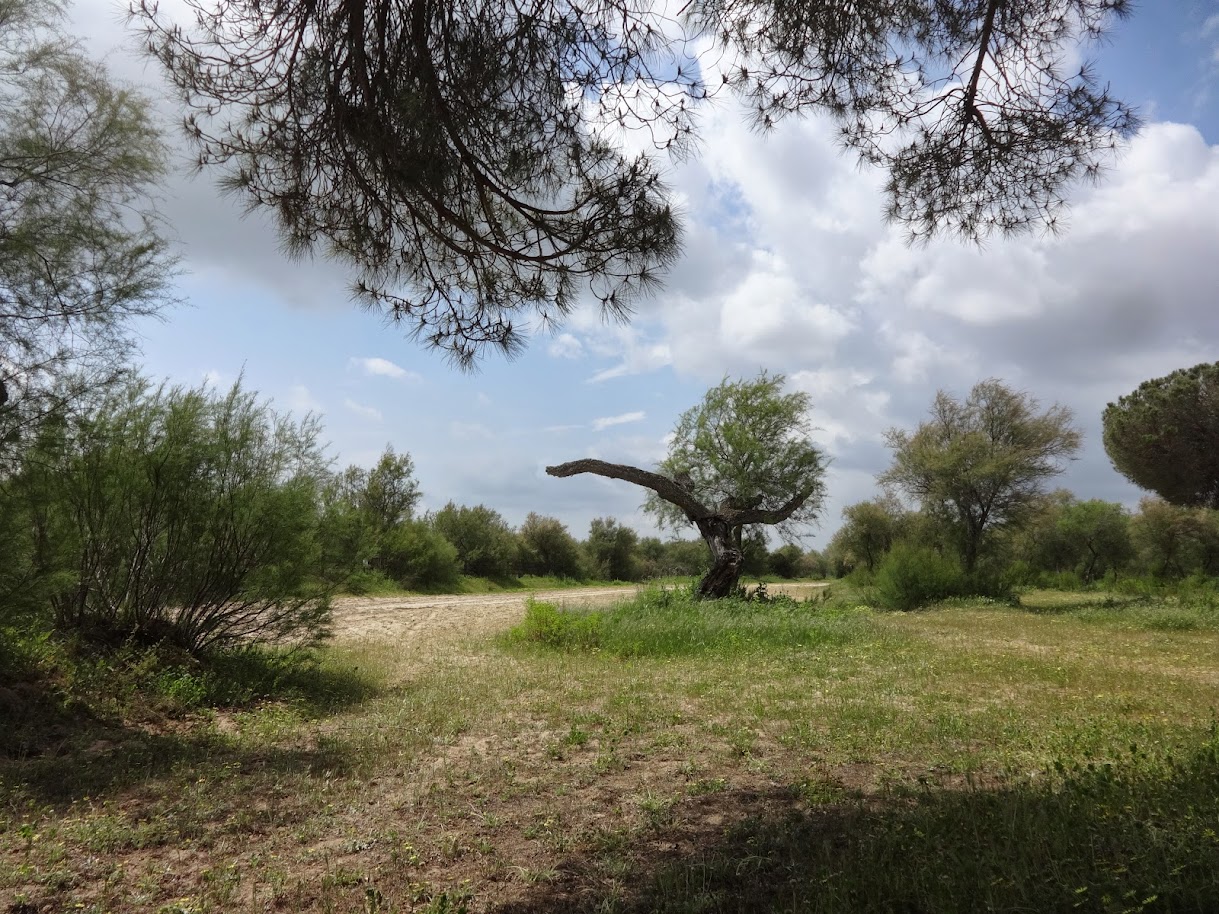
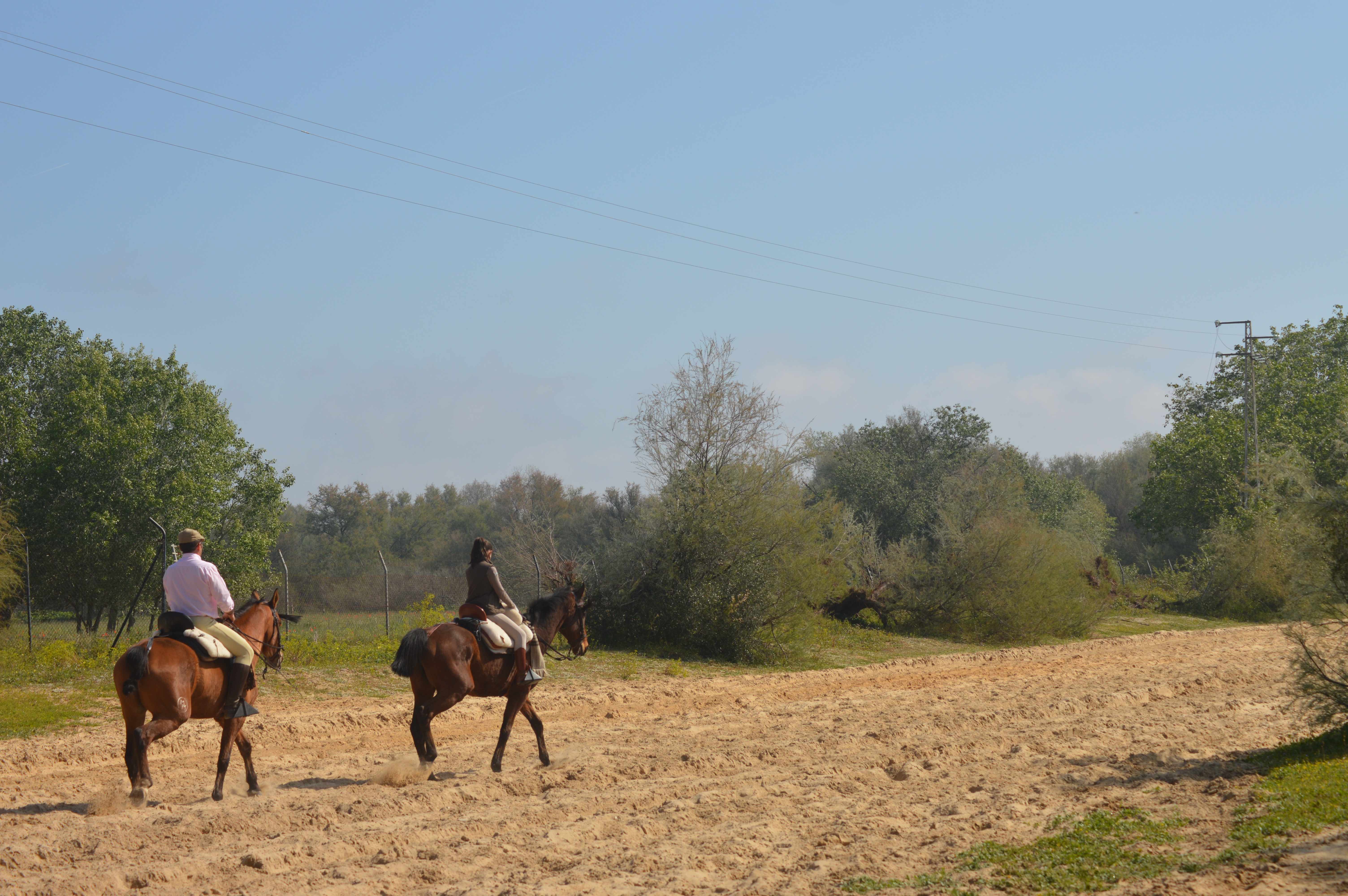
The Raya Real – the pilgrim road to Seville – stretches out before me. In a month or so, it will be crowded with rocieros, the men dressed in riding grey and the women in stunning flamenco dresses, singing folk songs as they near their final destination. But now, as it is for most of the year, the only travelers on the road are tourists and locals on horseback, and the odd jogger. And me, sitting in the same spot I have sought out since childhood, under the lightning tree.

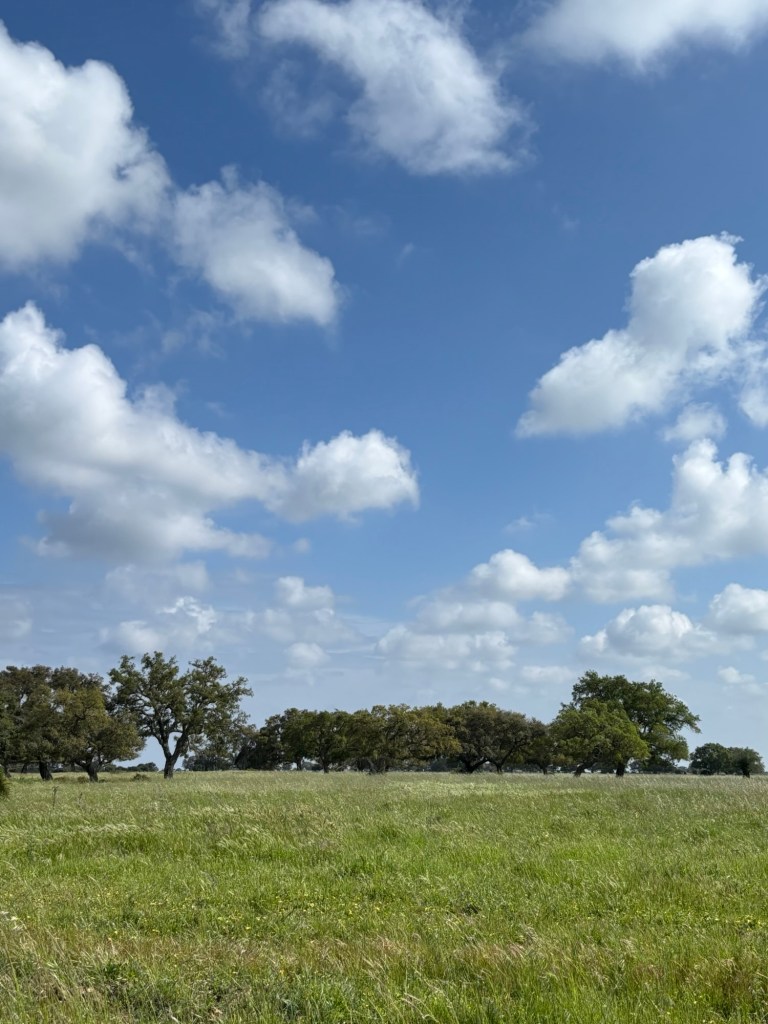
Behind me, the wind blows through the fields of Matasgordas. Waves of silver ripple across the grass, dappled here and there by the golden heads of buttercups and dandelions. Holm oaks reach their gnarled and twisted branches skyward, providing little pools of shade on the prairie.


Smell. The warm scent of rain upon the earth, upon sand. The intensity of Spanish lavender, leaving a heady perfume on my finger as I touch its leaves. The clean air of the pinewoods, and the faint sweetness of sap.

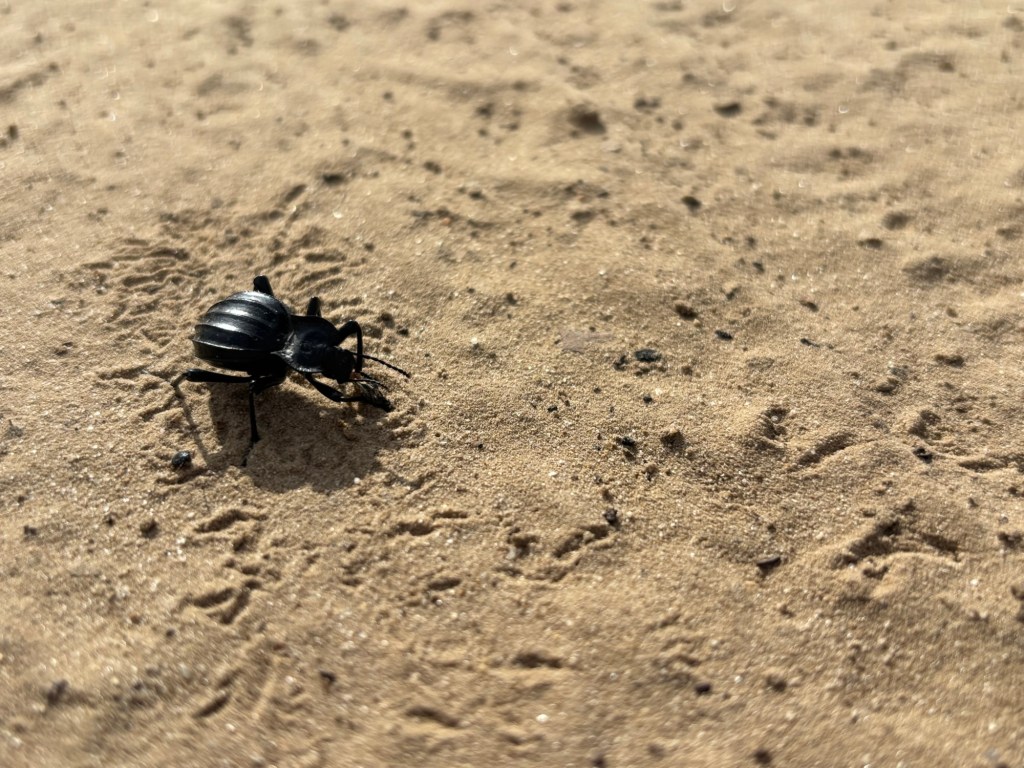
There’s the faint scent of water in the air, but no sign of rain clouds – and still it’s there, promising a second bounty. There’s horse manure here and there, but it doesn’t add to the smells the way it does in England. It’s dry and processed and rolled away by the scarabs and other beetles before it has a chance to decay.


Sound. There’s the wind in the stone-pines, of course. It sounds clean and clear, like the distant swell of the Atlantic. But beneath the wind, there’s an orchestra. A rooster is crowing from a farm on the edge of town. The black kites whistle as they wheel overhead, and now and then I can hear the jolly whirrup of a bee-eater – surely two of the most beautiful sounds on Earth. Other birds sing from the heart of the forest: blackbirds, serins, robins and nightingales, cuckoos and hoopoes and treecreepers. Somewhere out in the fields beyond I can just about make out the tiny wet-my-lips whistle of a quail.

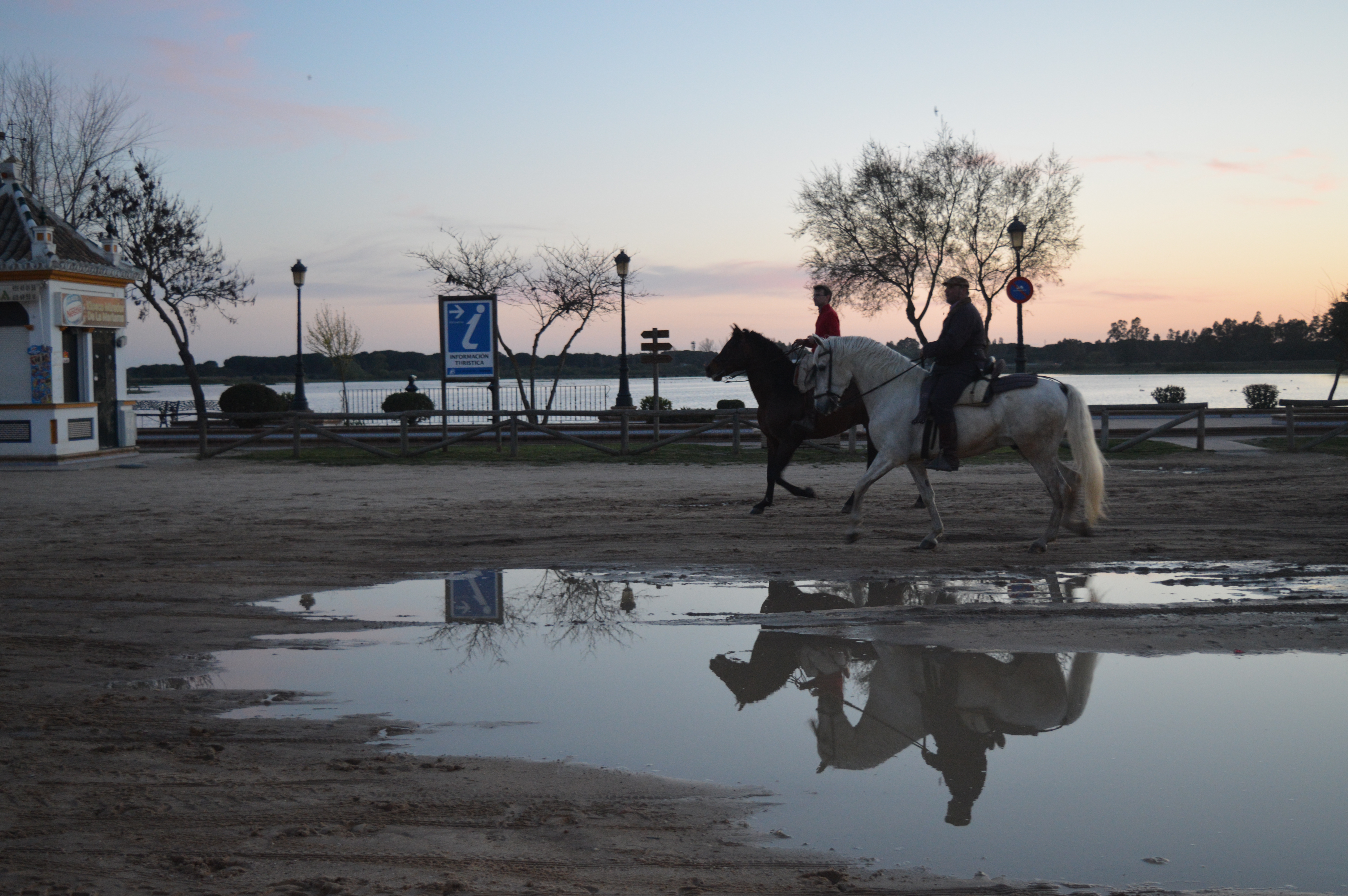
Then there’s the jingle of bells as a horse and carriage passes by, taking a local family out for a ride, and the whinnying of a stallion as a couple of proud locals ride on up the Raya Real. The heavily inflected illó shouted from one rider to another.


And then something incredible happens. I’m watching a couple of booted eagles wheeling about overhead and, as I look, one of them bobs its head as though it’s seen something behind me that I haven’t. I turn and look – and I can’t believe my eyes.

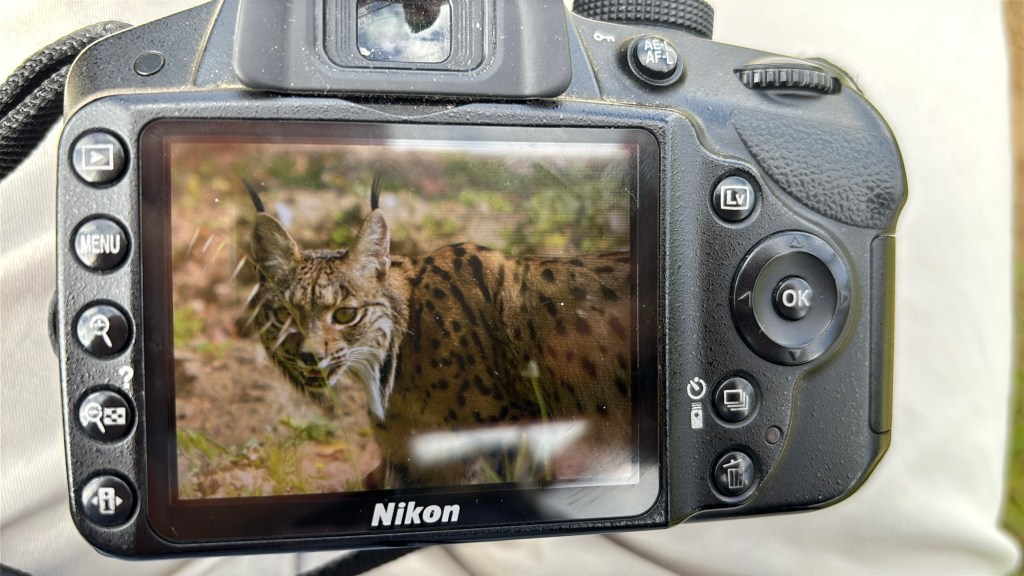
Literally feet away from me is a lynx. One of the rarest cats in the world, just walking along the edge of the field, completely unfazed – or unaware – that I’m standing there.


I have come to Doñana for years, ever since I was a boy, and always hoped to see one of these elusive, beautiful creatures, but never expected to do so. They’re incredibly secretive, they live deep within the heart of the national park, and – going off the last count in 2022 – there are only around a hundred or so spread across the 543 square kilometres that make up the Doñana National Park. I didn’t expect to ever see one in the wild – never mind quite so close as this.


If I needed a sign that my beloved Doñana had come back from the dead, that might have been it. But there was something more. Something even more personal still to find.

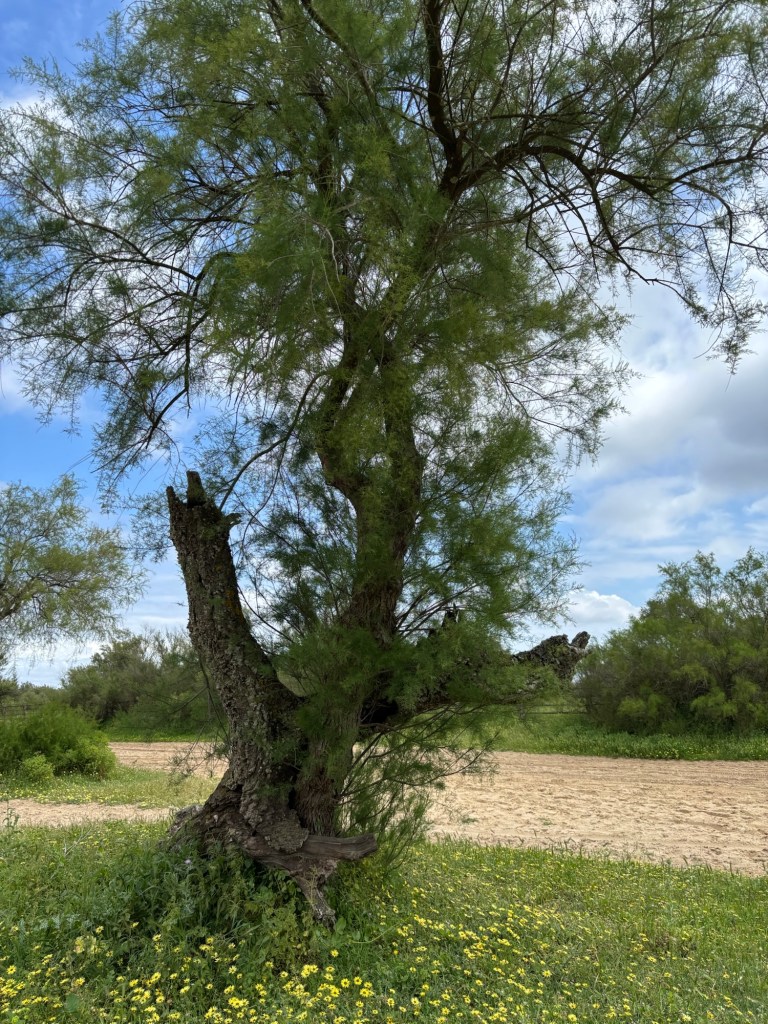
My lightning tree has come back to life. As a boy I used to sit beneath its scant shade and look for snakes and geckos in the cracks in its dead branches. Its gnarled silhouette was always a beacon, a recognisable wayfinder along the Raya Real. Now, a younger shoot of the tree has grown within its ancient cradle and blossomed into new life once again.

I was so sad on my last visit to Doñana when the lakes had dried up and the only sound was the wind – it really left an impression on me, and I was so afraid to return.

Just seeing how much new life there is in the place is enough to fill this man’s heart right up to the top and overflow. I’m giddy. This place has a magic that works on me like nothing, nobody and nowhere else on the planet.

It’s brought my lightning tree back to life. And, in a way, it’s brought me back to life as well.


I don’t need to seek Paradise in the Alpine lakes of Austria, or even in the pages of some holy text. I have found it here in the marshes of Almonte. I’m usually a little skeptical about the various Marian apparitions in locations up and down the country, but I’ll make an exception for La Virgen del Rocío. If I were an incarnation of rebirth and new life looking to relocate, this is exactly where I’d choose to appear. BB x
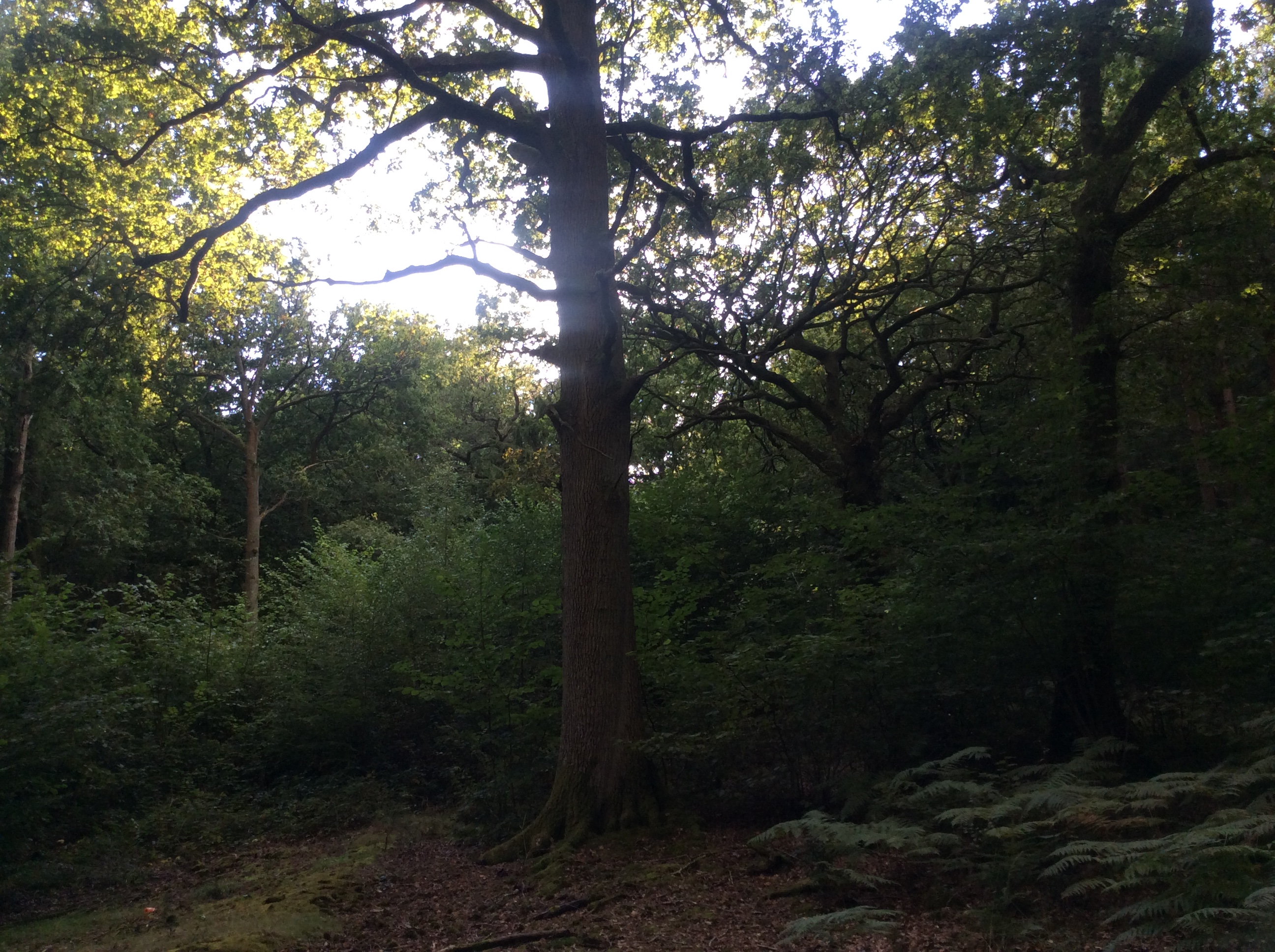
Under the Shadow of the Stone Pines

On a balmy September afternoon back in 2012, three friends and I were sitting on our suitcases in the bustling complex that is Heathrow Airport. We’d already played the find-the-most-expensive-item-in-duty-free game and were killing time for the gate to flare up on the departures board. We were bound for Uganda, to our partner school in the north, on what could so very easily be construed as your generic gap yah adventure. We were under no illusions as to that. Teddy made a joke about one of us ‘finding ourselves’ out there. Maddie was quick to reply that she’d already found herself right here in the terminal. That made me chuckle – probably because, with good reason, that joke about ‘finding yourself’ was squarely directed at me.

I’ll admit it. I have a habit of falling head over heels for things. Especially places. It goes with the terrain of being a self-confessed Romantic. Naturally, this obsession with location carries over into my reading. Setting is one of the first things that I look for when I read a book. Bother dialogue. Bother clever plot twists. If the cast doesn’t travel any further than their cul-de-sac then I’m out. Any author that can make the setting just as enthralling as the plot has me round their finger. That’s why I’ve always adored M.M. Kaye’s The Far Pavilions. India comes to life through her words, so vividly that at times I could almost hear it, smell it, feel it through the pages. Michelle Paver weaves a similar magic in her writing, and I earnestly try to conjure the same enchantments in my own efforts, though Spain is a fickle mistress and so very hard to please.

The funny thing about travel and this idea of ‘finding yourself’ is that no two people ever feel the same way about a place. I remember all the raised eyebrows when I used to tell colleagues that my favourite place in all of Spain was a town in the western marshes of Andalusia by the name of El Rocío. Outside of romería season, it’s ostensibly little more than a cluster of whitewashed houses overlooking a seasonal lagoon in arguably the flattest corner of the peninsula, where you can stare across the horizon and see nothing but mile upon mile of shimmering heat. And yet, there is something about that corner of Huelva that calls to me, some spell that weaved its secret magic on me a long time ago.

I’ve had the good fortune to travel across Spain a great deal over the last few years, and there are a number of contenders now for that ever-congested corner of my heart. The gorge at Ronda and the green hills of La Vera. The limestone maw of Zaframagon and the devil’s leap of Monfrague. The vast steppe of Caceres and fair Trujillo, a throne set upon Extremadura’s golden fields. The lonely silhouette of Olvera, and Hornachos, jewel in the Moriscos’ crown and once proud watchtower over the Sierra Grande. Putting my extremely biased affection for Andalusia and Extremadura into a basket, you can add the mysterious heights of Montserrat, the windmill-crowned slopes of La Mancha and the awesome majesty of the Picos de Europa that once guided the weary conquistadors home. All this, and I know I’ve only really scratched the surface.

All the same, though my heart is spread across Spain with a rigour that would reduce a piece of toast to crumbs, there is still one spot that reigns supreme over them all. If you’ve been reading this blog since the beginning, you’ll have seen it over and over again in the header up there. But in case you missed it, here it is again.

To the east of the sanctuary town of El Rocío lies the Raya Real, a sandy track that cuts through the heart of the Parque Nacional de Doñana. Once a year, it serves as the primary conduit for almost a million pilgrims who descend upon the town in colourful, bolshy gaiety (as only Spaniards can) to pay homage to the Blanca Paloma herself, the guardian patroness of the marshes. Like most pilgrimages, it’s as much about the journey as the destination, and listen to any one of the many sevillanas sung by the pilgrims and you’ll get a flavour for just how in tune they are with the world around them. What an excuse to journey through some of the most incredible scenery on God’s Earth, all while dressed to the nines!

This is all romantically hypothetical, of course. I’ve never seen the Romería in full swing. All the same, there’s this one patch of the Raya Real that I can see in my mind’s eye right now, if I close my eyes for a moment. As for you, dear reader, you need only direct your eyes back up at the top of this post. It’s that tree on the left.

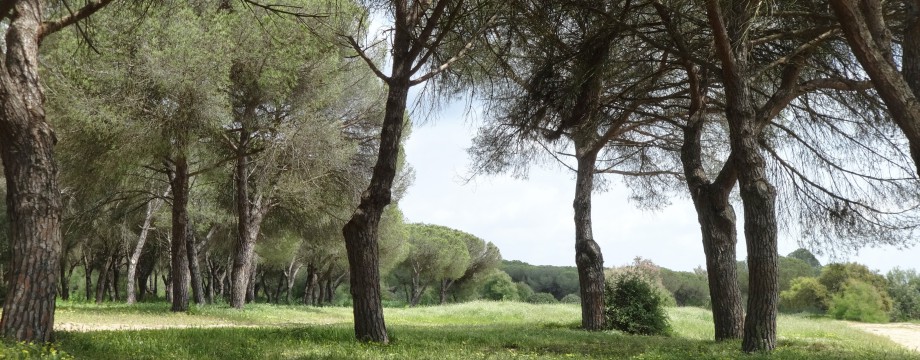
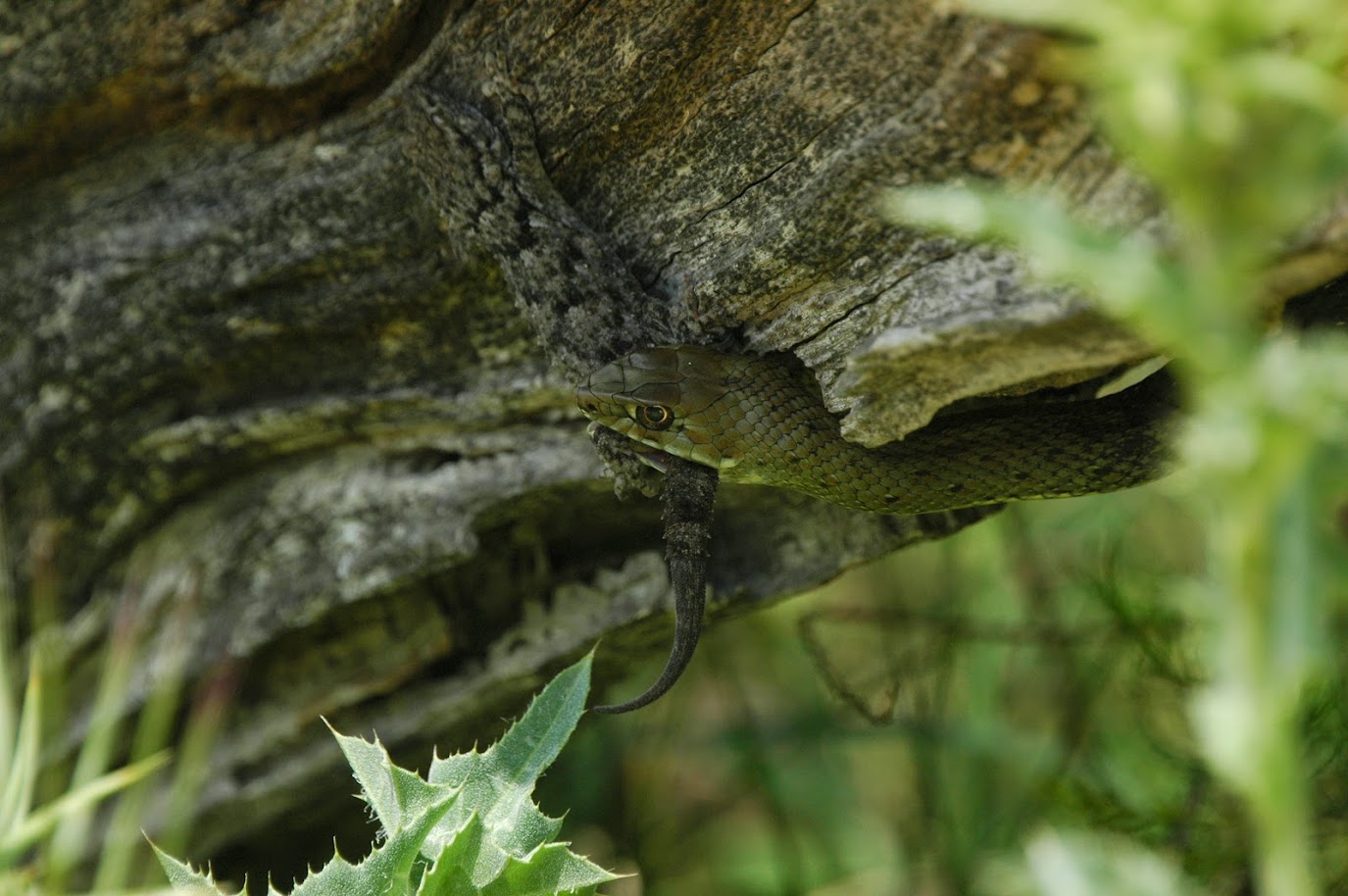
There’s a cluster of stone-pine trees (acebuches) that grow in an island of grass where the Raya Real forks temporarily, before the two tracks converge at the Puente del Ajolí, the last stop on the pilgrimage. A dead tree stands at its westernmost edge, which more often than not hides a gecko or two – I even spooked a Montpelier’s snake mid-hunt here once. A stand of ashes flank the edge of the great pinar, where cuckoos sometimes sing, and in the skies above the Raya Real, bee-eaters go wheeling and soaring in the spring, with bellies like sapphires, backs like rubies and voices like springwater.

Here, under the shadow of the stone pines, I used to sit when I was a boy and listen. After a few seconds you tune in to the silence and hear it all. The wind over the shimmering plains, the rustle of the ash trees. The whistling kites overhead and the mechanical clang of a butcher-bird in one of the branches nearby. From somewhere far off, a panzorrino (native) calling to his horses, or the bark of a dog. Open your eyes for a moment and stare into the blue, and you might see a tiny speck or two up high in the heavens; a griffon and his mate, perhaps, riding the thermals above the coto below. Just once I saw a Spanish Imperial Eagle here, soaring high above the kites below. Maybe that was the first wave of the wand for me – I was a highly impressionable novice birdwatcher at the time. And though it’s kites and booted eagles that have plied the skies on every return visit, the magic in those splayed wings is always there.

In my eighteenth year, I remember sitting beneath my tree, leafing through a copy of Lorca’s Yerma that I’d picked up in town, when a couple of horses rode down the track nearby, one mounted, one riderless. A local girl had fallen from her horse some way back and tried unsuccessfully to get back into the saddle for a few hundred metres. She asked if I could lend a hand, and so I did, giving her my hands to step up and back into the saddle. I watched them go, I heard them laugh and look back, and I went back to my tree, to Yerma and the kites. A golden opportunity to get to know the town of my dreams through its people slipped through my fingers like the sand on which it stands. I’d make some quip about the Virgen del Rocío being a jealous woman, but I really think I had my head in the clouds then and there.

Fool.

Is there a place you return to in spirit, even if you can’t be there in person? This is mine, beneath the shade of the stone pines on the Raya Real. Millions pass by that tree every year without knowing the connection I have to that singular tree, to the kites that nested in its branches once, to the snakes and geckos and their game of cat-and-mouse about its roots. And why should they, when their goal is in sight? They don’t need to do any soul-searching: la Blanca Paloma waits with open arms.

I’ll leave you with a couple of lines from one of my favourite sevillanas that conjures up some of the magic where my words fail. If you like, you can listen to it here – sevillanas should never be read when they can be sung – performed by that band which takes its very name from the road of my dreams: Raya Real.

Las llanuras ardientes de la marisma
El ganado retinto con paso lento
Se acerca hasta el arroyo que esta sediento
Seco está el monte bajo, seco está el rio
Los pastos del invierno ya se han perdido

El Rocío es un milagro, una mañana lo vi
Cuando Triana cruzaba el Puente del Ajolí

Until next time. BB x
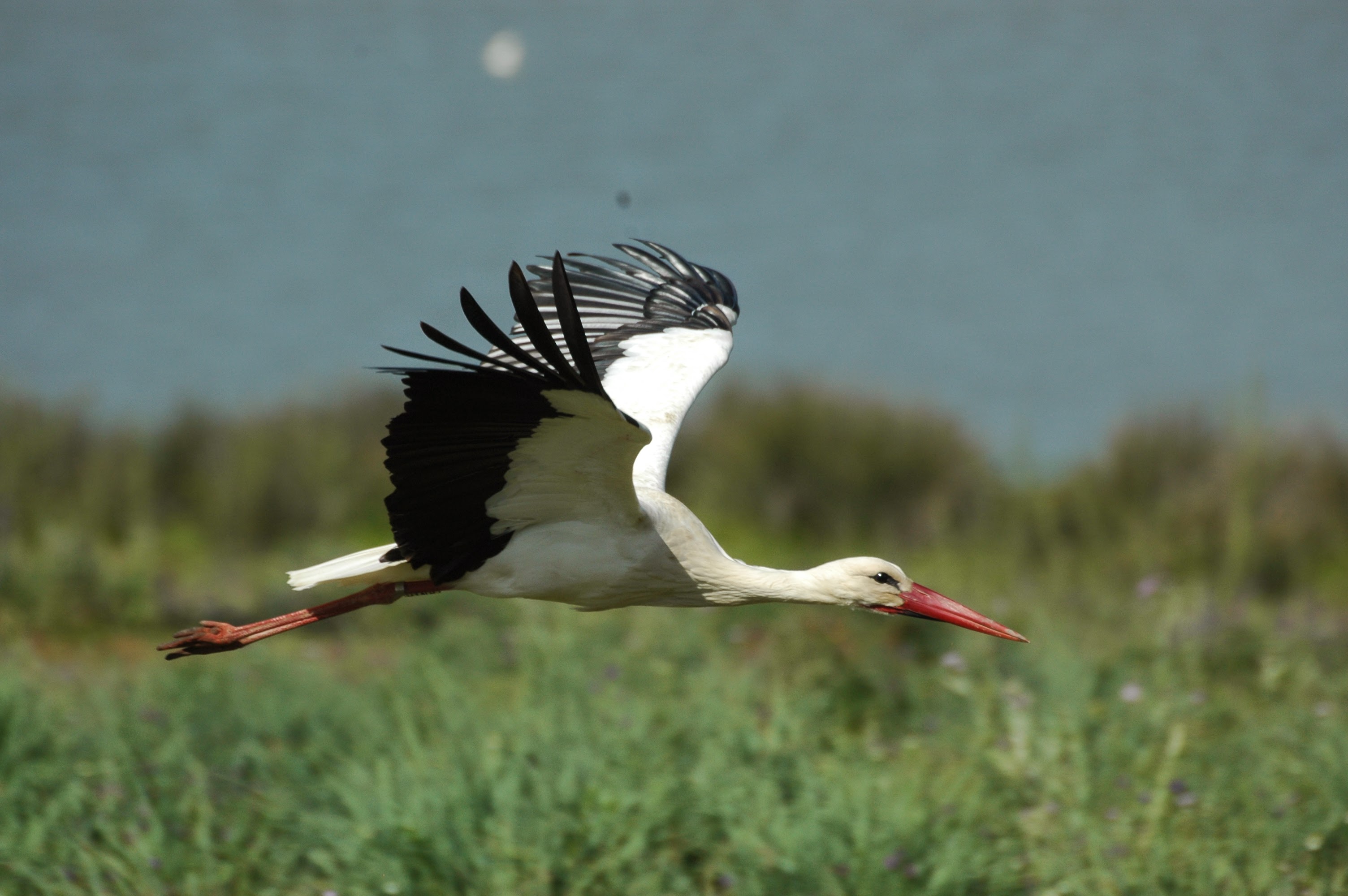
Paradise Lost and Found

I wish I could tell you I’d read Milton’s poems, from which I’ve shamelessly adopted the title of this post. I haven’t. But even if I had, I doubt a throwaway quote here or there would be necessary. I’m in a place that fills me right up to the top with pure and simple happiness, gives an edge to my writing hand and recharges my well-worn batteries. Paradise has a name and though this one may sound like a cross between a stud and an aviary and smell like a sweet mixture of manure and marshwater, it’s perfection for a country boy like me.

DSC_0314

El Rocío. More correctly known as Aldea del Rocío, as that is exactly what it is: a village. It may be the size of a small town, but looks can be deceiving: over half of the townhouses are empty for the larger part of the year. Once a year in May, El Rocío plays host to one of the largest, loudest and more colourful celebrations of the Iberian peninsula, the Romería deal Rocío. As many as a million Spaniards, dressed to the nines in rustic splendour, descend upon the village from all over the country to pay homage to the Madre de las Marismas, El Rocío’s very own Virgin Mary.

DSC_0390

This is a very big deal. Accommodation in that week is normally booked out months in advance, if not years. To give you some kind of idea, have a look at the price hike in this particular hostel below:


My mental maths isn’t brilliant, but I’d say that’s at least ten times the price I’m paying per night, if not twenty. That gives you an idea as to just how popular the festival is.

Semana Santa, on the other hand, is a minimal affair. A couple of special Masses and a single daytime procession on Holy Friday. So what on earth am I doing here now?

DSC_0520

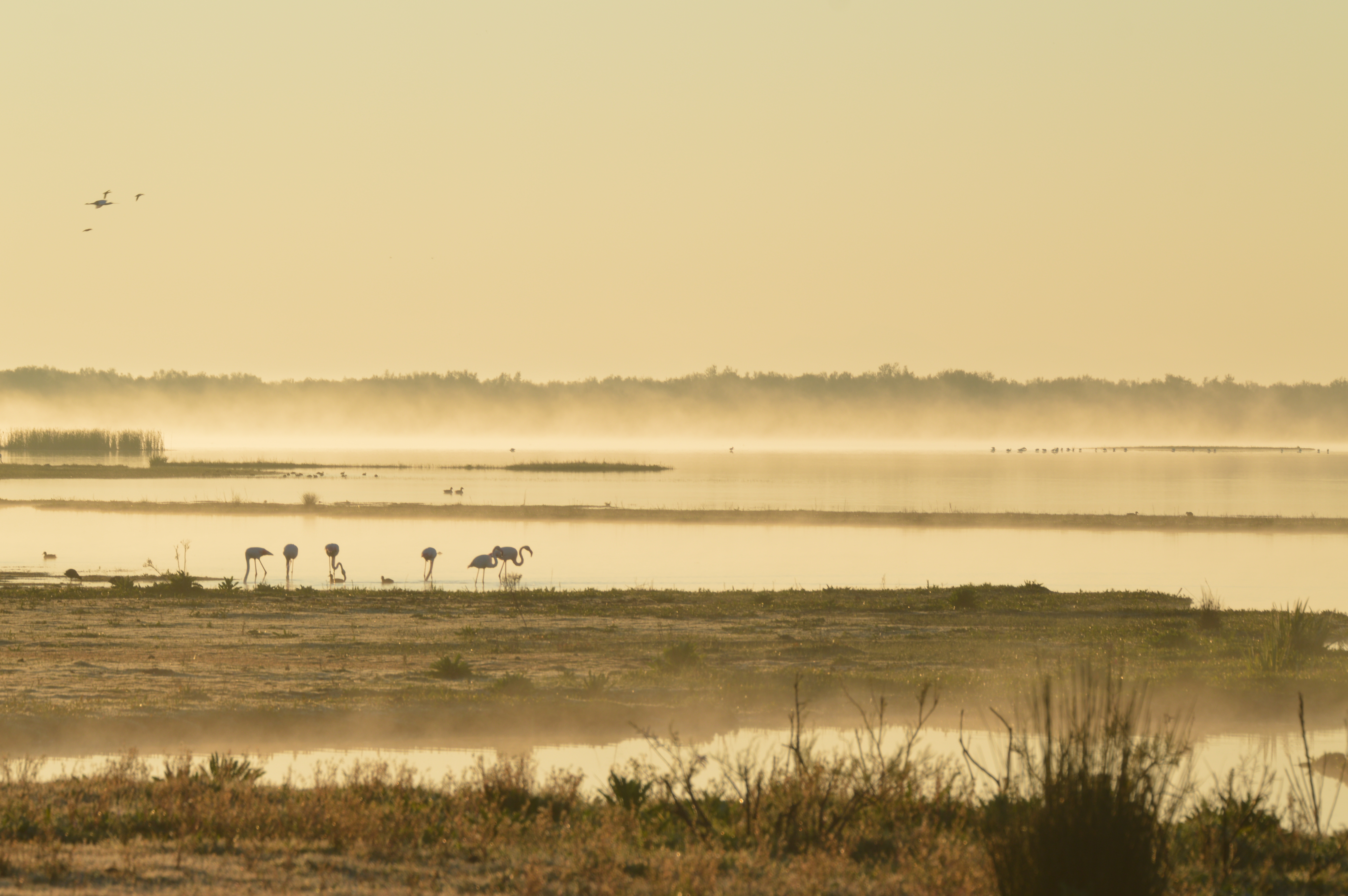
The answer is all around me. El Rocío is drop-dead gorgeous, but better still is the countryside that surrounds it: the skirts of Doñana National Park, one of Europe’s most beautiful remaining wildernesses. Sandy forests of stone-pines stretching into the infinite. Scrubby heaths awash with colourful spring flowers of yellow and white and powder blue. Shimmering lakes and marshes teeming with flocks of noisy flamingoes and an eternally blue sky that almost always has at least one kite whirling about in the distance, whistling a beautiful trill into the mix of carriage bells, chattering swallows, whirrupping bee-eaters and the incessant oop-oop-oop of a hoopoe. This place is as close to paradise as this world allows. It’s also a place where absolutely everyone wears a cap or riding boots or both, so it suits me down to a T. Especially now, when my hair is a triple-crown disaster of a birds’ nest and in bad need of a cut – and therefore hidden under my very own flat ‘at.

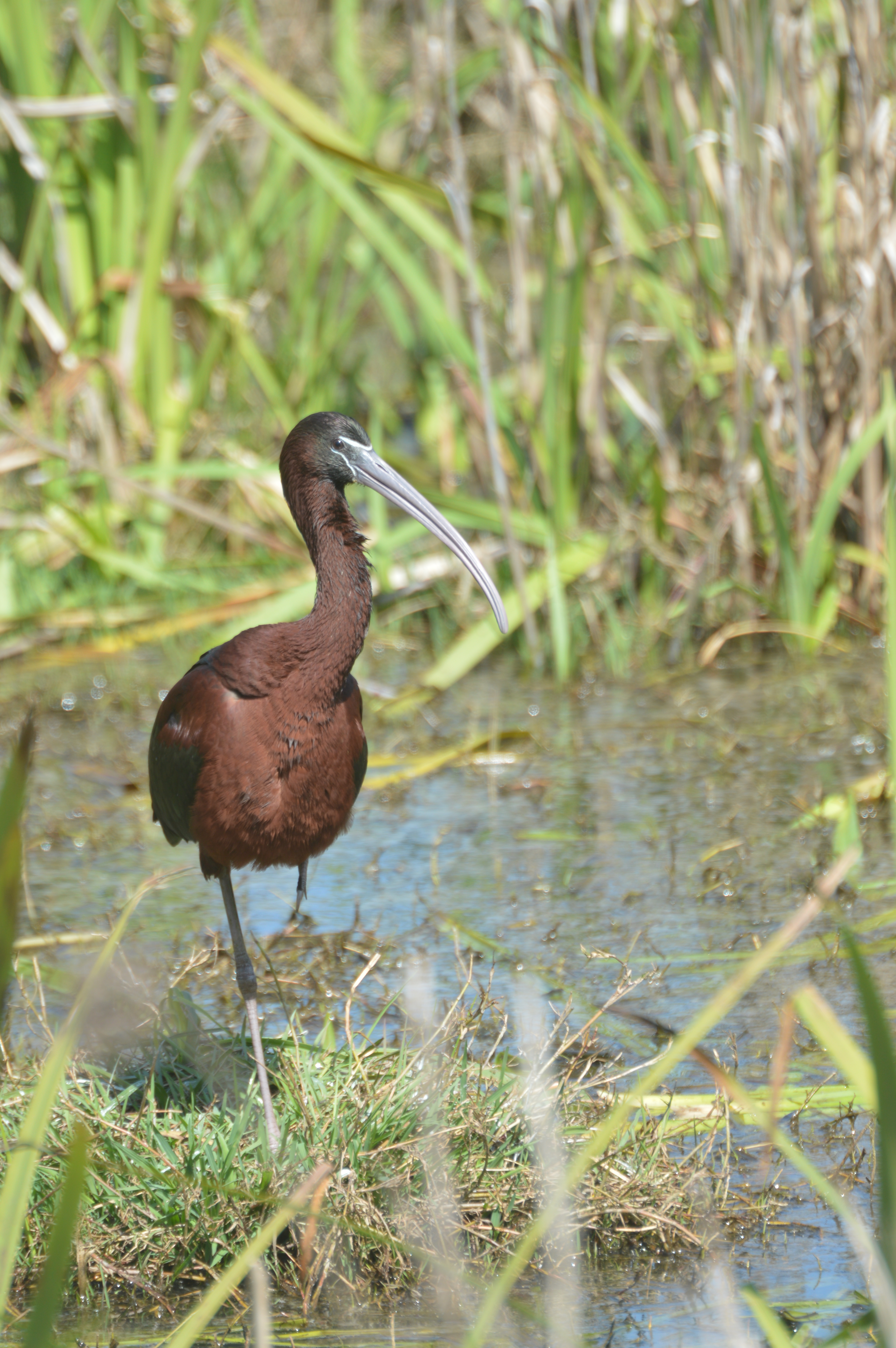
I won’t bore you to death with five hundred words about my birdwatching adventures. It’s not a passion that everybody understands. What I will say about it is that it is deeply rewarding, endlessly unpredictable and that Doñana National Park is the very embodiment of that unpredictability. I swear that it’s different every single year, and I’ve been coming here for the best part of a decade now. In some years it’s half-drowned in rainwater, in others mild after a dry winter. I’ve seen boar, deer and mongooses in one year and never again since. The same goes for the gallinules, herons, pratincoles, harriers and marsh terns; each of them in one good year apiece, but never together. This year’s treasure is the glossy ibis, a Doñana regular that I’ve never been able to get that close to… until now.

DSC_0608

Doñana is one of those places where I can sit and do nothing and watch the world go by without feeling in the least bit guilty. Time just seems to stand still here. That the entire populace of El Rocío seems to prefer the saddle to the driving seat goes a long way to entrenching that romanticism, naturally, but there’s a similarly timeless feeling to be found in sitting in the shade of a stone-pine on the Raya Real and listening to the wind. Every once in a while the blue-winged magpies cease their chattering, the hoopoe calls it a day and all that you can hear is the dry whisper of the wind. It’s spellbinding. Like Merlin to Morgana, I’m ensnared. But it is a very beautiful enchantment.

DSC_0792

At some point I’m going to have to turn my feet back in the direction of town and head for the bus stop (this town’s not big enough for a bus station, especially since they diverted the main road). This morning I was almost keen to move on, in that snug-in-bed-with-a-good-book way – this one’s Shadow of the Moon by my favourite author, M.M. Kaye – but three steps outside and I was entranced once again. Oh, to live here and to spend my days in the saddle! I get romantic notions of owning an Andalusian stallion called Suleiman and riding about the stone-pine woods with the One, whoever and wherever she may be.

That’s quite enough of that. I’ll see you in Seville. BB x
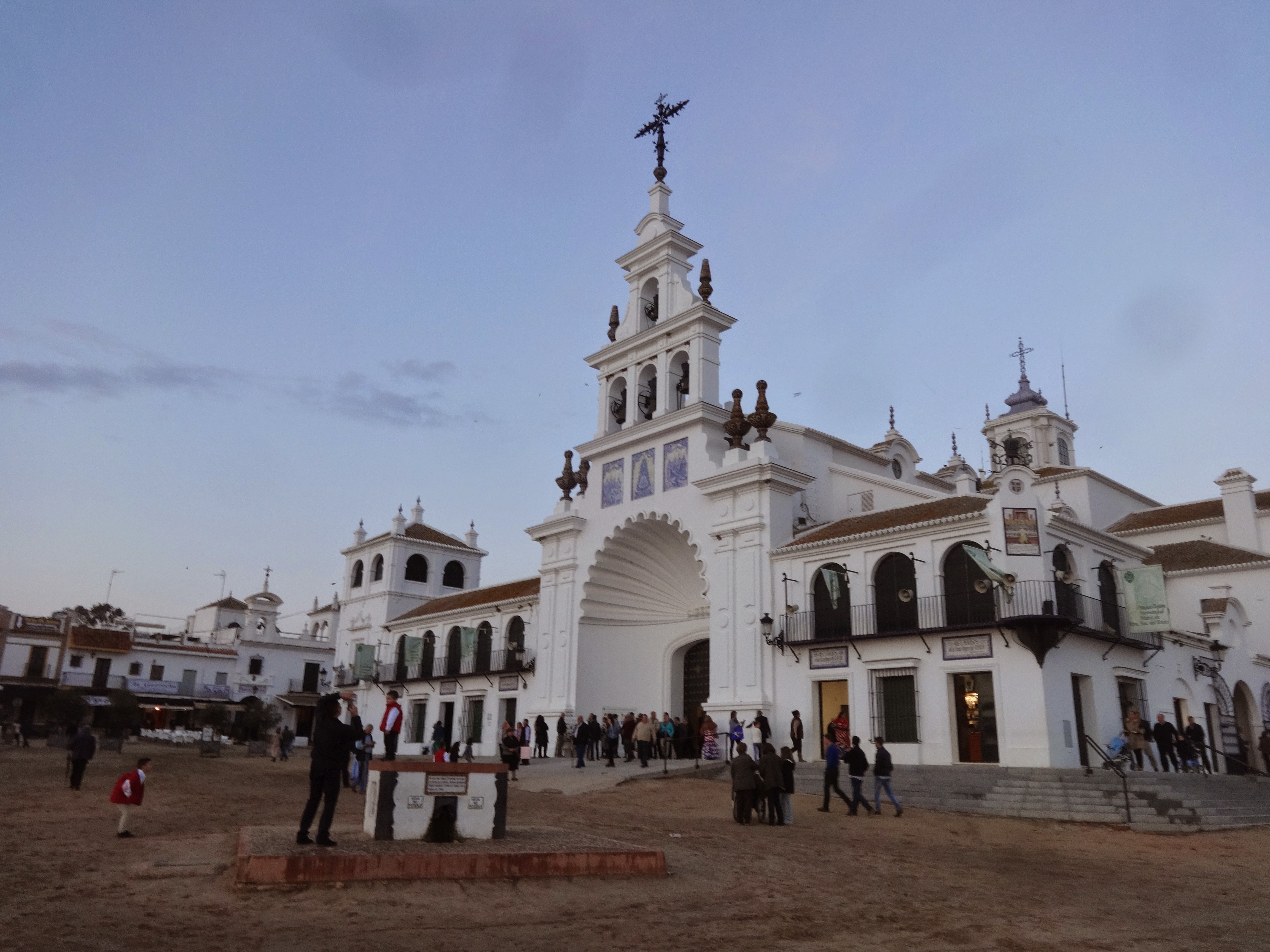
No Going Back

Saying goodbye is never an easy thing to do. I’m certainly not particularly good at it. In fact, there are quite a few goodbyes I’d like the chance to go over again, given the opportunity. You know the kind: the ones where it was all too fleeting, or maybe you didn’t quite say everything you wanted to say, or maybe the real goodbye never came around and you were left with a last meeting that wasn’t really a send-off at all. Most likely you’ve encountered that oh-so-very British awkward goodbye at least once in your lifetime: the one where you say goodbye to somebody, only to bump into them a few minutes later. Don’t you find that situation crops up a lot? It certainly does in Durham, anyway…

For a chatty gossip like me (you’ll just have to imagine the deep sarcasm there), I don’t suppose there’s much point in an elaborate farewell. It’s only really an issue if you’re going to be out of contact for an extended period of time, like stepping off the plane into the abyss and severing all connections with the outside world. Which is essentially what I do every time I step off the train at Three Bridges. I have a phone, true, but I rarely use it. I think I sent a grand total of three texts over the last three months, and all three of them last Sunday. Radio silence on my part doesn’t necessarily mean I’m traveling – I’m probably a lot more talkative when I’m on the road – but it doesn’t mean I’m inactive, either. I simply enjoy going for long periods of radio silence. Anything that needs saying can surely be said best face-to-face, and anything that’s worth saying is always worth waiting for. That makes me quite a distant person, I guess – and not the easiest to track down. For somebody who spent almost all of two years on teenage texting tenterhooks, it’s a policy I’ve guarded jealously for some time now. So in that sense, setting off on another long adventure isn’t really all that different from any other end of term break, as far as contact is concerned.

I’m going off topic. I suppose I’d better come out with it. I’m heading off to Spain in two days’ time – less – to spend nine months working in a secondary school… and I’m not coming back in between.

The idea first came to me when I had a look at the Spanish school calendar for the coming year. That projected end of term date on the twenty-second of December shocked me at first, despite having been schooled in Spain at Christmastime before. It’s all about the reyes magos out there, and that’s not until January. I must have got it into my head early on, but it wasn’t until saying farewell (successfully, mind!) to Andrew at Gatwick Airport that it hit me: I want to be out there for the long haul. Taking a year abroad isn’t just about honing your language skills to fluency, it’s about growing up – and Lord knows I’ve still so much more of that to do. What better way than to strike out on your own for an entire year? Because that’s what it’s set to be, with my second Arabic stint in Morocco striking up almost as soon as I’m done in Extremadura at the end of May, meaning I won’t see the green hills of England again until August 2016, at the very earliest. That doesn’t trouble me as much as it should.

I'm going to miss autumn in England. No, I'm really, really, really going to miss it

I’m going to miss autumn in England. No, I’m really, really, really going to miss it

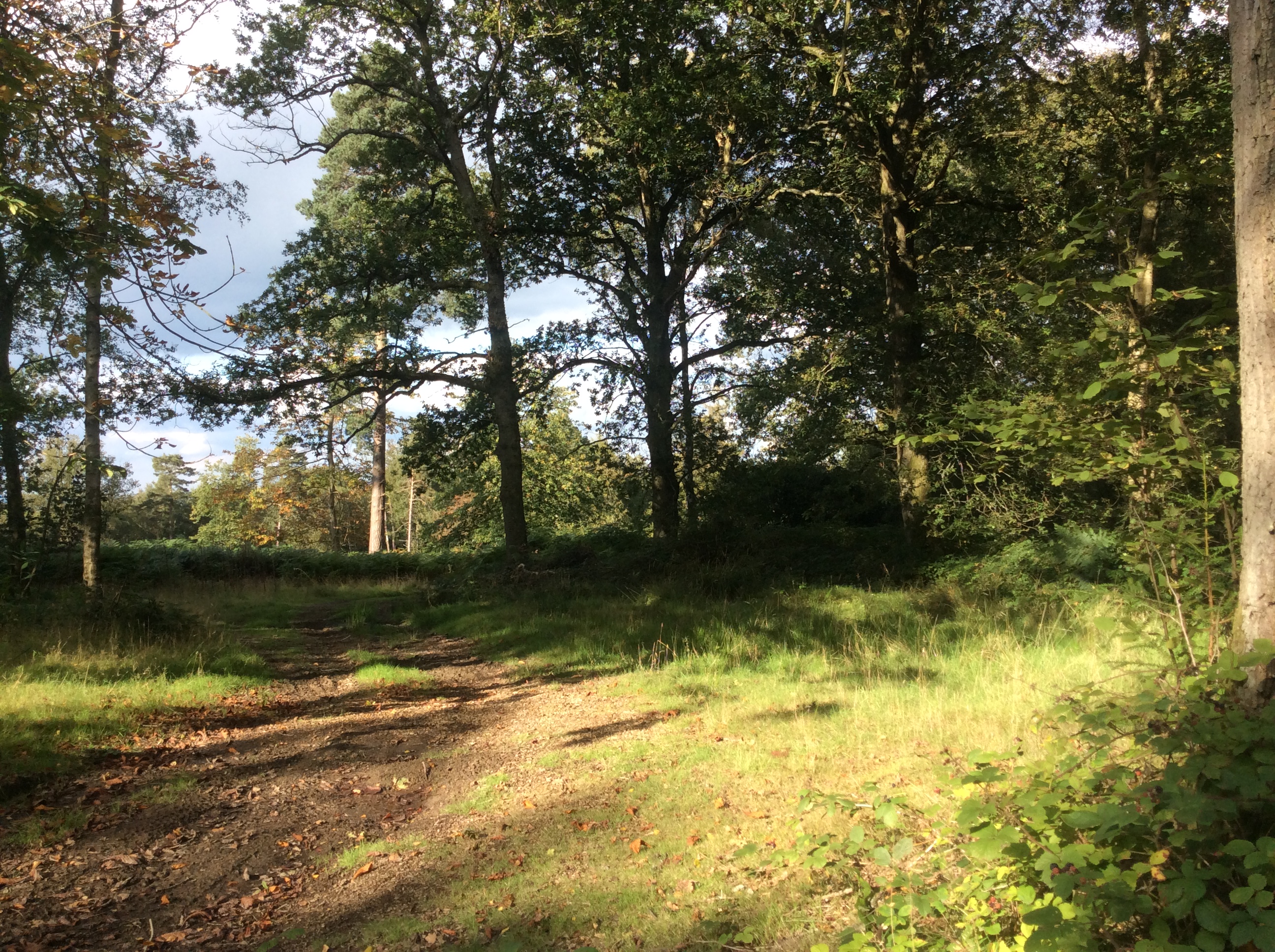
The last few days have been wonderful for a last taste of England. I consider myself extremely lucky to live in one of the most charming spots in West Sussex, overlooking a dream-sequence of rolling hills as far as the eye can see, right up to the point when they tumble into the sea to the south. Autumn’s in the air, the forest is full of mushrooms and the buzzards that nest deep in the woods are cartwheeling noisily through the skies as usual. Morpurgo described them ‘mewing’ in one of his books and I can’t think of a better way of putting it. This is England, and I’m going to miss it. But there’s something in the air, telling me it’s time I should be moving on. Maybe that’s autumn. The signs are everywhere. The leaves on the oak trees are going a gorgeous golden colour. Out on the school rugby pitches the odd wheatear sits taking a breather, whilst flycatchers and warblers hurry on through the hedgerows snatching a quick meal on their way home. But most telling of all are the great flocks of swallows and the martins streaming on southwards overhead, and in a couple of days I’ll be following them. Maybe I’ll even see some of the same individuals swooping by from Villafranca. Who knows?

Ten points if you can see the buzzard in this one

Ten points if you can see the buzzard in this one

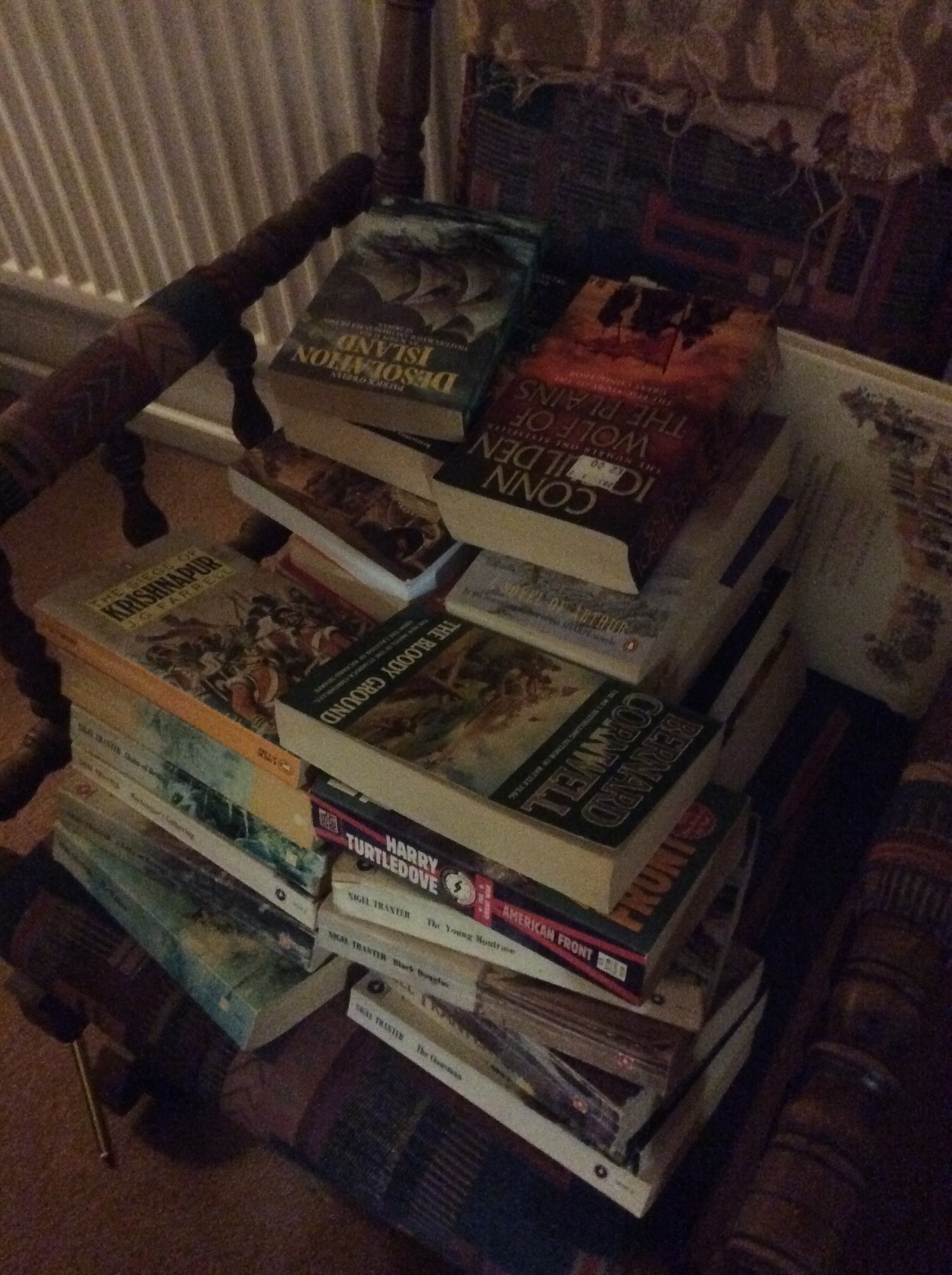
The hardest thing for me to leave behind – besides the monstrous tapestry, which is never going to be finished anytime soon – will be the growing mountain of books in my bedroom.

A year and a half, five metres in and still slaving away

A year and a half and still slaving away…

It’s pretty daft, but for an aspiring writer, I’m late into the fold as regards actually reading. I got it into my head once that if I never read any books that contained ideas similar to my own, I couldn’t get done for plagiarism, because I’d never have noticed the similarity. How very typically overcomplicated of me. The end result is that I haven’t read a decent book – besides Pavilions – in nigh on ten years. At least, one that hasn’t been prescribed by my course. Now I’m motoring through them at lightning speed, assisted by all the iBooks freebies, an immense library at home (courtesy of my equally bookish mother) that I never truly appreciated, and an all-too brief visit to a real bookshop over the weekend.

So many books, so little time...

So many books, so little time…

I say real to distinguish it from your average WHSmith or Waterstones. Seriously, this place had everything. All the historical fiction you could shake a stick at. The entire Hornblower saga. Flashman in abundance. Sharpe, Iggulden and even the master of the art herself, M.M. Kaye. All beautifully spined, deliciously musty and lovingly second-hand. A new gadget may be a good thing, but there’s nothing better than an old book. Mum found a particularly beautiful pair of illustrated Arabic dictionaries – formerly the property of a military attaché, as stamped. Oh, I could have died and gone to heaven. I was in kid-at-Christmas mode. If I’d had this newfound book obsession just two years earlier, I might have given languages the boot and applied for an English degree. The only thing holding me back at the time was a general reading apathy…

Today’s been the downer of the month for no other reason than that every so often I have a lonely spell where it takes a lot to lift me up. Fortunately I’m in the best place for it: start of term or not, the grounds of Worth Abbey are no less than the finest place I’ve ever encountered for soul-healing. Alright, so the stone-pine copse along the Raya Real with its attendant black kites just comes up trumps, but that’s not on my doorstep every morning. Not yet, anyway. Besides, when the loneliness birds come flying in, the open world is always there. Nature’s an unpredictable lady at the best of times, but she’s never let me down. I’ve said that before, and I’ll say it as often as it takes to drive this funk of mine away. Everything will look better in the light of a new morning. It always does.

Waldeinsamkeit - the feeling of being alone in the woods!

Waldeinsamkeit – the feeling of being alone in the woods!

These are curious things to dwell on when home will be so very far away for the next eleven months. But home is where the heart is, and mine has been in Spain for as long as I can remember, and that’s got to count for something. Maybe she’s out there, and maybe she’s not. That’s not for me to decide. If fate decides to cut me a break and give me a good turn, I’m ready to run with it. But one thing’s certain: I will leave Spain fluent. If I can leave the country at the end of the year as bilingual as the grandfather I never knew, I’ll have accomplished a dream two generations in the making. Being a quarter Spanish will mean so much more.

I will be fluent. And that’s a promise. BB x