Parque de San Marcos, Icod de los Vinos. 12.37.
The bells of San Marcos are ringing for midday, a mournful two-tone chime that feels out of step with the rest of the world: the buzz of the artesanal market stalls, the constant roll of tyres over cobblestones, the cooing of collared doves and the merry twitter of Canarian chiffchaffs in the trees overhead. The guitarist sitting in the pagoda that looks out across the Atlantic has stopped his playing and looks on in contemplative silence. Three very trendy French tourists walk by, one wielding an iPhone, the other dragging on a vape. ‘Ouais, t’as raison, hein, on est en Afrique.’ A man walks by with his dog. Around its neck is a metal collar not dissimilar to the kind Cortés’ war dogs used to wear. And still the bells chime.
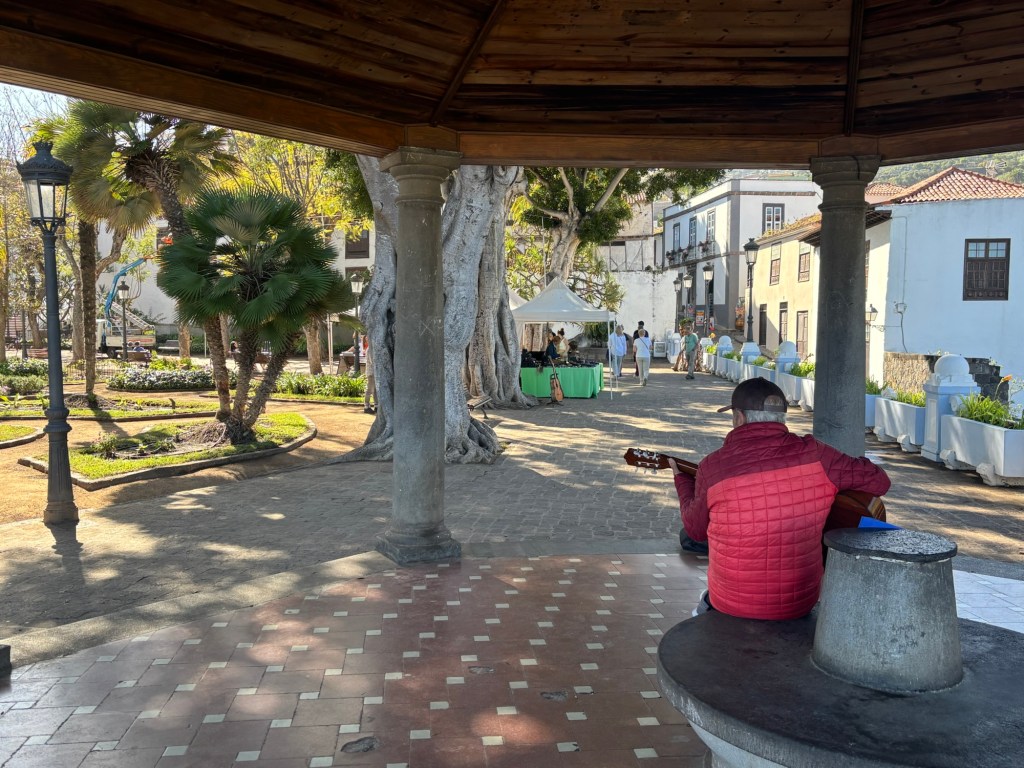
It’s an hour’s wait until my connecting bus to Erjos, so I’ve come here to sit in the shade and write. I’ve bought some supplies from the nearby Mercadona just in case they’re hard to come by – for the first (and only) time in this trip, there are no shops near my lodgings for the night. The Canarian bananas are riper than the kind we get back home – understandably, as they were grown all of fifty metres from the store itself – and the slice of tortilla I’ve obtained should do nicely for dinner this evening.
The guitarist has started up again: it’s Guantanamera this time. A German boy in dungarees and a white baseball cap and his mother watch as he plays an upbeat Latin tune. The boy was shy at first, but he seems captivated by the rhythm and is swaying along with a big smile. Judging by his mother’s reaction, he appears to have just learned how to clap. Thanks to the guitarist, he also just learned how to strum a chord and blow a kiss to the audience.
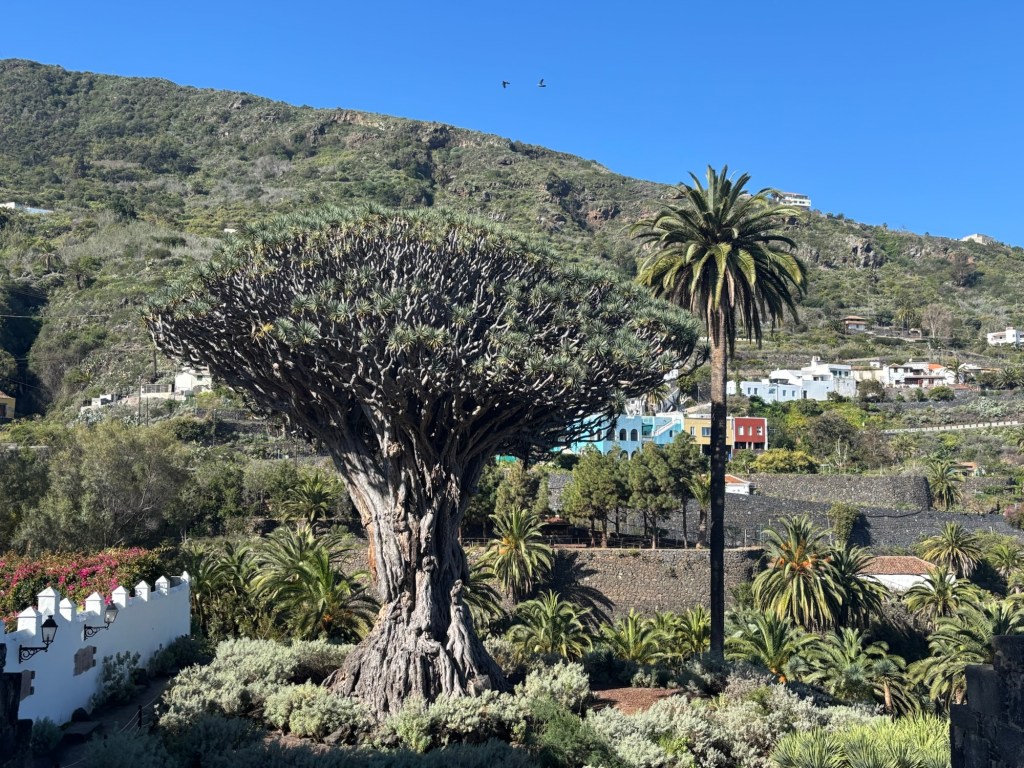
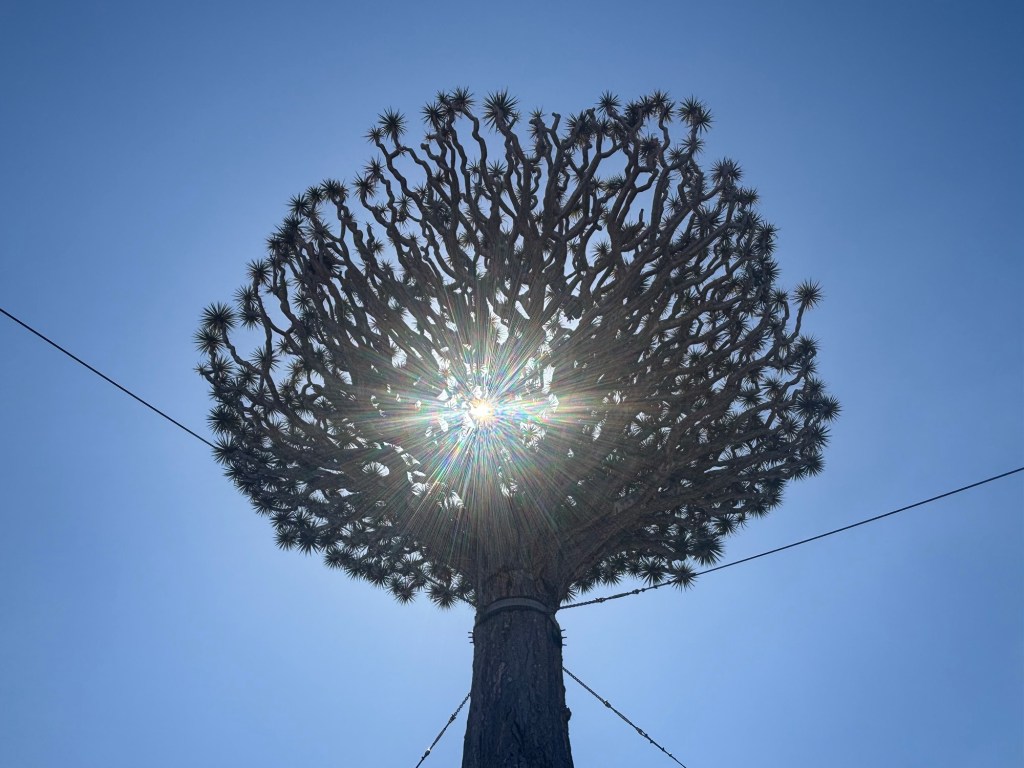
To the east of the park is the famous dragon tree, a bizarre and ancient tree endemic to the Atlantic islands that has supposedly stood in this spot for nearly a thousand years. Its leaves stick out at the ends of its myriad branches like frozen fireworks. The palm tree at its side, usually exotic in its own right, looks almost humdrum next to the dragon tree, which is as rare as it is odd-looking: you’d have to travel all the way to the island of Socotra off the coast of Yemen – the other side of Africa entirely – to find a similar kind of tree.
In the shadow of the park is Icod de los Vinos’ mariposario, a butterfly conservation centre. I’m not the biggest fan of zoos, but these sorts of places (where the butterflies are free to roam) are usually geared towards the captive breeding of endangered species, and with butterflies the world over starting to disappear, I fancied learning what I could about those native to the island.
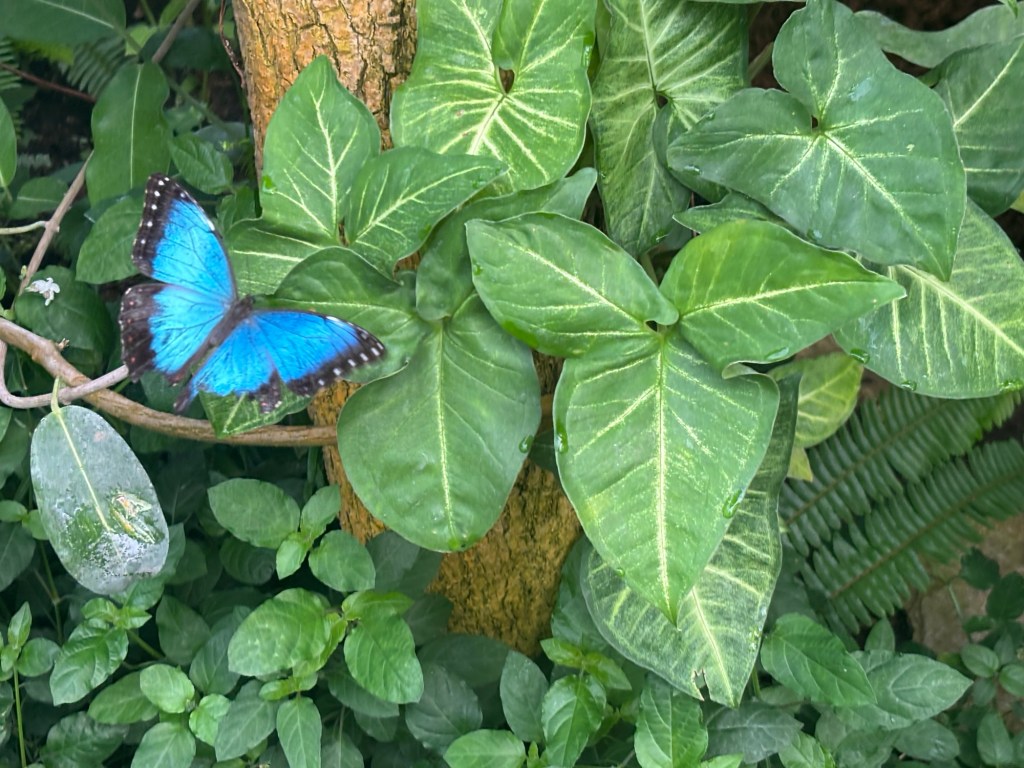
Icod’s mariposario hosts a number of ‘celebrity’ butterflies: the electric-blue morpho, the wandering monarch, and the gigantic Atlas moth. They’re a lot better at drawing in tourists than the endangered Canarian large white, I guess, a species which this local enterprise is working to protect. They’re a long way from home, usually haunting the dense rainforests of the Amazon basin, but they seemed more at home here than they would in a similar butterfly park in the UK.
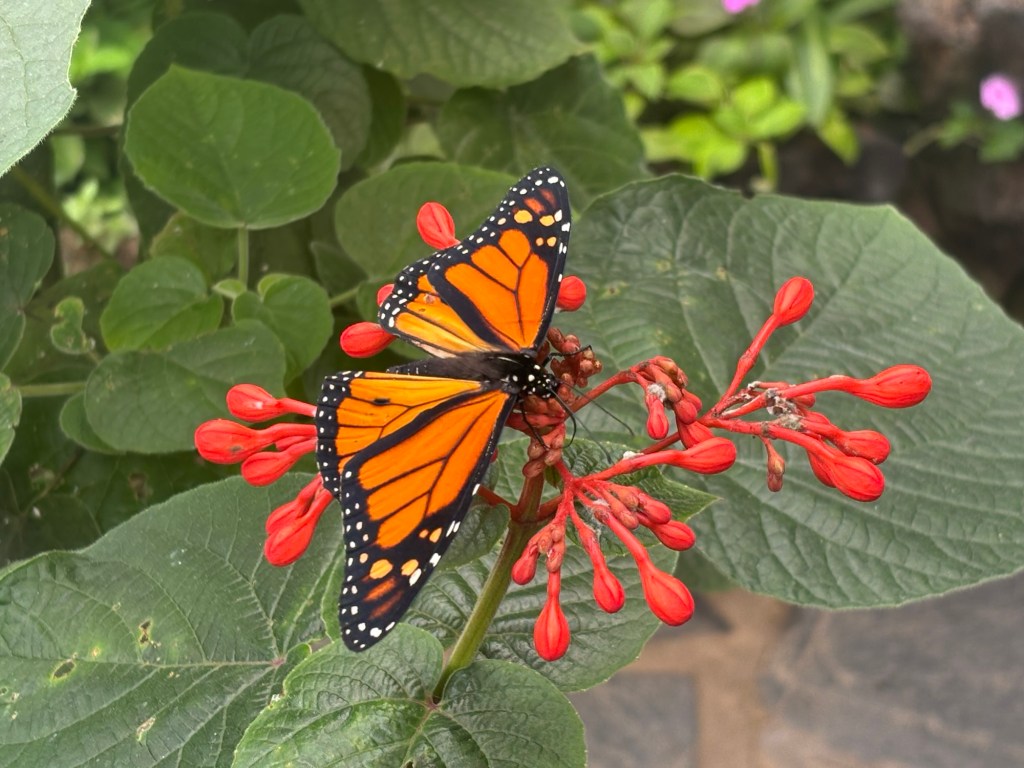
It was the prospect of seeing the morphos which drew me in, I think, but I stayed for the monarchs. These impressive creatures, with wings the colour of an Atlantic sunset, are a cultural symbol of Central America. If I’d gone to Mexico – my original plan for the Easter holidays – I’d have gone looking for them over there. Not that I’d have had any guarantees of seeing one, of course – but it would have been fun to try.
Higher up the mountainside stands another dragon tree, el Drago de San Antonio. Younger than the drago milenario (but only by a few hundred years), this one is chained in place like a wild beast. It’s also guarded: two security guards in green overalls sat in the shade nearby, smoking a cigarette and watching me as I wandered over to have a look. There’s a motive for their caution: the tree had been ‘attacked’ twice in the last fifty years, first by an ambitious landowner who wanted it cut down and more recently by vandals. To ensure its safety, cameras have been installed in the neighbouring walls and a guard posted during daylight hours – not to mention the chains. I can only imagine these last have been affixed to keep the tree in place should the dormant dragon within decide to take flight someday.
Well, I’ve made it to my digs for the night in Caserio los Partidos, high up in the hills above Erjos. The restaurant is open, but the lady who sorts the lodging isn’t here. I guess she’ll be back at some point this afternoon. I hope she comes soon – I can never truly relax until I’ve got rid of my rucksack. There’s no signal this high up the mountain, but that’s exactly why I came all the way up here – to really get away. I need it after the last two days in touristic Tenerife. It’s a beautiful place, once you get away from the coast and the cities, but this will probably be my only visit. It might be a Spanish territory, and the natives might be Spanish speakers, but it’s not Spain. I’m already nostalgic for the mainland.

Still no sign of the dueña. At least it’s given me time to catch up on my writing and stay out of the worst of the midday sun. See you on the other side. BB x
 The Book of Barnabas