The Flat, 21.57.
I’m slowly starting to rebuild the life I left behind me. It’ll take a little while, but it’s starting to feel very familiar: the long walks, the eyes on swivel-stalks, the weight-training involved in swapping the zoom lens from one arm to the other. In a way, it’s like I never stopped – though it has been about fifteen years since I last did this sort of thing on the regular.
One of the first things to establish is a “patch” – that is, somewhere nearby that I can visit easily and regularly for a quick nature fix throughout the year. I’m still in the market, but I think I’ve decided upon the stretch of the River Tone that runs along Longrun Meadow and into the Netherclay Community Wood. It’s within easy walking distance and there’s plenty to see, including otters – though I dare say I’d be exceptionally lucky to find them out on a weekend wander.
The egrets around here are pretty fearless, though. The flooded banks of the Tone must be harbouring a number of small fish, because I was able to watch this one hunting for quite some time, catching a couple of tiddlers and a small eel. I wonder why great egrets are more skittish than the little and cattle egrets that have colonised so many towns and cities? Is it genetic, perhaps – or is it the memory of that obsessive slaughter for their feathers that keeps them at bay?
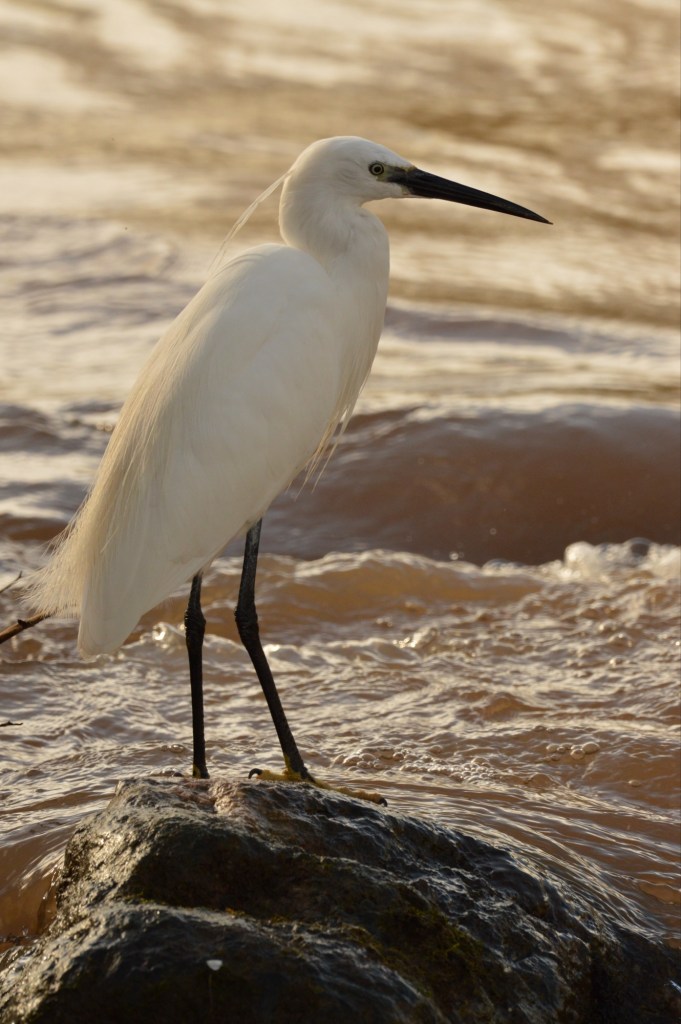
I added a few new locals to my “patch list” – namely, teal and buzzard – but spent most of the walk learning how best to cradle the heavy lens over a long distance. I think I’ll need a strap for the lens itself, because I don’t want to chance the weight of it putting undue strain on the camera itself.
I was looking at a tied-down weekend this week, but thanks to a couple of necessary swaps and the support of my wonderful Debating team, I worked Friday night instead and got the weekend off. Suddenly, I had a free Sunday. Coupled with the knowledge that my Railcard expired at midnight, putting a definitive end to many years of affordable train fares, I decided to put the lens through its paces in a new environment: Dawlish Warren.
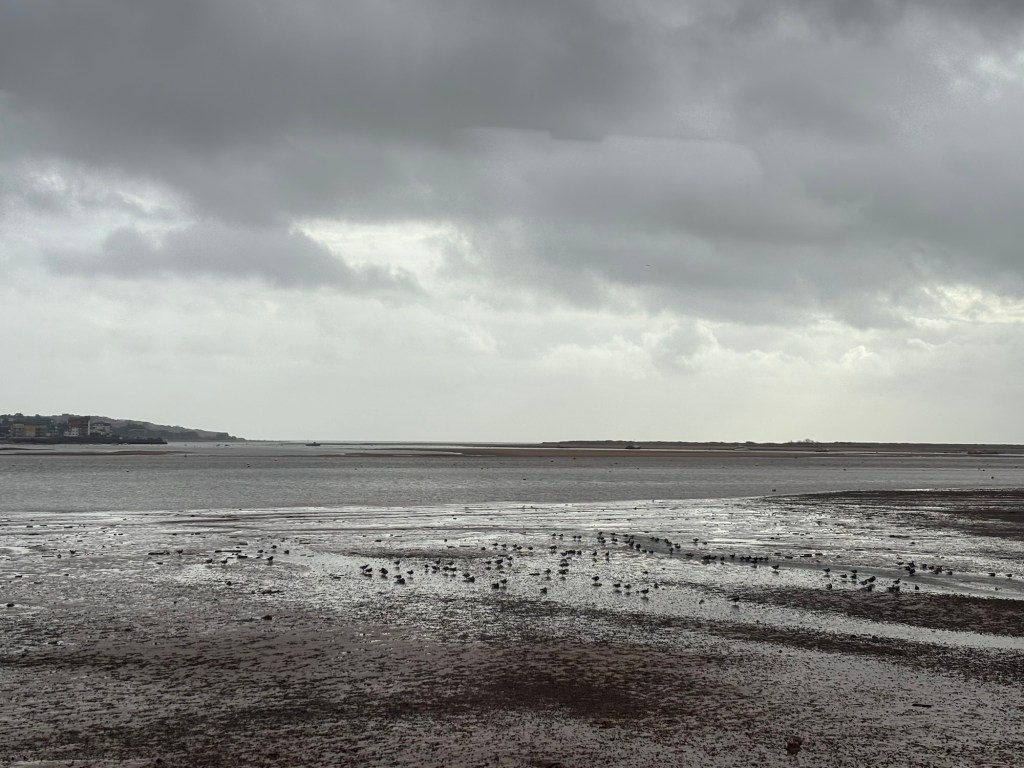
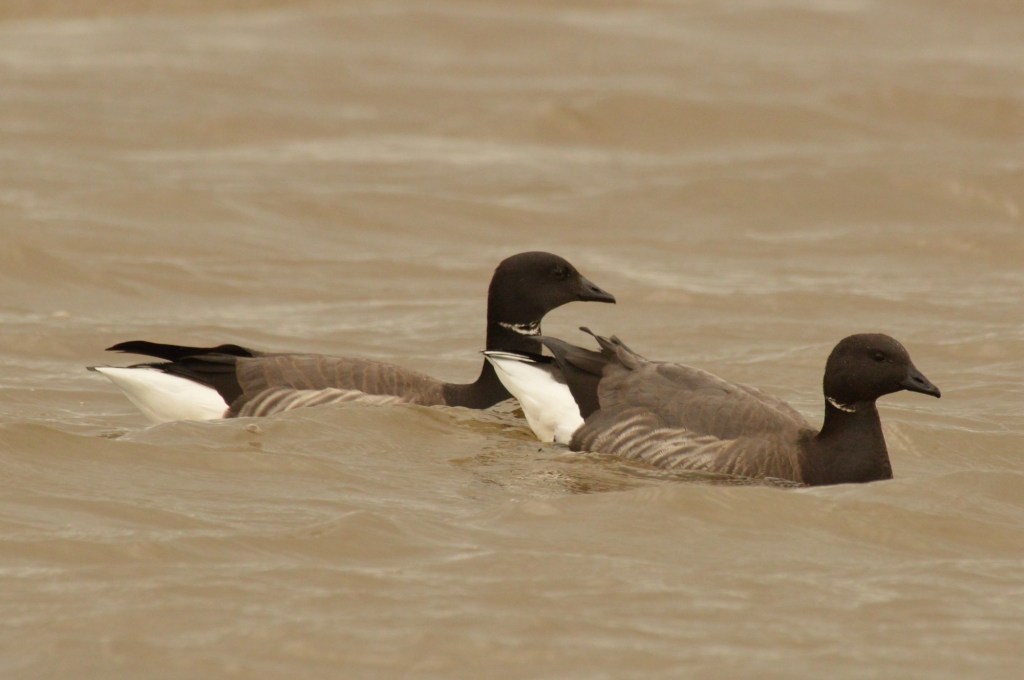
I came out here at the end of October, when the sun was still shining and the beach was still packed with holidaymakers. In my memory it felt like the end of summer, but it must have been autumn, because the brants had already arrived in great numbers. They were very much in evidence today, numbering well over a hundred, and more than likely the same birds I saw back then.
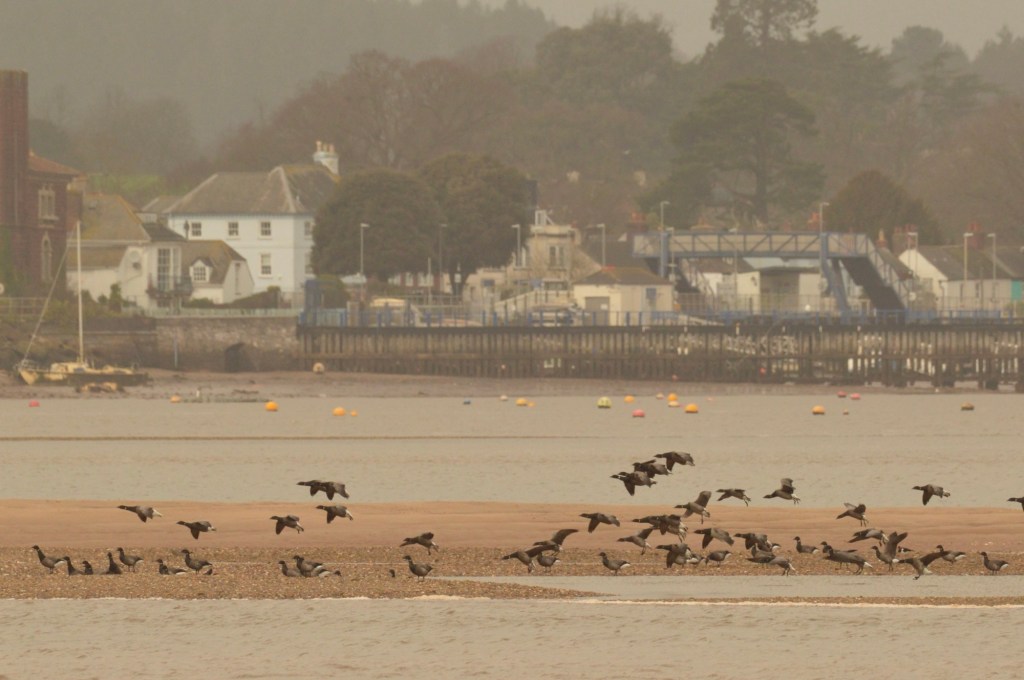
Brant geese are a seafaring species of goose that spend the winter around the coasts of the British Isles, returning to their breeding grounds in the Arctic circle at the beginning of spring. Most of our geese – the dark-bellied kind – come from northern Russia and Siberia, though the odd light-bellied individual is often to be found among them, straggling over from its North American range.
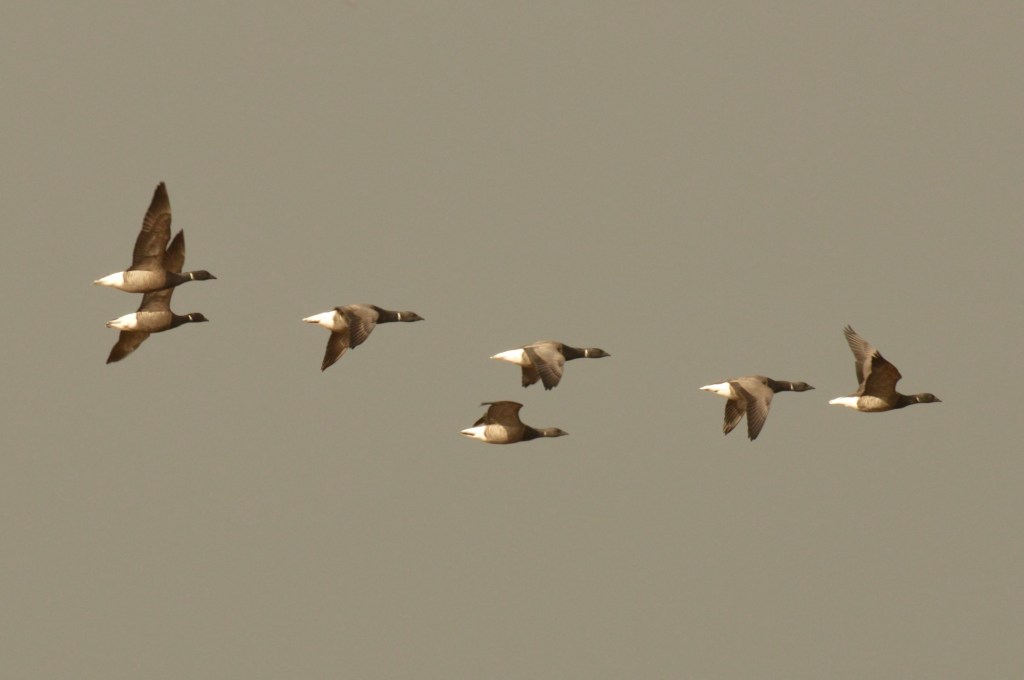
In ancient times, before their migration routes were known, the people of the British Isles had no answer to explain what happened to the thousands of “burnt geese” that flocked to the coasts, saltmarshes and estuaries, only to disappear without a trace with the spring. Together with the closely-related barnacle geese – who once pulled a similar disappearing trick – they were believed to hatch from goose barnacles, which shared their colour palette. As such, being “not of flesh”, they were permitted on Christian fast-days – a practical solution in desperate times, it must be said.
It’s hard to see how anyone could have believed that old yarn about birds born from barnacles, but then again, the same people believed that swallows slept at the bottom of ponds during the winter. Sometimes we make up the most fanciful nonsense to avoid having to face the obvious reality, even when it is staring us in the face.
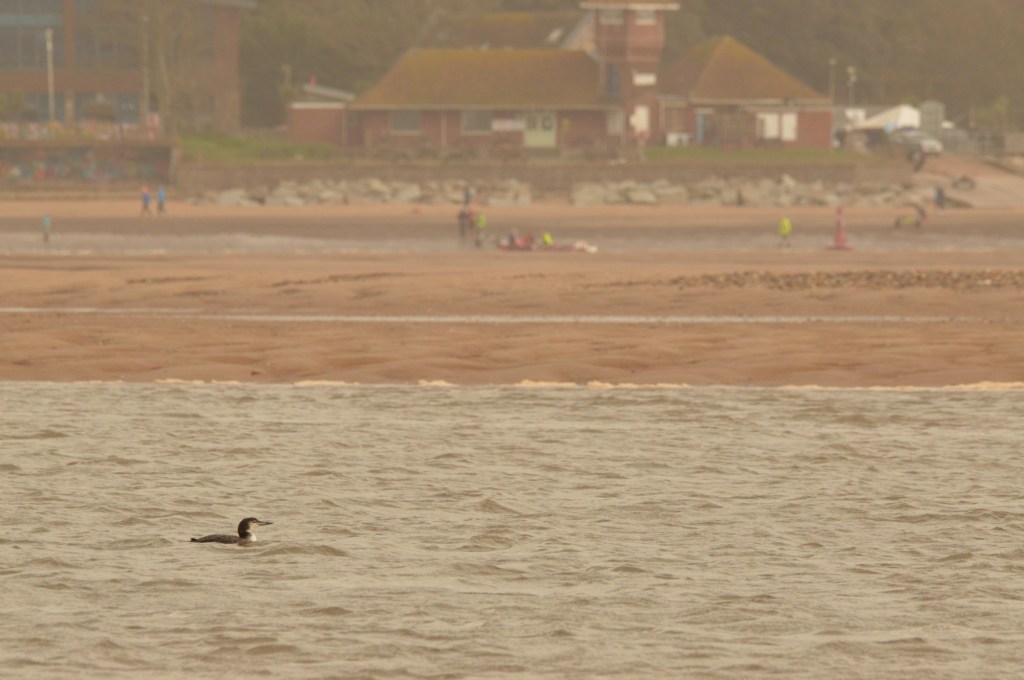
Out in the bay, I saw a silhouette I recognised immediately, diving and resurfacing in a small channel between the shore and a shrinking sandbank. The most common diving seabird around here is the cormorant, but in winter, there are quite a few birds that might dive beneath the surface: shags, sawbill ducks, scoters, grebes and divers. Only one of those comes close in size to the cormorant, and that particular bird holds its head level, unlike the cormorant, who swims with his bill upturned.
I didn’t need binoculars to know I had found a great northern diver – the first I’ve seen since my schooldays – and I went tearing across the beach to get a closer look.
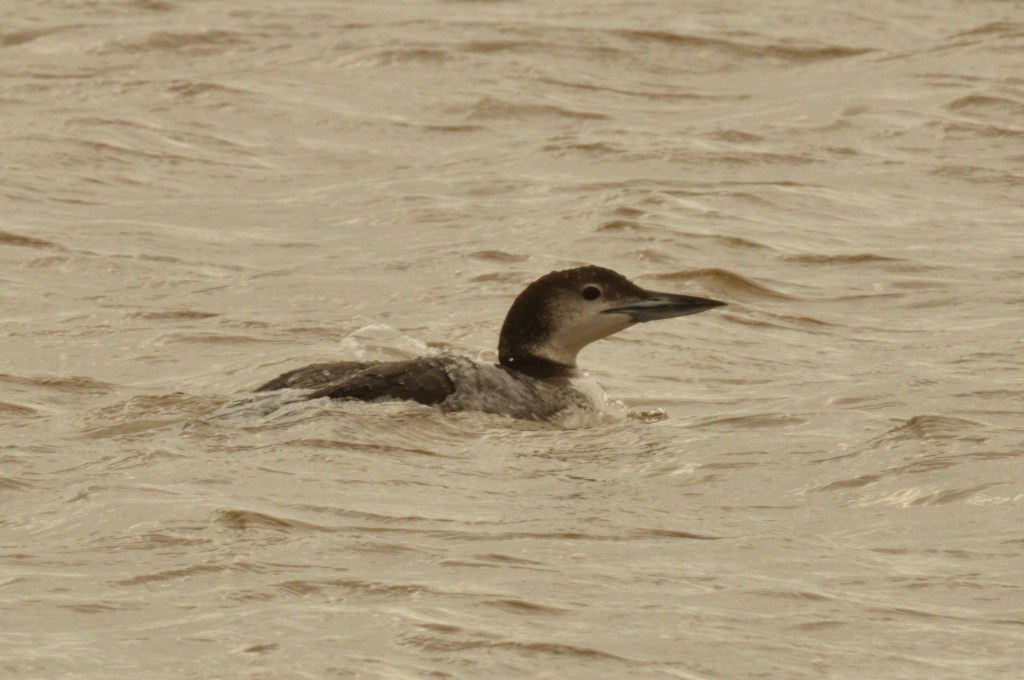
The last time I saw one of these impressive creatures, it was far out to sea and flying east along the British Channel. I haven’t had the luxury of seeing one so close before – close enough to appreciate its terrifying red eyes, an evolutionary trait shared with grebes that filters light and helps them to see underwater.
I watched it hunting in the bay for a few minutes, before it decided to run the gauntlet of the shrinking sandbar and scour the southern shore. I counted the seconds between each dive. This one averaged out at 40 seconds, but the diver has been known to stay submerged for up to five minutes. Pretty impressive for such a small and fast-moving creature.
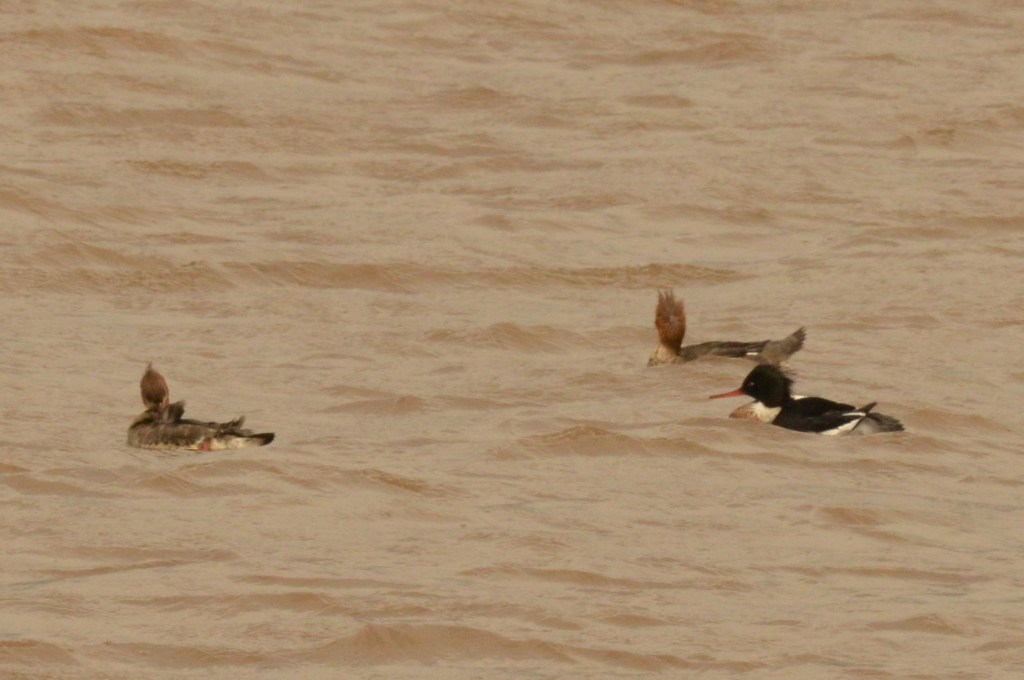
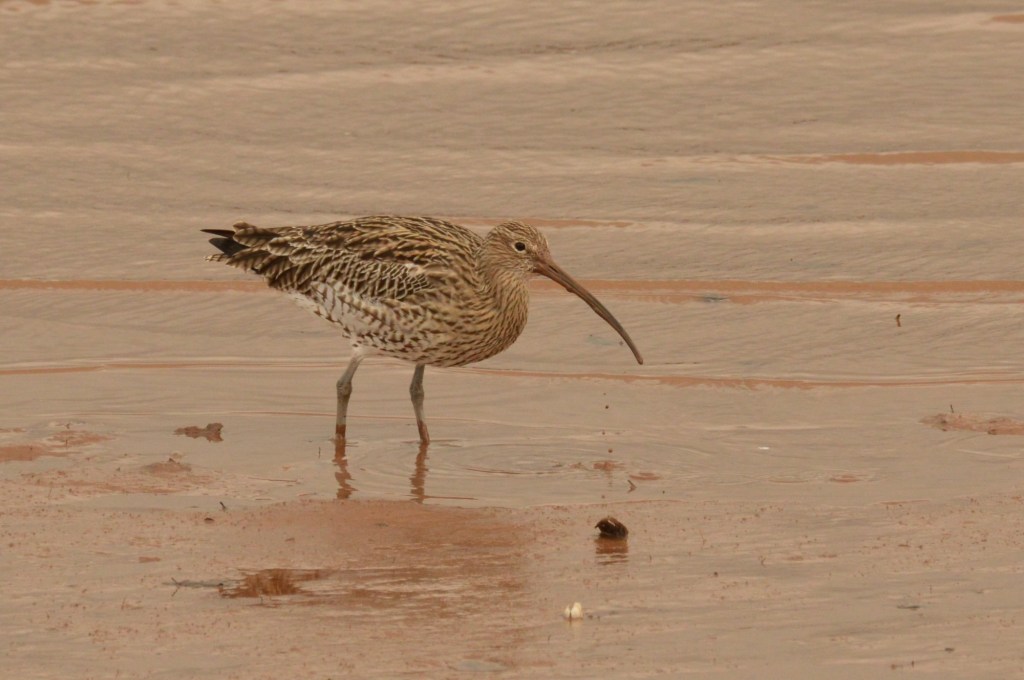
I made it back to Dawlish Warren’s station in plenty of time for the hourly train, but the sun was still shining and I hadn’t yet had enough, so I set out along the Warren Road to the north. The railway hugs the coastline, so the roads meanders a bit on its way north from the Warren. Eventually, after about an hour’s jaunt through the countryside, I came to the ferry town of Starcross. I decided against pushing on to the Exminster Marshes and set up shop at the station, which looks out over the estuary. I was rewarded for my patience with a family of punk-rock red-breasted mergansers, as well as a number of familiar waders probing the mudflats below: turnstones, redshanks, greenshanks and a couple of curlews.
There will always be a special place in my heart for curlews. Their mournful bubbling call was the backdrop to many a childhood adventure around Romney Marsh and the mudflats of Sandwich Bay, and followed me up into the highlands of Scotland on a couple of hiking adventures in my twenties.
Apart from that, they’re remarkably beautiful creatures, with their cryptic feathering and dark, thoughtful eyes. I’ve been very lucky with the egrets around Taunton, but I hope I can continue to observe these magnificent creatures and do justice to them with my new gizmo.
I might not get so flexible a weekend for a while now, so I’ve cashed in my chips early. But I’ll be back with more nature news in the near future, so stay tuned! BB x




 The Book of Barnabas