Penguins in the Desert

Hostal Pariwana, Lima. 8.05.

Today is a travel day. My onward flight to Arequipa doesn’t leave until 5pm – a luxury in a trip full of early starts – so I’m having a proper rest this morning.

It also gives me ample time to give yesterday’s adventure the write-up it deserves.


When I leave Lima for Arequipa on Thursday, I won’t see the Pacific again until I return to the capital for my flight home in just over two weeks’ time. That means saying goodbye to something awesome and powerful that has been the eternal backdrop to my Peruvian adventures thus far, and trading it in for the majesty of the Andes, the longest mountain chain in the world.

I couldn’t leave without going out onto the waters of the Pacific at least once, so today I jumped onto a trip to the Islas Ballestas – the Ballista Islands – run by the Peruvian tourism colossus, Peru Hop.

Paracas is a proper schlep from Lima – four hours, to be precise – so the company’s iconic red bus picked me up at 5.30am. One of the backpackers from my hostel panicked because it wasn’t there bang on half past, which I thought was surprising from a person who had been traveling South America far longer than I. In any event, the guides came looking for us at each hostel along the way, which I thought was bloody efficient, given the size of Lima itself.

Peru goes to the polls to elect its next president on the 12th April, and there are billboards for the various presidential candidates everywhere. Comedians. Bankers. Career politicians and military generals. Relatives of former presidents. Every district seems to have its own champion. If it’s a two-horse race like it so often is elsewhere in the world, you’d never know at a glance.

I’ll be deep in the Amazon rainforest when it all goes down, but at least I’ll be here. What a time to be in Peru!


The bus to Paracas was packed – every seat taken. Mostly young backpackers, but a scattering of older couples as well. A British woman all in pink ended up next to me – pink crop top, pink smartwatch, pink nails, pink leggings, pink lipstick, pink stripes on her shoes, pink cover for her phone, pink handbag… An Essex Elle Woods if ever there were one. I suspect she was off to Pisco and Huacachina for wine-tasting and dune-buggying, rather than a tour of the national park. To quote an old friend, “you don’t need foundation for a safari”.

In Paracas, all three buses in our convoy were disgorged onto the steps of the Hotel Residencial Los Frailes, before being led straight to the jetty for the boat trip to the Islas Ballestas. Honestly, I was expecting more hassle from local touts on route, but my experience so far of Peruvian hawkers is that they are considerably less aggressive in their tactics than their African and Asian counterparts. I wasn’t hassled once.

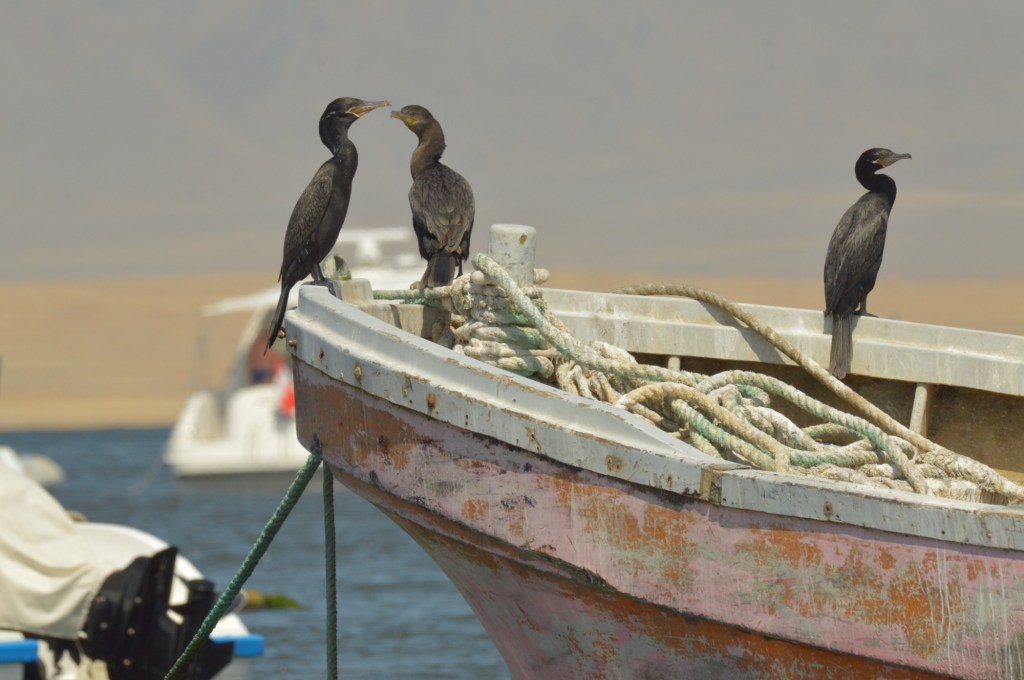
There’s plenty to see before you even leave the still waters of the harbour. Neotropic cormorants are just about everywhere, perched on the hulls of almost every skiff in the bay, but they’re far from the most obvious residents of Paracas.

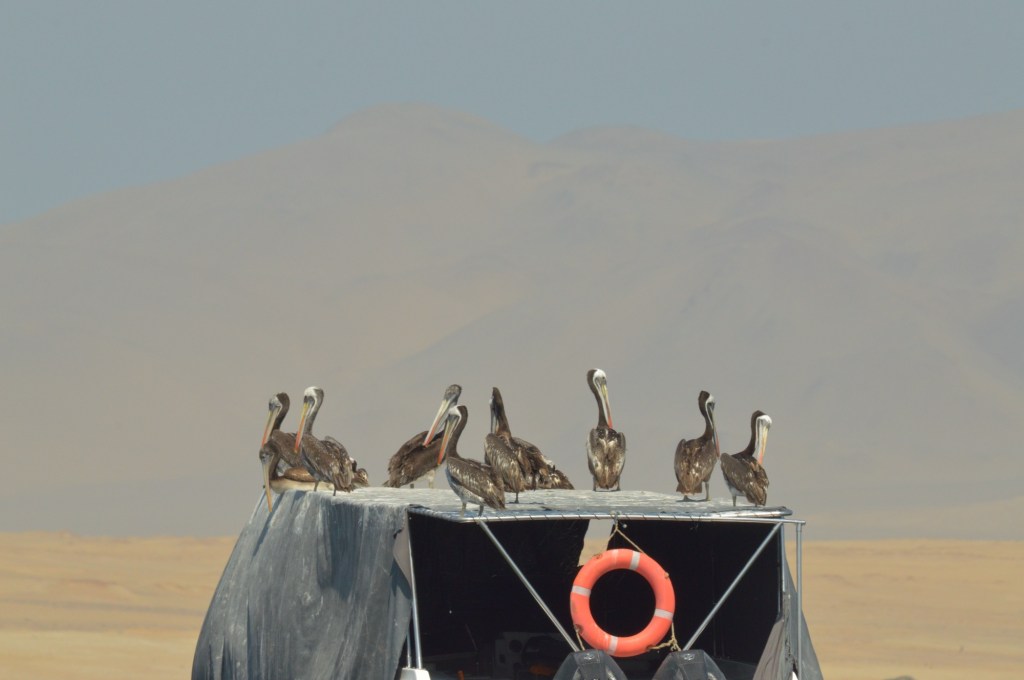
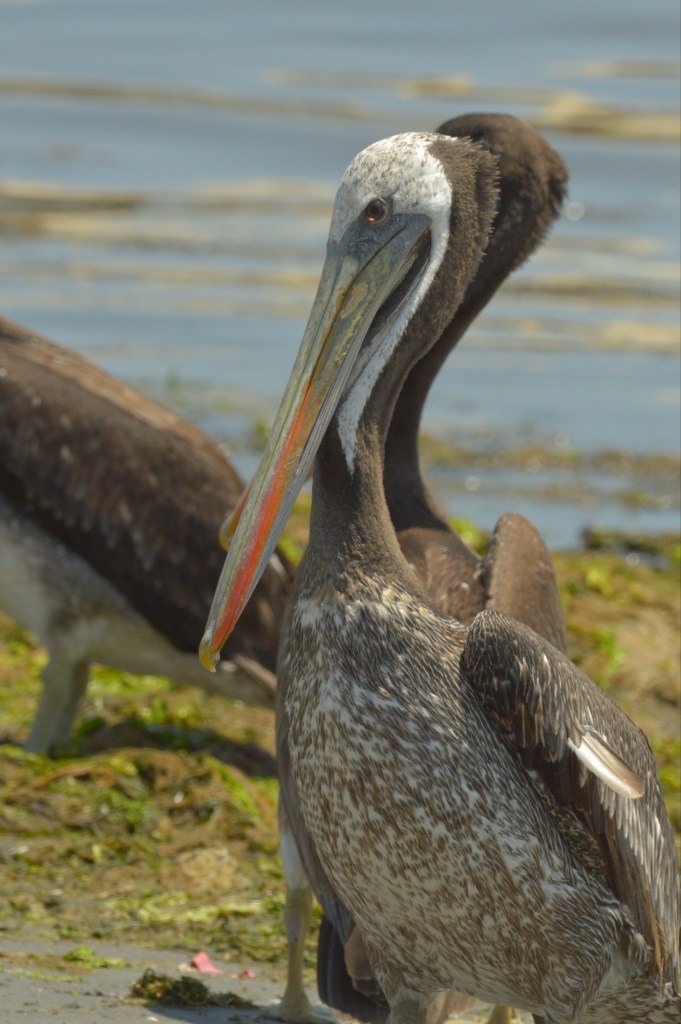
Far larger and more impressive are the pelicans, with a seven foot wingspan and standing at around five feet tall. That’s as tall as the average Peruvian woman. They’re not exactly shy, either. While they’re more commonly observed resting on boats and skiffs or crashing headfirst into the sea in a clumsy imitation of the Peruvian booby, they can often be found right at the heart of human activity. There were a few loitering around the jetty in Paracas, but I had a boat to catch, so I made a mental note to swing by later.

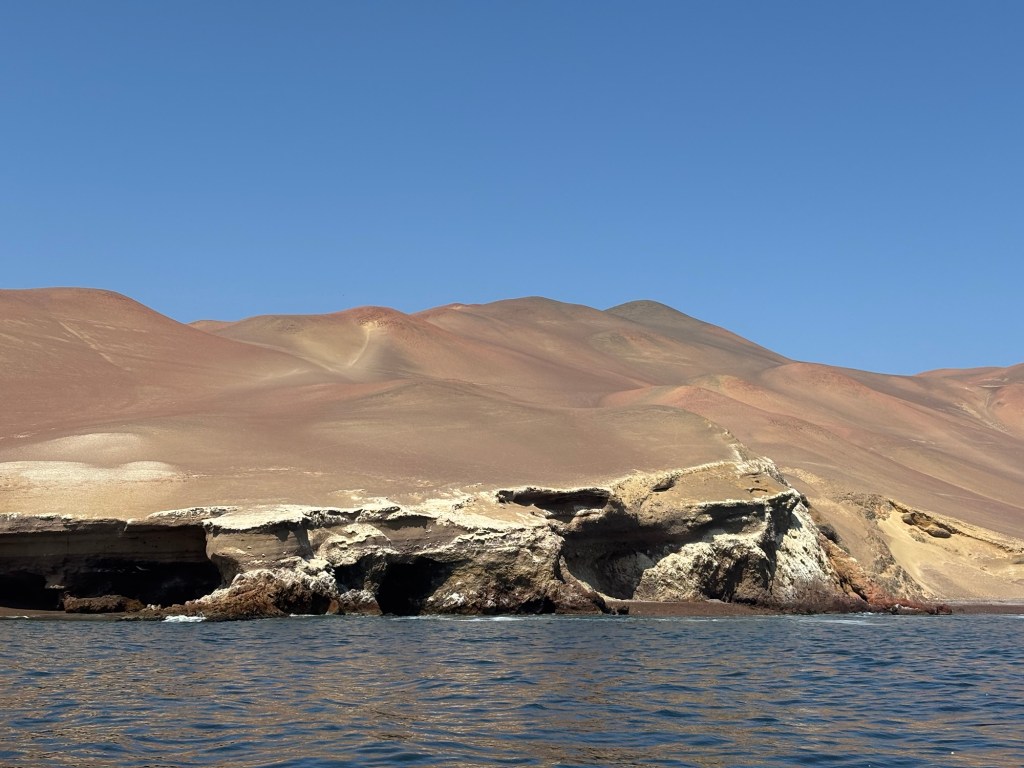
The Peruvian coastline from the sea is nothing short of mesmerising: undulating deserts of marbled rock set against a powder-blue sky that lightens toward the horizon. The cliffs are scored with white, a combination of thousands of years of accumulated salt and guano, the bird droppings that once made Peru one of the richest countries in South America.

One of the most iconic sights in this corner of Peru is the enormous geoglyph, “El Candelabro”. This 170 metre tall symbol was carved into the earth some 2,500 years ago and, due to the extreme scarcity of rainfall here (it rains for an average of thirty minutes a year), it has never been washed away.

Scholars believe it may be related in some way to the Nazca lines, which can be found further inland along the coast. I had originally planned to see these for myself, but they aren’t on my itinerary this year. Maybe next time.
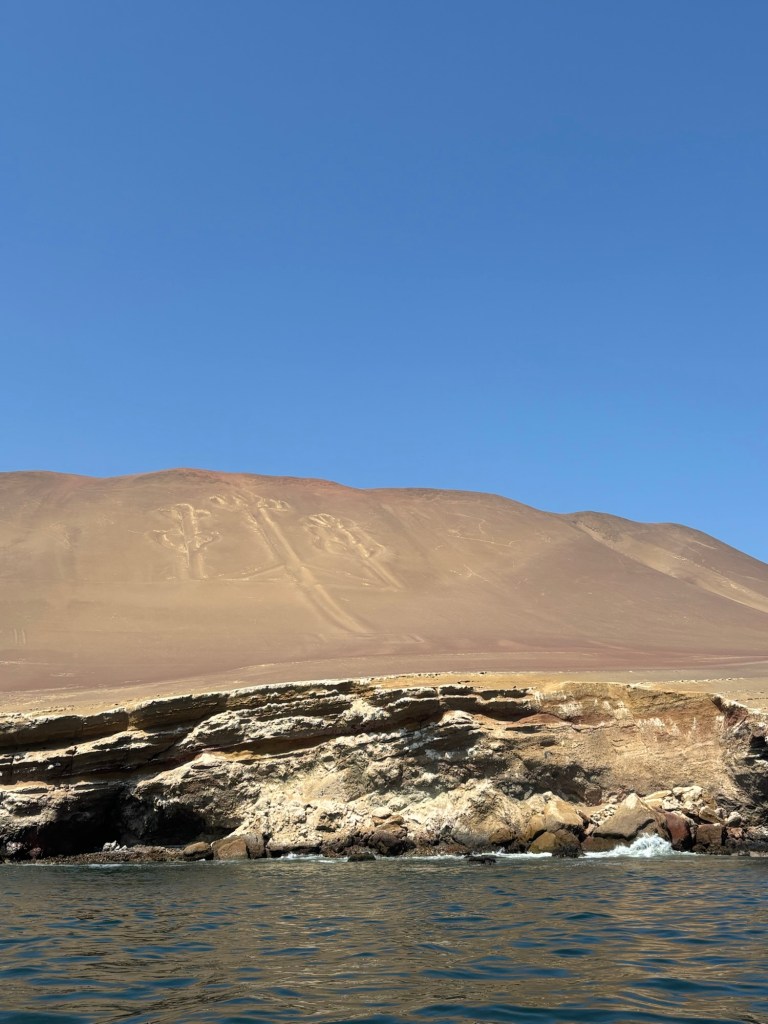

Everyone on the boat got up on their feet to get a photo or selfie with the enormous geoglyph, but I was quite happy with the one picture I had. I was a lot more trigger-happy with the feathered denizens of the cliffs – the pelicans, boobies and Inca terns – which were fishing all around us. They made for quite an awesome sight against the backdrop of the desert.
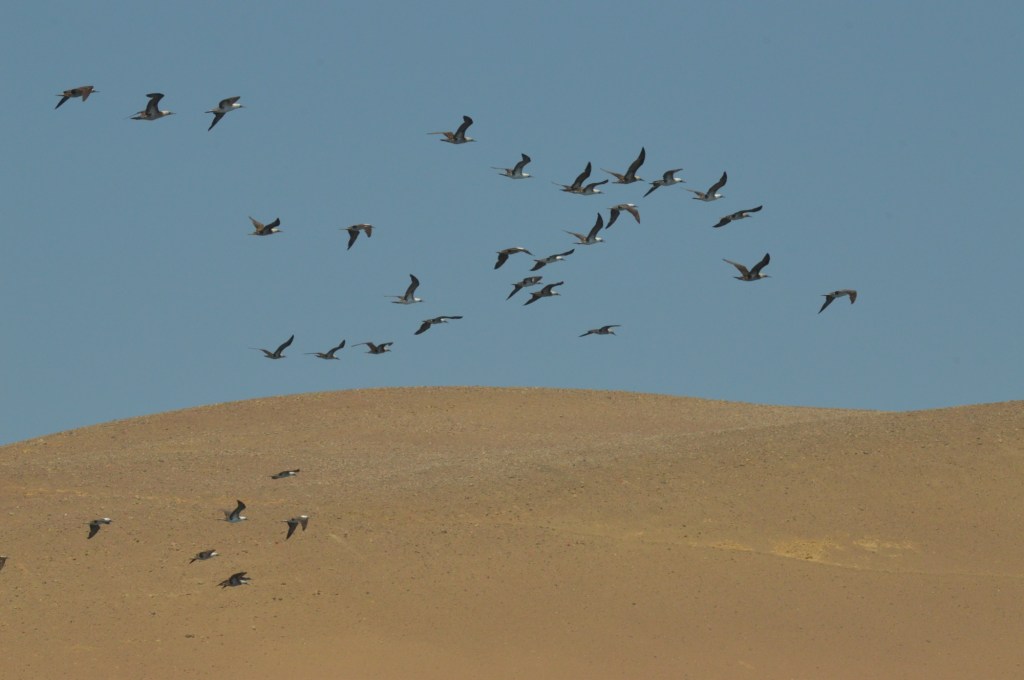

After visiting the geoglyph, the captain turned the boat around and stepped on the gas in the direction of the islands. The Islas Ballestas take their name from the crossbow used by hunters long ago against the thousands of birds who call these craggy cliffs home.

Incidentally, that’s also where the name “booby” comes from. These beautiful seabirds were bobos to Spanish sailors – stupid – because they were so unafraid of people that they came right up to the boats, only to be captured and clubbed to death. Boobies are extremely monogamous, usually pairing just once during their lifetimes. It is said that they will perish of a broken heart if their partner is killed. As such, they are also known in Peru as “bobos románticos”.

It says a lot about the human character that we once saw such devotion as something foolish.
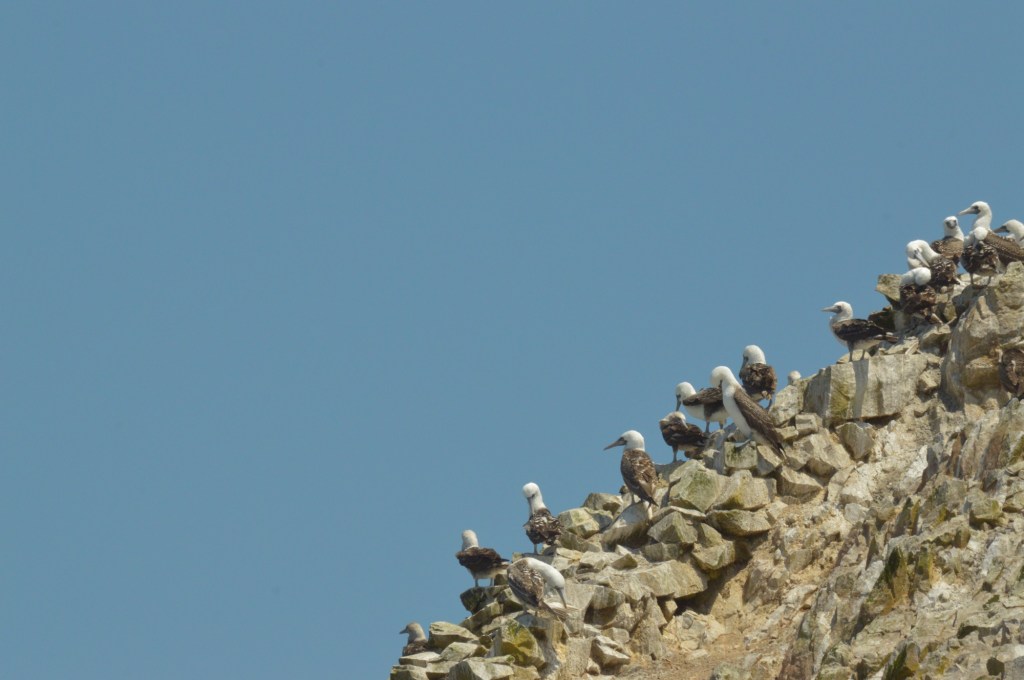

These islands were once home to an enormous colony of guanay cormorants – the primary source of the guano on these cliffs – but they have all but evacuated the place. The reason is not hunting or overfishing but the vicious avian flu epidemic in 2022, which cost the lives of nearly six hundred sea lions and fifty-five thousand seabirds, decimating the islands’ populations of boobies, pelicans, cormorants and penguins. The colony is slowly recovering, but the cormorants that once turned the sanctuary cliffs black and white are now just a shadow of what they once were, especially outside of the breeding season.
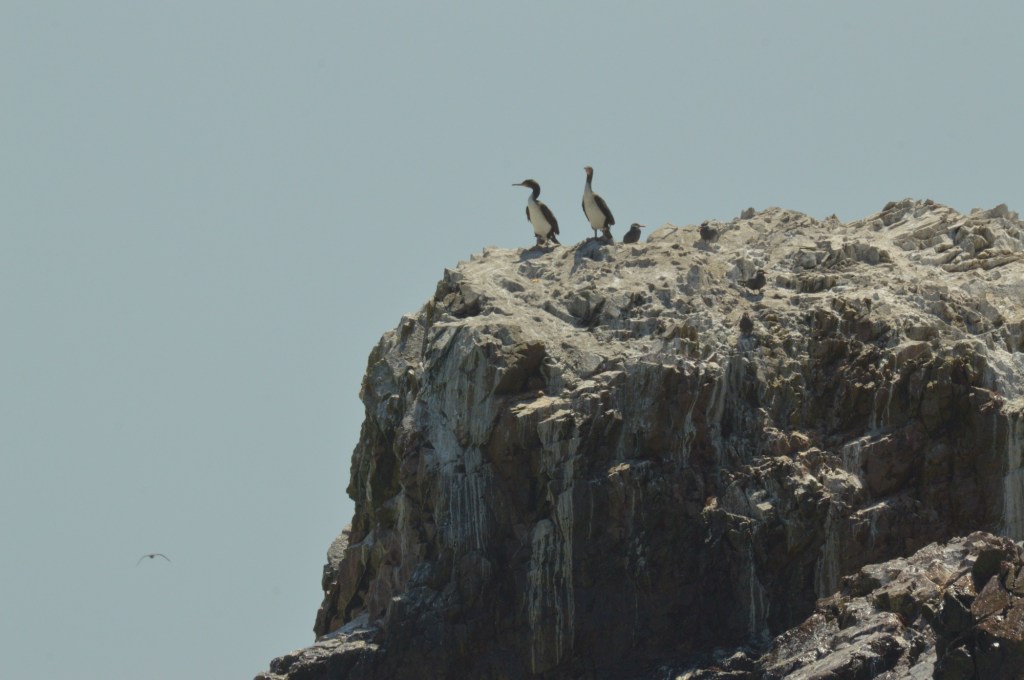

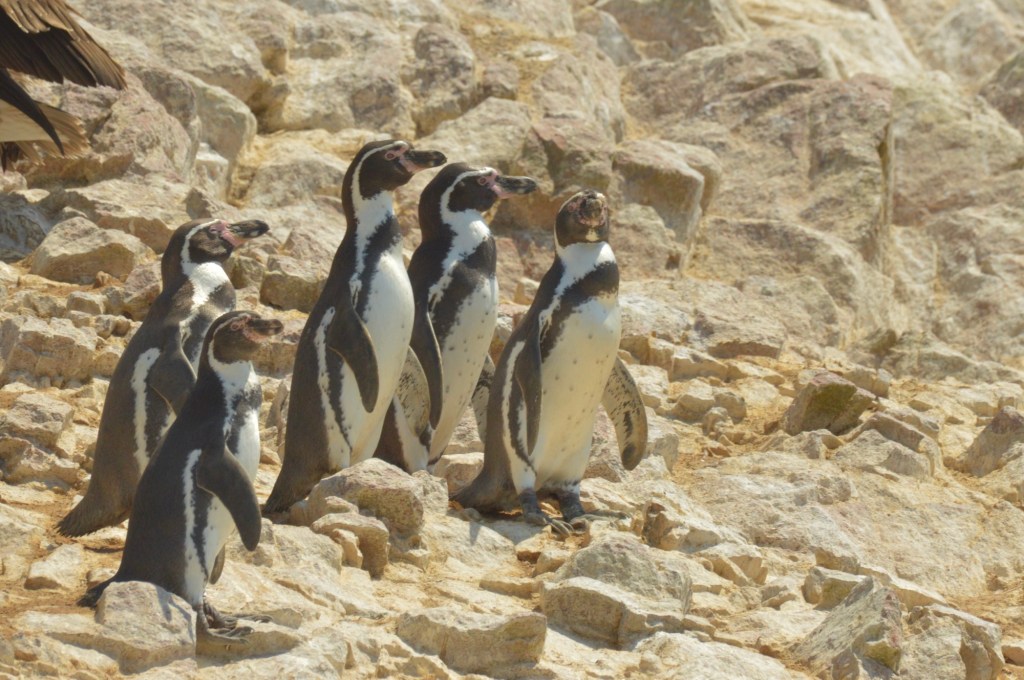
One of the biggest draws on the islands remains its dwindling colony of Humboldt penguins. We saw only seven of them, but there may have been others out hunting in the open ocean, as the breeding season is now long behind us. How these bipedal creatures made it high up onto the cliffs beats me, but it was fun to see them waddling down to the edge to watch us sailing by.

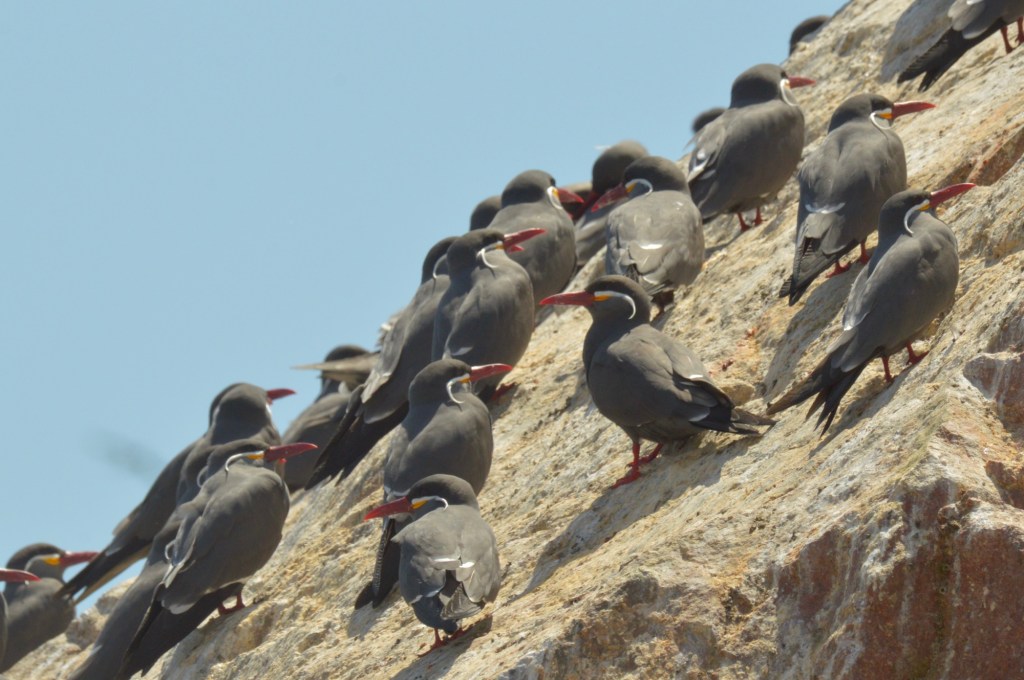
The last of the feathered residents of the islands that deserve a mention are its Inca terns, an especially smart seabird with handsome “whiskers” beneath its eyes. They’re known colloquially as “ladrones del mar” on account of their habit of stealing fish from the neighbouring cormorants and boobies, but I didn’t see any thieving today. On the contrary, they were showing remarkable success in their own fishing endeavours around the islands, and like most terns, they’re tremendously acrobatic and quite a joy to watch.

It would be remiss of me not to mention the fur seals and sea lions that live on these islands. They’re not as fun to photograph as the birds, and as we’re in the middle of their breeding season, we weren’t allowed to get too close to their sanctuary beach (males and females live apart, with only the dominant male having access to his mighty harem). The fur seals were mostly lounging around in the midday sun, but I did see a few sea lions chasing our boat there and back, and a mother and pup playing in the surf not too far from the boat.
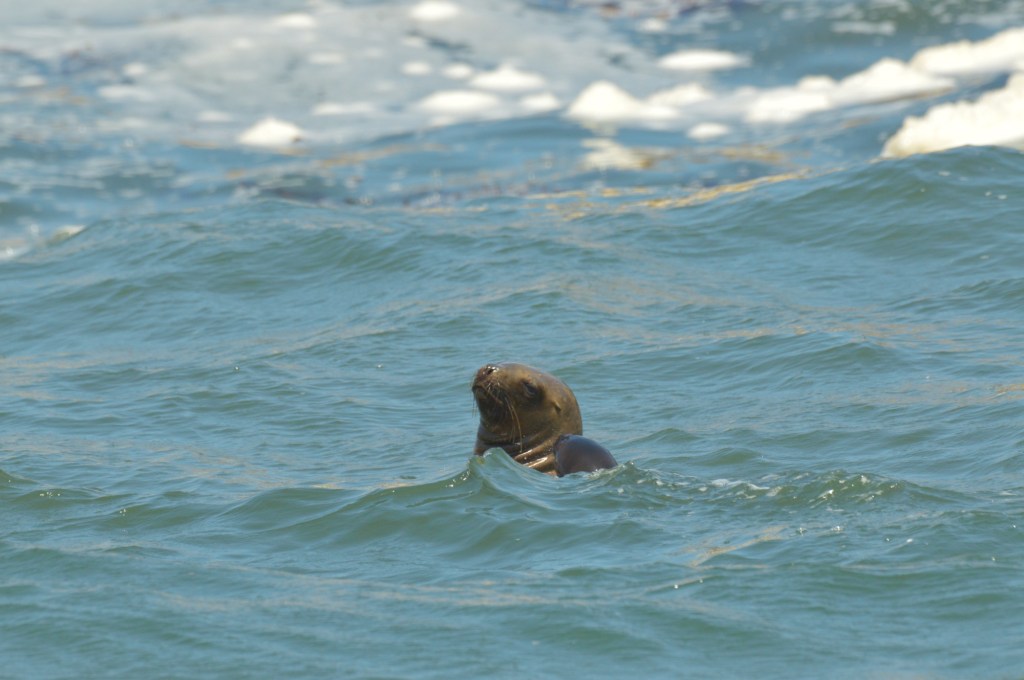

The return journey to Paracas stops at a buoy, which is apparently a favourite haul-out for the seals. Why here, halfway between the islands and the coast, was not explained, though I suspect it’s because the waters are especially rich in this spot. There was a huge amount of activity from both birds and fishermen around here.
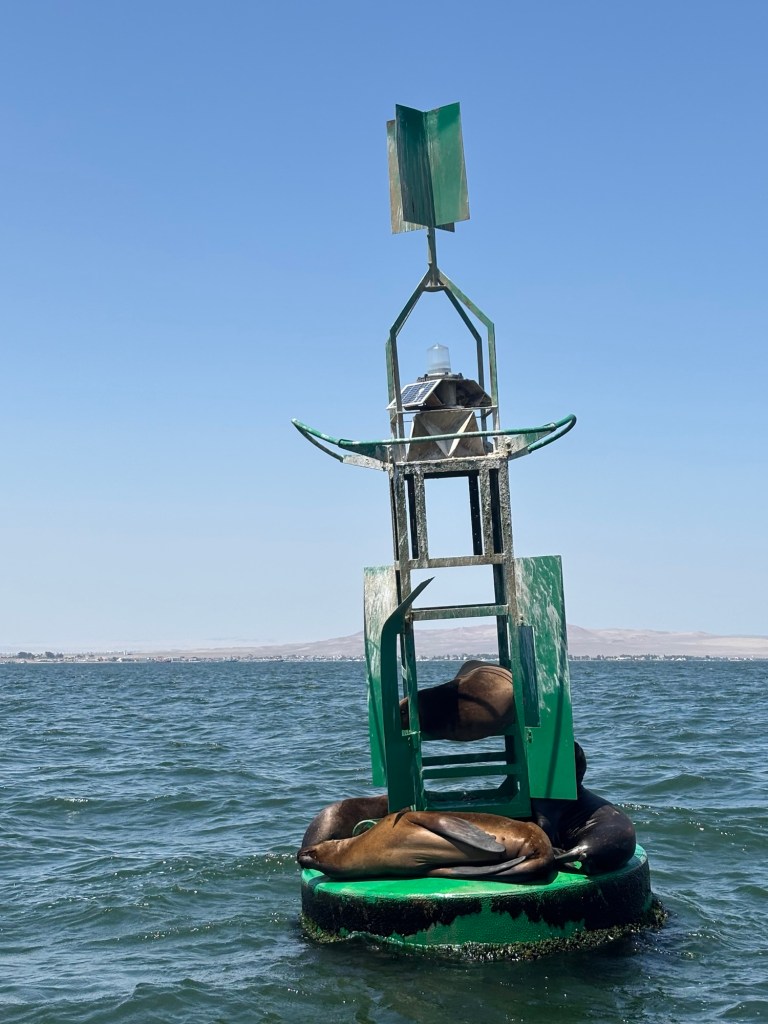

The captain drove right up to the buoy, which spooked the fur seal that was already in the water, but the others didn’t seem to troubled. It was already pretty hot, and with the waters in these parts carrying the Antarctic chill of the Humboldt current, it must be nice to have an isolated spot to come and warm up, out of reach of the blue sharks that hunt them further out to sea.
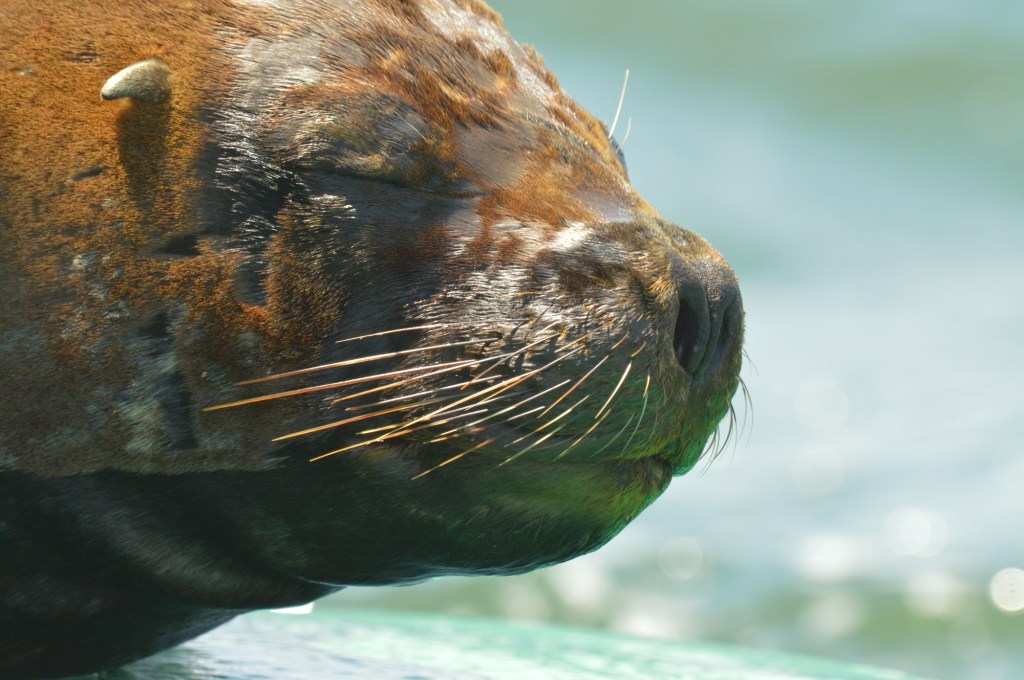

Back in Paracas, I made sure to revisit the pelicans, who clearly hadn’t gone very far since we set out. I suspect they’re enticed by a couple of savvy local touts who hope to draw in tourist traffic by keeping a few of these mighty creatures close at hand, but they didn’t give me any trouble. One advantage of having the mighty zoom lens on me is that I don’t need to get too close, especially when to comes to birds as big as the Peruvian pelican.

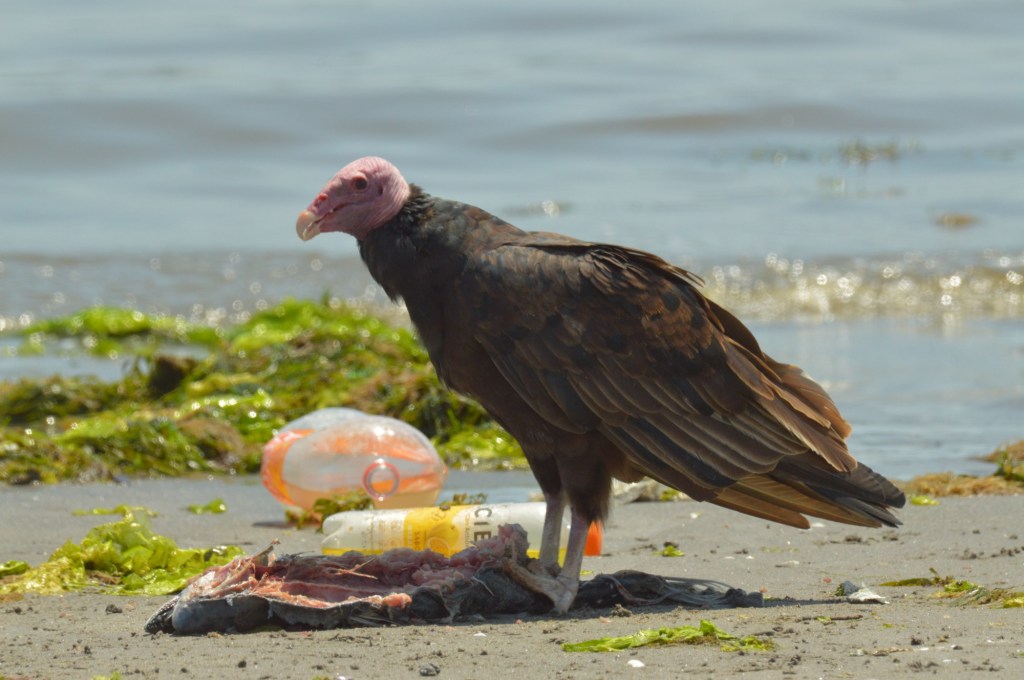
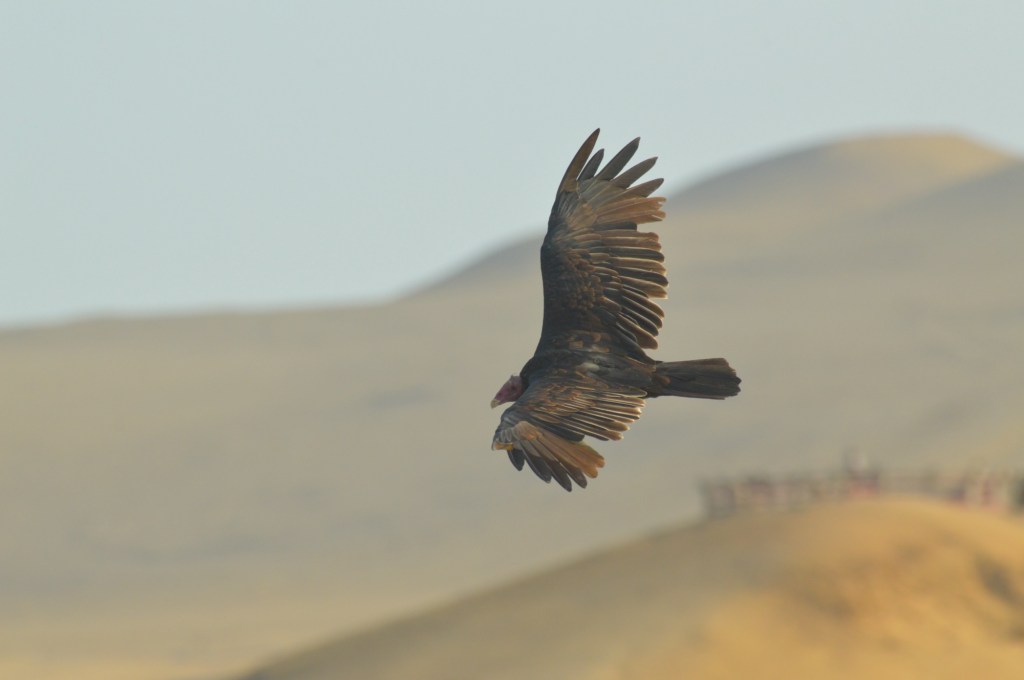
Swooping in to steal the spotlight, however, came a cousin of the gallinazos I spent so long with yesterday: a turkey vulture. If black vultures were the stars of yesterday’s adventure, the turkey vulture worked overtime to take its place today, starting with this happy chappie who had a large fish all to himself – once he’d scared off the kelp gulls who had found the thing first.

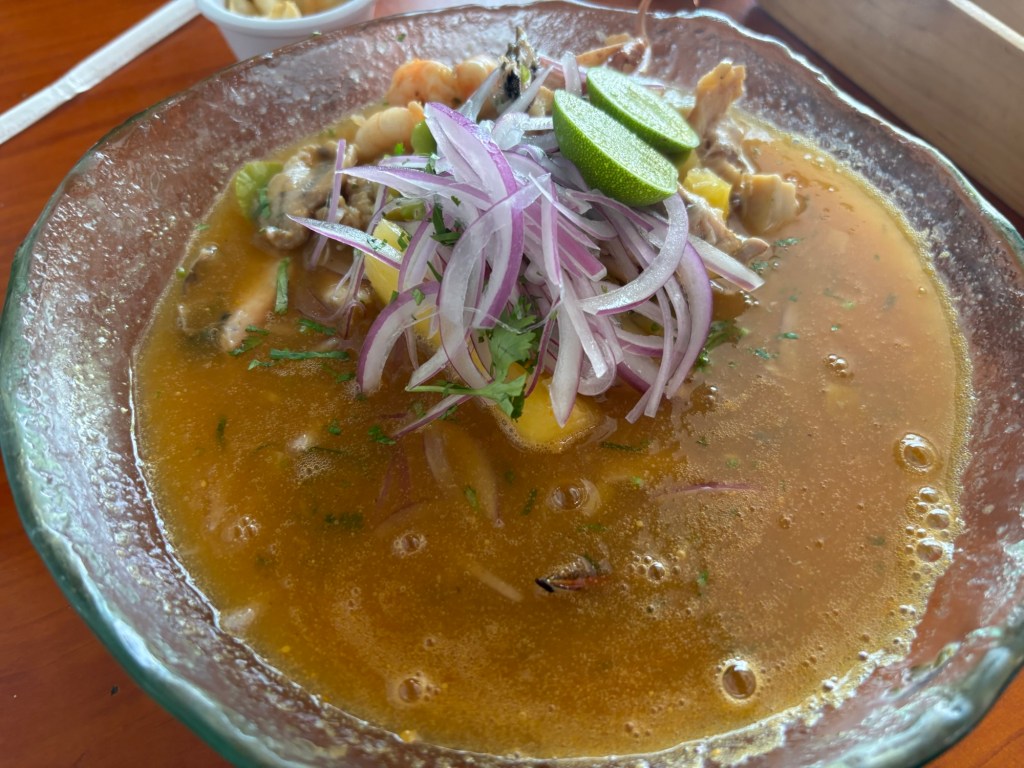
Seeing the vulture tucking in reminded me that, bar a light street food snack the night before, I hadn’t really eaten a square meal since departing Colombia on Monday. As such, I was quite prepared to go all out for lunch. There were plenty of spots offering ceviche, a Peruvian specialty, but I was much more interested in the parihuela, a crab-based seafood stew laced with Peruvian lime.

Honestly? One of the best meals I’ve ever had, and that’s not only because my hunger was keen. They left the entire crab in the bowl to intensify the flavour, and I very nearly ate the entire dish, defeated only by a couple of spoonfuls.

One large bowl of the stuff was enough to keep me going all day and well into the following morning. I wonder if that’s a healthier way to live? It sure makes a nice change from three school meals a day.

After lunch, I swapped buses with the tour heading into the national park. There were only nine of us including the two guides, Deborah and Paul, which made for a much more peaceful and reflective adventure into the desert. I wound up next to a chatty English girl on her gap year, who was headed for Panama and had struck it out alone for most of the journey. There seem to be quite a few types like that out here, wending their way up the continent, and with bus and flight prices being why they are, I’m hardly surprised.
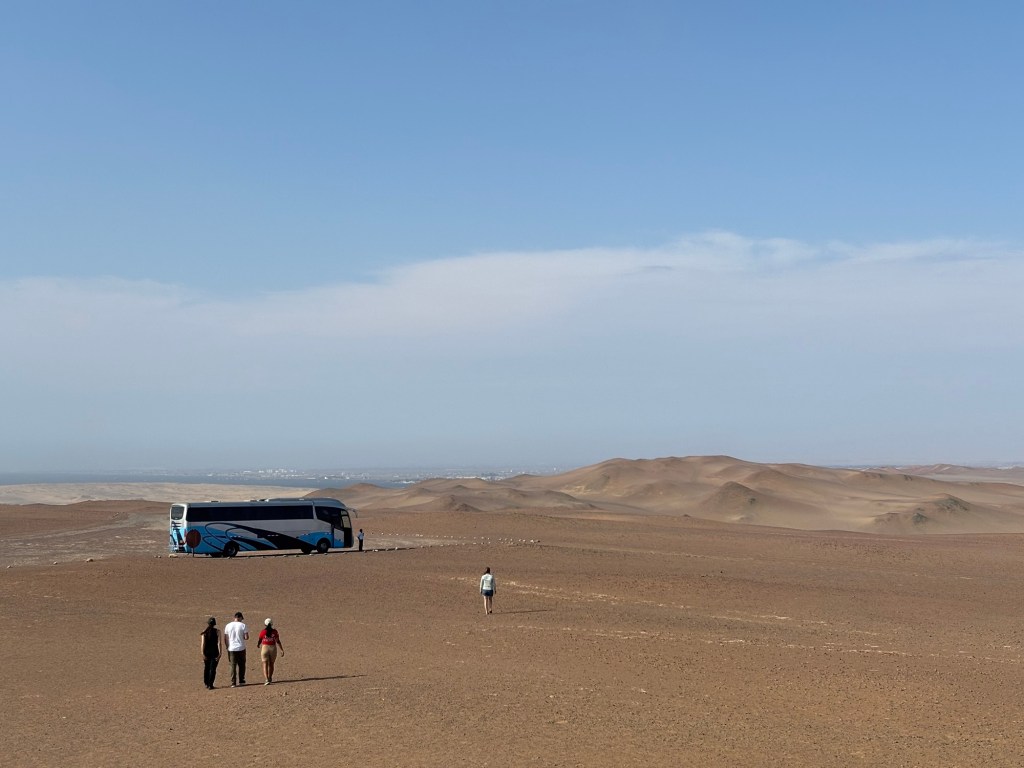

The Paracas peninsula is special in that it is one of the last stretches of the Atacama Desert, the driest desert on the planet. True to form, there was very little to see by way of life from the bus. No vegetation, no water, almost no sign of life at all.

That is, except for the turkey vultures, which have a colony of their own along the cliffs.
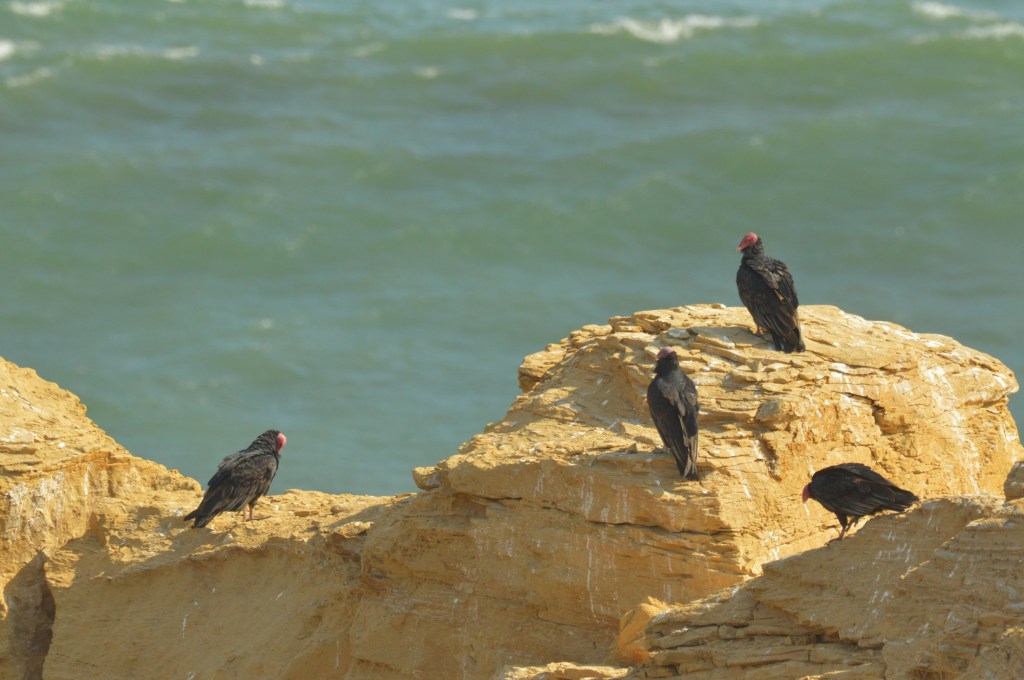

In the late afternoon, with the wind picking up, these handsome creatures ride the thermals along the coast and can be seen at eye level as they glide up towards you from the bay below.
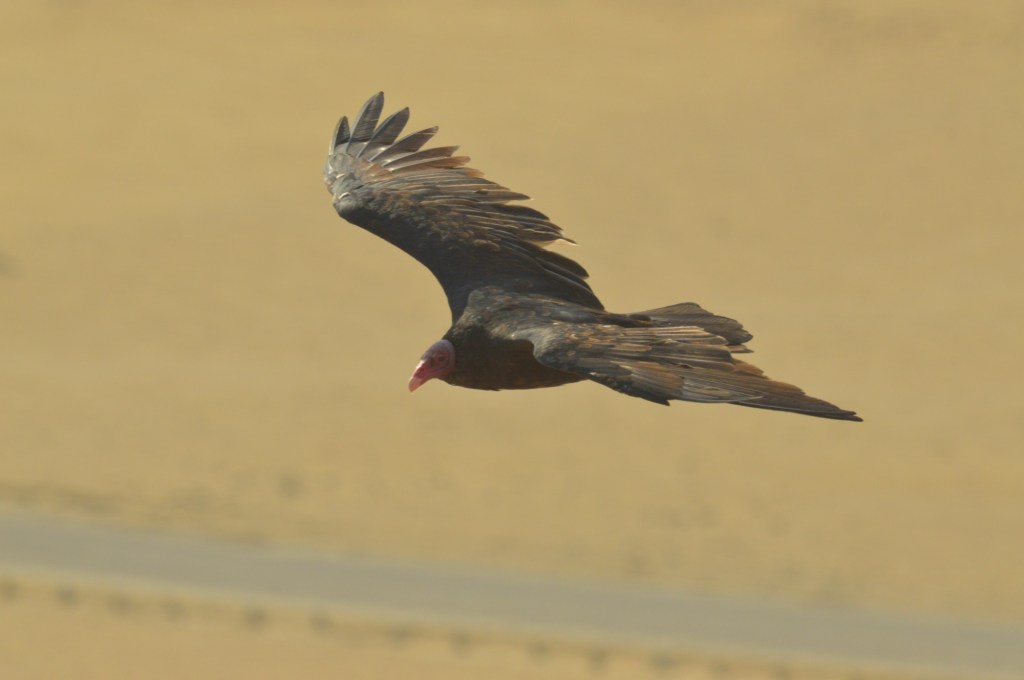

It’s always special to see a vulture from above, as they’re usually specks against the firmament. I’m fully expecting that to be the case with the condors, but if I should be so lucky, I might just get the same experience in Colca tomorrow. Fingers crossed!

Right – that will do for today. That took me the best part of two hours to write. Now I should really think about packing up, checking out and heading into Lima for lunch before taking my onward flight to Arequipa, the next stop on my journey.

The world around me is about to change. Quite literally, it’s only up from here. BB x
Jekyll and Hyde

One week from today, I’ll be sitting on the beach at Aqaba with term over and my labours temporarily at an end. Two weeks from today, I’ll be waking up in the comfort of my own bed once again, looking out over the Sussex Downs. Three weeks from today I’ll probably be back in Kent with the family, to see my brother in especial before he leaves for University. And one month from today, I’ll be sitting in the bus station in the sunblasted Plaza de Armas in Seville, waiting for the coach that will take me northwards to what is to be my home for the next nine months.

It’s all moving thick and fast roundabout now. I’m taking some time out in Ali Baba to work on the novel for a bit. Most everyone else has gone off in different directions: some to Wadi Mujib, some to grab a falafel lunch, others to one of the nearby cafes for some quiet study. I’m here in search of my voice, which I seem to have lost whilst I’ve been out here. I spoke to Andrew for quite a bit about this last night, reading back over some of my notes that I penned last year, in various states of emotion. Andrew gave me quite a jolt when he opined that my writing was a great deal better back then. Those aren’t easy words to take for somebody who’s set himself on the path to bettering his writing… How could this be, I wonder? Is it because I’m writing every other day, so I’m drip-feeding my thoughts rather than saving them up for a grand oeuvre? Or maybe it’s because I’m not finding enough time for myself to think properly out here in the city? I think there’s a bit of truth in both of those. My writing has become rather acerbic of late. Compared to all the self-help greenie moralising I used to throw about, my later work comes across as bitter, over-excitable, and above all else more than a little opinionated. I hope it’s not a lasting trend. I took the time to read over my notes a second time after I’d discussed them with Andrew and I’m a lot happier with them, though I know I wasn’t at the time. Maybe I’ll look back on these blog posts in the same way, and maybe not. My saving grace is that there was a victory achieved last night, however small; after comparing my writing, Andrew conceded that maybe sticking it out in a city really isn’t good for me at all. Because if there’s anything that might be described as a true window into the soul, it’s the way we express ourselves, poetry, paint or prose.

My summary of Amman a week ago was misinterpreted by some as an all-out attack on Jordan. I’d like to come clean on that point and confess that it’s really not that. In many ways, I’ve loved Jordan. The dizzying views up into the Golan Heights from across the river, the crashing waterfalls of Wadi Mujib and the stars stretched out like glittering velvet over the desert. Dana in all her majesty. Jordan is beautiful. And capital city though it may be, even Amman has its bright sides. In my melancholy, I’ve been unable to see it; largely, I guess, because I didn’t want to see it. It eludes me still. Picture this: you’re at the cinema, and the guy in the row in front of you turns around and asks you to stop kicking the back of his chair. You didn’t even realise you were doing it. Of course, you then spend the next five minutes wanting the kick the chair even harder – or is that just me? There’s a window into my mind and a half.

What I’m trying to say is that I have a bad stubborn streak, and this city – or any city, for that matter – brings it out of me like never before. When somebody tells me to stop doing something, or that I’m going to like something, my first instinct is to disobey. Watch Mean Girls, they say, ‘because it’s unavoidable… it’s part of our culture’. Instinct tells me therefore I cannot, under any circumstances, be made to watch it. Wait it out in Amman, they say, and try to learn to love it ‘because city life is just something you have to get used to… and Amman is actually a really cool place once you get to know it.’ Sod’s law dictates that it cannot be. It’s the old ‘I’ve come this far, I can’t turn back now’ line.

When you set it down in writing, it’s really quite pathetic…

What’s a guy to do? I reckon the thing that I’m missing most of all, perhaps even more than escaping the metropolis, is time. Time to think, to write, and to be myself. It’s not just my writing that got bitter out here, it’s my personality. It sure is helpful having people around to point that out before it gets rotten. The year abroad is such an important part of your degree that it can feel criminal to ‘waste’ even an hour of it. As such, the last two months have been almost non-stop. Wake up, class, study, go downtown, shopping, sightseeing, studying, repeat. I rarely have more than an hour or so to get my head straight and that’s seldom in the solitary silence that I crave. Maybe I’ve made myself too dependant on ‘me time’; if there’s one common feature in all of my notes from last year, it’s a heavy emphasis on the importance of ‘me time’. I was busy then, too, rushing from class to rehearsal to gig after gig – and yet, I still managed to find time to wind down every week or so and defuse. Not so here. And it shows, right?

Oh, there’ll be one last big reflection on everything that’s gone down out here in the Middle East before I go. I hope that will be a better read, too. A blog in itself is a funny old thing, pasting your thoughts and feelings for the world to see. But that’s what writers do, paper or pixels. Some of my best writing was set down when I was in the throes of a hopeless crush, some time ago. Or maybe it’s just because we’re human, and we all love a good gossip. I don’t know. I’m going to keep looking for my voice, and I hope that I can find it again before I leave this place, if just to leave you with Jekyll’s view on Amman rather than Hyde’s. I think that would be fair. (Oh look, I’ve gone and done a JK Rowling, leaving the explanation of the title to the very last line of the chapter. Now I really do need to get reading some more!) BB x


From Burning Desert to Sapphire Sea

One minute I’m standing on a high rock, staring into a lunar desert whilst desperately trying to even up my tan lines; two hours later I’m staring down at a school of damselfish drifting over a coral reef. I’m still struggling to get my head around it.

Sunrise feels far longer ago than this morning. After putting the finishing touches to last night’s report, I left the others sleeping in the campground and set off alone into the desert once again, this time to see the sunrise. I made it to the other side of the valley in time to catch the first rays of sunlight bursting over the cliffs. The sand was full of tracks: the footprints of beetles, snakes, camels and four-wheel drives crisscrossed the valley floor. There was even a lone skink trail halfway across, both satisfying and amusing on a more personal level (for the record, it’s an old family joke about lesser-spotted three-toed eagle-eyed skinks that gets wheeled out whenever yours truly gets boorishly specific about animals). The others were mostly up and about by the time I returned, and in perfect time for half an hour’s meditation before breakfast. The hefty futur Ahmad and his brother Khaled prepared for us was a kingly feast: fresh bread, helwa, jam, hummus, falafel and hard-boiled eggs (there’s no escaping them!), and that’s without mentioning four glasses of that lovely sage and cinnamon-infused Bedouin tea. Dee-lish. God help my teeth over the coming year, because Spain and the Arab world most certainly won’t.

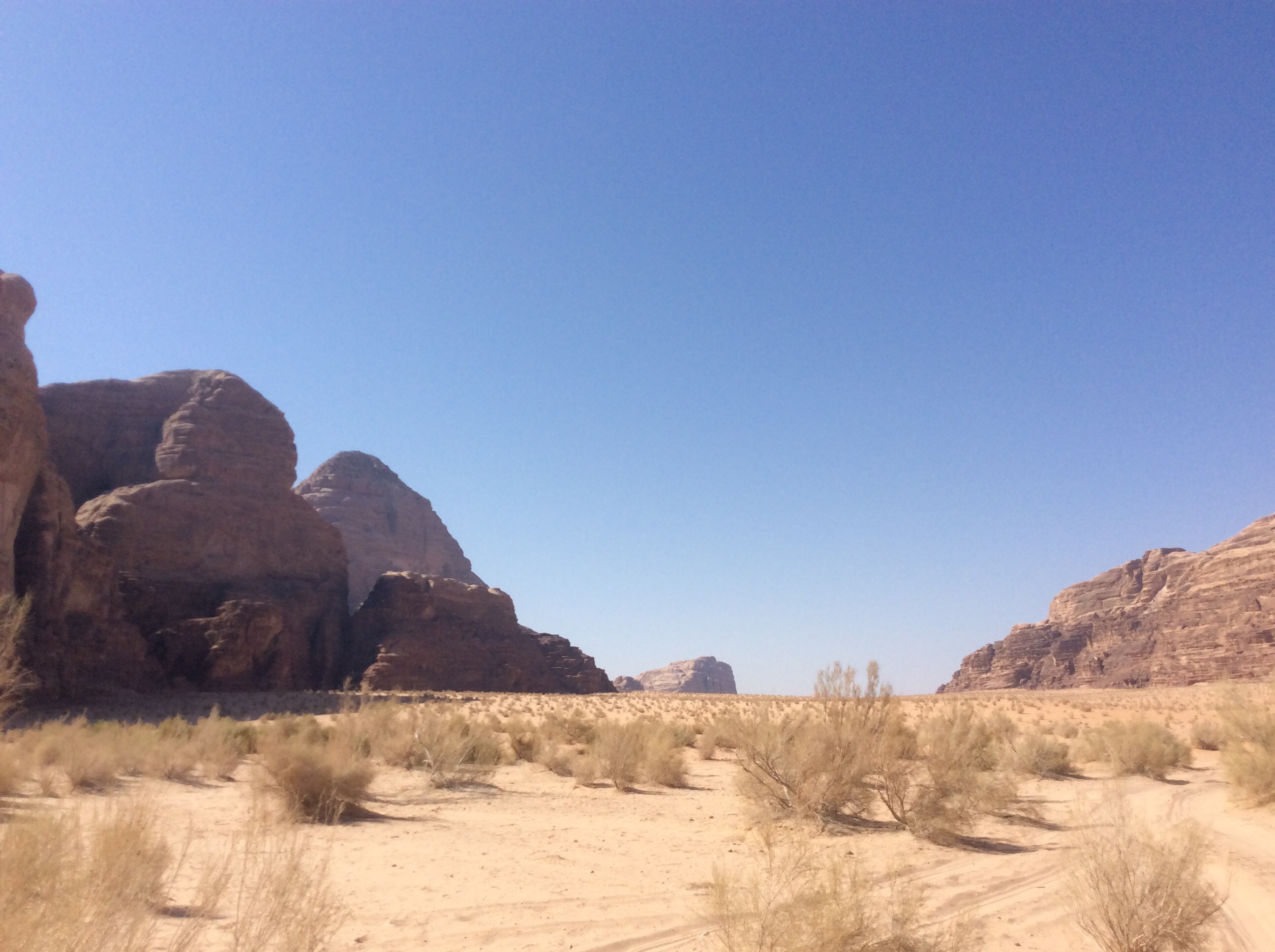
The jeep tour of Wadi Rum was a pretty standard exploration of the main sights, as you might expect: the early Nabatean rock art, Lawrence’s house and the rock arches. I needn’t elaborate much; such sights, stunning though they may be, are better detailed in guidebooks. Besides, Langelsby’s got it covered. I highly recommend you go for a tour if you’re in the area, though. On a more personal note, I found it profoundly ironic that I finally found a haven for wildlife, in what must be outwardly one of the most inhospitable landscapes on the planet. Desert larks, white-crowned wheatears, rock martins and rosefinches followed us from rock to rock whilst the ever present grackles, the tricksters of Wadi Mujib, whistled noisily overhead. No sign of the nocturnal denizens of the desert, but a welcome change from scabby cats and pigeons. The naturalist in me will never be suppressed. So says the lesser-spotted three-toed skink, at any rate.

On the knowledge that wrangling a bus from Wadi Musa to Amman might be beyond us, we arranged with Ahmad, our kohl-eyed Bedouin guide, to take us as far as Aqaba instead, where buses to Amman would be easier to achieve. Aqaba may be your run-of-the-mill beach resort these days, but it has a notch on everything I’ve seen before: the Red Sea. Sapphire would be a better name by far. I’d heard stories and seen pictures, but I’d never really believed quite how deep a blue the Red Sea was. Quite by accident, and with no small meddling from my heart, I found myself physically incapable of passing up the chance to go snorkeling.

Water sports and I don’t have an easy history, let’s say. Ask the population of Whitstable, who watched me capsize a kayak twice and have to be towed ashore (yeah, that still smarts). Swimming’s just about my favorite sport, being both an important skill and the only sport I’ve ever enjoyed, but I have breathing issues – something to do with my nose – which makes most other water sports more problematic than entertaining. Snorkeling has always been a dream of mine, though. Not as technical as scuba and easily doable for somebody with breathing issues. I say that, at least. It’s easy in retrospect.

The first forty minutes were tortuous – not because very salty water kept leaking into my mask, or because I was panicking over the oddity of breathing through a tube, but because the scenes opening up below me were nothing short of some of the most breathtaking sights I’ve ever seen (ouch, that was a bad pun). Stacks of frilled and fringed coral giving way to deep, sandy gardens shimmering in the crystal sunlight. Black sea urchins stretching their tapering spines out of crevices. Angelfish, surgeonfish, triggerfish, even clownfish, frolicking just inches in front of me. It was like living a wildlife documentary in the flesh. By the time I’d finally worked out how to breathe properly – ironically, the key to it was simply calming down and having faith in the tube – we only had five minutes left in the water. But those last five minutes were magical, even more so than the stars over Wadi Rum. Who could possibly feel lonely, or even give loneliness a second’s thought, with scores of brightly colored fish teeming about so close to? Those were my brightest moments.

Christ, but I feel like a tourist right now. I’ve just tackled three of Jordan’s biggest attractions in two days flat: Petra, Wadi Rum and the Red Sea. I didn’t really give Petra much clearance, did I? Mm, I’ll leave that one to the girls over at Langlesby Travels (https://langlesbytravels.wordpress.com/).

It’s been a busy weekend and a half. It feels unreal, somehow. But I don’t regret it for a second – and for once, l don’t even feel ashamed. I am a tourist. Jordan thrives on tourism. I guess I’m finally beginning to accept that. And about time too! Travel is no more and no less than the best thing you can do with your life, and it’s such a shame to have it spoiled by something you could never change, even if you wanted to. BB x

Sunset over the Promised Land

Ten minutes in the Dead Sea and I’m more alive than I’ve been in days. If that’s not a most bizarre oxymoron, I don’t know what is. It is a hackneyed one, though, so I’ll be as original as I can.
After yesterday’s city-induced nervous breakdown, I was a little apprehensive about my ability to face a whole day of sightseeing in high spirits. A seven o’clock start, mid-thirty degree heat, one car and twelve people with very different attitudes toward travel adds up for a pretty hectic road trip. But you must know my mind half as well as I do now; travel, especially the stressful kind, is deeply cathartic. Adventure is all about facing your fears, being more than a little reckless and having bucketloads of good and bad luck in equal measure. It beats case-marking and paperwork any day. Better the devil you know than the devil you don’t.

Mon dieu, but it was good to hear silence again. And a very new silence at that. Of course, traveling with twelve meant that it was never truly silent, but perhaps that wasn’t such a bad thing. Silence in the desert is otherworldly. It’s not just an absence of sound, it’s an absence of life. It’s oppressive. I guess I went into it in the mindset of ‘one of those desert-loving English’, but Alec Guiness’ Faisal has a point: there’s nothing in the desert. Stand with me atop the crumbling remains of one of the desert castles east of Amman and tell me otherwise. It’s just mile upon sun-scorched mile of hard, grey earth, dusty and pockmarked with black in all directions. A silence that smothers. After the endless bustle of Amman it felt almost wrong to be surrounded by such emptiness; like I’d stepped off the edge of the world into the void. I’m told this place was once lush and green, filled with game, and not too long before our time. Perhaps as recently as thirty years ago. Looking at it now, it’s almost impossible to believe, like the first dinosaur bones. Each castle had its own sad tale of grandeur, decline and the ravages of a world running out of time. And all of that for just one dinar. Moroccans, for all their smiles, have a lot to learn from the Jordanians about fair pricing.

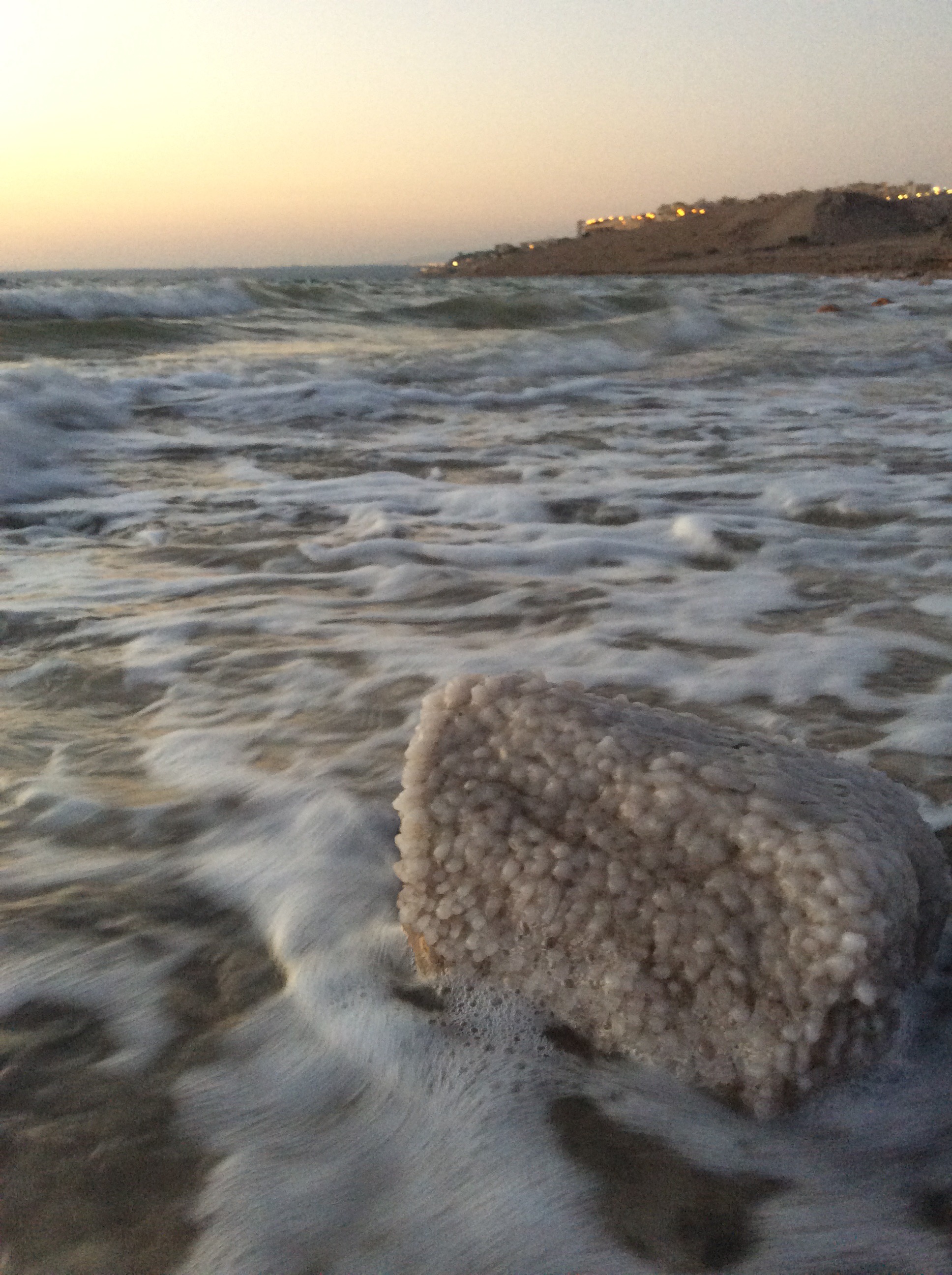
After gazing longingly across the ten kilometre distance to the Syrian border, we returned to Amman to make a brief pit-stop before setting out once again, this time for the Dead Sea, to capitalize on our hired twelve-seater car whilst we had the chance. Getting down to the shore itself was a little fiddly; our first venue tried to charge us twenty dinars each for entry. We fought our way out of that to find another option fifty metres down the shoreline at just five dinar a head. Whether it would have been wiser to give ourselves more time is doubtful. All I can say is we timed our arrival perfectly; as everybody raced for the water, the sun was just beginning to set over the mountains on the other side of the sea, over Israel. I volunteered to stand guard over the bags whilst everyone else went for a float. Being in the water for sundown must have been pretty neat, but I reckon I had the killer view from further up the beach, watching the oddly slow waves slush against the shore in golden ripples. I guess I felt like Moses for a moment – not least of all because I was wearing a Turkish bathrobe that might have come from the set of Exodus itself – watching the sun set on the Promised Land. I’ve never been particularly keen on visiting Israel – the visa complications and Africa have always stopped me before – but looking at it then in the dying light I was transfixed. It was beautiful, like no land I’d ever seen before. Is it any wonder it’s caused so much trouble, like the similarly captivating forested mountains of the Congo? It might well have been the magic of the moment, but it’s definitely going down as one of the most memorable sunsets I’ve witnessed. Period.

I’m not done with you yet, Israel. Not even close. BB x