Athene noctua

The students have gone home for half term. Silence hangs over the school. The corridors of the boarding house are dark, and a little cold, too. The floorboards creak under my foot with the kind of volume that only darkness can amplify. The dull glow from the torch on my phone casts long shadows. A friend of mine once explored an abandoned hospital on a dare. I did not go with him then, out of some primordial fear of the darkness within. And yet, here I am, haunting the empty corridors of this old house by night, the last man standing. Filling up a water bottle from the cooler on the Year 10 corridor becomes a quest in its own right.

I’ve had a lot of time to think lately. I guess coming out of a long term relationship will do that for you. One of the things I thought I might be able to recover was the fierce reading streak I had on my year abroad, but I just can’t find my mojo for that right now. Time just seems to slip through my fingers when I’m not at work. I wonder what the world does when it’s not working? I guess that’s what television is for, or Netflix, or whatever streaming service is in right now. But then, I’ve never been good at sitting down to movies or TV shows. My brain wants to be involved. There’s a precious few I’d happily watch over and over and over again, but it’s rare that I find a new picture out there that sinks in.
There’s not a day goes by where I don’t feel a genuine fulfilment in my line of work. Teaching is in my blood, a duty that my ancestors have carried out for generations. Knowing that I am the torch-bearer for my generation gives me a sense of purpose that is utterly unshakeable. And it’s not as though that purpose hasn’t been tested over the years. It’s just that, whenever something comes up to shake its fist in my direction, I know instinctively that there’s a greater mission behind it all, and that’s reason enough to persevere – even when my core beliefs are thrown into disarray. I wonder if my great-grandparents, Mateo and Mercedes, ever had such doubts?

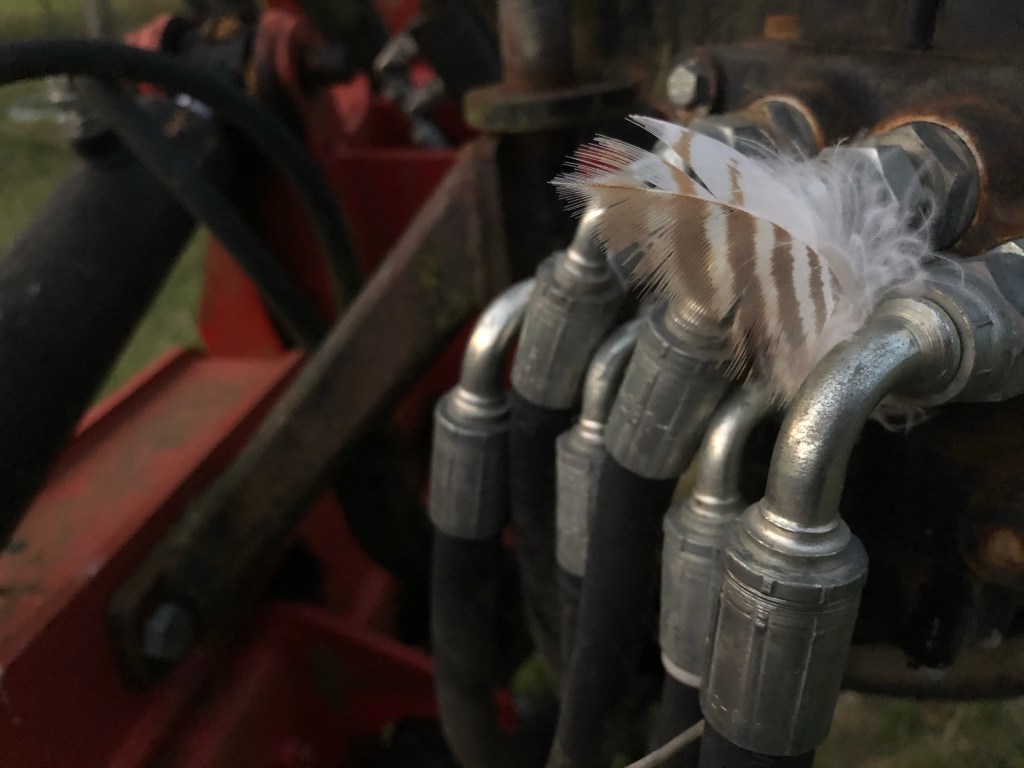
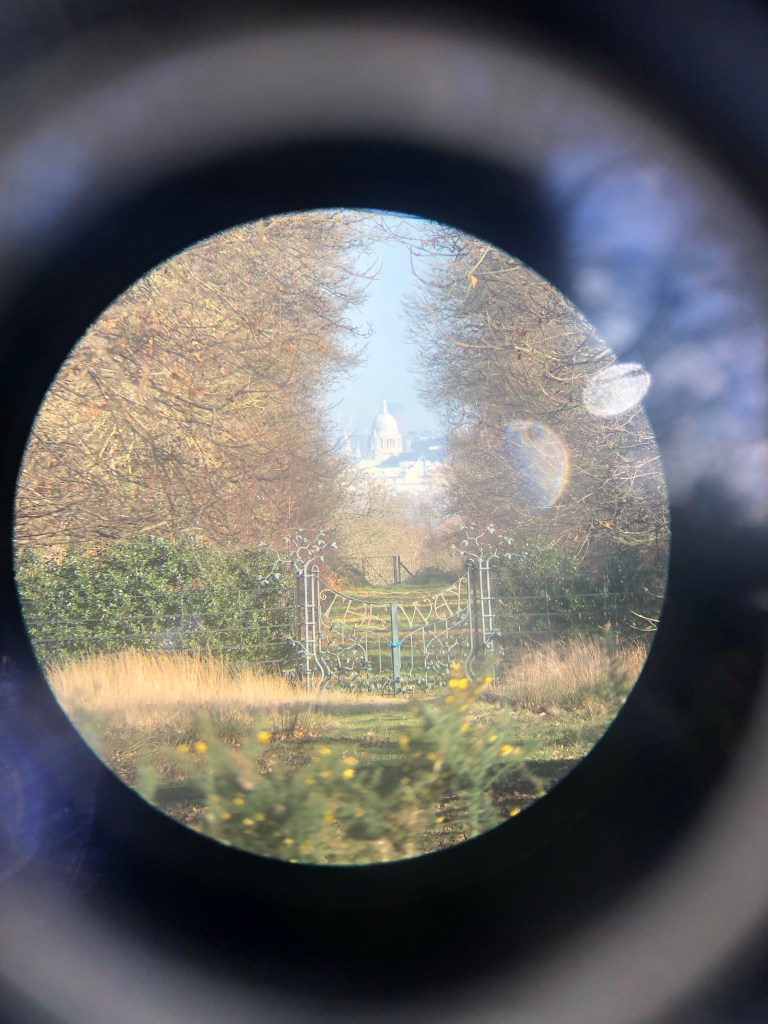
There’s a little owl calling outside. It’s been piping away from the upper branches of the Atlas cedar in the drive for half an hour now. The foxes have been quiet for a week or so now. I suppose their noisy January antics in the front quad are over for the year. Three buzzards were soaring over the grounds the other day during morning break, but none of the students seemed to notice. The redwings and the fieldfares have moved on and the snowdrops are out. The daffodils will be on their heels soon enough. I escaped to Richmond Park a few weekends back, just as the first blooms were sprouting. It was good to see the wide world again, even if only through my own eyes.

No photo description available.

The meltwater of the long Covid winter is starting to run. Just like the birdsong and the subtle shift in the light over the last couple of days, change is in the air. Piece by piece, the last fragments of the old world are coming back. At the request of one of my students, I blew the dust off my long-neglected violin and rocked up to orchestra this week. I’m about as good on the thing as I ever was – that is, haphazard at best – but I’d forgotten how much fun it used to be. It’s one of those things that simply slipped through my fingers over the last couple of years.
I think I’ll take up the guitar this half term. A zealous diet of sevillanas have powered me through the darkness of the winter months this year, and I’m done with being able to sing along but never sing alone. At the very least it will give me something to do until my provisional arrives and I finally confront the long-delayed challenge of learning to drive, which I have put off for far too long.

I’m done with playing games. It’s high time I went on another adventure. The Easter holidays aren’t far off, and I could do with some more writing fuel. And spring is always such a hopeful time of year. BB x

A Semitone Out of Line

How did your 2022 start? Mine began with a miracle. Not a major one – at least, nothing that brought about anything new in my life. Just the restoration of my hearing.

Since the first day of the Christmas holidays, I’ve been plagued by the after effects of a bad head cold that went to my left ear and decided to wreak havoc there. My first week off was spent largely deaf on one side with a tinnitus so fierce it kept me up at night. It’s not often that an illness gets me down – I’m lucky enough to have a rather robust constitution that withstands most things, bar the seasonal pollen allergies that come around every summer. Personally, I thought I’d done pretty well to make it to the end of term without testing positive for COVID once, despite working in a school where children come and go every week. Perhaps this was the man upstairs showing his fickle hand, where fickleness is another word for fairness.

The tinnitus wasn’t so bad, after I got used to it. But it was what happened once the antibiotics had done their job that was the killer. For the best part of two weeks, everything sounded wrong. It took me a couple of days to realise what it was: the ear infection I had been through had left me with a case of diplacusis dysharmonica, a condition that warps the sounds that you perceive. In my case, while my right ear operated normally, my left ear perceived all sounds a semitone higher. For the musicians out there, I’ll let the ramifications of that sink for in a moment.

In most cases, this is a minor inconvenience and can be ignored a great deal more easily than any tinnitus. That is, unless you have perfect pitch.

It’s hard to talk about the uncanny ability to pluck exact notes and tunes out of the air without prompt without coming across as boasting at worst, or false modesty at best, so I won’t labour the point. What I will say is that, for somebody who notices the instant a piece of music is played in a key in which it was not originally played – even if the pitch has been shifted by a hair – hearing the world in two tones at once for a fortnight was nothing short of maddening. A quick browse of the internet will tell you that diplacusis dysharmonica seems to be especially painful for musicians.

What does it sound like? Try to imagine one of those cassettes you might have had when you were younger, after you rewound them once too often, or somebody (possibly a child) had played around with the spools. The sound eventually warped, keys were bent out of place and voices got the Alvin and the Chipmunks treatment. Now imagine that weird, unnatural effect playing alongside a perfectly functional version of the same audio. A long-winded analogy, but the first one that came to mind – chiefly because of the sheer number of cassettes I must have destroyed as a child before the era of Spotify and the repeat button.

Earphones and headphones were out, as they just exacerbated the problem; higher frequencies seemed to be the biggest triggers. I got into a habit of humming to myself in the morning, just to check, and each time I heard two notes come back to me instead of one. I’d give myself a pat on the back for being one of the few humans capable of singing a chord if I knew it wasn’t a) all in my head and b) an exceedingly ill-chosen chord consisting of two notes barely a semitone apart.

Like many of us, I imagine, I woke up this morning apprehensive about the new year ahead. 2021 was a rough year with just a few golden moments that made it one to remember: spending the summer with a dear friend in Edinburgh and a week in October with my beloved family in La Mancha rank right at the top. But with the sun in the morning comes hope, and hope is what I come back to when the world is dark.

By midday today, the distortion in my left ear had dimmed so much that it was hardly noticeable. By tomorrow, God willing, it may be gone altogether. I can’t begin to describe the feeling of putting a pair of headphones on and hearing music as it should be again, after two weeks of dissonance without resolution. I’ve had album after album of sevillanas by Raya Real on repeat ever since. There’s nothing quite like a sevillana to express reckless joy, and that’s exactly what I’m feeling right now. To quote Sweeney Todd: my arm is complete again.

It’s a shame it had to last from the first day of the holidays right up until the last, but I’m not complaining. I can hear the world again, as it should be. That’s more than enough for me.

BB x

NB. It’s been a while since I flexed my writing muscles. This year, I’m going to blow the dust off the blog and get back into a reasonably regular writing habit again. It’s been too long. Until then!

Waldmusik

Monday night. Five weeks in. The first load of reports are due soon. I close my inbox, tired of leafing through the daily barrage of emails in my windowless office, and open my eyes. Packs of SureSan wipes on every shelf. Seven empty bottles of water from last week’s packed lunches, amassed in quiet protest. The number for the IT department scrawled in pink highlighter on a piece of paper folded and blue-tacked to the wall. A wall planner that hasn’t been updated since lockdown began. A chewed-up biro, an oak leaf and a buzzard feather. Karl Jenkins on Spotify. The ventilator roars overhead.

Tomorrow will be seven months to the day since the music died. Seven months since a final lucky fling at a friend’s wedding, which might as well have been a paean to the love of music itself. In retrospect I suppose “elegy” might be the better word. Rome burning and all that. COVID robbed the world of so much, and in the panic over its impact on work, health and the daily grind, music slipped quietly over the edge into silence.

I can’t think of a point in my life when music hasn’t been a constant. Having two music teachers for parents afforded me an incredibly privileged upbringing with regards to my musical education. I wanted for nothing, except perhaps an escape from Classic FM. Scarlatti and the Spice Girls. Klezmer, Raga and Jazz. The Stranglers, The Bee Gees and The Corrs. By the age of ten I had amassed a real symphony of diversity from all the CDs in the house, with an early preference for folk music and anything from the 1970s.Primary school, secondary school and university were a seamless pageant of choirs, bands and orchestras, with the occasional assignment as a reminder that education was happening somewhere within. Whether in a church or a school hall or a smoking stage, I was always singing.

The ventilator continues to growl. It’s about as close as I get to music without Spotify in here. The government directive against singing felled the school choir, the chamber choir and my gospel choir in a single axe stroke. Christmas waits at the end of the tunnel that is the Michaelmas term, but without the usual musical beacons to light the way, it simply doesn’t feel like it.

The last time I felt like this was half a lifetime ago, during my family’s earnest but ultimately unsuccessful attempt at a move to Spain. Then, too, the years of emerging into the frosty night after choir practice with carols ringing in your head melted away like snow in the sunshine. Spain has many beautiful musical traditions, but the buzz of advent – or, at least, the advent I had always known – isn’t one of them.

“Vosotros los ingleses, os flipáis con la música. No hay ese mismo afán por la música aquí, ¿sabes?”

Do I agree with her? The girl who told me that once? I do not know if I do. Years on, I’m still mulling it over.

Without the music, the days are long. They blur, one into the next. Web players and Bluetooth speakers are a poor imitation, like listening to the sound of the ocean in a seashell. There is nothing – nothing – like the exhilaration that comes from making music. It’s the difference between seeing and doing. Watching a cyclist and feeling the wind in your hair. The gulf is immeasurable. It’s the third half of my brain, the fifth chamber of my heart.

COVID cases continue to rise. Whole areas of the country are retreating back into lockdown. People stagger out of pubs at closing time and complain blindly at the loss of their freedom – or so the pictures in the Press seem to scream. Schools remain defiantly open as children come and go into and out of isolation. How long can it last, the question on everybody’s lips. In the music hall, silence hangs like mist.

I put on my hat and coat and set out into the evening. Music was always my tonic of choice, but if one elixir is out of stock, the other at least is deathless. It waits out there in the dying light, eternal. Autumn chill is in the air and the martins are long gone. Soon the hedges will be alive with the cackle and chatter of fieldfares, and the liquid sound of redwings traveling by night will follow me home from duty. For now, the old guard plays the same music it has always played in the forest beyond the fields. Blackbirds chatter down in the gully. The staccato of a wren breaking through the hedgerow. And, perched on the exposed branch of a dead tree, cock robin sings his heart out.

The song of the robin is, I think, the most beautiful music that England has ever known. Gentle, melodic, like water – it cannot be put into words. Not by an unqualified amateur such as myself, anyway. The robin for me is a symbol of hope. Maybe it’s his boldness, his charming friendly nature; his defiance of the cold on a January morning, as if to let the world know the darkness cannot last forever. He pays no heed to government directives or social distancing measures. He sings as his ancestors have sung for generations, since the world was cold and dark and unforgiving. Hearing his voice now, at a low ebb, it lifts my spirits again.

Half past nine. Directionless text books. Vocab tests, marked and unmarked. Me and the tuneless ventilator, and the memory of the robin’s song. I think I’ll call it a night.