Jaguar Ecolodge, Manu NP. 20.07.
Shortly after eight this morning, we crossed over into the Reserved Zone. After three days of travel through Manu’s enormous national park, we have finally arrived at the inner sanctum – where the wild things truly are.
If it had stopped raining for even a minute or so of the eight hour journey upriver, we might have seen a lot more of those wild things than we did. As it was, the rains had swollen the river to a monstrous size, swallowing up most of the sandbanks, so the only creatures that were much in evidence were the water birds – who probably would have been there anyway.
All the same, it is hard to describe just how incredible this place truly is. The mountains are far behind us now, concealed by the clouds that covered our approach. Now it is only the river and the forest in every possible direction.
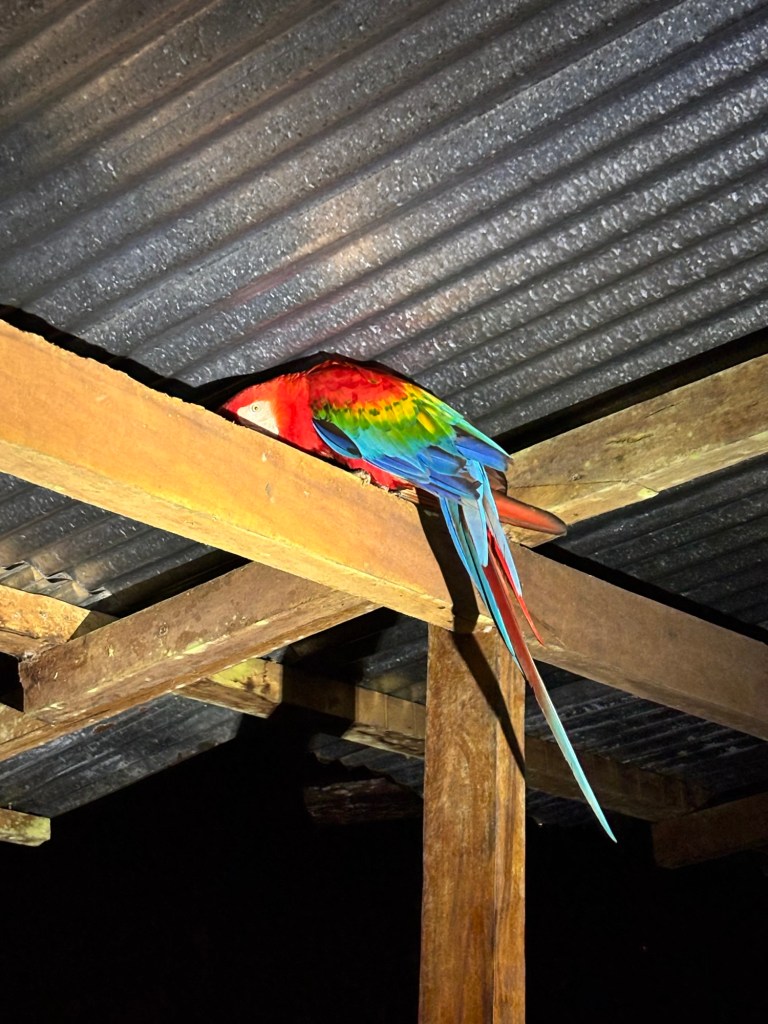
It’s surprising how quickly you get used to the sight of free-flying macaws; birds that until now I have only ever seen as captives of the pet trade. Pet parrots are such a thing – or at least, they were in my childhood – that seeing them wild almost feels like the reverse of normality.
So many of the iconic birds live here in Manu: blue-and-yellow, red-and-green and the iconic scarlet macaw. There was a scarlet macaw at the Bonanza lodge this morning, in fact, sheltering from the rain. A “free pet”, according to our guide, who comes to the lodge because of the prospect of handouts (and, evidently, shelter). There is little need for a cage when the animal is already in its natural habitat, I guess.
I realised only when we got to our destination – the Jaguar Eco Lodge – that I have finally lost my first object of this trip. Frustratingly, it’s my card reader. It’s not the end of the world – I’ve managed every other adventure without it – but it does make blogging on the go a lot less feasible as I can’t share the photos I’ve been taking on the go. I guess you’ll just have to wait. I’ll have to backdate these posts anyway, as I’m already three days behind – power has been a precious commodity, WiFi even more so m, and more importantly, I haven’t wanted to waste even a second on my phone when I’m out here in one of the most beautiful places on earth.
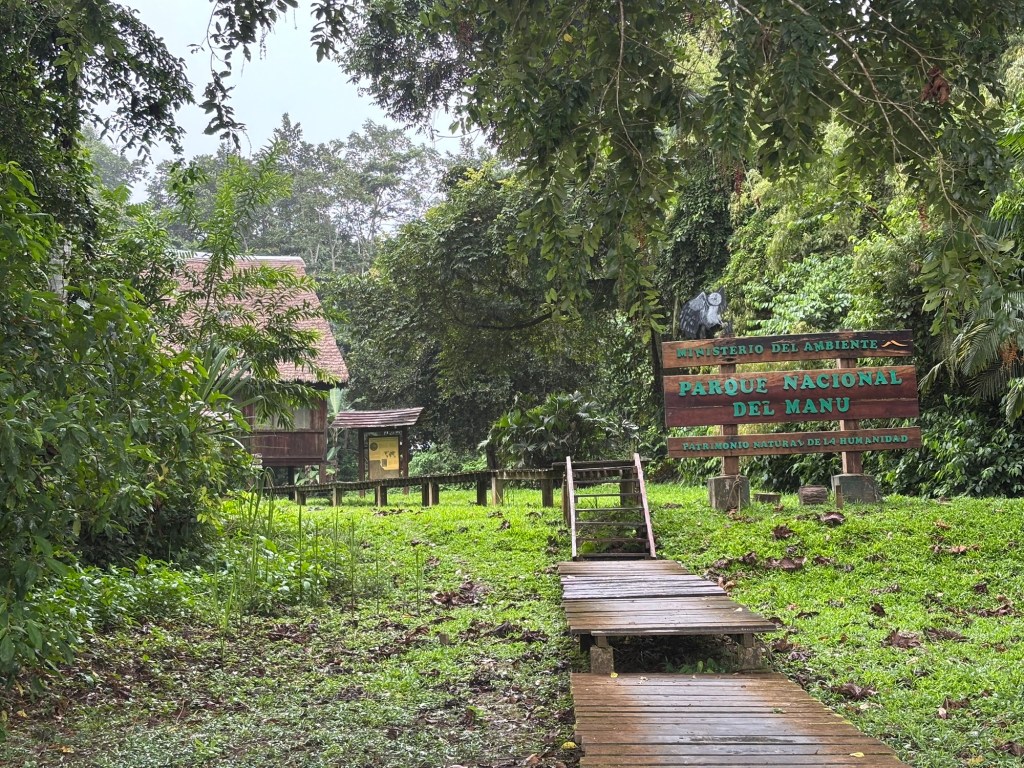
After a five o’clock start, we got back into the boat and sailed downriver to Boca Manu, where the Madre de Diós meets the Manu river. Our first port of call was the ranger station, where we were officially signed in and registered. Of the 29 rangers that work within the park, 11 come from the native communities that live within its borders. That much was plain from the personnel at the station, who looked about as far removed from Europeans as the modern world allows.
They were exceptionally kind. If we were not on a guided tour, I would have liked to stop and chat for a while. After all, I once wanted to be a park ranger myself. If it hadn’t been for my dismal mathematical ability and my lacklustre scores in Biology – coupled with my desire to raise a family – I might even have followed that path.
Manu is home to 1.030 species of birds. That’s an astonishing one tenth of the birds that can be found in the entire planet. So I might be forgiven for being a little glum at the prospect of the seemingly endless rain continuing for a third day, grounding most of the park’s birds deep within the cover of the trees.
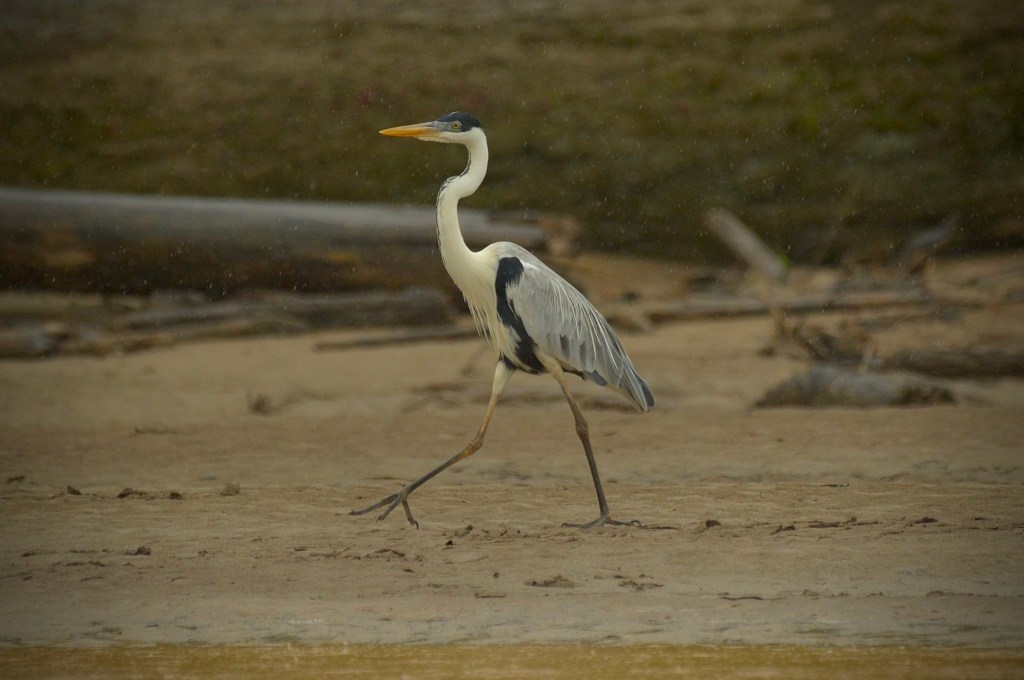
At least a few of the shorebirds were gracious enough to put in an appearance, on what little of the shore remained, including a few handsome cocoi herons, wood storks and a jabiru, a marabou-esque migrant from Brazil.
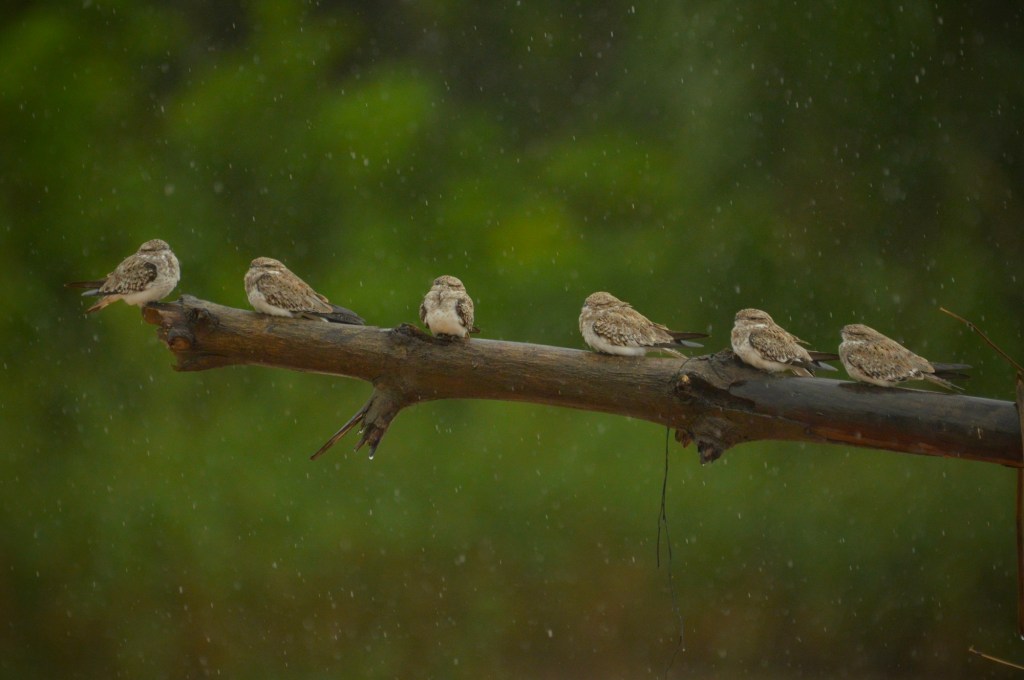
We even had the good fortune to see the sandy-coloured nightjars that usually roost on the sandbars. They had sought refuge on a sunken tree, and looked rather disgruntled at their change of roost.
After another unbelievably good lunch on the boat courtesy of our chef Bernadino, we made straight for the nearby horseshoe lake of Cocha Salvador in search of giant otters. The usual location, Cocha Otorongo, has been out of bounds ever since it was raided by one of the local uncontacted tribes eight months ago.
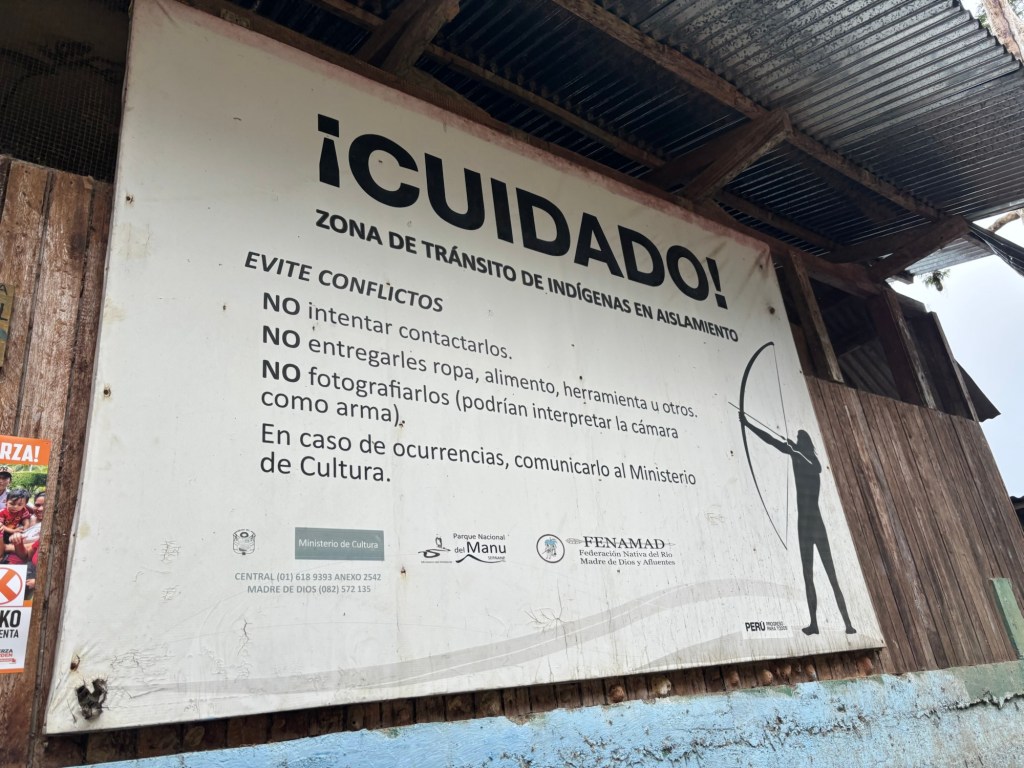
There are signs in various places warning you to stay away from the tribes, not so much because of the risk to your own life through conflict, but because of the far greater risk to theirs of disease.
It feels strange to be in a part of the world where there are still people in the forest who remain free and out of step with the world. I don’t know what to make of it.
Powerboats are not allowed on the horseshoe lakes or cochas out of respect for the local wildlife. There is a catamaran for use by guides and their groups, provided you bring your own paddles. We couldn’t see the otters from the jetty, so we set out along its south arc in search.
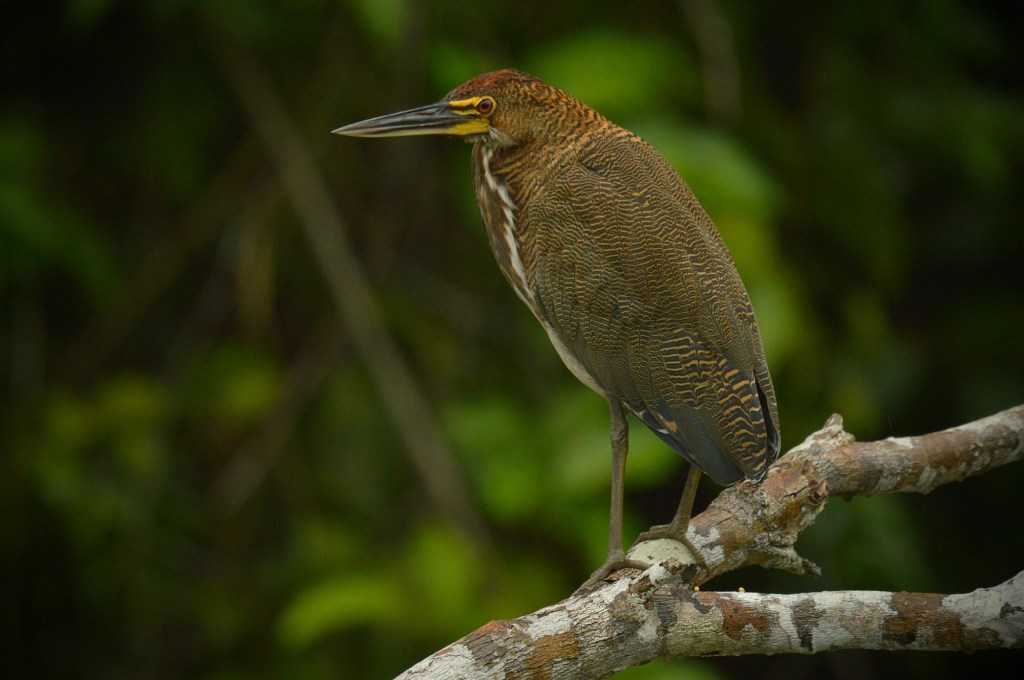
The cochas are a sanctum like nowhere else I have ever known. I must have counted over a hundred species of animal and bird in the space of a couple of hours, despite the driving rain that returned to lash us throughout our quest. There were at least four species of kingfisher out and about, and an impressive young tiger-heron, which wasn’t as skittish as herons often are and allowed us to float right past.
My companions looked utterly despondent as the hours went by, the rain came down harder and the otters remained invisible. But I was having a great time, though I would have traded an hour of the day for a little sunshine, if only to make the conditions for photography a little better (I had to crank my shutter speed right down and force a steady hand to compensate for how dark it was beneath those clouds).
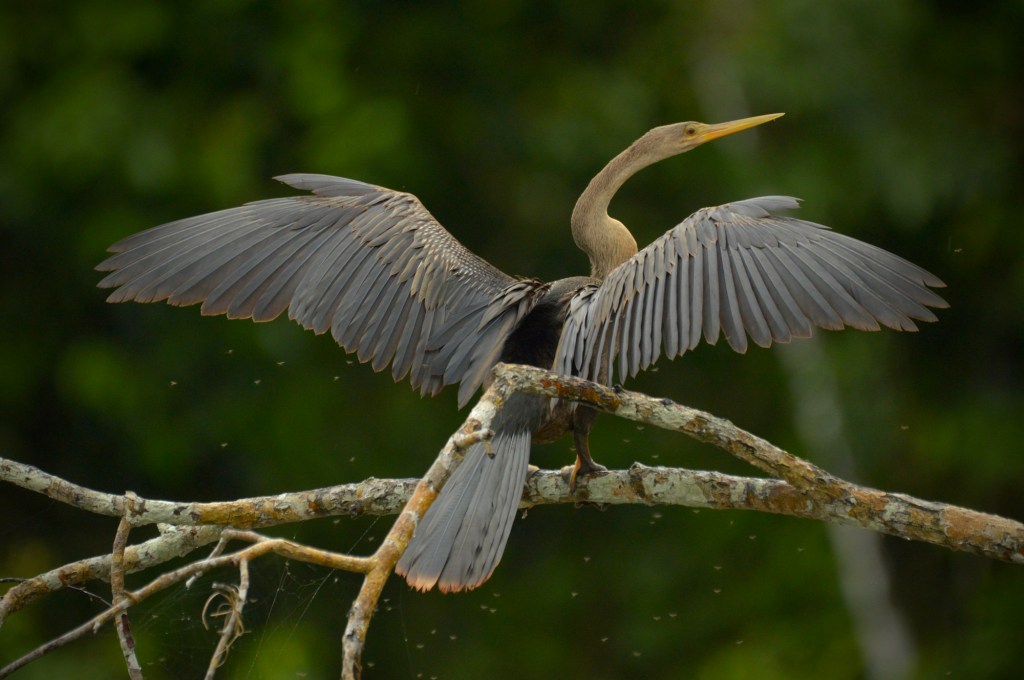
Another American bird that kept us company on our jaunt around the lake was the anhinga, an extended version of the cormorant, whose habit of swimming so low in the water that only its long neck breaks the surface has given it the alternative name of “snakebird”.
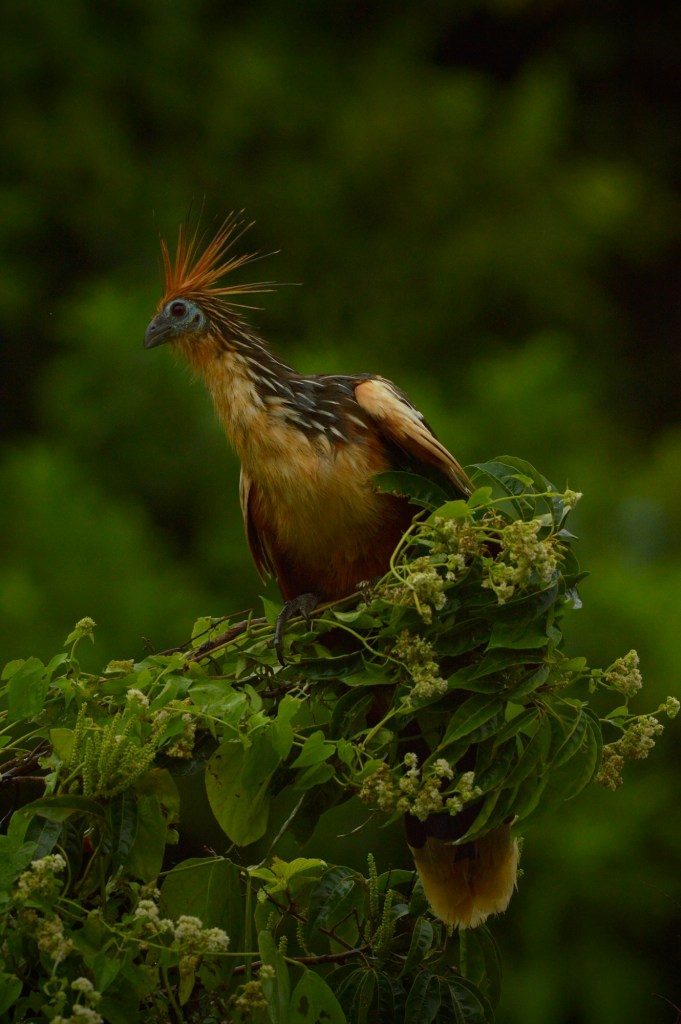
However, while the otters remained beyond our grasp, my primary target for the day was met over and and over again: the utterly bizarre hoatzin, a plant-eating bird that looks like an unholy cross between a hawk, a parrot, a pigeon, a chicken and a cormorant. Understandably, perhaps, this half-breed is in its own family. I’m not sure any other bird family would admit it as it of their own.
It really is, quite literally, the ugly duckling of the bird world. And I absolutely love them in their weirdness.
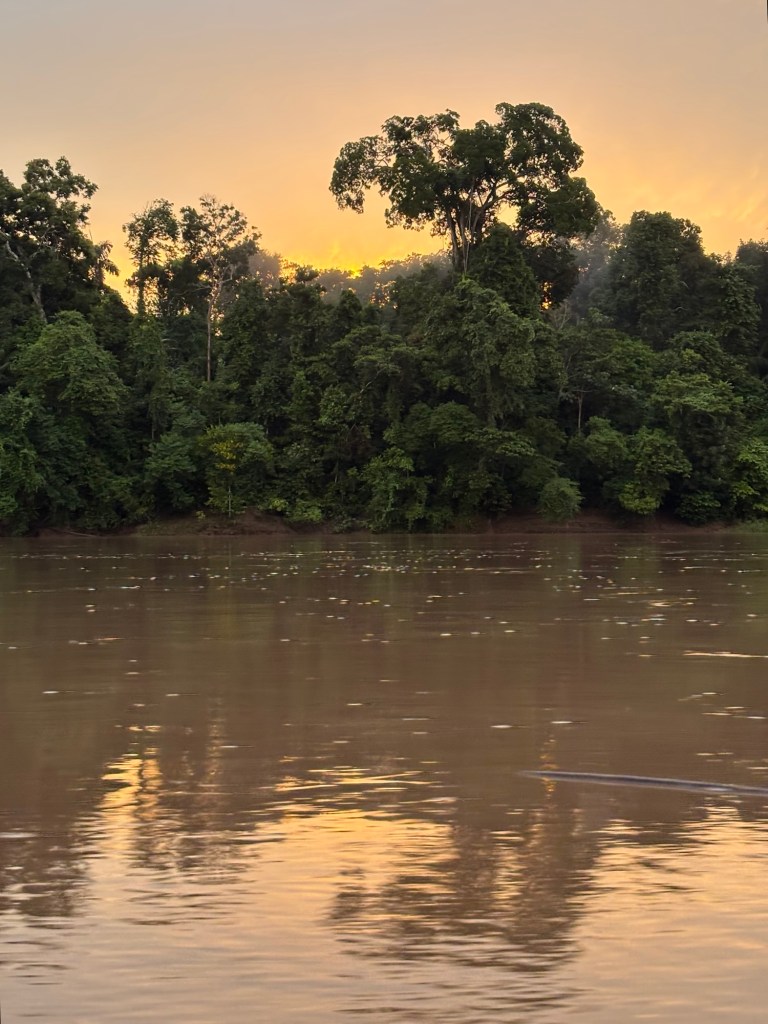
The otters never did appear, but we were finally relieved of the rain and rewarded with a stunning Amazonian sunset as we sailed back upriver to the lodge. We even encountered a family of night-monkeys on the walk back to camp, but my lens couldn’t handle the darkness all too well. I guess I’ll just have to keep trying! There’s always tomorrow’s night walk.
That’s on write-up done. Onto the next one. BB x

