Hostal la Plazuela Verde, Atapuerca. 15.50.
After yesterday’s paltry fifteen kilometre walk, today’s 30km+ hike across the Montes de Oca felt like much more of a feat. We’ve landed, at last, in Atapuerca, the last post before Burgos and the end of the line for several peregrinos.
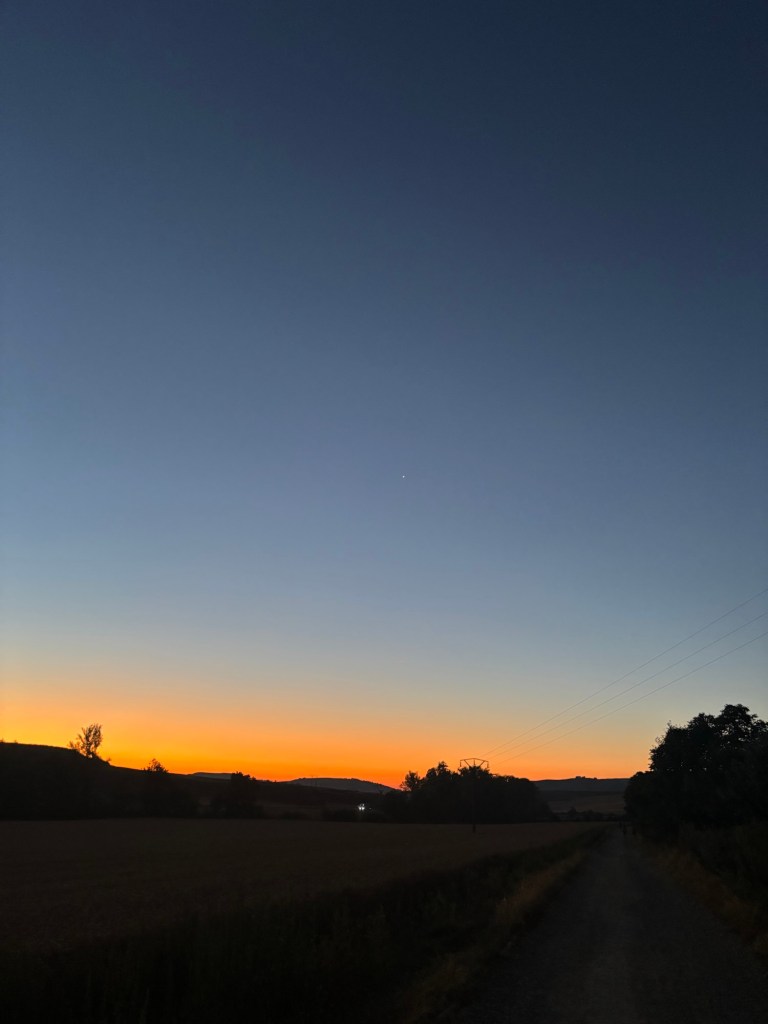
I’ve enjoyed a few later starts over the last few days, so it felt good to get back to another 5am departure under the stars. It was a little chilly this morning, though not as cold as it was the last time I made this trek, when (if my memory serves) I required the use of gloves to stop my hands from shaking in the spring of 2023. The sun rose late, so for at least the first hour of today’s march I was under the aegis of the morning star, Venus, sitting alone in the firmament to the east.
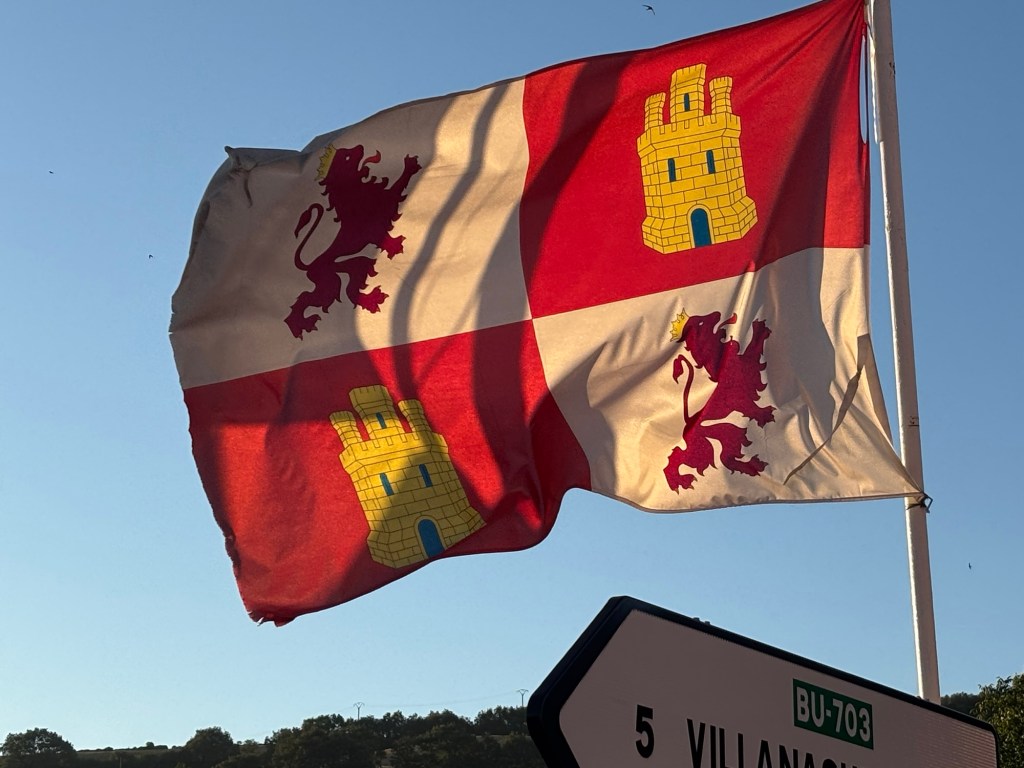
The signs for Santiago are getting shorter. The kilometre count is nearly down to 500, so I’ll be passing the halfway point of the Camino at some stage between Burgos and León. I’m looking forward to the flats of the Meseta, but the mystery of the Camino de San Salvador and the Camino Primitivo are becoming more and more appealing by the day as I hear stories of these less-traveled roads from some of the pilgrims that I meet. It will certainly be a very different Camino to the one I’ve had for the last week or so.

Shortly after leaving Grañón yesterday, we entered the immensity of Castilla y León, Spain’s largest territory. The rivalry between the twin kingdoms remains in the signage, with most of the Camino markers defaced in some way so that the word “León” is crossed or blacked out. The reverse is true once you enter the old Leonese territories around Sahagún, where the graffiti becomes even more markedly separatist in nature. It’s a not so subtle reminder that Spain had always been a conglomerate of different peoples rather than one singular nation, from the Castilians and the Catalans to the Leonese, the Basques, the Galicians, the Andalusians and the Asturians.
How do you even begin to govern such a diverse nation, with such ancient and deeply-rooted territorial disputes?
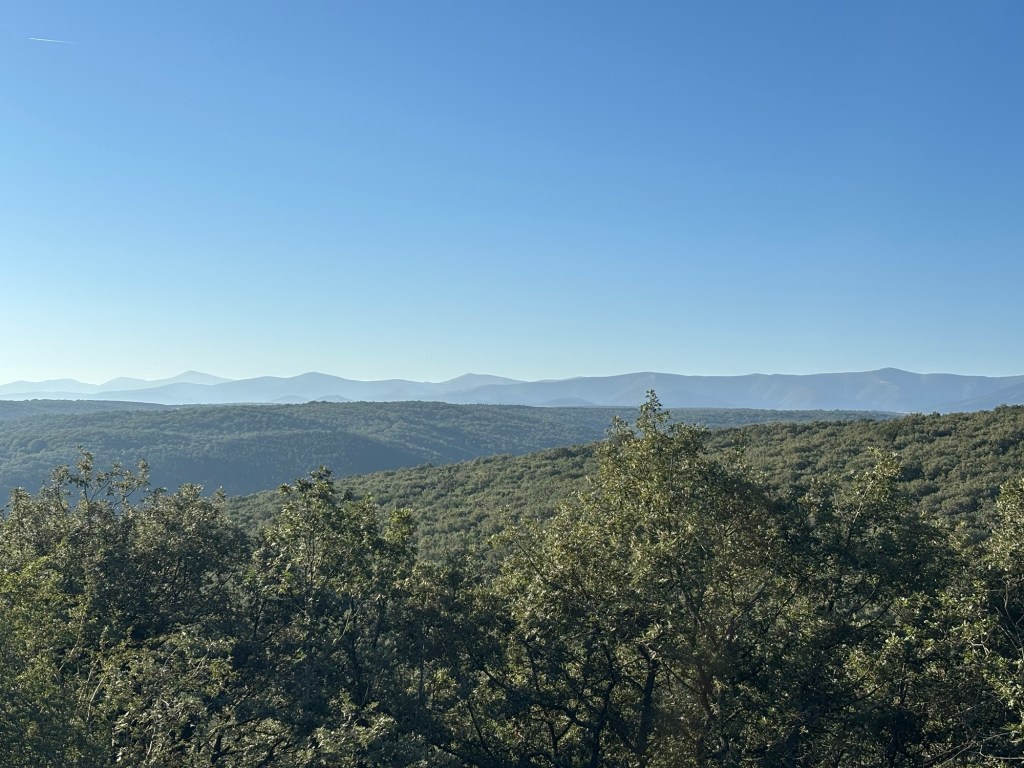
After a much-needed breakfast stop at Villafranca Montes de Oca, where the bar (El Pájaro) opened just minutes after we arrived, we set off up into the forested hills. The Montes de Oca are the very north-westernmost reach of the larger Sierra de la Demanda. The name comes from an old dispute over land use in the hill country rather than the difficulty of its terrain, but after the relatively flat and easy days from Puente La Reina to Logroño and beyond, it is a demanding task before the endless expanse of the Meseta Central.
The Montes de Oca are a mystical place. Toward the top of the hill, the birdsong seems to die back into silence. Not even the vultures circle here. I’ve encountered this eerie silence before in Sachsenhausen, an olive grove near Víznar (Granada) and a remote village in northern Uganda, where the Lord’s Resistance Army marched in and executed the entire village. It is the silence of the dead.
A small concrete block marks the spot where around three hundred men and women were executed during the Civil War: Republicans, political dissidents, liberal thinkers and just about anyone who disagreed with the vision of the Nationalist state that was to come. They were dragged from their homes during the night to this lonely stretch of forest, summarily shot and thrown into one of a number of mass graves that can be found less than a hundred metres from the Camino itself.
This is the fate that might have befallen my great-grandfather Mateo, had he been any more outspoken in his beliefs than he already was. Instead, he was dismissed from his post and sent away to a village where he would not cause trouble, and only when he went to hospital for a minor operation did they find a way to deal with him quietly, leaving him on the hospital bed to die.
I suspect this, however, is what happened to the rest of his friends: the circle of poets, free-thinkers and philosophers to which he and his wife Mercedes belonged, before Franco and his nationalist forces turned their world upside down.

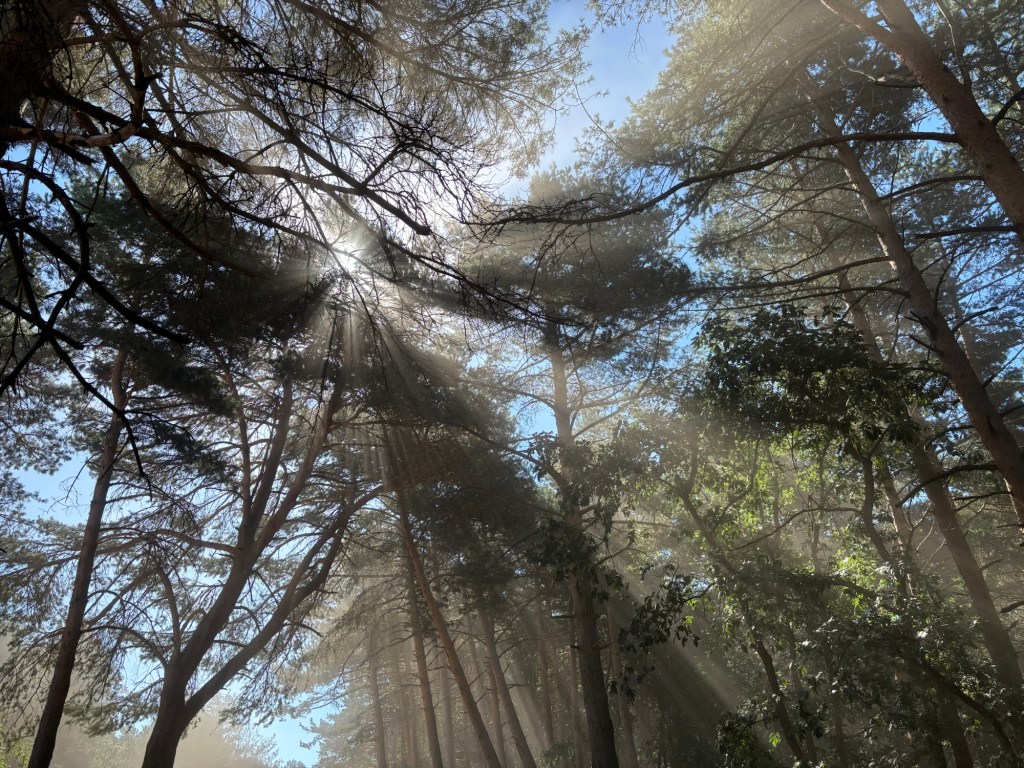
Many of the trees here are new: plantations of pine trees that were planted after the ancient oaks burned down in a fire some fifty years ago. Somewhere beneath them all are the remains of other victims of the war, concealed by Spain’s painful attempt to forget. The official Pacto del Olvido – the Pact of Forgetting – passed in 1975 after Franco’s death was an attempt to move on from the divisive horrors of the past and forge a new country, but for many, the memory of the silenced dead is still very raw. Even the birds of the forest seem to abide by it, nearly a century later.
A jolly chappie called Ángel had set up shop in the spot where there was a food truck a few years ago, selling fruit juice and watermelon slices, and at 2€ a throw for the latter, it was simply too good to pass up.
We stopped for a snack lunch at San Juan de Ortega (if tostada con tomate can be considered lunch) before pressing on to Atapuerca. Today and tomorrow are going to be the hottest days for a while with an average high of 35°C, so we were keen to reach our destination before the sun got too high in the sky.
I brought the team to a halt at Agés, the village where I stayed the last time I came this way, to drink and re-supply before the final two kilometre push across the shadeless fields of Atapuerca. Being an average of nine years older than the others in my group (ranging from seventeen to twenty-five), I have somewhat fallen into the position of leader, which seems to happen rather easily these days. I guess it’s the teacher in me. I don’t resent it at all. It’s quite nice to be able to look out for them and to serve as their guide, especially since one of them is still at school and doing the Camino as part of an IB project.
There aren’t that many options for eating out in Atapuerca, so we might cook together tonight. That would be nice, as tomorrow will invariably involve a farewell meal out in Burgos, so a communal dinner of own creation would make a welcome change.
My pilgrim passport is looking a lot healthier. One whole side is nearly complete. It’s getting easier to pick up three or more stamps per day (which was near impossible in the first week or so). I may not need my third credencial after all, though I suspect I will still need my second! BB x
 The Book of Barnabas