Eulalia

Hotel Rambla Emérita, Mérida. 20.16.

It’s been raining all day again. I was out late with Tasha last night catching up on old times – neither of us could really believe that it’s been nearly eight years since I left – so I didn’t begrudge the downpour for a long and cosy morning in bed. You don’t have to be busy every day of the holidays, even when you’re abroad.

Luckily, I was all over Mérida yesterday with my conjunto histórico ticket, granting access to all the city’s Roman ruins, so the only thing I missed out on was the Alcazaba, which I might visit tomorrow with Tasha and her boyfriend Antonio, if he’s up and about. I don’t think I’ve seen the Alcazaba before – one tends to focus on Mérida’s Roman history rather than its Moorish past, and there are older and more impressive alcazabas (the Spanish rendering of the Arabic qasbah) in Andalucía: Sevilla, Córdoba and Granada, to name just the obvious ones.

Mérida isn’t unique in having a Roman amphitheatre either. There’s a pretty spectacular one (albeit less often seen) in Santiponce that I’ve often seen from the bus on the way in from the north. But there are a few more unique treasures to be found in Extremadura’s administrative capital, and I thought I’d tell you about one such gem below.

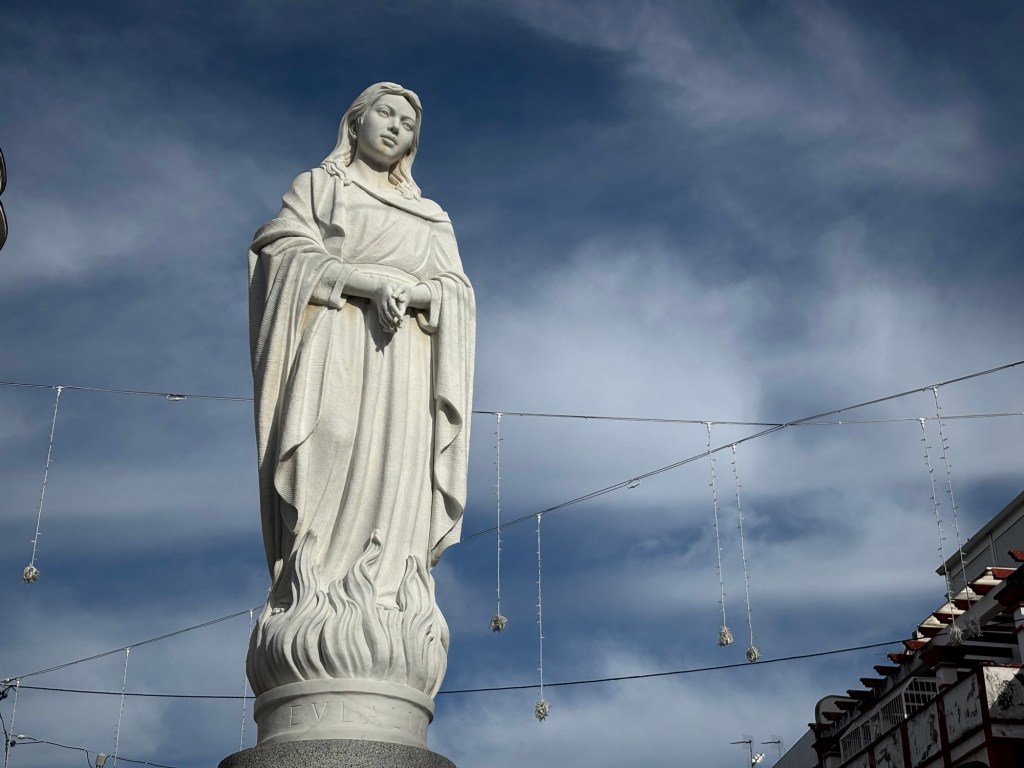
Let’s start with the lady of Mérida – because every Spanish city has its special lady. This one is Santa Eulalia.


Eulalia of Mérida stands tall above the other Christian saints of Spain, which is especially impressive as she only lived to around twelve years of age. A Roman Christian, she and her family were forbidden to worship God under the Persecution of Diocletian. Incensed, and unable to keep her faith to herself, Eulalia fled out of exile to the city of Emerita Augusta, where she openly challenged the local governor, Dacian, insulting the pagan gods whom she was commanded to worship. After a few desperate attempts to reason with her, Dacian had the girl beaten, tortured and burnt at the stake. According to legend, Eulalia is said to have mocked her tormentors until her dying breath, which came out in the form of a dove.

Eulalia was once a great deal more powerful than she is today. Before the rise of the cult of Santiago, it was Santa Eulalia de Mérida in whom the Christian soldiers placed their trust as they made war on the Muslims occupying the lands their ancestors had once held; and it was to her tomb in Mérida that thousands of pilgrims travelled during the Middle Ages, before Santiago Matamoros muscled her out of the picture.

At least one of my Protestant Christian friends has remarked at some point about the thin line between the Catholic Church’s veneration of saints and idol worship. Surely – they have reminded me – it is God and by proxy his son, Jesus Christ, to whom prayers should be made, not the pantheon of mortals who claim to be able to intercede on my behalf?

I can see the argument as plain as day. There are shops up and down this country selling nothing but saint souvenirs: votive candles, icons and fridge magnets, scented rosaries and car ornaments. I have a few myself – a family rosary from Villarrobledo and a more personal one from La Virgen del Rocío, which these days is on my person more often than not.

However, I don’t think it’s as simple as that. How frightfully urbane, to assume that the only true relationship with God is a detached and decidedly modern Western take on prayer. How tremendously big of us to assume that we can comprehend a force that it is, by its eternal nature, beyond our understanding. Community is a powerful agent – it seems only right that the spiritual world, Christian or no, has a network of pomps to streamline the neural network that binds us all together. On Earth as it is in Heaven, as they say.


Spain has a long history of wandering saints. Santiago journeyed beyond death to Galicia, sparking the most famous pilgrimage in Christendom. Guadalupe travelled from her mountain home to México to become one the most venerated Marian cults in the world. Eulalia was dug up and reinterred in Oviedo, where she became a figurehead of the Reconquista (I genuinely had no idea I was standing before her final resting place this summer). Teresa of Ávila’s body parts have travelled all over, most famously her Incorruptible Hand, which used to grace Francisco Franco’s desk.

Tomorrow, I make for Sevilla. Journey’s coming to an end. I’d better make sure I’m fully packed. BB x

Camino XIII: Milady

Albergue de Peregrinos de Nájera. 12.59.

I was supposed to take the day off today, but as it’s a Sunday, nothing is open. No shops, no museums, zilch. So, since my intention to use my rest day to restock was somewhat redundant, I set out at the relatively tardy hour of half past six for Nájera.

Logroño must have been partying late into the night, like Jaca last week. There were more than a few amorous couples locked in each other’s arms in front of doorways on the streets running off the Gran Vía. The average age a Spaniard is able to leave home is now in the mid-thirties, which must make dating considerably more complicated here: the sexual revolution has happened, society has caught up, but the financial reality has got Spain’s youth in a stranglehold.


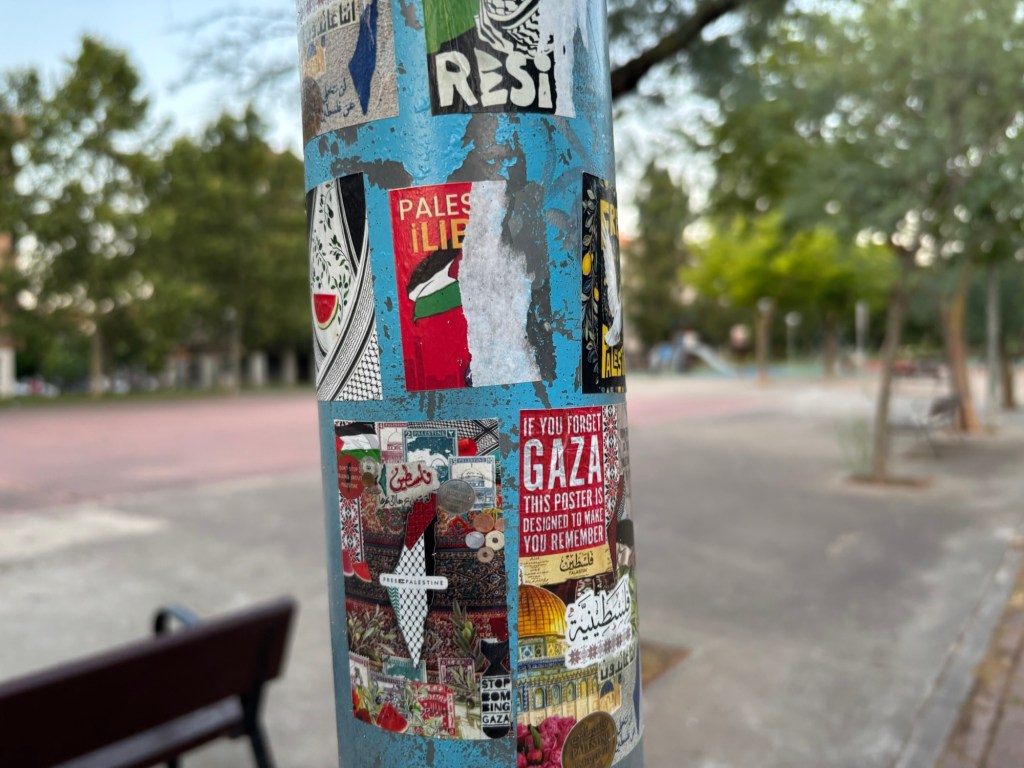
There are still Palestinian flags everywhere you go. It probably chimes with the mindset of the average liberal peregrino, but there’s another reason they’re so ubiquitous in this stretch of the Camino: we’re still in the Basque territories. And if any people are more likely to sympathise with an oppressed nation under the heel of a supposed colonising force, it’s the Basques, whose own freedom-fighting/terrorist organisation, ETA, only stopped its violent methods in the 1990s. I’ve seen one prayer in Hebrew for one of the captives still held by Hamas along the Camino, so it’s not entirely one-sided, but the Palestinian flag is far and away the most common flag along the entire Camino so far.


I reached the Parque de la Grajera about an hour after leaving the city. I was early enough to catch the night herons that seem to hang around the place. They have a somewhat patchy distribution across Europe, but they were here when I last did the Camino from Logroño to Burgos in the spring of 2023, so I was glad to see them again.

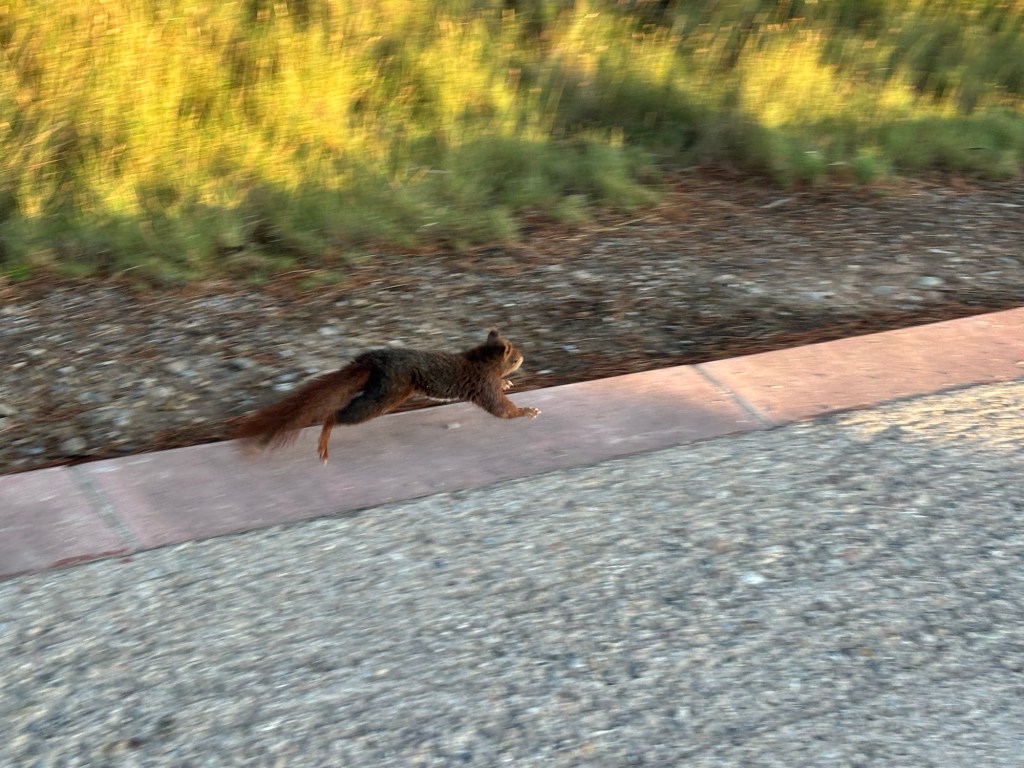
They were much too far off for a photograph, but the park’s red squirrels were a lot more obliging. Without the invading greys to worry about, they seem a lot more confident around people here, and so I was able to get quite close – or rather, it came quite close to me on its jaunty sortie across the bridge.


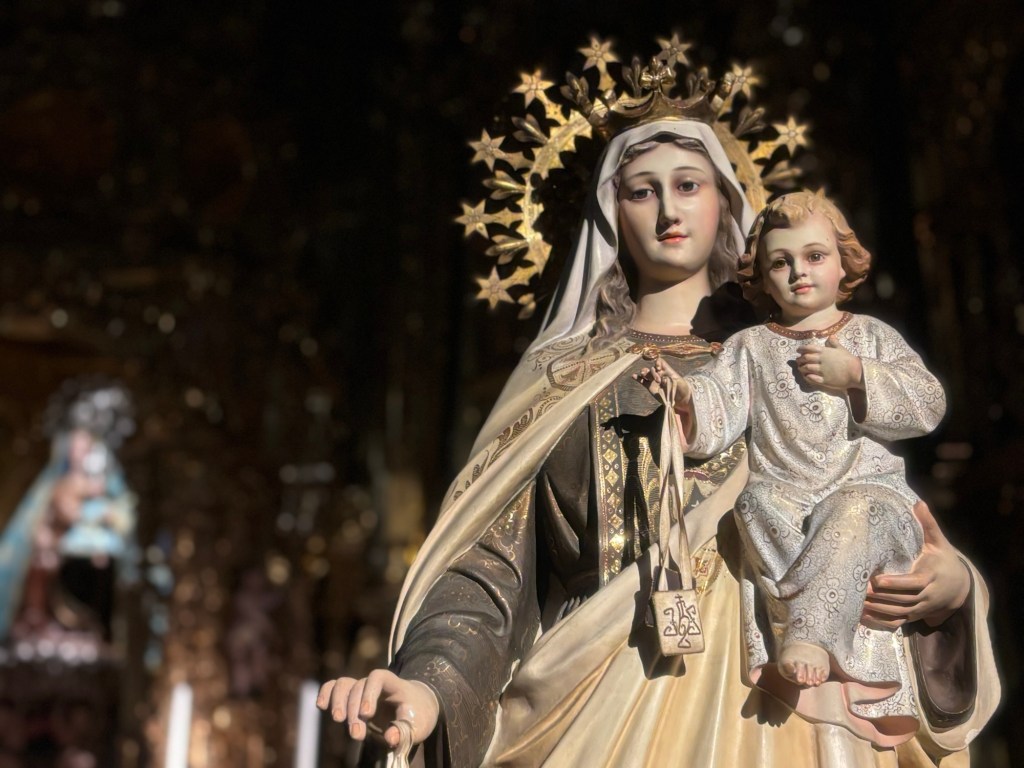
Today’s route featured a small pilgrimage of its own, to the shrine of La Virgen del Rocío. She is, in the humble opinion of this devotee, one of Spain’s most beautiful incarnations of the Virgin Mary. She certainly knows how to pick out a home, with her sanctuary within the Elysian marshes of Doñana National Park far to the south… and here she is, watching over a lagoon in La Rioja.

I remain convinced that it was partly her intercession – and that of the natural paradise where she resides – that healed me at last from last summer’s heartbreak, and it is partly because of that intercession that I am walking the Camino this summer… to say thanks. I owe her that much.


There were more squirrels to keep me company around the edge of the lagoon, including a boisterous couple that were quite unfazed by my presence, chasing each other up and down the trees on the edge of the lake. You have to travel quite some way in the UK to see these endangered creatures, since the American greys drove them out, but here they’re much more common.


La Virgen del Rocío is, among her other titles, a water spirit of sorts. Maybe that’s why she speaks to me more than the other incarnations across Spain that I’ve encountered: El Pilar, Remedios, Guadalupe… I’ve always felt some sort of connection to marshes and wetlands. It may seem odd that Mary, a woman from the hill country of Southern Galilee, should have such a devoted following in the wetlands of southwest Andalusia, but there it is.

El Rocío is the Spanish word for dew, and the Marian association with the Morning Star – Venus – as the herald of the rising sun is almost as old as her worship as the Mother of God.

I’ve often wondered whether the various Marian cults across the Mediterranean aren’t simply evolutions of the Roman tradition of the lares – guardian deities assigned to individual places – or perhaps even the Celtic peoples before that. In that light, it’s easy to see why other Christians find certain aspects of Catholicism hard to understand. But I think we’re all reaching for the same thing. Many Protestants would say they’re reaching for a more personal relationship with Jesus.

Well, what could be more personal than feeling an intense connection to God through a place that is so close to your heart?


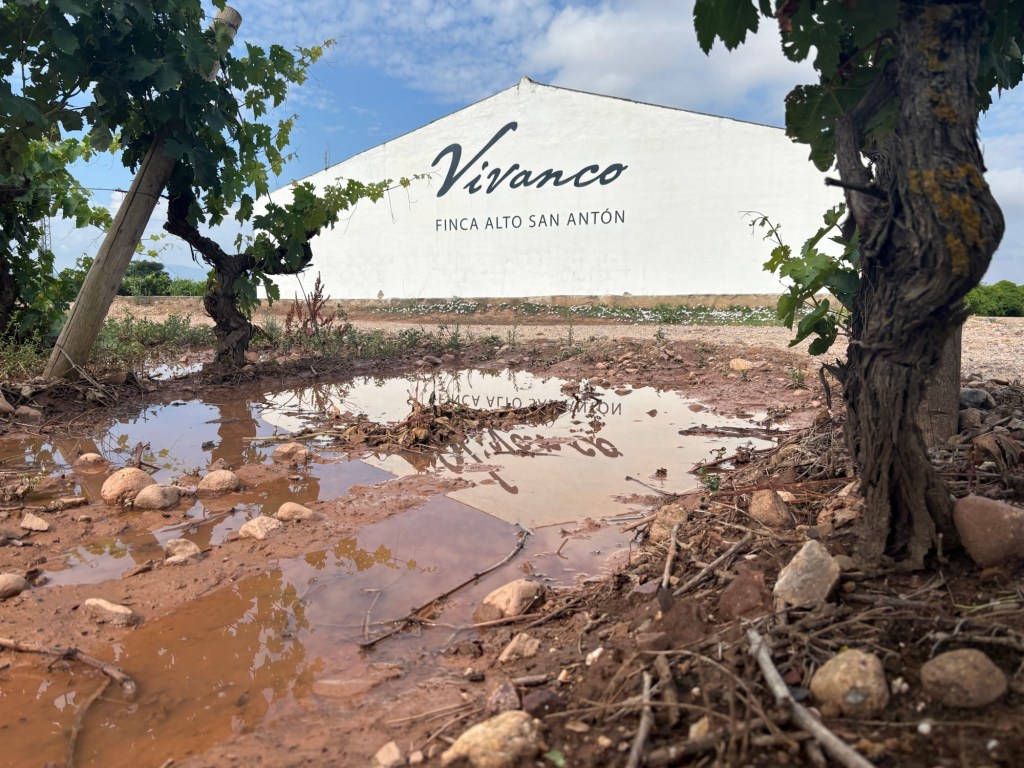
West of Navarrete, the Camino meanders through a vast network of vineyards: a reminder that the tiny autonomous community of La Rioja punches above its weight in wine production (even if it can’t meet the demand on its own). It’s a 29km walk from Logroño to Nájera, but an easy one, and I was in town shortly after 12pm from a 6.30am start. I call that good going.


Reunited with the young folks tonight after an Irish exit and a hiatus of two days. Time for a sociable pizza night! I think I’ve earned it. BB x

Camino X: Hellmouth

Albergue Municipal, Estella-Lizarra. 20.39.

Excuse the late entry – I’ve chosen to be sociable today and have spent most of the afternoon in the company of fellow pilgrims from around the world. It’s been a welcome change after nine days of silence! But a promise is a promise, and I have a duty to uphold! So here’s today’s report.


I was up early this morning – five to four, to be precise. Falling asleep around ten didn’t help my sleep pattern, I guess. I couldn’t quite justify striking out for Estella so soon – it is only just under 22km from Puente La Reina – so I dawdled until five, at which point several pilgrims were already getting ready to go. Again, I dawdled, not wanting to arrive in Estella with two hours to kill before being able to jettison my rucksack, so I carved the names “Niña” and “Pinta” into my sticks (after Columbus’ ships – the Santa María, the third of the trio, is my rosary). It’s not especially visible, as all I had to hand was a kitchen knife, but it’s a start.


I was one of the first to strike out, but I gradually let a fair number of pilgrims overtake me. I stopped frequently; waiting for the sunrise at Cirauqui, sketching a lonely cemetery, grabbing a tortilla sandwich at the same bar I ate in when I walked this path with my mother six years ago. I also managed to collect a few stamps, which is always a plus.


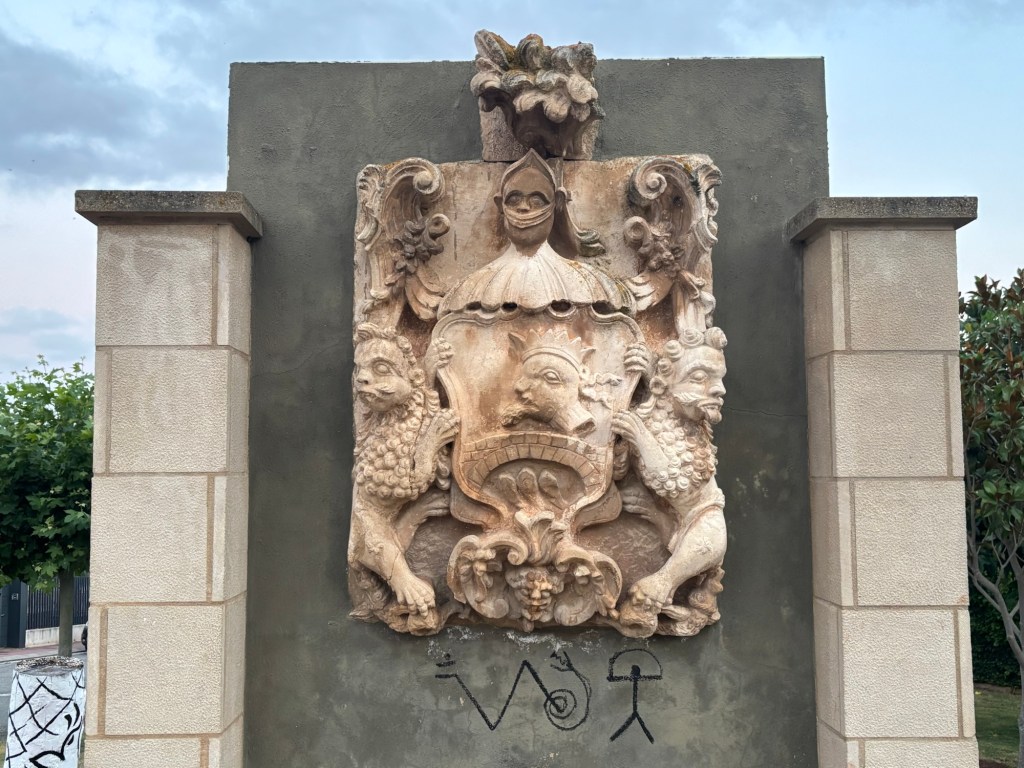
I spent a lot of time today looking at the decorations on houses and doors, which suddenly become more elaborate upon entering the Basque territories. Many houses bear a heraldic crest, and around here the motif of the knight’s helmet with the visor raised is fairly common. In heraldry, this is usually the sign of high-ranking nobility. Many of medieval Spain’s most prominent nobles were of Basque extraction (or Basque adjacent), like the Mendoza, Loyola and Haro lines.

Curiously, scratched beneath one of these crests were two symbols. One is easily recognisable as the Índalo, an ancient fertility symbol from Spain’s southeast. The other is… well, I’m not entirely sure. I’m fairly certain it’s an invention by the artist who left the Índalo, in much the same style, with what seems to be a serpent drawn out of the end. Graffiti usually has a point to make – I wonder what it could mean?


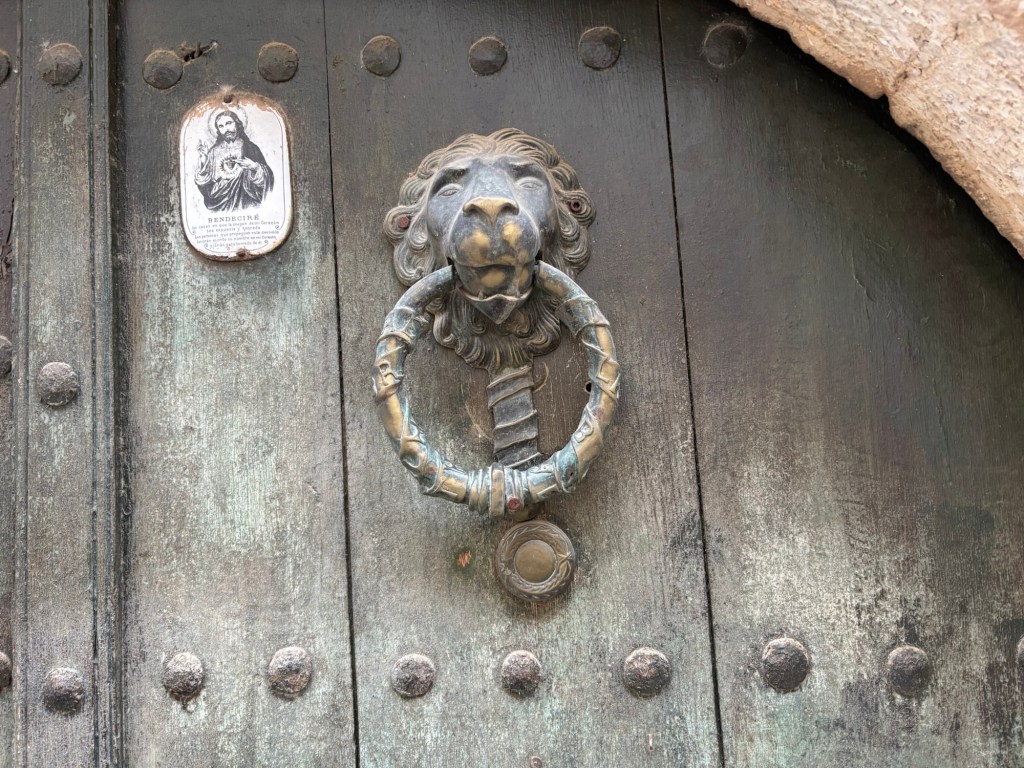
I couldn’t help noticing the door knockers as I passed through Cirauqui. My mother used to fill memory cards with photographs of these things, which in the south (and here) often take the shape of a woman’s hand holding a metal ball, known as a Hand of Fátima. It’s an ancient Moorish motif used to ward off the evil eye, and appears in a lot of Mediterranean and North African jewellery. The lion’s head – a style much more familiar to those of us who live on the other side of the Pyrenees – does much the same thing, warding off evil spirits with its frozen roar.


I am, of course, reading far too much into this. I imagine your average Joe (or José) probably doesn’t consider how effective this or that door knocker will be at warding off evil spirits. Still, it’s one of those things that’s so deeply embedded into our psyche that we don’t even realise we’re doing it. Like Christmas, in a way. Most of us don’t give thanks to God for the birth of Jesus Christ on the 25th December, but that doesn’t stop us from opening presents and celebrating late into the night.


I spent so much time hobnobbing with fellow pilgrims this afternoon that I didn’t really get to explore Estella much. It was also a sweltering 36°C, which didn’t exactly encourage an afternoon wander. Fortunately, I stayed here for two whole days the last time I came through, so I’ve seen all of Estella and its charms before.

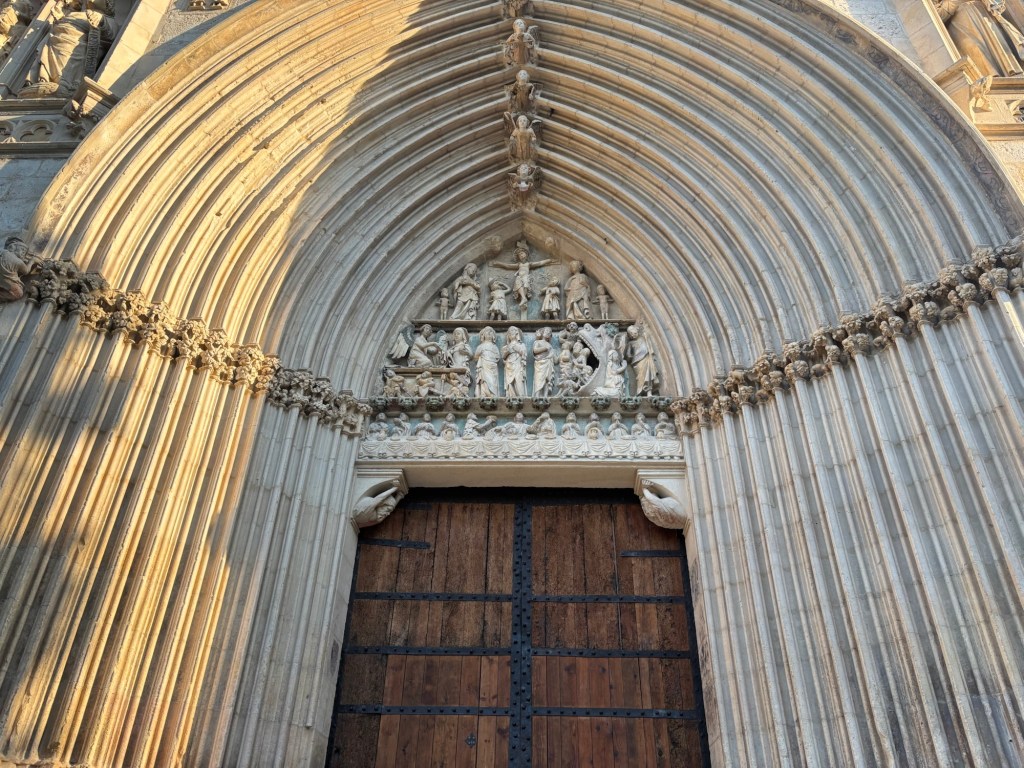
One thing I did seek out, though, was the remarkable archway of the Iglesia del Santo Sepulcro. It caught my attention today for the same reason it did all those years ago: the horrifying maw swallowing sinners, and dragging them into Hell.


This motif is not unique to Estella. It can be found all over Europe. I’m fairly sure I saw one in Bordeaux last week. It’s known as a Hellmouth, and it can be found in Anglo-Saxon artwork at least as far back as the 8th century. It’s thought to be a representation of the “Crack of Doom”, the Day of Judgment – crack having a dual meaning in English, being both a harsh sound (like a thunderbolt or trumpet blast) and a chasm or pit. It may even have ties to an old Scandinavian legend of the Fenris Wolf, who was destined to swallow up Odin, the Allfather, and thus the world entire.

It’s certainly funny to think that such an English (read: Anglo-Saxon) blend of Christian and pagan imagery should find its way onto the doorway of a Spanish church, over a thousand kilometres to the south. It’s just one more reminder of the power of a good story: dropped in the right place, and told in the right way, it can send ripples that cross entire oceans.


Tomorrow I make for Los Arcos, a town I bypassed last time in favour of the ice baths of Sansol. Let’s see what I missed! BB x

Rome II: Vatican Two

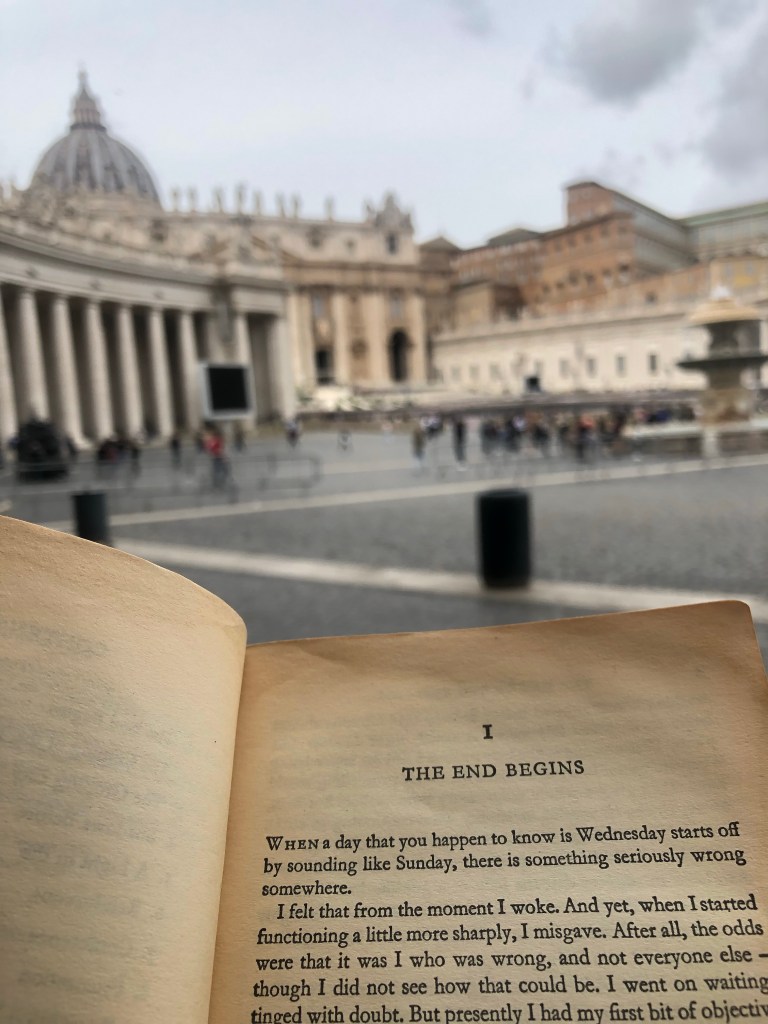
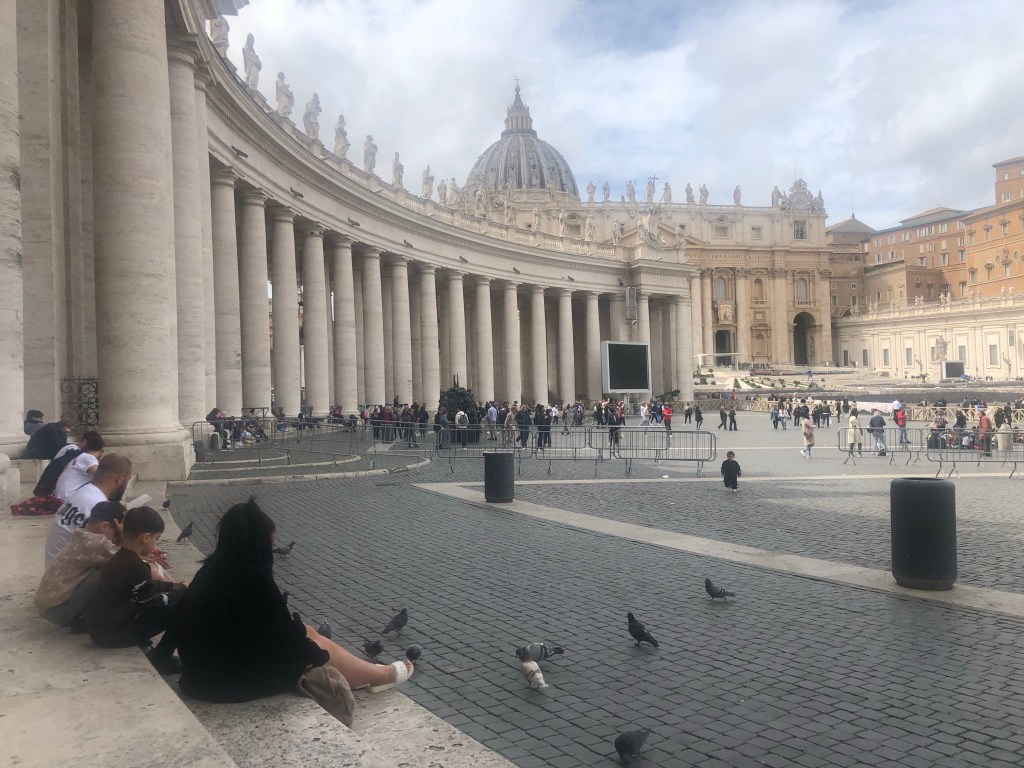
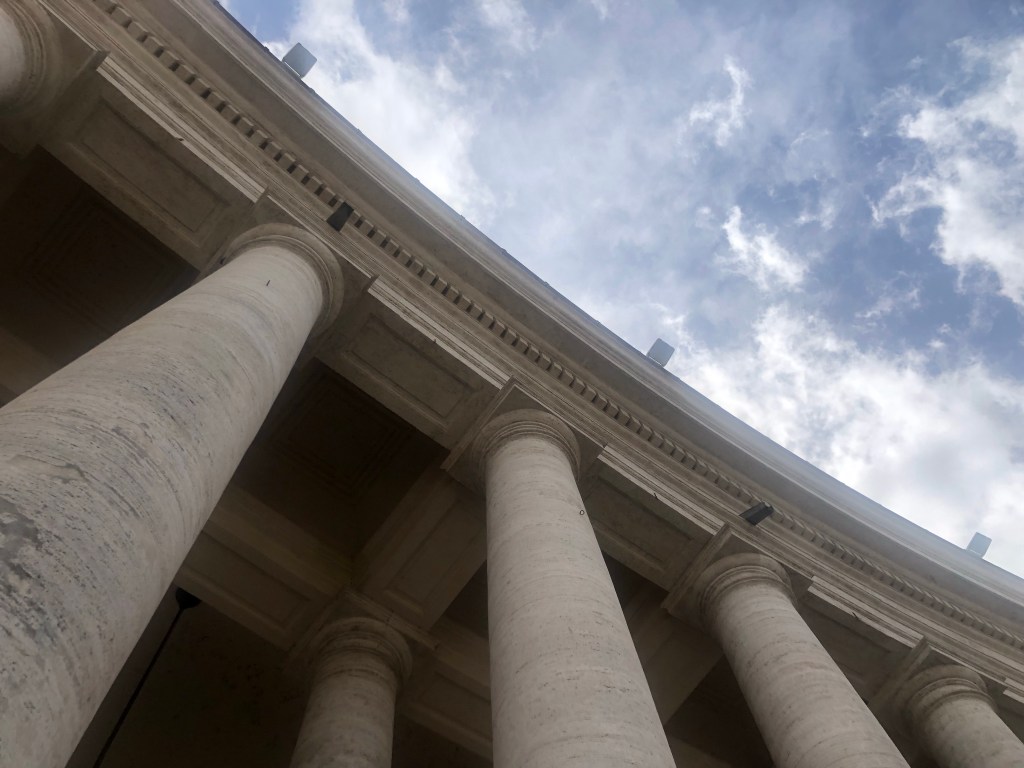
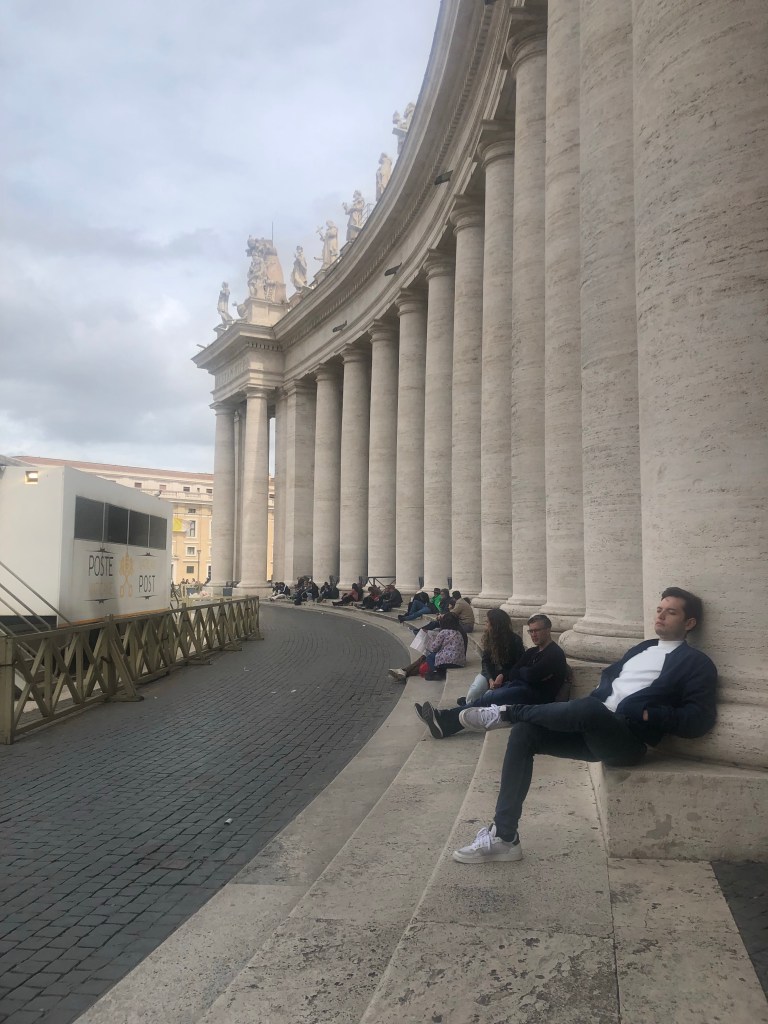
13.25. The surging throng of visitors to the Vatican Museums is steadily beginning to thin out. I could still probably count a thousand or more within the pillared walls of St Peter’s Square, but the morning rush is almost over. From my outpost under the statue of St Philip, I can see most of the piazza, except for the part obscured by the Vatican Post Car parked a few feet away. The postman came to pick up the mail around 11.30, some two hours ago. Since then I’ve been watching the visitors, tuning into the various languages around me and observing the interactions of the many thousands who pass through the Vatican every day. You could call it snooping, I suppose. I prefer to think of it as people watching. As I leaf through the first chapter of Triffids – my solo traveler’s Bible – I try to capture everything I see around me.

Two very well-heeled girls have been taking photographs of each other in front of the pillars for at least half an hour now. One of them is kitted out in a striking tea green trouser suit; the other is more noticeable for her red hair. Let’s call them Green and Red. I imagine what they’re trying to do is one of those time-lapse images for this or that social media network, since Red keeps strutting backwards and forwards in a highly artificial manner, flickering her hair over her shoulder and looking back to Green’s phone. The Vatican City seems an odd place for a glamour shoot, but then, what do I know? It’s a changed world.

A toddler is having the time of his life chasing pigeons in front of me. He’s so caught up in the chase that he keeps falling flat on his stomach, but the brave little soldier hasn’t cried once. He just gets right back up and charges headlong into the flock, giggling wildly and scattering the panicked sky-rats in his wake while his parents watch and mum takes a film on her phone.

After the people and pigeons, the next most numerous living thing here in the Vatican is the city’s gull population. Apparently they’re only a recent arrival: until as recently as the 1970s, gulls were a rare sight this far inland. Now they’re everywhere, raiding bins, snatching bread from hopeful pigeons and circling St Peter’s basilica like dirty angels – or do I mean vultures?

Three locals have dropped by with a pizza box for a snack lunch in the square. It seems the obvious spot for a lunch break: the domed sky is immense – you have to really open up your eyes to take it all in – and there’s always something going on here. A few minutes ago a woman was screaming something on the other side of the square – I never did see her face nor did I catch what she was shouting about over the cascade of the fountain, but from her constant used of “ustedes” I’m going to guess she had that evangelical fire that you only find in Latin American Catholicism.

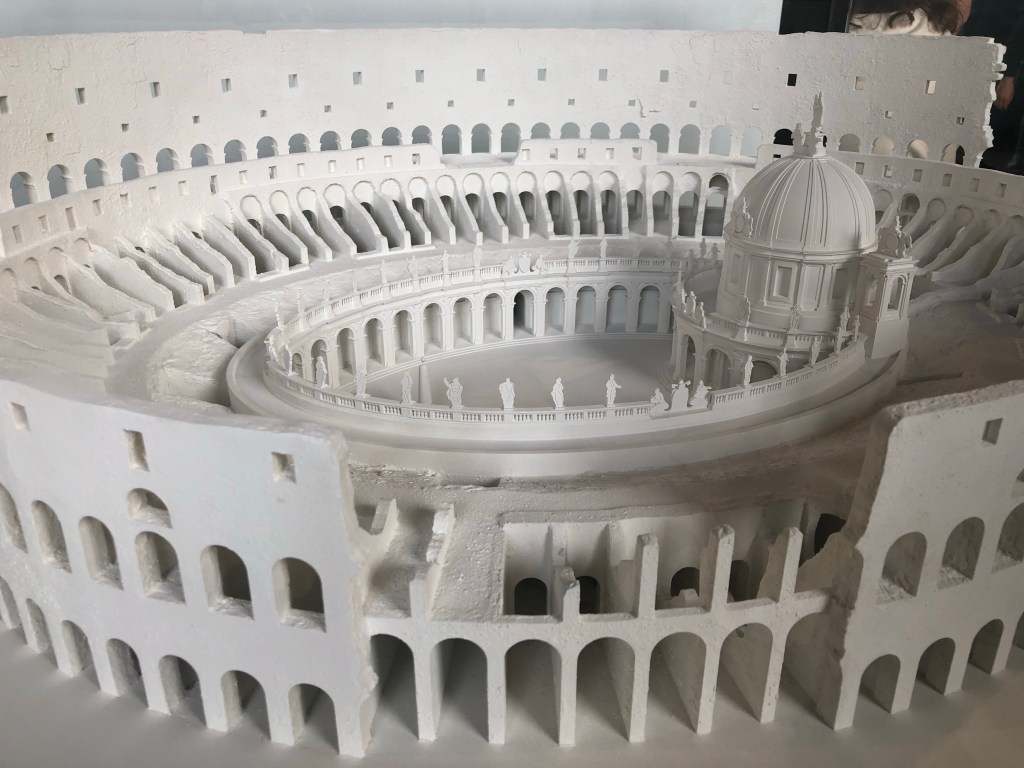
Did you know there were plans to turn the Colosseum into a church? Fortunately they were abandoned many years ago, sparing Italy the shame that Spain has to bear in the desecration of its greatest Islamic treasures of the Alhambra and the Great Mosque of Córdoba.

Well, perhaps not entirely. A casual walk around Rome reveals that many of its ancient churches are carved out of the bones of other Roman carcasses, perhaps most notably the basilica of Santa Maria degli Angeli e dei Martiri, housed in what was once an impressive frigidarium. Still, it’s worth remembering that this fate is probably what saved it from the twitching fingers of the stone-thieves that reduced many of Rome’s treasures, including the Colosseum itself, to the picked and dismembered skeletons we see today.

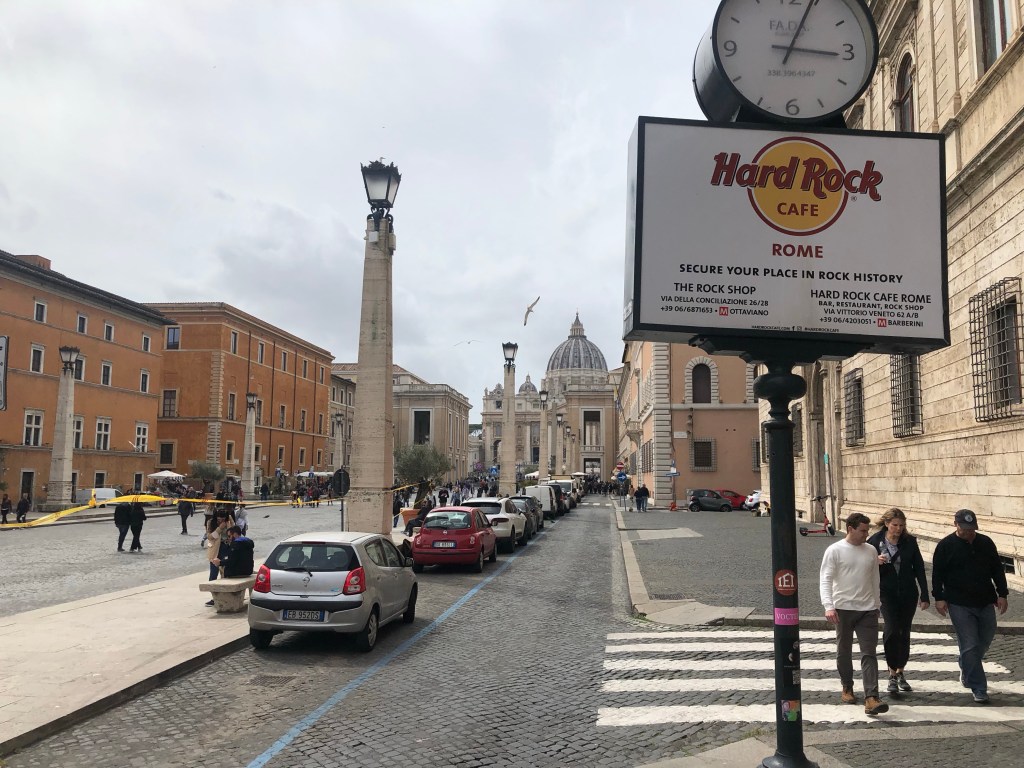
These days the Church has lost interest in “reclaiming” ancient wonders for Christ. Now it’s faithless corporations like Hard Rock and MacDonalds that play Columbus in the ancient places of the world, stamping their flags as close to the action as possible so as to draw in their customers like spiders. In that sense there’s not an awful lot of difference between them and the hawkers offering line cuts in St Peter’s Square at “special special” prices. They’re simply out to make a quick buck at the expense of the next band of pilgrims. It is a little disheartening that the first shop down from St Peter’s Square on the Via della Conciliazione sells branded British tee-shirts.

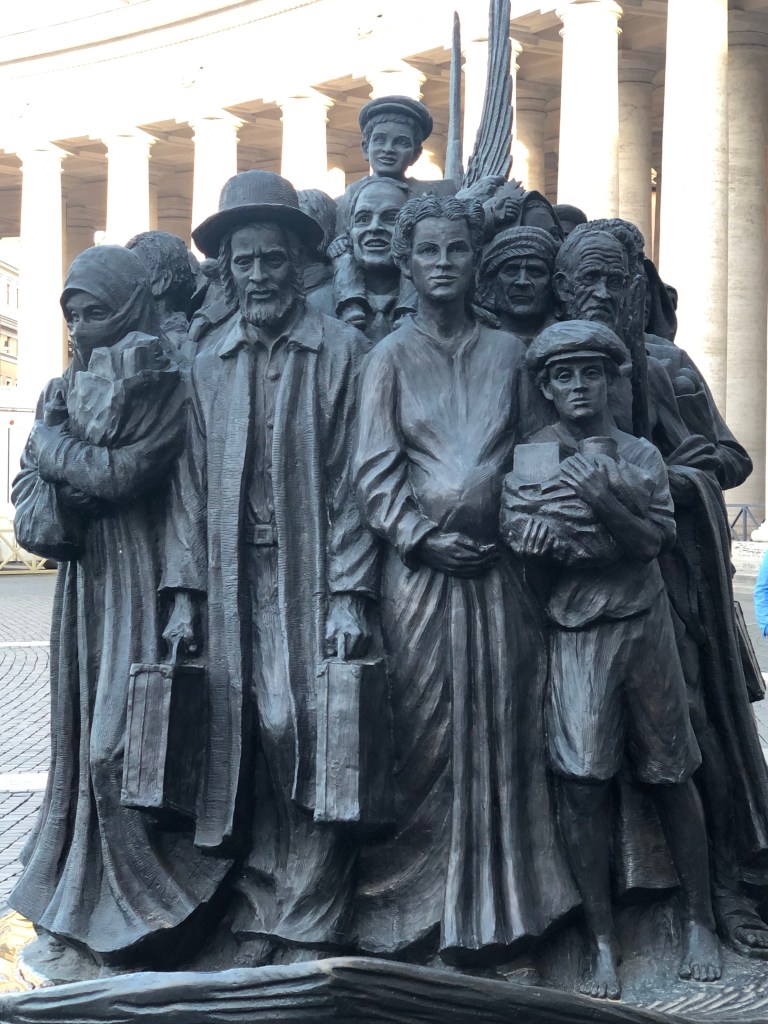
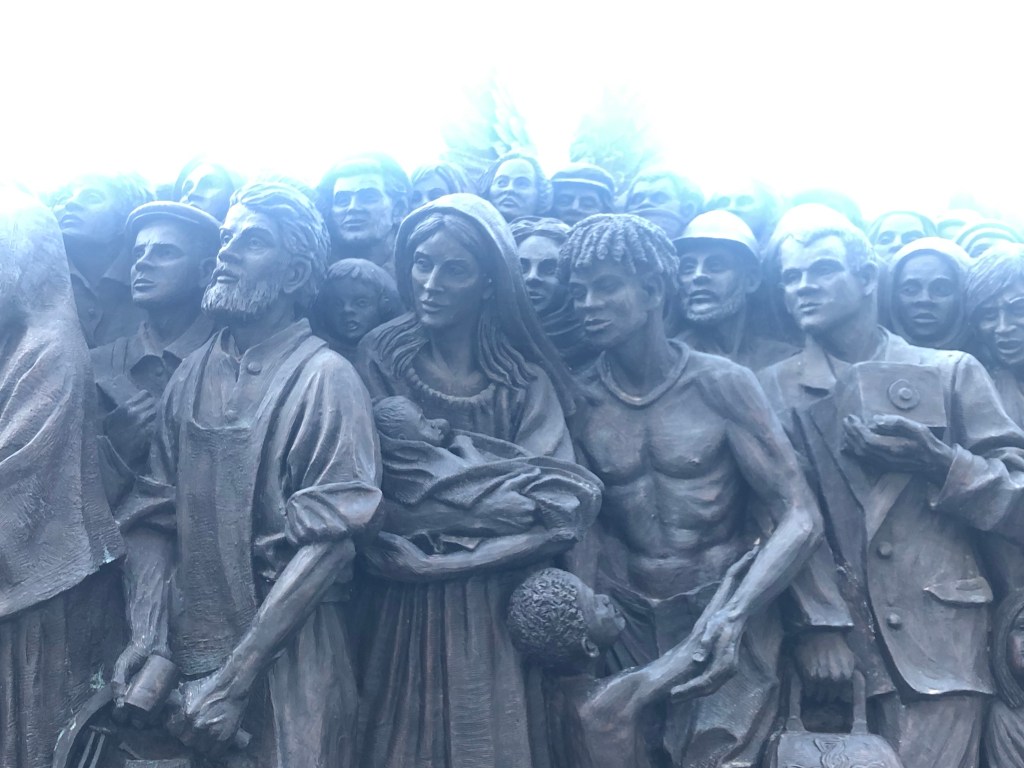
Speaking of which, the newest addition to the square is drawing a steady crowd. Timothy Schmalz’ Angels Unawares depicts a muddled group of refugees from every corner of the globe and drawn from across several ages in history: a Syrian mother and child, a Polish Jew, a family of African migrants, even a Native American nobleman. In a square full of righteous saints and martyrs, it’s a necessary homage to the real sufferers around the world: the everyday folk whose worlds are turned upside down because somebody somewhere thinks their world view has the right of it.

It’s 14.30. I’ve kept my vigil here for over four hours, and now I’m getting peckish. My feet, however, are immensely appreciative of the break from yesterday’s constant Roman around (ha ha). Time, I think, for a spot of lunch. BB x

Searching for God

I’m not a Christian. At least, not in the truest sense of the word. Insofar as my upbringing is concerned, I guess I don’t fall under any category other than Church of England, but when the occasional questionnaire gets handed my way, I tick the box marked ‘agnostic’ without a second’s thought. Only if that’s not an option, and it usually is, Christianity gets my vote over the ‘no religion’ box. Why does this matter? Because today I found myself, once again, in a position where it made more sense to come down on one side of the fence. ‘Christian’ simply makes a lot more sense than ‘no religion’. Strong words for a not-so strong belief, don’t you think?

Let me explain (you’d better get comfortable). I was baptised as a Christian. Church of England. Standard fare. I had a fairly regular English upbringing. I attended a Church of England primary school. I went to church every Christmas and Easter, like almost everyone else. The only minor difference was that my parents both had various musical roles in their respective churches, which meant that I probably spent more time in church than most kids my age. It just so happened that one of them was Canterbury Cathedral, where my dad was a lay-clerk. I guess you get a little blasé about that kind of thing when evensong is a biweekly venture. Not to mention all the school carol services held there. It certainly made the local church back home seem a little small by comparison, though I have warmer memories of that. When I was little I went to church every other Sunday, or at least when Mum played the organ. The memories get a little fuzzy sometimes; this is reaching quite a way back into my childhood. I remember only that I used to sit behind the choir near the organ pipes, and you could hear the organ humming long after everyone had filed out of church and Mum took her hands off the keys. Between that and the old gas heater glowing a dim red in the corner, I have this musty image of your run-of-the-mill Church of England parish tucked away in my head. That’s my strongest memory of the early days, at least. Nothing particularly special. I wasn’t even old enough to sit in the choir then, but I knew most of the hymns well enough, especially the ones they used to roll out on the projector at school. Morning has Broken, for one.

Fast-forward on a few years and it gets a little more interesting. Moving back to England from a year abroad in Spain finds me singing in the church choir in my new home town. It’s nothing more than something to do, I suppose, as I have little else to do at the weekends but go birdwatching down at Stodmarsh or Sandwich Bay – I’m still too young to be thinking about girls or going out – but it pays my first wages, and it feels ‘sort of right’. Right enough to take that next C of E step and decide to get ‘confirmed’. It’s not as big a deal as it is over in Spain, with the sailor suits and all the bells and whistles that go with it, but like I said, it seemed like ‘the right thing to do’. And the other kids in the choir were a lovely bunch, too.

Then along comes my early teenage years, a girlfriend and the beginning of a new approach: evangelicalism. She got me into it, I suppose, but it was something I took to with relish. Prayer and worship, spiritual healing, speaking in tongues… It was a brand new world and I loved every second of it. Ever heard of Soul Survivor? That kind of thing. It was a far cry from ‘open your hymn-books to Hymn no. 348‘ or what-have-you, at the very least. I might even go so far as to say that, for a little while, I even believed it. But it was the people that really made it for me, not the spiritual side of it. Just like playing the violin, the practising of which I had come to loathe, it was more the sense of community that went with it that I craved: the orchestra over the recital, and the worship group over the prayers. I guess you could say I built my house on the sand. Little wonder, then, that it all came crashing down with the end of that relationship. Coincidentally, it was raining that night, too.

I wandered for a while. I asked a lot of questions. I even stopped saying prayers at night, realising that most of them had been selfish anyway – especially the later ones. If not selfish, then love-blind at the very least. Eventually I returned, somewhat shame-faced, to my local church youth group, whom I’d abandoned for almost a year and a half. That was where I met Seth and Jenny Cooper, the Walmer Parish, and Katherine, that everlasting beacon, who showed me that there was more to life than a constant search for answers. For a little while longer, I continued to carry the flag, stronger than before. I was happy. But it was not to last. A series of unfortunate events came as the second hammer blow to my faith. I started to read about the Empire, and all the horrors that had been wrought in the name of God. My brother was assaulted on the way home from school. And Katherine, ever the kindling flame, went out of my life. A few weeks later, I gave up altogether.

As a true Christian, that was my final chapter. I had another fling with the Church in Uganda – ain’t no party like an African Baptist Prayer and Worship Party – but that was little more than a dalliance. Back in England, on the gap year that seemed like it would never end, faith eluded me. Mum, on the other hand, found her way to the Catholic Church and embarked upon what she has described as the ‘road her whole life had been leading towards’. I coveted that, I suppose. It wasn’t her new-found happiness of hers that I wanted, but that contented state of mind. Structured. Ordered. At peace. At one. Something that I’ve struggled with in all the hypocrisies of my life for the last seven years. Her faith gave her life a new meaning. I’d been looking for that meaning for a while with no such luck. People say that ‘finding yourself’ is the first step on the road to that level of understanding. If I could have ‘found myself in Africa’ as so many jokingly think I did, I’d probably have more of an idea as to where exactly I am right now. Unfortunately – or perhaps fortunately, as God knows how lost I’d have been – I didn’t, and the search continues. Right up until last night, when I found myself sitting in an Iraqi church, listening to a Californian preacher explaining the meaning of John 3:16 whilst a translator conveyed it to the congregation in Arabic. Talk about a new way of looking at things!

Now we come to the heart of the matter. I’m not a Christian, like I said at the start. I might have been once, but for a token gesture or two of late, I’m not labelling material at the moment. I can go through the motions like a mynah bird, of course, but that’s got more to do with habit and observation than anything else. That, and a burning desire to believe, whenever that day comes. Until it does, everything seems false. To pray to a God you don’t believe in with all of your heart, with all of your soul – does that not seem a bit ingenuous? That’s not to say I’m not religious, though. Given the choice I’d rather be spiritual than to disbelieve entirely. I’ll put it this way: there’s a hole in my heart that’s waiting for faith. I just haven’t found it yet.

I’ve had this discussion/argument with Andrew recently. I put it to him that I’d be happier not knowing all the answers; that sometimes it’s better to stop asking questions and to have a little faith in what you can’t see; that some things, like as not, are necessarily beyond our understanding. It goes against a great deal of my character, and I think he took umbrage at that, but it’s a principle I try to stick to, and as far as I’m concerned it’s connected to the most fundamental principle of all: hope. I swear by it. There is no greater sin in my book than despair. I might not have the staying power that others prize – indeed, if something is beyond my capability (or, more often, interest) I’m more likely than not to throw up my arms and walk away – but I never truly give up on the inside. And as long as that’s the case, I’d like to believe I still have a chance.

Faith lies somewhere along the road, of that much I’m sure. Wherever it may be is, for the time being, beyond my understanding. And that’s not a bad thing. I tried to find it out here, but for all the strength of the community and the goodwill of the people, it continues to elude me. Maybe I’m being picky. Maybe I’m looking too hard. I don’t know. I’ve just got to keep trying.

I leave you (and this gargantuan post, which is approaching essay length as the clock strikes twenty minutes to midnight) with the only Bible verse I’ve consigned to heart, as it speaks to me on much the same level as it ever did five years ago, when first I found it:

The light shines in the darkness, and the darkness has not overcome it.
John 1:5

I wonder whatever happened to Katherine? I hope her light is still shining brightly for the rest of the world, wherever she is. BB x

Not All Those Who Wander Are Flossed

It’s just taken me about an hour and a half to wade through the latest Arabic text for tomorrow’s class. With a night of karaoke at the Marriott Hotel on the cards for this evening, I don’t exactly have the ‘I’ll do it later’ gambit at my disposal.

First off I want to apologise for a very rocky week or two of bipolar posting (some of you noticed, I gather…). The mid-term fury is over and things have settled back to the way they were before, helped along the way by much meditation, H.R. Haggard and Karl Jenkins. Ouch, that’s a painfully middle-class sentence. Life in Amman rumbles slowly onwards, the daily Arabic homework’s still coming in thick and fast and the Versailles branch of the British Council still haven’t told Andrew where he’s going. Business as usual. I took an entire weekend out to deal with my restless psyche and it seems to have paid off. It meant missing out on a couple of parties, but for the sake of my bleeding heart, it was worth it. So if you were feeling the strain of my sine-wave posts over the last week or so, fret not; the dust has settled. It should be a little easier on the eye from here on out.

It’s been a fairly productive couple of days, which means we haven’t had that many adventures; but that’s no bad thing. I saw our first clouds in a month or so the other day, and what a sight for sore eyes that was. You’d be surprised how uplifting it was to see a speck of grey on the horizon for once. Blue skies are lovely and all that, but when you’ve had temperatures balancing out over the high thirties for almost three weeks without cease, a cool breeze is a welcome miracle. There was supposed to be a thunderstorm, which we all got super excited about, but it never came. Instead, the sky went a very queer shade of brown and a mild sandstorm swept through the streets. No rain. One of the strangest weather phenomenons I’ve ever seen. We got the full force of the stifling storm heat, though; the temperature soared up into the mid forties. My insides felt like they were being cooked every time I stepped outside and there was a weird charge in the air. Mostly we found ourselves retreating to our various homes to sit like idol-worshippers before the air-con until the sun decided to call it a day. Even then it often carried on long into the night, that stuffy, all-pervading heat. The blankets had to go. How they’ve lasted this long is anyone’s guess. BBC Weather’s been getting an unnatural number of hits from our flat, at any rate. They say there’s a 51% chance of precipitation tomorrow. Good news takes the strangest forms…

I finally got around to sending off an email to the school I’ll be teaching at in Extremadura. I’ve had it written for the best part of a week and a half, but for some reason I never hit the send button. I guess I wanted to be dead-certain on the grammar, but in the end I just had to be happy with what I’d written, bite the bullet and hit SEND. With any luck, I’ll get a reply at some point before I arrive in September. So that’s pretty cool. In the meantime I’m keeping my teacher senses trained with this project of ours at the Iraqi church Andreas got me in on last week. The last session must have gone down well enough, because we had double the numbers this time. We’ll have to call in reinforcements at this rate. Parts of the body this week, following on from the previous lesson on going to the hospital. Getting the groups to use the vocab to compliment each other was a great idea, and also highly amusing. Apparently eyebrows are a valuable commodity. Or maybe they were just trying to get their heads around the pronunciation. I’d like to believe the former. Having to explain the difference between diarrhea and constipation in the politest possible way is definitely going down as one of the most entertaining moments of my teaching career. Something along the lines of ‘let’s say you eat a bad falafel, and it goes right through you… and for the other one, well, it doesn’t quite go right through you…’. British humour. It never gets old.

This church is just about the best thing that’s happened to me out here, though. It’s the one thing I’d return to Jordan for, given the chance. Maybe this is the beginning of a spiritual journey, maybe not. I hope so, at any rate. I’ve been waiting for my chance for so very long now, ever since I left that world behind almost six years ago… I’ll be dropping by three times a week from now on, twice for class and once for the service, so things should start to look up. And that’s a real slice of good news.

Bummer, I’m out of toothpaste. Looks like I really will have to resort to this weird Arab brand I picked up in the corner shop last week. At least it smells nice. After Morocco I’m none too keen to follow up on any of these traditional Arabian dental practices. BB x

The moment we thought Andrew’s placement might have come through…

A Sex-Tape is a Step Too Far

I think the title needs a little explanation.

In addition to the mid-term exam, our Arabic teacher set us the task of coming up with a five to seven minute presentation on a topic of our choosing. It took me until the morning to come up with something I could realistically rattle on about for that amount of time (no, seriously), but after stumbling over my words as usual, I ended up putting Andrew up to a bet whereby he had to talk about Kanye West. Naturally, Andrew tried to make his presentation somewhat relevant to what we’d studied so that he could activate the vocabulary, or whatever buzzword you want to use. The result was an exploration of the modern wedding through the Kimye phenomenon, complete with all the gory details, ego, sex tape and all. Highly entertaining, of course, but our teacher took umbrage at the subject, claiming that it was ‘hardly suitable’ for class, and debarred us from asking any questions so as to bring the topic to a decided halt. Still, the man did a good job, and he held his ground in spite of all the criticism, so I held up my end of the bargain and rustled up a pretty neat lentil and vegetable stew for him and Andreas, as promised.

To kill some time in the post-class hours, Andreas took us to an underground church in West Amman to help him to teach English to a group of Iraqi refugees. Just a couple of hours in a church not too dissimilar in style from a Worth Abbey chapel, which made me smile almost as soon as I set foot in the place. John 3:16 was up on the wall behind the lectern in golden lettering; it was pretty clear from the first four words, even in Arabic. Beautiful stuff. The Iraqis themselves, Christians from Basra, were just about the nicest bunch of people I’ve met here in Jordan yet. Andreas and his teaching partner Jason assigned Andrew and I four to teach, and we discussed hospital related vocab to get the ball rolling. Whilst we worked, the children of our students scampered about the church at full pitch. I haven’t seen such unfettered happiness in a while. One of our group was a lot quicker on the draw than the others when it came to learning all the new words and expressions, but Raja’, the oldest of the group at seventy-one years old, was an utter delight to teach, especially when she came out with a flawless sentence at the end of the session, primarily because she was so shy. It kind of reminded me of how I must have been earlier down the line. Boy, but it was good to be teaching again, though. Getting back into practice for my assistantship in two months’ time. Better still, Iraqi Arabic is the closest to fusHa out there and a joy to listen to. Basra sounds like a beautiful place, as if Iraq needs anything more to make it more appealing. Land of the Abbasids! Home of Abu Nuwas! Man, why can’t I spend my Year Abroad in Iraq?

Wait, on second thoughts, don’t answer that one.

There’s a lot to be said for this religion malarkey. With any luck, one day the moment will come and I will believe. Warm fuzzy aside, I’ve got to say that those two hours were a godsend, no pun intended. All of my frustration and anger from the past week simply disappeared. I have Faras and his friends to thank for that, for being so friendly and eager to learn; and of course Andreas, for giving me the chance to get in on the project. All is well with my heart once again. I’m still going to fight for the chance to go back to Morocco next year, but I know now that I can and will survive another month out here. I can do this.

Hold the phone, according the beeb there’s a storm coming. Rain. You have no idea how happy this makes me. That it’s going to be 41 degrees at the peak of the storm is beside the point. Bring on the rain, I say. Bring it. BB x