Don’t Mention the Catalans

It’s 21.14 on a Sunday night, I’m still a little sleep-deprived and mulling over how I can make my lessons on Illness and Disease interesting the third time around for my 2° class tomorrow morning. As for news, I more or less wrote this Puente off as far as traveling is concerned. After briefly toying with the idea of a flying visit to Galicia to investigate its potential for next year, I decided instead to stick around and stick to my writing.

At least, that was the plan. But if life’s taught me anything, it’s that planning to take the emptier road usually leads to getting involved in more than you bargained for.
DSC_0276

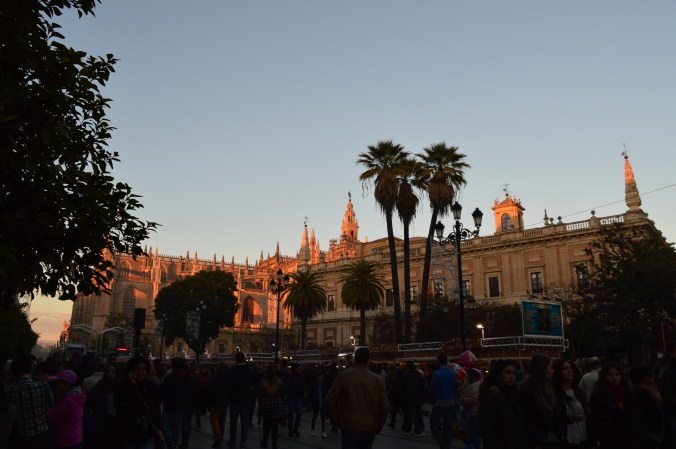
And then Archie and Viresh showed up in Seville.
DSC_0279

It’s been far too long since I last saw these two fantastic comrades of mine, so it was a wonderful surprise to hear that they were on their way to Spain at the very time I had off! After the singular honour of being here to welcome Biff and Rosie, little could have made me happier than to be here to welcome more old friends. Leaving England and my friends behind has not been easy, so it’s magical moments like this that make the decision all the easier.
DSC_0290

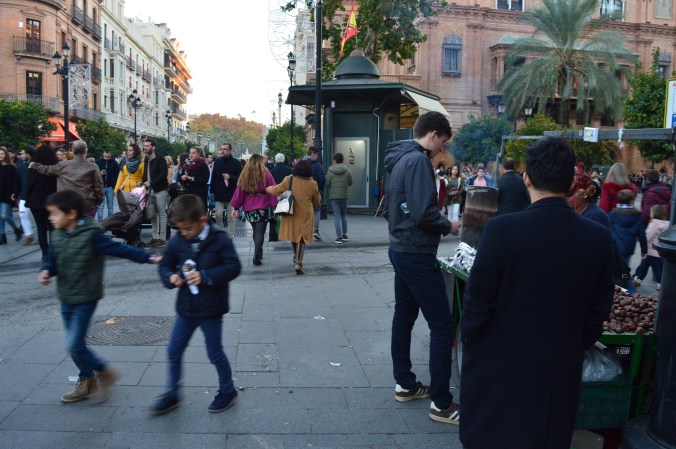
The Belén market is in full swing, and the city air is thick with the smell of turrón and roast chestnuts. It’s Christmas in another country. The city was packed to its limits this weekend with the rush of Christmas shoppers and holidaymakers taking advantage of the Puente de Diciembre to get their money’s worth. Rather than spending two nights in the city – impossible at such short notice – I took the equally-crowded bus home and returned early the following morning, which worked out cheaper than even the cheapest hostel on offer, had there been any on offer at all. That’s LEDA for you. Thank heavens for the bus network.
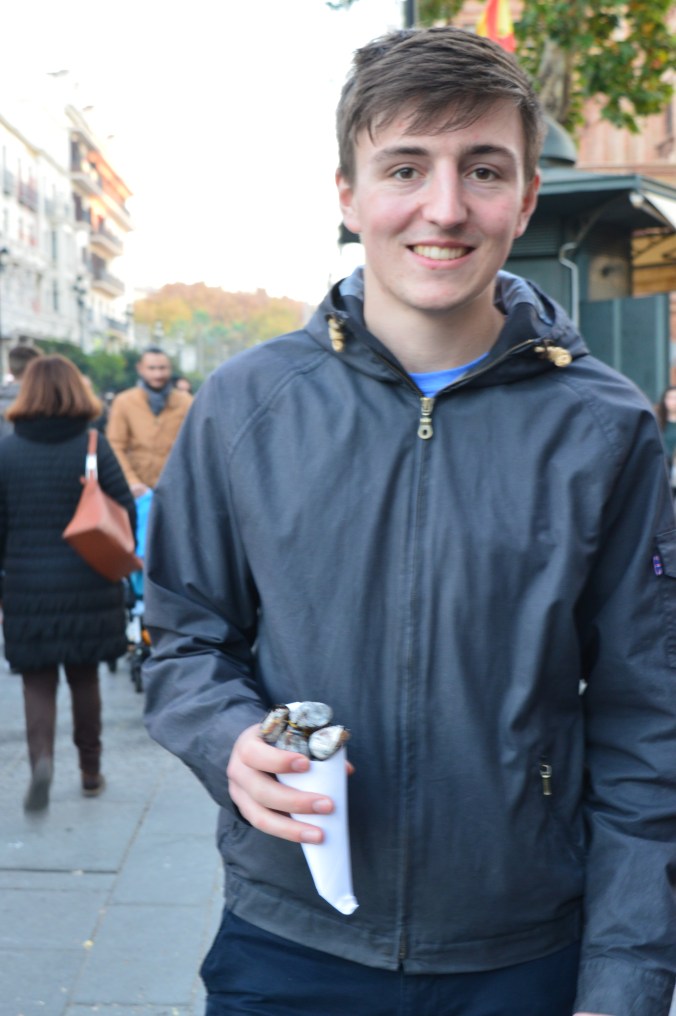
DSC_0280

Between the catching-up, the memory-sharing and the tapas, we decided to hit the town at night, something I’ve never done before. From careful inspection I can report that Alfalfa is a fantastic place to start when looking for both decent restaurants and music bars. We found a nice spot where two groups of partygoers had broken out into song. I’m not sure whether your average Englishman takes a guitar on a night out, nor whether he can expect not just his friends but half of the bar to sing along with his songs, but it was entertaining to watch. If I knew any sevillanas, I’d probably have joined in, too.

I learned a lot about India that I didn’t have entirely clear from Viresh this weekend. My knowledge of the Indian subcontinent is bitty at best, gleaned in pieces from a DK Guide to World Mythology, Age of Empires III, The Far Pavilions and Valmik Thapar’s Land of the Tiger series, amongst other chance encounters. So to have both the traditional Indian wedding ritual and the Ramayana summarised – the latter in a mere ten minutes, the former stretched (rightfully so) over the best of an hour – was a real privilege. My love for India is sufficiently rekindled. I think it’s time I re-read Pavilions, too.

DSC_0301

In one of the bars, we got talking to a chatty Sevillano and his friends, who were quick to out us as guiris… Apparently only an Englishman would wear a Valecuatro jacket (I’m not sure how that works, since Valecuatro is a brand we can’t get hold of in Albion, but that’s beside the point). Archie decided to joke with him that he was actually Catalan, which made the guy unnecessarily angry. Before my eyes, it got out of hand very quickly, with the Sevillano hurling abuse at Archie and, by default, the Catalans at large, calling him a ‘puto guiri’ for ‘defending something he knew nothing about’. Hardly fair, when the guy studied Catalan for three years and lived with a Catalan family for several months last year. It’s not the kind of timeframe which makes one an expert on Catalan affairs, but it is a great deal more than knowing ‘nothing’.

It’s a telling response, though. That the very mention of Cataluña should provoke such a hostile reaction from a young Andalusian tells you a lot about the underlying anger resulting from the events of October. Not that Andalusians have a particularly sturdy leg to stand on – they, too, have their fair share of separatist stories, such as the Green Banner Revolts of 1642 – but the Cataluña question still has the power to raise hackles here. I wonder where my grandfather stood on the matter, having relinquished his family home in La Mancha to make a living on the young Costa Brava…

Christmas is coming. I felt naughty and opened a couple of Advent calendar chocolates two days in advance when my energy was running low. I’ll make amends for that in one way or the other over the next few days.

I do hope you Brits are enjoying the snow. BB x
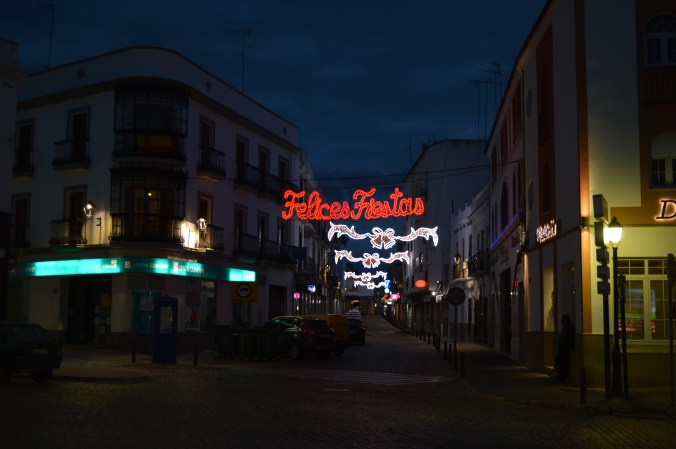
DSC_0306

P.S. I have a bike! After months of half-hearted searching, I finally have a sturdy little mountain bike at my disposal! Hornachos, I’m coming for you!
Bulerías and Bananagrams

I haven’t been traveling much recently. A combination of earnest novel-writing, job hunting, private lesson planning and musing over where to buy a cheap bike have conspired to keep me here in Villafranca for the time being. This year I’m working just the one job (proof that, even in the best of all possible worlds, experience isn’t always the best guide), so I have some four hundred euros less per month to live on. Weekend adventures have become what they always were, at heart: a luxury. Sometimes, however, an opportunity presents itself which cannot be turned down for love nor money. Biff’s visit to Seville last week was just such an opportunity.

How I managed to make it through the entirety of my last year out here labouring under the belief that I couldn’t cancel my private lessons for my own benefit is a mystery to me. I rescheduled my Thursday guardería session, packed my things as the WiFi man finally showed up (hello Murphy, long time no see) and hopped on the afternoon bus to Seville. It felt so good to be on the road on a Thursday afternoon. Previously I was working right up to the wire on a Thursday, so that the weekend began on a Friday morning. This year siestas are a thing, and I wonder how I ever managed without them. They’re the perfect solution to early mornings, late nights and post-weekend fatigue. The blinds in my room are a work of genius: at a basic level, they let in the morning light through little gaps in the shutters, which you can close off completely, leaving the room completely dark. I’m enjoying the shelter now, and I know I’ll appreciate all the more when this country heats up again come May next year… that is, if it ever cools down sufficiently for that to be a noticeable change (it’s almost November and it’s still pushing high twenties here).

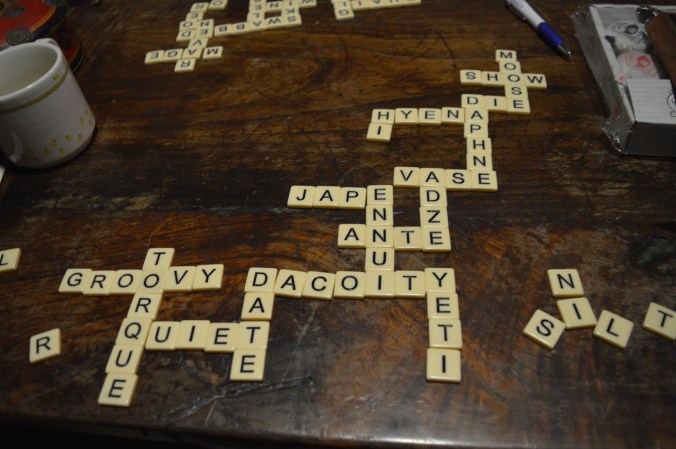
After weeks of ESL games, I leapt at the chance to spar on an equal footing. Biff inducting me into Bananagram, which is something like the bastard child of Scrabble and a crossword. My passion for complicated and obscure words dragged me down a lot, but it made for some visually appealing results, win or loss.

DSC_1095

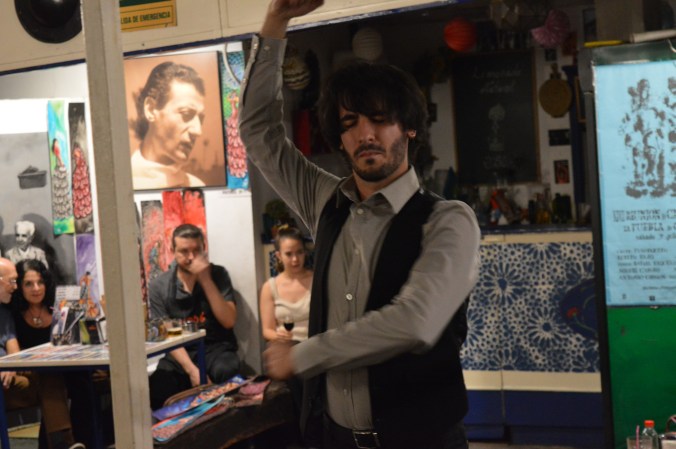
But I didn’t cancel my private class to play Bananagrams all weekend. I’ve been moving in and out of Spain for several years now, so it’s always a pleasure to see my grandfather’s country through fresh eyes. Biff hadn’t been here since our school’s music tour to Spain back in 2006. I’m not sure why I found that so hard to grasp. But it’s chiefly because I had new eyes to look through that I got to see a side of Seville I’d never seen before. Palmeras are delicious, persimmons aren’t half bad and, if you’re looking for flamenco off the beaten track, you can do a lot worse than La Carbonería…

DSC_0950

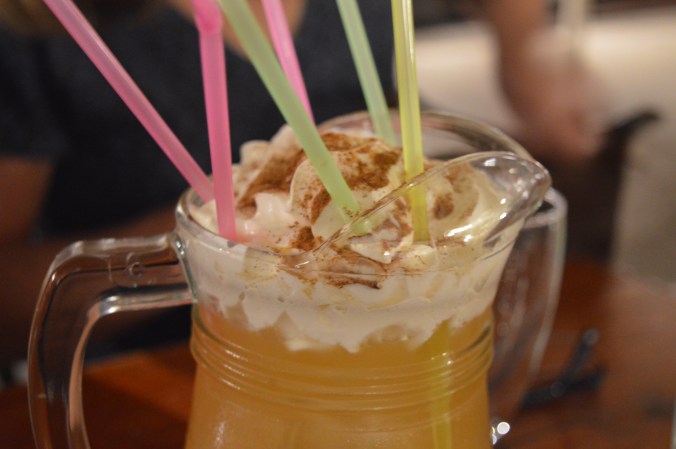
I work by the rule of three. Once is happenstance. Twice is coincidence. Three times is a message (or interest, if we’re talking about catching somebody’s eye). And three recommendations to visit La Carbonería from three different sources – the head of Chemistry, my flatmate and Biff’s AirBnB host – was too obvious a message to ignore. So, with a glass of agua de Sevilla in hand (that stuff is deadly), we nabbed a table near the performers and were treated to a decent forty-five minutes’ set.

DSC_0927

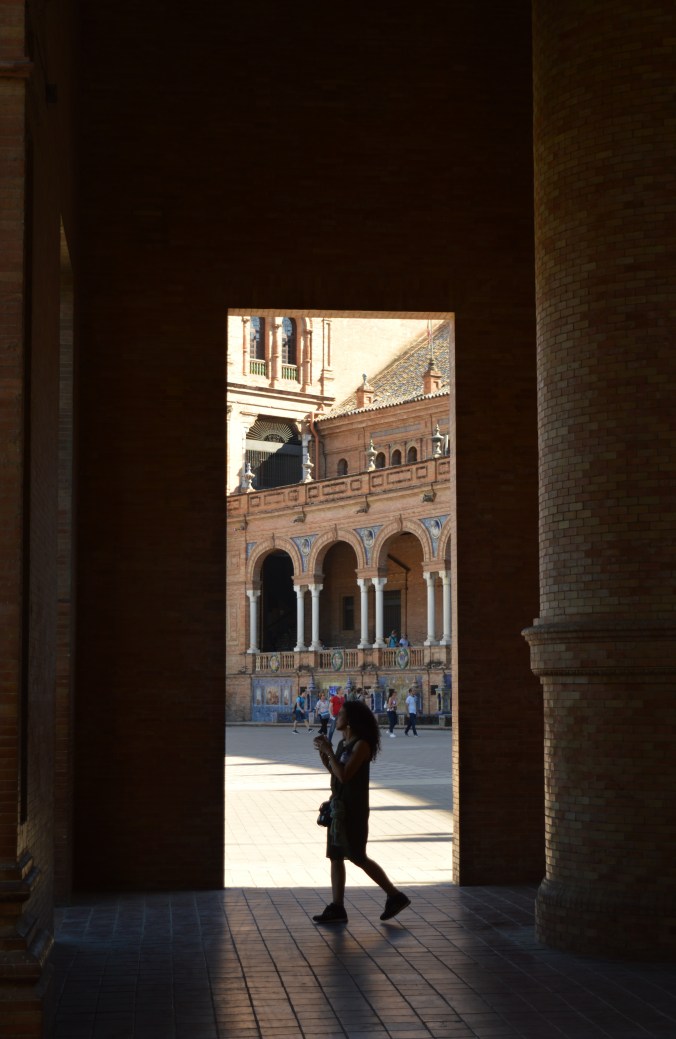
It was nice to have the time to wander about Seville at leisure. So often I’ve been running through Seville, waiting for a bus, or a plane, or something along those lines. There was a demonstration in the Plaza de España by the police for equal pay, watched from the shade by a mounted division. Catalonia was being stripped of its powers, so I think the police had other things on their mind. It felt weird, to stand in the plaza and see the cities and regions of Spain painted on the panels all around, knowing that up north the kingdom was pulling itself apart. Just like the Paris attacks, it was hard to believe such a thing was possible under the Spanish sun. Babies in pushchairs followed the protesters, Latin tourists snapped photos, gypsies danced for pennies on the steps. Life goes on.

DSC_1050

Fortune favours the interested. Go on a wander about town and you never know what you might find. I’ve seen a Mario Kart stag do, a gypsy wedding and an errant griot here. On our journey in search of a tapa or two, I saw a nun with a stuffed-toy octopus in her backpack. You never know what you might find.

DSC_1069

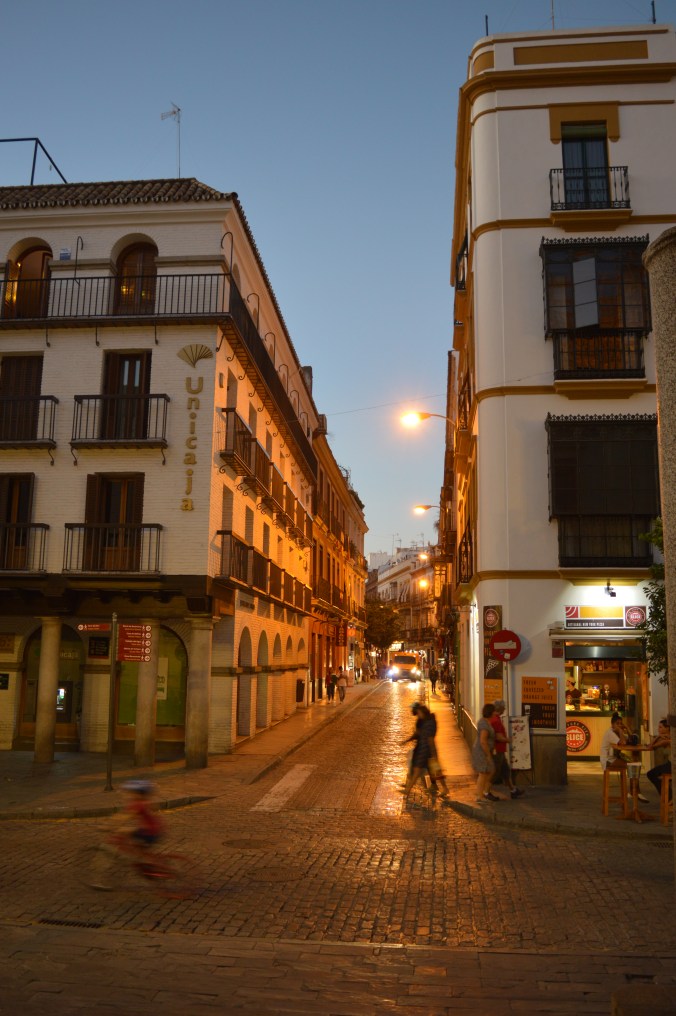
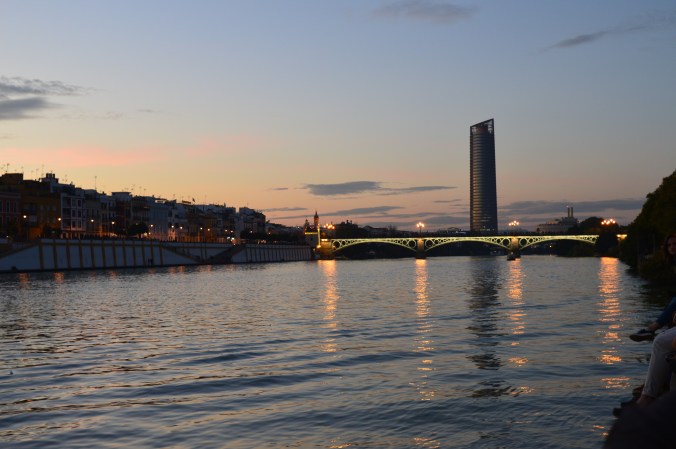
Seville’s streets are beautiful by night. Some parts look like France, others look like Spain, and others central Europe. I suspect it’s the trams that make it look like central Europe. The monk parakeets that live in the palm trees and the ring-necked parakeets that nest in the alcoves of the various churches jostle for space, and the screeches of the latter make the place sound eerily like London every once in a while, though it’s not quite cold enough at night. The chestnut vendors are out and about. When the nights are colder, the steam rising from their wheeled stands will complete the picture. I hope they’re about in Córdoba, too. I’d like to buy a bag of them and eat them on the Roman bridge as the sun goes down and the lights on the mosque come up.

DSC_1076

I wonder what my next visit will deliver. BB x


Live Organ Transplant

These are interesting times.

I must confess that, from time to time, I do wonder whether I’ve made the right choice. As university drew to a close, I watched many of my friends leave for London and five figure salaries. If it had ever occurred to me that I might be interested in that path, I suppose I too would have followed it. But here I am in Extremadura, one of Spain’s poorer regions, getting by on a modest salary and picking up extras in private classes where I can. At the very least I have a job; for that much I am truly grateful. There are plenty of wanderers here. Worlds collide: the English graduate in me seeks confirmation, stability and satisfaction. The Spaniard in me wants to use the here and the now to go from job to job until I find the medium that suits me best. It isn’t often that I have such Jekyll and Hyde moments, but in this period of intermission, the two are often locked in combat. My devil had been long caged, and he came out roaring.

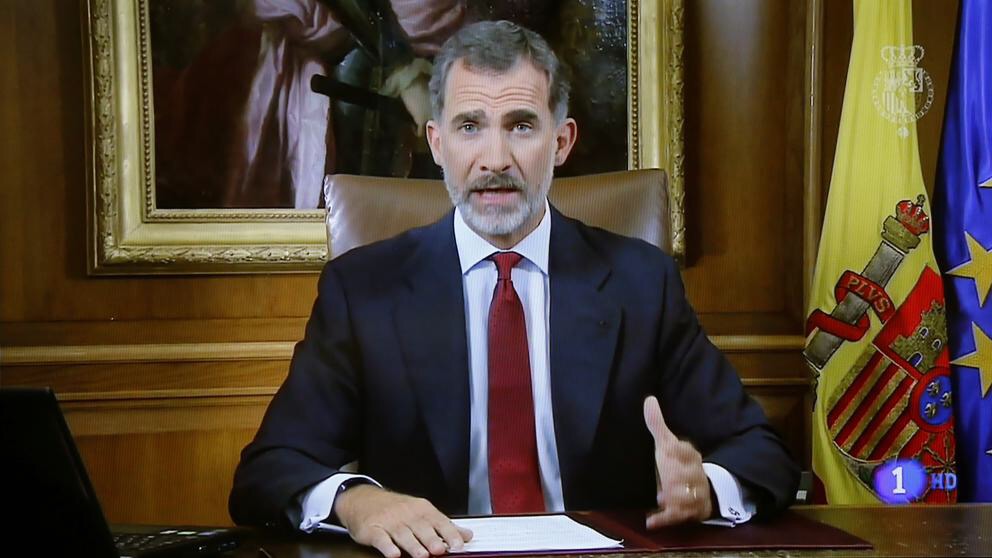
Putting my doubts and concerns into perspective was the King’s address to the nation this evening. In light of recent events in Catalonia – up to and including several counts of police brutality as the Catalans made another bid for independence – it seems foolish to break my head over my petty apprehensions. I’ve never really taken a stance on the Catalan question, treating it in much the same manner as the age old Real Madrid/Barcelona F.C. divide – that is to say, taking the easy way out (in the latter case, opting to support Sevilla’s Real Betis as a nonconfrontational middle ground). But at such a time of crisis, it is difficult not to have an opinion here or there.

I’m a reluctant supporter of the Spanish cause. And I’ll explain why. In studying for my novels, I have been paying especial attention to the year 1640 and the troubles that spiralled out of that most hectic year. Critically, it was the year that not only Catalonia but both Portugal and Andalusia all made a break for independence from a weakened, overstretched Spain. After more than a decade, and much blood, only one would achieve that privilege. Taxes, once again, were a primary concern for the Catalans, who felt unfairly treated by the government. In this case they may have had a point: Spain’s various wars were costing the empire dear and Catalonia often suffered the brunt of it. The upshot was that, despite French intervention, Spain crushed the revolt and Catalonia was reined in, thanks in part to various double-dealings with the French.

(DISCLAIMER: I apologise if my history is off. Working in the medium of alternate history as I do, I sometimes forget how much of the history I study is the product of my own alterations…)

Four hundred years later and many Catalans still want their independence. It’s been an ongoing concern for some time, rumbling along the undercurrent of Spanish news for as long as I can remember, but when images surface such as those of the clash between the police and the fire brigade and of armed men raiding polling stations, the cause becomes that bit easier to understand. Some of the pictures look as though they have been taken out of a Latin American country rather than on Iberian soil. It’s really quite shocking.

What would independence for Catalonia mean? A lot of things, of course, but not least of all, trouble. Catalonia supports Spain more than many of its autonomous communities because it has the money to do so. Were regions such as Aragon and Extremadura to shoulder the kind of burden Catalonia carries, they might easily collapse. Catalonia is strong; it’s one of their mean reasons for making a bid for freedom in the first place. Not only is it one of the wealthier regions, it also receives a significantly larger intake of the country’s tourism. If you ask a lot of holiday-goers where they’re headed when they’re off for a trip to Spain, many of them will tell you Barcelona. When it comes to a summer holiday, a weekend trip or a day out, the Madrid/Barcelona question is far more easily answered. In short, Catalonia is savvy. Whilst for much of its history Spain looked religiously inwards, Catalonia was looking out at the wider world. When the tourism industry kicked off, the Costa Brava was one of the first on the scene. Had he not been hit by a car on his way to the airport, my enterprising grandfather would have been one of the first to reap the whirlwind. Though Castilla la Mancha was his home, he responded to the call of Catalonia. You might say I have a dash of personal interest in the matter.

We get to the heart of the matter. In her strength, Catalonia is one of Spain’s greatest assets. Just as much as she is wary of a merging with Portugal, Spain is anxious not to let go of Catalonia. A break with Spain, bloodless or not, would be a hammer blow to an already weakened nation. Whether Catalonia would prosper in the long term is beyond my understanding, but for the first few years at least, there would be trouble. Regardless of the political or economic outcome, Brexit resulted in a bitter taste in the mouth for many, both at home and abroad. The Catalan question outlives the Brexit debate by hundreds of years; I should not like to see that bitterness multiplied.

2017 is, in many ways, not too dissimilar to 1640. Alright, so there’s no pan-European war, popery is no longer anybody’s primary concern and explicit empire building is a thing of the past (or at least, as it was in the seventeenth century), but the point remains that it was a year of change and unexpected events. Last year saw both a British rejection of Europe and the election of what many considered to be a joke candidate to the seat of the most powerful man in the world. These are strange times. It is fitting, then, that Catalonia should choose this moment to strike out, as it often has before, at a time when predictions are off and nationalism is creeping back after a lengthy absence.

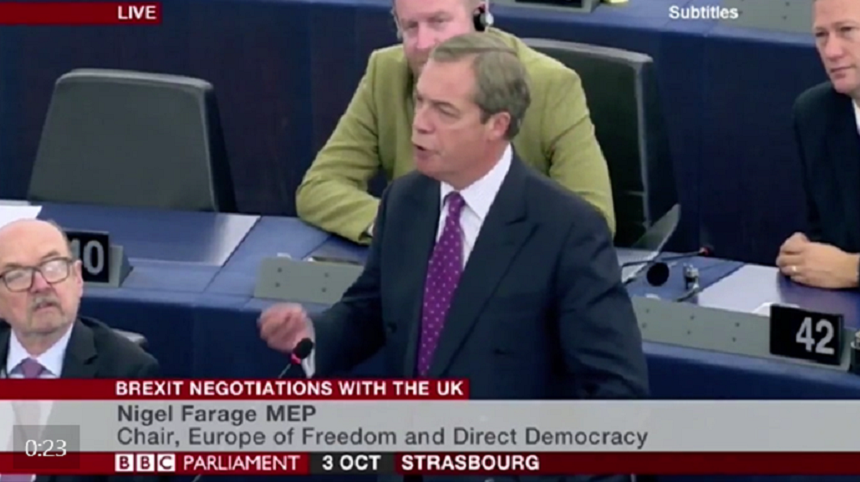
Even Farage made sure he got his oar in over the debacle…


It would not be the death of Spain. But it would come down hard, and upon a nation that has spent hundreds of years recovering from the slaughter of its golden goose. Stanley Lane-Poole once claimed that Spain had been ‘grovelling in the dark’ ever since the completion of its national genocide. Whether you sympathise with his damning appraisal or not, Spain is no longer the great power it once was, and if Catalonia broke free, it would be tantamount to taking one of her lungs.

One of the most beautiful facets of Spain is its diversity. There are few other places in Europe quite as varied, in people, countryside and culture. The Basques in the north are fiercely proud of their unique heritage, as are the Galicians, the Valencians and the Andalusians. In many respects, so are the peoples of all the other regions. Even the Leonese, within the very heart of Old Castile, have been known to make a bid for independence from their own autonomous community from time to time. In that sense, the Catalans stand out only in their dogged pursuit of independence. Where I would normally be strongly persuaded to empathise with their cause, as I was with the Scottish bid a few years back, my conclusion is much the same: one day, perhaps, but not now. With storm clouds looming, now is not the time for the severing of ties. There may come a time, and soon, when unity will be our holdfast. We should be proud of diversity where we find it and treasure unions where they can be made. It is easy to do things one’s own way. It is better for all of us, surely, if we work together. It’s the wishy-washy liberal answer, but I’m sure it’s the right one. If you knew that something you wanted would cause no end of hurt and disruption to somebody you knew, even somebody you had grown to dislike, could you take it from them? Really?

These are interesting times. I wonder what will become of us. BB x

Letters from my Grandfather

I never knew my grandfather. Neither did my mother. In the twenty-two years I have lived on this earth, my family has never numbered more or less than four: my mother, my father, my brother and I. No uncles, no grandparents, no second-cousins… Four. No more. It certainly made for an easy job learning languages – especially Arabic – but now that I’m older, and especially at this time of year, I find myself wondering just how much I have lost in that absence; an absence I share with my mother.

On account of a bad cold and a very real fear of spending another New Years Eve stranded in a strange place, I shied away from the celebrations last night and spent the following morning in church, questioning my elusive faith as usual. Do I feel like I missed out on a good time? Perhaps. Perhaps not. I try not to think that way these days. Sometimes, however, these things are meant to be. I believe that. I always have. The choices we make lead us in the right direction, wherever that may be.

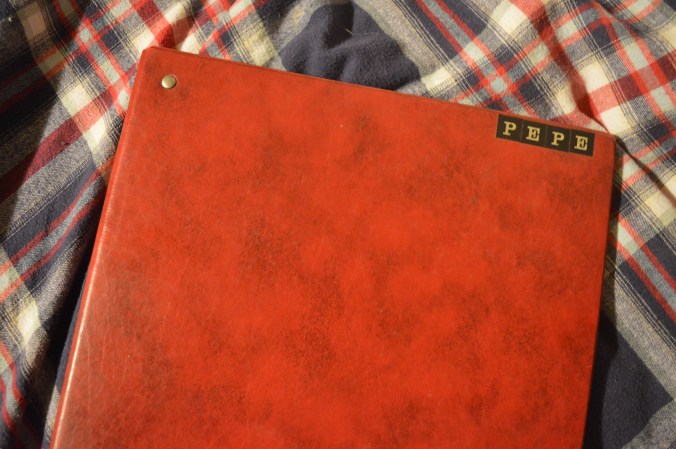
It just so happens that my choice led me to stumbling upon something I’d never seen before: a collection of letters from my grandfather.

dsc_0167

My grandmother’s journal of memories

I don’t need to explain my love for Spain here. I’ve done it before and I expect you don’t want to hear me say it again, nor do I need to tell you if it’s news to you. I used to get sick of people taking the mick out of me for it, as if they hadn’t got it in them to love the places they’d been on their years abroad. I apologise for such childishness on my part. Of course, it’s foolishness to have even reacted in the first place. Because Spain is more than just an obsession. It’s my grandfather’s country. It’s where a part of me is from. It’s a deeply personal adventure, and these things always hurt.

dsc_0169

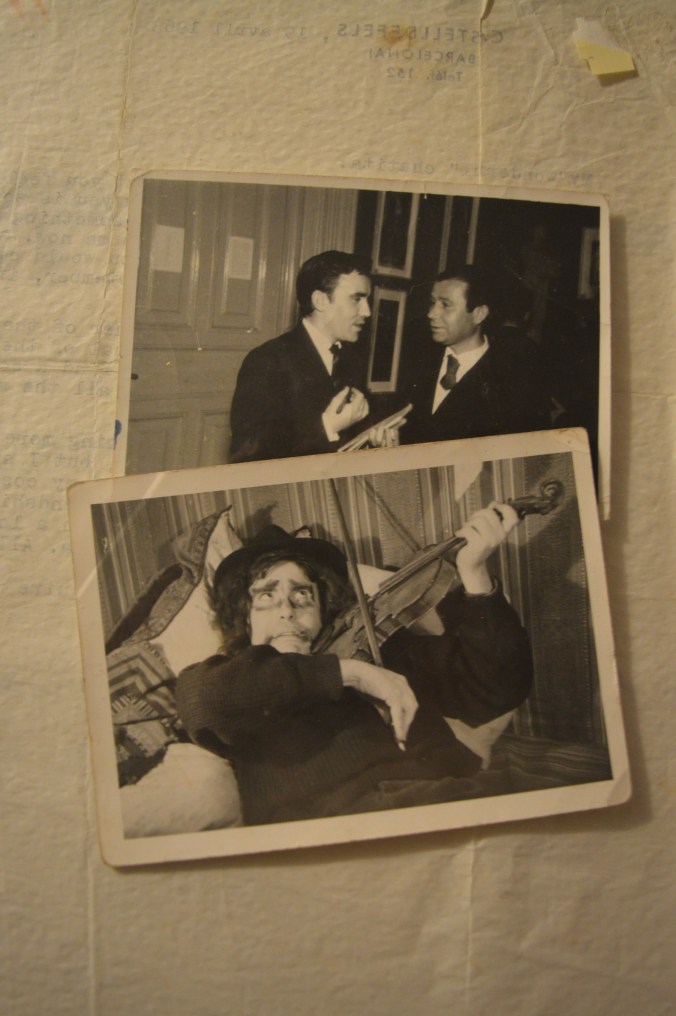
It looks like he could dress up and dress down…

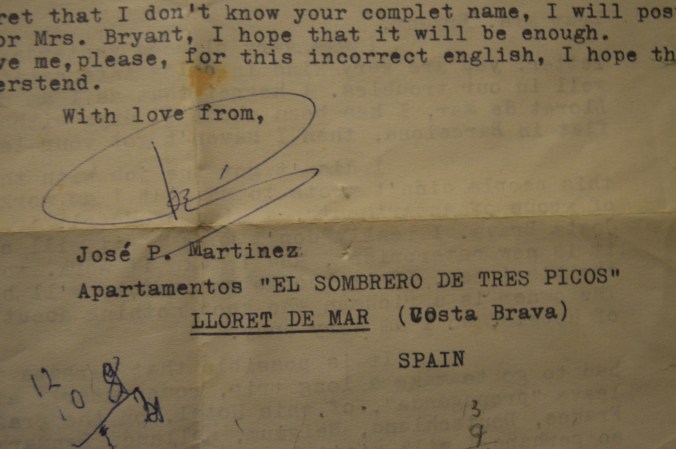
Who were you, abuelo? What did you sound like when you laughed? Did you laugh often? There is sadness in your letters, impatience and frustration, but so much hope. Did you play the violin well, or did you tire of it like me? How can I know, when your mother burned it when you went away? You were a linguist, like me, but you weren’t afraid to chase your dreams. There is so much resolve in your writing, so much conviction. There was a living to be made on the Costa Brava, even if your parents didn’t see it that way. Those dreams of yours, those plans to take my grandmother out to dinner on a boat on the Seine… Spain was about to open up to the world. Did you know, I wonder? How old were you when that car struck you down on that black day in June 1964? I don’t even know that much. All I know for sure is your name, your letters, and your typewriter. I wish I knew you better. I wish I knew you at all.

hotelcatite

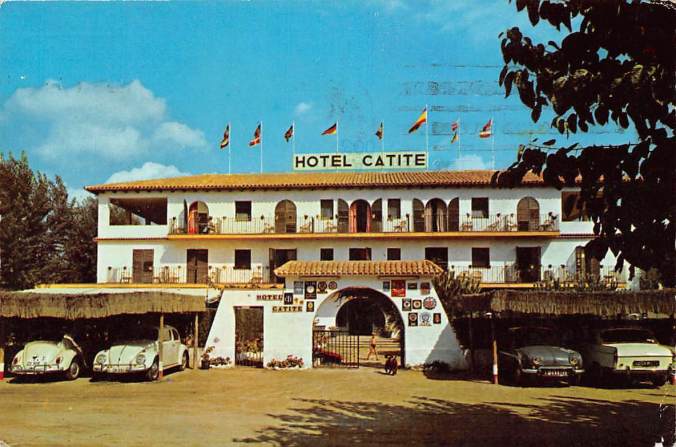
Hotel Catite, Castelldefels, where my grandfather worked as the hotel’s first receptionist

How different life might have been had we met, abuelo. It is impossible to imagine. I see you in my mother and, perhaps, in myself. But you had a family, somewhere out there, and now it’s up to me to find them. Last year I went chasing a dream, but when I found what I was looking for it turned out to be a dream and nothing more and it slipped away through my hands like dust. This is something more. I can feel it.

dsc_0173

Who cares about a language barrier when you’re in love?

2016 has come and gone. It was an odd year. Many things that happened that confused me, and some things conspired to bring me down, and many more lifted me high. It was, for me at least, one of the best of years. The new year is yawning ahead and I have my quest. The road will be long and not wanting in fears old and new, but it leads on and I must follow it now, for my own sake, and for my grandfather José who set this whole affair in motion many years ago. BB x