Camino XXV: R&R

Albergue Parroquial de las Carbajales, León. 21.33.

I’m not entirely sure I needed a rest day. I could just as easily have pushed on to La Robla today and been well on my way to Oviedo, but I wouldn’t have got to say goodbye to my friends, and that was important. We had one final breakfast together at a bar opposite the Parque del Cid, and then I walked with them as far as the bridge of San Marcos. They set off with hearts full of light and I turned back to the city, alone.


Leaving the Camino for any reason is always a hard thing to do. Choosing to remain behind, however – that’s probably the hardest thing of all. Knowing that the companions who have been your world for the last two weeks are somewhere out there, still going strong, as you open the door to the place where you stayed to find the place dark and empty.

Chip, the friendly gentleman from Utah and the father figure of our little group, had gone by the time I returned. So it was just me. I’m perfectly happy with my own company, but that sudden void of emptiness still hit hard.

I didn’t have too long to wait. I sat in the square by the cathedral and watched people come and go for a little while. When twelve o’clock came around, I checked into the Albergue Carbajales (where I stayed two years ago), bought myself the Salvadorana credencial and struck out into the city for a little culture – something to take my mind off my sudden isolation.

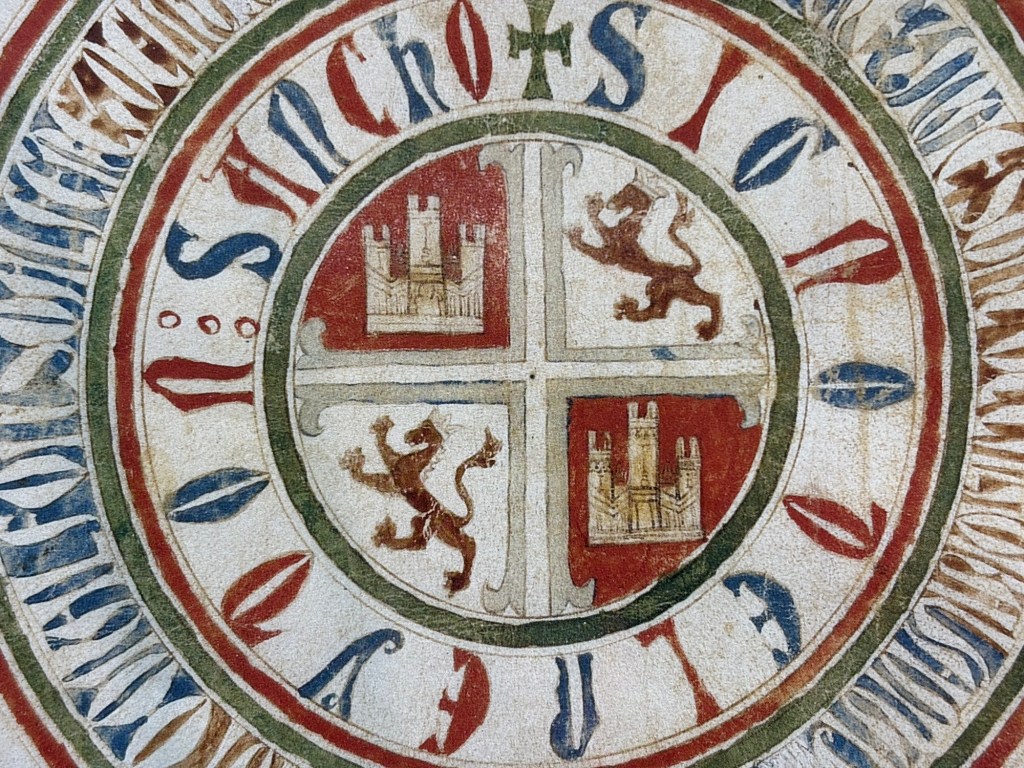
I’ve been to the Centro de Interpretación in the Palacio del Conde Luna before, but museums are always worth a second look. León is the rival faction in the alternative history saga that I’m writing, not Castilla, so I’m always looking for details in places such as this to help me build my world.

I especially love medieval art – particularly the Byzantine style with almost-shaped, almost cartoonish eyes. They are far more descriptive in their storytelling than any early modern masterpiece and very easy to replicate in my journal. I was lucky to arrive just in time for a free guided tour with a local historian, too, which was pretty special.

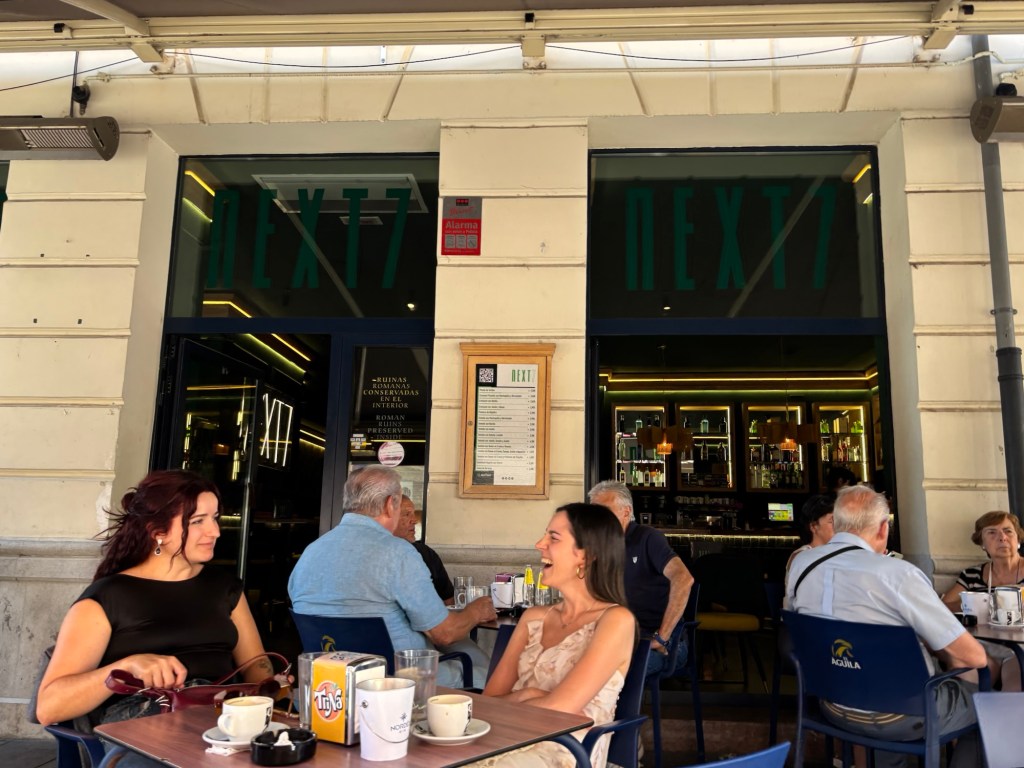
Today was mostly, however, about people watching. I saw a handful of familiar faces in town – the digital nomad couple from Texas, the retired American couple I met in Hornillos, the Effing Dutchman and two Texans from the other young group who took a rest day in León – but on the whole they were mainly stragglers, as the rest of the weekend wave all moved on today.

No – today was for watching the people of León.

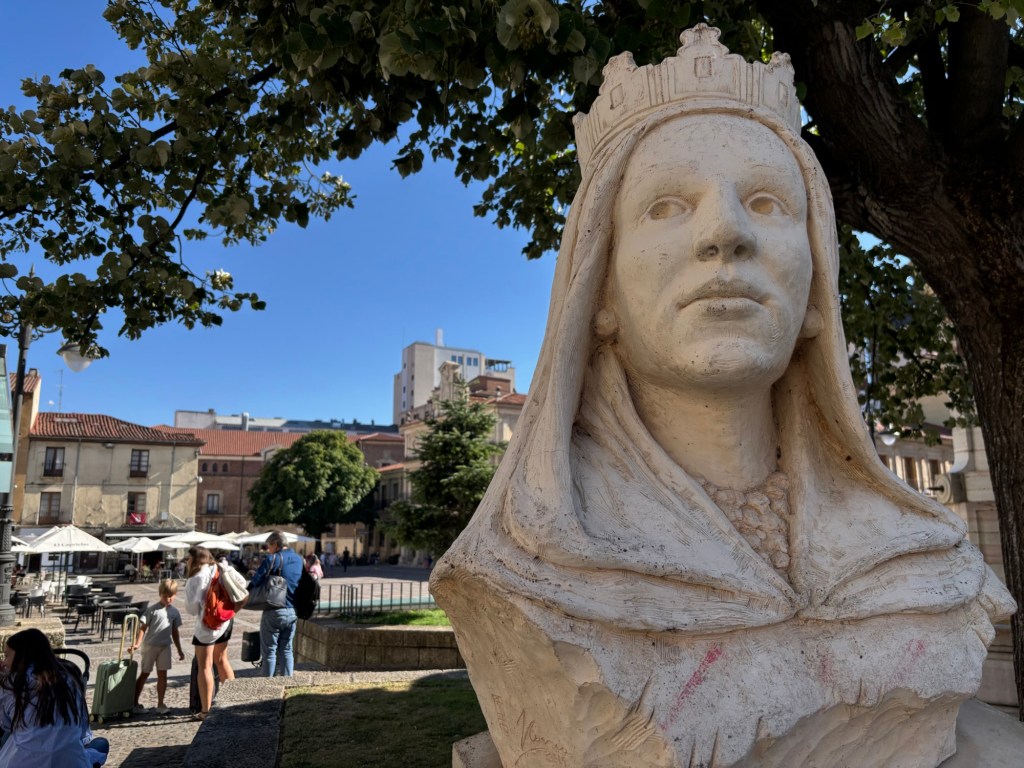
León is a part of Spain I have got to know rather well thanks to the Camino. Andalucía and Extremadura will always have my heart, but there is a proud and noble beauty in this ancient corner of Iberia. Leonese Spanish is crystal clear, which is notable in that their regional dialect, llionés, is closer to being a language in its own right than a simple change in accent. If the Castilians hadn’t proved the greater of the two powers, the Spanish we speak today might have sounded very different indeed.

As it is, a combination of geographical, political and economic factors left the Leonese stranded, looking inwards, while the mobile Castilians raced to grab the former Muslim territories across the border and, in so doing, sow the seeds of one of the most successful languages of all time.

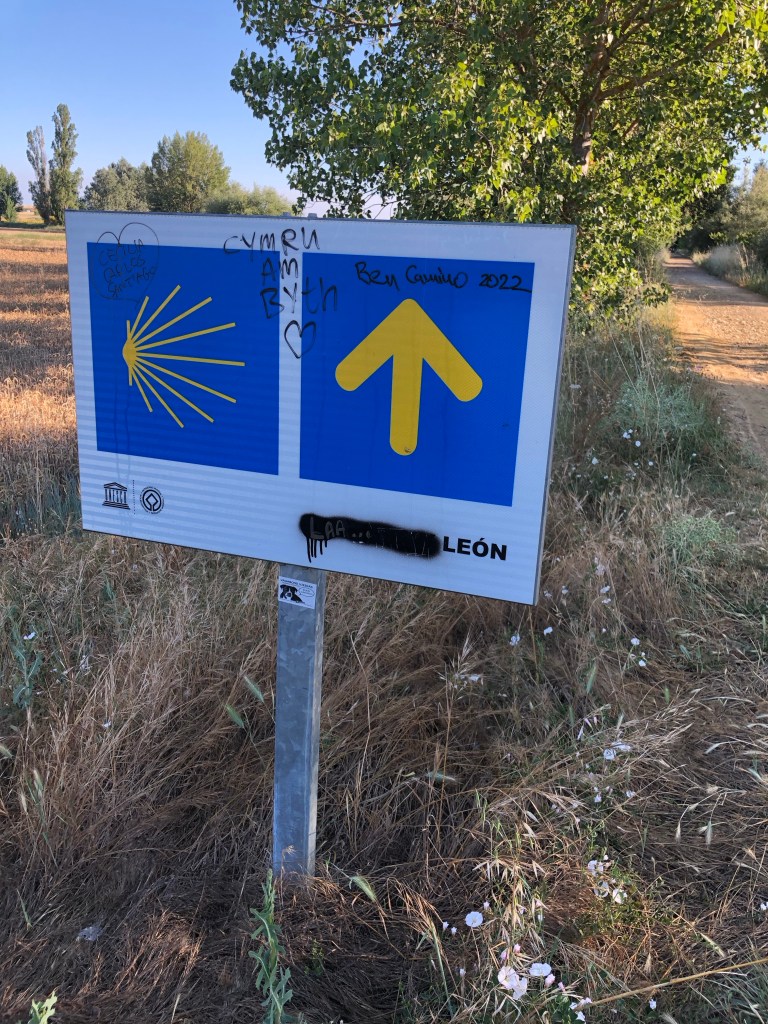
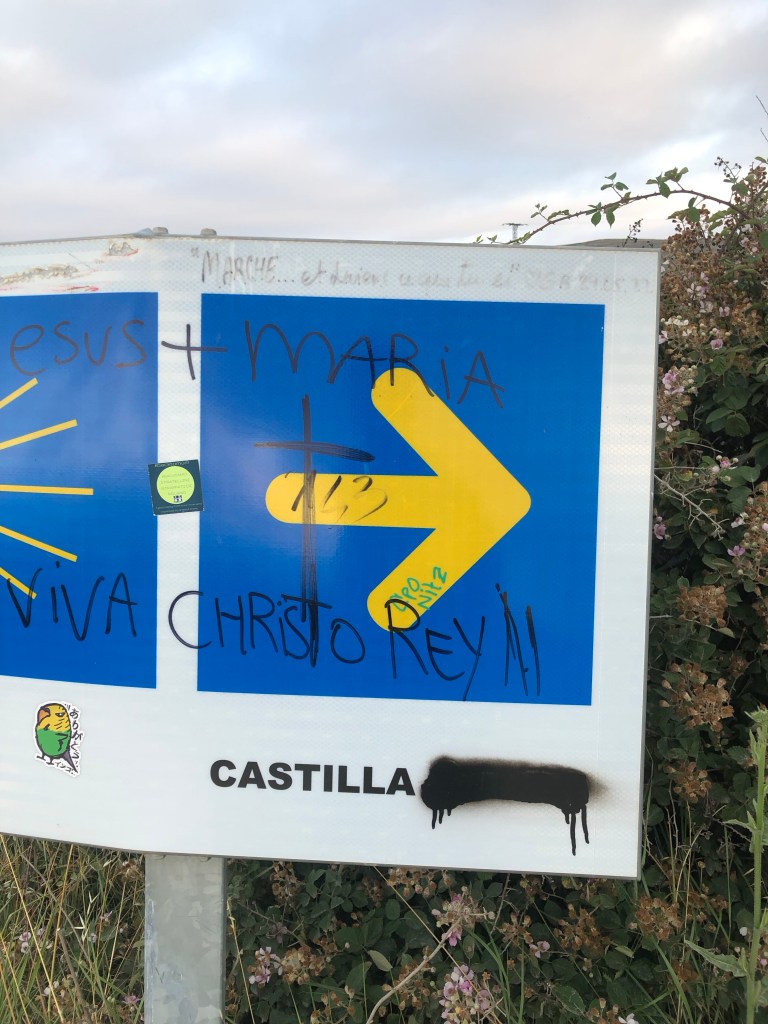
There‘s still some lingering resentment about León’s status as an autonomous community within Spain. If it wasn’t obvious from the Camino signs (where Castilla or León are scratched out on either side of the border), it’s even more so in León itself, where Leonese flags are sold on the cheap and some stores carry placards or banners in their windows promoting self-rule.

We focus a lot on Catalunya’s constant struggle for independence, but it’s worth remembering that Spain was once a republic comprised of individual states, many of which were once kingdoms in their own right. The Catalans are certainly vocal, but they’re not the only ones with a claim on self-rule: the Basques, the Galicians, the Leonese and even the Andalusians could all claim that their regions are distinct enough to warrant independence.

The Americans I have been walking with are young and carry that profound dislike for nationalism and state boundaries that is so common at that age. I remember it well. But for me, though I remain a fierce advocate of liberty and freedom of though, speech and expression, I am also a believer in the good that comes from having a sense of national identity. After all, in my case, finding out about my heritage in Spain has given me immense peace of mind. I’m not just play-acting at speaking Spanish anymore. It’s literally in my blood.


Tomorrow, we begin again. I’ve heard there may even be wolves up in the mountains. I’ll keep my eyes peeled. BB x

Camino XII: Strange Bedfellows

The pilgrims at the albergue talked a lot of game about getting on the road for 5.30am this morning, but when I was out the door today I was the first to leave by some twenty minutes at least. No matter how Spanish I feel sometimes, the Englishman in me is a stickler for a prompt schedule. On the plus side, I did pretty much have a room to myself last night, so I had a very good night’s sleep for once.


It was a cold start, and the sunrise when it came was a full fifteen minutes later than it was last Thursday – a sign that the year is already beginning to turn. Wandering alone gave me plenty of time to stop and enjoy the stillness, though, with the result that this morning was possibly one of the most magical I’ve had on the Camino so far.


I waited for dawn at the top of a small rise just beyond a tree-lined arroyo, where a flock of noisy bee-eaters were calling unseen somewhere downriver. The sunflowers in the fields were already facing east, and I let a number of pilgrims pass me by as I stood and waited. I counted four or five buzzards and kites heading out on a morning hunt and listened out for the distant sound of a quail, a less frequent accompaniment to the Camino as I leave the central plains of the meseta behind.


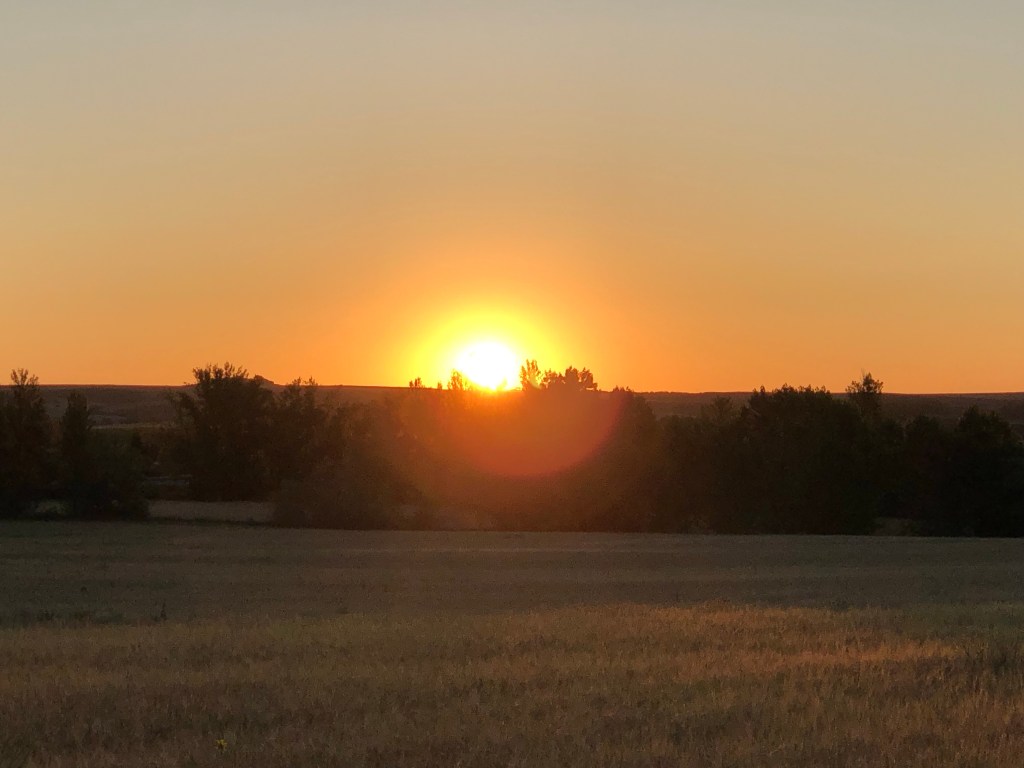
Finally, the warm glow beyond the horizon erupted into sunlight, saturating the sunflowers behind me with reddish light. I’ve got more photos of sunflowers now than I know what to do with, but it was totally worth it. Sometimes you have to stop on the Camino and wait for moments like these. You can tune out the two-tone crunch of gravel under your feet pretty easily, but you mustn’t tune out the rest of the world you walk through. It’s a soul-seeking pilgrimage, not a hike!


Passing through the mud-brick houses and hobbit holes of Moratinos, you leave the plains of Castilla behind and enter país leonés. And I say país (country) because of the fierce nationalism of the Leonese, whose old and bitter rivalry with their Castilian neighbours is more than obvious if you look below the self-help scrawls and incessant Welsh nationalism on the Camino waymarkers (we get it already!):


It was a similar story across the border in Burgos…


Castilla y León were merged in 1983, with the three Leonese provinces of Salamanca, Zamora and León joining the six territories of Castilla La Vieja (Old Castile) – excluding Santander and Logroño which elected to become autonomous regions of their own (Cantabria and La Rioja respectively). The Leonese have a strong regional identity and there are many who still believe the merge was a mistake, and that the Leonese territories should constitute their own autonomous community. An article in El País from earlier this year claims there are political differences at the heart of it, too. I’ve yet to pose that question to a local, but now that I’m in Leonese country – and they certainly have stronger feelings on the subject than the Castilians – I’ll see if I can’t do a little digging.

It’s little things like that which make for great inspiration. A lion sprayed in purple on a wall in Salamanca with the slogan ‘país leonés’ back in 2015 was what gave me the idea to make León, not Castile, the dominant power in my Spanish saga. If I don’t find a similar icon graffitied somewhere else over the next week or so, I’ll be surprised.


After a brief tortilla y zumo stop in Sahagún, the first Leonese town across the border with fellow pilgrim Bridgette, I made the decision to take the alternative route to the north via the Via Traiana, the old Roman road to the gold mines in Astorga. It meant a later arrival at my destination – and a considerable shade deficit – but I’m never one to turn down a challenge, and after a very sociable day on the Camino yesterday, paradoxically, I wanted a quiet one to myself. The heart wants what it wants, I guess!


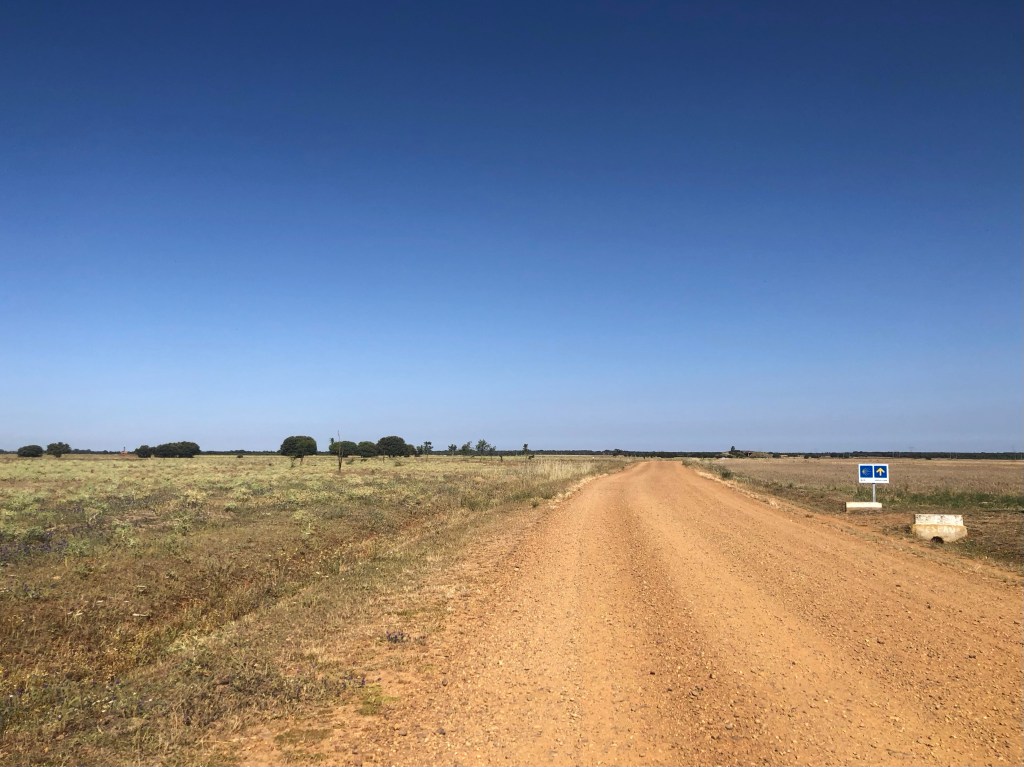
The rest of the trek to Calzadilla de los Hermanillos has to be made beneath a blazing midday sun. I had plenty of suncream for the journey, but I left my sunglasses in Carrión a few days back and for once I found myself in need of them (they mostly sat unused on my head for the greater part of last week). I met only one other traveller on the road, a timid Irishman shielded from the glare by long sleeves and a sun hat who asked for the distance to Calzadilla in broken Spanish. Fighting through the last eight kilometres of scrubland, I kept my spirits up with a number of African walking songs my old drumming master taught me in my university days: Siyahamba, Uchikala, ba Tata. I might not be able to share them with the kids at school anymore, but there’s nothing to stop me enjoying them out on a march here in the open country.

It was uplifting singing my heart out in the woods, and I hardly noticed the blazing sun or the distance shrinking away at my feet. The kites and stonechats that accompanied me from forest’s edge must have thought me quite the unusual pilgrim – Spanish afternoons are decidedly not a time for jubilation. Perhaps that’s an old superstition about Pan, the Greek god of the wilderness, who legend has it would be angered by noise at midday. Or perhaps it’s just common sense!


Anyway, I’m here in Calzadilla de los Hermanillos. It’s a tiny frontier town, reminiscent of a Wild West set-up, with most of the townhouses clustered along both sides of the old Roman road. I’ve had a shower, washed my clothes, stocked up on supplies for tomorrow and packed accordingly. Now that the other French pilgrims staying here have quietened down, I’ll put my phone to charge and do a little reading before bed. Tomorrow is another day, and it would be good to meet up with the other pilgrims again. I’m somewhat doing my own thing this time, but a balance would be no bad thing. BB x