Albergue de Peregrinos, Sangüesa. 16.06.
I overslept today – by Camino standards, anyway. I’m pretty sure I set both alarms last night, but I have a habit of turning them off and falling straight back to sleep. Either way, it was gone six o’clock when I woke up today. Mari Carmen, the seventy-eight year old Valencian who is the only other pilgrim on the road, had already packed and gone. I dressed quickly and had breakfast, which had been left out for me in the dining room. I wouldn’t exactly call two slabs of bread with butter and jam and tea-making facilities a bargain – that cost me 6€ yesterday – but Ruesta is so cut-off from everything and everywhere else that there were no other options, and beggars can’t be choosers.
Gronze (the Camino website I’ve been using to map out the Voie d’Arles and the Camino Aragonés) describes today’s stage as “melancholic”. I thought that was probably a bit melodramatic, but it’s actually a pretty accurate adjective for the first hour and half. Leaving the abandoned village of Ruesta behind (I was genuinely the only person in the entire village when I left), the Camino snakes downhill to ford a narrow stretch of the Embalse de Yesa before climbing slowly back up the other side over the space of an hour. I usually like the forested stretches, as they can be more mysterious and refreshing than the unforgiving plains, and yet… something was off about this forest. It was far too quiet. There’s usually some birdsong in the early hours before the sun crests the hills, but over the space of an hour, I only heard one sound, and that was the screech of a jay far off.
I’ve often experienced this feeling in the presence of Spain’s false lakes. The Embalse de Yesa and its surrounding pine forests are entirely artificial. I saw a doe racing through the trees near the summit, and a red squirrel high up in the branches of a tree, but the lack of birdsong was chilling. It’s as though they keep a mournful silence for the drowned valley below, unwilling to disturb the rest of the watery dead.
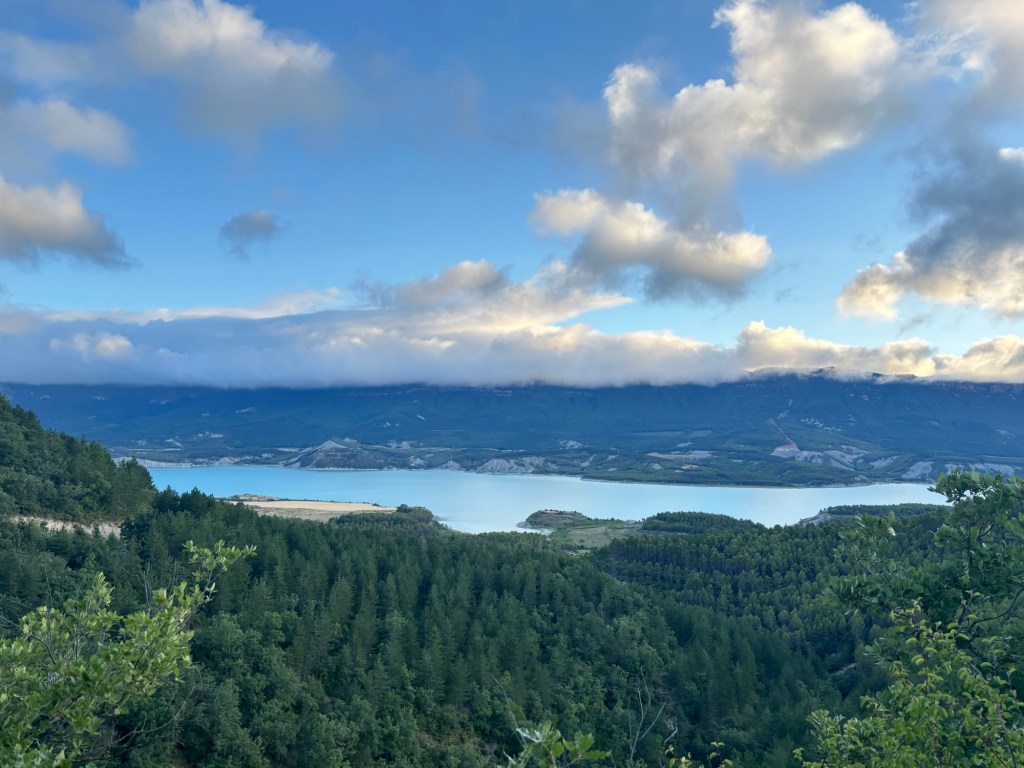
I sometimes wonder if nature is laughing at us when we try to shape the world like her, or if she is just quietly disappointed.
As for me, I was quietly relived when the trees cleared and I was in the sunlit fields once again. The quails had returned, along with a host of finches and larks, and with my spirits restored, I set off toward Undués de Lerda.
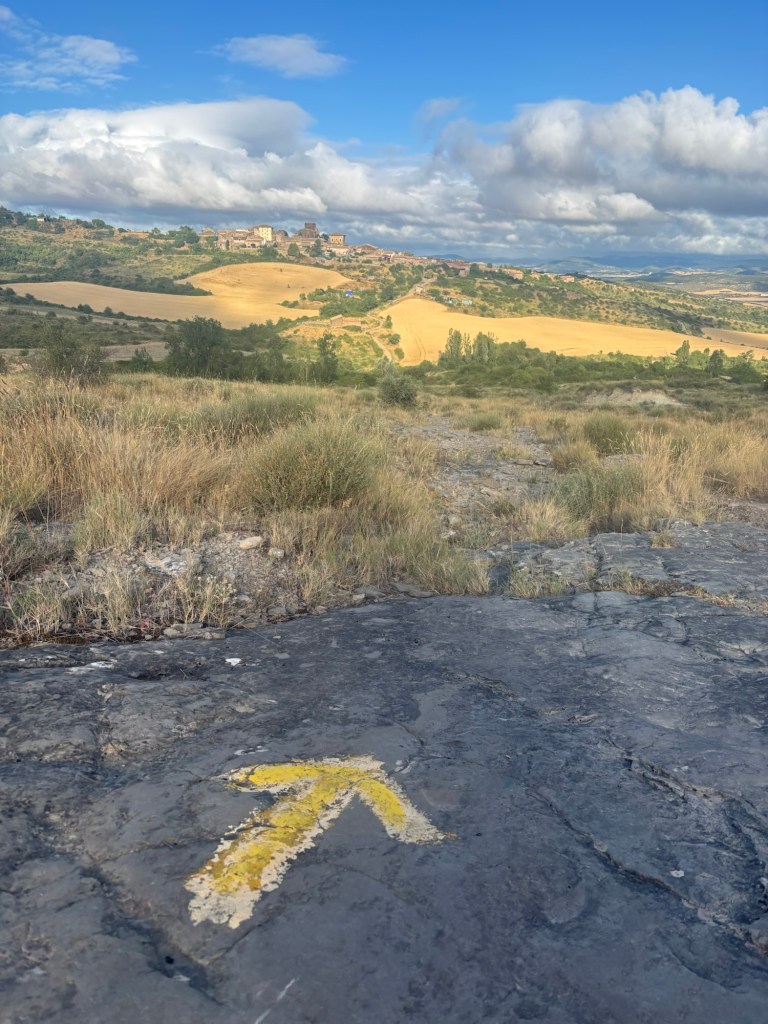
Undués looks like many Aragonese hillside towns: built of the same stone upon which it stands, it has a habit of vanishing from sight under the cover of cloud, becoming obvious to the eye only when the sun reveals the shadows of its doors and windows. I arrived shortly before nine, but the town was still fast asleep, and everything from the bar to the church was shut up tight. So I moved on.
Near the Aragonese frontier, I saw something in the grass at my feet that made me pause. It was a swallowtail, and it wasn’t leaping into the air as they are wont to do when people draw near. On closer inspection, I think it must have had a run-in with a predator, because one of its swallowtails was missing and part of the same wing was damaged.
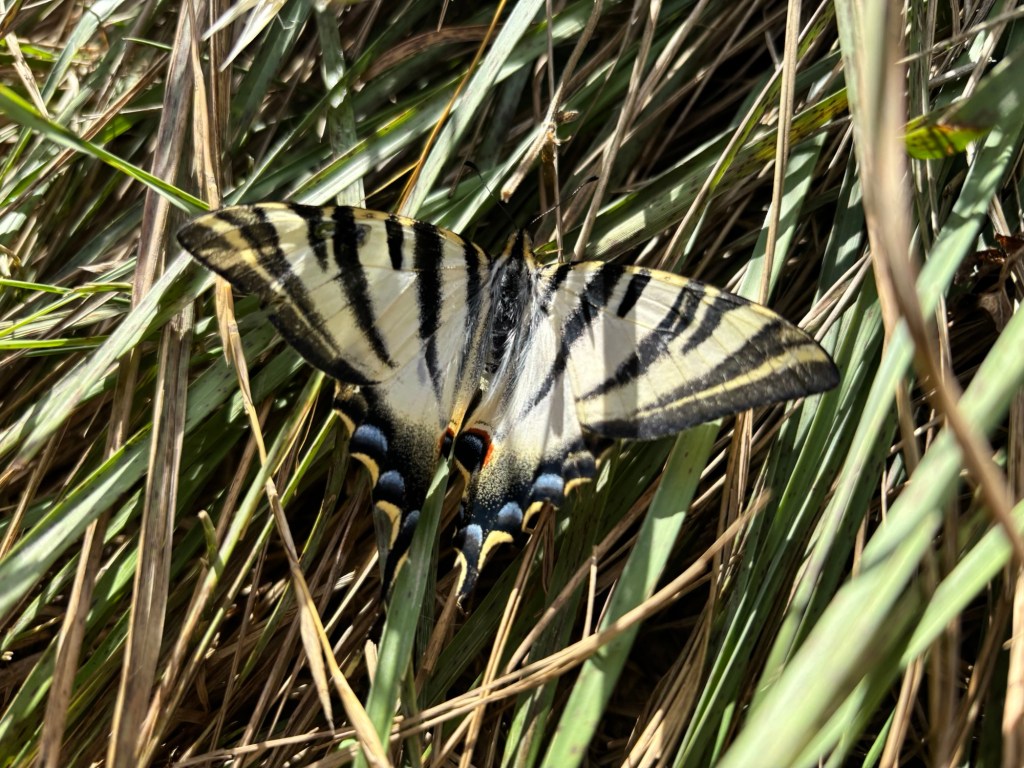
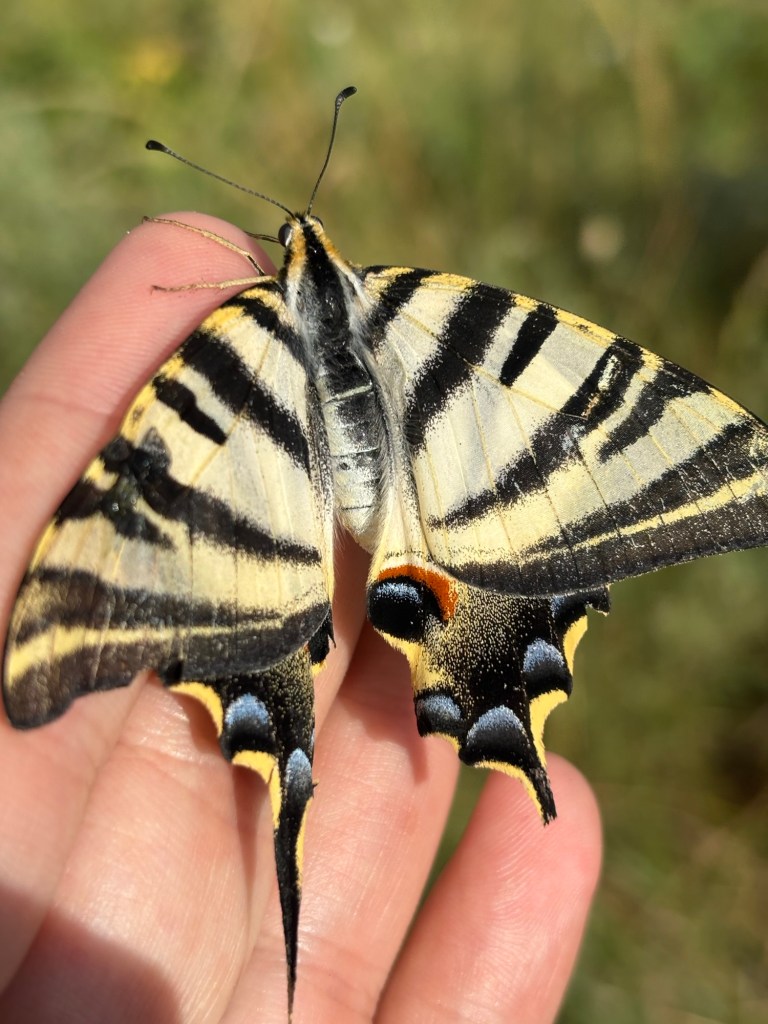
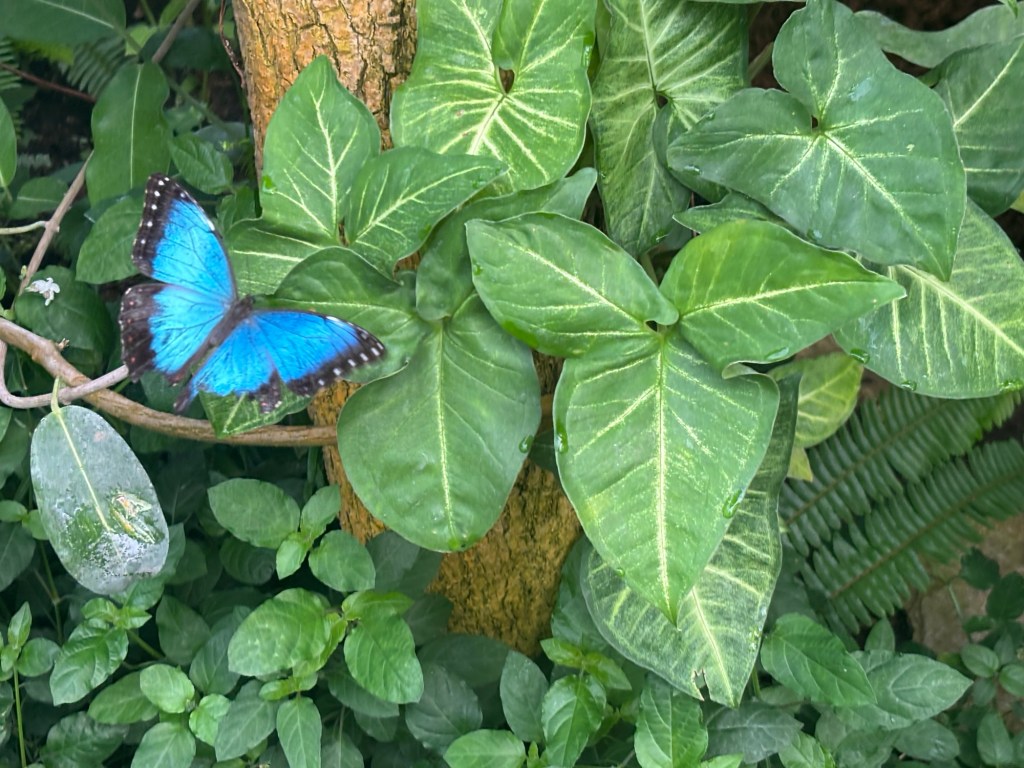
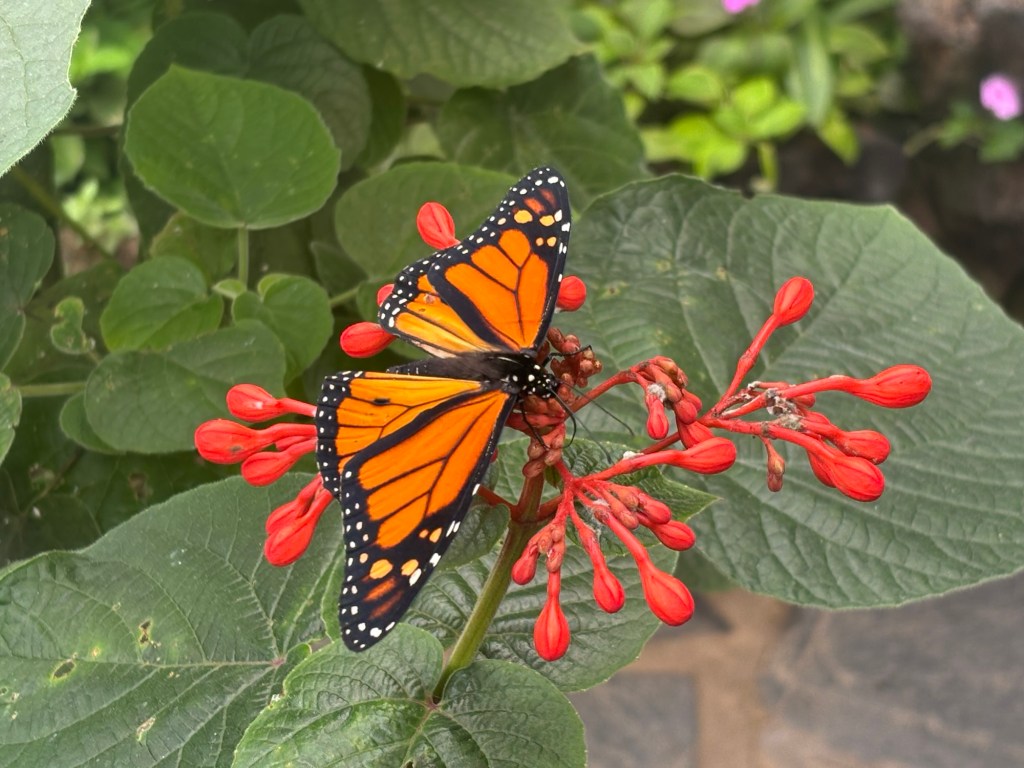
Known in English as the scarce swallowtail (on account of its rarity as a migrant in the British Isles), this species is actually fairly common in Spain. It’s not often you get to see one so close outside of a butterfly sanctuary, however, and the markings on its wings are really remarkable. They’re actually made up of thousands of scales, each one containing pigments like melanin or papiliochromes, that create a vivid array of colours used for sending messages, either to potential predators or partners. I saw a sign in a butterfly sanctuary on Tenerife where somebody had managed to make an entire alphabet just from close-ups from butterfly wing patterns. With nearly 20,000 specified of butterfly in the world, perhaps that’s not surprising.
This little fella was in a dangerous spot, right in the middle of the road, so I gently coaxed it onto my hand and then found a more sheltered spot in the verge where it might be out of harm’s way. Unless it recovers the ability to fly, it will probably end up as a snack for an enterprising bee-eater – a bird both large and nimble enough to deal with a swallowtail – so I hope it finds its strength.
A small stone marker in Basque lettering indicated that I had left Aragón and was now in the former kingdom of Navarra. The landscape has changed: the high mountains of Aragón, ever at my side for the last few days, have been replaced by a series of endlessly rolling hills, a patchwork of gold and olive green. This will be the scenery for the next week and half, until I reach Burgos and the meseta begins in earnest.
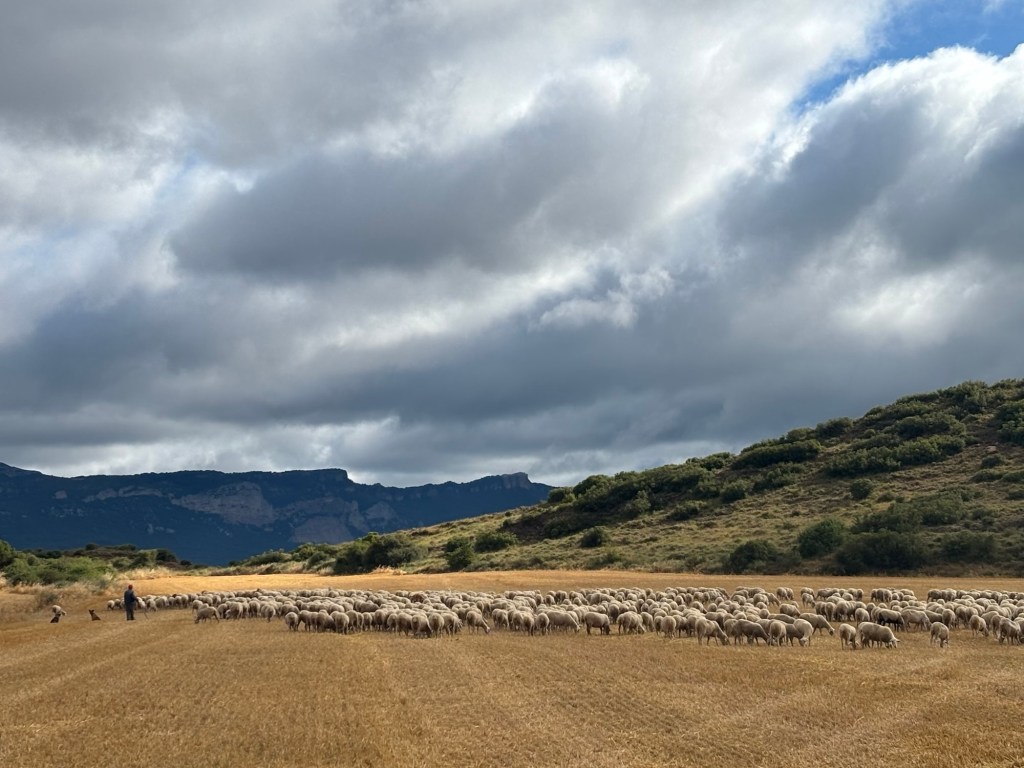
I was lucky to see one of Spain’s oldest traditions in action shortly after crossing the border. One of the cañadas reales crosses the Camino here, specifically the Cañada Real de los Roncaleses. These are the old migration routes across the country, where shepherds have led their flocks from north to south in search of fresh pastures since the medieval period. A source of milk, cheese and the precious merino wool, Spain’s sheep were a highly valuable commodity and the cañadas received royal protection and their own guild, El Honrado Concejo de la Mesta, which had tremendous privileges.
Nowadays, of course, merino wool can be found all around the world – you can thank Napoleon’s invasion of Spain for breaking that monopoly – but the shepherds still use these ancient pathways, as their ancestors have done for over a thousand years.
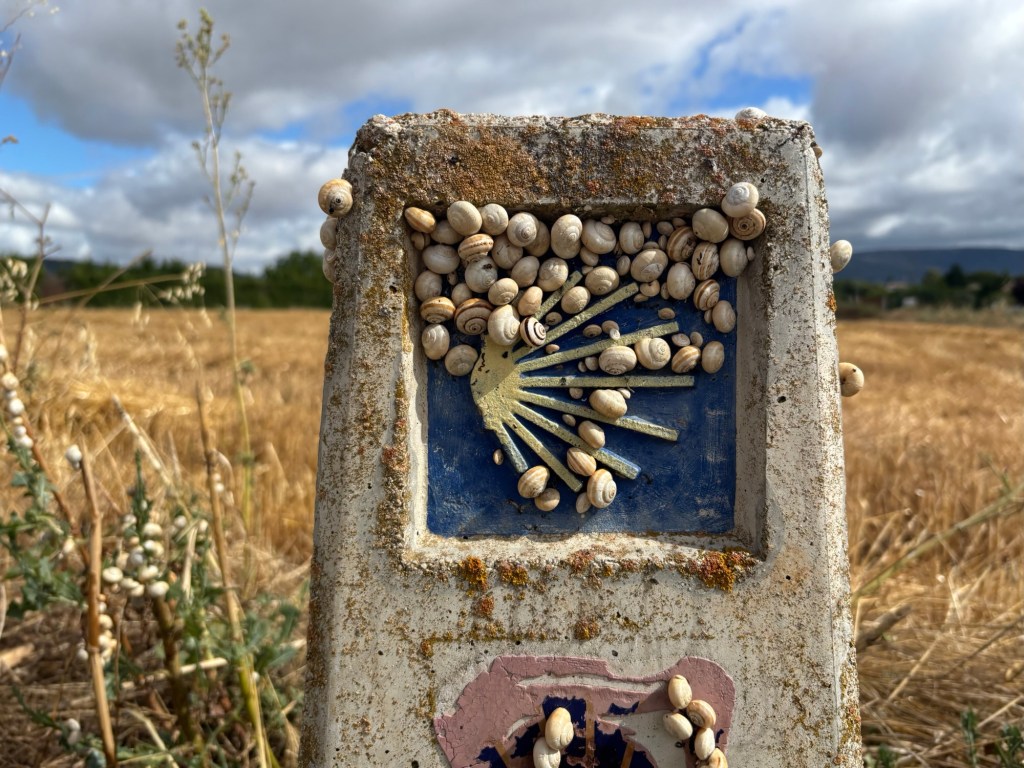
It’s been a pretty mild walk today, so it was surprising to see a mass of estivating snails on the way in to Sangüesa. They must have done this during the heatwave, when temperatures in some parts of Spain soared into the forties. They’re not dead, as such, but in a state of dormancy, waiting out the worst of the summer until they can return to life when the temperatures cool down.
Well, Sangüesa is the busiest town I’ve seen so far. The albergue is nearly full, though not with your usual pilgrims: these are almost entirely Spanish bicigrinos, a term used to describe pilgrims who travel by bicycle. It’s a portmanteau, but one can’t help the feeling that it’s almost always just a little pejorative, with many pilgrims feeling that their lycra-clad one-night companions are not true pilgrims in the strictest sense. The decibel count in the albergue has certainly gone up since they arrived, just in time to replace the building site next to the albergue and the slamming windows.
Still – it’s a good ease-in to the popularity of the Camino Francés, the most popular of all the roads to Santiago. I’ve enjoyed my own company for the last week, and though I’m looking forward to meeting all sorts of interesting people on the road, I will miss these long stretches of quiet. BB x

 The Book of Barnabas