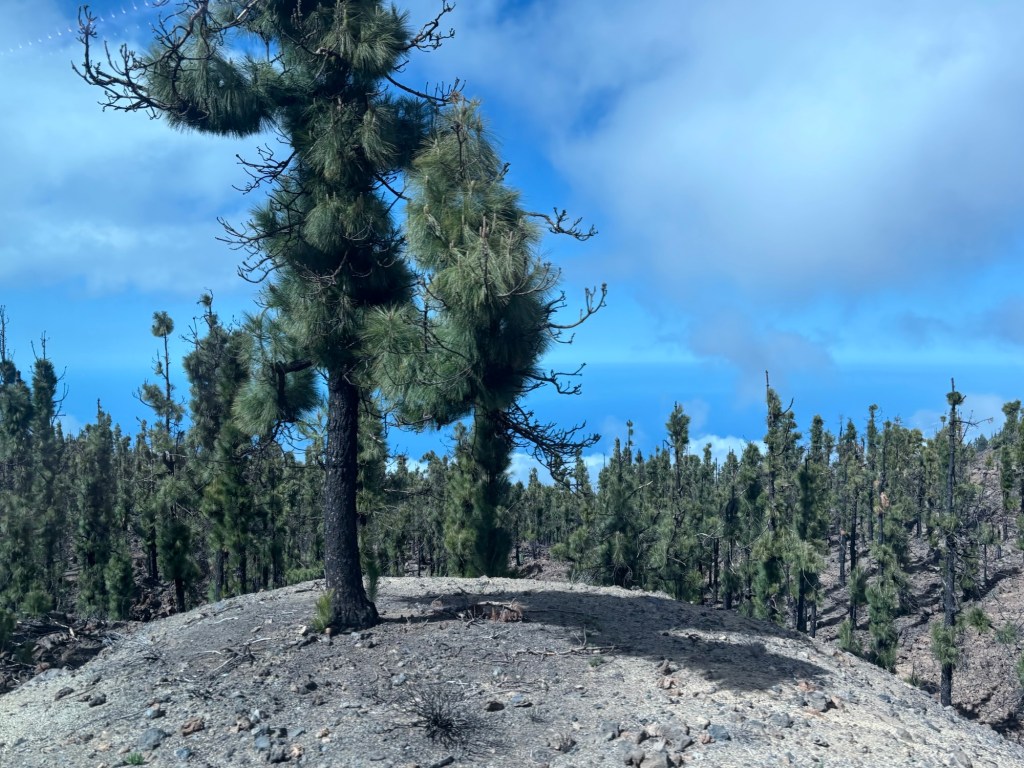
La Corona Forestal, Tenerife. 16.34.
If there’s a hard mode for learning to drive, at least one of the levels must be the permit to drive the 348 from Puerto de la Cruz to Teide National Park. It’s utterly ridiculous. The vertiginous indifference required behind the wheel as the bus makes the sixteen sharp turns necessary to climb the two thousand metres from the city to the rim of the caldera – while negotiating said turns with the many tour buses that ply that route – is nothing short of medal-worthy. Truly, if you can drive here, you can probably drive anywhere.
And that’s as good a lead-in as any to the nub of today’s story: the legendary guaguas, the bus network of the Canary Islands.
Where did I leave things yesterday? In Santiago airport? Well, I made it safe and sound to Tenerife, some one thousand miles to the south. I was on high alert for most of the flight, as this is the one leg of the grand tour that I don’t know inside out. The plane took off a leisurely twenty minutes late, and I was so concerned that we’d miss the last bus to Puerto de la Cruz that I completely forgot to factor in the time difference… because the Canary Islands operate on British time!
Using every second of the additional hour, I set out to find the bus lane. It wasn’t all that easy to find, and when I did, it was to learn that Google had got the times wrong: the last guagua for Puerto de la Cruz from Tenerife North leaves at 20.30 on Saturdays. So I’d missed it.
But, where there’s a will (and a stubborn won’t concerning the 75€ taxi alternative) there’s a way, so I gathered my belongings and set out into the night for the bus stop over the road from the airport.
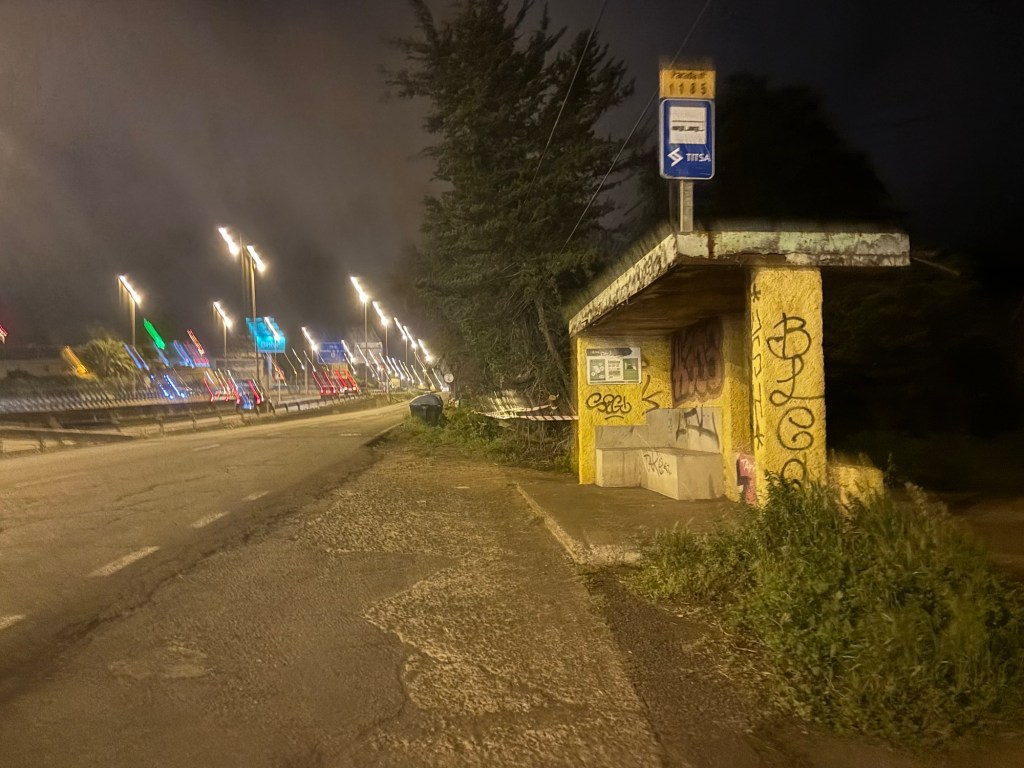
I struck out over the road – well, more like along it, as Tenerife North isn’t very walkable. Still, I wasn’t hassled or beeped at en route (always a good sign), and I did manage to track down the bus stop outside a rather seedy establishment called Eclipse de Sol. Google assured me there was a bus on its way, which is just as well, as none of the QR codes on any of the signs around Tenerife seem to work – helpful, when they’ve decided to save on printing the timetables. But, somebody up there was watching over me, because the bus for La Orotava eventually turned up.
Let me tell you something for free: traveling by guagua is the perfect blend of European and African/South American public transport: all the bells and whistles and all of the noise that comes with it. It was packed to the gills: students sitting in each other’s laps, others crowded into the luggage racks, passengers stood two abreast in the aisle from the back of the bus all the way to the steps leading up to the driver. I was lucky to get on at all.
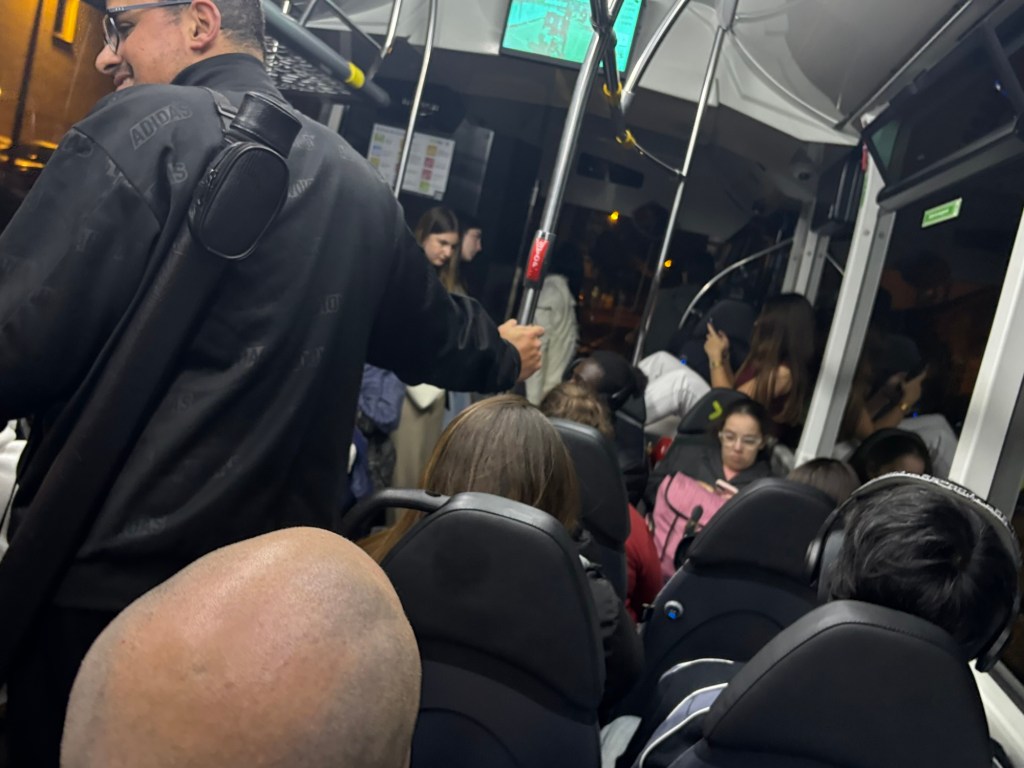
The sardine tin I managed to catch wasn’t even the right one, as it terminated in La Orotava – still a good five kilometres from my destination (and 360m up). I considered taking a chance on catching the right bus, which was on its way but twenty minutes late, but the prospect of it not being real and getting stuck at the junction in the middle of nowhere did not appeal. I thought about jumping into a taxi at La Orotava instead, but even as I thought that over, another bus arrived with “Puerto de la Cruz” emblazoned across its screen. I haven’t been so relieved to see a bus in years.
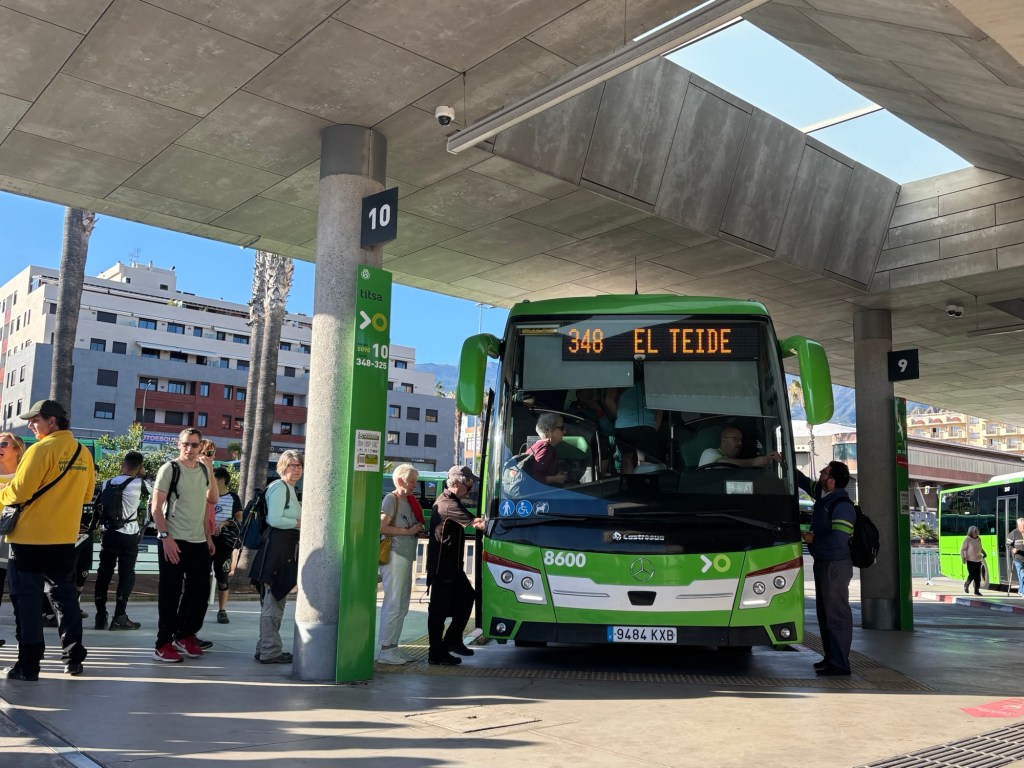
A similar story unfolded today en route to Teide National Park. There are only two buses per day: one there, one back. No exceptions. Given what I’ve already told you about the logistics, that’s not entirely surprising. But you’ve got to get there early, as it’s a very popular ride and the queue is always huge. I just about made it, despite being late due to my shopping quest for Factor 50 sunscreen on a Sunday morning (they’re all locked away behind a glass cabinet so I had to get a clerk to open it first). The travel card I bought was next to useless, so I paid in cash. I still don’t quite know how they work – there isn’t a flat rate for a single journey, as the website implies, as it’s 6,30€ to get to Teide from Puerto de la Cruz, and the driver wasn’t the friendliest – though when you’re having to deal with hapless guiris on the most popular bus in town, and then drive said bus up one of the steepest bus routes in Europe, I can’t say I blame the man.
Tomorrow, I’m braving the guaguas once again to get to Icod de los Vinos, partly to see the famous dragon tree, and partly to stock up on supplies for another hike around the ash flow of Chinyero, where I have booked a casa rural so that I can see the other thing that has brought me to Tenerife, besides the need to tick this last autonomous community off the list: the stars. Tenerife has some of the best stargazing in the world, once you get away from its coastline. I plan to make the most of that. BB x












 The Book of Barnabas