It’s 18.00 over here in Saint-Malo and the heavens have opened. An Atlantic wind is battering against the windows and the heavyset black-backed gull that chased off Hector has given up on attacking the ashtray on the windowsill and taken his leave. I might head into town for dinner later, but for now, I’m quite content curled up on the sofa of my AirBnB with a book, a hot chocolate and the time to write. So I thought I’d start today’s post with a little history.
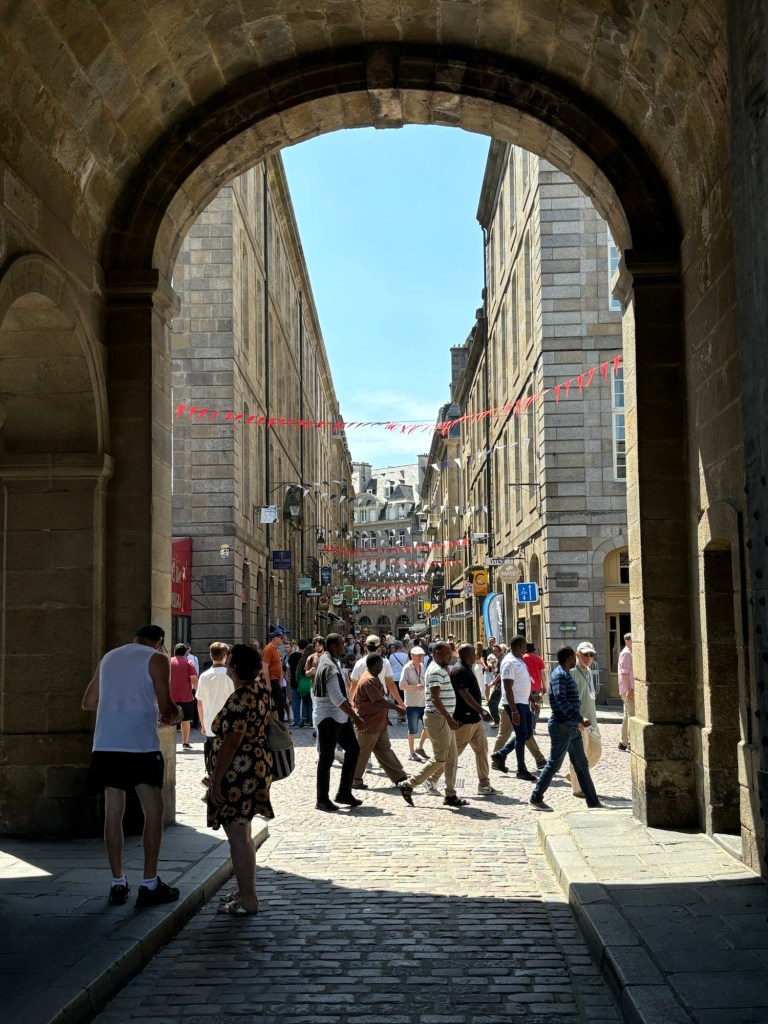
Saint-Malo has a long and complicated past. Originally a 6th century refuge for Welsh monks, including the venerable Maclou of Aleth who gave the town its name, the rocky outpost became a haven for Bretons fleeing the advancing “North-men” or Normans some two hundred years later. In the 17th century, its strategic location made it a natural hub for state-licensed piracy or “privateering”, which elevated its fortunes considerably and paved the way for a generation of wealthy explorers: Jacques Cartier, a native malouin, is credited with giving Canada its name (via the Iroquois kanata) and Louis-Antoine de Bougainville, another son of Saint-Malo, established the first European settlement in the Falkland Islands, which – at least in Spanish – still bear their original Breton name: las Islas Malvinas, from the French Îles Malouines.
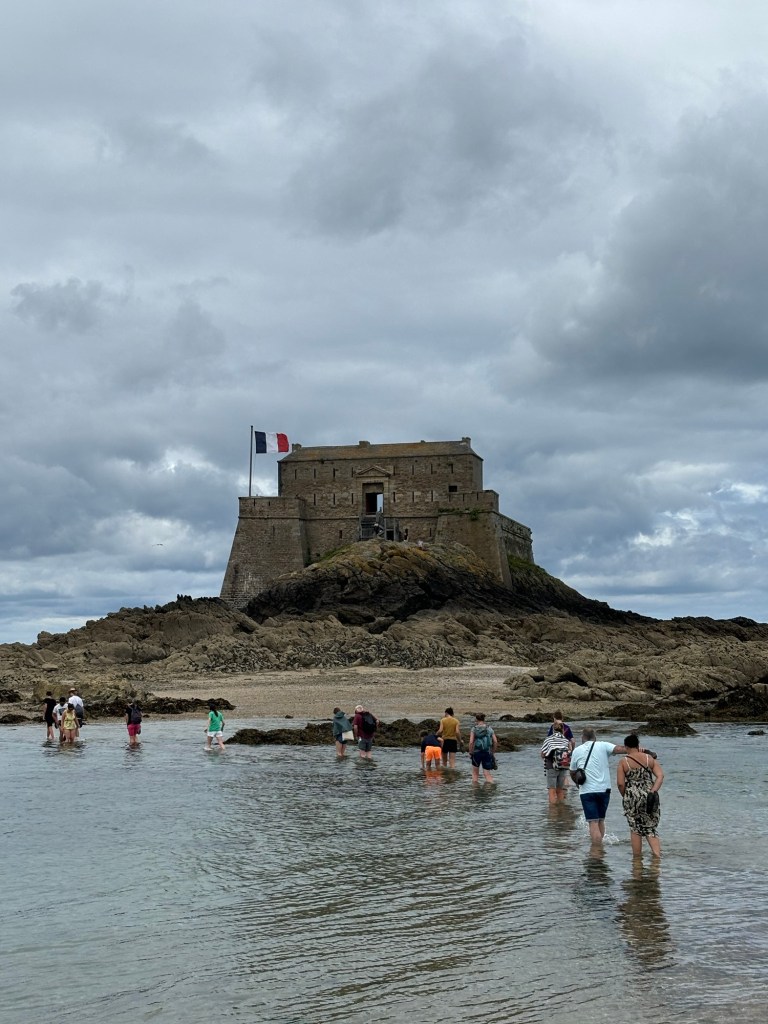
The city fell to the Germans during the Second World War as part of their Atlantikwall stratagem, and the skeletons of their fortifications still dot the Breton coastline: in Saint-Malo, the levelled ruins of German pillboxes rub shoulders with 17th century Vauban forts. Surprisingly, much of what you see today was carefully reconstructed, as around 80% of the city was destroyed by the Allies in their dogged attempt to drive the Germans from the old pirate stronghold.

Most of the German fortifications have long since been torn down, but you can still see the concrete bases of many structures on the cliffs beneath the city wall and on the surrounding islets of Grand-Bé. They make very comfortable places to sit and watch the sunset.
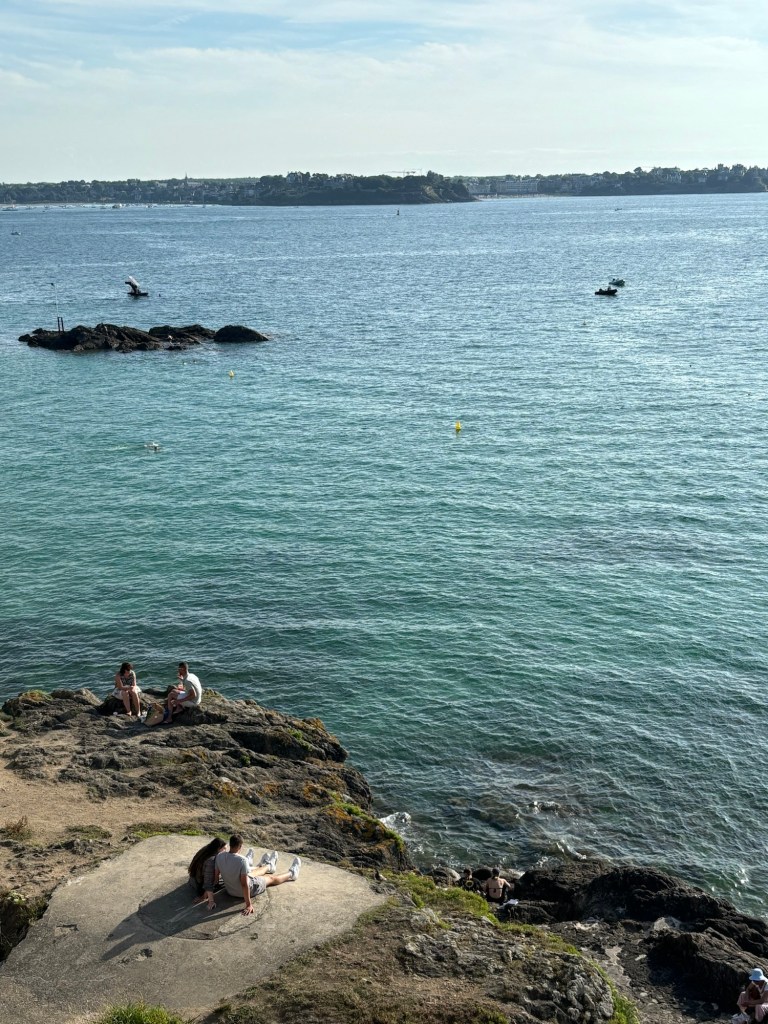
In case it wasn’t obvious, the town’s rich history is one of the biggest reasons I’m here. But the other is its wildness: there are plenty of sandy beaches in the south, but I don’t get any real kick out of sea-swimming unless there are rocky areas to explore. The southeast coast of England with its famous white cliffs is quite a sight to behold, but it doesn’t quite have the jagged beauty that the west has in abundance, and Brittany has it to spare.
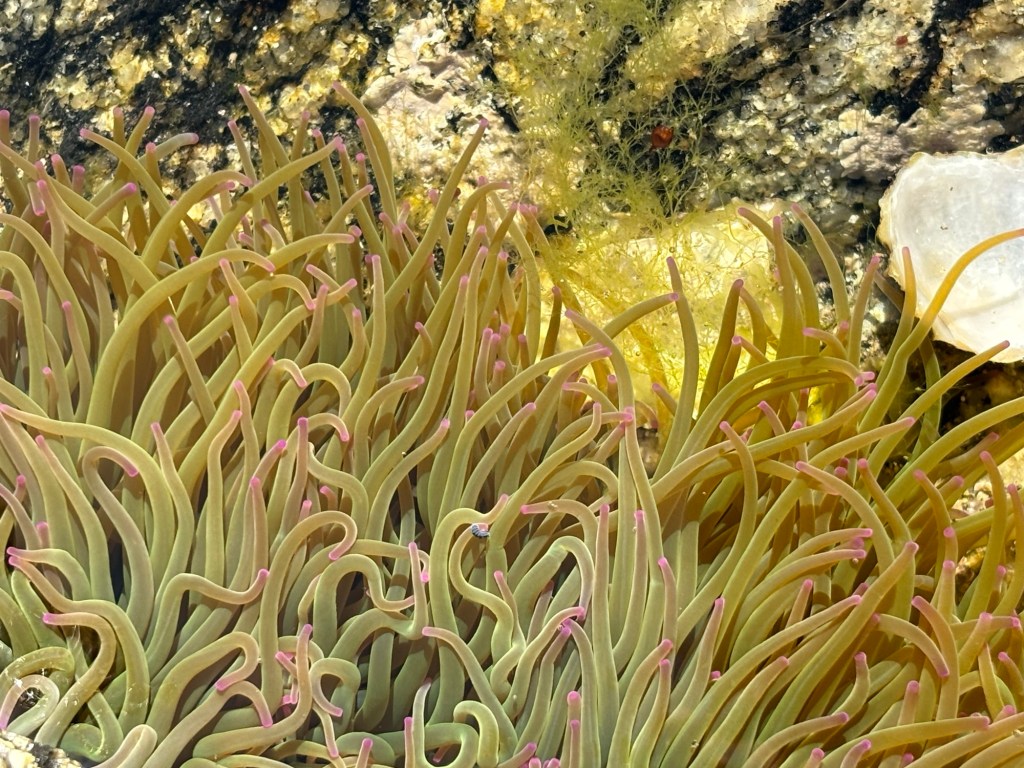
I spent many of the happiest days of my childhood scouring the rock pools of Folkestone for tiny critters: gobies, blennies, butterfish, velvet swimming crabs and even, just the once, a pipefish. Brittany is only the other side of the Channel, so much of the shoreline is familiar. I can’t help keeping an eye out for anemones when I’m out on the rocks, especially the snakelocks variety – I always thought they were especially interesting.

Across the bay from Saint-Malo stands the islet of Grand-Bé, which can be reached on foot at low tide via a barnacle-encrusted causeway. A similar road stretches on to the Vauban fort on Petit-Bé, though a small section of that road remains under a foot of water even at low tide and must be forded with shoes in hand.
Grand-Bé offers a glimpse of what Saint-Malo must once have been: a windswept escarpment just off the mainland, inhabited only by lizards, gulls, a small colony of shags and a company of oystercatchers that can be heard all across the bay. Two of these noisy seabirds were standing in attendance upon Chateaubriand’s tomb, as though to keep him company. From this spot, on a clear day, you can hear the twittering of goldfinches, the cries of gulls, the occasional grunt from one of the shags and the endless piping of oystercatchers on the rocks below or in the sky above – and, of course, the ringing of the bells of Saint Vincent’s cathedral across the bay.
I wonder if the old Romantic was as bewitched by the wild birds of his native Brittany as his writing implies? He certainly had a real flair when it came to writing about nature. Perhaps that’s why he chose this spot.

I spent some time last night watching the sunset over Grand-Bé. I had left my Camino bracelet in the apartment, but I had brought a few other tokens with me. I often take a number of “lucky” objects on my travels: little souvenirs and keepsakes to remind me of home when I’m on the road.
Well, not home exactly. With no fewer than ten moves under my belt at the age of thirty (and just under half of them international) I’m still not entirely sure where home is. But they remind me of friendships and memories that mean a lot to me, and that helps with the loneliness that is a natural side-effect of traveling alone.
In my satchel, ever at my side, I carry my journal, my fifth and longest-serving since I took up the art twelve years ago. It’s coming apart at the seams and bound inexpertly by sellotape – hardly surprising for a little book that has come with me to work every day for the last five years, as well as on every adventure I’ve been on in that time. Concealed within is my lucky dollar, a ticket to the Prado in Madrid, a tawny owl feather, the plectrum that one of my Rutherford boys used to win House Music two years in a row and a perfumed letter.
There is one more keepsake that has been sharing the road with me this summer. It even came with me to America, traversing the Bayou, the Mississippi and the bright lights of Nashville. It’s a card from one of my students, one of many I received in my last week at Worth. The lengths this particular student went to so as to ensure I got the card, as well as the maturity of its message from one so young, are just two of the reasons this one in particular has come with me. I am many things, and a great many less, but I would be a writer – and so that is why I have always believed that the greatest gift I can ever receive is in the form of words. No physical object can ever surpass the depth of feeling that comes from such expression.
I have a bad habit of making people cry when I write them farewell letters (an equally bad habit I’ve adopted for leaving students), but I very nearly met my match with this one. The student in question signed off with a favourite quote of theirs from Lin-Manuel Miranda: “sometimes words fail me”. There’s any number of reasons they could have chosen that one for me – I might well have said the line verbatim in reaction to the behaviour of that class at least once – but it’s a powerful message for a would-be writer.
Words do fail me, and often. There have been moments this year where I have been genuinely speechless, from shock or awe or wonder. It is comforting to know that such a consummate wordsmith shares that affliction.

Tomorrow, I have decided upon a rather spontaneous adventure. I have already bought my ticket. All I can do now is hope that the weather holds. Then – we shall see what we shall see. BB x

 The Book of Barnabas