A Parting Gift

A loud knocking at my door woke me this morning. It was only Łukasz checking I was up and about, but it caught me off guard all the same. I must have passed out the night before. I guess I was more worn out than I thought. My phone was on about 18% battery and the bathroom light was on. I sheepishly turned it off, threw on some clothes and all but inhaled a cup of green tea so as not to hold the others up any longer. Talk about a bad start.

I needn’t have been so flustered. It was absolutely miserable outside, the earth damp from a night of rain and melted snow and the sky dark with the threat of more. The temperature had risen by about six degrees, which was something, but it was hardly what you’d call perfect wildlife watching conditions.

Nature, however, is and always has been fickle, and we were in for more than one surprise before we bade farewell to Białowieża.


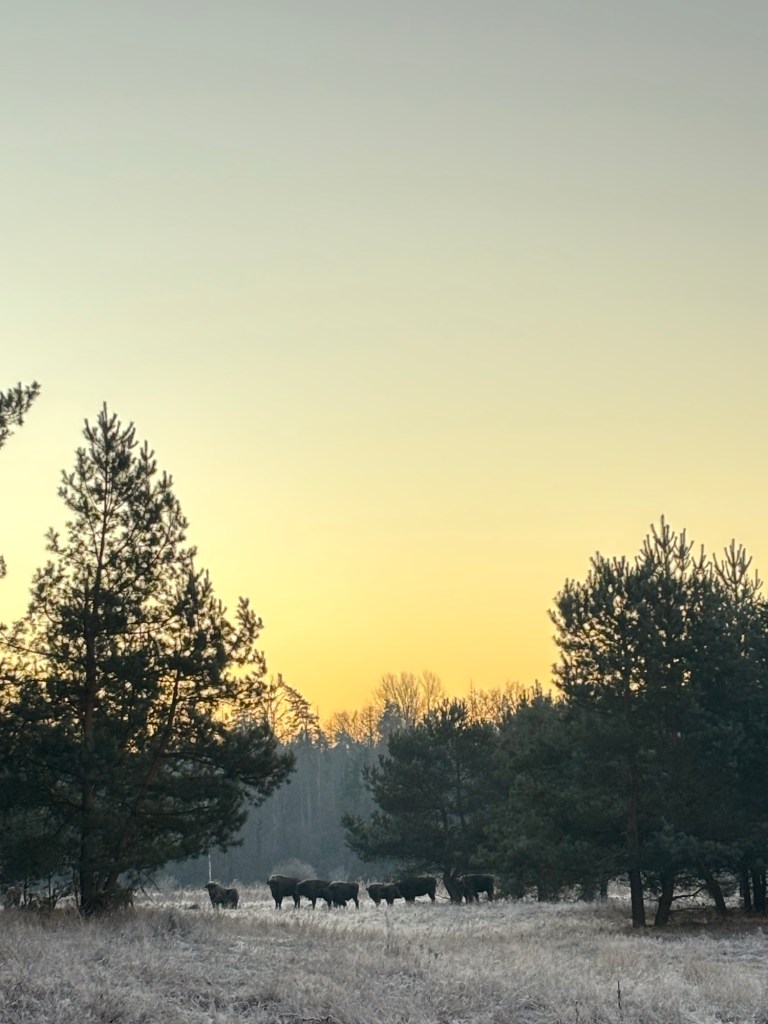
We agreed to try for the bison once again, after our lucky encounter with the wolves the day before. We found the herd even faster than on the first morning, grazing in a field just outside Narewka. They seemed unapproachable at first, but Łukasz had a better idea.
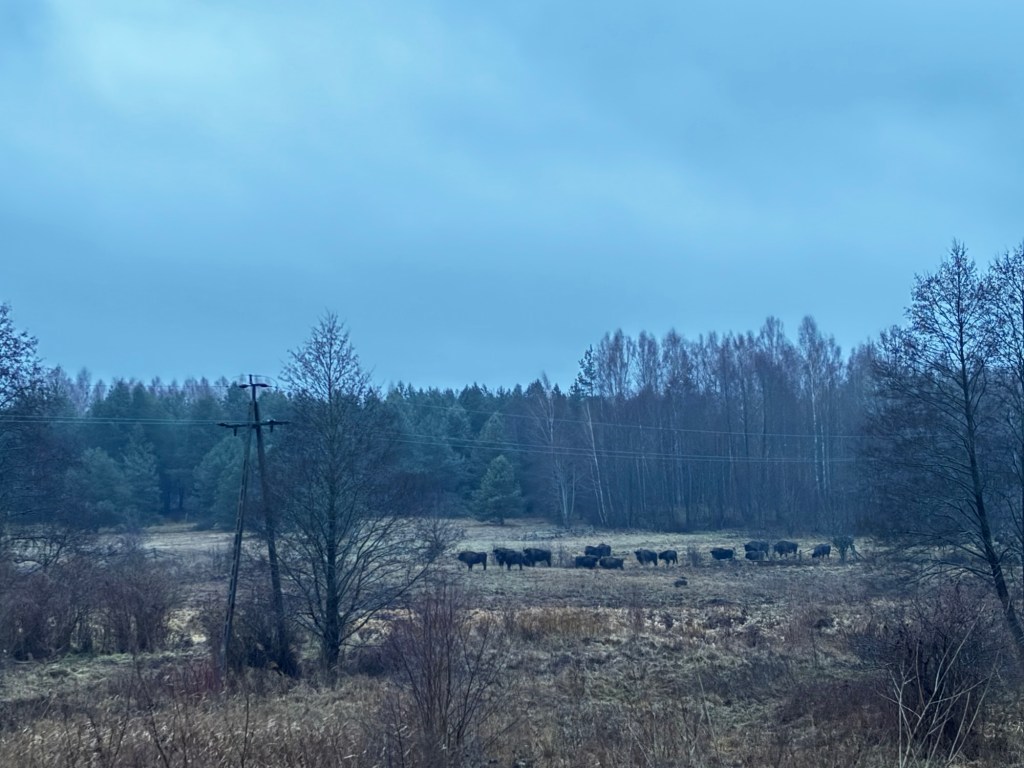

A hidden track ran through the forest on the other side, allowing us to get a lot closer than we’d managed on the previous occasion. Of course, the conditions were awful for photography. The focus assist light on my camera kept blinking in its struggle to focus on the dark shapes which Łukasz admonished me for, fearing it might spook the herd. I gave up pretty quickly and contented myself with watching the bison through my binoculars. I did manage a grab shot through them with my phone again, though.


A squall came in and we backed down. Łukasz concluded it was not the herd we’d seen before, which had numbered some thirty-nine individuals and hadn’t featured the bull with the twisted horn. Hoping to show us more in the time we had left, he took us back to the last place we’d seen the larger herd. He offered to go out and run to the spot where we’d left them. I volunteered to go with him. We had barely gone more than a few yards when he suddenly stopped in his tracks, held up his hand and said ‘Wolf!’.

I dropped to my knees and followed his line of sight. And there it was, standing on a rise at the edge of the forest: a white wolf, its winter coat lightly flecked with grey and brown. Like an echo from yesterday, it soon got wind of our attention and slinked back into the trees and out of sight. Łukasz tried calling after it, but there was no response.

After waiting for several minutes, we counted our stars for a second encounter with wolves in as many days and started heading back to the car. I must have been on high alert since being all but shaken out of bed this morning, because I saw it first: a second wolf, barely fifty metres away, watching us from the field adjacent to the track. This time it was me that gave the signal. I’d made the choice to leave my camera behind on this quick sortie, but I didn’t care. With only my binoculars to rely on, I was spared the frustration of staring through a viewfinder and getting poor results, and instead had the joy of watching the beautiful creature bounding away across the field as though it were only feet away.

I can’t show you what I saw. So let me describe it to you.

A tall and powerfully built creature, with the faintest of black lines down its legs. A warm buff colour lines its flanks, the colour of undercooked gingerbread, but its eyes – a lot more visible at such close range – are an amber so intense that not even the best of Warsaw’s jewellers could hope to replicate it. It runs as gracefully as though it were sailing across the field, and its body moves like a wave, arching and falling with every step. When it stops to look back – and it does this only once, and for just a moment – the black lips on its white muzzle are drawn into a grin. And then it turns away with a swish of its tail and lopes off into the forest.

This is Białowieża’s farewell: a final encounter with one of its most handsome creatures of all.

It is magnificent. I am lost for words.


The car is now flying through the vast flats of Eastern Poland. Scenery I remember seeing only in picture books of the East plays beyond the window like a zoetrope: stands of towering, limbless spruce trees, bending under the weight of the wind; lonely cabins and hunting hides in the fields; water towers and the bulbous spires of Orthodox churches rising out of the low-lying villages we pass.

It’s unlike any place I’ve ever been before – but then, I guess I haven’t ever traveled this far east. Go any further than Białowieża and you’ll run headlong into the Belarus border wall – a reminder that Iron Curtain of the previous century was, true to its name, only drawn back, and not ripped down for good.


One day, if the fates allow, I would love to see Siberia. I suspect that kind of adventure is absolutely off the cards for now, but until then, I can only hope things do not spiral out of control the way they did before.

There is too much that is beautiful in this part of the world, too much that has been done to save these treasures from the brink of oblivion. Too much to sacrifice on the altar of ambition. Well – that’s my ten cents on the matter, anyway. BB x

Forest of the Dead

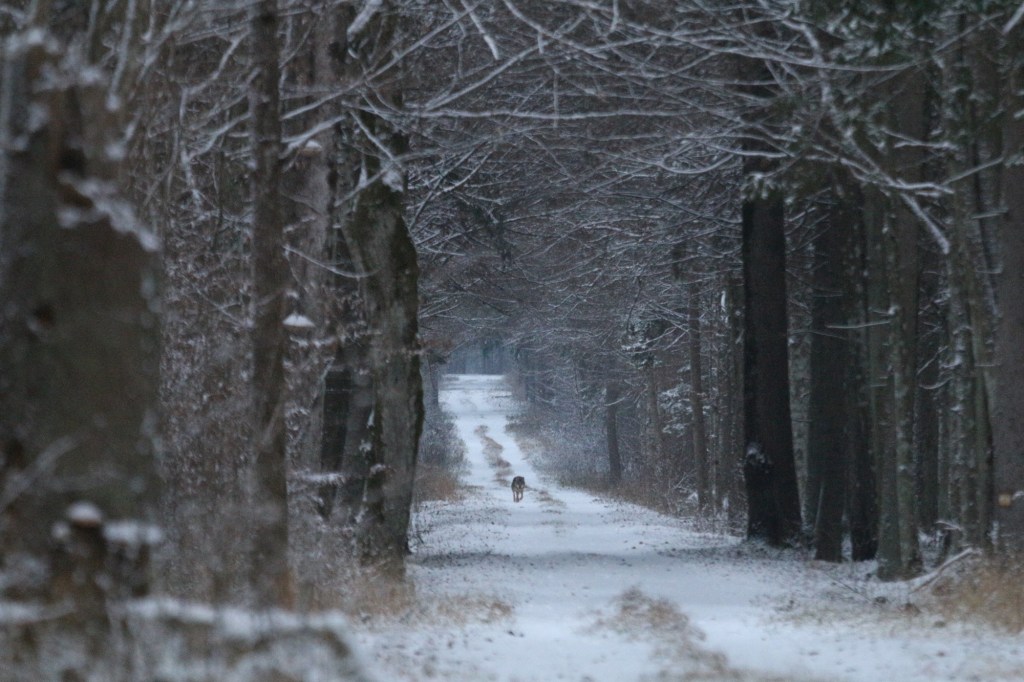
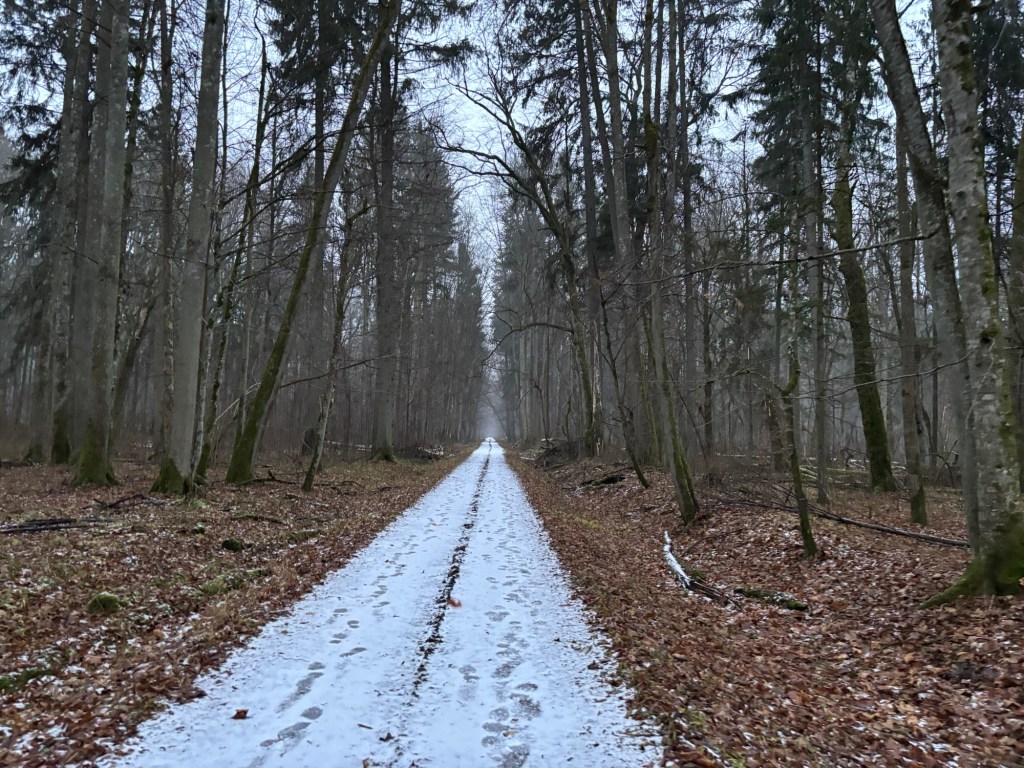
I’m kneeling in the snow, staring down an arrow-straight road carved through the forest by the Russians more than a century ago. Our guide makes a signal and tells us to wait. We could be here for up to an hour. The fever that has followed me since stepping out of the plane in Warsaw has not broken yet: I’m still nursing a headache and a bad cough, my back hurts, and I’m starting to freeze from the feet up. But I’d suffer it all again to see what I just saw: a genuine forest spirit, a shadow of the ancient world, loping out of the trees and onto the road. A wild wolf.


When I woke up this morning, it was to a frozen world. The snow hadn’t started falling when I turned in around midnight, but there must have been quite a lot of it during the night, because there wasn’t a single track to be seen in the village. That may have more to do with the fact that we were up and gone by six thirty, a full hour before sunrise, and on a Sunday morning to boot.


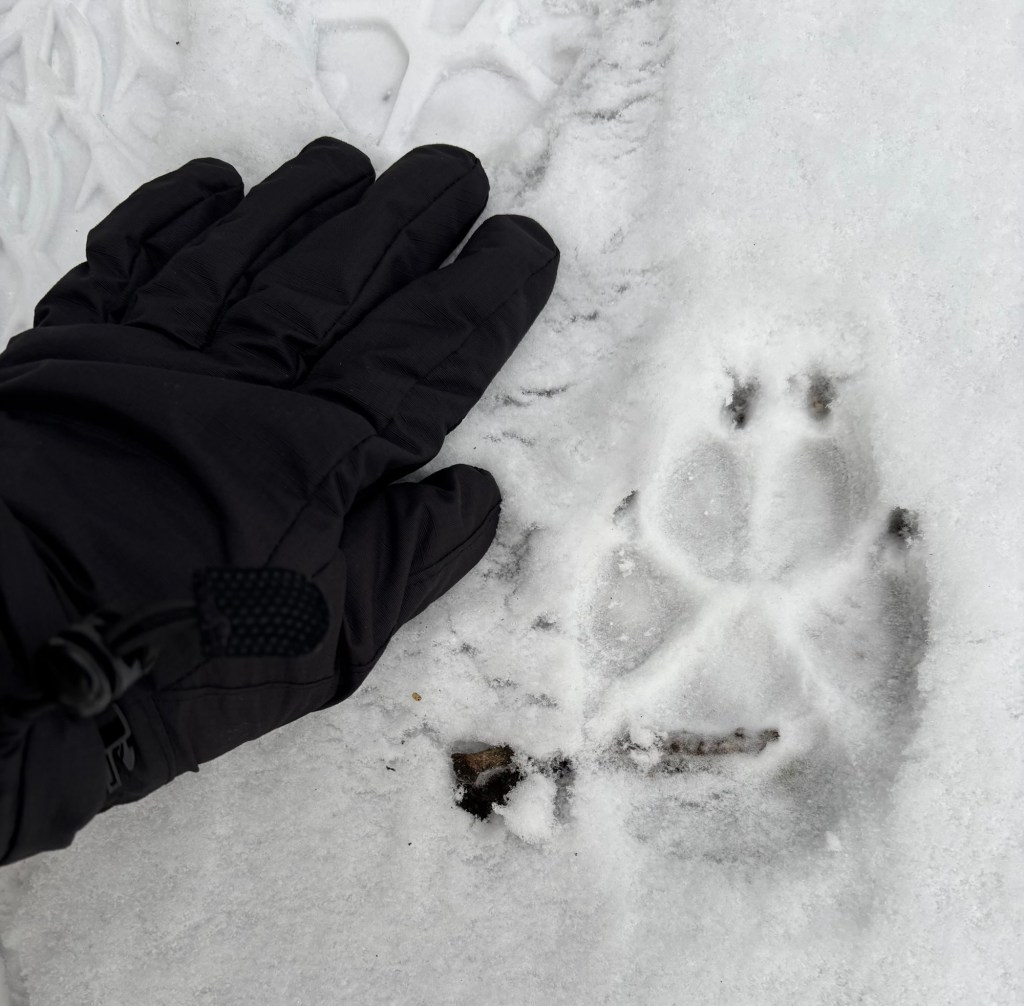
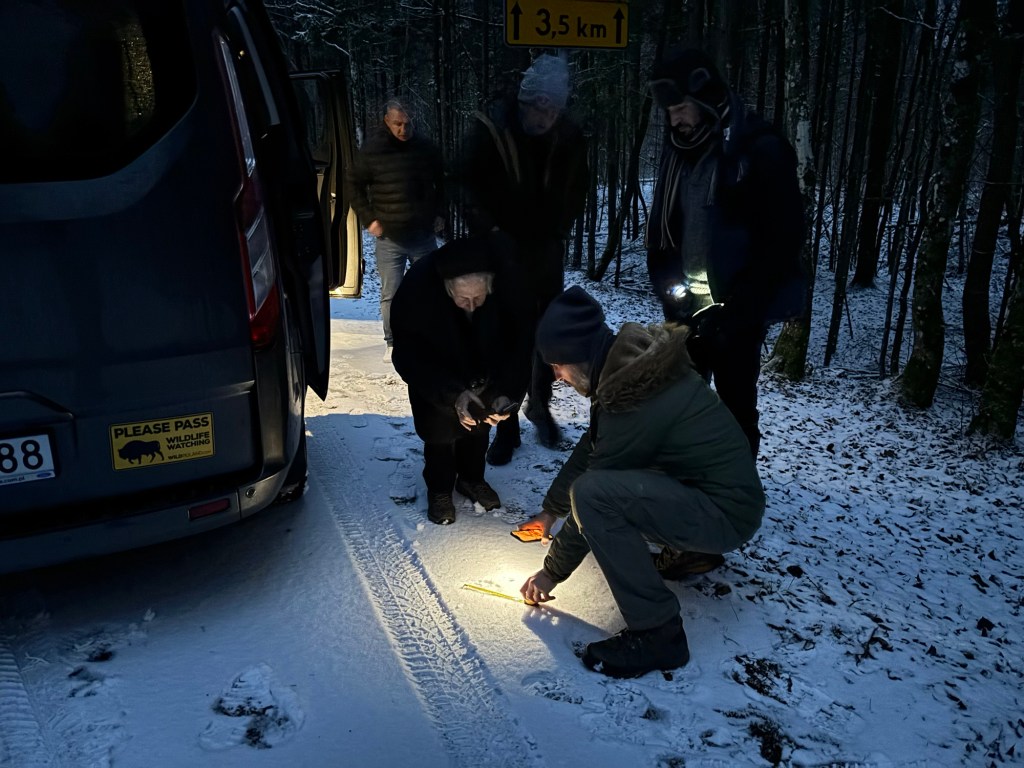
After a short drive through the frozen forest, Łukasz brought the car to a sudden stop and jumped out to show us what he had seen: a single set of footprints in the snow, larger than those of any dog I’d ever seen. Following a tip-off from a friend of his, we set off into the forest to try our luck with one of the wolf packs that inhabit Białowieża Forest.

We didn’t have to go for before we found another set of prints. And another. And another. In all, we counted around eleven sets of prints in the snow. They had to be recent: the snow had only started in the early hours of the morning, and it was still very early. We pushed on to the crossroads, hoping to catch a glimpse of our quarry crossing the road in one of four possible directions.


We waited. A couple of red deer broke the cover of the trees, but they didn’t look particularly perturbed – not a good sign when you’re tracking a creature that puts the fear of God into nearly everything that moves in the forest. Łukasz tried calling out to them – and a bloody convincing mimic he is, too – but the forest was silent. Wherever the wolves were, they were doing what they done since we first crossed paths as a species hundreds of thousands of years ago: giving us a very wide berth.

We moved on, taking a chance on the left road. A couple of minutes into the walk, we came to a sudden halt at the sign of a dark shadow in the road at the top of the rise. On closer inspection through the binoculars, it was another tracker and his party staring right back at us through a pair of binoculars of his own.

We met halfway. Łukasz and the other guide swapped information. They’d come from the other side of the quadrant and had found tracks on the road leading into the woods, but nothing on the forest trail, meaning the pack of eleven had to be in there still. They might well have been watching us all the while, invisible between the thousand arms of the trees within.

Well, some of them, anyway. One of the women from the other party suddenly pointed back down the road and said something. My head turned so quick it might have snapped – and then I saw it. A lone wolf standing in the road, staring straight at us. Łukasz gave a signal and we all dropped to the ground, some on their bellies, since wolves are more likely to be spooked by a standing human silhouette than a prone one.

It didn’t hang around. Before my companions could get their cameras ready, it had loped off into the cover of the trees on the other side and was gone.

We waited there for quite some time. Where there was one, the other ten were sure to be nearby. Just as we were getting restless, three red deer came hurtling through the trees to our right, from the part of the forest where the wolves were hiding. Had they been spooked by the pack? The others were momentarily distracted and in that moment I had my eyes on the road, and that’s when I saw it: a second wolf, emerging right where the first had come and gone. Unlike the first, this one didn’t cross the road in one go, but instead came trotting towards us. I motioned to the others and tried a few photos, but my poor camera was struggling in the low light, so I contented myself with the binoculars instead.


Nothing quite prepares you for the size of the wolf. You expect a dog, or something like it, but it is so much more. Bigger. Stronger. A restless hunger in its yellow eyes. An untamed purpose in its gait. Even its footprints tell you you’re in the presence of something magnificent: there’s no graceless wrinkles or adapted opposable thumbs in its pug, just a perfect symmetry of power.


We never did see the other nine members of the pack. It’s possible they made a kill during the night and decided to remain close to their prey, sending the two we saw ahead as scouts. Who knows? Eventually, we elected to abandon the vigil and leave them be, since by now the pack must have worked out where we were and how to avoid us. We left the forest by the same road we came, but not before a lone bull bison emerged from the trees just a hundred metres or so down the road. Poland, you sure know how to pull out all the stops!


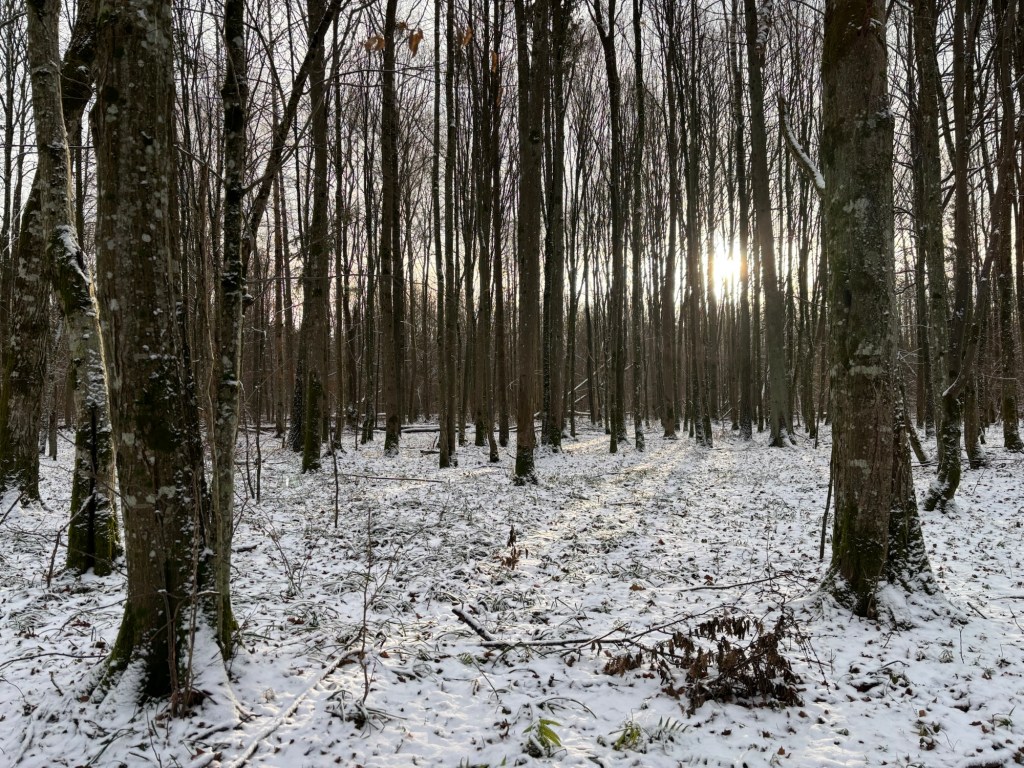
We ventured into the strictly protected area of Białowieża Forest after breakfast, hoping to try our luck with some of the park’s rare bird species, but a combination of high wind and sleet cast a spell on the woods. A single mistle thrush cackling at the gates was the only sound we ever heard: neither the croak of a raven, the wittering tattoo of a nuthatch, nor the hoot of an owl, the mew of a buzzard or the drumbeat of one of the nine species of woodpecker that call the forest home. Nothing. Even the wind died away as we wandered deeper into the woods, where some of the trees are hundreds of years old, and others older still.

Białowieża Forest is famous for being one of Europe’s last remaining primeval forests, but what is even more fascinating – if a little disturbing – is that an astonishing 30% of its trees are dead (some figures indicate it may even be nearly 50%). It is, in a way, a forest of the dead, albeit one so full of life in the spring and summer that you could be forgiven for missing that small detail.

Not so in the bleak midwinter, however. The towering spruce trees look more like the charred pillars of a gutted cathedral, while those that have crashed to the ground seem like the carcasses of enormous serpents, their curving branches like shattered ribs on the forest floor. Everywhere is the sweet smell of decay and black fungus grows on the stumps of the fallen giants. The presence of several stones and crosses marking the mass execution site of hundreds of Polish Jews by the Nazis only adds to the creeping dread.

We spent around three hours in the woods, learning about the ancient trees and the various species of fungi that call the forest home, but the eerie silence of the birds was sorely noted.

We did not leave disappointed, however. Something far more beautiful and far more chilling took its place.

Just a hundred metres or so from the main gate, an unmistakeable howl broke the silence, echoed a few seconds later by another. It’s amazing how a sound that you must have imagined and read about in books for years can still make the blood run cold on instinct.

I would have settled for hearing a wolf over seeing one on this trip, and I got both. I may not have been the luckiest in love this year, but I’ve taken all the chips home with the wolves on this trip. Maybe it’s a sign that I’m doing something right at last – reconnecting with the younger version of me who was far more interested in the natural world than anything else.

If I have any budding resolutions for the New Year, it’s to do something like this again. I am, and always will be, a naturalist first and foremost, and everything else I claim to be second. I should reclaim that part of me. It is, it must be said, a genuinely happy and fulfilled part of me, and the greatest gift I could give to any children I should be lucky enough to have someday. BB x

Thathanka

Local Time: 21.00

Bojarski Gościniec, Narewka

The temperature has risen a little since yesterday, though not by much. I’m still nursing a bad case of end-of-term-itis – it always hits me bad in the first few days of the holidays – so marching through the frosty Polish deepwoods with weak lungs and a headache was a bit of a challenge. But if I was properly breath-taken, it was on account of the incredible wildlife encounters I had this morning.

We must have set off shortly after 7am, about half an hour before sunrise. We had a couple of false starts – it turns out hay bales make very convincing bison half an hour before sunrise – but it didn’t take us long to track down a sizeable herd grazing in the fields.


The European Bison, or wisent, is one of conservation’s greatest success stories. What was once a ubiquitous symbol of Pleistocene Europe had been driven to extinction in all three of its holdouts by the end of the first quarter of the 20th century. Though strictly protected on the hunting preserves of the Russian Tsars, their numbers were already dwindling during the Early Modern Period and the last wild bison was shot here in Białowoeza in 1921, shortly after marauding German soldiers during WW1 whittled the herds down to just a few surviving beasts. With so many bison in zoos and private menageries spread across Europe, however, an effort was conceived to bring the wisent back from extinction. From an initial breeding stock of twelve, the population gradually recovered over the second half of the last century. The wild population now stands at around 4,000 individuals, headquartered along the Poland-Belarus border, with reintroduction projects from Blean Woods in Kent to Castelo Branco in Portugal – a truly remarkable rescue operation.


Our guide, Łukasz, took us to a number of places where the bison often leave the forest to graze. It’s been a good year for acorns, so they aren’t venturing out into the open as much as usual, browsing instead on the bumper crop in the dark heart of the ancient forest. Perhaps that’s why we had no luck after leaving the first herd to try our luck elsewhere.

We did find a solitary elk sitting beside the road, half covered in frost, which was an amazing stroke of luck.


Łukasz made the call to return to the herd we’d seen at sunrise, so we parked at the last spot we’d seen them and ventured out across the frosty meadow in search of our quarry.

It wasn’t hard. The heaviest land animal in Europe isn’t exactly inconspicuous.

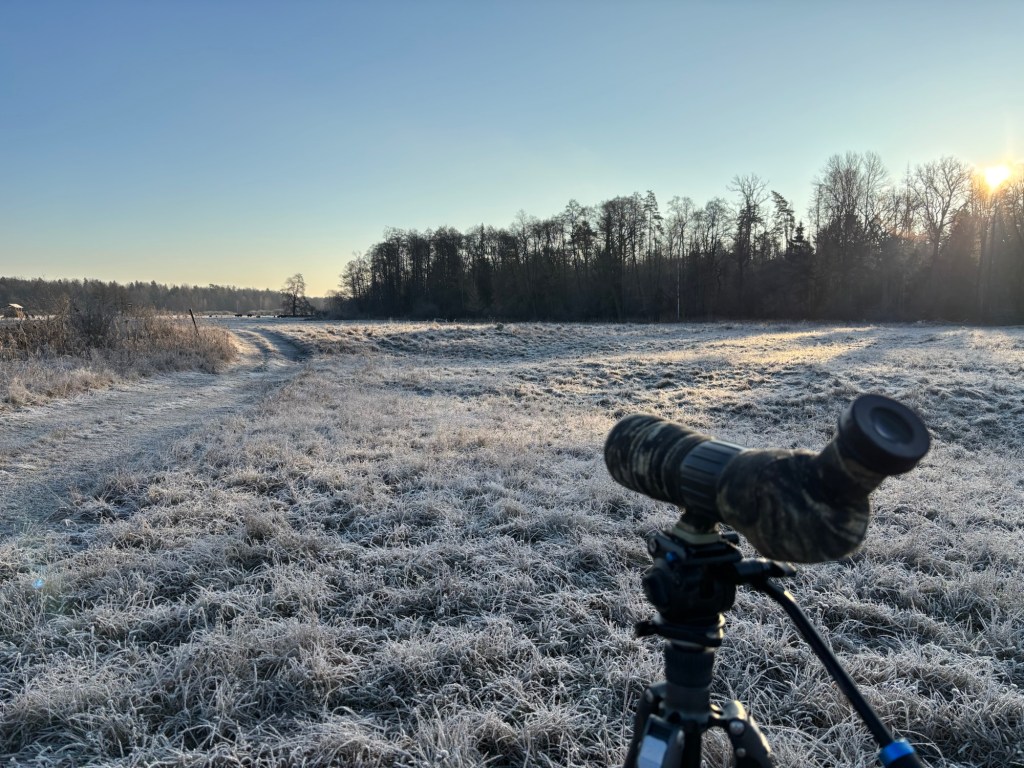
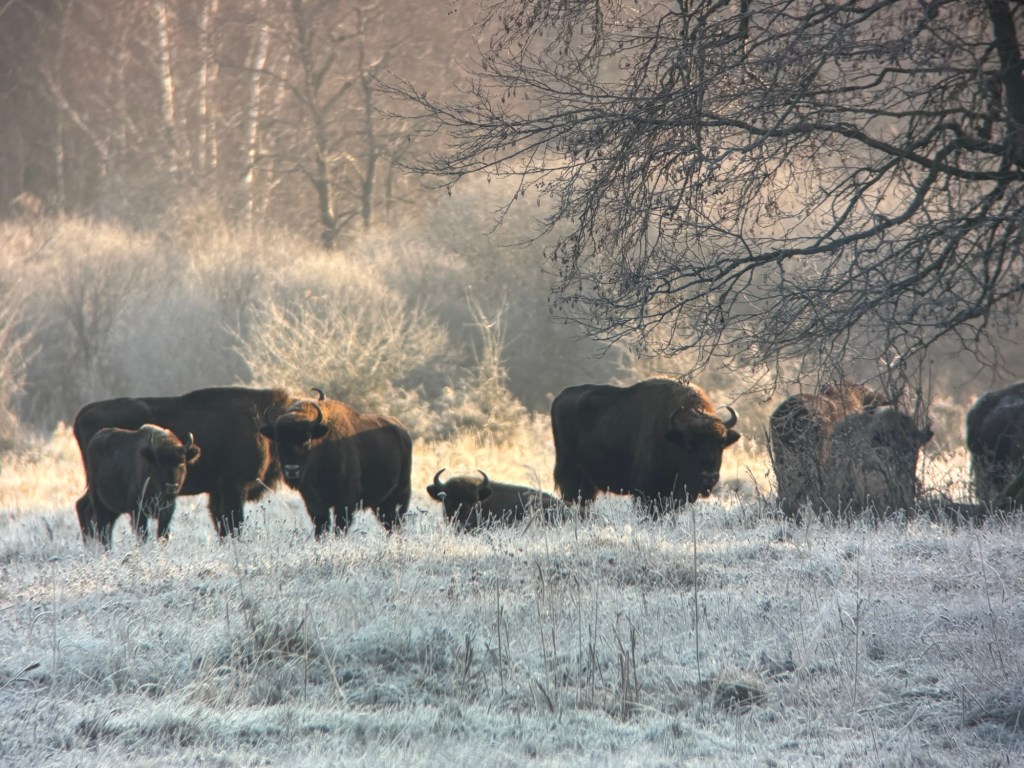
My camera didn’t really do the beasts justice – I don’t possess a supertelephoto lens like many amateur wildlife photographers – so I resorted to a little optical trickery by “digiscoping” – that is, holding my iPhone camera up to the viewfinder of Łukasz’ scope. It took some manoeuvring and I only got one usable shot, but the result was pretty good… for a phone.


Tomorrow, we set out in search of the reason I booked this holiday in the first place: wild wolves. I’m well aware the odds are stacked against us, and to be honest I’d settle for hearing them, or even just following their tracks, but it is set to snow tonight, so who knows – we may get lucky. Watch this space! BB x

The Borders Have Moved

Local time: 21.52

Bojarski Gościniec, Narewka

They weren’t kidding about the cold here in Poland. It’s hasn’t snowed properly yet this year, but the full moon is just a few days away and it’s set to bring the first snow in its wake. An icy vanguard has already won the field. The grass in the car park was already crunchy underfoot after lunch, and when I could take my eyes off the stars on my way back to my room tonight, the wood panelling outside glittered like stardust.

I’ve come out here on an organised tour run by Wild Poland, a firm that I must have recalled from ads in the wildlife magazines I read as a kid. Łukasz, our guide, met me outside a Costa coffee shop in the arrivals lounge of Warsaw-Chopin Airport, together with the other three members of our group. It’s definitely what you’d call a private tour – but that’s not how it’s always been. “We barely survived COVID”, Łukasz explained. “Back then, we had a team of maybe thirty people. Now it’s just me and Tomasz. Brexit didn’t help. Before Brexit, maybe fifty perfect of our clients were British. Then they stopped coming. Not altogether, but not as many as before. Maybe they were worried about getting stuck over here.”

We stopped for lunch at a hotel-restaurant outside Wyszkow. The couple of British retirees provided some entertainment in their desperate search for a vegetarian option on the menu, while the third member of the expedition, a French wildlife photographer from Zürich, wasted no time in wolfing down a bowl of flaczki (beef tripe soup) followed by a rare steak topped with two fat king prawns.


Tour-hoppers are an interesting sort. I haven’t met people like these since I went gorilla trekking back in 2012. The Frenchman seems to travel the world for work, taking every opportunity he can to spend an extended weekend “shooting animals” – with one of his two cameras, of course, though before the ambiguity was cleared it was very amusing to see the momentary alarm in the faces of the retired couple when he said he was going to spend his Christmas in the south of France shooting flamingoes.

The retirees themselves seem to have spent their entire lives traveling. Iraq, Libya, India, Lake Baikal, Switzerland, Costa Rica, South Africa… it doesn’t sound like there’s a place they haven’t been. They seem to have done bloody well for themselves for a couple who left school at sixteen without mentioning work once during the day’s conversation, but perhaps belonging to the generation that inherited houses bought on the cheap in London has something to do with it. Their speech smacked of the Grand Tour. I couldn’t quite square the lady’s worldly, highly tolerant attitude with her strict vegetarianism, but I guess it takes all sorts.


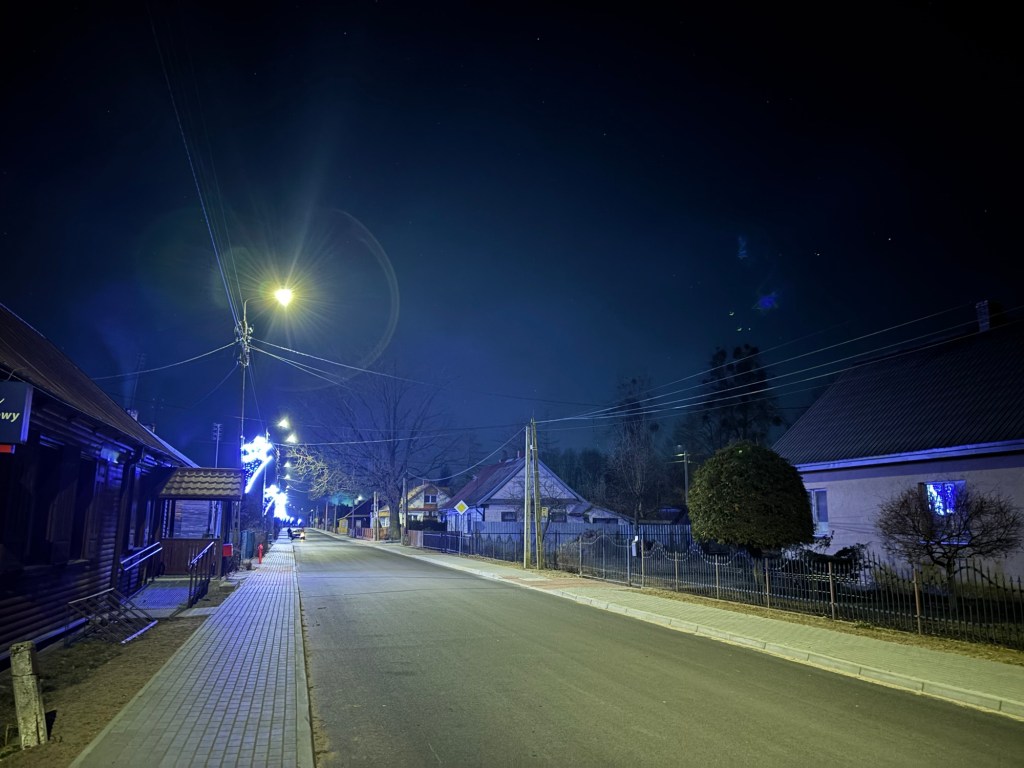
It’s very quiet here in Narewka. The forest crowds in on all sides, dark and unforgiving. The lurid green Christmas decorations hanging from the lamp-posts, wrought in the shape of half-trees look rather ridiculous – a pathetic artificial import of the real thing, which stands mere feet away, as the myriad stars of the winter night sky glitter and gleam between the branches of the ancient forest. Art imitates nature and, as usual, fails to match its majesty.

Over dinner, Łukasz takes out his map and shows us the plan for the next few days. On a table behind, five men in heavy blue policja overalls play cards, sometimes coming and going, sometimes replaced by a new face, but always totalling five.

“They’re here to patrol the border,” our guide explains. “They will work through the night.” The Belarusian border is only ten kilometres away as the crow flies, slicing right through the heart of the forest. It’s been a natural crossing point for immigrants over the last few years, so the police presence here is fairly notable. I’ve seen more officers than locals.

It feels odd to be so close to the border and to hear it talked about as though it were the Iron Curtain resurgent. It feels only all the more odd with these two retired Brits talking about their carefree travels in the 1970s, before the wall came down, and all the other borders went up – before the world was gentrified.

Not for the first time, I wonder if I was cheated out of an adventure on the Greyhound buses by every American I ever met, purely because of an inherited terror incubated over decades of a world beyond the safety of their own property. Now that you can travel without fear of risk, why would you travel any other way? Adventure – from the Latin advenire – implies something unexpected, something about to happen. Something alien to a generation of tourists who only want the social clout of a shiny new Instagram photo or another country on their roster. And with more and more influencers joining their ranks every day, it’s only set to get worse.

The age of adventure didn’t stop when the last corner of the world was discovered. It ended when we sent a marketing team there.

I’ve avoided organised tours for so long because I have a deep mistrust of others managing my travels for me. I appreciate my freedom, and I prefer it to be absolute – to allow me to meet the real people and get to know the place properly. In this case, my Polish isn’t up to scratch, and I want to see a proper wildlife tracker at work.

I also really, really want to see a wild wolf. So fingers crossed for a lucky weekend! BB x