My phone is telling me I walked some twenty-five kilometres today. After trekking to Three Bridges Station there and back on foot, various perambulations through Reading and London and walking the Combe Gibbet Circular, I can’t say I’m surprised. What I can say is that I bloody well ought to learn to drive, because it’s frankly ridiculous how much of the world I could be exploring at weekends which is just too far away to reach on foot. Dammit.
Fortune favours the bold, which is another way of saying if you want to get lucky, you have to make your own luck. Fortunately, today’s little outing got off to a cracking start with luck knocking on my door. With the kids off site this weekend, the grounds were eerily quiet, even for a Sunday morning. I guess that’s why one of the forest’s more secretive residents made it all the way up onto the main drive this morning.
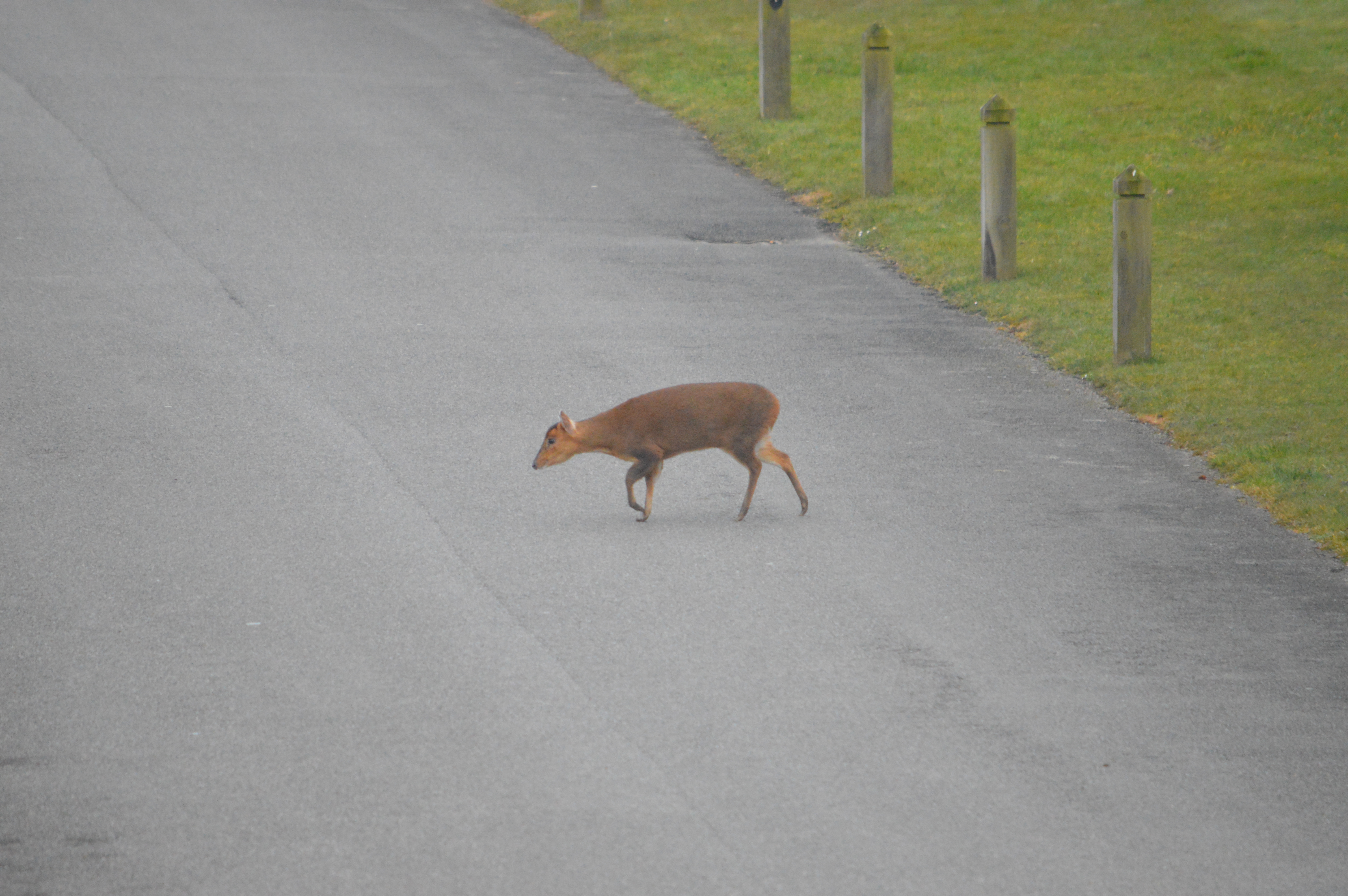
Muntjac deer are such fascinating little creatures. They keep some of our boys up at night with their barking in the summer, and unlike some deer species they’re quite fearless if you cross paths with one in the wild: I’ve had what can only be called a stand-off with a buck in the woods on my way into town more than once (and probably with the same individual). This one didn’t hang around for long, and if I’d not happened to look out of the window as I was getting dressed I’d probably have missed it.
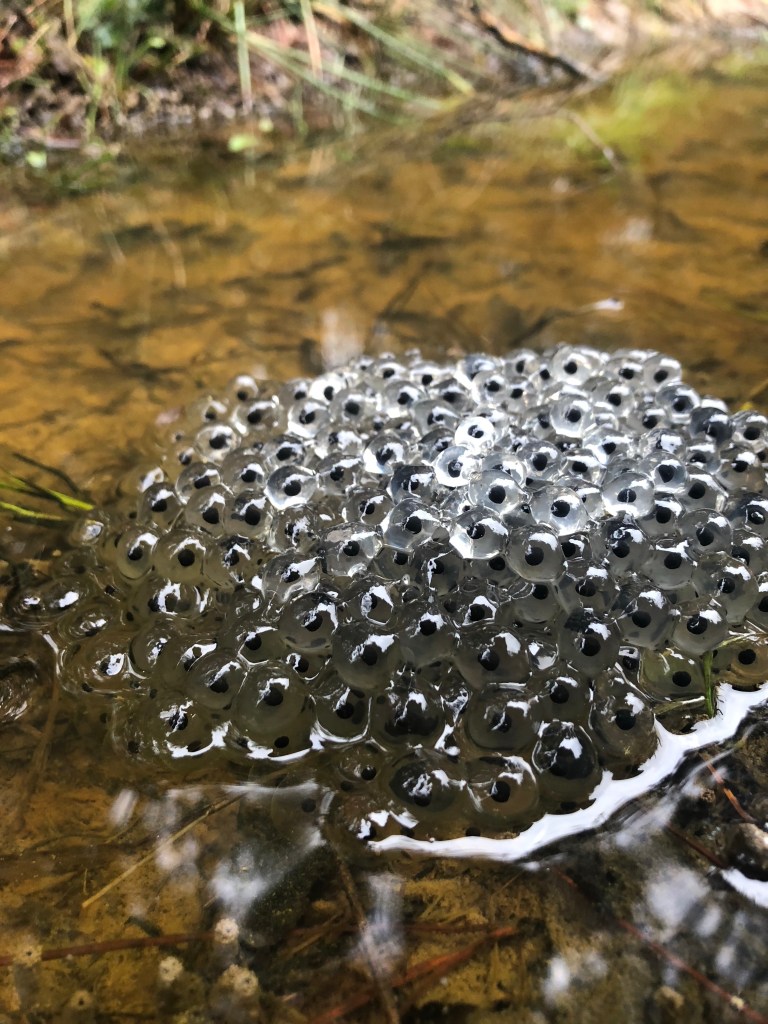
I managed to make it out into the windswept wilds of Berkshire this weekend. I haven’t been up that way since a school retreat to Daoui a few years ago, and I remember feeling spellbound by the place then (well, I was certainly spellbound by the evening prayers, that much is true). On the way, signs that the year is very much on the turn were everywhere. Masses of frogspawn in the usual spots in the forest. Crocuses pushing up through the bracken as the snowdrops wilt away. The explosive chattering of a roving band of siskins in the treetops. And, Berkshire being Berkshire, red kites absolutely everywhere. I swear I saw more kites than pigeons today.
Climbing high up onto the downs above the hamlet of Inkpen, I even heard my first skylark of the year, merrily singing its heart out as it soared skywards. I haven’t seen any swallows or martins yet, but spring is certainly well on the way.
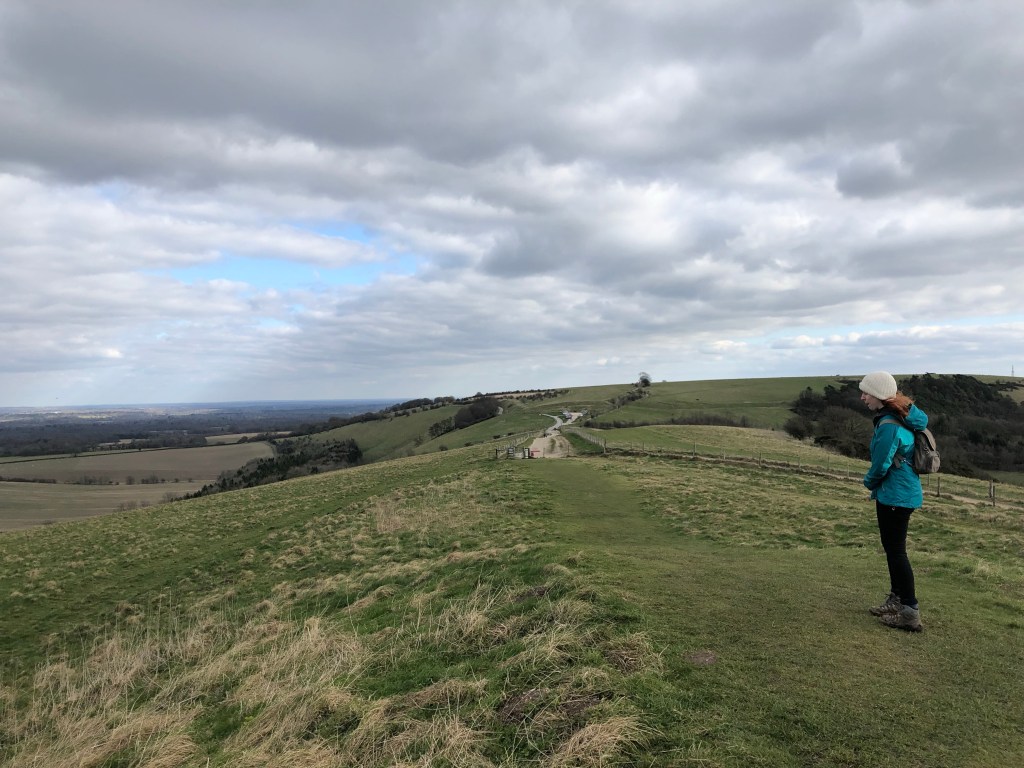
Standing tall upon the summit of Inkpen Beacon is a lonely-looking structure that can be seen for miles around: the Combe Gibbet. As we climbed towards it, my dear friend and learned guide Kate (one half of the dynamic duo that were Langlesby Travels) regaled me with its dark history: as the story goes, it was built in the year 1676 for the hanging of local murderers George Bromham and Dorothy Newman after the double murder of Bromham’s wife and son, the only obstacles to their unrequited love. For Bromham’s infidelity and the brutality of their actions – they supposedly bludgeoned the mother and child to death before hiding the bodies in a nearby dew pond – they were hanged by the neck in Winchester and their bodies displayed high upon the hilltop for all to see. Apparently the sight could be seen from “several counties”, which seems a bit of a stretch, though it really did feel like you were on top of the world up there on Inkpen Beacon. It’s always an incredible feeling when you’re looking down on the raptors wheeling through the air below.
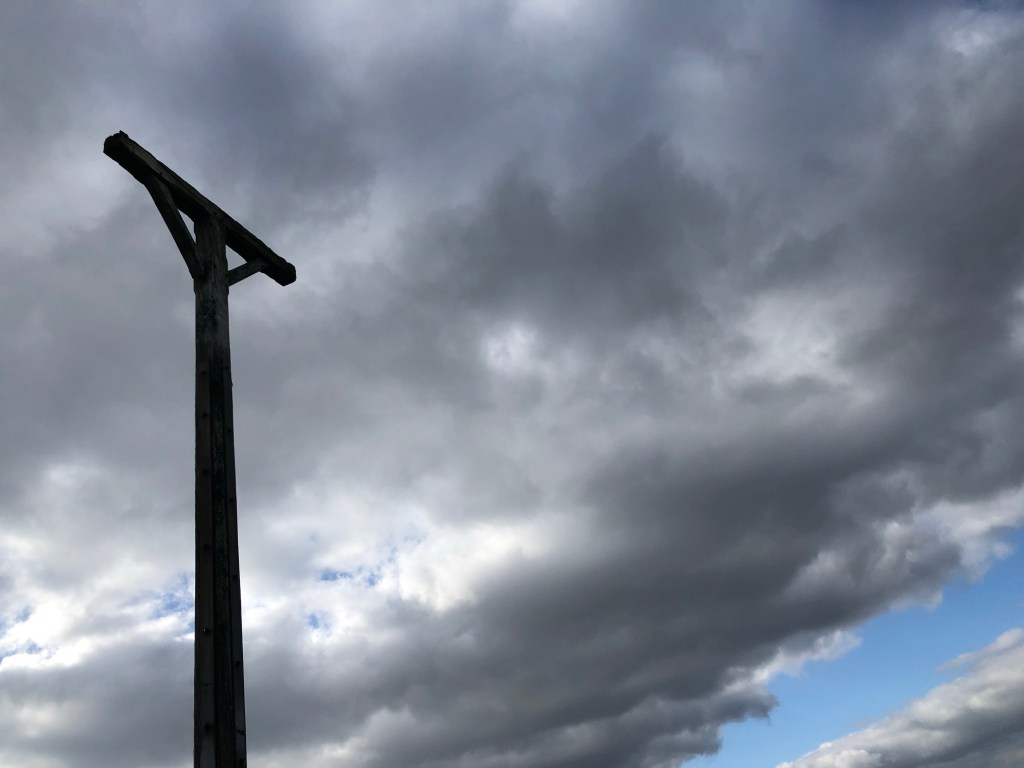
I was particularly keen to see the gibbet because I’m currently looking into the Great Plague of Seville and the curious habits of the plague doctors of the 17th century. There – I’m sure you’ve got that image in your head already: the broad-rimmed hat, the long, heavy black robes, leather gloves and – of course – the sinister, raven-beaked mask. It’s hardly surprising that the plague doctor became associated with despair. I’ve read somewhere that when Venice was devastated by the plague, the bird-like plague doctors were quite a common sight along its canals. I’ll have to do some exploring to that effect when I’m out there in just over a month’s time.
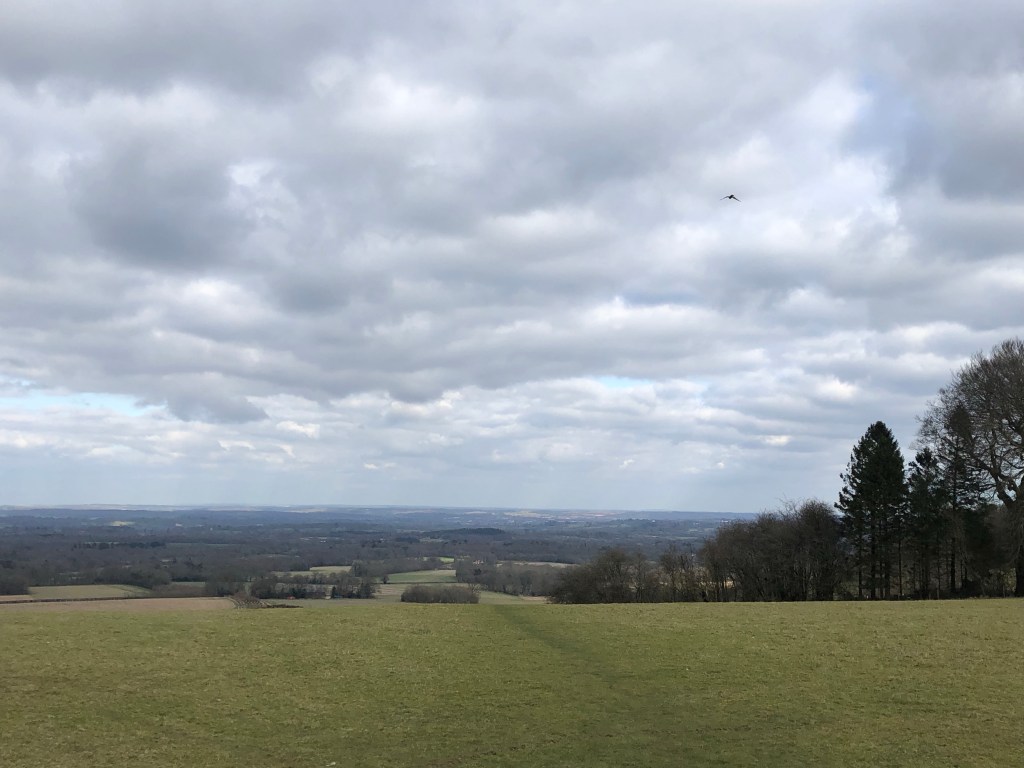
We were followed on the way down the Beacon by one of the Combe’s kites, wheeling lazily in the spring sunshine, its forked tail steering it effortlessly over our heads without a single wingbeat. I’ve always been in awe of kites. If it weren’t for the utter majesty of the griffon vulture, I might well hold the kite close to my heart as my favourite bird of all. It’s certainly a bird that’s been a part of my life for years, from the black kites of the Raya Real to the termite-hunting horde that haunted the Bishop’s Residence in Lira, Uganda, almost a decade ago. A solitary raven drifted mightily on the wind on the way home, a couple of hares skidded up the banks and out of sight as we passed, and a bullfinch was singing its mournful song from the hedgerow as we reached Kate’s car. Berkshire’s an expensive part of the UK to live for various reasons, but I never knew just how healthily wild it was until today. I guess the downs I can see from my window are every bit as breath-taking, if I could only reach them somehow. Still – that’s something to look forward to, I suppose.
Walking home in the dark, I almost had a conversation with a fox. A vixen, I think it was – it didn’t have that long face with the sunken eyes that dog foxes do. She froze in the middle of the track like wild things sometimes do, and if a man hadn’t come by walking his dog, I could have sworn we might have gone on looking at each other. Dogs and foxes have something of a chequered past, though, and at the first sound of the approaching mutt it was off into the verge and gone without a trace.
Today was a wild day, and wild days are always easy to write about when you’re as big a nature nut as I am. Write what you know, I suppose. Now if only there weren’t already a famous nature writer called BB, I might just squeeze my way into that very cramped market. Since when was BB short for Denys Watkins-Pitchford, anyway? BB x
 The Book of Barnabas