Elemental

Praia do Mar de Fóra, Fisterra. 12.31.

An enormous storm is moving in off the Atlantic. That’s what it says on the El País headlines on my phone. The signs were clear this morning: the wind was up and the waves were agitated, as though some supernatural force were stirring beneath the water out beyond the cape. Or maybe that’s just because I finished reading The Leviathan today and I have sea monsters on the brain.

That and the old English saying about red skies in the morning being a sailor’s warning.
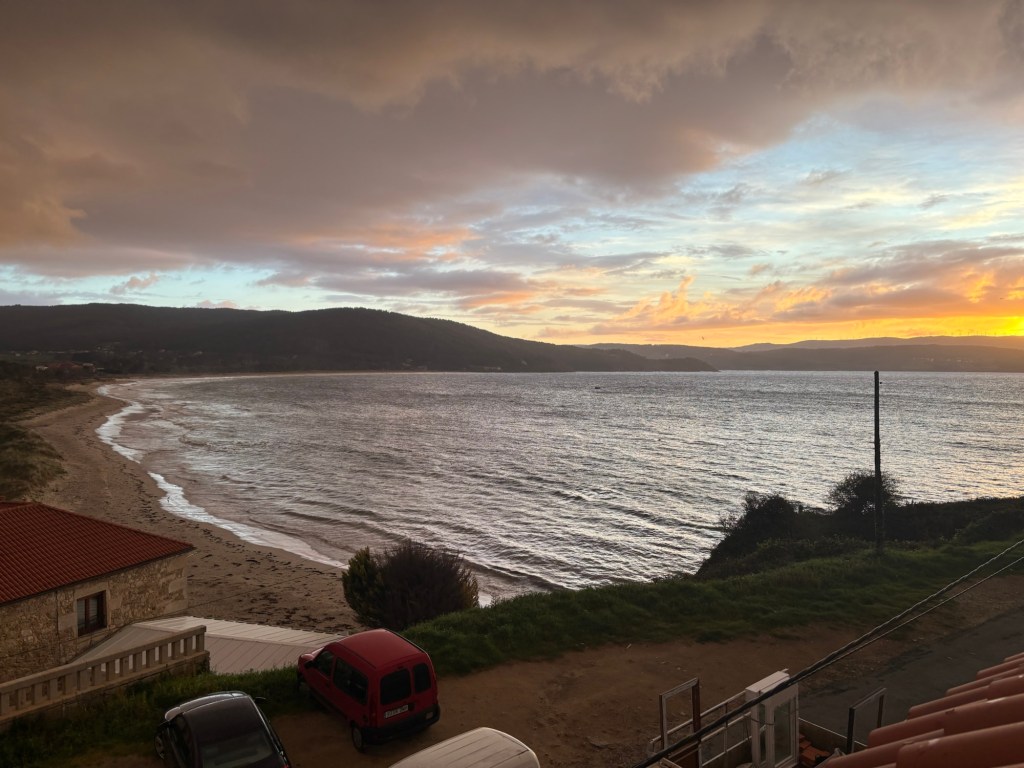

I didn’t come all the way out here to hide away from the elements, so once the worst of the morning’s rain was over, I nipped into town, grabbed an empanada and made for the Praia do Mar de Fóra on the west side of the cape. There were still a few clouds stretched across the sky, but none so ominous as those that were splashed across the news from the Canaries this morning. I sat on a boulder with my feet in a small stream and ate my lunch in peace, having the entire beach to myself for the second day in a row.
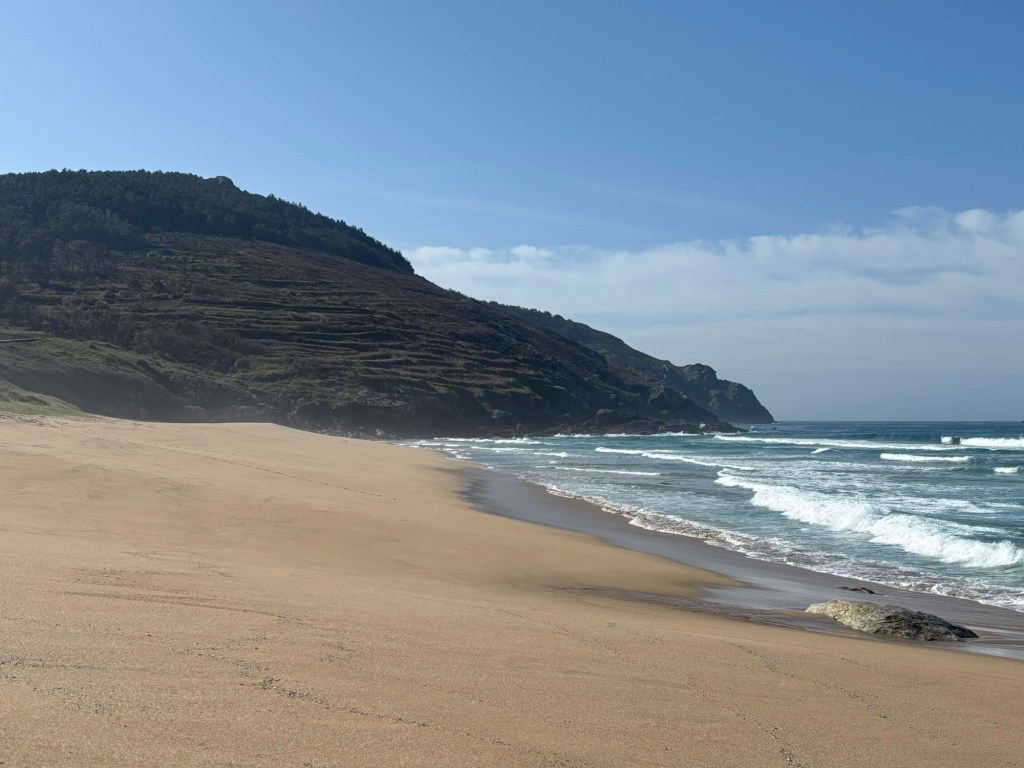

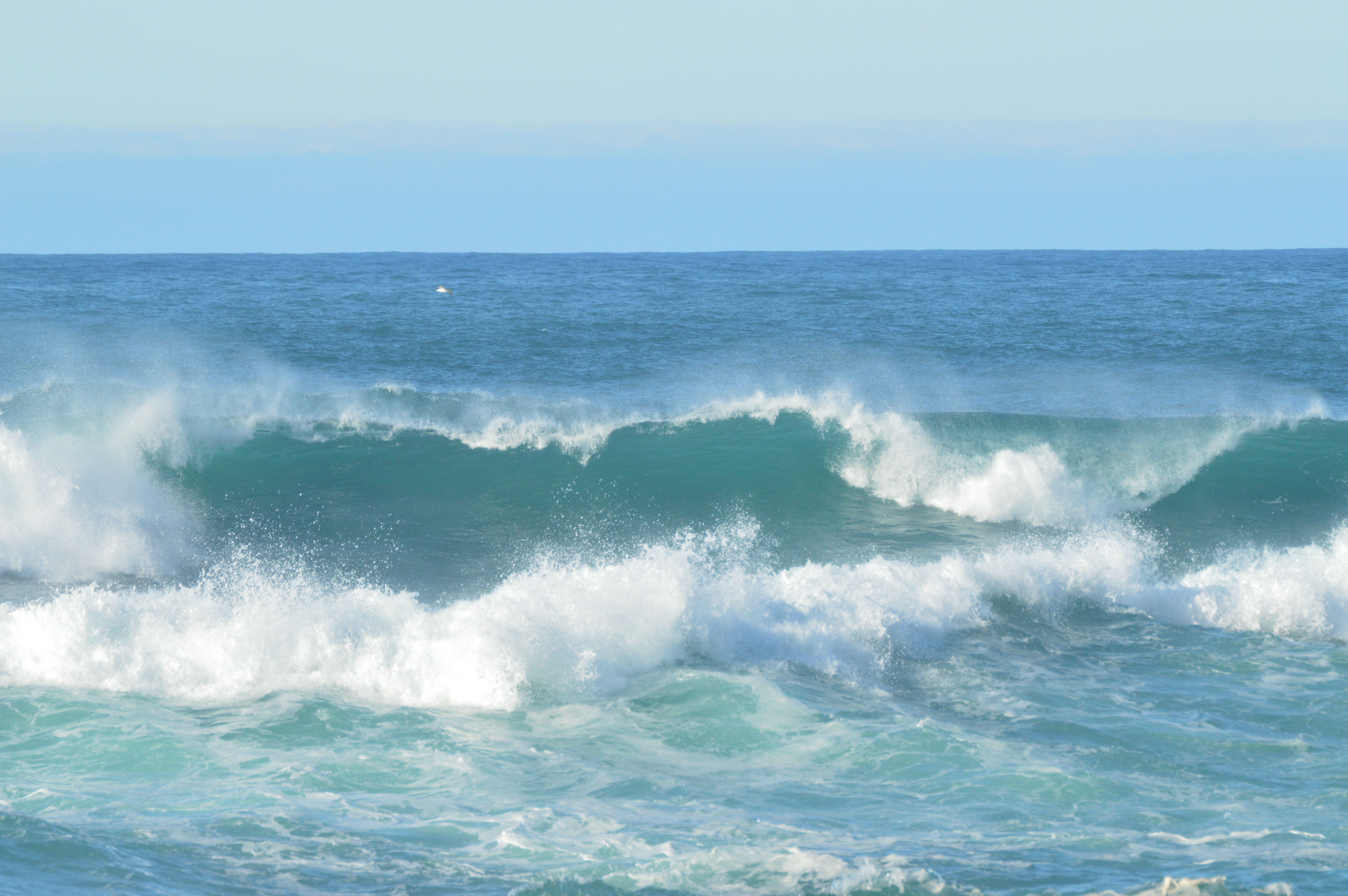
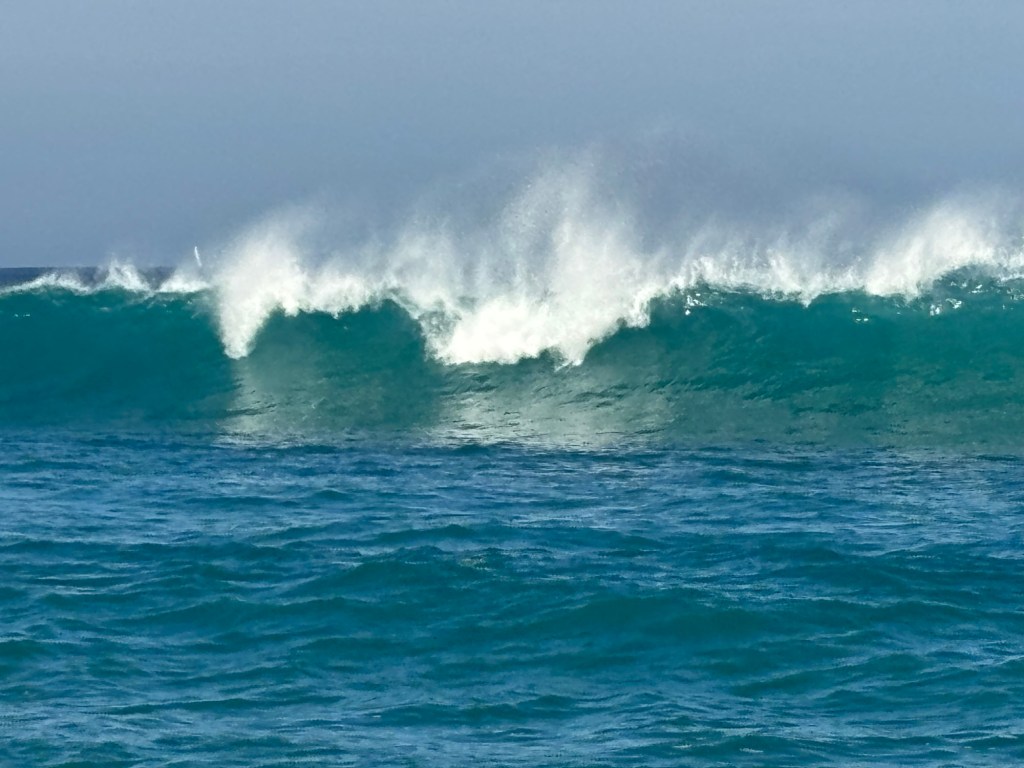
It’s easy to forget that there aren’t that many places in England where you can appreciate the full force of the Atlantic. Most of the English coastline looks out across the North and Irish Seas or the British Channel, and none of those are in the same league as the Great Western Ocean. From my post at the edge of the beach, I can see the sea mist rolling in with each crashing wave. Some of the waves collapse before they hit the shore; others swell while they’re still far off, hulking and dark and full of threatening force.

The ancients believed that Poseidon, God of the sea, was the ultimate force behind the power of the ocean. As well as the deity responsible for waves and quakes both terrestrial and marine, he was also the lord of horses, perhaps stemming from an even older association between horses and the sea. Poseidon is believed to have fashioned the first horse from the waves in an attempt to win over the people of Athens, who ultimately spurned his gift in favour of the olive tree offered by Athena, a far more practical gift for a seafaring folk for the myriad properties of its wood and fruit. And then there’s the parallel between the nature of horse and ocean, both extremely volatile – at one moment calm and beautiful, at another restless and powerful, stirred into action by some powerful emotion.

It’s thought that some of these beliefs come from seeing the shapes of horses’ heads as the foaming crests of the largest waves catch the wind before they break upon the shore. Before the unfettered force of the Atlantic bearing down on this little bay like a besieging army, it’s not hard to see the likeness to an elemental cavalry charge in the surf.

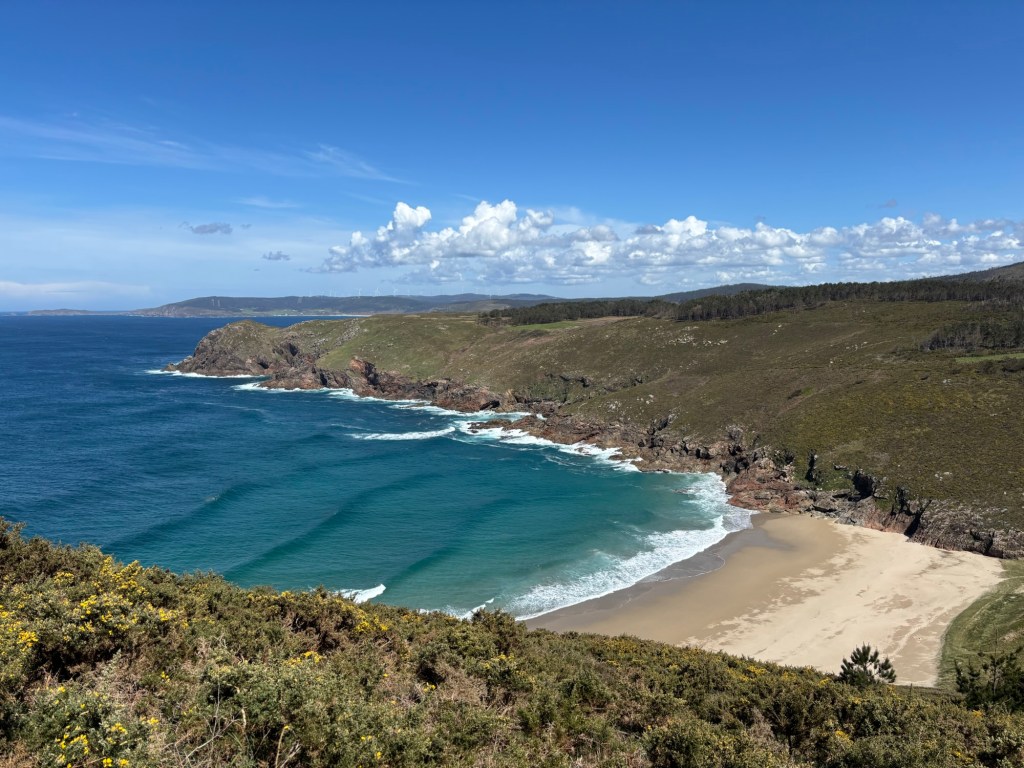
I had most of my lunch and readied to scale the cliffs. A half-beaten track snakes its way up the slope – a snake with a sadistic habit for traveling in a straight line, that is. The cliff climbs 200m in less than a kilometre, so I had plenty of opportunities to stop and take in the beauty of the bay (or, alternatively, a breather).

As I began my ascent, a couple of waxbills saw me off, a bizarre African immigrant in this Celtic corner of the world. I found the half-eaten corpse of a guillemot a little way up, the only one of its kind I saw, though they do still breed here at the westernmost corner of their range. For the rest of the climb, I was followed by a pair of red-billed choughs, an incredibly acrobatic bird which seems to delight in its ability to fly like few others. Now hanging in the wind, now plummeting into the abyss before unfolding their wings and climbing back out of their death-defying dives, they appear to perform these feats of gravitational defiance for the sheer thrill of it, since they serve no practical purpose whatsoever. The peregrine falcon employs a similar tactic to strike its prey out of the sky, but while I did spot one wheeling overhead, it wasn’t hunting today.

Far out to sea, the occasional gannet soared by, its wings just above touching the crests of the waves. They were shadowed now and then by the squat-bodied shags leaving their crude nests to fish; beautiful creatures in their own right, but ugly, misshapen imitations before the slender, powerful wings of the gannet. Down below, just metres beneath their colony, the Atlantic roiled in aquamarine anger between the cliffs.

It was a dizzying spectacle with both my feet (and my hands) firmly planted on the ground. Goodness knows how the choughs see such a sight and feel compelled to hurl themselves at it, as though defying the gods themselves. But then, I was never much fond of rollercoasters either.


The cliff path works its way up to the watchtower of Veladoiro, where the wind howls through the bars of its iron-framed mast, before skirting the edge of a pine forest so perfectly arranged it must have been planted here as a windbreak for the villages in the valley below. The lithe shapes of lizards and at least one snake dart across the path ahead of me, and I find the snapped-off tail of a slow worm that obviously wasn’t fast enough, though by the wearing at the severance point it seems to have been there for at least a day.

At the edge of the forest I come across a hidden bay: Praia da Arnela. It’s hard to tell from Google Maps why this pristine beach isn’t more of a magnet, but the answer is obvious to the naked eye: it can only be reached by a steep descent from an offshoot of the nearby hamlet of Vilar de Duio. I haven’t brought a towel, and I don’t think I’d fancy climbing back up the cliffs even if I had, so I content myself with watching the waves roll in from the clifftop instead.

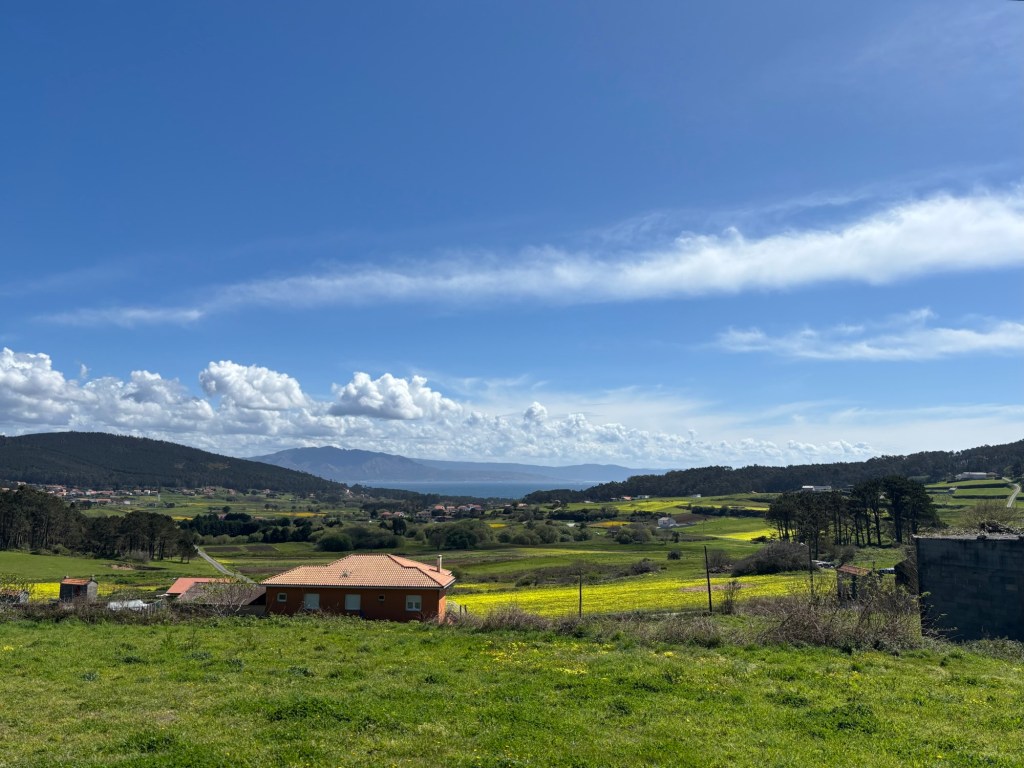
Turning my back on the sea, I start to descend into the interior. The fields of buttercups nestled between the forests on either side of the cape shine in two distinct shades of yellow: one a warm gold, the other a brighter, almost greener yellow. American and European, perhaps, though I’m not sure which way round. A single swallowtail butterfly dances into the field, its own golden wings lost in the shining petal sea.

The last time there was a great Atlantic storm, some of the mighty monarch butterflies were blown across the sea to our shores. I think that was in 2016, as I recall seeing one or two in Morocco and then, even more bizarrely, in Kent within that same summer.

Sometimes I wonder if esoteric anecdotes like these are worth recording. But perhaps it serves a greater purpose, as naturalists the world over try to understand the forces of the world around us by drawing together tiny threads such as these.

Back at Langosteira, I remove my sandals and continue along the beach barefoot. The relief as the waters rush over my tired feet is like nothing else. There are no swimmers out – it’s much too early in the year – but I’m happy to have my feet in the water again.

A single dunlin races ahead of me along the shore, a straggler from the traveling group of five that I saw from my window yesterday, perhaps. It will soon be on its way north to its breeding grounds in the Arctic circle. Much like the swallows who sing merrily from the telegraph wires in the fields here, you have to marvel at the courage and strength of these little wanderers who travel many thousands of miles each year, defying the elements to answer a call beyond their understanding: the call to come home, wherever that may be.

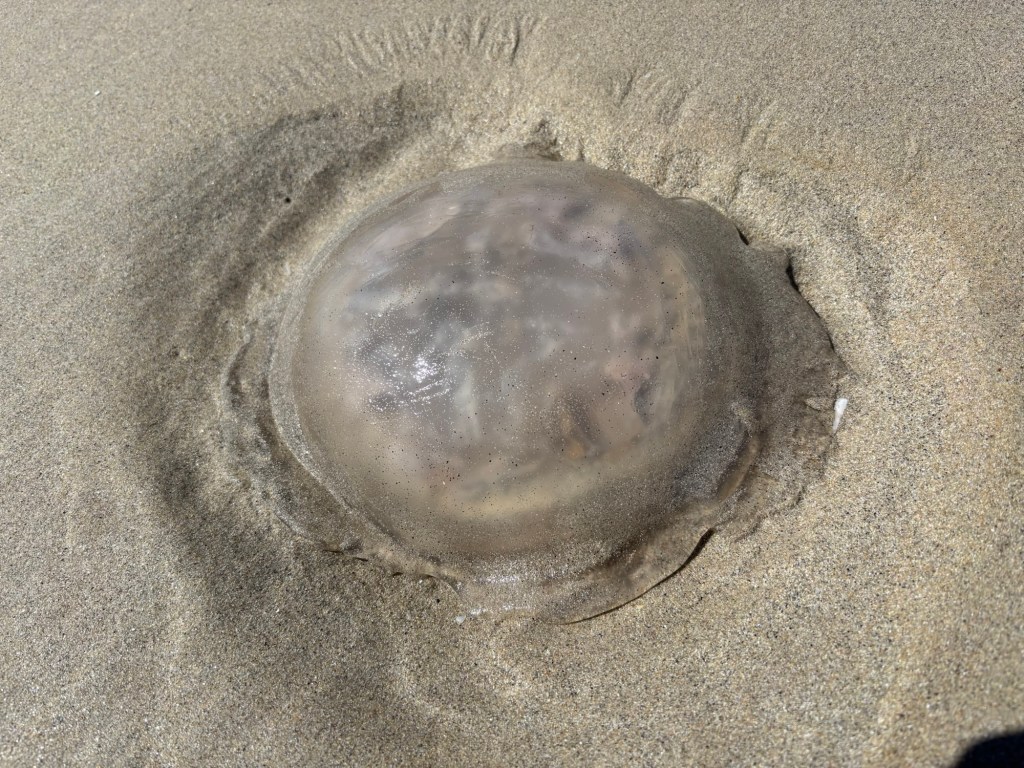
A less fortunate wanderer lies stranded in the sand, glistening in the sunlight: an enormous jellyfish. Not a false jelly like a man-o’-war, nor even a lion’s mane by the colour of it, though it’s hard to say with any degree of certainty, as some marine predator has already devoured its trailing tentacles, leaving the flabby and presumably inedible bell behind. A hollow has pooled about it where the waves have dug it a grave, after a fashion. On the off chance that it might still be alive, I carry it back to the tideline and lower it back into the water. The tide spits it back up again and it lands on its head, motionless. An ancient creature, practically unchanged since a time before life moved over the land, humbled by a force older than the world itself.

I’m back at the pensión now and taking a well-earned rest. There is Wi-Fi here, but it doesn’t reach quite as far as the last room in the corridor (which happens to be mine) so I’ve been using data to patch up the gaps. Quite a lot, by the looks of things, as it takes my app a long time to do the maths – longer than me, and that’s saying something. I’m feeling like it might be a good excuse to get an early night tonight, as I’ve got a few late ones coming up, so I’ll make the most of it while I can. BB x
Adventures in Cow Country

Good morning Cantabria!

DSC_0069

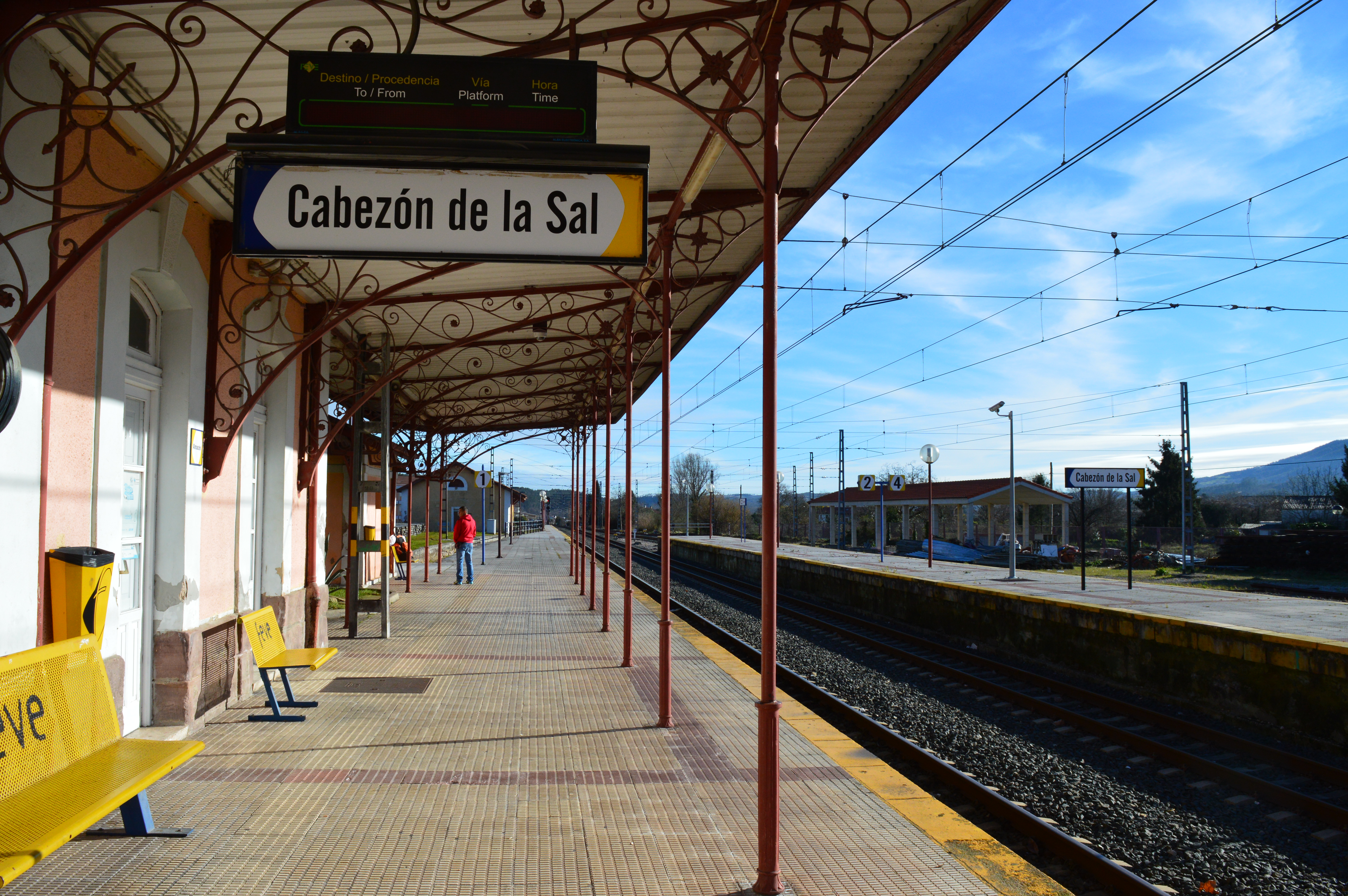
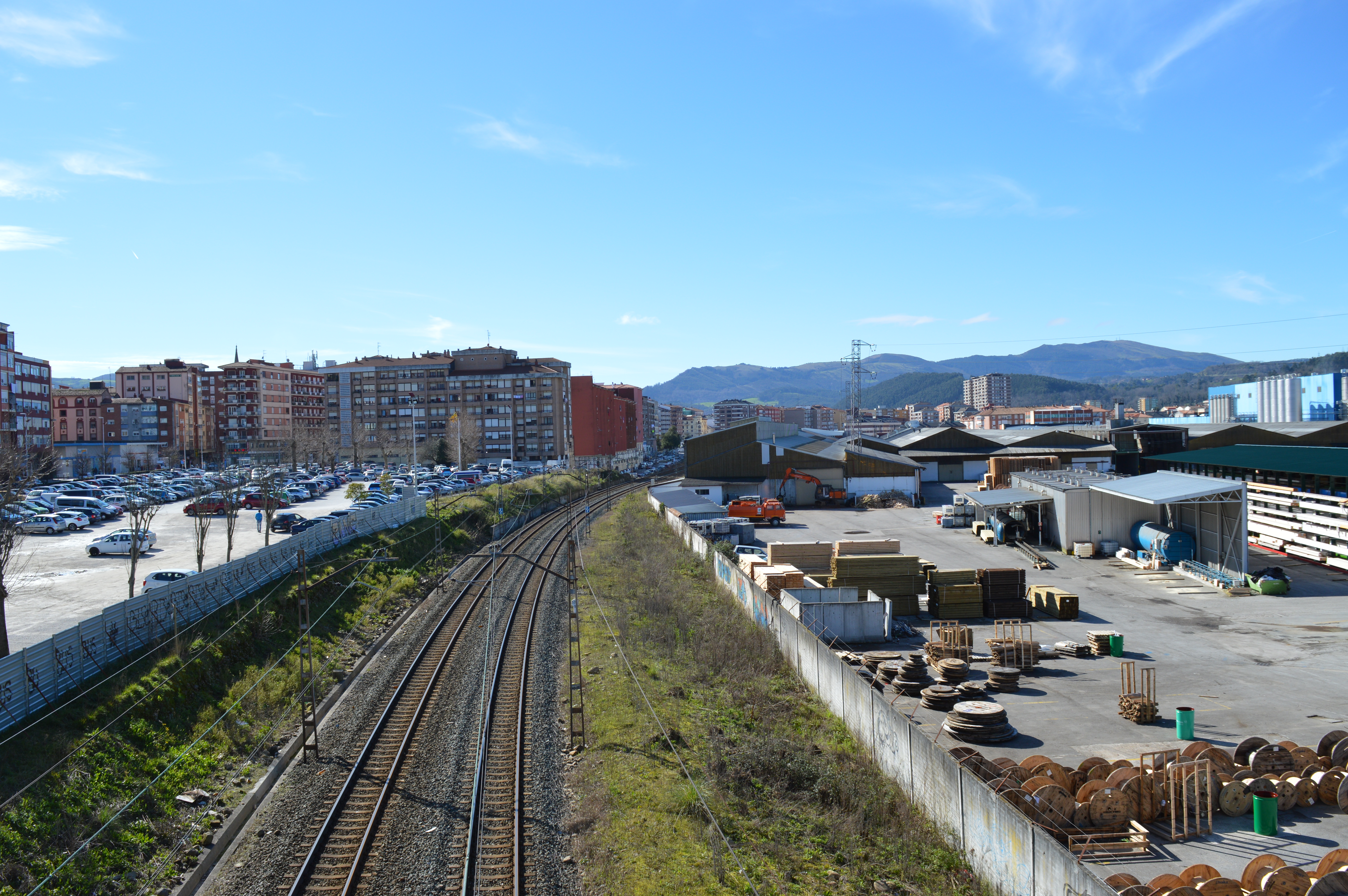
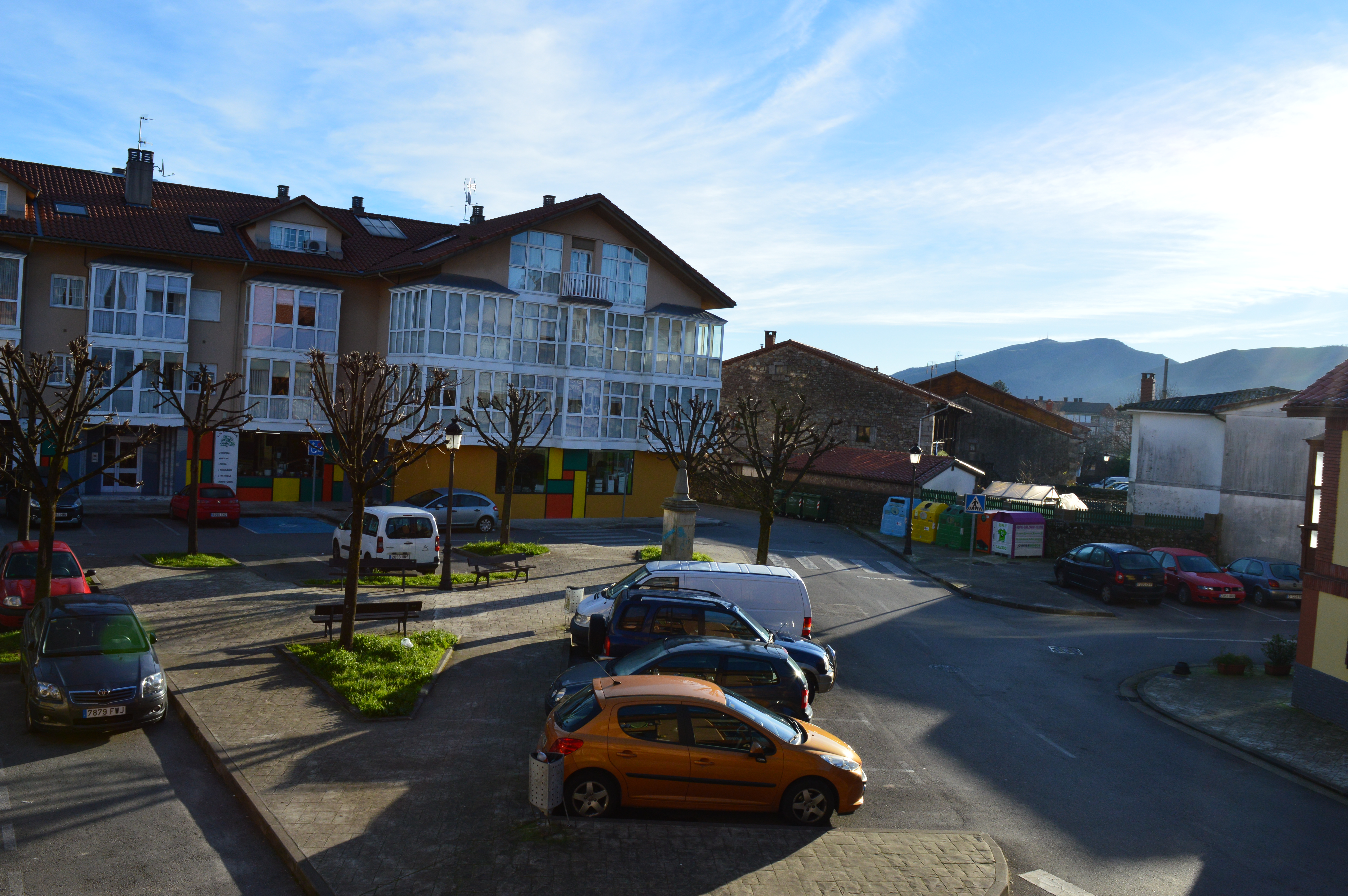
Cabezón de la Sal is a simply gorgeous mountain village sat in a cleft between the hills of Santillana and the Escudo de Cabuérniga, a mighty ridge stretching in a straight line all the way to the Asturian border. What makes it so immediately different from the south is the layout of the town: if anything, it’s more English than Spanish. Where small two-story flats hold the monopoly in the town centre, semidetached houses dominate almost everywhere else. Long gone are the snake-like rows of white houses with barred windows and marble porches; the Cantabrian norm is stone-brick dwellings with wooden roofs and quaint, upper-storey balconies. It’s charming, if a little alien to a habituated southerner like me.

DSC_0292

There are buses – apparently – but it’s the local train service that holds sway here. Quiet, comfortable and cheap at the price, Cantabria’s FEVE provides a reliable alternative to Extremadura’s LEDA – provided you arrive in town before ten to nine at night, that is.

DSC_0080

‘Let’s go to Potes,’ says Kate, ‘for a little walk.’ So off we went to Torrelavega, that city of burgeoning factories and towering flat-blocks that I passed through twice four years ago in the early days of my trans-Iberian adventure. In the sunlight, Torrelavega looks…

DSC_0089

…well, I’ll not beat about the bush. Torrelavega is not exactly Paris. If Cabezón is a more rustic version of Villafranca, Torre is the Almendralejo equivalent in Kate’s neck-o’-the-woods. But like Almendralejo, it’s got its own charms. One of them goes by the name of red velvet sponge-cake.

DSC_0087

We arrived in Torrelavega looking for the bus to Potes, but the bus station proved singularly unhelpful, and a quick browse of the internet told us that the bus we were looking for left not from the bus station, but from the Palomera office by the train station we’d just left behind. In a scene which echoed the night before (albeit in slow motion), we half-ran back to the station… but there was absolutely no sign of the bus. Or any bus. Or even a bus stop, for that matter. Unless the Potes bus is a mystical bus which flies through the air and receives its passengers from the balcony of the Palomera offices on the second floor, I declare that bus stop to be an enigma. The city of Atlantis and the fabled kingdom of Shangri-La have captivated the imagination of man for centuries. Now I shall brazenly add the Palomera bus stop to that box of unsolved mysteries.

DSC_0088

Thinking on our feet, we dabbled with the idea of catching the train into Asturias in search of the equally mysterious inland bay of Gulpiyuri, but after all of that faffing around with the Potes bus we’d just missed the only practical train to Llanes by five minutes. As though calling out from a memory, Santillana del Mar came to mind and I decided we would grab the next train back to Cabezón and strike out for the coast via the Town of Three Lies. Public transport has as its advantages, but as a species, we should never forget that it was learning to walk on our own two feet that got us where we are today. And so off we went.

DSC_0096

The strangest thing about this last-minute change of plan was that it meant retracing my steps almost pace for pace from that ridiculous adventure, now some four years ago, right down to getting off at the very station where the driving rain turned me back to the shelter of Santillana del Mar. But for a few forks in the road, I had the entire route embedded in my mind as though I’d walked it ten times over rather than once. Perhaps that’s fate. She’s been playing a long game with me.

DSC_0119

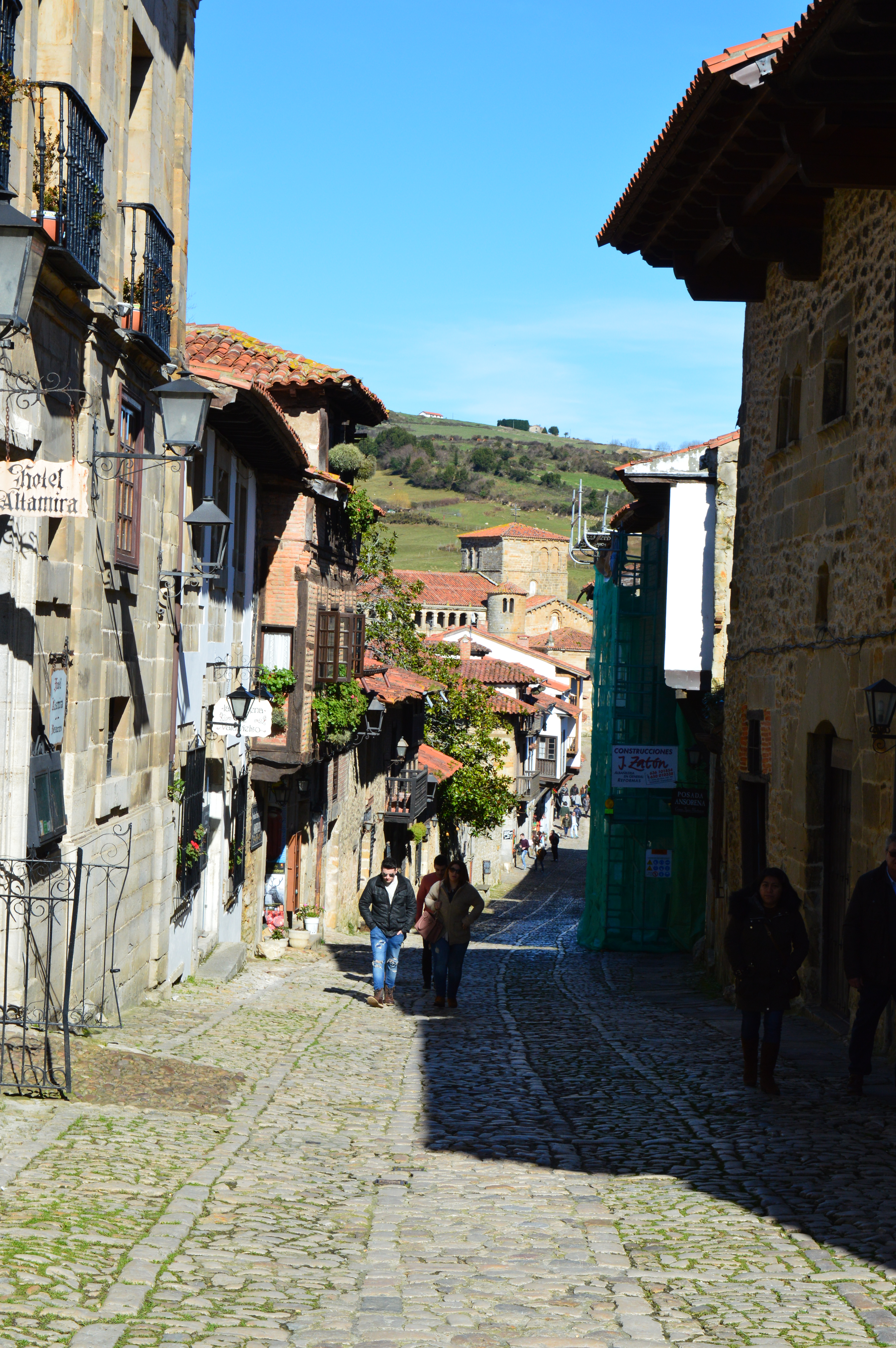
It felt decidedly weird coming down out of the hills into the cobbled streets of Santillana all over again. As Spanish villages go, Santillana has got to be amongst the very prettiest. It’s known as the town of three lies – being neither holy, flat, nor by the sea – but if that is so, then it’s a damned beautiful liar. As I so often find myself doing, I made sure to revisit all of the places I’d been before: the same church, the same quesada shop, the same Savage Culture boutique that I still don’t fully understand. I can’t explain it, but something about this town keeps pulling me back.

DSC_0130

We had a picnic lunch of peanut butter sandwiches on the steps of the Colegiata de Santa Juliana and basked in the afternoon sun. 15 degrees Celsius… not bad for Cantabria. In all the bad weather Spain’s north coast has been having of late, I must confess I think myself bloody lucky to have landed a whole twenty-four hours of glorious sunshine in the one day I had to explore the place. I could hardly have asked for better: better weather, or better countryside, or better company.

DSC_0160

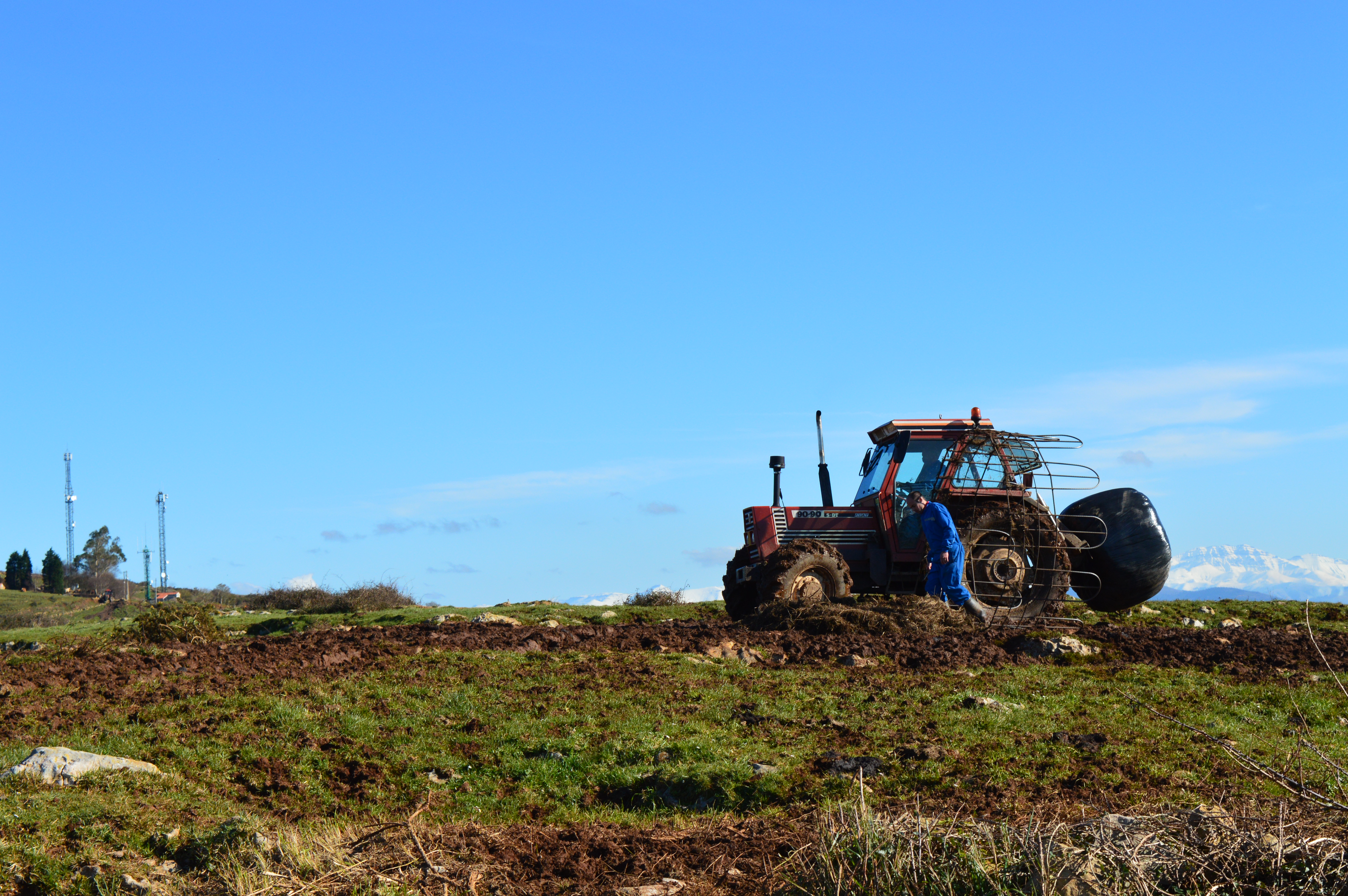
Leaving Santillana behind, we climbed steadily northwards across the rolling hills to the coast. Along the way we were misled by the Arch-Deceiver that is HERE Maps, which tried to convince us that what looked suspiciously like an overgrown stream was actually a main road, and we were caught up in a high-speed chase with a tractor, like an extremely low-budget Cantabrian version of Need for Speed. The stereotype lives: Cantabria truly is a land of green hills, of cows and of tractors.

DSC_0146

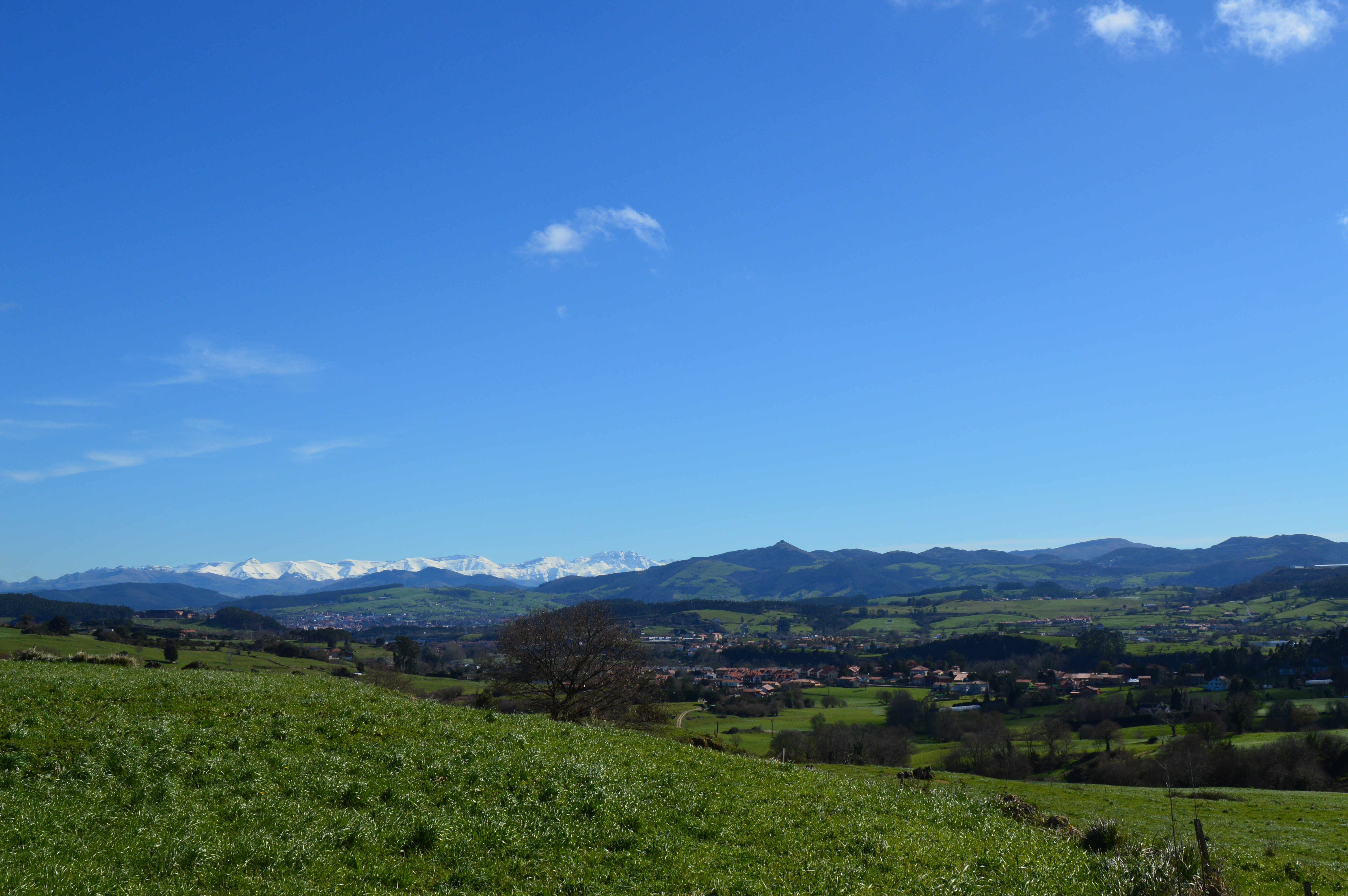
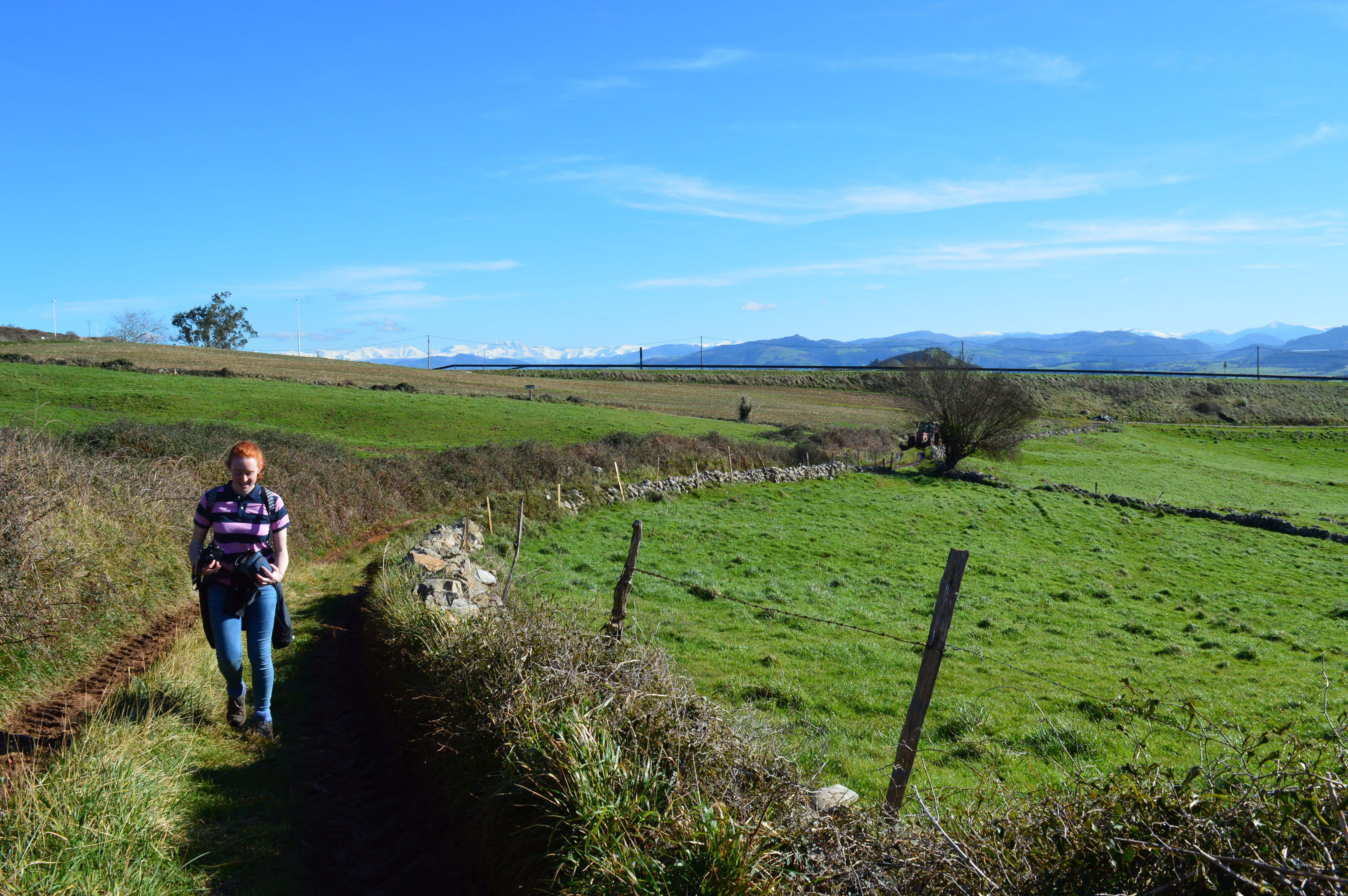
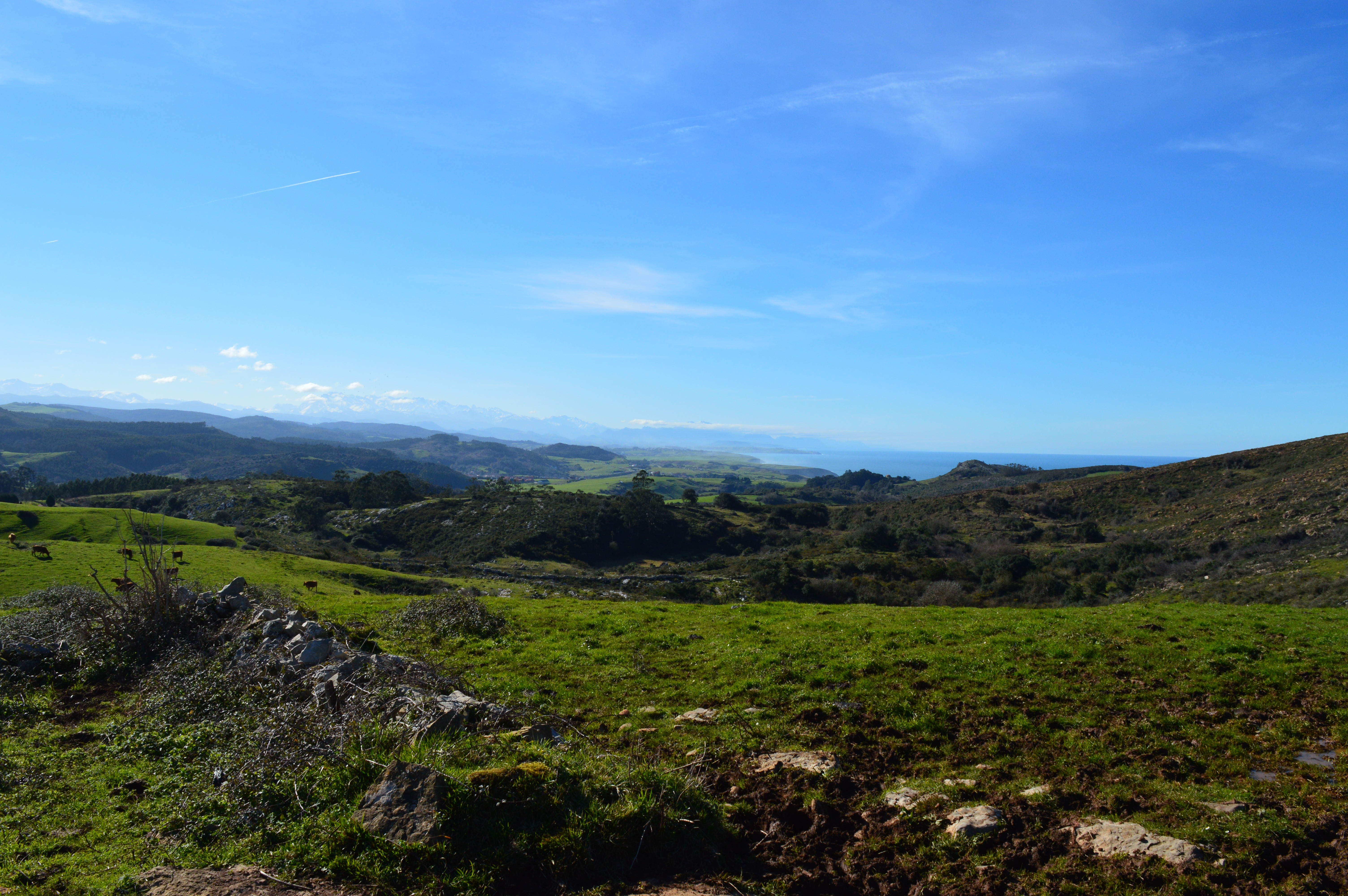
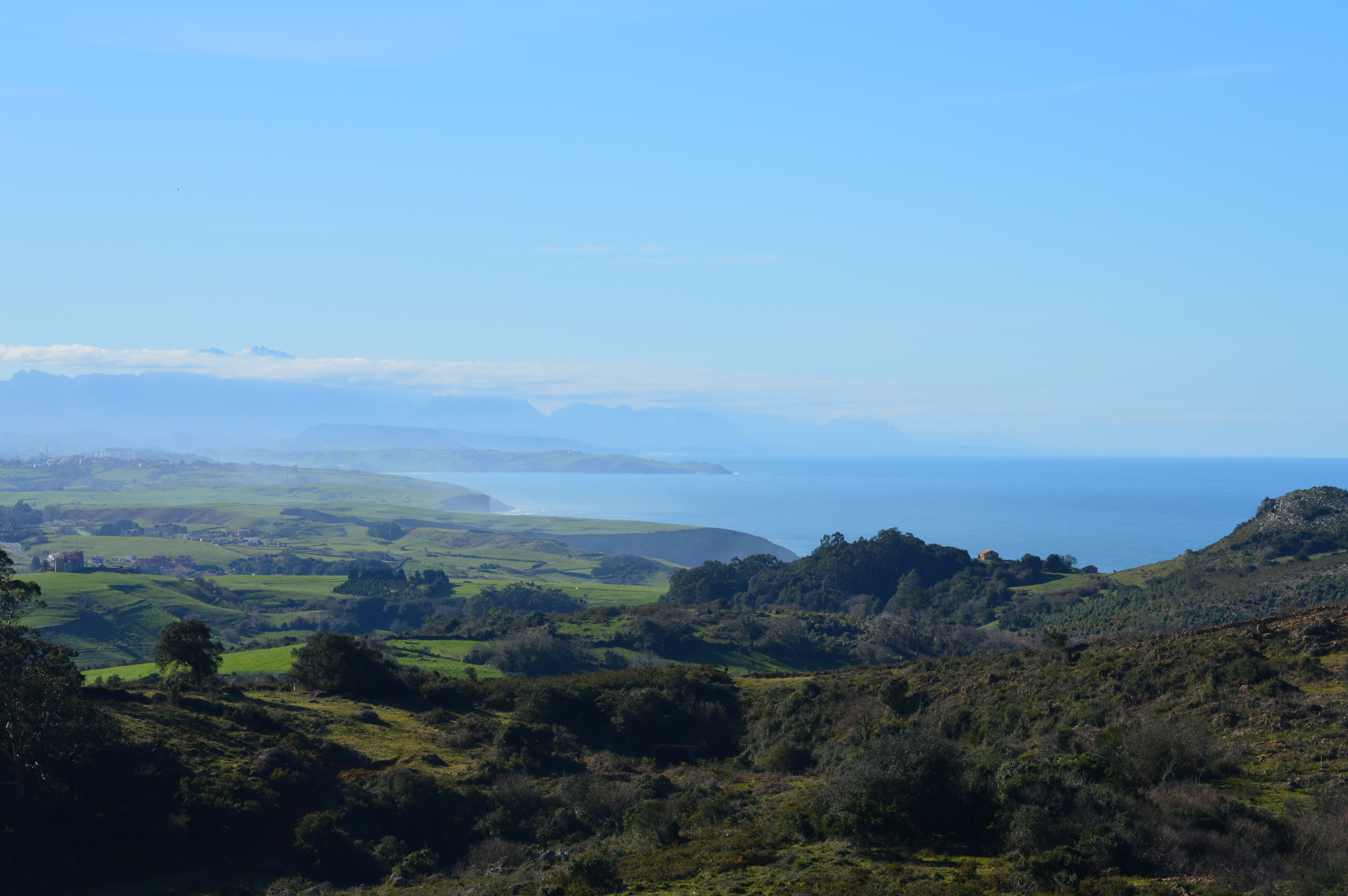
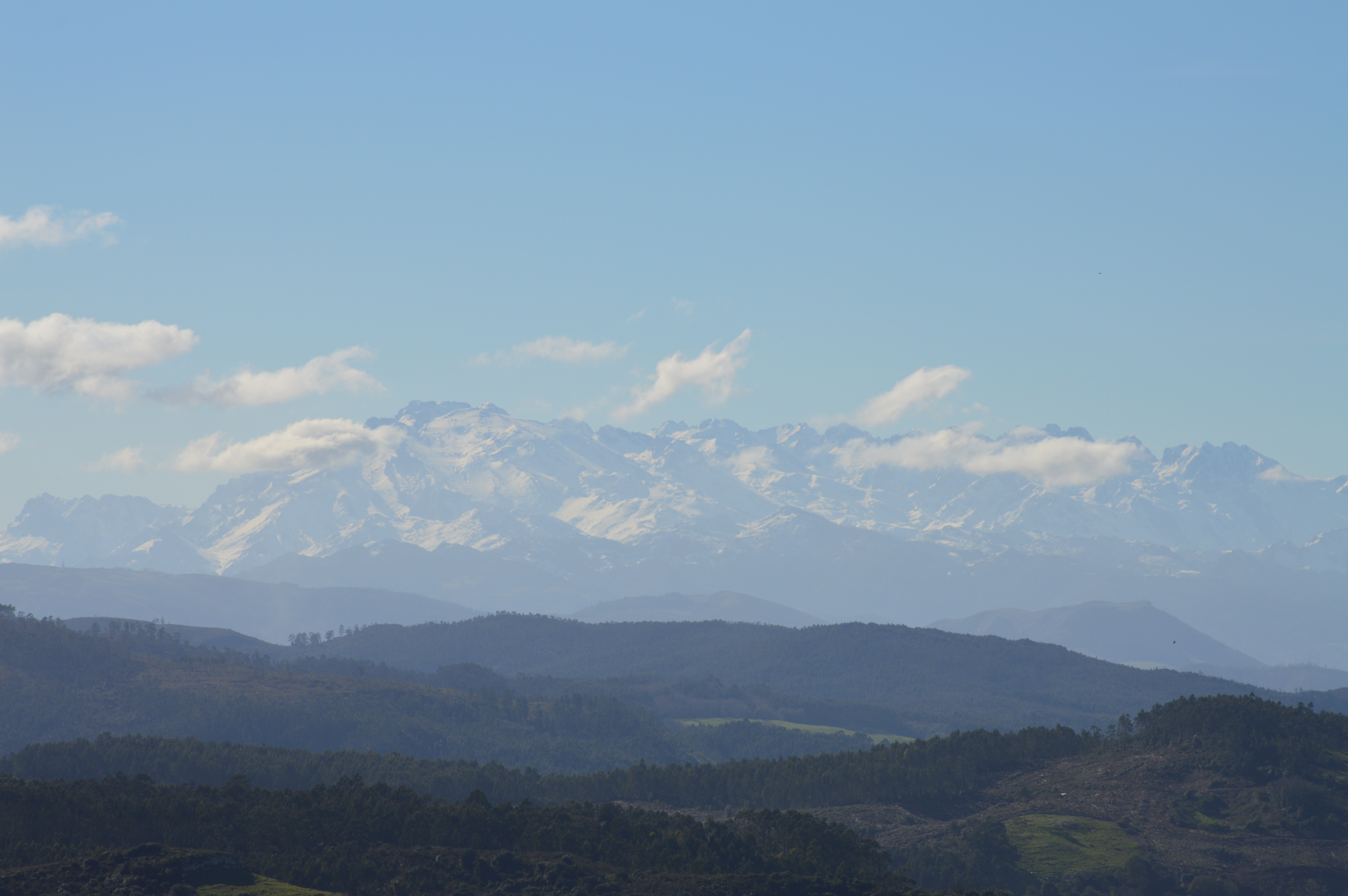
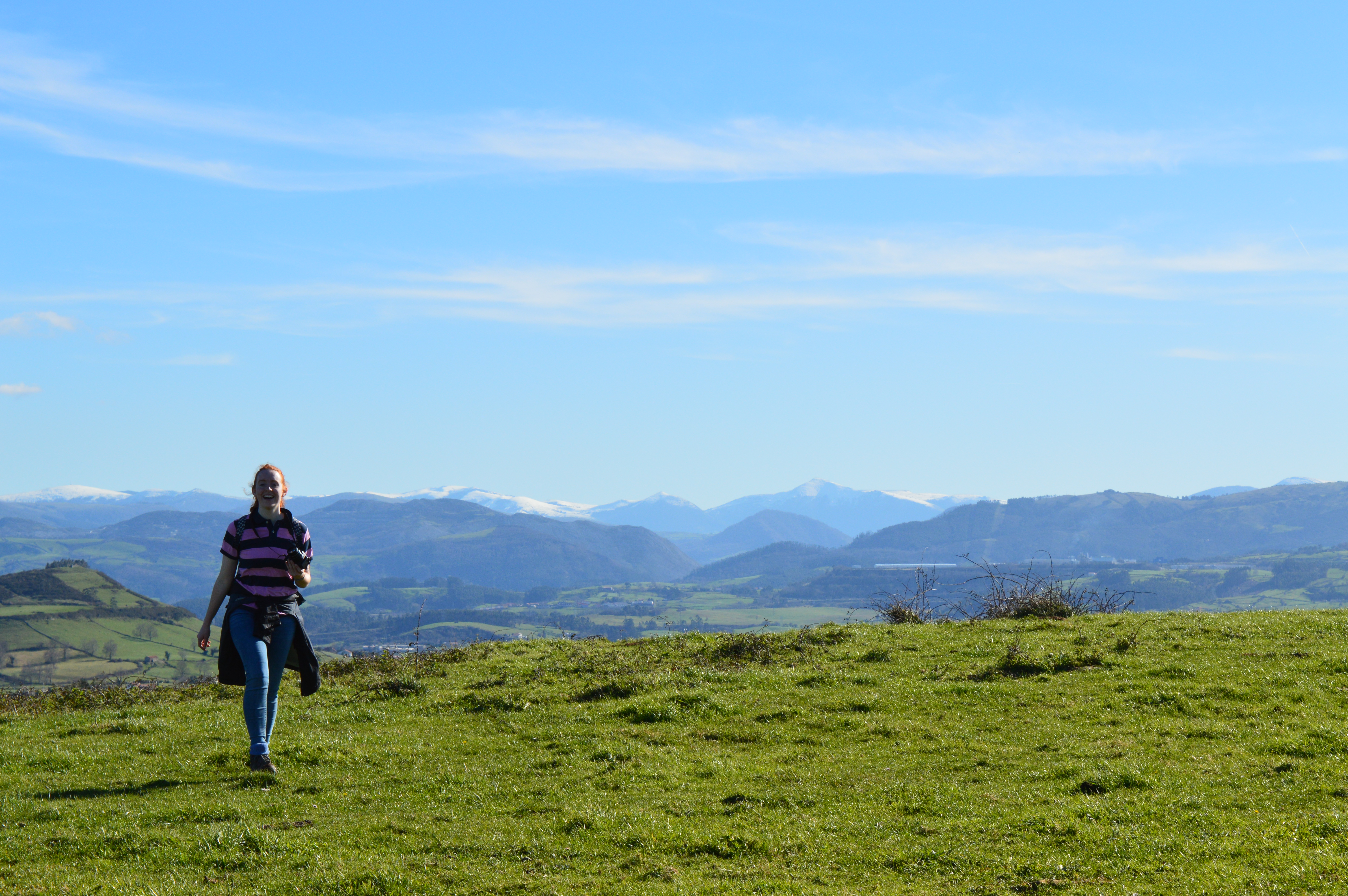
The last time I wandered these hills, the skies were iron-grey and I could only see as far as the next range of hills for the glowering rainclouds. I can’t have known it at the time, but I was seriously missing out. After abandoning the path and freelancing our way up a hill, Watership Down fashion, we were treated to what must be the most awe-inspiring landscape I’ve seen since I first stepped onto the plains of Caceres.

For once, I had the full works on me, so you can enjoy the view three times over, with the wide-angle 18mm…

DSC_0150

…and the macro 200mm…

DSC_0153

…and the telephoto 500mm.

DSC_0154

Sadly, the Nikon-compatible Sigma 500mm doesn’t come with an in-built autofocus motor, so it won’t be the powerhouse it has always been for rapid-fire avian photography, but at least I got some use out of it this weekend.

It was a beautiful view and all of that, but it was an equally beautiful dead end, so we had to climb back down the hill, cross the cow-fields and roll under a possibly electrified fence in order to get back to the road down to the sea (we didn’t check to find out – not when we were so close to our goal). After a very long and very winding road down one last hill, we made it – at last – to the sea.

DSC_0237

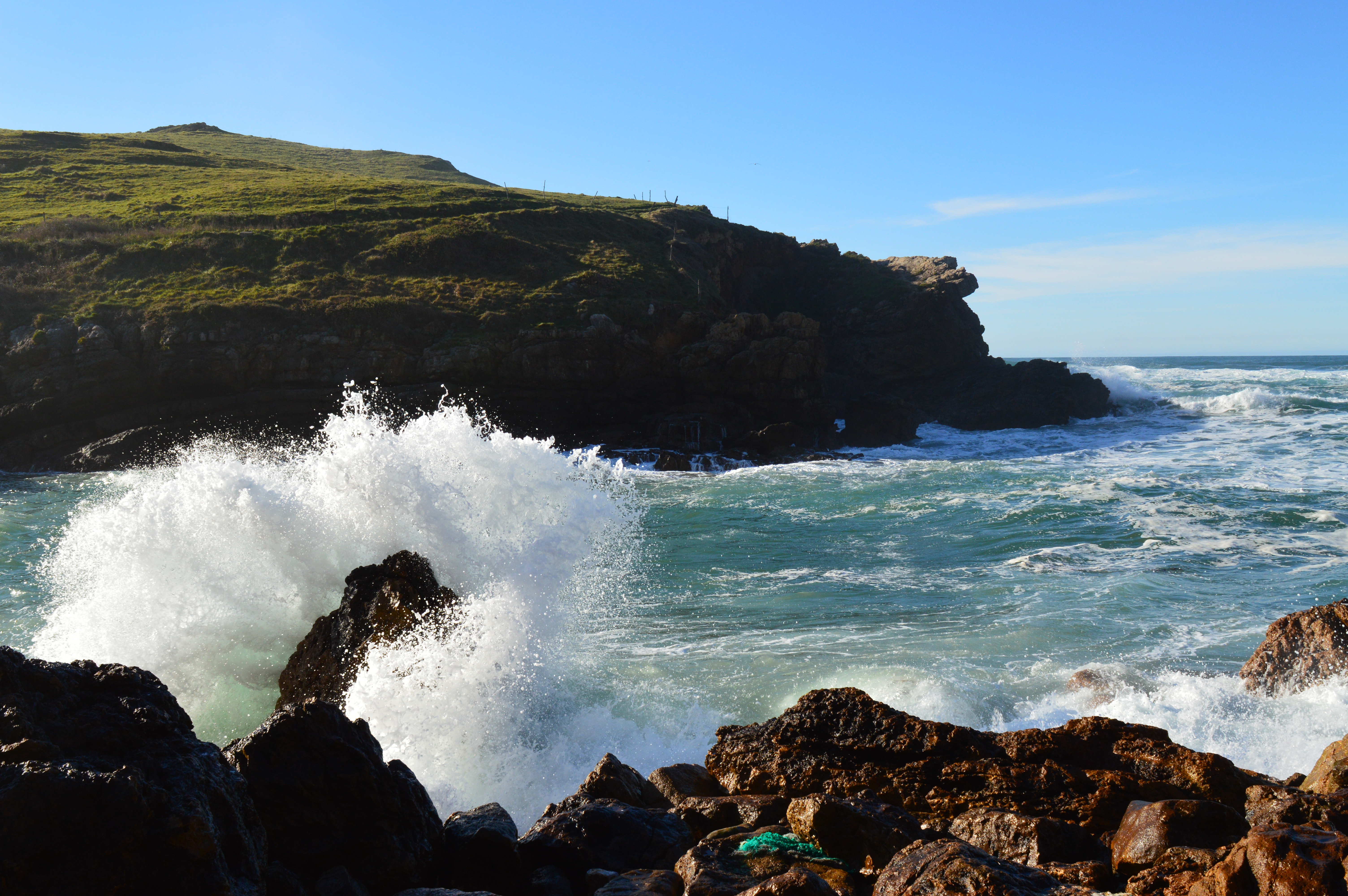
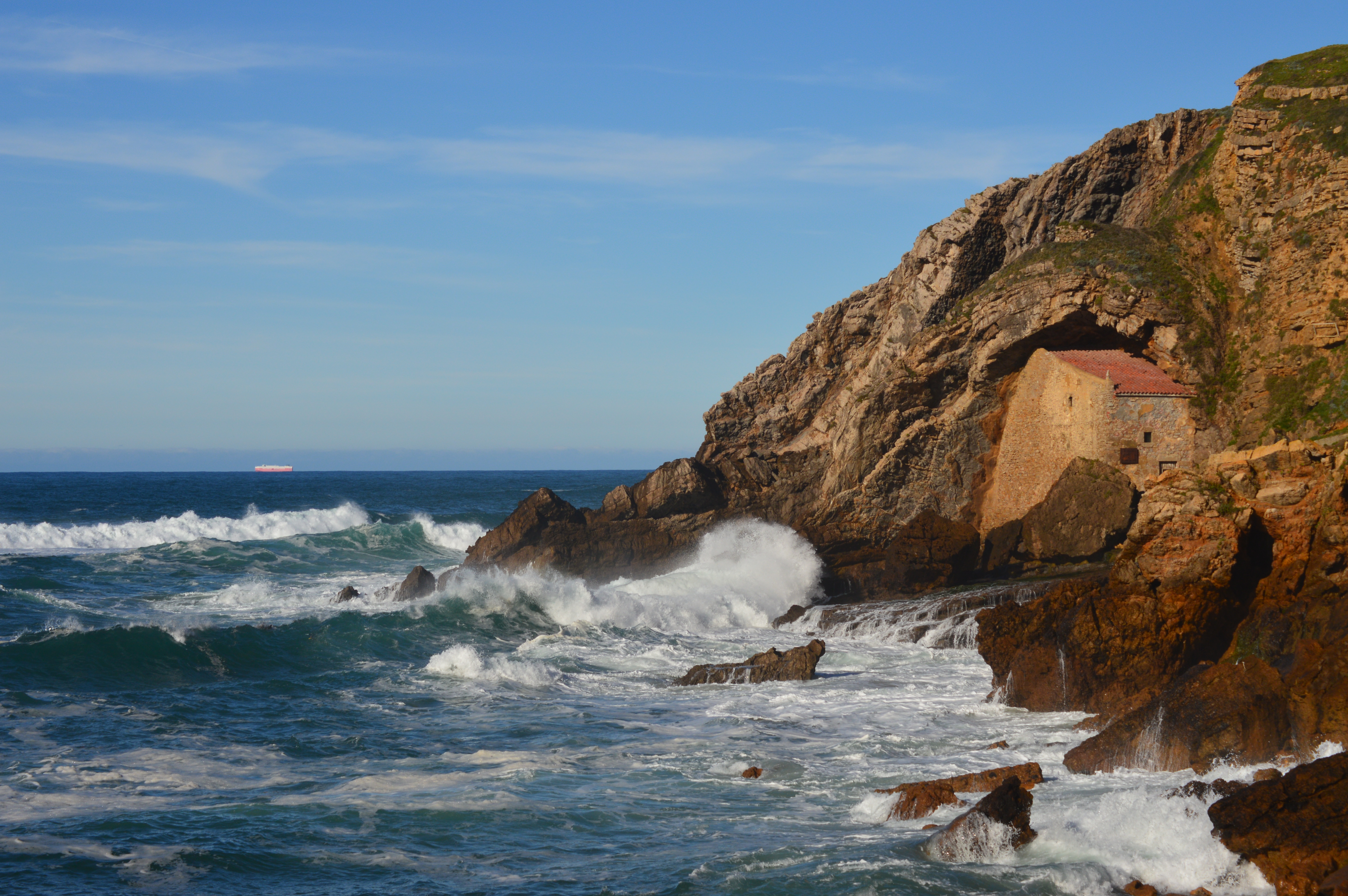
Extremadura has so much to offer, but there’s one thing it really lacks: the sea. You don’t notice until you think about it. Discounting Uganda, I’ve never lived more than an hour from the sea (much less in the UK) so Extremadura is the most inland location I’ve ever had to deal with. To see the Atlantic in all its cold fury once again was a real sight for sore eyes. The storm-force winds and murderous waves of the previous week are gone, but the waves still put on a formidable display for us.

DSC_0188

We spent about an hour by the sea, Kate and I, watching the waves pounding the shore and snacking on Cantabria’s finest delicacy, quesada pasiega. Yum yum. There’s a little ermita built into a cave in the cliffs which we didn’t get the time to visit, but I doubt it would have looked any more impressive up close than from afar. Imagine living in a place like that, with the sound of the Atlantic roaring all about you, twenty-four hours a day. The focus you would have to have – or learn to have – borders on the superhuman. Little wonder, then, that it is what it is. I wonder how an estate agent might describe it?

DSC_0201

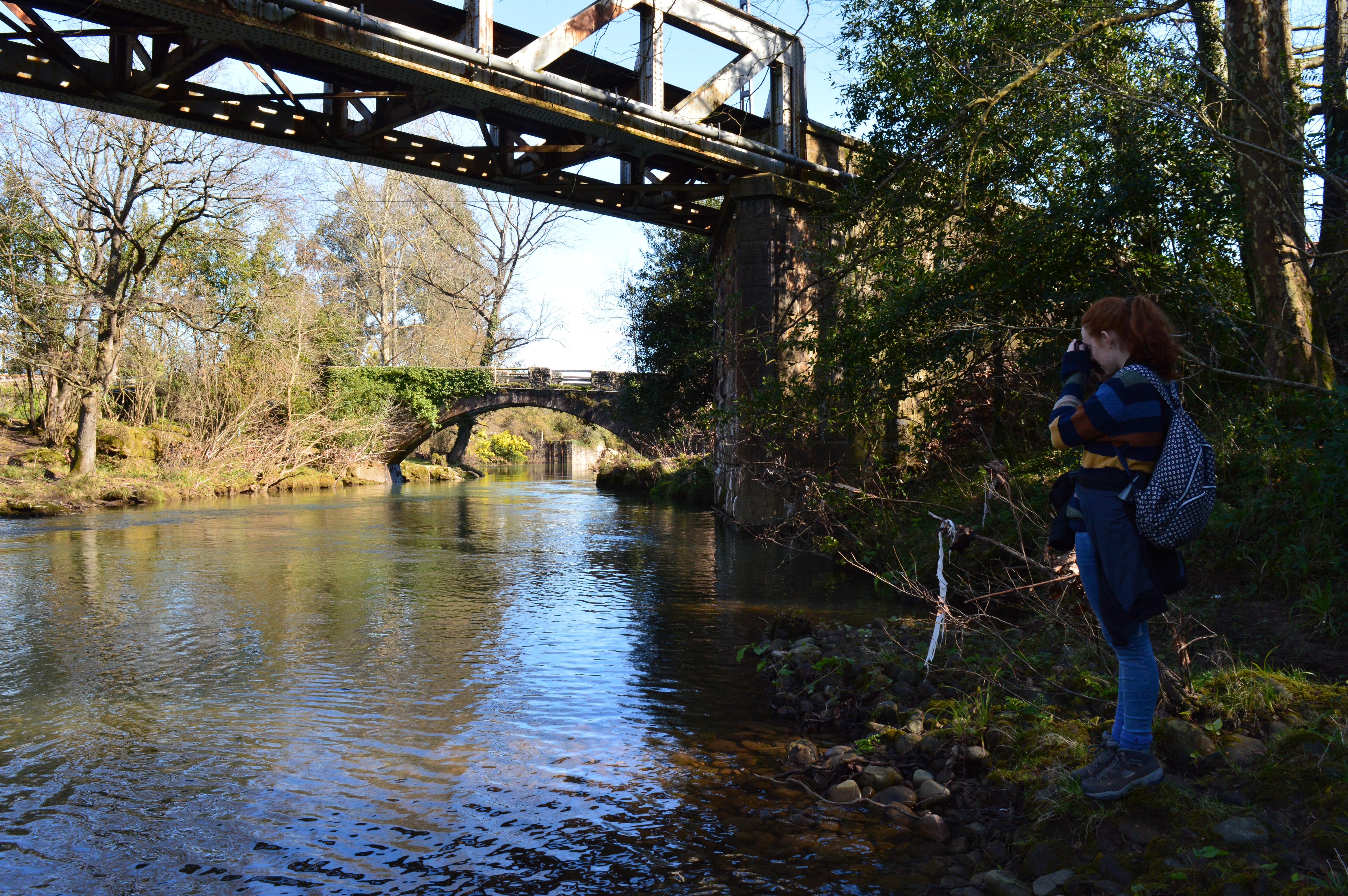
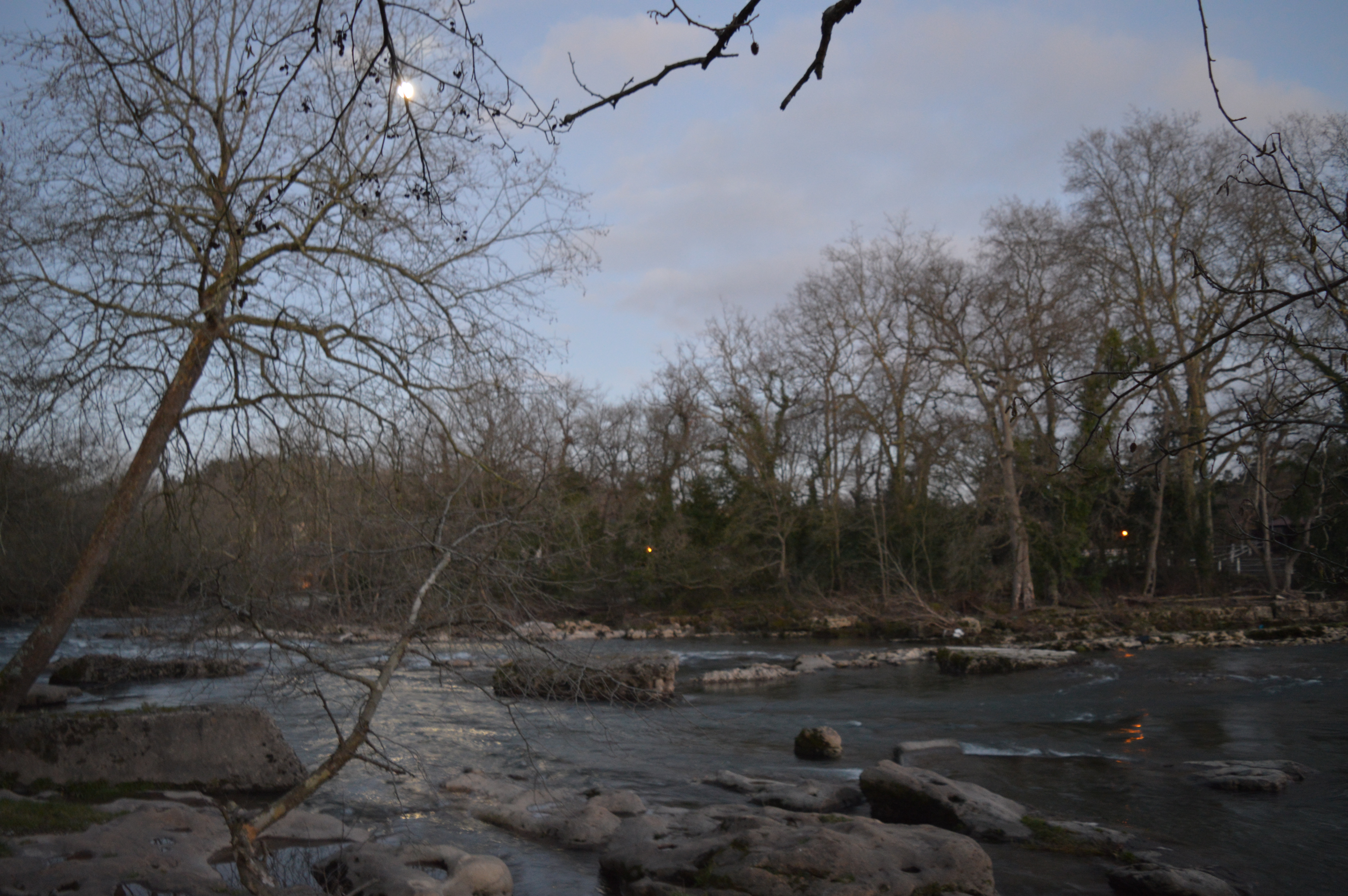
It’s getting to that time of year when the sun starts to set later, but sunset was already fast approaching as we turned back for Santillana at about six o’clock. In the gloom of the oncoming night, we finished off the quesada on the banks of the Saja river by moonlight and killed time by making for Rudagüera, the next stop along the Cabezón line… and then legging it back the way we came when it became apparent that it was a little further than we’d thought (one last flick of the claw from HERE Maps) and that we’d probably miss the next train.

DSC_0261

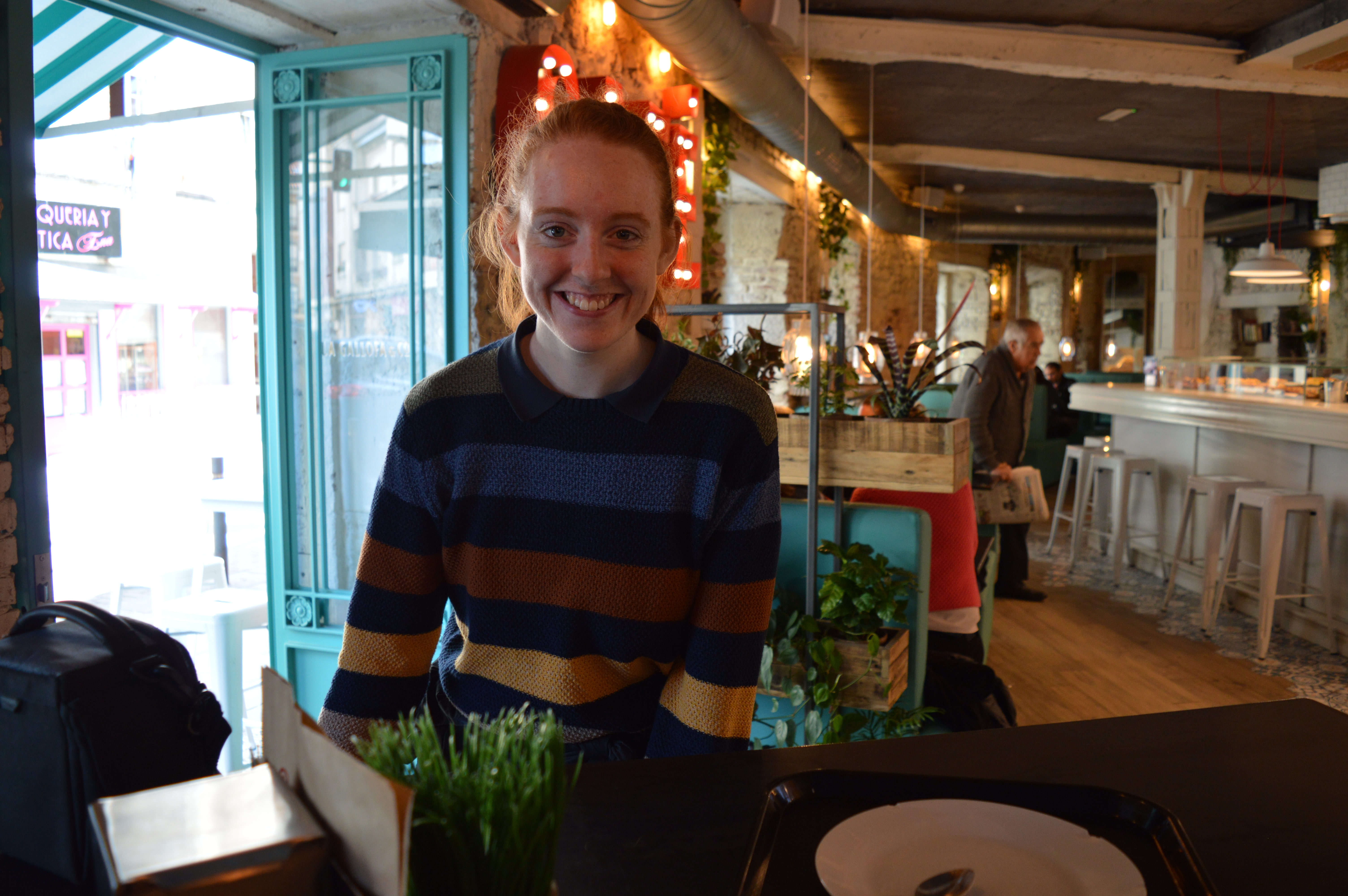
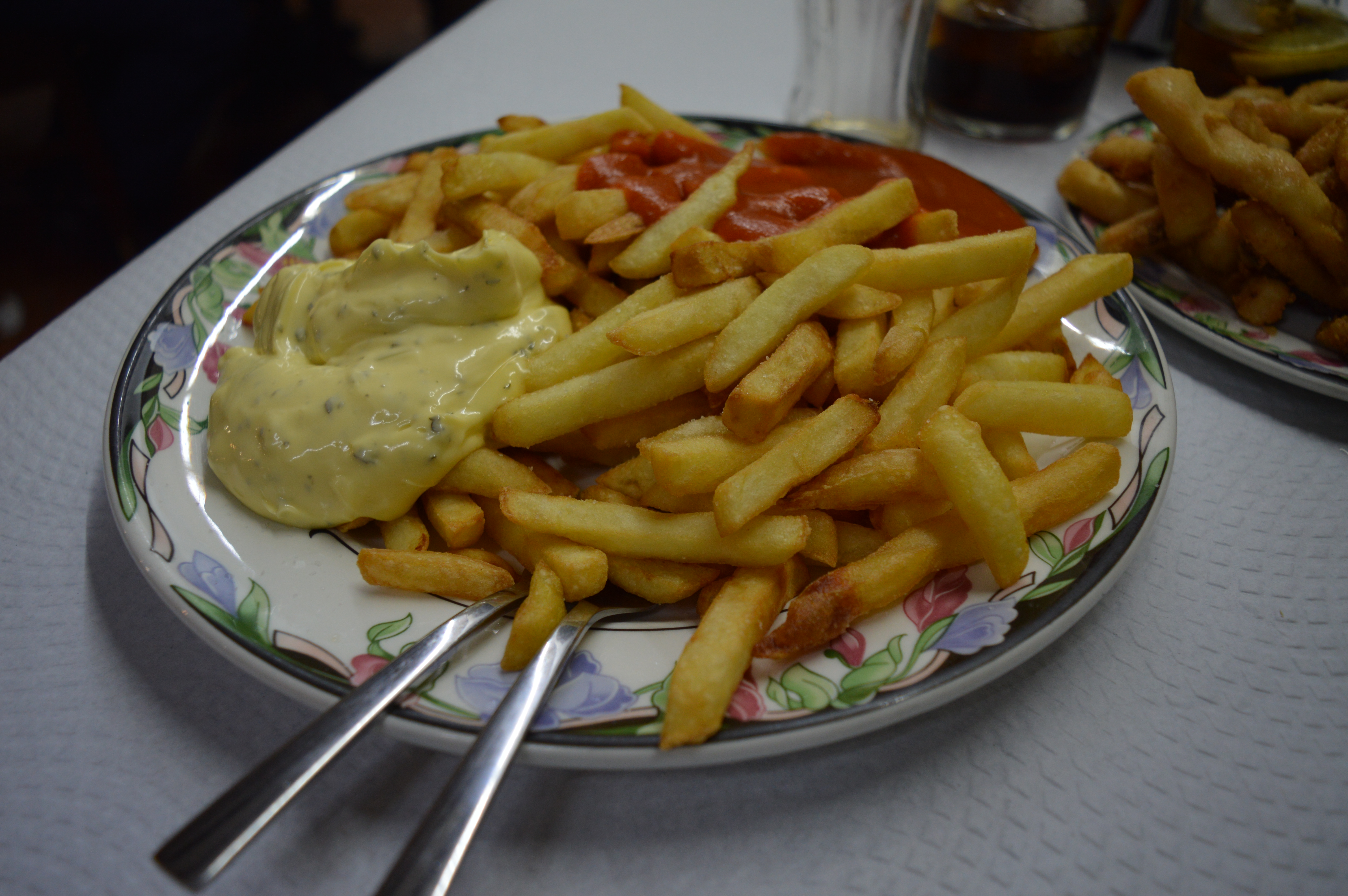
Back in Cabezón, after a drink at a local hunters’ bar, complete with mounted boar heads and numerous black-and-white stills of hunting men of old stood proudly over the carcasses of Cantabria’s once widespread brown bears, Kate took me to visit one of her favourite eateries, El Paraíso. At 2,45€, I thought a ración of patatas bravas would be enough to fill a corner after so much walking (we crammed in about thirty kilometres today, all in all), but I forgot…

DSC_0276

We’re in the north. In my experience, northerners in any country seem to have a much better idea as to what constitutes a decent portion size. Maybe it’s the climate. Who knows? In my earlier traveling days, food was the last thing I was prepared to fork out for. How things have changed since then! Coming back from that Spain trek dangerously underweight four years ago has left a profound mark, and these days food is the one luxury I’m prepared to spend on, and spend well. A long day’s walking deserves a long night’s eating, and I think I did pretty well on both fronts.

So, all in all, it was a very successful trip, albeit a very brief one! I was lucky enough to get a BlaBlaCar on the way back that didn’t mess me around. Better yet, he was no more and no less than a gaditano. Oh, to hear that accent again after twenty-four hours and more of people pronouncing their s’s…! You have no idea how happy it made me.

DSC_0323

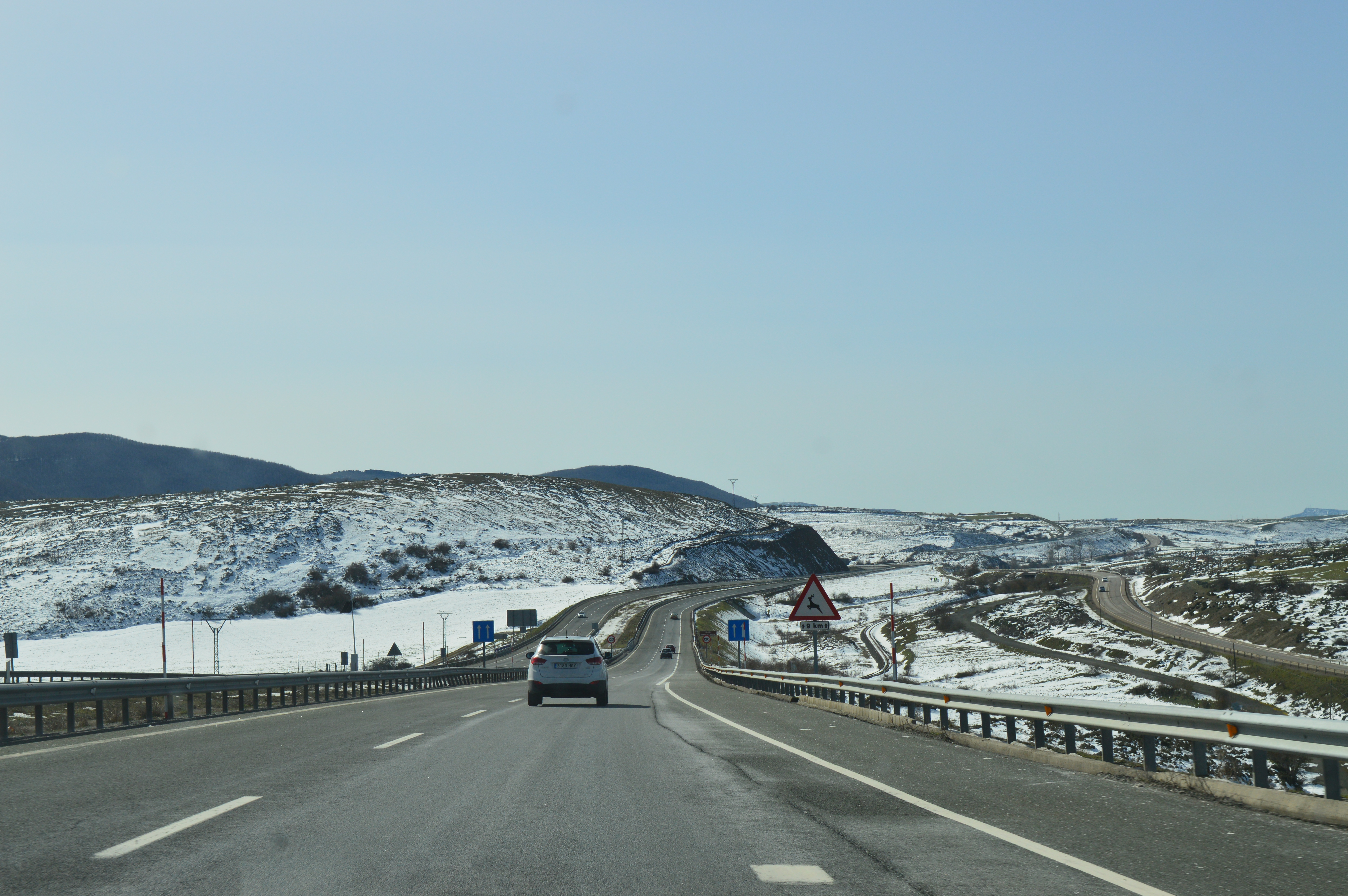
Cabezón de la Sal to Villafranca is still a bloody long way to go, but where the bus took all of nine hours, Rafa made it for me in six. In those six hours, taking in the windswept, snowy heights of Reinosa, I was treated to the finest conversation BlaBla can offer, up to and including:

  • Franco’s suppression of the education system
  • The legacy of al-Andalus
  • An anthropological history of Cadiz
  • The true nature of corruption in Spain
  • The Spanish Civil War
  • Gibraltan Spanglish
  • The rationality of England’s outside stance on the EU
  • Podemos and the total absence of a government at the moment
  • Why and how dubbing came to be one of Spain’s biggest businesses (and blights)
  • Piracy in the Old Mediterranean
  • The Growth of the Spanish film industry

I could go on. There were at least five or six hours of it. And all of it in Spanish, and in the very finest gaditano. Talk about a workout… and politics! The eighteen year-old me would never have believed a word of it.

Needless to say, my faith in BlaBlaCar is restored and I’ll be bound for Cadiz proper at some point to make good on that drink I’ve been offered. If I am to live up to the title of ‘Él que va conociendo al mundo’ that I’ve been given, BlaBlaCar is a damned good way of going about it.

DSC_0164

But last of all, I’d like to air high-five my good friend Kate for putting me up (and putting up with me) for two nights and a day in Cantabria. Yours truly is not the most pleasant company in a city, but in the countryside where he belongs, he’s just as insufferable, if only on the other side of the positive/negative spectrum. Kate’s seen me at my lowest in Amman and probably at my highest – quite literally – in the life-giving paradise that is Cantabria. Thank you, Kate, and I hope to return the favour when you’re down in the south! The adventure never ends. Not really. Not ever. BB x

PS. You can read about her side of things here. It’s a lot more tongue-in-cheek than mine.