Albergue de Peregrinos de Arrés. 13.48.
I bid Mariano adiós at around 5.45 this morning and left Jaca just all the young folks were finding their way home after an enjoyable Friday night on the town. Far away to the south, a summer thunderstorm lit up the sky every four or five minutes, and by counting the seconds between flashes, I was able to catch one of the strikes with my camera.
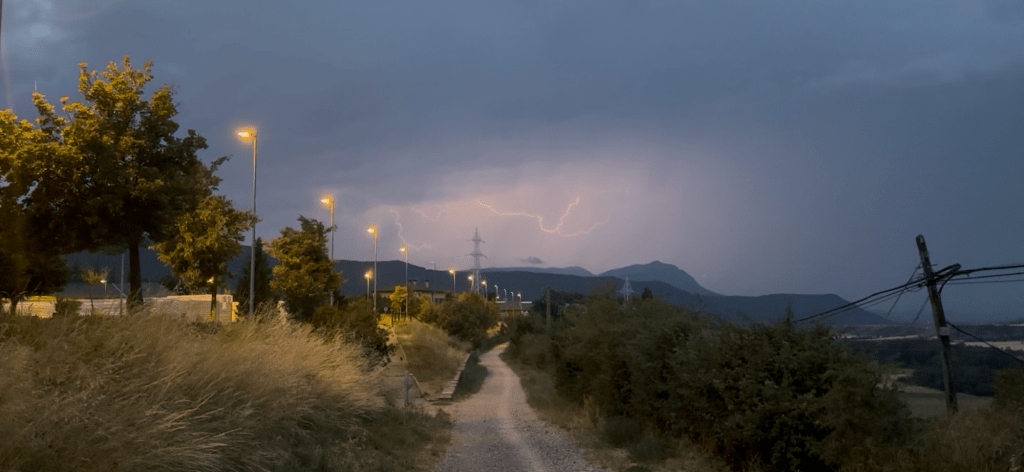
With Jaca behind me, I am very conscious I am headed into a world of great distances and tiny villages, so I did double-check to make sure I had enough cash to last at least three days – the time it will take to get to the next town with a functioning ATM.
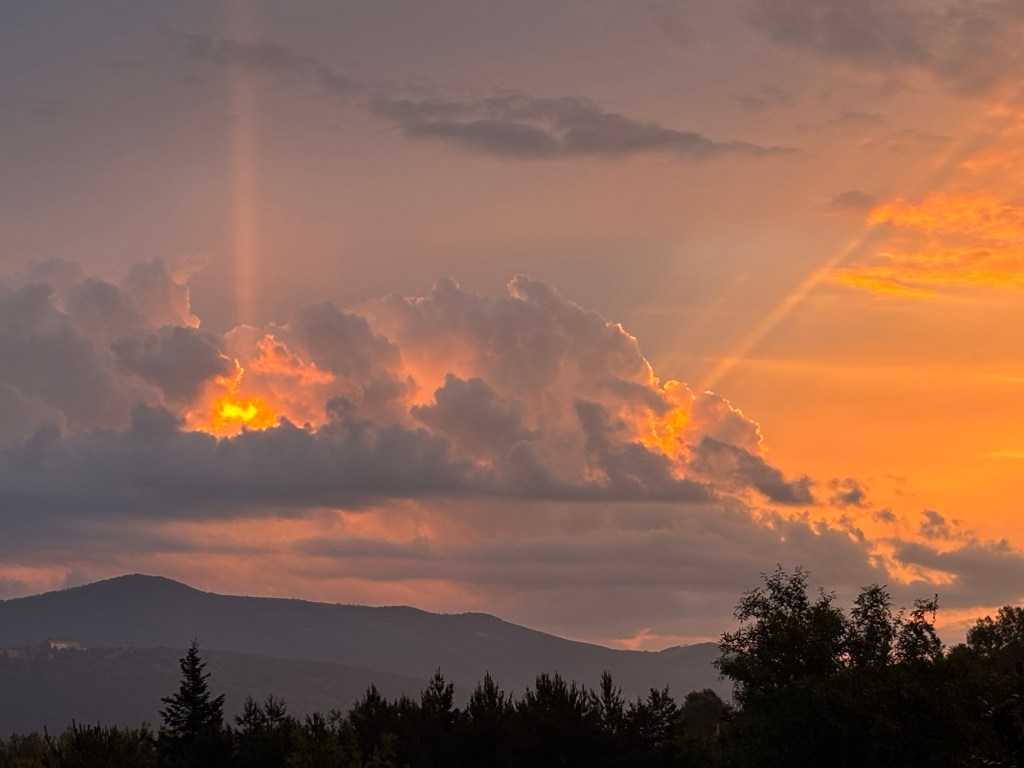
With the thunderclouds rumbling away in the distance, I had to keep turning back to watch the sunrise, which was singularly spectacular this morning. The sky was a shade of pastel pink normally reserved for Renaissance paintings, and the clouds building up above the mountains could only hold back the sunburst for so long. When it came, it pierced two gaping holes in the clouds, like gleaming eyes, before ripping an almighty gash right through the centre and sending a hundred golden rays into the morning sky.
I had a choice to make today – to press on to Arrés or take a lengthy detour via the Monastery of San Juan de la Peña – but in the end it was the weather that made my mind. A gentle summer rain began to fall shortly after sunrise – not the heavy, sheet rain that makes any outdoor activity miserable, but a light, warm, refreshing rain. The kind that provides relief after a long morning on the road – but makes cross-country hikes hard and soggy work. Rerouting to San Juan de la Peña turns an already reasonable itinerary (24.6km) into a trek (38.4km), and after my ascent and descent of the Pyrenees in one go two days ago, I thought it wiser to forgo the monastery this time – after all, these feet have to take me all the way to Santiago. I have to be careful!
The Camino from Jaca mostly follows the road and the river, but it does provide several forested cross-country stretches that offer some relief. On one of these, in the hills south of Ascara, I stopped for a breather and there I found a most remarkable thing: a symbol of Santiago, a shell, but ancient. A fossil from an ancient sea, perhaps ten million years old or more, just sitting at the side of the Camino, waiting to be found.
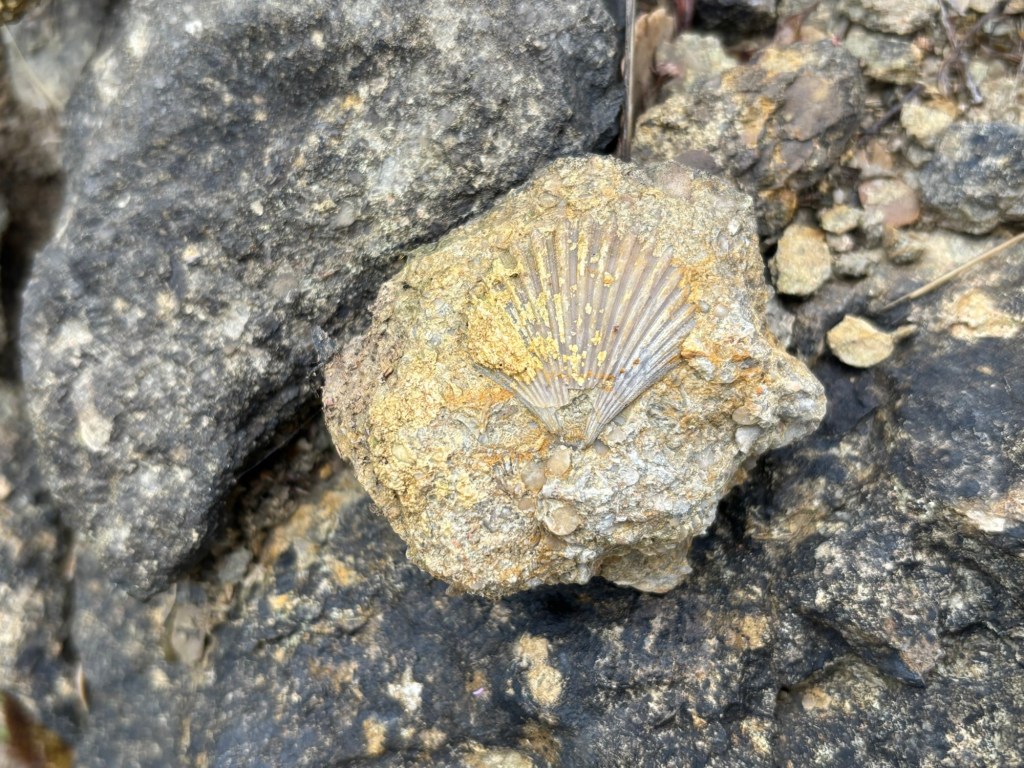
I’ve always wanted to come to Aragón for its fossil beds. Teruel, Aragón’s southernmost province, is believed to have the highest concentration of fossils per square metre in Europe, and there’s even a sauropod named for the region (Aragosaurus). There are some incredible relics from the ancient world to be found in this vast region, including a large number of well-preserved dinosaur footprints at El Castellar and Galve. I wasn’t expecting to have any luck with dinosaurs on the Camino, as the fossil beds themselves are far from the pilgrim road and pretty hard to reach without a car, so I can’t believe my luck in finding a Miocene scallop shell – and in such good condition!
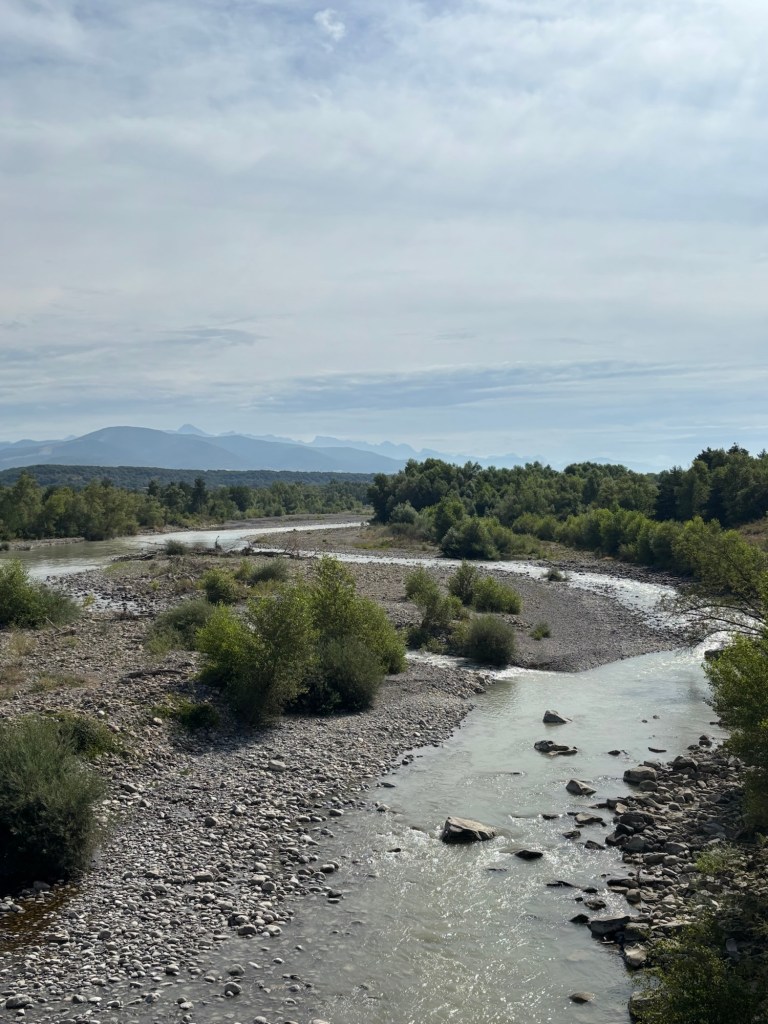
Today’s hike was a pretty solitary one. That’s not to say I’ve met many pilgrims on the road – today I saw one, and that’s one more than the last four days – but the distances between the towns today felt immense. That’s fairly typical of the Spanish interior, and Aragón is no exception. What makes this part of Spain so striking is its singular orography: so many of the hills in the Río Aragón basin are perfectly flat on top, forming an alien landscape that reaches its peak in the Bardenas Reales to the southwest.
Naturally, in this land of shifting frontiers, many of these mesas have a hilltop town or castle sitting neatly on top. I can see at least one from my stop for tonight in the hill town of Arrés: Canal de Berdún, away to the north. If Arrés had proved to be a ghost town, I would have tried my luck there.
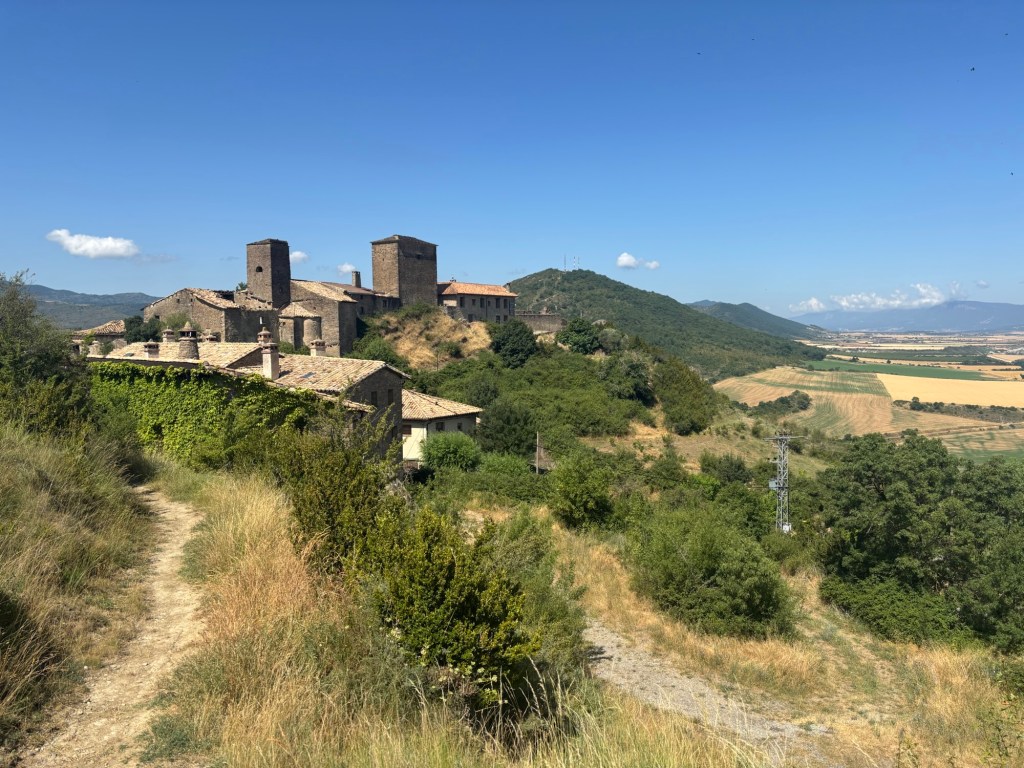
Fortunately, it isn’t. Arrés is little more than a hamlet tucked away in a cleft of the long wooded sierra that runs the length of the Río Aragón, with some fifty permanent residents or less to its name, but don’t let its silence deceive you (even on a Saturday afternoon when everything seems to have ground to a halt). The municipal albergue is fully operational and perfectly equipped, allowing for a stay in possibly one of the most beautiful corners of the Camino Aragonés.
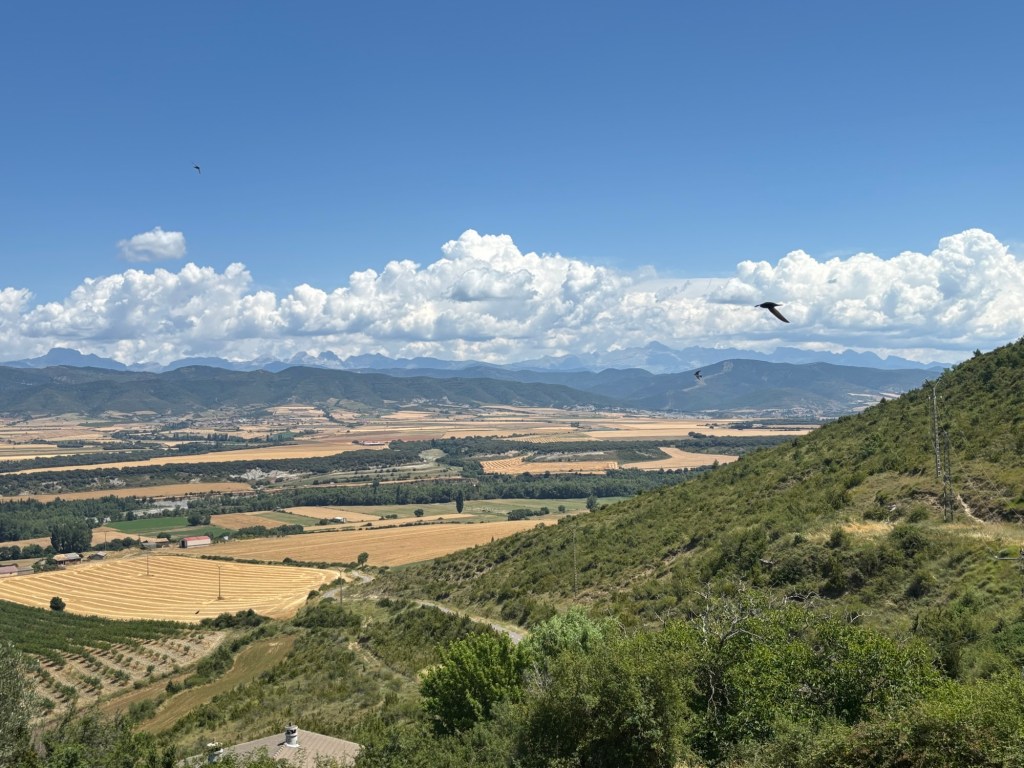
I’ve done my washing by hand, as usual, and it’s hanging out to dry. In this heat, it already will be within another ten minutes or so.
To end the day, the French hospitaleras, Lulu and Nicole, gave us a tour of the village, showed us the sunset from the highest point (which was spectacular) and cooked up a wonderful dinner which we shared between the six of us (including two Aragonese bicigrinos who showed up five minutes before dinner).
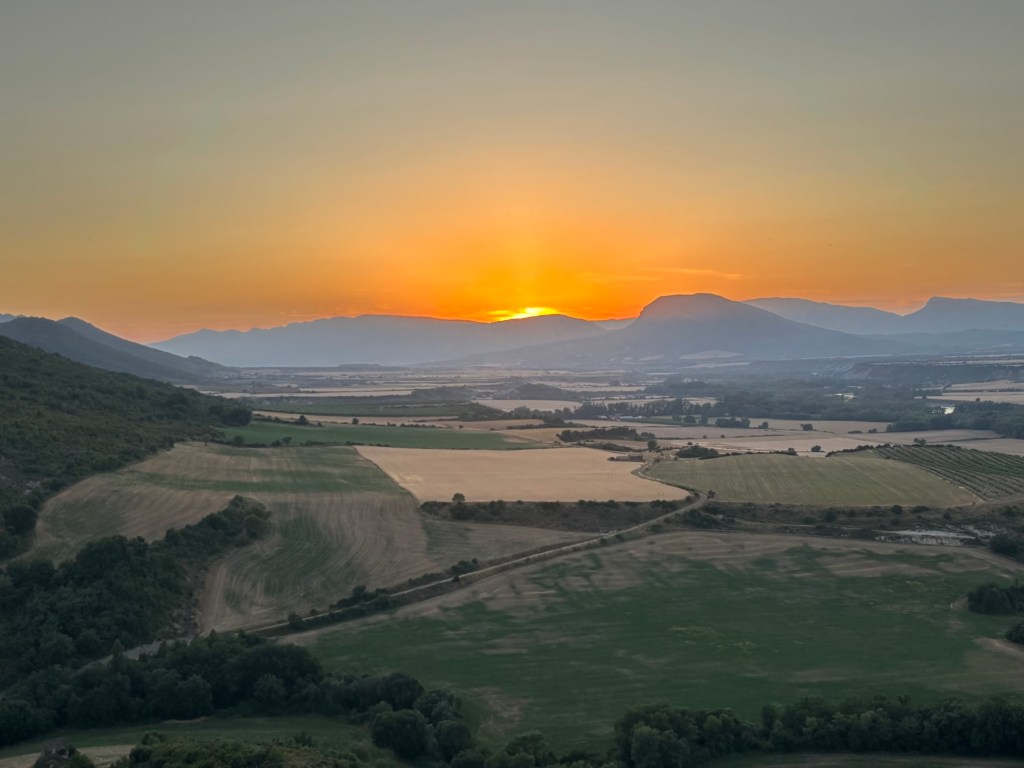
I’m just penning the last details now, drinking a chamomile tea, and listening to the night sounds of crickets, a distant dog barking and, somewhere in the valley below, the ceaseless extraterrestrial churring of a nightjar. It’s blissfully quiet here. I’m looking forward to the sociable side of the Camino Francés, but I’m so glad I came this way. It’s been spectacular. BB x
 The Book of Barnabas