With Chile now a very real possibility this summer, it’s time to bury the heartbreak hatchet with the Americas and accept the fact that I’m ridiculously excited about crossing the Atlantic again. Somehow, between the red hair and the po’ boys, I missed out on the opportunity of a lifetime to linger in the New World and enjoy all the sights and sounds of a place I’d never seen before. Instead, I beat a hasty retreat home to nurse my wounded pride. This time I have my priorities straight: I’m going out there for me.
There is so much to look forward to this year: from a brief pitstop in Madrid and Colombia’s El Dorado Airport to my first ever encounter with the Pacific Ocean on the grey shores of tearless Lima; the guano colonies of Paracas and the altiplano around Arequipe; the cloud forests of the Sacred Valley and the pristine jungles of the Amazon; and then, after a brief return to reality, the snow-capped mountains of Santiago de Chile, the starlit expanse of the Atacama Desert and the desolate shores of Tierra del Fuego; and at the end of it all, a wedding in Athens and the quiet of Lake Kerkini. If the world is going to hell in a handcart, I’m going to see it all before it’s gone.
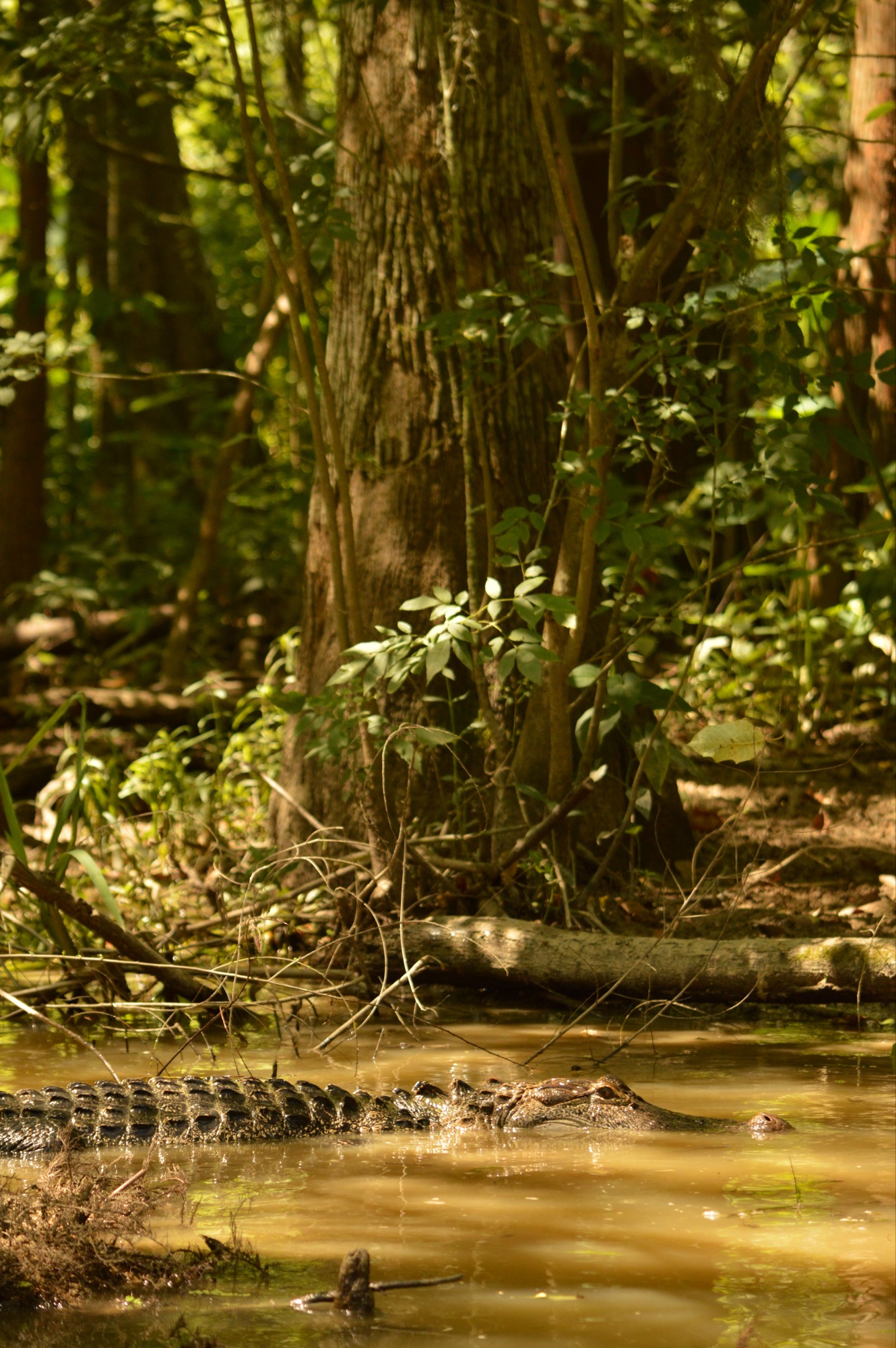
My only real wild encounters during my last trip to the Americas – if you don’t count a brief glimpse of a bald eagle from the train – were in the Louisiana bayou, where I chartered a boat and captain to take me up the Pearl River of Slidell’s Honey Island Swamp (which you can read about here). During my six days in the States, I saw only a handful of American birds, and most of them were on my Bayou side-quest: cardinals, chickadees and blue jays around the visitor centre (commonplace to most Americans but brand new to me), wood ducks and whistling ducks in the forest and spoonbills and anhingas along the river. The alligators, on the other hand, were everywhere. You could hardly miss them. I also saw a family of scruffy-looking racoons, rounding out the American classic collection. Short of a white-tailed deer or two, I think I ticked off most of the North American beginner’s collection.
But South America… now, that will be a different ball game entirely.
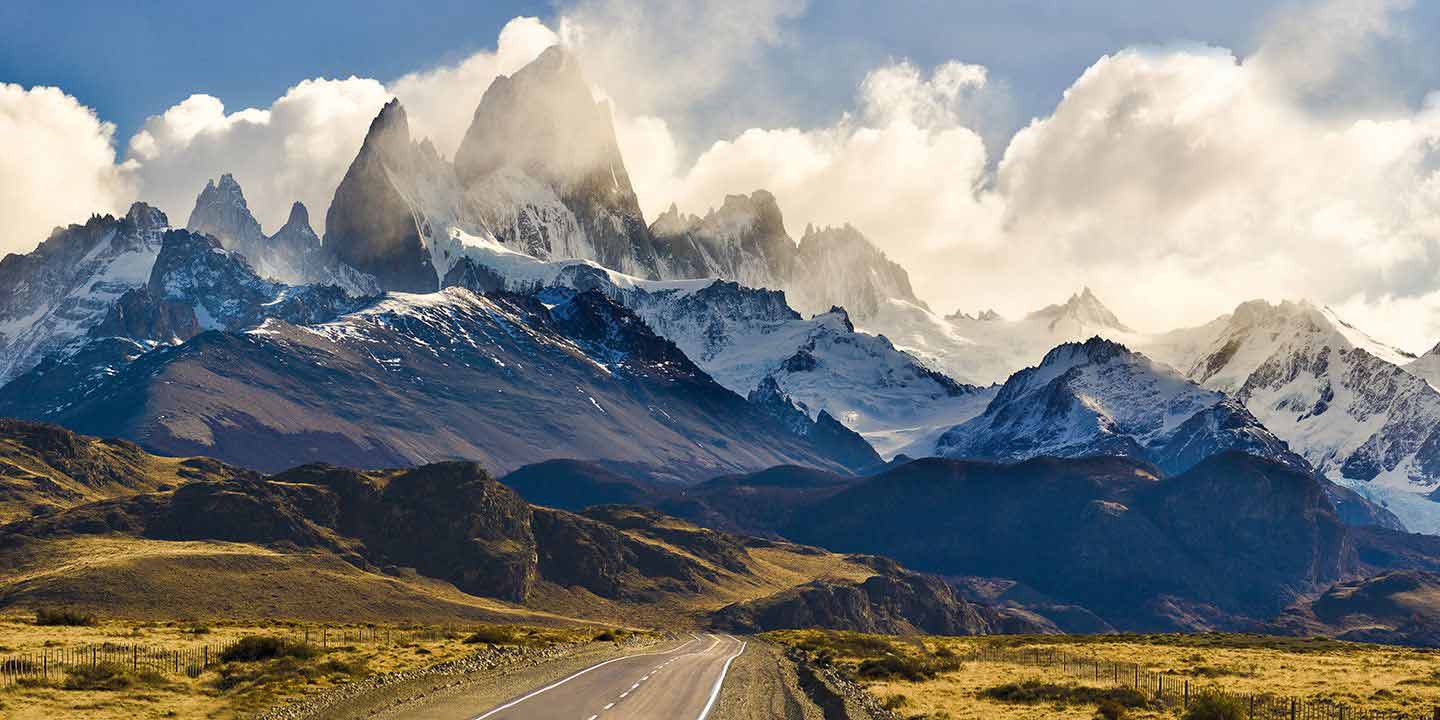
I included Patagonia on my wish list years ago, but I never thought I’d actually end up going there someday. Now that it’s real, I can’t shake it from my head. There are so many things I want to see and do, and I haven’t even begun to learn them all properly.
So I thought I’d write a list – nothing obsessive, mind, just something to look back on when I return. My itinerary for Peru is nearly finished, and my plans for Chile will have to wait until I have a clearer idea of what lies ahead (and what I will actually be doing out there). For now, at least, I can indulge in a little harmless wish-listing – starting with the essentials…
Andean Condor– the only one that I’m really pinning my hopes on (my itinerary will accommodate multiple attempts)
Black, Turkey or King Vultures – in case it wasn’t obvious, I’ve got a real soft spot for vultures!
Hummingbirds – I’m not fussed about the species, I just fancy seeing the sunbirds’ transatlantic cousins!
Pumas – it’ll have to wait for my Patagonian adventure, but it would beat even the wolves of Poland
Jaguars – I’m not expecting to see them in Manu, but it would be incredible if I did
Pelicans – in my head, a line of pelicans flying over the water is the image of the Pacific I’m after
Guanacos – llamas are great and all, but nothing beats seeing their wild cousins
Howler monkeys – something tells me I may regret putting these muditos on the list
Giant otters – regular otters are rare enough, so maybe the Amazon will provide!
Capybaras – because my Year 7 & 8 students are counting on me to bring them photos
Rheas – another gem I don’t expect to see, but one that I will have to come back for!
Sloths – something that won’t disappear into the jungle in the blink of an eye, maybe?
Anacondas – to see just how large they truly are
Hoatzin – surely the most bizarre bird of the Americas!
Penguins – Humboldt, Magellanic or King, depending on the country
Tinamous – because their names are simply wonderful on the ear
Tapirs – the closest I’ll get to megafauna on this adventure
Boobies – not going all the way to the Americas just for the boobies this time, but they’d be a nice reward!
Macaws – the symbol of the Amazon, right?
Cacti – fine, this one’s no animal, but it’s definitely American enough to warrant a spot on this list
There’s a blackbird singing outside. They’re getting earlier and earlier as the year turns. I, too, should turn in. BB x
I’ve got my third driving lesson of the summer this afternoon. They’re not going too badly, considering I had a three month hiatus after my last instructor was rushed to hospital, forcing me to cancel just two weeks shy of my test. I wouldn’t say I’m test ready, by any stretch of the imagination, but it’s becoming more natural behind the wheel, and I’m hopeful that I will be on the road in wheels of my own before the end of my thirtieth year. That’s the goal, anyway.
Cruising around the unfamiliar roads of Somerset had me thinking about the freedom I will have with a car of my own. It’s the thing people tend to point out time and again when the subject of getting my driver’s licence comes up in conversation, but it’s honestly not something I think about all that often. Which is absurd, because when I do have the chance to get out and explore, I know I’ll be out most weekends if I can, especially in this wild and sometimes desolate corner of the British Isles. With Exmoor, Dartmoor and the Jurassic Coast on my doorstep, I’d be a fool not to.
I’ve been on a number of grand road trips over the course of my travels, and I thought I’d use some old photos as a launch to reminisce about a few of them: snapshots, if you will, of great adventures.
1. The Badia, Jordan. 3rd July 2015: 10:56am
At the end of my first week living in Jordan back in that sweltering summer of 2015, a couple of Dutch students from my language school, Bern and Marco, hired a van and offered to take a group of us out into the Eastern Desert, also known as the Badia, on a Jordanian road trip. It was a bit of a squeeze, fitting ten of us and our supplies into the damned thing, but it allowed us to see more of the country than the public transport system ever could.
Something that strikes you immediately about the Badia is how empty it is. The desert itself is vast, covering more than 72,000km. That’s larger than the Republic of Ireland, and it’s actually only a fraction of the greater Syrian Desert. Highway 40, the road that connects the oasis city of Azraq to the capital Amman, is a largely featureless drive across the edge of the Harrat as-Sham, often translated as the Black Desert. It is no misnomer. Forget your childish images of rolling sand dunes and palm trees. The Black Desert is an immense expanse of flat, black rock, stretching as far as the eye can see in all directions. The silence is almost as oppressive as the heat. One of my American friends, the enigmatic Washingtonian Mackenzie, used to play a game on the road, Camel or Human, every time something larger than a boulder appeared on the horizon. Usually it was a camel, but just every so often we’d pass a wanderer on the road, miles away from everything and everyone. Not exactly a forgiving place to break down.
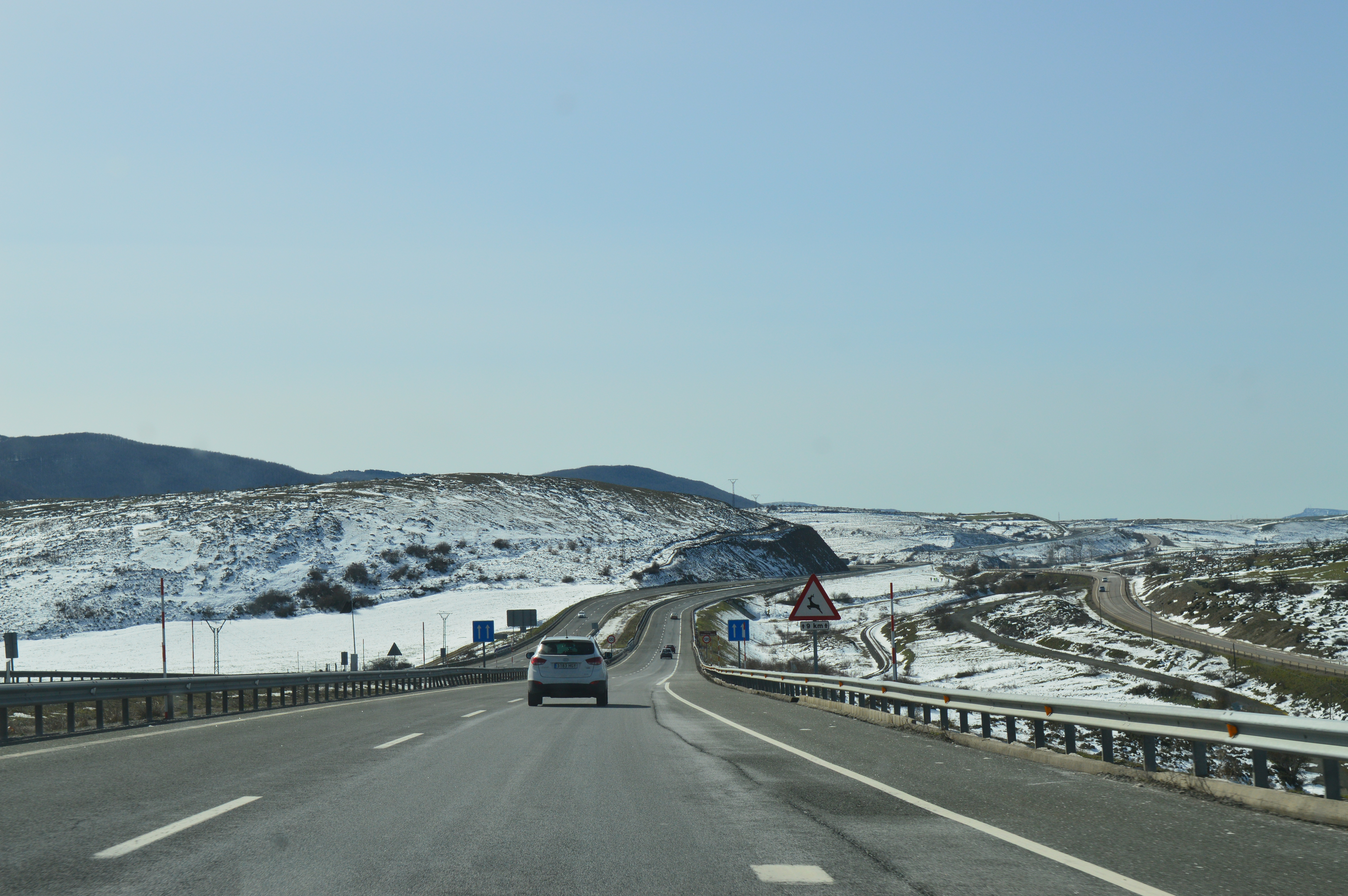
2. Reinosa, Spain. 21st February 2016: 11.46am
I used a variety of methods to travel around Spain when I lived out there: the carshare app BlaBlaCar, the short-distance Extremadura bus firm LEDA and, latterly, the superb train network RENFE. For the longest journeys I leaned heavily on ALSA, Spain’s answer to National Express. Cheap and efficient, provided you had time to spare, they serve most of Spain’s larger cities and provided a very reliable means of getting around. I took the bus one wintry weekend to see my friend Kate up in Cantabria. It was a ten-hour journey – not for those who get bored or travel-sick – but it does take you through some of Spain’s most breath-taking natural beauty: the wild steppe of Cáceres, the cherry-blossom valleys of Plasencia, the high meseta of Old Castile and the snow-covered mountains of the Cordillera Cantábrica. Driving from south to north across Spain, you really do feel as though you have arrived in a totally different country when you step out of the car at the end of the day.
I hitched a ride south to get home with a friendly student who was heading back to Algeciras after visiting family in Santander. At over 1,000km, it’s probably one of the longest drives you can do in the country. Luckily for me, Villafranca de los Barros was on his way home. In a year where I hardly saw any snow – and where Durham got some of its best in a decade – it was spellbinding to see the northern reaches of Castile covered in a heavy blanket of snow and ice. I’ll have to come back and explore someday.
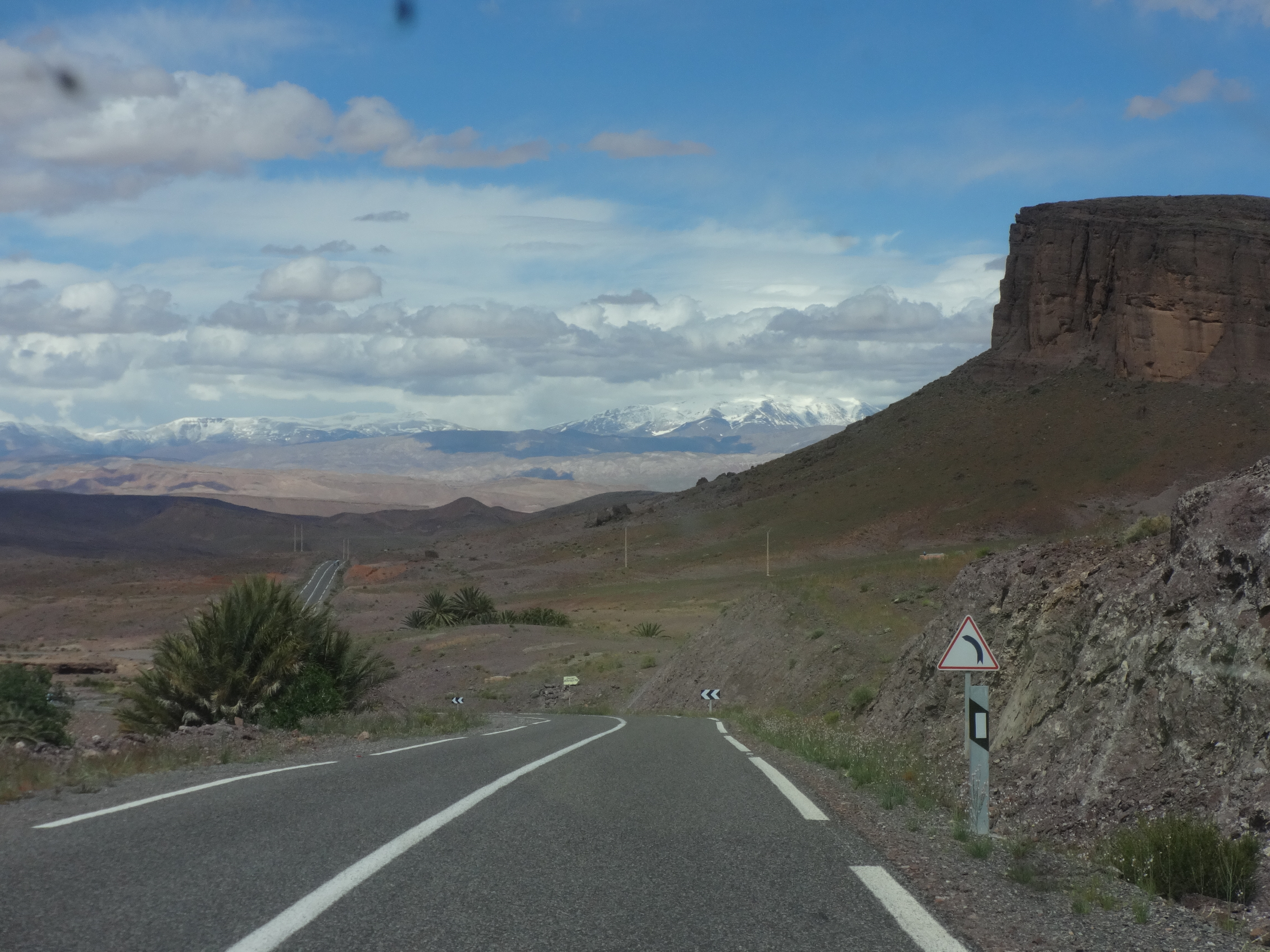
3. Piste 1507, Morocco. 20th March 2015. 11.45am
Another marathon road trip, and one of the most bizarre. My friend Archie and I hailed a grand taxi in Oulad Berhil for Ouarzazate, a desert town famous for being the location of choice for a number of movie studios who require a desert theme in a relatively safe location (including blockbusters like The Mummy and Gladitator). Our taxi driver, Ibrahim – whose name I only discerned from the badge on his windshield – was quite possibly the grouchiest, least sociable character I have ever encountered on my travels. Over the course of a three-and-a-half-hour drive across the rugged mountain valleys of Drâa-Tafilalet, he never said a word, despite our intermittent attempts to engage him in conversation. Perhaps he found us tiresome, or perhaps he was cooking up the plan he would later carry out to quintuple the price we had agreed back in Oulad Berhil, safe in the knowledge that Archie’s rucksack (and passport) was locked up in the boot of his car. I’ll never know. Archie fell asleep for much of the trek, but I spent the greater part of it with my eyes glued to the window, watching the world beyond sail past. I love road trips for that. I don’t think I could ever get tired of seeing the world.
4. Interstate 65, Alabama, 3rd July 2024. 7.40pm
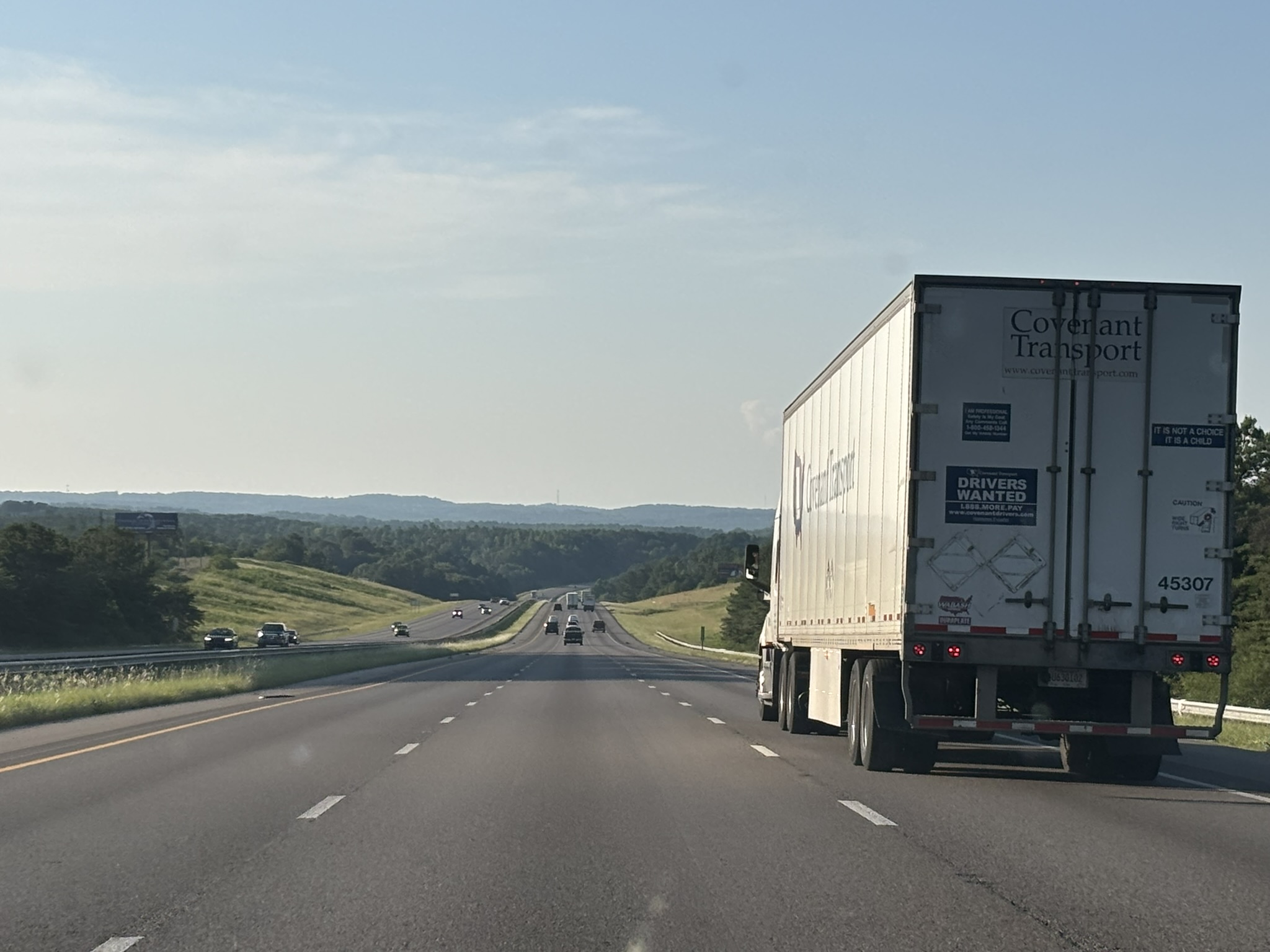
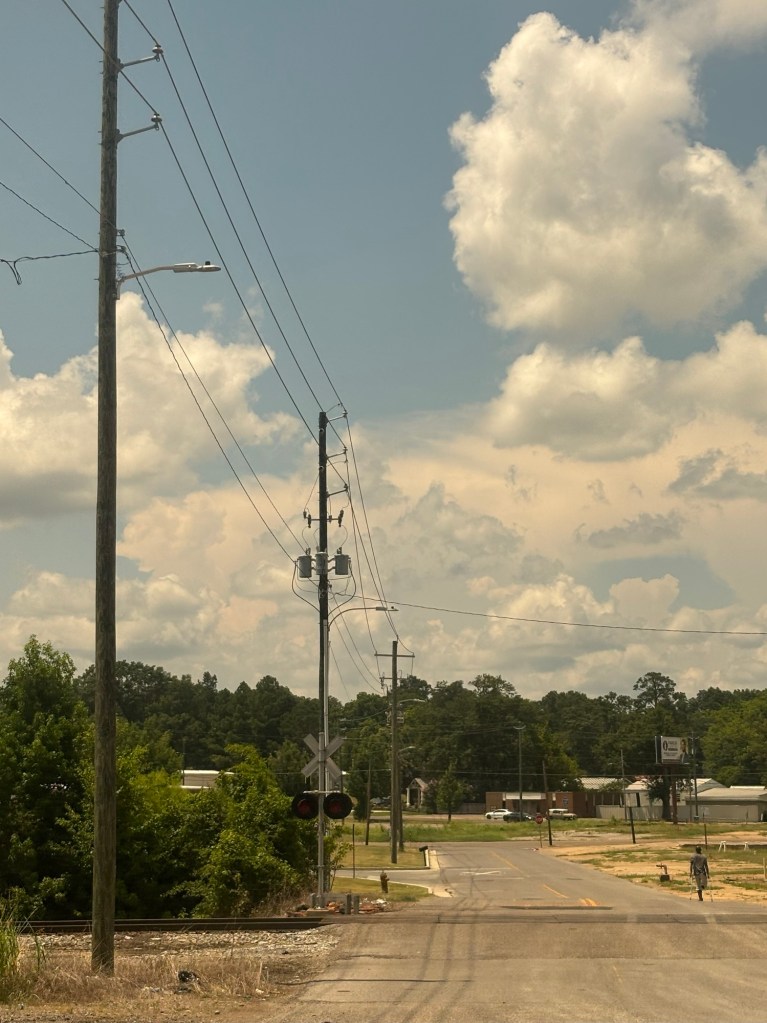
It’s one number shy of Route 66, but it was a phenomenal introduction to the American road trip. The highway in question travels north from Mobile on the south coast of Alabama all the way up to the shores of Lake Michigan in Gary, Indiana. I was only on the road for a fraction of it, from Birmingham up to Huntsville, but it was enough to make my eyes pop. Squashed armadillos, discarded tyre tracks and billboards were features I had anticipated to some degree, but the forests… I don’t think I was aware at all of just how forested North America truly was. The history books and the movies give the impression that most of the great tracts of forest were cut down, but in the American South – especially in the foothills of Appalachians – they go on for mile after mile, stretching across the land like an immense green carpet. The highways just cut right through them, dynamiting their way through hill and mountain as though they were merely molehills.
If I’d known how painful the destination would prove, would I have still made that journey?
Absolutely. Without a second’s hesitation. Some things are worth burning for. Some things are worth traveling all around the world to see, even if only for a moment in your life.
5. Boroboro, Uganda, 11th October 2012. 5.06pm
I thought I’d end this post with what is probably the best photo I’ve ever taken, and one that has a real story behind it.
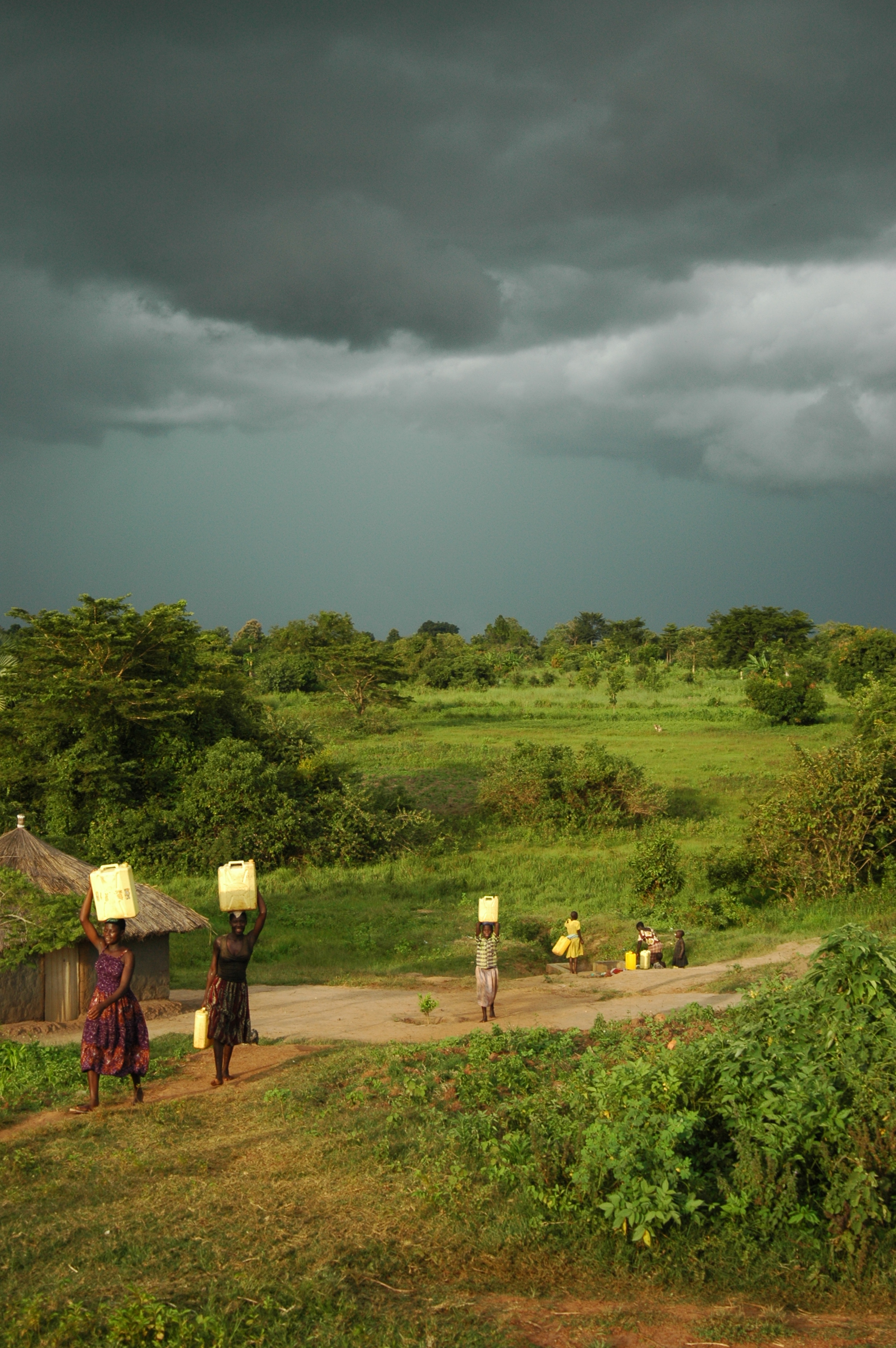
One month into my first teaching post in northern Uganda, I was invited to visit the former headmaster, Mr Ojungu Hudson Luke, on his farm on the banks of the White Nile. It was an incredible experience, herding Uganda’s famous longhorn cattle through the forests and the driving rain, with one of the world’s greatest rivers thundering away in the background, and perhaps I’ll tell you that story and more as the summer draws to a close. On the way home, after three days without access to electricity, my camera was out of charge, bringing my frenetic documentary spree to a standstill. Uganda’s roads can be treacherous and breakdowns are common, and when they do happen, they can be final: I will always remember the graveyard of trucks and lorries between Boroboro and Lira, rotting at the side of the road where they collapsed. Luckily, we made it back to Lira with little trouble, just in time to meet a tropical storm riding in on dark clouds.
The lighting was spectacular: brilliant evening sunshine, heavy, dark clouds, vivid colours all around. Red African soil and a thousand shades of green. Not for the first time in my life, I gave the finger to the sunburn on my skin and rode the last hour of the journey in the back of the truck so that I could see the world with my own eyes. Determined to capture the moment, I took the battery out of my camera and tried to breathe new life into it by rubbing it between my hands and – well – breathing on it. The first roll of thunder came rumbling down just as I pushed the battery back in and bought myself a couple of seconds. With Luke Ojungu still hurtling up the road at quite a pace, I grabbed two shots of the passing countryside from the back of the truck before the camera died.
We were a hundred metres or so from home when a lightning bolt struck a tree just ahead of us, bringing half the trunk down across the telegraph wires, which exploded in a shower of brilliant sparks. We were lucky to avoid any harm, but we soon found out we would be without power for the best part of a week until the electricians came around to fix the problem. It was only after that, with power restored, that I was able to charge my camera and see what I had managed to capture: a beautifully evocative shot of the countryside around Boroboro, lined up almost as though on command. I have it framed in my living room beneath a matching frame of Kanyonyi, the silverback of the mountain gorilla troupe we tracked on that same expedition.
Do stay tuned – I think it might be fun to relive my Ugandan adventures with you, since they predated the blog by some three years! BB x
Her father was a man “led by a star” as the natives say, and would follow it over the edge of the world and be no nearer.
Henry Rider Haggard, The Ghost Kings
We travel for all kinds of reasons. Sometimes you set out to see a place because you have a particular place in mind: maybe you heard about it somewhere, or saw it in a magazine, and need to see it with your own eyes. Sometimes it stems from a deep-seated desire to get away from home: “anywhere but here”. And sometimes, when the time is right, the driving force is beyond your control. It starts like a tide coming in, the waves rushing about your feet, warm and wonderful. Before you know it, the waters are racing back the way they came in a cascade of glittering sand and silt, pulling you into their wake, as though you’re standing upon the wake of a shooting star.
That is the force that has carried me here to Alabama. Something like it, anyway. It’s not exactly on the tourist trail. I’ve certainly not seen the Heart of Dixie appear in my social media feed over the years, whereas I dare say I’ve seen enough selfies in New York, Chicago and California to make like I’ve been there myself by now. But I do like to leave the beaten trail when I can. So here I am.
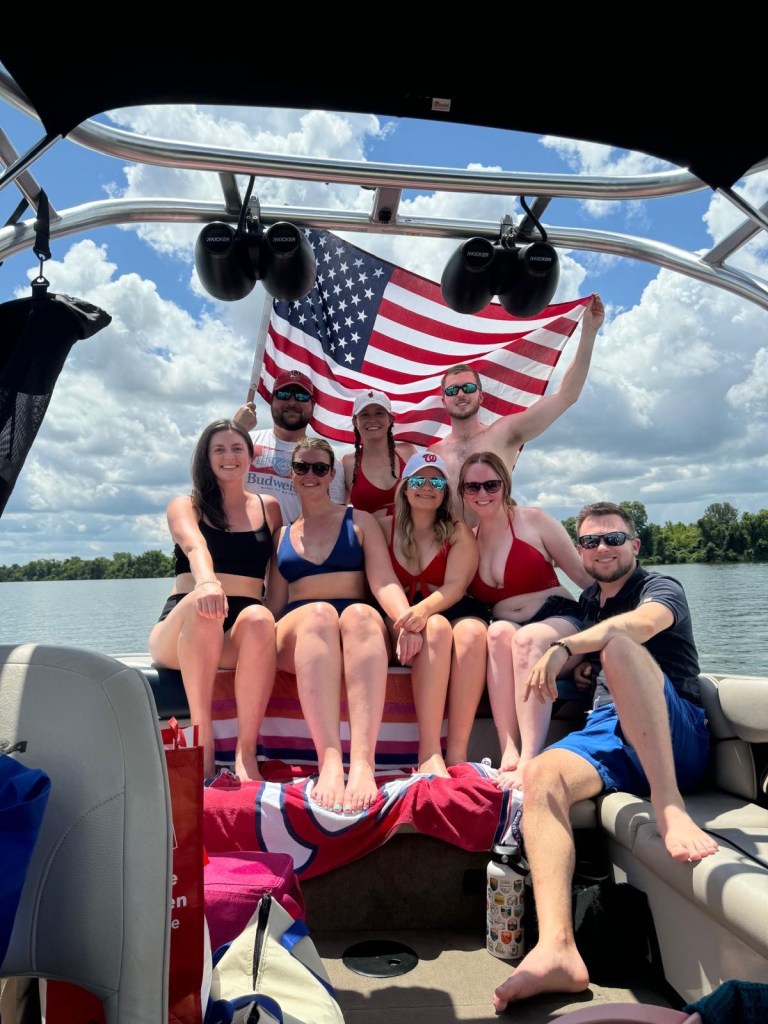
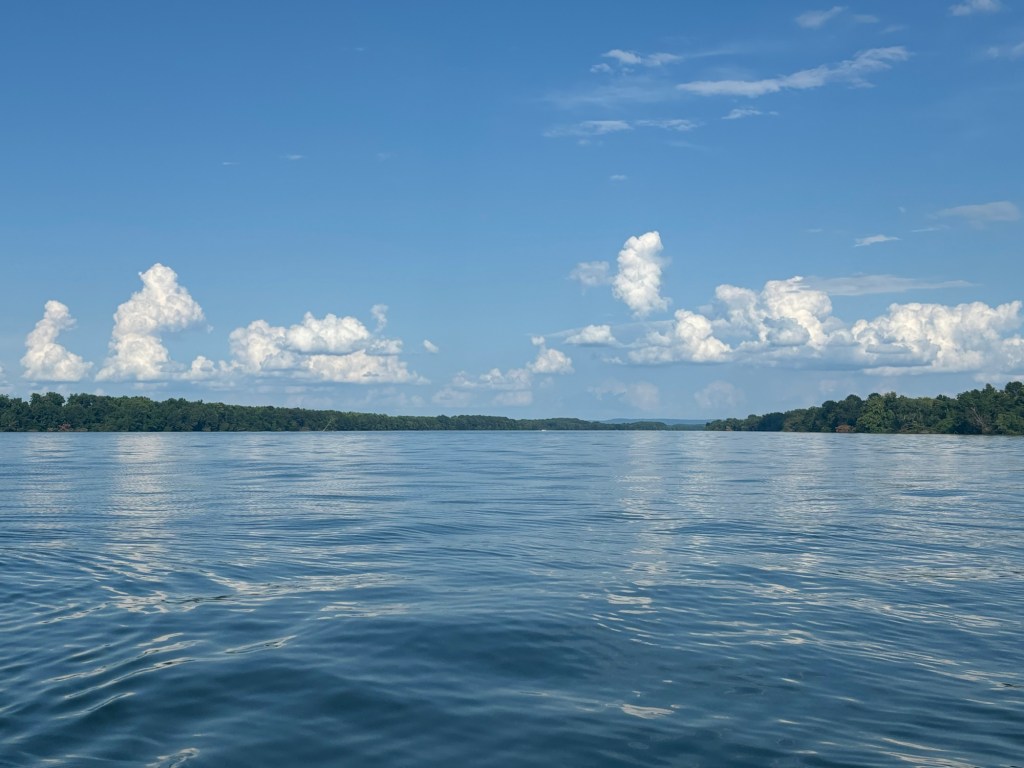
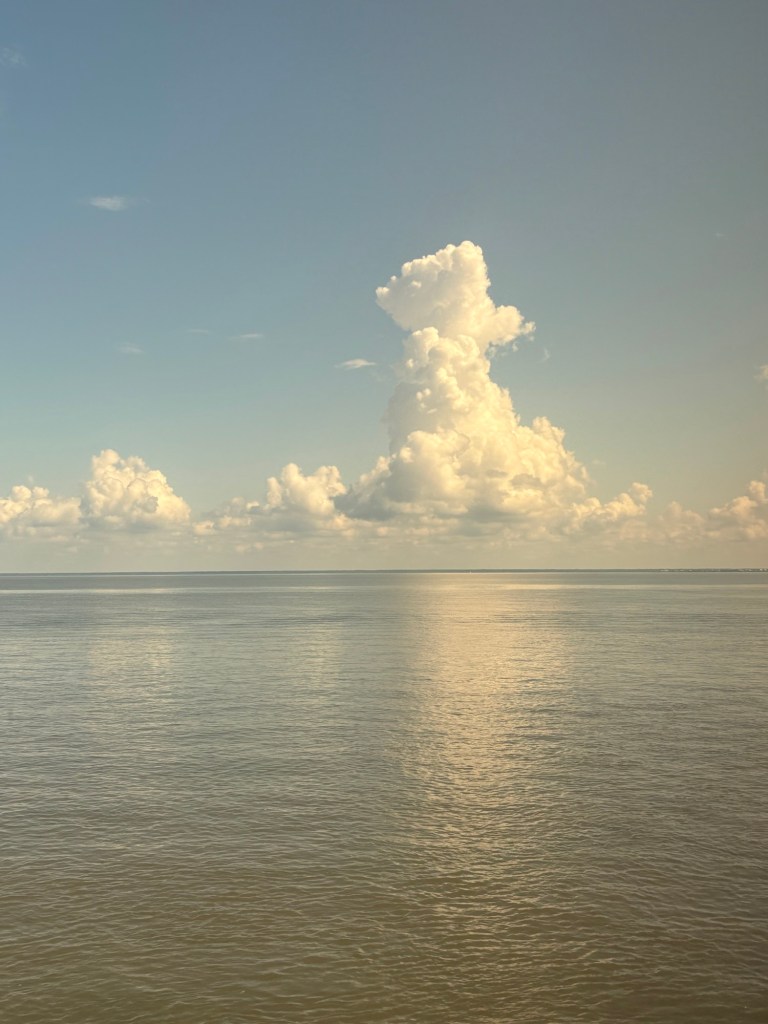
Independence Day found me on a boat in the Tennessee River, a mighty tributary of the mightier Mississippi, with a merry band of Americans celebrating their country’s national holiday the right way: beers in hand, country music blasting from the speakers, the immense American sky overhead, and the Stars and Stripes billowing out behind. I could hardly have asked for a more authentic way to celebrate the Fourth of July if I tried.
We spent almost all day out on the river, which may well account for the angry sunburn that has now morphed into one of the darkest tans I’ve had in years. Or maybe the burn came from standing in the wake of that shooting star, I can’t say. Either way, I had a lot of fun diving into the Tennessee River.
Some sights are so beautiful that you daren’t get too close, afraid that even the lightest touch might drive you mad, but I couldn’t leave America without some kind of contact with one of the two-hundred and fifty daughters of that legendary river that drains the entire continent of North America. Incidentally, it’s almost certainly the first time I’ve ever swum in a river. What a way to break a habit!
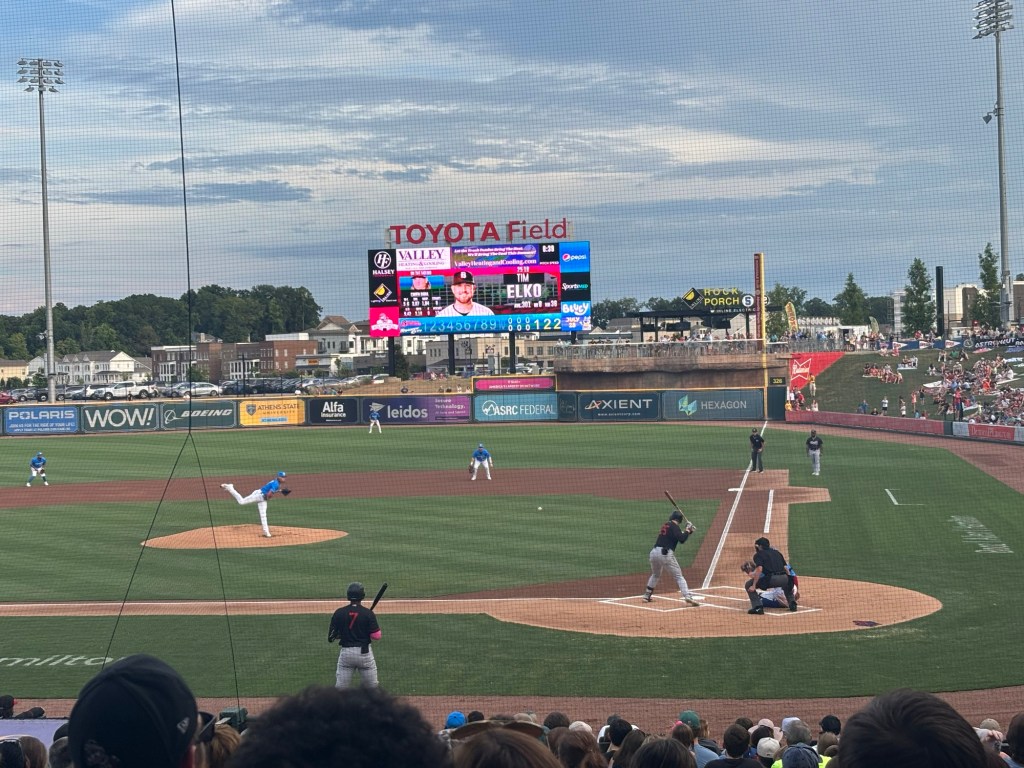
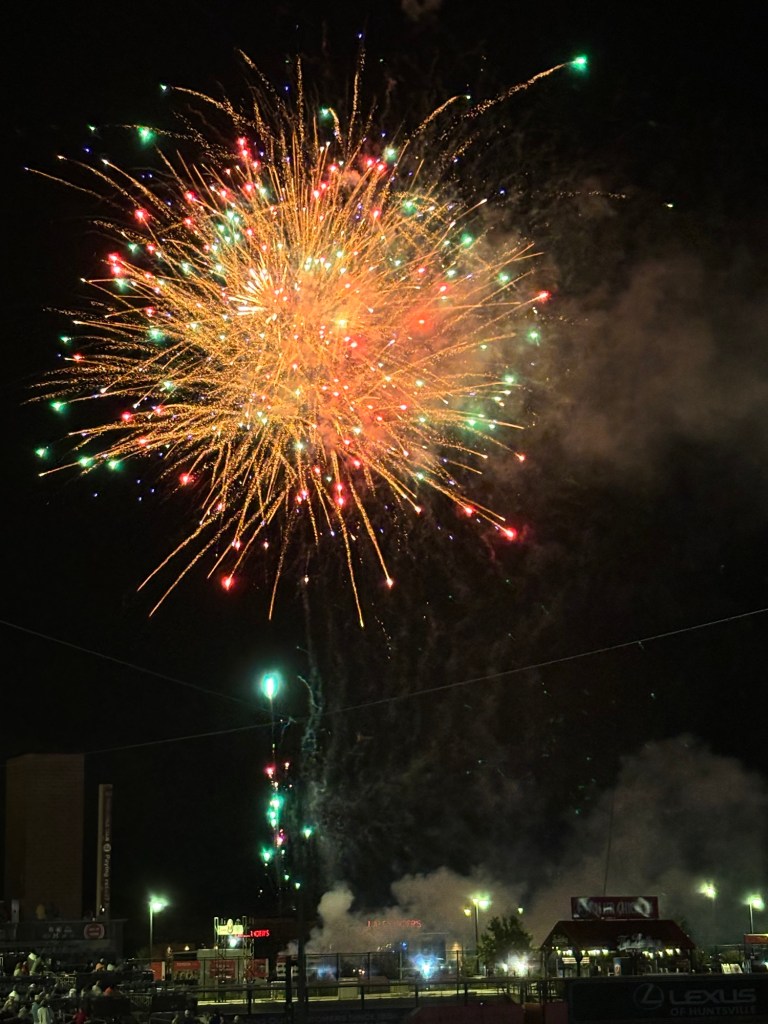
My host, the wonderful Mackenzie, had one all-American experience after another to throw my way. After watching the Fourth of July fireworks in a parking lot in downtown Huntsville, she took me to a diner for a proper American-style brunch of sweet tea with biscuits and gravy – consider me converted! – followed by a visit to Target, America’s legendary superstore, where I was amazed by the low cost of clothing. And to top it all off, we went to a baseball game at the local stadium between the Birmingham Barons and the local team, the Huntsville Trash Pandas.
Baseball – at least to this outsider – seems to be more of an event than a game. Nine innings across nearly three hours of play, broken up by a stream of events intended to involve the audience. Along with the opening national anthem, I clocked a kids’ race against the mascot, a couple of singalongs with a hype man and the sparkly cheerleaders, a cabezudo-style “space race” in support of a local enterprise and even a dance-off… all to keep your attention throughout the marathon experience.
With all that going on and more, I was very distracted, so I can’t say I’m any the more familiar with how baseball works, but it was such an incredible experience!
The fireworks after the game were even more spectacular than those that were set off the night before, which really is something – though deserved, perhaps, given that it was the home team that took home the win. The spectacle lasted a full twenty minutes, which is about as long as it took to leave the car park after the game. Everyone left in a mad scramble via the two exits to the car park, creating a logjam that went on for ages. One stereotype is true: America is a country that has yet to learn how to queue properly.
Nashville calls tomorrow. I have a good feeling about that. BB x
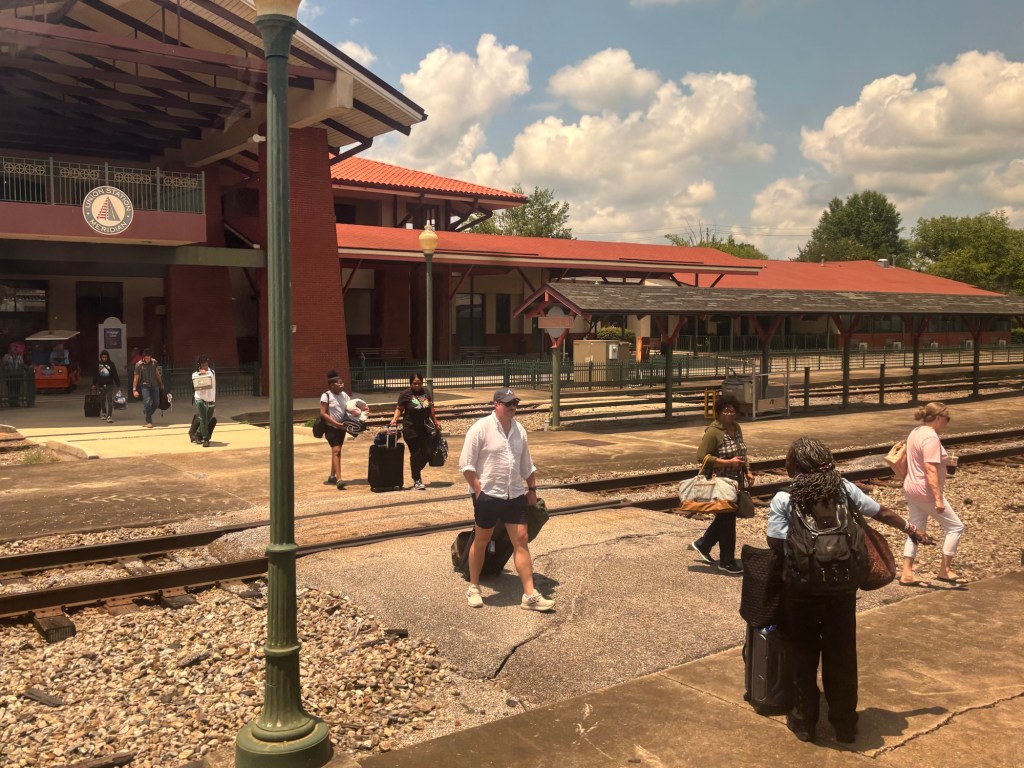
It’s 17.09, it’s been over nine hours since I last ate something and I’m somewhere in the Alabama woods between Tuscaloosa and Birmingham. If we were running to schedule, I’d be arriving in Birmingham in the next few minutes. But, as every American has gone to great pains to explain, the trains in the US never run on schedule. If you’re not in any particular hurry, it’s a phenomenal way to see the States, provided you’re happy to gawp at trees for most of the journey. Lucky for me, I’m easily pleased, and it’s been all I can do to peel my eyes from the window for the last eight hours or so.
The American South reminds me in many ways of Uganda. There’s something familiar about the immensity of the sky, the redness of the earth, the rusting abandoned vehicles and – especially – the enormous homemade painted advertising on homes, cafés and storefronts. The most American thing I’ve seen so far – beside the lone bald eagle standing on the banks of Lake Pontchartrain – are the countless colourful billboards advertising private law firms, demanding your attention with Colgate smiles in nauseatingly familiar language: Bart’s always got your back, Call ya girl Desi, IYKYK, that sort of thing.
Let’s forget any time pressure for a moment. Riding an Amtrak train is actually a really comfortable experience, and I’m surprised it isn’t more popular. There are charging stations for every seat, curtains for the windows, sturdy WiFi and a cheery Southern burr over the tannoy to replace the cold, automated replay of British trains. I’ve even got enough leg room to stretch my legs, and that’s taking into account the fact that the guy in the seat in front has put his chair back into full recline. I haven’t seen as much wildlife as I’d have liked over the course of my vigil, but I’ve still managed to clock a few deer, a whole lot of egrets and a few birds of prey, including the symbol of America itself. That’s not too shabby for a bit of on-board birdwatching.
To be honest, the only thing I’d change is the seat numbering, which is baffling – and very obviously a new concept, as even the ticket inspectors seemed to get muddled up by the numbers (which don’t really correspond to any of the seats at all). Folk don’t seem to mind, though. I think most of the passengers here have simply found an empty seat and made themselves comfortable, and all of them are quite happy to shuffle as and when a couple or family comes aboard. That’s one major difference to European trains. I was traveling in Germany once and still remember an officious German lady who made the entire coach get up and scramble because there was somebody in her seat and she absolutely had to sit in the seat she had been assigned. The human soul: the price of efficiency.
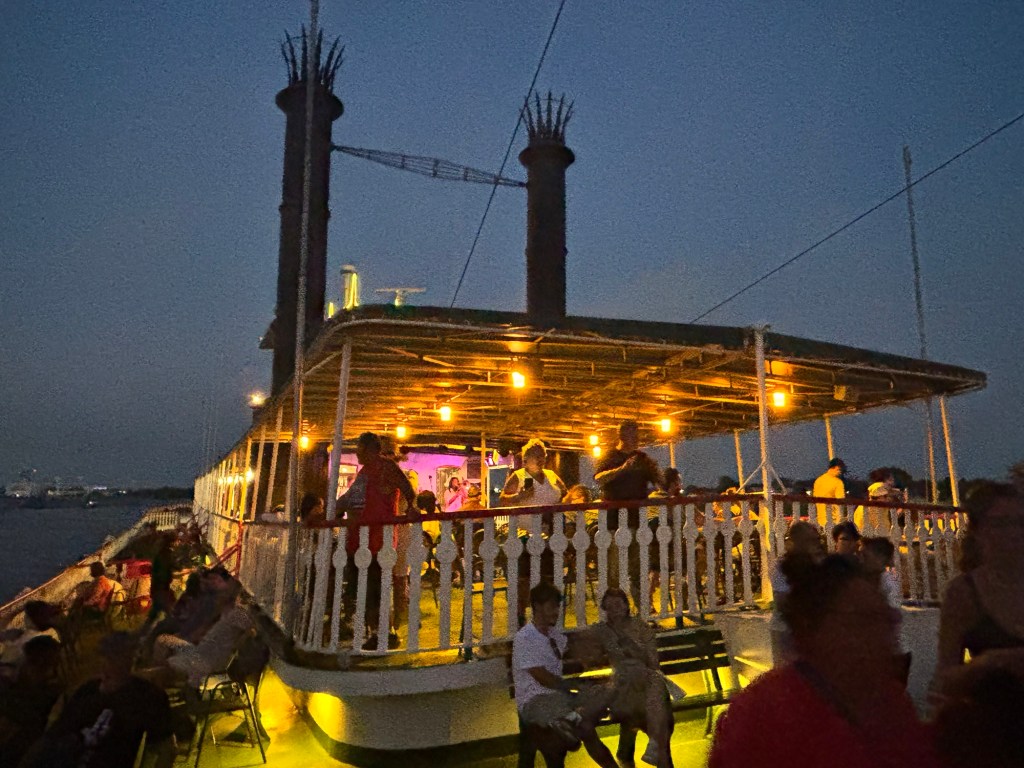
I ended my stay in New Orleans with a jazz fest, seeing a local band in Preservation Hall and then taking the Natchez steamboat cruise down the Mississippi with its attendant Dixieland band providing a jaunty backdrop. If it’s done one good thing for me, New Orleans has reminded me that there is hope for those of us who still believe in music bringing the world together. The Preservation Hall jazz band ticked more diversity-and-inclusion boxes than a school website: the trombonist was black, the saxophonist Latino, the pianist Scandinavian, the double bassist Japanese and the lead trumpeter Creole. I hate to admit it, but I’m still bleeding a little over the way my Gospel Choir was torn apart years ago. Maybe I always will be. That’s partly why I’m here in the States, in this limbo between jobs, between worlds: to try to put a seal on that episode of my life, and to remind myself that there are plenty of people out there who don’t see things that way. And where better than America, the great Melting Pot itself?
I’d better stop writing – it looks like we’ll be arriving soon. In the end, we’re only 50 minutes behind schedule. It’s funny how little that seems to matter! In the UK, there’d be apologies over the tannoy and prompts to get a refund via the website…
Alright America. I’ll admit it. Just this once, you have us beat on heart. BB x
In the Southlands there’s a city / way down on the river / where the women are very pretty / and all the men deliver.
The Princess and the Frog
Two things hit you right away when you step out of the car and into New Orleans: the heat and the smell. Both are overpowering. The heat gets under your clothes and into your skin in seconds, as though you’re sliding into a sauna. The smell hits you like a wave: a heady mix of diesel, sugar and, above all else, weed. I’ve never been anywhere quite like it.
After the city complex that is Dallas/Fort Worth International, New Orleans’ Louis Armstrong Airport felt much cosier – insofar as Americans do “cosy” when it comes to buildings. The lack of passport control caught me off guard, but then, it was only on an interstate flight. I didn’t get a stamp for the passport, which is a little annoying – it would have looked nice next to all the European stamps (a tiny compensation for Brexit).
I took an Uber into town, it being a Sunday and me having no idea where the bus set out from. Every American I’ve ever spoken to has only had bad things to say about their public transport, and besides, I figured an Uber would at least give me a local to talk to en route. My driver Calvinisha was a very charming New Orleans girl who was only too keen to point me in the direction of a number of food joints, namely Mr. Ed’s Oyster Bar. I’ve added it to the list. She also added that I’d ‘just missed out on the swinger festival’. I didn’t ask her to clarify whether she meant that in the musical or sexual sense. In New Orleans, it could easily have been either.
I checked into my hostel on 1028 Canal Street and set out for a wander, very conscious that I needed an early night to avoid any jet-lag on my first couple of days. My room was empty but for a steady drip from a leak in the ceiling and a disembodied voice coming from behind one of the curtains: a British guy clearly playing some kind of MMORPG, telling his friend to “use black sword”, “send in a fire mage” and other strange and rather bizarre commands. Leaving him to his world of make-believe, I locked my things away and set out for a stroll.
It’s hard to describe my first thoughts of New Orleans and at the same time do the city justice. It is certainly a culture shock for a European country boy like me. Skyscrapers that dwarf most of London’s tallest buildings. Shops that look like El Rocío homes openly advertising voodoo, weed and “barely legal” strippers. At first glance, New Orleans is everything you might expect to hear about in 20th century Soviet propaganda about America: casual, sleazy, decadent. But when it’s 38°C out there and the humidity is over 70%, can you blame them?
It feels like this town ought to operate on a Spanish-style siesta timetable – and yet, even in the hottest part of the day, folk are still wandering the streets. You have to hand it to the pioneers and their descendants. Louisiana heat is not to be trifled with.
For me, this whole American adventure is kind of a test. I think one of the subconscious reasons I’ve never really thought about going to the States is because of my languages. Hear me out. I’m not the best at striking up a conversation with a total stranger, in a shop or bar or anywhere else – unless it’s in another language. For whatever reason, I’m a lot bolder in my dealings with strangers when it’s in Spanish or even French. I honestly believe that it’s a confidence trick – you’re focusing so much on getting the language right that you don’t stop to think about where you are, who you’re talking to. I’ve heard so much Spanish here and I’m instantly filled with a desire to leap into conversation, which I can’t say happens as readily in English. I’ll just have to work on that.
I came back to the hostel around seven thirty and tried to get an early night’s sleep. I was in for a bit of a shock: the dripping was actually coming down onto my bed, a full third of which was soaked through. Never mind the damp, the constant slap of water on the soaked mattress was maddening. It’s funny how you can doze off amid the constant hum and roar of a plane engine, but a rhythmic tap with keep you up. I tried taping it up, but after five minutes it returned with a vengeance, beating an even faster rhythm than before. I admitted defeat and curled up into the drier part of the bed.
I confess I was so tired that I didn’t have the energy to drag myself out of bed and tell the front desk, but in the end I didn’t need to – a guardian angel in the bunk next to mine had already phoned ahead and eventually the hostel staff allowed me to move to the bed across the room. I don’t think I’ve ever fallen asleep so fast.
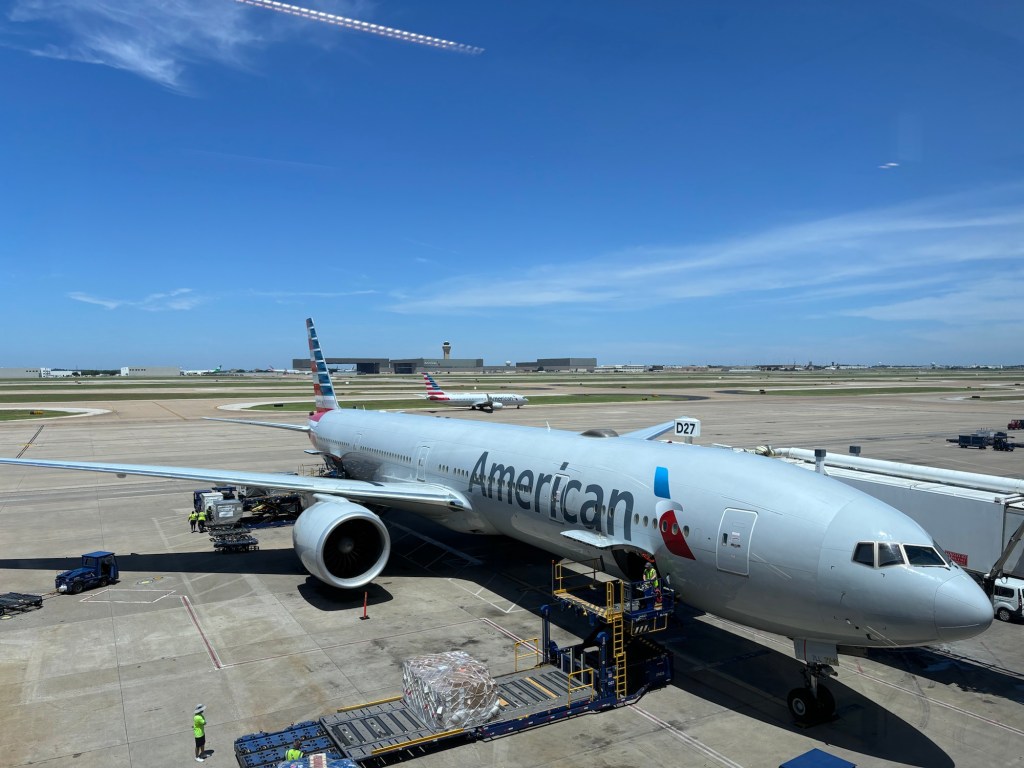
Four days ago I was standing in the ruins of a Roman theatre in the Andalusian port of Cádiz, a contender for the oldest continually occupied city in Europe at over three thousand years old. Four days, one Leavers’ Ball and a ten hour flight later and I’m sitting in Terminal B for Bravo in Dallas/Fort Worth International Airport, built in the year 1974. The fact that Cádiz’s Roman theatre itself is relatively young – built around 70 B.C. – only adds to the stark comparison. The culture shock is real.
First impressions:
The Mississippi is huge. Enormous. It looked like a colossal brown snake winding across the plains into the distance
Cowboy hats seem to be worn unironically here – and with a frequency that would surprise you!
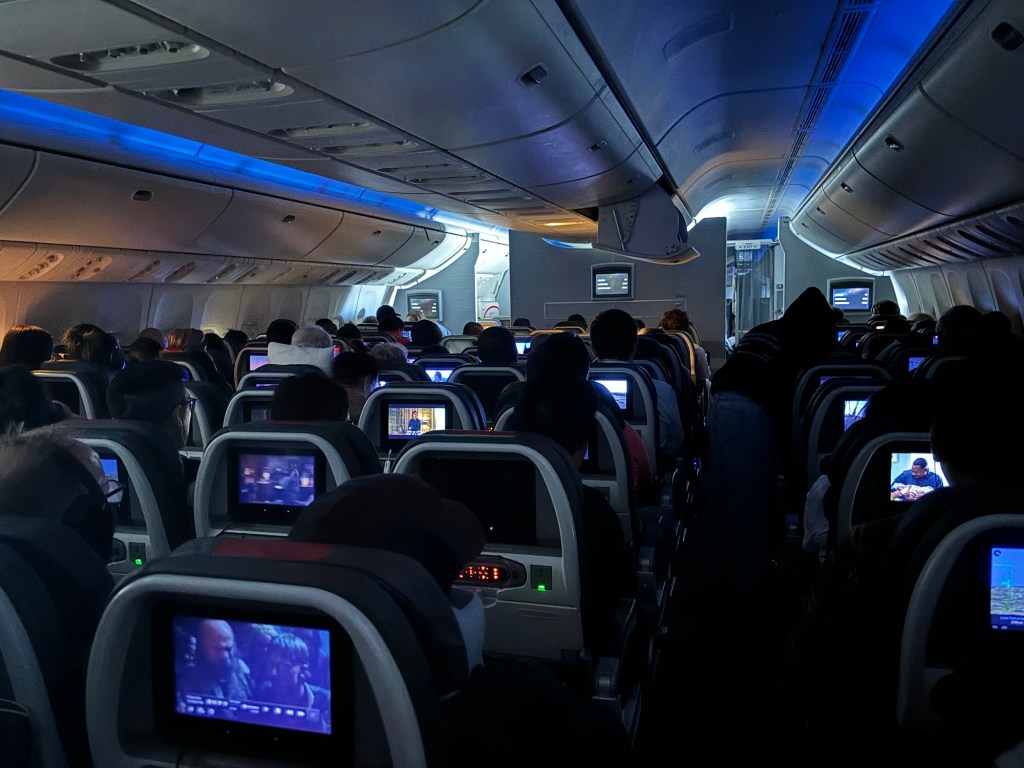
The selection of in-flight movies on offer is considerably superior to all the streaming services at the moment (heck, they even had both Dune movies)
Airport taxes – what the hell is that about?
Security was thorough but not nearly as austere as I expected
In case you haven’t noticed, this is my first time in the United States. I honestly have no idea what to expect, since until recently I wasn’t particularly interested in crossing the Atlantic for an adventure – well, not this far north of the Caribbean, at any rate.
But I did promise myself that I’d reward myself with a proper adventure if I landed a new job this year, and a promise is a promise. I just didn’t expect it to take me to the land of Sitting Bull and Civil Rights, that’s all!
I don’t have too much to report on just yet, beyond a general wide-eyed wonder at all of it. After all, I haven’t legally set foot in the States yet – that will happen when I touch down in New Orleans in a few hours’ time.
Sounds like they’re boarding in five minutes’ time. Not sure what a Deadheader is outside of a gardening context, but I’d better get my stuff together all the same. Starting to feel the jet-lag kicking in, but I hope I can shake it with an early night this evening! BB x
This week I’m looking into a rather different kind of novel, albeit one much more in line with my usual taste. Often considered the first novel by a Native American writer, John Rollin Ridge’s The Life and Times of Joaquín Murieta: The Celebrated Californian Bandit is a remarkable account of the life of one of America’s most infamous outlaws. I have no misgivings in making such a claim: Joaquín Murieta may not be a household name like Butch Cassidy or Billy the Kid, but as the primary inspiration for Zorro, and by proxy Batman, the Californian bandit’s legacy is alive and kicking.
As might be expected of a bandit narrative, Joaquín’s tale is a tragic one. Ridge paints a picture of a man who set out with honest intentions but turned to villainy after being wronged once too often on account of his being a Mexican in an increasingly intolerant America (a situation that still resonates painfully across the ages). Finding himself on the wrong side of the law, Joaquín sets out on a career of vengeance against the nation that would not let a man like him earn an honest living. Along the way he gathers about him a colourful cast of characters, including his sweetheart Rosita, his brother-in-law Reyes Feliz, his nemesis Captain Love, and his bloodthirsty second-in-command, the unforgettable Three-Fingered Jack. The end is never in question – millions before and after Murieta have paid the price for defying the might of the United States – but such is the degree of Joaquín’s panache and gallantry that you might be forgiven for willing him to succeed, no matter how many bloody crimes are committed in his name.
To the modern eye, Ridge’s account comes across as half-story, half-history. This is not altogether untrue: the events within the narrative have been, to a greater or lesser extent, subjected to a fair degree of fictionalisation. An overarching narration of events takes precedence over dialogue and character development, and though Joaquín is very much the star of the show, this is as much the tale of his friends and foes as it is his alone. There are elements of the story that make for some hard reading in the twenty-first century – namely, the casual racism employed towards the Chinese, who fall before Joaquín’s men like wheat in the wind. Where Mexicans and Americans stand their ground and fight to the death, all of Ridge’s “Celestials” (an outdated slur used frequently in the narrative) are cowardly weaklings who habitually grovel and flee at the first sign of danger. They feature as a nameless swarm, fodder for Three-Fingered Jack’s bloodlust and a lawless whetting stone for the sorties of Joaquín‘s gang, since their slaughter rarely if ever provokes any reaction from the Americans. Ridge is, of course, speaking with the voice of his time, but given how evergreen the anti-Mexican sentiment of the narrative remains a century and a half later, it is hard not to draw comparisons to the present. Joaquín’s vendetta is in many respects a racial one, but it is rationalised through his personal tragedy. The xenophobia of his enemies cannot be so easily waived, and the indifference of the Americans upon his slaughtering of the Chinese miners speaks volumes.
I have been passionate about bandits since university. I am not entirely sure why. There is something raw about the idea of banditry that appeals to me, as it must have appealed to the Romantics of the nineteenth century. I chose to study Spanish bandit legends for a research project in my third year at university and I have been hooked ever since. I suppose it could be summed up as follows: the further removed one is from violence, the more exciting that violence appears. Some travellers in the 1800s came to Spain with the express purpose of seeking out an encounter with the bandit chiefs they had read about, leaving bitterly disappointed when they returned home unharmed. As I sit down to write of the legend of Joaquín in the comfort of my study, with the faces of surly Andalusian highwaymen staring down at me from the framed Doré prints on the walls, I am no less afflicted than my predecessors. Joaquín Murieta joins their ranks as a fearsome commander, standing tall alongside other such legends: Serrallonga and Roque Guinart; Diego Pernales and El Barquero de Cantillana; Tragabuches, Pasos Largos and El Tempranillo.
It is easy enough to conjure up a fantasy in one’s mind of the lawless world of Gold Rush-era California, but to do so with any degree of accuracy from the niceties of the present day would be no small feat. To write convincingly about the past, one must ignore the attitudes of the present and fully espouse the zeitgeist of the era in question. Therein lies the pitfall, for where is the storyteller who writes for an audience long since dead? And where is the book that is totally free of the truths and prejudices of the day? The very act of putting work into the public domain is to subject it to the scrutiny of the present-day readership, and it is upon this anvil that a story’s success may be made or unmade. To tell Joaquín’s story with more than a kernel of truth today would be to wind the clock back beyond one hundred and fifty years of social change, to a time when it was not essential to take into account the sensibilities of every featured demographic. Ridge’s account sounds so very believable because it was written not long after the events in question occurred, but even then his account is not unbiased: the author’s sympathy for Joaquín bleeds through his writing, for Ridge, a Cherokee, had plenty of reasons of his own to hate the Americans, having lost his father at an early age at the beginning of the events which would lead to the infamous Trail of Tears. History is warped by the age in which it is scrutinised, like a kaleidoscope that twists with each passing year.
August 3rd, 2019. A lone gunman walks into a Walmart in El Paso, Texas, and shoots twenty-two people dead, supposedly in retaliation for the Hispanic invasion of Texas. Within forty-eight hours, a Mexican spokesperson calls the attack “an act of terrorism” against Mexicans living in the US. The men who assaulted the young Joaquín Murieta and raped his wife got the sticky end they richly deserved in Ridge’s account, but in reality they were merely the heads of a greater hydra; the intolerance and hatred they represent is with us to this day. The story of Joaquín Murieta is all the more important now than it ever was. Here is the legend of an ordinary Mexican who was made into a monster by the land of opportunity, but who, like countless bandit heroes before him, rose above the darkness in the hearts of his people to become something eternal: a folk hero.
Favourite Scene:
The parallels between Joaquín Murieta and his illustrious descendants, Zorro and Batman, are mostly subtle ones, drawing largely on the bandit’s sense of nobility and his fight for justice. But there is one scene in particular that is especially poignant in its cultural impact. Having met with an old acquaintance on the road, Joaquín warns him to tell nobody of his presence in the state. The traveller swears he will be true to his word and goes on his way, but upon arrival at the nearest town, he hears talk of the bandit chief and talks of his recent encounter. Unbeknownst to him, Joaquín has friends up and down the country and, hearing of this betrayal from one of his spies, takes the matter personally. He comes to town in disguise, seeks out his old friend and, before dispatching him with a single shot, removes his disguise and declares the immortal line “I am Joaquín!”. It becomes a recurring staple of the legend of Joaquín that he fearlessly reveals himself before making a kill, and it would not surprise me in the slightest if Batman passed over Zorro and got his line directly from the Ridge’s book.
Favourite Character:
Murieta is a man worthy of three legends in one lifetime, but there’s another man in his saga who towers above the rest, and that’s Manuel García, more commonly known as Three-Fingered Jack. Next to Joaquín, Jack is easily the most memorable character, serving as a gruesome foil to Joaquín’s nobility and a grim reminder of the reality of the nature of banditry. Three-Fingered Jack’s unfettered violence is truly galling whenever and wherever it occurs and casts a long shadow over the villainies of his compadres, whose handiwork seems almost gentlemanly in comparison. There seems to be nothing at all redeeming in his character, and yet there is something immensely appealing about the monster – I honestly expected more of the wolverine in his last stand than he actually got.
Favourite Quotes:
They might as well have attempted to catch the red-winged spirit of a storm.
“If you betray me, I will scatter to the winds all that you have and all that you love.”
That terrible, three-fingered hand, which had dyed itself in many a quivering heart, had torn with its ruthless talons the throats of many an agonised victim, and had shadowed itself forth upon the horrified imagination of thousands who only knew that it existed.
If I let the events of the last few days go by without a word, I’d be failing as a writer.
The hysteria is real. Donald Trump is the next President of the United States. Social media has exploded. Race hate is on the rise. Politics has, after so many predictable years, suddenly got very interesting indeed. The UK’s decision to leave the EU is old news: there’s a larger finger on the big red button. The race for the White House may have split the States, but everybody would agree that America’s new president can mean only one thing: change.
In one of the strangest turns of events I’ve ever witnessed, the man widely heralded as the most laughable of all of the presidential candidates of the campaign has defied all expectations and, despite a slew of racial slurs, misogynistic remarks and just about anything and everything else that might have destroyed any other runner-up, Trump has surged into power and we must now accept the fact that, like it or not, the controversial tycoon is now one of the most most powerful men on Earth.
That is, as long as there is an Earth for him to police. There’s no denying it: so many of us believed that a Trump presidency would be the forerunner of the apocalypse.
But is it really?
Now bear with me, as I’m going to do something very radical and very out-of-character, and I’m going to suggest that a Donald Trump presidency may be exactly what the world needs right now.
Now, why on earth would I say something like that? How could a see-sawing, prejudiced, misogynistic, arch-capitalist with his hands on the nuclear codes ever be a good idea? Well, for starters, I never said it was a good idea, nor that it sat well with me at all. However, I’m slowly coming around to thinking that it might not be the travesty it first seemed (Or maybe I’m just disillusioned with reality after Brexit).
I’ll do my best to explain. Firstly, the mere fact that a firebrand like Trump managed to beat the system and defy all expectations means that the status quo has been given a serious shakedown. The slump of pendulum politics is officially over. Granted, Trump was no saint, but Clinton’s track record made it difficult for the Democrats from the very beginning. Bernie might have been our hero, and it’s easy to believe that he would have led the Democrats to victory, but something tells me that the United States would have sooner seen a certified bigot in the White House before electing a socialist. Old habits die hard. But it’s this desperate adherence to the status quo that has brought us to this. People are sick and tired of the ways things are, the way things have been for so long. Trump offered to give them that change. Clinton had a tried-and-true dustpan and brush, Trump was offering a Dyson. It’s as simple as that.
In that sense, the election of Donald Trump ought to be seen as a triumph, not just of prejudice, but of change. Maybe next time the Democrats will provide a more idealistic individual, one unmarred by scandal and unfettered by the chains of regularity. In the interests of good politics, let’s hope so.
So why now? Here’s the sticky bit. Think back to the last time there was ever all-out war between the world powers. I’m not talking Cold War meddling, I’m talking boots-on-the-ground assault. 1945. That’s over seventy years ago. Since then we’ve meddled with countries across the globe, but it’s been all quiet in the Western Front. And seventy years is a very long time to go without war by Western standards. Meanwhile the US, the UN, the EU, all of these ‘peace-keeping’ bodies have been policing the world, trying to resolve conflicts left, right and centre – and, in many cases, deliberately capitalizing on them. But the clock is ticking. If history tells us one thing, it’s that nothing ever stays the same forever.
I believe that we’ve been living through a Pax Romana, a necessary ceasefire. As long as everybody did as they were told, the peace would hold. But this isn’t the way it’s supposed to be. Humans are naturally belligerent, and we’d be fooling ourselves to believe otherwise. We have so much capacity for love and compassion, but instinct cannot be denied. Conflict is one of the most natural elements of existence and we’ve been stemming it for so long. It may not have looked like it until recently, but we’ve been sitting on a volcano for a long time now. The pressure is mounting and it’ll blow before too long, with dire consequences for us all.
How could that ever be good? Again, it’s not. It’s terrible, and when war comes, I will be just as distraught as the rest of us. But, sooner or later, it is necessary. Resolving conflict by removing it from the equation can only work so many times, just as taking painkillers is no substitute for a cure. In the end, perhaps the best thing to do is to fight it out, to let it all come to a head. The rise of terrorism, the refugee crisis, pitifully low voter turnouts and the wave of race hate that’s sweeping the West… These are all the signs of a world that’s bristling for a fight. Between who, I cannot say. But it’s in the air.
Previously, wars have not only brought long periods of hostility and dissatisfaction to a decisive end, but they’ve resulted in massive social upheaval, often with various positive side-effects. In that one instance, war may save us all. I dread to think what may happen to this world if things go on the way they are.
Trump might not be the one to start the War That Is To Come, but you could interpret his election as the first of many thrown stones. Of course, it could all be a storm in a teacup, and the Mexican Wall and the ‘complete shutdown on all Muslims entering the United States’ may be as likely to materialize as UKIP’s £350m pledge to the NHS, but if we’re due a decade of change, for good or ill, this seems like the obvious trigger.
So what can we do? For starters, we can try to learn from our mistakes. The Democrats lost because they believed their idea of democracy would work. It didn’t, and now the age-old system has failed. It’s time to search for a new way of doing things, before it’s too late. I don’t pretend to have even the first idea what the new way might entail, but I can see plainly enough that holding to the status quo is no longer a reliable option.
We should also get learning languages. Now. Obviously as a linguist I have more than a touch of bias here, but I mean it. In the current climate where nations the world over are becoming more and more insular as ‘us and them’ politics take the floor, it is more important than ever that we learn to interact with the world outside our own. Whatever you think of Trump or his policies, blind, beer-touting isolationism is a one-way road to destruction in the long run. So the EU has failed? Don’t walk away from it. Work on it. Change it. I’ve met so many non-Europeans who fell foul of the EU and had little love for it, so – despite espousing the Remain camp myself – I can see why people think it has failed them. But we could do so much more by working together. It’s just a question of time. English may be the world language for now, but there’s no reason to believe that’s the way it will always be, nor should it.
When Trump takes office next year, it’s difficult to know exactly what will happen. The bookies have been wrong time and again this year, so it’s hardly worth consulting them anymore. But if war comes, in ten years or in twenty, don’t say I didn’t warn you. BB x






 The Book of Barnabas