The Lost City

Cerro del Sol, Granada. 12.56pm.

They call it the Cerro del Sol, but the sun is hidden behind a white haze of cloud. It covers the snowy peaks of the Sierra Nevada so indistinctly that it’s hard to see where the snow stops and the clouds begin.

It’s pretty quiet up here. There’s a general soar of traffic on the road up to the skiing station of Pradollano in the Genil valley below, but beyond that – and the occasional rev and growl of some larger engine – it’s just me, the butterflies and the birdsong up here. Mostly fritillaries, coppers and marbled whites, though I did see a beautiful swallowtail float by a moment ago, before I put my cardigan over my head to shield my eyes from the white glare of the sun. It shines brighter than the garden Star-of-Bethlehem at my feet. Such a beautiful flower – I’m not sure why I never noticed them before.
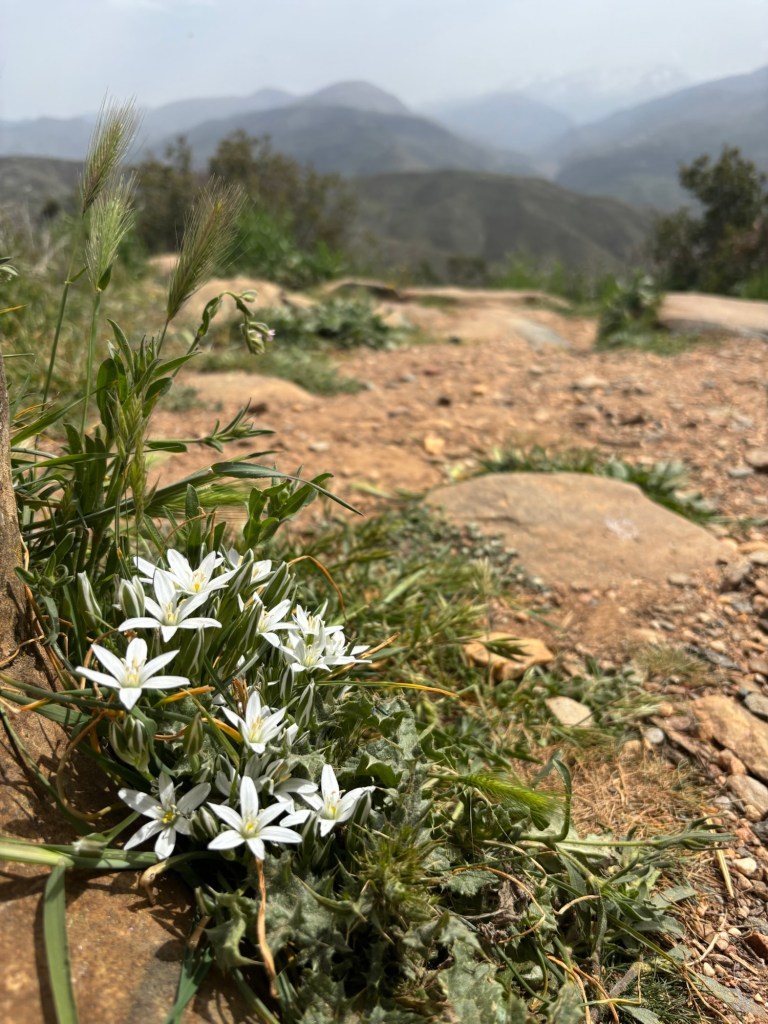

I’ve come up here to write – and to heal. I didn’t sleep well last night. Some wounds, it seems, take a long time to mend. So I’m up in the quiet of the dehesa, in the hills east of Granada, soaking in the best palliative that nature can offer. Herself.

The occasional buzz of a fly. The twitter of a pair of pallid swifts racing by. The summery buzz of a grasshopper and the chuk-chuk-chukar of a partridge somewhere in the scrub far below.

A couple of Sardinian warblers are engaged in a territorial dispute in the broom bushes below, rattling off their warnings like Gatling guns. And always and everywhere, I can hear the song of blackbirds – an ever-present symbol of Granada.

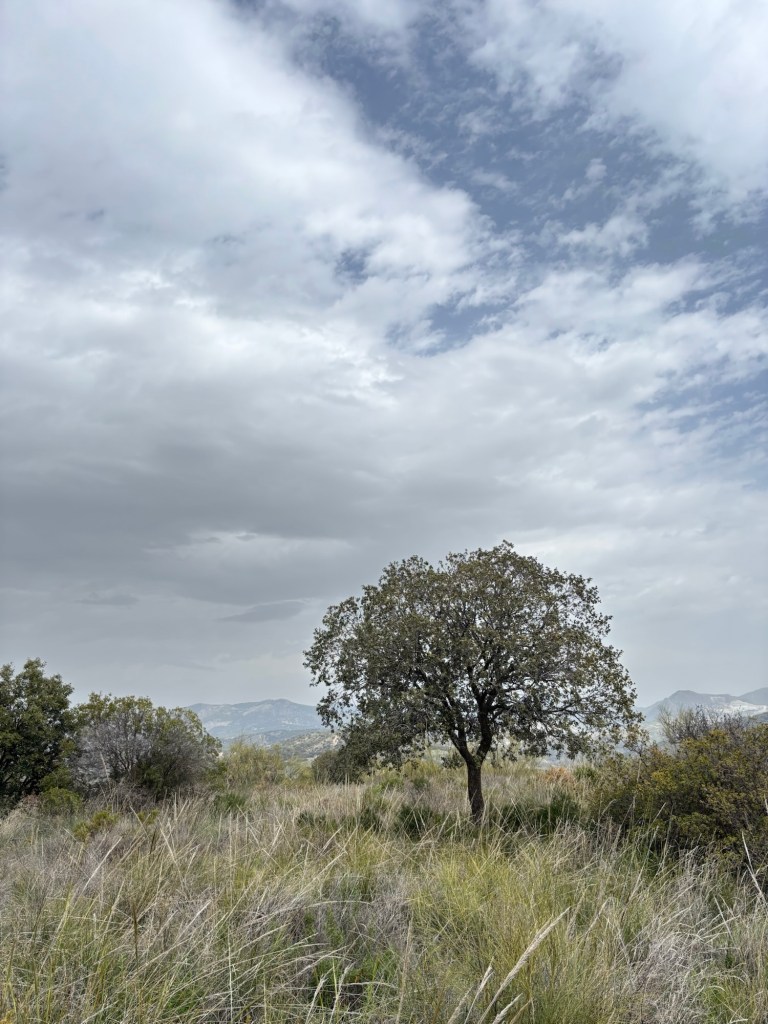
This is the Dehesa del Generalife. I suspect the Moorish sultan of old must have come hunting here with his retinue in the days of al-Andalus, as these hills are teeming with small game: wood pigeons, partridge and rabbits (I didn’t see the latter, but this is absolutely their kind of terrain). What a sight that must have been: the Moorish sultan and his hawks, looking up at the snowy peaks of the Sierra Nevada and across the Vega of Granada.

It’s far too easy to see why this place bewitched the Romantics and scores of travelers back in the day, before the modern tourist trade sank its teeth into the place. Well, here’s a corner of Granada they haven’t spoiled: quiet, ancient, magical. Sure, it’s an hour’s hike from the Alhambra, but some things are worth the trek.

On my way up here this morning, I paid a visit to the Capilla Real to see the tombs of Fernando and Isabel, the Reyes Católicos. I figured I’d made the voyage to El Escorial to see the other kings and queens of Spain, so I ought to pay my respects to the ones who started it all.

A surly security guard at the door gave me a long, hard look as he waved me in and warned me not to take any photos. I indicated the notebook and pencil in my hands and asked if I could sketch. He didn’t reply. His stoney expression might have been cast in the same marble as the sarcophagus behind him. I guess he didn’t see the joke.

It’s funny how some people get so uppity about tourists taking photos, but nobody ever seems to mind a sketchbook. I’ve stood on street corners for up to an hour sketching and nobody bats an eyelid, but whip your phone out in some places and there’s hell to pay.


I bought a couple books in the gift shop (I needed some reading material and they were relatively cheap, by Spanish standards) and climbed back up the Carretera Empedrada through the Alhambra forest, where I stopped to check in my flight for next week and sort out tomorrow’s bus to El Rocío. An enormous tour group of German pensioners ambled by. There must have been at least sixty of them, perhaps more. They were followed not too far behind by two outings from a Spanish private school – recognisable by the distinctive shade of blue uniform that is so popular with colegios privados out here.

That figure of eight thousand a day I heard yesterday really does seem more believable when you stop for a while and watch the tourist traffic.


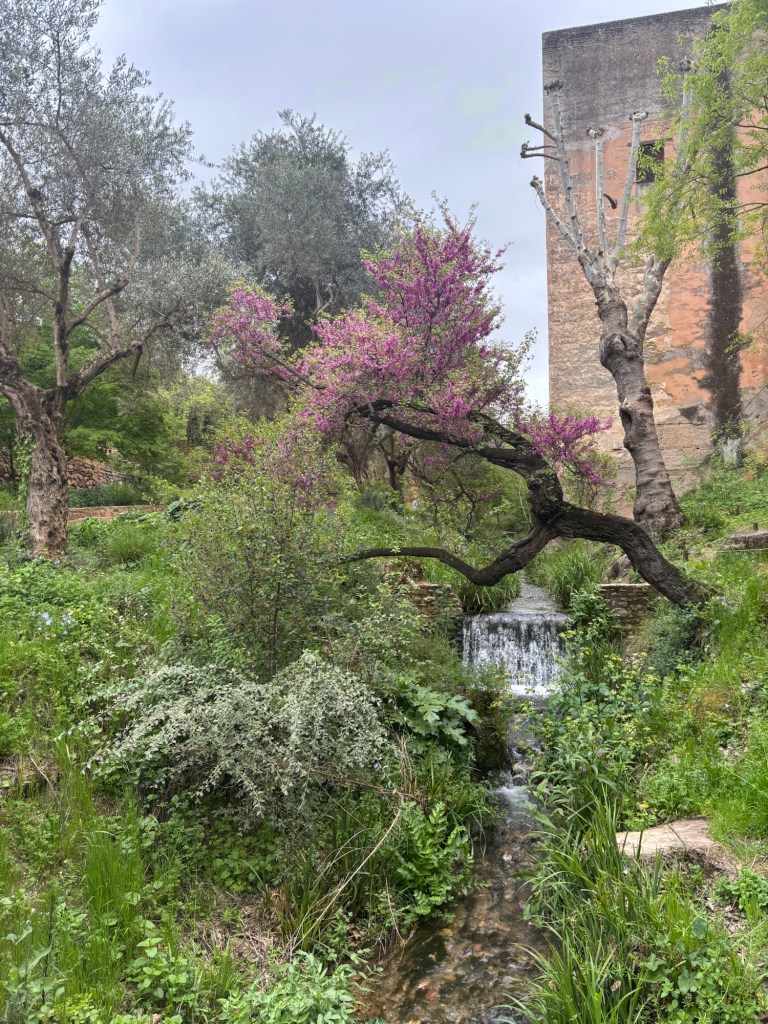
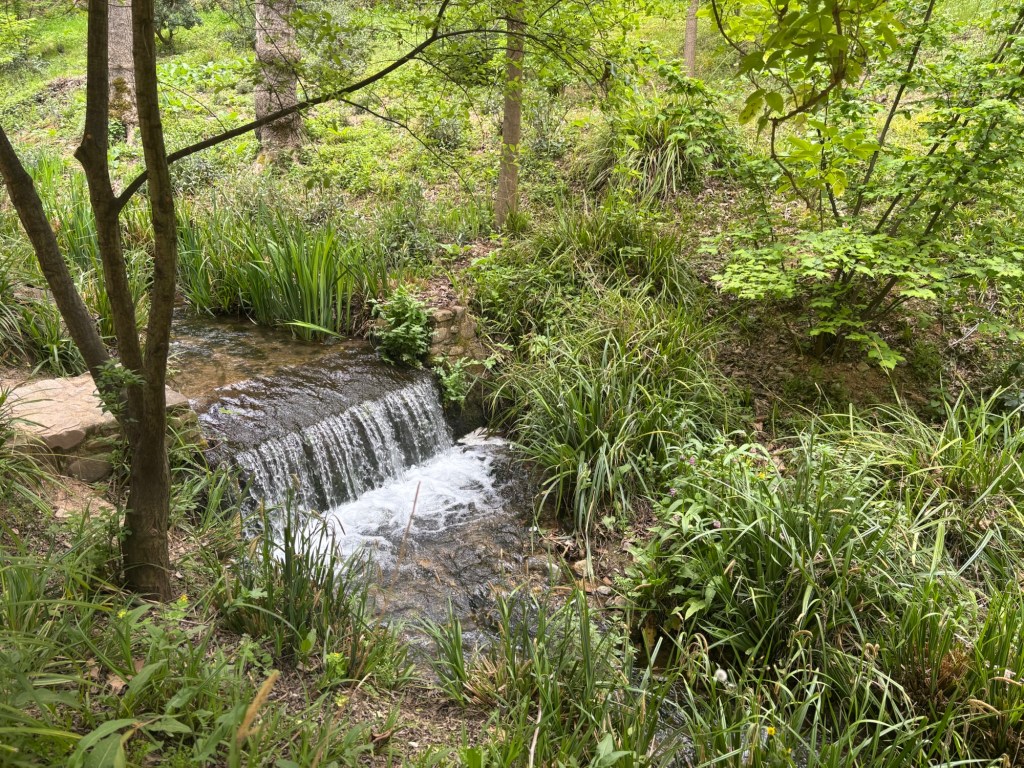
A short amount of time in the wilderness was enough, so around midday I dusted myself down, left the swallowtails to their games and headed back the way I came. When I came to the Alhambra, I took the right fork this time, following the Cuesta del Rey Chico down along the Acequía Real. It’s a steep descent (and an even less forgiving ascent) but it follows one of the main water channels right down to the Darro, so you’re accompanied all the way down (or up) by the most beautiful sound of running water. The Alhambra’s watchtowers serve as waymarkers: the Tower of the Captive, the Tower of the Judge, the Tower of the Peaks, and the Tower of Comares, the seat of the Sultan of old. The Sultan and his family may be long gone, but their waterworks are still running as they did then, six hundred years ago.

As I came down the hill, a thought came to me that had come several times now since I arrived in Granada. Who would not defy the world for such a place? Who would not have fought off the very hordes of Hell itself to defend this paradise on Earth? And what greater heartbreak can there be than to be banished forever from a place that was more than just a home, to know in the very depths of your heart that you had lost the keys to Heaven itself?

It’s not hyperbole. I’m merely paraphrasing the laments of the Andalusian poets of old when Granada fell to the Christians in 1492. It puts my own petty broken heart into a much-needed broader context. There was a sense of loss here far greater than anything a single heart can withstand. I have felt the tremors of it before in Sevilla and Córdoba, but nowhere stronger than here, the last bastion of the Muslims in Spain. Such a raw outpouring of emotion leaves a mark. Ghost stories would spring from it in more credulous parts of the world. Here, it is an indistinct melancholy – something in the air that once was, and is lost forever in all but memory.

Writing two hundred years before Granada’s demise, al-Rundi’s lament for the fate of Sevilla captures the grief:

A pretty lady, splendid as sunlight,
Her beauty just like coral and jewels bright,
Dragged off by infidel for rape most vile,
Her heart perplexed, she’s crying all the while.

Abu al Baqa’ Al-Rundi, Ritha alAndalus

I wonder how the Muslim tourists to the Alhambra feel upon seeing such a place? There do not seem to be as many as I remember.

One week remains. Tomorrow, I make for a place that has always been close to my heart: my Granada, my Jannah, my paradise on Earth. It looks like it will be a rainy weekend. But nothing could put a damper on the thought that I will see that place again, after all this time: El Rocío. BB x
Deep Song

Pensión Matilde, Granada. 22.58.

Like most days where I crammed far too much into one day, this one is going to be difficult to write about. I’ve had writer’s block for the last few hours just trying to get started. So I’ll try to go over the highlights.


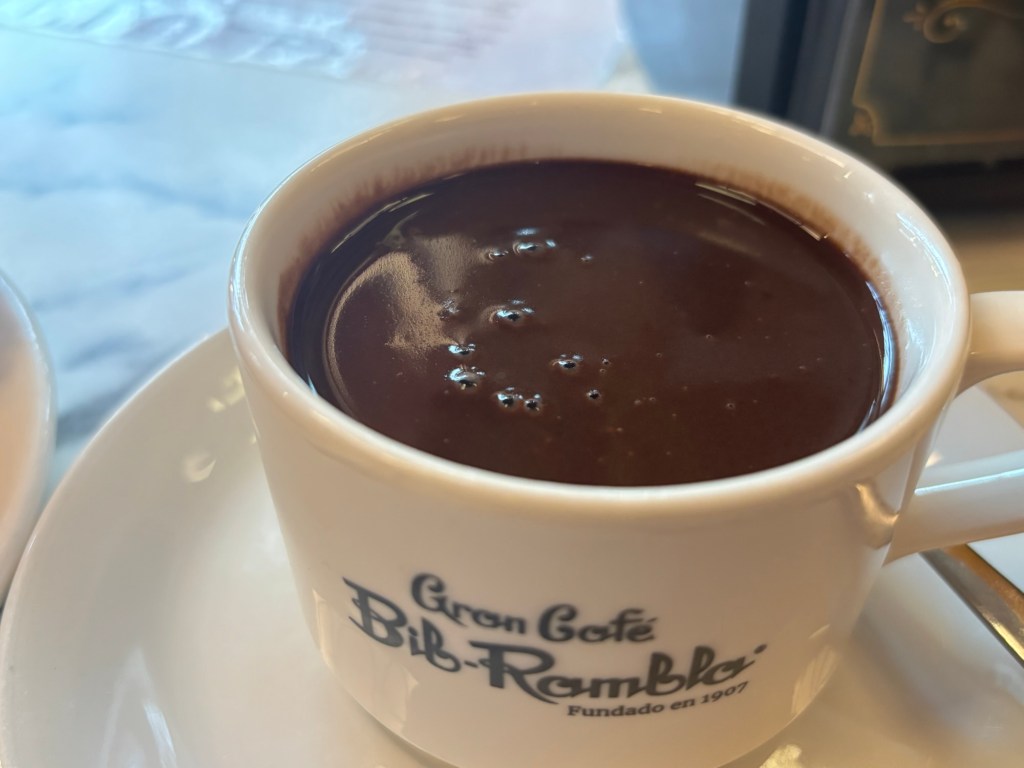
This morning began with a side of churros con chocolate at Café Bar Bib Rambla, an old haunt of my mother’s when she was on her travels around Spain back in 1988. It was just as good as she described it. Churros are definitely a once-a-year treat – I can’t quite justify any more than that – but Spain’s fondness for warm liquid chocolate is definitely something I share. I needed to kill some time (and break down some paper money into loose change) between the wash and dry cycles in the laundromat, so it was good to kick back and relax in a café that has stood the test of time.


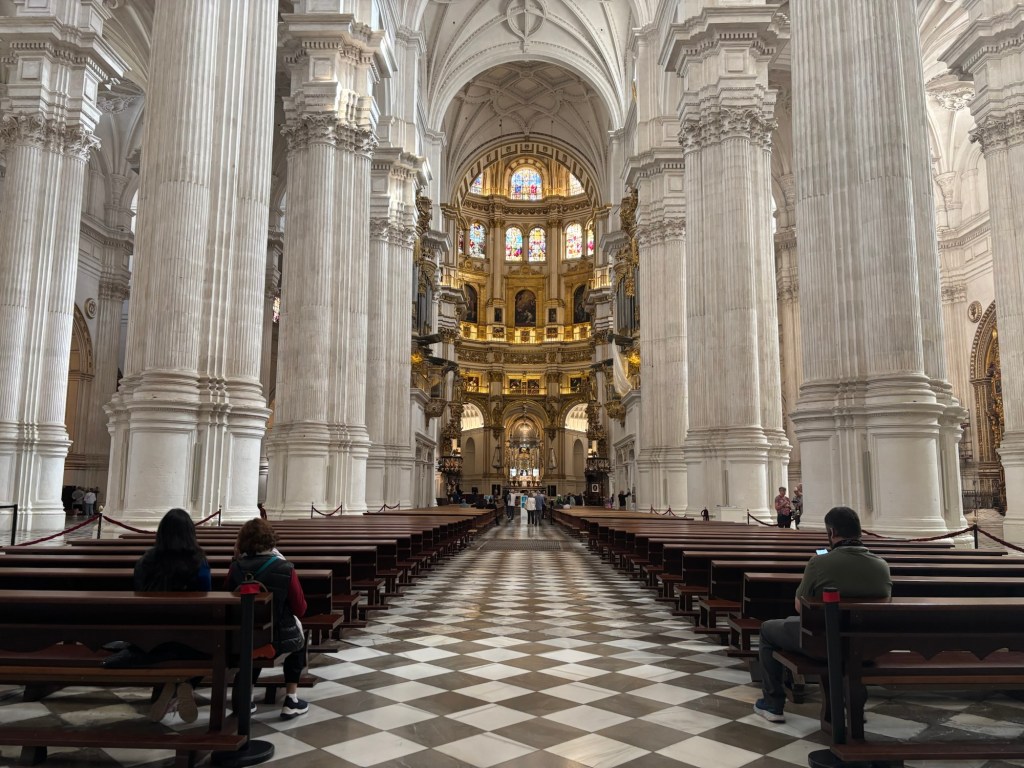
After wrestling with the laundromat and coming away with a clean load of washing (yay!), I went back into the city in search of my Alhambra ticket. Along the way, I dropped in on the Cathedral, hoping to see Fernando and Isabel – and completely forgetting that they’re not interred within Granada’s cathedral at all, but in the Capilla Real next door. There’s a separate entry fee of 7€ for each, coming to 14€ if you want to do both. Of course, if you have the Alhambra card (which I also completely forgot I had bought) then both are covered. So I felt a little bit gulled.

Granada’s cathedral is… well, I’ve heard it said that it’s one of Spain’s most beautiful, but I’m not convinced. So many of them look the same, and while it may have its merits, it suffers from the same problem as the Cathedral of Córdoba: it’s sitting in the shadow of something truly unique and far superior in style. Santiago de Compostela boasts a spectacular cathedral, as do Salamanca, Barcelona and León, but Granada… I won’t get on my high horse about it, as my feelings are rather strong.


I popped into the Palacio de los Olvidados, mainly to check out an exhibition on the Inquisition (a long-term interest of mine) but also to investigate their collection of colourful art prints of Federico García Lorca, Spain’s greatest poet. I don’t know his works nearly as well as I should, so I’ve bought a couple for my classroom to inspire me – and the kids, of course. There’s a good possibility that he and my great-grandfather knew each other, as both belonged to poetic circles in the same part of the country and espoused left-wing ideals at the beginning of the 20th century – before the regime got to them both.

That alone should give me cause to dig a little deeper, but it’s the revelation that he was a musician – this has come far too late for a self-professed Hispanophile like me – that has really stuck with me. I must read his Poeta en Nueva York when I get home.


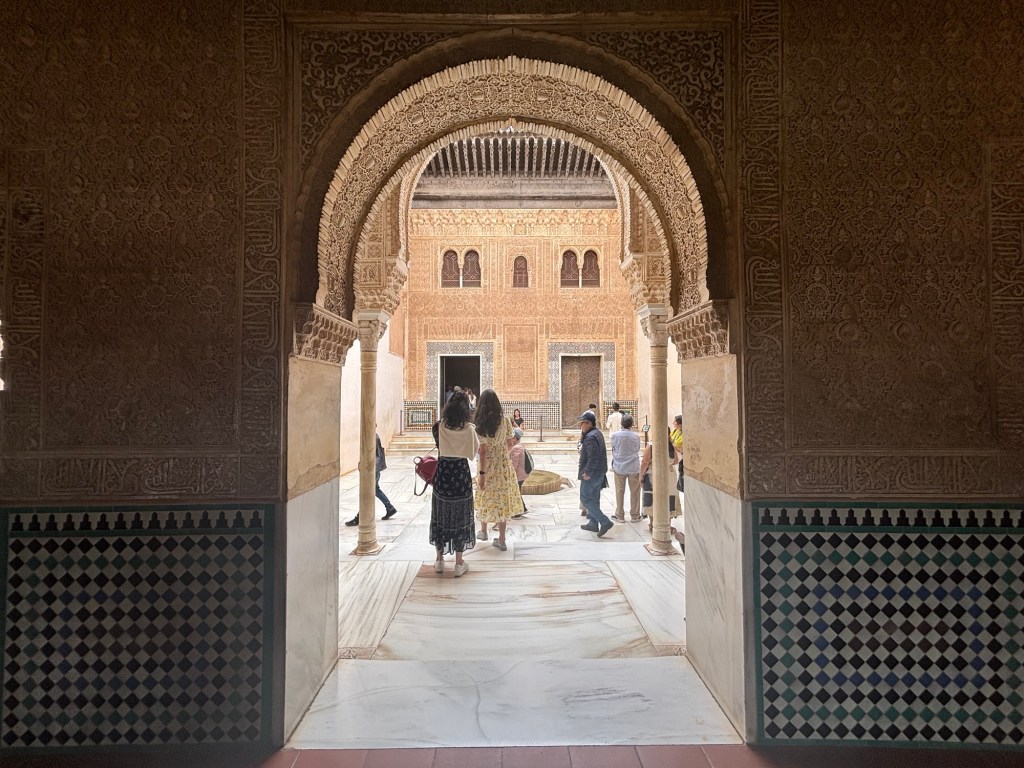
By the time I got up to the Alhambra, the brilliant blue skies of the morning had been concealed behind a glaring white haze. Thank goodness I got my winning Alhambra photos years ago, or I’d have been really quite miffed. No, this time, I relied upon my sketchbook. I spent almost half an hour in the Mexuar, the modern entryway to the Nasrid palace complex, sketching the stucco archway overhead.

A neat trick to carrying a sketchbook is that you can listen in on guided tours without looking like you’re obviously listening in. Another neat trick I have up my sleeve is that language is no barrier: in the half-hour that I spent in that spot (and another half-hour by the reflecting pool) I got the drop on an Italian tour, two Spanish tours, a French school group and their guide and a couple of English tours. I didn’t catch a word of the Polish tour, but six out of seven isn’t bad.

Did you know that the Alhambra receives – on average – around eight thousand visitors per day? That makes it not just one of Spain’s most popular tourist attractions, but an incredibly difficult job for the palace’s restoration team. Given proper care, floor tiles can last up to a hundred years until they need replacing. But let’s face it, your average tiled kitchen floor isn’t being manned by eight thousand new cooks every single day of the year.


In times gone by, men like Washington Irving had to step in to stop tourists from chipping tiles and plasterwork off the walls to take home. These days, it’s all the security guards can do to stop the school groups and Korean selfie seekers from leaning against the pillars and posing against the walls, rubbing away pieces of the past with every vanity shot.

Seriously – the number of peace-sign poses that some of the tourists were throwing… You’d think they were wandering around a Comic Con event rather than a medieval Islamic treasure.


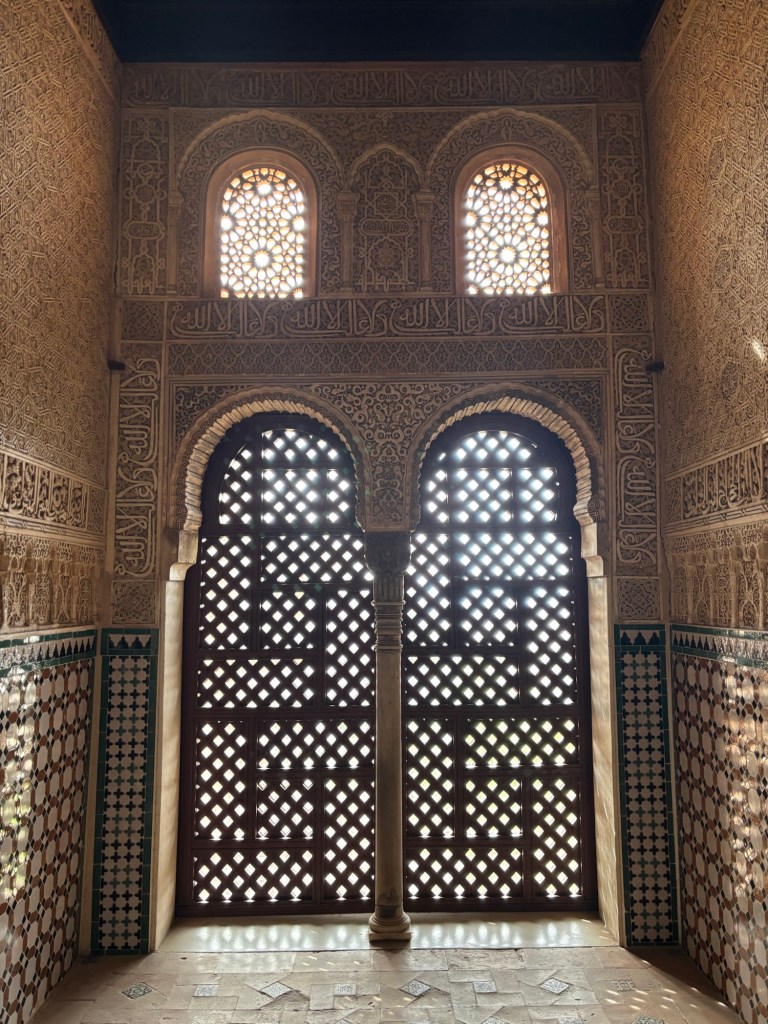
Once, this place was even brighter. The faded beige stucco on the walls would have been covered in a rainbow array of colours, some of which can still be seen in the cracks in you look close enough. The lavish gold leaf and furnishings are, of course, long since gone, stolen by treasure hunters from the time of the Sultanate right up until the late 1800s. There were once carpets and drapes all over the place, too, but these were removed by the conquering Spanish as a fire hazard in an early concern for health and safety. I remember reading somewhere that they also had the floor lowered as the windows were too close to ground level, but don’t quote me on that. The Alhambra has been restored and modified so many times since its construction that it’s probably a far cry from what it originally looked like: a ship of Theseus or Washington’s axe, depending on which take on that metaphor you prefer.

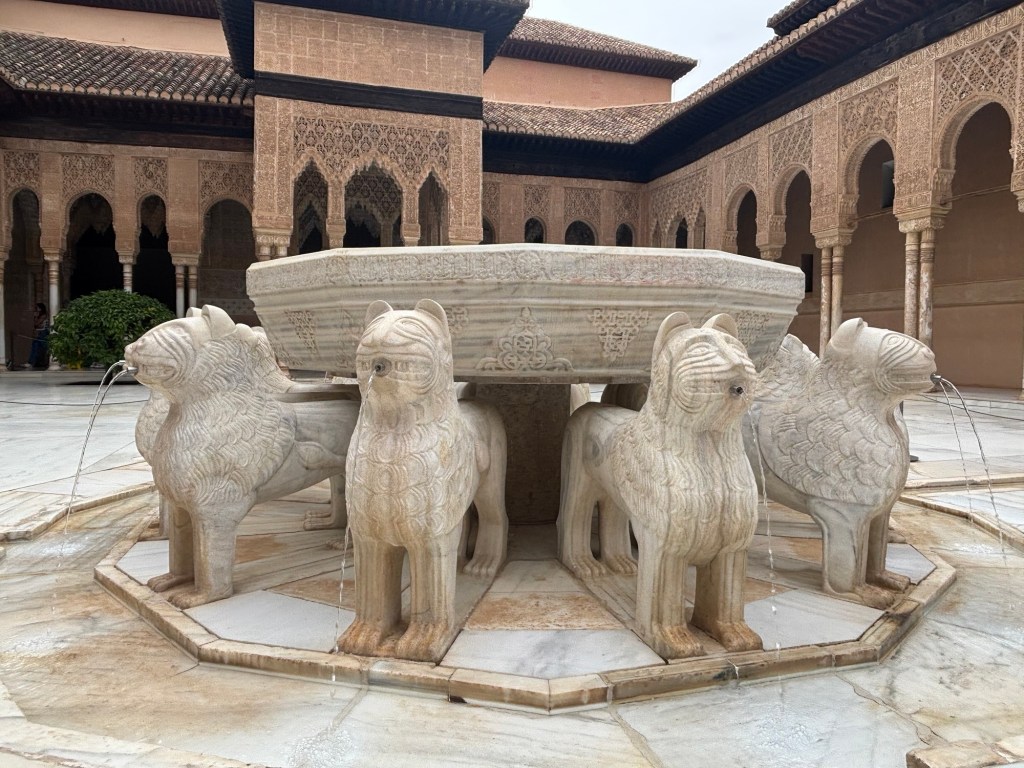
I’ll tell you what was jolly nice, and that was seeing the Court of Lions. It was under heavy scaffolding when I last came here in 2011, so it was the only first-time experience I had on the tour. This enigmatic feature of the Alhambra really stands out, especially as depicting the physical form is usually proscribed in Islam. The fountain and its accompanying lions have long been a symbol of the Alhambra, though they were a late addition to the complex. It’s thought that they weren’t Islamic in origin at all but rather Jewish, as the fountain is believed to have come from the house of the Jewish poet Yusuf ibn Nagrela. The logic checks out: there are twelve lions in all, one for each of the tribes of Israel, and two bear the triangular insignia of the tribes of Judah and Levi on their heads.

It is, at least, an interesting theory.


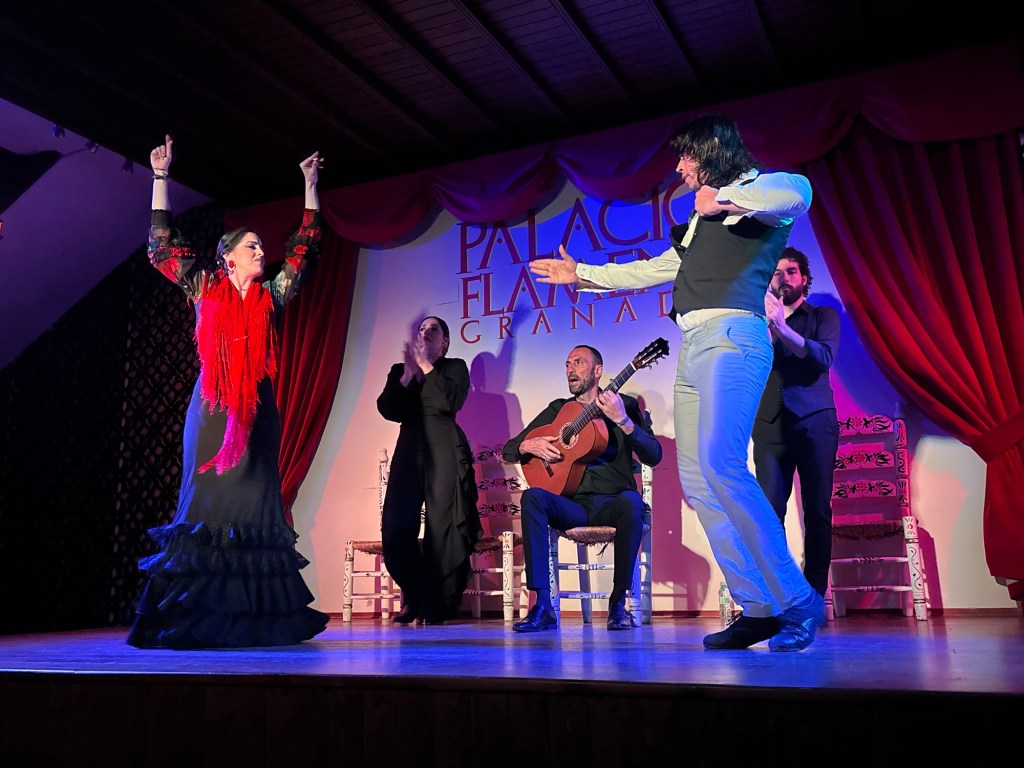
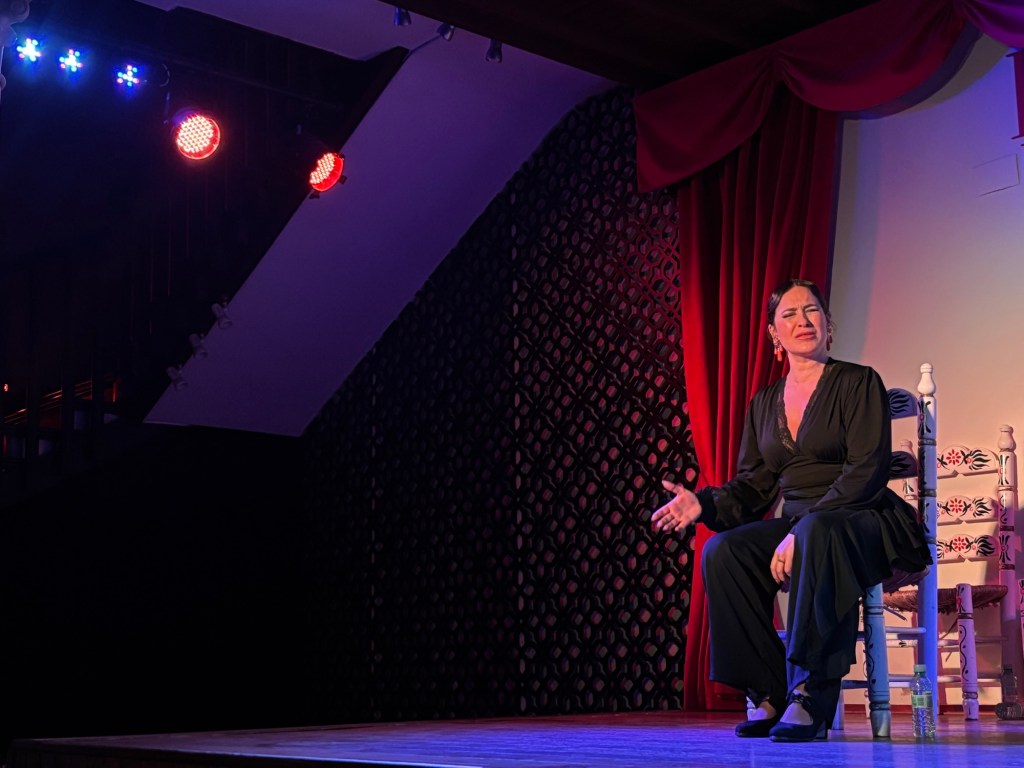
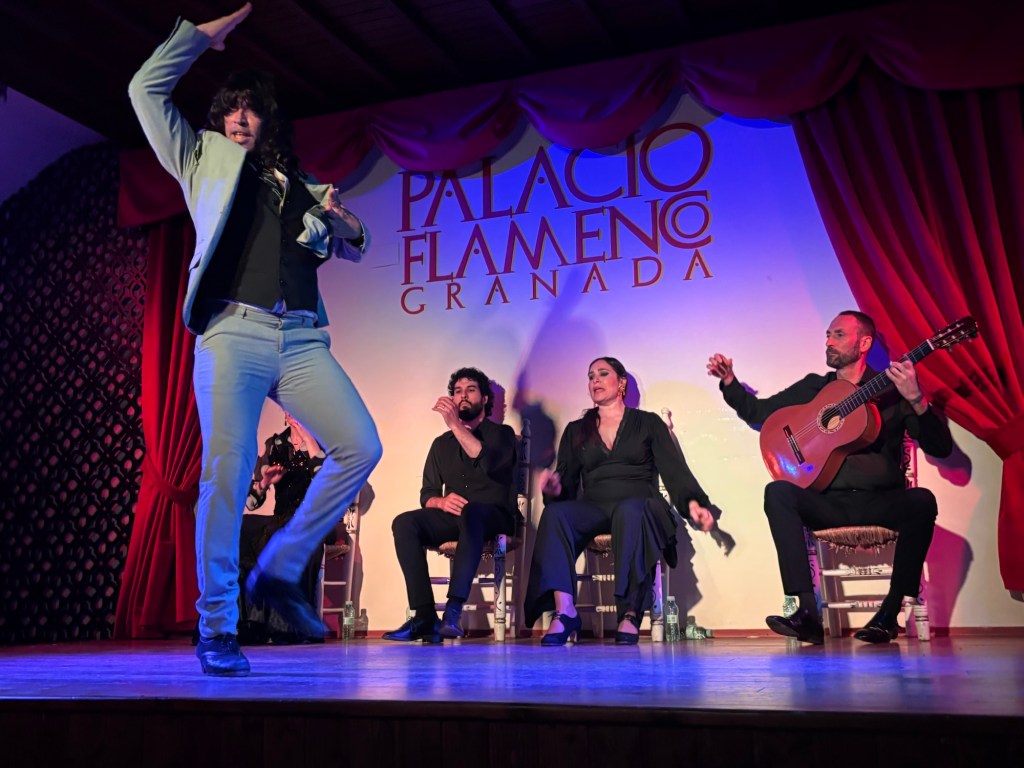
My visit was cut short by the fact that I’d booked myself in for a tablao flamenco at the Palacio de Olvidados – yes, I caved in. And I am so very glad I did. I was worried that I’d find a lot of half-baked flamenco in town, but this was nothing short of spectacular.


There’s a depth to flamenco that just isn’t there in a lot of other folk music forms from around Europe: a heart-rending, wailing passion that can only be truly understood by the descendants of a people cast out and rejected everywhere they went. This is the soul of the gypsy on full display: naked, passionate and rebellious.

You could argue that the same case means white people can’t sing gospel music. I’d listen. Goodness knows I’ve had to table that argument before. But just because you don’t belong to a culture that produces a certain kind of music, that doesn’t mean it can’t move you.

I’ve no gypsy blood at all – as far as I know !but Flamenco moves me. It had always moved me. For whatever reason, Flamenco shoots straight to my heart and draws tears from my eyes. There’s a rawness to it, a gutsy, authenticity to its passion that is hard to find elsewhere. The voices of the singers tremble and fragment like a scream or a wail, and sometimes that’s exactly the point.

Don’t forget: the gypsies weren’t just ostracised, they were actively hunted as subhumans for years. Spain’s gitanos were the subject of hatred, scorn and outright violence since they arrived in the peninsula shortly before the fall of Granada. Being beyond the law, as it were, they were frequently targeted for enslavement, either in the mines or as galley slaves, which was essentially a death sentence in all but name.

In 1749, King Fernando VI organised the Gran Redada – the Great Gypsy Round-Up – with the express purpose of wiping out the country’s gypsies once and for all. Though not a genocide in the strictly modern sense, as the plan was to imprison rather than execute, the Redada’s stated aims of separating the male and female Roma and thus preventing them from “bringing about another generation” amount to the same thing.

And that’s just Spain. Holland and some German territories held heidenjachten (literally “human hunts”) until at least the 18th century, showing just how far the dehumanisation of the European gypsy could stretch.

Small wonder, then, that there is so much pain and anguish in the voice of the gitano. There’s centuries of agony to draw on.


Not to be dismissed is their footwork. Flamenco is as much a dance as it is a music form, and perhaps more so. There is no stately rhythm to follow, no pattern to predict: flamenco flows like water, where every drop runs its own course to the finish. Here, the dancers seem to lead the musicians. The eyes of the singers and the guitarist were on the dancers’ feet at all times, anticipating their every move.

I was enthralled. I adore flamenco. I love its maddening rhythms, its utter freedom, its unpredictability. Perhaps that’s the naturalist in me: it’s nature in musical form. I wouldn’t be the first to compare flamenco to a wild bird or beast and I won’t be the last.


Right – that’s quite enough for one day. Time to go and explore some book shops before they close. BB x

Tears, Courage and Charisma

I hadn’t planned to write much this evening, what with reports to finish and the first round of the school debating competition to support, but as I let World Poetry Day pass me by without saying a word yesterday, I thought I might pay a short homage to some of my favourite poems and say why they’re so precious to me.


RITHA AL-ANDALUS

Ask Valencia what became of Murcia
And where is Jativa, or where is Jaen?
Where is Cordoba, the seat of great learning
And how many scholars of high repute remain there?
And where is Seville, the home of mirthful gatherings
On its great river, cooling and brimful with water?

These centres were the pillars of the country:
Can a building remain when the pillars are missing?
The white walls of ablution are weeping with sorrow
As a lover does when torn from his beloved;
They weep over the remains of dwellings devoid of Muslims,
Despoiled of Islam, now peopled by infidels!
Those mosques have now been changed into churches,
Where the bells are ringing and the crosses standing.

This misfortune has surpassed all that has preceded
And as long as time lasts, it can never be forgotten!

Lament for the Fall of Seville, Abu al-Baqaa al-Rundi (1267)

Al-Rundi’s lament for the fall of al-Andalus is poetry in action. It’s a desperate plea for help from the Muslims of al-Andalus to their coreligionists across the sea in the language in which they excelled. Regardless of where you stand on the debate over whether Islamic Spain really was a haven of tolerance in a darkening world, it is hard not to be moved by the words of its poets as the westernmost star of the Islamic world was dragged below the horizon, never to rise again. Perhaps it was that sense of impending doom, with the Christian wolves howling mightily at the door, that infuses the words of al-Rundi and Ibn Zaydun and their kin with such mournful magic, conjuring up an image not of what was lost that had once been great, but of what could have been in such a land. I could have chosen any one of a number of beautiful Hebrew poems to chime in more closely with my family’s experience, but al-Rundi says it so masterfully.

As a child growing up in a former Moorish stronghold in Andalusia, I was completely bewitched by the lost paradise of the Moors. I am under that spell still.

Of course, it sounds a lot better in Arabic – especially since Arabic poetry of the highest calibre is song in its purest form. You can have a listen here.


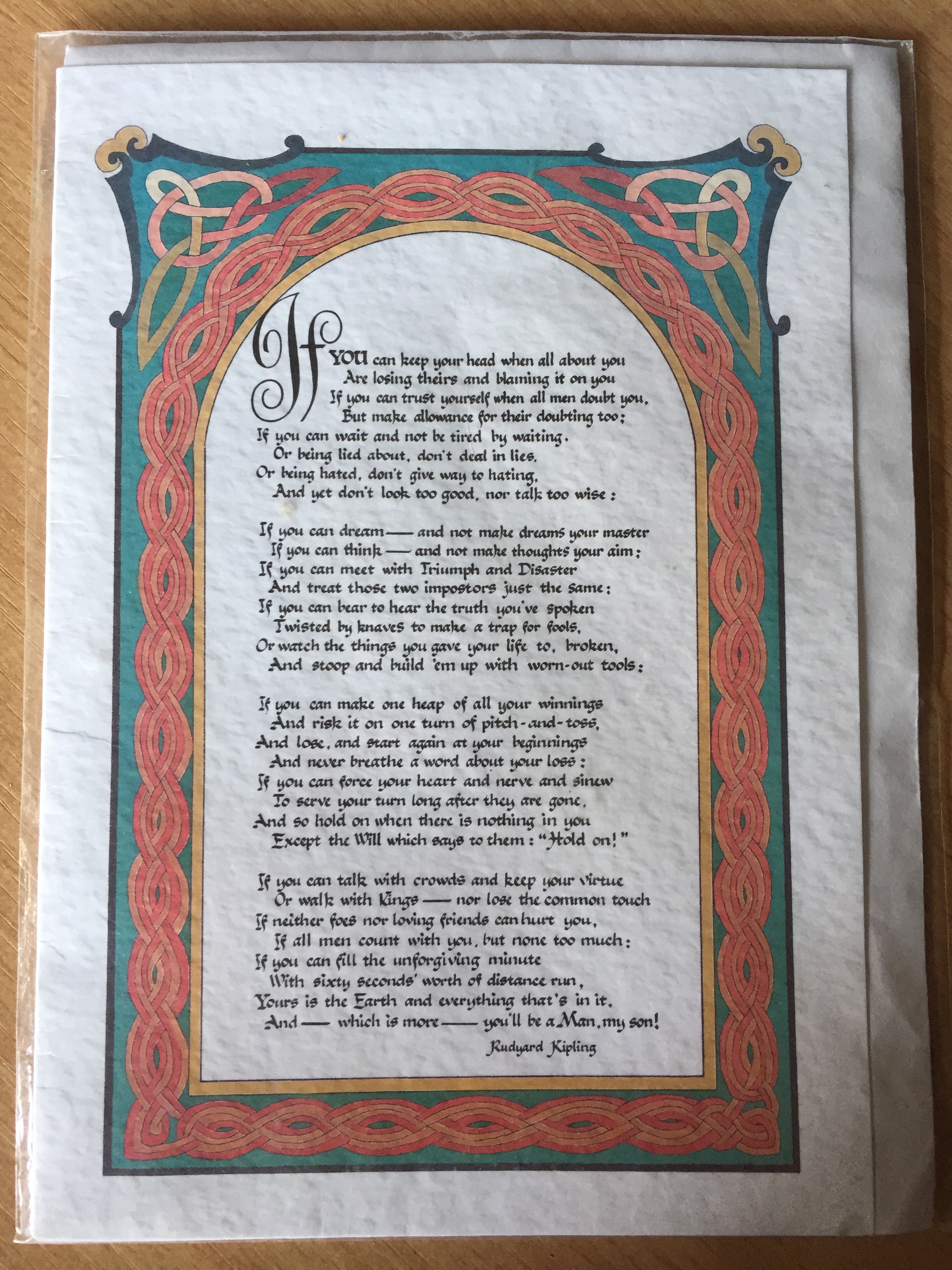
IF

If you can keep your head when all about you
Are losing theirs and blaming it on you,
If you can trust yourself when all men doubt you,
But make allowance for their doubting too;
If you can wait and not be tired by waiting,
Or being lied about, don’t deal in lies,
Or being hated, don’t give way to hating,
And yet don’t look too good, nor talk too wise;

If you can talk with crowds and keep your virtue,
Or walk with Kings – nor lose the common touch,
If neither foes nor loving friends can hurt you,
If all men count with you, but none too much,
If you can fill the unforgiving minute
With sixty seconds’ worth of distance run,
Yours is the Earth and everything that’s in it,
And – which is more – you’ll be a Man, my son!

Rudyard Kipling (1895)

I’ve always been a fan of Kipling. I guess you can chalk that up to a few years in a prep school when I was younger. Colonialism, privilege, blah blah blah. That doesn’t shake the fact he had a special gift for words. My relationship with this particular poem started on my first day as a deputy boarding master. My first housemaster kept a copy of this poem on his desk, propped up against the computer, and I made a point of reading it every time I should be in the office. It gave me strength in what was arguably a tough year – training as a teacher for the first time is tough enough without an earth-shattering global pandemic cutting right through the middle of it.

I really can’t think of a better poem for a housemaster. The virtues Kipling offers up (an edited selection above) are just as important today as they ever were, and if I should follow that path myself someday, I too will have a copy of this verse in my office. For myself, if not for my boys.


EL MOZO ARRIERO Y LOS SIETE BANDOLEROS

Camino de Naranjales
caminaba un arriero:
buen zapato, buena media,
buena bolsa de dinero.
Arreaba siete mulos,
ocho con el delantero;
nueve se podian contar,
con el de la silla y freno.
A la salida de un monte
siete pillos le salieron:
– Donde caminas, buen mozo,
el buen mozo arriero?
– Camino hacia la Mancha
a un encarguito que llevo.
– A la Mancha iremos todos
como buenos companeros.

Al revolver de una esquina
una taberna que vieron,
– Echa vino, montanes,
echa vino, tabernero,
que lo pagara el buen mozo,
el buen mozo arriero.
– Yo si lo pagare,
que tengo mucho dinero,
que tengo mas de doblones
que estrellitas tiene el cielo.
El primer vaso que echo
se le dieron al arriero.
– Eso no lo quiero yo,
que yo veneno no bebo.
Que lo beba el rey de Espana
que esta muy gordito y bueno.

Sacan los siete sus sables
saca el suyo el arriero.
De los siete mato a cinco
y los otros dos huyeron.
Viene la Guardia Civil
y se llevan al arriero
y el arriero tuvo tiempo
y a la reina escribio un priego.

Y la reina se reia
Cuando lo estaba leyendo
– Si como ha matado a cinco
hubiera matado ciento.
Y cinco reales son diario
mientras viva el arriero.

Camino a Naranjales, Spanish Folksong

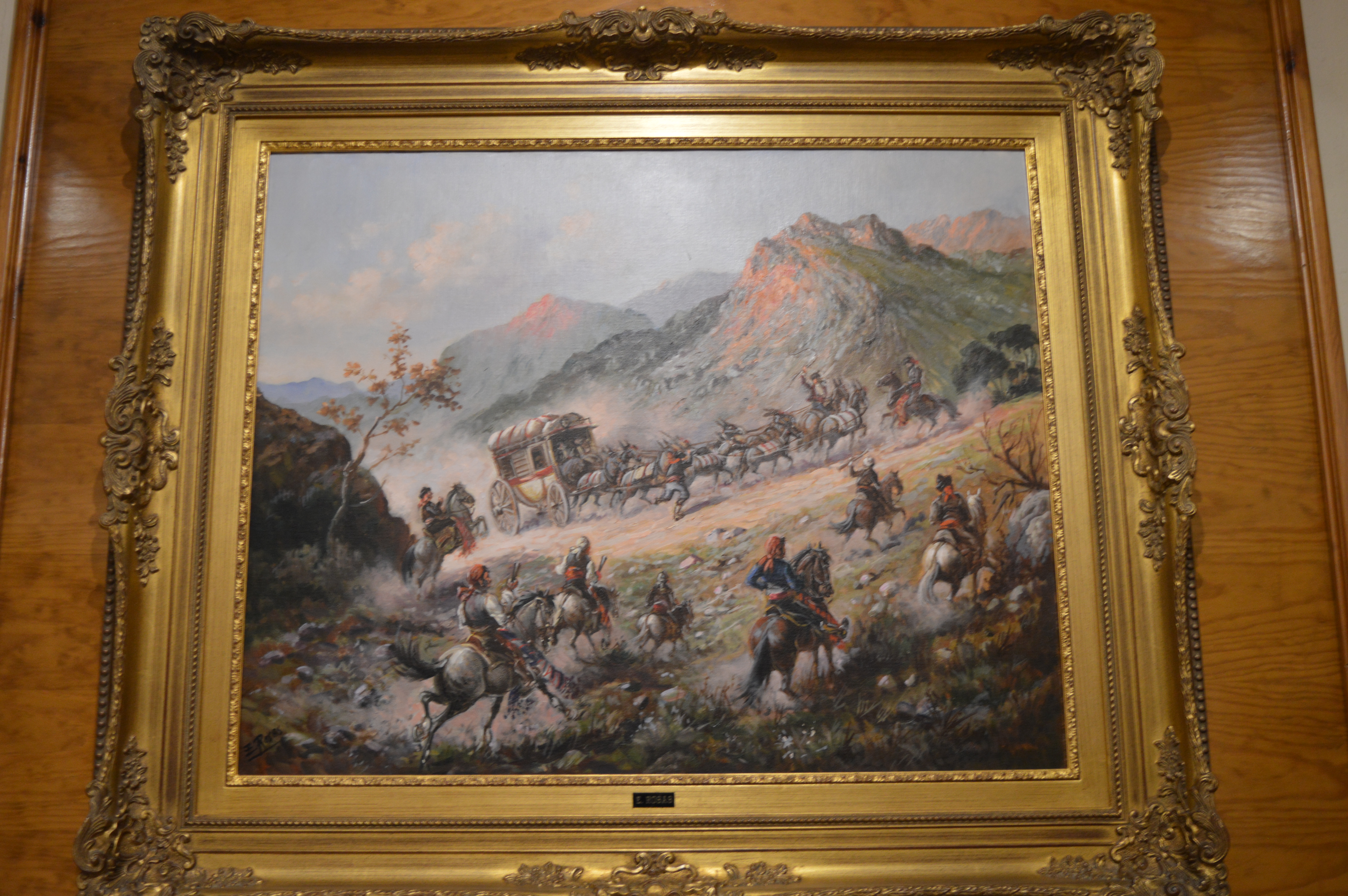
Not all poems have to speak from the heart. I love a poem that tells a story. And I’ve loved this one since I first heard it years ago in the grating tenor voice of an extremeno shepherd, recorded for posterity in the archives of the town library. There’s a beguiling frivolity in a lot of Spanish verse that pairs jauntily with the mournful Andalusian elegies and love poems, but it’s the tales of the arrieros, the brave and hardy muleteers, that I’m especially drawn to. No art, no gravitas, just a wily muleteer who bests seven rogues and is rewarded for his courage by a queen, no less. Pure Spanish whimsy – and I adore it.


What are the poems that shaped your world? Do you have any favourite lines or stanzas? Do you sometimes try to weave them into your writing like I do? (You might have spotted a thinly-veiled reference to Lawrence Ferlinghetti’s Two Scavengers in a Truck, Two Beautiful People in a Mercedes in Sunday’s post, which remains stamped across my heart – like most poems one studies for GCSE.)

I should read more poetry this year. I’ll start this weekend, while I’m on duty. It’s a lot easier to get through a poem a day than a chapter of a book, I find. Especially as a teacher. BB x