The sun is climbing toward its pinnacle in the enormous Peruvian sky. The UV warnings on the weather apps are off the charts, so I’m going to have to layer up properly with the sun cream before I leave the bus, or I’ll be fried out there. My destination today is Paracas, a coastal resort town some 256km to the south of Lima – more specifically, the Islas Ballestas and their seabird colonies.
First, however – a few observations about Peru. For one thing, my dating apps have exploded. Without even lifting a finger, I’ve got more hits in twenty four hours than I’ve had in four years, and that’s no exaggeration. I wonder what that says – about me and about this country. Is it because the odds of somebody finding me attractive have been boosted by the overwhelming numerical force of some ten million people? Am I simply more interesting to a Latin mindset than a European? Or – dare I say it – is it something more sinister?
Is it because I’m white?
Hear me out. Malinchismo is a concept we study at IB and A Level Spanish – that is, it’s a concept I always try to include in any syllabus I’m teaching that involves Latin America. In short, it’s a form of cultural “cringe”, an embarrassment of one’s own native culture in the presence of an outsider, which often manifests in the invisibilisation or even eradication of the affected community. The term itself is Mexican and comes from the problematic folk anti-heroine La Malinche, a teenage girl who served Hernán Cortés and his conquistadors as translator and thus played a major role in the toppling of the Aztec Empire.
It may be Latin American in concept, but it is a global phenomenon. It explains the demand for skin-whitening creams in Africa and Asia and the dominance of English as a trade language, even in corners of the world that don’t see many Brits. It has even sunk its claws into our own island, with RP and its bratty sibling Estuary English swallowing up most of the old accents and dialects.
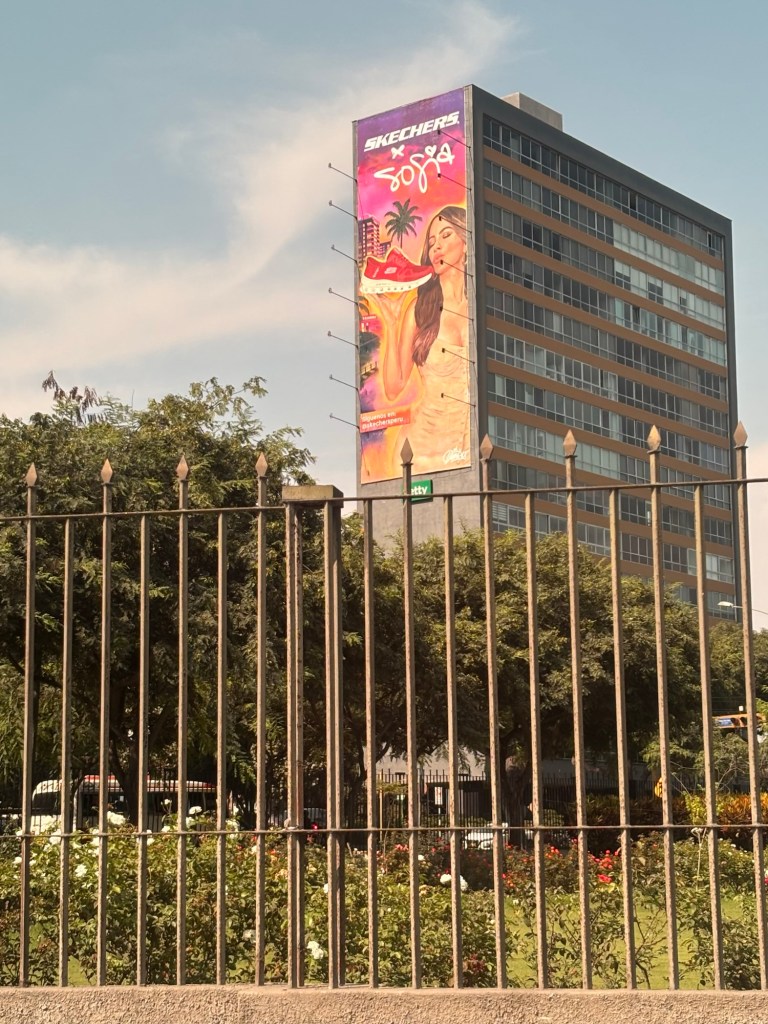
Peru, like the US, is a billboard country. Commercial is king. And the face of those enormous commercials is very rarely Peruvian. Giant posters for everything from sportswear and energy drinks to doctors and dental practices all feature the same cast: lithe, beaming individuals, all handsome, all sporty, all white.
I’ll use the dating apps as a counterpoint. There are so many beautiful native faces and body types out there, and that’s just from a glance. But I’ve yet to see any of them represented on the billboards. It’s as though they’re all advertising some supernatural deity, removed from this world, above and beyond the reach of the average Peruvian.
Which, I suppose, isn’t all that far from the truth.
What do we do about it? By the looks of things, not that much. The hostel I’m staying in has a crowd of white tourists (including me), many of them on the next leg of a grand tour of South America. Very few of them speak any Spanish whatsoever.
In the hostel, they talk. Largely about things travelers always talk about – that is, home – and swap stories of nightmare experiences along the road. They talk of the continents they’ve ticked off. They talk of ayahuasca: two guys who can’t have meat or salt or sugar or sex for a month because a shaman put a plant spirit inside of them which – or so they were told – would react most fiercely if they broke their diet pact. Others talk blithely of Iguaçu Falls (“beyond the waterfall there’s not that much else to see”), Rio (“the party scene is decent”) and Patagonia (“it’s actually really expensive and full of couples”).
Most of the travelers I was with this morning have gone. It’s only a handful of stragglers who opted for the Paracas Reserve tour and the Hacienda San José slave tunnels. Everyone else has gone on to Huacachina, an oasis town famous for its sand dunes – which we venerate by driving all over them in petrol-belching dune buggies.
Say what you like, but it’s a strange way to appreciate another country. Imagine if the White Cliffs of Dover were turned into an enormous quad-bike park, charging wealthy Arab and Chinese holidaymakers a handsome sum to tear up one of our most beautiful landscapes. It’s not exactly an awkward comparison.
What saddens me more, I think, is the lack of genuine wonder. Maybe it’s a Western thing to avoid poetic adoration – at least out loud. Maybe we’re just too sanguine. It might come across as “gushing” or insincere. Either way, you hear a lot more about their “trips” than their trips. The whole of South America seems to pass them by in a psychedelic haze.
The whole thing smacks of colonialism. Not the naked, gun-point kind that subjugated the Americas long ago, but a more insidious march of cultural domination. When we holiday abroad and talk about home, and not about the places we see, we build up a temple to the West and its ways that is, quite frankly, underserved. By demanding adrenaline sport holidays and beach or ski resorts, we are only tightening the chokehold that Western culture has over the world. It doesn’t matter that it’s no longer fashionable to abuse the people when we’re quite happy to continue to tear up the land itself. That is colonialism – it just walks, talks and dresses like the very Western liberals who claim to despise it.
Tourism makes up for about 8% of Peru’s GDP. Many Peruvians rely on the tourist industry and the money it brings to make a living. The least we can do is to come here with an open heart and an open mind and tread softly.
This is not our world. We should be gentle in how we handle it. BB x
I’ll start with Uber. Lima is absolutely enormous – a 2,672 square kilometre metropolis with over ten million inhabitants – and it’s pretty daunting to get even from Miraflores to the coast, and especially when you’re lugging around some pretty expensive gear.
Uber to the rescue! For little more than the price of a meal deal, I was able to get to my destination this morning: the Pántanos de Villa, a wetland reserve sheltered within the city itself.
I actually had cold feet about my plan this morning. Was I doing some ridiculous by striking out on my own to a corner of Lima well off the usual tourist trail?
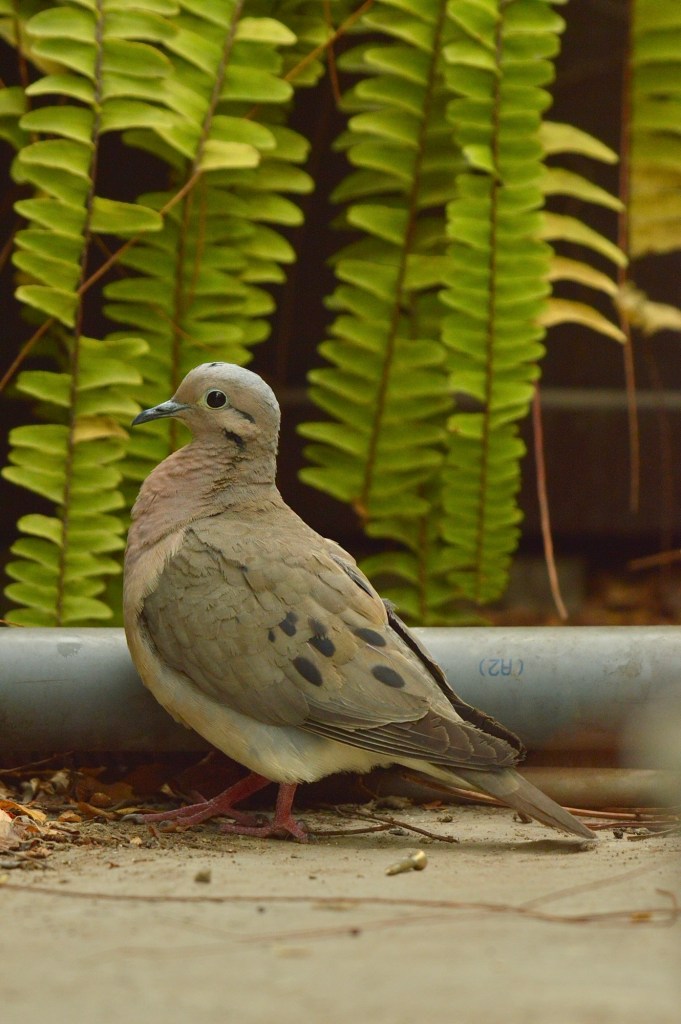
Then again, if I didn’t, would I regret it? The answer was a resounding yes, so I hailed an Uber and set out. But not before seeing my first Peruvian bird of the trip: an eared dove which was kind enough to wake me up this morning.
Uber drivers aren’t a very talkative lot, but their choice of radio is always interesting. My first had YouTube on and was watching/listening to a bizarre Peruvian comedy show featuring two men with oversized prosthetic noses commenting on the imminent Paraguay/Brazil football game. Whatever they were saying was hard to follow beneath an overactive soundboard, rotating between all the classic meme sounds after almost every line. Soundboards seem to be a feature of modern mass media, but I confess myself surprised to find it already taking root out here.
The most obvious sound by far is car horns – which are technically banned in Miraflores, though that doesn’t stop them being part of the sinfonía limeña.
The Pántanos are a sanctuary within the hustle and bustle of Lima. Even if birds aren’t your thing, it’s good to come here for a bit of peace and quiet. I got there for 8.30am, which is when the website said the reserve opened its doors, but I was told very politely that the guides would be there at 9am, if I would be so kind as to wait.
I had no issues waiting – one of the thing I was most excited to see in Peru was already here. So many of them, in fact, that I lost count.
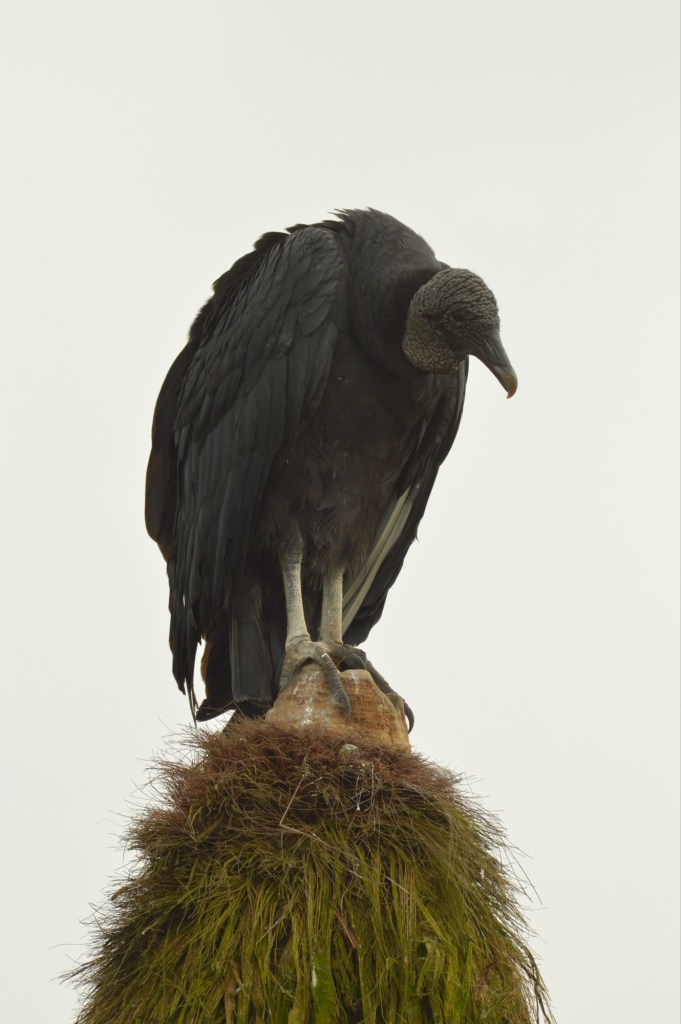
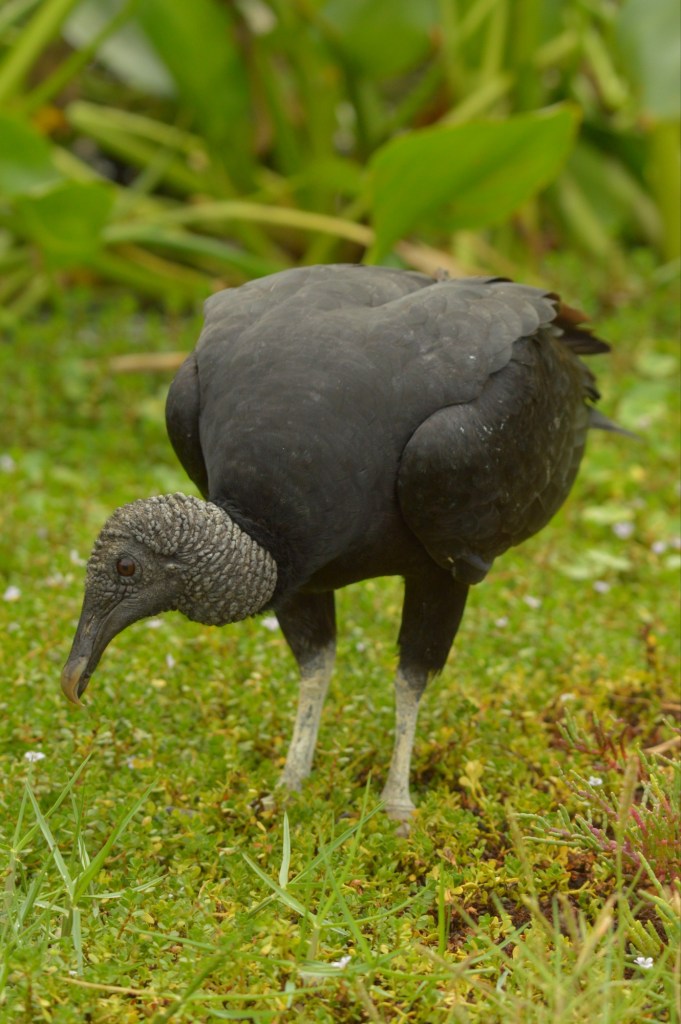
Introducing the black vulture, known in Peru as the gallinazo, which might be translated as “enormous chicken” – which fits quite nicely, I think.
They’re about the size of a turkey, and the only sound they make is a sort of grunted sneeze. My guide, a knowledgeable young tourism grad who was working her way toward a posting in Arequipa, pointed out how skittish and shy they can be – which was the only thing she said that made me raise an eyebrow, because it feels like nothing in this country fears the presence of man like they would in Europe. I’ve never been so close to so many species in a single day. I wonder why that is?
The Pántanos’ star resident is the Siete Colores de la Totora, a seven-coloured gem of a bird that is surprisingly hard to spot as it feeds among the stems of the reeds. Seeing one would, according to my guide, be a very “buen augurio” (good omen), but I made it plain that I wasn’t here to tick boxes – I just wanted to see any and all of the magic that Peru would offer. We got incredibly lucky and saw a wild cuy, a species of guinea pig that are native to the marshes, but it was much too quick for my camera.
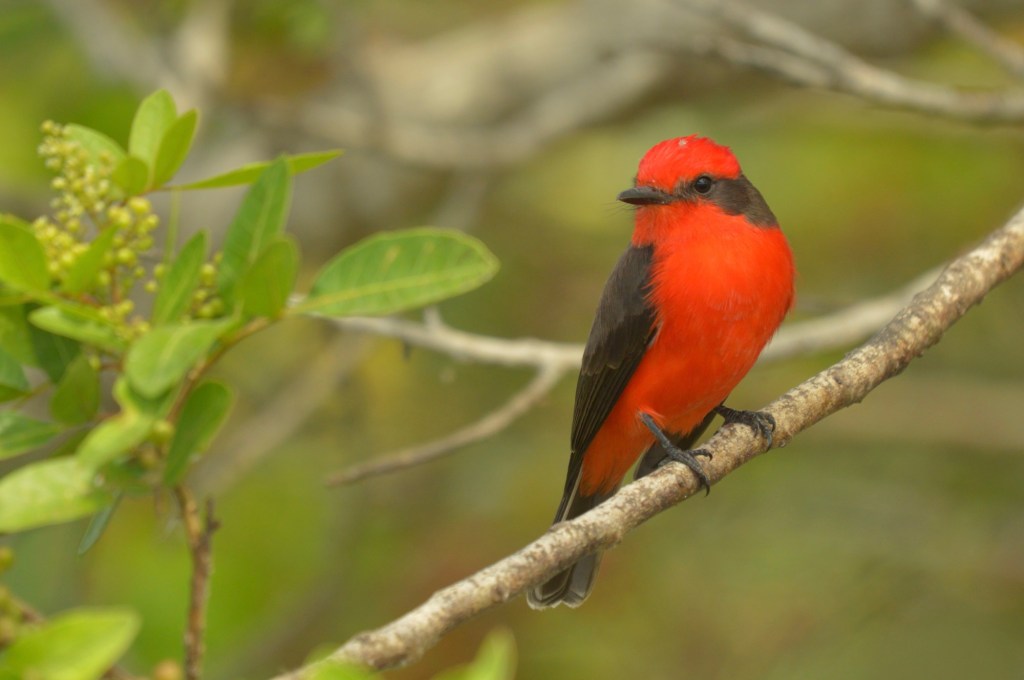
I had more luck with one of the reserve’s most beautiful treasures: a vermilion flycatcher, surely one of the most spectacular birds to be found in Peru – and they’re quite literally everywhere!
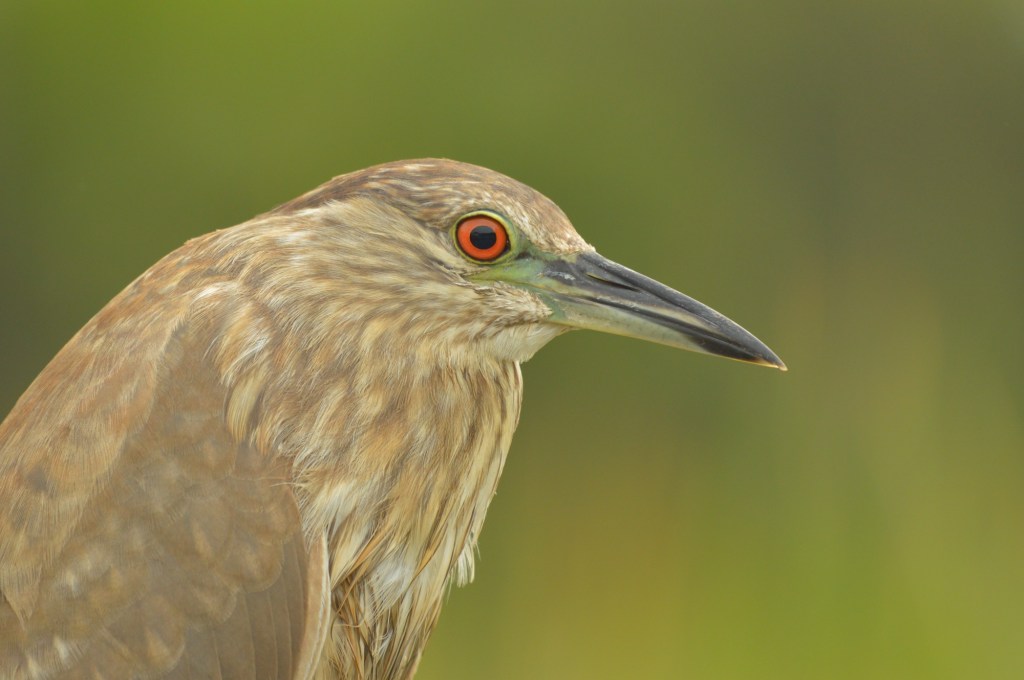
I needn’t have worried about the Toledo night heron being so distant, because there was one sitting right next to the visitor’s centre. I’ve never had the chance to appreciate their bright red eyes from so close, an evolutionary adaptation to hunting by night – hence the name!
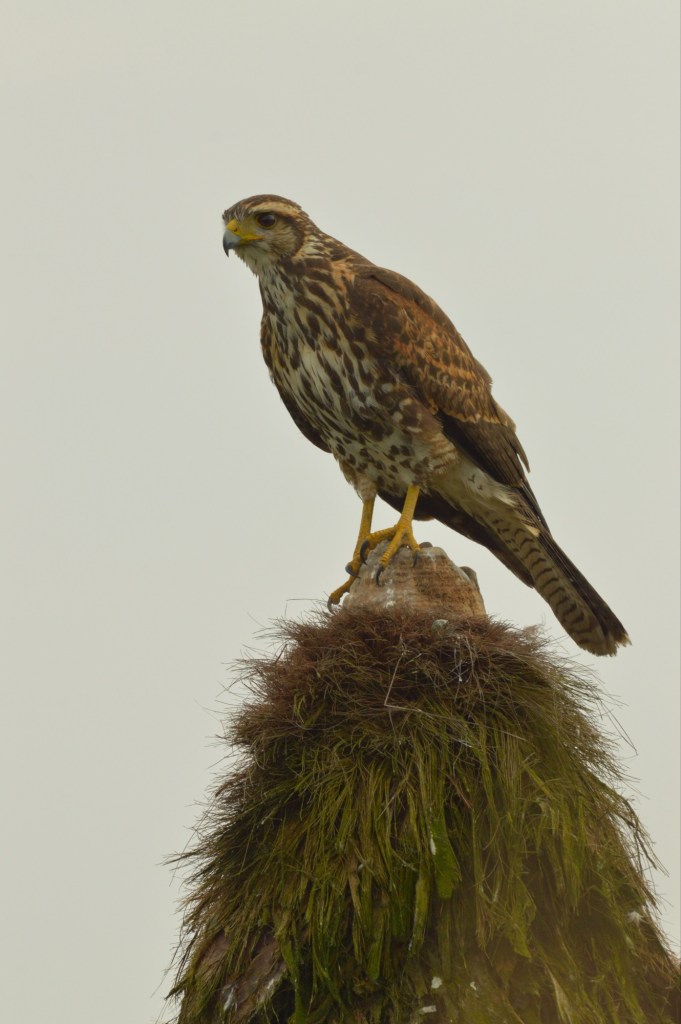
Not to be outdone by the vultures, a young Harris hawk swept in to investigate the cuy situation. These incredibly intelligent birds are a favourite of falconers – if you’ve been to a bird of prey show, you’ve almost certainly seen one – but they’re native to this part of the world. They’re also one of the few species here I knew on sight!
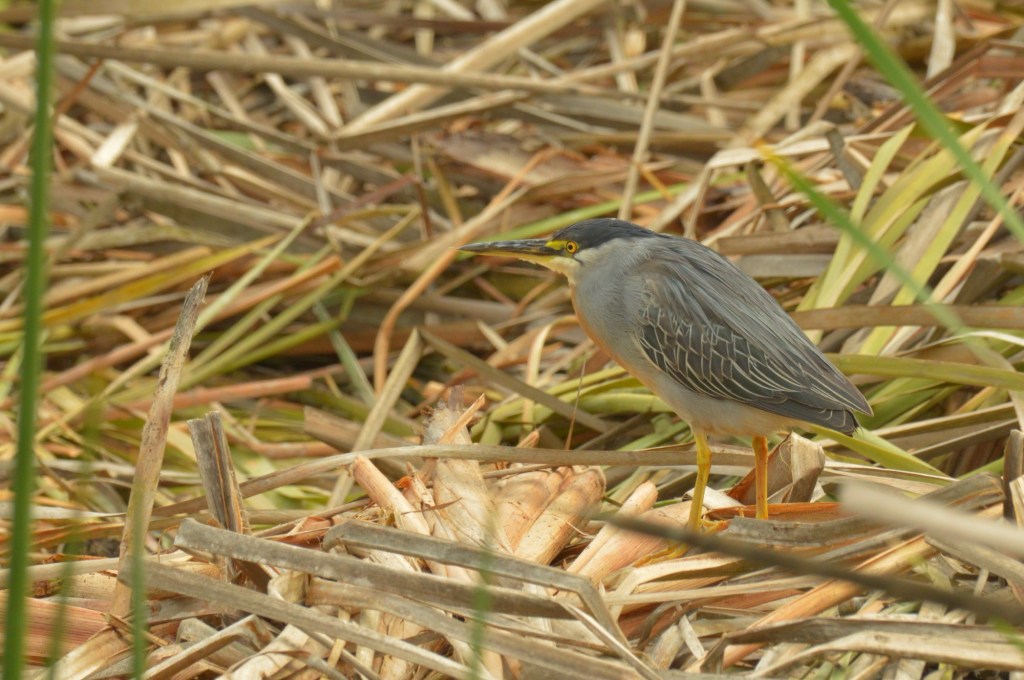
I saw my first hummingbird of the trip: an Amazilia, I think, though I haven’t gone through my sightings with a guidebook yet. They’re damned near impossible to photograph until they land, being about the size of a finger and moving with all the agility of a butterfly. I’m trying to snap everything I see so I can log them later, but at least I recognised this little fella: a striated heron, one of a number of familiar species that are shared between Peru and – of all places – Uganda.
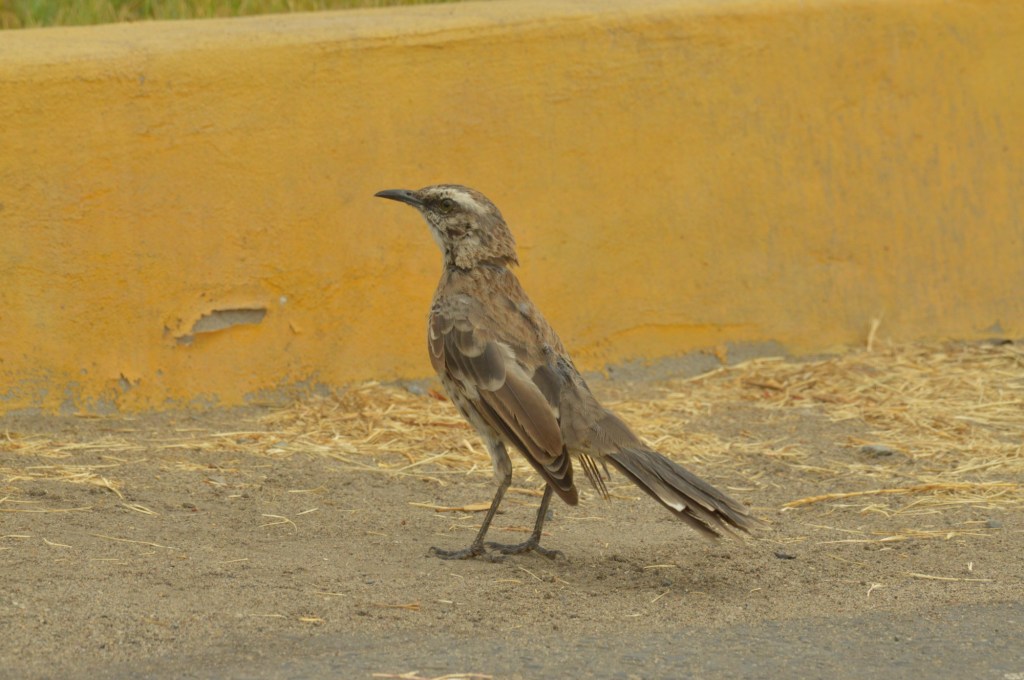
To reach the last circuit of the Pántanos de Villa, you have to leave the wetlands and walk about ten minutes further along the road to the coast. The road passes through a private residential estate, but they’re quite used to naturalists from the Pántanos passing through, so I was waved through without any ceremony. I could have stopped a number of times in pursuit of an unfamiliar birdcall, but I didn’t particularly want to draw attention to myself by pointing my zoom lens into somebody’s garden, so I contented myself with the mockingbirds that followed me inquisitively for half of the journey.
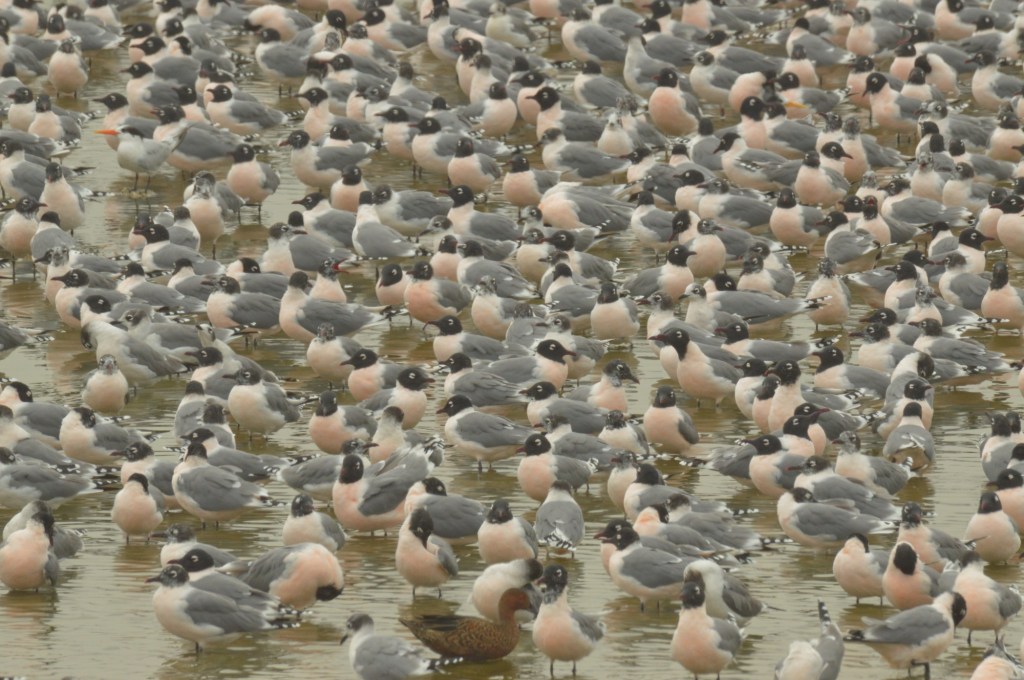
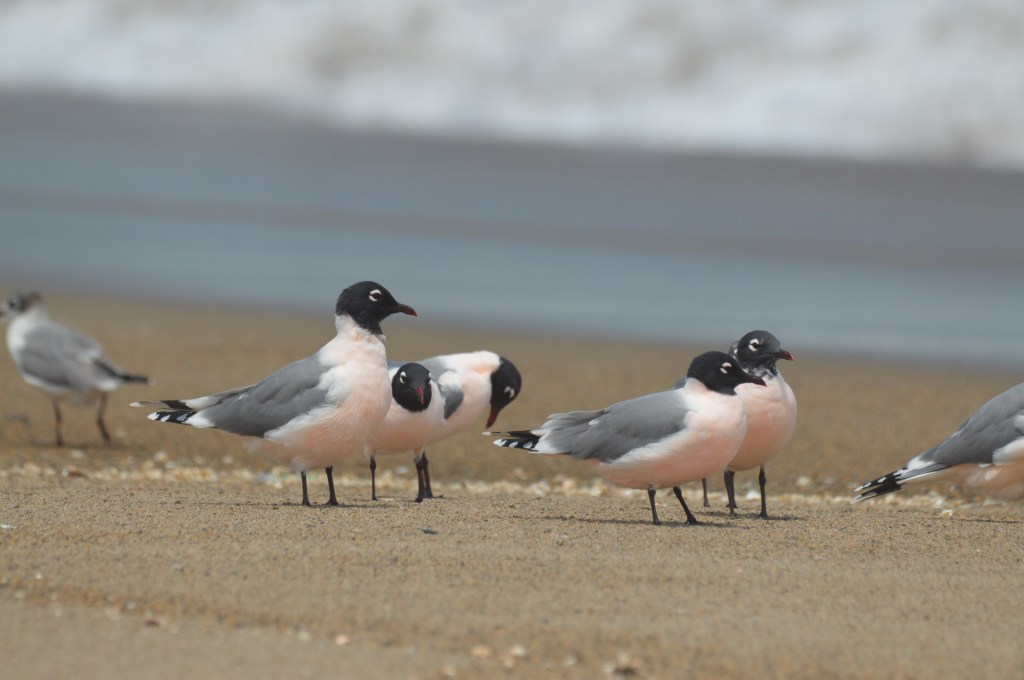
Out past the condominium is the Circuito de Maravilla, which – at the right time of year – hosts an enormous flock of Franklin’s Gulls, which come all the way down to Peru from their breeding grounds in the prairie lakes of central Canada and the Dakotas.
This was obviously the right time of year.
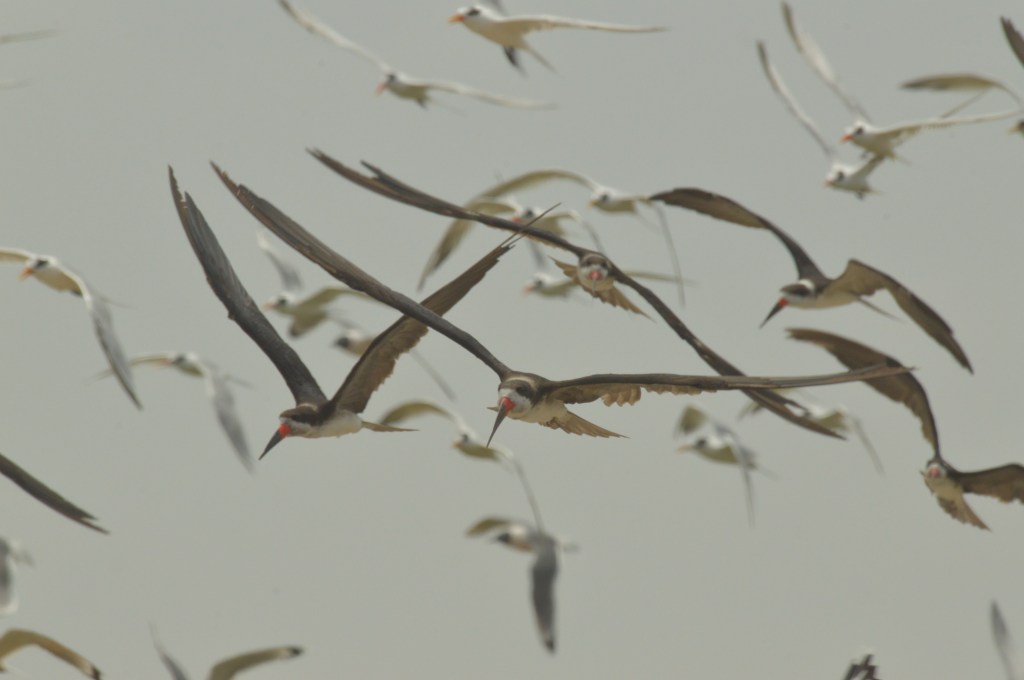
Hundreds of them had gathered at the lagoon, making ready to begin their 15,000 kilometre migration to their nesting grounds. Some were already sporting the handsome salmon pink chests and black hoods. They were joined by a huge flock of skimmers, a bizarre bird whose lower mandible is longer than its upper, so that it can skim the surface of the water to catch its prey.
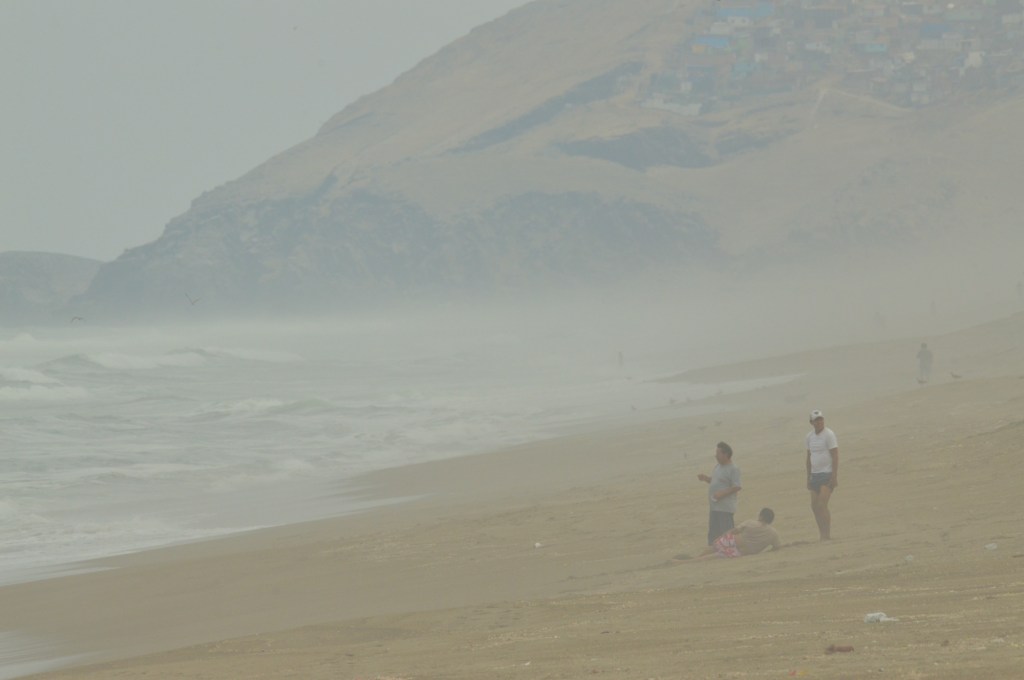
Beyond the lagoon, however, is a sight even more impressive than anything I’d seen thus far. The Pacific.
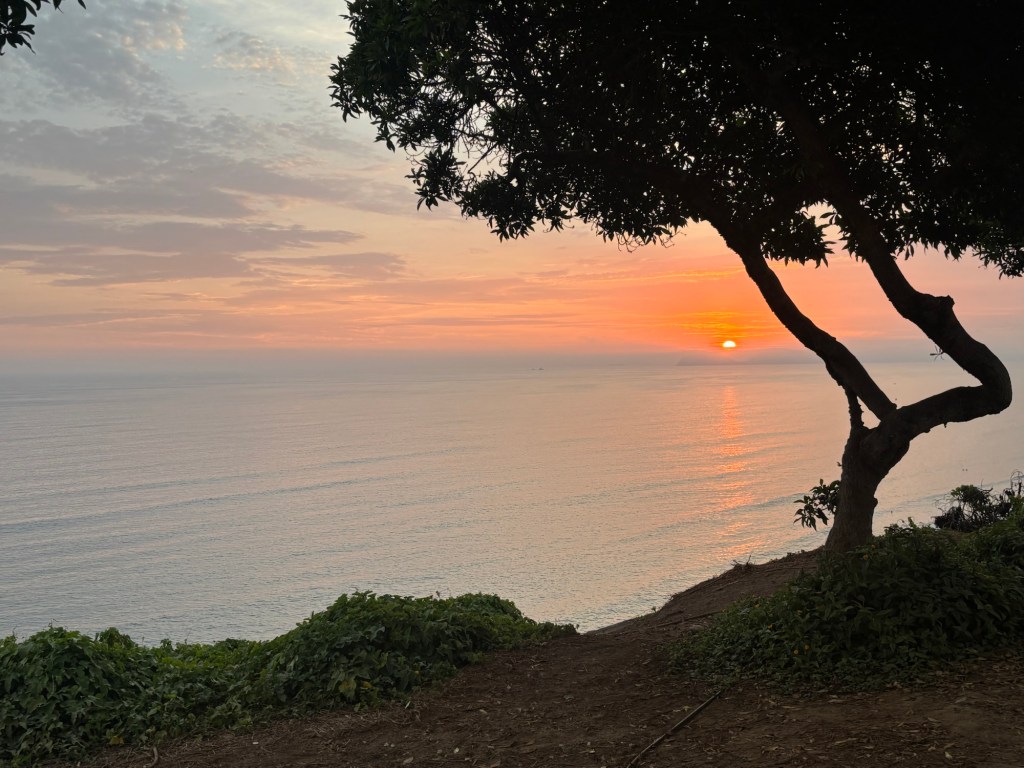
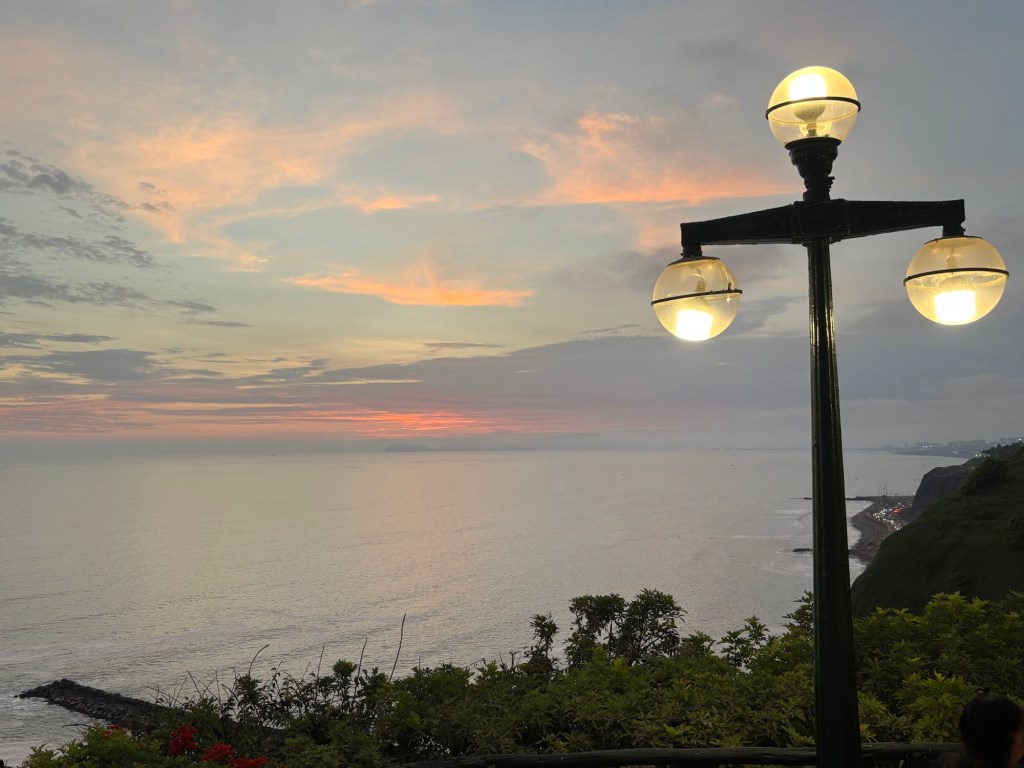
If I’m mentioning it a lot, it’s because I’m bewitched. I’ve never seen or heard an ocean quite like it. It booms just like I’ve read about in books. Not the slow, salty roar of the Atlantic, but a genuine boom like a distant cannon. It has to be heard to be believed.
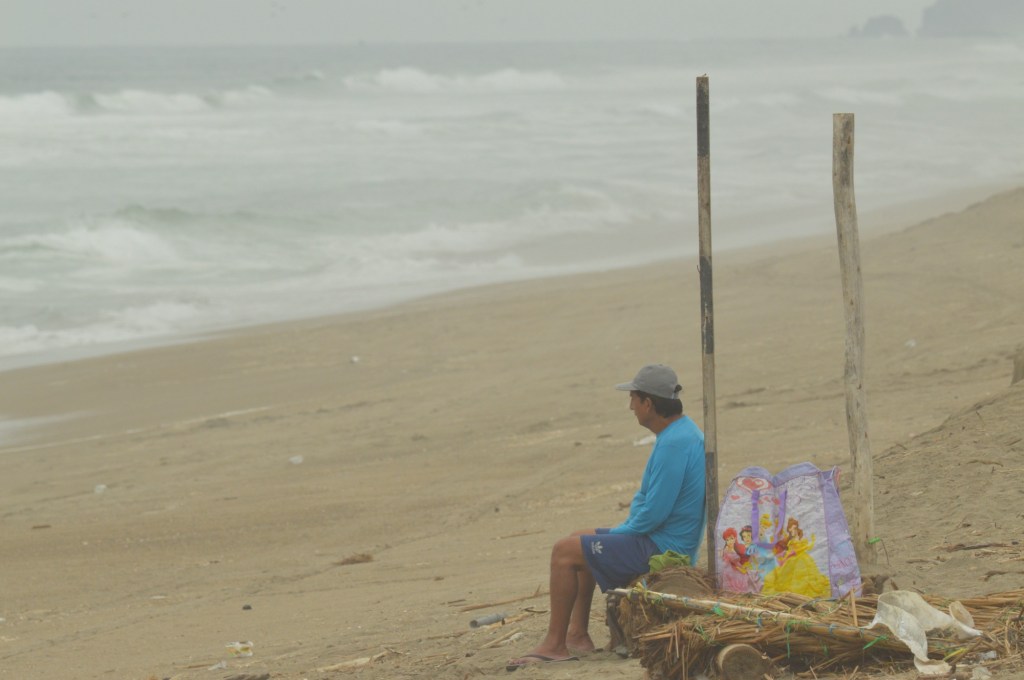
I had to sit and watch it for a while. I wasn’t the only one with that idea, either: I was joined in my vigil for most of the morning by a local man with a baseball cap and a Disney princess carrier bag. He simply stared out to sea for the best part of half an hour.
So did I. It’s nice to know I’m not the only one who can lose time just staring at the beauty of nature.
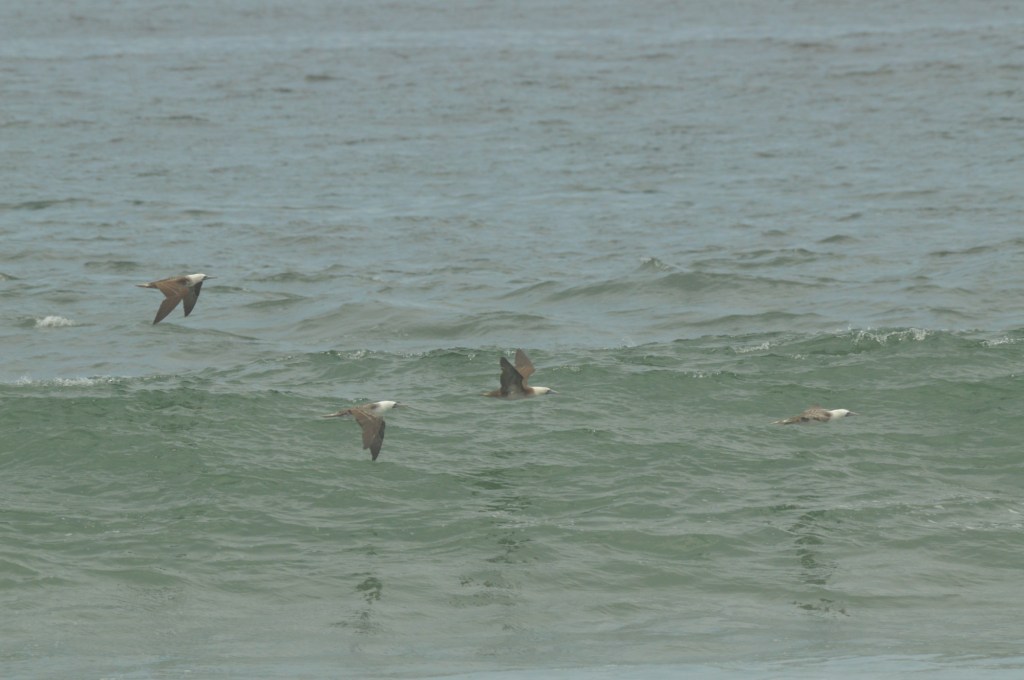
The Humboldt current which flows up the South American coast from Antarctica keeps the water cold – and extremely productive. This is one of the richest seas in the world, and you won’t be allowed to forget it for even a moment. Gulls, terns, cormorants, boobies, pelicans and an attendant host of shorebirds are constantly in sight. I suspect I’ll have better results at Paracas tomorrow.
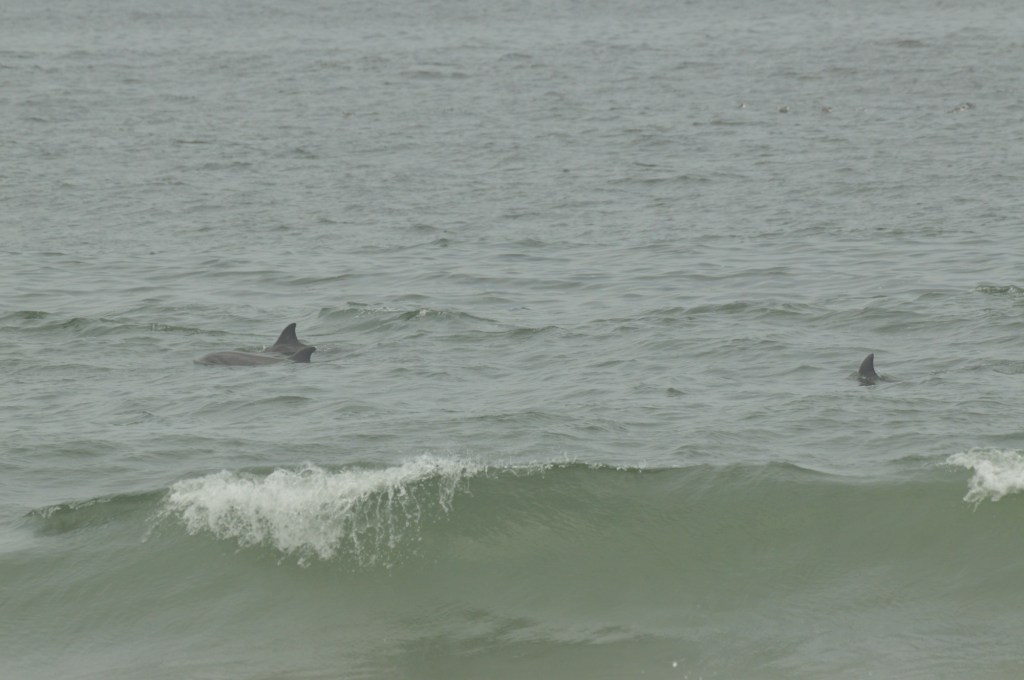
It wasn’t just birds, either. While I was scanning the open ocean from a washed-up palm stump, I saw something dark cresting the water, then another – and another. A whole family of dolphins were feeding just off the shore. They didn’t breach, but they stuck around long enough to count them: eight of them in all. And all because I stopped to watch the waves for a while.
The sun came out from behind the clouds around 12, at which point I thought it sensible to consider a retreat – the Peruvian sun can be a cruel god, and I hadn’t brought my sun lotion (I hadn’t expected to stay so long!). Some of the Franklin’s gulls came to say goodbye, looking even more smart in the sunlight.
I made it back to the shade of the Pántanos visitor centre and rested for a bit. I could have hailed an Uber there and then, but I wasn’t quite done with the wetlands, and when I saw a couple of visitors head into the reserve on their own, I followed suit.
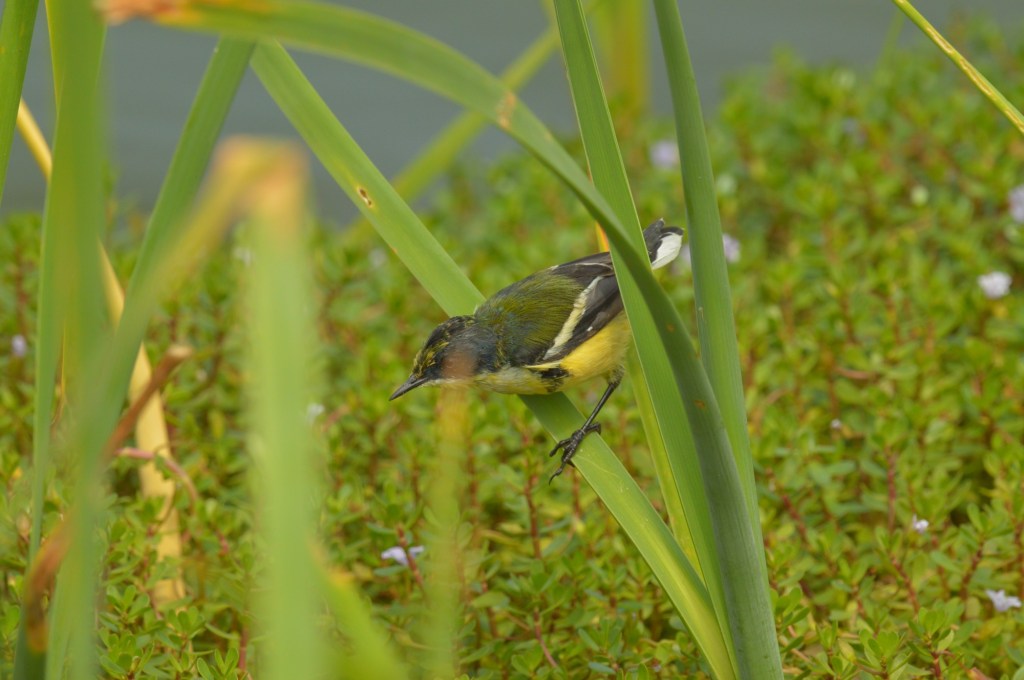
No sign of the cuy, but while I was searching I saw something moving among the reeds. My buen augurio had come to see me off: a seven-coloured rush tyrant. It’s only a youngster, so it’s not as dashing as it will be in a year’s time, but that’s neither here nor there. Peruvians say they grant wishes. So I have made mine.
I could have included even more photos, but I’ll try to pace these posts – there’s simply too much to report, so I must be choosy!
I’m currently taking it easy back at the hostel. My camera definitely needs charging after a serious workout, as do my own batteries – and I could use a shower.
That’s enough work for the Nikon today, I think. I’ll switch things up tonight and explore the human side of Peru for a change! BB x
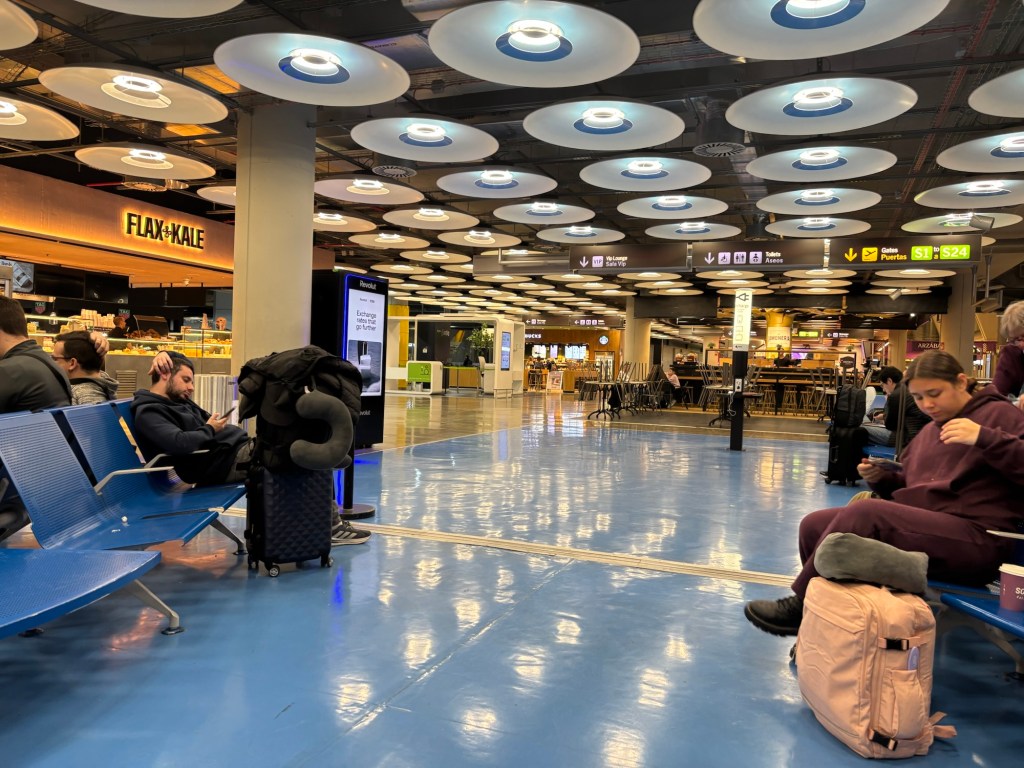
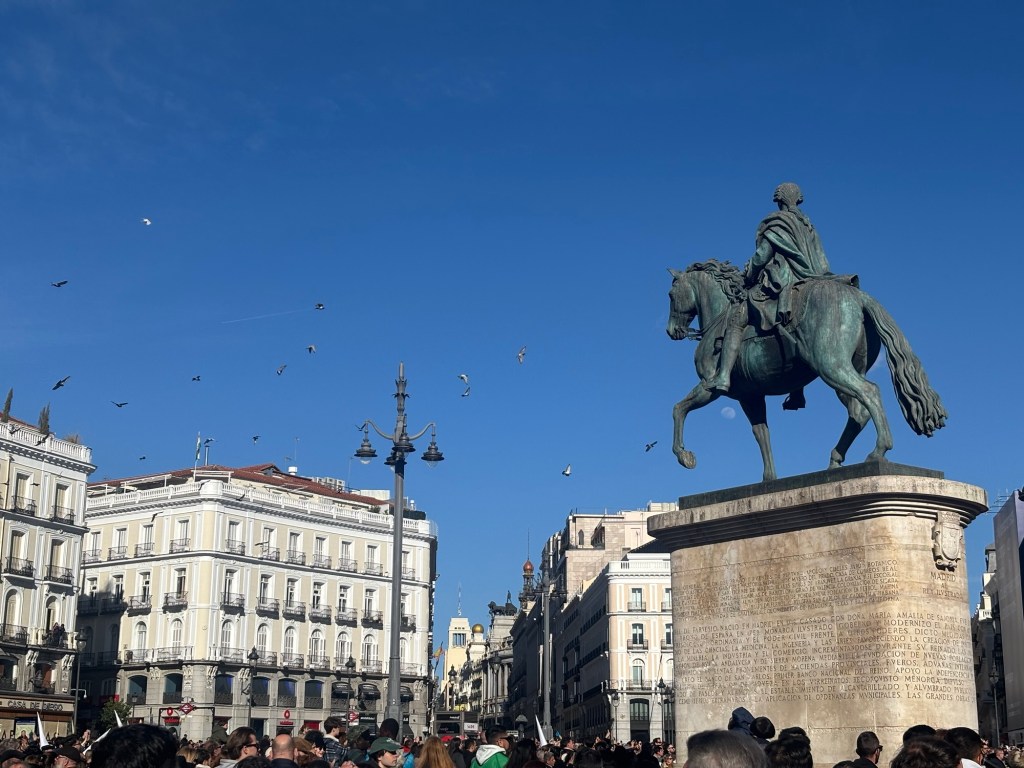
“Nobody speaks English in this fucking airport,” says the miserable Brit sitting behind me over the phone. “You’d think in one of the busiest airports in the word they might have someone who can speak English.”
With that kind of attitude, it’s hardly surprising that flights to the UK are sequestered away in Madrid’s cut-off Terminal 4S, together with all the other non-European destinations: Bogotá, San Juan, Dallas and Chicago…
I know I can be a bit of a snob when it comes to Spanish, but it always gives me a knot in my stomach when I hear one of my countrymen speaking like that, as though the rest of the world should simply kowtow to the supremacy of the English and their language. That mindset should have perished with the Empire, long ago, but sadly it’s all too common – and probably on the rise, with the number of students studying languages continuing to plummet in the UK.
For the record, English is absolutely everywhere in Barajas. Most of the signage is in English first and Spanish second. You’d have to try pretty hard to be genuinely cut off from the English language out here these days. Sometimes I think the Spaniards just enjoy playing the “no hablo inglés” card when they encounter a grumpy fellow like the man behind me. It keeps us on our toes – and it’s one way to get back at us for the slap in the face that was Brexit.
12.192 feet above the Atlantic, Southwest of Corvo & Flores. 11.55.
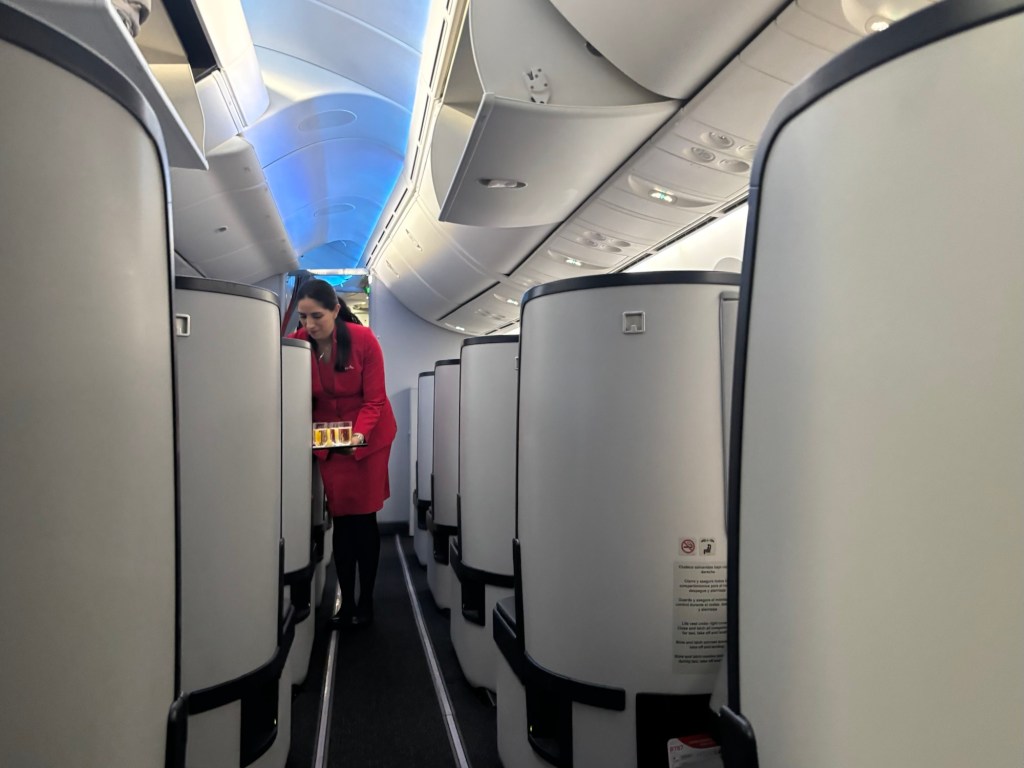
They dimmed the lights in the cabin about two hours ago, shortly after serving breakfast. Most of the passengers are wrapped up in their blankets and fast asleep. I don’t know how much I have slept in that time, but I’d wager it’s not much – more like wakeful dozing. I don’t usually go to bed before one or two in the morning, so despite the five AM start I’m probably operating on a good deal more sleep than usual. I moved my trip to Paracas to Wednesday, which should give me time to get a good night’s sleep and acclimatise once I reach Lima.
There’s a nice father and daughter from La Rioja sitting next to me, off to visit a relative in Guatemala. Since we’ve established friendly relations, hopefully they’ll let me take a photo out of the window when we pass over the Caribbean in a few hours’ time. I’ve got the aisle seat, which is fine for legroom, but bad luck for both sleep and views.
I haven’t got my head around the boarding procedure for Avianca. I was in Group F out of A-G, so I assumed I’d be one of the last on, but they let F-G on before D-E. Unremarkable, maybe, but I’m in Group D on the next flight, so I hope that doesn’t mean I’m right at the back of the line. I guess it depends on how the Colombians order their alphabet.
The folks up in business class are all tucked away in their cabins. I could never justify paying that much to fly – and probably fail to sleep anyway – but it must be pretty snug.
43.000 feet above the Caribbean Sea. 16.10.
The lights have come back. I wonder if that means they’re serving lunch? They’ve got Superman on the film listing, but my earphones are of the lightning port variety, so I can’t get them to work. I’ve spent a couple of hours catching clips from those watching films around me. By the way they’re all watching with the subtitles on, I can’t help but wonder if they’re all in the same boat.
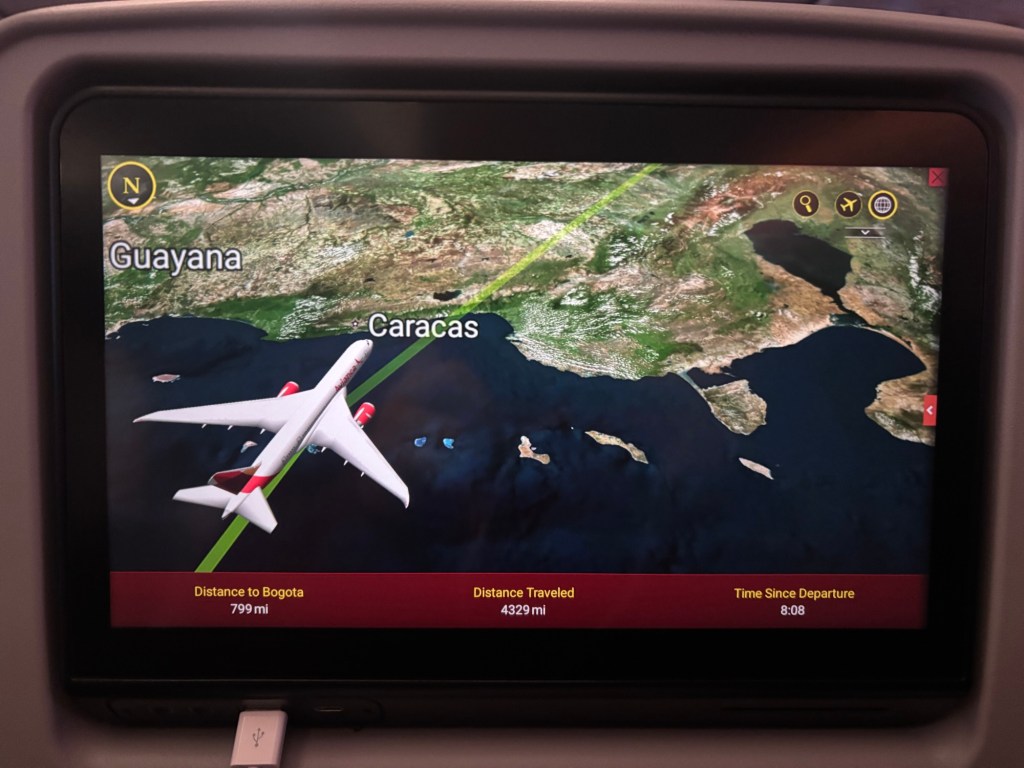
We flew over the Caribbean about an hour ago. I saw one island among the clouds through the tinted windows of the cabin while waiting for the bathroom to become available, but I’m not sure which one. Nassau, perhaps? The route map on the tele screen only gives its capital as St. Maarten, but my knowledge of Caribbean geography isn’t exactly watertight. It’s a first taste of how unfamiliar the world around me is about to be.
The wind is starting to pick up. The reefs and atolls of Aruba have appeared on the horizon, the vanguard of a mighty continent. Beyond that lies Venezuela. The enormity of South America is about to open up beneath me.
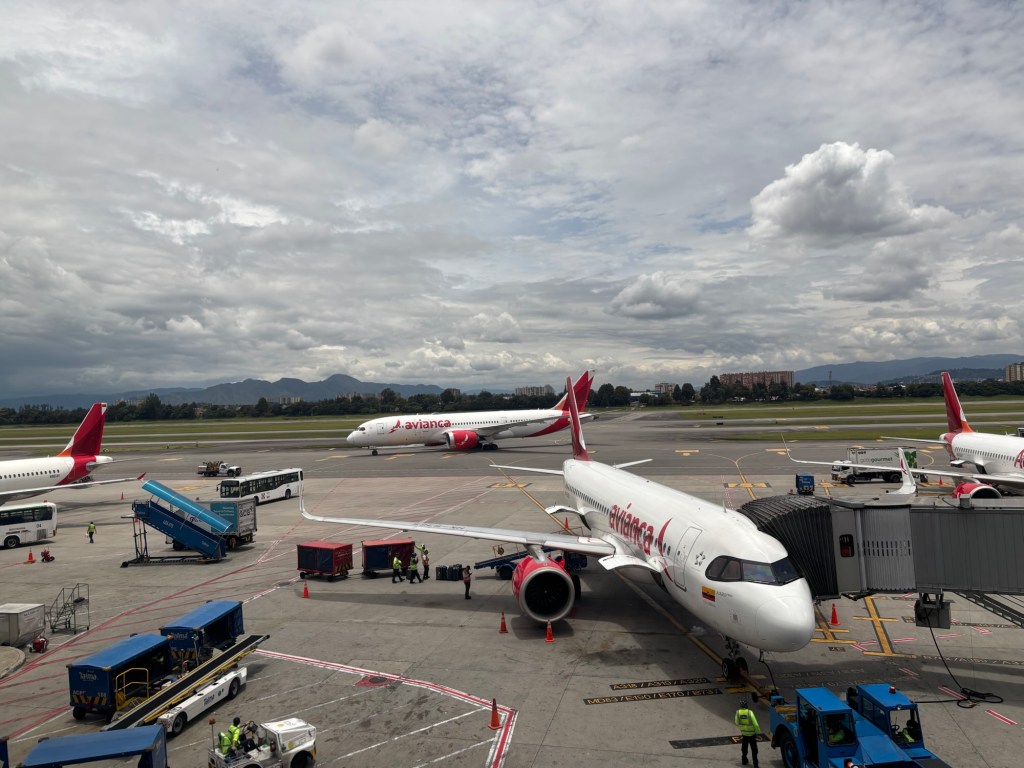
Aeropuerto Internacional El Dorado, Bogotá, Colombia. 12.28 (19.28 GMT+1).
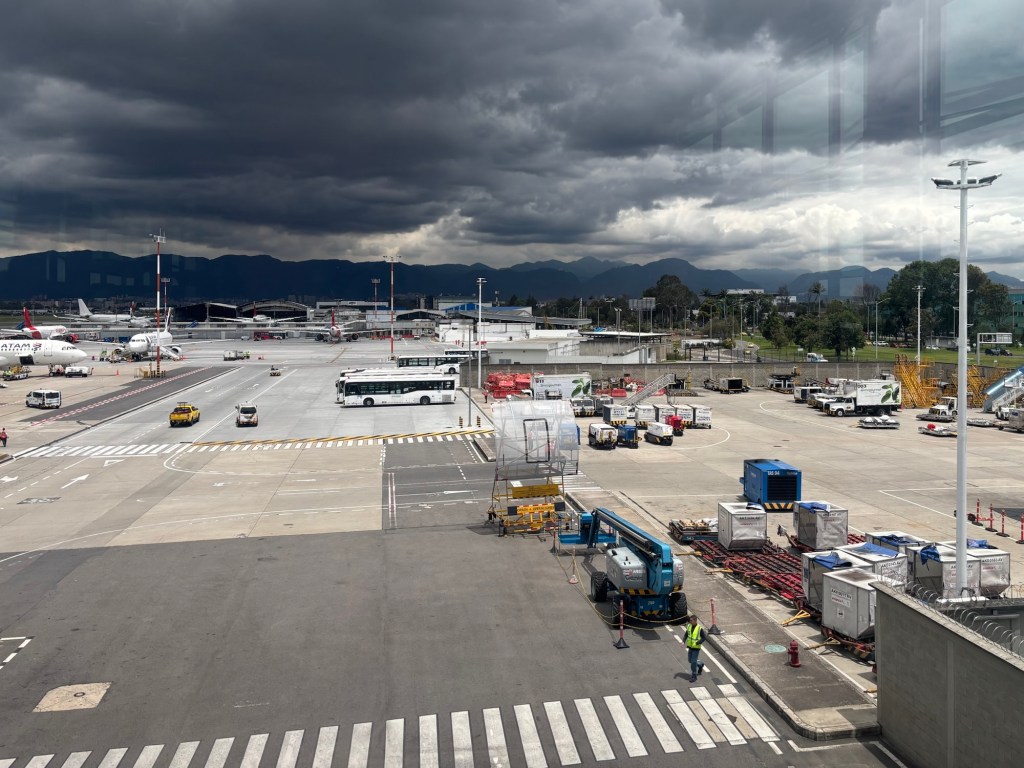
¡Bienvenidos a Colombia! The weather forecast says thundery showers with a gentle breeze but the sun is shining brightly out there. I’m hoping that’s a sign of things to come.
El Dorado reminds me a lot of Dallas International, in that almost everybody here seems to be going somewhere else. The queue for passport control to leave the airport was barely in the double figures while the line for connecting flights stretched on down half the hallway. I was sorely tempted to strike out and explore Bogotá, but for once in my life I’ve erred on the side of caution. For one thing, I’m tired, and I’d definitely need my wits about me out there. For another, I haven’t planned this leg of the journey at all, so I really would be going it blind. Most importantly, my next flight boards at 4pm, so while I have around four hours to wait, that’s not really enough to risk a potentially unsafe pitstop on Colombian soil.
Some other time, Colombia. Let’s not derail this South American adventure before it’s even started.
The airport WiFi in Bogotá leaves much to be desired. It’s not free like Madrid, and after only a couple of prompts my phone won’t even take me to the airport website anymore, so I’ve resorted to data – I needed to get online to finalise my pick-up from Lima tonight. The hostel are sending a car for me. I’m normally averse to that sort of thing, but I’d rather play it safe in a place I don’t know.
At least to start with.
Puerta A6, Aeropuerto Internacional El Dorado, Bogotá, Colombia. 14.20.
Still a couple of hours to go until my connecting flight departs for Lima. When I’m done writing I’ll decamp to a charging station to give my phone some extra juice – I’ll need it to contact my driver once I land.
I’ll do some reading to while away the time. I’ve brought a book with me but it’s a bit florid. I find myself skipping entire pages just to advance the plot. I bought it years ago because the setup sounded exactly like my cup of tea (19th century intercultural romance set in a distant corner of the British Empire) but it’s a bit of a slow burn. It’s been a while since a book really grabbed me. I ought to make that my mission out here. I’ve downloaded the audiobook of Michelle Paver’s latest, Rainforest, if not for the valid thematic link to this adventure then because her books always strike gold.
Some observations of Colombia, you ask? Hm. It seems to be a land of strange trees and clouded mountains; of sleepy travellers and softly-spoken staff; of real coffee, fake boobs and handsome aquiline noses. A place where people haven’t forgotten the joy of having children. Where Dallas was a concrete desert, Bogotá at least has the decency to keep their largest transit hub a tree-lined haven. I bought some travel-sized toothpaste and a couple of snacks and the bill came back in Colombian pesos, though the till used the dollar symbol. Thank heavens my bank statement gave the true cost in pounds, or I might have just paid 45.000$ for a 22ml tube of ColgateTriple Action…
There’s not that much to see on the wildlife front from the departures lounge. I clocked a couple of foreign-looking swallows flitting about outside and I’m almost certain I saw the silhouettes of three black vultures wheeling about over the residential district to the east, but other than that, the only obvious denizens of the runway are the cattle egrets that seem to follow the groundskeepers about like stray dogs. I’ll just have to wait a little longer for the party to really begin.
Somewhere over the Cordillera de Sumapaz, Colombia. 18.27.
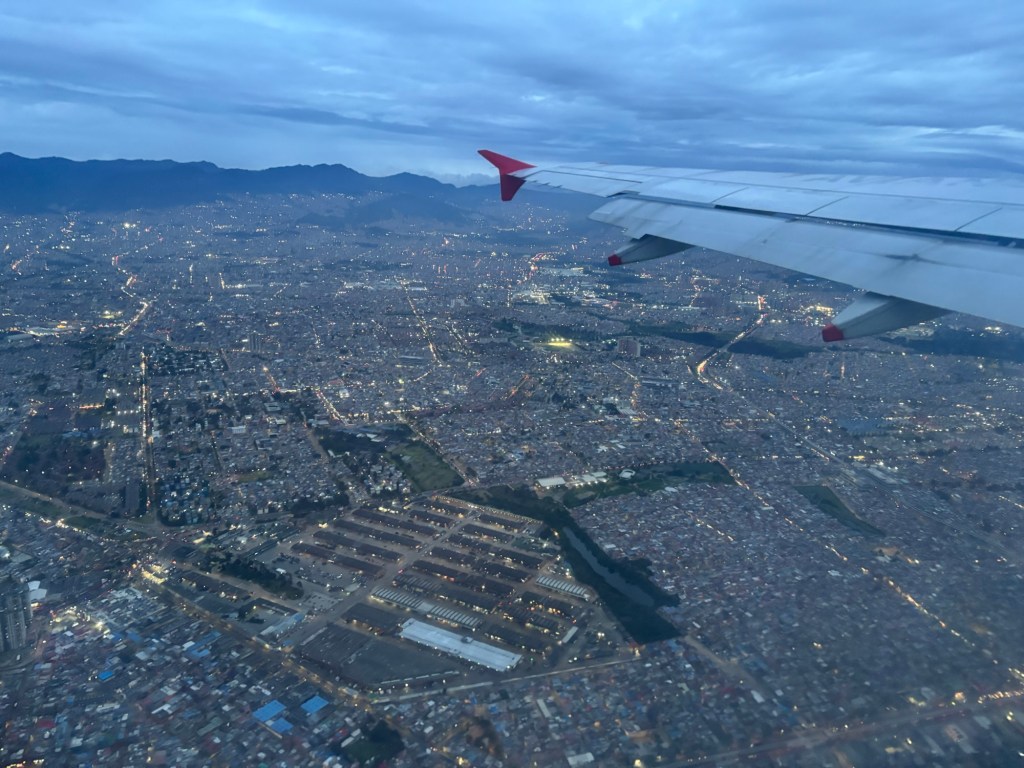
A lonely light twinkles in the darkening world below: a single, blinking star in a forest as dark as the night. It is the only sign of civilisation for miles around. And then the light, the forest and all the earth beneath it are swallowed up by the clouds. The sprawl of Bogotá is a distant memory.
I paid 20$ for less than ten minutes’ worth of a view from the window, but I consider it money well spent. Like that first waterfall I saw in Ethiopia as we came down out of the clouds all those years ago, it is a sight I will not forget. The last homely house in Colombia. The Rivendell of the Rainforest.
A few stragglers from Madrid have made it onto the plane. The stately Peruvian gentleman with the cane who was the first onto the plane at both Madrid and Bogotá. A barmy looking gentleman in a puffer jacket and a wide-brimmed hat festooned with badges and his wife with the wine-red hair. No sign of the white man with the dreadlocks down to his waist – I suspect he has gone into Bogotá in search of an ayahuasca shaman. I suppose we all have our reasons for traveling this far. On reflection, are mine any less barmy?
A family of three were late and so the plane was held up by about twenty minutes. In that time I managed to finish Romesh Gunesekera’s Prisoners of Paradise (I don’t like leaving a job half done). It picked up in the second half, but I found myself skipping pages again toward the end. I wasn’t sure whether it was trying to be a Malabar Pride and Prejudice or a gritty historical account of colonial prejudice. Either way, I found the heroine jarring.
Time and again, one finds the narrative of the enemies to lovers trope in romance fiction.
Yuck.
I don’t think I’ve ever understood why romance that evolves out of people being fickle and mean to each other is so highly prized. Maybe it’s a condition peculiar to Western women. Give me the sincere and generous passion of the Latin any day.
I suspect that’s why I put The Far Pavilions on such a pedestal – it manages to stage a believable passionate romance that is neither coy nor mawkish. It’s certainly proved a very tough act to follow.
Hostal Pariwana, Miraflores, Lima, Peru. 21.36.
Te estamos vigilando.
Lima. The scenery has shifted dramatically. Between Jorge Chávez International Airport and downtown Lima sits Callao, a sprawling conurbation which must be crossed to enter the city, If you needed reminding that Peru isn’t all high-end tourist offerings after weeks of preparation and booking in advance, Callao provides an immediate antidote.
Enormous posters line the edge of the runway, advertising Ayacucho, Amazonas and Machu Picchu in brash, gaudy colours; across the street, row upon row of squat houses in varying states of completion, and all of them very much lived in. Wide dusty streets with pitfalls and potholes. Fried chicken shops every minute or so. Election posters promising a safer Callao, plastered in duplicate over every flat surface. Police tape – peligro, no pasar. Dollar stores everywhere – a mere talon of the claw of the American overlord. Graffiti on the walls: el mundo apesta (the world stinks).
And then, suddenly, Callao falls away and there it is. The Ocean. The mighty Pacific. I saw it from the plane, but this is something else. It’s too dark to appreciate it in all of its majesty, but I had a hint of its bounty by the sheer number of fishing ships out in the bay. They looked more like an armada readying for war.
Miraflores feels like a completely different city. Callao felt like the South America I’ve been reading about in history books. Miraflores is more like the one you find in Nat Geo Traveller or a copy of Lonely Planet. American twenty-somethings discussing the TSA, pipe dreams of owning their own airplanes and the relationships that other travellers have struck up along the way.
It’s ten past eleven here in Lima, but it’s ten past six in Madrid. Give or take a couple of hours’ sleep on the plane from Bogotá, I have been awake for almost twenty five hours. I had better turn in or tomorrow really will be a washout! BB x
Of all the days to have for a twenty-four hour pitstop in Spain, I had to pick the one where the temperature dropped a full ten degrees. My light fleece couldn’t handle the Arctic chill of 11°C (a good warning for Peru). Tomorrow it’ll be back up to 24°C here – but this time tomorrow I’ll be far away, waiting for my connecting flight in Bogotá. I still can’t quite get my head around that.
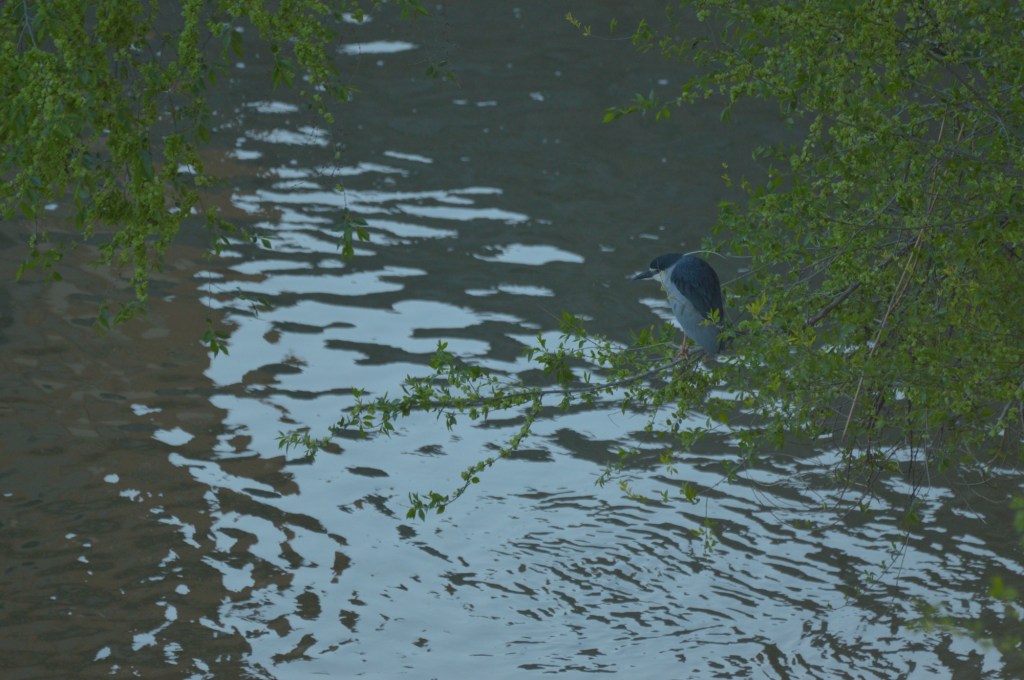
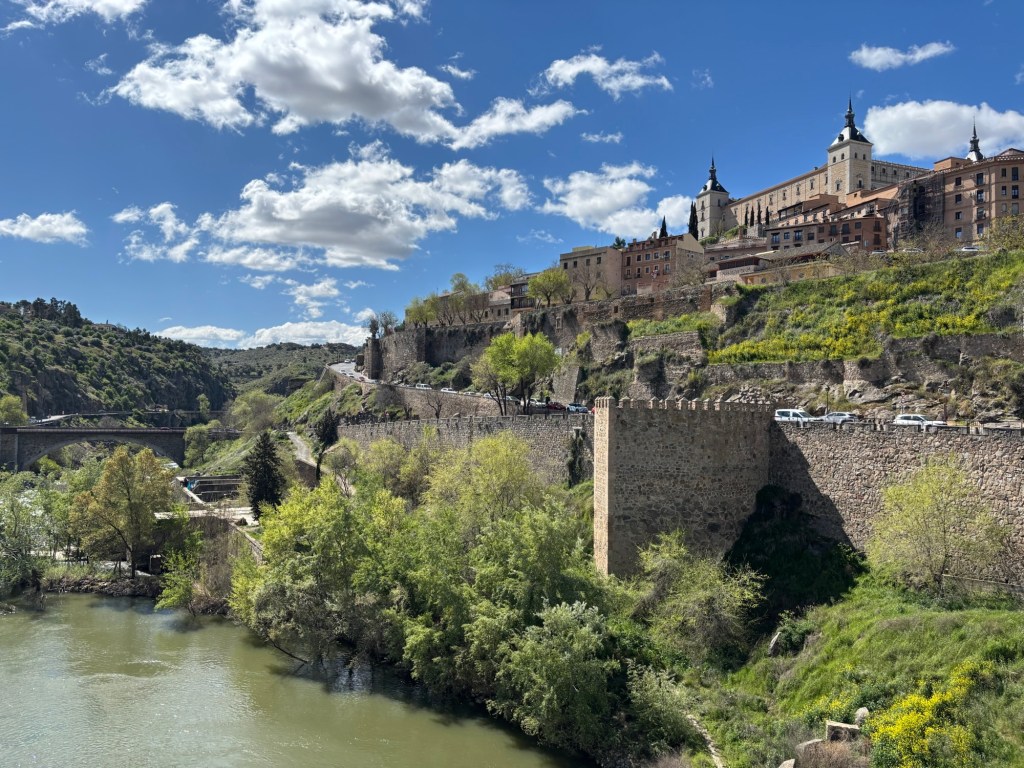
After an exquisite dinner of rabo de toro at Las Brasas del Vulcano last night (easily one of the best if not the best that I have ever eaten), I managed a relatively early start this morning to catch the first bus to Toledo. I think I had it in my head that I’d see all sorts of wildlife along its riverbanks, but it was very windy today, and I had also promised myself I’d do Palm Sunday Mass – a much-needed blessing to give me luck in the weeks to come – so it wasn’t as busy on the nature front as I had imagined. All the same, I saw what I came all the way to see: a night-heron.
Seems a little foolhardy, no? After all, night-herons are one of the very few Old World species that you can also find on the other side of the Atlantic. However, night-herons have a special place in my heart because I can date my career as a birdwatcher to the day I first saw one of these handsome fellas in Córdoba in 2005, on the day Pope John Paul II died.
The last time I visited Toledo was in 2013, when I was backpacking across Spain on a budget of 200€. I was eighteen, my Spanish was passable and I was already dangerously underweight, on account of not really considering food and drink a necessary expense. Fortunately, I have grown up a lot since then, and learned that, of all things, food is the last thing that should be omitted from the budget.
On that mad adventure, I have a particularly distinct memory of treating myself to a sopa castellana – my first meal out in a week – and feeling like my whole body had been healed at a stroke. As such, to my mind, that simple peasant dish remains the sultan of soups. If it is on the menu, I will have nothing else.
I treated myself to an upmarket lunch as a Spanish sendoff at Restaurante Palencia y Lara – and what an incredible find it was! I can’t decide which of their sopa castellana, cordero lechal or tarta de queso was the standout.
Sopa castellana isn’t an extremely complicated dish. It only really consists of bread, egg, stock and a good few cloves of garlic. But it is a restorative like none other.
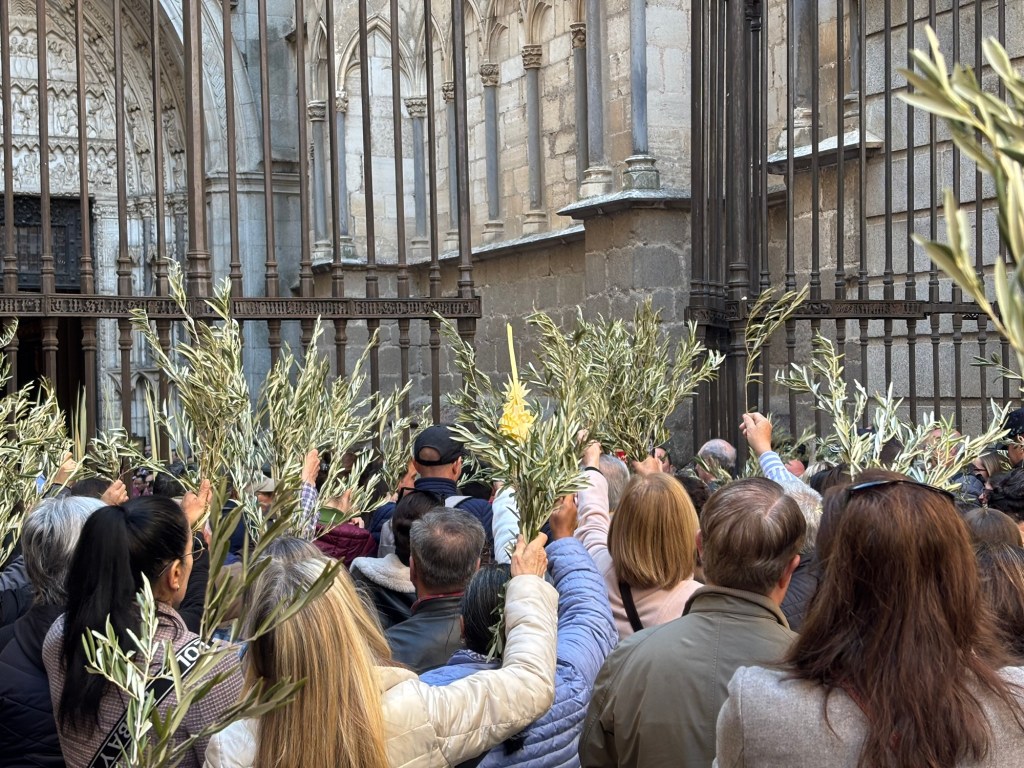
I will be traveling around a lot during Semana Santa, so while I will be in a country that also celebrates Easter properly – even if it is on the other side of the world – I will probably miss a lot of the festivities. That’s one of the reasons I insisted on seeing Toledo’s Domingo de Ramos procession, celebrated from its Catedral Primada de Santa María.
It’s been a while since the time I celebrated Palm Sunday in Rome with Pope Francis, so I’d forgotten how long the reading is (they relate the entire Passion). All in, the ceremony lasted just shy of two hours. But I have come away with a sprig of an olive branch, and I hope it will bring me luck on my travels around the Americas. I’d have brought my lucky vulture feather, but I’m a bit too attached to that to chance losing it along the way.
Toledo was stunning in the sunshine. I’m glad I came here for a pit stop, even if only for a day. It’s nice to be somewhere familiar and nostalgic before pitching myself headfirst into a world that is totally alien.
T minus ten hours. I’ve decided not to chance the first Metro of the day and booked an Uber for peace of mind. Once I make it to Barajas, I can relax a bit.
After that… well. It’s in God’s hands, I guess. See you on the other side! BB x
Metro 9, Dirección Nuevos Ministerios, Madrid. 20.47
Landfall. After a speedy and somewhat sleepless flight on Ryanair’s ridiculously good value £20 flight from Bristol, I’m back in Madrid. I fired off a couple of job applications to schools here after my last visit in December, but I’ve heard nothing. I suppose that would be disheartening if I weren’t perfectly comfortable at my current school. Besides, I could harbour no ill feeling toward Madrid. As capital cities go, she is both homely and stately.
The new European security protocols have started to take effect at Barajas. Separated from the Europeans – God’s chosen – by a luminous pink arrow and two security guards, I was shepherded into a large room with an array of digital fingerprint kiosks, where the COVID passes were checked years ago. Many of the machines were already out of order. I saw two cease to function after the same passenger tried to use them. Not for the first time, I found myself contemplating a new circle of Hell for the cabal that convinced an entire nation that being European wasn’t in our best interests.
As though on cue, perhaps, I was sent a visual reminder of one thing we Brits do generally take more seriously than our European counterparts. There weren’t many seats on the train, but one that was free was next to a couple of Frenchwomen. One of them was holding on tight to the leash of a muzzled dog, which was clearly in distress: it was evidently struggling to breathe with a heavy black face mask secured across its mouth, and it kept pawing frantically at it with its head to the ground in a desperate attempt to dislodge the thing every time its owner relaxed her grip on the leash.
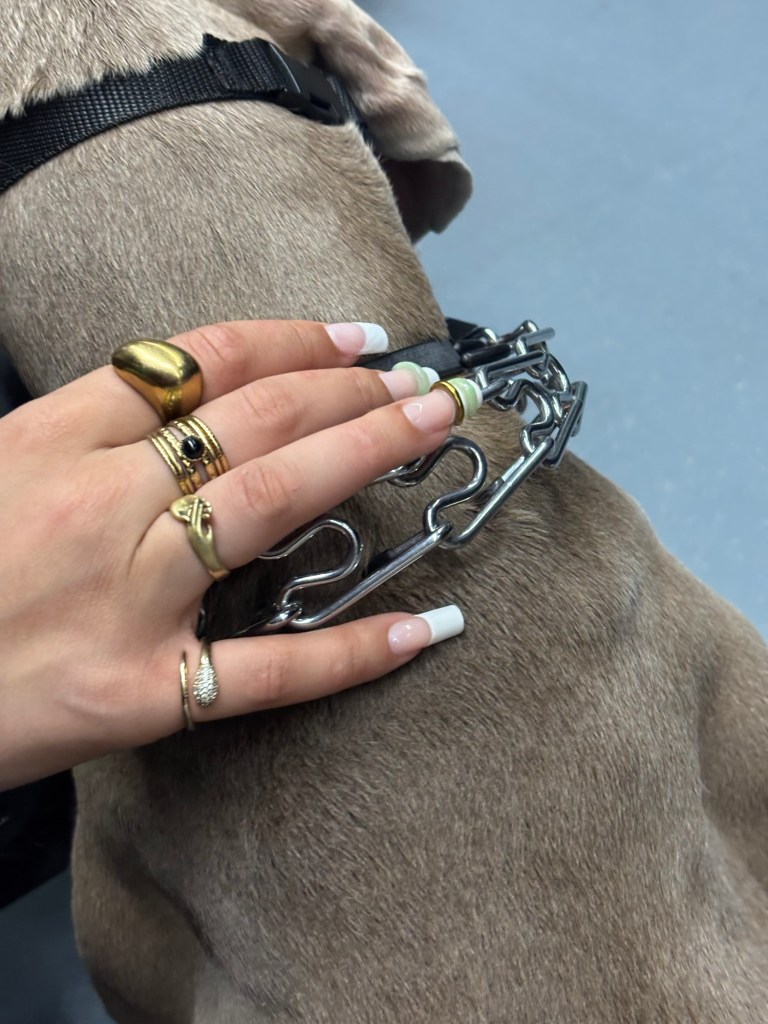
She didn’t seem to have noticed. She seemed more engrossed in her conversation. She had a ring on every finger on both hands and they clicked when she gesticulated or tightened her grip on the leash. Even some of her nails had rings. Hell, I like a girl who isn’t afraid to go all out with the jewellery, but even that was a bit much.
The dog’s collar wasn’t much better: a proddy, pokey, cage-like device that was causing the poor thing almost as much discomfort as its muzzle, by the way the creature kept trying to scratch at it with its hind leg.
It was painful to watch. I changed carriages on the connecting train to get away from it.
In England, some busybody would have taken her to task. But this is Spain – we’re getting a lot better, but we’re still a long way off the land of the RSPCA.
The trains are – predictably – packed for Toledo tomorrow, so I’ve booked a bus instead. It means an early start, but that’s no bad thing. I’ve quite a few of them coming my way in Peru, so I’d better get used to them. BB x
When I set out for Peru next week, the number of bird species I will have seen in my lifetime will be a clean five hundred. I’d like to say I’m not usually the record-keeping sort, but that would be pretty unbelievable. The fact that I’ve kept this blog going for the best part of eleven years says otherwise. It’s not that there’s anything wrong with list-keeping, but it does border on the nerdier, birder side of birdwatching, and there is a lingering part of me that still raises a wary eyebrow at the prospect of becoming an anorak. However, since Peru is generally considered one of the world’s finest destinations for birdwatching, I thought I’d cave in for a change, do a little spring cleaning and get my affairs in order before I go. And that means working out just how many birds I have seen over the last thirty-two years or so. It took me a few days to collate the various lists I have held onto over the years, and longer still to whittle down some of the more fanciful additions that may or may not have been added in haste, leaving me with a perfectly square total of five hundred species exactly. It’s a start.
I have been very lucky. I haven’t been as committed to my old hobby as others my age, but even so, my travels have afforded me encounters with a number of species I might otherwise never have seen: pygmy cormorants in the silent marshes around Torcello, Berthelot’s pipits in the Teide caldera and Rwenzori double-collared sunbirds in the clouded hills of Uganda’s Bwindi Impenetrable Forest. I thought I’d share a few of my favourite encounters below.
Griffon Vulture
Vultures are far and away my favourite creatures on the planet and I make no secret of that. Cinerous, Egyptian, Palm Nut, White-backed, Hooded or Griffon – I’m not fussy. Something about their enormity, the way their wingtips spread wide like fingers, the silence with which they rule the skies… It’s spellbinding. They’re easily the fondest memory I have of my year in Spain when, aged eleven, I traded herring gulls for griffons for a year. I think I can be excused for being occasionally distracted in class when a tawny giant with a nearly three-metre wingspan happened to be passing by the window. I still get the shivers when I see that silhouette, so I’m keeping my fingers crossed for an even greater shadow in the sky when I go in search of an Andean condor in Peru’s Colca Canyon.
Nightjar
Something of a late discovery for me and inseparable from the Camino de Santiago, where it is the nocturnal yin to the diurnal yang of the stonechat – since both species seemed to follow me all the way from the French Pyrenees to Santiago. Nightjars can be found in the UK, but I’ve never seen them, despite searching the forests and heathlands where they are said to breed. On the Camino, however, one is so often up before the break of dawn that it’s virtually impossible not to run into these cryptic creatures at some point. Their endless churring sound must be very strange indeed to those who aren’t aware of its maker, sounding more like a giant cricket or a miniature UFO than a bird. Reports from Manu NP indicate that there may be nightjars to be found along the Madre de Dios river – I shall be keeping my eyes open.
Abyssinian Roller
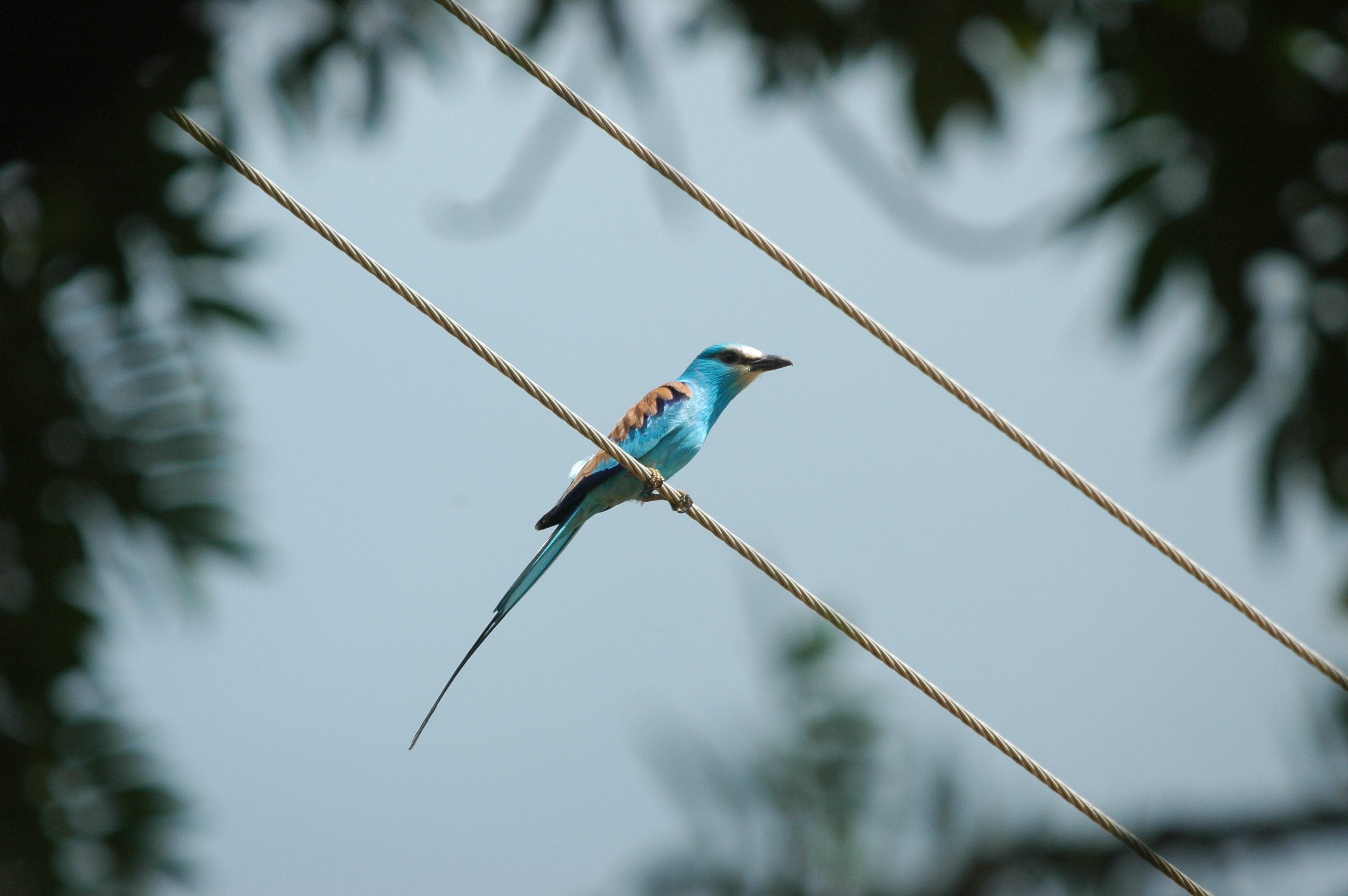
I could have put any number of the more than two hundred and fifty species of bird I saw in Uganda on this post, but this one takes the top spot because of our story. Having never had any luck with European rollers in Spain, I was amazed to learn on the very first day of my stay in Uganda that there was a particularly handsome Abyssinian roller in the neighbourhood. But I’ll be damned if I thought photographing it might be a cinch – the bird gave me the run-around for most of my three-month stay, fearless and indifferent to my presence when I didn’t have my camera to hand and skittish in the extreme when I came prepared, as though it were camera-shy. In the end an act of God intervened on my behalf: an explosion of winged ants in the neighbour’s garden brought every winged insectivore within a hundred miles to the yard. With more than forty kites to worry about, plus a host of other raptors including shikras, lizard buzzards, grey kestrels and falcons, the roller had his mind on other things and I was able to get in a good shot or two. Sometimes it’s hard-fought encounters like that one that make a photo more compelling than all the editing in the world.
European Bee-Eater
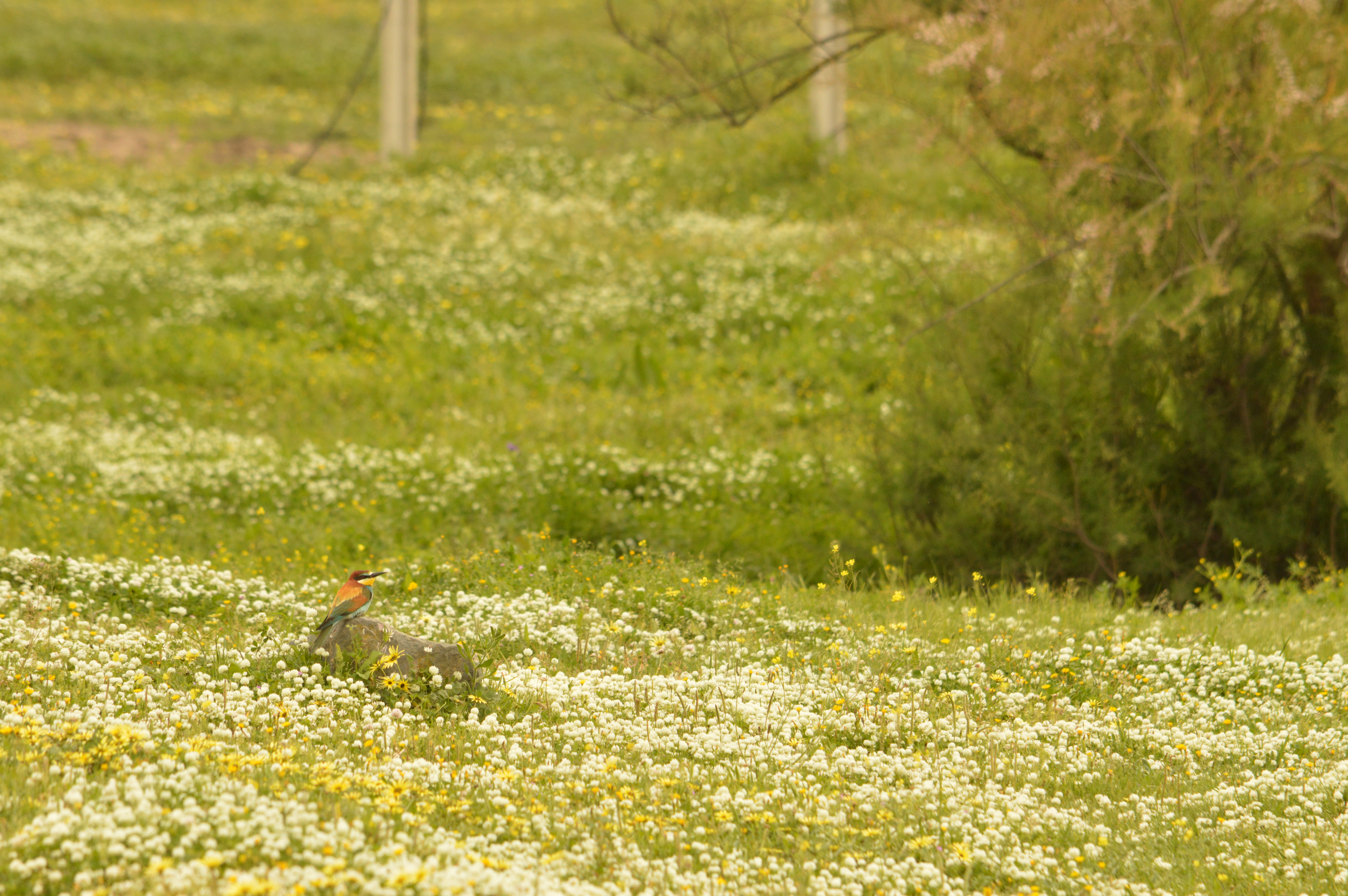
Much like the roller, the bee-eater is an explosion of colour in avian form – at least, to a British birdwatcher’s eye, since most of our native birds are rather drab by comparison. They’re incredibly captivating creatures to watch as they flit through the air like oversized moths, but it’s their call that I love the most: a cheery whirrup that heralds the spring in Spain just like the merry twitter of the swallow in Britain. The sound alone makes me feel warmer – it takes me back to the sands of El Rocio and the dusty scrubland between the Madre de las Marismas and the Palacio del Acebron. One day, it may be warm enough for bee-eaters to colonise the UK. They have bred here with occasional success in the last few years, but it remains to be seen whether they will follow the example of the egrets and move in for good. A part of me hopes they don’t – they are far too tied to my image of Spain as a special paradise. Some things you should have to travel to behold, to see with your own eyes. That’s what I think.
Purple Swamphen
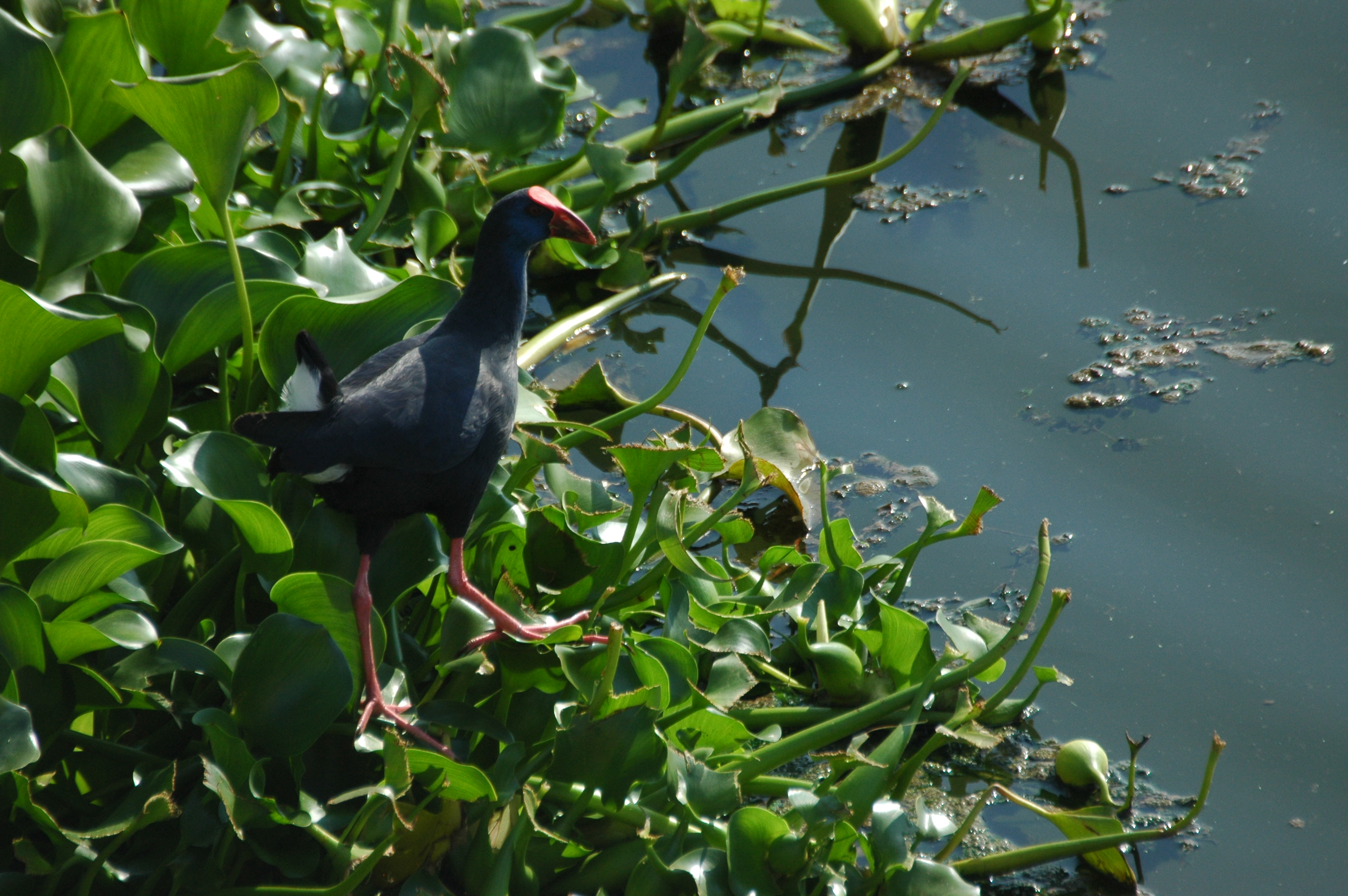
What list would be complete without one of my all-time favourites – the bird that probably kickstarted my obsession with Spanish birds? The purple swamphen is unmistakeable: a moorhen on steroids, with bigger feet, a bigger face-shield and a bigger attitude. I saw them first in El Acebuche, but since then I have found them in several other places: the rice paddies of the Brazo del Este, Uganda’s White Nile river and under the Roman Bridge in Merida. Like griffons, they lose nothing with each successive encounter, and I confess that my eyes are always on swivel-stalks whenever I’m crossing the bridge in Merida in the hope of catching one of them in the reeds below.
Red and Black Kites
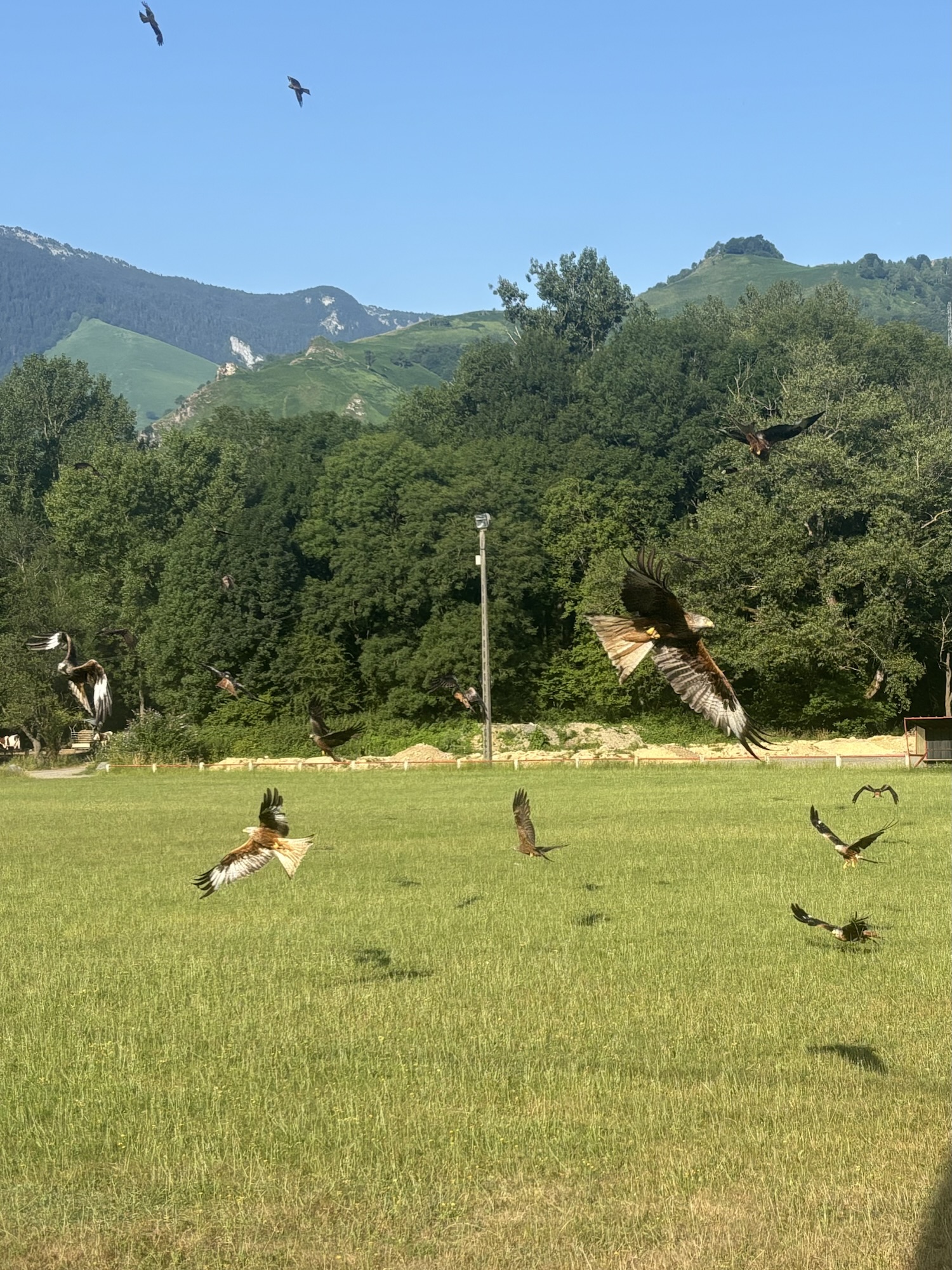
WordPress won’t let me upload the images I have of the hoopoe, Iberian magpie and Montagu’s harrier, which would bring the total to ten, so I will have to finish with another old favourite: the kite. Specifically, it’s black kites that have always held sway in my heart, due to their association with the Elysian stone-pine forests of the Raya Real, but since red kites have pretty much exploded in number in the UK in my own lifetime, they’ve earned a spot in this list too. Despite nearly twenty years of active pursuit, I have yet to take a decent photograph of a black kite (in my defence, I have often been without my camera when the right moment presented itself). Had I brought my DSLR with me on the Camino last summer, I would have had the opportunity of a lifetime when I stumbled – quite by chance – upon a feeding frenzy for the local kite population in a rugby field a day’s march from the Spanish frontier. But, I didn’t, so I just took a few photos on my phone and watched the spectacle.
Kites are something of a bait-and-switch story for me. Since their whistling call was used in the BBC’s Land of the Tiger whenever vultures were on screen, I came to associate that sound with those kings of the sky. It wasn’t until I was much older that I realised that vultures are pretty much silent (when they’re not squabbling over a carcass, that is), but by then the spell had already been cast. I would travel all the way to the Raya Real just to hear that sound. Of course, I’d go for more than that: the music-box melodies of a nightingale, the flute-song of a golden oriole, the oop-oop-oop of a hoopoe, the beak-clacking serenade of a stork and the descending whistle of a woodlark. But even if all those voices should fall silent, leaving nothing but the trill of a kite, I’d still make that journey. That’s how precious a single sound can be.
It can be done! After living in Somerset for the best part of two years, I finally made it to the Avalon Marshes. It’s a little out of the way – as fenlands often are – and, being without a car of my own, impossible to reach outside of term-time, but with a little planning I managed to successfully navigate the one bus there and back again after school this morning. Worth it? Absolutely!
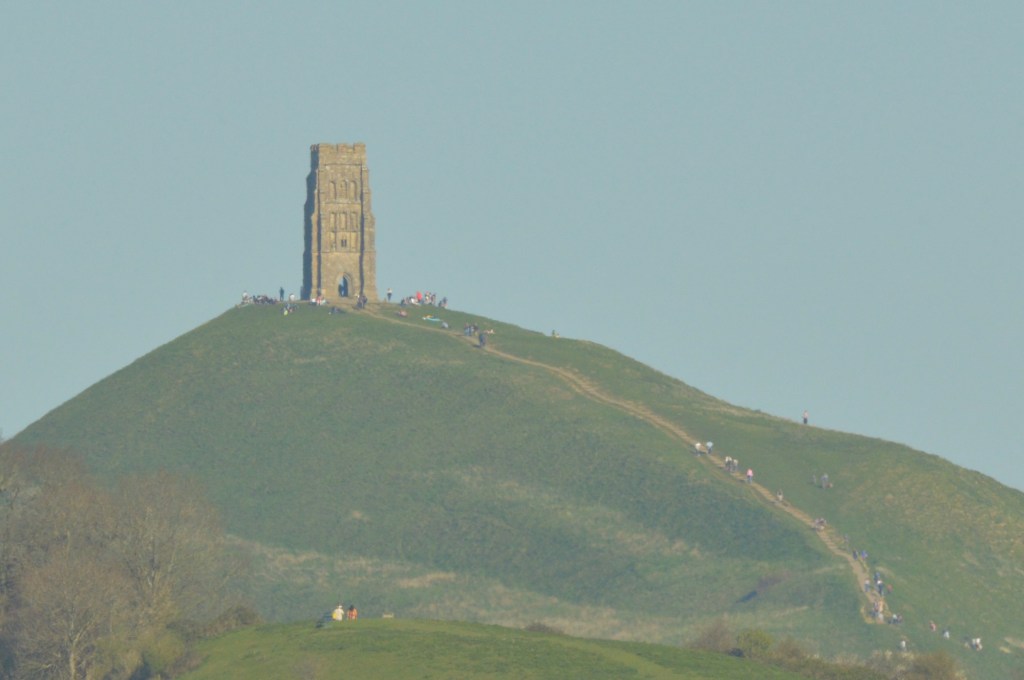
The Avalon Marshes are a network of pools, channels and reedbeds that stretch from the west of the festival town of Glastonbury across the Somerset Levels. Being naturally averse to crowds, Glastonbury and its ilk have never even crossed my mind as a way to spend the summer, so I’ve never had any cause to come this way before. Evidently, I was missing out. This mystical corner of the British Isles has a real charm to it. The 376 bus dropped me off outside The Royal Oak in neighbouring Street and I struck out across country for the marshes from there. Along the way, I walked in the sightline of the legendary Glastonbury Tor. It was a balmy spring day – the fourth in a run of consistently sunny days – so the Tor was drawing a growing crowd of sun-seekers, like a sweet on an anthill. If I had a little more time, I might have gone and had a look myself.
The magic started before I even reached the Glastonbury Canal that runs into the fens. I had just come upon the first of the reedbeds that herald the Avalon Marshes when I heard the sound that I had come here for: a low, pipe-like boom. A sound that inspired many a myth and folktale in the British Isles, and that once was surely heard all across this island. The noise belongs to the great bittern, a singularly beautiful and cryptic variety of heron that is surely the prince of the fens. I can’t remember whether or not I have ever conclusively heard a booming bittern before – my memories of a possible encounter with one in Stodmarsh when I was a lad are a bit hazy – so I have hesitated to add them to my life list thus far.
Today, however, I was left in no doubt. I must have heard at least six different individuals booming all across the fens, including one that was so close that I could swear I heard its resonant intake of breath before each boom. The great bittern is a master of camouflage, however, with a plumage so perfectly suited to its life within the reedbeds that it is almost completely invisible when “bitterning”, so despite the fact that they were making enough noise to be heard from Glastonbury, I never saw so much as a feather. But I wasn’t disheartened in the slightest. Just to hear that booming sound was worth the journey out here. I’ll have to do it again sometime.
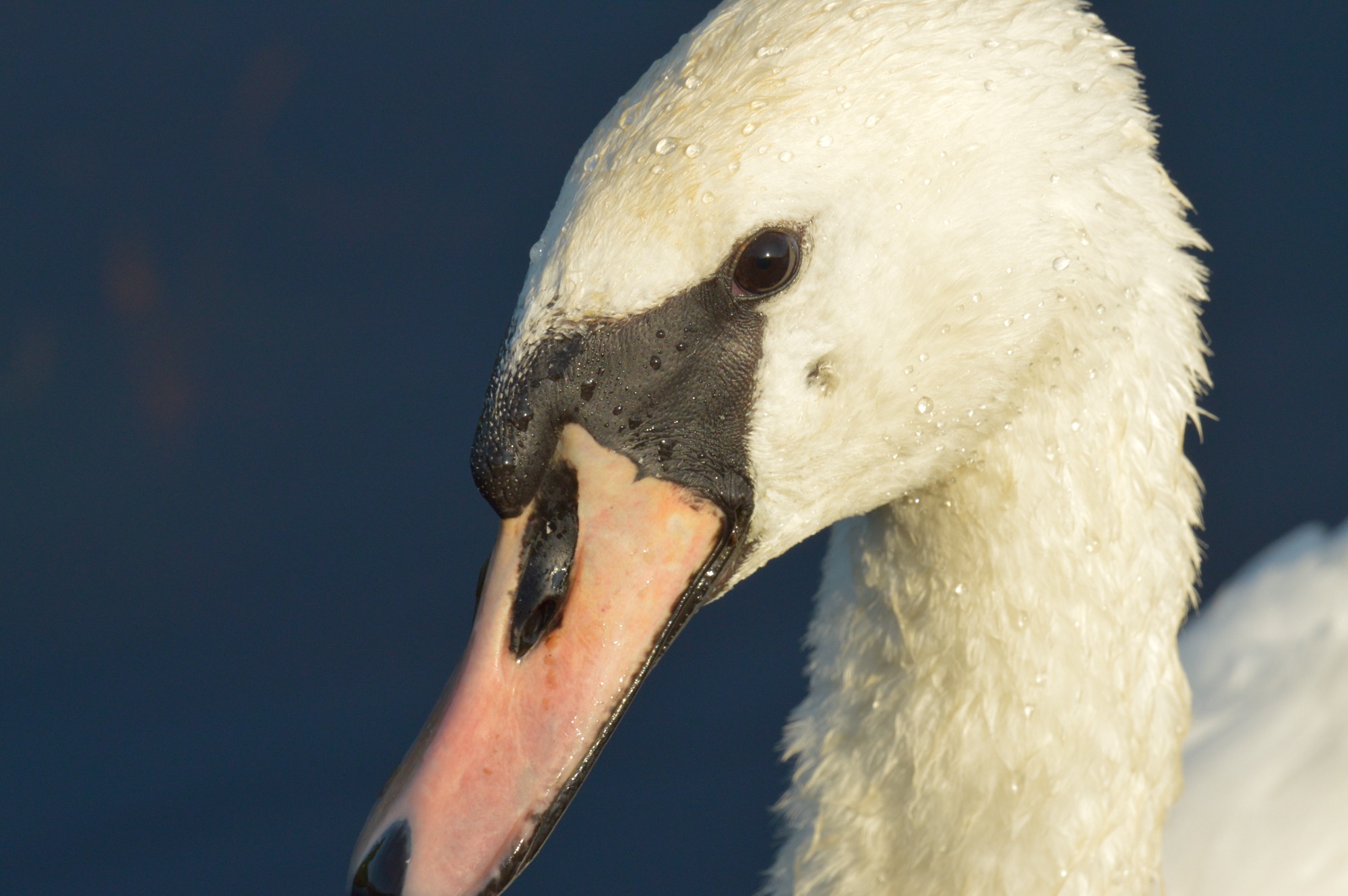
While I was scanning the reeds for one of the bitterns, a swan came swimming by, giving me something to train the lens on.
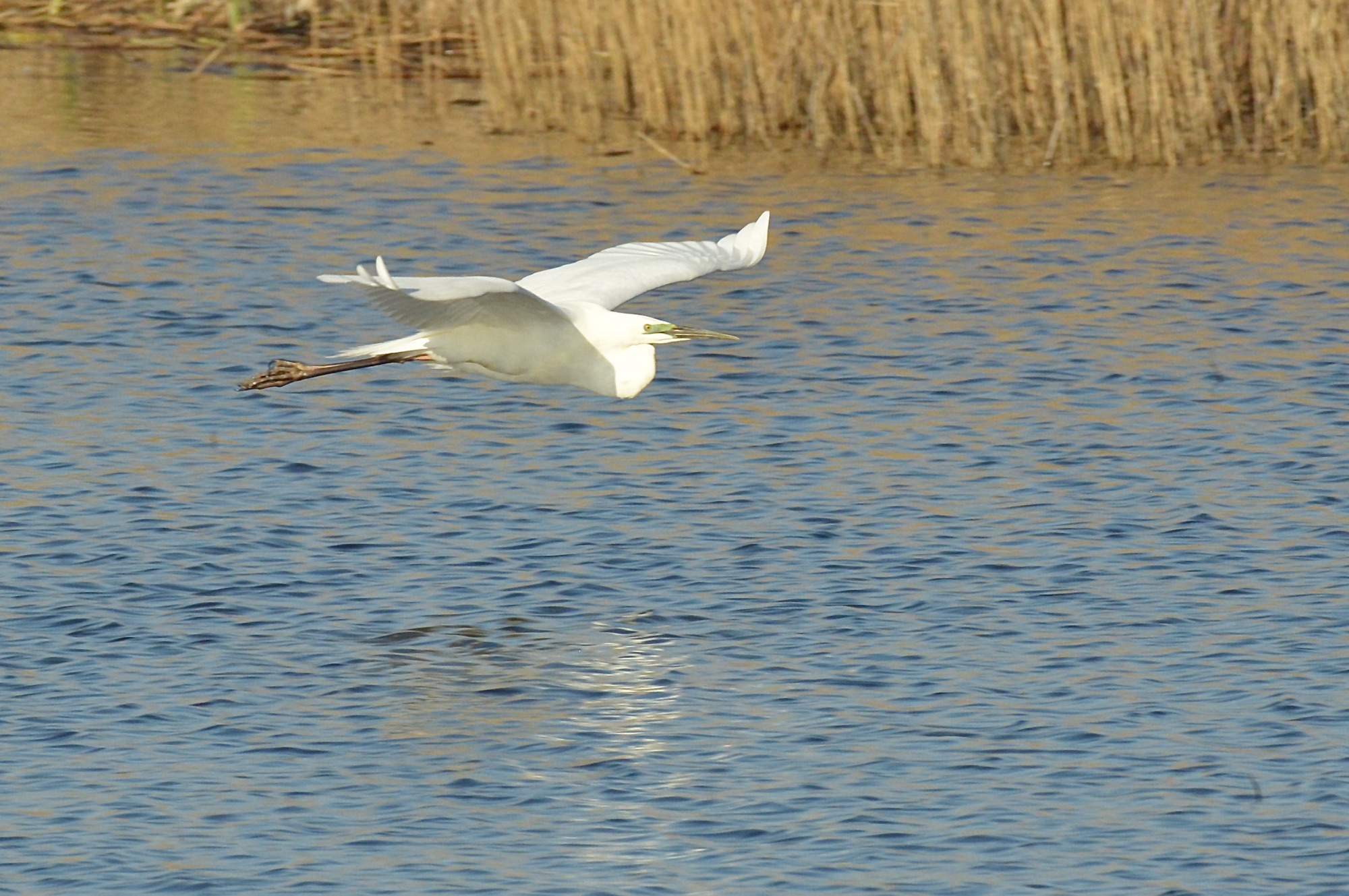
The swans weren’t the only great white birds in the marshes. Another species that has drawn me to the Avalon Marshes today is the Great White Egret, a relative newcomer to the British Isles. The largest of the egrets is actually a heron, a fact that is obvious from its size, which is considerable. I’ve seen these beautiful birds before on the continent, but this would be the first time I’ve seen one here in the UK. When I was a kid, this would have been a very rare find, but much has changed since then. The Avalon Marshes have around fifty breeding pairs, which is frankly ridiculous, considering that they only started breeding here a few years ago. Even the other birdwatchers in the Avalon Hide barely batted an eyelid when one flew into view. It’s a sign that, no matter how bad things may seem, life always finds a way.
On that note, I feel I have to talk about one of the things I haven’t missed about birdwatching: the manspreading. The term didn’t exist when I was a kid, but it certainly does fit the bill.
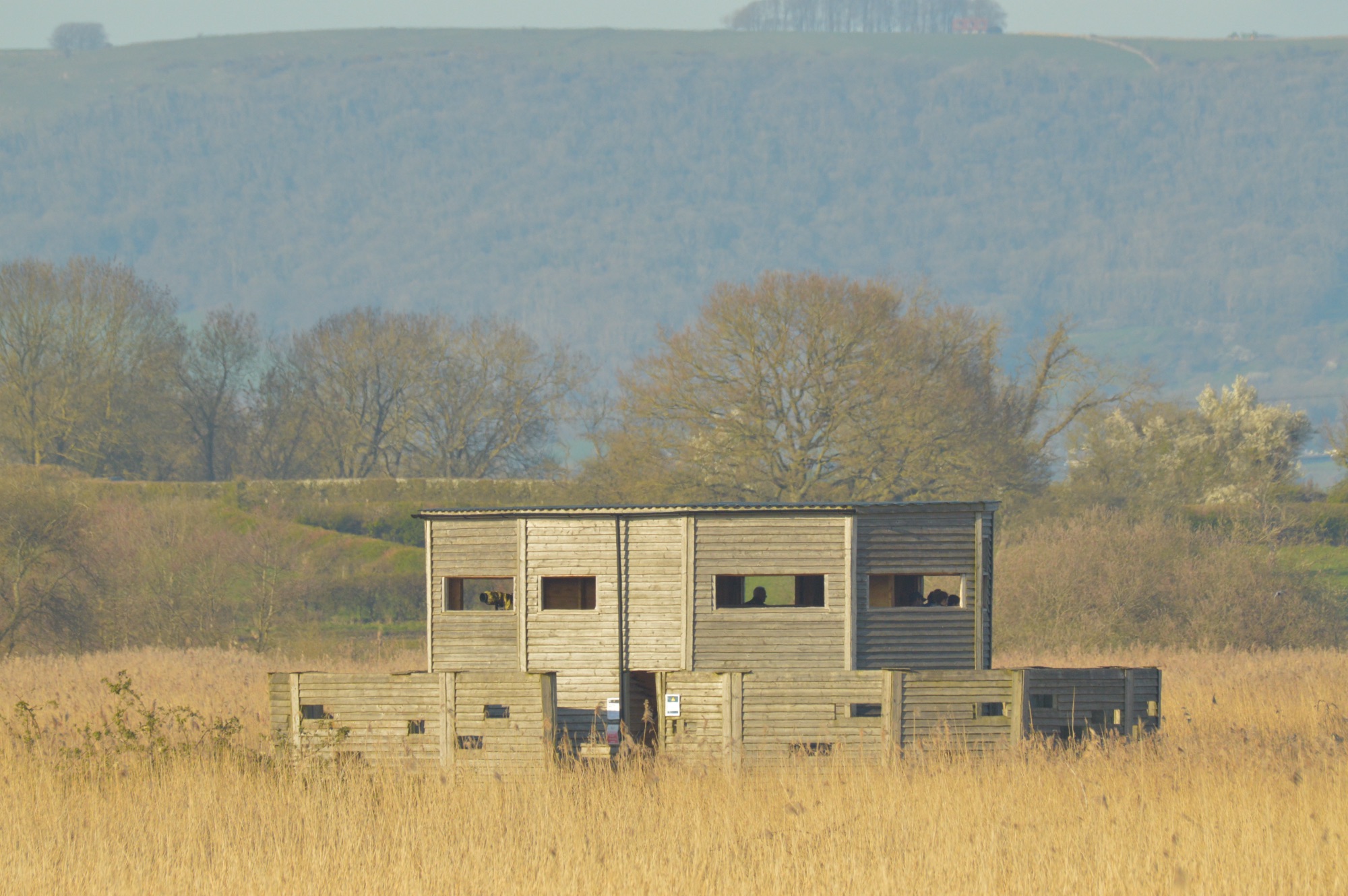
I thought I’d check out the Avalon Hide to see if I could find one of those elusive bitterns, but it had been staked out by a very different group of boomers, who had each selected a window to themselves and laid out their gear all about them: a panoply of scopes, binoculars and cannon-like lenses that made even my monster zoom lens seem like a hand gun. Only one window was available, which looked out back the way I had come. I stuck around for about twenty-five minutes, listening to their familiar birder-talk, but it quickly became apparent that they meant to stick around until sunset to see if either the bitterns or the resident barn owl would make an appearance, and as I had to catch a bus home, I had to cede the hide to them.
I explored the “cattle class” alternative screens below the tower, very much aware of the scopes poking out of the windows above me like artillery. Sometimes a bird-hide can look a lot like a pill-box.
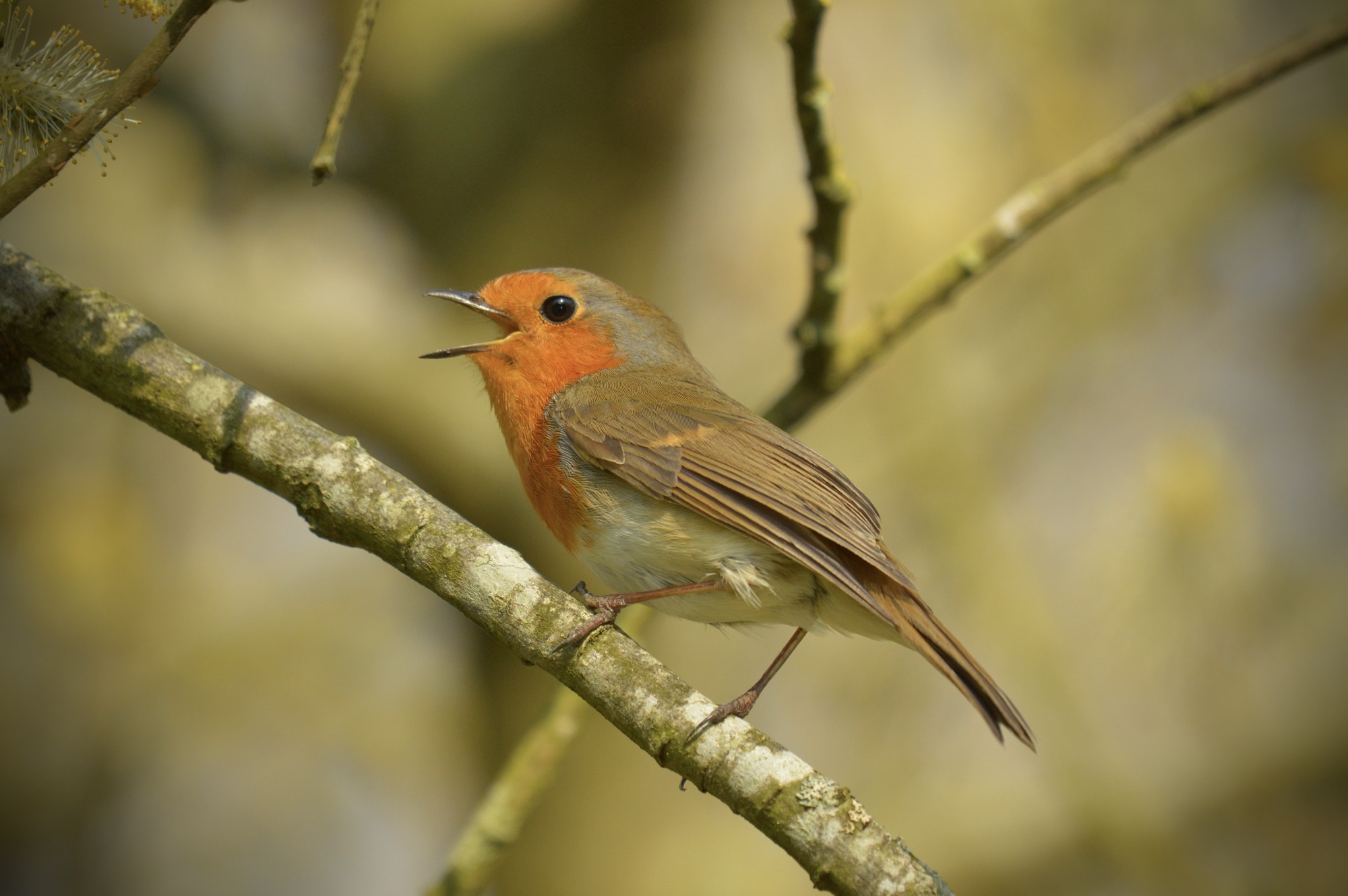
A friendly chap and his wife restored my faith in the hobby when they pointed me in the direction of a water rail they had just seen, but it never did reappear from its hiding place in the reeds, so we went out separate ways with a shrug. Fortunately for me, there was plenty to see: perhaps sixty or seventy shovelers out on the lake, along with attendant flocks of gadwall, mallard, tufted duck, teal and coot, as well as a few noisy great-crested grebes. Most of them were much too far for even my faithful 500mm, but a robin that followed me out of one of the hides was perfectly happy to let me take his photograph, which definitely made up for it.
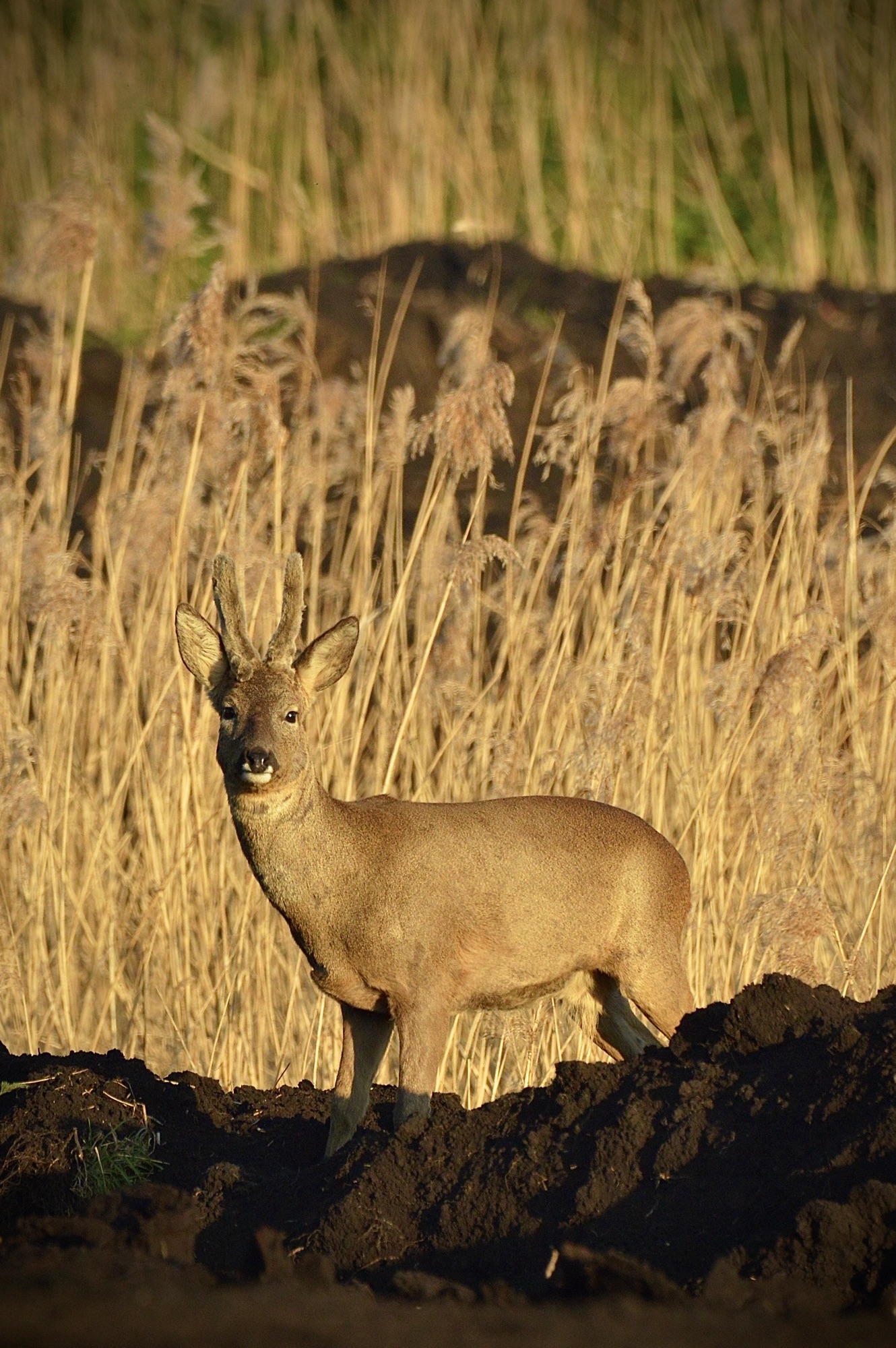
As this was my first sortie to Avalon, I didn’t want to end up stranded by missing the last bus home, so I left with plenty of time to get back to Glastonbury. It was a quiet walk once I’d put the birders and the bitterns behind me, and I only ran into two other walkers out with their dogs along the trail. There seems to be a small gypsy community on the edge of the marshes – something about the layout of their encampment seemed strangely familiar, not to mention the presence of two old and very battered horse-drawn caravans in the yard. When I reached the edge of the marshes, I stopped to look back in the direction I had come, and when I turned back to Glastonbury I saw something staring back at me from the edge of the reeds. I thought it might have been a muntjac at first, but it was much too big for that. It was, of course, one of our native roe deer. Fearless as ever, it didn’t even flinch when I raised my camera.
One thing’s for sure: I’ll be back. It’s only a £3 bus ride from Taunton and, while the return journey is broken up with a layover in Somerton, it’s perfectly doable in a day. I’ll be back for the bitterns, either later in the spring or next year, depending on how busy my duty weekends are after the holidays.
This time next week, I’ll be in Madrid. From there it’s only a matter of hours until I set out for South America. That has come around shockingly fast. I’m starting to get very excited! I’ve had a full month to put the camera through its paces and I think I’ve got the hang of the lens and its demands now – the way it handles, the settings it requires for optimum output and, of course, its weight. Now all I need is to be out there already. Thank you Avalon for being the last stage of boot camp for my trusty Nikon companion. Here’s to the next grand adventure! BB x
Two weeks from now – right now – I will be sitting somewhere in the transit lounge in Bogotá’s El Dorado International Airport, awaiting my connecting flight to Peru. That’s about 5,300 miles (or 8,500 kilometres) from home, which will be the furthest I have ever been from home by a long shot, beating both Kampala and a brief layover in Dallas last year – and, if things go to plan, I may well find myself even further afield before the year is out. I will also be a full five hours out of sync before I even reach my final destination, so I will need to be careful and try to acclimatise with an altered sleep schedule a few days in advance.
We are very much into the preparation phase now. I have arranged the last of my accommodations for the journey in Ollantaytambo, where I hope to end my Peruvian adventure in the peace and quiet of the Sacred Valley. I have ordered a new pair of sturdy Merrell hiking books to see me around the altiplano and beyond. I should do a preparatory pack this weekend to see if I can fit everything into my rucksack. I’m a light traveller, but the zoom lens is likely to be the largest and heaviest of the equipment I will be lugging around. The jury’s still out as to whether I should take a book with me or simply use up the last of my Audible subscription credits and download more audiobooks than I could possibly hope to finish in that time. I’m leaning toward the latter, if only because I’m not particularly good at leaving a good book behind.
I’ve been meaning to get out and about and keep practising with the lens, but my time is very limited. Last week I managed to escape for just over an hour on Friday afternoon while the sun was out, but between report-writing, lesson planning, taking my team to Oxford Schools on Saturday and being on duty almost all of Sunday, I haven’t had much luck. The Netherclay Community Wood isn’t too far from home, but it had rained a lot on Friday so I didn’t explore the woods too much, as the ground beneath my feet had become little better than a squelching quagmire. Little wonder, then, that there were so few walkers out and about.
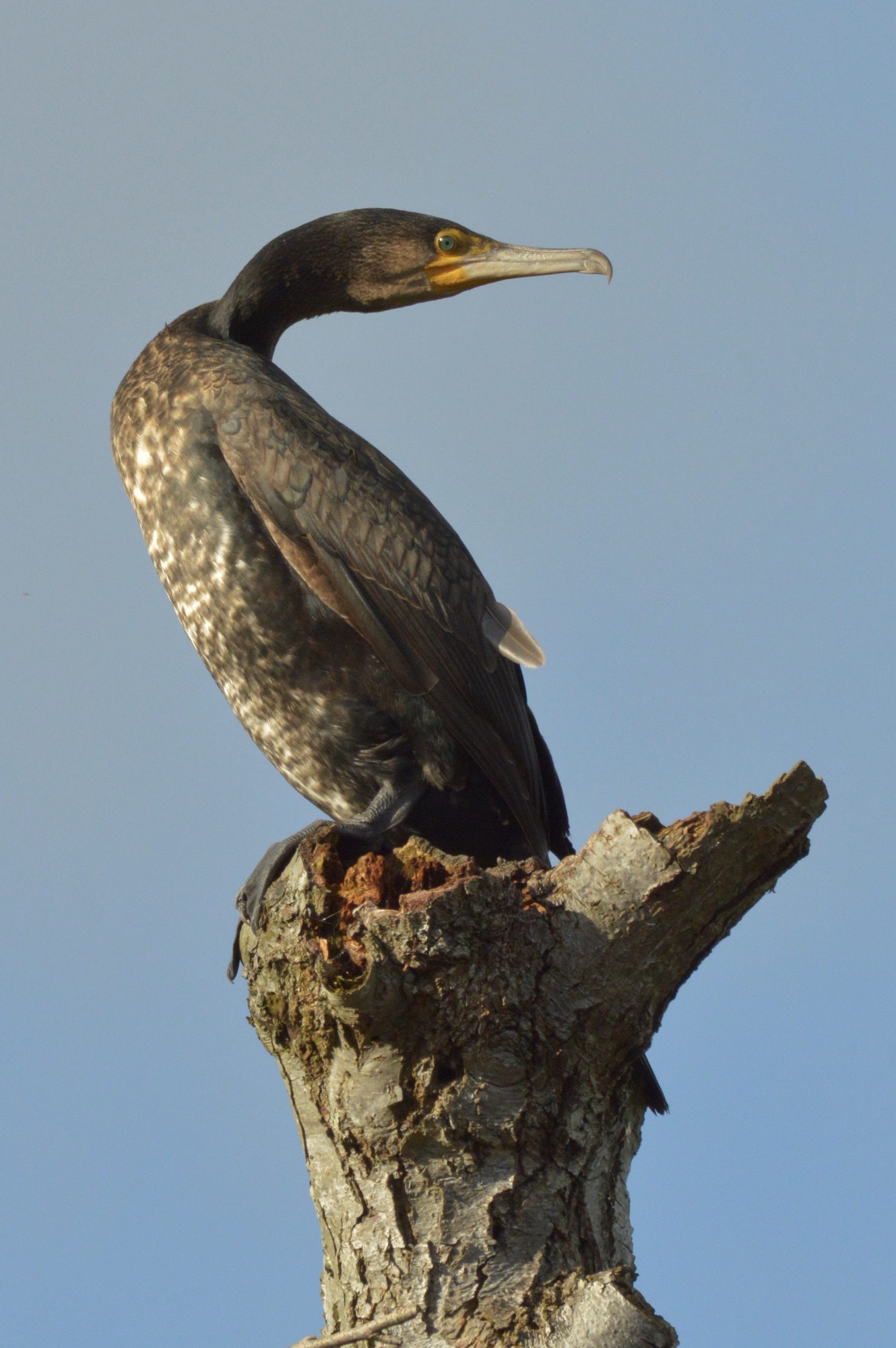
I went looking for the water rail that I heard last week, but I didn’t see or hear it. I did disturb a kingfisher on the other side of the pond, though, and while the halcyon bird was much too fast for me, I did have more luck with a young cormorant in the momentary interlude when the winter sun deigned to show its face.
Having something incredible to look forward to always makes the Lent term – by far the hardest of all the school terms – a lot easier to bear. Last year, the knowledge that I would be spending all of three weeks in and around Spain was enough. This time, I have pushed the boat out so far that there is a very real danger that the tide will carry it away. And once it does, where will it take me? I’ve lost track of the number of times I’ve caught myself exploring other destinations, other wildlife adventures, other places where I can run while I still have the light of life. This year it’s South America’s turn, but in the years to come, I would dearly like to see the rest of the world, now that the wanderlust has returned. I still harbour dreams of seeing the eerie saguaro stands of Sonora, but a number of other old ideas have started to rise to the surface, like bubbles beneath a frozen lake: KwaZulu-Natal, Kanha National Park, Svalbard and Borneo.
It may well be that in abandoning my search for Her, wherever she may be, and indulging in the thing that has always brought me the most joy, I am putting off the thing I want the most in life. It may also be that I find Her along the road. Either way, I am done waiting. The apps are drier than the Atacama these days and the conversations drier still. There is a world of light and life and joy out there and I can no longer ignore it. It is time for a change of scenery. BB x
With Chile now a very real possibility this summer, it’s time to bury the heartbreak hatchet with the Americas and accept the fact that I’m ridiculously excited about crossing the Atlantic again. Somehow, between the red hair and the po’ boys, I missed out on the opportunity of a lifetime to linger in the New World and enjoy all the sights and sounds of a place I’d never seen before. Instead, I beat a hasty retreat home to nurse my wounded pride. This time I have my priorities straight: I’m going out there for me.
There is so much to look forward to this year: from a brief pitstop in Madrid and Colombia’s El Dorado Airport to my first ever encounter with the Pacific Ocean on the grey shores of tearless Lima; the guano colonies of Paracas and the altiplano around Arequipe; the cloud forests of the Sacred Valley and the pristine jungles of the Amazon; and then, after a brief return to reality, the snow-capped mountains of Santiago de Chile, the starlit expanse of the Atacama Desert and the desolate shores of Tierra del Fuego; and at the end of it all, a wedding in Athens and the quiet of Lake Kerkini. If the world is going to hell in a handcart, I’m going to see it all before it’s gone.
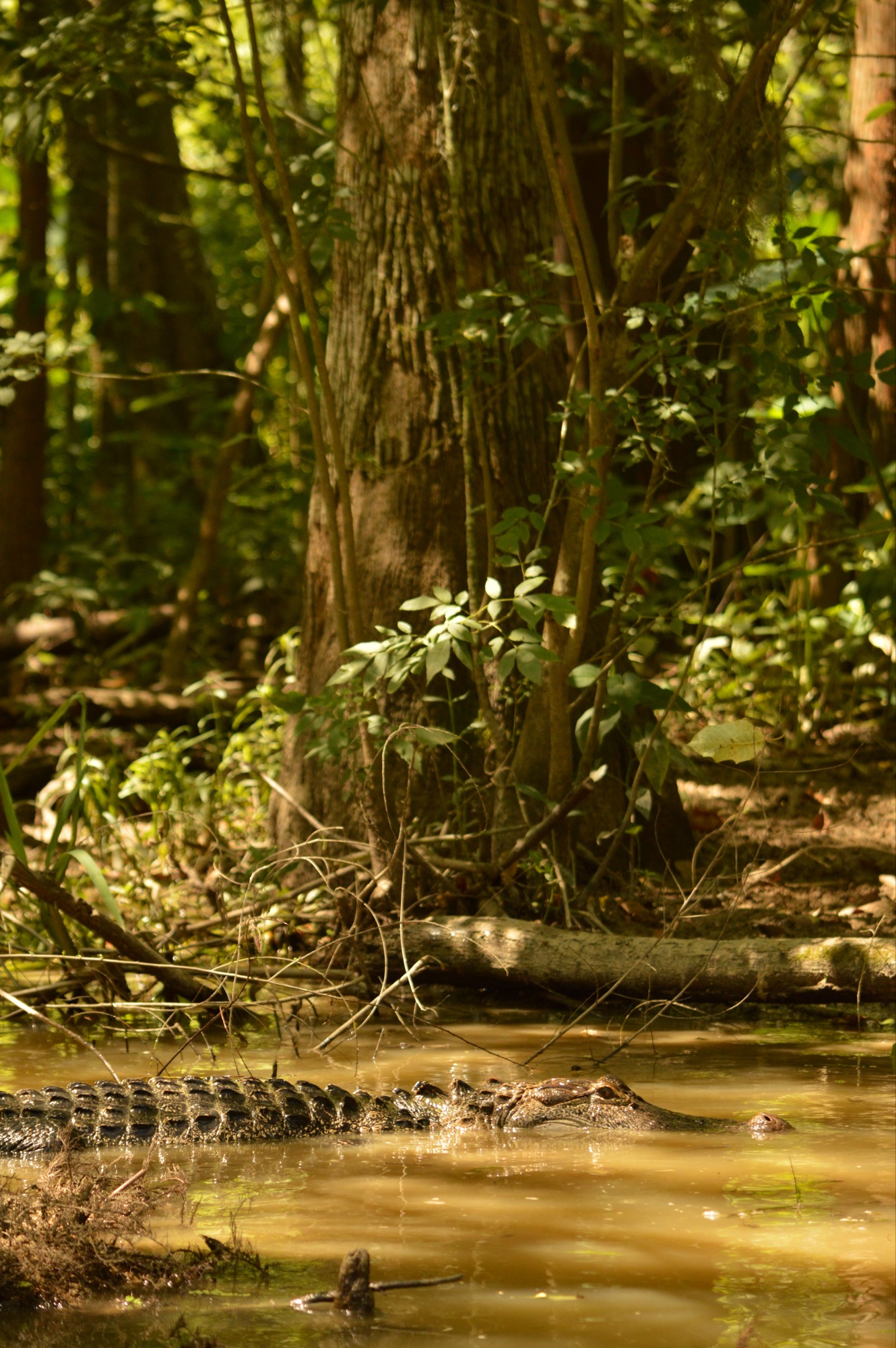
My only real wild encounters during my last trip to the Americas – if you don’t count a brief glimpse of a bald eagle from the train – were in the Louisiana bayou, where I chartered a boat and captain to take me up the Pearl River of Slidell’s Honey Island Swamp (which you can read about here). During my six days in the States, I saw only a handful of American birds, and most of them were on my Bayou side-quest: cardinals, chickadees and blue jays around the visitor centre (commonplace to most Americans but brand new to me), wood ducks and whistling ducks in the forest and spoonbills and anhingas along the river. The alligators, on the other hand, were everywhere. You could hardly miss them. I also saw a family of scruffy-looking racoons, rounding out the American classic collection. Short of a white-tailed deer or two, I think I ticked off most of the North American beginner’s collection.
But South America… now, that will be a different ball game entirely.
I included Patagonia on my wish list years ago, but I never thought I’d actually end up going there someday. Now that it’s real, I can’t shake it from my head. There are so many things I want to see and do, and I haven’t even begun to learn them all properly.
So I thought I’d write a list – nothing obsessive, mind, just something to look back on when I return. My itinerary for Peru is nearly finished, and my plans for Chile will have to wait until I have a clearer idea of what lies ahead (and what I will actually be doing out there). For now, at least, I can indulge in a little harmless wish-listing – starting with the essentials…
Andean Condor– the only one that I’m really pinning my hopes on (my itinerary will accommodate multiple attempts)
Black, Turkey or King Vultures – in case it wasn’t obvious, I’ve got a real soft spot for vultures!
Hummingbirds – I’m not fussed about the species, I just fancy seeing the sunbirds’ transatlantic cousins!
Pumas – it’ll have to wait for my Patagonian adventure, but it would beat even the wolves of Poland
Jaguars – I’m not expecting to see them in Manu, but it would be incredible if I did
Pelicans – in my head, a line of pelicans flying over the water is the image of the Pacific I’m after
Guanacos – llamas are great and all, but nothing beats seeing their wild cousins
Howler monkeys – something tells me I may regret putting these muditos on the list
Giant otters – regular otters are rare enough, so maybe the Amazon will provide!
Capybaras – because my Year 7 & 8 students are counting on me to bring them photos
Rheas – another gem I don’t expect to see, but one that I will have to come back for!
Sloths – something that won’t disappear into the jungle in the blink of an eye, maybe?
Anacondas – to see just how large they truly are
Hoatzin – surely the most bizarre bird of the Americas!
Penguins – Humboldt, Magellanic or King, depending on the country
Tinamous – because their names are simply wonderful on the ear
Tapirs – the closest I’ll get to megafauna on this adventure
Boobies – not going all the way to the Americas just for the boobies this time, but they’d be a nice reward!
Macaws – the symbol of the Amazon, right?
Cacti – fine, this one’s no animal, but it’s definitely American enough to warrant a spot on this list
There’s a blackbird singing outside. They’re getting earlier and earlier as the year turns. I, too, should turn in. BB x
I’m slowly starting to rebuild the life I left behind me. It’ll take a little while, but it’s starting to feel very familiar: the long walks, the eyes on swivel-stalks, the weight-training involved in swapping the zoom lens from one arm to the other. In a way, it’s like I never stopped – though it has been about fifteen years since I last did this sort of thing on the regular.
One of the first things to establish is a “patch” – that is, somewhere nearby that I can visit easily and regularly for a quick nature fix throughout the year. I’m still in the market, but I think I’ve decided upon the stretch of the River Tone that runs along Longrun Meadow and into the Netherclay Community Wood. It’s within easy walking distance and there’s plenty to see, including otters – though I dare say I’d be exceptionally lucky to find them out on a weekend wander.
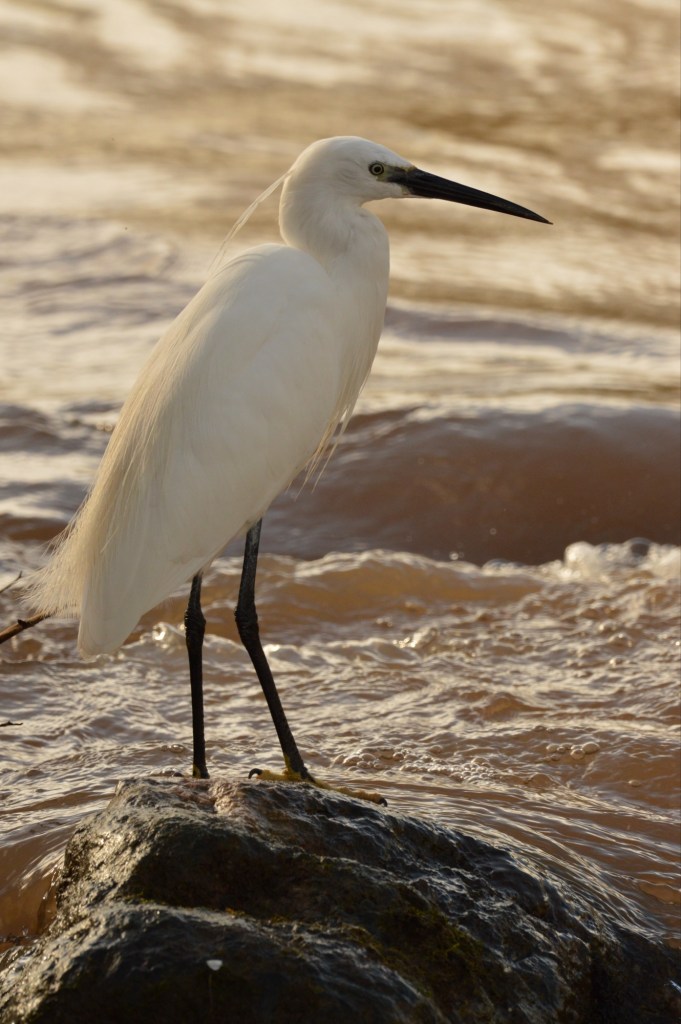
The egrets around here are pretty fearless, though. The flooded banks of the Tone must be harbouring a number of small fish, because I was able to watch this one hunting for quite some time, catching a couple of tiddlers and a small eel. I wonder why great egrets are more skittish than the little and cattle egrets that have colonised so many towns and cities? Is it genetic, perhaps – or is it the memory of that obsessive slaughter for their feathers that keeps them at bay?
I added a few new locals to my “patch list” – namely, teal and buzzard – but spent most of the walk learning how best to cradle the heavy lens over a long distance. I think I’ll need a strap for the lens itself, because I don’t want to chance the weight of it putting undue strain on the camera itself.
I was looking at a tied-down weekend this week, but thanks to a couple of necessary swaps and the support of my wonderful Debating team, I worked Friday night instead and got the weekend off. Suddenly, I had a free Sunday. Coupled with the knowledge that my Railcard expired at midnight, putting a definitive end to many years of affordable train fares, I decided to put the lens through its paces in a new environment: Dawlish Warren.
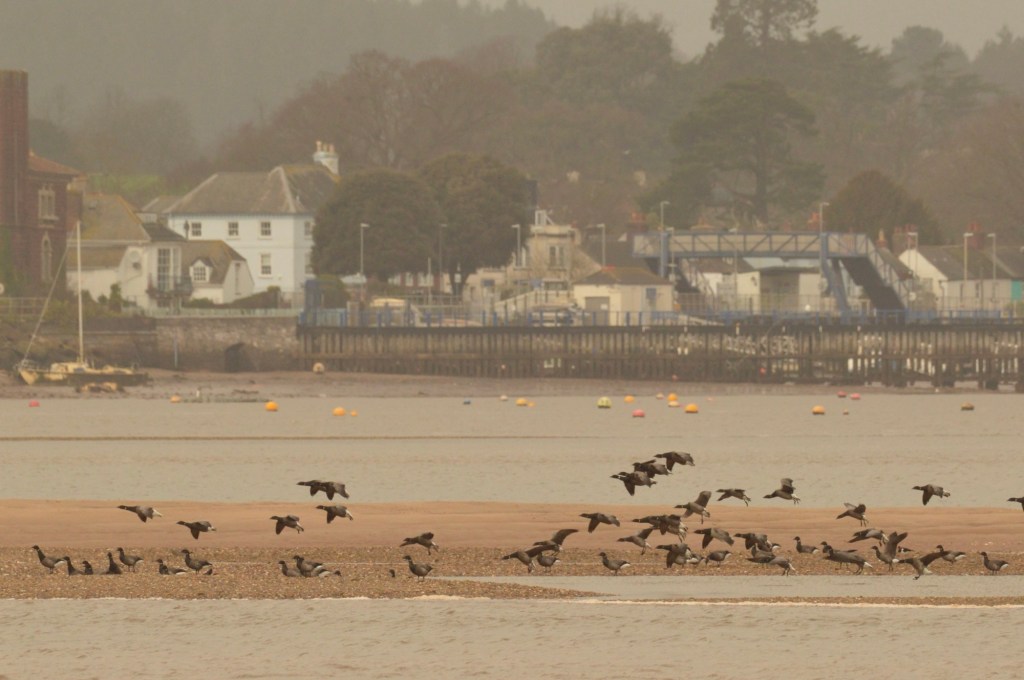
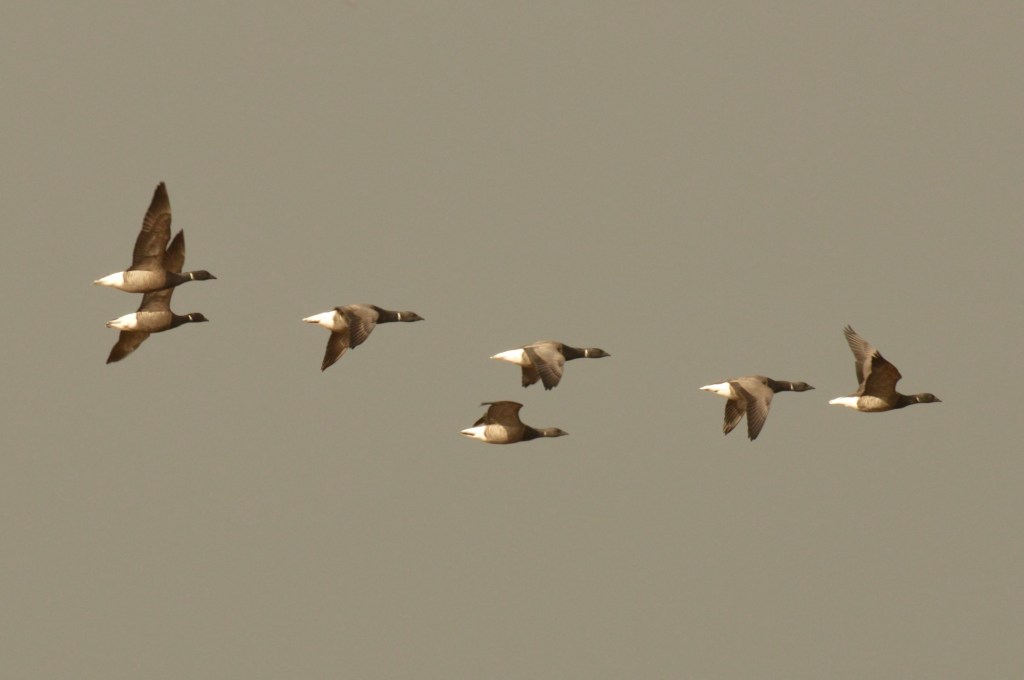
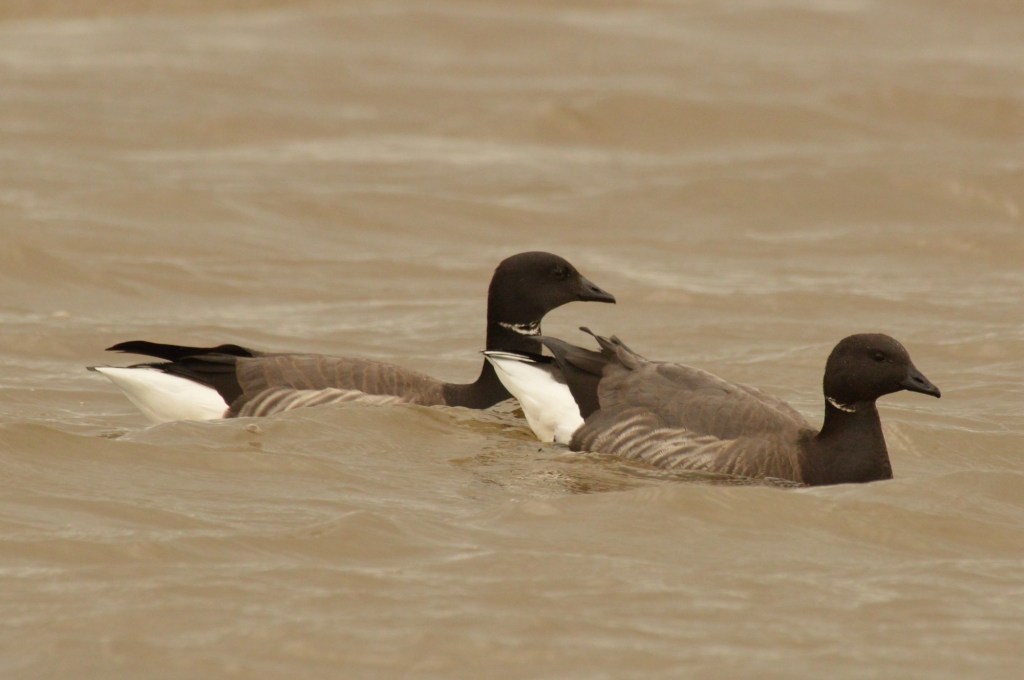
I came out here at the end of October, when the sun was still shining and the beach was still packed with holidaymakers. In my memory it felt like the end of summer, but it must have been autumn, because the brants had already arrived in great numbers. They were very much in evidence today, numbering well over a hundred, and more than likely the same birds I saw back then.
Brant geese are a seafaring species of goose that spend the winter around the coasts of the British Isles, returning to their breeding grounds in the Arctic circle at the beginning of spring. Most of our geese – the dark-bellied kind – come from northern Russia and Siberia, though the odd light-bellied individual is often to be found among them, straggling over from its North American range.
In ancient times, before their migration routes were known, the people of the British Isles had no answer to explain what happened to the thousands of “burnt geese” that flocked to the coasts, saltmarshes and estuaries, only to disappear without a trace with the spring. Together with the closely-related barnacle geese – who once pulled a similar disappearing trick – they were believed to hatch from goose barnacles, which shared their colour palette. As such, being “not of flesh”, they were permitted on Christian fast-days – a practical solution in desperate times, it must be said.
It’s hard to see how anyone could have believed that old yarn about birds born from barnacles, but then again, the same people believed that swallows slept at the bottom of ponds during the winter. Sometimes we make up the most fanciful nonsense to avoid having to face the obvious reality, even when it is staring us in the face.
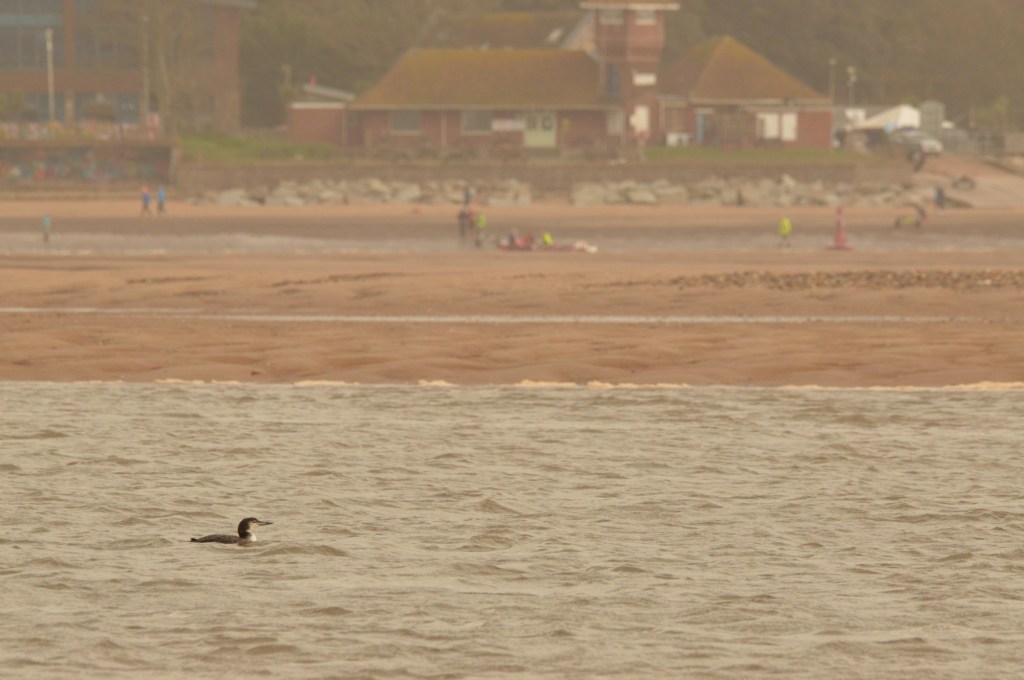
Out in the bay, I saw a silhouette I recognised immediately, diving and resurfacing in a small channel between the shore and a shrinking sandbank. The most common diving seabird around here is the cormorant, but in winter, there are quite a few birds that might dive beneath the surface: shags, sawbill ducks, scoters, grebes and divers. Only one of those comes close in size to the cormorant, and that particular bird holds its head level, unlike the cormorant, who swims with his bill upturned.
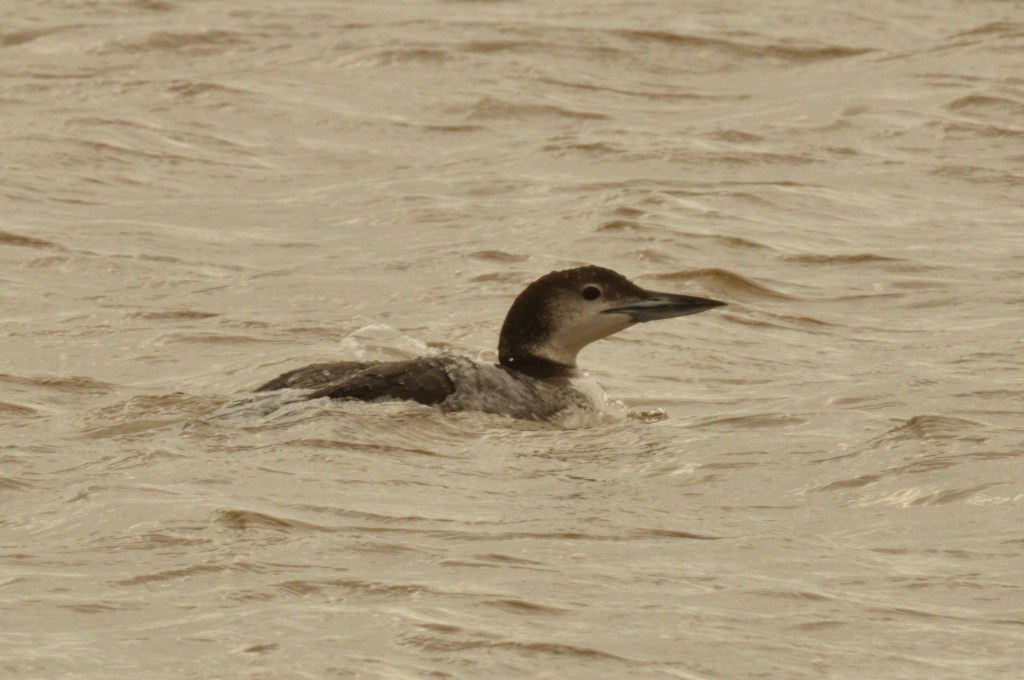
I didn’t need binoculars to know I had found a great northern diver – the first I’ve seen since my schooldays – and I went tearing across the beach to get a closer look.
The last time I saw one of these impressive creatures, it was far out to sea and flying east along the British Channel. I haven’t had the luxury of seeing one so close before – close enough to appreciate its terrifying red eyes, an evolutionary trait shared with grebes that filters light and helps them to see underwater.
I watched it hunting in the bay for a few minutes, before it decided to run the gauntlet of the shrinking sandbar and scour the southern shore. I counted the seconds between each dive. This one averaged out at 40 seconds, but the diver has been known to stay submerged for up to five minutes. Pretty impressive for such a small and fast-moving creature.
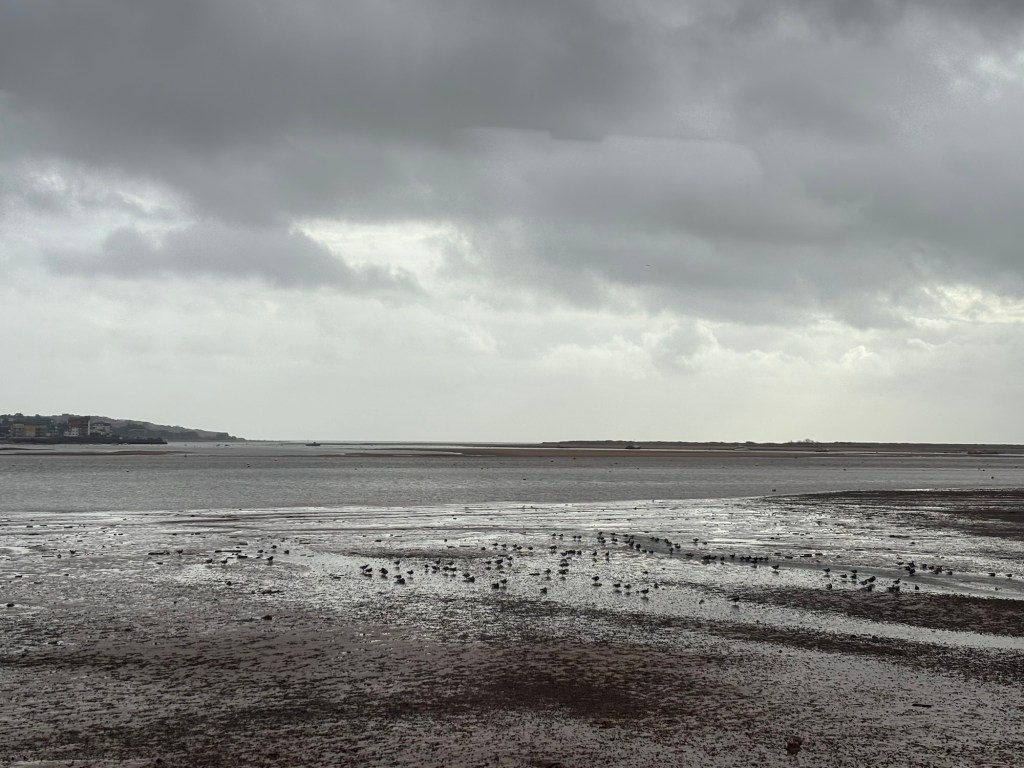
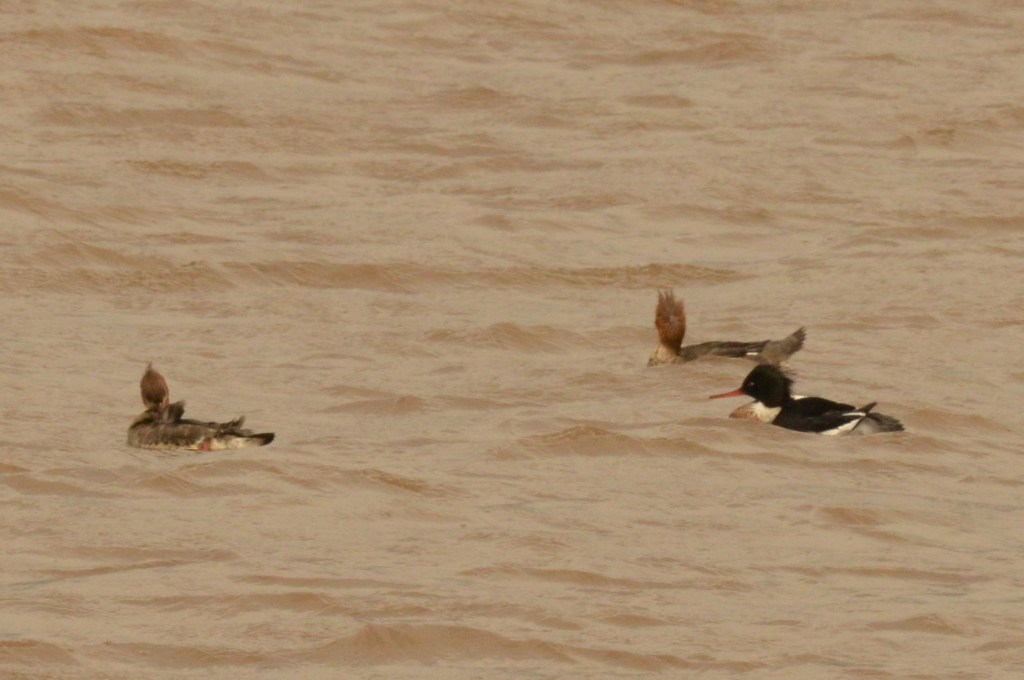
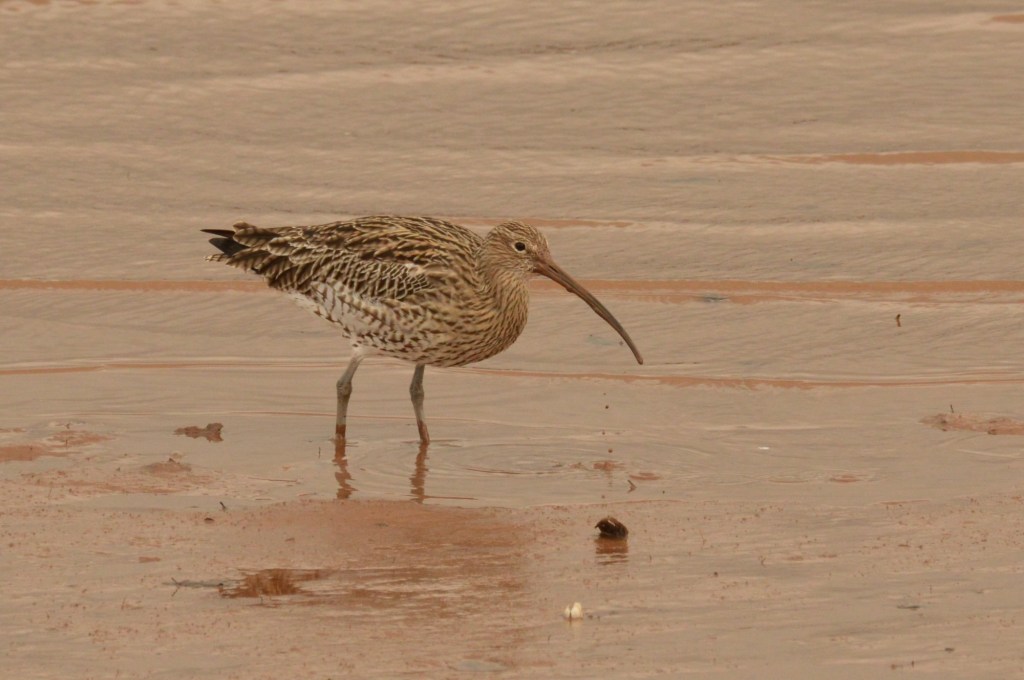
I made it back to Dawlish Warren’s station in plenty of time for the hourly train, but the sun was still shining and I hadn’t yet had enough, so I set out along the Warren Road to the north. The railway hugs the coastline, so the roads meanders a bit on its way north from the Warren. Eventually, after about an hour’s jaunt through the countryside, I came to the ferry town of Starcross. I decided against pushing on to the Exminster Marshes and set up shop at the station, which looks out over the estuary. I was rewarded for my patience with a family of punk-rock red-breasted mergansers, as well as a number of familiar waders probing the mudflats below: turnstones, redshanks, greenshanks and a couple of curlews.
There will always be a special place in my heart for curlews. Their mournful bubbling call was the backdrop to many a childhood adventure around Romney Marsh and the mudflats of Sandwich Bay, and followed me up into the highlands of Scotland on a couple of hiking adventures in my twenties.
Apart from that, they’re remarkably beautiful creatures, with their cryptic feathering and dark, thoughtful eyes. I’ve been very lucky with the egrets around Taunton, but I hope I can continue to observe these magnificent creatures and do justice to them with my new gizmo.
I might not get so flexible a weekend for a while now, so I’ve cashed in my chips early. But I’ll be back with more nature news in the near future, so stay tuned! BB x