A Farewell to Armchairs

The Flat, Taunton. 21.49.

Jumpin’ Jack Flash – The Rolling Stones

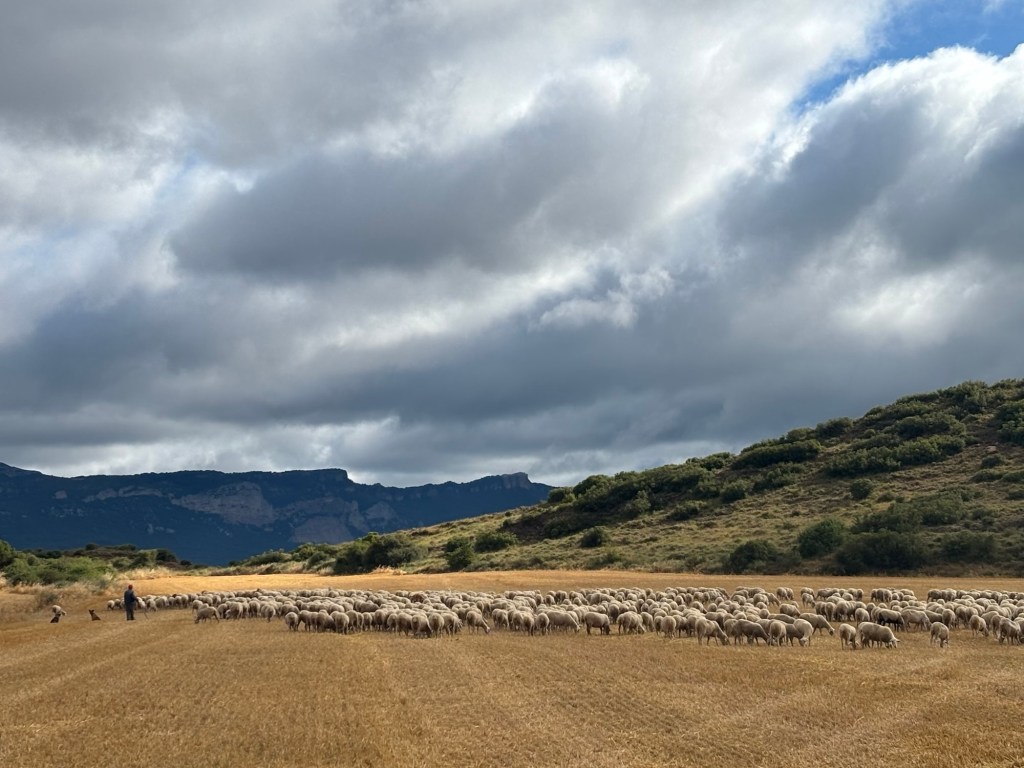
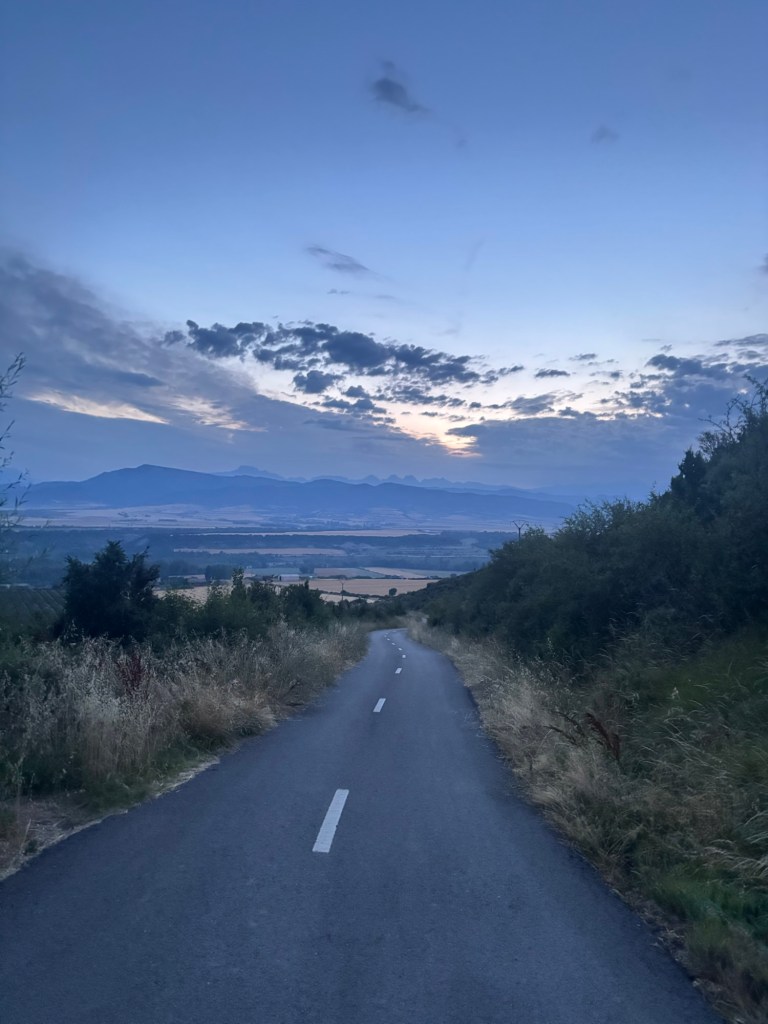
Tonight is my last night in the comfort of my own home. By this time tomorrow, I will have checked into my hostel in Bordeaux, the first of six weeks of bunk beds, temperamental showers and creaky metal lockers. Six weeks is as long as a half term – I have to keep reminding myself of that fact. Six weeks is a very long time to be on the road. But my bag is nearly packed and I’m starting to get itchy feet. Let’s hope that’s the only condition my feet suffer from over the next month and a half!


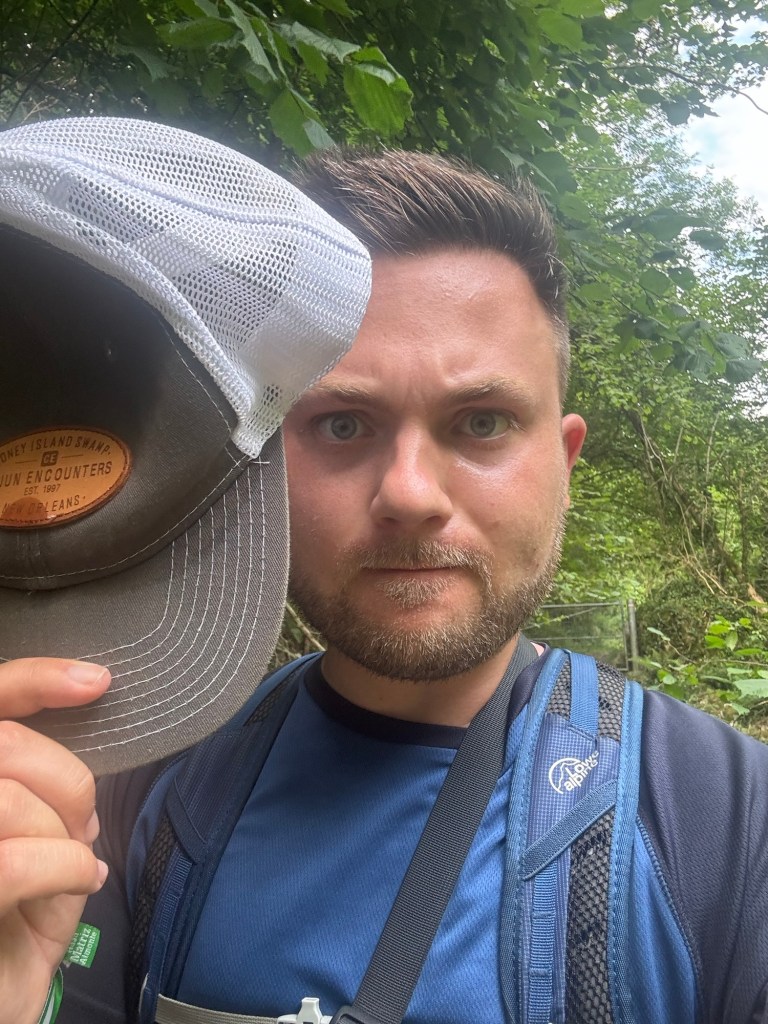
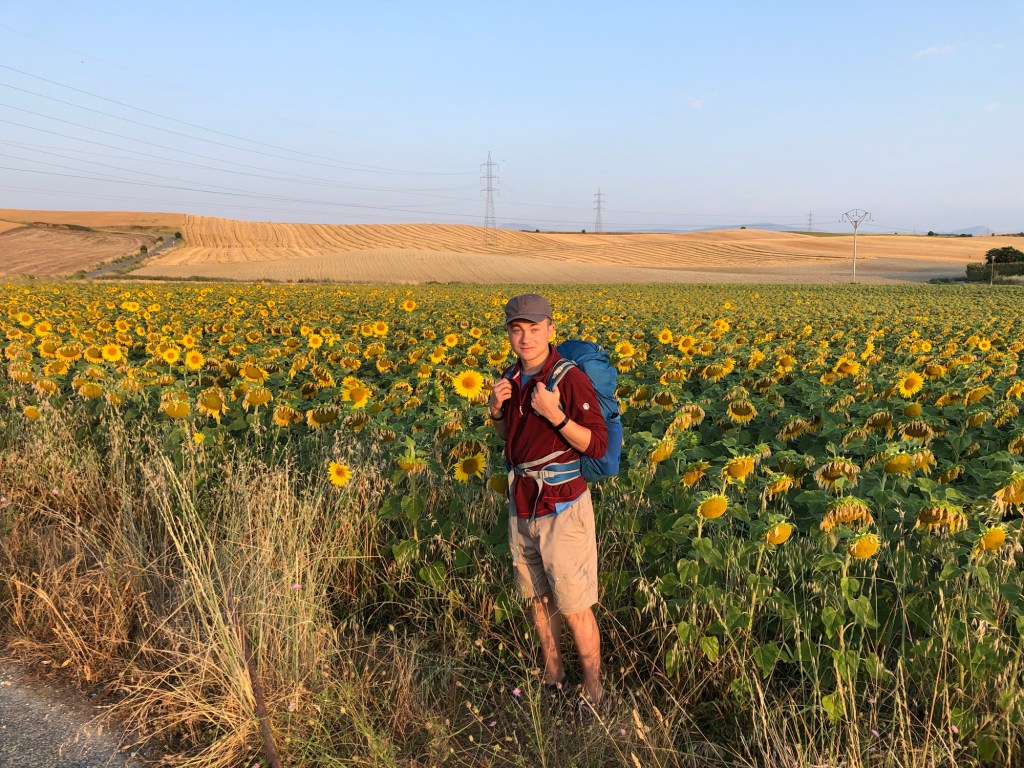
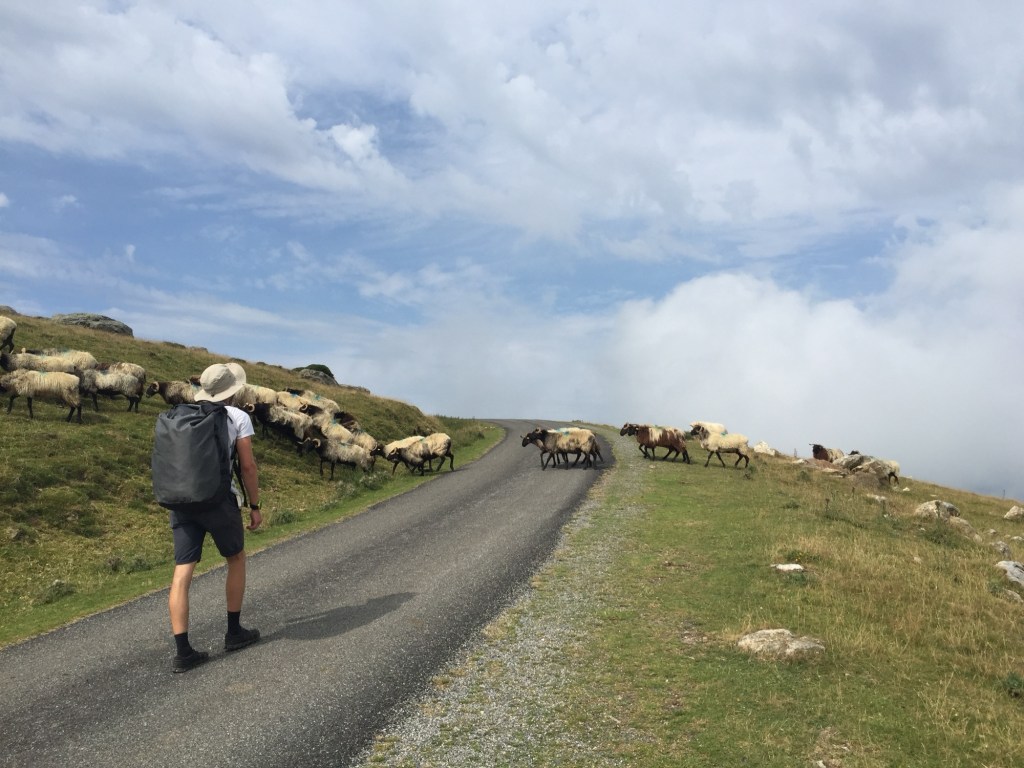
That’s me – a much younger version of me, that is – on my first Camino, some six years ago. A lot has changed since then! Back then, I was still a humble teaching assistant, without the PGCE or the workload that comes with it. I couldn’t walk more than a week or so of the Camino because I was being ousted from my house on site, which had caught the eye of an ambitious young minister, and I had my PGCE Numeracy skills test to revise for (which was nowhere near as hard as I thought it would be). The girl I was with at the time would also not have been overly keen on me staying away so long, so it was only an eight day affair, from St-Jean-Pied-de-Port to Logroño.


I considered various Caminos this summer, including the Norte and the Plata. The fiendish heat forecast for the summer put me off the Plata, which would have taken me through easily my favourite regions of Spain – Andalucía and Extremadura – and the tarmac trails and relatively high cost ultimately dissuaded me from the Norte. Rumours are currently circulating that they’re filming the sequel to Martin Sheen’s The Way on the Norte this summer, so I think I’ve made the right choice.

I’ve done the Francés before, so why am I doing it again? For the same reason I second-guessed the Plata: you are more likely to find people on the Francés, and it’s the people who make or break the Camino. I met an ensemble cast of characters on my last run: Mikkel the Dane, Domenico the Carabiniere, the Professor, Mamasita the German drunkard and Simas, who walked with me to the end of the road in Fisterra. People from all walks of life can be found on the Camino, and especially on the Francés, which is by far the most affordable of all the available options.

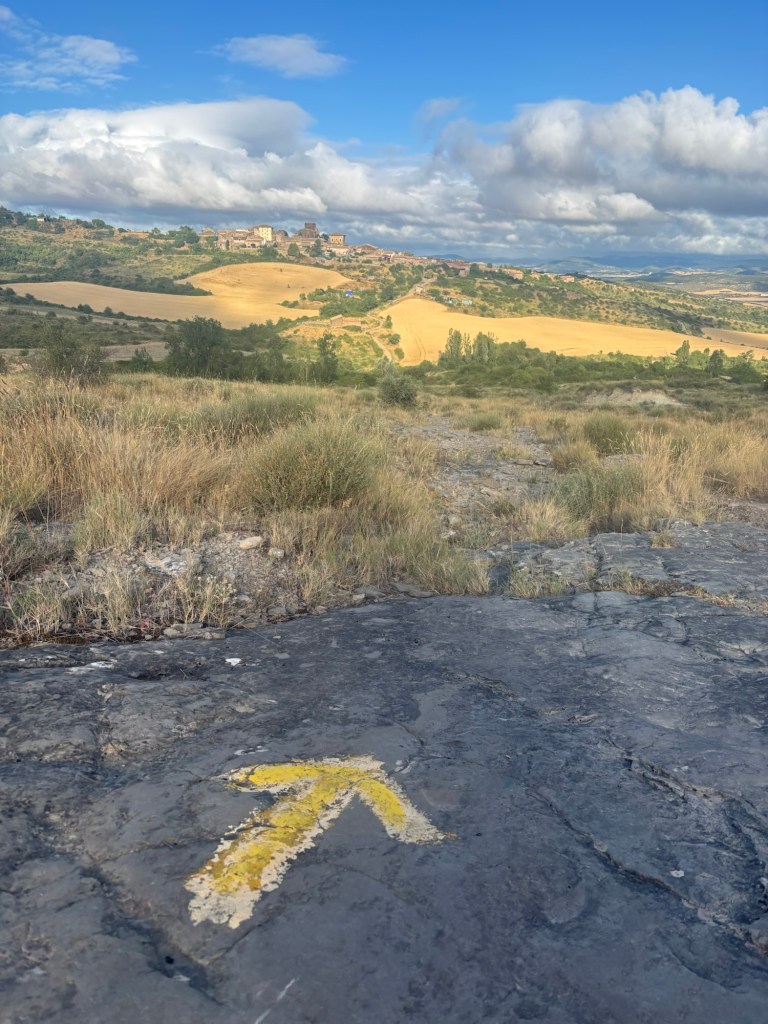
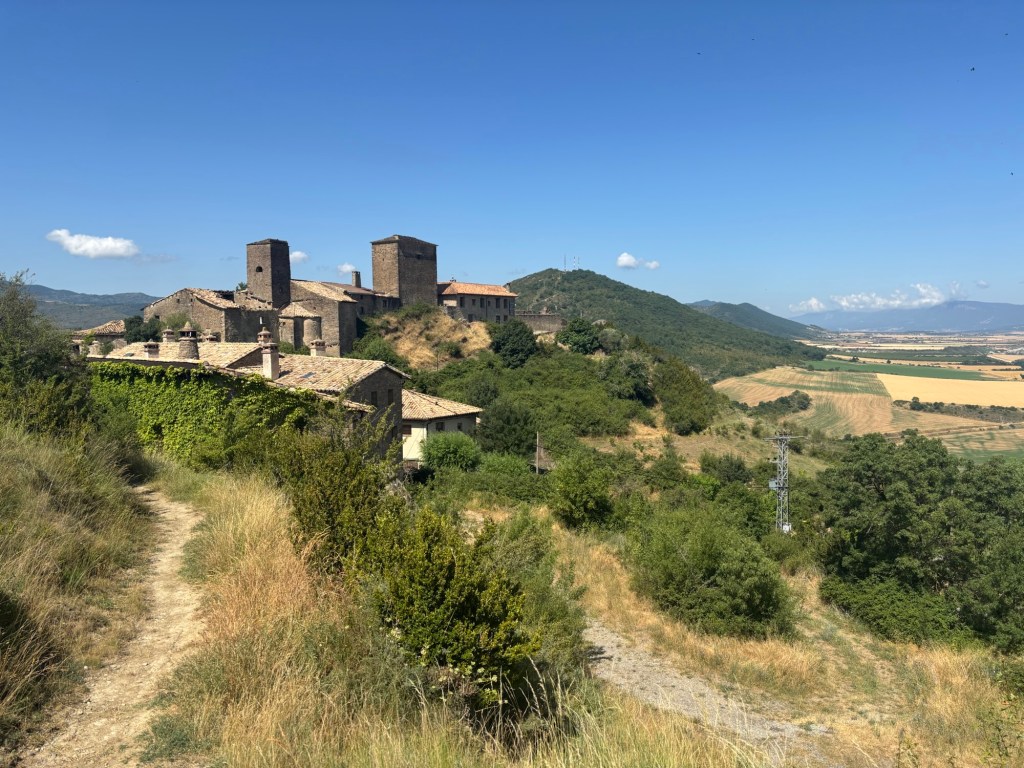
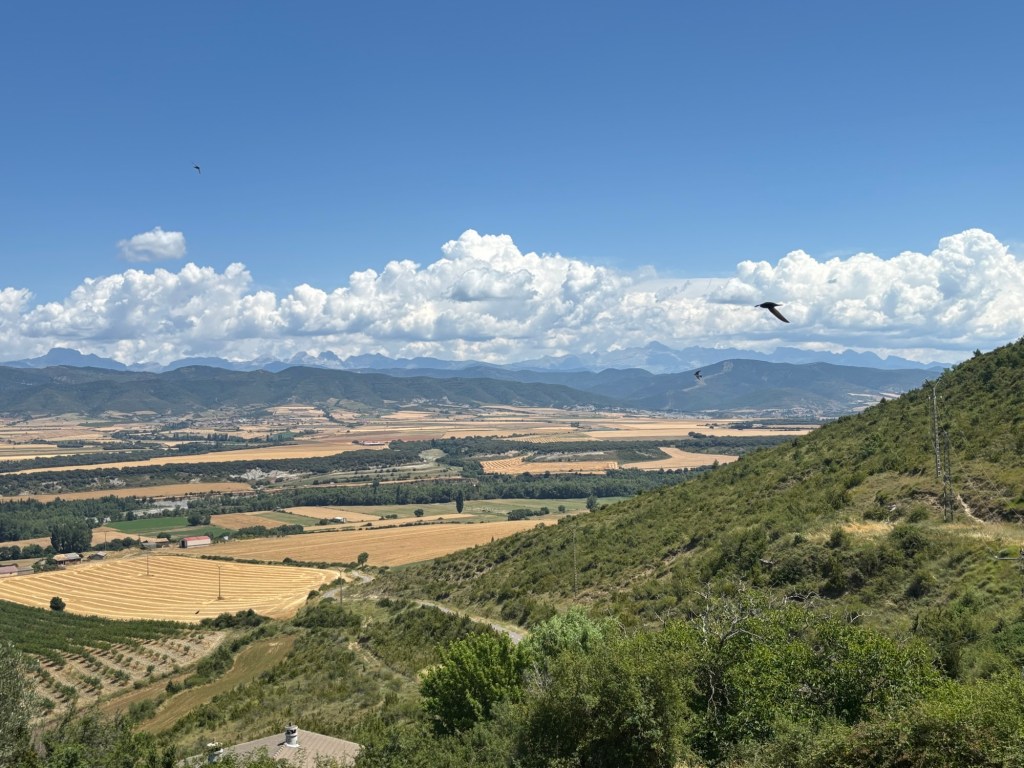
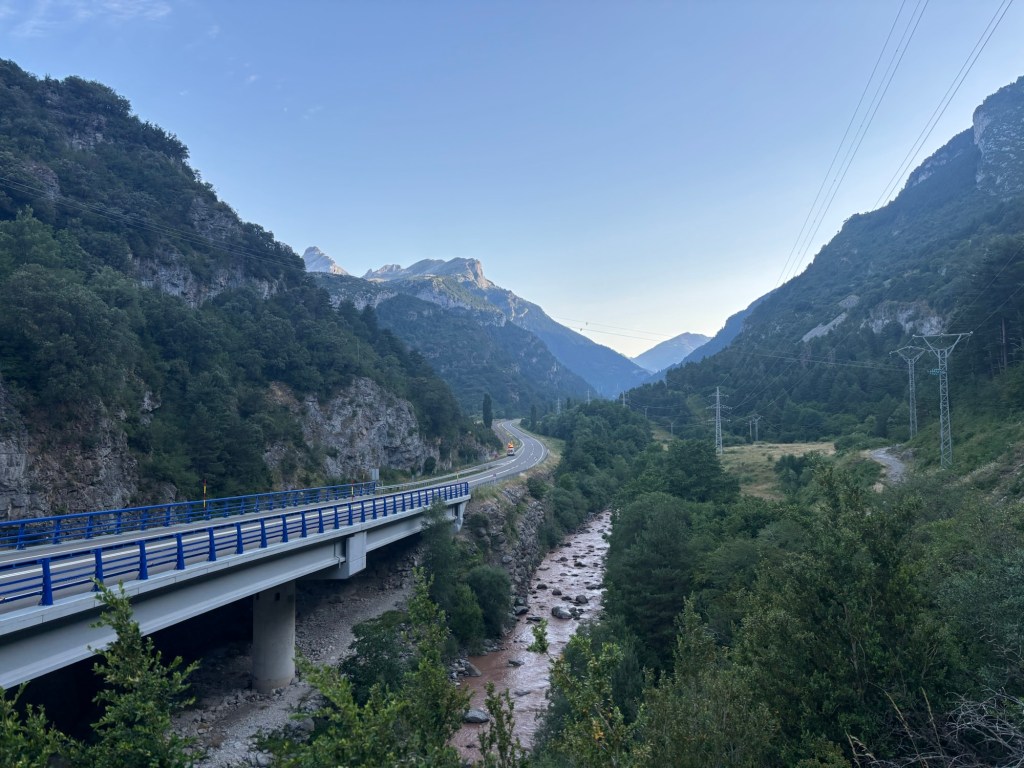
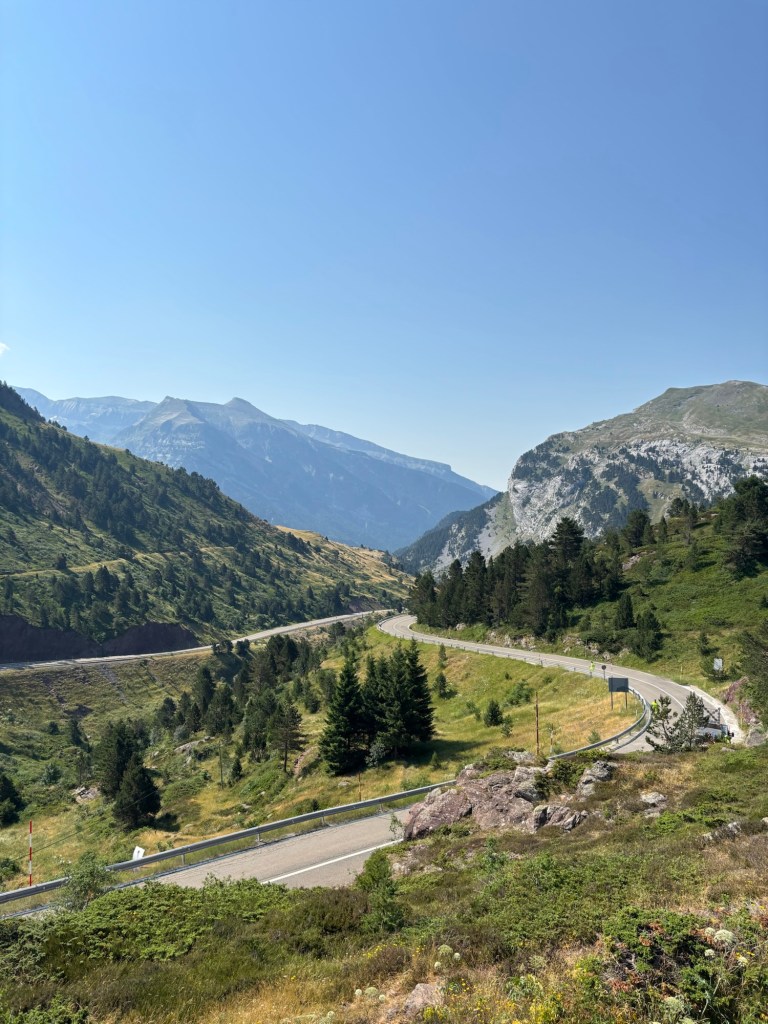
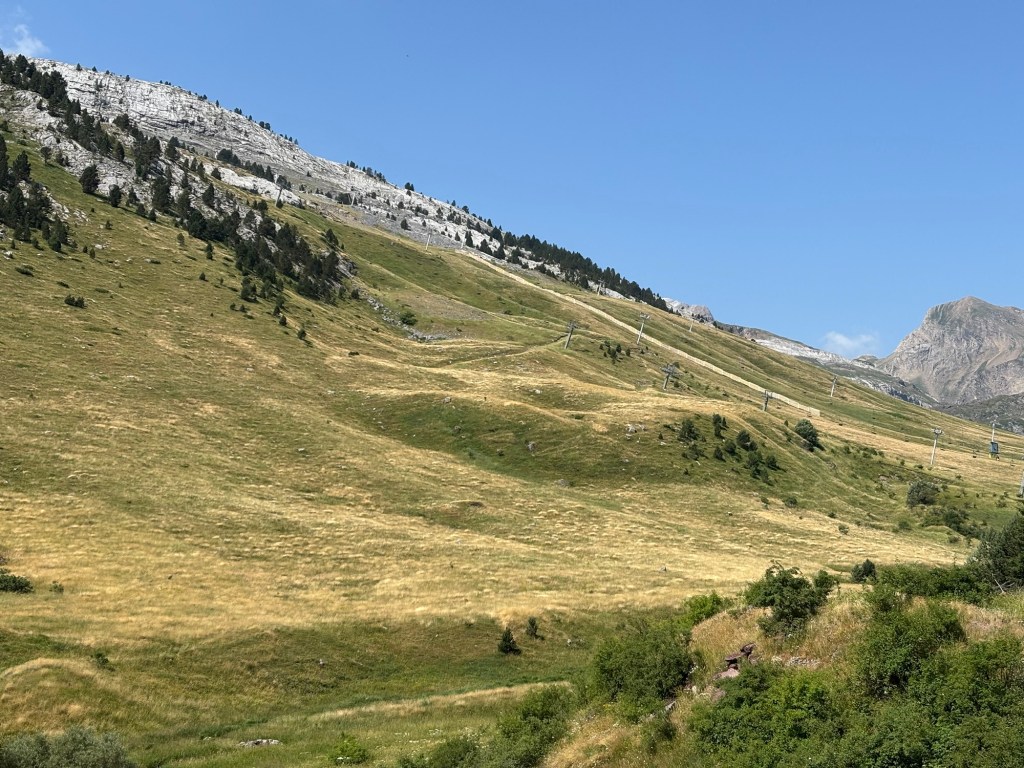
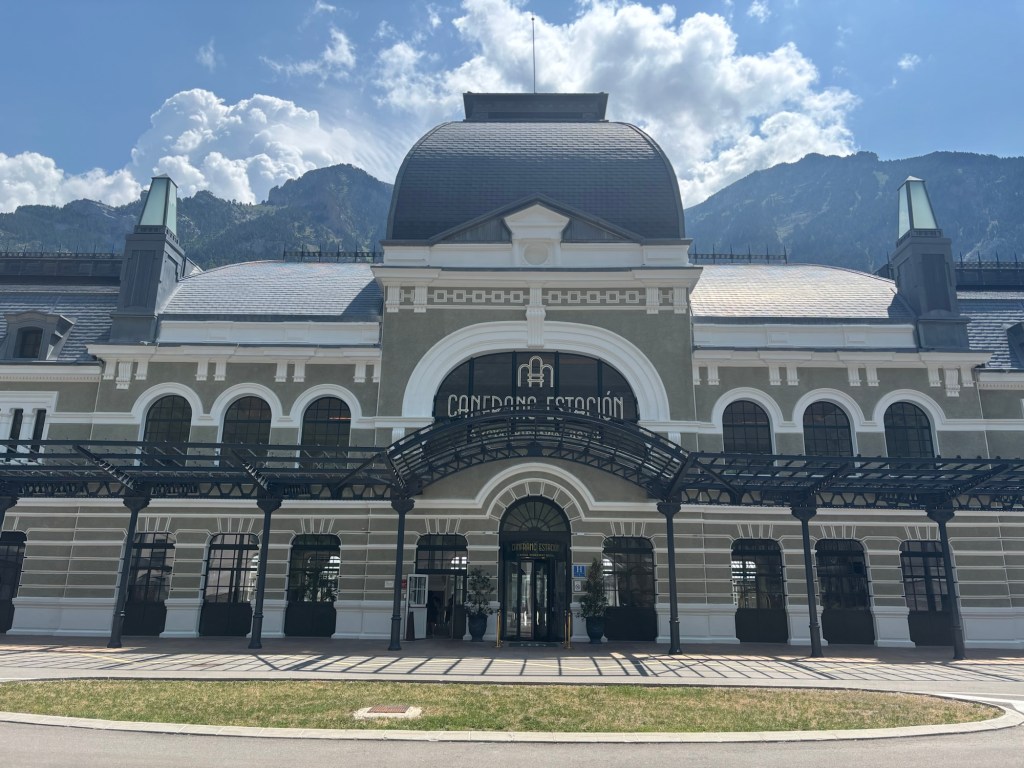
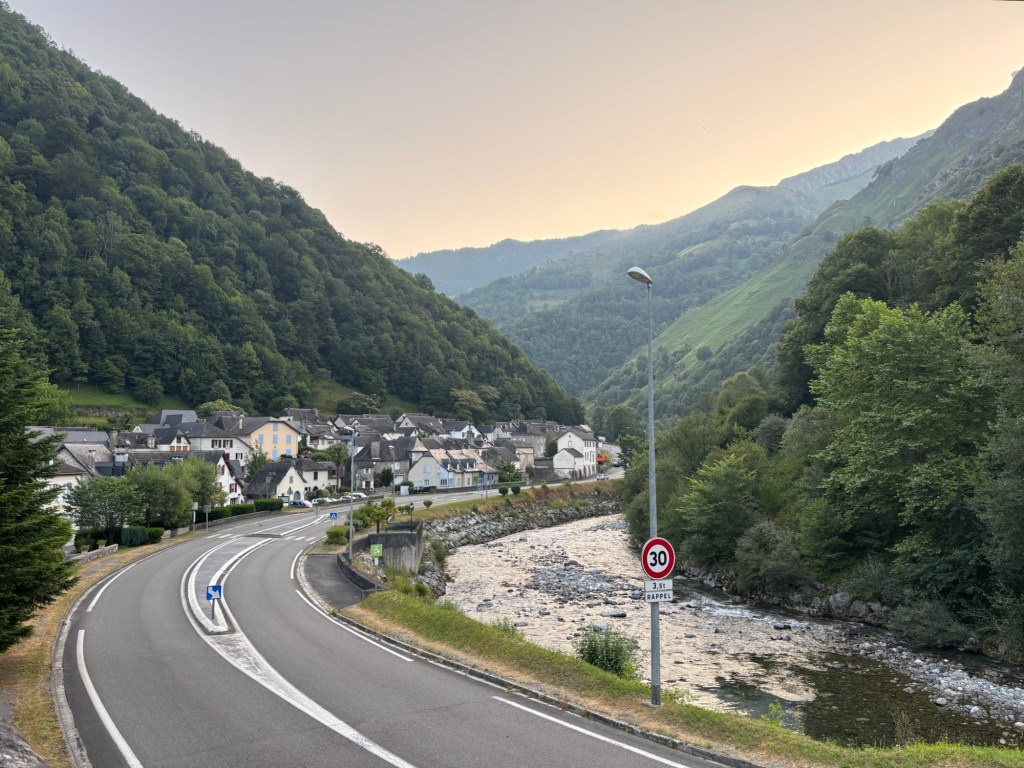
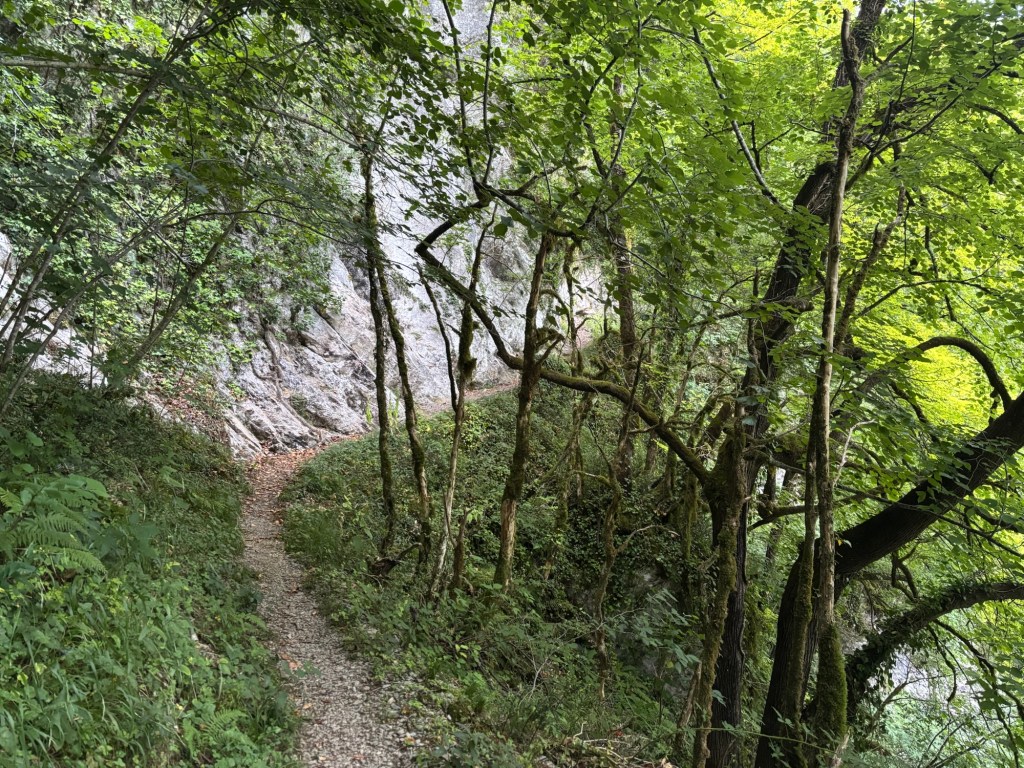
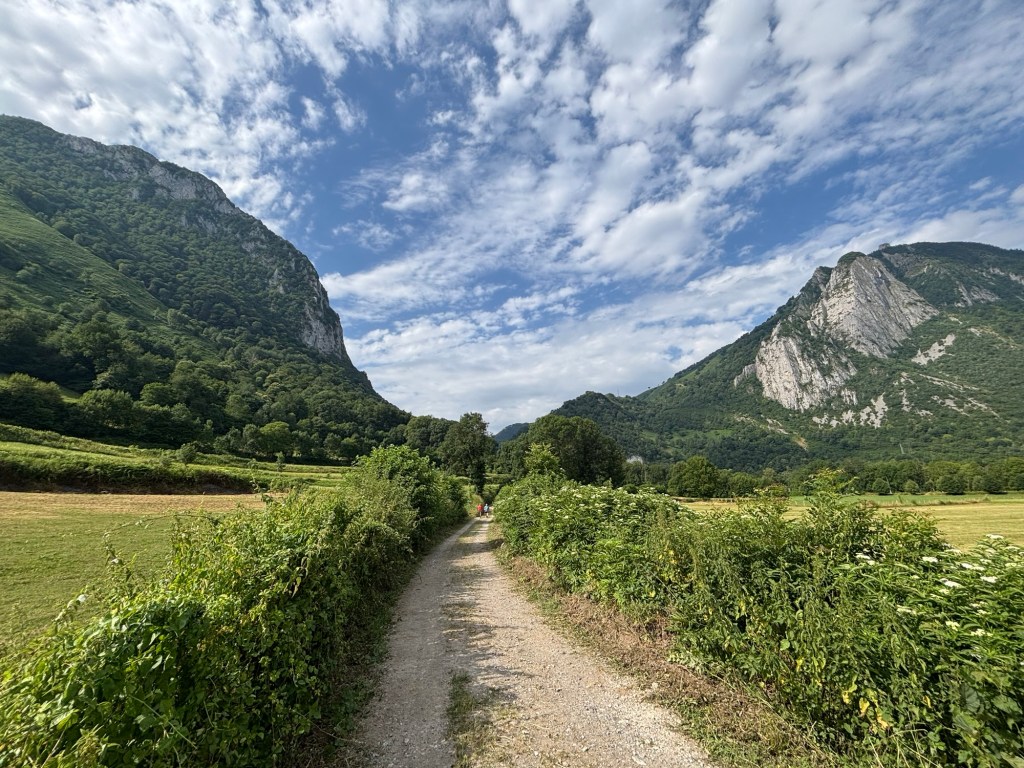
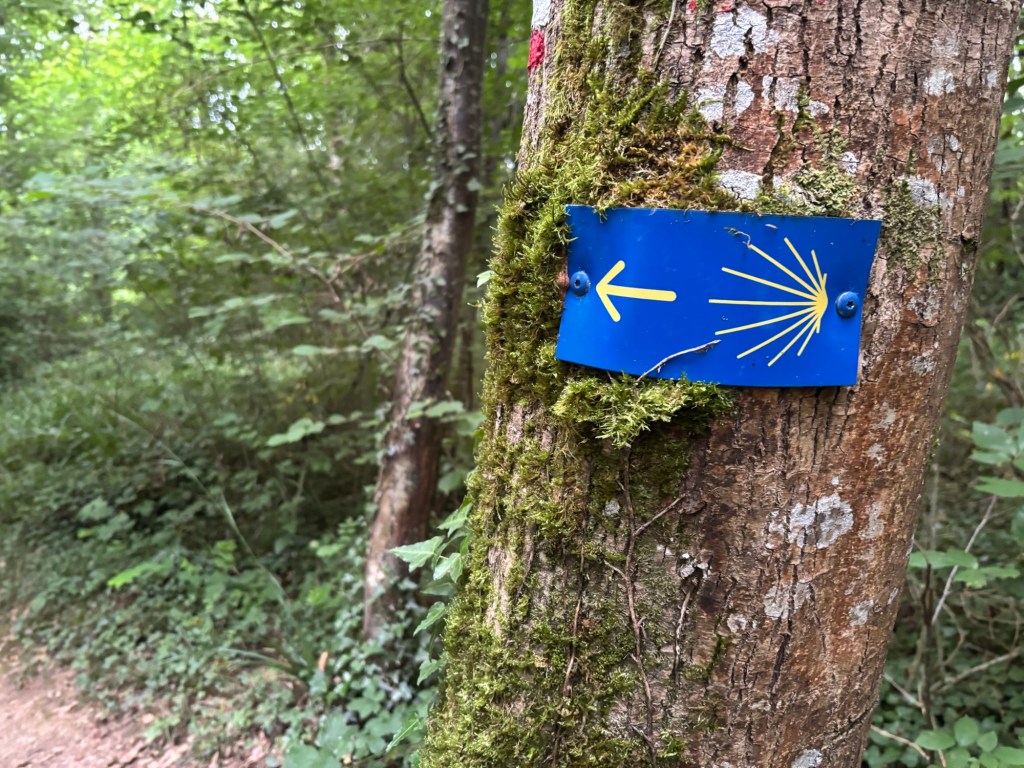
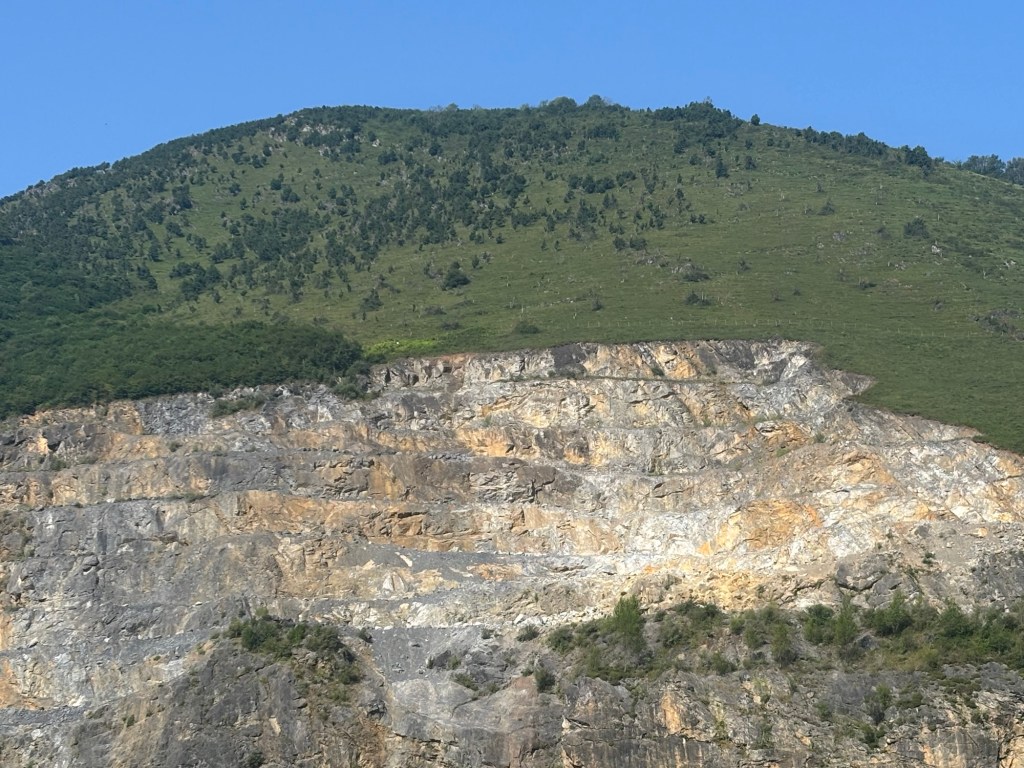
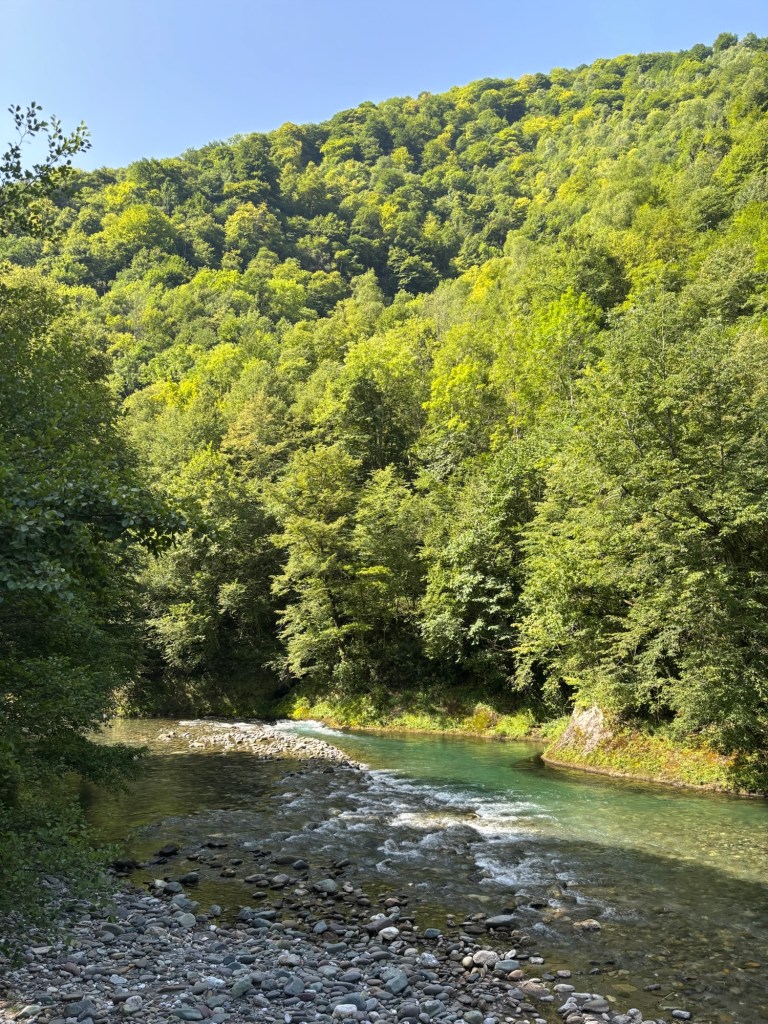
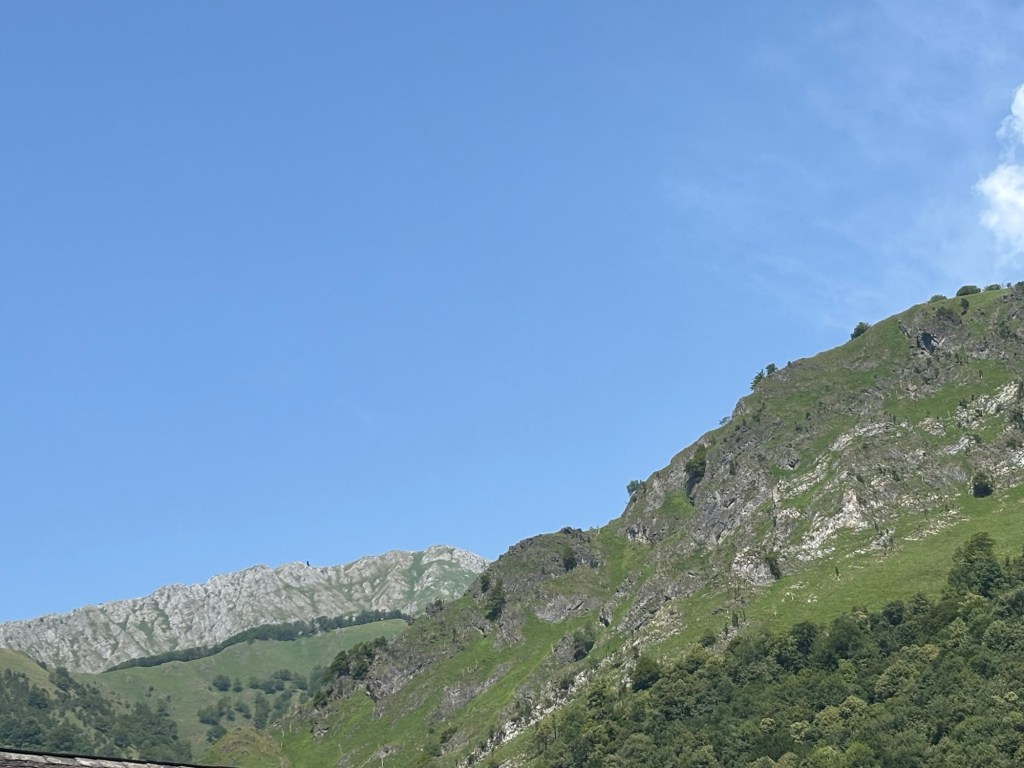
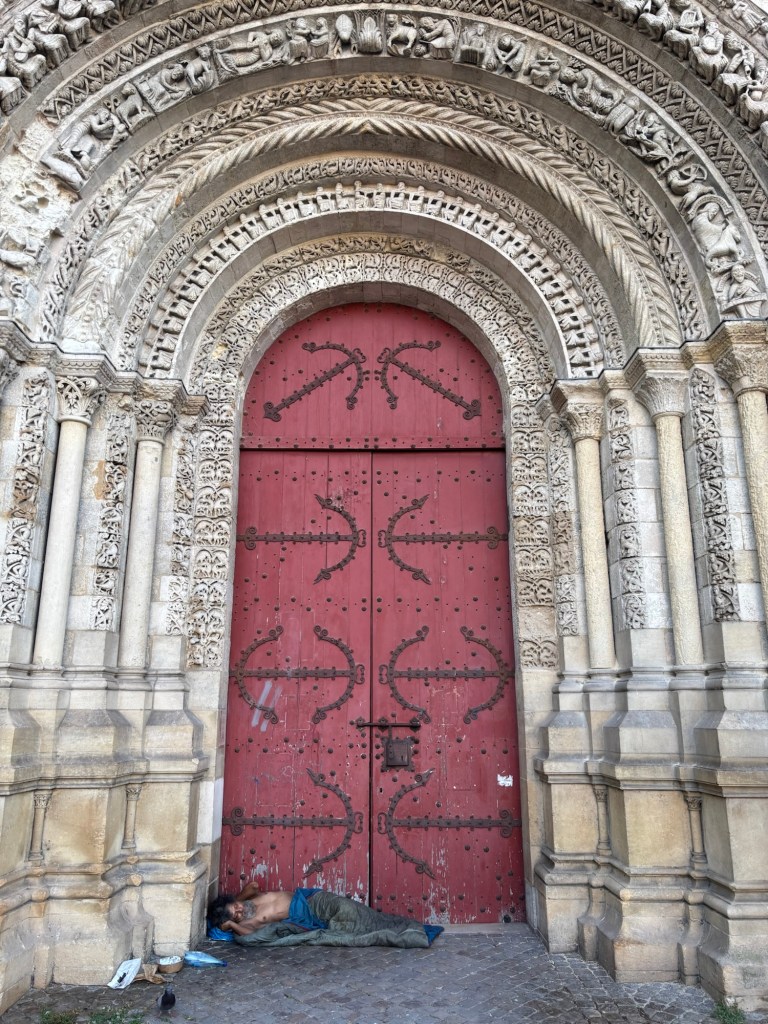
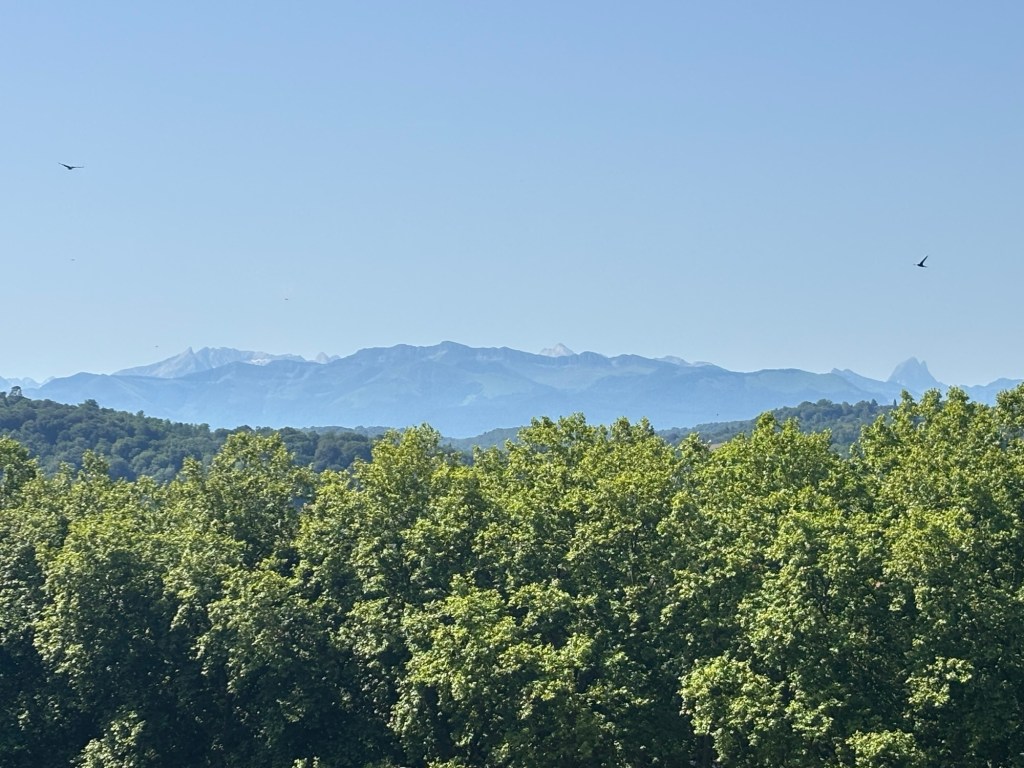
But I’m not doing the same route. Not entirely. This year I’m starting in Oloron-Sainte-Marie, some sixty-five kilometres to the east of Saint-Jean-Pied-de-Port. The Camino Aragonés – by some accounts, the “original” Camino Francés – starts a few days’ march to the south at the pass of Somport, but I want to enjoy the unbridled majesty of the Pyrenees, so rather than catching a bus to the border, I’m going to walk the last few days of the Chemin d’Arles, one of the French pilgrim roads that leads up into the mountains.


The more popular Napoleon Route from Saint-Jean-Pied-de-Port begins with a monstrously steep climb up and over Lepoeder summit at the western edge of the Pyrenees. I walked that way years ago with three Italian guys. One of them had done the Aragonés before and was full of praise for its natural beauty, and so it is to him, I suppose, that I owe the seeds of this itinerary.

The scenery on the Napoleon route is spectacular, and the elevation is certainly nothing to sniff at, but if memory serves, it felt more like a giant hill than a mountain (or, at the very least, a Scottish highland). The Camino Aragonés, on the other hand, cuts straight through the heart of the Pyrenees.

I’m rather picky when it comes to mountains, largely on account of having been dreadfully spoilt by a year in the rugged limestone-scarred hills of the Sierra de Grazalema as a kid. Unless it’s sheer, craggy and haunted by the hulking shadows of an eagle, it’s not mountain enough for me.

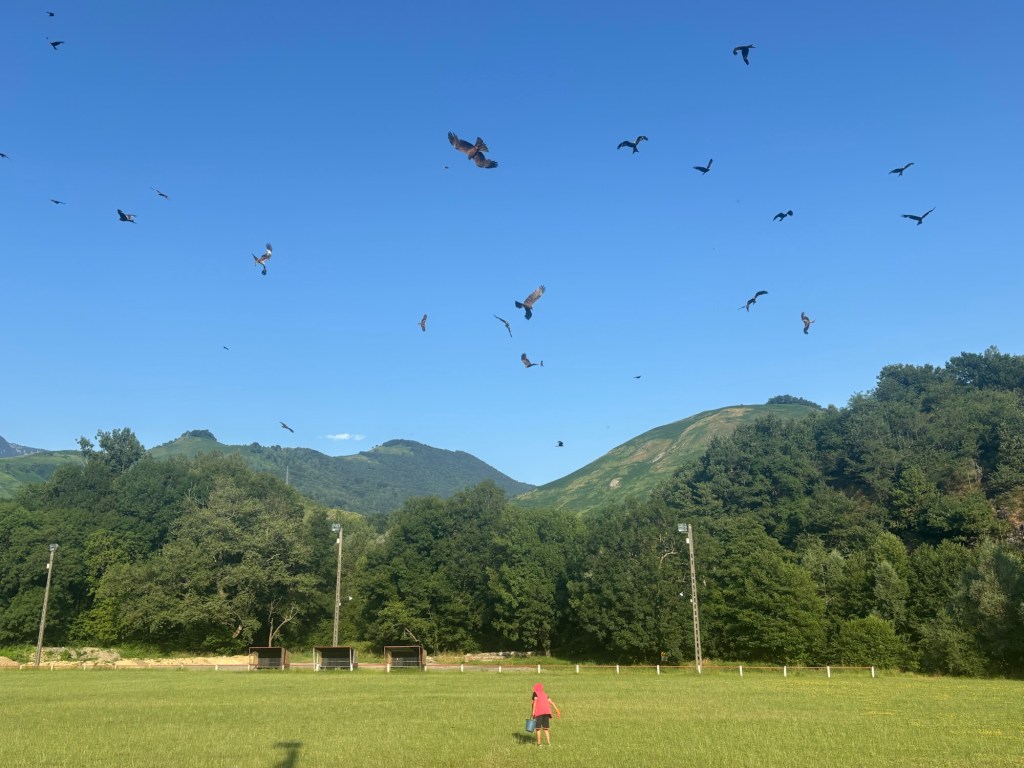
Maybe I’ll get lucky and see a lammergeier – easily identifiable by their diamond-shaped tails. Maybe. Right now, I’d settle for some mountain air. My flat has only one window that can open, and all the others are frosted and quintuple-glazed – one of the downsides of living attached to a boarding house.


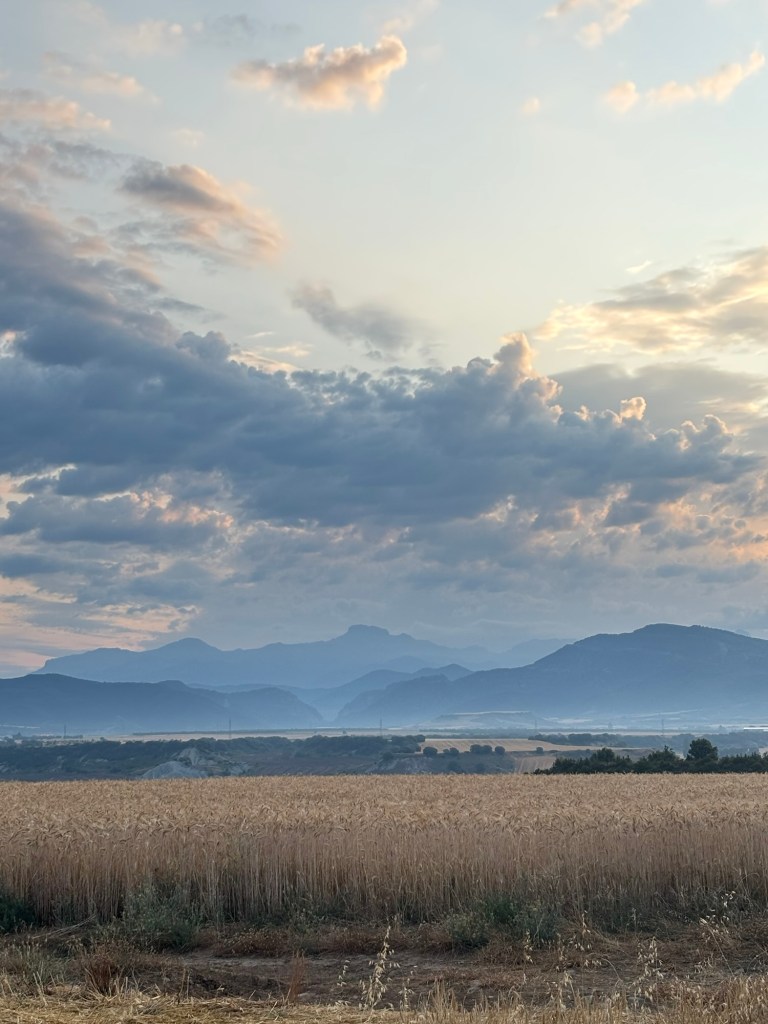
After Somport, the Camino Aragonés winds down to the Aragonese city of Jaca before arcing around to the west. I’ll be joining the Camino Francés at Puente La Reina, after which I will be on familiar territory as far as León. The meseta is legendarily testing, but I wouldn’t walk it any other time of year. There’s something powerful about taking the pilgrim road straight across the Sun’s anvil.

Well, I suppose I’d better start packing my bag, and then try to get some sleep. I’ve a routine to get into, after all. See you on the other side. BB x

Come and See

The theme of the Commemoration Service and Prize-giving Ceremony today was Come and see. To that end, the school Chaplain chose John 1:35-51 – the one where Jesus calls together his first disciples. I think the message was intended to convey the importance of getting involved, because that’s something that our kids here really do more than anywhere else I’ve ever worked. But for me, it had a second layer. My disciples, as it were, had assembled for the first time, and delivered one of the best performances I’ve seen in thirteen years.

I have a funk band again. And I couldn’t be prouder of them.


There’s a very real danger of this entry sounding selfish. I admit it freely – it would be foolish of me to claim that my efforts with the school funk band have been entirely selfless. After all, I have wanted a funk band for thirteen years.

Ever since I left my funk band behind at the end of my schooldays, I have had a band-shaped void in my heart. Durham’s Northern Lights, African Singing and Drumming Society and the Gospel Choir were decent placeholders, as were the various choirs and house music ensembles that I’ve cobbled together over the years, but they’ve only ever been pale imitations of what I once had. The fear of cultural appropriation that came in the wake of the BLM movement put all my attempts on ice after 2020, and with the way the workload was piling up as I took on more responsibilities at work, I’d pretty much given up hope of ever giving back the magic… until a year ago, when I sent off a few job applications in a bid for some interview experience.

As soon as I heard that one of the schools I’d applied to had a functioning funk band, the die was cast. I had found what I was looking for. I would consider nowhere else.


I have always loved music. Perhaps the Spanish blood in my heart beats with its own tempo, or maybe it’s because I had two music teachers for parents. Either way, I’ve been making music since the moment I could bash a keyboard with my infant fists. School was a gauntlet of choirs, orchestras and musicals, but it wasn’t until I got involved with the Soul and Funk Band at the school over the road that I ever truly loved performing. My bandleader, a living legend by the name of Mr D, was in a very similar fix to the one I’m in now: he’d been in a band himself, found himself in teaching, and channeled his love for the music right at us, giving us one of the best experiences of my entire school career – and my life, come to think of it. If I have become a carbon copy of that man, it is not at all unintentional. When I was wrangling with teenage relationship troubles and other trivial affairs, he directed me to the microphone and gave me something to take my mind off all of the noise. I got my chance when one of the girls didn’t show up for her solo, and I took over one of the James Brown numbers. James was right: it felt good – so good. It turned me from a shy and reclusive wallflower into a confident vocalist, and eventually, the band’s frontman.

My first teaching post in Uganda set me on the path to being a teacher, heading up Public Speaking and Debating here has turned me into an orator, and Spain made me whole like nothing else could, but it was Mr D and the Soul & Funk Band that really made me the man I am today.

So yes – I have recklessly pursued my lost band for thirteen years, and now that I’ve found one, I have done everything I can to turn an already gifted bunch of musicians into a powerhouse – like we were, when we were young, but even better. But it is not just a selfish nostalgic streak on my part. It is my way of giving back what I was given, all those years ago. And maybe, just maybe, along the way, I can do for some of these kids what Mr D did for me, and set them on the path to the happiest days of their lives. BB x


Set List:

+ Play that Funky Music (Wild Cherry)

+ September (Earth, Wind & Fire)

+ Doo Wop (That Thing) (Lauryn Hill)

Preparations

Reports written. Exams marked and feedback given. A couple of workshops with the Y12s on character strengths and interview skills given. With the exception of six lessons at the start of next week, the school year is all but finished. I had nothing to do this afternoon, so I popped into town to get some Camino supplies. In two weeks’ time I’ll be on the road, and for six weeks at that – the longest adventure I’ll have ever taken – so I need to make sure everything is in place.

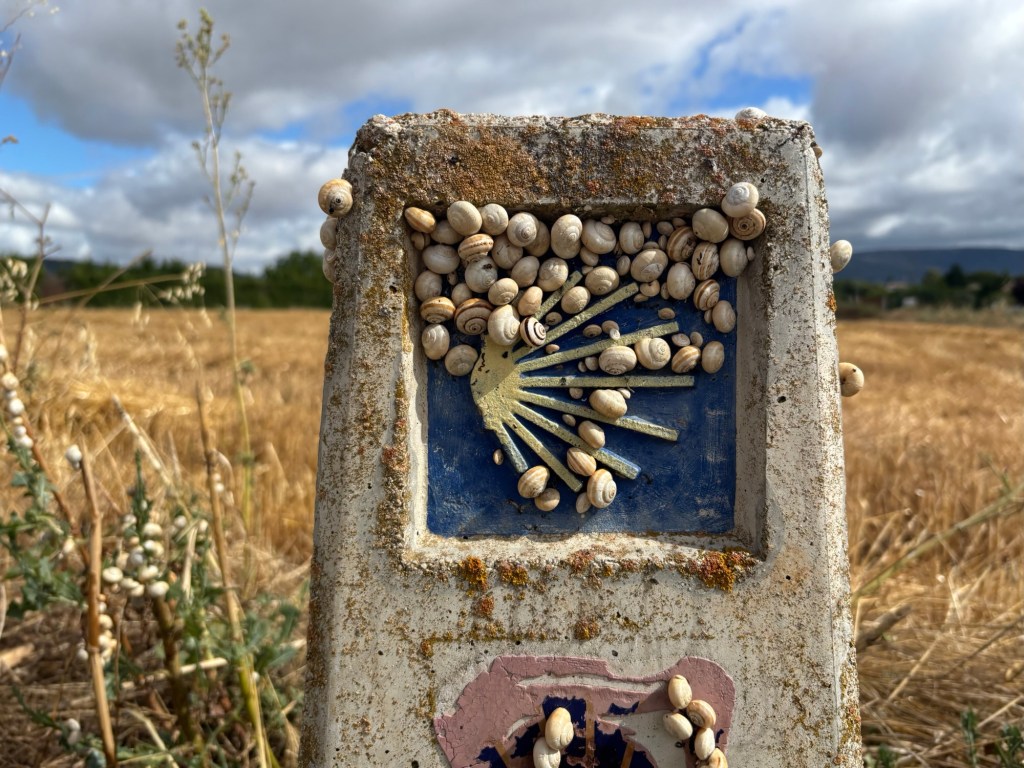
One thing I won’t be short of this time is stamp space. The credenciales I ordered from Santiago have arrived: two, plus a freebie with the guide I ordered to the Camino Primitivo. Each one has space for about 78 stamps, so even if I collect three stamps per day every day across those six weeks, two should cover it nicely. I can hold onto the spare for myself, or give it to a pilgrim who is running low. I’ll take all three in any event.


Am I hoping to meet some people around my age? Of course I am. There weren’t all that many the last time I did the Camino in the summer of ’23 (compared to the spring, that is) but maybe I just timed it wrong. Being a teacher, summer is all I really have to work with, so summer it is.

I’ve been walking in my new Keane sandals, and they’re as reliable as ever. I have some new Merino wool socks that should help with the prevention of blisters, and I have dug up my supplies of Compeed blister plasters from whatever hole they’d disappeared into since the last Camino – I was surprised by how many I still had. I didn’t pick up a First Aid kit today, but that might be an airport job, as there are useful implements that I wouldn’t be able to take through security anyway.


Not too much to report. It might not be such a bad idea to get back into the habit of blogging daily before I go – writing requires regular exercise, just like training for a hike. Maybe I’ll try to do something with the books I’ve been reading. That might be illuminating. BB x

Quarantine: No Phones in the Library

Starting tonight, this is the last blog post I will write from my library. That was the last scroll through Instagram in here and the last YouTube video. Starting tonight, I’m making one room in my flat a phone-free zone.

I’ve already put a sign up on the door. The threshold has been established. Now I just have to stick to it.


I’ve gone cold turkey on tech in the past with variable success. The odd social media blackout that a few of us have trialled once or twice, you know? Perhaps for a day, perhaps for a month. Inevitably, we all came back. Tragically, in the world we live in today, it’s simply not possible to ditch the phone like it once might have been. Everything we do involves our phones in some way, from providing music and facilitating everyday communication to keeping time, providing torchlight and paying for goods and services. Even writing this blog post. And Microsoft Teams isn’t helping at all.

Luddite as I am, I held out against joining the rest of the world in the acquisition of mobile data, before begrudgingly bending the knee in the summer of 2016 at the tail end of my year abroad. The world has never looked back since.


Why is this on my mind tonight? There could be a number of reasons. Seeing one more wedding montage featuring old friends might have been the spark, though. It should go over my head, really, but it served as a reminder of just how cut off I have become, technology or no technology. Granted, I have allowed that drift to happen – through a combination of distance, time and a five-year-old wound – but I must admit that I can no longer hide behind the truth: my need to keep these portals open on the off-chance that my friends of old may or may not reach out has long since expired. They stayed in the city, and they stayed together. I moved away – several times – and took a job that required me to devote all my time and energy to the children in my care. I believe in what I do – it is surely one of the most sacred professions in existence – but it comes at a cost.

Like a soldier gone to war, I must accept that my job requires me to be itinerant. Rootless. And that means accepting that the close friendships I see others holding onto is, at least for now, necessarily beyond me. Perhaps it’s a factor behind the last few relationships that I have reckless thrown myself at, hoping to patch up the gaps.


But I’m done waiting. Instead, I’m going to start to take back control, and the revolution starts in my library. I’m hoping that one immediate benefit will be that I get back to devouring my books again, as I’ve been acquiring them at a significantly faster rate than I’ve been reading them. The most I ever read was in that first year abroad in Spain when I had no Wi-Fi. I must have motored through forty or fifty books that year. If I could somehow replicate that, even in just one room of my flat, it would be enough, I think.

My early thirties are upon me. My social circle has shrivelled, so I must build up the temple of my life with the stones provided to me. They’re mostly paperback, but the knowledge contained within them is strength enough. They’ll do.

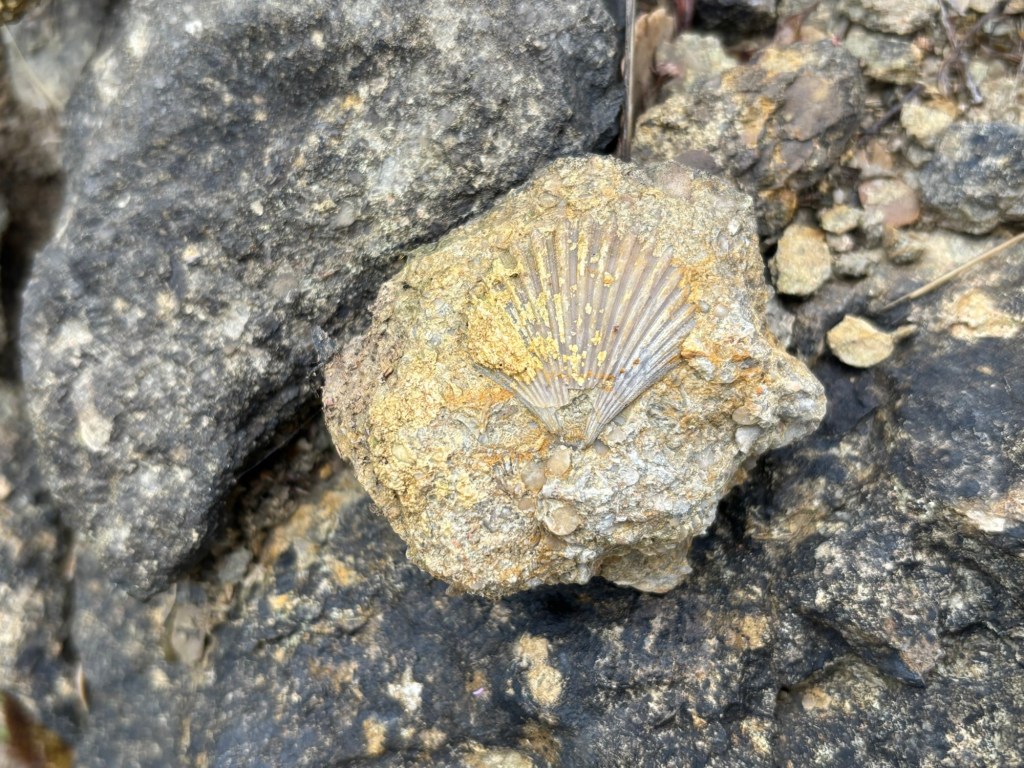
Speaking of stones, did you ever consider that all the giants and monsters of myth and legend were just our ancestors’ attempts to explain the fossilised remains of the great beasts of the past? I suppose that should take some of the magic out of it, but it’s had quite the opposite effect on me. I’m now more intrigued than ever by the folklore and fairy tales of the world, and of the real life stories that inspired them.

Maybe I really should pursue that Masters. But first – let’s hit the books. My phone can do one. BB x

The Long Road


It’s been nearly a year since I left my post at Worth School and moved to the West Country. I’m supposed to be making a start on my Year 9 reports tonight, but it’s my birthday, for pity’s sake – I could use a break. Between house duties, calendar committee meetings, end of year speaking exams, invigilation, improv workshops and regular teaching, I’ve barely had time to sit down today.

The summer holidays are drawing near. My original plan was to spend them learning to drive, but I’ve kicked that can down the road for another year. This year has been hard work, and the last thing I need is to give myself something to dread once a week for every week of the summer holidays. I’ve never been good at doing things I don’t enjoy, and I really don’t enjoy driving. My last instructor was a vocal and humourless Brexiteer, who reminded me a lot of the father of an ex-girlfriend, and just a few lessons with him pretty much put me off driving since.

It’s a hurdle I definitely need to overcome, but not this summer. I need something uplifting after the manic year I’ve had, and I firmly believe there’s no cure like the Camino. So tonight I’m booking my flight to Bordeaux so I can do what I’ve never really done before: a full run at the Camino Francés.

Well – I suppose that’s not strictly true. I’m planning to start in Somport this time and begin with the Camino Aragonés, joining the Camino Francés proper a week later. I’ve also pencilled into my plans to travel north from León via the Salvadorana to Oviedo and then walk the last stretch along the toughest and oldest of all the Caminos, the Camino Primitivo. It will take me around six weeks, in all likelihood. Six weeks that will be tough on the feet but good on the heart. Six tiring but purposeful (and very affordable) weeks in the most beautiful country on earth, meeting people from all around the world and telling stories. What’s not to like?

I will, of course, be back to journaling as I go, so expect a flurry of activity on here towards the end of this month. You can follow me on my journey if you’d like. There’ll be stages that I’ve done before, but it’ll be a very different cast of characters this summer, and it’s so often the people that make the stories.

It’s also now mandatory to collect two stamps a day, so I’ve already ordered my credencial. I’ve ordered three, on the logic that the two I had last time only just got me to Fisterra, and that was with careful rationing toward the end – and over a fragmented span of five weeks. Over six, I can afford to go stamp-hunting with a little more reckless abandon. And who doesn’t love the stamp-collecting element of the Camino?

Escapism? Absolutely. But for once, perfectly justifiable. I don’t say it often, but I could use a holiday. BB x

Knowledge – For its Own Sake

Bristol Temple Meads, 9.02am.

The May half term is drawing to a close. I’ve stayed put for a change, using the time to mentally decompress after another very busy term. Four weeks remain of the school year, and while there’s not as much teaching going on, it’s still going to be an intense gauntlet of exams, reports, events and rehearsals. I’ve done a lot of much-needed spring cleaning, idle Camino planning, bouncing ideas off ChatGPT and now, a little stir crazy, I fancy a day out. So I’ve grabbed some Y8 marking and a few books (Adrienne Mayor’s The First Fossil Hunters is my current obsession) and I am now on the train bound for Oxford.

Why Oxford? Partly because I haven’t really been to Oxford before. I was there two months ago for the Oxford Schools Finals Day, but as I was leading a school trip I didn’t really have any time to appreciate the city for itself. It’s also partly for the Museum of Natural History, which is supposed to be exceptional (I never did grow out of the dinosaur phase). But it’s also because over the last few days I have started to flirt with the idea of a possible career change: setting my teaching and boarding duties aside to pursue a Master’s degree in Medieval Studies.


There’s a couple of travelers next to me on the train having a very interesting conversation. They are a curiously paired ensemble: one, with a patchy beard, AirPods in and his shirt unbuttoned to the sternum, talks in a streetwise drawl about how he stole a few cans of Red Bull from Tescos once, and how the worst thing in the world is that parents don’t discipline their kids right anymore – if he’d disrespected his dad, he’d have “had a black eye”. He drops his T’s in the words right and football and drops F bombs in the gaps. The man next to him, a young Asian in a smart shirt with his sleeves rolled up nearly to his elbows, calmly (and without a hint of profanity) explains the difference between Asia’s bullet trains and the UK’s privatised public transport system (which he calls the public torture system), the importance of location when investing in property and celebrates a model aircraft he recently won at an auction. That seems to be their connection – they’re model plane collectors. I was beginning to wonder what could possibly tie these two together.


Why a Master’s degree? Why Medieval Studies? And why has the idea only come to me now, eight years after graduating with a BA in Modern Languages and Cultures? To be honest, I’m not entirely sure. A number of reasons come to mind. Citing my Y9 class seems churlish, but it’s probably part of the bigger picture of just how much of a gear change this year has been. Challenging and engaging, but occasionally uncomfortable. I suppose that’s only natural when you up sticks completely and change schools. Perhaps that’s why some teachers never leave.

It’s a little deeper than that. I do miss academia. I have always loved the pursuit of knowledge for its own sake, and just occasionally, I find that hard to square with a job where success is so often scored against a mark scheme that shifts according to the national skill level.

I’ve just started to sink my teeth into A Level teaching, but I’m both disappointed and mildly alarmed by the lack of general knowledge of my students. Only one of mine could tell me what Scylla and Charybdis were, and that was a child in Year 10. I’ve had sixth formers before to whom I’ve had to spell out the story of Adam and Eve – we’re talking Catholic Europeans here, too – and mine was the only hand to go up in chapel two weeks ago when we were asked if we knew the parable of the man who built his house on the rock.

You could chalk that last one up to nobody wanting to look foolish putting their hand up in church on a Tuesday morning, but classical (and even general) knowledge of even the most basic sort seems to have fallen away by the time our kids reach sexual maturity. They all seem to know who Mr Beast is, though.


Something I wasn’t expecting in Oxford was the Pottermania. I deliberately haven’t waded in with an opinion on J.K. on here because, as with a number of topics, my thoughts are not in line with those of the rest of my generation. But one thing that is really quite depressing is that I ran into no fewer than five Harry Potter themed tours, pointing out turrets, windows and other locations used during the filming of the saga back in the early 2000s. It seems a little trite that tourists flock to a city that harbours one of the oldest universities in the world just to snap a selfie in the style of a still from a movie… I took a cohort of summer school kids on one of those trips once and they were deeply disappointed (I think they were expecting Harry Potter studios, not a Chinese woman with a ring bound pad of stills).


It’s times like this that I need a good kick in the shins – somebody (besides myself) to call me out for being so judgmental. Maybe that’s something I miss about university, too.


Before checking out the museum, I explored Blackwells, Oxford’s famous bookstore. The shop is particularly well-known for its Norrington Room, a literary Aladdin’s cave beneath the city that seems to have everything. I made a beeline for the Mythology and Folklore section and looked for anything Iberian.

Nothing. Tome upon tome on Norse mythology, endless volumes of British folktales, a beautiful gold-bound compilation of the tales of Anansi the Trickster and no fewer than five collections of Queer Fairytales – whatever those are – but nothing on Spain or Portugal. Nothing at all. Even Google didn’t seem to have anything.

Spain isn’t lacking in colourful folklore of its own. From my reading, it’s apparent that the combined efforts of the Almoravids, the Almohads, the Spanish Inquisition and Franco’s regime weren’t able to snuff it all out. But the literature simply doesn’t appear to exist.

I think somebody should write about it. And I’m starting to think that somebody should be me. Oxford University has a Masters course on Medieval Studies that occasionally covers Iberian founding mythology – the subject I chose for my undergraduate dissertation – and that just might be the way in… if I can get in.


I’m not really Oxbridge material. I got as far as an interview at Cambridge, but my meekness was torn to pieces in the French interview – and I really haven’t read enough of the classics. But I have read a lot of books.

I grew up on a privileged diet of literature. We had more books than anything else at home, largely on account of the fact that my mother rips through books in a single night and was thus always on the hunt for a replacement. The bookshelves in my bedroom were (and still are) crammed full of colourful dinosaurica, but sandwiched in among them was a mountain of mythology and a feast of fantasy. My mother may not have been an outspoken supporter of “fantasy shite” but she did encourage my voracious reading habits. And I know my Dad used to read to me a lot – he even read the Harry Potter books to me when they first came out.

Neil Philip’s Illustrated Book of Myths played an especially large role in all of this. Atticus the Storyteller had a similar hand (and, to a lesser extent, the Age of Mythology games), but the colourful illustrations in the Dorking Kindersley compilation made it especially impactful. I must have spent literal days poring over the pictures in that book, cramming my childish head with stories of Athena and Anansi, Izanagi and Izanami, Glooscap and Gilgamesh. All tremendously important things to know – and none of it serving any practical purpose beyond the pages of the book where they were written. I haven’t even been able to use much of it in the odd pub quiz, which seem to rely on a more grounded understanding of Emmerdale and the last FA cup final than the exploits of Gilgamesh and Enkidu.

If I’m lucky enough to have children of my own someday, I will read to them from that book – even though I know most of the stories by heart. The pictures are so beautifully illustrated that I can see most of them still when I close my eyes, though it may be over twenty years since I last saw them.


Stories are how I make sense of the world. I’ve been writing stories for as long as I could write my own name. There’s not an awful lot of call for storytelling at work, but I do my best to share them with my students when the curriculum allows.

And it’s taken me a long time to realise that, after Spanish interest and natural history, the third largest collection of books in my library is all folklore and mythology – the oldest stories in the world.

Maybe – just maybe – I’m scratching the surface of the real me. I did always want to be a writer. I just didn’t ever think I could do it.


I’m still unsure. So much of my identity has been built upon the rock of being a teacher, and casting off those robes to dive into the world of myths and legends seems… well, childish at best, selfish and reckless at worst. And there’s the question of stability, job security, money and the fact that all I really want to do is find the One, raise a family and tell stories. But the void in all those bookshops is tremendously loud. Stories that aren’t told will eventually disappear, taking their worlds and their characters with them. It would be a terrible shame if the generations of the future looked back on our time and accused us of letting the ancient wisdom of the past slip through our fingers while we were so violently hypnotised by the bewitching glare of this or that Pied Piper of Instagram.

Who will remember Mr Beast five hundred years from now? What stories will they tell of him? Will his legend amaze and inspire, or will it push more and more children toward the worship of Mammon? I worry about that. I worry about that quite a lot.

I’ll give it some more thought. These are not decisions made lightly. The Camino will provide. It always does. BB x

Dear José


Dear José,

Many years ago you met my grandmother at a fair in London. Did you know what that meeting would set in motion? I guess not. You were young then – younger than me – and you were trying to find your place in a changing world. I often wonder what it would be like if you hadn’t lost your life so young. Would you have been a loving grandfather, or a distant one? From your letters, you seem proud, defiant, caring but also opportunistic, hell-bent on your dream to be a part of the future.

We never met, you and I, but you have always been with me. I tell your story wherever I go. It is what gives me the motivation to get up and work in the morning. It’s a sweeping love story, the one you had with my grandmother, complete with a tragic ending. Perhaps you might not have turned out to be the hero I have built you up to be had you survived. You would have been able to tell your own version of events, and the tale might have faded into the fabric of normality – and you could have lived a life like everyone else’s. But since you departed this world just days after my mother came into it, it falls to me to tell your story.

You were a natural linguist, José. By twenty-five you could speak Spanish, English, Catalan, French and German in an age when it wasn’t especially wise to command more than castellano, which makes you something of a rebel, too. That must have been your father’s Republican blood in your veins. The regime may have got to him, but his spirit lived on in you and your desire to see the world beyond your hometown. Perhaps it is only destiny that your tragic death would lead your daughter and grandson to spend the rest of their lives trying to find their way back to the place you tried to escape from.

I am English, and yet I still bookend that identity with the word “desafortunadamente” (unfortunately) when I’m travelling in your country. I have lived most of my life on this island, with the exception of three wonderful years in Spain – though none of them in the regions you called home. You grew up in the coastal plains of Alicante and plied your trade along the Costa Brava, traveling between Murcia and Barcelona in search of the future. Before I knew I was searching for you, I scoured the other half of the country: the jagged mountains of Andalusia and the wild steppe country of Extremadura. You came to London and fell in love with an English girl. I came to your country and fell in love – though not with a Spanish beauty, as I have so often hoped, but with the land itself.

As a boy, I was infatuated with her wilderness. I saw her marbled fields and the limestone scars of her sierras and I knew I had found a place like nowhere else on Earth. I saw the almond blossom in the snows of Grazalema and watched the midday sun dance off the shimmering surface of the Mediterranean. I saw the lights go out all across the countryside one night and saw my beloved Andalusia bathed in moonlight, as beautiful as a bride on her wedding night, and I started to understand why the Moors had wept when they were driven from this land all those years ago. I was just a boy, then, and I sought her beauty in living things that I could put a name to: chameleons, vultures, ibex and wild boar. But she was always there, waiting in the wilderness, weaving her spell upon me as I wandered about, camera in hand.

As a student, I started to perceive her with a keener eye. I looked beyond the wildlife guides and the history books and saw the people. In my own way, my infatuation turned into an awkward romance – quite literally, in one case. I learned the hard way that Spain guards its beauty jealously, and that, like any wild thing, she is deeply wary of the world beyond. You were brave, José, or at least restless – for you, I think, Spain was not enough. But for every one of you there must have been hundreds who knew that theirs was a beautiful country, and that change – if it must come at all – must be carefully and watchfully scrutinised as a stranger.

I was knocked about quite a bit as I came to terms with my identity. I wanted to be Spanish – I really, truly did – but it was more out of a selfish desire to be anything but English, rather than out of love and understanding. Every comment about my blue eyes, my accent and my figures of speech cut me like a knife. It was a reminder that the car that took your life also took away mine – my chance at being a part of a land and a people that I had grown to love, dashed upon the concrete by a stranger behind the wheel whose name I will never know.

I had almost given up on that hope until I found you. One day, the scales of that pretentious longing fell away and I remembered the reason I had set out on this journey, all those years ago – the journey laid out before my feet by my mother, who had far more cause to feel the pain of your loss than I. When I found your family, at last, everything suddenly came together. If I had any doubts, they were lost forever. I did have a family in Spain: cousins and uncles and aunts, as many as I could ever have hoped for and then some. And I found you, José, together with your mother Mercedes. Did you like the flowers I left for you? I am sorry I did not leave any there this year. I will make amends for that before the year is out. But know that you are always in my prayers. Every time the rosary is in my hands, or there is a prayer on my lips, there too is your name – for you have been my guiding light ever since.

You probably don’t want me to put you on such a pedestal. And I’m old enough now and wise enough to know that pedestals are usually set at the feet of false idols. But if it weren’t for you, my life would be half a life. If you hadn’t met my grandmother all those years ago, I might never have seen the things that I have seen. Sure, I might have lived a happier, more grounded life as a full-blooded Englishman. I might have taken a regular job – whatever that is – and been content to settle down with a girl from the city.

But your Spanish blood changed all of that. Mixed in with that steadfast appreciation for order and eccentricity in equal measure that is so English runs an unquiet vein that demands adventure and passion – something greater than the ordinary, something beyond. I have railed against it and wished for stability and the loving arms of a girl who will ground me, but again and again I feel it, the call of the homeland, the maddening restlessness that drives the swallow south every autumn. I have gambled my life upon that restlessness, trading friends and normalcy for that fleeting dream that is always just beyond my reach. I am still here on this rock, teaching your language and culture and spreading your love of music wherever I can, but always I hear the call. It is fierce, elemental, like the thunderclouds of spring or the waves of the Atlantic.

I do not know where I belong. I don’t think I ever have, and that’s why I’ve always drifted, loving and cherishing friends deeply while they were near, and then letting them slip through my fingers as the current carried me on. The stability I long for and the restlessness in my heart make for strange bedfellows – they are more like ships in the night. I have no home beyond my work, and my work is my anchor. You were no teacher, José, but we are kindred spirits, you and I: languages are my trade just as much as they were once yours, and while you used yours to build a bridge to England, it fell apart when you died, and I have spent the rest of my life building another one, both for me and for all of the children in my charge. Not all of them will follow me across that bridge, but if I can share with those few that do just a fragment of that brilliant light that waits on the other side, I will have done something to honour your legacy.

Watch over me, dear José. Give me the courage to chase my dream over the horizon, wherever it may lead.

Watch over me, dear Mercedes. Give me the wisdom and the words to tell my stories, and I will carry you with me everywhere in my journal just as you once did.

Watch over me, dear Mateo. Give me the power to face my fears head-on, the way you did when the government forced you out of your job. You found love in the middle of a war and dreamed of building a library. Perhaps that’s why they came for you. I am at least halfway to realising your second dream. Guide me toward the light of realising your first, also.

I don’t know what your take was on faith, José. From your letters, I don’t imagine you had an awful lot of time for it. But I do.

So watch over me, Blanca Paloma. You were with me when I was just a boy and you showed me that Paradise had a name. You walked with me on the Camino along with the spirits of my ancestors. You introduced me to the hoopoe, the kite, the ibis and the lynx. And you healed my heart when nothing else could. I know you are with me – I feel it in my heart.

I do not know if I am on the path you intended for me, José, but I know that it is the right path. And someday, I will close the circle. I will finish what you started.

Your grandson – linguist, adventurer, romantic and man after your own heart. BB x
For the Legion

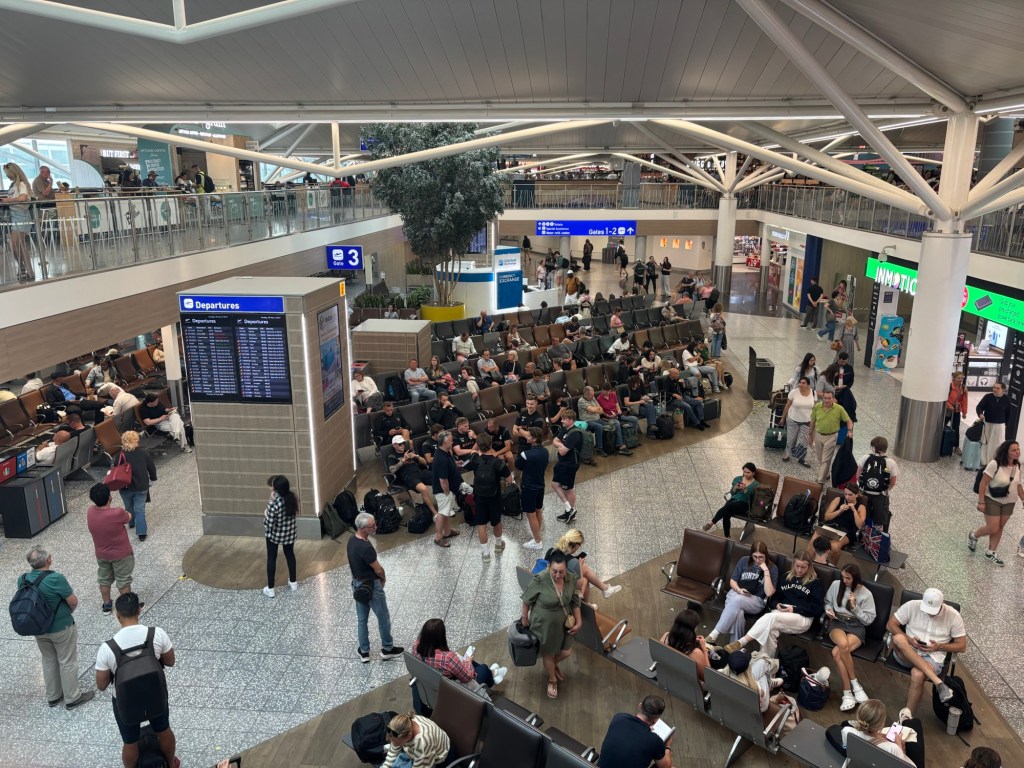
Departures Lounge C, Malaga-Costa del Sol Airport. 9.18am.

My adventure is drawing to a close. In a matter of hours I will be back in the familiar settings of my flat. Sometimes, at the end of a holiday, I’d be feeling glum at this point. There’s a bit of that right now – I’m never overly happy to leave this country behind. But it’s been such an incredible three weeks that I have no regrets whatsoever, so I’m going back home with a full heart and a nauseatingly broad smile. Not even the British weather waiting for me when I get home could take that away from me.


I was up early this morning to check in to my last pensión of the trip. Nowhere is open for check-in at 8 o’clock in the morning, but I was suspicious about the link I’d been sent asking for confirmation payment up-front, and wanted to dot the I’s and cross the T’s in person. I was right to be cautious: their Booking.com account had been hacked, asking customers for a down payment that “might not be the same as on the website” – in my case, a fare ten times the amount agreed. Thank God I went in person to sort things out. God helps those who help themselves, or so the saying goes, but I’d like to think that La Virgen del Rocío is still watching out for me.

With my mind at ease, I had my last chocolate con churros of the trip and then set out to see the Legion, who had just disembarked and were on their way to their casa de hermandad west of the river. Once again, I was lucky to find a space to stand, since by the looks of things the entire city had turned out to welcome the troops.


La Legión, also known as the Tercio, is one of the most famous wings of Spain’s military. Though modelled on the French Foreign Legion, a similarly fearsome fighting force, la Legión is not as foreign as its name might imply: Spaniards comprise the vast majority of its troops, with Latin American and citizens of other Spanish-speaking countries making up the rest. This was the unit that Francisco Franco commanded, a mighty and highly professional unit used with devastating effect against the Republican forces during the Civil War. My allegiance should be straightforward – my great-grandparents were Republicans, and my great-grandfather Mateo was a victim of the regime that La Legión helped to put into power – but even I have to admit that I thought them impressive as they paraded through the city, belting their battle hymn, El novio de la muerte, at the top of their lungs.

The past is the past. Hate has to find the hands that it knows, and I’m not one for grudges. I’m also a Catholic who bloody loves a good spectacle, and the Legión certainly provides.


In one last stroke of luck, when I came back to the pensión to check in, the receptionist asked if I would rather “dormir o ver la procesión”: somebody had cancelled just minutes before I arrived, and a balcony room had suddenly become available. As a good friend once said, “you can sleep when you’re dead” – so I snapped up the balcony room. My pensión of choice looked out over Calle Especería, which just so happened to be the primary conduit for all but one of the eight pasos making their way through the city. Not only would I be able to watch the processions from the comfort of my room, I would be able to do so without having to deal with the inevitable crowds, now at their greatest in number as Semana Santa reached its summit. I really couldn’t have been dealt a better card.

The first paso arrived shortly after half past five, at which point the street below became impassable. It’s just as well I had supplies, because one procession followed another – it would be past one o’clock in the morning before the last procession had come and gone, and the spectators walling the street with it.


From my vantage point on the second floor, I could see a lot of things I hadn’t noticed before. Like the old-fashioned jugs each paso carried with it, appearing suddenly from beneath the tronos every time the procession came to a halt to provide relief to the weary costaleros. As the night went on, the train on the dresses of the Virgin Mary got longer and longer, and many of the costaleros were entirely reliant on the sound of the llamador (the bell at the front of the trono) and the voice of the capataz (the man in charge of guiding the costaleros) to know when to stop and when to go.


The Legión arrived a great deal sooner than I expected. I’d just popped back inside for a drink when I heard the first verse of El novio de la muerte (literally, The Groom of Death) and had to double back. I must have only seen one of the four tercios (divisions) of the Legión this morning, because they seemed to have quadrupled in number. Led by their officers, the nazarenos of their brotherhood and a number of standard-bearers carrying golden flagpoles, it had all the trappings of a Roman triumph. I guess that’s part of the look they were going for. Either way, it was quite something to watch from on high – especially the way their marching steps fanned out in a perfectly synchronised wave from the left.


I experienced my first genuine saeta shortly before midnight. There is little that can compare to a proper saeta: it is, in essence, a religiously inspired solo piece, sung by a spectator who feels so moved by the emotion of the procession that they put their feelings into song. The origins of the saeta are unclear, but they’re thought to have derived from a fusion of Islamic calls to prayer and Jewish psalmodies with old Franciscan processional hymns. In Andalusia, the region most commonly associated with the practice, they have a strong connection to flamenco, which becomes immediately obvious when you hear the wailing style of the singer and their wild gesturing toward the paso, which must by tradition come to an immediate halt when a saeta begins.

I’ve seen saetas before, albeit slightly less impressive – the kind where somebody stands in front of the church and reads from a score. Not this one. This came from the heart and soul of a man in his sixties, who was leaning half off his balcony and crying out to both El Cristo and La Virgen with every ounce of duende that his spirit could muster. It was really something to behold, and it had the whole street in silent rapture – which, with hundreds of people lining both sides of the street below, only made it all the more impressive.


There’s something about the music of Semana Santa that is fundamentally powerful. It could be the wailing solos played on the keyed trumpets with that quality of vibrato that is so ineffably Hispanic, often associated with bullfights and Mexican standoffs. It could be the way that the drumbeats make your very heart tremble within you as they reverberate off the walls of the narrow streets, or the way that one of the drumrolls is always delayed, producing an effect that is almost hypnotic. But I think a lot of it comes down to the fact that the music is modal – that is, a music form phased out by the Protestant Church as it was felt to be “too ornate” for worship.

You can say what you like about the quality of modern Christian worship music, but as far as I’m concerned, the moment that this kind of music was deemed “too distracting” was the moment that the decay set in. In the opinion of this author, there’s nothing that Hillsong and its ilk could ever do to even come close. Semana Santa is an endless replay of the last week of Jesus’ life, with all of the grief and pain and none of the vapid Jesus-we-love-you-ness that marks a lot of modern Christian music. That’s one of the reasons I have a thing for Gospel music, too: while it also indulges in giddying joy, it draws on the shared pain of its creators to delve into the dark heart of suffering in ways that Hillsong just can’t. There are three hundred and sixty days in the year to celebrate the joy of Jesus’ resurrection, but Semana Santa focuses the lens on the five days where he suffered most terribly. It’s a memento mori, a reminder of the relatable human mantle that Jesus took to suffer and die for the sins of mankind, and of the grief of a mother over the death of her son. Christ the Lord is Risen Today seems almost farcical by comparison (especially if you’ve seen the infamous John Daker video, which I have far too many times). By making worship music more accessible by simplifying its structure, they ripped out its soul.

Spain is a country that has experienced a tremendous amount of religious rage and repression, arguably more than any other in Europe if you factor in the tumultuous conquest and reconquest by Christian and Muslim overlords and the religious persecution that followed over a period of seven hundred years. So the suffering evoked by their saetas and processional marches is very, very real. In some parts of the country, the music isn’t enough: there’s a town in Extremadura where the penitentes bind themselves to crosses in a simulation of the crucifixion and do some of the procession on their knees, while the most devout Spaniards will even follow the processions with crowns of thorns of their own, or whip themselves as they march down the street. The suffering becomes as much a performance as the music itself. Church attendance may be on the wane here just as much as it is everywhere else, but in Semana Santa, you’d be forgiven for thinking that the official statistics were wrong.


La Virgen de la Esperanza and her bearers returned home shortly after seven o’clock in the morning, almost an hour before sunrise and just before I walked past on my way to the train for the airport, after a nine hour march through the city. In a few days it will all be over, and the city will return to normality until the whole process starts all over again in a year’s time. But I have bottled as much of the magic as I can and am returning to England with my head and my heart ringing with the rattle of snare drums and the wail of trumpets. I have been reminded in no uncertain terms that it is here in Andalusia that it all began, when my parents made that mad decision to move out here for a year, and my future was lashed forever to this wild and passionate corner of a wild and passionate country.

I’ll be back. So help me God, I’ll be back. BB x

Brotherhood

Calle Especería, Málaga. 16.40.

There’s no two ways about it. I’m a total Semana Santa junkie. If it wasn’t for Semana Santa falling within the school holidays for the first time in years, I probably wouldn’t be here at all. Given the choice, I’d be nowhere else for Holy Week. Spain – and especially Andalusia – simply does Easter like nowhere else in the world. The only reason I haven’t followed a procession all night this time around is on account of being in a swarming city. One day, if God should see fit to grant me that privilege, I should like to take my uncle up on his offer and serve the family’s cofradía as a costalero. That would be the only way to put a seal on my obsession with this phenomenal custom.


I was only half an hour off the bus back from Gibraltar when I was back out on the streets to catch the Wednesday night pasos. I didn’t have to go far: the Brotherhood of Nuestro Padre Jesús “El Rico” y María Santísima del Amor had just left their parish and were looping back around the Plaza de Merced. The rank and file nazarenos were dressed in robes of deepest blue, but some of them wore white cloaks emblazoned with the red badge of the Order of Santiago.


In their train was a group of women in black, wearing the traditional mantilla, a gesture of solidarity with the grief of the Virgin Mary. Known as manolas, they are a relic of a time before women were allowed to participate in the usual Easter celebrations, such as wearing the capirote or carrying the pasos. Until as late as 1987, it was forbidden for women to don the hood, and it wasn’t until some time after that it became common practice for them to do so. These days, wearing the mantilla is something of a badge of honour for young women, knowing that they are keeping an ancient tradition within a tradition alive.


I allowed myself an hour’s respite – mostly to charge my phone – before heading back out into the night to see the processions by candlelight, when they truly come into their own. I was lucky to get a spot at all. Being such a major annual event, many malagueños know to stake out a spot early to get a good seat – quiet literally, in fact, as a number of the principal routes were lined with foldable deckchairs from eight o’clock in the morning!


Málaga’s guiris don’t seem to be huge Semana Santa junkies. By nightfall, they had mostly retreated to their hotels, leaving the streets to the locals. As such, with a couple of exceptions during the night, the dominant language in the street was that wonderfully ebullient andaluz, best spoken a gritos. My mother likes to collect sugar packets from cafés, and Spain has a quaint habit of decorating theirs with quotes. The only one that has always stuck with me is the incredibly Spanish ‘lo que vale la pena decir se dice a gritos’ (whats worth saying is worth shouting), which is probably one of the most Andalusian statements around. And to think I once found their accent impenetrable and annoying…! Heresy. Now it’s nothing short of music to my heart.


Another beautiful tradition of Semana Santa is that of the bola de cera. As the sun goes down, the nazarenos light their long candles – hardly necessary in a city as well-lit as Málaga, but an essential part of the spectacle. They need to be long to last the night, and it’s for this reason that the nazarenos all wear gloves, to stop the hot wax from dripping onto their hands.

In Andalucía, there’s another layer to it. Every time the procession comes to a halt, children run out into the street and ask the nazarenos for the wax from their candles.


They collect it on little sticks with a coin attached to the end – or using last year’s wax balls, if memory serves – and compete to see who can get the biggest ball of wax by the end of the night. It’s an old way of keeping the younger children entertained during the long hours of the processions, which usually go on well past midnight.


Honestly, it’s just incredibly endearing to see how wholesome this little game is. Sure, Spanish kids love their mobile phones just as much as (if not more than) English kids, but you don’t see a lot of English kids collecting wax or playing with spinning tops in the streets. I still have very fond memories of playing dodgeball and pilla-pilla in the streets with my friends when I was growing up out here. There’s just a bit more variety in the games that Spanish kids play. I want that world for my kids, if I should be so lucky to have children of my own someday.


There was a bit more of the behavioural policing tonight that I’m used to seeing in the pueblo: silver-staffed nazarenos striding over to give a ticking off to younger penitents who might have broken rank for a moment to gossip or talk with friends and family in the crowd. I’m always amazed by how quickly the nazarenos are recognised by their peers in the street, but then, if a ewe can tell its own lamb from its call alone, is it is so hard to imagine that a mother can tell their child from their eyes or gait? Perhaps not. We may not have the heightened senses of some of our animal friends but we are mighty indeed.


The one transgression that wasn’t being quite so closely monitored was the clustering of nazarenos around the glow of a screen at every stop – particularly in front of the Irish bar, where a large telescreen was playing the Real Madrid/Arsenal game. One nazarena was accompanied by her boyfriend, her black robes and his hoodie bathed in green light by the game on his phone, while a cluster of six nazarenos stopped to catch up on the replay, courtesy of one of the costaleros.

It was obviously an important game (what do you expect when Real Madrid are playing?) and it ended in a crushing 2:1 defeat for Real Madrid, but thanks to the greater task at hand of the procession, you wouldn’t have noticed. That said, I suspect that a Spanish victory might have been very noticeable: Spaniards don’t celebrate in silence.


To round out the night, a wing of the Spanish Army – specifically its Almogávar paratroopers – paraded by, accompanying their image of the Virgin Mary on her journey through the city. Lots of Spaniards come to town to see the Legion, but the Almogávares were a bloody good warm-up act, performing a number of impressive drills and acrobatics with their weapons as they marched.

Like a lot of military terms – including our own admiral – the word almogávar is Arabic in extraction, deriving from the word al-mughāwir, a light infantry raiding unit used by both the Moors and the Spanish during the Reconquista. Spain owes a lot to its Islamic past, from saffron and stirrups to rice pudding and the police. Slowly, I think the country is starting to appreciate its coloured past a bit more.


I’d better leave it there, or I’ll have bored you stiff with Semana Santa stuff – and I’ve still got one more night’s work to report! So stick around – the best is yet to come! BB x
The Pillars of Hercules

La Línea de la Concepción. 15.37.

Eighteen years ago, some family friends came out to visit us and spend a walking holiday in the sierras of southern Andalucía. That’s when I first saw the Rock.

Since then, it has loomed large over so much of my work. It was a talking point in my Year 13 Extended Project Qualification on the Islamic Legacy in Spain. It served as an illustration on the front of my final dissertation on Pedro de Corral and the Spanish founding myth at Durham University. It’s been a subject for discussion in goodness knows how many A Level, IB and GCSE classes I’ve taught over the years, and it’s going to feature once again in the talk I’m delivering next week to the local Hispanic society on Spain’s Islamic History.


The Rock. Calpe. Tariq’s Mountain. One of the two pillars of Hercules. The key to the Mediterranean. Gibraltar has gone by many names over the centuries, indicating its enormous cultural footprint. So it’s easy to see why the Spanish get so cut up about the fact that this relatively small peninsula belongs, not to either of the countries that can see it – Spain and Morocco – but to the United Kingdom, an opportunistic seafaring nation that snapped up the city in 1704 during the War of the Spanish Succession. It was Spain – or rather the Spanish crown – that officially ceded the peninsula to Great Britain. It has been a decision they have regretted ever since.


Modern-day Gibraltar is a very strange place. You cross a staggeringly short airstrip and enter a completely different world – like a jigsaw piece from a different puzzle that fits, but looks totally out of place. It’s as though somebody has taken a slice of an English county town and dropped it incongruously on the Spanish coast. Not even the tourist-infested Costa del Sol matches its otherworldly vibe.

Red postboxes. English traffic signage. Curry, gin and Cadbury’s. Pubs bearing the faces of Lord Nelson and Queen Victoria. Even the layout of the high street is unmistakably English. If Spain truly wants Gibraltar back, it will have some serious landscaping to do.


As I recall, we were short of time on my last visit here. The bus from Málaga made the trip down the coast in record time, so I had all of six hours to explore – almost all of which I spent walking. My phone seems to think I’d clocked twenty-one kilometres by the end of it… which, given my roundabout route through town, to Europa Point and up and down the Rock, is probably not too far from the truth.
Hidden away at Europa Point is a symbol of the British subversion of the terms of the Treaty of Utrecht: the Jews’ Gate Cemetery, where many of its former rabbis are buried, and the Ibrahim al-Ibrahim Mosque, one of the largest in a non-Muslim country. Tucked away here on the south side of the rock, they’re not immediately obvious from the Spanish side, and while the mosque may be a recent addition (built in 1997), it’s thought that the cemetery was put there to conceal the presence of Gibraltar’s Jewish population from prying Spanish eyes. The Treaty of Utrecht was quite clear on the matter:

Her Britannic Majesty, at the request of the Catholic King, does consent and agree, that no leave shall be given under any pretence whatsoever, either to Jews or Moors, to reside or have their dwellings in the said town of Gibraltar.

Great Britain, unsurprisingly, largely ignored this clause of the Treaty, and Gibraltar has been a haven for a small enclave of Jews ever since. Lately, it seems a Muslim population has also returned to the Rock – large enough to warrant a sizeable mosque funded by the Saudis – fuelling some dissent from the Spanish side.


As you start to climb the rock at Jews’ Gate, the view across the Strait to the South becomes even more spectacular. What makes it all the more special to me is that I know those mountains very well, albeit from the other side, having climbed a few of them myself when I lived in Tetouan. I could just about see Ghorghez in the far distance, as well as the peninsula of Ceuta, but Jebel Musa is the most recognisable, being the most likely candidate for the southernmost of the Pillars of Hercules, the twin mountains that stand like sentinels at the mouth of the Mediterranean.

There’s an awful lot of lore here. The legend has it that the Greek hero Heracles split the original mountain in two in order to clear a passage to his tenth labour, the capture of the cattle of Geryon. While he was here, at the edge of the known world, he supposedly founded a city that would later become Seville. That’s why the Greek hero features so prominently in Spanish folklore – and on the Andalusian flag, for that matter. The legendary pillars themselves are on the Spanish cost of arms, emblazoned with the mantra ‘plus ultra’ or “further beyond” – the defiant Spanish response to an older inscription left on the rocks by the civilisations of old, non plus ultra, warning of the emptiness beyond: an emptiness that Christopher Columbus famously disproved in 1492.

Nowadays, both of the pillars bear the names of the two Muslim commanders who led the invasion of Spain: Musa bin Nusayr, the governor of Ceuta, and his subordinate, Tariq bin Ziyad. Though Tariq was executed on Musa’s orders for his hasty invasion (it’s not every day a raid turns into a regicide), it’s his name that has gone in history as Jebel Tariq – gradually mangled into Gibraltar.


Being so close to Africa, Gibraltar is a natural (and phenomenal) place to observe the annual migration of birds traveling to and from their breeding grounds in spring and autumn. It’s especially good in spring, as the birds ride the thermals on the Moroccan coast and soar across the Strait with hardly a wingbeat, gradually descending and sometimes arriving on the European side at eye level.

My camera was a dead weight as it had run out of power shortly after arriving in Gibraltar, and I’d plum forgotten to bring the charger (which I could have used here, since Gibraltar uses English sockets). All the same, I could observe some of the migrating birds with the naked eye. I clocked around thirty black kites as I climbed the Rock, along with a number of honey buzzards and black storks. I thought I heard some bee-eaters, but they turned out to be an audio recording hidden in the bushes at the park’s entrance. How odd!


Let’s be honest, though – I came here to see the monkeys!


The Barbary macaque is the only species of monkey that you can find in the wild in Europe. The fossil record shows that they were once found across Europe during the Ice Age, but they can now only be found in the Rif Mountains of Morocco – and here in Gibraltar. It’s almost certain that these aren’t the last survivors of the European population, but rather a group brought over by the Moors (and later restocked on the orders of Winston Churchill himself). Nevertheless, they’re as much at home here as they are in the cedar forests of the Atlas Mountains across the Strait. Perhaps more so, since there are so many hapless tourists just asking to have their lunch stolen.


There’s plenty of food left out for the macaques every day, but there’s a further incentive for keeping your snacks under a close watch: it’s illegal to feed the monkeys, punishable by a fine of up to £4,000. That won’t stop them from trying to snatch what you’ve got, edible or otherwise, but it’s best to avoid any cases of mistaken identity by keeping your food and drink out of sight.

This one by the Skywalk was scoffing something that definitely wasn’t official monkey food. I wonder what they make of M&Ms? Do you suppose they taste any better to a monkey’s palate?


It’s a bizarre experience, walking around the Rock and seeing wild monkeys wandering about the place, like some African safari. The long lines of white tourist taxis crawling along the Queen’s Road and stopping for their passengers to take photos only add to the experience. Not that the macaques seem to mind overmuch – the youngsters are quite happy to play undisturbed.


Alonso del Portillo, the first Spaniard to include Gibraltar in his chronicles, referred to the macaques as the “true owners” of the Rock, occupying its eastern face since “time immemorial”. Even so, I wonder if their not so inhuman brains ever stretch as far as thoughts of that land on the other side of the sea, where the rest of their kin can be found? They certainly seem to spend a lot of time looking out that way.


I’ve always been a keen naturalist, but my especial love for primates goes back to my time in Uganda, where I had the privilege of seeing mountain gorillas up close. That seems a more logical place to start, since it probably doesn’t stretch back as far as my last visit to Gibraltar, when one of the macaques welcomed me to the Rock by shitting down the back of my hoodie as I left the cable car.

No cable car this time – and no shit either. Cause and effect! (And also a financial dodge, as the cable car costs an extortionate 19€…)


The only downside to not taking the cable car was the climb back down the Rock. I took the steps down the Charles V wall, a 16th century fortification against the Barbary pirates who once plagued these waters. They’re bloody steep, they can only be walked down (or up) in single file, and there’s the added hazard that the macaques use them as well – and they don’t like to be cornered.

Fortunately, by the time I came down, it was well past noon and most of the macaques were dozing off the midday sun. These two barely batted an eyelid as I carefully stepped over them. I hope the tourists I passed at the bottom coming down were as considerate.


A local legend has it that Gibraltar will only fall when the monkeys go – much like the English legend about the ravens and the Tower of London. And just like the ravens, the government has stepped in to prevent that superstition from coming to pass in times of crisis. Winston Churchill had their numbers bolstered during the Second World War when their numbers dwindled to just seven individuals – no doubt relying on his friendly relations with the infamous Thami El Glaoui, the self-styled Lord of the Atlas Mountains.

El Glaoui was a wily tribal chieftain and the son of a slave who, through a number of deft political manoeuvrings, came to rule much of modern Morocco. He is said to have counted Winston Churchill as one of his close friends. I wonder what he really thought of the eccentric British bulldog? Or of his decision to resupply the apes to keep a British legend alive? In Morocco, these beautiful creatures are often caught and forced to perform in market squares for the amusement of tourists. At least here in Gibraltar they don’t have to wear humiliating dresses or chains and can claim the Rock as their home.


Unsurprisingly, it’s getting late. That took a long time to write. I should get some sleep, but the Guardia Civil are processing tonight and I’d love to see that before the Legion arrives tomorrow. And that really should be a special way to end my adventures. What a journey it’s been! BB x