Living out of a Book: Adventures with a Journal

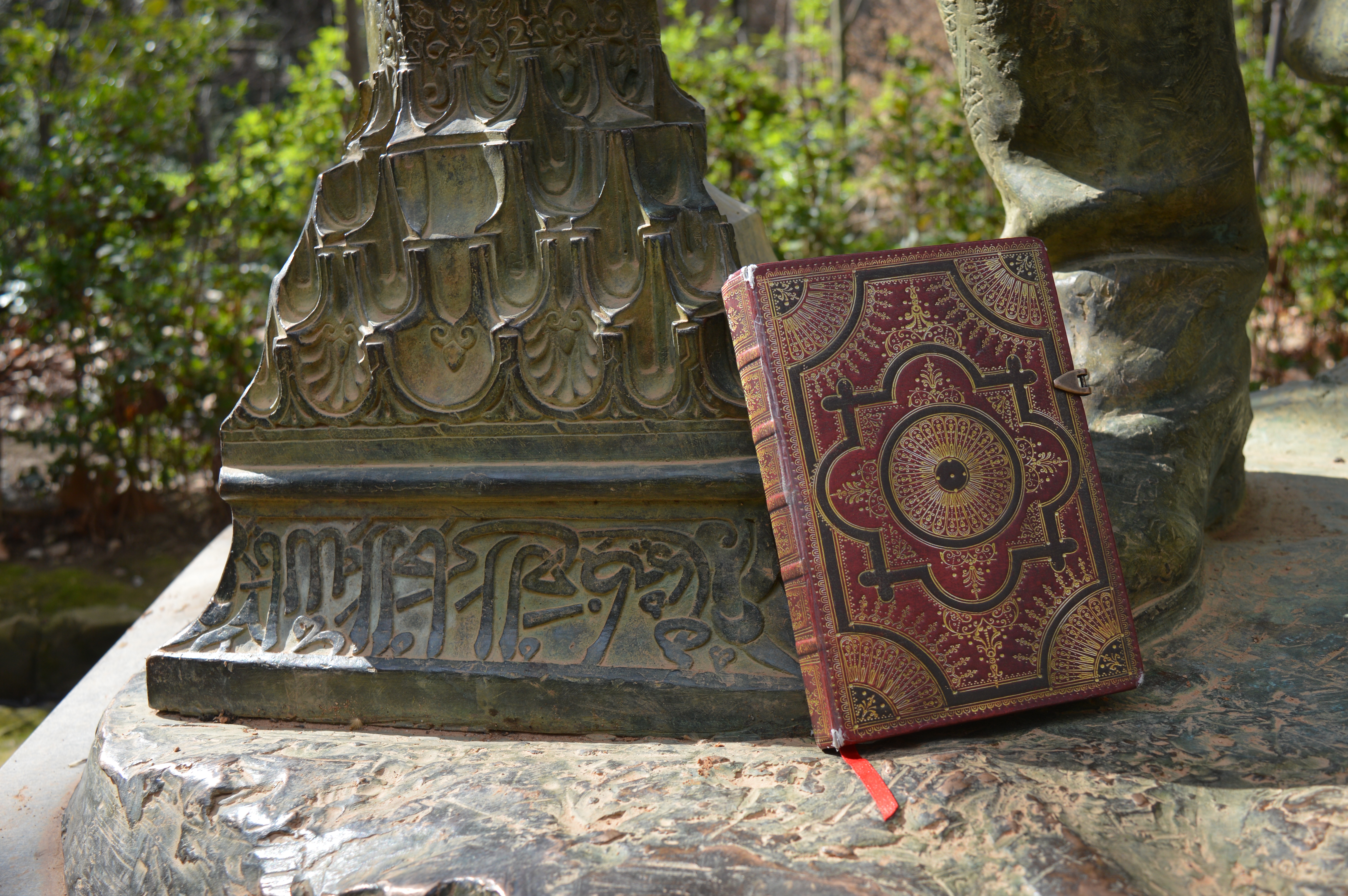
The Red Book (my first “Renaissance” journal) at the feet of Washington Irving, Granada (March 2016)

Let me tell you something for free: full-time employment is a writer’s bane. You knew that already, so neither of us lost anything in that transaction. Except me, and the ever-increasing gaps between the dates in my journal.

I spent so much of this weekend powering through marking after a week of KS3 assessments that it only occurred to me as I filed my Year 9 papers away that last weekend was the first time I’d given my novel some serious thought in a year and a half. Since you can chalk that “blip” up to the first lockdown, it’s probably safe to say the last time I made any real headway with my book was before I took up a post in a boarding school back here in the UK. That is to say, back when I was living in Extremadura, now almost four years ago. If it weren’t for the fact that I still carry a journal around with me, I’d have made no progress in that time whatsoever.

But since I’m more of a glass-half-full kind of guy, I’m going to focus less on the killing instinct of working life and more on the magic of keeping a journal. Because, as always, there’s a story behind it – and in my case, it’s a lot more personal than I ever knew.

I’ve written reasonably extensively about my journalling habit before, but in case you missed it, click here for an earlier piece on one of my favourite journals, the Red Book.

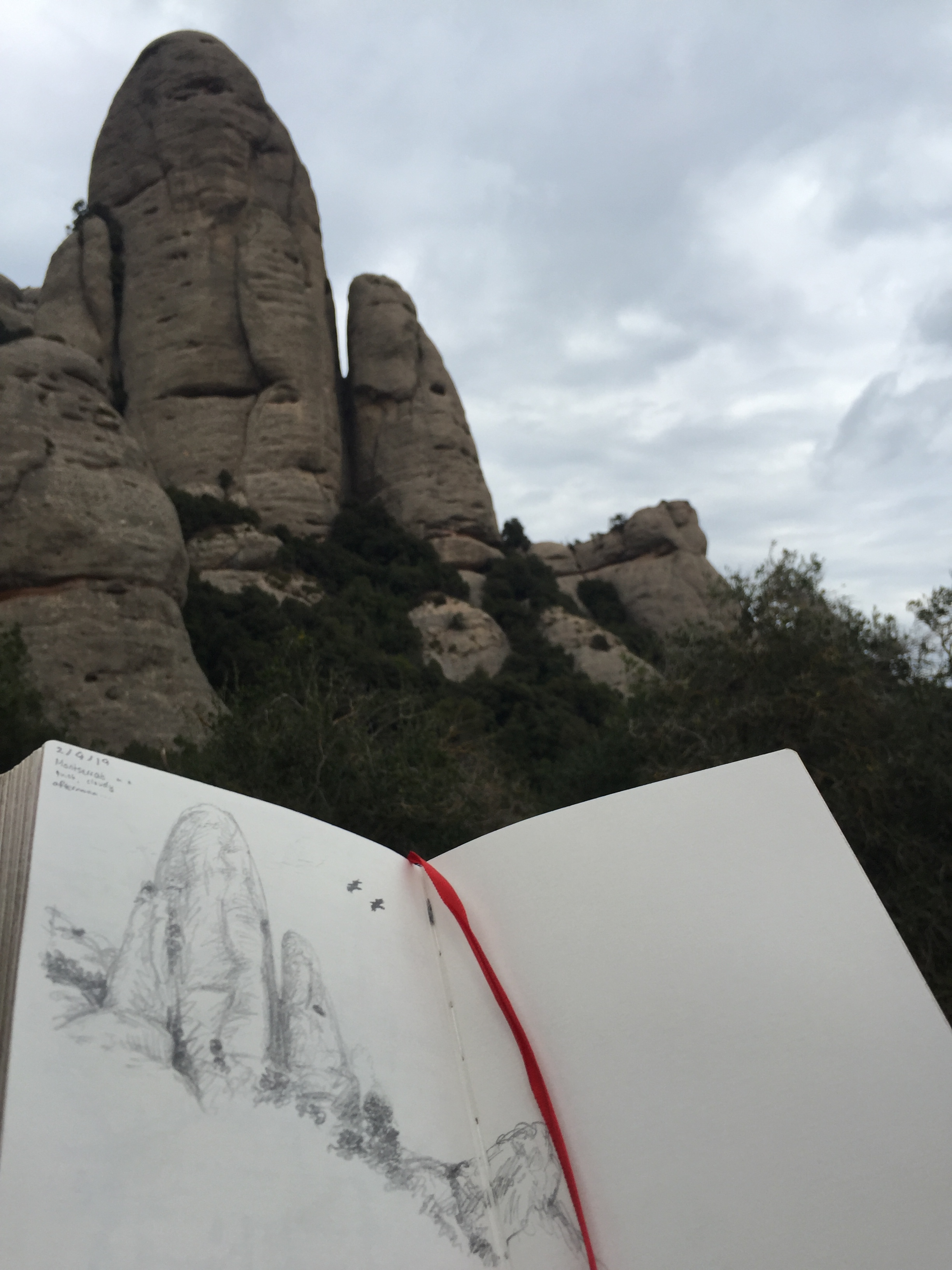
Sketching the windy peaks of Montserrat (April 2019)

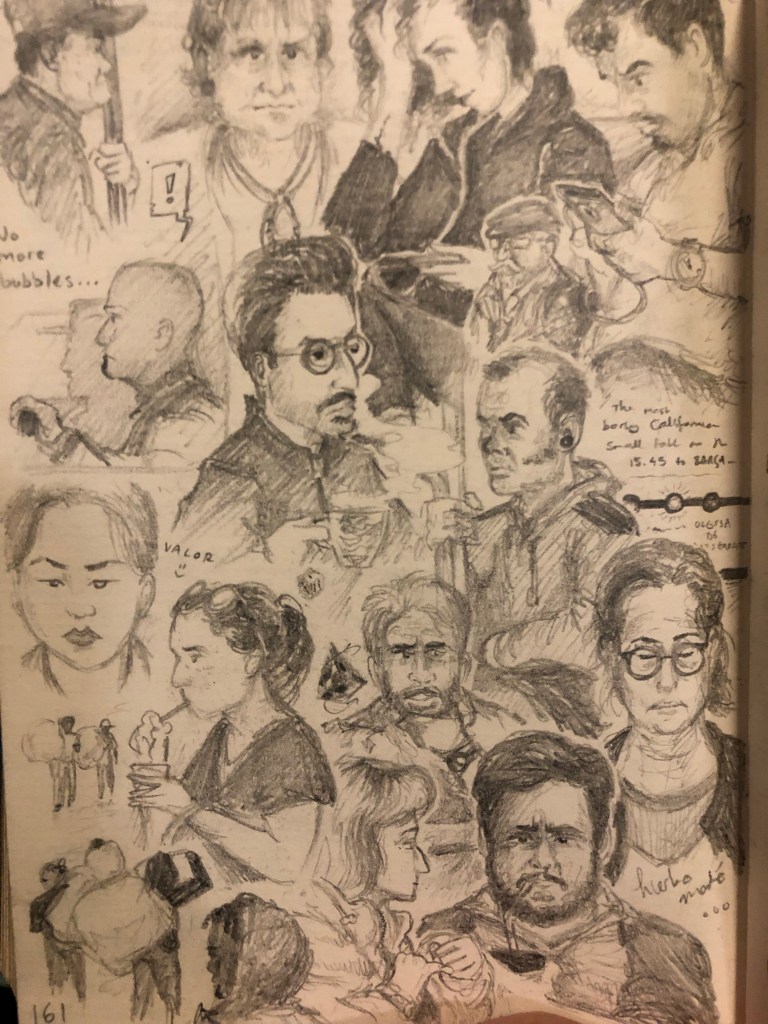
I don’t think I’ve ever been without a sketchbook of sorts. Going back to my parents’ place for Christmas turned up quite a few of my oldest surviving books, dog-eared, half-filled and almost all of them featuring the same cast of characters that share a space in my head and my heart to this day. Studying Art for GCSE and A Level naturally fed the habit, though I seem to remember having separate sketchbooks for school and for myself right the way through. I suppose I should reach out to a couple of early inspirations here: to Mr Howe, for his no-holds-barred approach to sketchbook work (“unfinished pieces are often more interesting than finished pieces” has stuck with me); to my old friend Freddie, whose handwriting I secretly admired and have long since adapted into my own; and, of course, to my own mother, who must have kept several journals of her own when she was younger.

These first attempts were more art than word, though. It wasn’t until my eighteenth year that I took the craft of journalling more seriously, riding off the back of having successfully kept a diary for a little over a whole year – to date, the longest successful writing streak in my life. With many long months to go until the first day of my degree, I picked up a small flip-journal from Waterstones and penned some thoughts. At first, it was just lists: locations in my novel, possible pen names, key elements for fantasy fiction. On the second page I branched out and jotted down some facts that I found interesting, for a change of pace (my brother was quick to point out this was a considerably less interesting way to use a journal). I guess not everybody needs to know that the underside of a waterfall is called an undercutting; that Mullah Omar donned the mystical Cloak of the Prophet to drum up support in 1996; and that Dr William Bryden was the sole survivor of the Khyber Pass massacre of 1842.

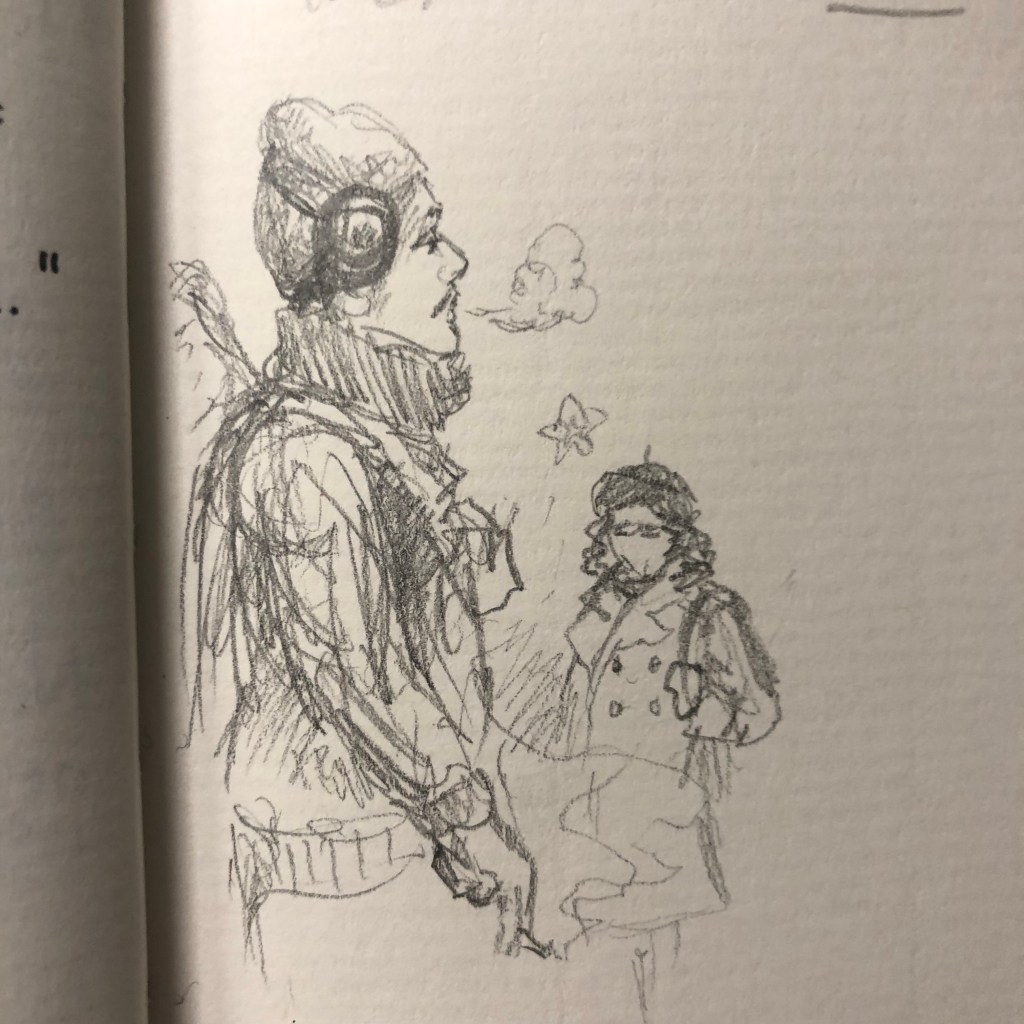
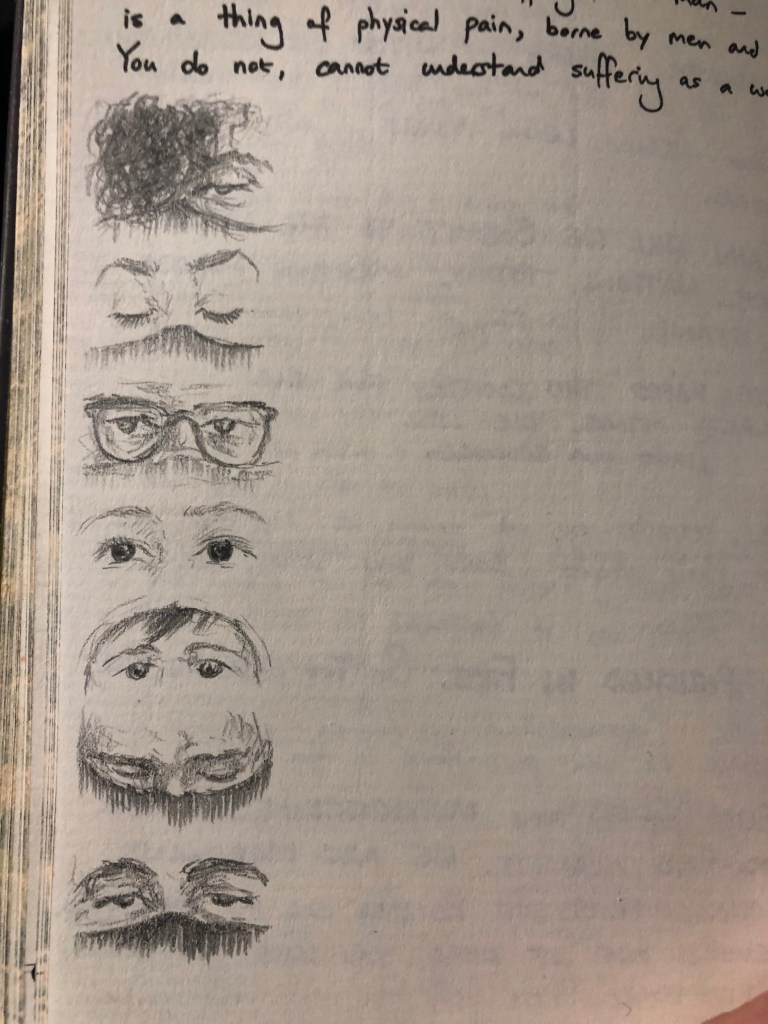
Three pages in and the novel is the back in the limelight – and so it continues. Every so often, I find something in a book or on the news that I deem worthy of recording, but as a rule, the bulk of my pen-and-pencilwork concerns the fate of my cast of characters and the world in which they live, ever-growing, ever-crystallising. Sketches in pencil duck and weave through the gaps like weasels, giving over onto full page illustrations when I really found my mojo. It’s a formula I have deviated from very little for nine years now.

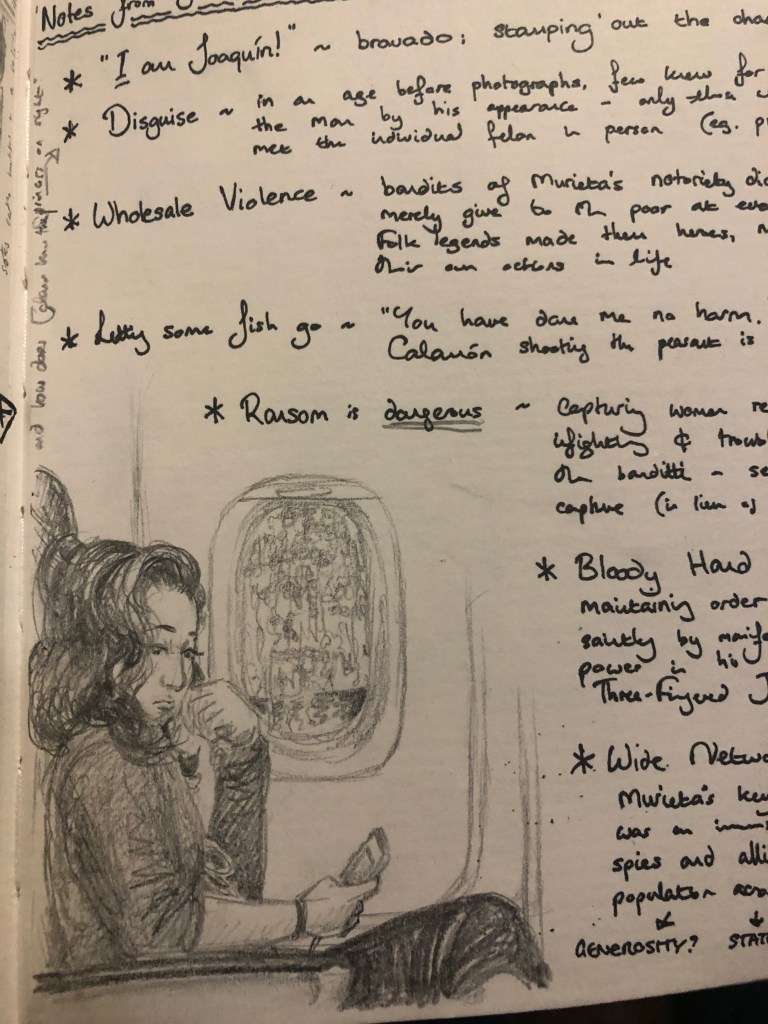
Gypsy Legends and Grenadine Gifts (2020)

When I was younger, and I still had these crazy notions (as the young and reckless always do) of embarking upon death-defying expeditions to Afghanistan and beyond, I remember thinking that, if something should happen to me, the world in my head that I had spent all but the first seven years of my life creating would disappear completely. That is, unless I left enough material behind for somebody to pick up the pieces. I suppose that morbid justification stuck, because there is now enough information spread across my various journals for somebody to put together the various stories I have always wanted to tell.

The rain in Spain on the plane (August 2019)

And perhaps there’s a logical explanation for that mindset.

My great-grandmother Mercedes was a woman ahead of her time. In a Spain teetering on the brink of Civil War, she found love with a poet and musician called Mateo. They corresponded in verse, quoting Oscar Wilde and Keats and Plato and Engels. Their handwritten letters to each other – safeguarded by my family for over fifty years – tell of a truly devoted husband and wife on an equal intellectual footing, flying in the face of the dictadura and the expectations of women outlined in the Guia de la buena esposa. Mercedes was well-known about town for her journal, which was as much a part of her character as her glass of brandy and cigars. Though her locally legendary journals themselves are lost to time, it is chiefly through her precious letters to her Mateo that I can see through a window in that past. It is a past which comes clearer into focus the more I get to know my family out there. The fatalist in me cannot help but wonder at the sequence of events that led to me arriving at my family’s door with little more than my journal in hand, unconsciously carrying the one item that would prove my connection to a great-grandmother I never had the chance to meet. Mercedes left this world the very same year I came into it.

I spent the greater part of my search for my family focused on the grandfather I never knew, but it is my bisabuela Mercedes who guides my hand these days. I’m a strong believer in upholding family traditions, and it doesn’t half lend a sense of purpose to the scribblings in my journals, even if they never lead anywhere. My ancestors left me a literal paper trail and I must follow.

Barcelona vignettes (March 2019)

Have you ever kept a journal? I’d highly recommend it. It’s less onerous than a diary and a beautiful thing to look back on. Through mine, I can read the world around me through the strokes of my pen: the euphoria of success in the a cappella semifinals; my bewilderment at Brexit; the shockwaves of the fire of Notre-Dame; and my bottomless love for the country of my ancestors. It’s all there, and since boarding school life makes it nigh-on impossible to knock out a couple of chapters a week like I used to, my journals do a thumping good job at telling the story.

And maybe, one day, that’s exactly what they’ll do, when they fall into the hands of my grandchildren. I’d like that. I think Mercedes would have liked that, too.

BB x
A Semitone Out of Line

How did your 2022 start? Mine began with a miracle. Not a major one – at least, nothing that brought about anything new in my life. Just the restoration of my hearing.

Since the first day of the Christmas holidays, I’ve been plagued by the after effects of a bad head cold that went to my left ear and decided to wreak havoc there. My first week off was spent largely deaf on one side with a tinnitus so fierce it kept me up at night. It’s not often that an illness gets me down – I’m lucky enough to have a rather robust constitution that withstands most things, bar the seasonal pollen allergies that come around every summer. Personally, I thought I’d done pretty well to make it to the end of term without testing positive for COVID once, despite working in a school where children come and go every week. Perhaps this was the man upstairs showing his fickle hand, where fickleness is another word for fairness.

The tinnitus wasn’t so bad, after I got used to it. But it was what happened once the antibiotics had done their job that was the killer. For the best part of two weeks, everything sounded wrong. It took me a couple of days to realise what it was: the ear infection I had been through had left me with a case of diplacusis dysharmonica, a condition that warps the sounds that you perceive. In my case, while my right ear operated normally, my left ear perceived all sounds a semitone higher. For the musicians out there, I’ll let the ramifications of that sink for in a moment.

In most cases, this is a minor inconvenience and can be ignored a great deal more easily than any tinnitus. That is, unless you have perfect pitch.

It’s hard to talk about the uncanny ability to pluck exact notes and tunes out of the air without prompt without coming across as boasting at worst, or false modesty at best, so I won’t labour the point. What I will say is that, for somebody who notices the instant a piece of music is played in a key in which it was not originally played – even if the pitch has been shifted by a hair – hearing the world in two tones at once for a fortnight was nothing short of maddening. A quick browse of the internet will tell you that diplacusis dysharmonica seems to be especially painful for musicians.

What does it sound like? Try to imagine one of those cassettes you might have had when you were younger, after you rewound them once too often, or somebody (possibly a child) had played around with the spools. The sound eventually warped, keys were bent out of place and voices got the Alvin and the Chipmunks treatment. Now imagine that weird, unnatural effect playing alongside a perfectly functional version of the same audio. A long-winded analogy, but the first one that came to mind – chiefly because of the sheer number of cassettes I must have destroyed as a child before the era of Spotify and the repeat button.

Earphones and headphones were out, as they just exacerbated the problem; higher frequencies seemed to be the biggest triggers. I got into a habit of humming to myself in the morning, just to check, and each time I heard two notes come back to me instead of one. I’d give myself a pat on the back for being one of the few humans capable of singing a chord if I knew it wasn’t a) all in my head and b) an exceedingly ill-chosen chord consisting of two notes barely a semitone apart.

Like many of us, I imagine, I woke up this morning apprehensive about the new year ahead. 2021 was a rough year with just a few golden moments that made it one to remember: spending the summer with a dear friend in Edinburgh and a week in October with my beloved family in La Mancha rank right at the top. But with the sun in the morning comes hope, and hope is what I come back to when the world is dark.

By midday today, the distortion in my left ear had dimmed so much that it was hardly noticeable. By tomorrow, God willing, it may be gone altogether. I can’t begin to describe the feeling of putting a pair of headphones on and hearing music as it should be again, after two weeks of dissonance without resolution. I’ve had album after album of sevillanas by Raya Real on repeat ever since. There’s nothing quite like a sevillana to express reckless joy, and that’s exactly what I’m feeling right now. To quote Sweeney Todd: my arm is complete again.

It’s a shame it had to last from the first day of the holidays right up until the last, but I’m not complaining. I can hear the world again, as it should be. That’s more than enough for me.

BB x
NB. It’s been a while since I flexed my writing muscles. This year, I’m going to blow the dust off the blog and get back into a reasonably regular writing habit again. It’s been too long. Until then!

Waldmusik

Monday night. Five weeks in. The first load of reports are due soon. I close my inbox, tired of leafing through the daily barrage of emails in my windowless office, and open my eyes. Packs of SureSan wipes on every shelf. Seven empty bottles of water from last week’s packed lunches, amassed in quiet protest. The number for the IT department scrawled in pink highlighter on a piece of paper folded and blue-tacked to the wall. A wall planner that hasn’t been updated since lockdown began. A chewed-up biro, an oak leaf and a buzzard feather. Karl Jenkins on Spotify. The ventilator roars overhead.

Tomorrow will be seven months to the day since the music died. Seven months since a final lucky fling at a friend’s wedding, which might as well have been a paean to the love of music itself. In retrospect I suppose “elegy” might be the better word. Rome burning and all that. COVID robbed the world of so much, and in the panic over its impact on work, health and the daily grind, music slipped quietly over the edge into silence.

I can’t think of a point in my life when music hasn’t been a constant. Having two music teachers for parents afforded me an incredibly privileged upbringing with regards to my musical education. I wanted for nothing, except perhaps an escape from Classic FM. Scarlatti and the Spice Girls. Klezmer, Raga and Jazz. The Stranglers, The Bee Gees and The Corrs. By the age of ten I had amassed a real symphony of diversity from all the CDs in the house, with an early preference for folk music and anything from the 1970s.Primary school, secondary school and university were a seamless pageant of choirs, bands and orchestras, with the occasional assignment as a reminder that education was happening somewhere within. Whether in a church or a school hall or a smoking stage, I was always singing.

The ventilator continues to growl. It’s about as close as I get to music without Spotify in here. The government directive against singing felled the school choir, the chamber choir and my gospel choir in a single axe stroke. Christmas waits at the end of the tunnel that is the Michaelmas term, but without the usual musical beacons to light the way, it simply doesn’t feel like it.

The last time I felt like this was half a lifetime ago, during my family’s earnest but ultimately unsuccessful attempt at a move to Spain. Then, too, the years of emerging into the frosty night after choir practice with carols ringing in your head melted away like snow in the sunshine. Spain has many beautiful musical traditions, but the buzz of advent – or, at least, the advent I had always known – isn’t one of them.

“Vosotros los ingleses, os flipáis con la música. No hay ese mismo afán por la música aquí, ¿sabes?”

Do I agree with her? The girl who told me that once? I do not know if I do. Years on, I’m still mulling it over.

Without the music, the days are long. They blur, one into the next. Web players and Bluetooth speakers are a poor imitation, like listening to the sound of the ocean in a seashell. There is nothing – nothing – like the exhilaration that comes from making music. It’s the difference between seeing and doing. Watching a cyclist and feeling the wind in your hair. The gulf is immeasurable. It’s the third half of my brain, the fifth chamber of my heart.

COVID cases continue to rise. Whole areas of the country are retreating back into lockdown. People stagger out of pubs at closing time and complain blindly at the loss of their freedom – or so the pictures in the Press seem to scream. Schools remain defiantly open as children come and go into and out of isolation. How long can it last, the question on everybody’s lips. In the music hall, silence hangs like mist.

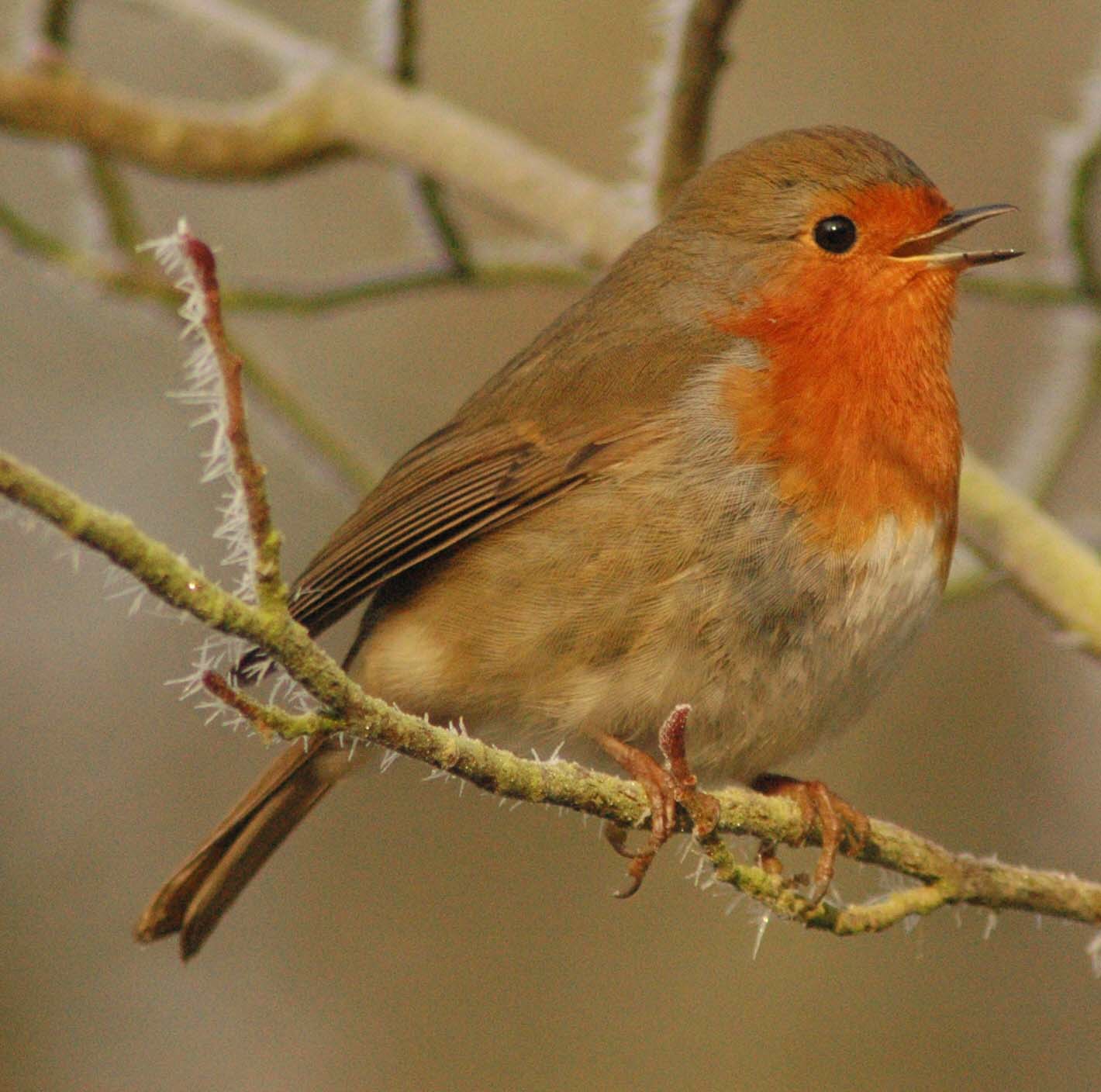
I put on my hat and coat and set out into the evening. Music was always my tonic of choice, but if one elixir is out of stock, the other at least is deathless. It waits out there in the dying light, eternal. Autumn chill is in the air and the martins are long gone. Soon the hedges will be alive with the cackle and chatter of fieldfares, and the liquid sound of redwings traveling by night will follow me home from duty. For now, the old guard plays the same music it has always played in the forest beyond the fields. Blackbirds chatter down in the gully. The staccato of a wren breaking through the hedgerow. And, perched on the exposed branch of a dead tree, cock robin sings his heart out.

The song of the robin is, I think, the most beautiful music that England has ever known. Gentle, melodic, like water – it cannot be put into words. Not by an unqualified amateur such as myself, anyway. The robin for me is a symbol of hope. Maybe it’s his boldness, his charming friendly nature; his defiance of the cold on a January morning, as if to let the world know the darkness cannot last forever. He pays no heed to government directives or social distancing measures. He sings as his ancestors have sung for generations, since the world was cold and dark and unforgiving. Hearing his voice now, at a low ebb, it lifts my spirits again.

Half past nine. Directionless text books. Vocab tests, marked and unmarked. Me and the tuneless ventilator, and the memory of the robin’s song. I think I’ll call it a night.

The Power of Words

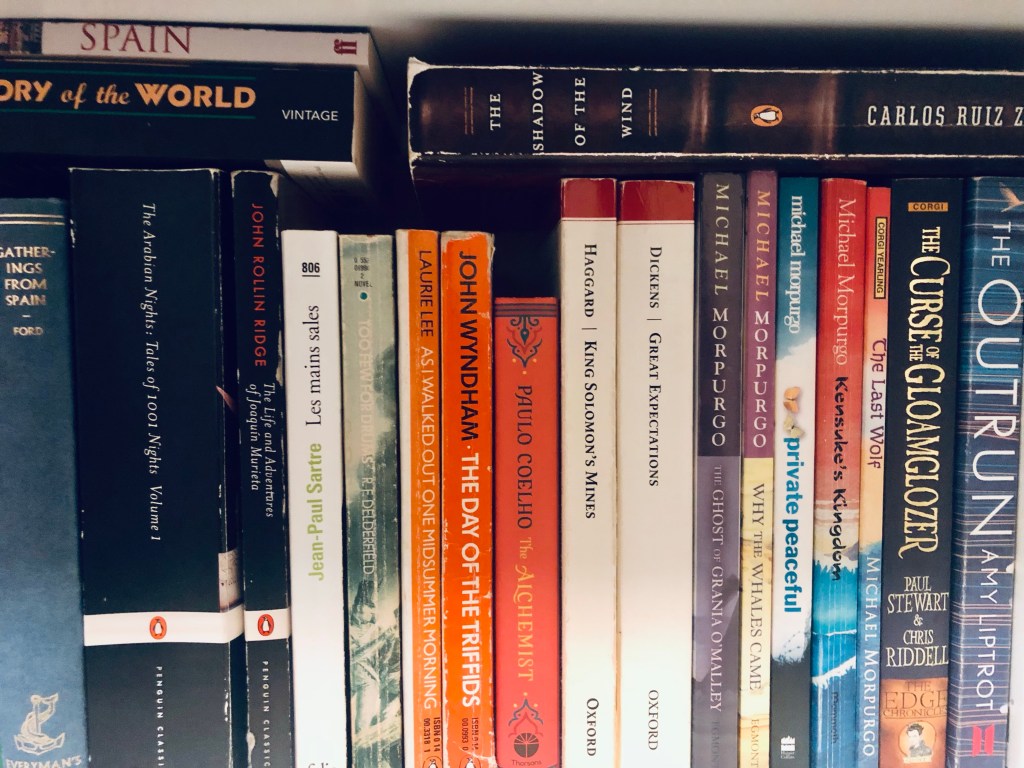
Working life in a boarding school doesn’t exactly give me the time to write I crave. It hardly offers much time for reading, for that matter. But, when a moment comes along when I don’t have lessons to plan, PDPs to fill out, reports to write or duties to carry out, I grab a book and my quote diary and escape for as long as my tired brain allows. I’ve kept a quote diary since 2015, charting my progress through the books I’ve been reading and jotting down any particularly wonderful words or beautiful descriptions – writing that stays with you long after you close the book, like the smoke in the night sky left by a magnificent firework. It’s not the most labour-intensive of blog posts, and yet it is the work of five years of reading. Here’s a selection of my favourite lines from the books I’ve read in that time.

Oh, and if looks as though there’s a lot of H.R. Haggard and M.M. Kaye in there… it’s because there is. Together with Bryce Courtenay, Michael Morpurgo and John Wyndham, they’re my all-time favourite authors.


The Garden of Eden, no doubt, looked fair before man was, but I always think that it must have been fairer when Eve adorned it.
Henry Rider Haggard, King Solomon’s Mines

Her father was a man “led by a star”, as the natives say, and would follow it over the edge of the world and be no nearer.
Henry Rider Haggard, The Ghost Kings

It is certain that few build up the temple of their lives upon some firm foundation of hope or hate, of desire or despair… but rather take chance for their architect – and indeed, whether they take him or no, he is still the master builder.
Henry Rider Haggard, Montezuma’s Daughter

Almost every flock of vultures has its king.
Henry Rider Haggard, Marie

“Duty is a fool-word that makes bones of a man before his time and leaves his girl to others.”
Henry Rider Haggard, Marie

“There’s so much human suffering that the whole world should be wailing.”
Joy Chambers, My Zulu, Myself

“A man’s half licked when he says he is.”
Jack London, White Fang

For most of the years of my life I have handled human nature in its raw material, the virgin ore, not the finished ornament that is smelted out of it – if, indeed, it is finished yet, which I greatly doubt.
Henry Rider Haggard, Child of Storm

There is nothing more uninteresting than to listen to other people’s love affairs.
Henry Rider Haggard, Child of Storm

“He who walks into a storm must put up with the hailstones.”
Henry Rider Haggard, Child of Storm

“First serve, then ask for wages.”
Henry Rider Haggard, Allan’s Wife

“What is life but loss, loss upon loss, til life itself be lost? But in death we may find all the things that we have lost.”
Henry Rider Haggard, Allan’s Wife

Complete happiness in this world is not allowed for even an hour.
Henry Rider Haggard, Allan’s Wife

“Music is a living art, ambassador. It’s meant to illuminate the emotions of the one who gives it life. How can written music have any feeling?”
Thomas Hoover, Moghul

“The Infinite will of God is always mysterious, mercifully granting us what we need more often than what we want.”
Thomas Hoover, Moghul

“We are all searching for our own self. But the self is not easy to find, so we travel afar, hoping it lies elsewhere. Searching inward is a much more difficult journey.
Thomas Hoover, Moghul

Kings have frequently lamented the miserable consequence of being born to great things.
Daniel Defoe, Robinson Crusoe

There was something in Johnny’s character that was pure gold without a trace of alloy.
M.M. Kaye, Shadow of the Moon

“No man goes so far as he who knows not where he is going.”
M.M. Kaye, Shadow of the Moon

Conway Barton possessed a love of two things that have never yet failed to ruin those devotees who have worshiped them to excess: Drink and Women.
M.M. Kaye, Shadow of the Moon

It was an age of lavishness. Of enormous meals, enormous families, enormous, spreading skirts and an enormous, spreading empire. Of gross living, grinding poverty, inconceivable prudery, insufferable complacency and incomparable enterprise.
M.M. Kaye, Shadow of the Moon

It is darkest under the lamp.
M.M. Kaye, Shadow of the Moon

Ten men with one heart are equal to a hundred men with different hearts.
M.M. Kaye, Shadow of the Moon

“No sport is worthy of the name that does not include an element of risk.”
M.M. Kaye, Shadow of the Moon

“Though I can feel the wind and hear the thunder, I do not yet despair of avoiding the storm.”
M.M. Kaye, Shadow of the Moon

“I put my hand upon my knife and walked as a cat walks in an alley full of dogs.”
M.M. Kaye, Shadow of the Moon

“The Lord helps those who help themselves.”
M.M. Kaye, Shadow of the Moon

“I have yet to learn that cure is preferable to prevention.”
M.M. Kaye, Shadow of the Moon

Dasim Ali was a placid and pleasant person who harboured no bitterness towards anyone – except on occasion towards God, who had granted him no sons.
M.M. Kaye, Shadow of the Moon

“Fire is a good friend when men are few and foes are many.”
Henry Rider Haggard, The People of the Mist

What a vast gulf there is between love and loved! It is measureless.
Henry Rider Haggard, The People of the Mist

The devil – a very convenient word at that – is a good fisherman. He has a large book full of flies of different sizes and colours and well he knows how to suit them to each particular fish. But white or black, every fish takes one fly or the other, and then comes the question – is the fish that has swallowed the big, gaudy lure so much worse or more foolish than that which has fallen to the delicate white moth with the same sharp barb in its tail?
Henry Rider Haggard, Allan and the Holy Flower

“If the snake had the strength and brain of the elephant, and the fierce courage of the buffalo, soon there would be only one creature left in this world.”
Henry Rider Haggard, Allan and the Holy Flower

“You don’t understand. If only you understood, you would understand.”
Henry Rider Haggard, Allan and the Holy Flower

“You white men are very clever and think that you know everything, but it is not so, for in learning so much that is new, you have forgotten much that is old.”
Henry Rider Haggard, Allan and the Holy Flower

The night is dying, the day is not yet born.
Henry Rider Haggard, Allan and the Holy Flower

“New journey, new stick, Baas!”
Henry Rider Haggard, Allan and the Holy Flower

Love is the best of medicines – if it be returned.
Henry Rider Haggard, Allan and the Holy Flower

“I am a cosmopolitan. But then the gods of nationalism rose up.”
C.J. Sansom, Dominion

In the summer of 1929 he left for England for a year at Oxford; he felt alone and out of place the whole time there, surrounded by people who mostly seemed either to be decadent aristocrats or pretending to be.
C.J. Sansom, Dominion

“This view reminds me of a story I learned at school: He took Jesus to a high place, and showed all the kingdoms of the world, and the glory of them; and said, ‘All these things I will give thee, to have dominion over, if you will fall down and worship me’.” He frowned. “That is not quite right. Was it ‘dominion’ or ‘power’? Anyway, it was something like that.”
“Jesus was a Jew, wasn’t he? Who was it who took Jesus to the high place?”
Gunther shrugged. Then he remembered, with a superstitious shiver, that it had been the Devil.
C.J. Sansom, Dominion

“You don’t see it, do you, people like you? That all you’re doing is standing against the tide of historical destiny. Which, by the way, is about to drown you.”
C.J. Sansom, Dominion

“Love’s a game for the young and lovely, and the mirror, my dear, never lies.”
Aimee Liu, Cloud Mountain

One hundred wireless networks password protected; one thousand humans in an acre holding their wallets close to their genitals.
Amy Liptrot, The Outrun

I heard it said that in London you’re always looking for either a job, a house or a lover.
Amy Liptrot, The Outrun

I wonder if it’s possible to really come back once you’ve lived away for a while, or if it’s called coming ‘home’ when you never belonged.
Amy Liptrot, The Outrun

One day you’ll boast of coming here, but realise you remember nothing about it.
Jane Johnson, Court of Lions

Like eyes they were, and seemed to watch him. The few cliff-dwellings he had seen – all ruins – had left him with haunting memory of age and solitude and something past.
Zane Grey, Riders of the Purple Sage

“Proselyter, I reckon you’d better call quick on that God who reveals Himself to you on earth, because He won’t be visiting the place you’re going to.”
Zane Grey, Riders of the Purple Sage

European women are so cold they give you a chance to say no at every turn, and you feel good about it, too.
Pedro Juan Gutiérrez, Dirty Havana Trilogy

He didn’t worry that the man was going to get him, because the man had got him.
Neil Gaiman, American Gods

Wednesday looked like he had learned to smile from a manual.
Neil Gaiman, American Gods

Ideas are more difficult to kill than people, but they can be killed, in the end.
Neil Gaiman, American Gods

If he were a real woodsman, he would slice off a steak and grill it over a wood fire. Instead, he sat on a fallen tree and ate a Snickers bar and knew that he wasn’t a real woodsman.
Neil Gaiman, American Gods

A salesman in America is naked without his smile.
Neil Gaiman, American Gods

Three may keep a secret, if two of them are dead.
Neil Gaiman, American Gods

That is the tale; the rest is detail.
Neil Gaiman, American Gods

We need individual stories. Without individuals we see only numbers: a thousand dead, a hundred thousand dead.
Neil Gaiman, American Gods

“The Americas just swapped Liberty for sugar.”
Thomas Hoover, Caribee

“What can a man know of wine if he samples only one vineyard?”
“A woman might say it depends on whether you prefer flowers or wine.”
Thomas Hoover, Caribee

“You are hungry and honest, and that is very rare in this country.”
Chimamanda Ngozi Adichie, Americanah

When he was younger he had admired people with moneyed childhoods and foreign accents, but he had come to sense an unvoiced yearning in them, a sad search for something they could never find.
Chimamanda Ngozi Adichie, Americanah

“My name is Gabriel Oak.”
“And mine isn’t. You seem fond of speaking it so decisively, Gabriel Oak.”
Thomas Hardy, Far from the Madding Crowd

Poets must first be hanged, then mourned at the gallows.
Orhan Pamuk, The Red-Haired Woman

My empire is of the imagination.
Henry Rider Haggard, She

“Swift – be swift- death is in the air we breathe.”
Henry Rider Haggard, She

Mediocrity is the best camouflage known to man.
Bryce Courtenay, The Power of One

“My mouth tastes like the splash-board of an Indian lavatory in the mango season.”
Bryce Courtenay, The Power of One

I imaged hundreds of eyes hungrily devouring my freedom as they watched from the prison darkness.
Bryce Courtenay, The Power of One

“Animals, that’s my speciality. You can ask me anything about animals. You name it,” – he brought his hands up as though he were squinting down the barrel of a rifle, pulled an imaginary trigger and made a small explosive sound – “I’ve shot it.” He lowered the imaginary rifle and grinned at me. “I love wild animals.”
Bryce Courtenay, The Power of One

The concept of a white man coming along and forgiving everyone’s sins and then getting nailed to a post for his trouble seemed a highly unlikely story. As Dum pointed out, white men never forgive sins, they only punish you for them, especially if you are black.
Bryce Courtenay, The Power of One

Ruthless logic is the sign of a limited mind. The truth can only add to the sum of what you know, while a harmless mystery left unexplored often adds to the meaning of life.
Bryce Courtenay, The Power of One

“All I know about the Bible is that wherever it goes, there’s trouble.”
Bryce Courtenay, The Power of One

A natural leader, I have found, need never explain. In fact, they less they explain the more desirable they are as leaders.
Bryce Courtenay, The Power of One

“To play black, the music must come from your soul and not from your head.”
Bryce Courtenay, The Power of One

Once a man has lived long enough, every moment is a reflection of some other moment.
Naomi Alderman, The Liar’s Gospel

The name of God is now in the water.
Naomi Alderman, The Liar’s Gospel

Every person wants to feel that some other man can guide them back into the light.
Naomi Alderman, The Liar’s Gospel

Storytellers know that every story is at least partly a lie.
Naomi Alderman, The Liar’s Gospel

“Put your God away. You have one too many loyalties.”
James Clavell, Shogun

“Endeavour” is an abstract word, and unsatisfactory.
James Clavell, Shogun

“Love is a Christian word.”
James Clavell, Shogun

Mutiny breeds in idleness, not in hardship or hard work.
C.S. Forester, The Gun

“The hand of God is at work in León.”
C.S. Forester, The Gun

He had seen for himself, on a brief visit to the interior, one of the slave routes that wound across Africa. A trail that had been clearly marked by hordes of vultures that perched among the flat-topped thorn trees, and the bleached bones and rotting corpses of the innumerable captives who had been unable to go any further, and been left to die where they fell.
M.M. Kaye, Trade Wind

Men were covetous, and the world no longer wide enough.
M.M. Kaye, Trade Wind

“If it is a traveller’s tale, where then are the travellers?”
M.M. Kaye, Trade Wind

One day the old cities, if they were not destroyed by war, would be pulled down and swept away, and in their place would arise a flavourless uniformity of brick and mortar, populated by once-colourful people aping the white men’s dress and speech, so that all cities would in time become identical masses of houses and factories, shops, boulevards, and hotels, linked by trains and steam-ships, and filled with imitation westerners imitating western ways.
M.M. Kaye, Trade Wind

The pinkness overwhelmed a person, as an aphid might feel suddenly thrust into the petals of an overblown rose.
Bryce Courtenay, Tandia

If you went indoors for a moment, you’d sense from the change of light that something had happened and then, when minutes later you came out again, there were the towering castles of grey tinged with white, real estate for gods and frightening giants.
Bryce Courtenay, Tandia

“Altruism costs a great deal.”
Bryce Courtenay, Tandia

Suspicion feeds upon itself like a cancer.
Bryce Courtenay, Tandia

People are people through people.
Bryce Courtenay, Tandia

The law cannot stop a man and a woman.
Bryce Courtenay, Tandia

Doris with the wonderful tits was about as subtle as a meat-axe.
Bryce Courtenay, Tandia

“My people [the Jews] have an instinct for knowing when to move. The only we denied that instinct we paid too big a price.”
Bryce Courtenay, Tandia

“I do not suffer from the affliction of being white.”
Bryce Courtenay, Tandia

Together since the world began, the madman and the lover.
Bryce Courtenay, Tandia

God allows no fragmen tof our souls, no atom of our dust to be lost from his universe.
John Rollin Ridge, The Life and Adventures of Joaquín Murrieta

“The usual trouble with liberal-minded men is that they think others are, too.”
John Wyndham, The Kraken Wakes

A city is a desert of bricks and stones.
John Wyndham, The Kraken Wakes

“There are times when one fails to see why God invented the ostrich.”
John Wyndham, The Kraken Wakes

The Bomb appears to have no other destiny but to be held up and shaken threateningly.
John Wyndham, The Kraken Wakes

Listener, the joy of a story is in its telling.
Laila Lalami, The Moor’s Account

Marmite Man (A London Story)

Marmite Man

Marmite Man arrives in his chariot. He walks into a library, hiding from the autumn sun. He climbs up to the second floor, carrying a weatherworn traveling rucksack on his back, and finds a table hidden away on the west side. It’s eleven o’clock on a Tuesday morning, there are only a few other people in the building: a couple of students, a woman in her mid-twenties looking for jobs on one of the desktop computers, a middle-aged gentleman or two. Anybody who can afford not to be working at eleven a.m. on a Tuesday.

Marmite Man takes off his windbreaker, lays it over his chair and slouches into the seat. His face is red and pockmarked, his beard more of a tired, uniform grey than cultivated salt-and-pepper. He looks about. Once. Twice. Pauses. Then he empties the contents of his rucksack noisily onto the desk.

First, a multipack bag of McCoys ridge-cut crisps. Then two bottles of water and a plastic Pret a Manger cup. A can of spray-on deodorant – no, two cans. A pack of Johnson’s baby wipes. A hairbrush and a bath scrubber. And, finally, four pots of Marmite.

He inspects three of the Marmite pots in turn, looks around, and after some rumination, opens the multipack bag and breaks into a bag of crisps. In the silence of the library, his feasting sounds like the construction work beyond the Bunhill Cemetery: an unhappy ruckus in a place of quiet. He munches and crunches his way through a second bag, then a third, and another, and another. It’s as though he is issuing a deliberate challenge to the librarian downstairs: come up and stop me, if you dare. But the librarian does not hear, or perhaps he does not choose to hear, and still Marmite Man goes on munching, crunching, sniffing, snuffling, belching and clearing his throat. He wipes his fingers, stuffing the empty packets into a plastic Tescos bag, and smacks his lips, looking around. There it is again: the challenge, who’s going to stop me? There are signs everywhere that say that eating is forbidden, and yet here he is, Marmite Man, rattling the sabre with his portable orchestra of sound: percussive plastic bags, guttural brass belches, woodwind grunts and groans. The anteroom stinks of synthetic flavour, a fabrication of burnt and powdered meat. He rubs his hands, his breathing loud and laboured, and applies a baby wipe tissue to his fingers and thighs. He rolls up his trousers and scrubs vigorously at his shins, scraping off a night’s worth of grime – or perhaps more. He stops – smarts – curses under his breath as he hits a sore.

Who are you, Marmite Man? Where have you come from? What brought you into the library today? The world has been unkind to you, I think. You swore at the man who left the anteroom a while ago, repulsed by the stench and the noise. “You got something to say? Fucking pig.” That’s what you said, through a mouth full of crisps. But maybe it was he who threw the first stone, the stone of silent judgment, as he turned his head, lifted his bag over his shoulder and promptly left the room. Perhaps what hurts the most is the silence, the everyday judgment of those who do not wish to see you. A vagabond is a part of the world gone wrong; a cog out of place, a dust blur on a family photograph; a purple brushstroke across the Mona Lisa’s coquettish face. We can choose not to see it if we so desire. But that doesn’t mean it’s not there.

I notice you have not picked up a book since you arrived. To you, perhaps, escapism is dangerous – or maybe you have enough unhappiness in your life without imagining it through the eyes of somebody else. What is fiction, if not an experience of somebody’s else’s misfortunes? It is armchair entertainment for the comfortable, who sympathise enough with the poor to read about them, and would happily become them for a quiet hour or two in the afternoon, with a cup of tea on hand and the day’s work put behind them, only to return to reality as Mr Smith of Fulham, associate, papers due by close of play tomorrow. True misery is intangible to Mr Smith: it is merely something to be considered from behind a glass, and frosted glass if at all possible; the bubbling mire at the bottom of the ladder.

Marmite Man knows the mire. He has been cleaning it from his shins for the last twenty minutes.

Marmite Man counts his coins onto the desk. He is frustrated. He does not have enough. He pockets them again and sighs heavily. He plugs a charger into the socket under the table and wires in his phone, and sits. Looks about. Once. Twice. Then gets up and shuffles off in search of the toilets.

I am no longer hemmed in to my corner of the anteroom. I take my leave, packing my things away quickly and quietly. As I leave, I see Marmite Man again. He is standing in the history aisle, leafing through a book on the First World War. He does not see me go.


The Ladybird Tree

Regent’s Park is wide-open and cold. I have never been here before, except perhaps once when I was a little boy, and London Zoo was the destination. I hear they are closing down the aquarium today. I overheard a man in the London Review of Books talking about it, about how he’d taken his time coming to work because he wanted to see it, before it disappeared. What will they do with the fish, asked his associate. Feeding time for the penguins, he joked. It’ll be another ten years before the new aquarium comes along, so frankly I wouldn’t be surprised.

The benches are taken. It’s early afternoon, but we’re into the half-term holiday and the park is alive with kids on the swings, the climbing frame, running up and down the knolls, whilst mum and dad – but invariably mum – sits beyond the fence. And why not – the weather is gorgeous. The ground isn’t wet, and there are no ants about – none that I can see, anyway – so I sit down beneath a tree to eat my lunch.

I can see a ladybird on the bark. It’s not the kind you grew up with in kids’ picture books, post-box red with big black spots. It’s beetle-black with two red eyes, giving its wing-cases the impression of a cartoonish snake’s head viewed from above.

I don’t think I’ve ever seen a ladybird like that before. Point of fact, I don’t think I’ve seen any of the ladybirds on this tree before either. There are yellow ladybirds with twenty spots or more. Red or orange ladybirds with no spots at all. I believe these might be the so-called harlequins, invading ladybirds from distant Asia. Up and down the trunk they go, in that apparently directionless march that beetles seem to adopt, racing in and out of the grooves in the bark. One stops. Its wings click open in a single motion, like the safety-catch on a gun, and then it takes off from the tree into the sunlight. As it goes, another arrives, jet black with those two red eyes like the first one.

There are no deer in Regent’s Park. I rather hoped there might be, but that just goes to show how little I know London. I think that’s Richmond Park – anyway, there are deer enough in my neck of the woods. I walked right past one the other day; a roe buck, fearless, much like the muntjac I’ve become rather used to encountering there. I did not move so much as a muscle as I walked past, which is doubly impressive as I believe I was singing George Michael’s Freedom ’90 at the top of my voice at the time. It just watched as I walked past, eyes unmoving but always facing me, like that illusion of Mickey Mouse’s ears. Teaching bottom set classes is both physically and mentally draining, but I do get the payoff of working in the countryside, and that’s a major payoff by any standards – but especially by mine.

The ladybirds seem to be increasing in number. I just had to brush one off my shirt. I think it’s time I took my leave. I’m not getting any reading done. It’s hard to read when it’s cold outside, no matter how bright the sun is shining. I remember reading somewhere that you’re supposed to kill harlequin ladybirds, as they’re an invasive species. The trouble is, how can you be sure you’re not killing the native ones? Spain had the same problem with red-eared terrapins, if I remember correctly. I found one as a kid in the national park. It’s not so easy to stomp on a baby terrapin, just because it shouldn’t be there. Easier with ladybirds, I guess. Perhaps size does count. Though that is, was, and always has been a rather unpalatable idea.


“…So I Became a Teacher”

Ten years ago, British comedians Ben Miller and Alexander Armstrong ran a cracking comedy show on the BBC. The show has always been one of my standout favourites in British comedy, delivering some truly brilliant sketches including Perfectly Innocent, Kill Them, The Embarrassed Prime Minister and the Polish Plumbers, to name just a few. One running gag that hits close to home but still makes me chuckle is the comedy duo’s Be A Teacher ads, lampooning the common reasons why people “fall into” teaching:

“Failed in the real world? Then why not be a teacher?”
“Quite bright, but lazy? Need a safety net? Be a teacher.”
“Good enough to get a degree but not good enough to get a job? Be a teacher.”
“If your ambitions haven’t quite come off, remember: there’s always teaching.”

It’s a little tragic that one of the most important and time-honoured professions in human history often seems to fall into the category of “one of those jobs you do when you’ve tried all other avenues”. Conversations at school and university often went one of two ways whenever teaching came up: either “I just want to do something more worthwhile with my degree, you know?” or “God, I hate kids. I could never do that”. They’re hardly groundless as arguments go. Who in their right mind would want to get back into the classroom almost as soon as they’d left it? There’s surely something intrinsically sadistic about that kind of decision, and that’s before we even get onto the nitty-gritty of marking, differentiation and pupil management. And as for the hating the kids part… well, they say never work with children or animals – but maybe that’s just because you can’t ever truly predict or control either of them. And it is so very human to want to be able to do just that.

For me, at least, it has never been a question of “lapsing” into the education business. It is, like so many things, a family affair. Both of my parents were teachers. My Spanish great-grandmother was a teacher, and she married a teacher. I’m just continuing with the job. I might have had my wobbles along the way, but I don’t think I’ve ever really doubted that I’d be a teacher someday. Sure, that’s easy to say on a Saturday night, when most of the kids are out and boarding duties have been light, but it really is one of those professions that teaches you all the time, usually in ways you don’t expect.

I’m writing tonight because these last two weeks have been tough. The reality of teaching foreign languages to the English – ever the most stubborn of peoples when it comes to learning foreign languages – is beginning to bite. Not a week goes by when I don’t hear the line “Sir, why do I have to learn a language? Why can’t I just speak English?”, or variations thereof. The Modern Languages and Cultures graduate in me would love to give some solid answers, but these are fourteen-year old kids, for pity’s sake. A university-level argument on the merits of multilingualism pales in comparison to the fact that they have to revise twenty words they may very well never have to use in their lives – besides the end-of-year exam, of course.

So what use is the degree, then? What was the point in spending £9000 a year on the study of French, Spanish and Arabic history and literature if I am to spend the next four years teaching kids how to count up to thirty-one or discuss their plans for the weekend? These are questions I have been asking myself a lot these past two weeks. I came back to England with a mission, to do my part in a desperate campaign to save this country from collapsing into ignorant isolationism, knowing full-well what it would mean. And yes, whilst working in a boarding school does allow me to continue to channel my passion for music – easily the best part of the job by a country mile – the teaching side of it is hardly as scholarly as I’d have liked, sometimes.

At times like these, I do miss university. I miss staying up late with my housemates discussing political or social matters, I miss the excitement of sharing in the knowledge of others, and of sharing your own in turn, and I miss the challenge of stretching my brain. God, I miss that. I’ve been reading like a fiend these last few weeks out of a mad desire to tackle something more intangible than the days of the week. I ordered a book of ancient Spanish poetry off eBay the other day and pored over it during prep one night, something I admittedly would never have done at university. But then, my brain was stimulated in other ways then.

So what’s keeping me here? Why do I go on teaching?

Because I believe it’s nothing more and nothing less than one of the most important jobs in the world. For as long as there have been humans, there has been teaching, and even before then, there was teaching and learning after a kind. In the words of a colleague of mine, “I don’t care how much more you earn in the office, your job could disappear from the face of the earth overnight and nobody would notice. Not so with teaching”. You might see it as giving up on your own hopes and dreams to encourage others to pursue theirs, or that might have been your ambition all along. Teaching is the job that keeps on giving – both in reward and in workload, yes, but the rewards make up for it. I am a far braver, far more tolerant individual thanks to teaching. You don’t go into teaching to share your love with just the kids who love the subject back. That’s neither practical nor necessary. You do it just as much for the kids who don’t listen as for those who do. Teaching the subject you love to children with no love for it whatsoever will sap your zeal, strangle it if it can, but it does encourage you to see things from a different perspective. And, frankly, any job that does that on a regular basis is a job worth pursuing, if the ultimate goal of human existence is to understand each other – which is what I have always supposed it to be.

I still can’t fault Armstrong and Miller, simply because that sketch is bloody hilarious. But if you’re enthusiastic, passionate about your field, patient and have a drive to listen and learn, I cannot encourage you enough: be a teacher. Money might make the world go round, but somebody has to encourage and inspire the next generation (besides, the last thing the world needs is more businessmen). So go on. Be a teacher. BB x
Quote Unquote: ORIGIN by Dan Brown

Image result for origin dan brown

This week’s attempt at escapism was even lazier than usual, since it required no actual reading on my part but rather dipping in and out of the Audible app on my phone during the emptier moments of the day. You might call it “tactical” escapism, though I suspect it’s still just another tired synonym for procrastination. This week I decided to go for a writer I have somehow managed not to read thus far, that being Dan Brown, author of the best-selling Da Vinci Code. What can I say? The film came out before I got around to reading the book, and Dan Brown doesn’t exactly cut to the chase. Origin, one of his more recent works, does not yet have a film adaptation in the works, so it was one that had to be read. The fact that it takes place in Spain had nothing to do with it.

And on that humongous white lie, let’s dive in. Oh, and before you read on, I might add ***SPOILER ALERT***  (because it’s not an easy book to pick apart without giving away some pretty critical spoilers).


If you’ve read/seen The Da Vinci Code or Angels and Demons, you’ll already be familiar with Brown’s clever plots. Expect the same in Origin. In fact, expect a lot of what you’ve seen before: a highly suspicious bishop, a strong, silent-type hit-man with an agenda, a glamorous female sidekick, a mind-blowing secret that you have to wait until the end to discover, and Doctor Who levels of sci-fi explanation. Edmond Kirsch, a billionaire futurist and Elon Musk by another name (Musk even gets a nod at one point), announces to the world that he is going to change what it means to be human (another moment Doctor Who fans might be familiar with), but is shot by a hidden assassin before he can make his ground-breaking reveal. It’s up to Robert Langdon, Kirsch’s one-time mentor, and the director of the Guggenheim Museum and future queen of Spain, Ambra Vidal, to finish the job, racing against the clock to deliver Kirsch’s discovery to the world. Perhaps the most interesting feature of the novel is Kirsch’s supercomputer, a sentient AI known as Winston, who guides the protagonists towards their goal with godlike success.

I’ll admit, I expected a little more from Origin than I got. I wasn’t actually all that bothered by the familiarity of the storyline, but for a book dealing with religion on Spanish soil, I couldn’t help feeling a little disappointed when the Muslim and Jewish characters were killed off early on and nothing was made of this. Fair enough, Spain is a primarily Catholic country, but Angels and Demons made such an exciting use of the spectre of the Illuminati that I went into Origin expecting some dark vestige of Spain’s bloody history to raise its head. Instead we got the Palmarian Church – an innovative introduction to most of us, but given its role in the story, hardly the most threatening or thought-provoking of obstacles. All the same, I enjoyed Brown’s modern, pop-culture-imbued writing style, as it is so far-removed from my usual material, which I am increasingly coming to see as verbose and out of touch (though the travel writings and adventure novels of the late 1800s and early 1900s will always hold a position of glory in my heart for the lexical skill of their writers).

I haven’t mentioned the role played by the Royal Family of Spain, largely because it is so insignificant to the main plot that it might as well have been a soap opera flickering away on a TV in the background. The ghost of Franco was conjured up – but for just a moment. Barcelona loomed into view – but nothing was made of the Catalans. The Spanish Inquisition was mentioned several times, and a terrorist attack on Spanish soil was explicitly detailed – but there was only ever one religion truly under fire all along. Brown has always been good at misdirection in his plots, and he was subverting expectations in Origin like Rian Johnson did with the new Star Wars movies.

The big reveal? Not as mind-blowing as I anticipated, I guess – but then, Kirsch set the stakes very high. When the truth came out at the end, I was surprised it unsettled the Parliament of the World’s Religions so much that they considered prematurely sabotaging his discovery before it could go public. I’m not all that firm a believer myself, but I didn’t find myself questioning my faith once: Kirsch’s expositions on the seventh kingdom and the origins of mankind were insightful, but not exactly earth-shattering. By this point in our history, a future where we share the world with, or perhaps even cede it to the silent sentience of artificial intelligence is more or less inevitable. What started out as a plot device for a 1970s sci-fi nightmare is now almost a matter of fact. My question is, why should that kind of knowledge shake the foundations of the faithful?

My journey with Catholicism is still in its infancy. That comes from growing up in a country which threw off the “shackles of the papacy” a long, long time ago. Though I live and work in a Catholic enclave, it is precisely that, an enclave. It’s easy to forget that, beyond the bubble, most of my countrymen don’t go to Mass on a Sunday, meatless Fridays aren’t the norm, and many of the rules and expectations that seem so normal seem out of date if not alien. Everybody has their own take on their own religion. For me, it’s a family affair. It’s my way of reaching out to my grandfather, a man I never knew, and to my cousins, uncles and aunts in Spain. It’s a way of sharing in that rich and beautiful legacy of ages. Futurists and scientists like Brown’s Edmond Kirsch take great delight in tearing down the temples of the ancients, but what are they doing if not building glass temples of their own in their stead, just as humans have delighted in doing for all time? Religion isn’t about rules and false truths. It’s about love.

My experiences as a student at a Kent grammar school, where daggers-drawn atheism was almost a state religion, actually gave me more of an appetite for a faith of my own. Ironically, my highly opinionated contemporaries pushed me towards God more readily than any beaming, hot-chocolate touting, guitar-strumming Christian Union friends ever did. I suppose what I objected to more than blind faith and the endless four-chord songs about some heavily distorted Western Jesus was the hostile rejection of hope, which has ever been my most treasured of core values (there’s a modern buzzword if ever there were one). And yes, in case it isn’t clear already, modern Christianity and I aren’t exactly a match made in heaven. Somebody once put it to me that Christian music adapted to suit a modern audience. Call me old-fashioned, but I’d take a hymnbook over guitar worship any day. I appreciate the staggering irony in that statement as a devotee of Gospel music, and I’m afraid I’ll have to hold up my hand as an all-too-human hypocrite on that count. For me, Gospel music has never been about a white Jesus who loves everybody, rather about bridging the gap between worlds and reveling in the rage, the sadness and the hope together with the joy of faith. Because that’s what faith is: perseverance in the face of insurmountable adversity. Kirsch, like many characters from my own past, went head to head with the world’s believers with a smug smile, believing he could sweep away the dark religions so that sweet science could reign. In doing so, he betrays his humanity: there are many for whom the most bitter of blows fall like rain upon their faith. Faith is not founded on facts. It comes from a deeper well.

I am one of those for whom the great questions – where do we come from? Where are we going? – have never held all that much interest. For most of our history, mankind has sought to make itself master of all things, seeking the logic and the reason behind everything in an attempt to bend it to his will, to subjugate it, for knowledge is power. And while I love to learn new things, I am no Kirsch. For me, the real beauty of faith is in the great mystery. There are some things that will forever be beyond my understanding. And I’m ok with that. It’s not so much “Jesus, take the wheel”. It’s more of a “I’m mysterious, folks. Deal with it.” Sometimes – as Rowan Atkinson’s character says in the 2005 film Keeping Mum – all we need is a little grace.


Favourite scene:

The chase scene in the Sagrada Familia was pretty spectacular. Brown knows how to pick a good setting, that’s for sure. There’s always something terrifying about the idea of fleeing from a searchlight – some “flight” instinct, buried deep, from a time before flashlights when we ran, ducked and weaved to get out of eyesight of predators who were after our blood, perhaps. Those were always the levels in video-games that scared me the most (Zelda: Wind WakerMetroid Fusion, Harry Potter etc). I digress. Brown’s assassin had a gun and had just killed a man with his bare hands, but that torch in his hands was his most frightening weapon by far. To survive, Langdon and Vidal had to keep in the shadows. Add that to their escape taking place within a cathedral as bizarre and unorthodox as the Sagrada Familia and it makes for a truly terrifying pursuit.


Favourite character:

Winston is far and away the standout success in Origin. Think HAL voiced by Stephen Fry. Educated, intelligent and eerily human, Winston is immediately likable from his first appearance. In fact, I found him such an interesting character that I felt a real sense of loss when Langdon and Vidal lost contact with him at a certain point in the narrative. I had my suspicions about the whole monte@iglesia affair, but the twist that he was the mastermind behind it all hit me like a sucker punch. I didn’t stop liking him for it. In fact, I found him an even more interesting character by far. And that recurring trait of his awkward laugh was a stroke of genius: endearing in its first appearance, terrifying in its last. Origin could be criticised for being a recycling of Brown’s old plots, but his Oxford-educated HAL makes it worth every page.


Favourite Quotes:

“The devout can always benefit from listening to non-believers. It is in hearing the voice of the Devil that we can better appreciate the voice of God.”

Zeus, more than any other god, resisted his own extinction, mounting a violent battle against the dying of his own light, precisely as had the earlier gods Zeus had replaced.

“I’ve been taking confessions for fifty years. I know a lie when I hear one.”

img_4392

Quote Unquote: STREET OF THIEVES

img_4944

This week’s read is a work in translation: Mathias Enard’s Street of Thieves (Rue des voleurs in the original French). As a former student of languages, I have a somewhat conflicted view on reading works in translation. Part of me has always been a bit of a purist on the subject: if you can read a book in the language in which the author intended it to be read, why not do so? There are so many details and nuances that can be lost in the tricky process of translation – the author’s voice, for one. However, what you read impacts on what you write, and since I write predominantly in English, it always made far more sense to me to read works intended to be read in English, with the effect that I eschewed works in translation altogether. I grew up with English, therefore I must write in English. That at least was the argument I cleaved to for most of my time at university. A colleague once said to me he could destroy that argument in three words: Waiting for Godot. Unfortunately, uncultured pleb as I am, Samuel Beckett has yet to feature on my reading list – nor will he for some time, theatrical scripts not being my preferred reading material of an evening. However, I concede it a point well made, and in the years since I have relaxed my approach a little and tried dipping my toes in the water.

Street of Thieves tells the tale of Lakhdar, a young, idealistic Moroccan whose boyish desire to seek his fortune across the Strait is realised after a series of stark, harrowing underworld adventures that make Enard’s text a bildungsroman of the darker variety. There is enough of the everyman in Lakhdar to make him an instantly sympathetic protagonist, and no matter how you look at it, the sequence of events that set his journey in motion would humble even the strongest of wills.

The greatest strength of Street of Thieves is in its flawless realism. Every single event is wholly and utterly believable; some magic in Enard’s emplotment almost strips the story of its “story”, as though you are watching Lakhdar’s life in real time. Tragic events happen and caricatures come and go, but they are so very real, so human, they might as well be people picked off the street at random and given parts to play. Where there is grief, there is no melodrama; where there is rage, there are no histrionics; just the restless drone of everyday life, weaved seamlessly into the fabric of fiction.

The book’s title refers to a street in Barcelona’s Raval district, one of the seedier quarters of the coastal metropolis. Enard lived in Barcelona for a time and his knowledge of the comings and goings within the depths of the city paint a convincing picture, though even if he had no experience of his own, he could hardly have chosen a more fitting counterweight to the city in which Lakhdar’s story begins: Tangier, by many accounts one of Morocco’s seedier locales. There is a magic to both cities that draws tourists in every year – the ever lucrative vein of “pink gold” Enard so evocatively describes – but we don’t see much of it from Lakhdar’s perspective. Everything is huge, dark and dirty, as though we are seeing both cities through the eyes of a cockroach, scuttling from corner to darker corner. It is certainly an easier book to write about than it was to read.

I may not have read Waiting for Godot, but I have had the good fortune to explore both Barcelona and Tangier. I went to Barcelona earlier this year in the hope of finding material for my own writing. It was a wistful fantasy, to which I am often prone; I found little of any real value in my wanderings around the city, my interests being so far removed from the modern metropolis – say, by about four hundred years. I wandered around the Raval district a lot, carrying with me only my notebook and the card key to my hostel room, and found the place shadowy, dusty and surprisingly Arabic-speaking, but not as menacing as I had heard tell. Then again, I limited my explorations to the daylight hours: I believe Raval puts on a very different mask by night, if the stories are to be believed. All I really remember about Raval was a chance encounter at the end of a street with a flock of monk parakeets drinking from a puddle in the road, illegal immigrants of a different colour, but illegal immigrants all the same.

DSC_0341

Having traveled a good deal in Morocco previously, I found in Tangier a curious melange of the other cities I had seen, as though it were a human imitation of the work of Gods elsewhere. Here were echoes of Fes’ labyrinthine medina, without the medieval charm; echoes too of Marrakesh’s charming cafes, without the charm, Taroudant’s city walls, without the beauty of the desert, and the blinding white of Casablanca, stained brown and grey with age. All the same, Tangier had a far greater effect on me than Casablanca or Marrakesh, knocking both cities down in strength of character, showing that hybrid vigour that sometimes allows a mongrel dog to triumph over a prize-fighter.

I met a Lakhdar, once. Not in name, but almost identical in nature. He was friendly and sincere, with that almost too sincere character common to the folk of many African countries that puts a lot of Europeans on their guard. Had I been traveling alone, I would have undoubtedly abandoned my plans and gone with him to meet his family at his invitation. As it was, I did not, and I have never felt entirely happy with myself for how the ensuing drama played out. Lakhdar, too, is frustrated by visiting Europeans who, one way or another, lead him on only to let him down, concerned or agitated by his desire for friendship. That the story takes place in the turbulent months of the Arab spring gives more than a little credence to their caution, and yet… if you were in Lakhdar’s shoes, would you see things so clearly? The gulf between Africa and Europe is only nine miles wide at its narrowest point, and yet it yawns like Mariana.

DSC_0310


Favourite Scene:

Tough call. Street of Thieves is not a book of standout scenes so much as it is an exploration of the difficulties experienced by a young Moroccan crossing over. Maybe his lengthy descriptions of the sordid Raval district? Enard painted the side of Raval I wanted to see but was too cautious to venture out at night in search of – the Raval one sees through the slits in the blinds. A quarter inhabited by fleshy prostitutes, circling drug addicts and lecherous men who ogle the women one day and turn a blind eye the next on their way to Friday prayers. Like Goya, the Romantics and all the Victorians before me, I am drawn to the dark, if only to better understand the light.


Favourite Character:

Another coin toss, though this time, it’s between two men: Sheikh Nureddin and Marcelo Cruz. The coin analogy is not a bad way to start, for in a way they are two sides of the same coin, just as Tangier and Raval mirror each other. Sheikh Nureddin is the more sinister of the two: calm and comforting, fatherly and always dressed to the nines, he exudes moral strength and commands confidence, and yet all the while he drives honest men to commit brutal acts in his name. Scarier still, even after the illusion flickers and you see the demon beneath the dress-suit, Enard has you seeing his humanity when he walks back into Lakhdar’s life, like Lucifer with his wings restored. Marcelo Cruz, by contrast, is a grotesque caricature of corruption. A twenty-first century undertaker who races to be the first on the scene whenever the bodies of the unfortunate wash up on the shores of the Spanish Mediterranean, Cruz takes an almost inhuman delight in his profession. Death has lost its meaning to him; he has become corrupted by the stink of corruption, and only the endless spiral of ever-darkening videos on the internet keep him entertained as he waits for the bloody tide. Both men are avatars of fear; one wields it, one is possessed by it, and it is hard to say which is the more fearful of the two. The devil you know, and the devil you worship. It is a wonder that Lakhdar is as sane as he is at the end of the narrative – though perhaps you might come to your own conclusions.


Favourite Quotes:

He spread a terrible sadness; the rotten smell of a lonely soul.

Cities can be tamed, or rather they tame us; they teach us how to behave, they make us lose, little by little, our foreign surface; they tear our outer shells from us, melt us into themselves, shape us in their image – very quickly, we abandon our way of walking; we stop looking at buildings, we no longer hesitate when we enter a metro station, we have the right rhythm, we move around at the right pace; and wherever you come from, in the end they train you like dogs.

You try acting funny or charming in literary Arabic, it’s no piece of cake, believe me; people will always think you’re about to announce another catastrophe in Palestine or comment on a verse of the Koran.


img_4392

Quote Unquote: BEARSKIN by James A. McLaughlin

Somebody must have kicked the reading machine in my head real hard, because it’s working overtime at the moment. I suppose it’s the very real threat of having to read up on plotless educational policy and classroom management that is making fiction so damned attractive at this point in time. With lessons well underway and the dreaded Numeracy Skills Test now but a distant memory, the next task looming is the first of the PGCE written assignments – perhaps the first written assignment in my life that I will not be able to wing on the back of a clunky box of quirky and otherwise useless general knowledge. My capacity for absurdity became something of a badge of honour at university as I made it a personal prerogative to shoehorn the most bizarre comparisons into every essay I submitted. Samurai and pashtunwali found their way into an essay on Lope de Vega. The sea witch from The Little Mermaid popped up in an assignment on La Celestina. The Sack of Baltimore somehow drifted into a commentary on Spanish banditry. And then there was that unforgiveable allusion to the nest-building practices of great-crested grebes in a second-year Spanish language exam on cultural divisions (I got scorched for that one, justifiably, and I don’t think it was because my examiners stumbled over the word somormujo).

Nope. This is one essay that I will have to write with my own blood. And my head will not thank me for it.

So, conscious that I will scarcely have the time to do my own writing this year, I shall endeavour to persevere with my reading project. After muscling through Thin Air in forty-eight hours (a personal record), I threw myself right into another. This time around, I thumbed around for something different and picked James A. McLaughlin’s Bearskin off the shelf…

……..

“Gruesomely gorgeous” is certainly one way of putting it (New York Times Book Review). Bearskin tells the tale of Rice Moore, an Arizona ex-con working as a caretaker on the Turk Mountain preserve in the forests of Virginia whose decision to get to the bottom of a local bear-hunting operation brings him into conflict with the locals, the law, and ghosts from his past. At times hard-edged thriller of the “Dark South”, at others a quasi-mystical exploration of man in the wilderness, Bearskin is a powerful retelling of the lone-man-standing-up-for-the-forest genre, without the ego or distasteful pessimism of the twenty-first century eco-warrior. Rice makes for an appealing hero, a man with no illusions on whom the forest works its magic. Some of the characters are satisfyingly familiar: a John Wayne, no-bullshit sheriff; a thickset Redneck patriarch and his lawless, swaggering sons; a psychopathic assassin who says nothing and yet instils more fear at the mention of his name than any other man in the book. And then there are the others: Dempsey Boger and his hounds, the ethereal mushroom-picker and, of course, the bears themselves.

There are points in the narrative – fugues – when you cannot be entirely certain which world you are in. When the forest takes on a mysterious character of its own and colours and images swim before your eyes in unfamiliar patterns, and time seems to flow in both directions at once. Moore’s ghillie-clad seclusion on the mountain is ritualistic and deliberately so, serving in a sense as an awakening. It was almost stupefying to read. I’ve never taken magic mushrooms myself, but I felt like I had after one of the scenes. Trips may well be relatively easy to recreate through the medium of film, but McLaughlin certainly knows how to write one.

There was only one thing I was left wanting from the story, and that was something more about the bears. They serve as a springboard for the main events of the narrative, but I caught myself waiting for a gratifying (if cliched) encounter with one of the bears at some point towards the end. One gets the sense they are always there, on the periphery of Rice’s world, more like ghosts than creatures of flesh and blood. And perhaps that much is true of the wild, as man and his endless pursuit for dominance pushes such spirits further and further into oblivion. All the same, I reckon the bears might have appreciated some closure.


Favourite Scene:

The hellish image of the baiting scene deserves a special mention for its sheer monstrosity: the pawless, gutted carcasses of two bears beneath the totemic severed head of a Charolais, suspended from the trees above by a bloody rebar driven through its eyes. The buzz of flies above, the growl of worrying hounds below and the sickly stench of liquorice. I’d like to give a hand to the stalking scene towards the end for its pace and power, but this static freeze-frame is just one of those scenes that will stay lodged in your mind’s eye forever. Some stories produce characters of eternal weight, others moments of utter majesty, and others still paint pictures with flesh, blood and the stuff of nightmares. There’s a lot of human villainy in Bearskin, but the baiting scene takes the biscuit. Somehow the absence of the perpetrators does the trick: the aftermath is far worse in its silence than the act itself.


Favourite Character:

The mushroom picker. McLaughlin strings out a strongly convincing cast of Southern marionettes in Bearskin, but there is one oddity in the bunch who, like the pip of a blackberry, sticks in your jaw long after the cast has come and gone. I was never entirely sure whether he was real or not – and neither am I alone in my doubt, as Rice himself asks this question at least once – but his brief appearances were memorable, to say the least. Who was he? Where did he come from? Was he a mountain man, or something stranger – a vengeful woodland sprite or god, a green man, released from the deepwoods to send the protagonist on a quest? When first he appeared, Rice mistook him for a bear – a mistake he made again on the mushroom picker’s second appearance. To my eyes he is certainly more Beorn than Bombadil, and whatever the author intended him to be, he comes across as by far the most enigmatic and powerful character to emerge from McLaughlin’s narrative.


Favourite Quotes:

Information about the universe leaked from the open eye like poison gas.

“So many people hate snakes. I think it’s because they threaten people’s worldview – they’re alien, limbless, impossible, black magic: a stick come to life. But maybe we’re all sticks come to life. We want to think we’re exceptional, ensouled, angel fairies or God’s special children. The magic of being animate matter isn’t enough.”

They ate a quick breakfast, homicide having no effect on their appetites.


img_4392

Quote Unquote: THIN AIR by Michelle Paver

img_4837

The funny thing about being busy is that it makes all the things you wanted to do when you were free that much more achievable. It seems counter-intuitive, but it’s true. When time is on your side and you have a stack of books to read, it can be hard to even chip away at one. When you have lessons to plan, essays to write, work to mark and affairs to set in order, reading for pleasure suddenly becomes both more appealing and more feasible. Somehow those twenty minutes you carve out of the day always come around. I suppose routine is the answer, as it so often is. It’s just a pity that routine is harder to maintain when you have nothing but time on your hands.

The days are growing shorter. Prep ends in darkness now, and this Saturday just gone, the martins gathered on the abbey roof, as they always do on a certain day every year. The following morning they were gone. All of them. They say a swallow does not a summer make, but for me, summer is always over on that day when the swallows and martins take their leave. Now is the time of cold, crisp mornings, clear blue autumn skies, mist in the trees and the musty smell of mushrooms.

It is also a wonderful time of year for ghost stories.

……..

Thin Air tells the tale of a British expedition up the southwest face of Kangchenjunga, a mountain of fearsome repute in the unforgiving wastes of the Himalayas, as seen through the eyes of Dr Stephen ‘Bodge’ Pearce. The expedition party, an assortment of British public-school chaps (the swot, the bully, the priest and the major), have set their sights on being the first to climb the evil mountain, which has turned away all previous comers and slain several for good measure for even trying. Struggling with an unenviably rocky relationship with his brother, Kits, Stephen tags along as the expedition’s medic. From the very beginning the expedition is hag-ridden by the previous sortie led by the larger-than-life Lyell and company, whose disastrous defeat casts a long shadow over the group’s attempt – in more ways than one. It quickly becomes apparent that Lyell’s disastrous attempt to climb Kangchenjunga was less of a heroic withdrawal than it seemed at first, and as Pearce’s company scales the mountain, something sinister begins to dog them by degrees. Bullied into silence by his older brother, who alone seems oblivious of the creeping dread, Stephen begins to believe they are being haunted by a vengeful spirit. The mountain may not be the only thing determined to prevent them from carrying out the mission that Lyell started…

The story is full of men walking in the shadows of others. Kits marches in the footsteps of his hero, General Lyell. Stephen plays second-fiddle to Kits for most of the narrative, who seemingly does his level-best to keep him from stealing his place in the spotlight. The sherpas follow meekly in their wake, dismayed at their employers’ ignorance, and both a dog and a raven – stylised with the more ominous name of gorak – shadow the company on their ascent into the darkness. More chillingly still, there is always the nameless presence of something unspeakable. And then, of course, there is Kangchenjunga itself, overshadowing them all.

Kangchenjunga is not just a setting. It is an objective, an idea, an antagonist and a fierce deity. It is also far and away the standout character of the story. There are more sinister incarnations of rage at work in the tale, but one is never allowed to forget the raw ferocity of the mighty mountain. It threatens the company with its avalanches. It sends blizzards to slow them down and it reminds them of their chances with the cairns of those who have tried to master it and fallen in the attempt. One of my favourite parts of the Lord of the Rings growing up was the section of Fellowship when the company of nine attempt the pass of Caradhras and are beaten back by a mountain that is more sentient than it appears. There is something truly awesome about nature at its most raw, and Kangchenjunga is Tolkienesque in its might (interestingly enough, Caradhras’ other name, the Redhorn, is evoked at least once in Paver’s description of the mountain’s “dark-red precipices” – a colour that instantly stands out from the whites, greys and blues of the snowbound Himalayas). Stephen, a Western doctor ruled by his head, flatly denies it all, shooing away the sherpas’ fears as the darkness settles:

“This mountain has no spirit, no sentience and no intent. It’s not trying to kill us. It simply is.”

The question is: are you convinced?

This is genuinely one of those books that merits re-reading. There is so much subtle foreshadowing throughout, and a great deal of it will pass you by until the end. To read it again is to watch Dr Pearce and the company march knowingly into the jaws of doom with an even greater surety than before. You knew the mountain was a killer from the word go – Lyell, Pearce and all the others point to that endlessly – but the way in which Paver weaves the narrative forwards and backwards is spine-chillingly precise. I have deliberately avoided talk of the ghost in this ghost story, if only because the less that is said about it the better – the strength of a ghost story is often in that which is left unsaid. If you know, you know, if you don’t, give it a go. And when you’re done, seriously, skim back through and read it again. It’s almost scarier the second time around. Which is exactly what a good ghost story should be.


Favourite Scene:

The first cairn. It is Dr Pearce’s first encounter with the reality of their situation – and also his first brush with the nameless terror of the mountains. For the superstitious, there is an ancient belief in some parts of the world that walking the wrong way around a sacred object, such as a pillar or monolith (or in the case of Thin Air, an urn) brings on bad luck. I remember the tradition being used to comedic effect in Tintin, but as soon as it showed its head in Paver’s narrative I knew we were in for trouble – I’m glad she made use of that old trick. Because it felt like the necessary snowball that starts an avalanche. Dr Pearce’s musing before the cairn of Dr Yates, the doctor on the Lyell expedition is both stark and satisfying in its foreshadowing – and powerful in the ensuing scene it delivers. This is definitely one of the scenes that is worth a second look.


Favourite Character:

Kangchenjunga. For all of the reasons I laid out above.


Favourite Quotes:

Surely the purpose of a grave is to benefit the living. Aren’t the dead beyond caring where they live?

It’s lack of knowledge which lets in the shadows.

Perhaps that’s what we find frightening. Being on a mountain forces us to confront the vast, unsentient reality that’s always present behind our own busy little human world, which we tuck around ourselves like a counterpane, to keep out the cold. No wonder that when we trespass into the mountains, we create phantoms. They’re easier to bear than all this lifelessness.

There is no justice in this world, so why should we expect it in the next?


img_4392