Leveret

The heavens opened last night. The water butts, which were pretty much exhausted yesterday, were filled right up to the brim and overflowing as the rain continued long into the morning. Then the winds blew in hot from the southwest, then the skies clouded over and a chill set in. Looks like we’re back to formula with a regular English summer once again.

I read a couple of articles in The Critic today. Oxford University in a bind over a Benedictine college. Simmering anger against the rising tide of wokery. In the news, US Congresswoman Nancy Pelosi landed in Taiwan against the wishes of the Chinese government, Beyonce changed the lyrics to her latest hit single after outcry against an offensive word and Big Brother announced its return. I could have added that the latter information was revealed at the end of this year’s season of Love Island, but the ambiguity is very much intentional on my part.

I quit the house for a bit, grabbing a worn Barbour coat and a pair of binoculars. Figures if I’m on the wrong side of history, I might as well look the part. Watching the swallows yesterday made me nostalgic for the long, quiet days of my childhood when I would set out into the countryside with my camera in search of nature. It was a bit warm for the Barbour, despite the clouds, but it’s a damn sight better for blending into the khaki hues of the English countryside than anything else in my wardrobe.

Lincolnshire seems to have quite a sizeable population of hares. You don’t see so many of these impressive creatures in the south-east. Being larger and more skittish than the rabbit, they don’t cope so well with how crowded it is down there. Neither the rabbit nor the hare are native to these islands. Both were brought over here by the Romans – for sport and for eating, if not for some early scientific whim. Our only native species is the mountain hare, and you’ll have to travel to the wildest parts of Great Britain and Ireland in order to find them. Ultimately, that’s neither here nor there: two thousand years have come and gone since the Romans were here, and the hares that race across the fields are by now as English as the oaks that have grown in our soil since time immemorial.

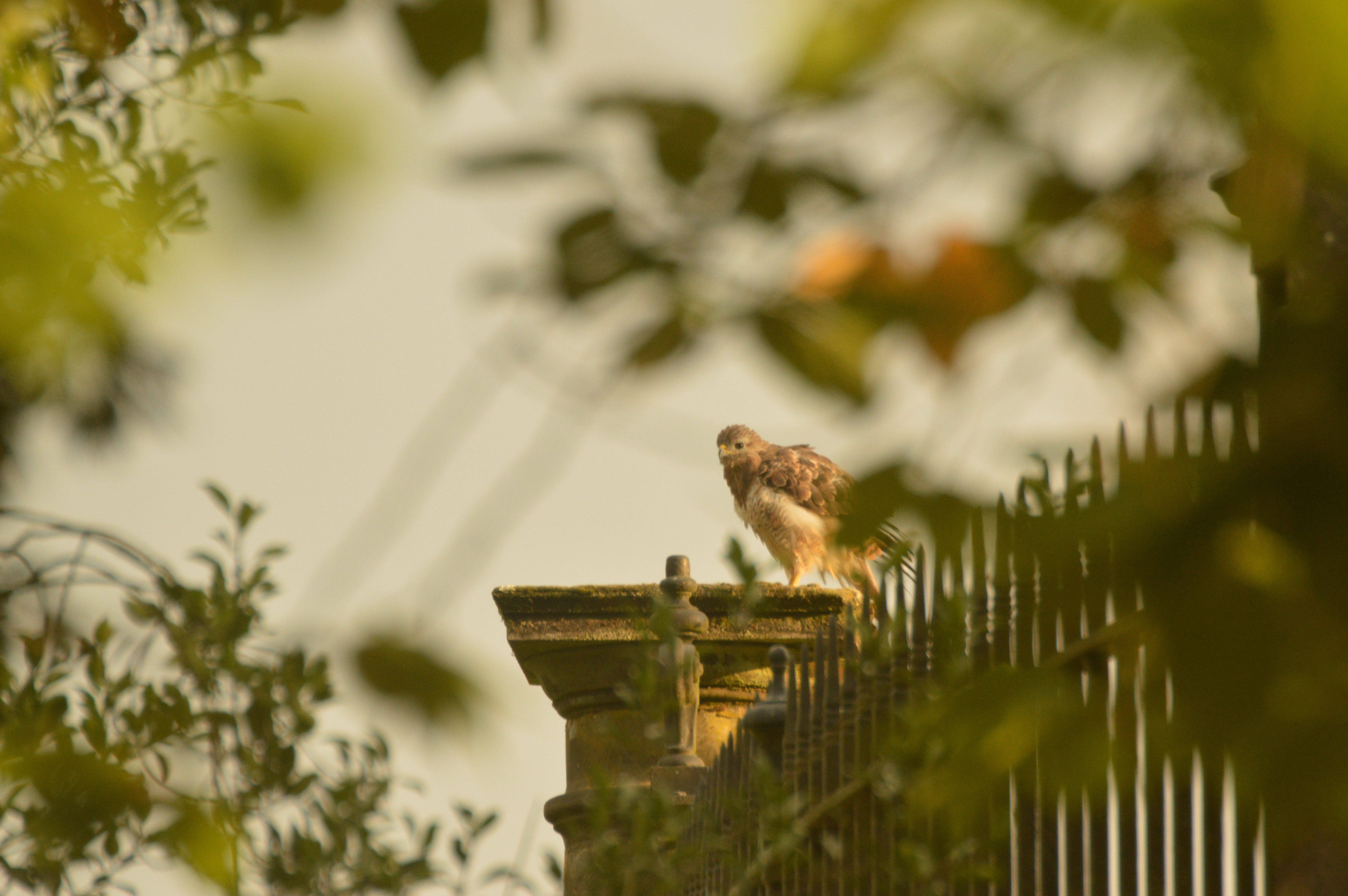
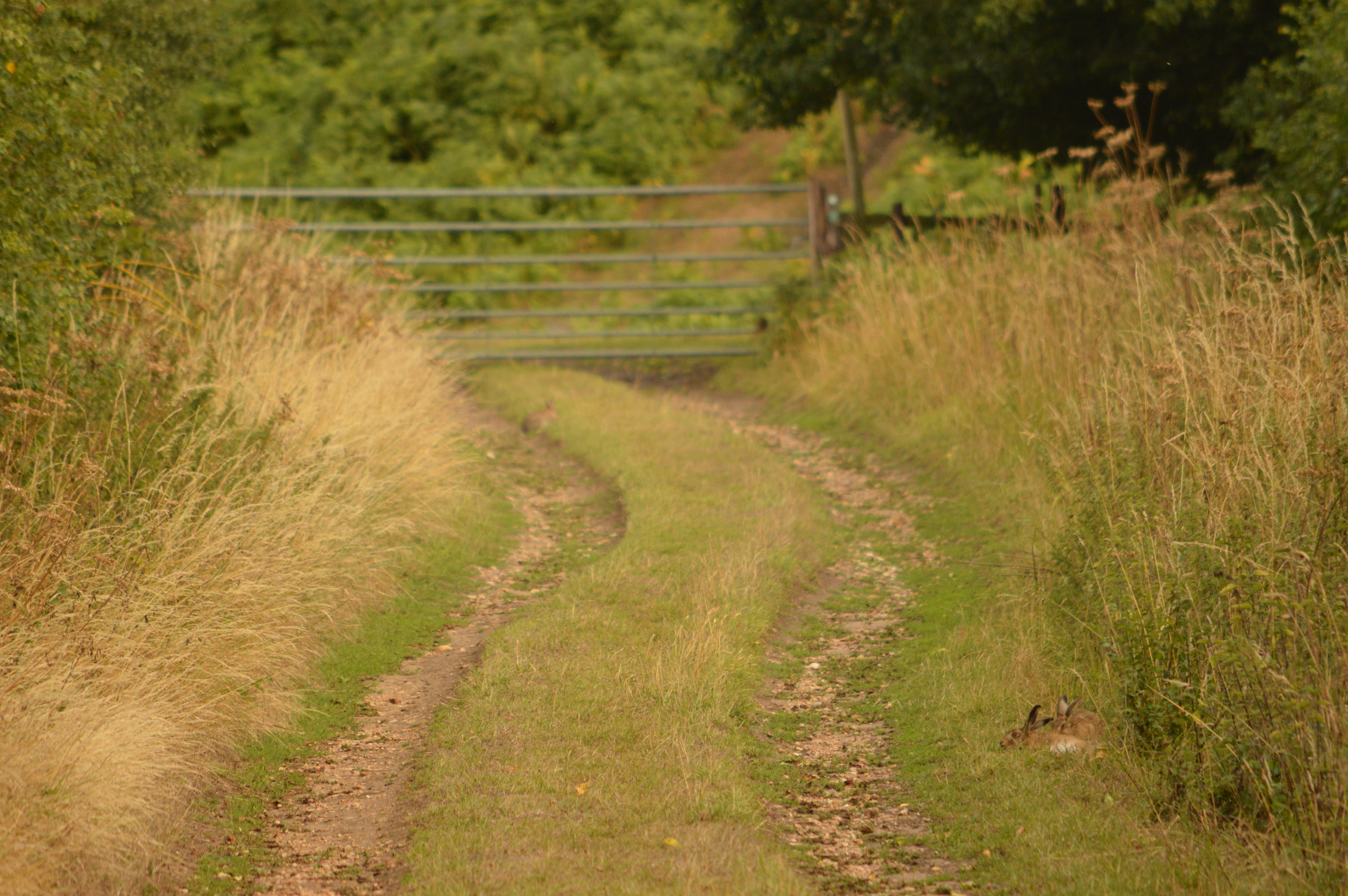
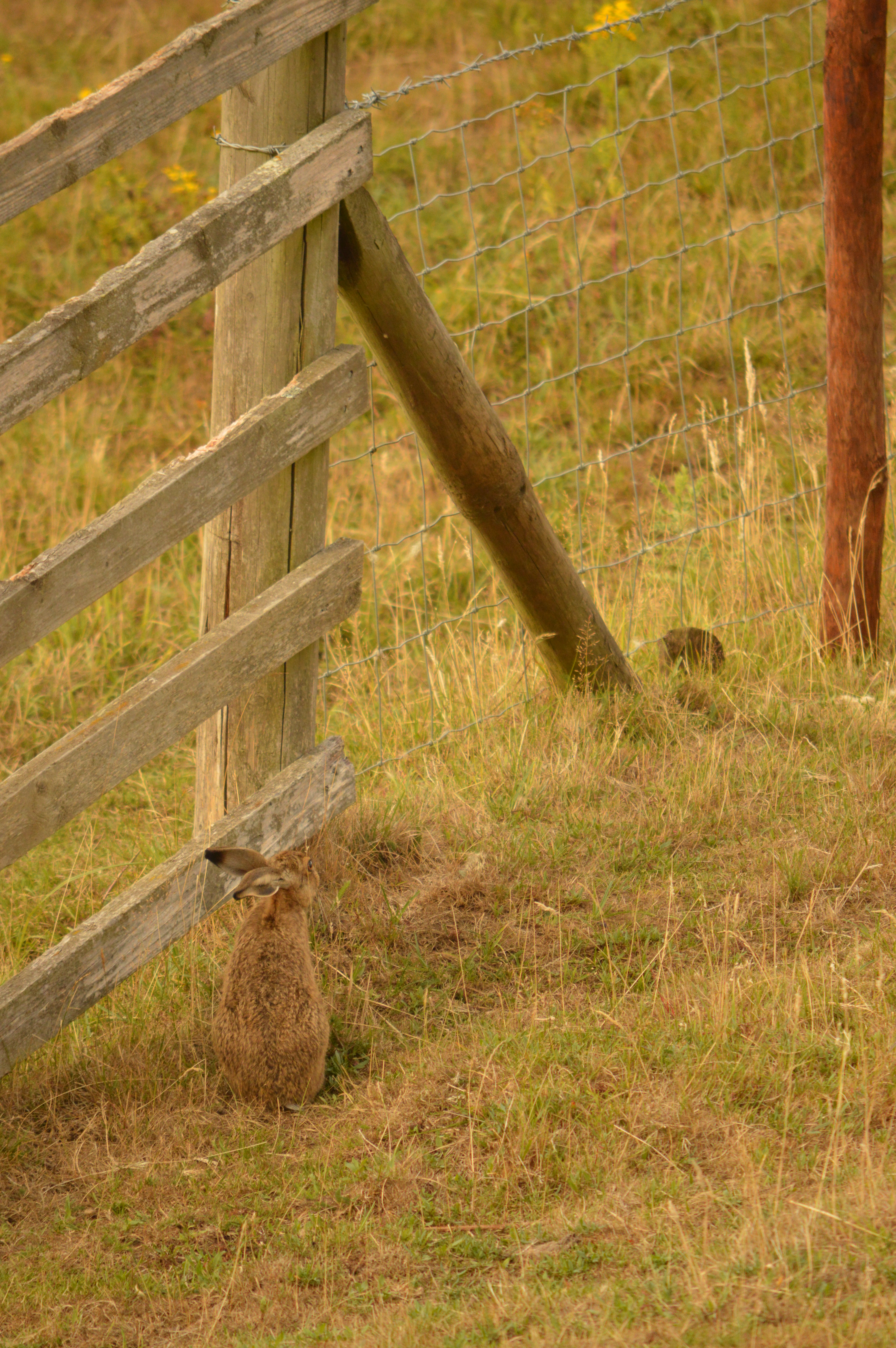
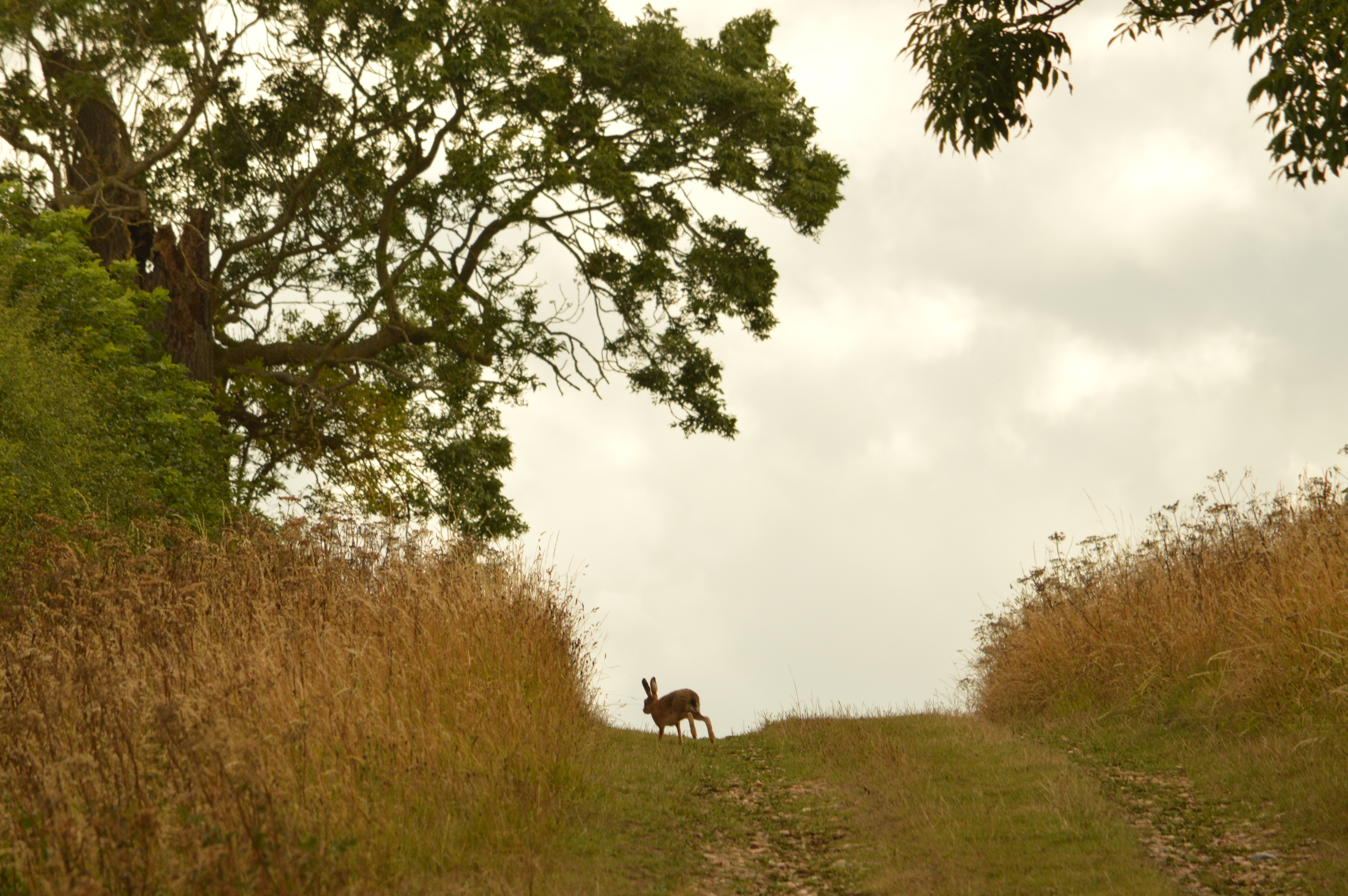
The hares I saw in the fields behind the house were only youngsters – leverets. They hadn’t developed the long and powerful back legs and enormous eyes that make adult hares so striking. They also weren’t as fleet-footed as adults, who will usually disappear in a black-and-tan dash into the middle distance long before you can get close. They let me approach further than I expected before deciding the Goldilocks line had been breached, and off they went. I followed, slowly, at a distance, and caught up with them by the sand martin colony. One hung back to watch me for a few moments before slipping through the fence and bounding after its sibling. After that, I climbed the fern-bound rise and scanned the forest for a while, listening to the wind in the trees and the buzzards calling. It feels good to be back in nature again.

When I get back home, I really must get back in the habit of spending more time in nature again. I’ve neglected this side of me for too long. At the end of the day, I love to try my hand at various things, but under all those layers is a naturalist. Life is a mosaic – you never lose who you were, or the people you’ve been at various stages of your life. You will always carry them with you in one shape or another. The largest shard in my mosaic is an earthy brown, like the soil; greenish-grey, like oak leaves; and bluish-white, like the sky. I need to go back to nature. I need to go back to being me again. BB x
They Bring the Summer

The year is turning. Can you feel it? The light in the morning has shifted ever so slightly, but it’s noticeable. We’re past the peak, and before long the red-gold winds of autumn will be upon us. Thanks to the fierce heat we had in July, some of the trees are already wearing their russet cloaks. I shouldn’t be surprised if we’re in for a long, dry winter this year. Perhaps that’s the way of things to come, perhaps not. Time will tell.

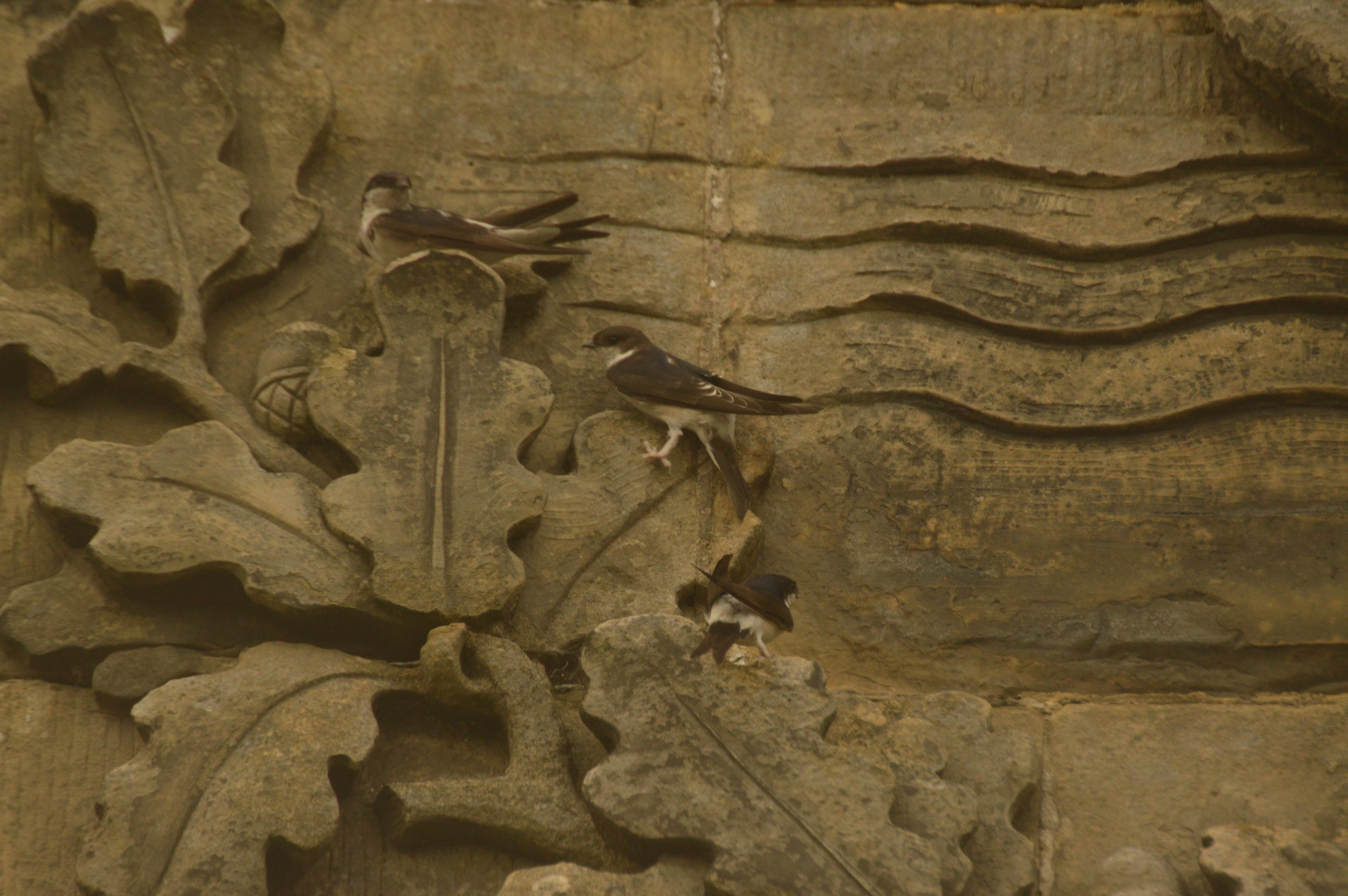
The family of swallows that nests in the barn near the house have had a very successful year. I counted eleven of them on the wires this morning: two parents with full streamers and nine noisy youngsters whose tails have yet to grow out in full. I had to count twice because of a sand martin who seems to prefer hanging out with swallows than his own kin, who have a colony in a field half a mile down the road. There comes a time every year, usually in September, when the swallows and martins suddenly gather en masse in a noisy spectacle before setting off for the south. We’re not quite there yet, no matter how abnormal this summer’s weather has been, but it sure felt like a nod to that day this morning.

Swallows, swifts and martins – collectively known as hirundines, which might have something to do with the Latin word harundo, meaning the forked shaft of an arrow – really are some of nature’s miracles. The tiny flashes of blue and white that dance over the fields with such cheerful abandon in summer travelled around 9,700km from their wintering grounds in South Africa to get here, and in the space of a few short months they have to make the same journey all over again in reverse, this time with their young in tow. Most estimates have them traveling about 320km every day. That’s a bloody long way to go when you’re only a few months old!

This morning the family looked like they were getting some practice in for the long journey ahead. Mum and dad would sit with the youngsters on the wires for a while, chattering amongst each other while the kids preened endlessly, before suddenly taking off and wheeling about the garden with their offspring racing after them. They might have been hunting, of course, but some of the young ones were far more interested in playing keep-up with a pigeon feather, catching it and keeping it from touching the ground, the way children sometimes do with a balloon. It was really quite endearing to see.

In the past, where our swallows went each winter had us stumped. There were some truly bizarre theories floating around. Following in Aristotle’s footsteps, some thought they hibernated underground. Some thought that they slept at the bottom of deep lakes and ponds, since they spent a great deal of their time hawking over the water during the summer months. One 17th century theory, courtesy of Englishman Charles Morton, claimed the Moon as the swallows’ winter destination as the only logical explanation for their total disappearance. It sounds absurd, but it’s not so outlandish a theory when you try to imagine explaining that these tiny creatures travel further twice a year than most humans will in a lifetime. It even makes the underground hibernation theory seem plausible!

It’s an incredibly hazardous journey, and not every one of our brave swallows will make it there and back. There are all manner of dangers they have to face: sea crossings, storms, high winds, predation by hobbies (consummate swallow-catchers), not to mention human interference – some will be caught for food, and the Maltese in particular are infamous for their practice of trapping migrating birds by liming fences. And then, of course, there’s the mighty Sahara Desert. Michael Morpurgo wrote a fantastic children’s book about that journey – Dear Olly – which you should read if you want an idea.

So why travel all that way? Competition might well have something to do with it. After all, Africa has plenty of swallows of its own (without all these European swallows “comin’ over ‘ere and takin’ our jobs” etc.) and fans of Monty Python will be well aware of the fact that African swallows are non-migratory. On my travels around Uganda during the rainy season (November) back in 2012, I saw plenty of familiar-looking swallows hawking over the White Nile, but most of the birds I clocked were local species that don’t travel far from home. Still, I couldn’t help wondering whether maybe just one of the brave little birds flitting by had crossed my path sometime before, either in Spain or the south of England. How’s that for a flight of fancy! <groan>

Greater striped swallow, Ishasha Lodge (Queen Elizabeth National Park) Uganda, 18th November 2012

Swallows are remarkable creatures to watch. While we still have a few weeks left of summer, try to find a few minutes to enjoy the little winged miracles. I’m sure they do wonders for one’s mental health, but to use less clinical terms, they sure can lift one’s spirits. Today, for the first time, I saw two of the youngsters doing something I’ve never seen swallows do before: sunbathing. Plenty of birds do this kind of thing to regulate body temperature, but it’s the first time I’ve seen swallows in the act. It was just two of them who kept leaning over in the sunlight – the others were far more interested in preening, though the sand martin looked as though he wanted to get in on the action!

One swallow does not a summer make, but their departure certainly puts an end to it! If you’ve enjoyed reading my homage to our chatty little neighbours, you might find the links below worth a browse, too. Until the next time! BB x
https://www.historytoday.com/archive/natural-histories/great-migration-mystery
https://www.rspb.org.uk/birds-and-wildlife/wildlife-guides/bird-a-z/swallow/migration/

Spotified

I’ve just finished re-assembling my entire music collection on Spotify. It’s taken me the best part of three days, since I amassed a pretty sizeable library in the years before Spotify had pretty much everything. Time was when iTunes was where one kept all one’s digital music, ready for transport onto this or that hand-me-down iPod Shuffle, bought from a friend for £20 or so. Those early models could only store so much music, and you had to decide which 240 songs would make it. Those were trying times.

My parents grew up with mixtapes and CDs, but I belong to the generation where music went digital. If a song came out that you liked, you bought the CD, burned it onto iTunes or some other software and uploaded it directly to your device (alternatively, you could take the cheaper route and just find any one of the YouTube to MP3 converters that were occasionally dodging the censors). My first walkman – a bizarre pen-drive device that might just as easily be taken for a vape pod today – had a small collection of music, mostly hand-me-downs from my parents: Michael Jackson’s Greatest Hits, Spiceworld, Stravinsky’s Rite of Spring. This was back in 2008, and Spotify was still a few years away from hitting the big time, so most of us turned to YouTube for our music. YouTube, ever-growing, seemed to have almost everything, and I’m not afraid to admit it was a major conduit for musical discovery in those early years (and still is!).

Carving up my library into playlists has made one thing glaringly obvious: my taste in music has changed little over the years. The range of artists has certainly exploded, but the genres are almost exactly as they were in the first playlists I drew up in iTunes years ago – that is, a motley collection of Folk, Klezmer and Gypsy music, with a similar number of Classical musicians (my parents were both music teachers); a broad range of World music and edited highlights from the major Pop hits (largely selected for nostalgia purposes); and in the top spots, a virtual eternity of Soundtracks, and – constituting the greatest majority by far – Soul, Funk & Disco. The last ten years have seen Afrobeat, Hip-Hop and Flamenco occupy an increasingly large section of the library, while Rock remains miserably underrepresented (it’s quite simply a genre I’ve never really been that drawn to). What Spotify doesn’t have is the absolute mine of videogame soundtracks that I’ve also collated over the years, but perhaps that’s for the best…!

Yes, I’m a heathen because amongst the thousands of songs in my collection I haven’t got a single song by The Beatles, or the Rolling Stones, or even Bob Dylan (I feel I ought to apologise to somebody for this). But I do have every single track James Brown ever laid down (even the bad ones), a fair grasp of obscure Balkan folksongs and a burgeoning playlist of sevillanas that I am trying to learn off by heart. And thanks to Spotify’s constant suggestions, which get smarter as the playlists grow and grow, the fact that almost all of my favourite artists died a long time ago is no barrier to discovery: every week I find something new.

The music we listen to has a profound impact on who we are. Equally, I’m sure who we choose to be has an impact on the music we choose to listen to, but I’m more inclined to believe in the transformative power of music. With very few exceptions, my taste in music veers towards the upbeat. Fast-paced, feel-good numbers dominate. I wasn’t counting, but if I were to go back and have a look, I probably couldn’t find more than one or two dozen slow or sad songs amongst the thousands. Those that are there are there for a reason: Marvin Gaye’s What’s Going On holds the line as one of my favourite albums of all time, and Whispering Winds from Don Bluth’s The Land before Time is just there to make me cry on occasion. The reason for the lack of slow music is quite simple: I’ve always turned to music as a cure to my doldrums. I’m not one for wallowing in my sadness. If you want to conquer misery, loneliness or fear, there’s no use getting stuck in a rut. You have to face your demons head-on. I’d much rather shake off my blues with something that puts a smile on my face immediately. That’s why my most-used playlist is called Smile! (feel free to vomit)

Personal music curation is an unending process in the digital age, but Spotify is one of the few technological advancements to which I’m not afraid to be a committed disciple. A virtual library where you can find almost all the music ever produced, anytime, anywhere? Yes please! BB x

P.S. I’m a fervent believer that music should always be shared, so if your tastes align with mine, or you’re simply curious to explore, please feel free to browse the following playlists I’ve put together:

Cairo to Cape Town: A collection of African music, from Moroccan Gnawa to Highlife and Afrobeat

Liquid Red: A collection of the finest Soul & Funk music from James, Aretha, Marvin and more

Puro arte: A small but potent collection of Spanish folk music

Photo by Castorly Stock on Pexels.com

Greenheart

I’ll be frank. Summer is my least favourite season. Summer is, in the vocabulary of my students, “dead”. Most of the birdsong is over for the year, the whole nation is out and about and the holidays stretch on for what feels like forever (especially when you work in a private school). There’s a dry stasis in the air that you don’t get in the changeling months of spring and autumn and you’re too cold to notice in winter. This summer, as is tradition, I’m spending my time between watching documentaries and watching the clock. There’s not all that much else to do when you find yourself in the countryside far away from everyone you know.

There are, however, massive perks to being here. A few days visiting my parents in Lincolnshire usually throws up a chance to explore somewhere new, and though today’s ramble was more of a wander “round the back” than an adventure per se, it was a beautiful reminder that there are some things that make an English summer worth seeing.

Up on the wolds near Donington, I heard a quail. It’s been years since I heard one in this country, but once heard, you never forget. That iconic wet-my-lips call carries for miles, especially under a hot midday sun when the only other sound is the wind. It reminded me of the green riverbanks of the Dehesa del Banco, where the call of quails was just one instrument in a wetland symphony: percussive reed warblers, the accelerando snare of the corn bunting, the indescribable beauty of the bee-eater’s woodwind and zitting cisticolas going zzzzit zzzzit zzzzit overhead. It sure felt nice to be taken back there from the sunlit uplands of Lincolnshire.

The skies here are immense. The land seems to go on forever in all directions. You get a real sense of eternity in this vast corner of England. Little wonder, then, that so many Lincolnshire folk hoist the red and green county flag over cars, windows and doors. And yet, as is so often the case in England (and why I really didn’t take too well to life in Jordan), you’re never too far from a dark forest, which – admittedly – are especially peaceful places in the quiet summer months.

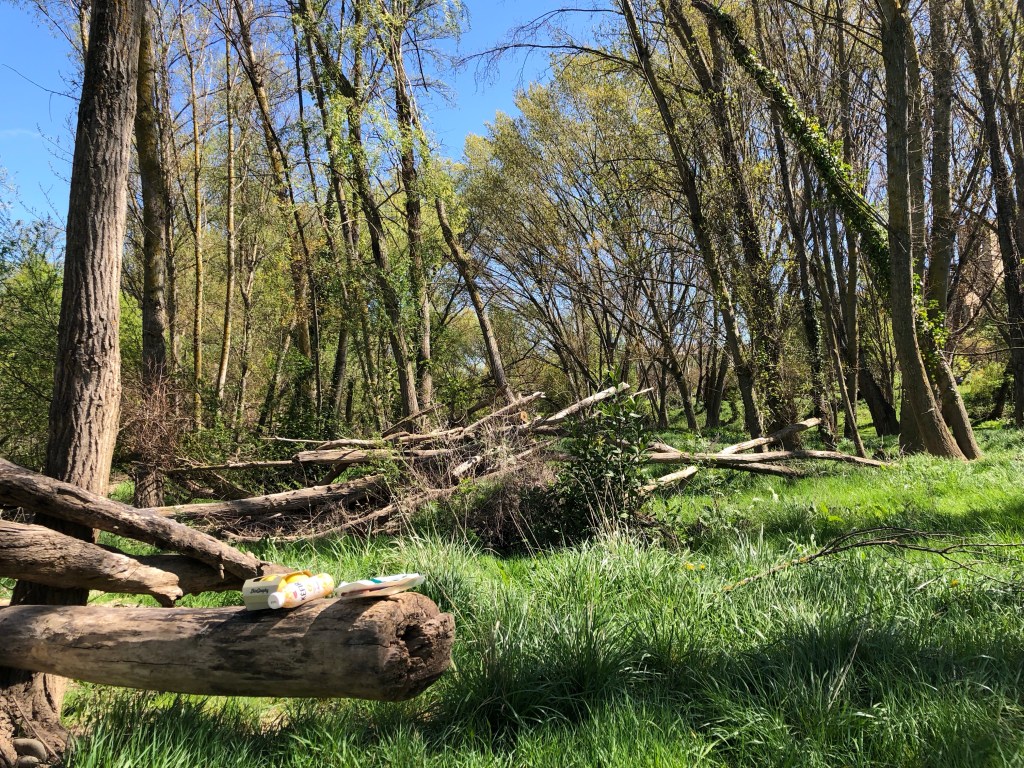
I tried to explain to my companions in Amman again and again the importance to me of green spaces. I think at the time I said I needed more trees, and was quite rightly told there were plenty of trees in Amman’s parks. But there’s something very special to an Englishman about the quality of light that can be found filtering through the trees in an English wood. Something about the infinite shades of green, alder branching over ash, ivy climbing up oak, a ceaseless communication from leaf to leaf, tree to tree. Little wooden fences put up by one of the country folk using fallen branches. The sound of the wind in the leaves: the way it chatters and whispers through the oak trees, and sings without syllables in the firs. Stop and listen the next time you’re near one and you’ll see what I mean.

It’s a magical feeling, standing in the dappled shade of an English forest in summer, and the loss of it in Amman broke my heart, I think. It was, perhaps, the time in my life when I stopped hating on my English heritage and came to appreciate the land where I was born – which, I think, is a stage we must all go through at some point in our lives. Not making peace with the establishment, exactly; rather, making peace with one’s roots. Learning to love the land that made you who you are.

Ten years ago today, I was spending my final childhood summer gigging with my funk band in an attempt to distract from results day. Two months later found me teaching for the very first time in a private school in East Africa. It’s been a colourful decade since then. I feel like I’ve lived around the world in my twenties: Durham, Jordan, Morocco, Sussex, Dorset, Lincolnshire and various corners of Spain. I’ve also found a real fondness for Edinburgh, reawakened my love for France and started a love affair with Italy. And while all those LinkedIn “so grateful for” posts make me want to throw up into my hands, I have to admit I’m incredibly lucky to have had such a colourful decade. I wonder where the next ten years will take me?

I hope She is out there somewhere. I never lose faith in that. And faith, as always, keeps one believing in a better tomorrow. For now, there is the English countryside and the sounds of summer. I can live with that. BB x

Home Again

I’m back home in England. It’s a lot noisier than it was in Bayeux, but then, the summer school kids are still here. It’s a Friday night, which means an end-of-week party, curated by the team leaders. That’s what we always used to do. You can tell because the music pumping out of the hall is almost entirely hits from the 2010’s. Twenty-somethings revelling in university nostalgia at a party ostensibly for children. Every once in a while a track comes on that they all seem to know: Freed from Desire, Mme Pavoshko, the Macarena. I’m almost nostalgic for Sur ma route, ever the anthem of my summer school days. Almost.

Blimey, but it’s a long ferry ride from Caen, though. As I caught the overnight ferry on my way out on Monday, I slept through most of the journey, but this time I watched the whole thing from the seats. At first you’re riding parallel to the sloping French coast to the east, and the seabirds follow you out: pairs of scoters, heavyset black-backed gulls, solitary gannets and the odd fulmar. Then it’s nothing but sea in all directions. England, on the horizon, hides behind a wall of cloud and mist, and the sea seems to fade into the sky. There’s always at least one or two shopping containers in the distance, the lettering on their hulls so vast you can read it from miles away. In a trick of the light, an Evergreen tanker seems to float in the void between the sea and the sky.

More than once, I tried to imagine what it must have been like for the soldiers crossing the Channel. The Allies riding into the jaws of death on the beaches of Normandy; and the Normans themselves, some nine hundred years prior, setting out to rewrite the history of a nation. The Conquered liberating the land of the Conqueror. There’s a poetic symmetry to that. Perhaps that’s why Normandy felt so special. It really is a history fanatic’s paradise and I couldn’t recommend the place more highly.

I really enjoyed being back in France. Toulouse was OK and Bordeaux pleasant enough, but there’s a magic in the north I’d never noticed before. It was also a pleasant reminder that I can handle myself just as capably in French as I can in Spanish, and I needed that. I should get to know that beautiful country some more over the years. Normandy was especially beautiful and I may well be back someday.

But for now, my legs could use a rest. And I could do with the sun making a return, since my feet, having been in sandals for four days, look like something you might find in a Bernard Matthew’s packet in the frozen food aisle in Tesco’s. BB x
Omaha Beach: Battlefield Forever?

It’s easy to ask yourself why you’re bunkered down in a hostel when you’re at the point on your life where you can afford a little comfort here and there. But I stand by my decision: hostels are a fantastic way to meet people from all walks of life. And that’s what travel is all about, right?

I got talking to Gavin from Utah last night – the first American from a state that isn’t Cali or Texas that I’ve met in a long time (those two states pump out travelers like there’s no tomorrow). To have an American perspective here in Normandy was more than I could have asked for, and Ana from Austria provided a Germanic point of view – so I really scored a hat trick here!

Over dinner last night the three of us decided to check out the landing beaches today. Gavin had already booked himself onto an organised tour, but I’m nothing if not stubborn when it comes to planning my own affairs, so Ana and I improvised our own plan of attack, starting at Pointe du Hoc.


Most of Omaha Beach – one of the main landing zones for US troops during the D-Day landings – has reverted to its pre-war status as a pleasure beach, so it’s important to visit a site like Pointe du Hoc to really get a feel for how things were. The promontory is strewn with craters caused by Allied shells, some so deep you can stand in the centre of them and still be more than a head below ground. It’s hard to take it all in at once: the scarred, lunar landscape overgrown with tall grass and summer flowers, with pipits and wagtails and warblers singing their hearts out. In a cavity in one of the old gun mounts, a blackbird stood washing itself, and away to the east the mournful cries of a large colony of kittiwakes. I wonder how much of this vanished when the clouds of earth came down here, all those years ago.

The bunkers are eerie. No other word for it. They’re cavernous on the inside, with a lot more rooms than you think at first. Some of them have marks in the rear wall that can only be from stray bullets fired directly through the opening. You try not to imagine how they got there. And then there’s the coils of barbed wire that ring the cliff edge, rusted from years of exposure to the salted wind. You can’t help but take your hat off to the US Rangers for not only coming ashore under heavy fire but scaling a vertical cliff-face before launching their assault.

From Pointe du Hoc we found a track along the cliffs to take us back to Omaha Beach. It’s completely invisible on Google Maps, but reason told me there would surely be such a path, and as luck would have it, there is: a relatively new cycle track that starts at the Pointe du Hoc car park and follows the coast all the way to the beach at Vierville-sur-Mer.

It’s clearly a popular route with the locals, and there were plenty of cyclists out and about, from hobbyist Dutchmen clad in Lycra to families of sporty-looking Germans – and, of course, your classic stately monsieur paying no heed to aerodynamics in his beige jacket and jeans. We passed him at least twice (did he lap us? I think he lapped us…).

Omaha Beach was pretty busy when we got there some two hours after leaving Pointe du Hoc. Paddle boarders, bathers and dogs plied the shallows between the beach and the sandbar. Children built sandcastles and dug bunkers of their own, while parents leafed through this or that summer book. If you squinted down the coast you could almost imagine the many thousands of troops who landed on this beach nearly eighty years ago, but I get the feeling that memory is fading further and further into the distance. The tour guides bussing up and down the coast road in WW2-era jeeps look more whimsical than reverential, like taking a ride in a sedan chair. Gavin said he thought it a shame that it hadn’t been preserved more like the battlefield that it was. I’m not so sure. I think the regeneration of a battlefield is part of the healing process. This is, also, France, and having borne the brunt of the fighting in not one but two world wars in the last century – not to mention their occupation by the Nazi regime – they may well want to move on.

In any event, I wasn’t averse to a swim in the bloody waters of Omaha, if only to say I’d done it. After a two-hour hike in the sun along the cliffs, it was definitely the right thing to do. The heatwave might be over, but it’s still hot enough to dry off in a matter of minutes, so I had no concerns about swimming out to the sandbar and beyond for a bit. I’m not the best swimmer, but God, I’ve missed being in the water. It’s a pain living so near the coast and yet so far.

I didn’t think about the history as I stepped into the water. The infamous opening scenes of Saving Private Ryan didn’t flash across my eyes. I just waded in up to my waist and kicked off into the murk. As the poppies that grow on the fields of the Somme have become a symbol of remembrance, I think it’s only fair that the spirits of Omaha are also allowed to depart in peace. Their heroic struggle will never be forgotten, but the land beneath our feet is not ours to sculpt, no matter how hard we try. It was here before us and will be here long after we’re gone. To see Omaha and to stand where they stood is enough, I think. And that’s my two cents on the matter. BB x
The Weatherman Cometh

It starts with an ominous grey sky to the west. The patchwork of fluffy summer clouds that have been insulating the leftover heat from three scorching days suddenly drops into a void the colour of slate, matching the roof of Bayeux’s cathedral almost exactly. A man in a beret watches the skies; a French family whose children seem to tan faster down the years savour their two-scoop ice creams; a boy and his mother walk their five beagles.

The first raindrop falls on the back of my neck like a kiss. Cool, swift, sweet. I’m sitting on a bollard, sketching. I wait for another. It lands on my arm. Almost instantly a third lands on my sketchbook, narrowly missing the moustachioed gentleman I’ve been sketching. I snap the book shut and watch the tourists scattering as the rain comes down: the French dignified beneath their umbrellas, the Dutch unflinching behind their cameras, the Americans in a mad dash. I think about taking a slow walk back to the hostel to savour the blessed rain after so many days of sun. I’m no further than a few feet around the corner of the cathedral when the heavens open.

I concede defeat to the tempest and join a small but growing crowd seeking shelter in the ancient stone doorway of Odo’s cathedral. The beagle-fanciers are here, along with a cross-section of Bayeux’s tourists. The rain comes down in sheets, hammering the cobblestones like a snare drum, and then a sudden flash and a rolling crash from the bass drum up in the sky. “On est bien dessous, hein?” remarks a Frenchwoman with short-cropped hair and round glasses. A boy with long eyelashes runs in and out of the rain in his yellow anorak, singing the chorus of the Wellerman shanty over and over.

A solitary American standing nearby stares at his phone in disbelief and growls. It sounds like he’s frustrated at a video game, but as he starts to verbalise his frustration it’s obvious he’s checking a weather app. “You’re kidding me, I’ve got to wait half an hour? God, you’ve got to be kidding me. Come on!”. He growls again. And again, louder this time. Some of the other tourists back away. “Hrrrrrnnnn!” The grunts and growls sound uncannily like a bull, giving fair warning before a charge. “END! NOW!!!” A couple of startled jumps from the crowd. By the looks on their faces, they’re weighing up whether to tell him it’s futile to attempt to command the skies, or whether it’s more futile still to reason with a man so blatantly trying to do just that. As a result, nobody intervenes, and Yankee Canute continues to defy the elements, bellowing at the clouds with increasing fury. “Hmmmmmhnnn, CAHM AAAAHN. When’s it gonna EHYAAND? GAAHD, I don’t have TAAM for this SHIIYET”.

The growling and grumbling is briefly cancelled out by another clash of thunder. “Hurry up, END, NOW! Cahm aaahhn, pleeez, end now! Why does it have to do this during the day, it should do this at night!” – (a fair point here, it was unbearably hot last night) – “Gahd, I don’t have time for this shit!”.

I slip inside the cathedral to escape the verbal artillery for just a moment. Bayeux’s cathedral survived intact the last time it came under fire from an American battery, so I figure it’s a safe bet. The muted thunder beyond the stone walls sounds strangely beautiful, and the grey skies filter through the stained glass in hopeful technicolour. The aisles are packed with a colourful array of tourists waiting out the storm; a phoney faithful glued to their phones, waiting to proceed on their pilgrimage to the crêperies outside – a combination of American flags and English spoken here signs were drawing in the crowds earlier. Staring down at the sightseers, a gargoyle pulls his mouth into a sneer, tongue out, deriding a thousand years of peasants, pilgrims and pensioners.

Outside, the rest of the gargoyles are doing their job, spewing rainwater from their mouths onto the streets below. For the first time they look complete, as though the gaping mouths were merely voids waiting to be turned into channels. A father points them out to his daughter, one hand gesturing, the other on her ear as our frustrated Yankee Canute swears blue murder at the sky.

The streets of Bayeux shine under the whitening sky. Umbrellas and ponchos have been magicked out of the air (and some straight out of souvenir shops). The Wednesday market is being dismantled. The fishmonger reclaims the last two skate wings and a Norman bookseller voices a quiet complaint to the heavens as he stacks his pulped collection of second-hand books: “aujourd’hui, précisement?”.

The storm has passed and the sun has returned with a milder temperament, his midsummer fury sated at last. I think I’ll take the rest of the day off. Find a park, do some reading, and clue up on the bus times for tomorrow’s expedition to the coast. A bientot! BB x

William the Conqueror’s Invincible Thigh

I woke up on a boat this morning. That happened. Originally I was inclined to arrive later today and save on the expense of booking a cabin on the overnight ferry, but how often do you get to sleep on a boat? I’m glad I did – the long faces on most of the other foot passengers spoke volumes of a long, sleepless night on deck. I just caught the sunrise as I went up on deck, by which point we had almost arrived. No dolphins or whales on this journey – maybe next time!

Attention, mes amis! The ferry serves Caen, but it docks in at Ouistreham, a small village some 17km north of Caen. The shuttle bus into Caen was a little deceptive, since despite saying CAEN in block capitals it only went as far as passport control. The real bus stop for Caen (Ouistreham Port) is a few minutes’ walk into Ouistreham from the port. Easy enough to find but worth knowing. The price is (at the time of writing) 1.80€ for a one-way trip. It’s also completely incompatible with the early ferry, arriving some twenty minutes after it departs, so I guess I’ll have to shell out for a taxi on Friday.

Check-in at my hostel in Bayeux wasn’t open until 4 in the afternoon, so with that early start I had quite a few hours to kill – on what was gearing up to be the hottest day, not just of the year, but in living memory. It was already pushing thirty by 10 o’clock. I took refuge in the shadow of Caen’s Abbaye aux Hommes, where William the Conqueror was laid to rest a little under nine hundred years ago. I thought I’d picked a good spot, and I pretty much had the shade to myself for the best part of an hour until a window cleaner turned up in a monstrous contraption spitting and whirring and grinding and clunking. It took him and his two companions all of five minutes to calibrate the machine into the right spot so he could start cleaning, by which point all the office workers within had long since pulled down the blinds. Why a ladder couldn’t get the job done beats me.

William wasn’t in the Abbaye itself. The 5€ entry fee through the Hotel de Ville revealed a beautiful cloister and an interesting exhibition on the Allied liberation of Caen (after nearly levelling the place first), but no William. A mini-map within showed he was in the adjacent cathedral (go figure), which is free to enter.

But, as it turns out, he wasn’t there either. Well – not all of him. During the French Wars of Religion in the 1560s, the abbey was sacked and William’s bones were exhumed and scattered. Only his thigh bone remains, and that in itself a miracle: less than two hundred years after his tomb was restored, it was sacked again by the unscrupulous revolutionaries. Napoleon’s generation certainly didn’t seem to hold heritage in high regard: you may have heard of Bonaparte’s foiled attempt to blow up the Pyramids, but he also ordered the demolition of various ancient wonders in Spain, including the Alhambra. Even the mighty CID’s tomb was ransacked by Napoleon’s men, and though more of his bones ultimately came home than poor William, some of them traveled a very long way. One apparently ended up in Russia, where it must have been carried as a trophy of war by a soldier with an eye for relics…!

William’s tombstone reads ‘here lies the Invincible William the Conqueror’. Somewhere under that slab is an invincible thigh bone. It’s definitely more invincible than my thighs, which are feeling very vincible in this heat… if that’s even a word.

Outside, it’s sweltering. It felt like walking into a wall of heat. By the time I reached Bayeux around midday I didn’t have the energy to anything beyond finding a shaded spot and collapsing. Fortunately Bayeux was spared the inferno enveloping most of Europe, and a nearby nature reserve afforded both shade, a cooling river and a bird-hide to lay down in relative comfort. I must have passed out several times, I think.

*Alternative* sleeping arrangements

Thank God the worst of it is over. Rain is forecast for tomorrow. It couldn’t be more welcome. BB x

For Whom the Bell Tolls

My provisional license arrived in the post yesterday. My second, I should say, since after a very thorough summer holiday shakedown of the flat I’m convinced I must have accidentally thrown my first one out with the trash months ago. It’s put a major stopper on the whole learning-to-drive this summer by holding up the theory stage, but now that it’s here I’ve got no excuses. I should get booking.

But first, I’m getting out of here for a few days. I’m done with scrolling, hoping for contact from the outside world and turning off the WiFi for a bit of enforced internet downtime. Summer holidays just drag on and on when you have nothing to do, so I’ve decided to get out there and do something.

So here I am in the ferry terminal in Portsmouth, waiting for the 22.45 to Caen. The overhead telescreens keep alternating between the blue departures board and the vivid blue and yellow banner of Ukraine. The BBC News app remains focused on the heatwave, though the magic number 40 has disappeared from the headlines – “temperature tops 38C and likely to rise”. Five stories down, Tugendhat is eliminated from the running for Tory leader.


It certainly was hot today, but it didn’t feel much like that blisteringly hot summer holiday in Jerez almost twenty years ago. Despite the threat of 40°C heat, the breeze rolling in across the Weald kept the school grounds pleasantly cool. Even so, the signs that this has been an unseasonably hot few days are clear. When I went out to do a little reading in the morning, the summer soundscape was there: the echoing whack of a tennis racket, the ceaseless chatter of the house martins, grasshoppers chirping lazily in the meadow. A few hours later, the whole place was silent. Only a lone crow broke the stillness, and that was just the once.

I thought the train journey would be problematic due to the hysteria in the news, but despite the grovelling apologies over the Southern Rail tannoy, the train was only ten minutes late pulling into Portsmouth – which is remarkable, given how prone to delays they can be outside of a national crisis.

It’s a beautiful train ride, the route from Crawley to Portsmouth – one of those British rail journeys you should tick off the list, like the one from Darlington to Edinburgh. I never get tired of passing Arundel Castle and the fens at its feet. A childhood spent in and out of various salt-marshes around Kent has left me rather fond of their bleak serenity. Herons stalking the water’s edge. Egrets bedecking the bushes like so many plastic bags snagged on the branches.

Suddenly, an intensive greenhouse-farm appears, concealed from the outside by a thick growth of trees. A ravenous human hand clawing the depths of the earth to satisfy a hungry world. And then it’s gone, the train is hurtling forwards and I’m back in the marshes. I could be looking into the past or the future. I remember the fate of El Acebuche, its silent reeds swaying in the wind, and I’m not sure I want to.

The French family in the seats behind me must be headed for the ferry port, too. At least, I guess they are – I’ve caught the word “bateau” often enough. The children swap in and out of French and English without much of an accent overlay in either. The father speaks only on French, until he stops the ticket inspector to ask if she can turn off the air conditioning. “Don’t you think it’s rather nice, as it’s so hot out there?” – “For five minutes is nice, but it’s freezing.” – “If I were you I’d enjoy it.” At the next stop, the father gets out to soak up the sun. His daughter only just coaxes him back on as the doors close. Before he returns to his seat, he steps into the next carriage, remarks that it’s warmer, and moves. Within minutes the rest of his children have followed suit. It seems petty, but they have a point – the air con was turned up so high I had goose-flesh for half the journey.

I haven’t been to Portsmouth before. The last time I caught a ferry in this neck of the woods was from Southampton, but that was many years ago and we didn’t stop. I had four hours to kill and not a lot to do, so I picked a spot in Victoria Park and watched the world go by. The bells of St John’s sounded for seven. They sounded strangely mournful, but though I hummed the melody back a couple of times, I couldn’t work out why. Two handsome women wander by, their accent West African and intensely musical. Three kids hurtle past, one on a scooter, two on skateboards. One wears a red-and-black chequered shirt tied around his waist (did everybody own one of those shirts at some point?). A family of cockatiels screeched from an aviary in the centre of the park, stolen away from their home far beyond the sea to entertain the fancy of the British public. An ancient Chinese bell stands nearby and seems to serve a similar function, pilfered – it says so in almost as many words on the plinth – during a campaign in Taku. A cryptically-worded message daubed above reads “Perpetual Felicity Achieved” in austere capitals. A breeze blows and the bell moves a little, but it makes no noise. Some cage birds stop singing after a while, too.

As the sun sets, I head to the port. The heat and the hysteria have driven everyone indoors. The high street is virtually empty. Just a couple of kids with drinks they’re nowhere near old enough to drink and a level of delirium to match, and a weatherbeaten gentleman sleeping in the shadow entrance to an Ann Summers store. A grey mannequin in turquoise lingerie poses suggestively through the window at him, blowing a kiss. He wipes his nose, shakes his head violently and turns the page in the book he’s reading.

There’s plenty of folk driving here and there, but nobody on foot. For several minutes I feel like the only human in the city. A couple of Deliveroo me go by on their bikes. A bearded man in a red-and-black chequered shirt worn over his t-shirt, bent over almost double. I pass an outpost of the Redeemed Christian Church of God in a backstreet, and later, the house where Charles Dickens was born. Everything is shut. The high rasp of a motorbike going by, the evening heat and the strangeness of a new place… It almost feels like I’m abroad already.


But no. I’m still here in the terminal. Boarding starts in ten minutes, so I suppose I’d better close there. A demain, mes amis. France is calling! BB x

Heatwaves and Boogie Nights

It was a good year for the vultures. The sun, unfettered by even the promise of cloud, laid waste to the land with biblical fury. Men cowered in the shadows of their houses, praying to a younger god for salvation, while their sheep and cattle died by the thousand. Crops perished, forests blazed in the night and rivers that had once thundered through the mountains ran dry. Only the Tagus, the mightiest of these, stayed its course through the parched land, though it too had suffered, to which the broad halo of white mud that lined its banks from east to west stood as a grim testament. The vast plains south of the great river, once several shades of green, lay barren and brown under the white sky, scarred with huge marble wounds that ran like veins across the earth. In the heat of the afternoon even the mountains seemed to melt, shimmering somewhere beyond the cloudless ether; and it was from these mountains that they came, in ones, twos and hundreds, scouring the world below for the dead and dying.”


I wrote that old opening paragraph to my novel a few years ago during the sweltering Covid summer, when temperatures soared before the school term was quite finished. Half the trouble with writing a book set in Spain is that it was an awful lot easier to write convincingly about the place when I was living out there – since moving back to this rock, my wellspring has dried up somewhat. In truth, I’ve only ever experienced a Spanish summer twice – despite spending almost three years living out there, I’ve always managed to avoid the tres meses de infierno – but the current flick of the claw from Thumberg’s nemesis is giving me a pretty good idea of what it might feel like.

The UK is on red alert. Heck, the radio even said this morning that there was to be a Cobra meeting about the high temperature crisis (things really have reached that kind of an extreme, it seems). It’s a balmy 26 degrees out there right now as I write, and the happy-clappy Christian camp have long since retreated indoors, taking their frisbees and their babies with them. All the forecasters are pointing to a record-breaking 40 degree high on Monday. The current record was set two years ago, with a garden in Cambridge registering 38.7 degrees. That seems absurd, but that’s where we are. The last time I was caught in temperatures that high I was living in Jordan, on the edge of the Syrian Desert, where one expects that kind of celestial fury in the summer months. Not here. Not in West Sussex.


Scorching afternoons aside, I’m enjoying my current routine. I’m up on my feet almost as soon as I’m awake, which is usually around six thirty (yes, even in the holidays – I’m a creature of habit). I’m up earlier (and faster) if I find myself on the sofa. That thing is a death trap – I don’t know what enchantment was cast upon it by its previous owners, but it lulls whoever sits on it to sleep in a matter of minutes. If I don’t have to make the shopping trek (an hour into town and another one back on foot), I get an hour and a half in the sun with a book on the ha-ha. I’m currently working through Hernan Diaz’ In the Distance. When I return, I’ll make myself some lunch and kill the hottest part of the day with a round of Age of Empires II (if I’m feeling uncaringly unproductive), which usually knocks out a couple of hours – especially if I do a little follow-up historical reading afterwards, as I often do. By four o’clock the sun is no longer dead overhead so I pick a different spot on the ha-ha facing the South Downs and get another hour of reading in. I usually get distracted in that spot and end up watching the world. The presence of a summer school right behind me doesn’t bother me overmuch. It’s very easy to forget they’re there when you’re engrossed in a good book, or a panorama as beautiful as the one I have on my doorstep. Sometimes there’s a red kite or two riding the thermals over the Weald and I lose myself in the moment. Sometimes I close my eyes and imagine I’m somewhere else, like the shade of that special oak tree beyond the Puente del Ajoli on the Raya Real. And sometimes I just count the contrails. It’s a peaceful life. I’m grateful, really.

At the end of the day, after dinner, I retreat to the living room, put on some Soul, Funk or R’n’B and jam, with or without my liquid red bass guitar. I spent a good hour with my bass yesterday, to which the bandage on my thumb and the blister underneath will testify. I’m not much good at the bass, but I find it next to impossible not to get involved when I hear music I love, and I’m slowly starting to get the hang of my favourite bass riffs by ear. Always by ear. It’s the only way I know.

Last night I managed to get to grips with two of my all-time favourite basslines: I Need Your Lovin’ by Teena Marie and Till You Surrender by Rainbow Brown. I improvised around The Cardigans’ My Favourite Game and had an honest go at Billy Ocean’s Stay the Night. One day, hopefully, I’ll be good enough to nail the incredible slap bass in Ain’t We Funkin’ Now by The Brothers Johnson.

I can’t share my love for all things Soul and Funk with my students anymore on account of the colour of my skin. They say it’s not my place. But it remains my favourite music genre by far, and they can’t stop me listening to the music I love. It’s just a shame I have to be so selfish with something that really should be shared, not least of all on account of the power within.

Marvin. Tina. Stevie. Lou and Luther, Sam and Dave, and Aretha, Minnie and Michael. They’re in my ears most nights. But nothing and nobody can lift me out of a dark spot like the hardest working man in showbusiness, the Godfather of Soul, soul brother number one, Mister James Brown. If only I could have seen him live…! James was a living legend, and one of the few artists I know whose recorded work pales in comparison to his live shows. Any try-hard can stand in front of a microphone with a guitar and croon. James could move like lightning and his band hung on his every movement for their cues. I reminded myself of his mastery the other day by watching his performance at the T.A.M.I. Show back in ’63, when, in a fit of pique over being snubbed as the closing act in favour of the Rolling Stones, he and his Famous Flames blew the opposition out of the water with an up-tempo run of Out of Sight. That and his legendary mike-drop in Montreux almost twenty years later (check it out at the 4 minute mark).

The Trinity in the Mega Drawing (2017)

Forgive the fanboying. There are few things I love more in this world. I’d like to think that the sheer amount of time and love I’ve invested in my passion for Soul and Funk and its history over the years renders my taste in music sincerely reverential rather than appropriative. The way I see it, it’s steered me through the darkest waters in my life and always brought me back to the light, and I owe it to my old bandmaster Mr D who introduced me to that world. If I can share that light with somebody, even just one other person, I’ll have passed on the torch. Nothing so powerful and so precious should be preserved for enjoyment in private. That’s definitely not what James would have wanted.

Well, it looks like the sun is slowly starting to sink at last. Time to pick up where I left Håkan on the trail. Though the world is already blazing hot out there, keep the funk alive, y’all. BB x