Slow Travel: The Highs and Lows of Amtrak

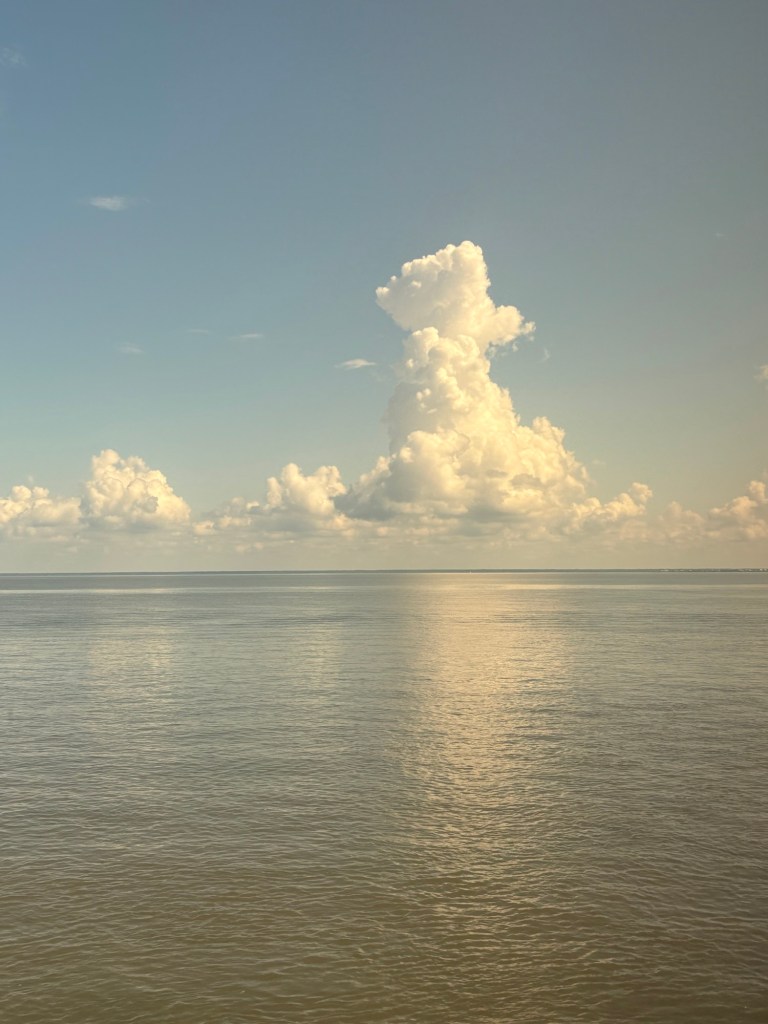
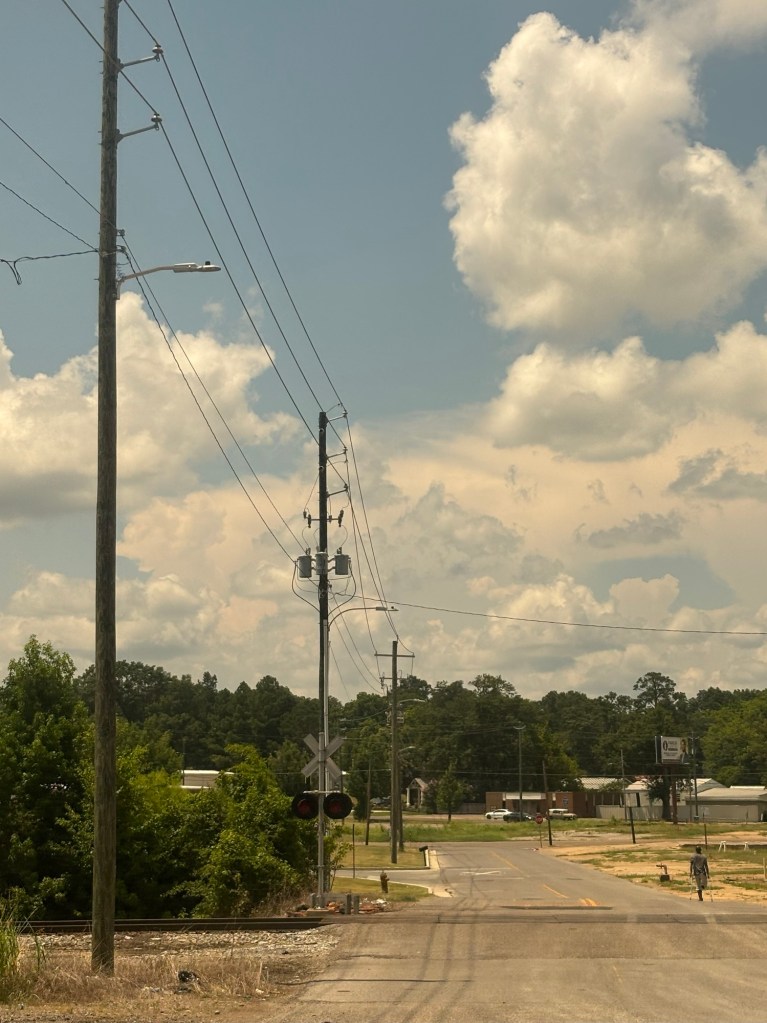
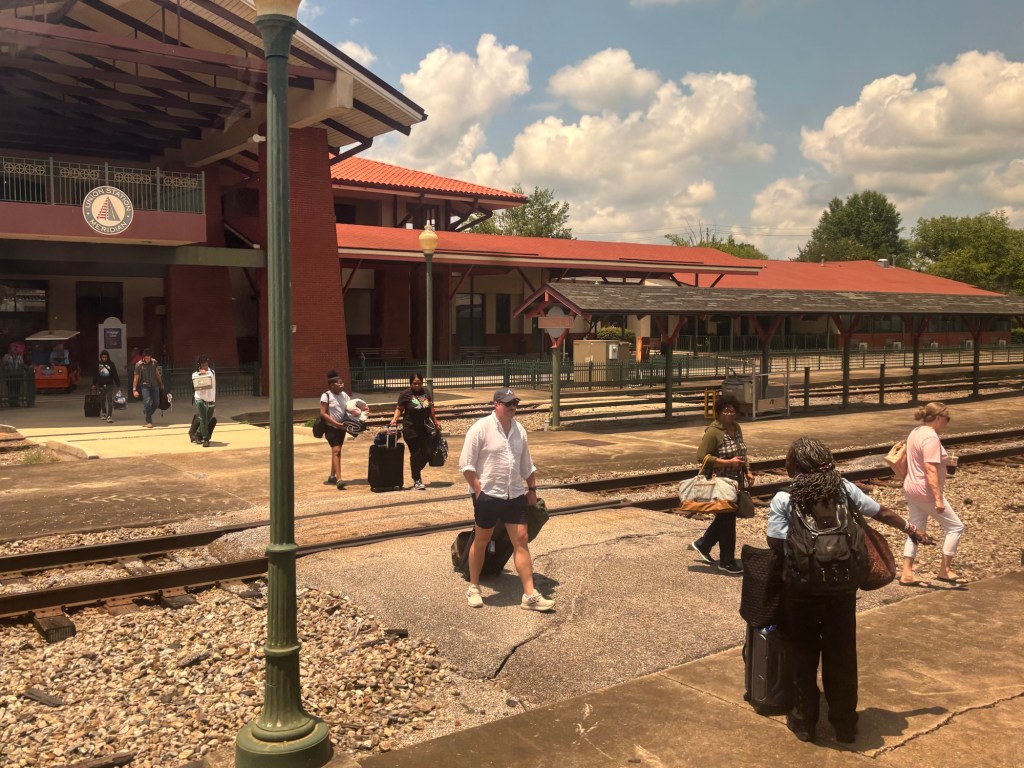
It’s 17.09, it’s been over nine hours since I last ate something and I’m somewhere in the Alabama woods between Tuscaloosa and Birmingham. If we were running to schedule, I’d be arriving in Birmingham in the next few minutes. But, as every American has gone to great pains to explain, the trains in the US never run on schedule. If you’re not in any particular hurry, it’s a phenomenal way to see the States, provided you’re happy to gawp at trees for most of the journey. Lucky for me, I’m easily pleased, and it’s been all I can do to peel my eyes from the window for the last eight hours or so.


The American South reminds me in many ways of Uganda. There’s something familiar about the immensity of the sky, the redness of the earth, the rusting abandoned vehicles and – especially – the enormous homemade painted advertising on homes, cafés and storefronts. The most American thing I’ve seen so far – beside the lone bald eagle standing on the banks of Lake Pontchartrain – are the countless colourful billboards advertising private law firms, demanding your attention with Colgate smiles in nauseatingly familiar language: Bart’s always got your back, Call ya girl Desi, IYKYK, that sort of thing.


Let’s forget any time pressure for a moment. Riding an Amtrak train is actually a really comfortable experience, and I’m surprised it isn’t more popular. There are charging stations for every seat, curtains for the windows, sturdy WiFi and a cheery Southern burr over the tannoy to replace the cold, automated replay of British trains. I’ve even got enough leg room to stretch my legs, and that’s taking into account the fact that the guy in the seat in front has put his chair back into full recline. I haven’t seen as much wildlife as I’d have liked over the course of my vigil, but I’ve still managed to clock a few deer, a whole lot of egrets and a few birds of prey, including the symbol of America itself. That’s not too shabby for a bit of on-board birdwatching.

To be honest, the only thing I’d change is the seat numbering, which is baffling – and very obviously a new concept, as even the ticket inspectors seemed to get muddled up by the numbers (which don’t really correspond to any of the seats at all). Folk don’t seem to mind, though. I think most of the passengers here have simply found an empty seat and made themselves comfortable, and all of them are quite happy to shuffle as and when a couple or family comes aboard. That’s one major difference to European trains. I was traveling in Germany once and still remember an officious German lady who made the entire coach get up and scramble because there was somebody in her seat and she absolutely had to sit in the seat she had been assigned. The human soul: the price of efficiency.


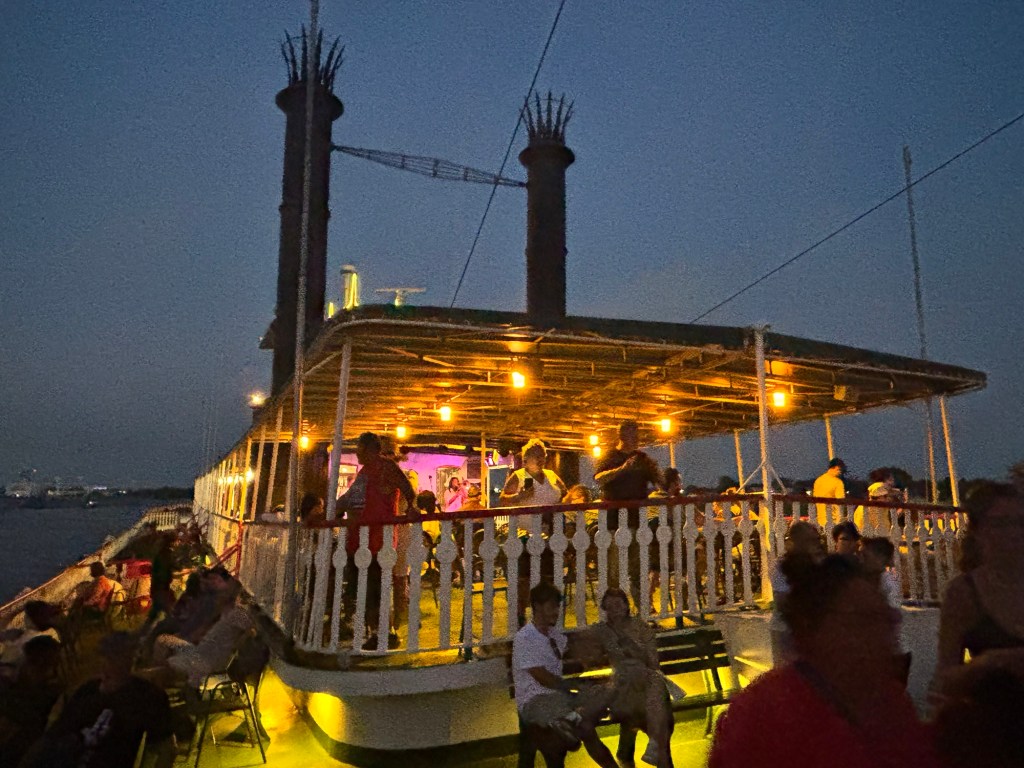
I ended my stay in New Orleans with a jazz fest, seeing a local band in Preservation Hall and then taking the Natchez steamboat cruise down the Mississippi with its attendant Dixieland band providing a jaunty backdrop. If it’s done one good thing for me, New Orleans has reminded me that there is hope for those of us who still believe in music bringing the world together. The Preservation Hall jazz band ticked more diversity-and-inclusion boxes than a school website: the trombonist was black, the saxophonist Latino, the pianist Scandinavian, the double bassist Japanese and the lead trumpeter Creole. I hate to admit it, but I’m still bleeding a little over the way my Gospel Choir was torn apart years ago. Maybe I always will be. That’s partly why I’m here in the States, in this limbo between jobs, between worlds: to try to put a seal on that episode of my life, and to remind myself that there are plenty of people out there who don’t see things that way. And where better than America, the great Melting Pot itself?


I’d better stop writing – it looks like we’ll be arriving soon. In the end, we’re only 50 minutes behind schedule. It’s funny how little that seems to matter! In the UK, there’d be apologies over the tannoy and prompts to get a refund via the website…

Alright America. I’ll admit it. Just this once, you have us beat on heart. BB x

Gators, Gumbo and Vanishing Cabinets

Alright, so the primary reason for my trip to the States is to soak up the music out here. Yes, I’m perfectly aware that I could have saved a little and gone to Glastonbury, but frankly the idea of camping out in a field with thousands of party-goers sounds like Hell on Earth to me. I’m quite happy chasing a more traditional, more intimate range of older styles out here in the States. That’s why I’ve shelled out on a couple of jazz-themed events this afternoon. But before that, there’s one other major reason I decided to kick off my American adventure in Louisiana. The Bayou.


I’ve got a thing for swamps. I spent weeks of my childhood clomping around the misty reedbeds of Stodmarsh in search of bitterns and marsh harriers, while anybody else my age with half a brain was honing their social skills at the park or on the pitch. The Easter holidays required a ritual voyage to Doñana National Park, the ‘Mother of the Marshes’, which became something of a Mecca of mine. So to come to Louisiana and not pay a visit to the Bayou would be foolishness in the extreme.

Of course, it isn’t all that easy to get into the Bayou proper without a boat, or a car for that matter. Fortunately there are a lot of offers on the table to take you out of New Orleans and into the swamps. I threw in my lot with Cajun Encounters – it looked to be far and away the best one going.

The bus picked me up from outside the hotel shortly after eight, giving me plenty of time to wolf down breakfast. The driver, though not a tour guide himself, did a brilliant job pointing out the sights as he took us through the residential districts of New Orleans and out into the wilds of Slidell. The devastation of Hurricane Katrina is remarkably apparent, even twenty years on: together with the hulking wrecks of houses and ships, the skeleton of New Orleans’ only amusement park can still be seen arching above the trees, while the bizarre Fisherman’s Castle on the edge of Lake Pontchartrain remains the only building to have survived the floodwaters intact.

The tour begins beyond sleepy Slidell on the bank of an inlet of the Pearl River, where the swamp-folk came pearl fishing many years ago. The six of us in my boat were assigned the formidable Captain Zander, a former warehouse packer and a true Cajun to boot. To say we drew the winning ticket would be an understatement. As well as being a no-nonsense authority on the Bayou, he seems to know just about everybody out on the Pearl River – including Cindy, one of the biggest gators in the swamp.


You’d be surprised how quickly you get used to the presence of the alligators. I must have counted around forty by the end of the outing, from amber-skinned yearlings to hulking, black-scuted beasts, visible only by the unmistakeable silhouette of their snouts just above the water. Before you know it, you feel as though they’re just part of the scenery!


When I was a kid I had a picture book that listed the American Alligator as endangered – which is true, as back in the 90s it was facing the very real danger of extirpation. Since then, however, the environmentalists have stepped in to throw the spirit of the Bayou a lifeline, and they have returned in force: more than a million can now be found in the Louisiana swamps alone.


Summer is one of the best times to see Louisiana’s gators, but the heavy foliage can make it harder to see the other denizens of the Bayou. All the same, over two hours I clocked wood ducks, whistling ducks, a pair of high-flying anhingas, several ospreys, green, yellow-crowned and black-crowned night herons, roseate spoonbills, cattle and great egrets, a single great blue heron and, in one of the deeper inlets of the Pearl River, a family of raccoons – a real American experience!


It really was quite something to drift along the snaking rivulets that cut through the Bayou, shielded from the merciless Southern Sun by the trailing beards of Spanish moss hanging from the cypress trees – named neither for their origin or their species (being neither Spanish nor a type of moss) but for their resemblance to the long grey beards of the first Spanish explorers to pass through these swamps hundreds of years ago. I wonder if Cabeza de Vaca and his brave company passed through here on their odyssey?


Back in New Orleans, I grabbed some lunch at Mr Ed’s Oyster Bar, following a tip-off from my Uber driver. It’s easy to shell out on your first meal in another country when you don’t know how things work, and I ended up with a starter that could have fed three as well as a main and a drink – before factoring in the inevitable 20% tip expected in the States and, of course, the inescapable taxes. That said, one cannot come to New Orleans and not try the food, and I have to admit the crawfish étouffée has shot up into the top ten foods I’ve ever tried. It was absolutely sensational. Didn’t feel brave enough for the oysters just yet, but maybe next time!


When I came back to the hostel, it was to find that Room 302 was being taken in hand: three Mexican labourers were hard at work uninstalling the ceiling tiles to address the leaking air-con unit, which meant I had to linger in the lobby until they were finished.

I had the shock of my life after they left, when I returned to the room to find my locker open and all the contents removed, with the exception of two shot glasses from Prague (a gift for a friend). Clothes, camera, the cash my students gave me as a leaving gift – all gone. In a blind panic I took the stairs at a run to find the receptionist and let them know what had happened… only to get a knowing smile and a ‘forgive me’ gesture.

Turns out they’d moved all my belongings into a new room while the works were being done and hadn’t found me yet to tell me.

Crisis averted – at the expense of a couple of years off my life! I’m not generally that fussed when it comes to losing things on my adventures – one less thing to carry and all that – but as this is my first time in the States, I’d rather be prepared, not to mention have enough clothes to wear for the next few weeks! BB x

Don’t Sleep With a Drip (Call a Plumber)

In the Southlands there’s a city / way down on the river / where the women are very pretty / and all the men deliver.

The Princess and the Frog

Two things hit you right away when you step out of the car and into New Orleans: the heat and the smell. Both are overpowering. The heat gets under your clothes and into your skin in seconds, as though you’re sliding into a sauna. The smell hits you like a wave: a heady mix of diesel, sugar and, above all else, weed. I’ve never been anywhere quite like it.


After the city complex that is Dallas/Fort Worth International, New Orleans’ Louis Armstrong Airport felt much cosier – insofar as Americans do “cosy” when it comes to buildings. The lack of passport control caught me off guard, but then, it was only on an interstate flight. I didn’t get a stamp for the passport, which is a little annoying – it would have looked nice next to all the European stamps (a tiny compensation for Brexit).

I took an Uber into town, it being a Sunday and me having no idea where the bus set out from. Every American I’ve ever spoken to has only had bad things to say about their public transport, and besides, I figured an Uber would at least give me a local to talk to en route. My driver Calvinisha was a very charming New Orleans girl who was only too keen to point me in the direction of a number of food joints, namely Mr. Ed’s Oyster Bar. I’ve added it to the list. She also added that I’d ‘just missed out on the swinger festival’. I didn’t ask her to clarify whether she meant that in the musical or sexual sense. In New Orleans, it could easily have been either.


I checked into my hostel on 1028 Canal Street and set out for a wander, very conscious that I needed an early night to avoid any jet-lag on my first couple of days. My room was empty but for a steady drip from a leak in the ceiling and a disembodied voice coming from behind one of the curtains: a British guy clearly playing some kind of MMORPG, telling his friend to “use black sword”, “send in a fire mage” and other strange and rather bizarre commands. Leaving him to his world of make-believe, I locked my things away and set out for a stroll.

It’s hard to describe my first thoughts of New Orleans and at the same time do the city justice. It is certainly a culture shock for a European country boy like me. Skyscrapers that dwarf most of London’s tallest buildings. Shops that look like El Rocío homes openly advertising voodoo, weed and “barely legal” strippers. At first glance, New Orleans is everything you might expect to hear about in 20th century Soviet propaganda about America: casual, sleazy, decadent. But when it’s 38°C out there and the humidity is over 70%, can you blame them?


It feels like this town ought to operate on a Spanish-style siesta timetable – and yet, even in the hottest part of the day, folk are still wandering the streets. You have to hand it to the pioneers and their descendants. Louisiana heat is not to be trifled with.


For me, this whole American adventure is kind of a test. I think one of the subconscious reasons I’ve never really thought about going to the States is because of my languages. Hear me out. I’m not the best at striking up a conversation with a total stranger, in a shop or bar or anywhere else – unless it’s in another language. For whatever reason, I’m a lot bolder in my dealings with strangers when it’s in Spanish or even French. I honestly believe that it’s a confidence trick – you’re focusing so much on getting the language right that you don’t stop to think about where you are, who you’re talking to. I’ve heard so much Spanish here and I’m instantly filled with a desire to leap into conversation, which I can’t say happens as readily in English. I’ll just have to work on that.


I came back to the hostel around seven thirty and tried to get an early night’s sleep. I was in for a bit of a shock: the dripping was actually coming down onto my bed, a full third of which was soaked through. Never mind the damp, the constant slap of water on the soaked mattress was maddening. It’s funny how you can doze off amid the constant hum and roar of a plane engine, but a rhythmic tap with keep you up. I tried taping it up, but after five minutes it returned with a vengeance, beating an even faster rhythm than before. I admitted defeat and curled up into the drier part of the bed.

I confess I was so tired that I didn’t have the energy to drag myself out of bed and tell the front desk, but in the end I didn’t need to – a guardian angel in the bunk next to mine had already phoned ahead and eventually the hostel staff allowed me to move to the bed across the room. I don’t think I’ve ever fallen asleep so fast.

Tomorrow is another day – the bayou calls! BB x

Skylink

Four days ago I was standing in the ruins of a Roman theatre in the Andalusian port of Cádiz, a contender for the oldest continually occupied city in Europe at over three thousand years old. Four days, one Leavers’ Ball and a ten hour flight later and I’m sitting in Terminal B for Bravo in Dallas/Fort Worth International Airport, built in the year 1974. The fact that Cádiz’s Roman theatre itself is relatively young – built around 70 B.C. – only adds to the stark comparison. The culture shock is real.

First impressions:

  • The Mississippi is huge. Enormous. It looked like a colossal brown snake winding across the plains into the distance
  • Cowboy hats seem to be worn unironically here – and with a frequency that would surprise you!
  • The selection of in-flight movies on offer is considerably superior to all the streaming services at the moment (heck, they even had both Dune movies)
  • Airport taxes – what the hell is that about?
  • Security was thorough but not nearly as austere as I expected

In case you haven’t noticed, this is my first time in the United States. I honestly have no idea what to expect, since until recently I wasn’t particularly interested in crossing the Atlantic for an adventure – well, not this far north of the Caribbean, at any rate.

But I did promise myself that I’d reward myself with a proper adventure if I landed a new job this year, and a promise is a promise. I just didn’t expect it to take me to the land of Sitting Bull and Civil Rights, that’s all!


I don’t have too much to report on just yet, beyond a general wide-eyed wonder at all of it. After all, I haven’t legally set foot in the States yet – that will happen when I touch down in New Orleans in a few hours’ time.

Sounds like they’re boarding in five minutes’ time. Not sure what a Deadheader is outside of a gardening context, but I’d better get my stuff together all the same. Starting to feel the jet-lag kicking in, but I hope I can shake it with an early night this evening! BB x


Backwards and Forwards

Another year, another Christmas come and gone. I’m back at the flat after a week up north with the parents. Billy Ocean is playing on the Bluetooth speaker as I write – Stay the Night – and the torrential rain that followed me south stopped about an hour or two ago. Everything is more or less as I left it, with the exception of fresh sheets on the bed.

It’s been nearly six years since I took up my post here, moving back to England from Spain. I sometimes wonder what direction my life might have taken had I stayed on and taken up the teaching post I had on the cards in Galicia, but I know I made the right decision for my career. Over the course of those six years, I’ve earned my stripes (and, more importantly, qualifications) as a fully-fledged teacher within the British educational system, enrolled in a number of courses and taken on more responsibilities than I expected, up to and including being an Oxford-style debating judge. There hasn’t been a day in those six years when I’ve woken up dreading the day ahead or resenting my job – not even in my PGCE year, which was shot right through the heart by the COVID pandemic. I love teaching, I love my subject, and the knowledge that I am keeping up a family tradition that goes back generations gives me an eternal flame that cannot be extinguished.

But that’s not to say living and working in a boarding school has been without its doubts. I’ve definitely had some bad days – who hasn’t? – and I’m very aware that my choice of career (coupled with my lingering anxiety about responding to messages) has had a good hand in shrinking my social circle with every passing year. A senior member of staff at the school once described living and working in a boarding school as “submarining”; that is, disappearing from the rest of the world at the start of term and resurfacing only once the last child has left the building, some three months later. It’s an apposite analogy, and one that’s hard to sell to anybody outside the system.

I suspect that after six years in the same school – nearly long enough to see a generation of students through their whole educational journey – it’s natural to start to feel the need for a change. As for where that change will take me, I’m not yet sure. I only know that change is coming, and it would do me a world of good to seek my destiny somewhere beyond the horizon. Perhaps the idea came to me on the Camino and has been incubating ever since, or perhaps it crystallized after a conversation with a colleague about how it’s very easy to count the things you do for others in this line of work, but on reflection, it can be a lot harder to say what you’ve done for yourself. I’ve been lucky enough to have a partner to guide and support me through the greater part of those five-and-a-half years, but December finds me on my own once again, and as the months start to fall away before the big three-zero, I’m conscious that the career path I desire is out of reach until Lady Luck sees fit to give me another chance. And since the online dating scene has been about as generous as a paddling pool is to a fisherman of late, it’s probably time I upped sticks.

With that thought in mind, I’m starting to look at the world around me with fresh eyes. The flat that’s been my home for two years now seems more detailed than before. The cat-print mug on my desk that probably belongs to my housemaster, containing a shamrock-green bauble, a gift from a Colombian parent. The collage of photos in an IKEA frame of friends from my university days, all but two of whom I haven’t seen in years. Curios on my dresser: a boomerang, a vinyl cover of Fidder on the Roof and three chips from a Las Vegas casino. Photos on my bookshelf: my class of 4° ESO from Villafranca (my first real job), my cousins, the windmills of La Mancha and my mother’s first car, an orange Volkswagen beetle. The mirror that never made it onto the wall, and the blocky but practical Skorva bed that has put in a good year’s shift after the last one finally collapsed after a marathon service (it was a veteran when it came into my possession over a decade ago). Some of these things haven’t moved an inch in two years.

I’m not usually one for resolutions, but I am going to take more of a handle on my own future in 2024. I’ve already thrown the first stone by committing to weekly driving lessons, and while it may be some time yet before I have wheels of my own, that crucial piece is finally on the board. Fortune has given me a later return to work than usual, so I have seized the chance to ring in the New Year with my cousins in Spain, something I have wanted to do ever since we first reconnected back in 2018. It may be that my next post doesn’t have an international airport within walking distance, so I might as well make the most of it while I still can.

I’ll also try to write some more. I’ve been channeling my creative endeavours into the creation of a Spanish culture podcast, but it wouldn’t hurt to flex my writing arm some more on here every once in a while. Even if I’m the only one who comes back and re-reads these posts, it makes for an interesting insight into my mindset at various points of my career.

I’ll check in again tomorrow. Until then – tschuss! BB x

2023: A Year in Pictures

January

2023 begin much like it is today: wet and windy. In keeping with the last seven years, the year began somewhere new: this time, in an AirBnB in Wilpshire, some two hundred and thirty-five miles from home. It had been a wonderful New Year’s Eve, but a fleeting one: cracks were starting to form in my relationship. I decided to ignore them and looked inwards instead. A few weeks later I saw a pheasant on a stroll around Wakehurst and had no idea that the very same bird would seek me out when things began to unravel several months later. Hindsight is a curious thing.


February

The villagers of South Willingham lost their bid to save the local forest from being turned into a bike park. I know it will bring much-needed money to the area, but a part of my heart always breaks a little when somebody carves up another patch of the earth for human entertainment. I wandered among the trees and soaked in the winter light. No footpath leads through the woods, so I might be the last person to do so. I also passed my driving theory test, but didn’t tell anybody about that for a while.


March

The man who doesn’t take a day off unless he’s dead or dying was very nearly brought down by a fever this term, reaching its peak the day of the House Music final. My very conscientious partner drove all the way up to my place to drop off a get-well-soon care package and gave me clear instructions to rest, but I dragged myself to the school theatre to support my boys in their bid for victory – and was not disappointed. Rutherford took home the House Music shield for the first time in over a decade. I didn’t fully recover until the following Monday, but I rode the high of their success for months afterward.


April

Seeking answers, I sought out the Camino – and the Camino provided. Within days I had found an incredible cast of characters, and had the Easter holidays been longer, I would have gone with them all the way to the end. I walked a hundred and thirty kilometres in just under a week with a Brit, a Dane, a Canadian, a Spaniard, a Dutch girl, a couple of Californians and the most charismatic Italian I have ever encountered – and I have encountered more than a few. I told myself I would be back to finish the job, but I didn’t think at the time that I would throw myself back at the Camino a few months later.


May

Matters of the heart came to a head. I drifted back to Wakehurst and sat on a grassy bank near the American plantation to clear my head. The pheasant appeared and sat beside me, keeping me company for the best part of half an hour. Say what you like, but animals seem to have a sixth sense for when humans are in distress. My mother’s cat made a beeline for my brother when he was in the doldrums in much the same way. It did not heal my heart but it did a lot to patch it back together. In the meantime, I went at my living room and restructured the place, hoping to find a new sense of direction by altering my perspective and my surroundings. It’s a lot easier to move a bookcase around when you don’t possess several hundred books, though.


June

I broke things off with her and felt awful about it – but seventy-eight reports, a bout of vomiting sickness in the boarding house and preparations for the school trip to Seville helped me stay on track. The Leavers’ Ball was more of an event than a formality this year, seeing as it meant saying farewell to a cohort of students who had joined the school at the same time I had. An immensely nostalgic music tour to Salzburg rounded out the month and found me playing the violin at the same bandstand I had played back in 2006, some seventeen years ago. In a very up-and-down year, June was a particularly erratic rollercoaster of a month.


July

I’m quite convinced that the answer to most questions can be found on the Camino, and I had unfinished business from the Easter holidays, so a mere two days after returning from Austria I was back on a plane and bound for Bilbao once again. You’ve probably followed me on that particular journey already, but if you haven’t, you can always start again right here. Three weeks and nearly five hundred kilometres later, I arrived at the end of the world and stared across the Atlantic to America. Someday soon, I’ll take my adventures across that ocean. But not yet.


August

August was a quiet month. August always is. I popped up to London a couple of times and saw some old friends, which was much needed – I have distanced myself from a lot of old acquaintances after the way they upbraided me over the Gospel Choir fiasco, and it took quite a bit of courage to resurface, even though it’s been some two years since. The social current flows fast in the capital city. London remains a charming place to visit, but I’m sure glad I don’t live up there. I’m a lot better at dealing with cities than I used to be, but I’m definitely a country boy at heart.


September

Term started late this year, meaning August was already over by the time the students returned. It wasn’t a scorcher like last summer, but the warm weather stayed with us for quite some time. A new wave of weekend activities and a house camera kept me busy at weekends, and I finally managed to host a party in the flat over the first Exeat of the year, using the old projector to beam karaoke onto one of my walls. I also got back into drawing, completing a giant poster for one of the walls.


October

Storms Agnes and Babet tore across the British Isles and put an abrupt end to the long summer days. Sussex remained relatively stable while the roads of the Lincolnshire Wolds turned into rivers. I spent the October half term with my parents and even made it to Manchester to see my brother’s first ever publicly exhibited artwork on the first floor of a fancy riverside hotel. I also wrote a pantomime for my school, but internal politics made it impossible to get off the ground. At least I have the backbone of a script that I can carry over to whichever school I head to next.


November

We lost the first round of House Music, but only by a single point – so there’s hope for my boys yet. More importantly, I bit the bullet and started learning to drive. Finding the time to schedule in two hours of driving during a working week is ridiculous – and probably the biggest reason I’ve put it off for so many years – but, steadily, I’m starting to get the hang of it. Or rather, I was, until a combination of sickness and cover lessons made it impossible to schedule in the last two lessons of term. Here’s hoping I can pick up where I left off in the new year.


December

December hurtled around at the speed it always does, though this year the last stretch did seem longer than usual. I managed to strong-arm Riu Riu Chiu back into the Carol Service at last, which the kids seemed to love, and helped to draw up the motion for the Students vs. Alumni debate, though I was not especially fond of the heavy economical slant in which it dragged the proceedings. My brother spent Christmas with his partner, so it was just my mother and father and I this year. Midnight Mass was bizarre – half an hour of forced carols before the Mass itself began at midnight (rather than the usual 11.45pm start) – but, traditions must be maintained. I blew the dust off Duolingo and got back into learning Italian after more than a year’s hiatus, though I daresay I’ve picked up a little in that time from my students.


This time tomorrow I’ll be in Madrid. Since leaving university I’ve made a point of seeing in the New Year somewhere new, but this year, for the first time since we met, I can finally celebrate it with my Spanish family, so I’m headed for the pueblo to see in 2024. I haven’t seen some of my cousins since my youngest counsin’s first communion back in 2019, so it’s a reunion that’s been a long time coming. Here’s to a good one, folks. BB x
Camino XXVII: Journey’s End

Finisterre. The End of the World. It’s a fitting place to end the Camino, which can sometimes feel like it really does go ever on and on, down from the door where it began. Well, here we are at the end of the road. Kilometre 0. My great quest for the summer is over.


With a good thirty-two kilometres between O Logoso and the seaside town of Fisterra, Simas and I set off early this morning. One last six o’clock start, an hour or so before the dawn, to end the Camino as it began: in the dark. The churring of nightjars echoed in the forest around us as far as Hospital, after which the road climbed up over a treeless moor before slowly beginning to descend toward the clouded horizon beyond.

We passed a few alarming signs declaring ‘territorio vákner’, which didn’t make a lot of sense until we stumbled upon an enormous sculpture in the woods of a wolf-man. The ‘vákner’ was, according to 15th century pilgrim lore, a Galician forerunner of the werewolf legend, and one of a number of terrible beasts that beset pilgrims in the forests after Santiago. The more you know!


Less fantastical, though by no means less legendary, we found a Tupperware box on one of the stone walls deeper in the woods containing a number of breakfast options: yoghurts, bananas and pastries, complete with plastic spoons in case of need. The invisible benefactor, an eleven-year old local boy, was trying to raise money for a trip to Madrid. I tipped him generously via his piggy bank and enjoyed the breakfast I otherwise might not have had this morning. What a little angel!


Shortly after leaving the forest, as though out of a dream, the sea came into view. I have been so excited to see the sea after three weeks on the road and saving it as a reward for the final day was definitely the right thing to do. We came down into the busy former whaling town of Cee and had a proper breakfast of churros con chocolate, for the princely sum of 3.75€. And that’s including Simas’ café con leche. I’m going to miss how cheap this country is.

Having killed an hour, we pressed on north and west through Corcubión, which was being kitted out for a medieval fair. We detoured a little to see the coast, and were guided back to the Camino by a friendly local afflicted by throat cancer, who pointed us back to the road using a robotic device at his throat. We had not gone much further than Estorde when the sun came out, causing the white sands of the beaches to shine out like a beacon. Given the gloomy forecast for the rest of the day, we took a chance and detoured once again to one of the coves, finding it deserted. And boy am I glad we did!


This was what I walked five hundred and sixty kilometres for: truly, the treasure at the end of the rainbow. There were no pots of gold, but there might as well have been diamonds in the water: each gentle wave kicked up clouds of white sand that glittered in the sunlight like a thousand twinkling stars. Sand eels and mullets darted in silver shoals nearby and a sandpiper scurried up and down the shoreline at a safe distance from us. The way the forests practically tumble right into the ocean, ringed with beaches that shine a purer white than anything the Mediterranean can muster… I’m amazed the Galician coast isn’t as heavy a hitter on the tourist trail as the Costa Brava. Amazed – and grateful. Because from some of the graffiti on the town walls – no a la Marbellización – it’s pretty clear the gallegos don’t want it to have that level of fame either.


A special mention should be made for saint number two of the journey: Nacho, a Valencian who had set himself up on the hill overlooking the Langosteira beach with two paella dishes full of home cooking that he was handing out to passers-by, free of charge. He was quite insistent on this last point, maintaining that though he was between jobs he had enough money by the grace of God to live on, and wanted to share his luck with the world. We had a good natter about what constitutes a real paella, but above all it was really uplifting to meet such a good-hearted man from my grandfather’s region – because while I’m proud to have Manchego heritage, my grandfather was actually born in Torrevieja, which means my immediate ancestry is actually Valencian. Go figure!


We reached Fisterra just after one and checked into the albergue municipal, which was already quickly filling up. It is as well that we did, too, as it landed us the final stamp in the credencial and an additional compostela for completing the final 100km of the Camino. After a quick nap we grabbed a table at O Pirata, a very characterful port-side seafood restaurant whose staff (and hangers-on) really did give off the right vibes as a motley crew rather than a team of restauranteurs. Between our waiter, who might well be the fastest-talking man in Spain, the chef with his black bandana and earring, and the three musicians sat outside, strumming guitars and clapping along – not to mention the seafood itself, which was delicious – it was easily the best meal of the whole Camino. Best of all, they threw in a free ego massage, telling me it wasn’t just the La Mancha shirt that gave away my Spanish heritage but also my ‘actitud’. I’ve actually managed to convince quite a few Spaniards that I’m a native on this Camino, which is a huge thing for me. I’m one step closer every day to reclaiming my heritage!


After lunch, Simas went back to the albergue for a siesta but I fancied a wander around town before the forecasted rain came down. What I thought might be a museum/aquarium in the harbour turned out to be an open-air working fishery, where a raised walkway lets you look down on the fishermen at work, processing and sorting the morning’s catch. It’s a brilliant idea and a fascinating way to have a look-in behind the scenes – especially after enjoying the fruits of their hard work for lunch! One chap was sat measuring the many thousands of razor clams and sorting them by weight, which looked to be a truly Sisyphean task: it must take hours to finish before the next haul arrives and the task begins again.


Stamps and celebratory seafood platters aside, you can’t say you’ve completed the Camino unless you really do go all the way to the end of the road, which is another three kilometres down the coast to the windswept cliffs of Cape Finisterre. The pictures imply a lonely lighthouse watches the cape, but it’s also home to a hotel, a bar, a car park and a couple of souvenir shops, so it’s not as remote a spot as you might think. The steep banks of the cliffs were pretty busy when we got there, with both pilgrims and tourists from various parts of Spain, and it was a good place to bid farewell to several pilgrims I have crossed paths with on the road: Alan, the wannabe hostalero, and the French team of three, Jean-Paul, Adine and Philippe; as well as Liza the Belgian (whose wish was granted by beating me to the Cape) and Catherine the German (who wins the award for the most random encounters along the whole Camino).

I found a quieter spot lower down and sat there for a while, watching the waters of the Atlantic below. It was a good place to reflect. I let go of a lot of things at last, letting them drift from my heart through my fingers and out across the ocean. Down below, gulls wheeled and cried around the cliff edge while a sparrow and a redstart made a few dizzying sallies across the precipice. My eyes were trained on the waves, searching for one thing in particular, and after half an hour – in the wake of a fishing boat – I saw what I was seeking. Not the lonely gannet or flight of shags that rounded the cape, but a fleet of shearwaters, an endearing and highly acrobatic seabird that truly lives up to its name, flying low over the water with the tips of their wings slicing the tips of the waves like blades. I was far too high up to tell what kind they might be, but I imagine they were Balearics, given their size and number.

If the ghostly harrier and quail were the spirits of the early Camino, it’s the handsome shearwater that marks its end. While I’ve walked most of the Camino alone, I’ve had companions every step of the way, from the merry stonechats that have been with me every day to the nightjars that have kept me company in the twilight hours. If you can put a name to the sights and sounds all around you, you’re never truly alone on the road.


If you kept going in a straight line from here, you’d reach Long Island and perhaps even New York City. But unless you have the stamina of a god and the strength to match, that’s simply not possible, so here the road ends at last. I penned the words ‘Llévame contigo’ (Take me with you) into my faithful stick and planted it in the earth just behind where I had been sitting. I hope somebody does take it with them, and that it brings them as much joy and support as it has brought me.

I thought of its predecessor, and the feathers that had made it so memorable to other travellers on the road, and as I did, a couple of ravens suddenly appeared on the wind, soaring in circles around the cliffs below. One of those feathers I carried before belonged to a raven – so perhaps they were with me all along in spirit. I’d like to think that. According to legends of old, it was a raven that first brought the light of hope into the world.


Well, that’s a wrap. It’s now twenty to eight on Friday 28th August. The rain is falling outside and I’m booked on the 11:45 bus back to Santiago. I’m going to find myself a café near the harbour and do some writing while I wait, in this seaside town with which I have fallen in love. Galicia has been beautiful since O Cebreiro but its coast has utterly enchanted me. It feels like home, and yet like Spain at the same time. It feels like Edinburgh, Hythe and Olvera all rolled into one.

I will come back. There is more to the Costa da Morte than I have seen. I must come back. BB x
Camino XXVI: RICE, RICE, Baby

I’ve set down my bag for the night in O Logoso, a village up in the highlands to the west of the Great Lakes of Fervenza. It wasn’t yet one o’clock by the time we arrived, but I was persuaded by the images of a natural swimming pool nearby – and my shins are finally starting to complain, after almost three weeks on the road. I walk everywhere out of habit and that’s a fact, but even I have my limits!


I walked with Simas today, so I decided against shooting for Cee (in retrospect a wise move) and instead took it easy over the 23km hike toward Hospital. It’s a hell of a lot easier to stop to grab breakfast or a drink when you have company, so I took full advantage of Simas’ voracious appetite (the man puts food away like Logi in the old Norse legends) and had a Cola Cao and tortilla breakfast – possibly one of my last of the Camino!

It was great to have company on the road again. I’ve happily walked most of the Camino on my own, but it’s always enlightening to share the road with a kindred spirit – a memory shared is a memory doubled. I had time to reflect on the conversation I had with some of the other pilgrims in the albergue last night, too (which was marvellous, by the way, run by two very friendly abuela types who made us a home-cooked dinner to remember), and my line that it’s better to come away from the Camino with a lighter mind and a heavier load than the other way around (since no matter how many concerns I come out here with, I always seem to convert them through some unholy alchemy into the physical weight of books I collect along the way….!)

Simas asked for a brief history of Spain as we walked, which certainly helped to while away the time… I must have been yakking on for a good hour and a half at least, before I reached the 18th century, at which point my knowledge does run out all of a sudden, since it’s a period I’m not particularly interested in (it’s probably the ridiculous obsession with powder wigs).


We’ve met a lot of pilgrims coming back the other way – more than we’ve encountered heading to Finisterre, in fact. I guess those pilgrims mad enough to push on to the coast tend to be the ones who are equally mad enough to come back the same way. Collective insanity, Simas called it, and he’s probably right. Could you convince a friend to walk twenty to thirty (and sometimes forty) kilometres a day, every day, for four weeks? It’s a tall order unless you’re already bitten by the Camino bug…

After Santa Mariña the ground began to rise as we reached the edge of the coastal highlands. We didn’t quite see the Atlantic today, but we must be pretty close – I could smell the salt on the air as we came down the hill into O Logoso this afternoon, over the thunder of the river in the valley below. The countryside is certainly awe-inspiring: the tedious stretches of eucalyptus plantations between Sarria and Santiago seem a world away up here, while the endless wheat fields of the Meseta might as well be on another planet.

The stonechats are still here, as are the black redstarts and swallows – I even had two close encounters with a cuckoo today – but there are signs that the local fauna is about to shift one last time: I heard the cry of a full this morning from somewhere far away, and the Concello symbols on bus stops and hotels now feature the distinctive silhouette of a curlew – which, together with the rolling moorland, conjures up images of the north of England. I’m not lying when I say that this is probably the part of the Camino I have been most looking for to!


I think I’ve finally contracted a minor Camino injury in the form of shin splints – the merciless climb up and over Monte Avo today, even with the stick, probably didn’t help. I’m just grateful it’s happened this late in the journey, with just one day left to go – it would have been nothing short of torture had it happened last week, or worse, two weeks ago!

So I took it easy this afternoon and hit the I of the RICE method by taking a dip in the pool just up the road from O Logoso. Spain has a wealth of hidden piscinas naturales – many of which are in Extremadura’s mountainous north – and finding one this afternoon was just what the doctor ordered. Now, at least, I can apply the bandages I brought from my First Aid course before the end of term and take one more thing from my backpack before the journey home!


I’ll also make sure I eat well today and tomorrow. I’m conscious that my time here is running out, and the chance to dine out on delicious Spanish cooking won’t be so easy to find come the weekend… so roll out the bandages and roll on the bandejas! There’s only one day more to go. BB x
Camino XXV: Underhill, Over Hill

After all that build-up to the grand firework display on the night of the 24th, the pilgrim party in Santiago was a little underwhelming. I suppose, like most things, it simply couldn’t live up to the hype. In some years, the entire facade of the cathedral is lit up with a phenomenal son-et-lumiere show while pyrotechnics close the fifteen minute performance. This year, however, the fireworks were set off from six different points around the city – but not the Praza do Obradoiro. I’m glad I gave up my three-hour vigil and went back to the albergue for something to eat at ten thirty or else I would have been pretty cranky! Fortunately, though almost all the fireworks were obscured behind the huge Concello building (meaning the crowd which had previously filled the square wound up massed into a thin wedge overlooking the park) I managed to find a good angle to remedy the situation.


I’m glad I got to see the cabezudos in action, though. I’ve often heard of this farcical summer festival but I’d never seen them in action until yesterday. It beats me how the dancers were able to move so easily with such huge objects on their heads, but they did. At one point they even invited the children in the audience to dance with them. My mother said she had always been a little scared of them, and it’s not hard to see why – they really are grotesque. I could see some of my contemporaries back home immediately assuming the festival to be racist, due to the over-exaggerated features on the two black cabezudos, but if you compare them to the others, they’re no more or less ghastly. I think it’s just the Spaniards laughing at the world and everyone in it as they always have done – and after their most recent car crash of a general election, who can blame them? Context is everything.


I set off relatively late this morning, leaving the albergue just before seven. If I was expecting a quiet escape from Santiago, though, I was mistaken: all of Galicia’s youth had descended upon the city last night (the 24th/25th being a national holiday, after all) and, in true Spanish fashion, they had made a full night of it. So when I descended into the city proper, the streets were packed with hundreds of twenty-somethings having breakfast in every available bar, café and pastelería. Unlike England, there were no scenes of drunken behaviour at all. The Spanish drink about as much as we do on a night out, but as their nights out last a full four hours longer than ours, it tends to work its way out of their system. And don’t get me wrong, but a Spanish breakfast of Cola Cao and a tostada is a much better end to the night than a dodgy kebab!


Leaving my long-buried memories of clubbing in my university days behind, I set off under a clouded sky toward the west. The cement Camino waymarkers helpfully reappeared, together with the yellow arrows, guiding me on to Finisterre, the end of my journey.

After the tedious stretch between Arzúa and Santiago, it was a welcome relief to rediscover some of the magic of the old Camino on the westward road, devoid of the post-Sarria stampede. Oak forests, Roman bridges and stepping stones replaced eucalyptus plantations and ironworks, and the merry stonechats who have been with me every day of the Camino reappeared, as though the same family had accompanied me all the way from Burgos.


Finally, as I reached the riverside haven of Ponte Marceira, I saw something I have been looking for since León: an otter. It was only a brief glimpse, and from a fair distance, but it was enough to be sure. For me it was exactly the reassurance that I needed after two days in a city that I was back where I was supposed to be: in the countryside again, doing what I do best – that is, walking and watching the world go by.


Having left my iPhone/earphone connector on the bus at the very beginning of the Camino (one of a number of accidentally jettisoned items including my sunglasses, shampoo, gloves and scallop shell) I have done most of the Camino without any kind of soundtrack whatsoever beyond the silence (or birdsong) of the world around me. There have been a lot of pilgrims on the road with AirPods in, which is a little sad to see, and more still talking of the podcasts they’ve been listening to. I really wanted to take in the meseta, silence and all, so I have deliberately saved an audible treasure for the final stages of the Camino: the BBC Radio adaptation of The Lord of the Rings.

Brian Sibley’s take on Tolkien’s masterpiece has a longstanding association with travel in my head, as my dad used to put it on when we went to the Lake District when I was a child. Consequently, though I must have listened to it in its entirety some twenty times since, there are still fragments that give me visions of the Lakes as crystal clear as the waters that lap upon their pebbled shores (the last march of the Ents in particular always conjures up the thundering falls of Aira Force).

I’m deeply attached to the films, but the BBC Radio version is something all Tolkien fans should know. Peter Woodthorpe’s Gollum is so good it puts Andy Serkis’ interpretation in a firm second place (and that takes some doing) and the Shakespearean majesty of Michael Hordern’s voice makes for a phenomenal Gandalf.

But it’s the firmer focus on the road and the journey that makes the radio adaptation so special when you’re travelling. The films glaze over it with stunning New Zealand visuals, but the radio drama gives Tolkien’s poetry and song the airtime it so richly deserves, and several of his walking songs have been staples of mine this summer.

I got as far as the attack at the Ford of Bruinen before arriving at my destination of Vilaserío today, where I had lunch with Liza, a chirpy Belgian pilgrim I keep bumping into, and three Ukrainian pilgrims from Lviv who had run out of money in Santiago but continued their Camino to Finisterre anyway, foraging and sleeping rough for the last forty eight hours. We bought them lunch to keep them going, and I hope others extend the same helping hands wherever they end up!


Tomorrow is another day. If I do as well as I did today, I will shoot for the coast and the old whaling town of Cee, but if I only make it as far as Buxantes, then that is no bad thing either. Before then, however, I have my second communal dinner of the Camino (I have managed to miss most of the places that do these somehow) with my old friend Simas. It’s good to have company once again. BB x

Camino XXIV: Darkness into Light

Tonight, for the first time in over two weeks, I have a room to myself. More than that, I have a bed with cotton sheets. It’s amazing how a life lived on the road makes you so grateful for something we take for granted in this day and age. That’s the magic of the Camino, I guess!


I was up before my alarm this morning, but only just. When it did go off, I was up and dressed in a matter of minutes. I did delay long enough to have my modest breakfast of a couple of pastries, a flat peach and a Cacaolat drink, but by 5.40 I was out the door, staff in hand, and determined to beat both guidebook and Google Maps’ suggestions for travel time. The former hypothesised a ludicrous 5 1/2 hours, whereas the latter recommended a more reasonable 4 hours and ten minutes from O Pedrouzo.

Setting off so early meant that for half the trek I was in the dark, but that doesn’t bother me. In fact, I’ve got so used to navigating my way home through woodland paths by night after late trains from London over the years that I’ve become quite comfortable moving around in the darkness. The snap of twigs or the call of some night creature cannot unsettle me like it once did. And so, once I’d got ahead of the five or six torch-wielding pilgrims on the road, it was just me, the night and the nightjars.

I had a lot of time to think on the Camino, and it’s these quiet early morning stretches that make you think the most. Today, perhaps more than ever with the end in sight, I felt the spirit of my grandfather walking by my side. It is for him that I walk this road, in his name that I say a prayer every day. Every step is a step closer to a man I never knew, and yet one who has been a guiding light all of my life. Naturally, it has me thinking a lot about my own mortality. The darkness will do that to you. Like my mother, I do not fear death. Suffering, pain, naturally. But not death. There’s a chance, however slight, that in death my spirit may join with those of my kin, in whose borrowed light I have walked all the days of my life. Death is just the start of the real Camino, just as pilgrims are always told the Camino starts when you return home with what you have learned. A further journey toward the light, then. That can’t be so bad.


The roar of a plane taking off overhead woke me from my reverie as I rounded Santiago’s airport, and with the rising sun, the birdsong carried away all thoughts of the other world as the blue dawn drew me on through hill and forest to the edge of the apostle’s city.

I set a ferocious pace this morning, stopping for nothing but the odd shoe in my sandals, with the result that by the time the twin spires of Santiago appeared on the horizon at Monte do Gozo, I had shaved a full hour off Google’s cautious estimate. In the end I made the nineteen kilometre trek in a little over three hours. Not bad for a morning’s work – and since I was in town before nine, I arrived bang on time to collect my compostela (the pilgrim’s certificate) as soon as the office opened on the hour.

There was a small queue already waiting, and some were there for the Finisterre credential (apparently that’s a thing), but as it’s a lower priority, they were shunted to one side. I was given the number eleven – auspicious, as it’s my birthday – and called to the desk within minutes. They must have been anticipating a tidal wave of pilgrims today, because they had pre-printed the forms and dispensed with the questions. Which is just as well, as I was prepared to defend my choice of name, but in the end I didn’t have to say a word.

With my compostela in hand, I lingered for a while in the Praza do Obradoiro, watching the pilgrims come and go. Most of the travelers with whom I shared the road earlier on should rock up tomorrow, though Simas got here yesterday, and I’m told Louis the Belgian was in town last night too.


After collecting one last stamp ahead of the four spaces saved for the Finisterre finish, I met up with Simas and we grabbed a bite to eat at Bar La Tita at the recommendation of a Georgian friend of his. And what a find! The tortilla is some of the best I’ve had on the Camino, it comes free with a drink, and keeps on coming with more drinks…! England, watch and learn!

I tried to make midday Mass, but missed out by literally two spaces, so I decided to come back later and head for the albergue instead. I was waylaid by an urban dance-a-thon which I shamelessly got involved with (they were playing Everybody Dance Now, Candy Shop and various other dance/hip hop classics, how could I say no?). Yes, I appreciated the irony of a tour guide explaining how in holy years a pilgrimage to Saint James’ tomb will cleanse the soul of all sins, while 50 Cent’s chant ‘if you be a nympho, I’ll be a nympho’ reverberated off the cathedral walls. But I had a good time!


I checked into the Seminario Menor and spent most of the early afternoon dozing off. Frankly, after averaging 28-30km a day every day for two weeks and more, I think I’d earned it.

I wandered into town for six, well ahead of the 7.30pm pilgrims’ mass, but ducked into the cathedral as soon as I reached it and took a seat near the front anyway. I killed time with my sketchbook, and from one moment to another the organ above was blaring and the priests of Santiago were processing in, arrayed in coats of black, white and red, the real tricolour of Spain. After weeks of spoken Mass, it was a welcome change to have sung Mass once again, and since they provided use with an order of device, I could finally follow along, too. Bach’s Toccata and Fugue came bellowing out of the organ to finish, and after saying one last prayer for my family, I took my leave of Santiago’s cathedral.


After skimping on lunch I figured I deserved a treat for making it here in record time – that, and a single communion wafer makes for a poor supper. So I popped into one of the bars on the busy Rúa do Franco and, eyeballing a good’un (O Barril), I ordered a surf and turf dish: zorza (Galician pork in pimentón) and zamburiñas (the iconic scallops of the Camino).

I finished the night on a little ritual with the scallops. They came in the perfect number: seven. One for each of the companions who have lit the road of the Camino for me like stars in the night sky.

I toasted each one in turn. First, my mother, who first introduced me to the Camino and walked most of the first leg with me. Second, to Paz, an Argentinian woman who was my first companion on the road over the Pyrenees in that first assault on the Camino four years ago. Third, to Simas, my final companion on the road, and the only recurring light this summer who could keep pace with me (and in so doing, ground my wandering thoughts for my own good). Fourth, fifth and sixth, to my three stalwart companions on the road this spring: Sophia, Mikkel and Lachlan, with whom I would have gladly walked this road to the end and back, and whom I have carried with me in my heart this summer. And last, but certainly not least in my thoughts, to José, my grandfather, without whom there would be no Camino.


Tomorrow is a new day. Santiago de Compostela glitters under a cloud of gentle rain, and my back is relieved to be free of its shell for two days. It’s time to explore this jewel of a city! BB x