The Sun Returns

Andén 13, Estación de Autobuses de Cáceres. 13.29.

That last post was a bit lacklustre. I can’t be at the top of my game all the time, but I’ll admit it is hard to write convincingly about my favourite topic – nature – when the rain kept me indoors for most of the day. I got out for a bit during the evening to have dinner at Mesón Troya, one of the restaurants in the square (usually a place to avoid in larger towns, but not so here), but beyond my short sortie beyond the castle walls, I didn’t get very far yesterday. Instead, I contented myself with watching the stars from the hilltop and counting the towns and villages twinkling in the darkness of the great plains beyond: Monroy, Santa Marta de Magasca, Madroñera, and the brilliant glow of faraway Cáceres.


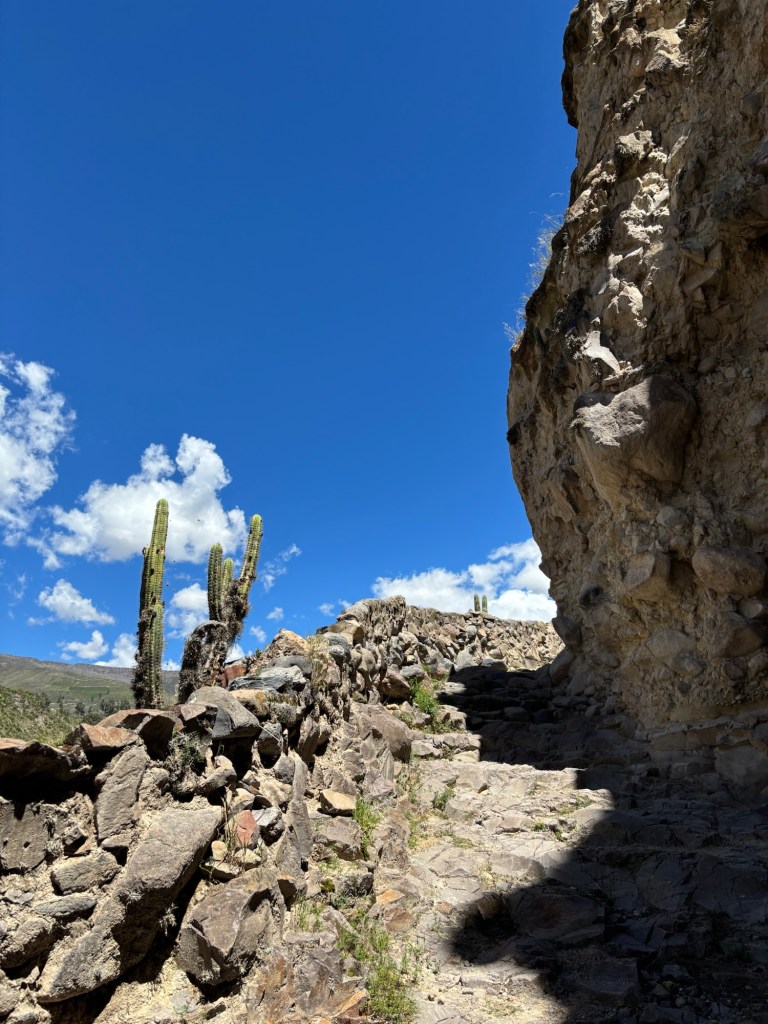
Morning summoned a slow sunrise into a cloudless sky. If I had brought walking clothes, I would have set out across the llanos on foot – but Chelsea boots, a smart winter coat and bootcut Levi’s jeans don’t exactly make for the most comfortable long-distance fare, so I erred on the side of caution and took a stroll into the berrocal – the rocky hill country south of Trujillo.


Idly, I set my sights on a restored 17th century bridge some five kilometres or so from town, but I was quite happy to wander aimlessly if the path presented any interesting forks.

My working life is so full of tasks that require forethought and planning that it’s nothing short of liberation itself to have that kind of absolute freedom that I crave: the freedom to do or not do, to turn back or to push on, to take this road or that, without any thought as to the consequences (beyond the need to get back in time for the bus). A freedom that becomes maddening when it’s taken away from me, like it was in Jordan, all those years ago. It’s a hardwired philosophy that I’ve become increasingly aware of as I’ve grown older, bleeding into my views on speech, movement and identity – and massively at odds with most of my generation.

Perhaps it’s an inherited desire for freedom from my Spanish side: I do have family ties to Andalucía, a region that once made a surprisingly successful bid for anarchy, and my great-grandparents quite literally put their lives on the line to make a stand for freedom of thought under Franco’s fascist regime.

Or perhaps that’s just wishful thinking. Either way, it’s hard to deny just how important that sense of total freedom is to me. Maybe I’m more like the Americans than I thought.


I didn’t make it as far as the bridge. The full day of rain from the day before had done more than dampen the sandy soil and form puddles and pools in the road. It had also swollen the Arroyo Bajohondo to the size of a small river. It didn’t look particularly bajo or hondo, but I didn’t trust the stability of the soil underfoot and didn’t fancy making way to Mérida with soaking jeans up to my knees for the sake of a tiny bridge, so I turned about and returned the way I had come.


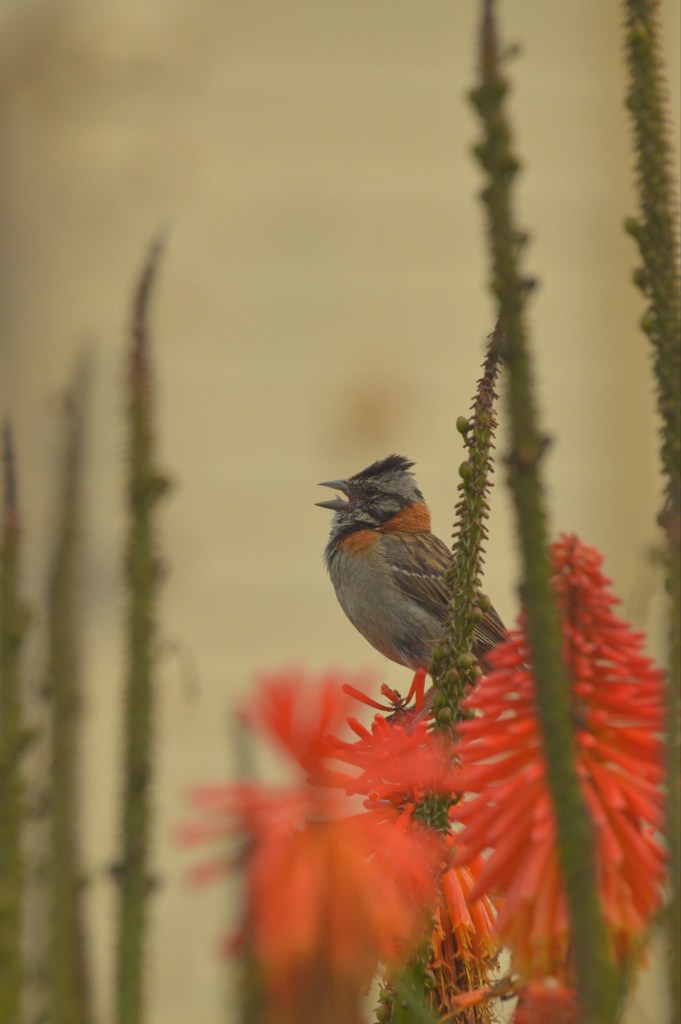
Without a car at my disposal, I couldn’t make it out onto the plains, home to Trujillo’s more emblematic species (bustards, sandgrouse and stone curlews), but the berrocal was teeming with wonders of its own. Hoopoes, shrikes and stonechats watched my coming and going from the rungs of rusting farming stations, while woodlarks and skylarks ran this way and that along the stone walls that marked the boundaries of cattle stalls along the way. A flock of Iberian magpies kept me company on the way back, their jaunty black caps almost shining in the sunlight, and I nearly missed a lonely lapwing sitting in one of the fields – a curiously English sight in far-flung Extremadura – before it took off on powerful, bouncing wingbeats.

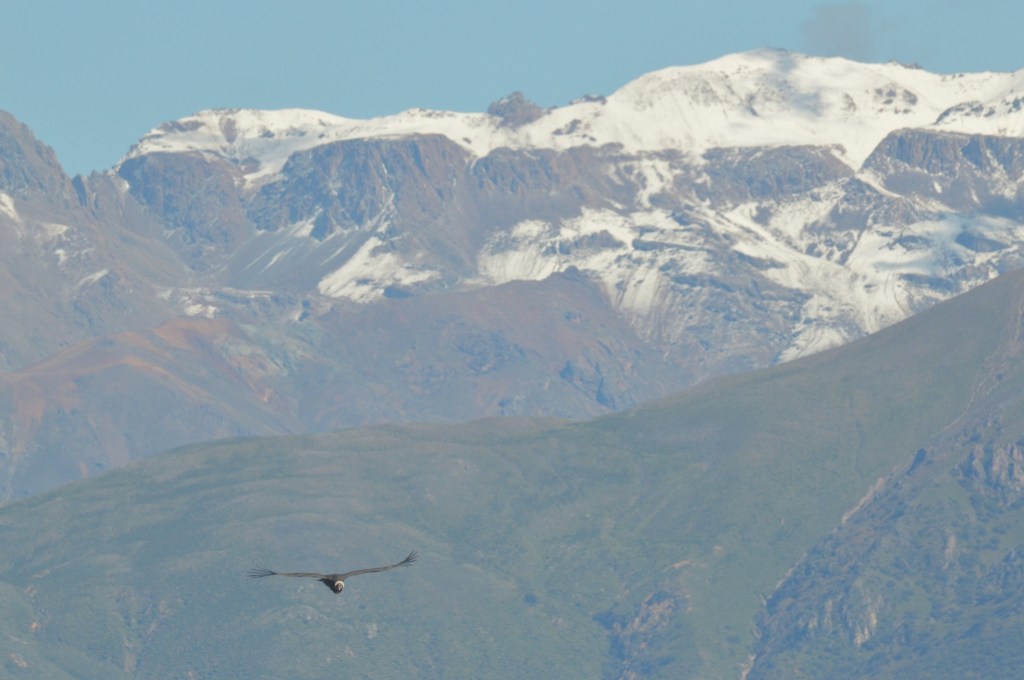
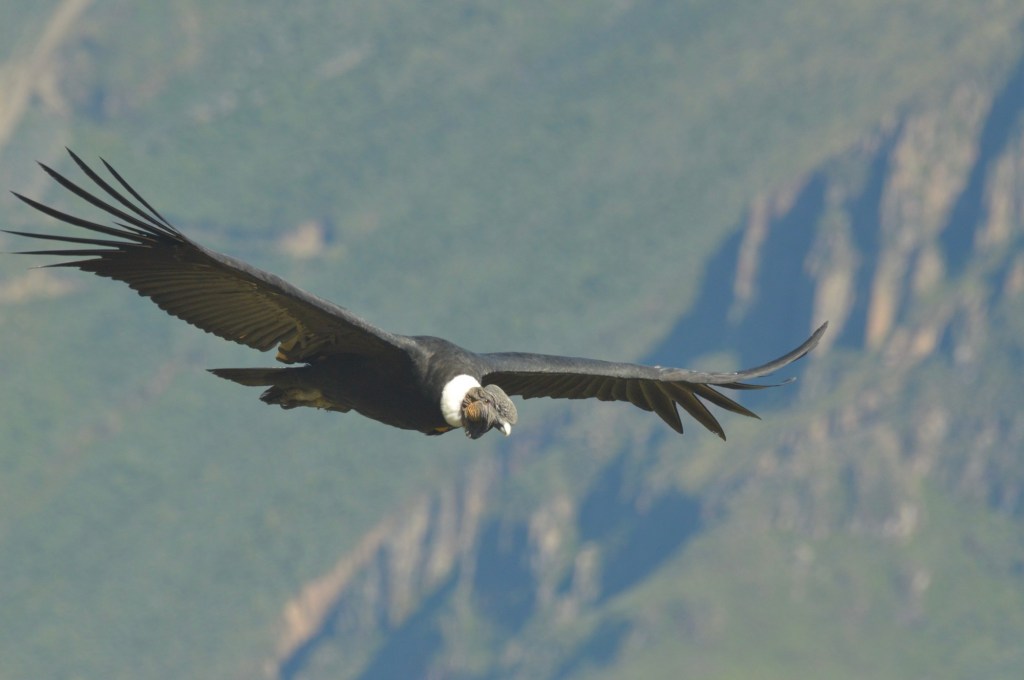
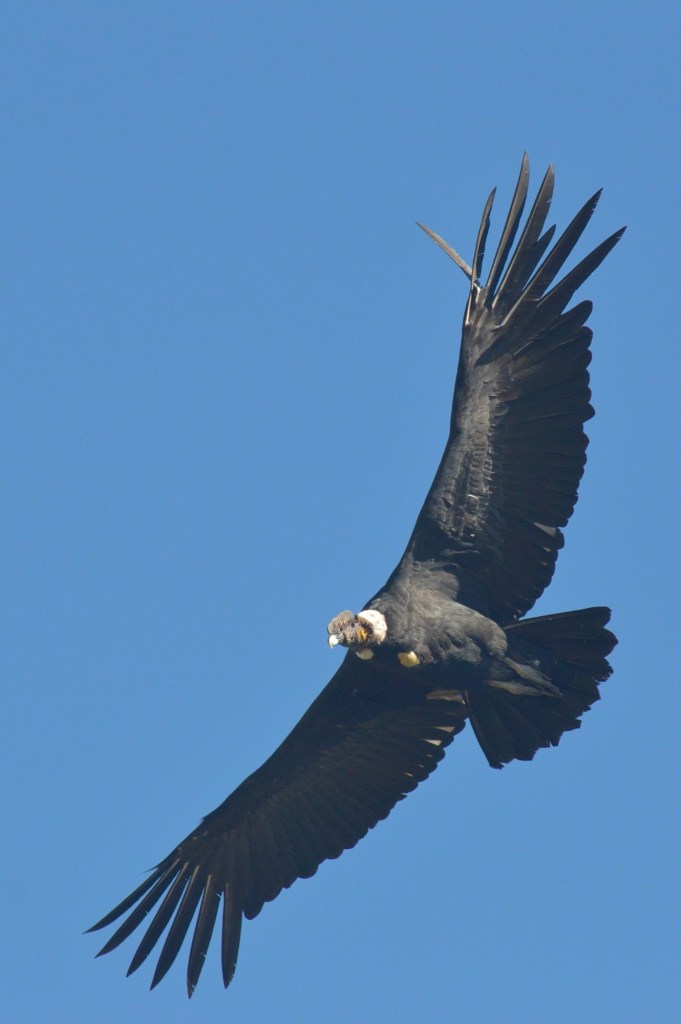
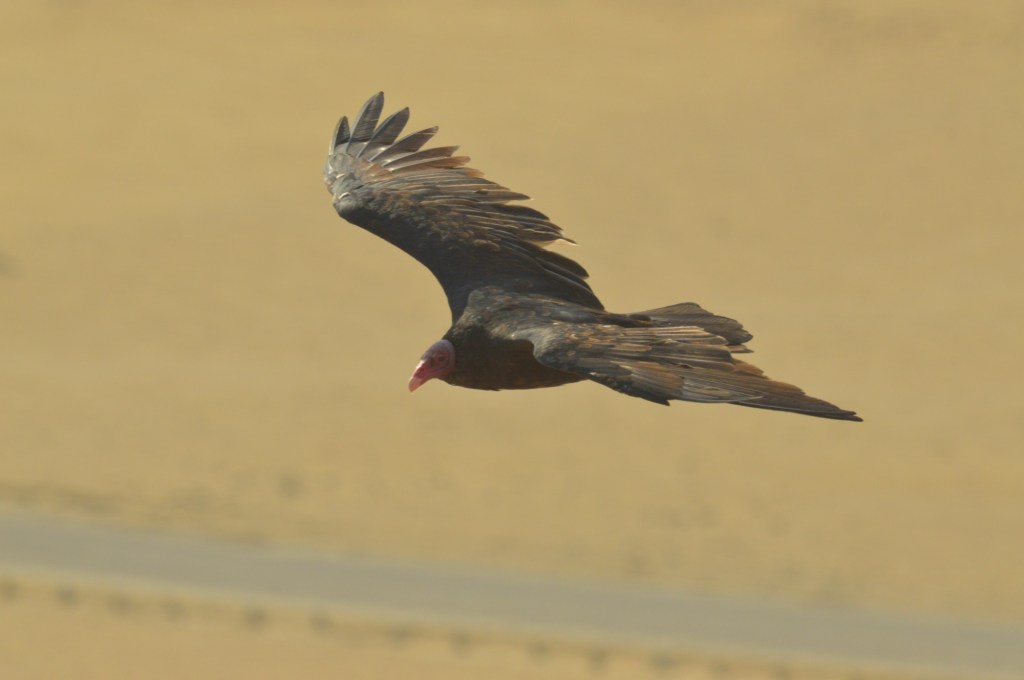
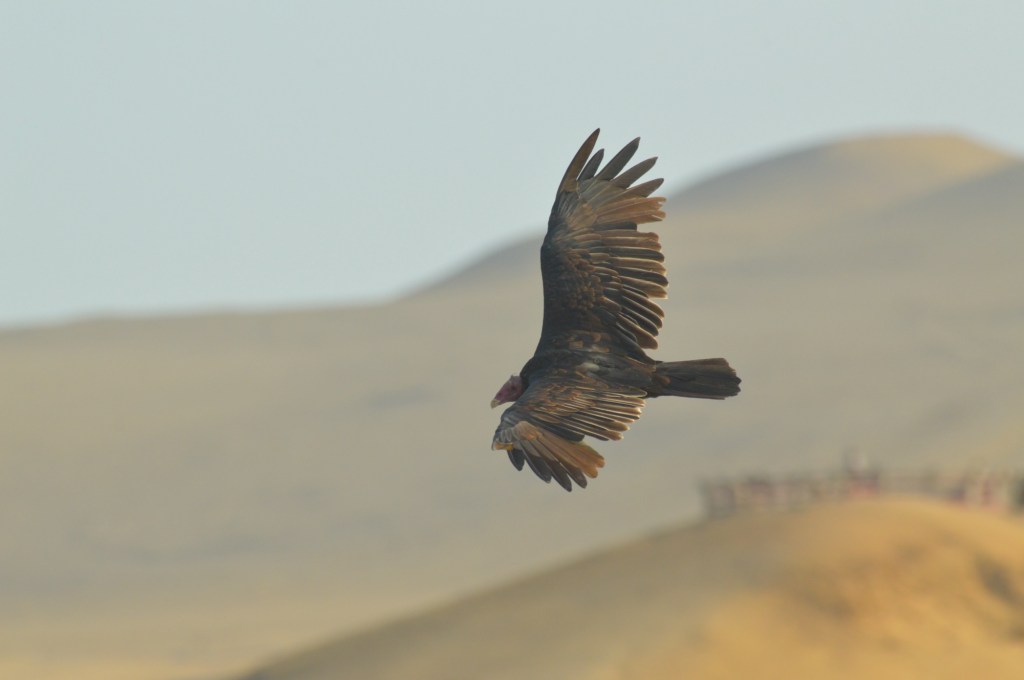
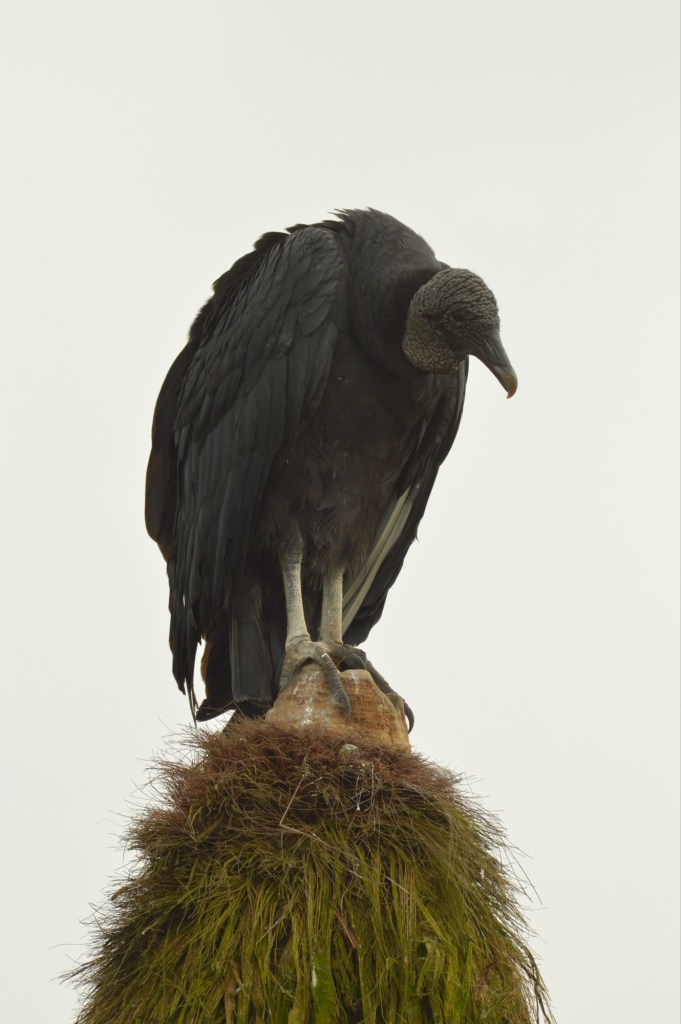
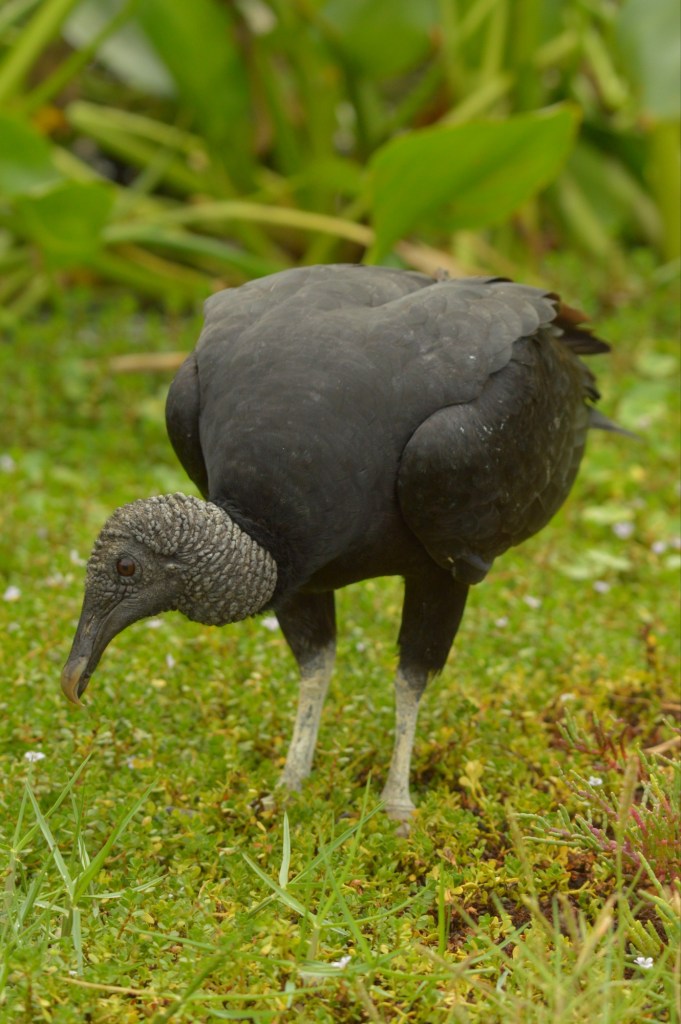
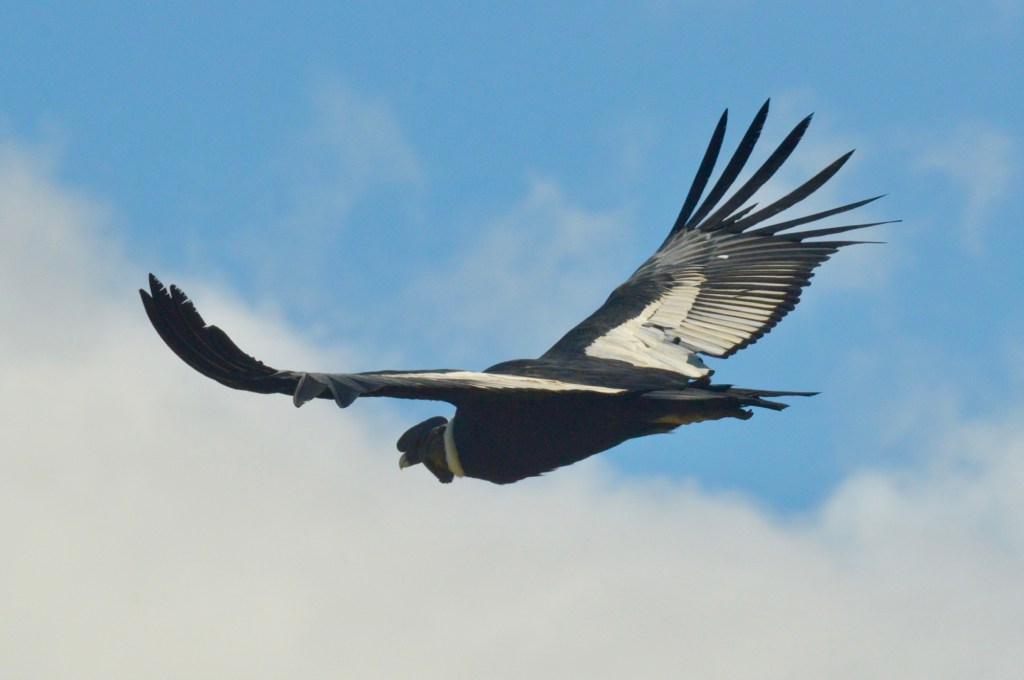
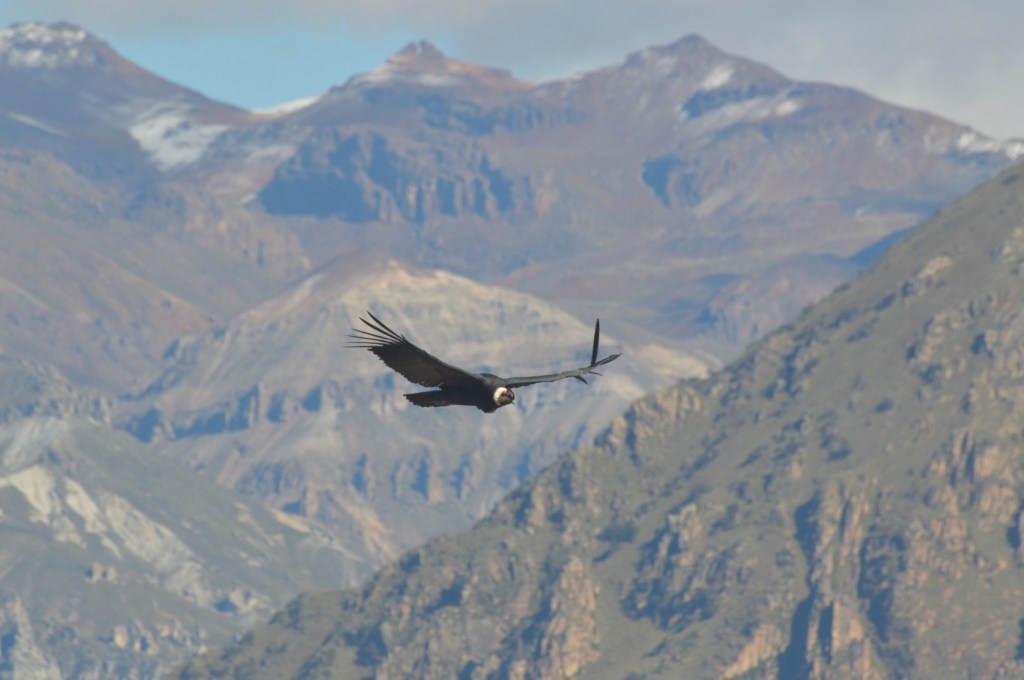
Speaking of powerful wingbeats, I was practically clipped on my way down to the arroyo by three hulking shapes that flew overhead. I clocked one as a griffon – there are few silhouettes I know better – but I had a feeling the other two might have been black vultures – something about their colossal size and the heaviness of their beaks. They seemed to have disappeared by the time I turned the corner in pursuit, which is hard to imagine for creatures with a wingspan of around 270cm.

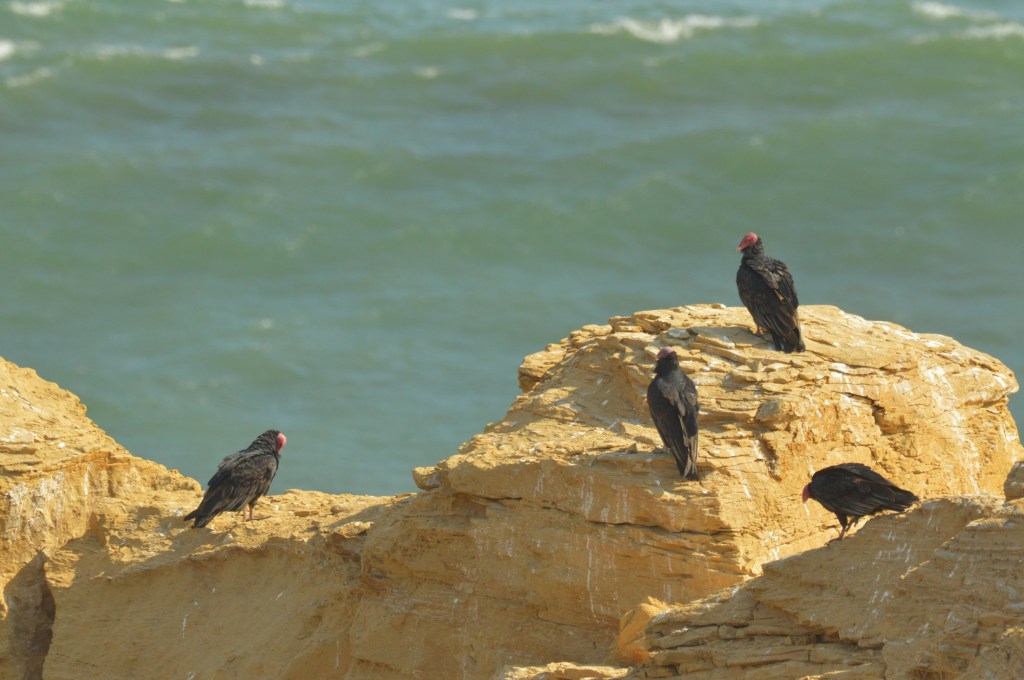
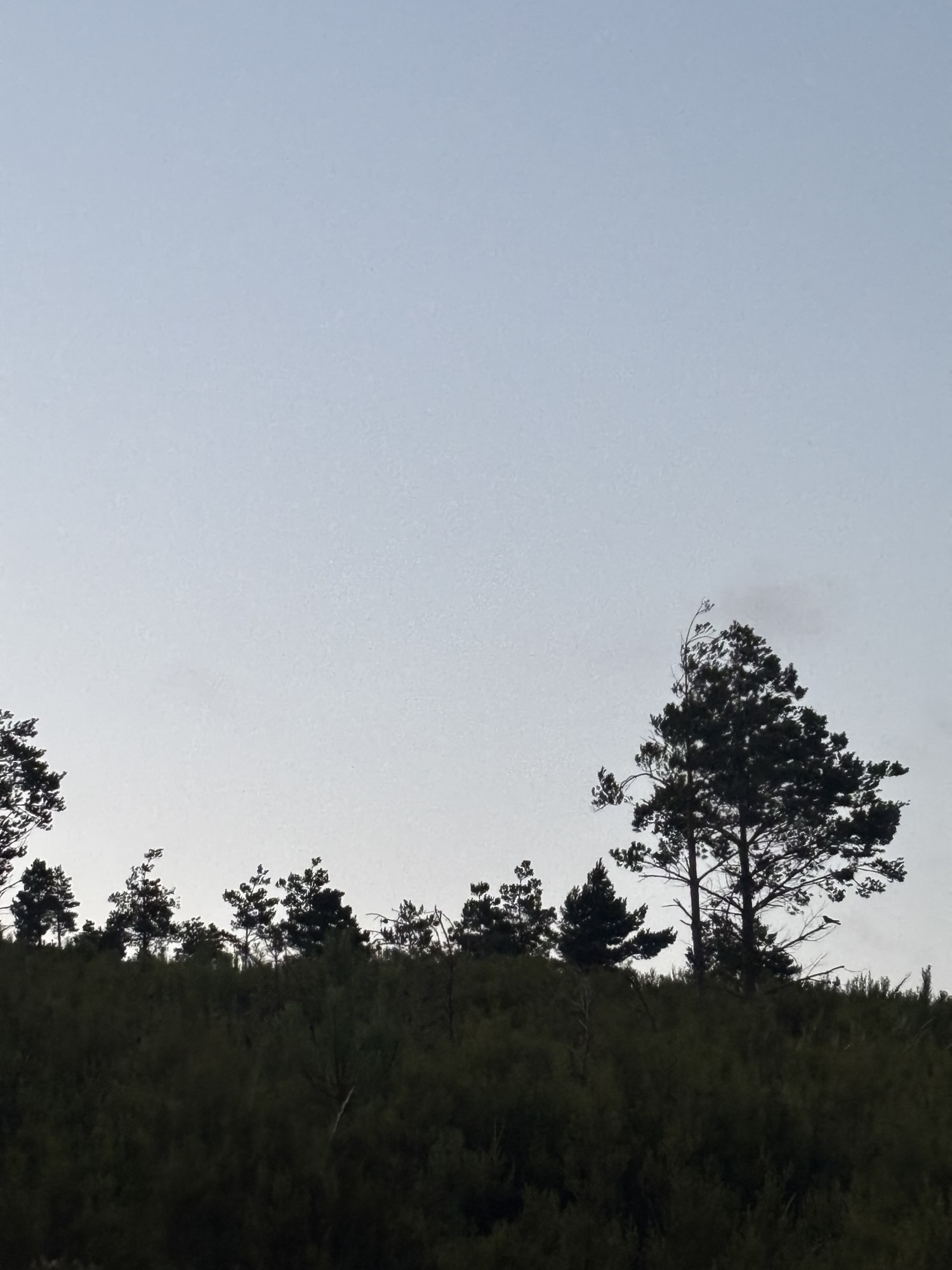
A change in perspective always helps, however. I found all three on my way back, sunning themselves on a granite boulder not too far from where I’d first seen them. I suppose I’d have had my back to them on the way down. And what an impressive sight they are! Please forgive the photo-of-a-photo until I get home and can replace the image below with the real one from my camera, which always outperforms my phone when it comes to anything that requires distance.


Even with the full day of rain, I’ve scarcely had a moment out here where I’ve felt lost or alone. Spain works an incredibly potent magic upon me, whether it comes in the form of the music of its native language, pan con aceite y tomate, the immense blue skies of Castilla or the spectacular sight of its vultures, forever and always my favourite sight in the whole world.

I conveyed this jokingly to an old lady from Villafranca on the bus. She gripped my arm with a talon that the vultures might have envied and told me in no uncertain terms to “búscate un trabajo aquí”. It does feel like the universe is trying to help me to set things right and come back. But I have to get it right. I need this to work this time. So – fingers crossed.

If I could spend the rest of my life in the passing shadow of the vultures, I’d die a happy man. BB x
Washout

Palacio Santa Marta, Trujillo. 19.04.

It turns out the rain in Spain does indeed fall mainly on the plain. And when it does, it does so with a Biblical vengeance. I made it to my hotel in Trujillo with just seconds to spare when the heavens opened. Any hopes I might have harboured of exploring the city’s surrounding countryside were swiftly washed away, as the rain came down all afternoon, all through the night and long into the following morning.

This would be a real downer if I’d had plans. But my itinerary is an open book and I’m always happy to improvise – it is my preferred method of travel. So I enjoyed a late morning, a proper breakfast and the blissful quiet of one of Spain’s most beautiful (if isolated) towns.


Trujillo sits atop a small granite ridge in a boulder-strewn corner of the Llanos de Cáceres, a vast and featureless steppe that stretches between the Sierra de San Pedro in the west and the Ibor Mountains to the east. There’s nothing like it in Western Europe. You’d have to go as far as the Puzsta in eastern Hungary to find anything close to its vastness. Lichen-covered granite boulders rise out of the earth like giant’s teeth and the odd tree stands alone in the fields, but beyond that, it’s like staring into the infinite.

Little wonder, then, that Hernán Cortés and Francisco Pizarro – both native sons of this part of the world – set their sights on nothing less than the horizon – they’d had no choice but to do so since the day they were born.


Extremadura can be a desolate place in winter. It can be pretty desolate in summer, too, but there is a virgin beauty in its isolation. By avoiding the grasping arms of the hordes of tourists who have strangled much that remained of Old Spain into submission, Extremadura has managed to hold on to the embers of an ancient fire which exists only in the memory of those living among the tower blocks of the southern coast.

Perhaps that’s why it’s often considered one of the main contenders for the Birdwatching Capital of Europe, since so many rare and otherwise elusive species still flock here in droves, taking advantage of our absence to go about their lives as their ancestors have done since before we came to this land.

You can see some of that without even leaving the motorway. Every winter, more than 75,000 common cranes travel from their breeding grounds in Northern Europe to this remote corner of the Iberian peninsula. They spend the colder months in the shade of the dehesas, feeding on acorns. They’re a rather common sight if you look beneath the trees, and at over a metre in height, they’re hard to miss.


When I first came to Trujillo in the spring of 2016, I promptly fell in love with the place. It wouldn’t be the first remote corner of Spain that’s stolen my heart – El Rocío and Hornachos are up there – and it won’t be the last. It’s found its way into my saga as the elected home of my hero, partly out of practicality and partly out of a sense of wish fulfilment on my part. Half of me wishes I’d been brave enough to flat out ask to be sent here for my second British Council placement back in 2017. It would have been a lottery, of course, but what would it have been like to live here, I wonder? Trujillo is a lot smaller than Villafranca de los Barros – and a lot more out of the way – but infinitely more scenic.


I managed a short reccie to the north of town, before the skies turned dark once again and I had to admit defeat and return to the hotel. The cobbled streets running down from the hilltop had become rivers in their own right. It wasn’t yet siesta time, but nobody else was out and about. And with good reason!


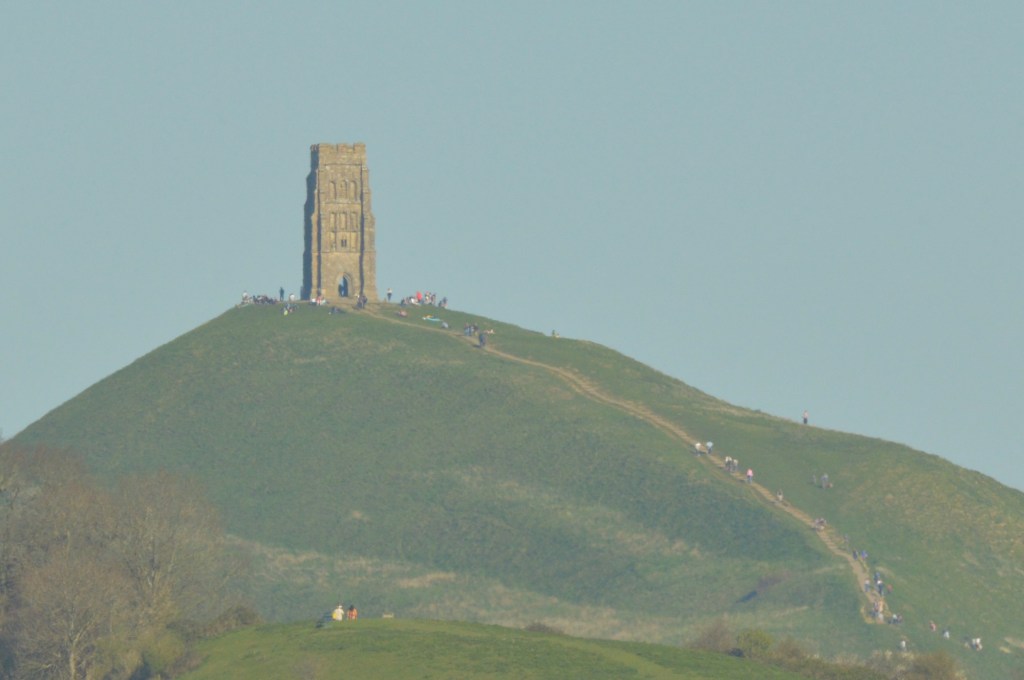
From my vantage point on the second floor of the hotel, I can see out across the plaza and the rest of town. There isn’t all that much to see, with the rain clouds obscuring most of the world from view, but when the sun is shining, you can see straight across to the pyramidal Sierra de Santa Cruz – and the town at its feet, curiously named Santa Cruz de la Sierra (I’m not altogether sure which came first).

If the weather had been kinder I’d have set out at first light and tried to reach the old Moorish settlement at its summit… but then, I haven’t exactly come dressed for a hike. Perhaps it’s for the best that I have had a day to take it easy in Trujillo.


Tomorrow is a new day. 0% chance of rain. I don’t need to rush off anywhere, so I might go for a stroll after breakfast and try to soak up the countryside while I’m here. BB x
Camino XXXV: Birds of a Feather

Albergue de Peregrinos, Lugo. 20.30.

Three days shy of Santiago and my feet are starting to get the better of me. It’s been a minor miracle that I’ve made it this far unscathed, but I suspect that murderous climb up and over the Hospitales route – coupled with several forty kilometre days back to back – have conspired to give me one final challenge in the form of two mirrored blisters, one on each of my little toes. I brought a veritable school kitbag of Compede plasters with me on this Camino, but I gave most of them away to my younger companions during the Meseta stage (as they really were suffering a great deal more than I am now), so I have had to resupply tonight.

Fortunately, the end is in sight. Three rather challenging days remain, as I still have a hundred kilometres to clear (Lugo conveniently marks precisely 100km from Santiago), but I remain steadfast in my desire to see this thing through to the end. I’ve come this far.


I don’t have an awful lot to report from this morning’s walk. I took it slowly to give my feet a break, but I still didn’t see any more than the three pilgrims from the albergue in Castrojeriz who left ahead of me, and that within the first hour and a half.

I didn’t sleep very well because the rakes from the night before decided it would be a great idea to go the bathroom and laugh their heads off at some private joke sometime around midnight. I’d normally be wide awake at that time of night anyway, but on the Camino, sleep is precious, so before I knew what I was doing my teacher mode activated and I found myself opening the door to the bathroom to give them a piece of my mind. They looked dreadfully disheveled with bloodshot, unfocused eyes, and had clearly been both drinking and smoking. I tried to get back to sleep afterwards, but it must have been another hour or so before I could do so.

It’s not always easy to deactivate from teacher mode, even on holiday. I remember doing something similar on a stag do once when some of the fellows I was with decided it would be fun to kick a football into the road. This kind of thing used to come very hard to me, but I guess practice makes perfect. Or a perfect party pooper, take your pick.

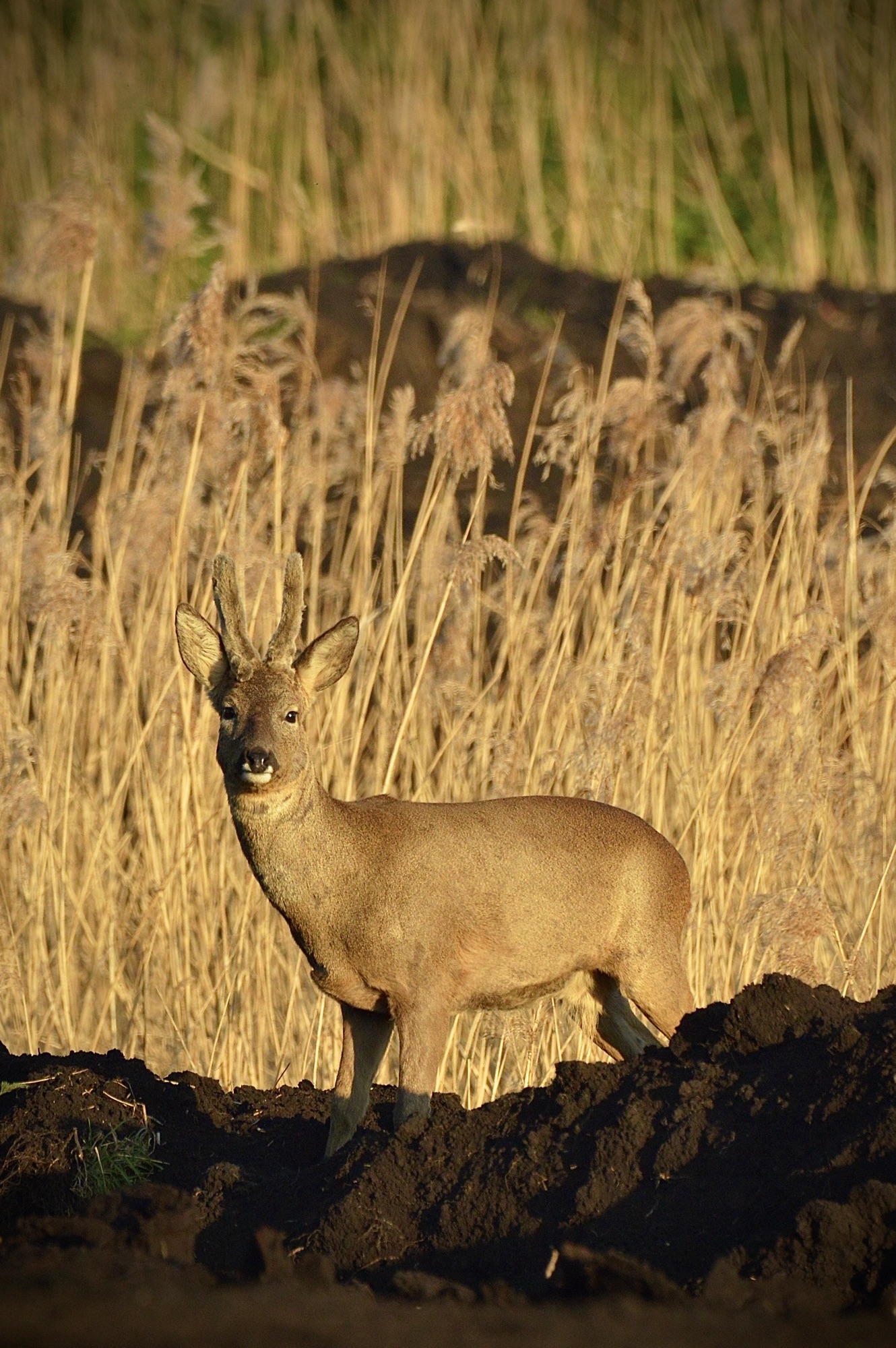
I was up again at half four, but delayed leaving until around six, as Lugo was only twenty kilometres’ distance and I didn’t want to get there too early, even at a slower pace than usual. Even so, I was early enough to see a fair number of roe deer in the woods, one of them so close I could see the light in its eyes before it bolted.


I reached Lugo shortly after eleven without any great difficulty. It was a poor morning for stamp collecting. I passed what I am sure is a famous Primitivo stop, the Oasis Primitivo, where both stamp and watermelon can be had at the right time of day, but it was not yet nine o’clock and a Monday morning and there was nobody around. So I pressed on.

Mondays can be frustrating on the Camino. On Sundays, all the shops and supermarkets close for the whole day and Monday can be little better. Twice now I’ve made landfall in a large town or city on a Monday, only to find that all its sites and museums are closed on Mondays. So it was with Lugo. At least the 100km sign was free and easy to see.


Lugo’s cathedral pays no heed to Spain’s Garfieldesque aversion to Mondays, so I had a look around. Contrary to what several folks online were saying, it’s not free, but it is a cheaper fare for pilgrims at 5€, which isn’t so bad. It’s not as spectacular as León or Burgos, though the chapel to the Lady of Lugo, la Virgen de los Ojos Grandes – the Lady of the Large Eyes – was rather impressive. Her eyes didn’t seem especially large, but maybe it’s because hers were painted brown rather than blue, as is often the way, so they seem like great pools of dark light.


The albergue was pretty busy, as I expect will be the case for the next two nights as the Primitivo rejoins the Francés in Melide, but they’ve almost all of them gone out for dinner, so I’m alone to write. The pseudo-Compede on one of my heels isn’t sticking so well, so I’m keeping one leg balanced on top of the other. In a week from now, I’ll be back in the comfort of my own bed (provided I can get my hands on my key!) and my tired feet will finally be able to rest at last. But let’s not dwell on that just yet.

Instead, I thought I’d take you through my beautiful collection of feathers that I’ve found along the pilgrim road this year. None of them are quite as rare or as beautiful as the fossil scallop – well, perhaps one of them – but I know them and I know their origin. Each one tells a story.

Stashed away in my journal, the smaller ones: a tiny goldfinch feather (rescued from a spider’s web by Audrey, one of my American companions), a feather from the wing of a great-spotted woodpecker and the plume of a large white bird, either a stork or a great bustard, found beneath the flight path of the six birds I saw on my way to Frómista.


Also within the back pocketof my journal are four more finds, all from different stages of the Camino: a quail feather from the Aragonés, a kestrel’s wing from the Francés, a tawny owl’s downy flight feather from the dark forests of the Camino de San Salvador and a chest feather from the breast of a peregrine falcon, found in the cloisters of Lugo’s Cathedral on the Primitivo. It is surely this last that is the most emblematic in the collection, since the name Peregrine Falcon might literally be translated as “pilgrim” or “wanderer”. It’s a direct translation in Spanish (halcón peregrino), so to find such a thing as my journey draws to a close seems apt.


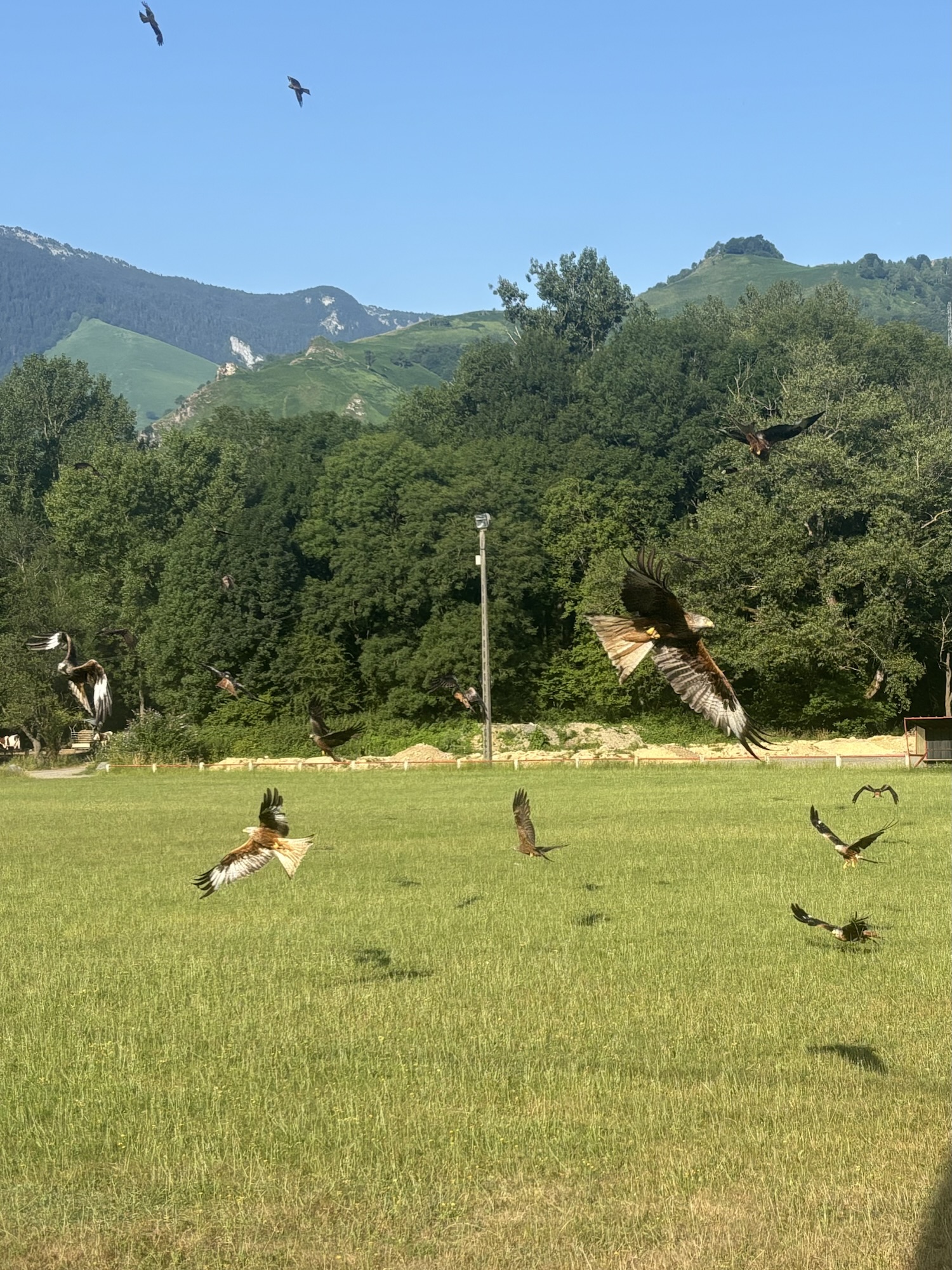
And then there’s the larger finds, the feathers that are too big to fit inside my journal, and so remain slotted into my rucksack during the day’s walk. The long and tapering black finger of a crow seems right, as this has been a familiar companion along the Primitivo, as is the small buzzard plume, and the black and white feathers of a white stork serve as a reminder of the Meseta and the town of Boadilla, where we lost our fearless German companion Theo to major foot complications. The other two have been with me since the very start of the Camino, discarded by a red kite and a griffon vulture on the rugby pitch at Bedous.


The largest of them all, the vulture, has been my totem on this trek. I found a similar one when I was a lad in the mountains of Andalusia, which I still possess to this day, but it has not been on the adventure that this one has.

I am rather attached to it. I find myself checking over my shoulder at least four or five times a day to make sure it’s still there. I sometimes feel I’d be more alarmed if it went missing rather than my watch or wallet – as though it’s been a lucky talisman of some kind.

Whatever it is, it once belonged to a proud and magnificent creature, and I have carried it with me for nearly a thousand kilometres. Through sun and rain and under the moon and stars. In the blinding light of the meseta and the towering shadows of the great cathedrals of Castile. Across sand and stone, hill and dale, moor and mountain – and, hopefully, to the end of my journey.

I don’t really believe in lucky talismans – I prefer to subscribe to the notion that the Creator has a master plan – but, like my faithful Niña and Pinta, they do provide some comfort along the road. The final hundred may yet be my greatest challenge of all, so I will need all the comfort I can get! BB x
Camino XXXIII: Forty-Five

Albergue Pensión Casa Cuartel, A Fonsagrada. 17.15.

My feet are seriously tired, but I’ve done it – the longest stint yet on this year’s Camino. Forty-five kilometres of hills, sierras and reservoirs, of steep descents and sunlit climbs, which puts me one day closer to Santiago and gives me the peace of mind to spend a day exploring the city the day after I get there. I sacrificed seeing a local festival in Grandas de Salime for this, but after speaking to some of the pilgrims in this hostel, I think I made the right choice. It sounds just like the set-up at Castrojeriz, which – if memory serves – left me with a little less than two hours’ sleep after the local verbena went on into the small hours.

There are two English lads in this hostel who must be fresh out of private school, talking about “going for brekkie” in that easily identifiable southern drawl and using the same slang terms like “cooked” and “rizz” that my students do. They’re sitting on the steps outside playing one of those mobile phone games that their generation seems to be absolutely hooked on. They’ve been doing so for the best part of the last two hours, talking loudly about their tactics as they do. The two men from Valencia who went the wrong way today are both fast asleep in the next bunk, which is the quietest the shorter of the two has been all afternoon – he’s a particularly merry sort.


I left Berducedo a full two hours before dawn, long before any of the other pilgrims were up. There wasn’t even the faintest glow on the horizon, so I did have to use my phone torch for some of the trek, especially the hundred metres or so that cut through a forest (where a number of large bats seemed to enjoy the light and the moths it attracted). The constellations were a sight to behold, as was the arm of the Milky Way stretching away to the west, towards Santiago. It’s not quite Perseid season – that’s still a little over a week away – but I did see one shooting star away to the south and made a wish.


The first cold glow of dawn descended as I began my own descent into the valley before Grandas de Salime. It’s a very steep path that zigzags down the hillside, descending by 800m in a very short space of time. I was quite happily enjoying the Battle of Helm’s Deep when a nightjar almost clipped my face with its wings and one of the rocks in the path ahead suddenly grew wings of its own and took off into the morning air. There were at least three of them hawking about the track, looking for all the world like enormous feathered moths with their strange alternating flight, sometimes flappy, sometimes gliding with their wings held high.

One landed in a tree nearby and set up its eerie churring call, which is almost as iconic to the Camino as the endless tread of my own feet.


Another – the one I had mistaken for a rock – alighted on the track a little way ahead. I approached very slowly and, at least for a little while, it didn’t look like it was in any hurry to take off again. I got so close that I could see it yawn with my own eyes: their vast, gaping mouths are one of the features that gave them their Spanish name of “chotacabras”, or goatsuckers. I almost missed the hare that came bounding out of the grass behind it, appearing more clearly in the photos I took than it did in reality.

Of course, it took off before I could get too close, making its strange grooik flight call as it did so. It landed a little way back up the path but I left it alone and pressed on.

Nightjars are just one of the rewards of setting out early on the Camino. You might hear them, but you’d never see them if you set out after breakfast. I’ve been lucky enough to see quite a few on this year’s Camino, but never so close and never on camera. I haven’t wanted my SLR often on this Camino – I’m carrying enough as it is – but today I would have given a small part of my library to have had it in my hands!


I reached Grandas de Salime shortly after nine, making it a four hour walk from Berducedo (compared to the guidebooks’ suggestion of six or seven). This is usually the stage end, but as it was not even the halfway point, I allowed myself a decent breakfast of a tostada con aceite y tomate, a slice of tortilla and some fresh orange juice so that I might have the energy to push on. There were a few pilgrims having breakfast at the bar, but not that many. The townsfolk were setting up for the second night of their local festival, and I imagine a number of pilgrims had decided to stick around and have fun. I, however, had another twenty-five kilometres still to go and couldn’t stay for long.


I trailed a couple of Brazilian pilgrims for a little while before Peñafuente, dressed in sporty Lycra, marching cactus-print parasols, a giant Brazilian flag and immaculate hair (something the Brazilian pilgrims seem to prioritise above all other things). I’ve become a lot less cagey about drinking from unmarked fountains along the Camino and the one at Peñafuente was absolutely incredible. The guidebooks recommended the one at Fonfría, but that wasn’t as good or as cold as the one at Peñafuente, so I drank deep and bottled deeper, as it was still a long way to A Fonsagrada. I had hardly begun the second leg, which the guidebooks suggested should take eight to nine hours, and what clouds there were in the sky did very little to block the sun. I was going to need all the water I could get. I can be a real camel on the Camino, but it’s always best to be prepared.


There are quite a few hills to climb between Grandas and A Fonsagrada, none of which were particularly easy under the midday sun. The Camino cuts right through one of Asturias’ many wind farms, though these ones are nowhere near as enormous as the turbines found up in the mountains on the San Salvador route. The heavy whoosh of their arms as they spin in the wind is quite something to hear up close, punctuated with the odd mechanical whirr when the head tilts one way or the other. The way the Spaniards were complaining about the wind up in the mountains yesterday, you’d think that wind was a rare occurrence in Spain – but the turbines that crown many of Spain’s hills and sierras say otherwise.


The Spanish are nothing if not practical with their high places. If there isn’t a watchtower, a sanctuary, a hermitage or a radio mast on top of this or that hill, there’s usually a row of wind turbines.

I passed the first row of turbines before sunrise this morning. You can just about see them to the right of the nearer turbines in the photo below, on the last range of hills before the wall of cloud held back by the mountains of Asturias. It’s a good indicator of just how far I walked today.


Shortly after passing the last row of turbines, I crossed the border into Galicia, the last of Spain’s regions on the Camino de Santiago. The marker wasn’t as grand as the one at O Cebreiro – just a crude line of flints and a small cement block featuring a Facebook link to a motorcycle page owned by a guy called Nando, which also happened to indicate that Asturias was on one side and Galicia on the other.

The scenery is already different. The hills are no longer quite as rugged. Instead, they’re carpeted in golden grass and purple heather. I was sorely tempted to get an ice cream at O Acebo, but decided to postpone that desire until I had reached my destination. It took another two and a half hours from the border to reach A Fonsagrada, and the last steep climb up to the hilltop town didn’t help, but I was relieved to learn that the albergue I had found was a bit of a step up from the usual, with real linen bedsheets, soap in the showers and an in-house washer-dryer complex (though I still prefer to wash my clothes by hand whenever I can).


So… forty-five kilometre days can be done, even on the Primitivo! That’s the longest I’ve done so far, and probably the longest I’ll do this year. There’s no sense in rushing to Santiago, which is a lot more expensive to stay in than the towns and villages along the way, so from here on out I intend to enjoy the Camino at a relatively leisurely pace.

Which is, of course, a white lie – because after 45km, 30km is relatively casual. Or 35. Or even 37… BB x
Camino XXIX: Asturias

Albergue de Peregrinos, Grado. 21.40.

Confession. I was genuinely considering skipping Grado to gain a day this morning. I think I still hadn’t shaken the idea that, if I could only walk a little faster, I might catch up to my companions on the Camino Francés before they left for home. But the Camino, like an old god, is fickle. I’m not sure whose idea it was – Santiago, the Lady of El Rocío or the capricious spirit of the Camino itself – but I was waylaid at the albergue this morning by a retired Swedish woman who wanted company on the road out of town. The Camino leads straight to the train station, and I might have made it in time… but the Swedish woman pointed left and I followed without thinking.

I lost her about half an hour later when I picked up speed at the city’s outer limits, but I see now that it was a signal: no tricks this time. This Camino must be walked from beginning to end. There is something along this road that I am meant to do or see. The fatalist in me takes over on the Camino, and right now he is utterly convinced of that fact. So here we are.


Welcome to the Camino Primitivo. If you were expecting something similar to the Camino Francés, think again. It’s almost like stepping out of a bus and onto a boat: the same feeling of companionship, but an altogether different vehicle in an altogether different environment.

Asturias is, in a way, the grandfather of Spain. This green and clouded region, together with Cantabria and the Basque Country, was the final holdout of Iberia’s Christians during the Moorish invasion of 711, and it was from here – so the legends tell – that Don Pelayo established the Asturian monarchy, the earliest forerunner of the Spanish crown, and began the Christian reconquest of Spain – the Reconquista – which would take nearly eight hundred years to complete.

You might think such a place would be as Spanish as it gets. You would be mistaken. This is not a land of paella, flamenco and bull-fighting, or dark-skinned maidens flanked by guitar-wielding lotharios (a stereotype far more common among Italian pilgrims this year). This is a green and hilly country where the clouds descend as far as the tree-tops and sometimes beyond; where the rain rolls in off the sea in visible eddies and falls like mist on your face. Where the men are short but powerfully built, and the women breathtakingly pale. Where great clouds of smoke rise from the quarries and factories, and the air is thick with the constant ringing of cowbells. This is Asturias. It could hardly be more different to neighbouring León. It is a reminder – as though one were needed – that Spain is, in reality, a multinational state, where even the kingdom that started it all has its own distinct language and identity.


For the greater part of the morning, my road was cushioned by the clouds. Sometimes they moved with me, sometimes they moved against me. It rained for a half-hour or so, but it was not so much rain as a rain cloud that was so low to the ground that one could walk right through it. The Camino from Oviedo ducks and weaves through the hill country, sometimes following the asphalt roads, sometimes leading down dark trails into the tangled forests of oak and eucalyptus.

It’s very easy to see how this corner of Spain – behind the frontier of the Cordillera Cantábrica – shelters most of Spain’s lingering mythology. The forests are dark and watchful and the mist rolling through them plays tricks with your eyes. I heard something large kick up the leaves and dart into the deep at one point, but I never did see what it was. A deer, perhaps. There are plenty of them about.

In one of the forested stretches, the Camino crosses a small clearing scarred with limestone teeth, like the bones of some ancient monster. A splash of colour on one of the rocks nearest to the road caught my eye and, on closer inspection, it was the head of one of the spirits the Lady of El Rocío sent to guide me yesterday: an Egyptian vulture.


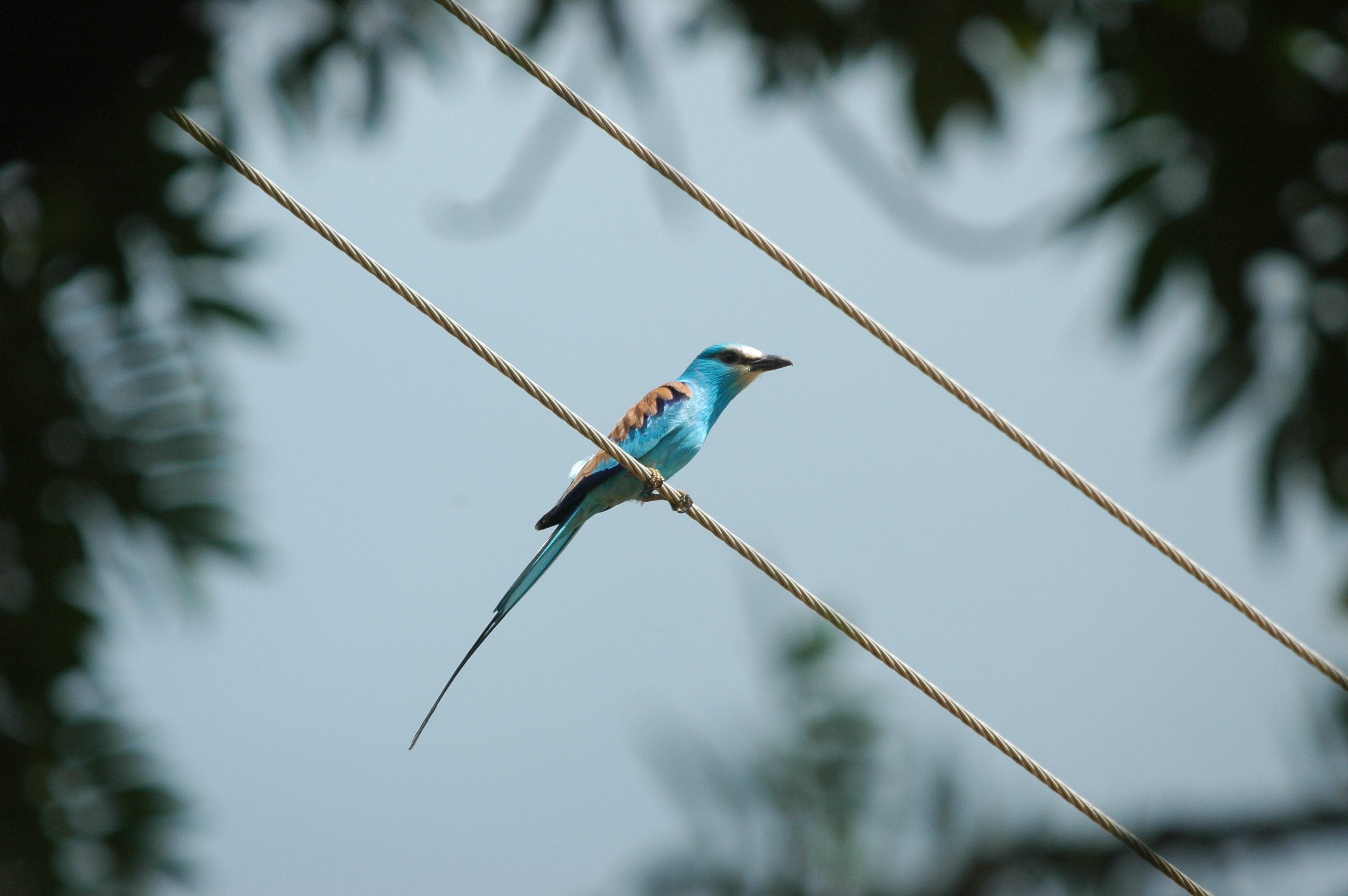
Egyptian vultures are one of the oldest species of vulture still in existence. They are also the last of their kind, with their nearest relatives believed to have died out during the Miocene. They are incredibly intelligent creatures, being one of the few species to use not just one but two tools: using stones as hammers to break into eggs, and sticks as spools to gather wool or other nest-building materials.

They’re also amazing to look at, with their glam-rocker hairstyles and their black and white wings. I found myself wondering whether this bird was one of the inspirations for the Chozo, an ancient race of superintelligent avianoid aliens from the Metroid series. Their faces certainly match up to the earlier designs.

Well, while I had them on the brain, suddenly, there they were: a pair of them, circling low over a hamlet on the outskirts of Premoño. A local and his son were heaping refuse onto a small bonfire, which may be what drew them in, but before long they were riding the thermals high into the sky. It was enough to make me skip one breakfast stop just to chase after them and watch them ride higher and higher until I could no longer make out the diamond shape of their tailfeathers.


I tried to make amends on a breakfast stop in Valduno, but one of the waiters made frantic signs to be quiet as I opened the door: half the bar space had been given over to microphones and speakers, and they were in the middle of recording a podcast. I could get some water, they said, or wait in a corner. I felt I was intruding on something. I moved on.

I found a better spot in Paladín, where I had a nice long chat with the barman. He had some sort of alarm setup which sounded awfully close to Colours of the Wind from Disney’s Pocahontas, which went off whenever somebody walked through the gate – I guess that’s how he knew to appear the moment I arrived. He was keen to know how many pilgrims I had seen on the road. I told him only a handful, as I had been one of the first to leave Oviedo – which was true – but that there had been plenty at the albergue. He was quick to point out that not all of them would come this way, as the Camino Norte also runs through Oviedo, but seemed very appreciative to have a conversation with a peregrino. Spanish tourists bring money during the summer, he said, but they don’t bring much more than that: a place to eat and sleep and then they’re gone. He missed conversations with pilgrims and swapping tales from the road.

After Paladín, the Camino returns to the banks of the Nalón for a little while. I was so fixated on the beauty of the river that I almost stepped on a stag beetle. I have yet to see one of the impressive males, but the females seem to get about quite a bit during the day, as this is the sixth or seventh one I’ve seen along the Camino.


Like its sister, the Tajo, and a great number of other Spanish rivers and creeks, the Nalón cuts right through the craggy cliffs and sierras on its winding journey to the sea. The train from Oviedo seems to follow it, which must make for a spectacular journey. There’s a small bar at the foot of the Peñón de Peñaflor where you can stop for a drink, but I was much too busy drinking in the view. The old masters painted paradise as a garden with many mirrored lakes and fruit trees, but I think mine would be scarred with karstic crags just like these.


After crossing the river and the tiny settlement of Peñaflor – a small cluster of houses that seem to exist purely to justify the train station – the Camino cuts across the countryside toward the hill town of Grado. A local girl in white cut-off jeans stepped out into the road as I left town and sauntered on ahead with a jaunty, confident stride, toying with her hair over one shoulder and then the other, and then held up in one hand, as though she couldn’t quite make up her mind how she wanted it. It was about half an hour’s walk to Grado, where she finally disappeared into one of the apartment buildings. Spaniards aren’t known for being natural long-distance walkers, so I wonder what she was doing out here?


I reached the albergue a full two hours ahead of opening time, so I took off my sandals and zoned out for a bit. I’ve found a comfortable method in wearing my liner socks underneath the woolen socks (which may well be their original purpose). It’s not too hot and it meant no discomfort whatsoever from my blisters. Let’s see if it lasts.

Andrés, the cheery hospitalero from Badajoz (I’d recognise that accent anywhere) arrived just before 2pm and handled check-in, after which I had a good nap for two hours (that’s how I can justify still writing at this late hour, when all the other pilgrims have long since turned in). I considered going out to eat, but instead sorted out my flight home and popped out to a supermarket to get some supplies – namely, sun-tan lotion, as I’m all out and there are some long days ahead.

Back at the albergue, Andrés suggested making some wax stamps. This slowly brought all the pilgrims downstairs and got conversations flowing all around the room. Hospitaleros only typically work for around 15 days before moving on, but here was a master at work: friendly, accommodating, knowledgeable and unimposing. Just present.

He also had the spirit to call out a fellow Spaniard for a slightly tactless remark about how “easily” Moroccan migrants get Spanish citizenship. As a former civil servant, Andrés certainly knew his stuff – enough to put the man in his place with some hard facts about the reality of immigration policy in Spain.

I feel I learned a lot today. I also got a shiny new wax stamp for the passport, which I painted gold in a nod to the Asturian flag. Now when I look at it, I’ll remember this place.


I don’t know if I’ll find a “Camino family” again like I did on the Francés – that road does facilitate the group dynamic like no other. But this feels right. I’m learning so much and seeing so much more.

Somebody stopped me from catching that train, and they had the right of it. Here’s to another week and a half of wonder. BB x
Camino XVIII: Down and Out

Albergue de Peregrinos El Salvador, Oviedo. 19.27.

Ignore what I said yesterday. I’ve reached Oviedo a day ahead of schedule. There are a few reasons for this:

  1. The Albergue in Pola de Lena was due to open at 15.30, some three hours after I arrived. The website was pretty vague about the need to book ahead.
  2. The next town, Mieres del Camino, was about three hours’ walk on, but had no albergue – pilgrims are housed in the Residencia Universitaria for the princely sum of 25€.
  3. The flights home from Santiago go up by about 50€ after the 10th August, giving me an incentive to pick up the pace, but…
  4. …my feet could use a break after all that climbing, and speeding up is the last thing that I need.
  5. Oh, and I’ve had three days without WiFi, so my data has been cascading faster than my Camino buddy Alonso could finish a watermelon.

Hopefully you’ll forgive me for catching a train for the last 30km or so from Pola de Lena. I have been walking about 25-30km a day every day for four weeks, and I used one cheeky bus ride on my last Camino to circumvent the tedious industrial estate west of León. This time it’s my own health I’m looking out for!


It’s a good thing I jumped the gun and climbed up and over Puerto de Pajares yesterday, as when I awoke this morning, it was to a fogbound world. The rain that was forecast never came, but in its place a thick blanket of mist had descended upon the mountains, obscuring everything from sight. It didn’t clear until around half past ten, by which point I would have long since reached the Asturian border if I’d stuck to my original plan.


Two of the sportygrinos left around five minutes before I did, but I never saw so much as a whisper of them on the trail, and I was making pretty good speed. I’d get to wondering whether some of these lean Spanish pilgrims take the Camino at a run, but there was no such trace in the mud, so perhaps they took a shortcut. Or went by bike.


The initial descent into the valley below was positively murderous underfoot, so Pinta and Niña came to the rescue once again. It wasn’t helped much by the knowledge that once I’d got to the bottom of the valley, I’d only have to go back up again on the other side.

The Lady of El Rocío sent me a gift to speed me on my way. A pine marten came scampering out onto the path as I started to climb, stared at me for a few seconds, and then went bounding off into the trees. I raced after it on stealthy feet, but it had vanished.

About an hour or so later on, as the Camino threatened monotony on a 5km asphalt stretch, she sent another gift in the form of a white raptor: an Egyptian vulture, the first I’ve seen in years, smaller than its griffon cousins but by no means less impressive. Between these two gifts and the cries of buzzards that followed me all the way to Pola de Lena, I was in good company all morning.

Something that caught my eye along today’s route was the quiet fury at the Asturian AVE line. The AVE (Alta Velocidad Española, Spain’s high-speed rail line) arrived late in Asturias, with works completed in November 2023. The project took nearly twenty years to complete, owing to the difficulty of the terrain – namely, the formidable barrier of the Cordillera Cantábrica. The first attempt to dig a tunnel through the mountains hit an enormous aquifer that drained many of León’s rivers and reservoirs, requiring rapid repairs and a considerable sum of money to re-route the tunnel.

All in all, the final cost of the AVE line from Madrid-Gijón was around 4€ billion. For context, the Madrid-Barcelona line cost around 9.5€ billion to lay down, which is just under twice the length, but there is considerably more traffic between the two megacities, and the Catalans have always benefited from their access to the profitable Mediterranean Sea. The Asturians, on the other hand, are proud of the natural beauty of their mountain principality and the decision to mine straight through the mountains does not seem to have been universally welcomed here.


I reached Pola de Lena at around 12.15 and killed some time over lunch (alubias con orejas, chuletón and natillas – and all for less than £10!). I had the same rigmarole with the train ticket as I had in France: the ticket barrier wouldn’t recognise the QR code on my phone, so as there was nobody at the desk, I just bought a 2€ ticket to the next stop. And just like France, the QR code worked perfectly at the other end. No idea what that’s all about.

Oviedo is a very different city to the ones you encounter on the Camino Francés. It feels distinctly more European than Spanish: large green parks, blocky, modern buildings and no plane trees in sight. I had to cross one such park to reach the albergue and practically stumbled upon a statuette of Mafalda, the beloved creation of Argentine artist Quino. She’s a big hit in her home country (and in Spain), but Oviedo has a special place for Mafalda due to the presence of her statue in the park. That’s why you’ll find Mafalda-themed tee-shirts and toys in shops all across the city.


I got to the albergue in time for 16.00, when the hospitalero hobbled in, but it was gone 17.00 by the time I got to check in – despite being only seventh in line. The poor guy seemed to have learned the monologue like a script which he rattled off at high speed, too fast for even the Spaniards amongst us to understand. The only point he was crystal clear on was that we had to be in by 22.00h, at which point he would close the doors. I suppose that must be a recurring problem in the cities.

I can tell you one thing I’ve noticed immediately about the Camino Primitivo. It’s a lot more European. I haven’t met a single American (or Brit, for that matter). Lots of Spanish, lots of French and a scattering of German, Austrian, Italian and Portuguese. But no Americans. I wonder if that’s a thing? Do they only come across the Atlantic for the “big ones” – the Francés and the Norte? The Primitivo is just under a fortnight (I will be doing it in around 10-11 days) so perhaps it’s not worth the investment. It will mean a serious shot in the arm for my languages – and isn’t that precisely why I love the Camino so much?


It would be remiss of me to come all this way and not visit the Catedral de San Salvador, so I slipped in for a flying visit just before closing time. True to form, the scaffolding curse struck again: the cathedral was untouched, but the image of San Salvador was behind a heavy hemp screen, being carefully restored by a couple of painters. There’s plenty more to see, though, and I had a wander around the sacred relics and the pilgrim tombs in the cathedral’s antechambers.

Just before leaving, my eye was caught by a small but incredibly ornate chapel by the exit to Santa Eulalia de Mérida, a teenage saint from Extremadura who is venerated in Asturias. She’s a long way from home, up here in the cold mountains of Asturias; but then, so was the Lady of El Rocío in that shrine by the lake west of Logroño.

I’m only just beginning to take an interest in the cult of saints in Spain – and I feel all the more foolish now for dodging an entire module on the subject at university. Given my especial devotion to the Lady of El Rocío, it seems a subject I really should explore some more. Maybe there’s a space for Eulalia in there. She would be a bridge to the land that stole my heart.


French to my right. Portuguese to my left. Spanish out in front. It’s shaping up to be a good Camino choice for languages. And if my plan holds out, I might even get to say one last goodbye to at least one of the pilgrims with whom I shared the road from Puente La Reina. New friends and old. That would be a nice way to end this adventure. BB x
Camino XXVII: Columbus Rides Again

Albergue de Peregrinos de Payares, Pajares. 19.30.

Shortly after one o’clock this afternoon, I crossed over into Asturias and crossed off the penultimate Spanish region on my list. After a flying visit to Tenerife earlier this year and a long march across Aragón at the start of the Camino, now only Murcia remains. Which is tremendously ironic, as my family are technically Murcian, since the borders of Spain’s autonomous communities were only redrawn in their present form in 1983, with both Albacete and Villarrobledo falling within the formerly extensive region of Murcia. But alas! It remains on my list as the very last region for me to visit. At least I won’t be short on options.


The other pilgrims were all up at 5am this morning, but I still managed to beat them out of the door and was on the road by 5.20. I still had the crazy idea of combining two days into one – crazy, not on account of the distance (38km is child’s play at this point) but the elevation, which was considerable. It was pretty chilly, so I kept my fleece on for the first couple of hours while I finished I, Claudius.

The young folks of Pola de Gordón were starting to head for home after a Saturday night out on the town (read: village) as I walked in around 7am, though there was still music playing in the town bar, Los Gatos Negros. The Dane overtook me as I was fixing the straps on my bag, but I passed him later on (I have a vicious pace when I get going) and did not see him again.

I have managed to acquire two more books: Spanish translations of the Hungarian author Laszlo Passuth’s Tlaloc Weeps over Mexico, bound in red leather. They were fading away in a book bank at the side of the road and, as I have been looking for this book for a while, I rescued them. I have now acquired six books since starting the Camino and jettisoned the one I came out with. They don’t add too much weight to my backpack, but they’re not as easy to fold away like my clothes… still. This leopard’s spots don’t change so easily, I suppose.

Before reaching Buiza, there’s a spooky silhouette on one of the rocky spurs that juts out of the mountains. We are very definitely in wolf country, and the Lobo de Buiza – a metal sculpture that watched the road into the mountains – would be very easy to mistake for the real thing if you didn’t know to look for it. It’s certainly big enough: my lasting memory of the wild wolves I saw in Poland this Christmas was their size, which little can prepare you for when you see one in the flesh (a true wolf can be taller at the shoulder than a mastiff).

Sadly, I didn’t see any wolves today, though I think I saw one of their tracks. Wolf and dog prints are very similar, but their gait is totally different: a dog walks with its front and hind legs splayed out in two lines, while a wolf trots in single file, like a fox. I did see a fox in the half-dark of the forest, shortly before daybreak.


Wolves aren’t the only large predators that dwell in this rugged corner of the peninsula. Somiedo Natural Park lies 50km to the west, beyond the formidable peaks of the Babia and Luna Mountains, and it is famous for being the final refuge of the Cantabrian Brown Bear. They were once widespread in Spain but can now only be found in the Cordillera Cantábrica, though recent sightings beyond Somiedo seem to suggest that they are starting to creep back into the fringes of their former range – and Pajares in right on their doorstep.

Thirty years ago, this Iberian offshoot of the European Brown Bear was on the verge of extinction, hunted without mercy by the Spanish (and the Romans before them). I remember visiting my friend Kate in Cabezón de la Sal and having dinner in a bar full of dead bears: mounted heads on the walls and black-and-white photographs of groups of hunters standing proudly about the carcass of a slain bear, as though the murder of such a beautiful creature were something to celebrate.

With both bears and wolves about, I was on full alert and so I nearly jumped out of my skin halfway up the mountain when something very large suddenly appeared on my left, crashing through the undergrowth. It was, of course, a cow, but it still gave me a fright. It’s a good thing its English was about as good as the local Asturians, so the torrent of expletives went right over its head.


The climb from Buiza was formidable, but it was only Round One. By day’s end, I think I had climbed and descended no fewer than nine separate ridges, tackling most of the San Salvador’s cumulative 3000m elevation in one day. Little wonder my feet were complaining by the end of the walk! I’d have been done for if not for the valiant effort of Pinta and Niña, my two trusty walking sticks. How the pilgrims of old attempted this path in a time before clean water and blister plasters is beyond me. Faith truly is a powerful thing.

If only it were powerful enough to open the doors of the churches along the way, which have all been locked up since I left León!


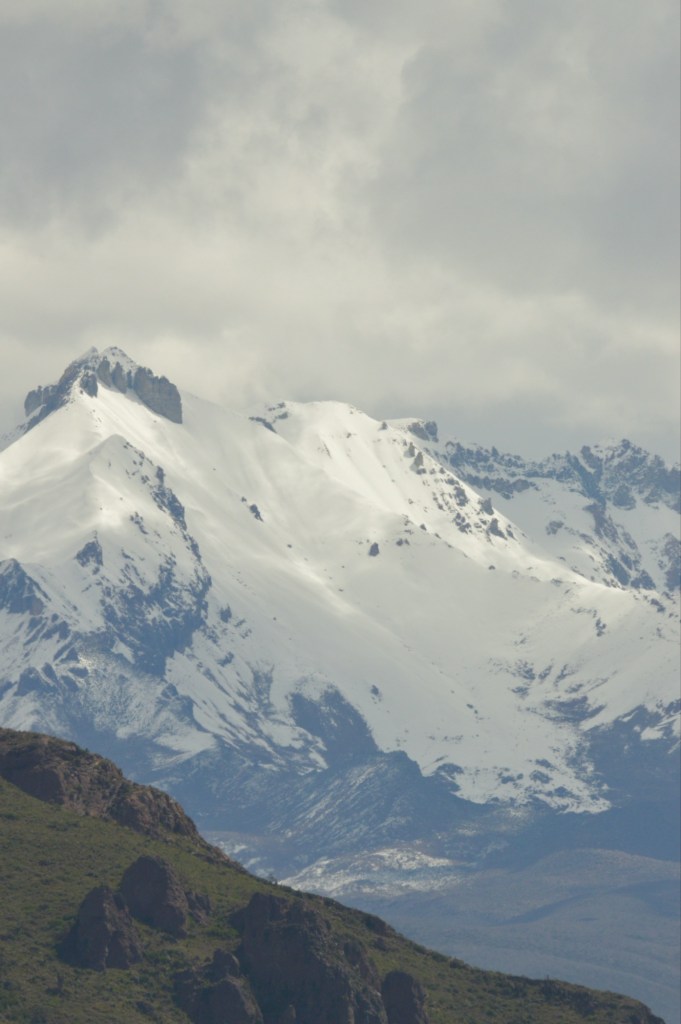
The scenery here is a world away from the meditative plains of the Meseta. It feels like I’ve stepped into a completely different country, and yet the Meseta is only a day’s walk to the south. The mighty cliffs of the Cordillera Cantábrica were always visible in the distance from the Camino Francés, but now I’m cutting a path straight through them, I can really appreciate their majesty. My soul will always belong to the stone pines and salt flats of Doñana, but my heart soars whenever I am in the mountains. It is an elixir like few others.


I had some fun counting contrails and trying to guess where the planes where going. Sometimes I’d look up and see a raptor in the blue: usually a kestrel, which are abundant up here, and sometimes a griffon, soaring silently through the ether; and just once, it was a hen harrier, wheeling about and beating its long wings like a child’s kite come to life.


After a rough descent into cow country and its attendant muddy tracks (I had more than my fair share of that in France), the Camino hits the road and climbs up to Puerto de Pajares – climbs being the perfect word, as the farmers have put up a fence across the road, so I had to vault it where the barbed wire was at its least intrusive. The former parador which perches upon the ridge is little more than an empty shell, and its stripped foyer is rather eerie, but the cafeteria is still in action, no doubt kept alive by the fact that its terrace commands a spectacular view of the mountains of Asturias beyond. Access to the terrace is strictly limited to paying customers, which is a master stroke as without it I should be surprised if the café would survive at all.

The photos don’t quite do the view justice. This must be one of the best views of all of the Camino routes, including sunset from Finisterre and sunrise from O Cebreiro. My presence at the café drew no small amount of interest: as popular as the route seems to be right now, I don’t imagine they get many foreign pilgrims passing through, especially as young as me.


The descent from Puerto de Pajares was the toughest yet, compounded by the fact that it was now gone half past one and I had been climbing mountains for nearly seven hours. The sun was also fierce and I have now officially run out of sun lotion, so my right arm got burned on the way down. I’m currently rocking the classic “Camino tan” that consists of very brown calves and right arm, due to the constant north and westward trajectory of the Camino.

I reached Pajares at around 2.45pm, without being eaten by any bears (as one of my students thought might happen to me), and practically fell into bed – after climbing into the only top bunk remaining. The room I’m in is full of Catalans in their late 40s, most of whom have an odd habit of talking to themselves. Not whispering, talking. I was woken up twice from my nap by their charlitas. The hush and stealth of the Camino Francés seems a long way away.


I won’t be doing another two days in one tomorrow, as I’m already technically doing so by bypassing Mieres the day after, so hopefully it will be an easier day. A belt of clouds have rolled in this evening, so I should probably prepare for rain – rain, and an earlier arrival time, just in case. Pola de Lena looks a bit more “happening” than Pajares, and it does have a supermarket, so I should be able to resupply before the final push to Oviedo. Here’s hoping! BB x

Camino XXVI: The Journey Continues

Albergue de Peregrinos, La Robla. 16.13.

I’ve just woken up from an hour’s nap. It might have been a little longer, I’m not so sure. All I know is that when I fall asleep there were only three of us in the albergue, and now it’s looking astonishingly busy. Mostly sporty Spanish types in their 40’s, mind: tall and lean, with hawklike handsomeness in their Roman profiles and dressed from head to foot in short-sleeved Lycra and health-tracking smartwatches. The exceptions are a greying Dane and a Japanese couple, neither of whom speak any Spanish whatsoever. To be honest, I wasn’t expecting company at all, but then, perhaps it’s hardly surprising that others beside myself should seek out a more rugged and quieter version of the Camino during high season.

Hopefully it doesn’t get too busy. I’ve come here for quiet reflection and a spiritual challenge, not a hiking holiday.


I left León shortly after six this morning and took the north road at the Convento de San Marcos, leaving the Camino de Santiago behind. I will not see that road again until I reach Melide, a little under two weeks from now.

I cast a glance down the westward road into the empty but well-lit streets of León’s industrial district, across the bridge where I said farewell to Audrey, Talia, Alonso and Steven yesterday morning. By now my companions will have reached Astorga and beyond a few manic longer days there is little hope of catching up to them before they arrive in Santiago, and with the terrain ahead I would be foolish to try. I have to let them go.


I had the Camino to myself all morning: no flashlight-wielding pilgrims in front, no Italian conversations behind. Just me, the morning and the voice of Derek Jacobi in his retelling of Robert Graves’ I, Claudius.

The pilgrim detritus of the Camino Francés is nowhere to be seen. This is what I had heard: this is the Camino as it once was, where the occasional painted stone, makeshift cross and shrine to the Virgin Mary indicate the way, not a scourge of senseless stickers and pilgrim graffiti. It was perfectly easy to follow, though I am glad I set out early, as the cloud cover began to fade before ten o’clock.

One such shrine to Mary was a little disturbing: her disembodied head had been impaled upon a branch staring down at the road, while her hands stretched across her chest to her sacred heart had been similarly affixed to a nearby branch. I could not find what became of her legs.


The Camino climbs up into the hills a couple of times, forging a path through the forest between the road and the river. Now and then it breaks out into the open, but for the most part I wandered beneath the canopy of ancient trees covered in carpets of trailing lichen. There was a strong smell in the forest that might have been fox, though it was different to any fox scent that I have ever caught. I thought at first it might have been wolf, but wolves are not as pungent as foxes – they also are good at covering their tracks by rolling in dirt to hide their scent so as to hunt more effectively. So I am not sure what it was.


I reached La Robla for 11.30 and considering pressing on to Buiza, but as tomorrow is Sunday, I figured it wiser to stop here, buy supplies for the road ahead (as nowhere will be open tomorrow), and rest. I popped into the local AlCampo supermarket to get some fruit, some bread and a few tinned meals in case of emergency. I took the flip-flops (a bad idea over anything but a short distance, but I needed a change of shoes) and managed to smash my big toe against the step when my flip-flop caught. It’s fine now, but it wasn’t a lot of fun at the time, though it may take some of the discomfort away from the blisters on my heels.

The lady at the checkout was very keen to get me an AlCampo card which they were “giving away”. The whole thing took around fifteen minutes to fix (as I had to use my long-since defunct Spanish mobile number and the town’s postcode, since the website wouldn’t accept either of my English credentials), but it may save me a little money in the long run – provided I shop at AlCampo. Which, I am sure, is the whole point.

The hospitalero still hasn’t appeared, but it’s nearly six, so I’m sure they’ll be here soon. In the meantime, I’m going to do some reading. BB x
Camino XXIV: The Road Not Taken

Plaza Mayor, León. 21.03.

Tomorrow marks the end of one Camino and the beginning of another. And not a moment too soon. I fear my social battery is at maximum capacity. I got the jitters after showing up late to the dinner the others had arranged at the Royal Tandoori, to find a crowd of fourteen.

Maybe it was the sudden shift from the intimate setting of my haircut the hour before to a busy table of English and Americans holding court over an Indian meal; or maybe it was the location of my Siege Perilous as the final invitee, squashed into the corner; or the fact that they’d started without me.

Whatever it was, I know now that my decision to leave the Camino Francés is a wise one. It’s a little shameful to admit, but I could use a break. I’m not proud of the fact that these social settings continue to throw me every so often, but I am getting better at hitting the escape button before it escalates.


On the walk into León this morning, Talia asked me a question that has genuinely had me thinking all day. I think it was something like this:

When did you decide not to pursue a career in biology?

At first it seemed a pretty straightforward question. My grades in Biology were never all that great, the competition at my school was just too much and it never occurred to me even once to study Biology (or Natural Sciences) at university.

But with a little context, I can see why she asked me that out of the blue – and I’m frankly amazed how much I’ve suppressed what is nothing less than a core memory that might once have changed the course of my life.

Audrey was using an app to identify some of the birds we’d seen since leaving Mansilla de las Mulas – I think it was Seek. I pointed out a few things I could hear: serins in the branches of a nearby tree, a booted eagle circling in a field, the bee-eaters we’d heard the day before.

I guess it was that quickfire succession of names that prompted Talia’s question. My answer was fairly improvised, but I think it checks out.

When did I decide not to pursue a career in biology? When I realised that it was never going to be about zoology – not under the British education system, anyway. That, and my mathematical ability was (and is), quite frankly, dismal.


I have various interests. I’m a musician. A linguist. A writer, an occasional poet and a Hispanist. A mimic. A Catholic. But before all of these things, I am a naturalist. Before I found my fluency in Spanish and French, I could already understand the calls of every bird in the British Isles and could tell you what most of them meant: warning, alarm, hunger and mating calls. It was, I suppose, the first language I ever learned.

I was just as obsessive with my childhood interest in dinosaurs: I had to know them all. Where they were found, why they were called what they were called. It wasn’t enough to know the famous ones, like the T-Rex and velociraptors – I had to dig deeper. One such precocious example that comes to mind was my decision to bring along a Eustreptospondylus drawing to Show and Tell at primary school. Doubtless an elephant would have sufficed, but why would I ever have settled for something as basic as that?

I still have discarded exercise books that my parents gave me where I logged all the species mentioned in wildlife documentaries. I always put down the title and locations covered, and I sometimes wrote the date, too. Others I used as scrapbooks, taping in feathers and sketching footprints and writing about when and where I found them.

You’d have thought that these might have been the early indicators of a scientist. Certainly, I wanted nothing more than to be a palaeontologist when I was a kid (which can be gently excused by the fact that the BBC’s peerless Walking with Dinosaurs documentary series came out just in time to capitalise on my five-year-old dinosaur obsession.

When I was a little older, I genuinely considered a career in conservation. I entertained the idea of a degree in Ornithology, or something similar, to allow me to put my fiendishly good memory for birds and their calls to use.

And then, suddenly, that dream died.


It was probably the maths that killed it. All the natural science degrees I explored required a basic level of mathematical competence and at the time I was struggling to scrape even a passing grade at GCSE. Chemistry, too – a lot of Zoology degrees suggested chemistry as an A Level, and chemistry was far too mathematical for me. Without maths, my conservation aspirations were dead in the water. That was that.

But there was another factor that pushed an old dream out of the nest: the slow decay of a child’s interest as the subject closest to his heart never even materialised in the subject that should have concerned it most intimately.

My memories of Biology center on two things: plant cells and sourdough bread. I was so excited when food chains and food webs came up, until I realised that, within the British curriculum, that was the one and only time that animals would be mentioned. Everything else was so cold, so clinical. Palisade walls and mytochondria. Genomes and inheritance, though usually in plants. The fact that I knew the names of every animal and bird in the British Isles (and most of Europe, for that matter) gave me no advantage whatsoever.

My school was a specialist science school. Our Biology department was doing really exciting things with MS research, and it was one of my Biology teachers who was instrumental in sending me out to Uganda on my first ever teaching post. But somewhere along the way, my aspirations as a conservationist were slowly choked by the strangling vines of the British science curriculum. Zoology, palaeontology, anthropology, ornithology and even primatology were all areas I was desperate to explore, but as the years went by and Biology concerned itself less and less with the natural world and more and more with the minutiae of bacteria and cell structure, the less I cared for it.

It must have been around then that I first entertained the idea of becoming a teacher – once I realised I would never be good enough at two of my weakest subjects to survive to the point when Biology became Zoology. Fifteen years old and already carrying the shards of a shattered dream.


One way or another, I think I realised early on that there was little that a Zoology degree could teach me that I truly desired. I didn’t need to pursue a career in science to justify my greatest love. Knowing the names of every animal and bird gave me a sort of spiritual connection with each and every one of them – no scientific research could work a greater magic than that. Still, it’s interesting to think where my life could have gone if I’d really committed to that path.

Instead, here I am, gone thirty, walking the Camino with a head that twists so quickly when I see the silhouette of a kite or vulture that it’s a miracle I haven’t twisted my neck yet.

It’s hard to say what my experience would be like if I walked all the way to the end of the road with these wonderful people. I will never know, because I have made my choice. And I know it is the right choice. It will take me up into the mountains and back into the natural world, where I am and have always been at my happiest.

Here’s to that – to good health and happiness, and a significantly harder road ahead! BB x
Camino XXII: Starlight

Albergue de la Santa Cruz, Sahagún. 21.17.

Today was a lot more like the Camino Francés that I remember: long, unforgiving, sociable and under the stars for the first half of the morning. I’ve been taking it easy with all these post-sunrise starts with the other pilgrims, so with my fork from León now very much on the horizon, it’s good to get back into the routine.


We agreed the night before to strike out for Sahagún, partly because Audrey wanted to go further and potentially save a day to add to the end of her trip, and partly because I wanted to get to Sahagún after having had the place recommended at least twice. There was also the very real possibility that we could both shake the freeloading Englishman and catch up to the endlessly entertaining double act of Juha and Mad Max, who have been at least a day ahead of since Grañón, where the floor beds didn’t agree with Max’s back.

So, at five on the dot, the five of us set out from Carrión and into the night. We lost Edoardo sometime before sunrise – I’m not sure he could keep up, as he does appear to be carrying the biggest stick on the Camino (which probably might be better described as a branch or log). I also got lost: in my stubborn refusal to use artificial light, I completely missed the turn-off to the pilgrim road after Carrión and lost twenty minutes backtracking once I’d realised my mistake. On the plus side, it did mean total silence and an unrestricted view of the night sky, which was spectacular this morning.


There’s no lighting along the nineteen kilometre road between Carrión and Calzadilla, and all the towns are distant, so the stargazing was almost as good as it was on Tenerife. Even the Milky Way was visible, stretching westwards toward Santiago like the songs describe.

I spent a great deal of the morning racing ahead, mostly because of an obnoxious pilgrim who was lighting the entire path with a brilliant LED head torch, even though visibility by star and moonlight was perfectly good enough once your eyes had adapted. With him in the dust, I allowed myself some time to listen to a couple of chapters of an audiobook (some short stories about the Sargasso Sea from Strange Tales from the Deep and I, Claudius).


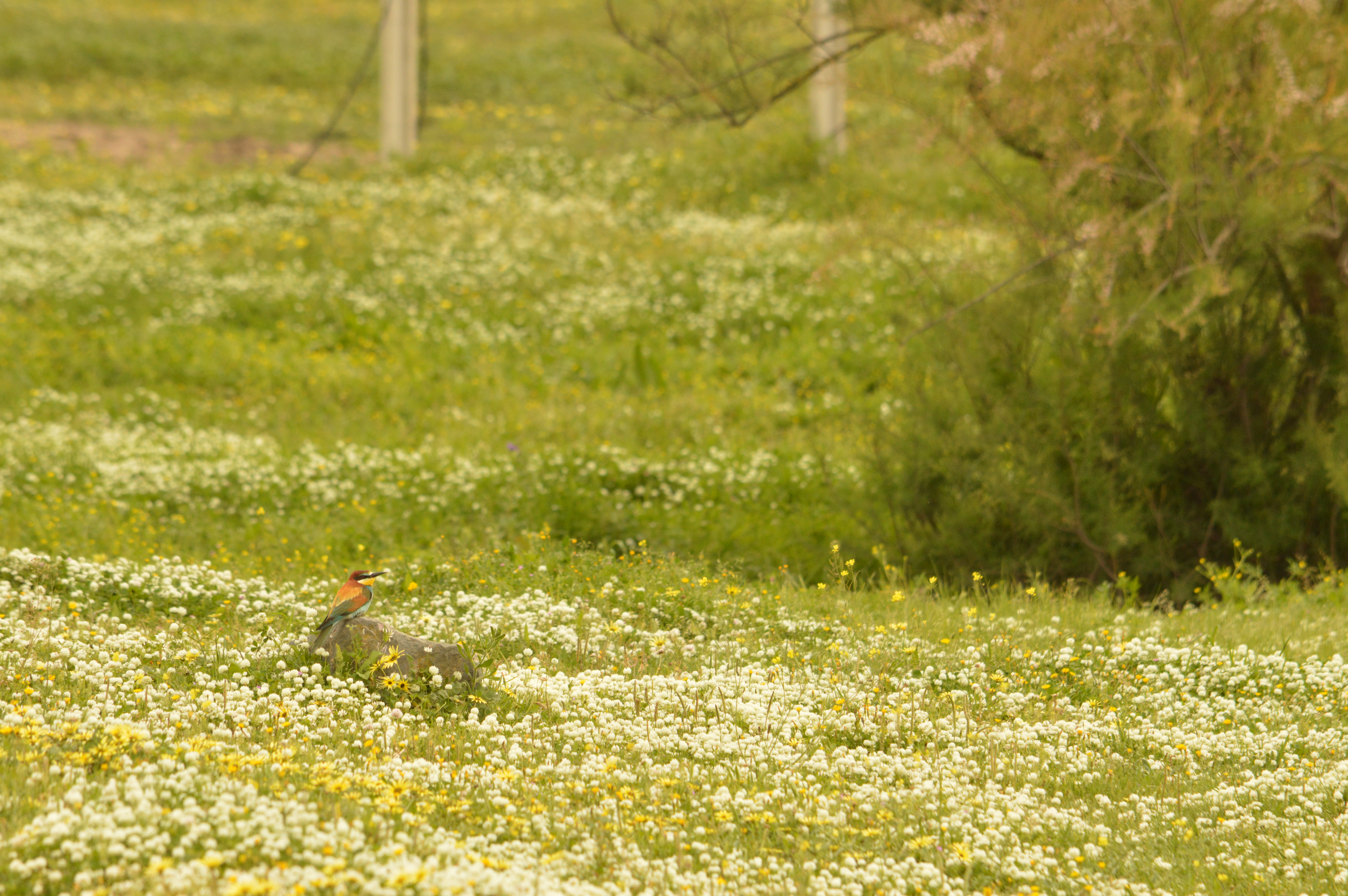
Not too long after sunrise, I saw flashes of white in a field by the road and trained my eyes on the spot: I counted ten great bustards, closer than I’ve ever seen them. Of course, they were far too distant for my iPhone (which makes for a superb camera, but is utterly useless as a telephoto lens), but you can just about make them out in the photo below (to the right).


After a brief pitstop for breakfast in Calzadilla, I raced on ahead once again. This time, I took advantage of the empty pilgrim road to do some singing practice, mostly from Jesus Christ Superstar, which I pretty much sang off-copy for all parts. I don’t have an eidetic memory, but I do have an uncanny ability to retain enormous amounts of information about things I’m interested in. Musical scripts fall under that category.


I stopped in Moratinos to pick up a beautiful wax stamp from Il Guru Improbable. I’ve missed this one before, as it’s much too soon after the usual staging post of Terradillos de los Templarios to obtain in the early hours of the morning, so I’m glad I pushed on today.

At Moratinos, I took up with a new group of pilgrims: Tom, a retired education superintendent from Michigan; a Finnish woman on her fourth Camino; and Tina, a Swiss-Guatemalan girl inspired to walk the Camino by a German comedian who hates walking. It made for a healthy change, and it was fun to tell my grandfather’s tale in full once again, which I haven’t done anywhere near as often on this Camino – last time, it usually preceded me by the time I met a new face!

Audrey caught up to me as we approached Sahagún and we entered the town together, seeking a pharmacy (for her feet) and an ice cream (for my appetite). At 13.10, it was the latest we’ve arrived at a destination yet, but it did mean no waiting for the albergue to open, which was a huge plus.


The bells are ringing for 22.00, and the white storks nesting on the bell tower are doing a lot of beak-clicking. That’s a sound I will always associate with Spain, no matter where else I may hear it.

Tomorrow we’re going to do another long slog, striking out for Mansilla de las Mulas if we can – which should, in theory, catch us up to the others who we lost on the road over a week ago.

Catch you later! BB x