That Smell

Mum and Dad are away on holiday so I’ve gone up north to look after the house while they’re away. Living as far out as they do, I had to catch the bus this time, as the nearest train station is easily a few hours away on foot (with feet being the only reliable form of transport since neither my brother or I can drive).

Arriving in Lincolnshire sometimes feels like stepping back in time. It’s doubly noticeable coming up from Croydon, watching the diversity metronome swing violently to one side. When you live and work in such a cosmopolitan environment, it’s sometimes easy to forget that there are still great parts of this island that are – to take Wilfred Owen out of context – forever England. I think we all need reminding of that from time to time. A lot of us Southerners fall into the trap of thinking the rest of the country thinks like us. I still believe that’s how Brexit caught so many of us off-guard. We weren’t looking or listening hard enough to the folks north of the M25.

It’s been a while since I caught a Stagecoach bus. I used to ride them all the time when I was a teenager; but then, both my parents had full-time jobs, and Kent is pretty self-contained. So it was a trip down memory lane – sort of.

The guy sitting next to me falls asleep in seconds. He’s smartly dressed but his body odour is quite overpowering. Between his sweaty cologne and the leather-clad goth girl puffing sickeningly sweet clouds of vape smoke overhead in the seat in front, I’m reminded my sense of smell isn’t as awful as I always say it is.

Three lads sit with their feet up across one extra seat each at the back of the bus. There must be an unwritten rule that stakes out the rear of any vehicle as the sole dominion of teenage boys, because I’ve never seen any other setup on my travels. One of them is pissed about how there’s nothing to do where he lives, and how he knows nobody, and how not being able to drive doesn’t help. He could be voicing my own concerns, if I were really that bothered about settling for my own company. His mates tell him to come along on a night out, and if he doesn’t have friends out there, “fuckin’ make friends, mate”. A wingman’s life was never easier.

A man gets on at the prison gates just outside the city in matching grey trackies and a baseball hat that’s too small for his head. His eyes are large, dark and staring – it takes me too long to realise it’s his dilated pupils that give him that intense look. A blunt tucked behind his ear smoulders ever so slightly. Now the smell of wet grass (or fox, as I always assumed) mingles with the BO and the indiscernible fruit-something of the vape clouds. He cracks open a lager and the bus driver stops by a bin and tells him his booze needs to go in that bin, mate. You what, he says. That bin. Can’t drink on here. Roll-Up Man gets up – alright, jes gimme a minute – wanders over to the door and necks the entire can. A lady near the front applauds. He ain’t wastin’ that can! Roll-Up Man returns with hands up in mock surrender, or it could be triumph. It’s hard to tell.

Lord Vaper continues to drag on her death stick. Given that she’s the third passenger on the bus to ignore the no smoking sign, I wonder whether anyone can read, or whether they just don’t care.

The Marvel run continues tonight with Doctor Strange. Watched Civil War for the first time last night and actually really enjoyed it. Yeah, I know, I missed the hype of watching them as they came out, but the MCU truly belongs to the generation just after mine, I think. I grew up with Christopher Nolan’s Batman trilogy, and that remains the gold standard as far as superhero movies go. Perhaps I’ll have changed my tune by the time I get to Endgame. Somehow I doubt it. Like the Joker, I guess I just can’t let go of Batsy. BB x

P.S. I wanted to give the title of this post the full nod to Sonallah Ibrahim’s seminal 1966 novella, That Smell and Notes from Prison, but some references are just far too pretentious to shoehorn in – especially when it’s about a bus ride out of Lincoln City.

Sh!tsh@w: A Recovery Plan for a Rough Year

Sunday 26th June, 12:47pm.
The Flat.

We’ve made it. Blimey, but I thought that year would never end. School years come and go in cycles, and I consider myself an extremely patient man, but this one has been particularly trying. I’m not ashamed to admit that I’ve come close to questioning my career on more than one occasion, and every time I’ve been pulled back up to the light by the trinity: the kids, the music and the torchlight of my ancestors. I’ve never been overly fond of the yawning hole in the year that is the summer holidays – I have a desperate need to be busy that two months puts a serious strain upon – but I did breathe an almighty sigh of relief when the clock struck twelve on Friday night. It’s just been one of those years.

When I look back, I can’t help but label my third year as a teacher as the year when everything went wrong. The year when all my endeavours came to ruin. Consequently, it’s also the year when hope has been even more important than ever – and hope, shapeless and mysterious, has ever been my polestar.


This year my Gospel Choir was disbanded, cancelled on the grounds that I, as a white man, was not the appropriate choice to run such a group. I conceded without a fight. It hurt, it hurt right down to the core of my soul to be told so openly that my efforts – and even my taste in music – were so wholly inappropriate. It wasn’t an attack on me by any standards, but my word, did I take the issue home! My head was spinning for weeks and I took some time out in Spain with my cousins to heal. What had happened flew in the face of everything I’d been taught by my various Gospel mentors over the years, and everybody I spoke to seemed baffled. For my career’s sake I briefly considered abandoning my attempts to dabble in music absolutely, and would have gone ahead were it not for the discovery that my great-grandparents were both musicians. I cannot let them down. It wouldn’t be right. I also owe it to the kids under my aegis to find a way, so that the last three years of hard work will not be in vain.

Rising from the ashes, my new a cappella group has been fun, and I hope the kids have enjoyed it, even if we’ve never been concert ready when the time came. The simple truth is that Gospel music, as well as being eye-opening and soul-enriching, is easy to learn. It’s meant to be, because it was never written with trained musicians in mind. By contrast, a cappella arrangements are impressive when done right, but hard to pull off, even when you have a group of semi-professionals. It pains me that my efforts to instil a genuine love of performing have yet to bear fruit with my current cohort, but the kids rock up each week with big smiles and they enjoy the music, and I guess that’s good enough for now.


December hit me with a one-two punch that nearly knocked me out cold. I wandered out of a five-year relationship and within twenty-four hours I had a head-cold that left me half-deaf – and later, more excruciatingly, under the maddening influence of diplacusis dysharmonica. The timing could hardly have been worse: first the Gospel fiasco left me questioning almost all my choices in music, and then the mother of all earaches made it physically impossible to listen to any kind of music whatsoever for all of two months. It felt like the world was conspiring to bring me down.

I wasn’t especially keen to admit it, but I’ve been in orbit ever since. I tried a couple of times to kindle the sparks of a relationship with somebody new, but my attempts sputtered and died like the fireworks in the rain, and I confess I’ve probably been too proud to bend the knee in full to the world of online dating purely on principle. So I’ve been a family man to my kids more than ever this year, giving them as much of my time as I can muster of an evening and finding opportunities to praise and guide wherever I can. They give me hope and I try to do the same for them. I’m convinced teaching is the best job in the world.

I’ve tried to be more supportive of my brother this year. He hasn’t chosen the easiest path, and there are few people in the world I look up to more. I’ve also kept up with my youngest cousin through our English classes every week, or at least the weeks where he doesn’t have an exam to revise for. Family means a lot to me, squaring well with my dreams of being the best dad ever someday, which is partly why being out of a relationship has been so disorienting. At least if there’s been one success this year, it’s been a closer connection to my kin. Maybe rediscovering the Chronicles of Ancient Darkness earlier in the year helped.

Finally, I know I can be a better teacher. I’ve done well by my kids this year, but I can improve. I know I can. I think all the knocks I took this year left me on one knee, still standing though not as strong as before. I reckon it’s about time I got up on two feet again.


So it’s time to plan ahead and set things in order. Two months of summer stretch ahead, and I’ve got plenty of things to do, starting today.

I’m going to get fit.
Fitness has never really interested me, but a healthier body can only prop up a healthier state of mind.

I’m going to cook for myself again.
I’ve taken advantage of being fed at school for too long. I used to love cooking when I lived for myself. It’s time to rediscover that joy.

I’m going to learn to drive. Finally.
It’s a milestone that I can’t ignore anymore, and I’m finally at the stage in my life where absolute freedom of mobility is starting to interest me. Even if I don’t pass my test this year, I need to make a start. Starting is always the hardest part.

I’m going to read more. And I mean read, not just say it and buy more books.
I’ve set myself a target of a chapter a day, whatever the book, in addition to at least one article.

I’m going to plan ahead.
I want my teaching to get better and better, so I’m going to dedicate some serious time to planning some fantastic teaching methods this summer.

I’m going to write again. Not just on here, but the book.
My journals have been with me to almost every lesson and on every school outing, but I’ve made little progress on the novel since the real teaching life began. And that’s criminal.

Last but not least, I’m going to get out and see the world.
Not traveling – I can’t justify having more than one holiday per year anymore, and I had my holiday at Easter. But I need to widen my circle of trust. I need to allow myself to meet others, and if I’m guarded about making that connection online, the only way to do it is to get out and about.


I’m no fan of coming up with action plans at work, but my future is counting on me to make this choice now. Melodrama aside, I could do with some change in my life. And that change starts today! BB x

A Taste of Adventure

One of the very best things about my job is my role as the middle school Gifted and Talented Co-Ordinator. As one of the few not on the G&T list in my grammar school days you might jump to the conclusion that there’s a chip on my shoulder there, but that’s not quite right. A more likely excuse is that in my sixth form days I was involved with my school’s Arts and Humanities Society, a pre-university lecture/seminar group run by my history teachers, and it was so pivotal in my development as an academic that I have spent the last few years wanting to set up a society of my own here. The simple fact of the matter is that, four years into my teaching career, I’ve found the niche that allows me to do what I’ve always wanted to do: explore learning for its own sake.

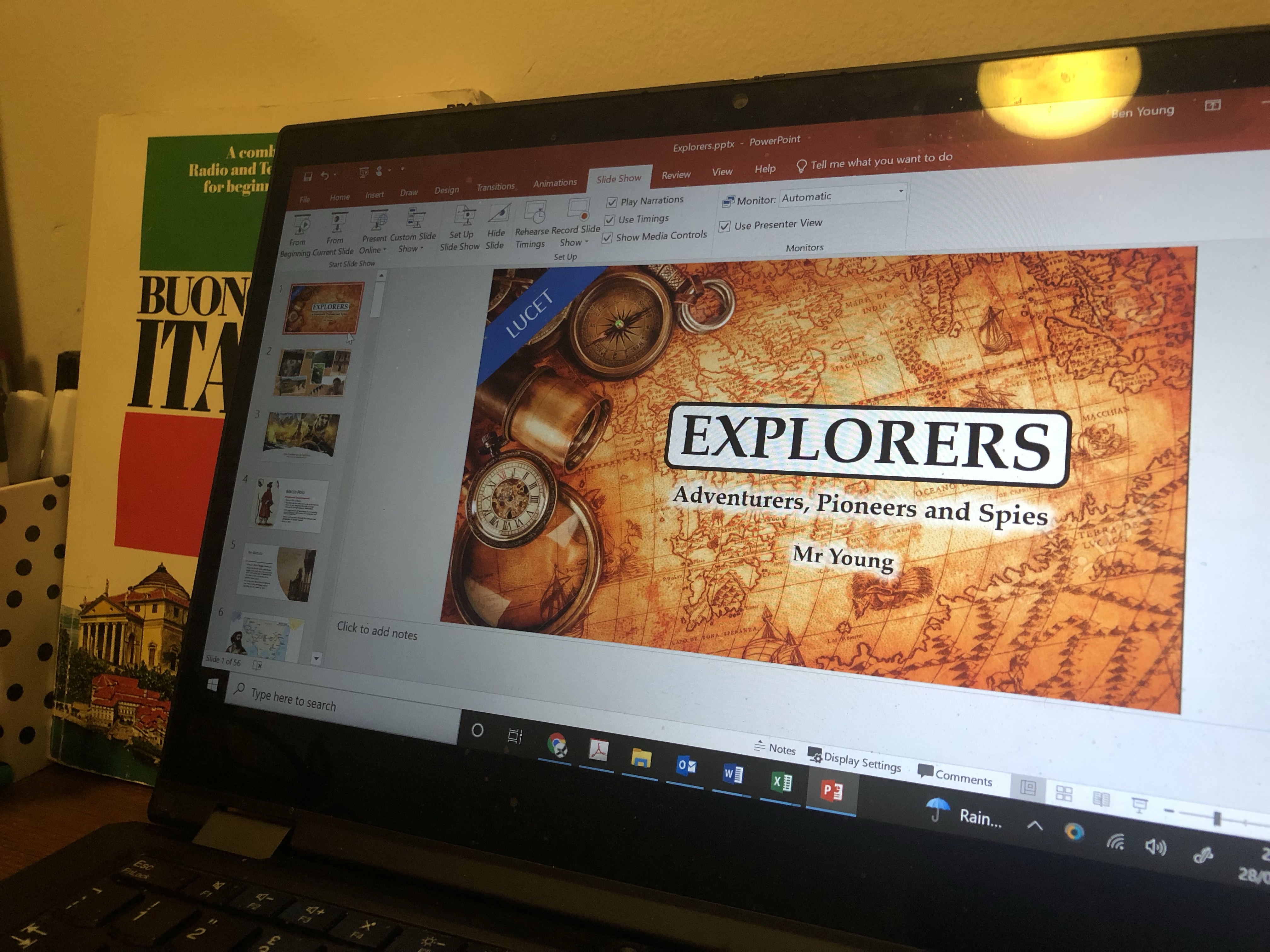
So far, what that has entailed is two after school lectures, one every half term, on subjects that my students might otherwise not encounter in the classroom. I got the ball rolling last term with a talk on the Aztec, where we went on a whirlwind tour of the history of the Mexica, the geography of Mexico and the fierce deities of the Aztec pantheon – as well as the tale of Cortes, la Malinche and the fall of Tenochtitlan. Since I’d much rather the sessions were seminars rather than dialogues, I make a real point of taking questions and posing some of my own as I go so that these talks are more of a journey together than a lesson with me at the front. In the best of all possible worlds – the world I’m trying to create in a Monday afternoon classroom – I’d like to come out of the hour knowing that I haven’t added to their knowledge so much as given them new avenues to explore. That’s why I conclude each session by asking my students what they’d be interested in learning about next time. Today, there were a lot of requests for Chinese history: the Tang Dynasty, the Civil War and the Opium Wars. Perhaps that’s because we took a ride with Zheng He and his treasure fleet this afternoon.

Today’s talk was on Explorers, after one of my students requested a lecture on adventurers like Cook and Lewis & Clark. It was so much fun to research, not least of all because I have been lucky enough to do no small amount of exploring myself in my twenty-eight years on this Earth. I started off with the graphic below and, after we’d agreed Mr Young really doesn’t suit a beard, I picked my students’ brains about the locations in each one. Using the clues of this man’s local dress, and the mountain gorilla, and the facade of the rose city, and the scallop shell, they smashed every single one. Proud teacher moment.

I get a lot of satisfaction from seeing my kids go from strength to strength in the language classroom. But I’d call myself a seeker of knowledge for its own sake long before I call myself a linguist, and this is where somebody like me is in his element. Seeing the electric enthusiasm of my students sparkling like Saint Elmo’s fire from their outstretched fingers as they vie to share their collected wisdom with their peers, answering questions I haven’t yet posed four slides in advance because they read this book here or their parents showed them that thing there… There’s few things like it. It’s one of those “this is why I teach” moments, and the best thing about it is that you’re not having to do an awful lot of teaching. The knowledge is there. All you have to do is open a few doors.

This afternoon, over the space of an hour, we traveled the world. We sailed around China, Africa and the Indian ocean with Marco Polo, Ibn Battuta and Zheng He. We crossed the Atlantic with Leif Eriksson and the Basques and wondered what took Christopher Columbus so long. We learned to navigate by the stars and explored the constellations. We met mild-mannered mountain men, meddling missionaries and bloodthirsty bandeirantes. We searched for Amelia Earhart’s final resting place, climbed the Matterhorn (and fell down the other side) and, saving the best until last, we sat down and had a difficult conversation with that most impressive of adventurers, and one of the greatest linguists (or even, in the opinion of this author, Britons) of all time: Sir Richard Francis Burton. Somehow I managed to cram it all into the space of an hour.

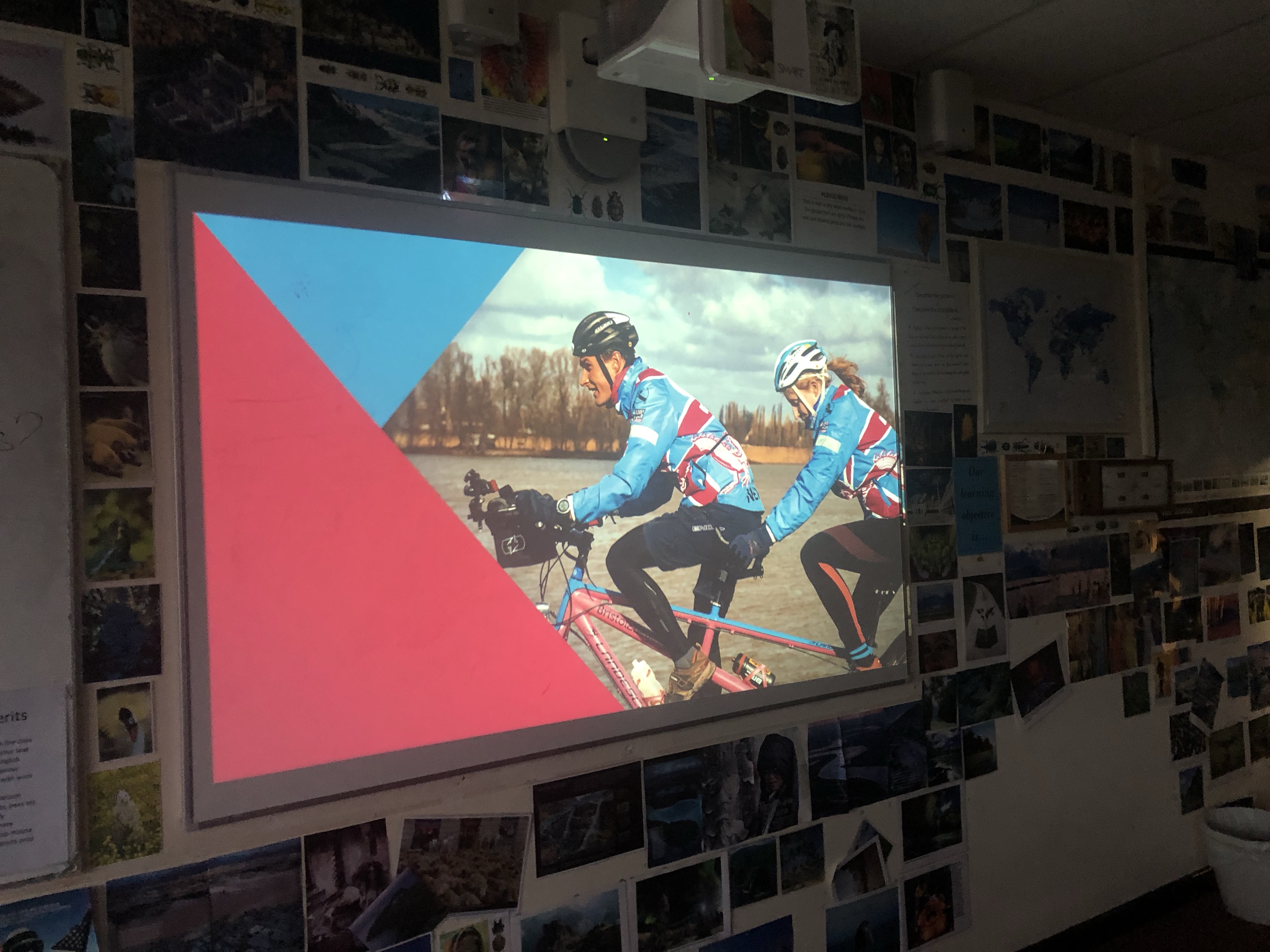
Well. Almost. We ran overtime by about five minutes, but not a single one of my kids reached for their phone, or started to pack up and leave. And that may well have to do with the fact that I chose to end the talk with the personal story of a friend of mine who gives us all a reason to believe in hope again: Luke Grenfell-Shaw, triathlete, fellow Arabist and CanLiver, and champion of the Bristol2Beijing tandem ride across the world. The best thing about that? Once again, I wasn’t even adding to their knowledge. Two of my students lit up at the image alone. They knew this man. They had heard of him.

I can’t tell his story. I won’t. Read about him for yourself – there are few men in this world like Luke. And though I poured my heart and soul into this evening’s talk, I’d like to think that it will be Luke’s story that my kids take home tonight. The world is vast, and explorers and adventurers have already been over so much of it and documented everything. But that doesn’t mean the age of adventure is over. People like Luke are living proof that adventure lies within, in our hearts and in what we choose to do with the world around us.

Godspeed, Luke. We’re rooting for you here.

https://www.bristol2beijing.org/

In the meantime, I’d better find myself an expert on Chinese history! BB x

Tears, Courage and Charisma

I hadn’t planned to write much this evening, what with reports to finish and the first round of the school debating competition to support, but as I let World Poetry Day pass me by without saying a word yesterday, I thought I might pay a short homage to some of my favourite poems and say why they’re so precious to me.


RITHA AL-ANDALUS

Ask Valencia what became of Murcia
And where is Jativa, or where is Jaen?
Where is Cordoba, the seat of great learning
And how many scholars of high repute remain there?
And where is Seville, the home of mirthful gatherings
On its great river, cooling and brimful with water?

These centres were the pillars of the country:
Can a building remain when the pillars are missing?
The white walls of ablution are weeping with sorrow
As a lover does when torn from his beloved;
They weep over the remains of dwellings devoid of Muslims,
Despoiled of Islam, now peopled by infidels!
Those mosques have now been changed into churches,
Where the bells are ringing and the crosses standing.

This misfortune has surpassed all that has preceded
And as long as time lasts, it can never be forgotten!

Lament for the Fall of Seville, Abu al-Baqaa al-Rundi (1267)

Al-Rundi’s lament for the fall of al-Andalus is poetry in action. It’s a desperate plea for help from the Muslims of al-Andalus to their coreligionists across the sea in the language in which they excelled. Regardless of where you stand on the debate over whether Islamic Spain really was a haven of tolerance in a darkening world, it is hard not to be moved by the words of its poets as the westernmost star of the Islamic world was dragged below the horizon, never to rise again. Perhaps it was that sense of impending doom, with the Christian wolves howling mightily at the door, that infuses the words of al-Rundi and Ibn Zaydun and their kin with such mournful magic, conjuring up an image not of what was lost that had once been great, but of what could have been in such a land. I could have chosen any one of a number of beautiful Hebrew poems to chime in more closely with my family’s experience, but al-Rundi says it so masterfully.

As a child growing up in a former Moorish stronghold in Andalusia, I was completely bewitched by the lost paradise of the Moors. I am under that spell still.

Of course, it sounds a lot better in Arabic – especially since Arabic poetry of the highest calibre is song in its purest form. You can have a listen here.


IF

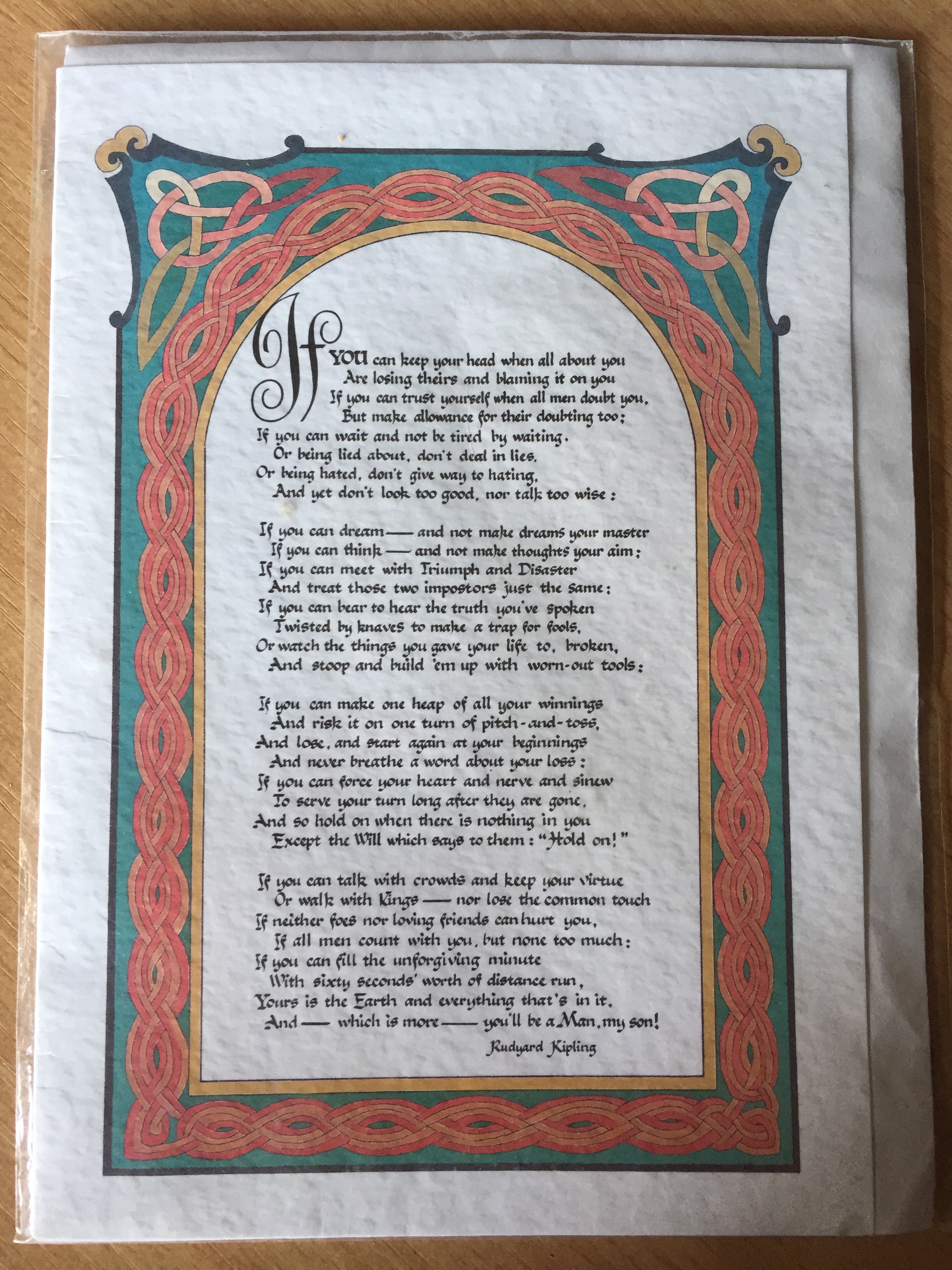
If you can keep your head when all about you
Are losing theirs and blaming it on you,
If you can trust yourself when all men doubt you,
But make allowance for their doubting too;
If you can wait and not be tired by waiting,
Or being lied about, don’t deal in lies,
Or being hated, don’t give way to hating,
And yet don’t look too good, nor talk too wise;

If you can talk with crowds and keep your virtue,
Or walk with Kings – nor lose the common touch,
If neither foes nor loving friends can hurt you,
If all men count with you, but none too much,
If you can fill the unforgiving minute
With sixty seconds’ worth of distance run,
Yours is the Earth and everything that’s in it,
And – which is more – you’ll be a Man, my son!

Rudyard Kipling (1895)

I’ve always been a fan of Kipling. I guess you can chalk that up to a few years in a prep school when I was younger. Colonialism, privilege, blah blah blah. That doesn’t shake the fact he had a special gift for words. My relationship with this particular poem started on my first day as a deputy boarding master. My first housemaster kept a copy of this poem on his desk, propped up against the computer, and I made a point of reading it every time I should be in the office. It gave me strength in what was arguably a tough year – training as a teacher for the first time is tough enough without an earth-shattering global pandemic cutting right through the middle of it.

I really can’t think of a better poem for a housemaster. The virtues Kipling offers up (an edited selection above) are just as important today as they ever were, and if I should follow that path myself someday, I too will have a copy of this verse in my office. For myself, if not for my boys.


EL MOZO ARRIERO Y LOS SIETE BANDOLEROS

Camino de Naranjales
caminaba un arriero:
buen zapato, buena media,
buena bolsa de dinero.
Arreaba siete mulos,
ocho con el delantero;
nueve se podian contar,
con el de la silla y freno.
A la salida de un monte
siete pillos le salieron:
– Donde caminas, buen mozo,
el buen mozo arriero?
– Camino hacia la Mancha
a un encarguito que llevo.
– A la Mancha iremos todos
como buenos companeros.

Al revolver de una esquina
una taberna que vieron,
– Echa vino, montanes,
echa vino, tabernero,
que lo pagara el buen mozo,
el buen mozo arriero.
– Yo si lo pagare,
que tengo mucho dinero,
que tengo mas de doblones
que estrellitas tiene el cielo.
El primer vaso que echo
se le dieron al arriero.
– Eso no lo quiero yo,
que yo veneno no bebo.
Que lo beba el rey de Espana
que esta muy gordito y bueno.

Sacan los siete sus sables
saca el suyo el arriero.
De los siete mato a cinco
y los otros dos huyeron.
Viene la Guardia Civil
y se llevan al arriero
y el arriero tuvo tiempo
y a la reina escribio un priego.

Y la reina se reia
Cuando lo estaba leyendo
– Si como ha matado a cinco
hubiera matado ciento.
Y cinco reales son diario
mientras viva el arriero.

Camino a Naranjales, Spanish Folksong

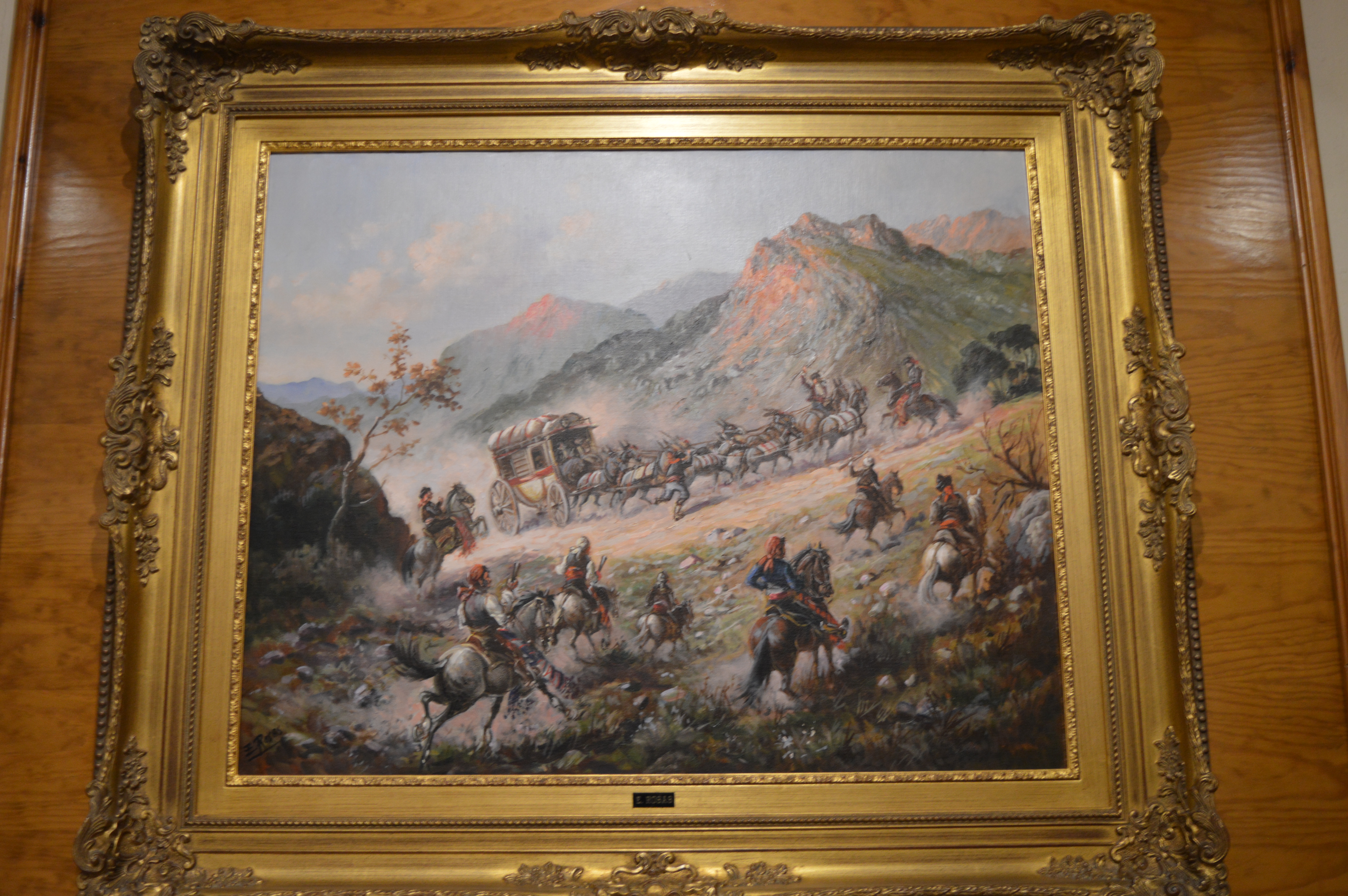
Not all poems have to speak from the heart. I love a poem that tells a story. And I’ve loved this one since I first heard it years ago in the grating tenor voice of an extremeno shepherd, recorded for posterity in the archives of the town library. There’s a beguiling frivolity in a lot of Spanish verse that pairs jauntily with the mournful Andalusian elegies and love poems, but it’s the tales of the arrieros, the brave and hardy muleteers, that I’m especially drawn to. No art, no gravitas, just a wily muleteer who bests seven rogues and is rewarded for his courage by a queen, no less. Pure Spanish whimsy – and I adore it.


What are the poems that shaped your world? Do you have any favourite lines or stanzas? Do you sometimes try to weave them into your writing like I do? (You might have spotted a thinly-veiled reference to Lawrence Ferlinghetti’s Two Scavengers in a Truck, Two Beautiful People in a Mercedes in Sunday’s post, which remains stamped across my heart – like most poems one studies for GCSE.)

I should read more poetry this year. I’ll start this weekend, while I’m on duty. It’s a lot easier to get through a poem a day than a chapter of a book, I find. Especially as a teacher. BB x

Death of a Bridge

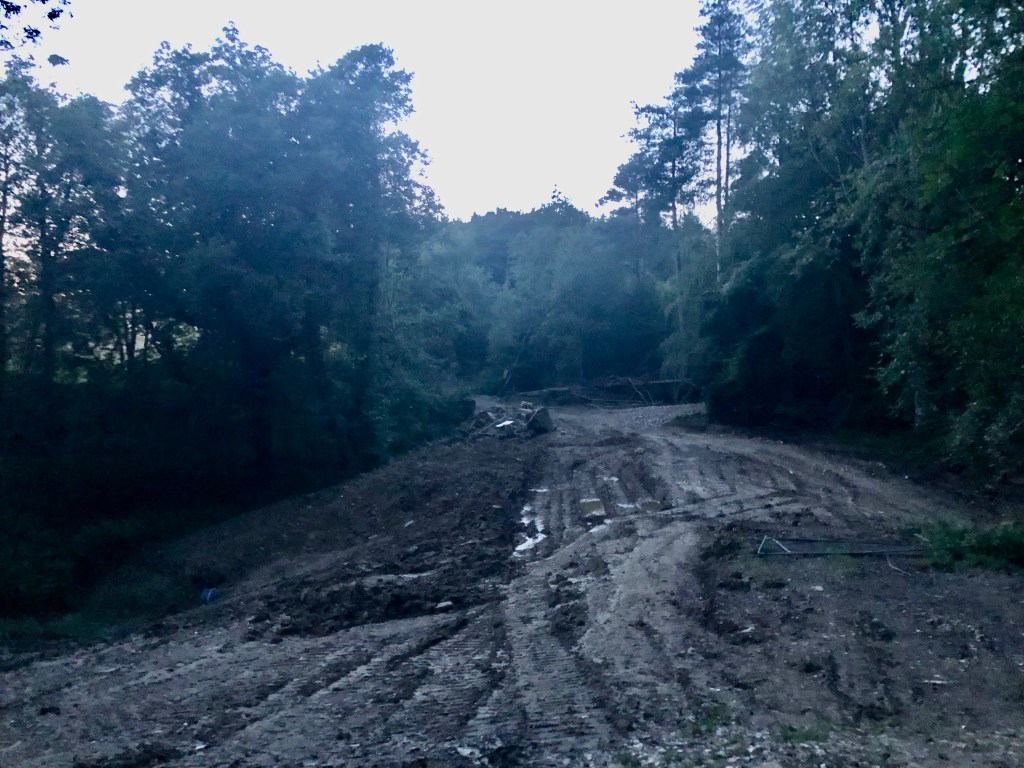
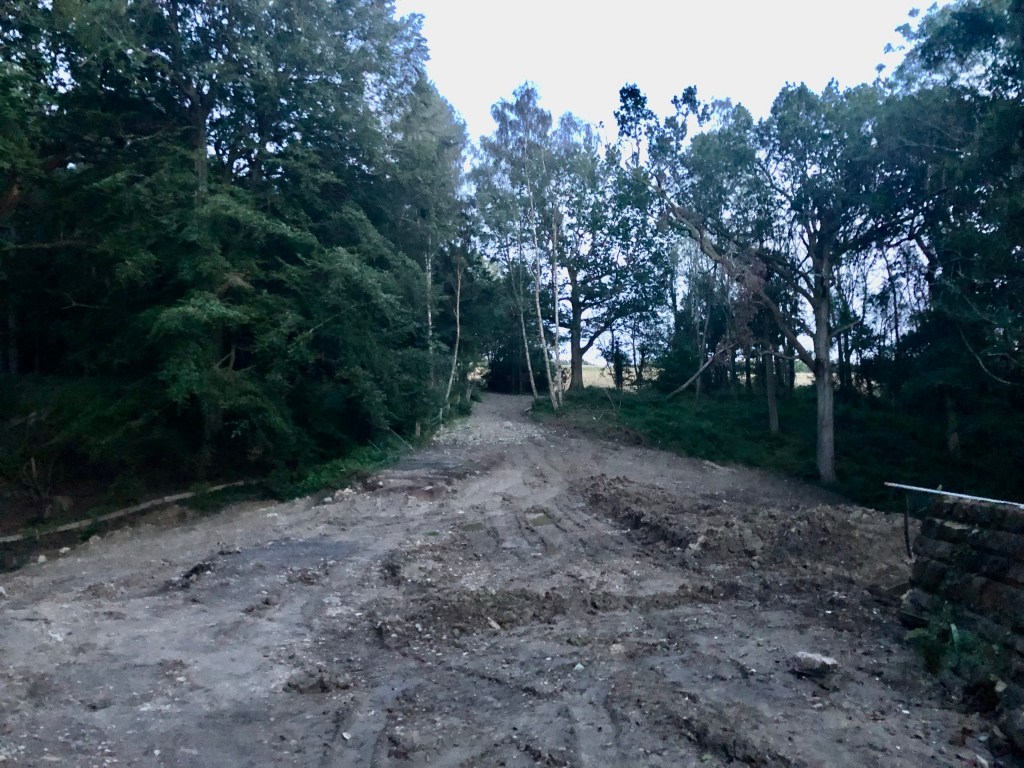
There’s a great big mound of earth down in Downside Wood where the old bridge used to stand. The stream that once ran gaily beneath its mossy arches hiccups and lurches through two black plastic pipes, swallowed at one end of the slump and regurgitated out the other. The vegetation hangs back from the mire, keeping a cautious distance, thorns and nettles recoiling as though stung by the mud. Caesar’s legions made siege ramps that looked more sightly. At either end, where the track leads up and out of the forest, smoothed slabs of brickwork poke out of the mud like the bones of the bridge that was. The rest of the rubble lies buried deep beneath the mound, I suppose, making a barrow of the dell. Do bridges have ghosts? I suspect this one might.

I sat up in the branches of a tree during a break between lessons one summer, listening to M.M. Kaye’s Trade Wind and taking in the view of the bridge as for the last time. That was the year I saw the first signs of what was coming: a waterlogged sheet of A4 paper in a plastic wallet, fastened to the masonry by a tag, bearing the stamp of the local council. The word “SAFETY” written in bold black ink is all I can remember, smudged and blued at the corners by a couple of days of dew and rain. Safety… how satisfying it must sound to the inspector, and how terrifying to the stonework of the old buildings of the world. If stone could shake, it might do so at the word.

The world cried out in despair when Palmyra and the Buddhas of Bamiyan went up in smoke, reduced to dust by religious bigotry, but when I see the Great Slump in Downside Wood, I wonder how many other beautiful works of man and God disappeared under the councilor’s red pen without a word of protest.

As I looked down upon the devastation, a nightmare from my childhood came back to me: a scene from a film that haunted me so terribly that I remember every word, every brush-stroke, every note pulled from the strings of the violins. I’m talking, of course, about the nightmare fuel that is the 1978 Watership Down:

Holly: Our warren… destroyed… Men came… filled in the burrows… couldn’t get out… There was a strange sound… hissing… the air turned bad… runs blocked with dead bodies… Couldn’t get out…. Everything turned mad. Warren, earth, roots, grass… All pushed into the air.
Hazel: Men have always hated us.
Holly: No… they just destroyed the warren because we were in their way.
Fiver: They’ll never rest until they’ve spoiled the earth.

Richard Adams, Watership Down

I know so little of the bridge that once stood in Downside Wood. Was it only a fanciful exercise by a local mason for the lord of the manor, or did it have stories to tell? Did lovers sit upon its parapets before the ramblers and the cross country team tramped across its back? Did a poet or writer pause for thought over the archway and listen to the buzzards crying over the meadow beyond, before cigarettes were hastily stamped out into the mud as somebody saw Sir coming?

The bridge is gone. Safety and development swept it aside like so much that was beautiful. The old meadow behind St Aidan’s College, where I once saw a barn owl drifting in the evening air looking for voles, lies deep beneath a building site as the students choke the city. Like Richard Adams before me, I can only look on in dismay and add my voice to the thousands. There is a mystical beauty in the ruins of man’s work that is surely greater than any single life, if we can but look beyond our own existence for just a moment. These things around us, these rocks and trees, will be here long after we are gone, and will tell their own stories from generation to generation.

I hope that, one day, a generation will come along with mercy in its heart. It’s too late for the Downside Bridge, but not for a thousand other unsung relics scattered across this island. Not every fern is sacred, but in the grand scale of things, the world around us is worth more than a human accident. BB x

Rewind, Reset, Refocus

Diary Entry: 14th March, 2012. Ten years ago today.

Heavens above, the first night of Fiddler is less than a day away! This year has flown by… Today went by in a similar blur: four frees (essentially), Spanish and English raced past with a quick thrashing of Peter at chess over lunch and a Yearbook planning session. The dress rehearsal was superb – a lot to be ameliorated for the night itself (apparently) but otherwise very good. I must say, personally, I’m impressed with everyone. Our Tevye in particular: he’s come a long way since only just deciding to put his oar in… One of the big five is almost out of the way! The only question is… what next?


When I was seventeen, lists to me were everything. I think it was a long hangover from the teenage bird-watching days: garden lists, patch lists, year lists and lifers. That kind of thing. I wasn’t really the kind of kid who had it all figured out from the beginning, but I did appreciate a tick list to motivate me. I must have the original “bucket list” of fifty miscellaneous tasks I wanted to achieve before the age of fifty stored away on a memory stick, buried deep beneath a hundred other forgotten half-finished jobs, books and games. The irony isn’t lost on me.

I still remember the big five, though. They were the “ultimate goals”, the quests that I had to complete, come Hell or high water. It went something like this:

  1. Play the part of Motel in Fiddler on the Roof
  2. Get a place at Durham University
  3. Travel from Cairo to Cape Town
  4. Get married
  5. Publish the book

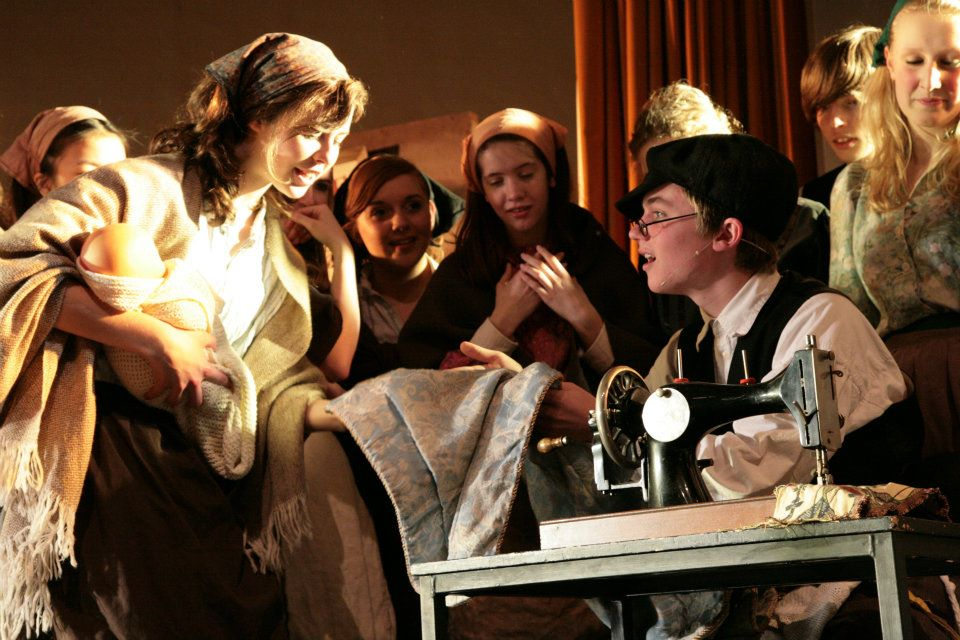
You’ll notice that two of them are struck through. Completed. Dicho y hecho. You might well think it more than a little foolish that I managed to get two of my five “great quests” completed within six months of each other, and by the age of eighteen, to boot. You might also question the logic of making the First Quest so very specific, which relied upon a great many external factors, but as the descendant of a lost Jewish family driven into hiding, Fiddler on the Roof holds a very special place in my heart. I was also uncommonly blessed with a musical director for a mother, so I did, I admit, have a significant advantage in achieving one of them early on.

Is there a blessing for a sewing machine?

Durham? Durham wasn’t even up for debate. I simply had to get there. And though I do my very best to advise my own students against such stubborn folly, I was more than prepared to take a gap year and have a second shot when I didn’t get a place at the university of my dreams the first time around. Call it madness, but I wasn’t prepared to accept anywhere else. It was a gamble I ended up making good on, shored up by a much more favourable set of A Level grades. A combination of luck, hard work and stubborn pride secured me the Second Quest.

Of the remaining three, one was swapped out a few years back for a new quest:

3. Find the family

As I got older and my desire for reckless travel steadily fell away – the pressures of holding down a job and being in a relationship will do that to you, I guess – the idea of making the great overland trek from Cairo to Cape Town by any means at hand drifted further and further into the nether realms of lost dreams. Living in Uganda very much whetted my appetite for all things African, but in the years since I’ve been made to question that interest so often, through the lens of anti-colonialism, BLM and the downfall of my Gospel Choir. Eventually, the risks outweighed the allure. I buried that dream a long time ago, and replaced it with a much more personal Third Quest: finding the lost family I had never met.

I found them. That was five years ago – you can read the story here, if you missed it. Of all my quests, the search for my family has been the most precious, and I live in its afterglow twice a week every week as I guide my youngest cousin towards his English B1 exam.

That leaves only two of the original five: arguably, the two chambers of my heart. The book, and the one. I’m not afraid to admit that my single greatest ambition since childhood has been one and the same, and combines those two into one; and that is to read my own stories to my own children one day. It’s an image I’ve had in my head for almost twenty years: sitting on the edge of the bed, my life’s work in my hands, putting on all these silly voices and painting the world I’ve spent decades creating for my children. Leading them there, chapter by chapter. Watching them grow up with my heroes, until they find stories of their own and take up the mantle my great-grandparents passed on to me.

Of course, there’s a small but fundamental stepping stone that must be crossed first: the Fourth Quest.

Getting married and publishing the book. The two quests go hand in hand. That, perhaps, is why coming out of a long-term relationship has been a bit more jarring than I thought it would be. The derailing of two quests at once. A future rerouted, rewritten, a page of thoughts and ideas and names scrubbed blank. It’s not disheartening – nothing can be when the birds are singing and the year is on the turn – but it does leave you knocked out of orbit.


Ten years ago tonight, I was psyching myself up for the first night of Fiddler on the Roof. Tonight, Russian forces continue to cut a burning path through Ukraine. Kiev shelled. Mariupol in flames. Hospitals in ruins. As Motel, I took my young family and fled west into Europe. The radio today was talking about how the British government is offering a tax-free allowance of £350 per month to those willing to put up Ukraine’s refugees. According to the Beeb, some 43,000 have already signed up to help, only five hours in.

The events described in Fiddler took place in 1905. More than a hundred years later, the parallels seem alarming. They put one’s troubles in context. Personal quests and family pride must be denied and set aside and mortified and all that. Perhaps it’s high time I set myself a new quest. In the meantime, there is work, and work is good for the soul, even if marking GCSE translations is a far cry from any soul food I’ve ever eaten. BB x

Tevye: Work hard, Motel. Come to us soon.

Motel: I will, Reb Tevye. I’ll work hard.

Fiddler on the Roof, Act II, Scene 8

Wailing World

“Sir, what’s your opinion on Russia v Ukraine?”

In the vocabulary of a child, it sounds harmless, like a friendly football match. It tears away the shock and the hysteria. It tells a story of immediate information, of children monitoring the dawn of war on the screens of their smartphones. It seems almost absurd, watching a war unfold in real time.

I couldn’t answer the student because I don’t know enough about what’s going on in Ukraine to give anything like an informed opinion of my own. My meddling with Russian affairs amounted to nothing more than a short-lived attempt at after-school Russian classes in my sixth form days. The two other chaps in the class went on to study Russian at Oxbridge. I had no such intentions. I happened to be studying the Russian Civil War in A Level History, I was intrigued by the art style of the Soviet propaganda machine and felt like learning a new language. Not for the first time in my life, I felt like a foolish hobbyist amongst eager professionals. I don’t think I ever made it to the second class.

I chose to focus on Arabic instead, for equally casual reasons. I didn’t want to be a spy, or a civil servant, or an ambassador. I don’t have the cunning or the sense of national pride. All I wanted to do was to read my history books, and to draw back the curtain on al-Andalus. I had the chance to explore an entirely different world, and I took the other road. God only knows where my life might have taken me had I made it to that second Russian class.

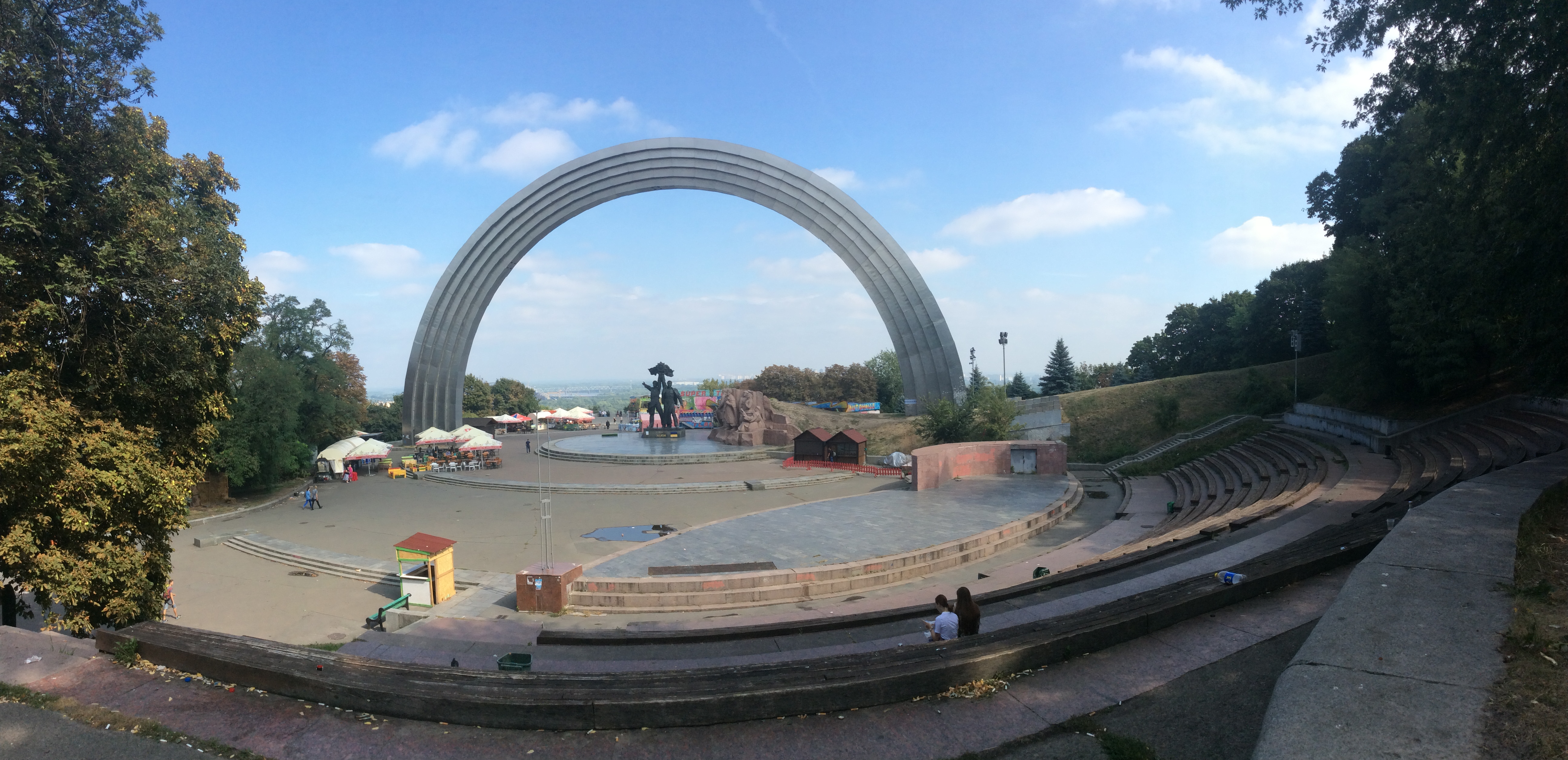
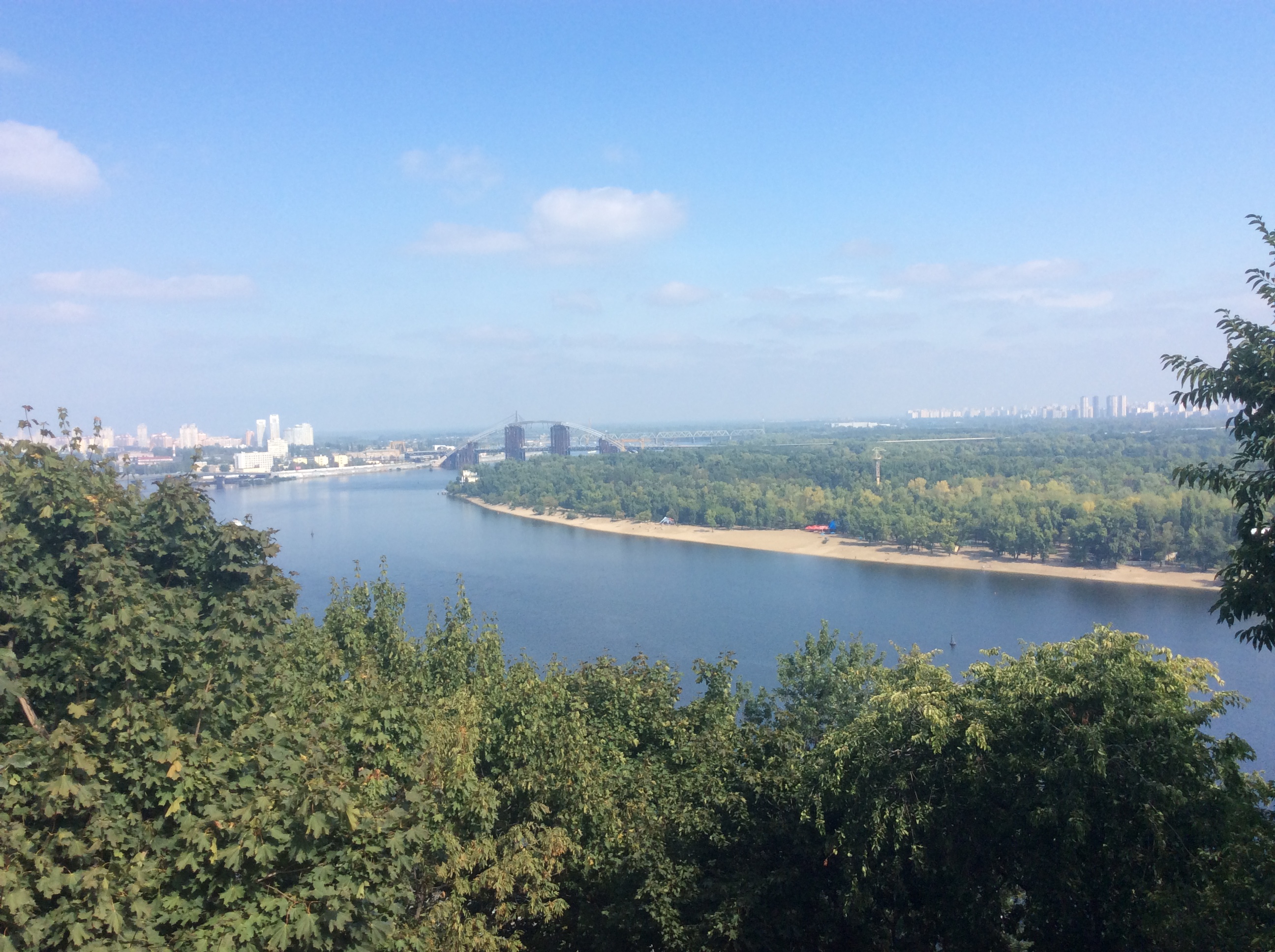
As the fighting intensifies in Kiev, I remember flashes of my brief stop in the city almost seven years ago. Bearded, sweat-scarred and looking forward to coming home, however briefly, after two trying months in Amman. The decision to take advantage of a twelve-hour layover and make a flying trip out to Kiev from Boryspil Airport was a fool’s fancy on my part, as it so often is, but it did mean that I got to see with my own eyes a city that is now in headlines around the world.

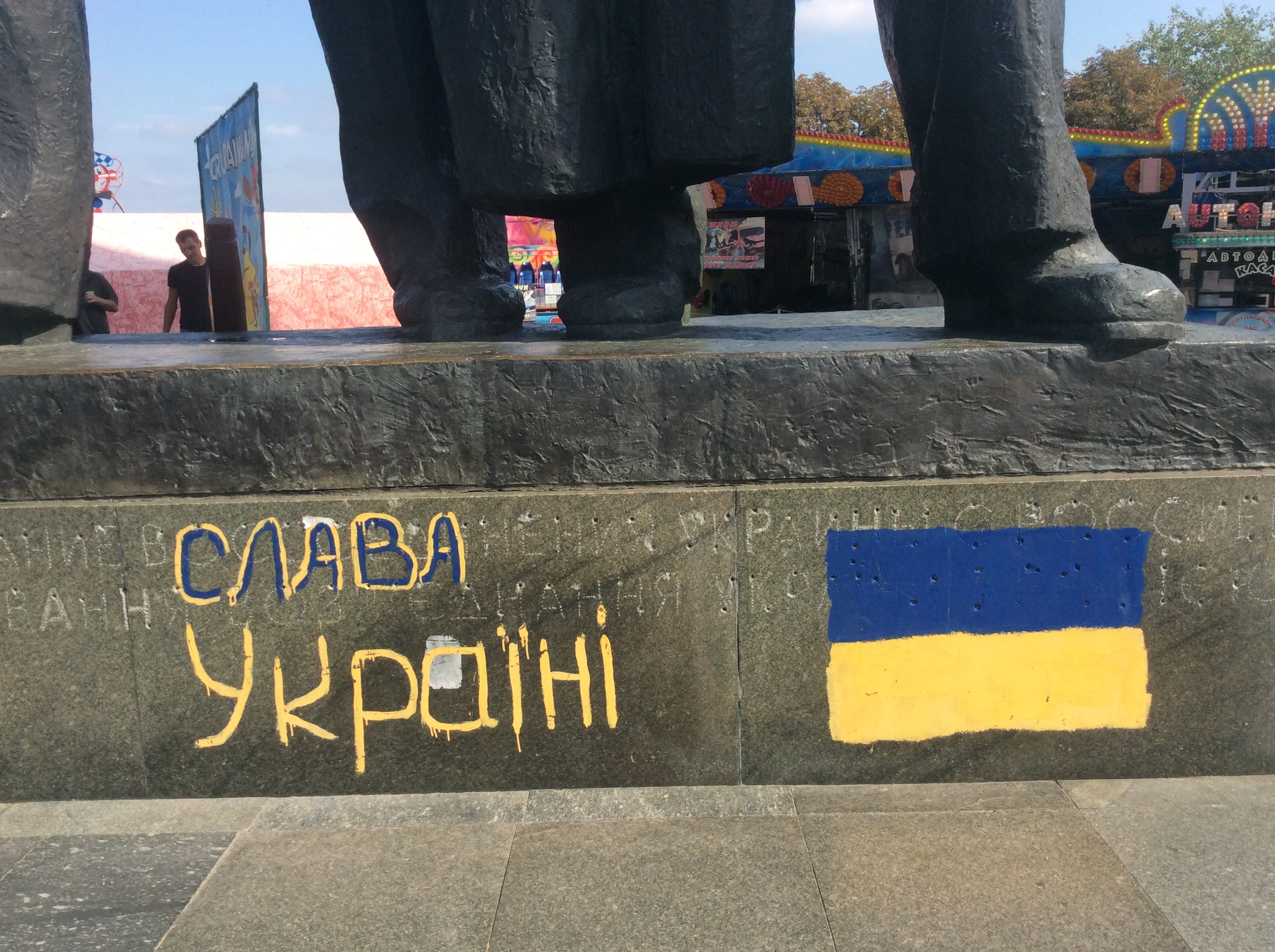
That was back in 2016, only a couple of years after the Revolution of Dignity and the subsequent annexation of the Crimea. The city was quiet, but the stress lines were there to see, if you looked closely. Beneath the People’s Friendship Arch, a monument to Russian and Ukrainian unity, a messaged daubed in Cyrillic: “Slava Ukraini” – Glory to Ukraine. The nationalist call-sign, forbidden during the years of the Soviet Union.

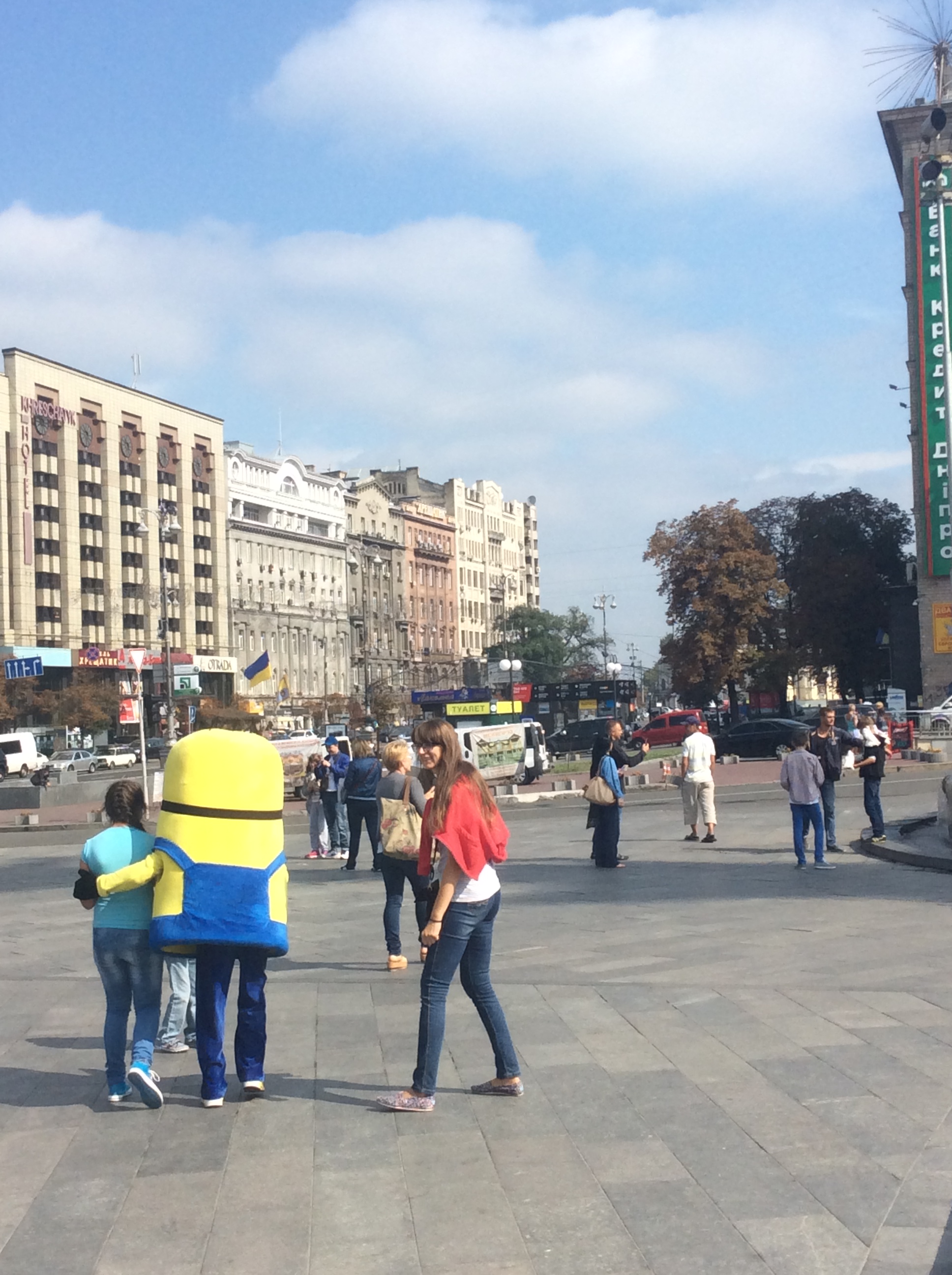
The blue and yellow of the national flag was everywhere, almost as fiercely ubiquitous as the rojigualda in the months following the 2017 Catalan rebellion. Even the street artist dressed as a minion in the Maidan Nezalezhnosti (Independence Square) seemed intentionally patriotic.

The blue and yellow from the city streets of Kiev has since fanned out across the web. Profile pictures bear its bicoloured hue. Thoughts, prayers and shares tell the story of the conflict to millions. And while part of me feels this is the way things should be, there’s something that keeps cropping up that I feel the need to talk about.

As is becoming customary in the Instagram Era, there’s just as much anger on my social media feed about the underrepresentation of conflicts happening elsewhere in the world as there is about the fighting taking place in Ukraine. For every “thoughts and prayers” post there’s a story bemoaning how much less of a fuss was made over Israel’s actions in Palestine, or the Indian occupation of Kashmir, or the assault on Yemen, as though one ought to be losing one’s head every time a gun is fired anywhere around the world. All of them immensely valid causes, no more or less than the chaos unfurling in the land of the Rus right now. Still, the phrase “pick your battles” comes to mind, and perhaps I’ve never used it more accurately. You can’t fight every war.

War. It’s not a word I’m used to using in the present tense, jaded as we are in the West by decades of relative peace. Thousands of us – maybe even millions – have never known what war means beyond what we studied at school. There’s a strong argument against the virtue-signalling “thoughts and prayers” response trending across social media, but maybe that’s just the knee-jerk reaction of a generation so far-removed from war that the word has all but lost its meaning.

Thoughts and prayers for the people of Paris after the Notre-Dame fire. Thoughts and prayers for the people of Afghanistan. Thoughts and prayers, but never enough of them, and never going to all the right places at the right time.

There’s so much human suffering that the whole world should be wailing.”

Joy Chambers, My Zulu, Myself

Taking the colonialist argument off the table, just for a moment, I don’t know whether we’re even capable of feeling a genuine sense of outrage at every injustice there is in the world – even my generation, which does a very good line in being outraged and incensed at everything. Every injustice, though? How can you fight for every cause and still remain true to your own beliefs? That much pain would be enough to tear the soul apart. It’s bad enough being a bleeding heart about the natural world – which, when the chips are down, is the first thing people forget to care about.

Fight, by all means. Resist. Shout about the things you care about. But pick your battles, and don’t attack those who didn’t come when you called, just because the fire in their hearts was not burning so bright.

What’s my opinion, then? Bewilderment. Jaded bewilderment, like so many of my generation. Bewilderment at the aggression. Bewilderment at the inaction. Bewilderment at the comparison to the Sudetenland saga I’ve heard so many times this week.

I studied the Soviet Union for years, but I’m no nearer an answer than any other armchair expert – probably because of my innate aversion to 20th century history, having studied it to the exclusion of every other century at school. Before I speak out, though, I will do what I do best. I will read. I will research. I will inform myself, as we were so often commanded to do during the BLM movement. I will speak to those who know more than I do, when the time is right.

While the world watched the city of Kiev, five islanders returned from the Chagos Archipelago in the Indian Ocean. It was their first independent trip home since they were forcibly removed by the British authorities during the 1970s as part of a deal to secure Mauritian independence. Mauritius wants its territory back. The Chagossians just want to go home.

Just one more injustice to add to the pile. Perhaps the whole world should be wailing – but for whom? Our world is full of people who think differently, and long may that be so. I will defy my generation and risk the use of a colonial poet to conclude, because I do believe Kipling had the right of it in this verse… BB x

Oh, East is East, and West is West, and never the twain shall meet,
Till Earth and Sky stand presently at God’s great judgement seat,
But there is neither East nor West, Border, nor breed, nor birth,
When two strong men stand face to face, though they come from the ends of the Earth!

Rudyard Kipling, The Ballad of East and West

Athene noctua

The students have gone home for half term. Silence hangs over the school. The corridors of the boarding house are dark, and a little cold, too. The floorboards creak under my foot with the kind of volume that only darkness can amplify. The dull glow from the torch on my phone casts long shadows. A friend of mine once explored an abandoned hospital on a dare. I did not go with him then, out of some primordial fear of the darkness within. And yet, here I am, haunting the empty corridors of this old house by night, the last man standing. Filling up a water bottle from the cooler on the Year 10 corridor becomes a quest in its own right.

I’ve had a lot of time to think lately. I guess coming out of a long term relationship will do that for you. One of the things I thought I might be able to recover was the fierce reading streak I had on my year abroad, but I just can’t find my mojo for that right now. Time just seems to slip through my fingers when I’m not at work. I wonder what the world does when it’s not working? I guess that’s what television is for, or Netflix, or whatever streaming service is in right now. But then, I’ve never been good at sitting down to movies or TV shows. My brain wants to be involved. There’s a precious few I’d happily watch over and over and over again, but it’s rare that I find a new picture out there that sinks in.

There’s not a day goes by where I don’t feel a genuine fulfilment in my line of work. Teaching is in my blood, a duty that my ancestors have carried out for generations. Knowing that I am the torch-bearer for my generation gives me a sense of purpose that is utterly unshakeable. And it’s not as though that purpose hasn’t been tested over the years. It’s just that, whenever something comes up to shake its fist in my direction, I know instinctively that there’s a greater mission behind it all, and that’s reason enough to persevere – even when my core beliefs are thrown into disarray. I wonder if my great-grandparents, Mateo and Mercedes, ever had such doubts?

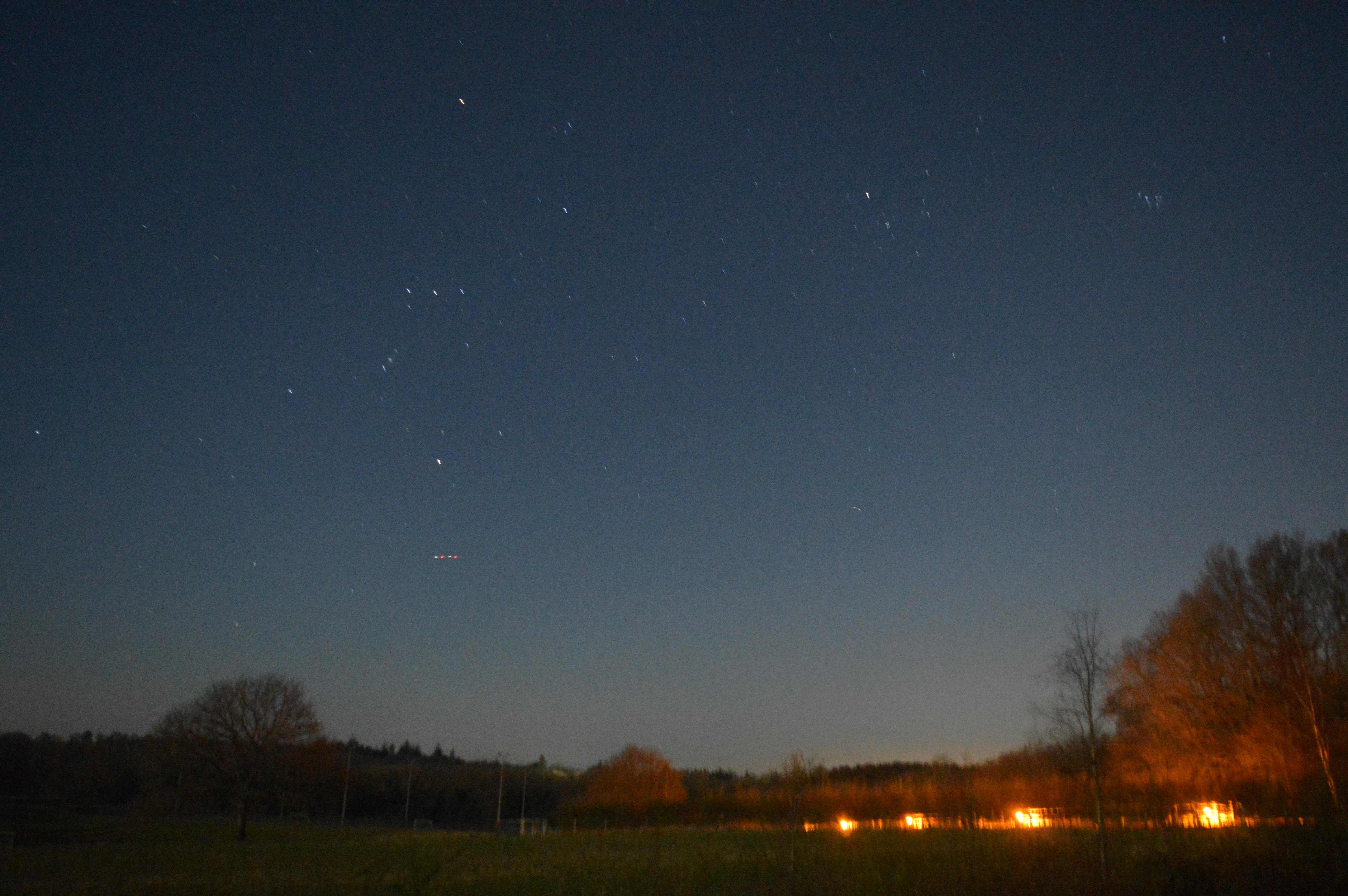
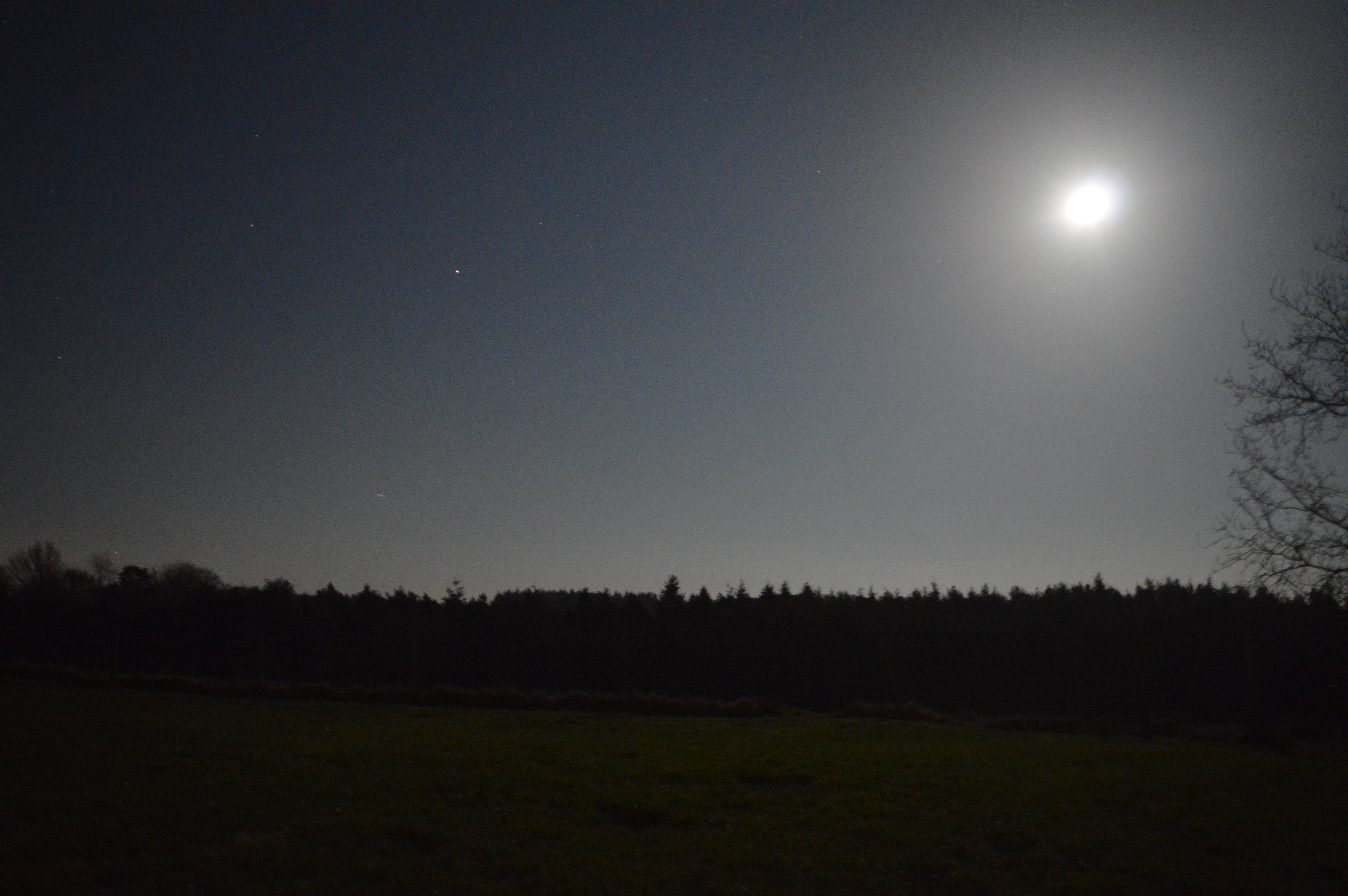
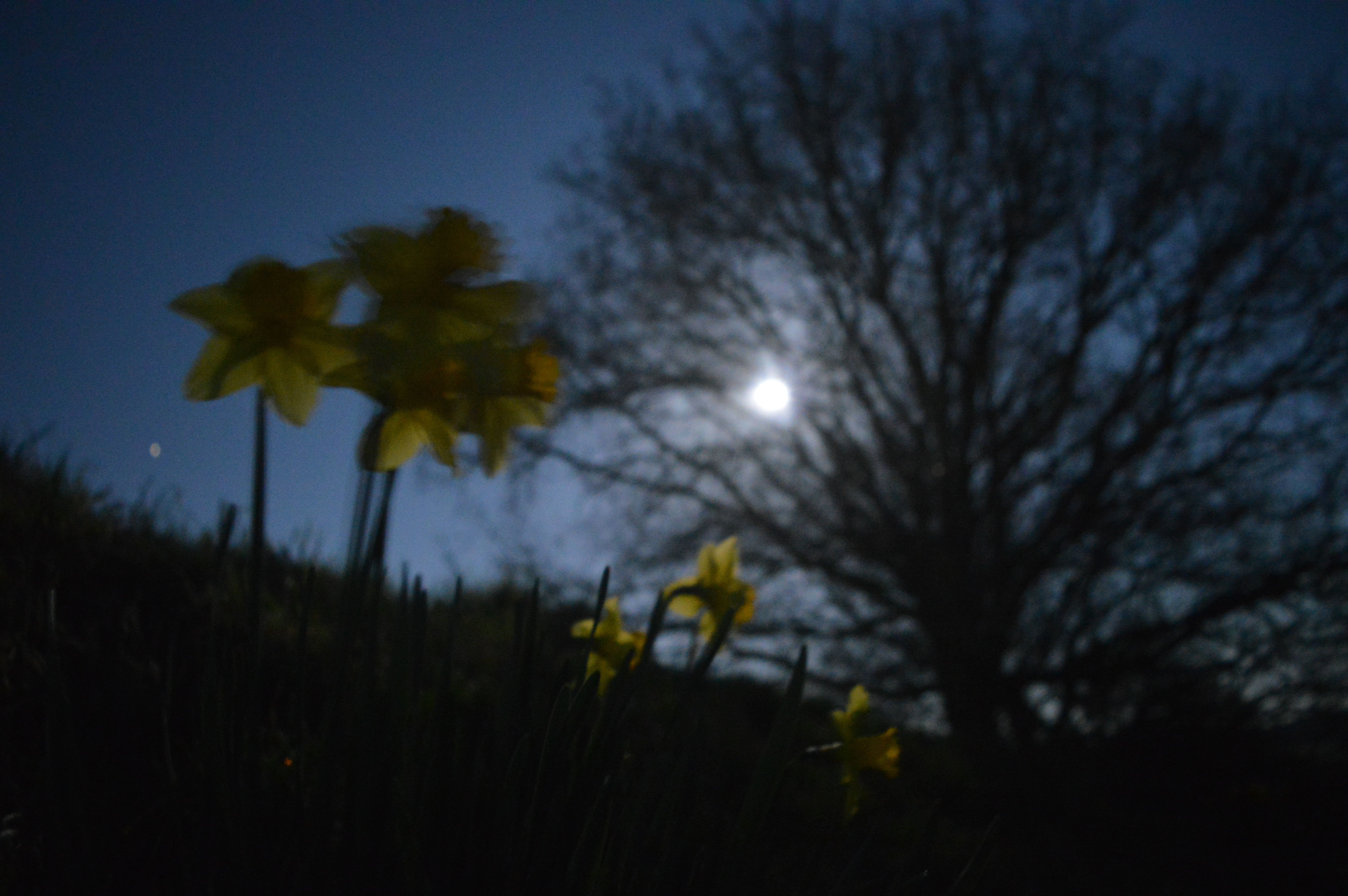
There’s a little owl calling outside. It’s been piping away from the upper branches of the Atlas cedar in the drive for half an hour now. The foxes have been quiet for a week or so now. I suppose their noisy January antics in the front quad are over for the year. Three buzzards were soaring over the grounds the other day during morning break, but none of the students seemed to notice. The redwings and the fieldfares have moved on and the snowdrops are out. The daffodils will be on their heels soon enough. I escaped to Richmond Park a few weekends back, just as the first blooms were sprouting. It was good to see the wide world again, even if only through my own eyes.

No photo description available.

The meltwater of the long Covid winter is starting to run. Just like the birdsong and the subtle shift in the light over the last couple of days, change is in the air. Piece by piece, the last fragments of the old world are coming back. At the request of one of my students, I blew the dust off my long-neglected violin and rocked up to orchestra this week. I’m about as good on the thing as I ever was – that is, haphazard at best – but I’d forgotten how much fun it used to be. It’s one of those things that simply slipped through my fingers over the last couple of years.

I think I’ll take up the guitar this half term. A zealous diet of sevillanas have powered me through the darkness of the winter months this year, and I’m done with being able to sing along but never sing alone. At the very least it will give me something to do until my provisional arrives and I finally confront the long-delayed challenge of learning to drive, which I have put off for far too long.

I’m done with playing games. It’s high time I went on another adventure. The Easter holidays aren’t far off, and I could do with some more writing fuel. And spring is always such a hopeful time of year. BB x

A Semitone Out of Line

How did your 2022 start? Mine began with a miracle. Not a major one – at least, nothing that brought about anything new in my life. Just the restoration of my hearing.

Since the first day of the Christmas holidays, I’ve been plagued by the after effects of a bad head cold that went to my left ear and decided to wreak havoc there. My first week off was spent largely deaf on one side with a tinnitus so fierce it kept me up at night. It’s not often that an illness gets me down – I’m lucky enough to have a rather robust constitution that withstands most things, bar the seasonal pollen allergies that come around every summer. Personally, I thought I’d done pretty well to make it to the end of term without testing positive for COVID once, despite working in a school where children come and go every week. Perhaps this was the man upstairs showing his fickle hand, where fickleness is another word for fairness.

The tinnitus wasn’t so bad, after I got used to it. But it was what happened once the antibiotics had done their job that was the killer. For the best part of two weeks, everything sounded wrong. It took me a couple of days to realise what it was: the ear infection I had been through had left me with a case of diplacusis dysharmonica, a condition that warps the sounds that you perceive. In my case, while my right ear operated normally, my left ear perceived all sounds a semitone higher. For the musicians out there, I’ll let the ramifications of that sink for in a moment.

In most cases, this is a minor inconvenience and can be ignored a great deal more easily than any tinnitus. That is, unless you have perfect pitch.

It’s hard to talk about the uncanny ability to pluck exact notes and tunes out of the air without prompt without coming across as boasting at worst, or false modesty at best, so I won’t labour the point. What I will say is that, for somebody who notices the instant a piece of music is played in a key in which it was not originally played – even if the pitch has been shifted by a hair – hearing the world in two tones at once for a fortnight was nothing short of maddening. A quick browse of the internet will tell you that diplacusis dysharmonica seems to be especially painful for musicians.

What does it sound like? Try to imagine one of those cassettes you might have had when you were younger, after you rewound them once too often, or somebody (possibly a child) had played around with the spools. The sound eventually warped, keys were bent out of place and voices got the Alvin and the Chipmunks treatment. Now imagine that weird, unnatural effect playing alongside a perfectly functional version of the same audio. A long-winded analogy, but the first one that came to mind – chiefly because of the sheer number of cassettes I must have destroyed as a child before the era of Spotify and the repeat button.

Earphones and headphones were out, as they just exacerbated the problem; higher frequencies seemed to be the biggest triggers. I got into a habit of humming to myself in the morning, just to check, and each time I heard two notes come back to me instead of one. I’d give myself a pat on the back for being one of the few humans capable of singing a chord if I knew it wasn’t a) all in my head and b) an exceedingly ill-chosen chord consisting of two notes barely a semitone apart.

Like many of us, I imagine, I woke up this morning apprehensive about the new year ahead. 2021 was a rough year with just a few golden moments that made it one to remember: spending the summer with a dear friend in Edinburgh and a week in October with my beloved family in La Mancha rank right at the top. But with the sun in the morning comes hope, and hope is what I come back to when the world is dark.

By midday today, the distortion in my left ear had dimmed so much that it was hardly noticeable. By tomorrow, God willing, it may be gone altogether. I can’t begin to describe the feeling of putting a pair of headphones on and hearing music as it should be again, after two weeks of dissonance without resolution. I’ve had album after album of sevillanas by Raya Real on repeat ever since. There’s nothing quite like a sevillana to express reckless joy, and that’s exactly what I’m feeling right now. To quote Sweeney Todd: my arm is complete again.

It’s a shame it had to last from the first day of the holidays right up until the last, but I’m not complaining. I can hear the world again, as it should be. That’s more than enough for me.

BB x

NB. It’s been a while since I flexed my writing muscles. This year, I’m going to blow the dust off the blog and get back into a reasonably regular writing habit again. It’s been too long. Until then!

“…So I Became a Teacher”

Ten years ago, British comedians Ben Miller and Alexander Armstrong ran a cracking comedy show on the BBC. The show has always been one of my standout favourites in British comedy, delivering some truly brilliant sketches including Perfectly Innocent, Kill Them, The Embarrassed Prime Minister and the Polish Plumbers, to name just a few. One running gag that hits close to home but still makes me chuckle is the comedy duo’s Be A Teacher ads, lampooning the common reasons why people “fall into” teaching:

“Failed in the real world? Then why not be a teacher?”
“Quite bright, but lazy? Need a safety net? Be a teacher.”
“Good enough to get a degree but not good enough to get a job? Be a teacher.”
“If your ambitions haven’t quite come off, remember: there’s always teaching.”

It’s a little tragic that one of the most important and time-honoured professions in human history often seems to fall into the category of “one of those jobs you do when you’ve tried all other avenues”. Conversations at school and university often went one of two ways whenever teaching came up: either “I just want to do something more worthwhile with my degree, you know?” or “God, I hate kids. I could never do that”. They’re hardly groundless as arguments go. Who in their right mind would want to get back into the classroom almost as soon as they’d left it? There’s surely something intrinsically sadistic about that kind of decision, and that’s before we even get onto the nitty-gritty of marking, differentiation and pupil management. And as for the hating the kids part… well, they say never work with children or animals – but maybe that’s just because you can’t ever truly predict or control either of them. And it is so very human to want to be able to do just that.

For me, at least, it has never been a question of “lapsing” into the education business. It is, like so many things, a family affair. Both of my parents were teachers. My Spanish great-grandmother was a teacher, and she married a teacher. I’m just continuing with the job. I might have had my wobbles along the way, but I don’t think I’ve ever really doubted that I’d be a teacher someday. Sure, that’s easy to say on a Saturday night, when most of the kids are out and boarding duties have been light, but it really is one of those professions that teaches you all the time, usually in ways you don’t expect.

I’m writing tonight because these last two weeks have been tough. The reality of teaching foreign languages to the English – ever the most stubborn of peoples when it comes to learning foreign languages – is beginning to bite. Not a week goes by when I don’t hear the line “Sir, why do I have to learn a language? Why can’t I just speak English?”, or variations thereof. The Modern Languages and Cultures graduate in me would love to give some solid answers, but these are fourteen-year old kids, for pity’s sake. A university-level argument on the merits of multilingualism pales in comparison to the fact that they have to revise twenty words they may very well never have to use in their lives – besides the end-of-year exam, of course.

So what use is the degree, then? What was the point in spending £9000 a year on the study of French, Spanish and Arabic history and literature if I am to spend the next four years teaching kids how to count up to thirty-one or discuss their plans for the weekend? These are questions I have been asking myself a lot these past two weeks. I came back to England with a mission, to do my part in a desperate campaign to save this country from collapsing into ignorant isolationism, knowing full-well what it would mean. And yes, whilst working in a boarding school does allow me to continue to channel my passion for music – easily the best part of the job by a country mile – the teaching side of it is hardly as scholarly as I’d have liked, sometimes.

At times like these, I do miss university. I miss staying up late with my housemates discussing political or social matters, I miss the excitement of sharing in the knowledge of others, and of sharing your own in turn, and I miss the challenge of stretching my brain. God, I miss that. I’ve been reading like a fiend these last few weeks out of a mad desire to tackle something more intangible than the days of the week. I ordered a book of ancient Spanish poetry off eBay the other day and pored over it during prep one night, something I admittedly would never have done at university. But then, my brain was stimulated in other ways then.

So what’s keeping me here? Why do I go on teaching?

Because I believe it’s nothing more and nothing less than one of the most important jobs in the world. For as long as there have been humans, there has been teaching, and even before then, there was teaching and learning after a kind. In the words of a colleague of mine, “I don’t care how much more you earn in the office, your job could disappear from the face of the earth overnight and nobody would notice. Not so with teaching”. You might see it as giving up on your own hopes and dreams to encourage others to pursue theirs, or that might have been your ambition all along. Teaching is the job that keeps on giving – both in reward and in workload, yes, but the rewards make up for it. I am a far braver, far more tolerant individual thanks to teaching. You don’t go into teaching to share your love with just the kids who love the subject back. That’s neither practical nor necessary. You do it just as much for the kids who don’t listen as for those who do. Teaching the subject you love to children with no love for it whatsoever will sap your zeal, strangle it if it can, but it does encourage you to see things from a different perspective. And, frankly, any job that does that on a regular basis is a job worth pursuing, if the ultimate goal of human existence is to understand each other – which is what I have always supposed it to be.

I still can’t fault Armstrong and Miller, simply because that sketch is bloody hilarious. But if you’re enthusiastic, passionate about your field, patient and have a drive to listen and learn, I cannot encourage you enough: be a teacher. Money might make the world go round, but somebody has to encourage and inspire the next generation (besides, the last thing the world needs is more businessmen). So go on. Be a teacher. BB x