Byzantine

Alright, so first things first – why the name change? That I can tell you in two words. Assassin’s Creed. To be precise, give me three: Assassin’s Creed: Odyssey.

Up until a few years ago, the old blog was easy to find, not least of all because my choice of a pen name is not exactly one of the most commonplace names around. When was the last time you met a Barnabas?

Then, suddenly, 2018 saw the next instalment in the Assassin’s Creed series, and would you believe it, one of the many “side quests” in the game was actually titled “Barnabas Abroad”. Curious, I read up on the mission and spoke to a couple of people who have played the game, and I still can’t find a legitimate excuse as to why they chose that title. It has seemingly no bearing on the in-game mission whatsoever (mind you, since I’ve been grounded for the last four and a half years, it wasn’t really an honest title for my own blog anymore). Anyway, what that meant in a nutshell is that hits for my blog plummeted. Time was when Googling “Barnabas Abroad” took you straight here. Not anymore. Even if you knew the name of the blog, you’d have to sift through two pages of Wikis and related forums about Assassin’s Creed in order to find any of my content.

So this is me, BB, the artist formerly known as Barnabas Abroad, rebranding.

And no, it’s got nothing to do with The Book of Boba Fett either. Nor the Gospel of Barnabas, though I’ll admit I like the connection. Honestly? I just wanted something that started with the letter B.


I heard it said that in London you’re always looking for either a job, a house or a lover.

Amy Liptrot, The Outrun

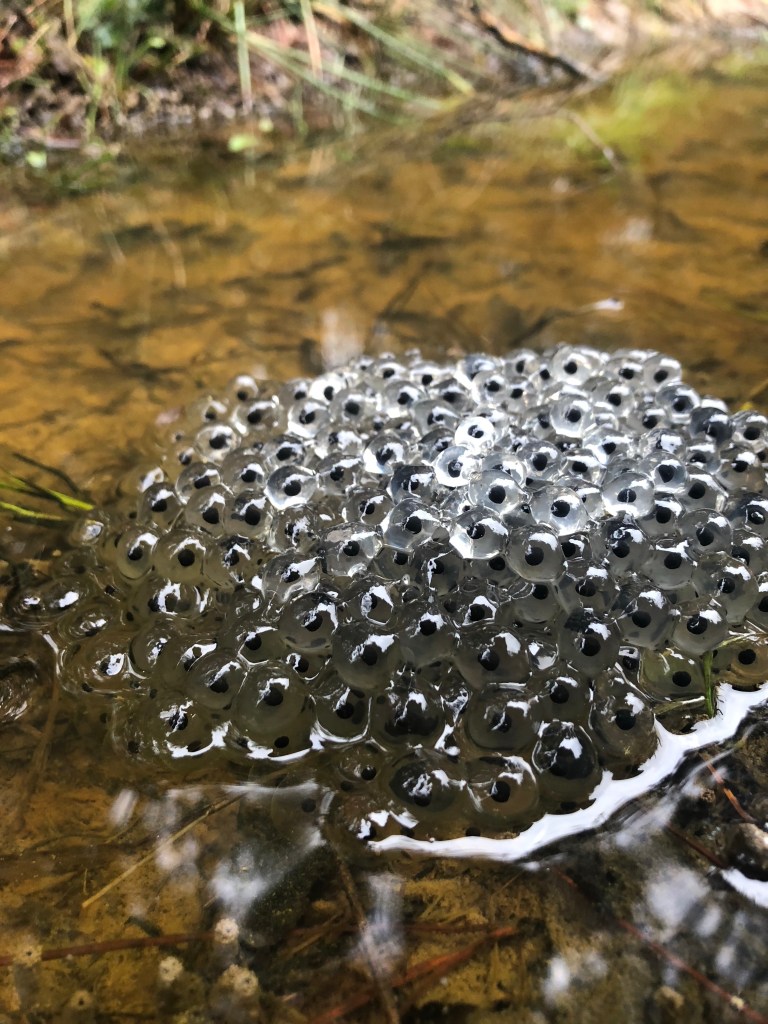
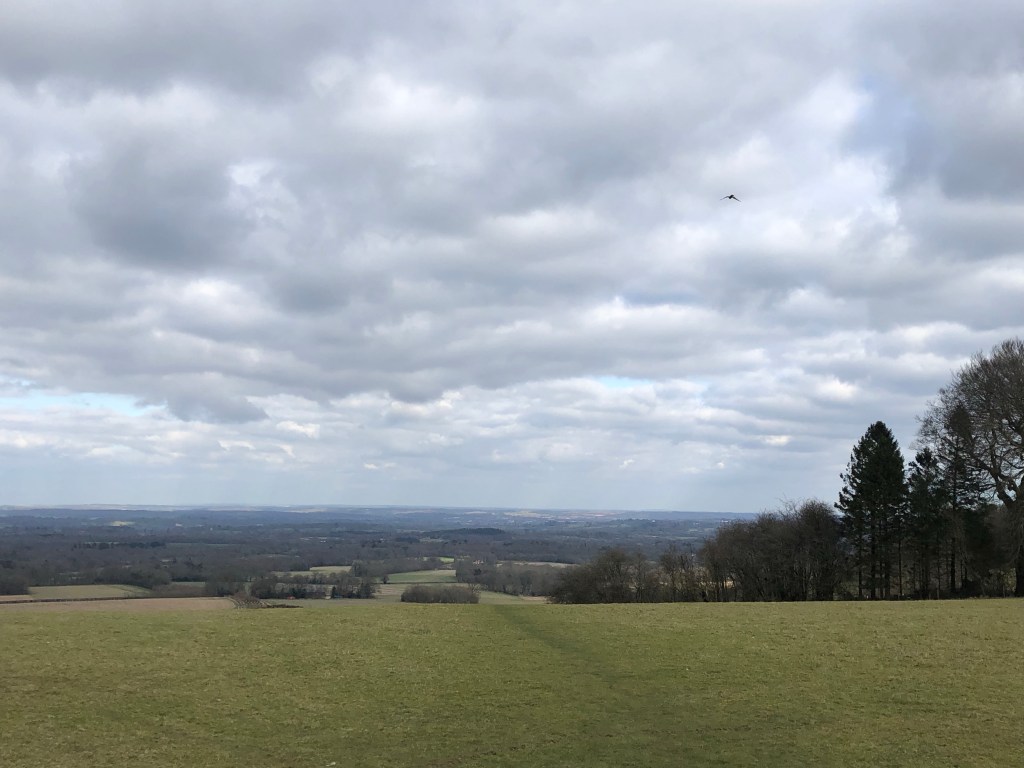
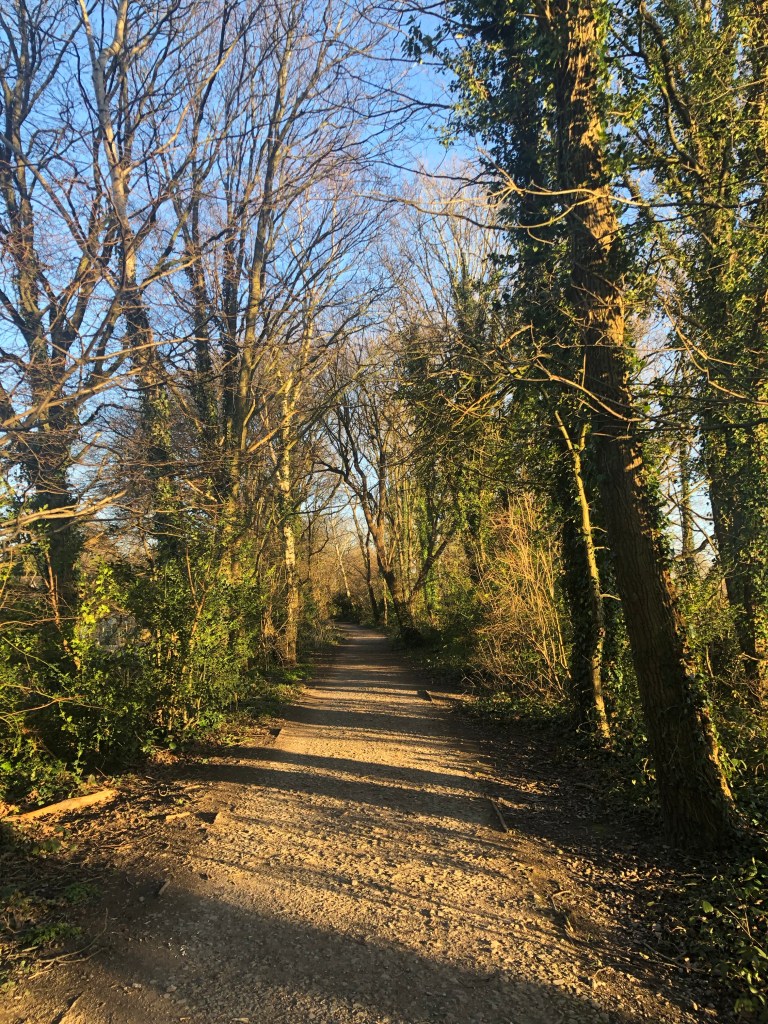
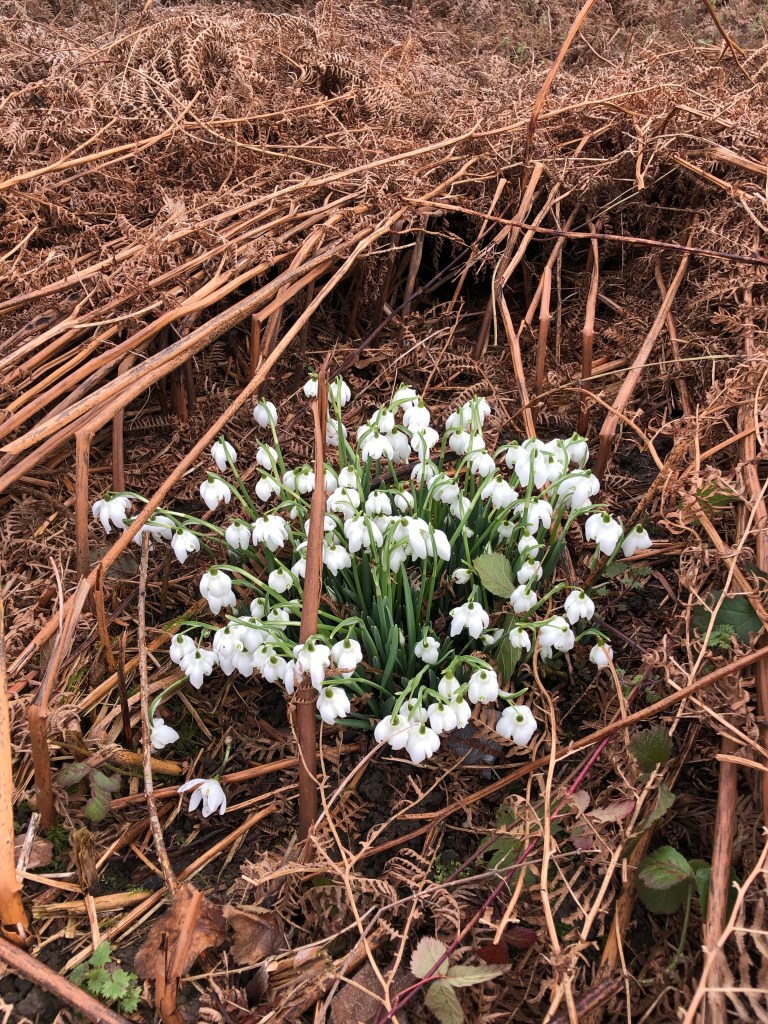
Spring in the air. Robins singing. Long shadows on the drive. An electric blue sky and the promise of summer. Crocuses, snowdrops and daffodils. A deepening red hue in the silvery-ochre wash of the Weald. In the forest, masses of frogspawn in the usual spot, most of which will be gobbled up by the thrushes long before the hatchlings see the light of day. Hope stamped out but not extinguished. Despair has no place in the springtime.

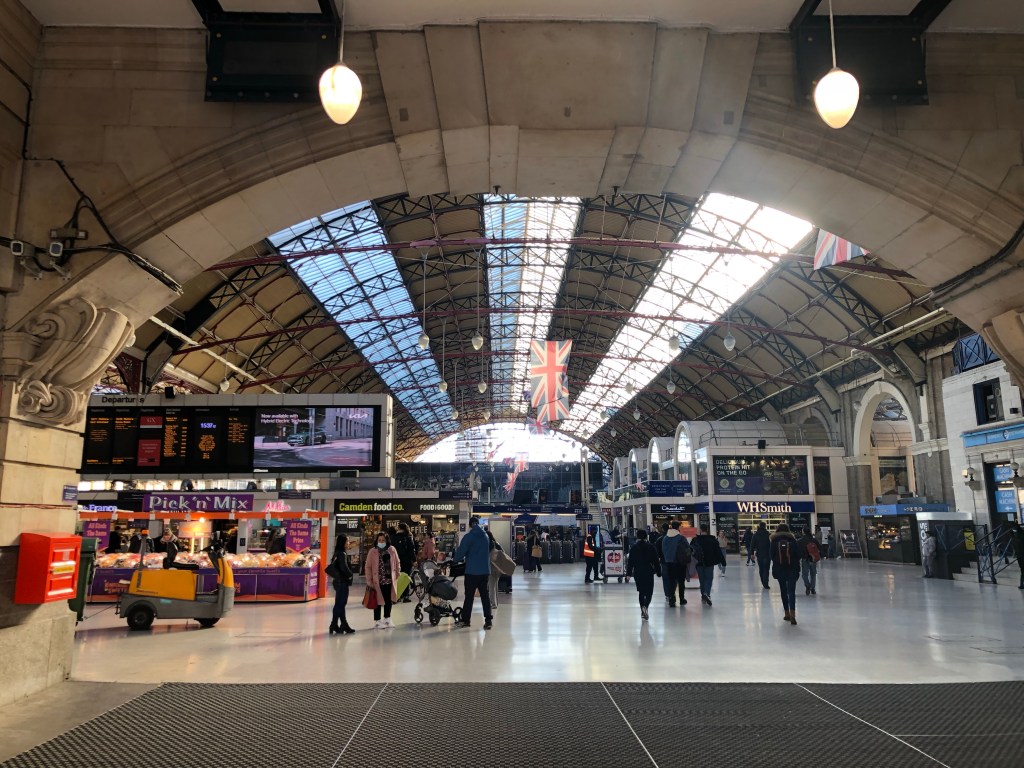
Today was an odd day. So much of it felt like walking backwards through time. And not stepping back to a specific point in the past, I mean literally walking backwards. I spent the morning moving a tumble-dryer into the flat with a colleague. I took a taxi to the station, with the company I used to use a year ago, before our school changed its providers. I remembered the driver – you get to know them pretty well when they’re your only rapid means of getting to and from work, wheel-less as I am. I went to Victoria in the sunlight with a giant suitcase for a friend. I handed it over, talked things over, and left the station, more than one load the lighter.

I think my mind was elsewhere, so my brain went into autopilot. My feet took me into the nearest Waterstones. I found myself in the philosophy section. My great-grandfather was something of a philosophy nut, if his letters are anything to go by. Maybe, when we’re at a loss, the spirits of our ancestors come back to guide us. I’d like to think so. I couldn’t find Mill’s On Liberty (recommended to me by a student a few weeks back), so I found the nearest thing: Andrew Doyle’s Free Speech and Why It Matters. Figures that if I’m to cleave to the value I hold dearest – and the one that’s always proved the most divisive in my various circles – I should see what others of a similar persuasion have to say.

The quote at the top of today’s entry comes from a book I read while I was up at the Edinburgh Fringe five years ago. Something about the frankness of the writing style appealed to me like no other nature writer had. Nature writing lends itself very well to the sort of comfortable, fatherly, did-you-know style of speech that isn’t always what you want when you’re after a page-turner. The Outrun was something different, and I felt I could resonate with so much of it. It came to mind this afternoon, or rather, that quote did. Though to be honest, what I was really looking for in London this afternoon was a bit of peace and quiet. It’s been quite a hectic term.

I’ve been in orbit for a few months now, enthusiastic as ever in my job, listless in my spare time. Writing has helped. Reading has sort of helped, when I’ve had the will for it. Running a new choir after the upheaval of last term has been a real palliative, doubly so since my hearing has fully recovered. And yet, there it is. That sense that the future isn’t as clear as it used to be. I still have the vague notion of where I want to be, and it still very much looks like a boarding school on the outskirts of Madrid, but where before the rope bridge stretched across a river, the abyss below seems void and limitless. A myriad paths I could take, crossing and weaving and leading down roads I don’t fully understand. I don’t suppose I realised how much I had built my future upon the present, until that present shifted beneath my feet. It’s just as well that the news right now is all chaos; if nothing else, it provides a healthy reality check.

I’m hoping that my adventures in Italy break the back of this funk when they come around. I’ll travel light, I think. Take only my journal, a camera and some changes of clothes. No headphones, no travel guides, no extras. Just the one book – and a slim one, at that.

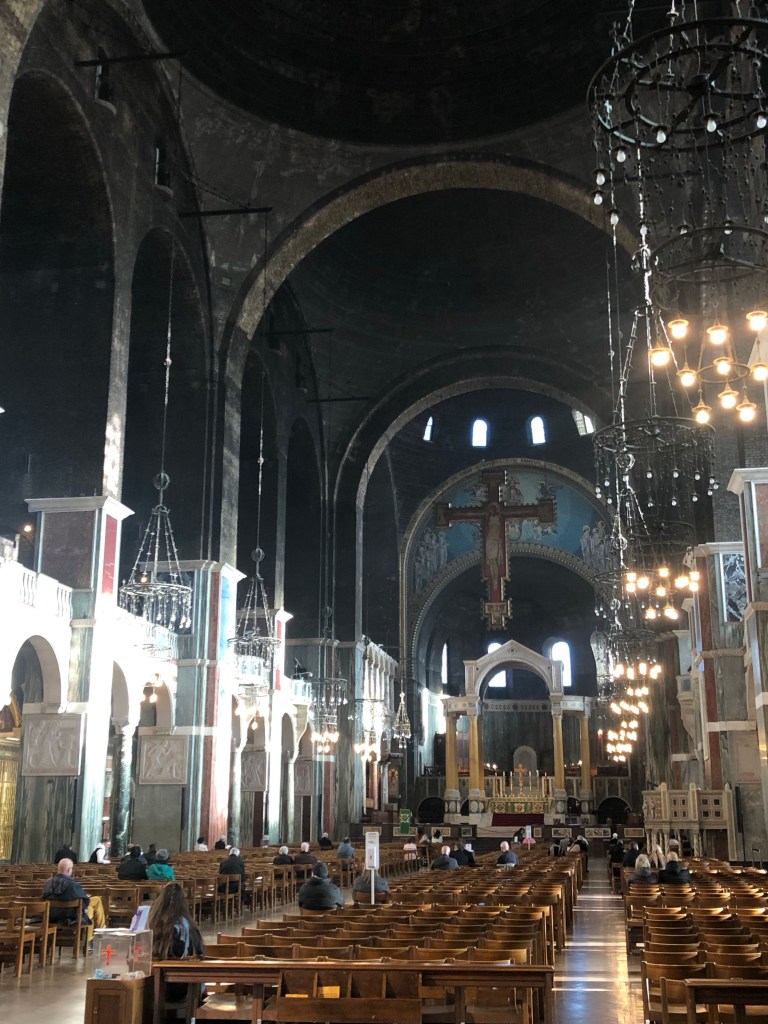
The Waterstones near Victoria looks out upon the impressive faΓ§ade of Westminster Cathedral, and that’s where I headed next. There’s a silent solace in bookshops, but something greater and more powerful can be found in the holy places of this world (see my account of the climb to Montserrat a few years ago). I found a chair, made the sign of the cross and shut my eyes.

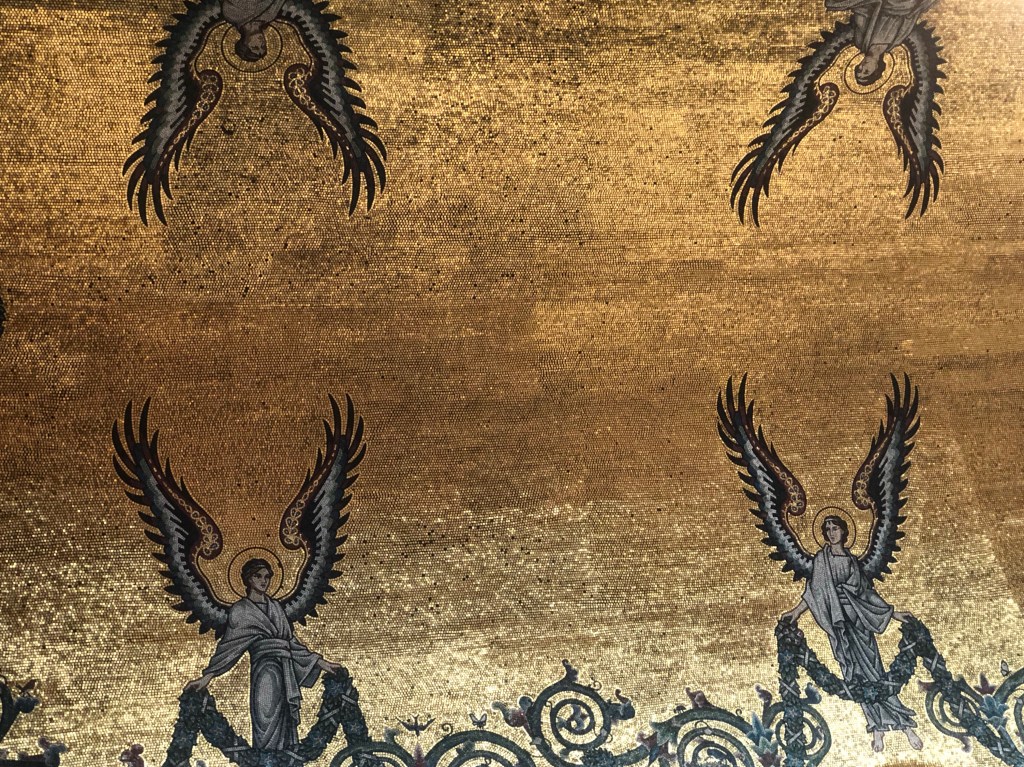
The rumble of the buses outside was drowned out by the magisterial rumble of the organ overhead, then piping and blasting, then humming and whispering. I caught snatches of Spanish in the pews to my right. Byzantine eyes burned into my temples from the glittering walls of the aisles. I counted the stations of the cross as far as I could see them and thought about my abortive visit to Jerusalem, laid low by Covid the week the schools closed. Simon of Cyrene carrying the cross, and a man propping his smartphone up against his feet in the nave to take a full-length photo down the aisle, once, twice, three times. A lady in a wimple watching three rows down with an expression that might have been contempt or indifference. Me, a pretender with a Daunt Books tog-bag I forgot I had, crossing myself once again and leaving.

I sought answers in a church once before, during a summer school trip to Crawley town mall many years back. I think I had similar questions then. But now it’s gone ten on a Sunday night, and there are more important lessons to think about. The weekend, thankfully, is come and gone. Life goes on! BB x

Abide with Me

Today’s the last day of the February half term. Storm Eunice is on her way out, but she’s dragging her talons behind her. I’m cooped up with a blanket and a mug of Ovaltine in my study, looking out at the grey world beyond. Cars parked at angles. Wet tarmac mirroring the featureless sky. Winds of over fifty miles per hour howl across the grounds. One of the windows in my flat is permanently ajar due to some fault with its ancient locking mechanism, and the banshee wails moaning through the corridor sound like the Ice Cavern from Ocarina of Time (nostalgia trip here). Between the raging wind and the rattling tattoo of the flagpole two floors up, I might as well be at sea.

I came home from visiting my parents last night to find the whole site in darkness. From what I’ve seen and heard, Eunice had been busy while I was away, tearing her way along the coast like a hurricane and leaving great swathes of the south without power. It took me at least a minute or two scrolling through the UK Power Network website to find my postcode amidst the many hundreds reporting a power outage. After the fair number of power cuts we had last year, you would have thought I would have been prepared, but for the life of me I couldn’t find any of the candles I’d stockpiled over the years. I think my previous housemate used them all up for beer bottle decoration. Fortunately, some foresight – or hindsight – on my part led me to a hidden cache of hand-torches in a chest of drawers. The bulb had gone in the smaller one, but the other, though flickering as a match-flame, gave just about enough light to read by.

I half expected to come home to find the silhouette of the great Atlas cedar missing from the skyline, its mighty body bent and broken upon the drive like a fallen giant. Fortunately its roots go deep, like the mountains upon which its kin grow far away to the south, and there is strength in the old man still.

The same cannot be said of many of the free-standing trees that line the road into town. I promised myself I’d get a taxi home for the sake of my new trainers, but as usual, I went back on that promise, only this time it was not out of stinginess but a genuine curiosity to see the wreckage of the storm that I had only glimpsed from the train. Crawley wasn’t given a lashing quite like Brighton and Hove, but it had its fair share of casualties, scattered and trimmed across roads and gardens. The damage was less obvious deeper into the woods beyond. There is safety in numbers, it seems, even for trees: much of the forest was untouched by the storm. It was seriously muddy underfoot, though, and I spent a good ten minutes cleaning my trainers by torchlight once I’d made it home.

It seems unoriginal – not to mention extremely British – to go on so about the weather, but I feel as a writer there is nothing more important than taking the time to talk about the world around you every so often. It’s our duty to tell stories of the world as we see it, so that others who come after us can learn from us somehow. One of the books I actually read cover-to-cover last year, Nature’s Mutiny, pieces together the world of the Little Ice Age through diaries, sermons, letters, hymns and poems penned by those who saw it with their own eyes. Back then there was still a great fear of God tangled up in the awesome power of the weather, and a hundred years of savage winters had led a lot of Europeans to the natural conclusion that sin was to blame. Some resorted to witchcraft; some resorted to witch-burning. Others, of a more temperate nature, put their thoughts into verse:

In constant rancour we abide / and war is ruling far and wide

Envy and hatred everywhere / in all estates discord and fear

That too, is why the elements / reach out against us with their hands

Fear coming from the depth and sea / fear from the very air on high

In morning is the source of joy / the sun no longer sends bright rays

The clouds are raining like a fount / the tears too plentiful to count.

Paul Gerhard
Translated by Philipp Blom
(Nature’s Mutiny, 2019)

I wonder how many modern lyricists sing about the weather? Back in 2007, when the UK was plunged into its wettest summer since records began, Rihanna’s perfectly-timed Umbrella became a best-seller. There were even joking accusations on the internet that the singer was responsible for the unseasonal weather across the pond…

Now that it’s raining more than ever

Know that we’ll still have each other

You can stand under my umbrella

You can stand under my umbrella, ella, ella, eh, eh, eh

Rihanna (“Umbrella“)

Of course, Rihanna wasn’t thinking about the British summer yet to come when she wrote those lines, but four hundred years ago they might have burned her for a witch for such impeccably bad timing. Come to think of it, though, I do distinctly remember her name being on the list handed to me by the Prefect Witchfinder General at a school I worked at in Uganda, some five years later. Apparently the school’s witch-hunting guild had found a website listing known witches in the Western world? If they’d stumbled upon one of the various forums discussing the timing of Umbrella, perhaps it’s not an unprecedented conclusion. If I remember correctly, Wayne Rooney’s name was also on that list. The internet is a strange place.

Speaking of the internet, I decided to bite the bullet and give the online dating scene a whirl. Living and working in a boarding school doesn’t exactly facilitate an open line of communication with the outside world, so rather than sitting on the fence I thought I’d chase some stories for a change. After a brief browse it looks as though Bumble is the kindest of the Golden Triangle (with Hinge and Tinder), not least of all because it’s the most self-aware of the damage the online dating scene can do to the mental health of its users. It’s good to see that in an undeniably superficial meat market, some of the folks up top are aware of the dangers and offer support.

It’s almost certainly a silly idea, living as far from the city as I do, but, who’s to know? Shy bairns get nowt once again. If I had a penny for every variation of that phrase I’ve heard throughout my life, I might just have a pound. BB x

Cherry Red

Masks are becoming a much less common sight around town these days. Most of the signs in shops still carry the warning to wear a face covering or face a penalty, but only the employees appear to follow the rules nowadays. John Q. Public seems to have taken Boris at his word and thrown caution the wind in favour of a return to the way things were. The lurid rojigualda of my own face mask is more notable for its presence than for its colour scheme.

Though perhaps less so today, when red is absolutely everywhere, in the name of love, romantic, commercial or otherwise.

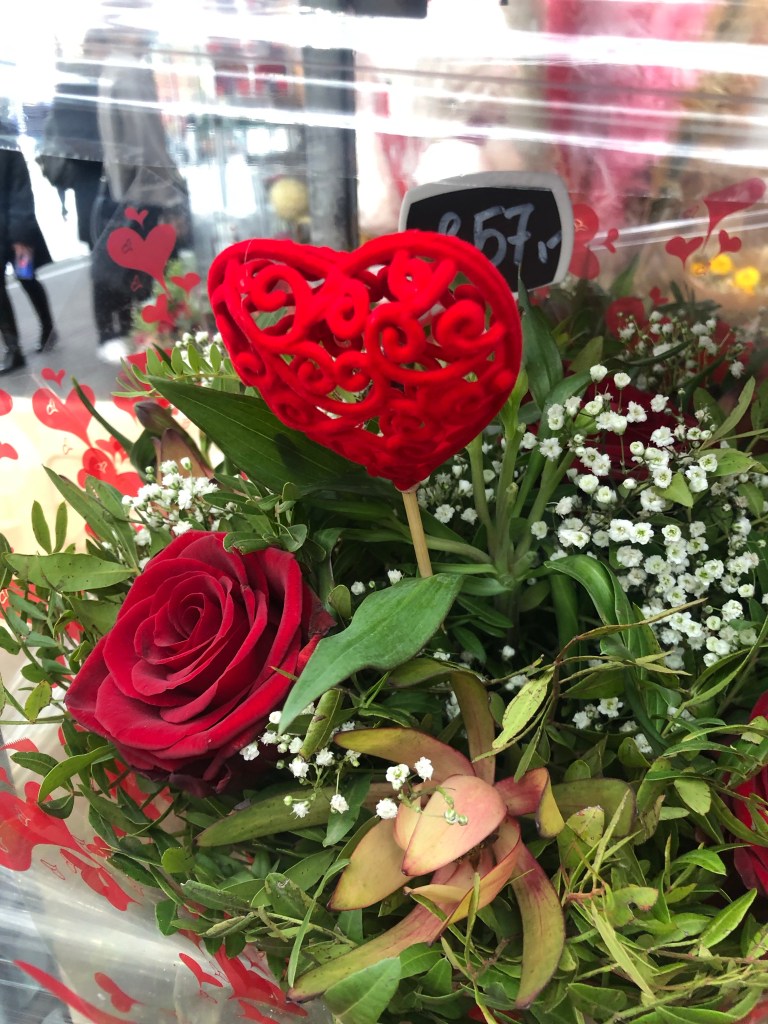
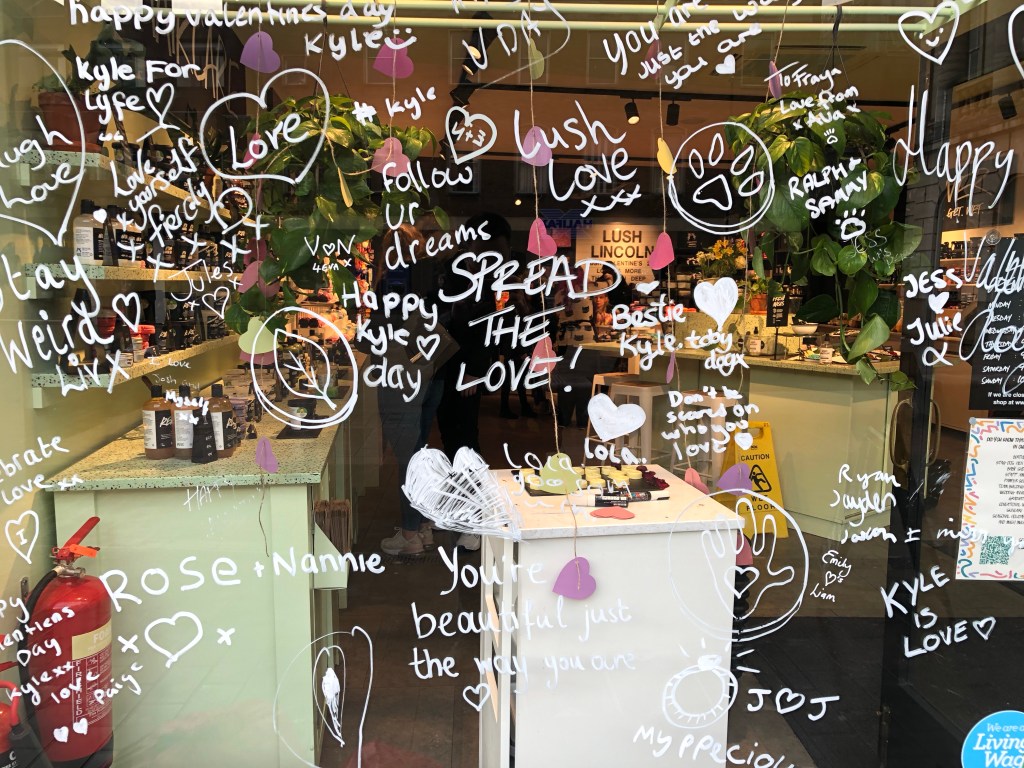
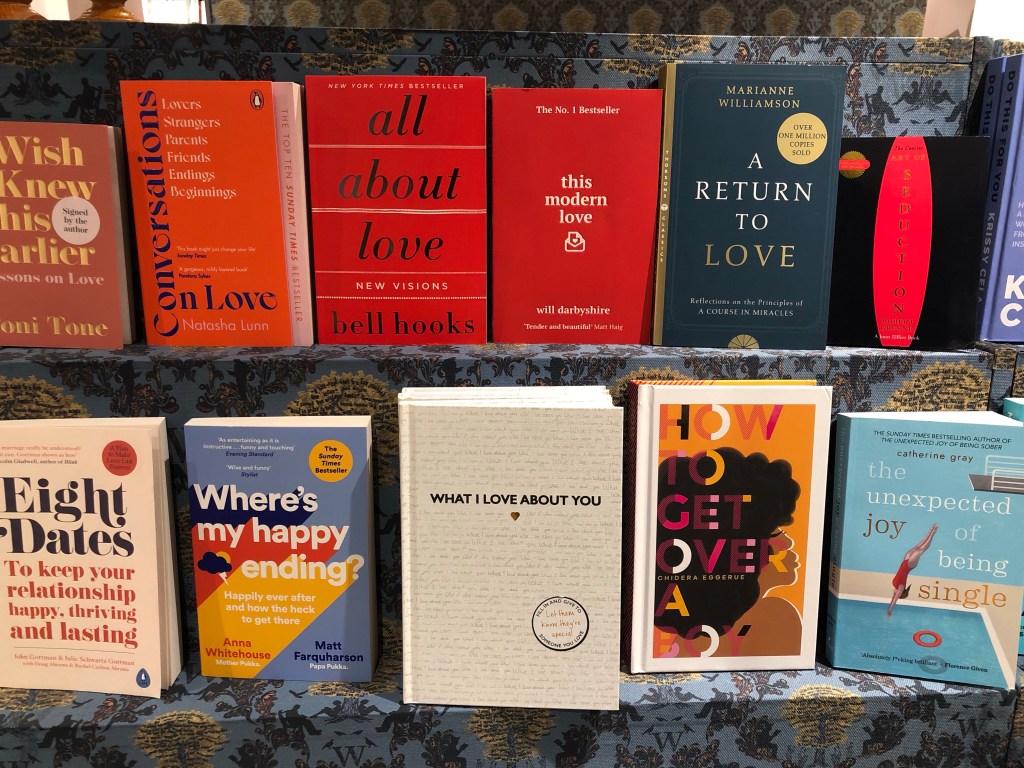
There’s been a pretty serious push for Valentine’s Day this year. Did you notice? I suppose it’s because we’ve had two years of two-metre rules and vaccination anxiety which has thrown the world’s dating community into total disarray. Still – it looks as though all the usual suspects are making up for lost time. Couples wandering about, hand in hand, head on shoulder. Trendy-looking young men scribbling hasty cards in cafes. Groups of girls carrying bouquets and single roses around every corner. Supplying them all, flowers stalls plied a roaring trade in every train station, booksellers put all their romcom collections in the window and Lush had its usual β€˜leave a message’ montage daubed across its front.

I’ve never been one to hate on Valentine’s Day. Somehow all those years at an all-boys grammar school didn’t manage to quash the romantic in me. Sure, it’s got a commercial side these days, but then, what doesn’t? It may seem a little strange to celebrate the death of a third-century Roman saint by giving and eating (or just eating) a confectionery staple that the Mayans used to snack on, but is it really any weirder than Santa Claus’ transformation over the centuries from Turk to Coca Cola-chugging Nord?

I was raised on Disney movies, so of course I’m going to fight love’s corner. The same mega corporation that imbued us all with a considerable mistrust of employers (seriously, how many Disney villains use contracts or bargains?) has hammered home the message that true love conquers all since 1959. And though Sleeping Beauty gets its fair share of scrutiny these days, there’s a no less powerful dialogue from The Sword in the Stone that cuts (ha) right to it:

Merlin: β€œYou know lad, that love business is a powerful thing.”

Arthur: β€œGreater than gravity?”

Merlin: β€œWell, yes, boy, in its way… yes, I’d say it’s the greatest force on earth.”

The Sword in the Stone (1963)

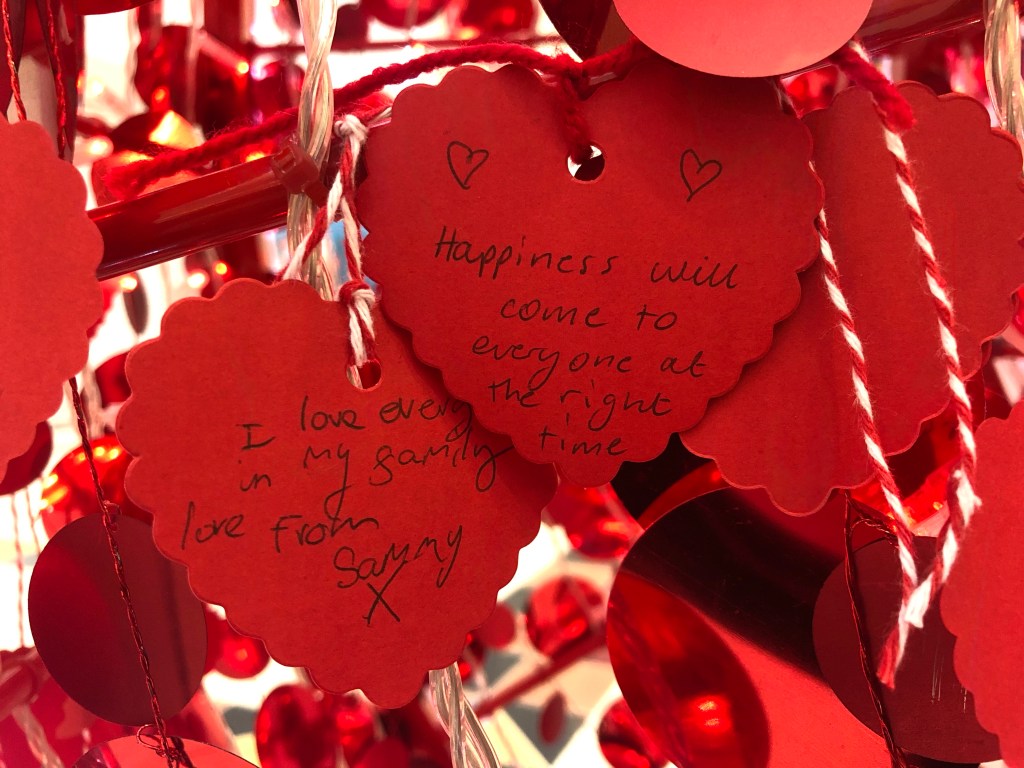
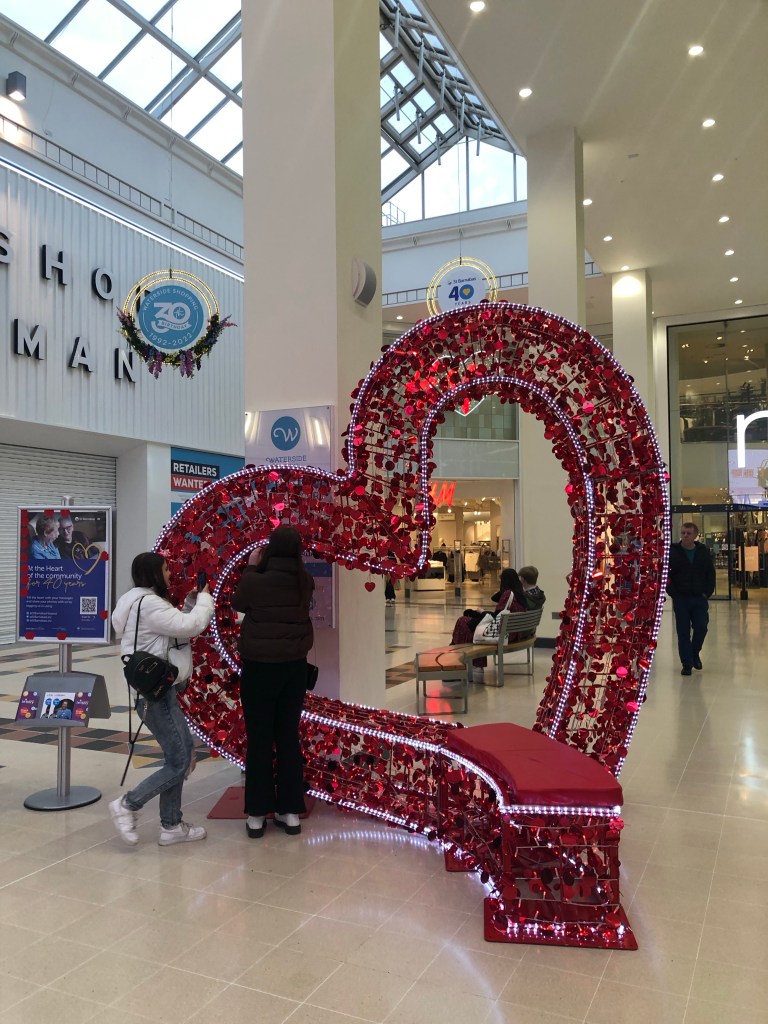
Lincoln’s town mall had an oversized display up which was drawing a small but steady stream of contributors, so I had a look. Folk had scribbled messages on little red hearts and strung them up from the display for all to see. Lots of β€œluv u Dave!! xoxo” type notelets, but a fair scattering of wise words threaded in: β€œHappiness will come to everyone at the right time”, β€œDon’t look for love it will find you”… β€œSnap me @.”

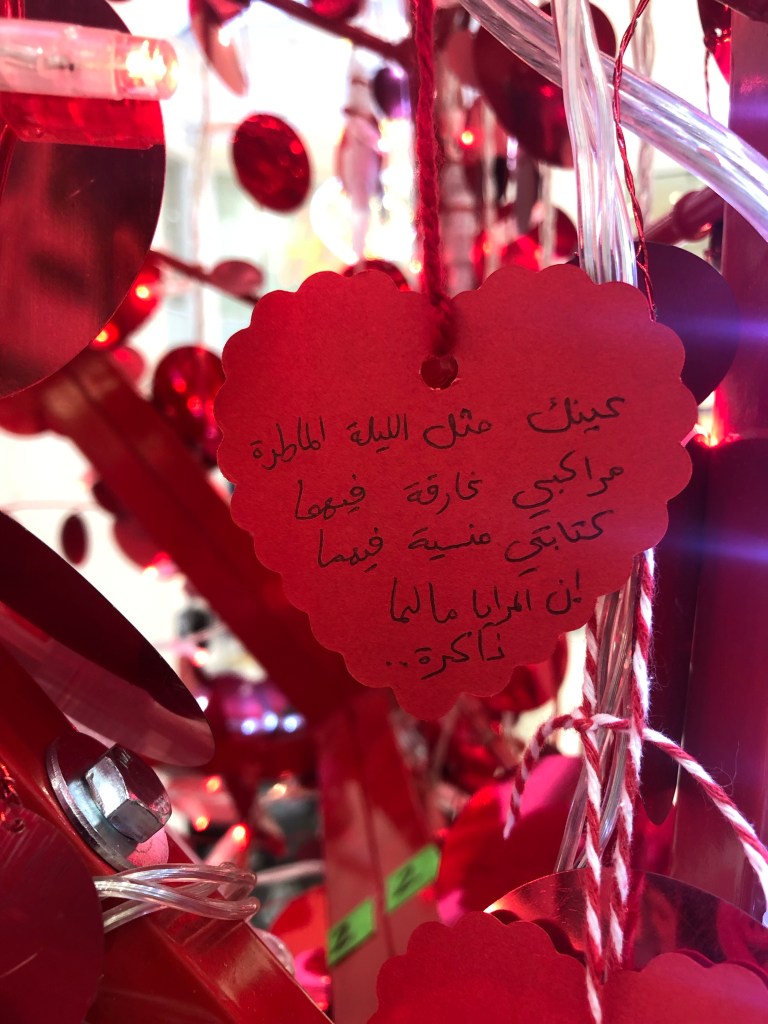
When I woke up this morning with this post in mind, I meant to read some good old love poetry and reel off that. I could only find a few that were to my liking in my poetry collection, namely a couple of Shakespeare sonnets (18 and 116) and Yeats’ He Wishes for the Cloths of Heaven. It wasn’t until I reached the garish display in Lincoln’s mall that I suddenly remembered one of the greatest poets to ever put love into verse: the Syrian wordsmith, Nizar Qabbani.

I’ve been a devotee of Qabbani’s work since I was introduced to him in my second year at university. There’s not a single one of his poems that I don’t adore. Even in translation his words hold their magic. His poems find their way into my journals at least once per book, and I couldn’t resist an opportunity to transcribe one of his verses here, for want of anything better to write. I’ll translate below:

Your eyes are like a rainy night

My boats sink in them

My writing disappears in their reflection

Mirrors have no memory…

Nizar Qabbani

Three local girls were busy penning their thoughts as I strung up my contribution and set off to catch my train. When I glanced back at the door, they’d all gathered to see what I’d written. I hope they find the words as powerful as I do.

As is so often the way after such highfalutin flights of fancy, I was brought back to reality with a crash when not even a minute later I was stopped by a drunk almost as soon as I’d stepped out into the street. Between slurred speech and staggered gait he managed to convey that he had β€˜no credit’, the taxi people β€˜weren’t talking to him’ and that he needed to get to β€˜Cherwillingum’, though he couldn’t say where exactly. After we’d established that his destination was Cherry Willingham (which, apparently, is how the locals say it – I maintain that British place names make English the most unhelpful language on the planet), I called him a taxi and wished him good luck, hoping that the three-hour wait would find him in a more sober state. Fingers crossed for you, buddy!

The sun sets on another Valentine’s Day. Eros and Mammon join hands once a day every year, and frankly, I say let ’em have their fling. It’s very easy to roll your eyes at the consumerism and mawkish PDA everywhere, but I can’t help feeling there’s nothing wrong with one day out of 365 devoted to romantic love. That leaves at least 364 others to be a cold-hearted cynic, if you’re that way inclined. BB x

Streets of London

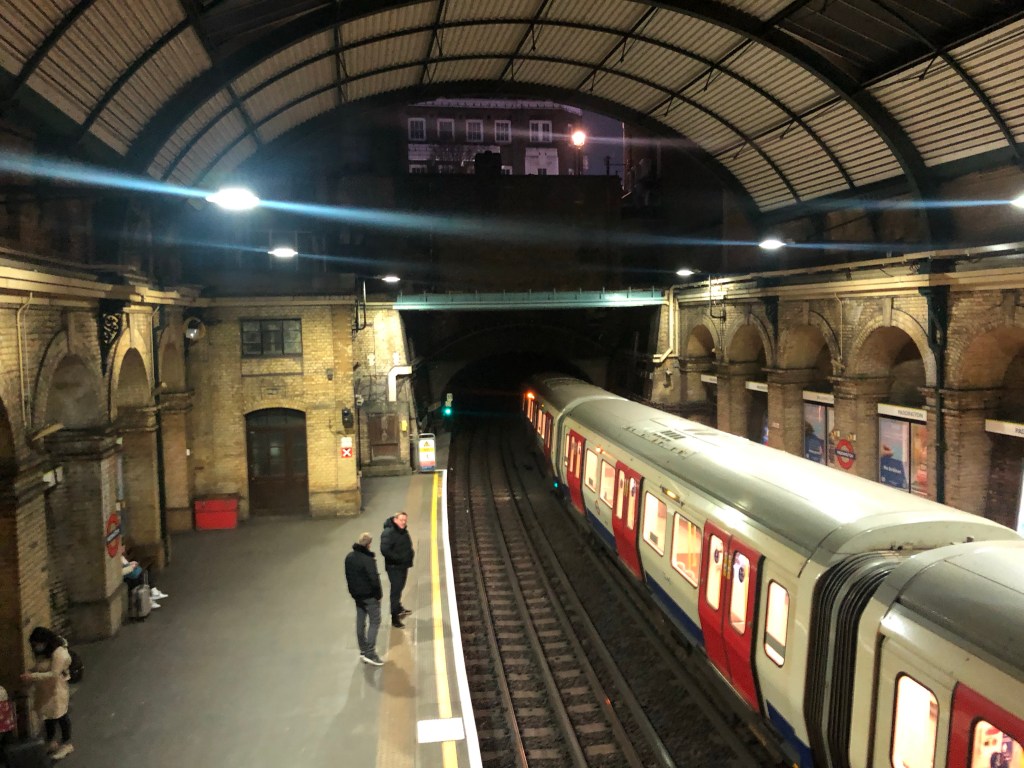
2.20am. I’m riding home on the 2.08 from London Victoria. I didn’t even know trains still ran at that ungodly hour of the morning. Apparently they do: one every hour at eight minutes past the hour. They lock the station until ten minutes or so before the train leaves, and there’s quite a crowd loitering outside the gates just before they open them. Three Bridges is clearly the place to be at two in the morning. Who’d have thought it?

I did some much needed β€œgetting out” today. With a couple of exceptions I’ve more or less turtled for four years or more. I guess that’s the nature of life in a boarding school: whereas most other folks can play their weekends and snatch evenings here and there, in teaching you block out your free time by your holidays…

The chap two seats ahead is fast asleep in his seat. His phone alarm is going off for the third time. The lads on the row of seats opposite looked annoyed at first, but one of them has struck up a conversation with the sleeper and asked if he’s going to get home OK.

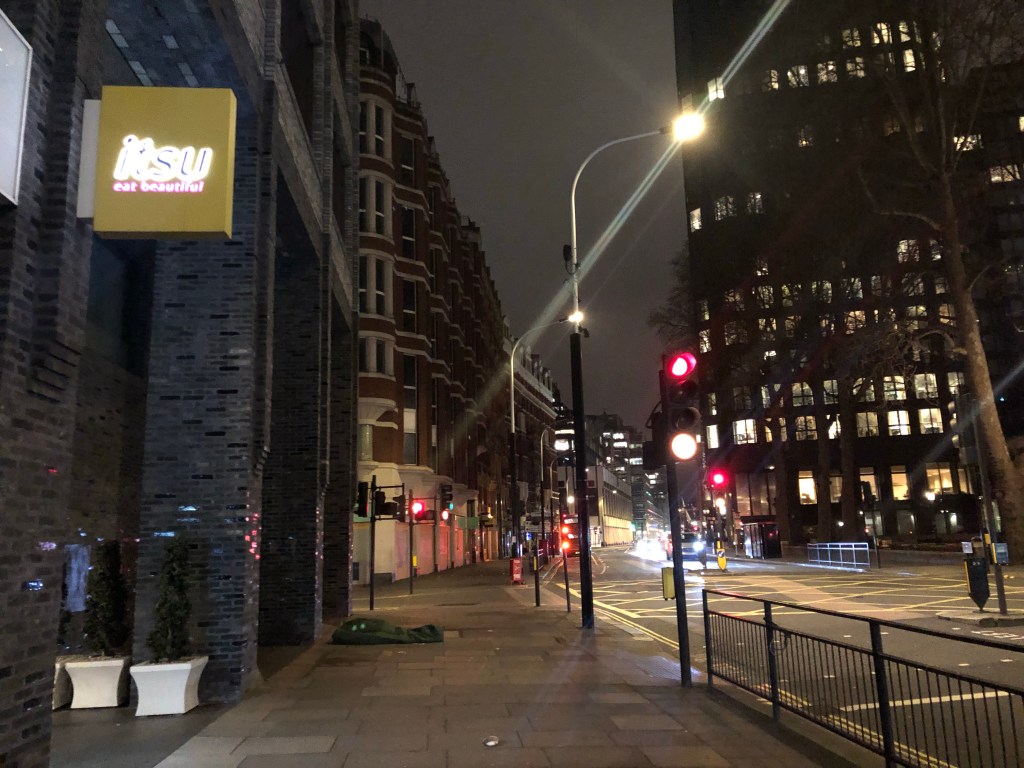
I killed some time with my sketchbook on the Underground this afternoon, and again waiting in the street in Holborn before the party. A homeless man wandered over, cap in hand, to ask for help. Normally I have to admit I’d probably turn a callous blind eye, but something about London draws me in, makes me think differently. I asked for his name and we got talking. He said his name was James, and that he was trying to find a place that would take both him and his dog for the night. I gave him something to start his hunt – for once I happened to have a loose note on me. We shook hands and he set off at a run.

I didn’t have to make the trek home quite so soon. A friend offered me the key to his place for the night, if I could find my way there. I turned it down, partly out of habit, partly out of pride, and partly because of James. Having such an easy solution in London when so many are out on the streets… for some reason it didn’t sit right. You think in a different key in the small hours.

I remember sleeping rough in the wastelands beyond Almeria years ago. Gaunt from a month of under budgeting and undereating and feeling hollow. I remember the fear of that first night, the isolation. It could never compare to the real thing, of course, but I was young, foolhardy, and I wanted to have an idea of how it felt. One night I was curled up in the dunes when a couple of cars rolled up onto the beach around two in the morning. Men with flashlights climbed out and scanned the beach. I got the jitters and decided to move – they were probably night-fishing, but your brain plays all kinds of tricks at night. I don’t think I’ll ever forget the genuine pit-of-my-stomach terror when, barely a few yards down the beach, I saw two of the torch beams slowly sweep the beach and lock onto me. I ran. My God, did I run. I don’t think I’ve ever run so fast in my life. I must have gone at least a kilometre or more before I collapsed in the dunes.

Almeria seems a long way away. London is surprisingly busy in the small hours. Not the city that never sleeps, per se, but one that keeps at least one eye open all night. Offices lit up, calendars and Macs on desks. Lads coming home from the lash. A girl tottering home on heels, makeup streaming, eyes weeping. And many, many sleeping bags in doorways.

It felt good to go out again. I haven’t danced in years – not since university, I shouldn’t wonder. And as it’s London, the music was both a) quality and b) perfect for dancing shoes. I should do this again sometime. Not that I’d make a habit out of catching the 2.08, though.

Gatwick Airport ahead. Only another five minutes or so to go, and then it’s the long walk back through the forest. I’ll probably be in bed by 4, with or without the moonlight to guide me – I’ve made that journey so often I could probably do it blind.

I’ll sign off now so my phone has enough juice for another chapter or so of Michelle Paver’s Ghost Hunter on Audible. That will take me at least as far as the forest – there, at least, I will feel safe again. BB x
Waldmusik

Monday night. Five weeks in. The first load of reports are due soon. I close my inbox, tired of leafing through the daily barrage of emails in my windowless office, and open my eyes. Packs of SureSan wipes on every shelf. Seven empty bottles of water from last week’s packed lunches, amassed in quiet protest. The number for the IT department scrawled in pink highlighter on a piece of paper folded and blue-tacked to the wall. A wall planner that hasn’t been updated since lockdown began. A chewed-up biro, an oak leaf and a buzzard feather. Karl Jenkins on Spotify. The ventilator roars overhead.

Tomorrow will be seven months to the day since the music died. Seven months since a final lucky fling at a friend’s wedding, which might as well have been a paean to the love of music itself. In retrospect I suppose β€œelegy” might be the better word. Rome burning and all that. COVID robbed the world of so much, and in the panic over its impact on work, health and the daily grind, music slipped quietly over the edge into silence.

I can’t think of a point in my life when music hasn’t been a constant. Having two music teachers for parents afforded me an incredibly privileged upbringing with regards to my musical education. I wanted for nothing, except perhaps an escape from Classic FM. Scarlatti and the Spice Girls. Klezmer, Raga and Jazz. The Stranglers, The Bee Gees and The Corrs. By the age of ten I had amassed a real symphony of diversity from all the CDs in the house, with an early preference for folk music and anything from the 1970s.Primary school, secondary school and university were a seamless pageant of choirs, bands and orchestras, with the occasional assignment as a reminder that education was happening somewhere within. Whether in a church or a school hall or a smoking stage, I was always singing.

The ventilator continues to growl. It’s about as close as I get to music without Spotify in here. The government directive against singing felled the school choir, the chamber choir and my gospel choir in a single axe stroke. Christmas waits at the end of the tunnel that is the Michaelmas term, but without the usual musical beacons to light the way, it simply doesn’t feel like it.

The last time I felt like this was half a lifetime ago, during my family’s earnest but ultimately unsuccessful attempt at a move to Spain. Then, too, the years of emerging into the frosty night after choir practice with carols ringing in your head melted away like snow in the sunshine. Spain has many beautiful musical traditions, but the buzz of advent – or, at least, the advent I had always known – isn’t one of them.

β€œVosotros los ingleses, os flipΓ‘is con la mΓΊsica. No hay ese mismo afΓ‘n por la mΓΊsica aquΓ­, ΒΏsabes?”

Do I agree with her? The girl who told me that once? I do not know if I do. Years on, I’m still mulling it over.

Without the music, the days are long. They blur, one into the next. Web players and Bluetooth speakers are a poor imitation, like listening to the sound of the ocean in a seashell. There is nothing – nothing – like the exhilaration that comes from making music. It’s the difference between seeing and doing. Watching a cyclist and feeling the wind in your hair. The gulf is immeasurable. It’s the third half of my brain, the fifth chamber of my heart.

COVID cases continue to rise. Whole areas of the country are retreating back into lockdown. People stagger out of pubs at closing time and complain blindly at the loss of their freedom – or so the pictures in the Press seem to scream. Schools remain defiantly open as children come and go into and out of isolation. How long can it last, the question on everybody’s lips. In the music hall, silence hangs like mist.

I put on my hat and coat and set out into the evening. Music was always my tonic of choice, but if one elixir is out of stock, the other at least is deathless. It waits out there in the dying light, eternal. Autumn chill is in the air and the martins are long gone. Soon the hedges will be alive with the cackle and chatter of fieldfares, and the liquid sound of redwings traveling by night will follow me home from duty. For now, the old guard plays the same music it has always played in the forest beyond the fields. Blackbirds chatter down in the gully. The staccato of a wren breaking through the hedgerow. And, perched on the exposed branch of a dead tree, cock robin sings his heart out.

The song of the robin is, I think, the most beautiful music that England has ever known. Gentle, melodic, like water – it cannot be put into words. Not by an unqualified amateur such as myself, anyway. The robin for me is a symbol of hope. Maybe it’s his boldness, his charming friendly nature; his defiance of the cold on a January morning, as if to let the world know the darkness cannot last forever. He pays no heed to government directives or social distancing measures. He sings as his ancestors have sung for generations, since the world was cold and dark and unforgiving. Hearing his voice now, at a low ebb, it lifts my spirits again.

Half past nine. Directionless text books. Vocab tests, marked and unmarked. Me and the tuneless ventilator, and the memory of the robin’s song. I think I’ll call it a night.

Marmite Man (A London Story)

Marmite Man

Marmite Man arrives in his chariot. He walks into a library, hiding from the autumn sun. He climbs up to the second floor, carrying a weatherworn traveling rucksack on his back, and finds a table hidden away on the west side. It’s eleven o’clock on a Tuesday morning, there are only a few other people in the building: a couple of students, a woman in her mid-twenties looking for jobs on one of the desktop computers, a middle-aged gentleman or two. Anybody who can afford not to be working at eleven a.m. on a Tuesday.

Marmite Man takes off his windbreaker, lays it over his chair and slouches into the seat. His face is red and pockmarked, his beard more of a tired, uniform grey than cultivated salt-and-pepper. He looks about. Once. Twice. Pauses. Then he empties the contents of his rucksack noisily onto the desk.

First, a multipack bag of McCoys ridge-cut crisps. Then two bottles of water and a plastic Pret a Manger cup. A can of spray-on deodorant – no, two cans. A pack of Johnson’s baby wipes. A hairbrush and a bath scrubber. And, finally, four pots of Marmite.

He inspects three of the Marmite pots in turn, looks around, and after some rumination, opens the multipack bag and breaks into a bag of crisps. In the silence of the library, his feasting sounds like the construction work beyond the Bunhill Cemetery: an unhappy ruckus in a place of quiet. He munches and crunches his way through a second bag, then a third, and another, and another. It’s as though he is issuing a deliberate challenge to the librarian downstairs: come up and stop me, if you dare. But the librarian does not hear, or perhaps he does not choose to hear, and still Marmite Man goes on munching, crunching, sniffing, snuffling, belching and clearing his throat. He wipes his fingers, stuffing the empty packets into a plastic Tescos bag, and smacks his lips, looking around. There it is again: the challenge, who’s going to stop me? There are signs everywhere that say that eating is forbidden, and yet here he is, Marmite Man, rattling the sabre with his portable orchestra of sound: percussive plastic bags, guttural brass belches, woodwind grunts and groans. The anteroom stinks of synthetic flavour, a fabrication of burnt and powdered meat. He rubs his hands, his breathing loud and laboured, and applies a baby wipe tissue to his fingers and thighs. He rolls up his trousers and scrubs vigorously at his shins, scraping off a night’s worth of grime – or perhaps more. He stops – smarts – curses under his breath as he hits a sore.

Who are you, Marmite Man? Where have you come from? What brought you into the library today? The world has been unkind to you, I think. You swore at the man who left the anteroom a while ago, repulsed by the stench and the noise. “You got something to say? Fucking pig.” That’s what you said, through a mouth full of crisps. But maybe it was he who threw the first stone, the stone of silent judgment, as he turned his head, lifted his bag over his shoulder and promptly left the room. Perhaps what hurts the most is the silence, the everyday judgment of those who do not wish to see you. A vagabond is a part of the world gone wrong; a cog out of place, a dust blur on a family photograph; a purple brushstroke across the Mona Lisa’s coquettish face. We can choose not to see it if we so desire. But that doesn’t mean it’s not there.

I notice you have not picked up a book since you arrived. To you, perhaps, escapism is dangerous – or maybe you have enough unhappiness in your life without imagining it through the eyes of somebody else. What is fiction, if not an experience of somebody’s else’s misfortunes? It is armchair entertainment for the comfortable, who sympathise enough with the poor to read about them, and would happily become them for a quiet hour or two in the afternoon, with a cup of tea on hand and the day’s work put behind them, only to return to reality as Mr Smith of Fulham, associate, papers due by close of play tomorrow. True misery is intangible to Mr Smith: it is merely something to be considered from behind a glass, and frosted glass if at all possible; the bubbling mire at the bottom of the ladder.

Marmite Man knows the mire. He has been cleaning it from his shins for the last twenty minutes.

Marmite Man counts his coins onto the desk. He is frustrated. He does not have enough. He pockets them again and sighs heavily. He plugs a charger into the socket under the table and wires in his phone, and sits. Looks about. Once. Twice. Then gets up and shuffles off in search of the toilets.

I am no longer hemmed in to my corner of the anteroom. I take my leave, packing my things away quickly and quietly. As I leave, I see Marmite Man again. He is standing in the history aisle, leafing through a book on the First World War. He does not see me go.


The Ladybird Tree

Regent’s Park is wide-open and cold. I have never been here before, except perhaps once when I was a little boy, and London Zoo was the destination. I hear they are closing down the aquarium today. I overheard a man in the London Review of Books talking about it, about how he’d taken his time coming to work because he wanted to see it, before it disappeared. What will they do with the fish, asked his associate. Feeding time for the penguins, he joked. It’ll be another ten years before the new aquarium comes along, so frankly I wouldn’t be surprised.

The benches are taken. It’s early afternoon, but we’re into the half-term holiday and the park is alive with kids on the swings, the climbing frame, running up and down the knolls, whilst mum and dad – but invariably mum – sits beyond the fence. And why not – the weather is gorgeous. The ground isn’t wet, and there are no ants about – none that I can see, anyway – so I sit down beneath a tree to eat my lunch.

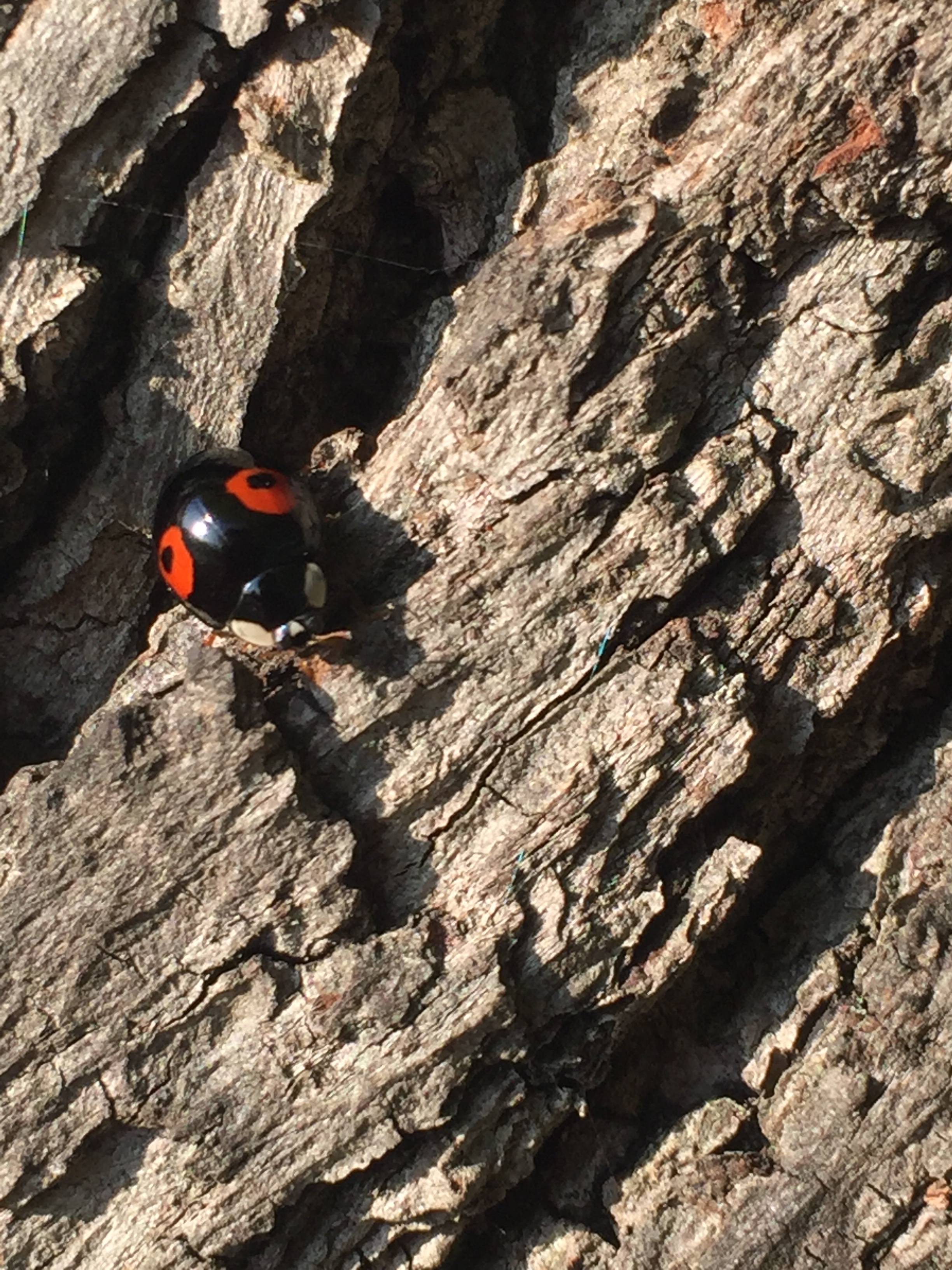
I can see a ladybird on the bark. It’s not the kind you grew up with in kids’ picture books, post-box red with big black spots. It’s beetle-black with two red eyes, giving its wing-cases the impression of a cartoonish snake’s head viewed from above.

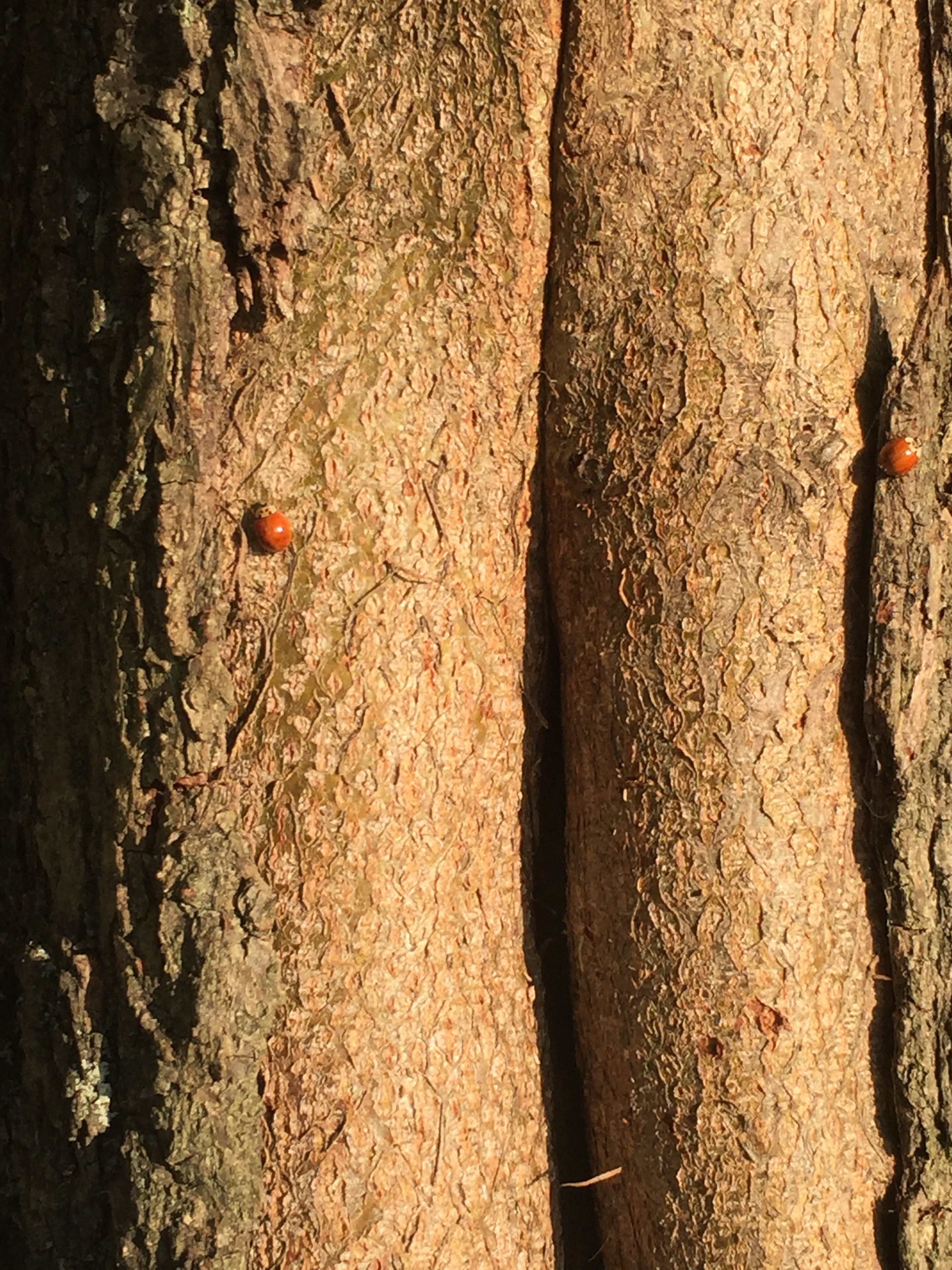
I don’t think I’ve ever seen a ladybird like that before. Point of fact, I don’t think I’ve seen any of the ladybirds on this tree before either. There are yellow ladybirds with twenty spots or more. Red or orange ladybirds with no spots at all. I believe these might be the so-called harlequins, invading ladybirds from distant Asia. Up and down the trunk they go, in that apparently directionless march that beetles seem to adopt, racing in and out of the grooves in the bark. One stops. Its wings click open in a single motion, like the safety-catch on a gun, and then it takes off from the tree into the sunlight. As it goes, another arrives, jet black with those two red eyes like the first one.

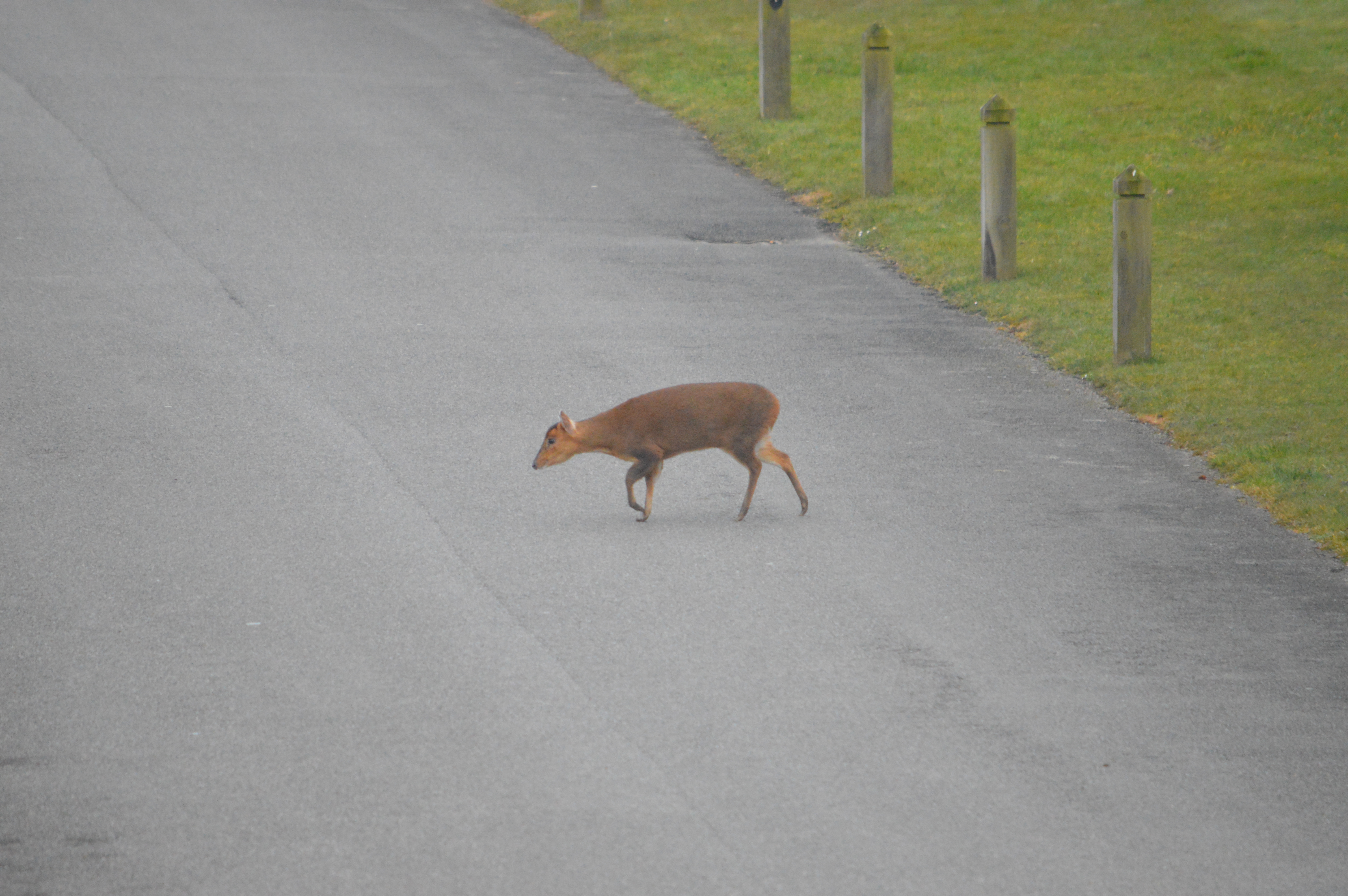
There are no deer in Regent’s Park. I rather hoped there might be, but that just goes to show how little I know London. I think that’s Richmond Park – anyway, there are deer enough in my neck of the woods. I walked right past one the other day; a roe buck, fearless, much like the muntjac I’ve become rather used to encountering there. I did not move so much as a muscle as I walked past, which is doubly impressive as I believe I was singing George Michael’s Freedom ’90 at the top of my voice at the time. It just watched as I walked past, eyes unmoving but always facing me, like that illusion of Mickey Mouse’s ears. Teaching bottom set classes is both physically and mentally draining, but I do get the payoff of working in the countryside, and that’s a major payoff by any standards – but especially by mine.

The ladybirds seem to be increasing in number. I just had to brush one off my shirt. I think it’s time I took my leave. I’m not getting any reading done. It’s hard to read when it’s cold outside, no matter how bright the sun is shining. I remember reading somewhere that you’re supposed to kill harlequin ladybirds, as they’re an invasive species. The trouble is, how can you be sure you’re not killing the native ones? Spain had the same problem with red-eared terrapins, if I remember correctly. I found one as a kid in the national park. It’s not so easy to stomp on a baby terrapin, just because it shouldn’t be there. Easier with ladybirds, I guess. Perhaps size does count. Though that is, was, and always has been a rather unpalatable idea.


The Difference a Smile Makes

Riding the train across the southeast corner of England can be a rather impersonal experience. Over the course of the three different trains I have to board to reach my destination, I rarely have to say a word. A flash of one’s phone or ticket is enough for the ticket collector and human interaction tends to be limited to the odd pleasantry, such as confirming that this is indeed the train to Redhill, or some such assistance. Besides that, you can travel for three hours or so and hardly have to say a word to anyone. In any other country I suppose it would seem dreadfully out of touch, but it seems to suit the English very well. To each their own; an Englishman’s house is his castle; don’t go looking for trouble and no trouble will come to you, and other such expressions. The English love their personal space so much, it’s easy to assume that the loss of low-level human interactions in the face of the endless march of technology was welcomed here with open arms.

I might as well talk for myself. Sometimes I feel as English as the soil itself. Here I am, alone, barricaded into my window seat by my luggage and hoping the four tracksuit-wearing twenty-somethings don’t occupy the seats opposite. A damp narcotic stench, reminiscent of straw at the back of a big cat enclosure at the zoo, drifts up the carriage as they enter and I wince. I wince at the smell, and at the swiftness of my judgement; for the smell pervades long after the lads have moved on, lingering about the hawk-eyed man in the suit sitting opposite. I hadn’t even noticed him take his seat.

When the times comes to change trains, I do so quickly and willingly. I cross the platform and board the waiting train, finding a mirror-image window seat, onward-facing, back to the doors. Same seat. Same service. Same train design. It’s as though somebody just pressed the reset button on the passengers. And it’s silent again.

There are flashes of hope, though. The ticket conductor on this service greeted everybody when he got on, a cheery, wiry-haired gent, with a smile so warm you could put your feet up in front of it. He looks like a regular. At least, he knows the other regulars anyway, commenting on a girl’s new blue-dyed hair and how he’d not be brave enough to do it himself; inquiring after a young man’s onward travel; and confirming for a second time that this is indeed the service to Redhill to a doubtful older woman. The smile does not break even once.

One of the most intelligent men I ever met was a ticket inspector. I wish I’d taken more detailed notes of his reasoning, but it was something like this: “It pays the bills, it keeps me on the road and allows me to think when the day is done”. He spoke Finnish fluently “because Finnish culture is fascinating”, had an intrinsic understanding of musical harmony and was a profligate Europhile. In another life, I should like to give ticket inspecting a go.

The sun is setting behind the white spring haze. Albion, the White Island, continues to live up to its name (insert topical Jon Snow reference here). I hope the last leg of the journey is as personable as this one has been. BB x

Commuter Vignettes

A collection of observations from London and Madrid.


14.38The Lonely One

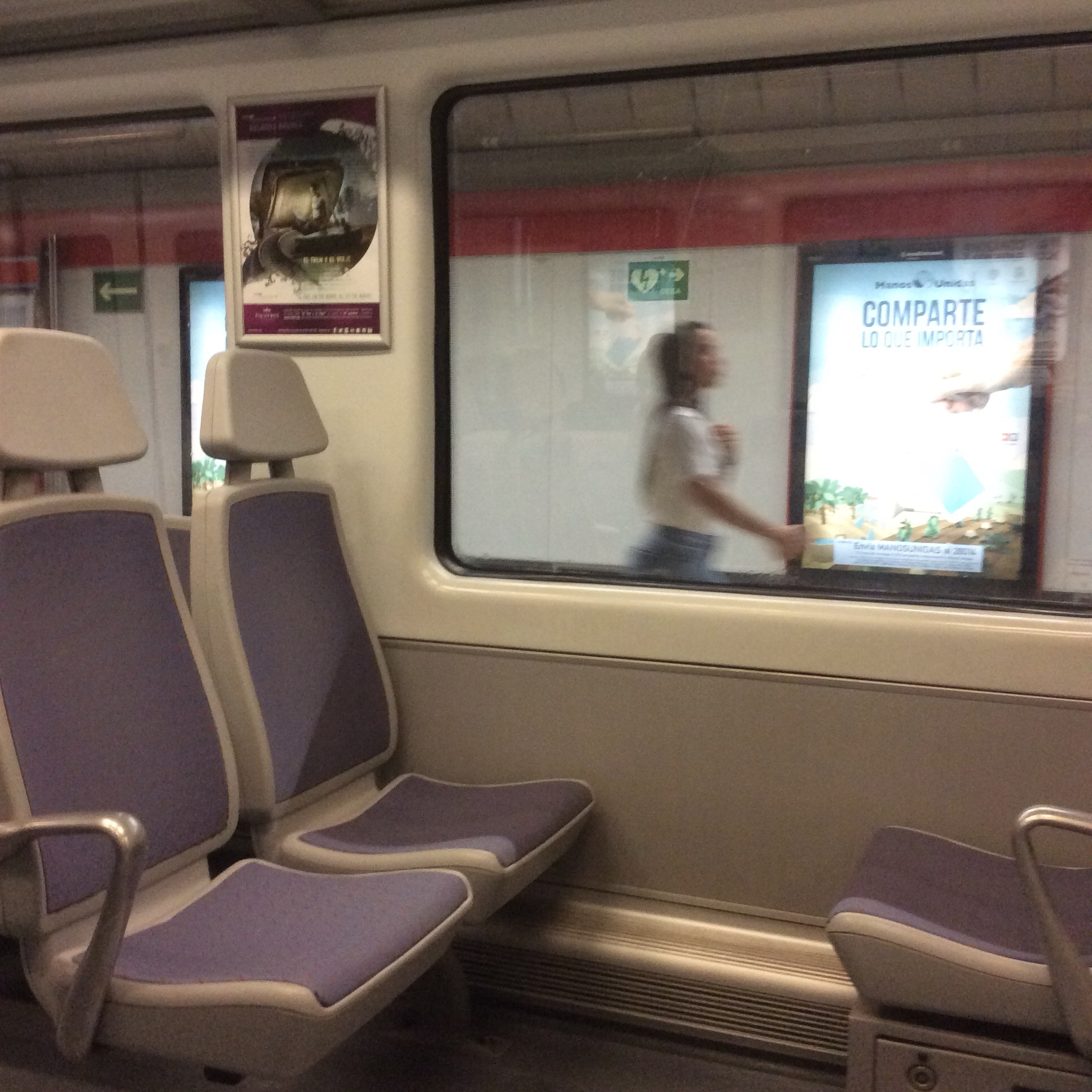
A girl gets on the Metro before me. She has that listless look of a twenty-first century child, of a face torn away from the blue glare of her mobile phone. The phone is there, of course – it always is – sitting dormant in her hand but very much alive. Maybe she’s sad because nobody’s messaging her right this instant. There’s something Latin about her look: behind the white Adidas shirt and the pale blue jeans, there’s an arch to her nose that wouldn’t have looked out of place on Montezuma, and she wears bold red lipstick on her thick-lipped pout. It looks a little out of place on her frown. She looks about eighteen, but with that tricksy Latin blood in her veins, she could be anywhere between that and thirty.

The tannoy goes off for Nuevos Ministerios and she leaves.


10.40The Spider

A London micro-manager discusses his six-month leave and coffee with Tom this morning, at a volume just loud enough for the carriage to hear. If the asking price rises into the millions, he suggests waiting for the results to deteriorate, like a bald and very well-dressed spider. Business is the meal of the day. His latest victim, a Gucci exec, writhes in his binds down the line, whilst the shadow on the receiver worries about growth. All of this is, yep, yeh, very good, cheers. The flies will just have to resign themselves to another day of good business.

The tannoy goes off for East Croydon and he leaves.


10.46The Ghost

Could the onboard supervisor contact the driver please.

β€˜Perhaps he’s not onboard,’ says an old timer. He gets a lot of laughs.
β€˜Gone AWOL,’ says a glamorous matriarch. She gets a few more.
β€˜Gone home,’ says a jumper-round-the-neck. The laughing streak dies out. β€˜I mean, I haven’t noticed anybody check our tickets, so perhaps there isn’t one.’

Three minutes later, the train pulls out anyway. It doesn’t sound as though the onboard supervisor made contact.
‘Gonna be late now,’ says the matriarch, looking at her phone. β€˜Ten minutes delayed.’

The tannoy goes off for Clapham Junction and she leaves.


11.23The Sardine Run

The 10.09 Southern Services train to Redhill is delayed. Apparently this is still newsworthy. Downstairs, the Underground splits at the seams. Giants with sports shorts and mop-tops jostle for standing room with Catalan sightseers, Russian students and a Rastafarian flyerman, dozing silently over his stack of pamphlets. The driver on the tannoy is profusely apologetic about the frozen train, citing an earlier faulty train as the reason for the blown lines ahead. The three-minute delay becomes a five-minute delay, which in turn becomes a ten-minute delay. Five was enough to oust the man in the navy pinstripe suit and the other big fish. I’m only going one stop so I really could have walked, but people-watching isn’t so easy on the move.

The tannoy goes off for Green Park and I leave.


22.52The Platoon

Small talk sweeps Cabin Six. Three late-twenties girls types discuss renting flats, grown-up men and which was the most distressing Harry Potter death, Dobby or Hedwig. One of the three isn’t contributing so much. Another keeps the flow going. Their ringleader dominates the conversation with perfectly formed silences and sentences. Corporal, Captain and Commander. They each tell a tale: the tale of the bright orange Maine Coon and a cactus, the tale of the old lady who fell asleep watching the BBC news and the tale of the silent nurse. The underlying moral of this urban saga? If you live in a flat, you can hear someone go to the toilet. A twenty-first century aphorism if ever there was one.

The tannoy goes off for Redhill, the Corporal gets off, but the Commander’s tales go on.


10.43The Herd

Three stag parties board the plane. Two of them are your standard bunch of square-jawed gym jocks, joking loudly about how muntered Gavin is going to get, how he’ll be flat on his face, gatted, smashed, trolleyed. The other herd follows their oddly-dressed leader down the aisle like a pagan procession, their Chosen One wrapped up in a pink and purple sari with all the bells and whistles – except, of course, the kameez that usually covers a Hindu bride’s modesty. Nip slips are clearly less of an issue for six-foot tall white men. When your average Joe has umpteen problems getting through airport security, it’s frankly ridiculous that he walked through untouched. He’s obviously done his homework if he’s going as an untouchable, though somehow I don’t think that’s the idea his cronies had in mind. The Arabic music crawling out of the speaker in his back pocket would seem to suggest that. At least in Madrid he won’t look out of place. In Gatwick Airport on a Friday morning he just looks like a prat.


15.16The Slaves

Jenny Seville might have painted the scene in front of me. A perfect tableau. Three commuters stand over me with their hands on the rail, facing out across my head, with their eyes glued to their mobile phones. A smart, short-haired man in a blue suit with his earphones in, a disgruntled middle-aged lady in a pink blouse and a professional women with a sharp nose and dark eyes. They stand before me like some grotesque Swiftian pantheon, their smallest features blown up and illuminated in the backlight. To their left and right, lesser gods scroll soundlessly in the blue glare. I feel tiny, sat pressed into the chair at their feet. All along the train, heads are down, faces are blue and conversation is fleeting. There are islands of humanity in the slave ship: a huddle of Latino men talking jovially with no electronic assistance, and a couple of old women discussing train delays in central Madrid. Every time I look around me, I catch the eye of the Green Woman, the only other person in the slave ship who isn’t glued to her phone. She looks like a slightly larger and slightly less airbrushed Anne Hathaway.

The tannoy goes off for Atocha and she pulls her phone from her pocket. I have no binds, so why do I feel so shackled? BB x
Soundbites II

14:18

Gatwick South Terminal never changes. Every third man and their mother is hunched over their phone/tablet and speechless, lips pouted, eyes disinterested. The rush of noise in the waiting lounge is metallic; a firm ground bass of escalators and flight case wheels is cut through by the soaring soprano of children in the play area and the sparkling SFX of the last-stop speaker shops. A man eats a sandwich out of a yellow-and-brown cardboard box. A mother explains something in Polish to her son with a good deal of clapping, then takes a selfie with him. The advertising screen displays the latest range of Boohoo Man. And my eye itches. I should probably stop rubbing it.

14:34

Gate information is still a good twenty minutes away. But it’s not all about waiting. The longest, coldest month of the year is gone. I’ve never seen a January run its course so quickly. But it has, and here we are halfway through February. Popping home to England for a job interview (and to see my family, whom I haven’t seen since September) was a good idea. I’ve missed England, more than I thought I might. One’s home country exerts a powerful force over the psyche if you leave it behind for so long. Tierra de Barros is not exactly the most spectacular place to be in winter, no matter how much the sun shines. Knowing my luck, however, Spain will put on its spring dress in a couple of weeks and I’ll wonder why I ever dreamed of England, perhaps on the very day I find out whether work will call me home or not. The point remains, however: January was short. I ought to make a habit of spending January with my girlfriend. It’s always dragged on so before.

14:57

I definitely, definitively, undoubtedly heard somebody say acho in the queue for this flight. I also got off on the wrong foot by sitting near the desk; these Spaniards surprised me by forming an orderly queue rather than sitting in the waiting area. Or perhaps they were English tourists with a more generous complexion than mine. Over a decade of practice and all the fluency time can buy will never make me a Spaniard, thanks to blue eyes and blond hair. According to the tannoy, the flight to Seville this afternoon is extremely busy, quite unlike the way out. It remains to be seen whether they’ll slap my rucksack in the hold, but at least if they do, they won’t charge me for it. This is only the second British Airways flight I’ve ever taken and I already prefer it.

15:32

This plane is packed. They’ve just declared that’s there’s no room for large cases in the overhead lockers. I got in just in time. There must be a Valentine’s Day rush to Seville. I saw plenty of roses sticking out of people’s handbags on the way in. A couple of Londoners out in front kept me entertained in the queue: the girl waxed lyrical about using her friend as a source of air-miles and the husband kept trying to read his paper in the gaps in her conversation. It helped to ease the nerves somewhat. Behind the grumbles, the problematic passports and the enormous wheelie-suitcases, the other passengers are only fellow human beings.

At least, that’s what I keep telling myself. It helps.

19:08

We left some twenty-five minutes late and we’re landing only five minutes behind schedule. I’m impressed. It still wouldn’t have been enough time to catch the bus to Plaza de Armas and then onwards to Villafranca, but that doesn’t matter; Fran’s picking me up. Sweet relief. It’s odd, to be going from the plane one night to work the following morning, but that’s adult life, I suppose. I guess it only feels weird because as kids we’re used to the holidays wrapping our trips abroad in precious time. It’s a reason to stay in the education sector, and that’s a fact.

20:21

The Spain I took off from on Thursday is a whole lot greener today. I guess it rained over Carnaval weekend. It always rains over Carnaval weekend. You’d be surprised how much of a difference that makes. I loved being back in England for the green trees, the gentle grassy slopes of the South Downs, the brooks and streams and the sea… I need that. I wasted away in Jordan without it, despite the best efforts of my companions. And Tierra de Barros, it must be said, could be an awful lot greener. But spring is on its way, a good deal earlier than I thought, and I’m about to fall in love again. I think I missed the cranes – they normally take their leave this weekend – but if I hop on my bike this weekend, I might just catch one of the hen harriers I’ve seen ghosting about the fields, though I doubt I’ll be lucky enough to run into the sandgrouse I saw from the bus. If I can’t write authentically about the wildlife here yet, it’s because I’ve yet to have the time to go out and soak in it. This weekend will be my first weekend in months where I have no immediate plans. I intend to make the most of that. I might not make it as far as Hornachos, but I intend to get out. And now that I have my thermals – a Lycra equivalent is apparently essential for cycling out here – I won’t look like a foreign jerk. It’s the details that make the picture. BB x
Buck

Autumn is creeping into the Weald. The trees haven’t turned brown yet – I don’t suppose I’ll see that before I go – but the leaves are beginning to fall and there’s a whiff of cold in the air, mingled with the damp, rotting smell of mushrooms. From the top of Turners Hill you can see for miles, sometimes all the way to the high hills of the South Downs on a clear day. Not so much at the moment, with the Weald mist of early autumn settling in on an almost daily basis, but every once in a while.

DSC_0096

England truly comes into its own at this time of year. It’s a season of green forests, Scotch mist and crows calling overhead. Acorns adorn the oak trees, the hedgerows are full of blackberries of varying tastes and conkers grin from their spiny shells in the horse chestnut trees. The pheasants have moulted and are roaming the country roads and fields, looking in a very sorry state, robbed of their handsome gloss and tail feathers. For so foreign a creature – most of today’s birds are descended from eighteenth century Chinese imports – theΒ cork-ok of the pheasant is as much a part of the English country soundscape as the crow or the woodpigeon. It’s a soundscape I miss dearly in the silence of the Extremaduran plains.

DSC_0063

Leaving the road for a while, I wandered along a winding country lane and went blackberrying in the verges. Over the distant drone of a bandsaw from behind the barn, a pair of buzzards called to each other. A phone was ringing in the farmhouse. It was a reality check, a ‘Moment’, as I call them. I wonder what it’s like to live on a farm, out here in the old country. Sometimes I think that I’m isolated here, but at the very least I live on a main road. Farms like this one are so far out that any experience of mine pales in comparison. The phone had stopped ringing by the time I’d come to my own conclusions, and I ate a few more blackberries. I swallowed them rather than chewing them, because if I don’t then one of the pips always manages to get itself wedged in my molars.

DSC_0106

I thought I’d run a short distance, regardless of the endlessly clinking two-pence coins in my camera bag. I didn’t get far up the hill before I stopped, because a sixth sense told me the noise might flush something up ahead. Sure enough, thereΒ wasΒ something up ahead, and it hadn’t heard the coins at all: a young roe deer buck, grazing at the edge of the woods.

DSC_0129

It was just one more of those ‘why didn’t I bring a longer lens’ moments. After my trip to the Farne Islands, I really should have been better prepared on that count. These days, however, I’m not so fussed by the photos. The buck continued grazing idly as I crept down the hill towards it, either completely unaware or completely uninterested in my presence. After a minute or so it found a fallen tree and busied itself with scent-marking, scraping its horns repeatedly on the branches.

I must have been within fifty yards or so, close enough to see the white circles on its nostrils, when it finally caught my scent and saw me. It didn’t bolt at first, but stared at me for a few moments. I think it was more curious than frightened. Eventually it made up its mind and tore away through the grass, leaping through the tussocks and over the fence back into the copse from which it had come. I followed it, but could not find it. I sat on a stile at the corner of the field and wrung the water out of my socks as the rain came down. Sheltered under the oak trees, I waited out the drizzle barefoot.

DSC_0139

After a quarter of an hour, I put my socks and shoes back on. They were still wet from the thick grass and squelched on each footfall, but I didn’t really care anymore. In the Weald a lot of the footpaths run over old watercourses, where thick slabs of stone jut out of the earth. One such dark gully ran down from the corner of the field and I followed it, soaking in the sound of the wind in the trees overhead.

A short way ahead I stopped to check the white balance settings on my camera, and – there it was again. That sixth sense. I looked up and, sure enough… thereΒ it was again. The roe buck, at the bottom of the gully, looking right back at me.

DSC_0144

He held my gaze for a little longer this time, and when he scampered off, it was a little slower than before. I felt so alive. Mum said she saw a muntjac on her morning run the other day. I know I heard them in the woods when I was working here in the summer. I’d sure love to see one; they’re one of the oldest kinds of deer in the world. There’s something more primal still about the roe deer, though. They were here long before the muntjac, the sika and the fallow, perhaps even before the mighty red. I’ve had brief encounters with them in the mountains of Spain and the forests of France, and seen them many more times in passing from trains, grazing away at the forest edge in some field or quiet garden. Bambi was a roe deer, in the original story by Felix Salten. Having watched the bold curiosity of the young buck this morning, it makes perfect sense.

DSC_0145

I read in a magazine once that encounters like that are what you call ‘RSPB moments’. Granted, it was the RSPB magazine, so they would use the tagline, but it’s what I’ve come to associate with such close encounters. There are Moments, when you open all of your senses to the world around you in that instant: the ringing of a telephone, the organised cluster of objects on your desk that tell a few stories and none at all, the never-ending sound of your own breathing. And then there are moments grander still, like an encounter with a wild animal. There is a power in nature I get from nowhere else, and it feeds me still. BB x