They Bring the Summer

The year is turning. Can you feel it? The light in the morning has shifted ever so slightly, but it’s noticeable. We’re past the peak, and before long the red-gold winds of autumn will be upon us. Thanks to the fierce heat we had in July, some of the trees are already wearing their russet cloaks. I shouldn’t be surprised if we’re in for a long, dry winter this year. Perhaps that’s the way of things to come, perhaps not. Time will tell.

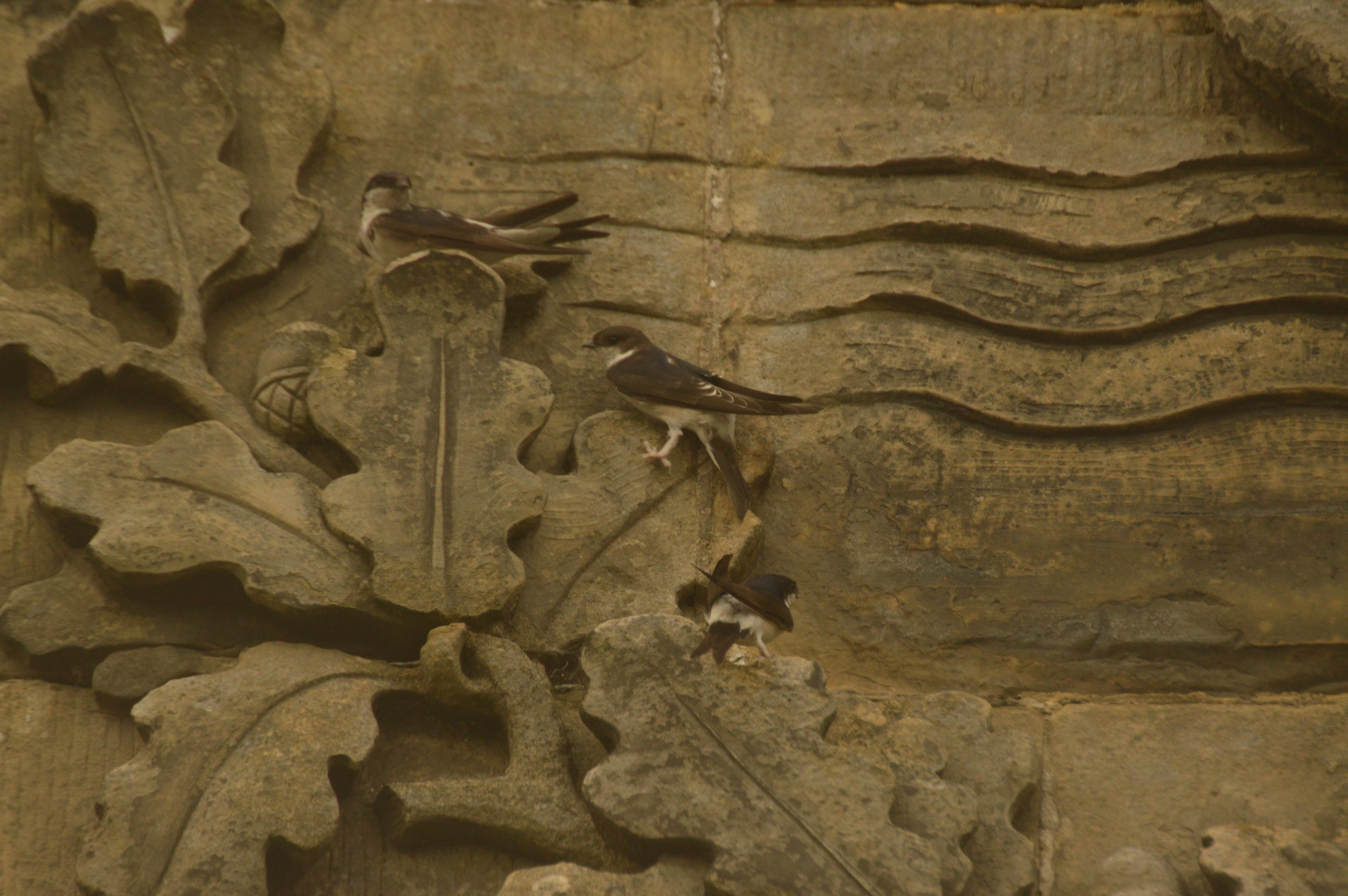
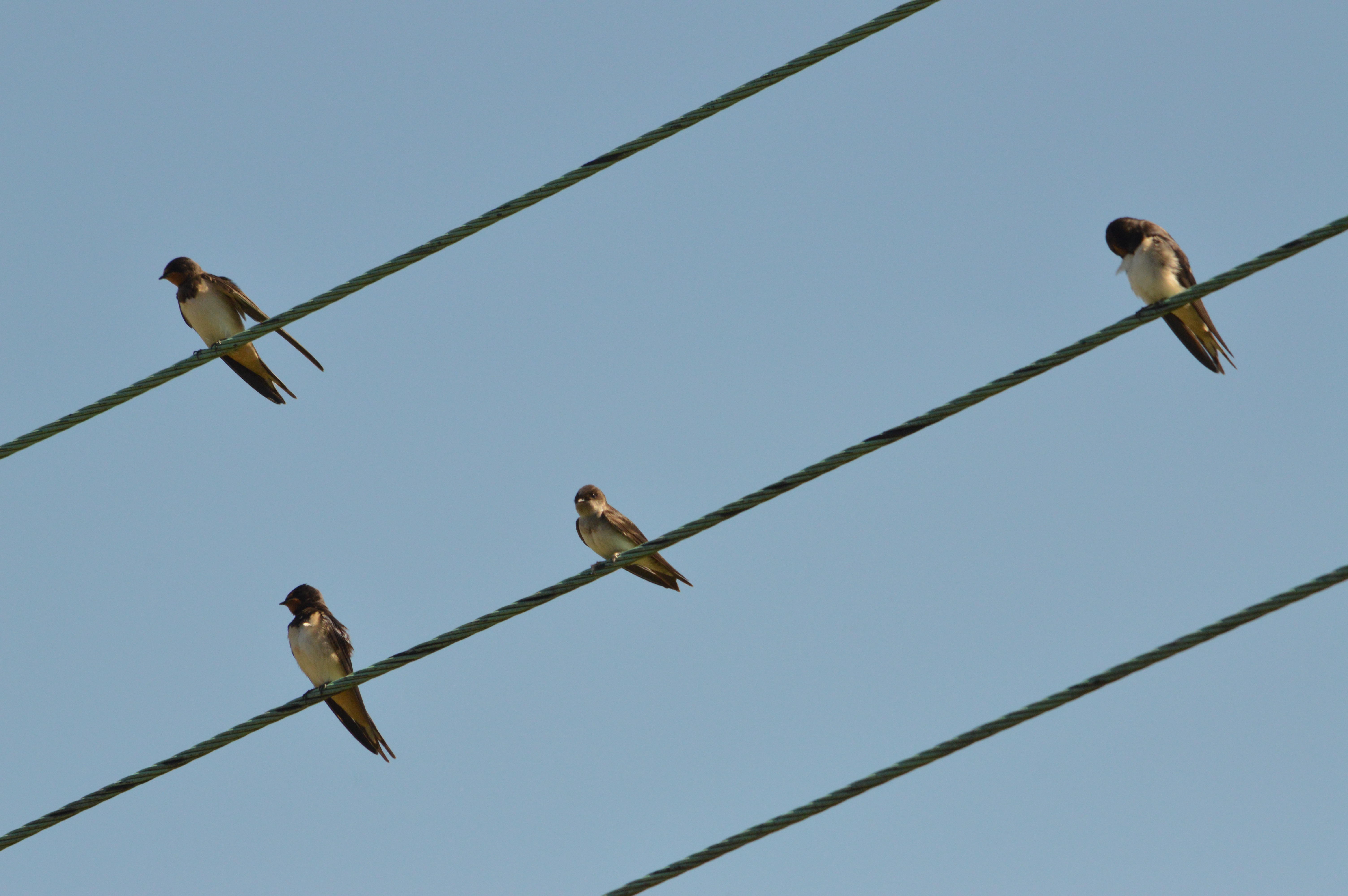
The family of swallows that nests in the barn near the house have had a very successful year. I counted eleven of them on the wires this morning: two parents with full streamers and nine noisy youngsters whose tails have yet to grow out in full. I had to count twice because of a sand martin who seems to prefer hanging out with swallows than his own kin, who have a colony in a field half a mile down the road. There comes a time every year, usually in September, when the swallows and martins suddenly gather en masse in a noisy spectacle before setting off for the south. We’re not quite there yet, no matter how abnormal this summer’s weather has been, but it sure felt like a nod to that day this morning.

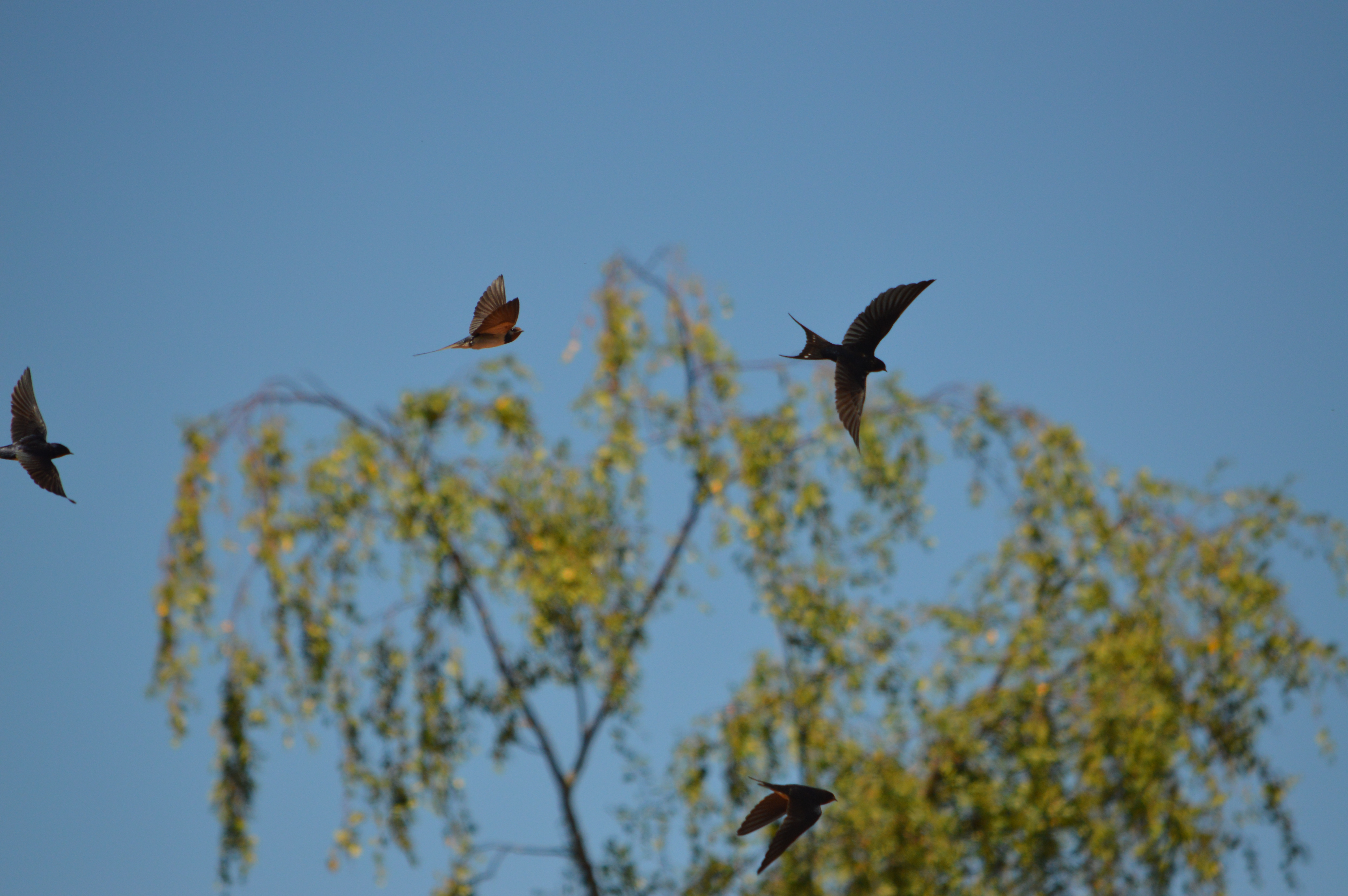
Swallows, swifts and martins – collectively known as hirundines, which might have something to do with the Latin word harundo, meaning the forked shaft of an arrow – really are some of nature’s miracles. The tiny flashes of blue and white that dance over the fields with such cheerful abandon in summer travelled around 9,700km from their wintering grounds in South Africa to get here, and in the space of a few short months they have to make the same journey all over again in reverse, this time with their young in tow. Most estimates have them traveling about 320km every day. That’s a bloody long way to go when you’re only a few months old!

This morning the family looked like they were getting some practice in for the long journey ahead. Mum and dad would sit with the youngsters on the wires for a while, chattering amongst each other while the kids preened endlessly, before suddenly taking off and wheeling about the garden with their offspring racing after them. They might have been hunting, of course, but some of the young ones were far more interested in playing keep-up with a pigeon feather, catching it and keeping it from touching the ground, the way children sometimes do with a balloon. It was really quite endearing to see.

In the past, where our swallows went each winter had us stumped. There were some truly bizarre theories floating around. Following in Aristotle’s footsteps, some thought they hibernated underground. Some thought that they slept at the bottom of deep lakes and ponds, since they spent a great deal of their time hawking over the water during the summer months. One 17th century theory, courtesy of Englishman Charles Morton, claimed the Moon as the swallows’ winter destination as the only logical explanation for their total disappearance. It sounds absurd, but it’s not so outlandish a theory when you try to imagine explaining that these tiny creatures travel further twice a year than most humans will in a lifetime. It even makes the underground hibernation theory seem plausible!

It’s an incredibly hazardous journey, and not every one of our brave swallows will make it there and back. There are all manner of dangers they have to face: sea crossings, storms, high winds, predation by hobbies (consummate swallow-catchers), not to mention human interference – some will be caught for food, and the Maltese in particular are infamous for their practice of trapping migrating birds by liming fences. And then, of course, there’s the mighty Sahara Desert. Michael Morpurgo wrote a fantastic children’s book about that journey – Dear Olly – which you should read if you want an idea.

So why travel all that way? Competition might well have something to do with it. After all, Africa has plenty of swallows of its own (without all these European swallows “comin’ over ‘ere and takin’ our jobs” etc.) and fans of Monty Python will be well aware of the fact that African swallows are non-migratory. On my travels around Uganda during the rainy season (November) back in 2012, I saw plenty of familiar-looking swallows hawking over the White Nile, but most of the birds I clocked were local species that don’t travel far from home. Still, I couldn’t help wondering whether maybe just one of the brave little birds flitting by had crossed my path sometime before, either in Spain or the south of England. How’s that for a flight of fancy! <groan>

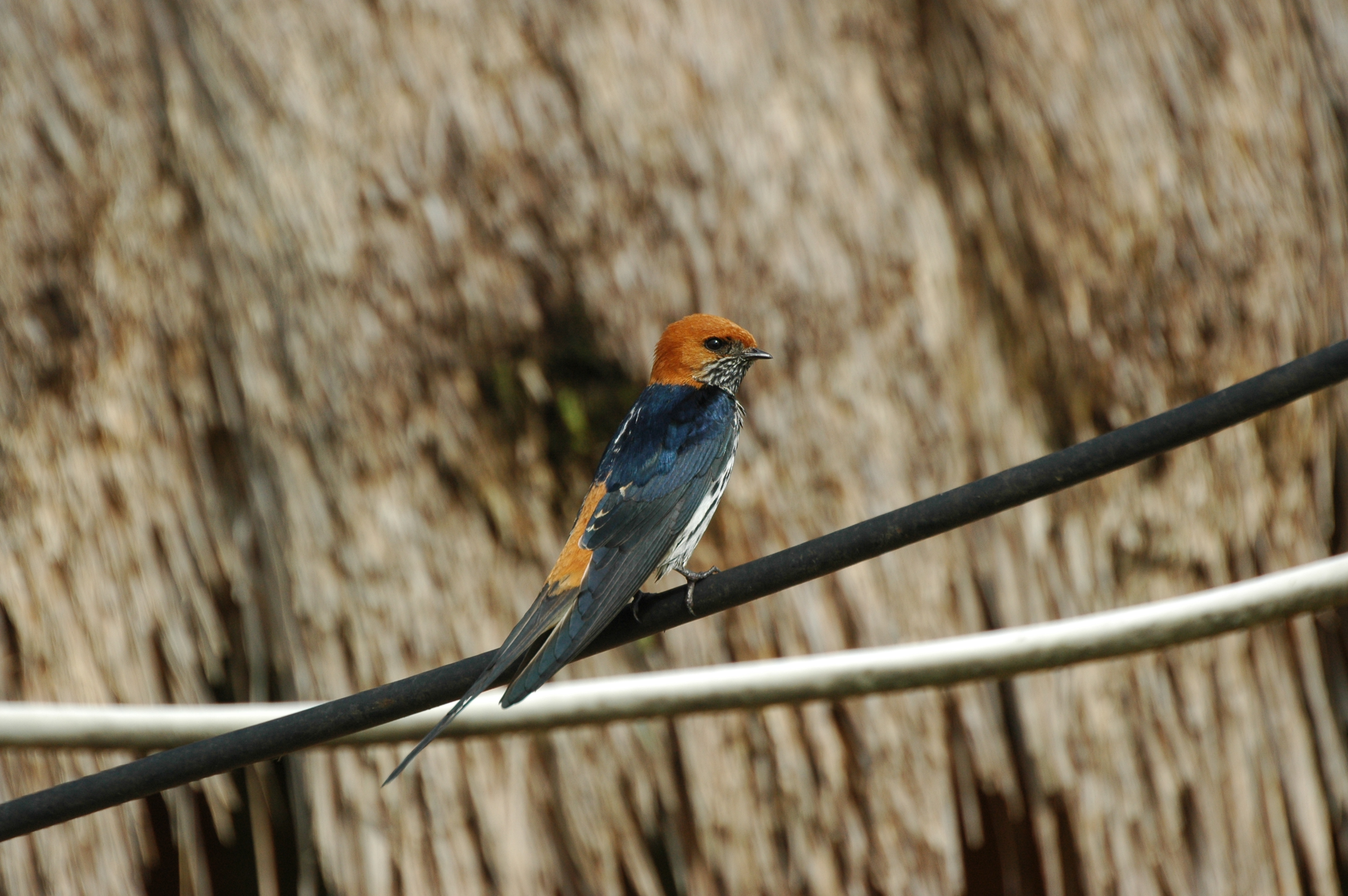
Greater striped swallow, Ishasha Lodge (Queen Elizabeth National Park) Uganda, 18th November 2012

Swallows are remarkable creatures to watch. While we still have a few weeks left of summer, try to find a few minutes to enjoy the little winged miracles. I’m sure they do wonders for one’s mental health, but to use less clinical terms, they sure can lift one’s spirits. Today, for the first time, I saw two of the youngsters doing something I’ve never seen swallows do before: sunbathing. Plenty of birds do this kind of thing to regulate body temperature, but it’s the first time I’ve seen swallows in the act. It was just two of them who kept leaning over in the sunlight – the others were far more interested in preening, though the sand martin looked as though he wanted to get in on the action!

One swallow does not a summer make, but their departure certainly puts an end to it! If you’ve enjoyed reading my homage to our chatty little neighbours, you might find the links below worth a browse, too. Until the next time! BB x
https://www.historytoday.com/archive/natural-histories/great-migration-mystery
https://www.rspb.org.uk/birds-and-wildlife/wildlife-guides/bird-a-z/swallow/migration/

Greenheart

Iโ€™ll be frank. Summer is my least favourite season. Summer is, in the vocabulary of my students, โ€œdeadโ€. Most of the birdsong is over for the year, the whole nation is out and about and the holidays stretch on for what feels like forever (especially when you work in a private school). Thereโ€™s a dry stasis in the air that you donโ€™t get in the changeling months of spring and autumn and youโ€™re too cold to notice in winter. This summer, as is tradition, Iโ€™m spending my time between watching documentaries and watching the clock. Thereโ€™s not all that much else to do when you find yourself in the countryside far away from everyone you know.

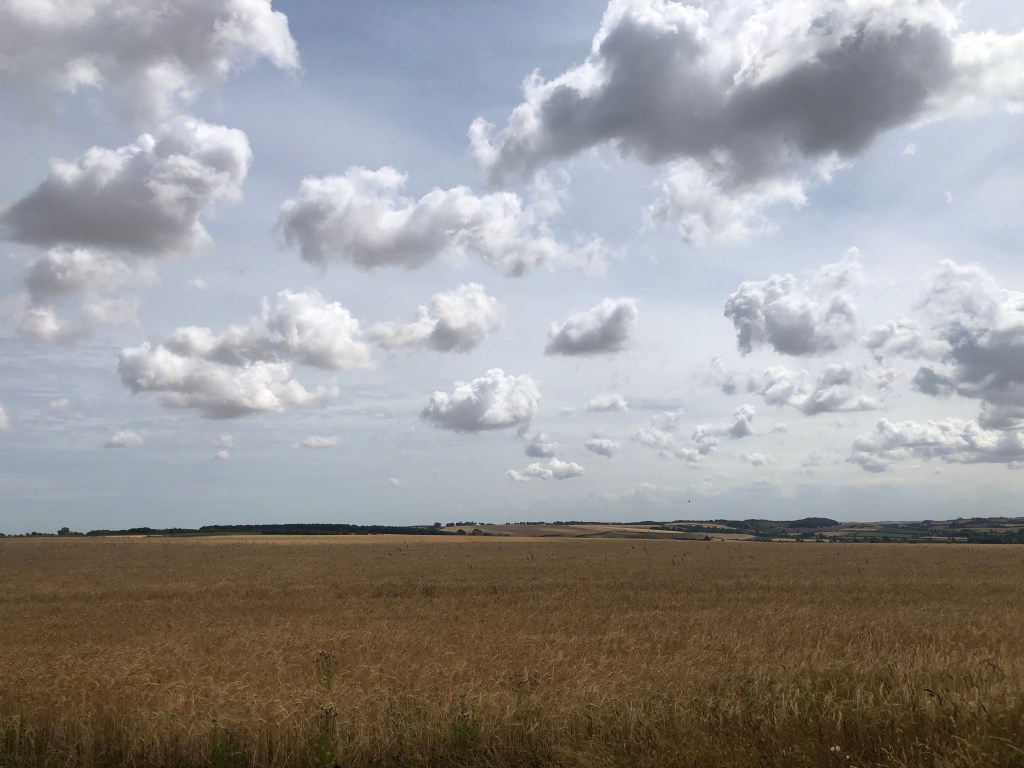
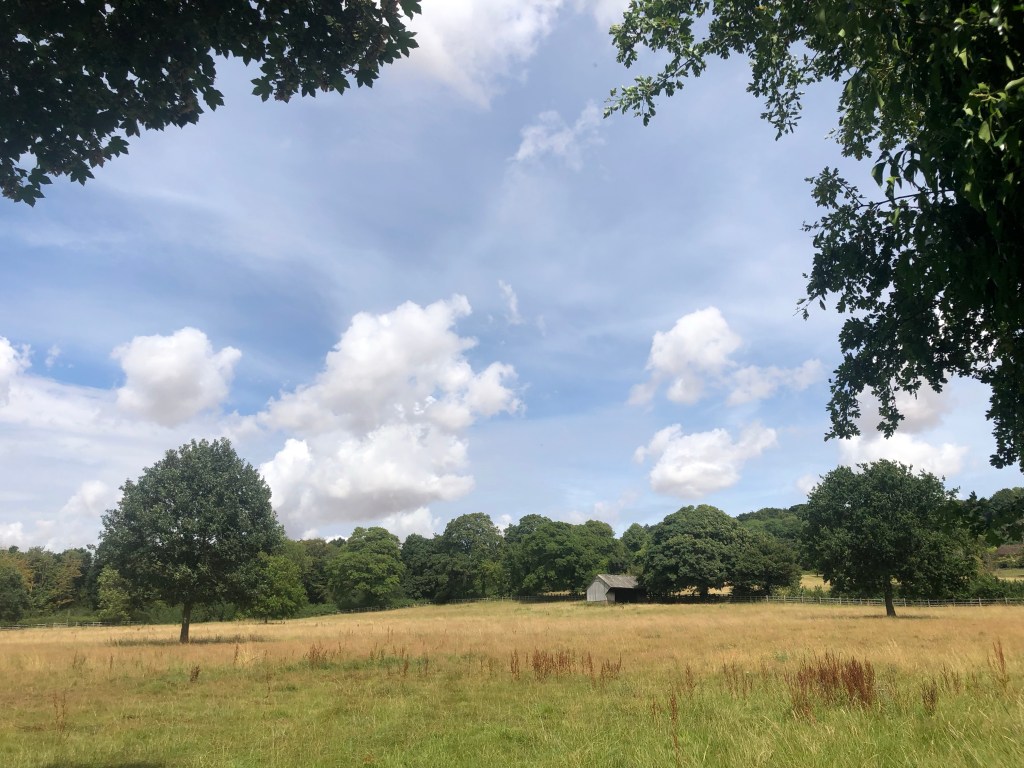
There are, however, massive perks to being here. A few days visiting my parents in Lincolnshire usually throws up a chance to explore somewhere new, and though todayโ€™s ramble was more of a wander โ€œround the backโ€ than an adventure per se, it was a beautiful reminder that there are some things that make an English summer worth seeing.

Up on the wolds near Donington, I heard a quail. Itโ€™s been years since I heard one in this country, but once heard, you never forget. That iconic wet-my-lips call carries for miles, especially under a hot midday sun when the only other sound is the wind. It reminded me of the green riverbanks of the Dehesa del Banco, where the call of quails was just one instrument in a wetland symphony: percussive reed warblers, the accelerando snare of the corn bunting, the indescribable beauty of the bee-eaterโ€™s woodwind and zitting cisticolas going zzzzit zzzzit zzzzit overhead. It sure felt nice to be taken back there from the sunlit uplands of Lincolnshire.

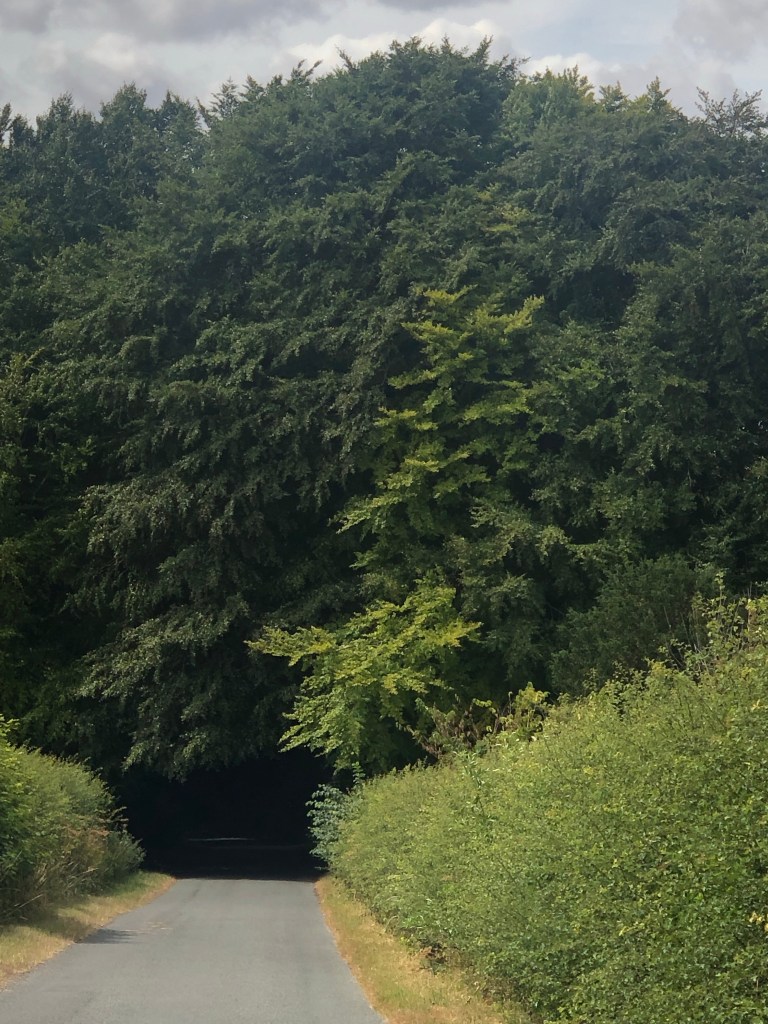
The skies here are immense. The land seems to go on forever in all directions. You get a real sense of eternity in this vast corner of England. Little wonder, then, that so many Lincolnshire folk hoist the red and green county flag over cars, windows and doors. And yet, as is so often the case in England (and why I really didnโ€™t take too well to life in Jordan), youโ€™re never too far from a dark forest, which – admittedly – are especially peaceful places in the quiet summer months.

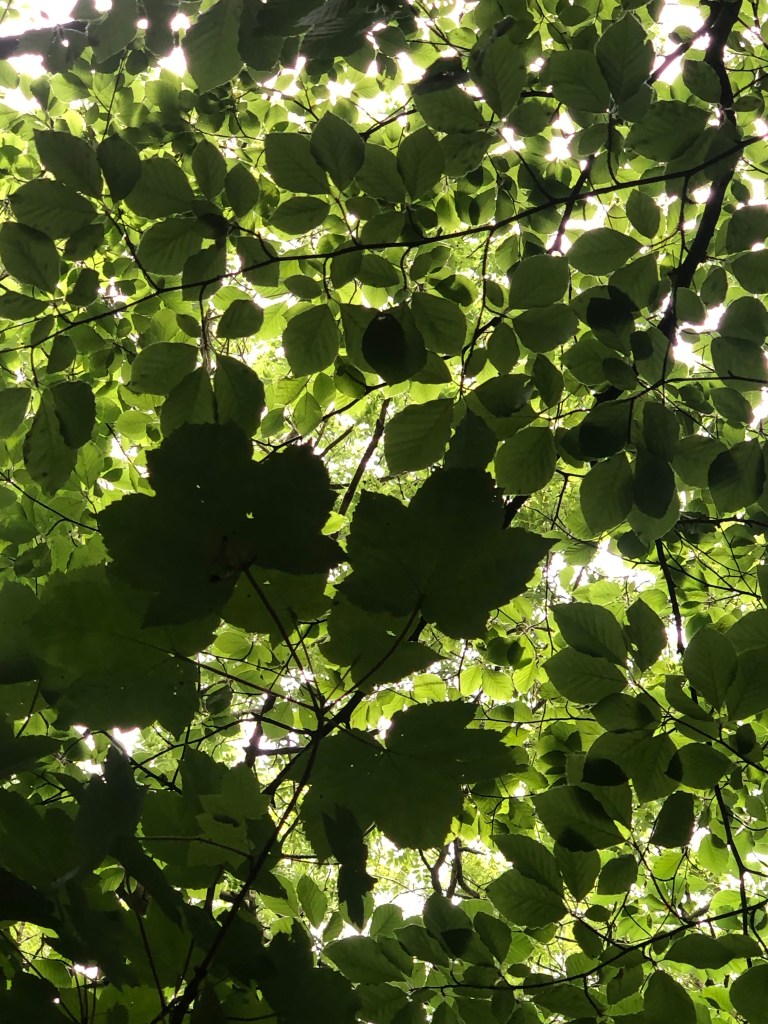
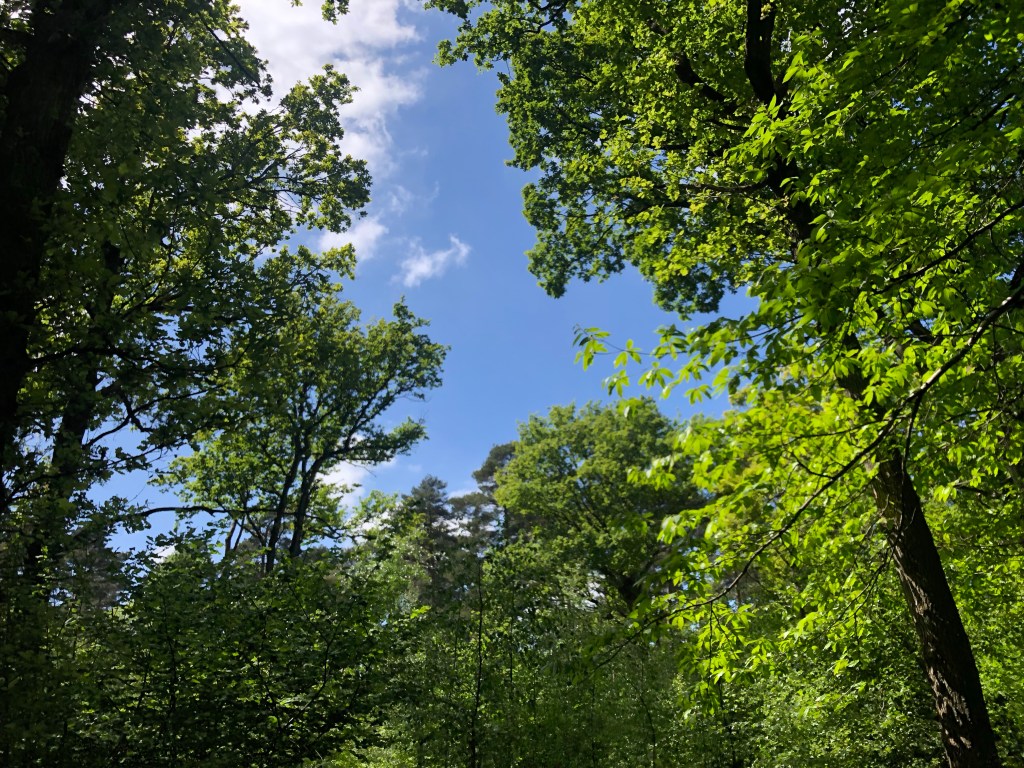
I tried to explain to my companions in Amman again and again the importance to me of green spaces. I think at the time I said I needed more trees, and was quite rightly told there were plenty of trees in Ammanโ€™s parks. But thereโ€™s something very special to an Englishman about the quality of light that can be found filtering through the trees in an English wood. Something about the infinite shades of green, alder branching over ash, ivy climbing up oak, a ceaseless communication from leaf to leaf, tree to tree. Little wooden fences put up by one of the country folk using fallen branches. The sound of the wind in the leaves: the way it chatters and whispers through the oak trees, and sings without syllables in the firs. Stop and listen the next time youโ€™re near one and youโ€™ll see what I mean.

Itโ€™s a magical feeling, standing in the dappled shade of an English forest in summer, and the loss of it in Amman broke my heart, I think. It was, perhaps, the time in my life when I stopped hating on my English heritage and came to appreciate the land where I was born – which, I think, is a stage we must all go through at some point in our lives. Not making peace with the establishment, exactly; rather, making peace with oneโ€™s roots. Learning to love the land that made you who you are.

Ten years ago today, I was spending my final childhood summer gigging with my funk band in an attempt to distract from results day. Two months later found me teaching for the very first time in a private school in East Africa. Itโ€™s been a colourful decade since then. I feel like Iโ€™ve lived around the world in my twenties: Durham, Jordan, Morocco, Sussex, Dorset, Lincolnshire and various corners of Spain. Iโ€™ve also found a real fondness for Edinburgh, reawakened my love for France and started a love affair with Italy. And while all those LinkedIn โ€œso grateful forโ€ posts make me want to throw up into my hands, I have to admit Iโ€™m incredibly lucky to have had such a colourful decade. I wonder where the next ten years will take me?

I hope She is out there somewhere. I never lose faith in that. And faith, as always, keeps one believing in a better tomorrow. For now, there is the English countryside and the sounds of summer. I can live with that. BB x
For Whom the Bell Tolls

My provisional license arrived in the post yesterday. My second, I should say, since after a very thorough summer holiday shakedown of the flat Iโ€™m convinced I must have accidentally thrown my first one out with the trash months ago. Itโ€™s put a major stopper on the whole learning-to-drive this summer by holding up the theory stage, but now that itโ€™s here Iโ€™ve got no excuses. I should get booking.

But first, Iโ€™m getting out of here for a few days. Iโ€™m done with scrolling, hoping for contact from the outside world and turning off the WiFi for a bit of enforced internet downtime. Summer holidays just drag on and on when you have nothing to do, so Iโ€™ve decided to get out there and do something.

So here I am in the ferry terminal in Portsmouth, waiting for the 22.45 to Caen. The overhead telescreens keep alternating between the blue departures board and the vivid blue and yellow banner of Ukraine. The BBC News app remains focused on the heatwave, though the magic number 40 has disappeared from the headlines – โ€œtemperature tops 38C and likely to riseโ€. Five stories down, Tugendhat is eliminated from the running for Tory leader.


It certainly was hot today, but it didnโ€™t feel much like that blisteringly hot summer holiday in Jerez almost twenty years ago. Despite the threat of 40ยฐC heat, the breeze rolling in across the Weald kept the school grounds pleasantly cool. Even so, the signs that this has been an unseasonably hot few days are clear. When I went out to do a little reading in the morning, the summer soundscape was there: the echoing whack of a tennis racket, the ceaseless chatter of the house martins, grasshoppers chirping lazily in the meadow. A few hours later, the whole place was silent. Only a lone crow broke the stillness, and that was just the once.

I thought the train journey would be problematic due to the hysteria in the news, but despite the grovelling apologies over the Southern Rail tannoy, the train was only ten minutes late pulling into Portsmouth – which is remarkable, given how prone to delays they can be outside of a national crisis.

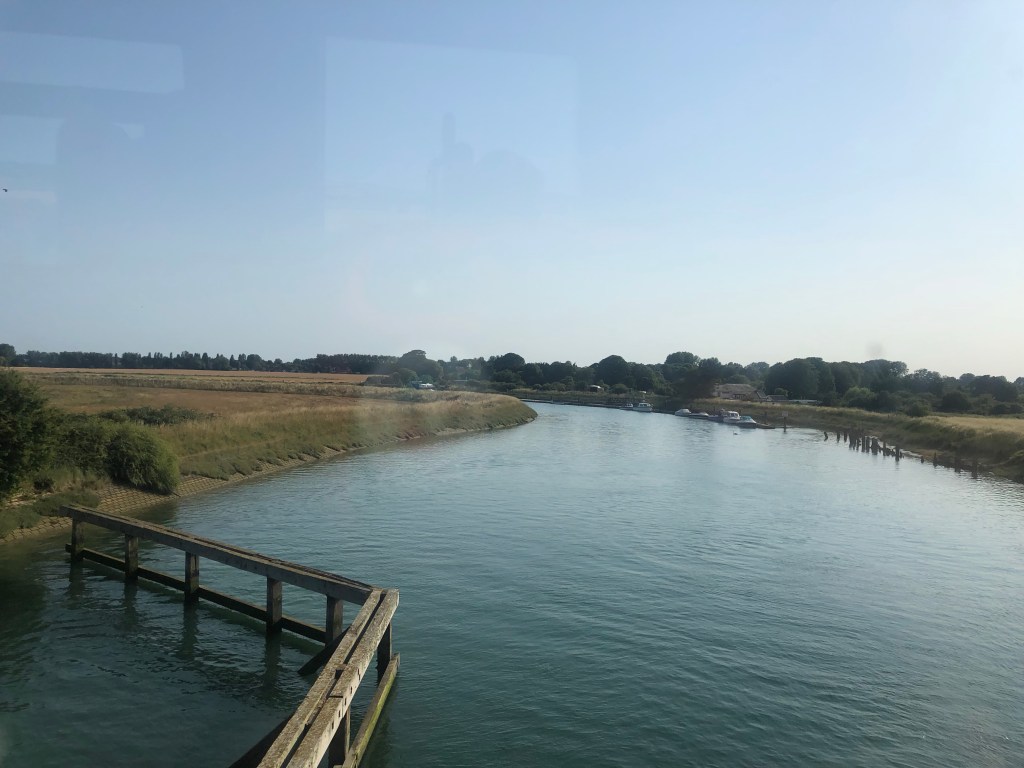
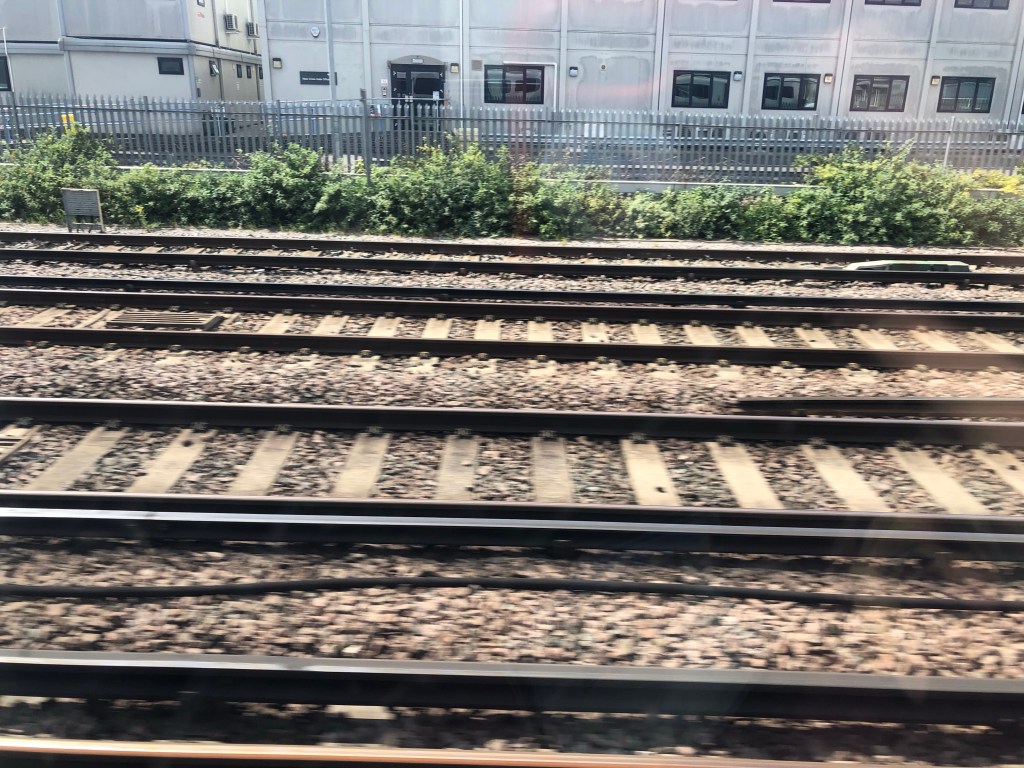
Itโ€™s a beautiful train ride, the route from Crawley to Portsmouth – one of those British rail journeys you should tick off the list, like the one from Darlington to Edinburgh. I never get tired of passing Arundel Castle and the fens at its feet. A childhood spent in and out of various salt-marshes around Kent has left me rather fond of their bleak serenity. Herons stalking the waterโ€™s edge. Egrets bedecking the bushes like so many plastic bags snagged on the branches.

Suddenly, an intensive greenhouse-farm appears, concealed from the outside by a thick growth of trees. A ravenous human hand clawing the depths of the earth to satisfy a hungry world. And then itโ€™s gone, the train is hurtling forwards and Iโ€™m back in the marshes. I could be looking into the past or the future. I remember the fate of El Acebuche, its silent reeds swaying in the wind, and Iโ€™m not sure I want to.

The French family in the seats behind me must be headed for the ferry port, too. At least, I guess they are – Iโ€™ve caught the word โ€œbateauโ€ often enough. The children swap in and out of French and English without much of an accent overlay in either. The father speaks only on French, until he stops the ticket inspector to ask if she can turn off the air conditioning. โ€œDonโ€™t you think itโ€™s rather nice, as itโ€™s so hot out there?โ€ – โ€œFor five minutes is nice, but itโ€™s freezing.โ€ – โ€œIf I were you Iโ€™d enjoy it.โ€ At the next stop, the father gets out to soak up the sun. His daughter only just coaxes him back on as the doors close. Before he returns to his seat, he steps into the next carriage, remarks that itโ€™s warmer, and moves. Within minutes the rest of his children have followed suit. It seems petty, but they have a point – the air con was turned up so high I had goose-flesh for half the journey.

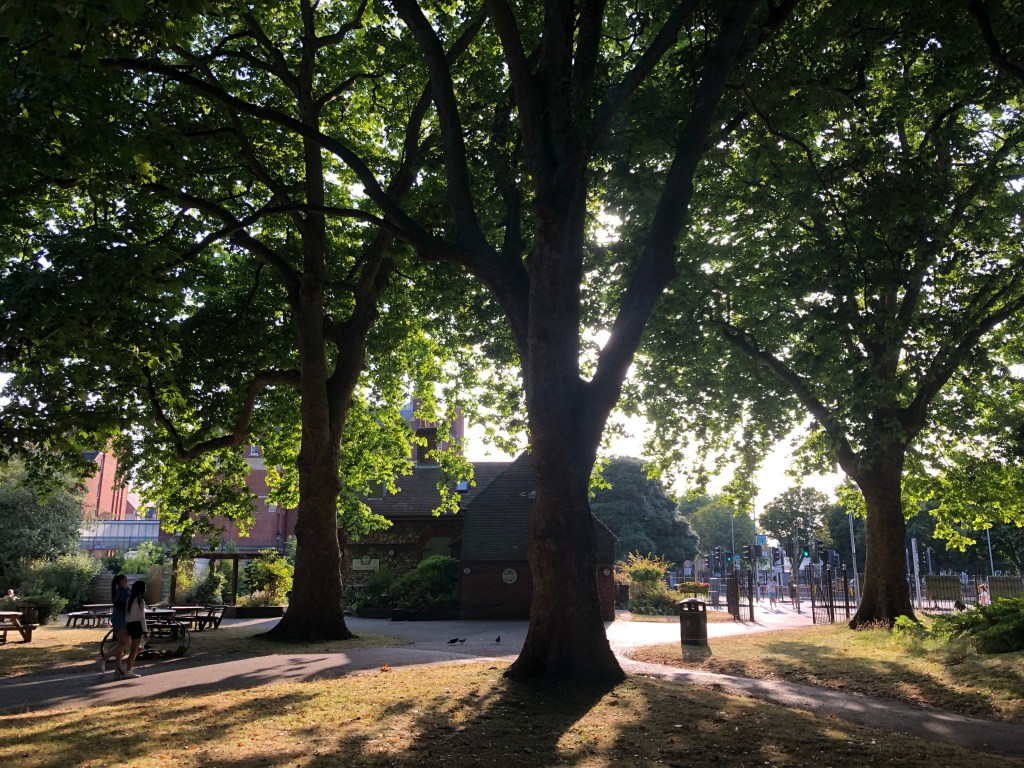
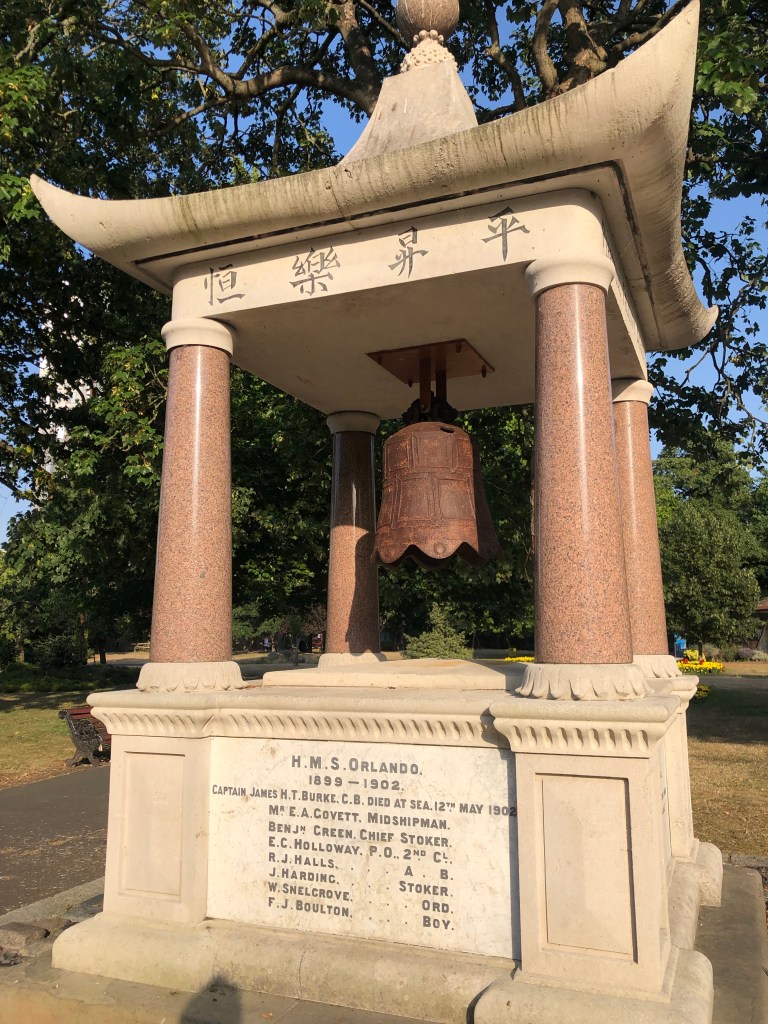
I havenโ€™t been to Portsmouth before. The last time I caught a ferry in this neck of the woods was from Southampton, but that was many years ago and we didnโ€™t stop. I had four hours to kill and not a lot to do, so I picked a spot in Victoria Park and watched the world go by. The bells of St Johnโ€™s sounded for seven. They sounded strangely mournful, but though I hummed the melody back a couple of times, I couldnโ€™t work out why. Two handsome women wander by, their accent West African and intensely musical. Three kids hurtle past, one on a scooter, two on skateboards. One wears a red-and-black chequered shirt tied around his waist (did everybody own one of those shirts at some point?). A family of cockatiels screeched from an aviary in the centre of the park, stolen away from their home far beyond the sea to entertain the fancy of the British public. An ancient Chinese bell stands nearby and seems to serve a similar function, pilfered – it says so in almost as many words on the plinth – during a campaign in Taku. A cryptically-worded message daubed above reads โ€œPerpetual Felicity Achievedโ€ in austere capitals. A breeze blows and the bell moves a little, but it makes no noise. Some cage birds stop singing after a while, too.

As the sun sets, I head to the port. The heat and the hysteria have driven everyone indoors. The high street is virtually empty. Just a couple of kids with drinks theyโ€™re nowhere near old enough to drink and a level of delirium to match, and a weatherbeaten gentleman sleeping in the shadow entrance to an Ann Summers store. A grey mannequin in turquoise lingerie poses suggestively through the window at him, blowing a kiss. He wipes his nose, shakes his head violently and turns the page in the book heโ€™s reading.

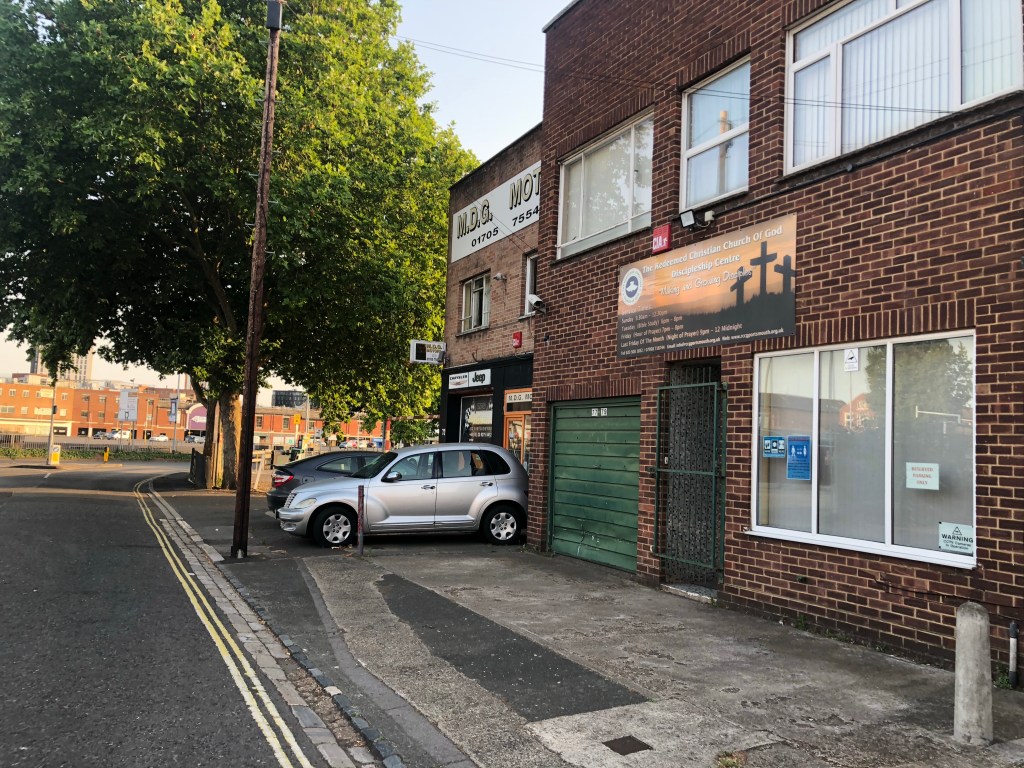
Thereโ€™s plenty of folk driving here and there, but nobody on foot. For several minutes I feel like the only human in the city. A couple of Deliveroo me go by on their bikes. A bearded man in a red-and-black chequered shirt worn over his t-shirt, bent over almost double. I pass an outpost of the Redeemed Christian Church of God in a backstreet, and later, the house where Charles Dickens was born. Everything is shut. The high rasp of a motorbike going by, the evening heat and the strangeness of a new placeโ€ฆ It almost feels like Iโ€™m abroad already.


But no. Iโ€™m still here in the terminal. Boarding starts in ten minutes, so I suppose Iโ€™d better close there. A demain, mes amis. France is calling! BB x
For the Glory of Jellyfish

Tuesday 12th July, 11.13am
Hassocks Station

I needed to get out. While it was ultimately my decision to come back south to my flat and cut myself off once again – and I stand by that decision – itโ€™s all too easy to go stir crazy in here on my own. I was angling on getting out and seeing friends for a couple of days, but as my plans fell apart, I’ve had to take the reins myself. So I decided to strike out for the coast. Brighton always makes for good writing, that perfectly bizarre city.

Itโ€™s clearly a school trip day today. The train south from Three Bridges was absolutely rammed with saaf Landan kids in high-vis jackets, their beleaguered teachers sitting close at hand, identifiable for the throbbing veins in their temples if not by their lanyards. Standing room only. Itโ€™s kind of noisy in the gangway, so I pop my headphones on. The Spinnersโ€™ Rubberband Man cancels out some of the angrier verses the kids are throwing around from their phones. I donโ€™t understand the unbridled rage in that kind of music, much less its magnetic appeal to kids. Give me the laidback fun of the seventies any day.


12.40pm
Brighton Palace Pier

Somehow it took me all of an hour to get from the station to the pier. Time slips through my fingers in a bookshop. Itโ€™s as though Waterstones operates in its own dimension. That could well be because Iโ€™ve become a lot more tactical when it comes to book-buying, taking the time to really get a flavour for a book before deciding to add it to my collection. As a general rule, any and all books on Spain (pre-20th century) go straight into the basket, but Iโ€™ve genuinely reached the stage now where if I donโ€™t have it, itโ€™s not worth having. Thereโ€™s still a wealth of material out there in Spain in Spanish, but with Spainโ€™s ludicrous stance on FBP, shopping for books over there is simply not economically viable. At the moment Iโ€™m trying to pick up my European reading challenge where I left off a few years ago, so I sought out a Ukrainian book to add to the collection today. I thought I was onto a winner with Sholem Aleichemโ€™s Tevye the Dairyman – the forefather of Fiddler on the Roof – only it turns out, predictably, my mother already bought the book years ago. Still, no matter. Thatโ€™s one more book I can feel better about giving away someday.


1.27pm
Brighton SeaLife Centre

Yes, I visited the aquarium. Donโ€™t judge! When I was a kid I used to love going to aquariums – or the more ecologically-sound sealife centres, as they are so often called these days. Nausicaa across the Channel in Boulogne was a personal favourite, but Hastingsโ€™ SeaLife Centre came a very close second.

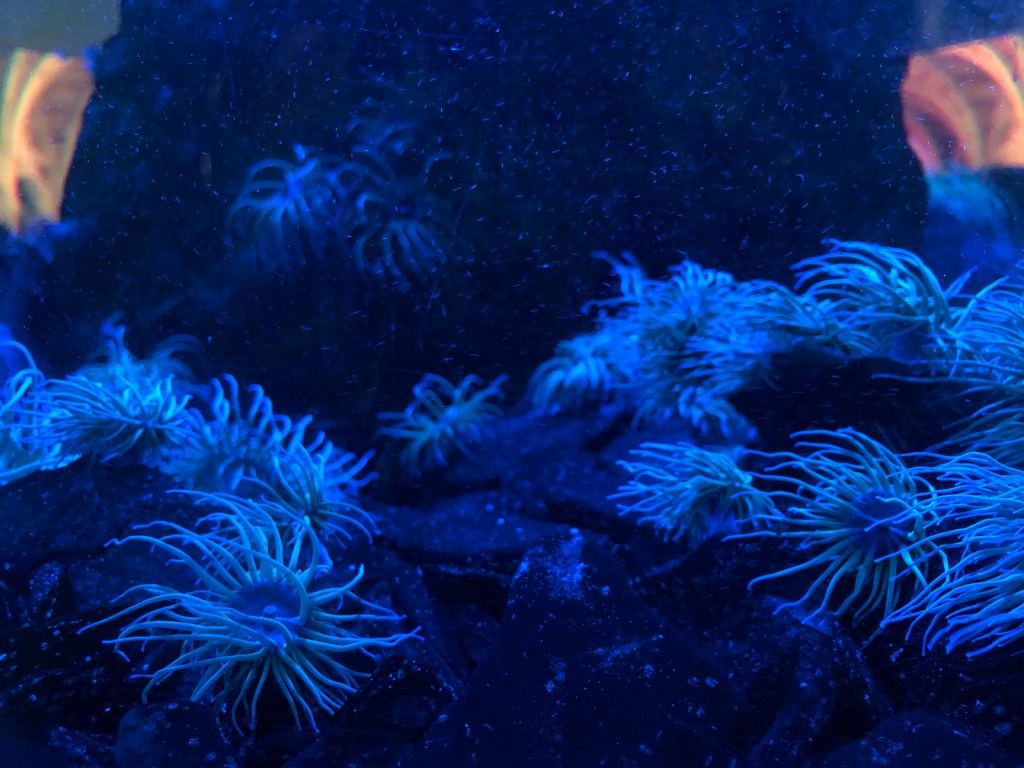
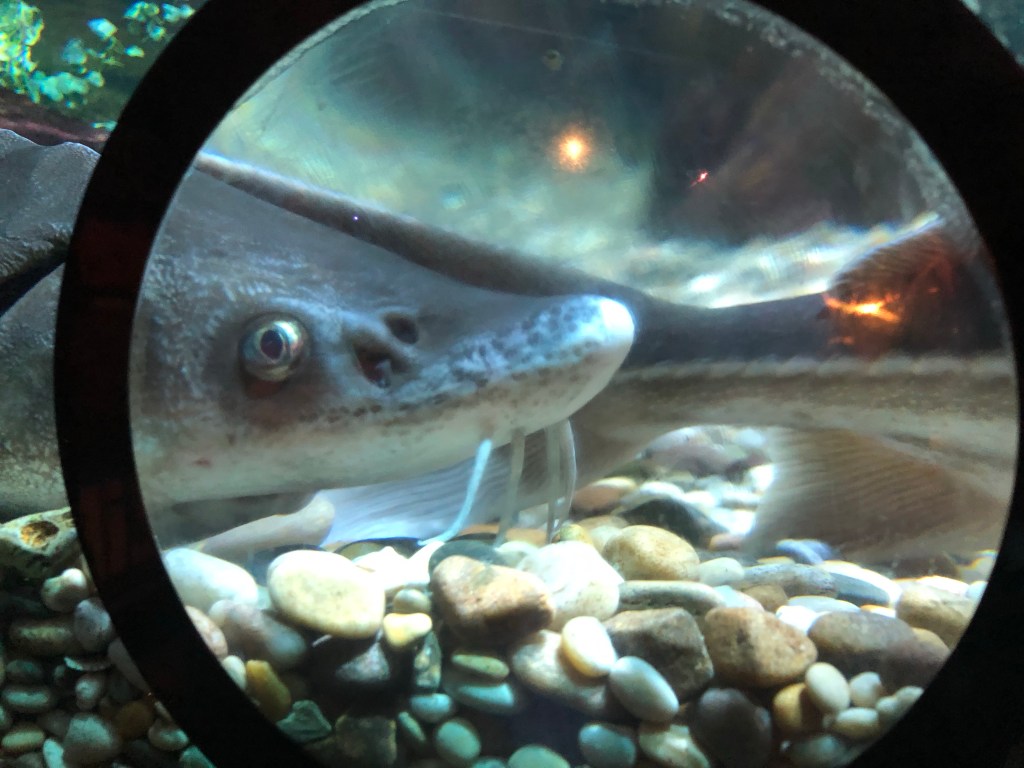
It was pretty much deserted. A large primary school group came in after me, but they never made it any further than the cafe housed in the original Victorian aquarium. I felt like a kid again and challenged myself to name the fish whose names Iโ€™d furiously memorised more than twenty years ago. For some crazy reason itโ€™s all still there. From loach, tench and trout (easy mode), to snakelocks anemones, garden eels and corkwing, rainbow and cuckoo wrasse (standard) and on to pacu, Bloody Henrys and discus fish (hard mode). Itโ€™s a safe bet that the reason I had such a hard time learning anything in science class was because that part of my brain was stuffed full of animal trivia. If only biology had been about animals and not plant cell structureโ€ฆ! Who knows, I might have gone on to study it. As it is, I was bored stiff and let it go as soon as I could.

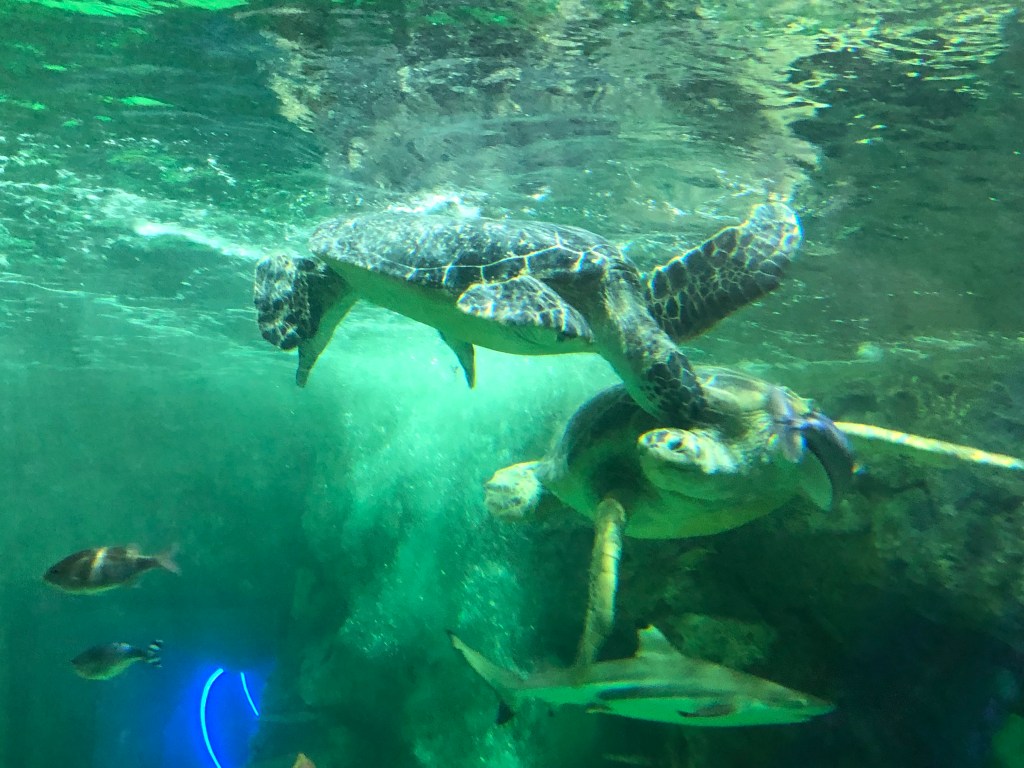
I stood and watched the turtles for quite a while. I donโ€™t think Iโ€™ve ever seen a live sea turtle before. My god, theyโ€™re huge. Nature found a perfect recipe over 100 million years ago and decided โ€˜yep, that doesnโ€™t need any more workโ€™. Like sharks, turtles have been around for millions of years. Watch a turtle fly through the water and youโ€™re reminded of how pathetically short our time on this planet has been by comparison. Only, these turtles looked a little stereotypic. One bit the other on one pass. Creatures can develop odd behaviours when they’re cooped up in small quarters. Maybe that’s a window into what’s happened to me in my flat this summer!

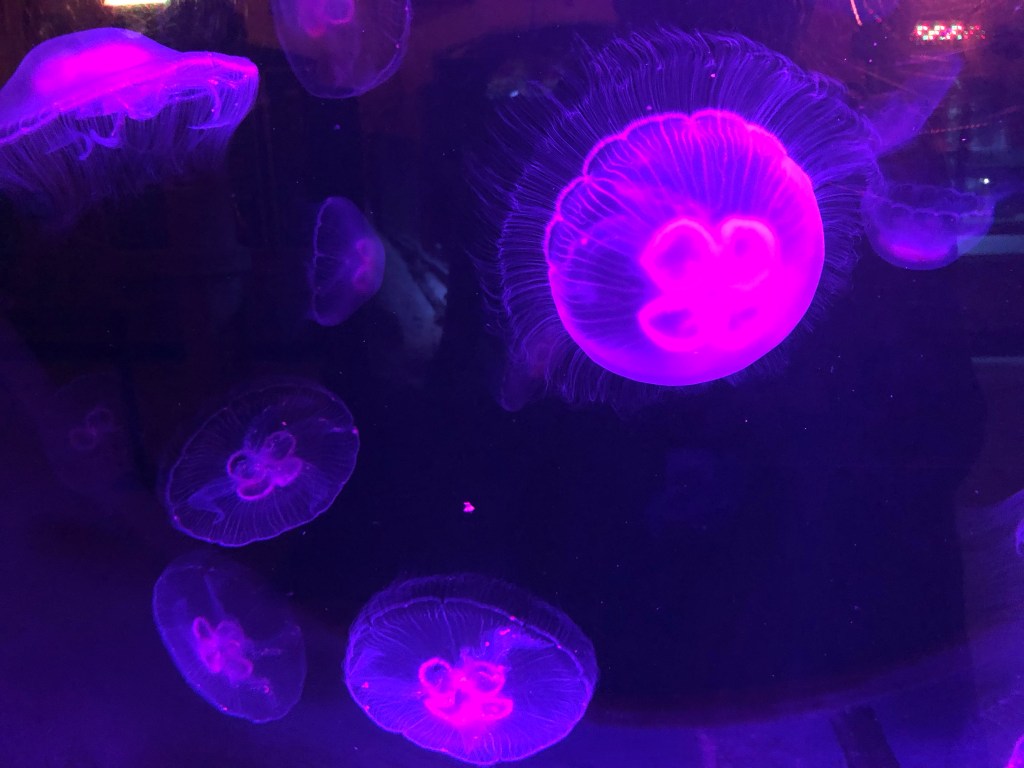
On to the jellies. I could have come here for the jellyfish alone. Theyโ€™re absolutely mesmerising to watch in flight, pulsing slowly through the water, their hair-like tentacles trailing behind them. Another perfect life form that has seen millions of years of evolution come and go. Almost all sci-fi flicks imagine aliens from other planets as bipedal if not all-but human in appearance (Doctor Who and Star Wars are the prime examples), but if I were a betting man, Iโ€™d stake a fair amount on extra-terrestrials looking more like jellyfish than man. Isnโ€™t it rather selfish of us to assume that ours is the perfect life form when turtles, sharks and jellyfish – hell, even cockroaches – have outlived us by millions of years? And on that note, Iโ€™d better clear out of here before I sell out mankind to the invading jellies faster than Kent Brockman.


2.58pm
Artistsโ€™ Beach

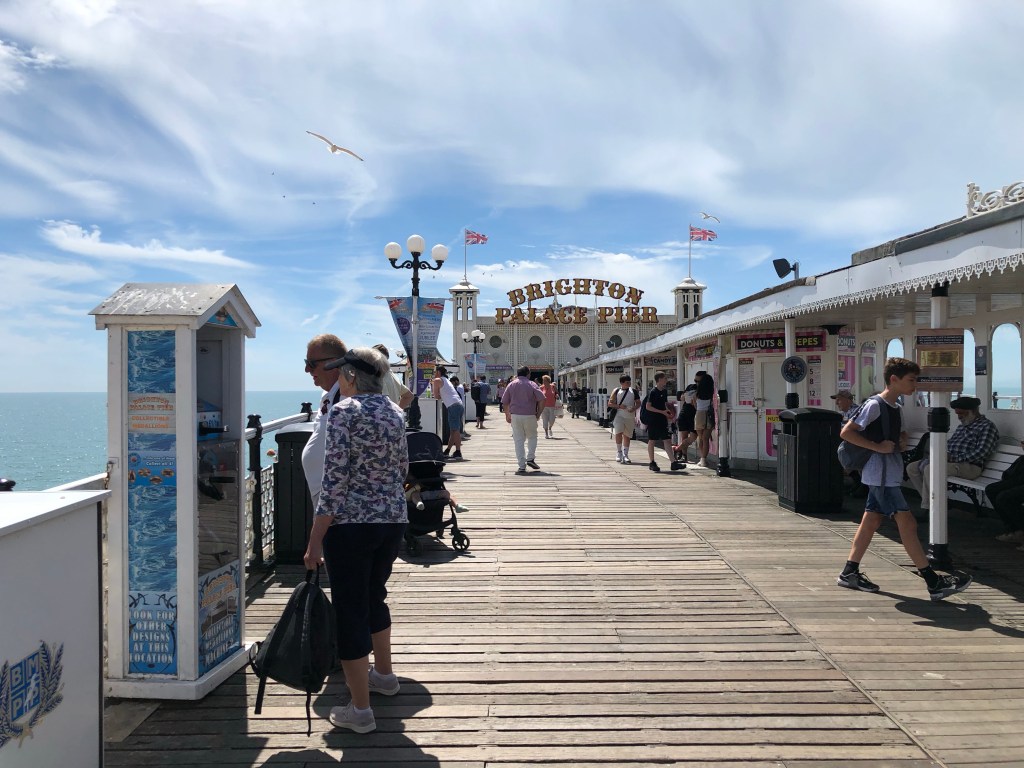
After nearly betraying humanity over a jellyfish and admiring the beautiful world beneath the waves for an hour, I promptly went outside, climbed the steps up to the palace pier and ate a battered fish with chips and vinegar. The irony was fortunately lost on the hoarse chippie vendor, who barely got the order numbers out in a grating voice. A group of girls next to me got their orders in after me, but somehow got their orders out first. ยฃ8.20 for fishcakes and chips seemed a bit steep compared to the ยฃ5.40 deal just 200 metres from the pier, but it was good quality, and since I barely managed to finish it, I didnโ€™t have to wash it down with a tot of buyerโ€™s remorse.

Brighton was packed with graduands this afternoon, red-faced and sweating in their full academic dress for the 28ยฐC degree heat. If they opted for modesty, the other beach goers didnโ€™t get the memo. British flesh on florid display, ranging from lobster-red to milk-white. A few lucky sightseers with bronze skin seemed to walk a little taller, but they were definitely in the minority. Lifeguards, street vendors and tramps made up the rest. Folk who have little choice but to soak up the sun.

Freeze frame. I pop the chip-box in the bin and look around – and really look. Yuppies in โ€œgap-yahโ€ pants and strappy tops. A lady in a wheelchair, and two women at the traffic lights who get to discussing behind their hands how she might have ended up there (the kind of curiosity my generation loves to hound out as aggression). Goth-types with nose rings, vape-sticks protruding from their fingers. On that note, cryptic vape ads everywhere (what on earth is the appeal?). A squadron of Korean cyclists suiting up on the sidewalk. A cormorant flying east along the coast. The indefatigable enthusiasm of the man selling rides on the motionless merry-go-round. A boy with what looks like rickets going by. The blonde girl in her thirties singing her heart out to a crowd of beachgoers enjoying a late lunch. Nobody is looking up at her.


3.35pm
Preston Park Station

The train home is much emptier, but I still walk the length of the train to find a carriage to myself. I pop the headphones back on as the train begins to pull away and Manu Dibango comes on. Sax City, Africadelic and Soul Makossa. Dibango was one of the victims of COVID two years ago. Like Marvin, James and Luther, thatโ€™s one more of my favourite artists who Iโ€™ll never get the chance to see live (or alive, for that matter).

During the Gospel Choir debacle, I spoke to a colleague and asked for their thoughts. They said they had thought a lot about the issue of music in a post-BLM world, and questioned even having been to a soul music gig as a white person. That messed with my head for months. Itโ€™s not that I donโ€™t rate musicians who look like me, but give me a choice between Ed Sheeran and Fela and itโ€™s Fela every time. Pop is catchy, but disco is eternal – it just keeps on giving, fifty years later. Folk is clever but Soul finds notes that folk just canโ€™t. And highlife is surely a candidate for the most feel-good music genre on the planet. How can you deny yourself the chance to listen to such wonders on account of a feeling of awkwardness?

Iโ€™m all for better representation in the music industry. It needs it. I just hope we donโ€™t end up carving ourselves up into islands where we can only listen to people who look like us, think like us, talk like us. And I mean that literally as well as musically. Social media is doing that already. Itโ€™s a dangerous path weโ€™re treading, and I hope we can weather the storm thatโ€™s coming.

Would you look at that. Iโ€™m back to sermonising. I think I was doing better with committing acts of high treason for the conquering jellyfish. Time to go. Blppp blppp blpppp. BB x
COVID & The Classroom: Two Years Later

No two days are the same when you’re a teacher. It’s hackneyed, but it’s true: children are infinitely more changeable than tired and heavily programmed adults, whose desire to rebel and create has usually been all but eroded by the necessities of everyday life. That being said, I guess I expected at least a modicum of routine when I answered the call to become a teacher. How wrong I was… and what a couple of years it’s been!


Two years and two months ago (almost to the day) I remember sitting in my living room with my housemate with the radio on, listening to the Prime Minister’s national briefing. Perhaps you remember it – it was the one where he officially announced a national lockdown in the wake of a sudden surge of COVID-related deaths.

It’s eerie to think how little attention we paid to the scourge of the decade back then. You could certainly argue that when Trump called it the Chinese virus he was only echoing what a great many people were thinking at the time. When I left for my placement school in late February COVID was little more than a minor article concerning the city of Wuhan. When I came back to work three weeks later I had to reprimand a student for refusing to sit near a Chinese classmate. If you want to get a feel for how it felt back then, read John Christopher’s 1956 apocalyptic novella The Death of Grass. Without giving away too much of the plot, it centres around a disease which originates in China (where it may or may not have been engineered) which leads to the starvation and death of thousands of Asians, but does not cause any genuine panic in the West until it arrives on their doorstep a few months later. The parallels are more than a little alarming.

Then came Boris’ address to the nation and the closure of schools – more than a week after other businesses had been ordered to shut up shop. Our kids had already been sent home a few days prior, so I suppose it wasn’t entirely unexpected, yet all the same, I remember thinking we might just make it to the end of the week and the Easter holidays before the portcullis came down.

I was wrong.


For the rest of the summer, I taught my lessons online. Those of us who had been reluctant to shift our practice into the virtual world were given a violent kick into the future. Google Classrooms replaced real classrooms as we moved everything online: first to Google Hangouts, then to Google Meet. The constant low hubbub of the classroom vanished, to be replaced with the two-tone jingle of Google Meet’s “hand raise” feature.

Some students – perhaps at their parents’ request – kept their cameras on at all times, but most disappeared behind their initials or a selected profile picture of this or that image lifted from Google. I caught myself consciously staring out the window and trying to focus on objects in the middle distance as my eyes began to ache from the strain of staring at a screen all day. Exams that might have taken an hour to mark took all afternoon. I tried to keep an eye on all twenty-odd tabs I had open so I could monitor my students’ work, knowing full well that even in a real classroom I couldn’t possibly expect to teach a lesson whilst eyeballing every workbook simultaneously. Saturday school was cancelled, but by the time Saturday came around I only really had the energy to collapse.

As the summer drew to a close and some staff and students returned to the site for a phased return, I remained at my post on the other side of the south, giving mum moral support as she fought to keep her school alive and counting down the days until I could unplug from Google for good.


When we returned in September, it was to a school that had to learn to live with COVID. Social distancing put a definitive end to any interaction between year groups – and, by definition, sporting events and music (singing was outlawed anyway). Lessons were necessarily cut short because of the need to wipe desks down between classes. Students kept to their zones and teachers moved from place to place, as though we’d given the finger to Brexit and decided to follow the European model. The whiteboards were often unusable due to the constant application of hand sanitiser, and more than ever, I was teaching through PowerPoints and digital workbooks – and falling increasingly out of love with both as a teaching method.

Most of my friends who weren’t in teaching were either working from home or operating in new, post-Covid systems that had them in the office three days out of five. We didn’t see changes that drastic in teaching, to be honest, with most families calling for a return to normality for the sake of their children’s mental wellbeing. Be tolerant. Be understanding. So we plodded along, tolerant and understanding. Some people followed the rules about social distancing to the letter. Some didn’t. Invariably, where they didn’t, outbreaks followed.

And while we dealt with the outbreaks as they came – usually by sending classes or year groups home one at a time – we had to deal with an increase in power outages, too. For whatever reason, we were hit by a real spate of them as we hurtled into the second lockdown (and in a genuinely absurd divine prank, one has literally just hit as I was writing this… never mind hindsight, this is just plain spooky). Power cuts meant no internet, and no internet meant no lessons (or email, for that matter). So while “snow days” were forever killed off by the invention of remote learning, the common power cut took its place.

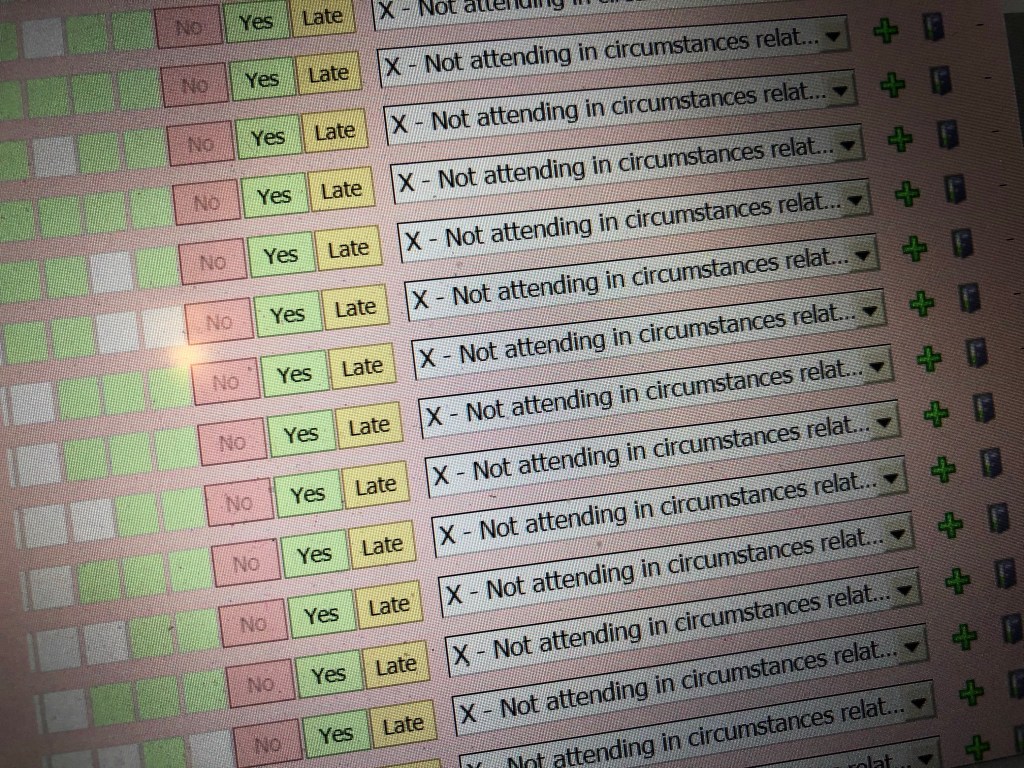
The second lockdown was more tedious than the first: stripped of its novelty, most of us were just waiting for the all-clear. And when we did return, there were so many things to keep an eye on. Which students were on RPDs (Remote Pupil Device) this week? Which ones weren’t (they needed work sent to them instead)? How did you balance your teaching to make sure the ones on the screen were getting your full attention, when the other twenty-odd sitting in the classroom also required the same?

Boarding was even more complicated. Over the course of the year I played teacher, counsellor, test-and-tracer, secretary, waiter, cook and delivery boy. I donned plastic gloves, apron and a face shield and took temperatures with a gun-shaped thermal detector. I took my isolators for walks – codenamed “fresh air” – after putting the others to bed, so there was no risk of them contaminating others. More than once I wondered what this boarding school malarkey would be like without all the myriad responsibilities that living with Covid thrust upon us all.


September 2022 began on a much more hopeful footing. Many of the previous year’s trials remained, such as the boarders’ test-to-fly hurdles and the itinerant disappearance of this or that student from the classroom (for a period of no fewer than 14 days – then 9, then 3). However, as winter turned to spring and a third national lockdown looked about as likely as a white Christmas, we breathed a collective sigh of relief. The jabs had done their job – or rather, the moral panic had abated with the knowledge that more than half the nation was now triple-vaccinated against the menace. Covid became a cold: more of a nuisance than a threat.


If truth be told, I’ve probably forgotten many of the day-to-day details. Things have changed so much over the last two years. With school exams now back in full swing, I’d even go so far as to say that it’s only in the last three weeks or so that things have finally returned to normal – whatever that was.

Over the last week I’ve been asked to support no fewer than three overseas school trips planned for the next academic year. This week alone we bring the summer half term to a close with a practice expedition for the Duke of Edinburgh students, a summer concert in the Abbey, our first Sports Day in three years and a Speech Day that we’ll be able to attend in person, rather than in tutor groups via a Google Meet link. It’s taken a long time, but in the grand scheme of viruses and plagues and diseases, we’ve bounced back incredibly quickly.

I had a great time today standing in as a very willing target in the “Throw a Sponge at the Teacher” stall at the Sixth Form dog show, but more than anything else, I was over the moon to see so many students, staff and parents back on site, mask-free, mingling as though the last two years never happened. Fear did not get the better of us, and we have come out the other end smiling.

I’d still recommend John Christopher’s novel for a dose of reality, if only to cancel out the hubris high I’m feeling right now – because his message is no less relevant now than it was over sixty years ago – or even two years ago:

The scientists have never failed us yet. We shall never really believe they will until they do.

John Christopher, The Death of Grass

Alpha Girls and Beta Men on the 13:07

London Bridge is quietly buzzing. Iโ€™m halfway through sandwich two of my Boots meal deal and watching commuters come and go beyond the glass. I canโ€™t see many face masks anymore. The only masks Iโ€™ve seen in three minutes were worn by a couple of Asian women who got off the Gatwick train. To look around now, you might be forgiven for thinking the crisis is over. I wonder whether we eventually shrugged off the great plague with the same British phlegm.

Two twenty-somethings on the next aisle crack open a thin-tin of strawberry daiquiri and discuss the โ€œrightโ€ way to shake a cocktail. A sweet synthetic hint of something that might once have been strawberry permeates the carriage for a few seconds, somewhere between the strength of a spring flowerbed and a subway urinal. A trendy man in dark glasses phases in and out of sleep a few seats along. A made-up mum scrolls through her Zara app and her daughter waves goodbye to London Town.

Graffiti lines the tracks. It daubs itself on every bridge, every sign and lamp post, every standing stone. Tags and words and call-signs in silver and black that make no sense to me, but mean something to someone, somewhere. Preek. Eo. Prydz. Busta. Cosa. DGMan. Looper. You never see them in the act, but the aerosol artists must work throughout the year, like Reebok-wearing shoemaker-elves.

The conversation shifts. The daiquiri girls discuss their thoughts about their respective partners and the foibles of men. โ€œDonโ€™t forget him, just think of him as, you know, that was a shiny boy you dated for a while,โ€™; โ€œHe said that being in love is more important than being right, and that just didnโ€™t sit with me, you know?โ€; โ€œMm yeah, that does sound a bit intense,โ€; โ€œI just want to be in control all the time,โ€; โ€œMe too!โ€

A yuppie asked to take the seat next to me on the train up last night. I noticed his face fallen slightly – that slight tightening of the jaw that I think is called emotional leakage in psychological circles. Perhaps I saw in it what I wanted to see, or perhaps I just saw a face I know too well. He was drafting a message in Notes to one โ€œAlissa Bumbleโ€. He struggled with one sentence, writing, erasing and re-writing the same words: โ€œthank you for being honest with meโ€. His jaw twitched and he stared through his phone to the floor and into the empty space beyond.

In four months of experimenting with Bumble and itโ€™s kin Iโ€™m more or less resolved to pull the plug at the end of the month. It was worth a shot, but I feel that yuppieโ€™s frustration on my own level: itโ€™s a soul-sapping task at best. Iโ€™ve seen that same quiet exasperation in the faces of many a young Tantalus on the train, now that I recognise that swiping gesture for what it means and read it like a book whenever I see it. Apples bobbing near, but always out of reach.

These social networking sites seem one and the same. One goes into the water like a fisherman and, though you could be sure you felt a tug on the line here or there, when you start to draw in the net you find your hands are empty. Maybe it was a missed encounter, or maybe it was a capricious twist of the algorithm, clamouring for your attention – and your custom. They play you like a lyre; Apollo in Dianaโ€™s hands. Even those connections you thought youโ€™d made tend to disappear like so much dust in your hand. Again and again itโ€™s the same hurdle online as it is in truth. Ambition gets in the way. Ambition for work and ambition for looks. Itโ€™s a game for the beautiful and the mirror never lies, and for somebody who would rather share stories than photos, the current of the online dating world flows like the Gibraltar Strait: close, tantalisingly so, but vicious and unforgiving. Itโ€™s been an interesting experiment, but itโ€™s not for me.

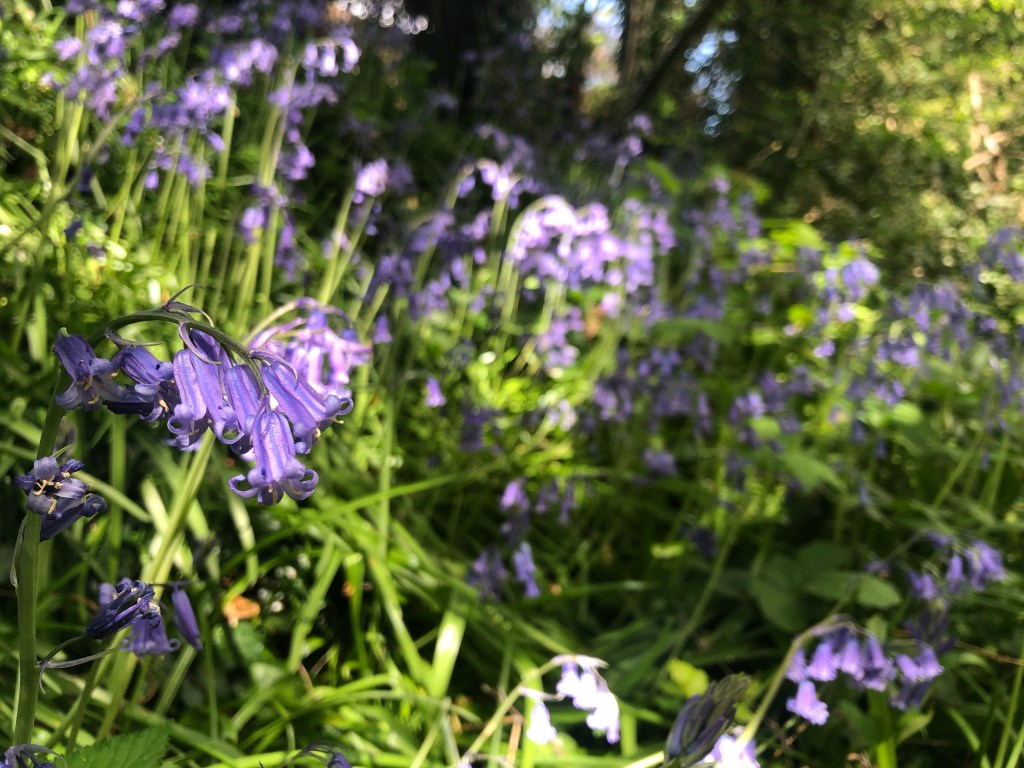
The sun is shining on Crawley Town. A nuthatch twirrups from the canopy and the wind whispers through the alder trees. A robin is singing as the clouds roll in. The bluebells are out at last and a walk home through the woods is the best therapy nature can provide, especially when it rides off the back of a night spent in the company of such honest and kind-hearted friends. The world has been good to me.

Time, I think, for a spring clean. First of the flat, then of the heart. BB x
White Hart

This time tomorrow I will be in Venice, hopefully enjoying una cena veneta with a few fellow travelers, but more likely getting some rest from a busy day on the road (and a 4.30am start). So, as is tradition, I went for a walk in the countryside to bid adieu – or even addio – to the England I love, as it will be almost a fortnight before I return to this island.

I originally meant to get a breath of fresh air and nothing more, having spent most of the day inside, packing and preparing. But the darkness between the trees in the dying light of the evening pulled me in, so I decided to take an alternative route home through the forest.

Thereโ€™s something intensely magical about walking in a forest after sunset. For some reason itโ€™s never given me the shivers – at least, not if we donโ€™t count that frightful wild camping episode I wrote about a couple of months back. With the light failing with every second, your sense of hearing intensifies: the crunching leaves beneath your feet crackle like a bonfire, and the alarm calls of blackbirds echo through the trees like klaxons.

If you stop and stand still for a moment, though, youโ€™ll hear other sounds. The rustle of movement in the undergrowth. The drumroll wingbeat of a cock pheasant after his cry. The distant hoot of an owl. The footsteps of deer, not too far away.

I came across the herd in their usual clearing, where the poplars grow. I call it the cathedral, because of the way the trees soar into the air in four rows, their branches covering the sky like the vaulted arches of Canterbury. Itโ€™s also blissfully dark here in summer, when the leaves blot out the sun, and I often find the muntjac here. Tonight, the fallow herd were resting between the pillars – until they heard me coming, that is.

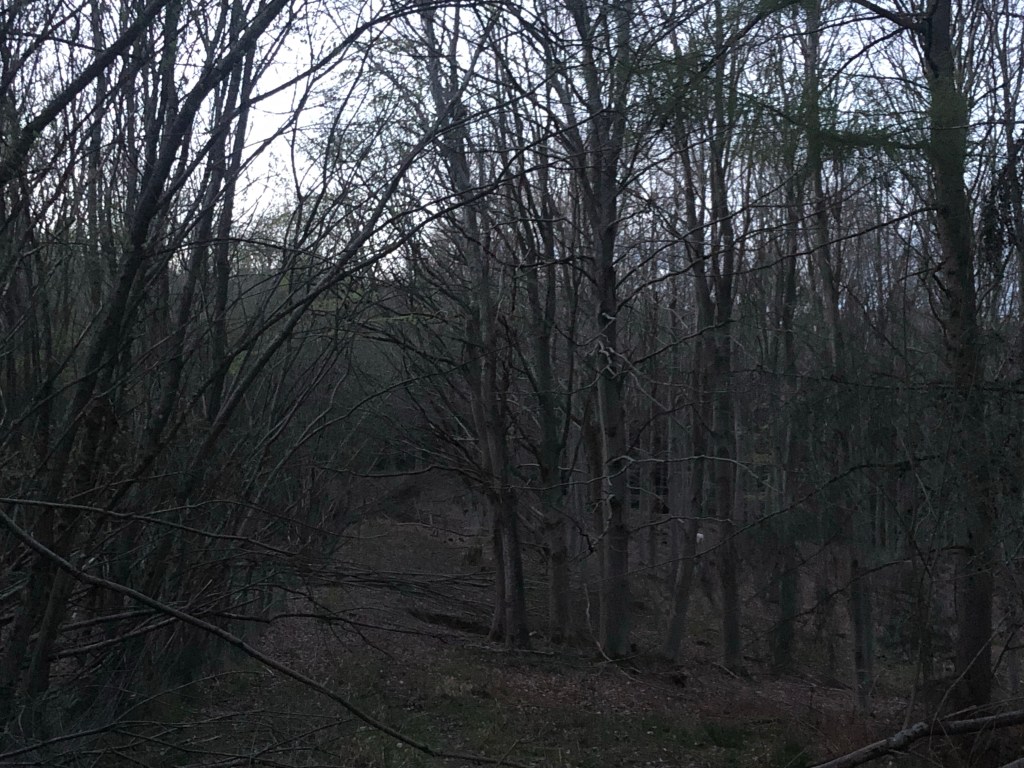
Even with my keen eyesight, the deer did a fantastic job at staying out of sight, though there must have been at least twenty of them, fading seamlessly into the forest floor the moment they stopped moving. Only one remained visible, shining like the morning star: the white hart. Look closely and youโ€™ll see it, even in the shoddy resolution of my phoneโ€™s camera.

In British folklore, white stags are quintessential symbols of quests. Lots of childrenโ€™s books feature white stags that can never be caught. If anything one ought to feel sorry for the beasts, as nature can hardly play a crueller trick than to make a prey animal absolutely incapable of blending in to any environment that isnโ€™t covered in thick snow. All the same, itโ€™s always a sight to see – even if our white heart hasnโ€™t got any antlers to show for it. So I wonโ€™t be following in the footsteps of Saint Eustace and seeing Christ between its antlers. Not that I got close enough to see whether it really was Jesus or a chaffinch perched upon its head – the beast had enough good sense to disappear deeper into the forest as I drew near. Saint Eustace must have been a damned good sneak.

As for my quest, my quest is to rediscover the thrill of the open road once again. With my taxi due to arrive in only a few hoursโ€™ time, I suppose Iโ€™ll know soon enough. BB x
Storm Clouds over Soho

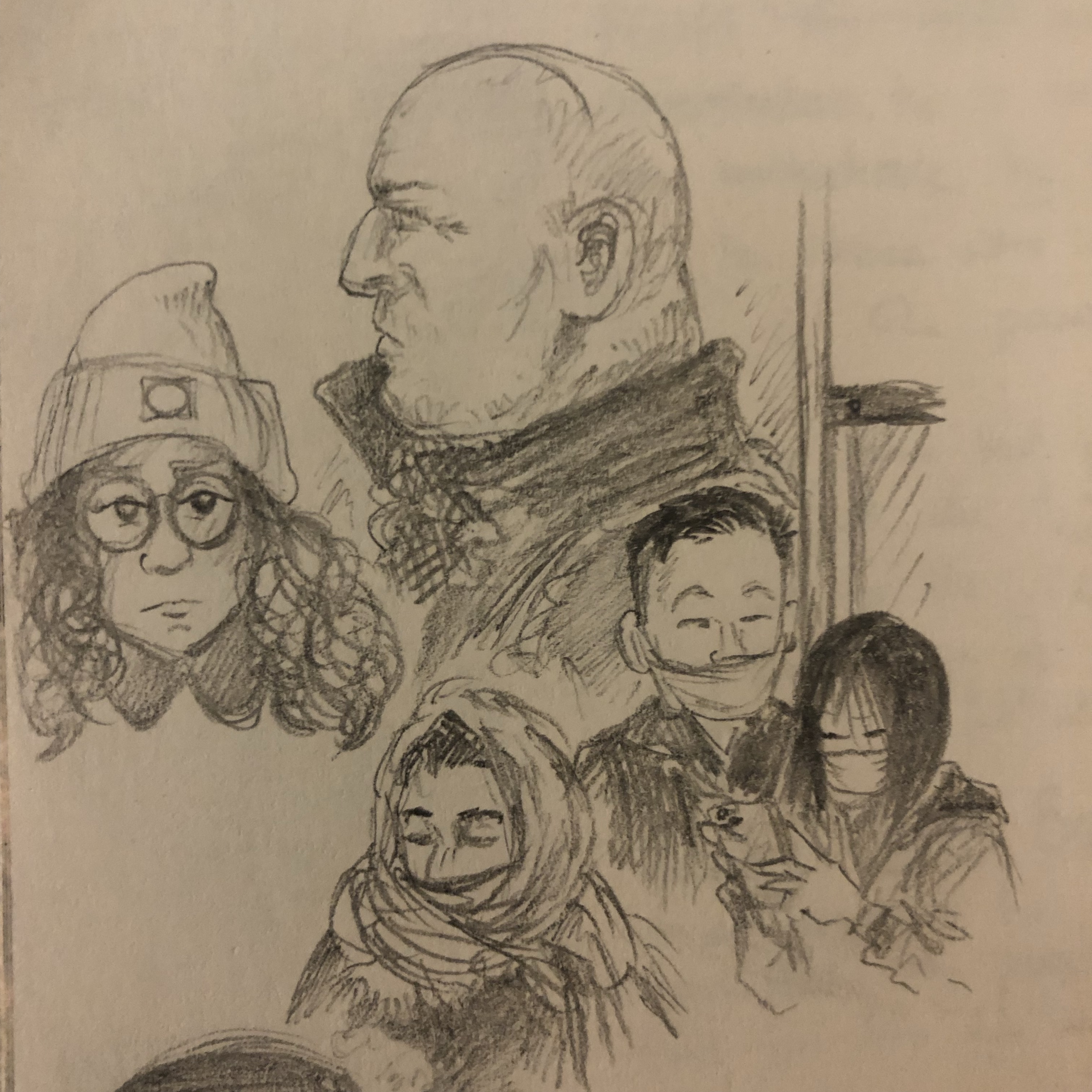
I got the train up to London today with a view to getting my hands on a decent pair of shoes, since I’m told the Italians can be a little snobbish when it comes to standards of dress. With the Northern Line under repairs, it took a little longer to get up to Bloomsbury, so I took a leisurely ride on the Circle Line from Blackfriars and indulged in a favourite pastime: sketching commuters on the Underground. There’s an art to it (no pun intended) – you’ve got to be quick, since most of them only travel a few stops before getting off. And now that face masks are a minority affair, it’s a lot more enjoyable a practice than it was.

Predictably, I got waylaid in Gower Street’s Waterstones en route to the shoe shop. Ever on the hunt for new additions to my Spanish library, I thought I’d do some digging at one of London’s finest bookstores, since it’s been quite a long time since my last visit. I managed to exercise a considerable amount of restraint this time, leaving behind two case studies on the Inquisition from the antiques section in the basement and Minder’s The Struggle for Catalonia… though I’ll be back for that one eventually. Giles Tremlett has brought out a new book on Spain which looks like it will pump out a lot of material I can use with my A Level Spanish students, which is my way of justifying that purchase. The only book I didn’t question was an account of Walter Starkie’s Camino. Starkie wrote so vividly about his journeys as a minstrel across Spain in Spanish Raggle Taggle and peppers his writing with old verses all over the place, so I had to salvage that one.

I wandered down towards Oxford Street in search of a decent pair of shoes, but I couldn’t find anything that jumped off the shelves at me, so I decided to make do what I have (a fine piece of advice at the best of times, which I wantonly ignore whenever I should be near a bookshop) and cut across town back to the river through Soho.

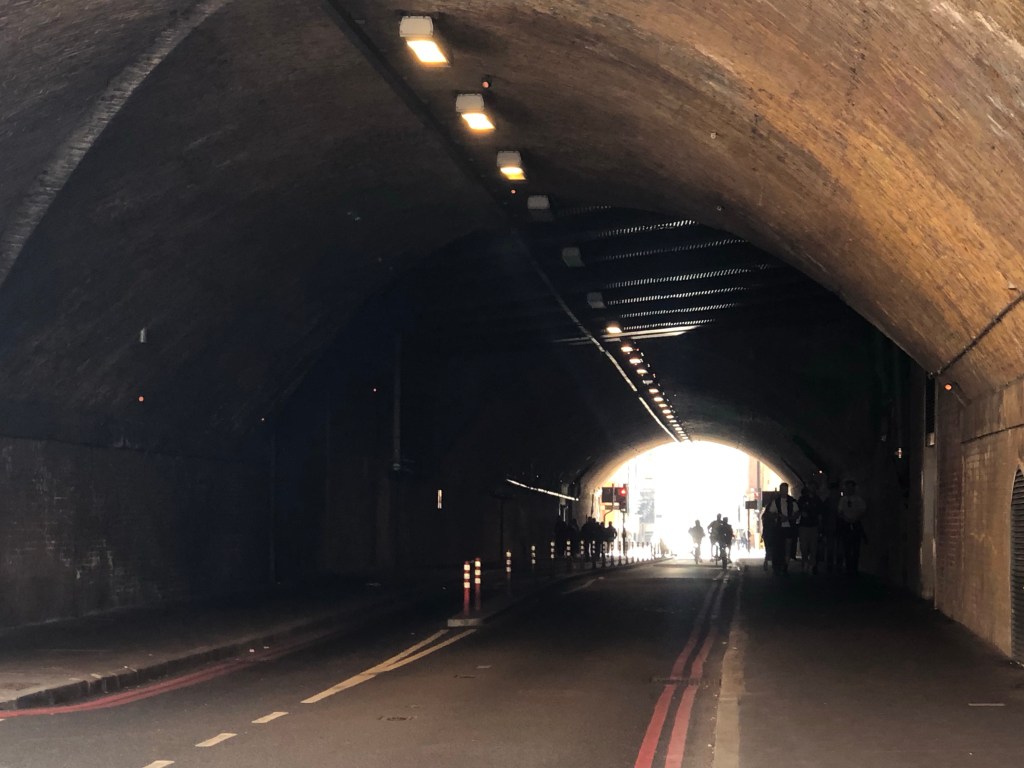
I’ve either forgotten how luridly seedy Soho is, or I haven’t properly explored the place before. What looked like a shortcut led me down a dark alleyway with shady adult stores on either side. The noise of Oxford Street seemed to die in the distance, like the record player in the Waterstones’ basement, stifled into silence by a wall of books… only now by grimy bricks and a mere sliver of sunlight through a gap between the buildings above. I almost collided with a stocky man in a big puffer jacket with a cough came lumbering out of a film store, stuffing something under the sleeve of his coat. Two Arabs stopped talking and gave me a funny look as I passed, clutching my journal in one hand and one strap of my rucksack with the other, humming the tenor line from Ola Gjeilo’s Northern Lights to myself. I guess Soho isn’t on the tourist trail.

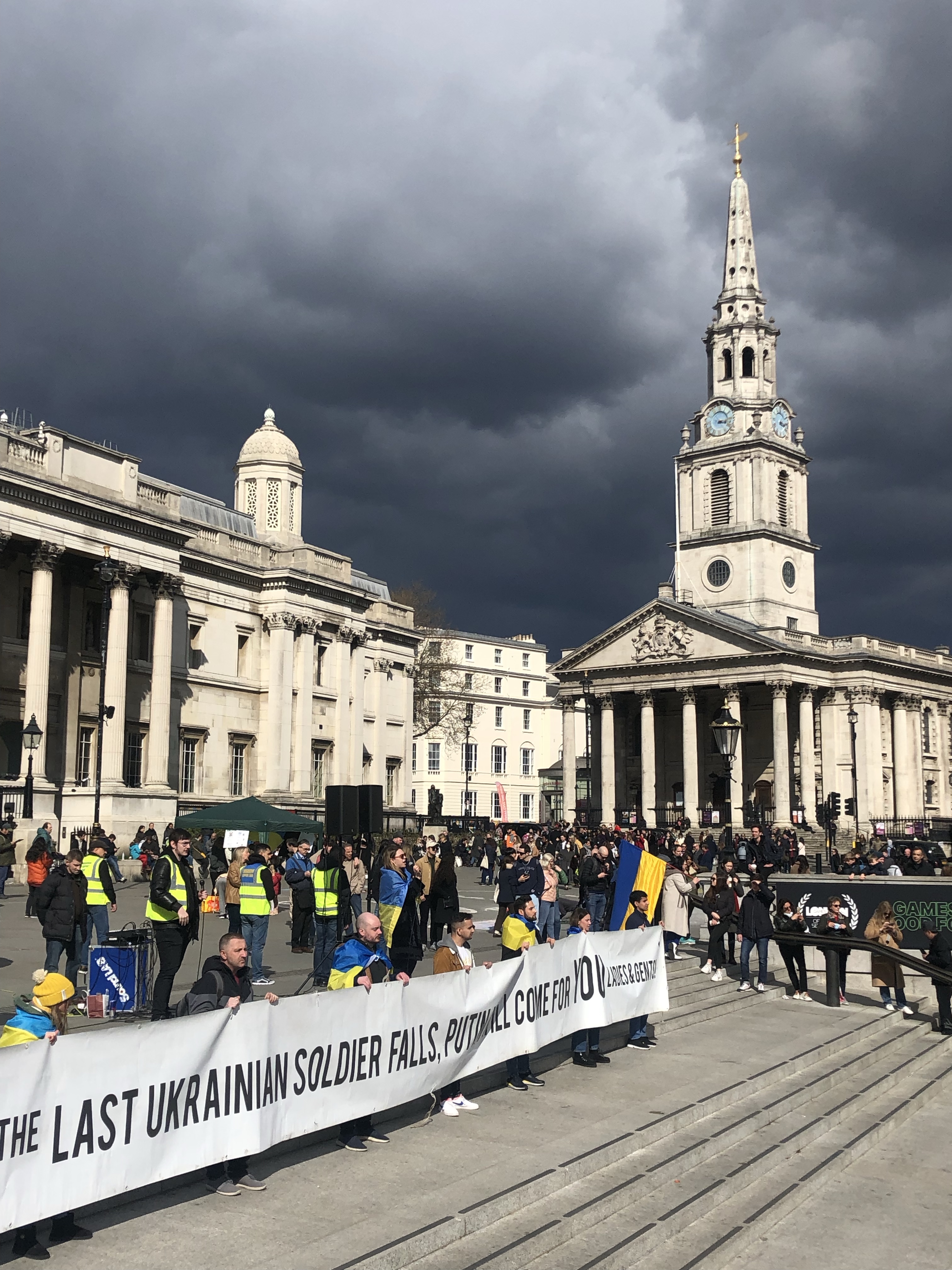
Leaving Soho behind, I wandered through the crowds in Chinatown and came out onto Trafalgar Square, where a large crowd had gathered on the steps. Unsurprisingly, it was a rally against the war in Ukraine. Blue-and-yellow flags fluttered high above the throng, joined here and there by Polish and Hungarian partisans adding their colours to the mast. One woman, the tryzub emblazoned on her cape, stood defiant at the front of the congregation, fist raised in a powerful salute for most of the half-hour I stuck around to watch.

Boycott Russia.
Arm Ukraine.
Stop Putin, stop the war.

Those were the chants, coming around and around before the crowd. The main speaker apologised for the necessity of being so blunt, before decrying the rape of Ukrainian women by Russian forces and the slaughter of its children. An Englishman spoke slightly hesitantly about the need to support Ukraine’s disabled and elderly refugees, and a Ukrainian began to sing a national lament as the sky darkened overhead and the sun faded from sight. I’ll admit I half expected there to be a police van lurked nearby, its officers on standby for any disruption, but I couldn’t find a visible copper for love nor money.

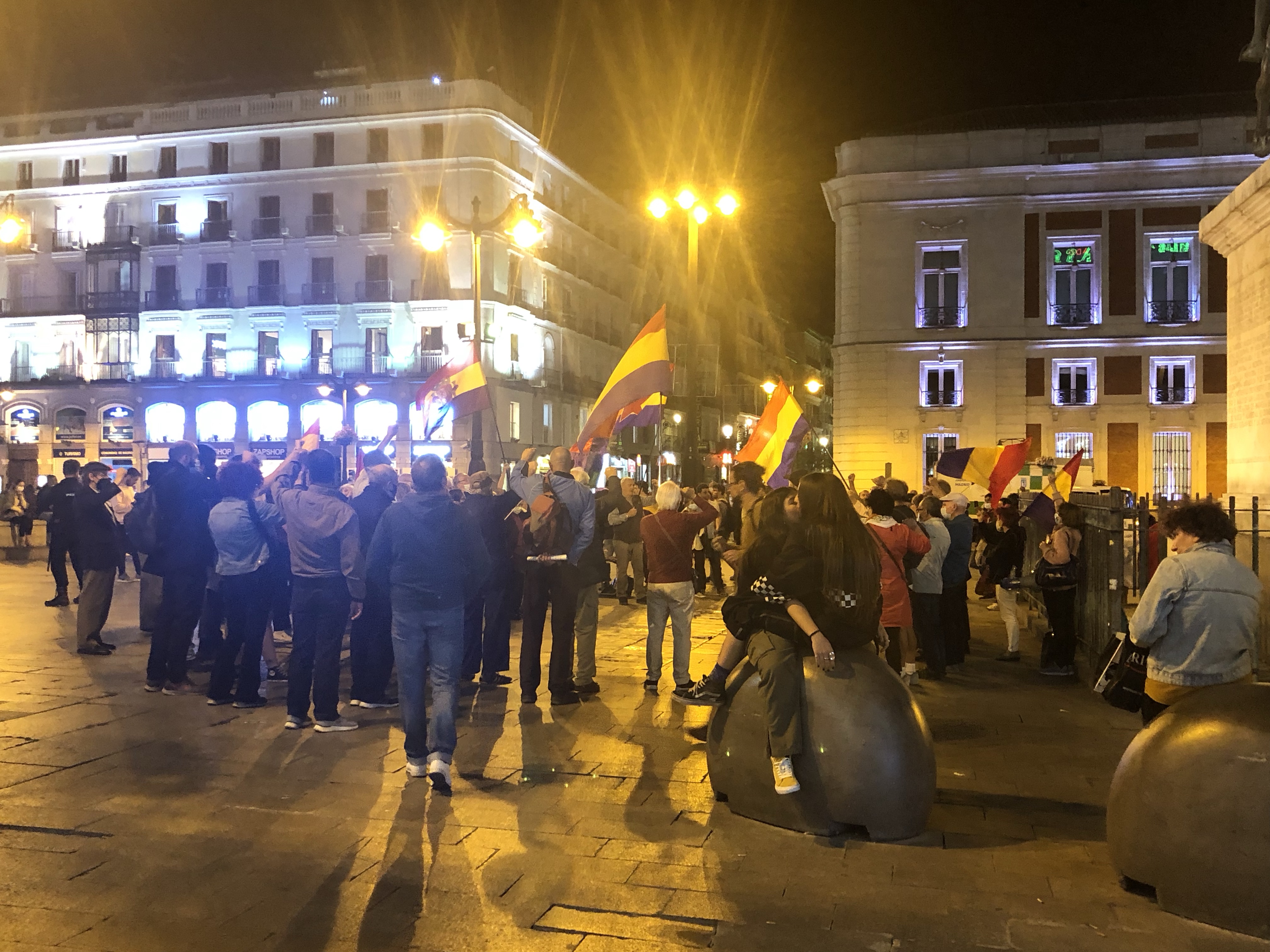
The last time I saw a demonstration like this was back in October in Madrid’s Puerta del Sol, as I walked back to my hostel with one of my cousins. “They’re always here,” he told me, “and so are they,” indicating the loitering policia who hang back just shy of the crowd, silent, hands on their truncheons, watching the Republican flags flying in the night air. The crowd was surprisingly mixed: an old man in a flat cap stood shouting his passionate support in the centre of the throng, while two girls shared an equally passionate and equally political moment on one of the bollards. The policia watched on, silently.

Puerta del Sol, October 2021

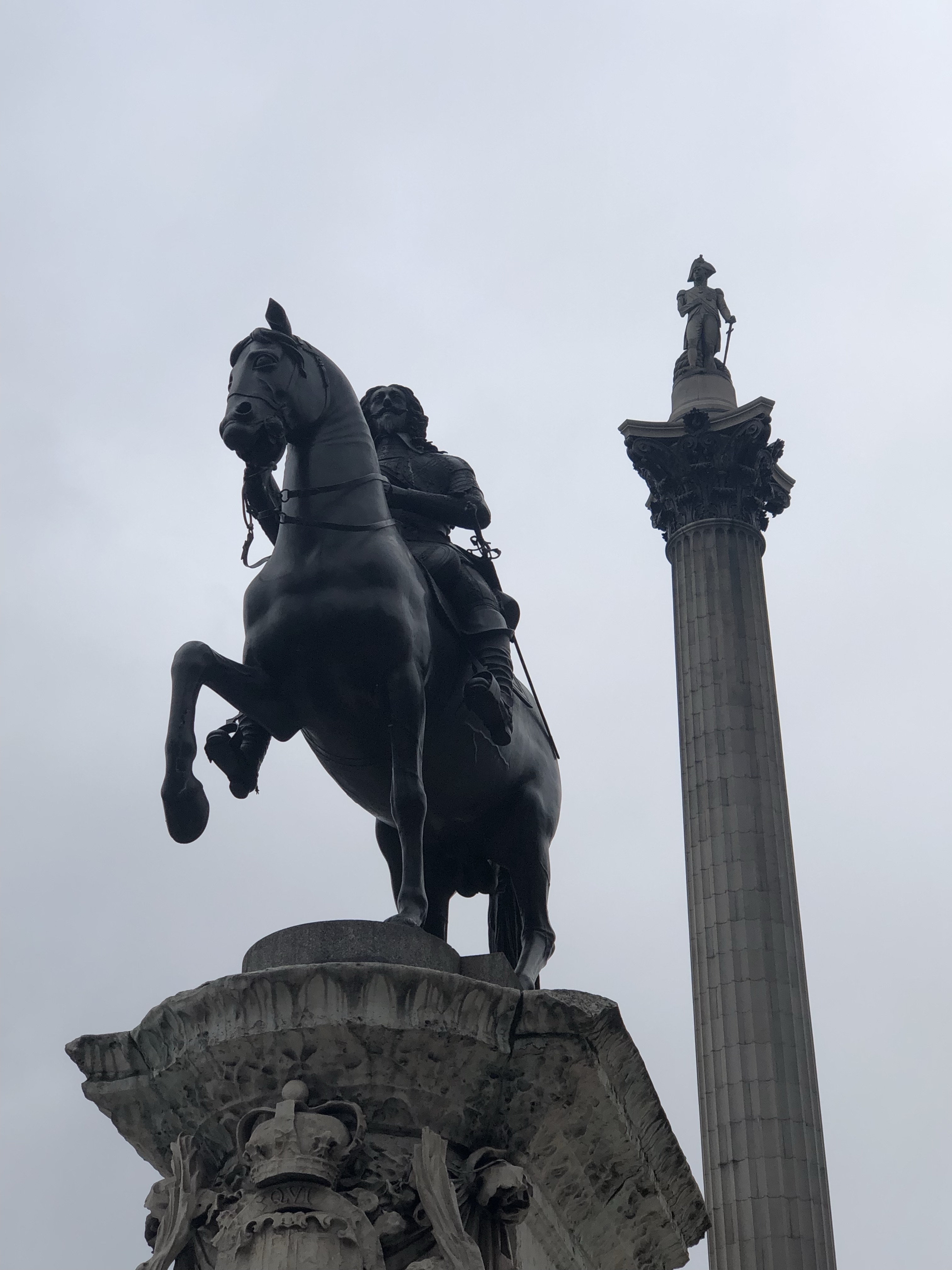
On my way back to the station, I stopped at the traffic lights and looked back to Trafalgar Square. Lord Nelson and a mounted Charles I stared southwards over my head, silhouetted against the clouded sky: two men who got personally involved in European wars and paid a physical price for their efforts. Little wonder, then, that the European powers are so reluctant to send any troops into open battle to defend the Gateway of Europe.

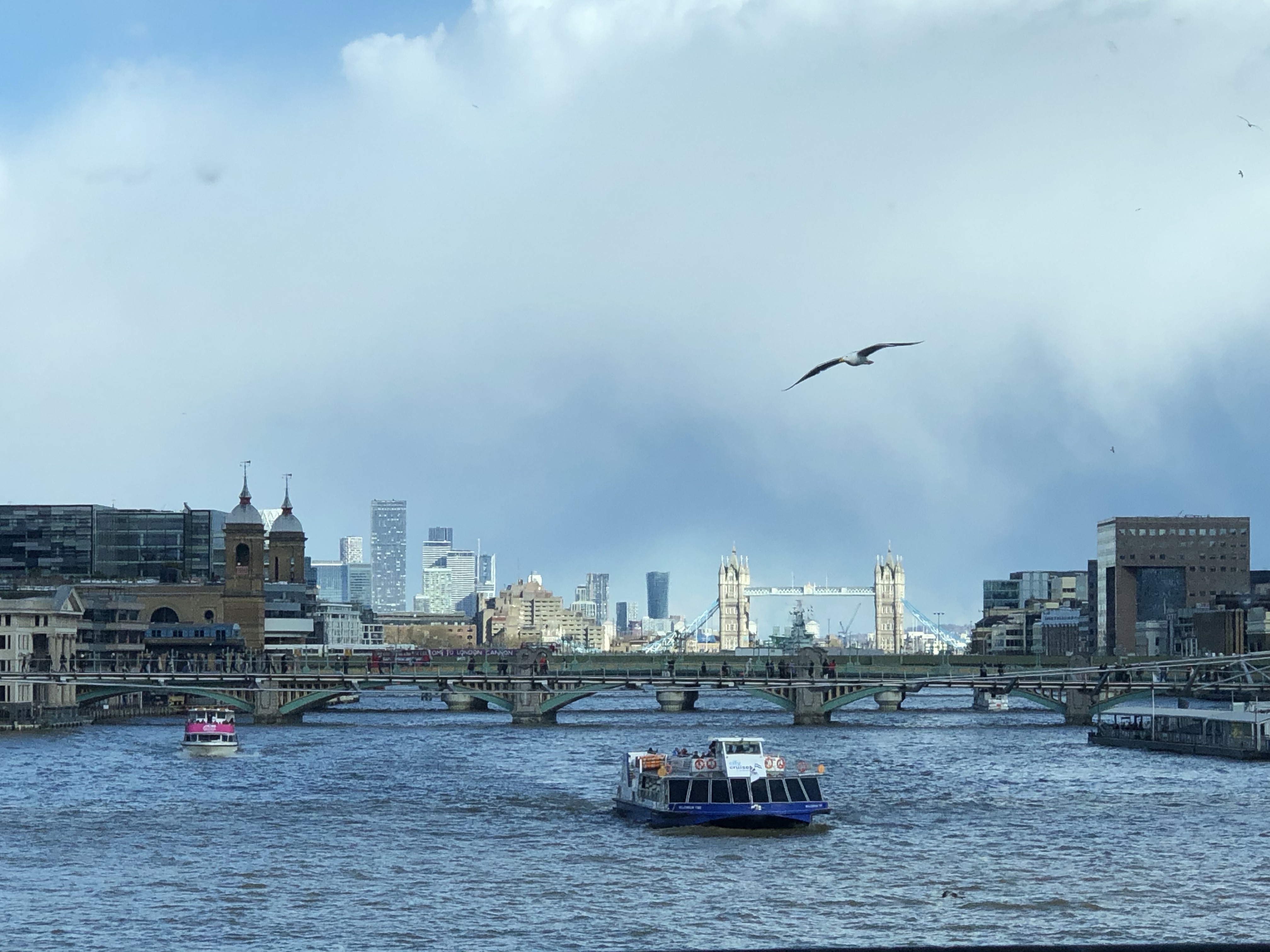
Back at Blackfriars, the rally seemed a world away. I missed the early train by a whisker and had to wait twenty minutes for the next one. A Catalan girl sat on a bench nearby, a red-and-yellow skiing jacket from Cerdanya proudly displaying her winter colours. I instinctively reached for my face, but my usual rojigualda facemask was at home: I’d opted for a less nationalistic face covering today. Away to the east, the sun broke through the clouds over the Thames, lighting up Tower Bridge against the rainclouds rolling in from the south. London seems to go on forever, whatever happens to the rest of the world, and yet it’s Rome that holds the title of the Eternal City. I’m looking forward to seeing it with my own eyes and reading such stories as I can find in its people and its streets. BB x

Seehund

2:45pm, 20th March. I’m sitting on a bench on Brighton’s Palace Pier, sheltering for a moment from the wind. A sign in front of me reads “It’s fun all year on Brighton Pier”. Somewhere down the coast to the east, there’s a few mad folk towelling off after a swim. The sea doesn’t exactly look inviting today. I look down through the slats. The bottle green waters of the Channel heave and swell about the centipede legs of the pier below. I wonder what creatures of the deep might be looking back up at me, besides the silent starfish in the silt.

Two men wander over to the parapet, gazing down at the beachgoers below. One of them watches in silence, nodding occasionally. His companion holds a recording device of some kind in his hand and is whistling a crude but not inaccurate imitation of the gulls. Is he trying to lure them in, perhaps? To what end? I can’t quite make out his game. He keeps it up the whole time, occasionally saying something in Arabic to his companion and chuckling, and then whistling his gull-call again. After a while, they move on, whistling. His friend must have the patience of a saint. You get all sorts in Brighton.

A few seconds later, a herring gull lands on the parapet. It’s not there for long, as a gang of girls in tracksuits race up the aisle towards the gloom of the arcade, screaming and swearing, sending the panicked bird into the air in their wake. Two scavengers in a truck trundle by in the opposite direction, trailing two heavy GLASS ONLY bins behind them. The planks tremble beneath my feet. I imagine, for a moment, the structure collapsing beneath its weight. In slow motion I see the bins rolling over backwards and a cascade of bottles plummeting into the sea below, some of them shattering on the struts of the pier before they hit the water. I have a pretty active imagination.

I move on up the pier, past the booming darkness of the arcade, which still seems to draw in a faithful clientele, despite the mobile lure of pocket entertainment. In fact, I’m actually pleasantly surprised by the absence of phones on the pier – for once, I’ve got mine out more than most as I take notes. Beyond the arcade, I reach a collection of outdoor game stands. Tin Can Alley with a bored-looking brunette in a red shirt waiting for custom. Dolphin Derby with an enthusiastic announcer who wouldn’t look out of place in a pinstripe waistcoat and boater a hundred years back. An Indian family points out across the water talking in a language that isn’t English. A couple walk past, hand in hand, one of them gamine with a grey-tinged ponytail over shaved sides and a nose ring, and her partner robust, black, ripped jeans and winged eyeliner, a rainbow lapel badge pinned to her sleeve. The air is thick with the pungent smells of Brighton: fish batter, candy floss and the distinctive damp tang of weed. The breeze coming in off the sea cancels out one of the three at a time, but not for long.

Behind the Tin Can Alley shack, a huddle of turnstones get some shut-eye. These often hyperactive creatures look out of place when static, and one wonders how they manage to get any rest at all with the thumping bass from the fairground rides at the end of the pier. It almost looks as though there’s a physical pecking order to the clan, and the ones at the bottom aren’t having much luck, hopping from strut to strut with remarkable dexterity. A passer-by sees what I’m looking at and stops to take a few photographs on her phone. The turnstones don’t seem to be fazed by me, or her, or any of this. After all, it’s fun all year on Brighton Pier. They’re probably used to it.

Nearer the fairground, an old gypsy-cart sits awkwardly beside the parapet, offering Tarot readings for a modest sum. Career, love, happiness and luck mingle strangely with Nestle, Astra Zeneca and Cornhill Insurance plc. I remember finding an abandoned gypsy-cart in the woods once when I was a child, its richly-painted woodwork fighting a losing battle with the forest’s silent army of moss, lichen and brambles. The gitanos in Tierra de Barros had no such fancies, eking out a living from beat-up cars and shabby tents. There is an old song of theirs I have consigned in part to memory, telling of their love for the Guadiana River, that came to mind:

The region of Chal was our dear native soil,
Where in fullness of pleasure we lived without toil,
Til dispersed through all lands ’twas our fortune to be,
Our steeds, Guadiana, must now drink of thee.

Gypsy ballad, translated by George Borrow (The Zincali, 1841)

I doubt the gitanos camped outside Villafranca de los Barros would know the song. It comes from an older world, much like the incongruous cart parked at the end of Palace Pier.

The fairground plies a busy trade for a chill-if-sunny Sunday in March. I feel like I’m walking through a childhood I haven’t known in twenty years, not since the distant summers in Dymchurch. Tea cups, log flumes and merry-go-rounds. A helter-skelter – see the Isle of Wight on a clear day! – painted up like a stick of Brighton Rock (or maybe the sticks are painted after the fashion of the fair). The static gilded horses on the merry-go-round look no less terrifying than they did when I was a boy. The ghost train reels in customers one at a time, lethargic, a chameleon in the cold. A father explains the “this high to ride” sign to his son, who is just a little too short for any of the attractions. I get the impression I’m snooping a little too much and wander away from the noise.

There’s a quiet spot behind one of the rides, looking out towards the mouldering wreck of the old pier. Seen from its sister with the city behind it, the Western Pier looks small and unimpressive. From the shore it looks a little more mysterious, where its mangled skeleton claws at the horizon like the blackened bones of a giant, mechanical whale, picked clean by the cormorants that sit on its ancient struts. In their oil-black funeral garb, they might as well be an extension of the wreckage. Brighton’s gargoyles.

Something bobs in the water closer to the Palace Pier, and without looking through any lens it looks too misshapen to be a buoy. It turns for a moment revealing long whiskers and those baleful black eyes, before sinking beneath the waves. I’ve been scanning the water all morning for that sight, and now I’ve found one, I can’t let the moment pass me by. I count the seconds. One, two, three…

Seals are such mesmerising creatures to watch. It could be their friendly faces, the way they seem genuinely curious about the world above the waves. For me, it’s all about their eyes. There are few creatures out there with eyes like a seal’s: enormous, black orbs that seem to see forever. You only see the whites of a seal’s eye when they’re really close, otherwise you might as well be looking into the dull glaze of a shard of volcanic glass. I used to watch them bobbing about in the waves from the white cliffs when I was a teenager, and once or twice I was lucky enough to see them closer still, lounging about on the mudflats of the Stour Estuary and snorting their indignation at the noisy ferry-boat off the Farne Islands.

Those were greys: hulking, dog-like beasts of considerable size, especially the bulls who came charging after the boat. It’s not hard to see why so many languages label the creatures sea-dogs, or sea-calfs, or even sea-cats. But unless you’re in the water with them, all you see is the inquisitive face, bobbing above the surface. The seal comes into its own beneath the waves. I should love to see one in its murky underwater kingdom one day.

Some creatures command the eye. The ghostly silence of the male hen harrier, or the aerial mastery of the kite. The sunken eyes of the fox and the stern gaze of the stag. I once sat in my bedroom poring over bird guides of Spain and the Mediterranean, bemoaning how drab our world was by comparison. With age comes understanding, I suppose. If the seal hadn’t drifted further and further out to sea, I could have watched for hours.

I spent most of my teenage years growing up on the pebbled shores of this same stretch of ocean. The salt breeze and yellow-grey skies of the Channel are written into my skin like age-lines. I should make a point of coming down to the coast more often in future, if not to blast the cobwebs of work aside with a healthy salt spray, then to find the writing material I’m always searching for. If I can find my way to a quieter spot than Brighton, I might even be able to sidestep the bookshops that always draw me in. Fortunately, I’ve been such a loyal customer to Waterstones over the last couple of months that I was able to walk away from today’s haul for a steal of a price. Just don’t ask how many books I bought – or how big the discount was. It’s all for a good cause. I’ll keep telling myself that. BB x

For the Sport of Your Own Crows

My phone is telling me I walked some twenty-five kilometres today. After trekking to Three Bridges Station there and back on foot, various perambulations through Reading and London and walking the Combe Gibbet Circular, I can’t say I’m surprised. What I can say is that I bloody well ought to learn to drive, because it’s frankly ridiculous how much of the world I could be exploring at weekends which is just too far away to reach on foot. Dammit.

Fortune favours the bold, which is another way of saying if you want to get lucky, you have to make your own luck. Fortunately, today’s little outing got off to a cracking start with luck knocking on my door. With the kids off site this weekend, the grounds were eerily quiet, even for a Sunday morning. I guess that’s why one of the forest’s more secretive residents made it all the way up onto the main drive this morning.

Muntjac deer are such fascinating little creatures. They keep some of our boys up at night with their barking in the summer, and unlike some deer species they’re quite fearless if you cross paths with one in the wild: I’ve had what can only be called a stand-off with a buck in the woods on my way into town more than once (and probably with the same individual). This one didn’t hang around for long, and if I’d not happened to look out of the window as I was getting dressed I’d probably have missed it.

I managed to make it out into the windswept wilds of Berkshire this weekend. I haven’t been up that way since a school retreat to Daoui a few years ago, and I remember feeling spellbound by the place then (well, I was certainly spellbound by the evening prayers, that much is true). On the way, signs that the year is very much on the turn were everywhere. Masses of frogspawn in the usual spots in the forest. Crocuses pushing up through the bracken as the snowdrops wilt away. The explosive chattering of a roving band of siskins in the treetops. And, Berkshire being Berkshire, red kites absolutely everywhere. I swear I saw more kites than pigeons today.

Climbing high up onto the downs above the hamlet of Inkpen, I even heard my first skylark of the year, merrily singing its heart out as it soared skywards. I haven’t seen any swallows or martins yet, but spring is certainly well on the way.

Standing tall upon the summit of Inkpen Beacon is a lonely-looking structure that can be seen for miles around: the Combe Gibbet. As we climbed towards it, my dear friend and learned guide Kate (one half of the dynamic duo that were Langlesby Travels) regaled me with its dark history: as the story goes, it was built in the year 1676 for the hanging of local murderers George Bromham and Dorothy Newman after the double murder of Bromham’s wife and son, the only obstacles to their unrequited love. For Bromham’s infidelity and the brutality of their actions – they supposedly bludgeoned the mother and child to death before hiding the bodies in a nearby dew pond – they were hanged by the neck in Winchester and their bodies displayed high upon the hilltop for all to see. Apparently the sight could be seen from “several counties”, which seems a bit of a stretch, though it really did feel like you were on top of the world up there on Inkpen Beacon. It’s always an incredible feeling when you’re looking down on the raptors wheeling through the air below.

I was particularly keen to see the gibbet because I’m currently looking into the Great Plague of Seville and the curious habits of the plague doctors of the 17th century. There – I’m sure you’ve got that image in your head already: the broad-rimmed hat, the long, heavy black robes, leather gloves and – of course – the sinister, raven-beaked mask. It’s hardly surprising that the plague doctor became associated with despair. I’ve read somewhere that when Venice was devastated by the plague, the bird-like plague doctors were quite a common sight along its canals. I’ll have to do some exploring to that effect when I’m out there in just over a month’s time.

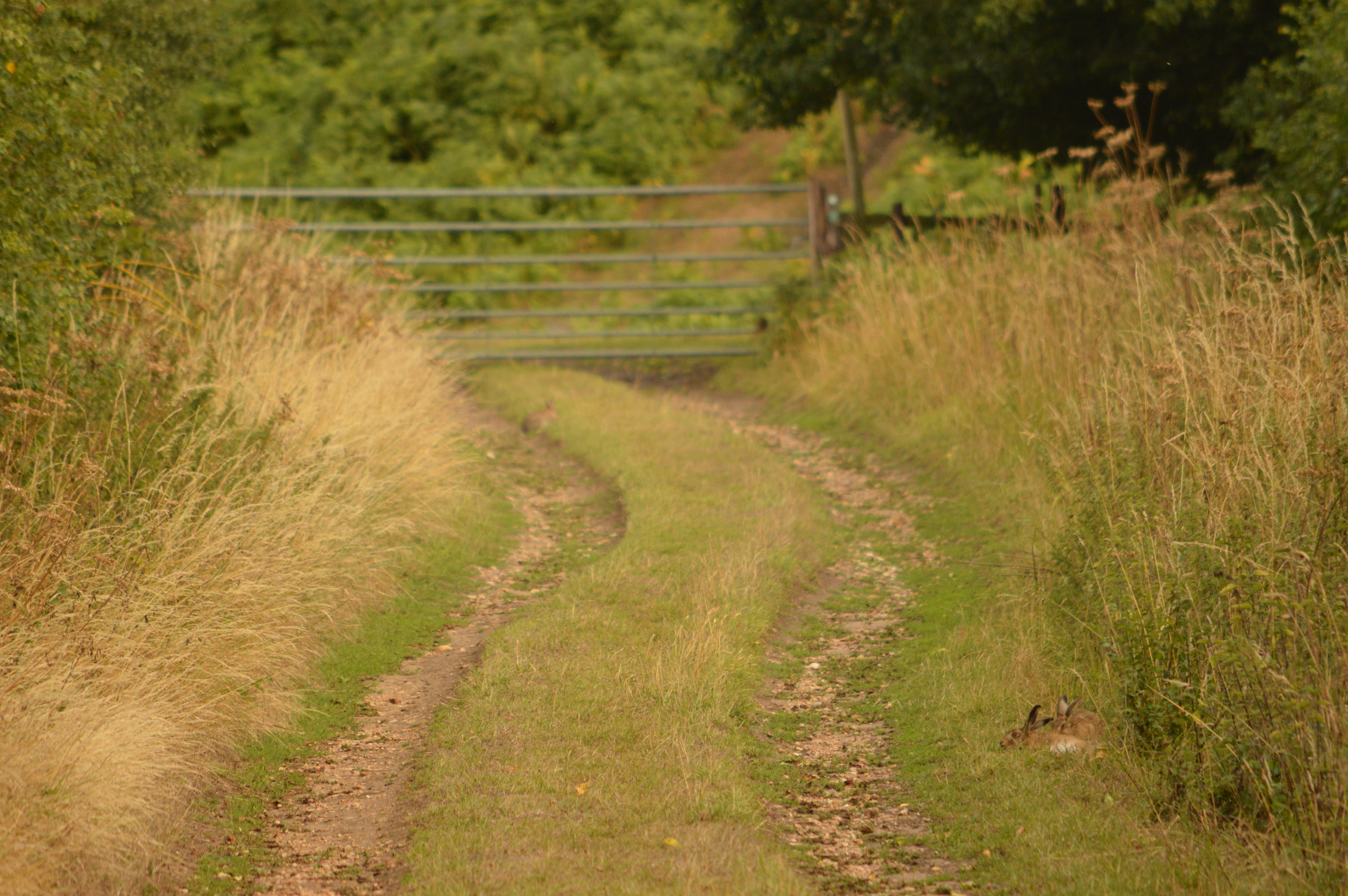
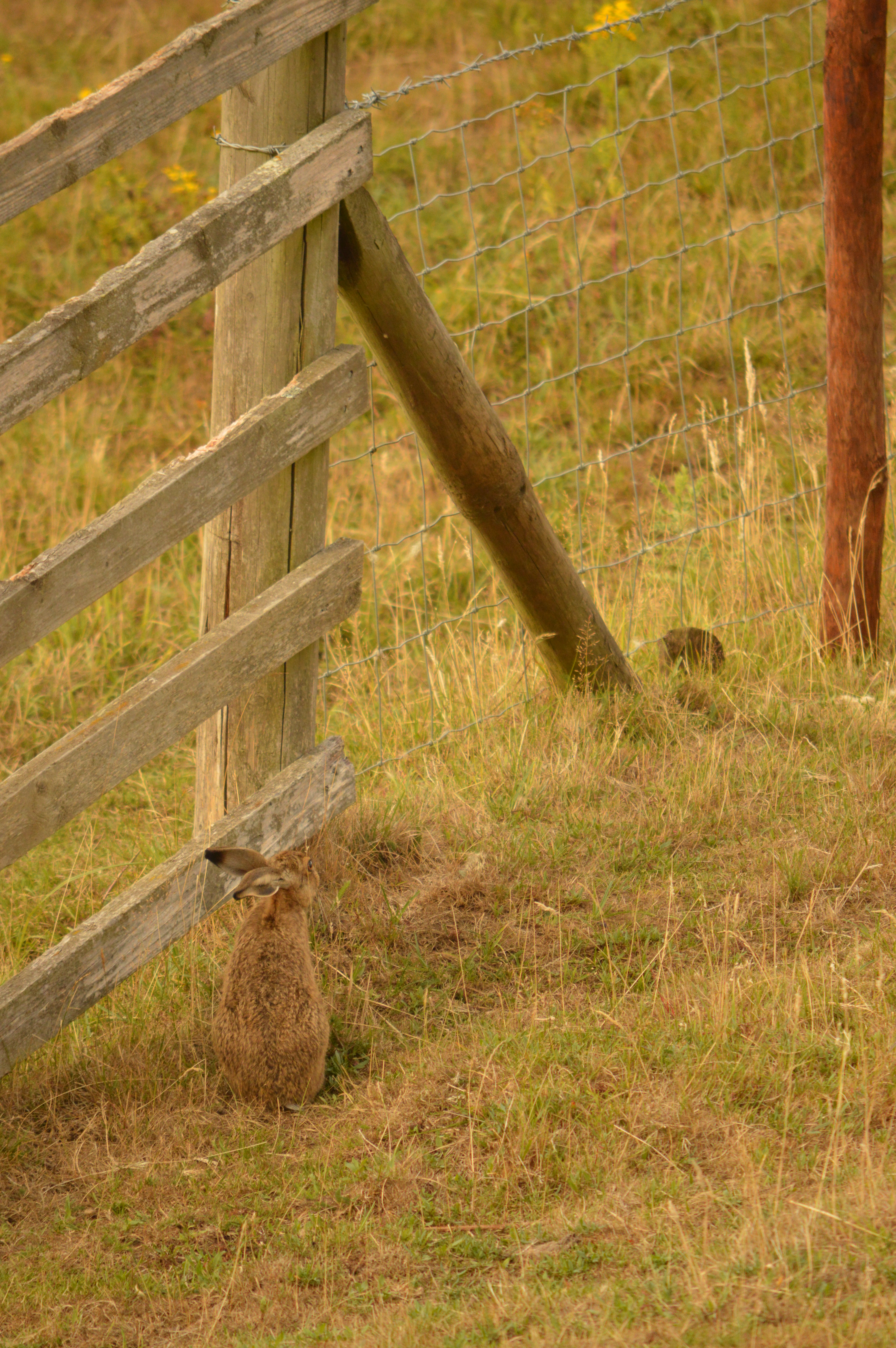
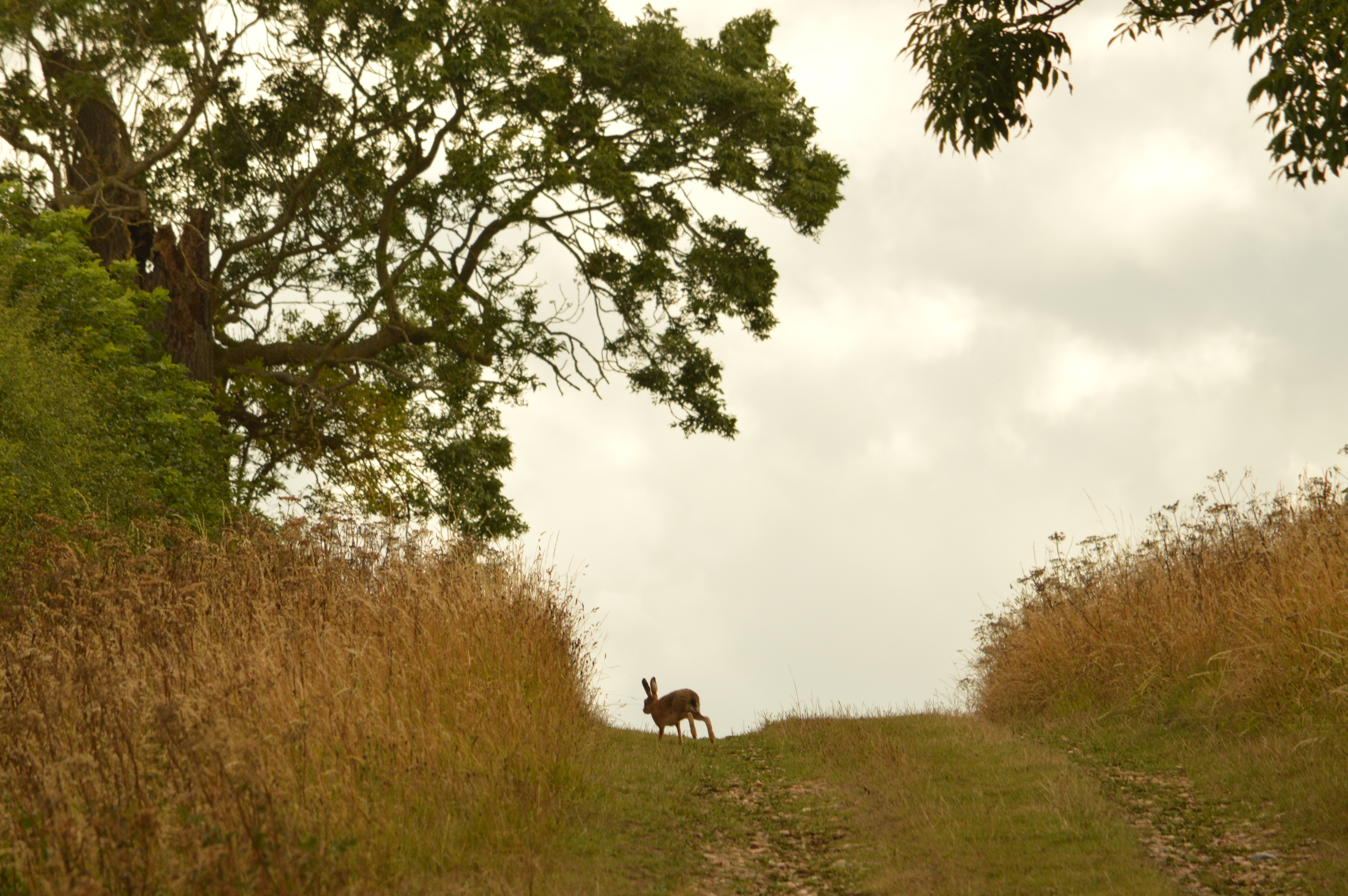
We were followed on the way down the Beacon by one of the Combe’s kites, wheeling lazily in the spring sunshine, its forked tail steering it effortlessly over our heads without a single wingbeat. I’ve always been in awe of kites. If it weren’t for the utter majesty of the griffon vulture, I might well hold the kite close to my heart as my favourite bird of all. It’s certainly a bird that’s been a part of my life for years, from the black kites of the Raya Real to the termite-hunting horde that haunted the Bishop’s Residence in Lira, Uganda, almost a decade ago. A solitary raven drifted mightily on the wind on the way home, a couple of hares skidded up the banks and out of sight as we passed, and a bullfinch was singing its mournful song from the hedgerow as we reached Kate’s car. Berkshire’s an expensive part of the UK to live for various reasons, but I never knew just how healthily wild it was until today. I guess the downs I can see from my window are every bit as breath-taking, if I could only reach them somehow. Still – that’s something to look forward to, I suppose.

Walking home in the dark, I almost had a conversation with a fox. A vixen, I think it was – it didn’t have that long face with the sunken eyes that dog foxes do. She froze in the middle of the track like wild things sometimes do, and if a man hadn’t come by walking his dog, I could have sworn we might have gone on looking at each other. Dogs and foxes have something of a chequered past, though, and at the first sound of the approaching mutt it was off into the verge and gone without a trace.

Today was a wild day, and wild days are always easy to write about when you’re as big a nature nut as I am. Write what you know, I suppose. Now if only there weren’t already a famous nature writer called BB, I might just squeeze my way into that very cramped market. Since when was BB short for Denys Watkins-Pitchford, anyway? BB x