The Devil’s Cauldron

The white IKEA bookcase in the corner of my bedroom holds my most treasured memories: cherished books from my childhood, photo albums fit to bursting and hand-written diaries that stretch back as far as 2012. One of these last, spineless and soft around the edges, features a Van der Grinten map of the world: an eighteenth birthday present from a friend. It contains the tales of my adventures in Uganda, the first teaching post I ever held. As I open it, a handful of photos fall out: a vulture, a much younger me in Kyambura Gorge and the misty mountains of Bwindi Impenetrable Forest. Memories come flooding back. Come with me down memory lane, and I’ll take you on one of the most breath-taking adventures I ever made.


19th September 2012

According to my diary, it was an early start. My alarm clock woke me up at 3am, and while I was dressed and ready to go, my companions were a little slower on the uptake. Can you blame them? I sat on the concrete porch of the little house in the garden of the Bishop’s residence, watching the stars. There is no night quite like the African night. It is a deeper black than you can possibly imagine in the West: enlightenment has left our world overlit. Without streetlights to pollute the sky, the heavens sparkle with an ethereal light that has not been seen in most of Europe for over a century. I counted more than twenty shooting stars before our driver arrived and whisked us away into the dawn.

The Langton Four – that was what they called us. We were the first student representatives to visit our partner school in Boroboro in the once troubled north of Uganda. There had been staff exchanges in the past, but with the Lord’s Resistance Army waging a private war in the region for the last two decades, the idea of any kind of student involvement was limited to non-uniform days until my final year at school. When the opportunity suddenly presented itself, I practically bit their arm off. I read the required BBC article on David Cameron’s threat to withdraw aid to Uganda over and over again, and I turned up to my interview with a portfolio of printed photographs (which I still have). I suppose I was hoping to angle my way in as the team journalist. The team was chosen on the night of the interviews and my name was among the four. I still think of it as one of the happiest nights of my life.

The sky began to glow red around 6.40am, and the sun was up moments later. African sunrises really are like the opening to Disney’s The Lion King – that is, visibly quick. Maddie got out for a run in the morning light – we had been on the road for two hours already – before we reached the town of Purongo, a collection of red-walled houses and small businesses on the northern edge of Murchison Falls National Park. This was our Ugandan “welcome wagon”, as it were: a trip to Uganda’s first national park at the end of our first week at the school. Getting in was complicated by the print-date of my US dollars – the Uganda Wildlife Authority (UWA) had taken the decision to refuse any dollars printed before 1981 – but on this occasion they let it slide. We were joined by Robert, one of the park rangers, which brought the total in the car up to seven. I drew the short straw and ended up on the left-side of the middle row, landing a window seat that looked straight into the rising sun.

We learned within the first half-hour of our safari that it was wiser to keep the windows closed: the tsetse flies that share a home with Africa’s megafauna have a taste for human blood, when they can get it. Forget the harmless bluebottles that hurl themselves at your window: tsetse flies are another beast entirely. They’re loud, they have a bite like a needle, and they’re very hard to kill once they get into the car, despite their size, which is considerable. They clung to the glass like remoras for most of the morning, just waiting for somebody to wind down the window for air.

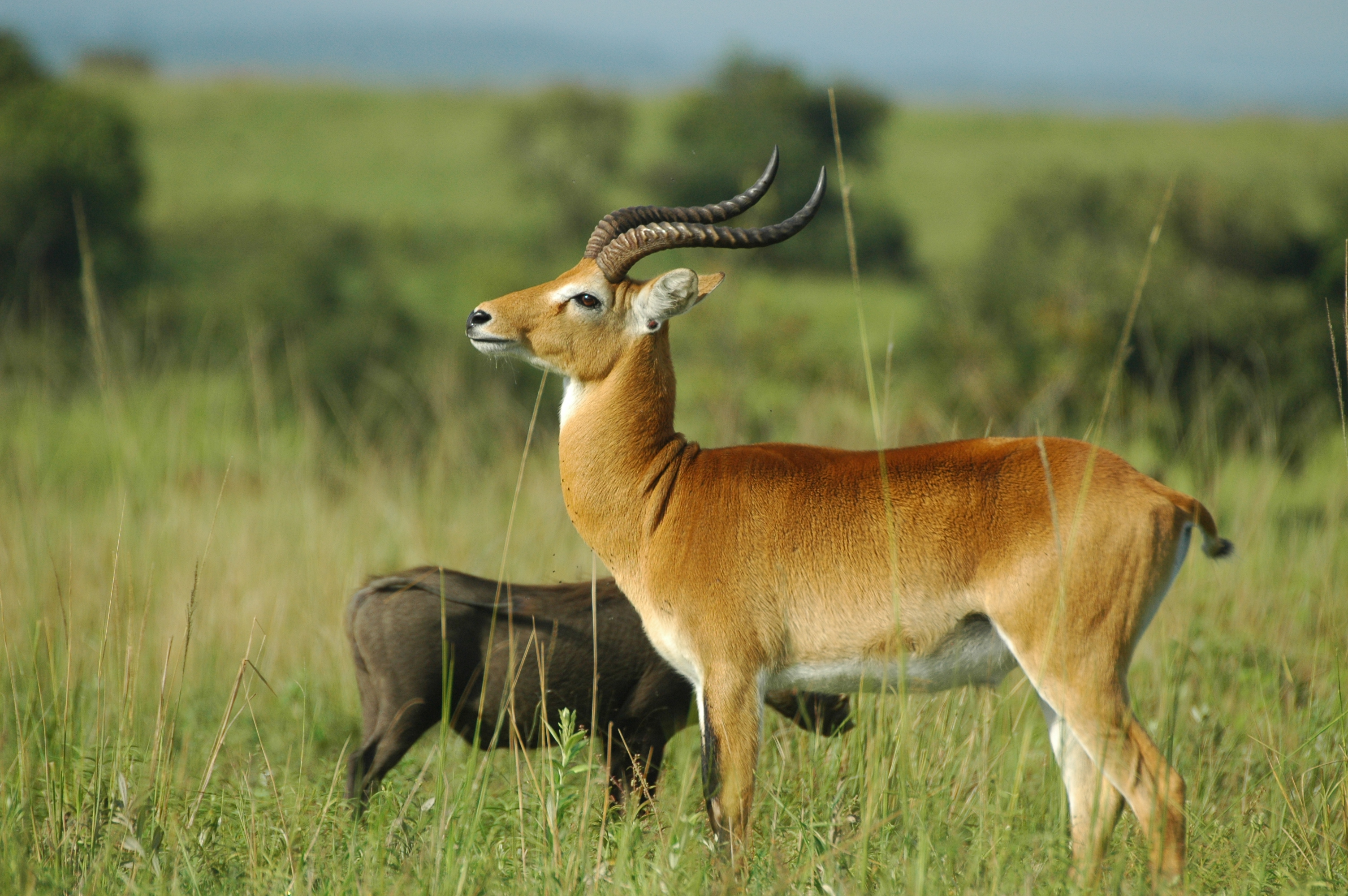
The first of the park’s larger inhabitants came into view just beyond the gates in the form of a herd of Ugandan kob, a stocky antelope that with the crowned crane forms one half of the Ugandan coat of arms. It was a modest start to the safari, and I was a lot more interested in the bizarre-looking hartebeest standing in their midst. With a head that might have given birth to the expression ‘why the long face?’, they look too warped to be real, like a badly stretched photo on a student PowerPoint. It spooked when the car came to a stop and bolted. They seem more skittish than other antelope species: though I saw several of the strange beasts during my time in Uganda, I never did get a good photo of one.


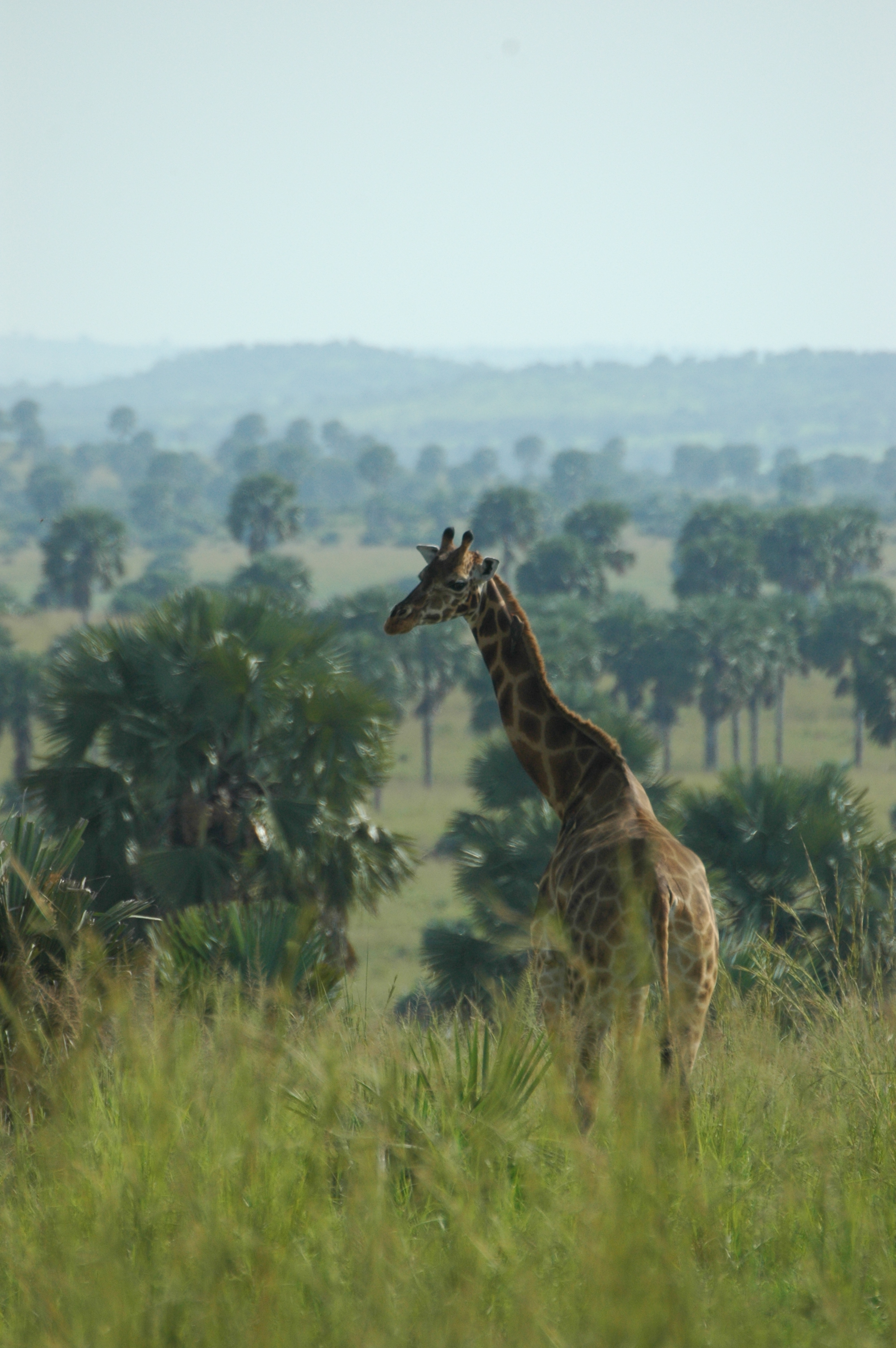
We didn’t have to go much deeper into the park before the park ranger pointed out a giraffe. He needn’t have bothered: at over five metres tall, they aren’t exactly hard to spot. Murchison Falls NP was one of the last holdouts of the giraffe in Uganda, after war and poaching drastically reduced their numbers in the last century. The giraffes that can be seen in Uganda are the nominate species, known as Nubian giraffes, and could once be found as far north as Egypt. Back in 2012, they were still known as Rothschild’s giraffes – they were reclassified in 2016 – so it looks as though they have been “decolonised”, dropping the name of a wealthy British banker and zoologist in favour of a name that conjures up their former homeland. Murchison Falls itself was similarly renamed under the Ugandan dictator, Idi Amin Dada, though the fact that he was the brains behind the switch may account for the fact that the park formerly known as Kabalega Falls has since reverted to its old colonial title, for better or for worse.


We reached Paraa around midday, where the Victoria Nile cuts right through the hearts of the national park. We missed the ferry by minutes so we parked up on the riverbank and waited for it to return under a thick cover of cloud. My friends had to stop me from getting too close to the water, as a large pod of hippos were dozing just metres from the bank. Some estimates hold that hippos are responsible for around 500 deaths a year, making them one of the more dangerous creatures on the continent – though not as dangerous as Africa’s snakes, which claim thousands of victims every year. I think I was actually more interested in the gangling jacana that was bobbing around at the water’s edge, but that’s by the by. Just like me to miss the wood for the trees.

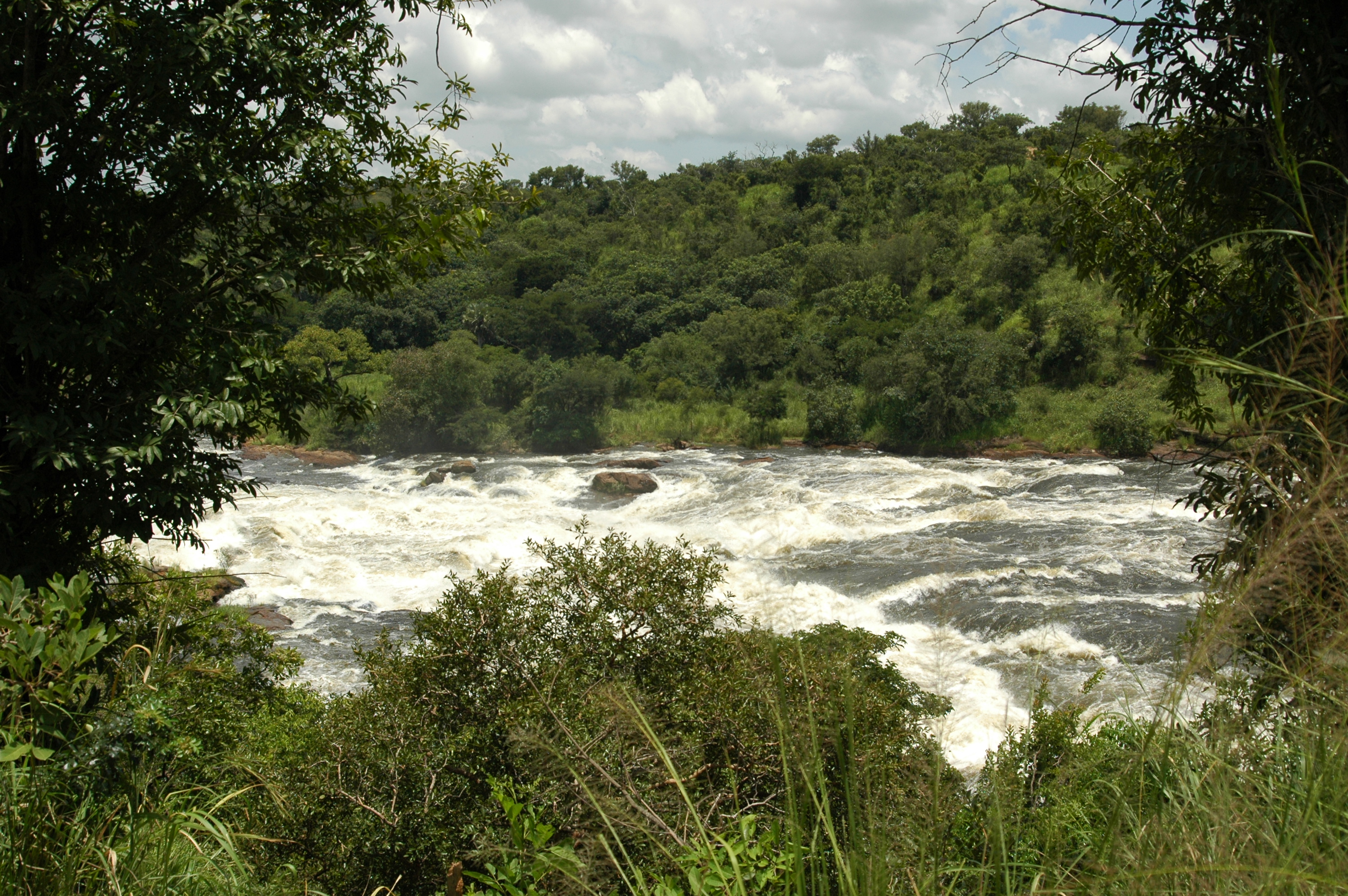
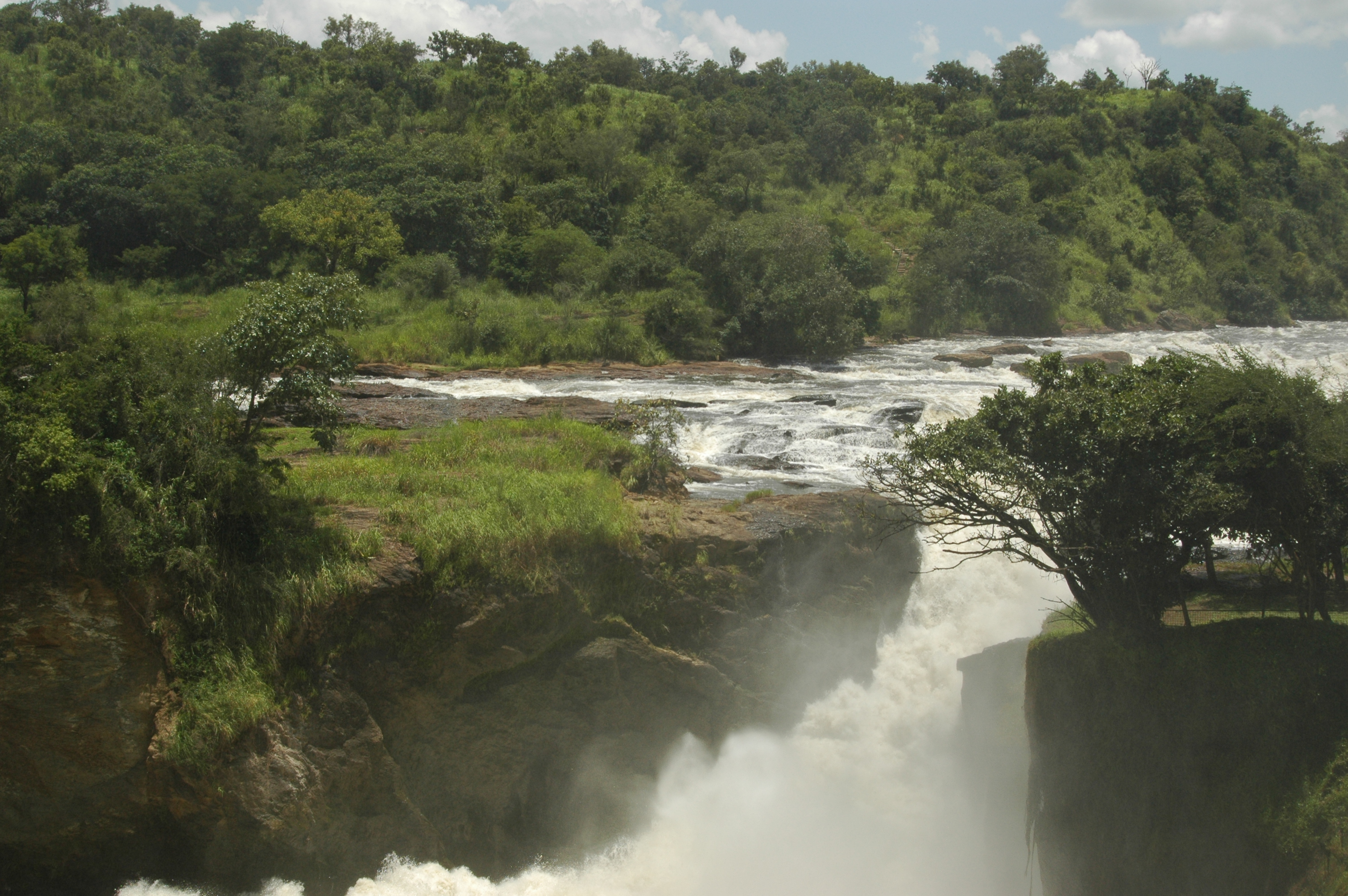
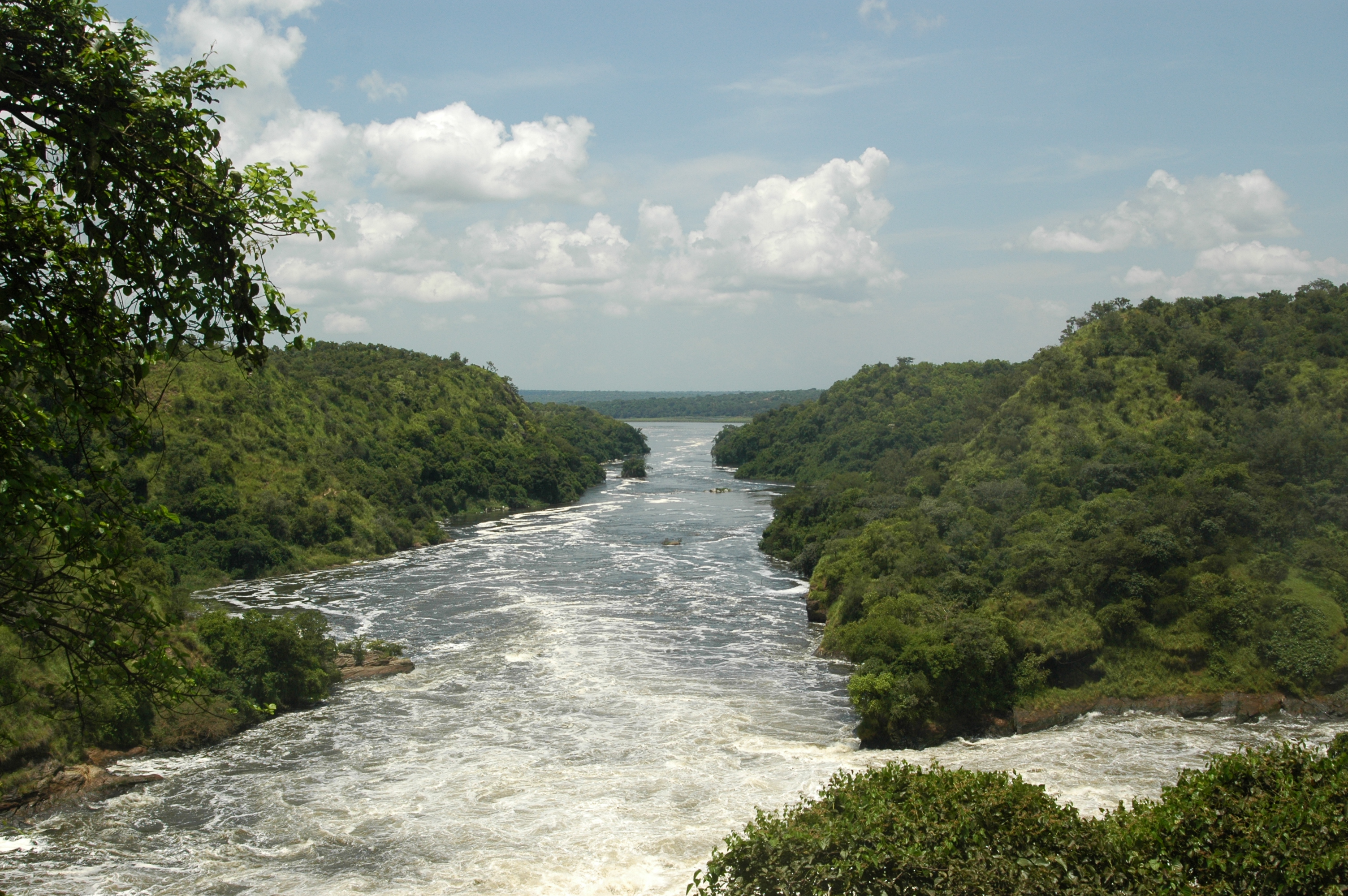
From Paraa, it’s a bumpy ride to the falls for which the park is named. I’ve described them in my journal as “royal”. Kabalega – Amin’s preferred name for the falls – comes from Chwa Kabalega II, King of the Bunyoro people who call this corner of Uganda home, so it’s not a poor choice of an adjective. Hailed by the UWA as “the world’s most powerful waterfall”, the Nile is forced through an eight-metre chokepoint, creating a thunderous spectacle as the full force of the world’s longest river is hurled into an abyss known as the Devil’s Cauldron. It really does have to be seen to be believed.


It’s incredible to think that this mighty river winds its way all the way up to the Mediterranean. For centuries, the origins of the Nile were a mystery to the Western World. The Banyoro knew of the great river, of course, but they would have been just as surprised to know that the river that thundered through their kingdom watered the deltas of the pharaohs, some two thousand miles to the north. It might seem strange that the source of such a historically important river remained a mystery well into the nineteenth century, but as the early explorers discovered, the Nile is a treacherous creature that holds onto its secrets with a jealous force almost as strong as its flow: once you reach Sudan, the river becomes heavily overgrown, making navigating by boat near impossible, and stands of reeds and papyrus hug the banks so densely that, in some parts of its course, it obscures the river entirely from view.

The Ancient Romans had a saying, Nili caput quaerere, “to seek the head of the Nile”, which meant to attempt the impossible. It’s possible the saying originated with the Emperor Nero who did just that, tasking a small expeditionary force of his Praetorian Guard to find the legendary source in the first century AD. The historical accounts claim they made it as far as Southern Sudan before finding their passage blocked, but some claim they may have made it as far as the thundering waterfalls of northern Uganda. It’s a strange thought, to picture the Praetorian Guard standing here, staring in awe at the falls in the same spot that shadowed Winston Churchill, Ernest Hemingway, Humphrey Bogart and, much later, myself.


What the photos don’t show is the spectacular double rainbow that forms over the Devil’s Cauldron as the Nile thunders through the gorge. We saw the falls shortly after a brief spell of heavy rain, so the force of the flow was especially ferocious. Two weeks later, when the full force of the wet season came down, it would have been near impossible to get as close to the falls as we got without being blasted with the spray. Apparently, these can sometimes be seen at night, when the moonlight is exceptionally strong: these are called “moonbows”, and have been spotted by birdwatchers who come here looking for the bizarre pennant-winged nightjars that nest in the surrounding forest. We didn’t stay long enough to find out, but I’m sure it must be a beautiful sight to behold.

The first thing I ever saw in Africa was a waterfall. The connecting flight from Heathrow to Addis Ababa rode the clouds for most of the journey, but shortly after waking up on that first morning, the clouds parted for just a moment, revealing a jaw-droppingly beautiful mountainscape, with a silver river launching itself over the edge of a high cliff the colour of bronze. Victoria Falls is the one that comes to mind for most, but for me, it’s a toss-up between Murchison Falls and that nameless cascade that first stopped my heart all those years ago. Maybe I should go in search of more waterfalls!


Honestly, I’m getting the travel bug just writing this. I think it’s time I blew the dust off the travel section in my library and started cooking up a plan. I know I’ve had a grand adventure this year to the States, and I’m grateful, but after a slightly abortive early finish, I feel like I haven’t quite sated the travel bug this time around. Let’s see… if I can pass my driving test, I think I will reward myself with another grand adventure – only next time, I will do it for me. It certainly makes for fun writing! BB x

On the Road Again

I’ve got my third driving lesson of the summer this afternoon. They’re not going too badly, considering I had a three month hiatus after my last instructor was rushed to hospital, forcing me to cancel just two weeks shy of my test. I wouldn’t say I’m test ready, by any stretch of the imagination, but it’s becoming more natural behind the wheel, and I’m hopeful that I will be on the road in wheels of my own before the end of my thirtieth year. That’s the goal, anyway.

Cruising around the unfamiliar roads of Somerset had me thinking about the freedom I will have with a car of my own. It’s the thing people tend to point out time and again when the subject of getting my driver’s licence comes up in conversation, but it’s honestly not something I think about all that often. Which is absurd, because when I do have the chance to get out and explore, I know I’ll be out most weekends if I can, especially in this wild and sometimes desolate corner of the British Isles. With Exmoor, Dartmoor and the Jurassic Coast on my doorstep, I’d be a fool not to.

I’ve been on a number of grand road trips over the course of my travels, and I thought I’d use some old photos as a launch to reminisce about a few of them: snapshots, if you will, of great adventures.

1. The Badia, Jordan. 3rd July 2015: 10:56am


At the end of my first week living in Jordan back in that sweltering summer of 2015, a couple of Dutch students from my language school, Bern and Marco, hired a van and offered to take a group of us out into the Eastern Desert, also known as the Badia, on a Jordanian road trip. It was a bit of a squeeze, fitting ten of us and our supplies into the damned thing, but it allowed us to see more of the country than the public transport system ever could.

Something that strikes you immediately about the Badia is how empty it is. The desert itself is vast, covering more than 72,000km. That’s larger than the Republic of Ireland, and it’s actually only a fraction of the greater Syrian Desert. Highway 40, the road that connects the oasis city of Azraq to the capital Amman, is a largely featureless drive across the edge of the Harrat as-Sham, often translated as the Black Desert. It is no misnomer. Forget your childish images of rolling sand dunes and palm trees. The Black Desert is an immense expanse of flat, black rock, stretching as far as the eye can see in all directions. The silence is almost as oppressive as the heat. One of my American friends, the enigmatic Washingtonian Mackenzie, used to play a game on the road, Camel or Human, every time something larger than a boulder appeared on the horizon. Usually it was a camel, but just every so often we’d pass a wanderer on the road, miles away from everything and everyone. Not exactly a forgiving place to break down.

2. Reinosa, Spain. 21st February 2016: 11.46am


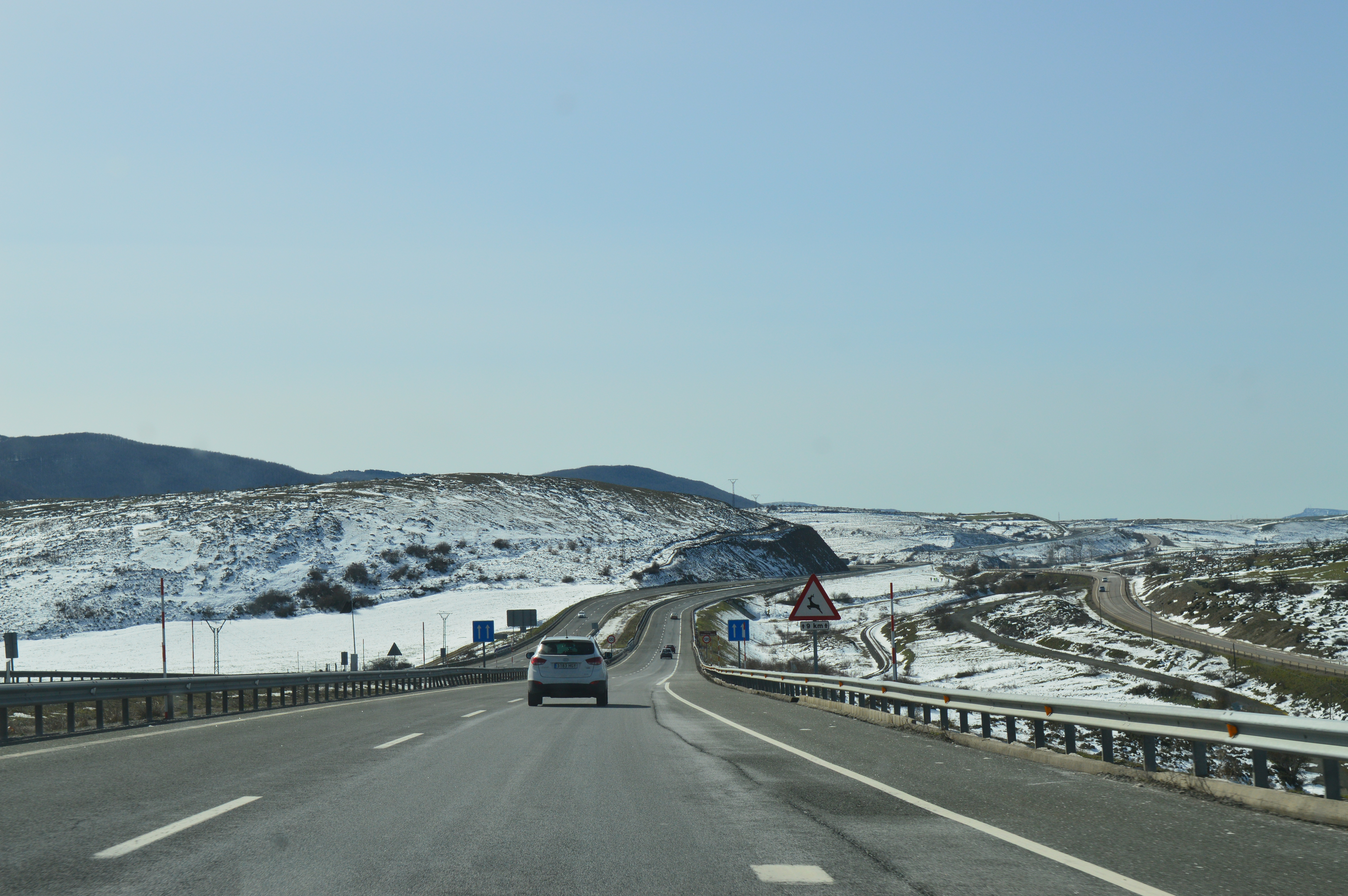
I used a variety of methods to travel around Spain when I lived out there: the carshare app BlaBlaCar, the short-distance Extremadura bus firm LEDA and, latterly, the superb train network RENFE. For the longest journeys I leaned heavily on ALSA, Spain’s answer to National Express. Cheap and efficient, provided you had time to spare, they serve most of Spain’s larger cities and provided a very reliable means of getting around. I took the bus one wintry weekend to see my friend Kate up in Cantabria. It was a ten-hour journey – not for those who get bored or travel-sick – but it does take you through some of Spain’s most breath-taking natural beauty: the wild steppe of Cรกceres, the cherry-blossom valleys of Plasencia, the high meseta of Old Castile and the snow-covered mountains of the Cordillera Cantรกbrica. Driving from south to north across Spain, you really do feel as though you have arrived in a totally different country when you step out of the car at the end of the day.

I hitched a ride south to get home with a friendly student who was heading back to Algeciras after visiting family in Santander. At over 1,000km, it’s probably one of the longest drives you can do in the country. Luckily for me, Villafranca de los Barros was on his way home. In a year where I hardly saw any snow – and where Durham got some of its best in a decade – it was spellbinding to see the northern reaches of Castile covered in a heavy blanket of snow and ice. I’ll have to come back and explore someday.

3. Piste 1507, Morocco. 20th March 2015. 11.45am


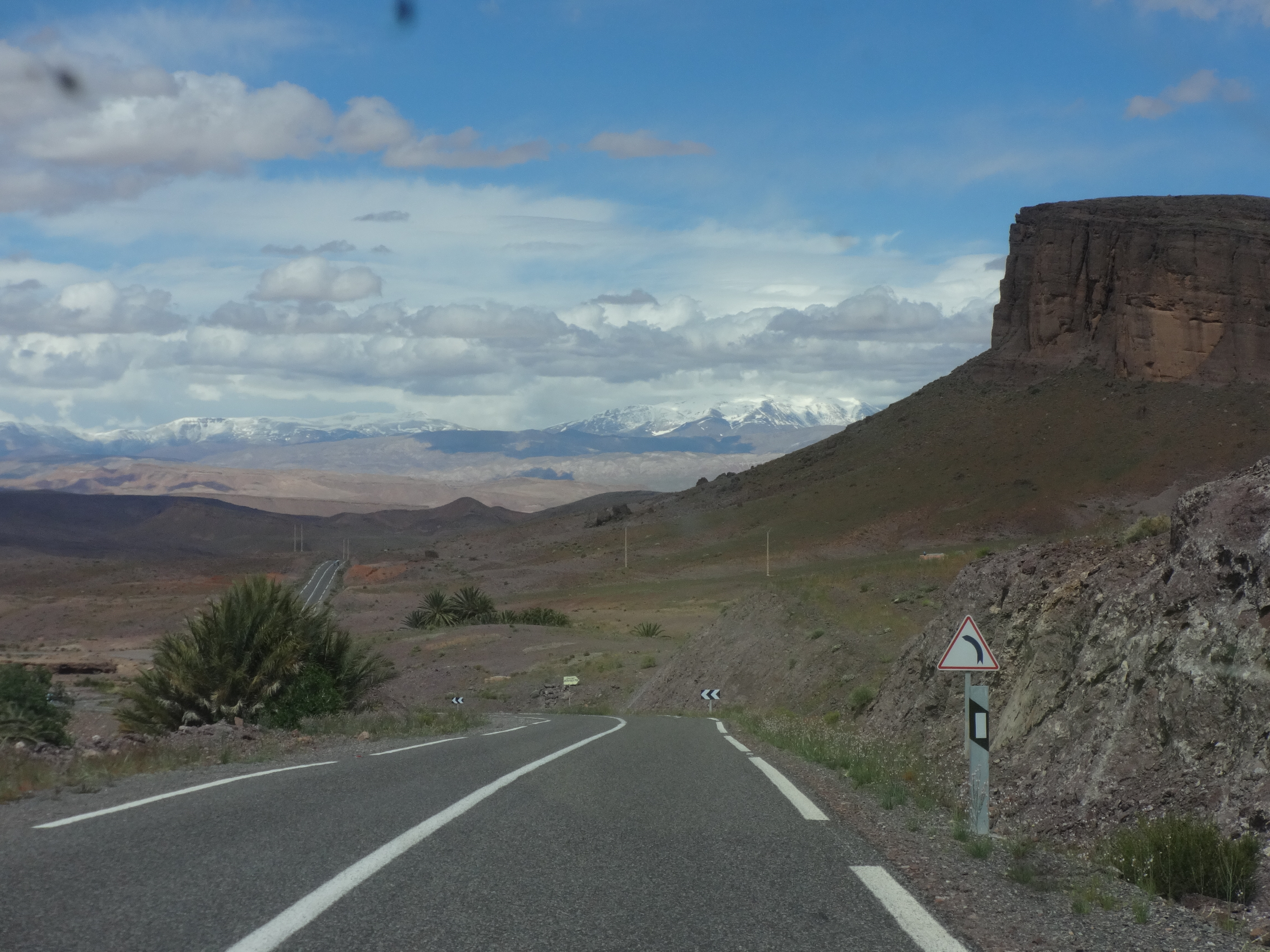
Another marathon road trip, and one of the most bizarre. My friend Archie and I hailed a grand taxi in Oulad Berhil for Ouarzazate, a desert town famous for being the location of choice for a number of movie studios who require a desert theme in a relatively safe location (including blockbusters like The Mummy and Gladitator). Our taxi driver, Ibrahim – whose name I only discerned from the badge on his windshield – was quite possibly the grouchiest, least sociable character I have ever encountered on my travels. Over the course of a three-and-a-half-hour drive across the rugged mountain valleys of Drรขa-Tafilalet, he never said a word, despite our intermittent attempts to engage him in conversation. Perhaps he found us tiresome, or perhaps he was cooking up the plan he would later carry out to quintuple the price we had agreed back in Oulad Berhil, safe in the knowledge that Archie’s rucksack (and passport) was locked up in the boot of his car. I’ll never know. Archie fell asleep for much of the trek, but I spent the greater part of it with my eyes glued to the window, watching the world beyond sail past. I love road trips for that. I don’t think I could ever get tired of seeing the world.

4. Interstate 65, Alabama, 3rd July 2024. 7.40pm


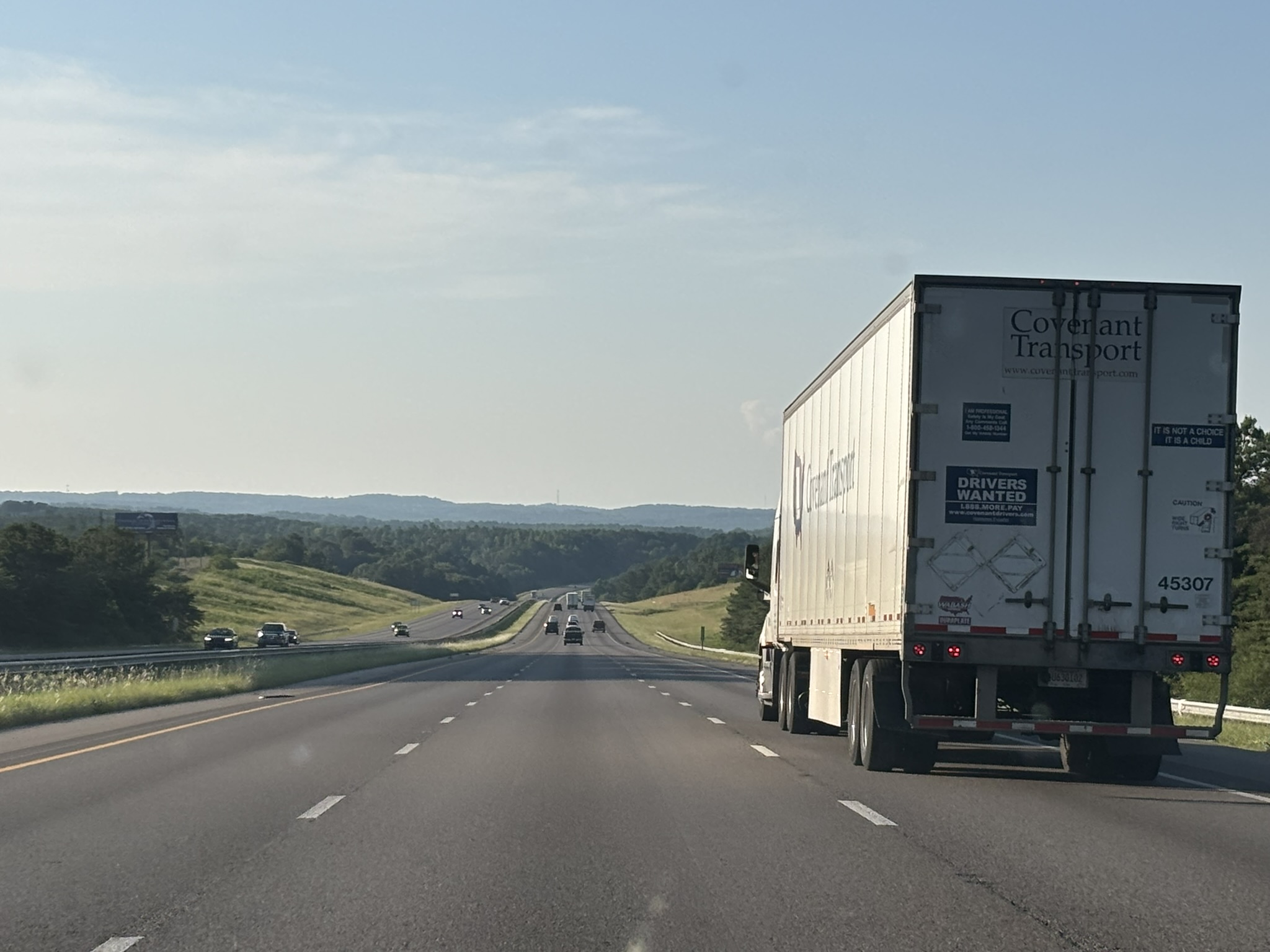
It’s one number shy of Route 66, but it was a phenomenal introduction to the American road trip. The highway in question travels north from Mobile on the south coast of Alabama all the way up to the shores of Lake Michigan in Gary, Indiana. I was only on the road for a fraction of it, from Birmingham up to Huntsville, but it was enough to make my eyes pop. Squashed armadillos, discarded tyre tracks and billboards were features I had anticipated to some degree, but the forests… I don’t think I was aware at all of just how forested North America truly was. The history books and the movies give the impression that most of the great tracts of forest were cut down, but in the American South – especially in the foothills of Appalachians – they go on for mile after mile, stretching across the land like an immense green carpet. The highways just cut right through them, dynamiting their way through hill and mountain as though they were merely molehills.

If I’d known how painful the destination would prove, would I have still made that journey?

Absolutely. Without a second’s hesitation. Some things are worth burning for. Some things are worth traveling all around the world to see, even if only for a moment in your life.

5. Boroboro, Uganda, 11th October 2012. 5.06pm


I thought I’d end this post with what is probably the best photo I’ve ever taken, and one that has a real story behind it.

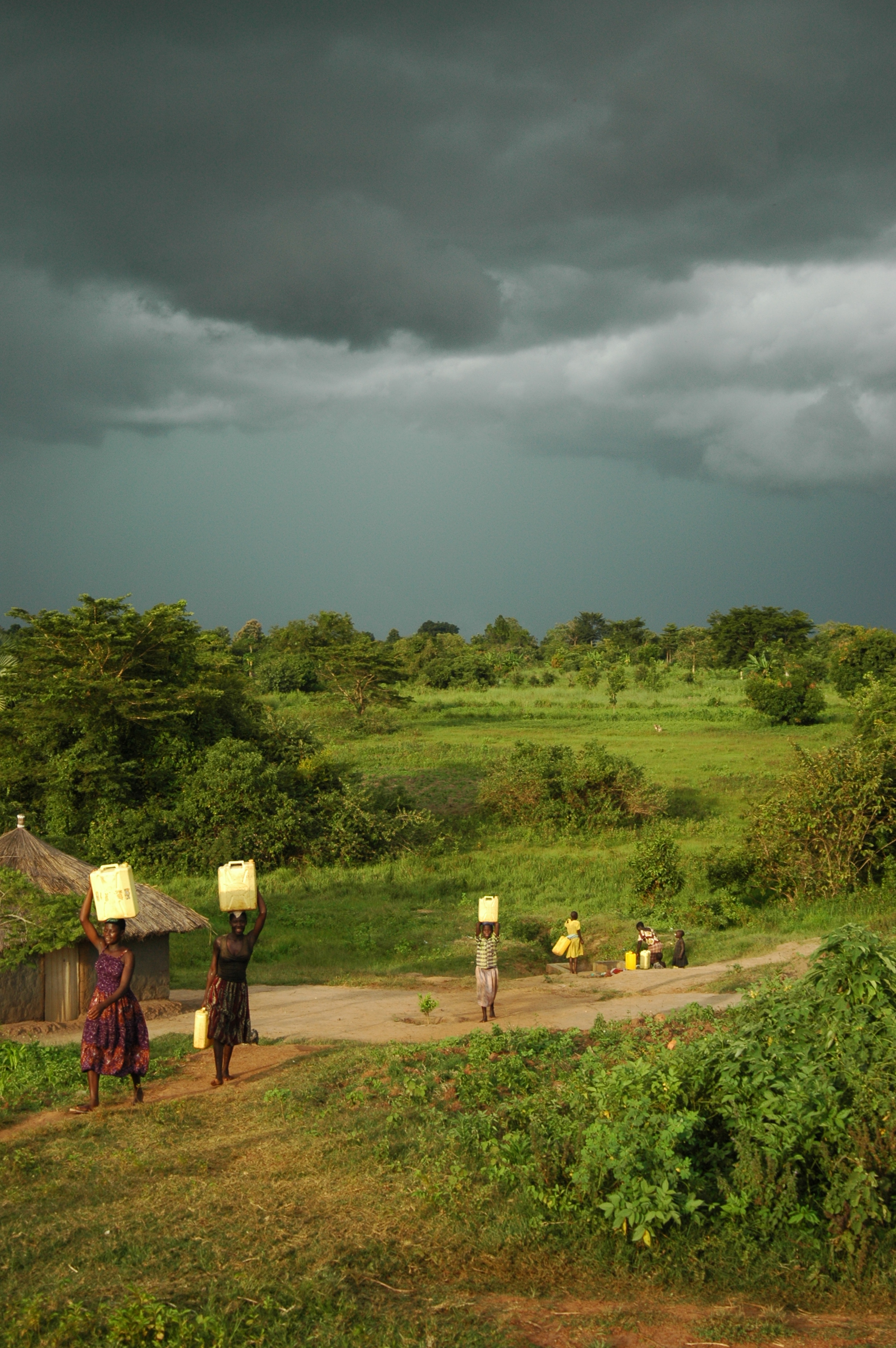
One month into my first teaching post in northern Uganda, I was invited to visit the former headmaster, Mr Ojungu Hudson Luke, on his farm on the banks of the White Nile. It was an incredible experience, herding Uganda’s famous longhorn cattle through the forests and the driving rain, with one of the world’s greatest rivers thundering away in the background, and perhaps I’ll tell you that story and more as the summer draws to a close. On the way home, after three days without access to electricity, my camera was out of charge, bringing my frenetic documentary spree to a standstill. Uganda’s roads can be treacherous and breakdowns are common, and when they do happen, they can be final: I will always remember the graveyard of trucks and lorries between Boroboro and Lira, rotting at the side of the road where they collapsed. Luckily, we made it back to Lira with little trouble, just in time to meet a tropical storm riding in on dark clouds.

The lighting was spectacular: brilliant evening sunshine, heavy, dark clouds, vivid colours all around. Red African soil and a thousand shades of green. Not for the first time in my life, I gave the finger to the sunburn on my skin and rode the last hour of the journey in the back of the truck so that I could see the world with my own eyes. Determined to capture the moment, I took the battery out of my camera and tried to breathe new life into it by rubbing it between my hands and – well – breathing on it. The first roll of thunder came rumbling down just as I pushed the battery back in and bought myself a couple of seconds. With Luke Ojungu still hurtling up the road at quite a pace, I grabbed two shots of the passing countryside from the back of the truck before the camera died.

We were a hundred metres or so from home when a lightning bolt struck a tree just ahead of us, bringing half the trunk down across the telegraph wires, which exploded in a shower of brilliant sparks. We were lucky to avoid any harm, but we soon found out we would be without power for the best part of a week until the electricians came around to fix the problem. It was only after that, with power restored, that I was able to charge my camera and see what I had managed to capture: a beautifully evocative shot of the countryside around Boroboro, lined up almost as though on command. I have it framed in my living room beneath a matching frame of Kanyonyi, the silverback of the mountain gorilla troupe we tracked on that same expedition.

Do stay tuned – I think it might be fun to relive my Ugandan adventures with you, since they predated the blog by some three years! BB x

Marooned

13.25. High summer. Somewhere in the Lincolnshire Wolds.

English summer skies are blinding. Thereโ€™s an intensity to the white clouds that blanket this island in summer that demands a permanent squint, or a pair of good sunglasses. America – and even Europe – seem a long, long way away from here.

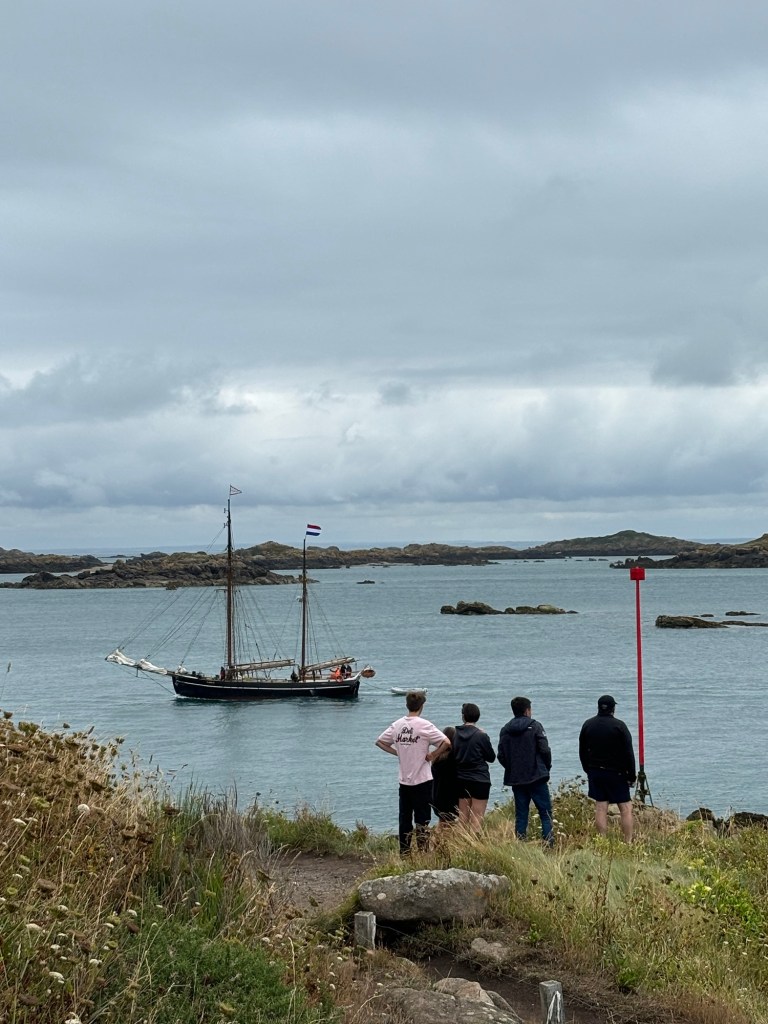
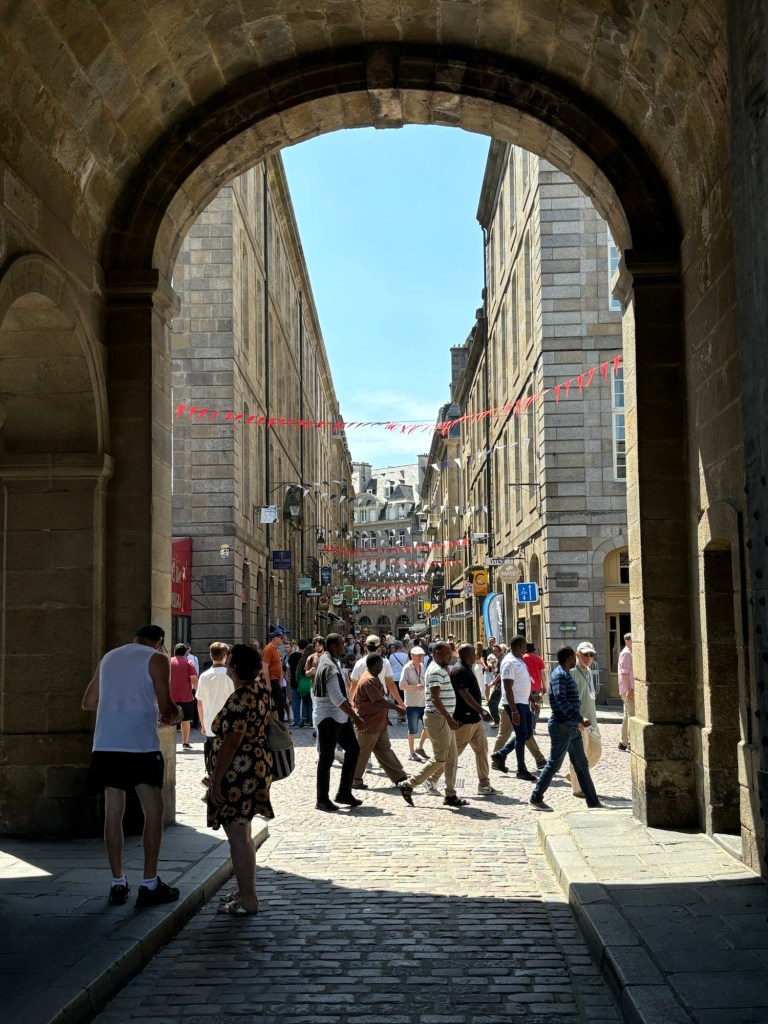
Six days ago I was sitting on a low wall among the ruins of an old boathouse on the largest of the Chausey Islands, a collection of low-lying islands in the bay of Saint-Malo. Iโ€™d never heard of them until the day before, when I saw that a local ferry company was offering day trips out that way, but I do love an adventure, especially one that goes well off the beaten track. Due to its remote location, there were only two boats a day from Saint-Malo: one to the island, and one from. Which is how I ended up spending seven hours on an island measuring just 1.5km across.


The Chausey Islands are a magical place. Quiet. Peaceful. Cut-off. Itโ€™s not so far from the coast that you feel lost – neighbouring Granville over in Normandy is a little nearer than Calais is to Dover, and in good sunlight you can see as far as the spires of Saint-Malo on the Breton coast – but far enough to feel like youโ€™ve put some distance between yourself and the world. Even on a cloudy day, you can see the ghostly pyramid of Mont-Saint-Michel rising out of the sea to the south like Atlantis. Or should that be Ys?

People have been living in these islands for centuries. The Vikings of old used to stop here regularly en route to their raids along the mainland, and you can still see the holes they bored into some of the rocks to anchor their longboats. The narrow channel between Grand รŽle and the other islands still carries a Viking name: the Chausey Sound, the southernmost โ€œsoundโ€ in Europe. There were once a few farms here, and even a school until the last century. Now it plays home to French holidaymakers, who pass their jealously-guarded homes down through the generations, so Iโ€™m told.


I have a habit of winding up in places like this. Others travel to meet people, have a great time, see the world. I always seem to end up by myself, searching for myself, marooned with my thoughts. Itโ€™s not that I donโ€™t set out in search of those things too – I just find my way to these spots quite naturally.

I found the spot I was searching for to the west of the island, on a low islet overlooking the ebbing tide beneath a crown of standing stones. But for the hulking black-backed gulls, a couple of oystercatchers and the odd lizard, I had the bay to myself.

I let my mind wander. I thought about a great many people, and wondered what they were doing at that moment in time. Were they happy? Were they wandering like me? Had they ever found just such a place and turned their thoughts to friends and lovers past? I think so. I think itโ€™s in our nature to do just that in the far-flung corners of the world. Maybe thatโ€™s why Iโ€™ve always been a sucker for a good Western: nothing sends you on a greater inward journey than the wilderness.


I had questions, but the answers didnโ€™t come to me as readily as they did on the Camino last year, so I waited out the hours on a beach, reading Breton fairytales and burning under the sun. When the boat did come, it was to carry me back to Saint-Malo across a choppy sea that left half the passengers on the deck soaked to their skin, though the sun was shining bright.

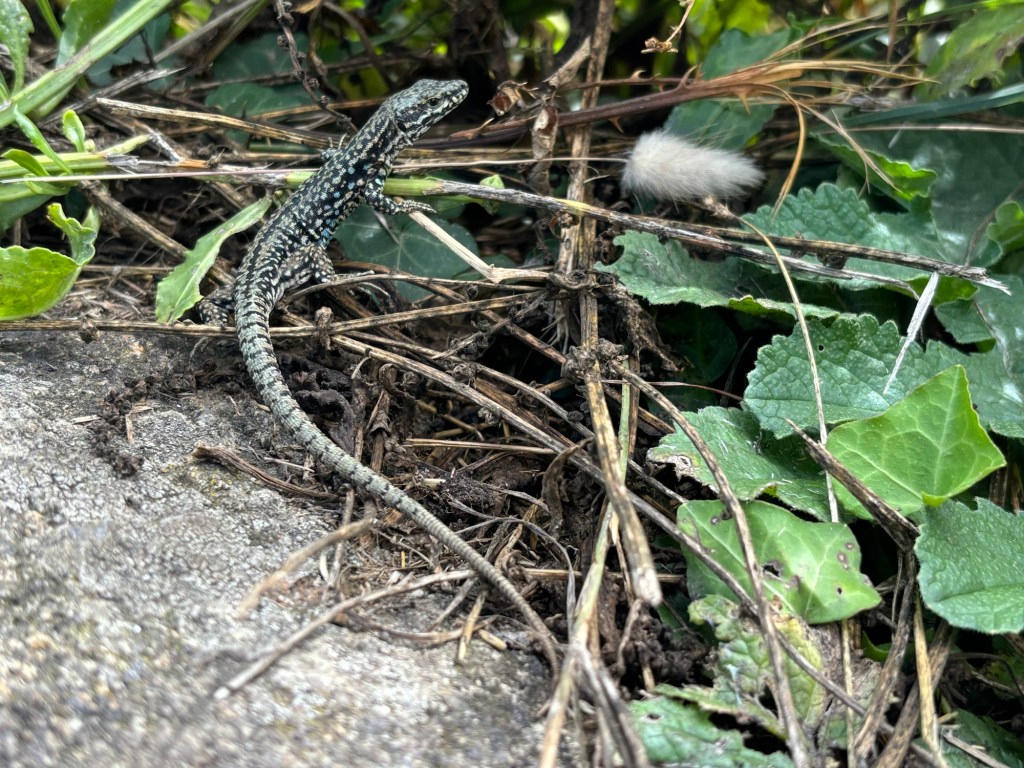
I didnโ€™t see as many seabirds as I hoped, but I did clock a guillemot taking its fledgling on what might well have been its first swim as the sun came out. I also came away with a number of close encounters with the lizards that call the island home – all of them a lot less skittish than their cousins on the mainland. I used to love looking for lizards in the countryside when I was a kid, so after the nostalgia of rockpool rediscovery, it was refreshing to turn another leaf of the history books.


Until the next adventure, folks. BB x

Winds, Waves and Words

Itโ€™s 18.00 over here in Saint-Malo and the heavens have opened. An Atlantic wind is battering against the windows and the heavyset black-backed gull that chased off Hector has given up on attacking the ashtray on the windowsill and taken his leave. I might head into town for dinner later, but for now, Iโ€™m quite content curled up on the sofa of my AirBnB with a book, a hot chocolate and the time to write. So I thought Iโ€™d start todayโ€™s post with a little history.


Saint-Malo has a long and complicated past. Originally a 6th century refuge for Welsh monks, including the venerable Maclou of Aleth who gave the town its name, the rocky outpost became a haven for Bretons fleeing the advancing โ€œNorth-menโ€ or Normans some two hundred years later. In the 17th century, its strategic location made it a natural hub for state-licensed piracy or โ€œprivateeringโ€, which elevated its fortunes considerably and paved the way for a generation of wealthy explorers: Jacques Cartier, a native malouin, is credited with giving Canada its name (via the Iroquois kanata) and Louis-Antoine de Bougainville, another son of Saint-Malo, established the first European settlement in the Falkland Islands, which – at least in Spanish – still bear their original Breton name: las Islas Malvinas, from the French รŽles Malouines.


The city fell to the Germans during the Second World War as part of their Atlantikwall stratagem, and the skeletons of their fortifications still dot the Breton coastline: in Saint-Malo, the levelled ruins of German pillboxes rub shoulders with 17th century Vauban forts. Surprisingly, much of what you see today was carefully reconstructed, as around 80% of the city was destroyed by the Allies in their dogged attempt to drive the Germans from the old pirate stronghold.

Allied bombers over Saint-Malo in August 1944. The fortified isle of Grand-Bรฉ is at the centre of the blast

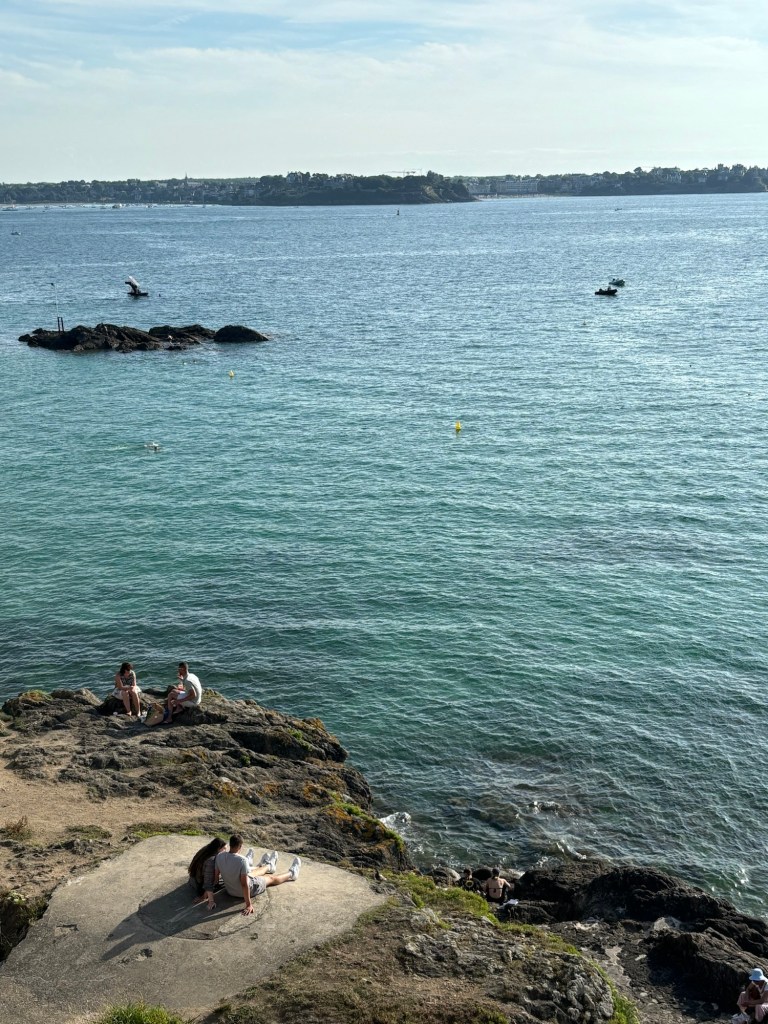
Most of the German fortifications have long since been torn down, but you can still see the concrete bases of many structures on the cliffs beneath the city wall and on the surrounding islets of Grand-Bรฉ. They make very comfortable places to sit and watch the sunset.


In case it wasnโ€™t obvious, the townโ€™s rich history is one of the biggest reasons Iโ€™m here. But the other is its wildness: there are plenty of sandy beaches in the south, but I donโ€™t get any real kick out of sea-swimming unless there are rocky areas to explore. The southeast coast of England with its famous white cliffs is quite a sight to behold, but it doesnโ€™t quite have the jagged beauty that the west has in abundance, and Brittany has it to spare.

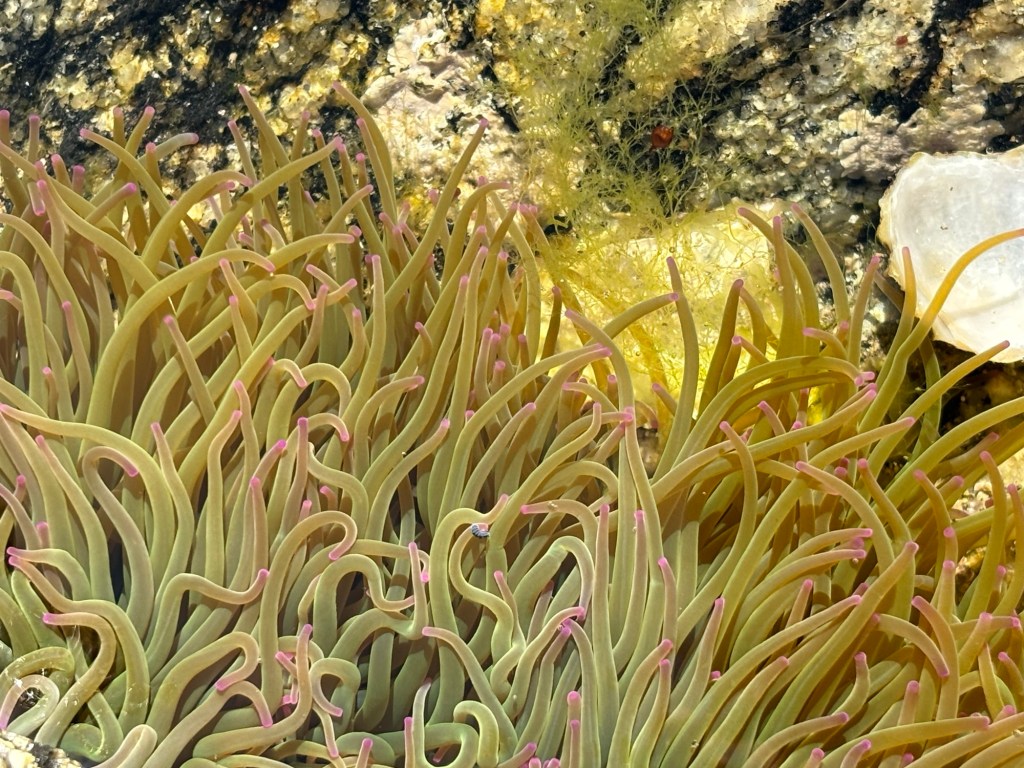
I spent many of the happiest days of my childhood scouring the rock pools of Folkestone for tiny critters: gobies, blennies, butterfish, velvet swimming crabs and even, just the once, a pipefish. Brittany is only the other side of the Channel, so much of the shoreline is familiar. I canโ€™t help keeping an eye out for anemones when Iโ€™m out on the rocks, especially the snakelocks variety – I always thought they were especially interesting.


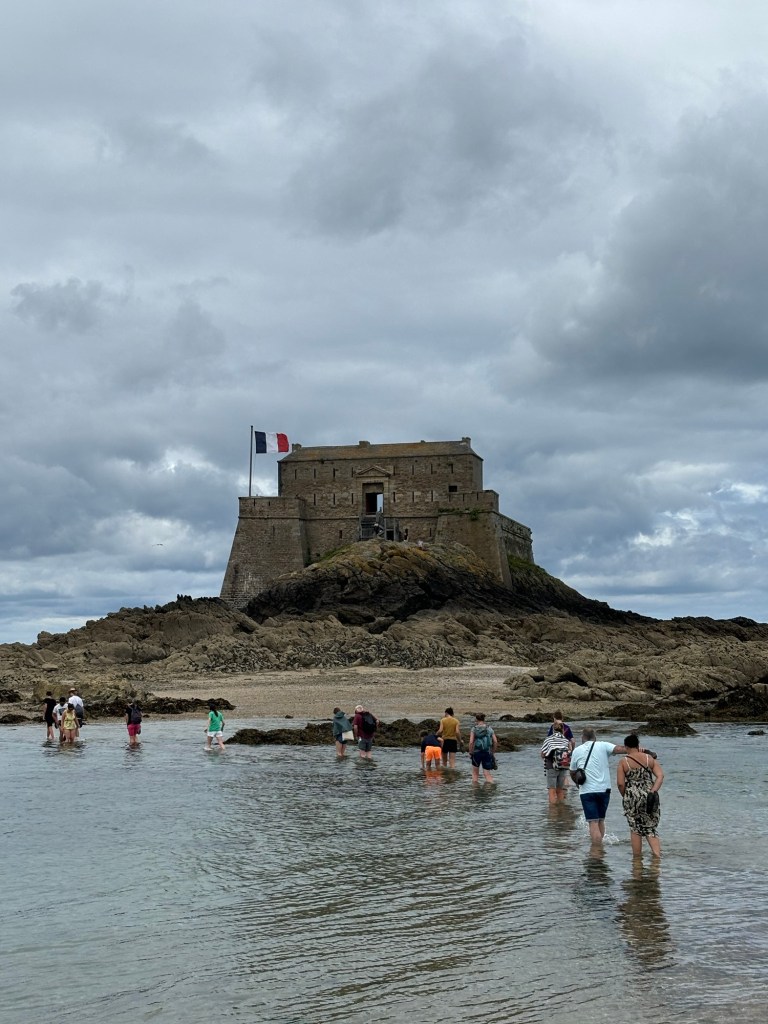
Across the bay from Saint-Malo stands the islet of Grand-Bรฉ, which can be reached on foot at low tide via a barnacle-encrusted causeway. A similar road stretches on to the Vauban fort on Petit-Bรฉ, though a small section of that road remains under a foot of water even at low tide and must be forded with shoes in hand.

Grand-Bรฉ offers a glimpse of what Saint-Malo must once have been: a windswept escarpment just off the mainland, inhabited only by lizards, gulls, a small colony of shags and a company of oystercatchers that can be heard all across the bay. Two of these noisy seabirds were standing in attendance upon Chateaubriandโ€™s tomb, as though to keep him company. From this spot, on a clear day, you can hear the twittering of goldfinches, the cries of gulls, the occasional grunt from one of the shags and the endless piping of oystercatchers on the rocks below or in the sky above – and, of course, the ringing of the bells of Saint Vincentโ€™s cathedral across the bay.

I wonder if the old Romantic was as bewitched by the wild birds of his native Brittany as his writing implies? He certainly had a real flair when it came to writing about nature. Perhaps thatโ€™s why he chose this spot.


I spent some time last night watching the sunset over Grand-Bรฉ. I had left my Camino bracelet in the apartment, but I had brought a few other tokens with me. I often take a number of โ€œluckyโ€ objects on my travels: little souvenirs and keepsakes to remind me of home when Iโ€™m on the road.

Well, not home exactly. With no fewer than ten moves under my belt at the age of thirty (and just under half of them international) Iโ€™m still not entirely sure where home is. But they remind me of friendships and memories that mean a lot to me, and that helps with the loneliness that is a natural side-effect of traveling alone.

In my satchel, ever at my side, I carry my journal, my fifth and longest-serving since I took up the art twelve years ago. Itโ€™s coming apart at the seams and bound inexpertly by sellotape – hardly surprising for a little book that has come with me to work every day for the last five years, as well as on every adventure Iโ€™ve been on in that time. Concealed within is my lucky dollar, a ticket to the Prado in Madrid, a tawny owl feather, the plectrum that one of my Rutherford boys used to win House Music two years in a row and a perfumed letter.

There is one more keepsake that has been sharing the road with me this summer. It even came with me to America, traversing the Bayou, the Mississippi and the bright lights of Nashville. Itโ€™s a card from one of my students, one of many I received in my last week at Worth. The lengths this particular student went to so as to ensure I got the card, as well as the maturity of its message from one so young, are just two of the reasons this one in particular has come with me. I am many things, and a great many less, but I would be a writer – and so that is why I have always believed that the greatest gift I can ever receive is in the form of words. No physical object can ever surpass the depth of feeling that comes from such expression.

I have a bad habit of making people cry when I write them farewell letters (an equally bad habit Iโ€™ve adopted for leaving students), but I very nearly met my match with this one. The student in question signed off with a favourite quote of theirs from Lin-Manuel Miranda: โ€œsometimes words fail meโ€. Thereโ€™s any number of reasons they could have chosen that one for me – I might well have said the line verbatim in reaction to the behaviour of that class at least once – but itโ€™s a powerful message for a would-be writer.

Words do fail me, and often. There have been moments this year where I have been genuinely speechless, from shock or awe or wonder. It is comforting to know that such a consummate wordsmith shares that affliction.


Tomorrow, I have decided upon a rather spontaneous adventure. I have already bought my ticket. All I can do now is hope that the weather holds. Then – we shall see what we shall see. BB x

Bagpipes on the Beach

The sun is going down on my second night in Saint-Malo, an enchanting walled port city on the north coast of Brittany. Hector, the herring gull that seems to come with the AirBnB where I am staying, has gone up to the roof to roost. Swifts are still screaming outside and the moon, two days away from its full phase, is already creeping up behind the district of Saint-Servan across the harbour to the southeast.

Iโ€™m not entirely sure why I settled on Saint-Malo. My first intention was to make for Saint-Jean-de-Luz on the Basque coast, following a tip-off from a French student at Worth. One way or another, I ended up being drawn to the northwest, and Saint-Malo seemed the natural choice as a base of operations: easily accessible by train, ferry links to Portsmouth, a good combination of sandy and rocky beaches and a former pirate town to boot. Itโ€™s also not far from Normandy, and I did so love Normandy the last time I was here. After all, thatโ€™s what this whole trip is about, isnโ€™t it? Finding something about France that will spark my interest?

I think I first heard of Saint-Malo in the famous French sea shanty Santiano by Hugues Aufray. My dear friend Andrew slipped that track my way a few years ago, so I owe him for this discovery. It really is a very special place.


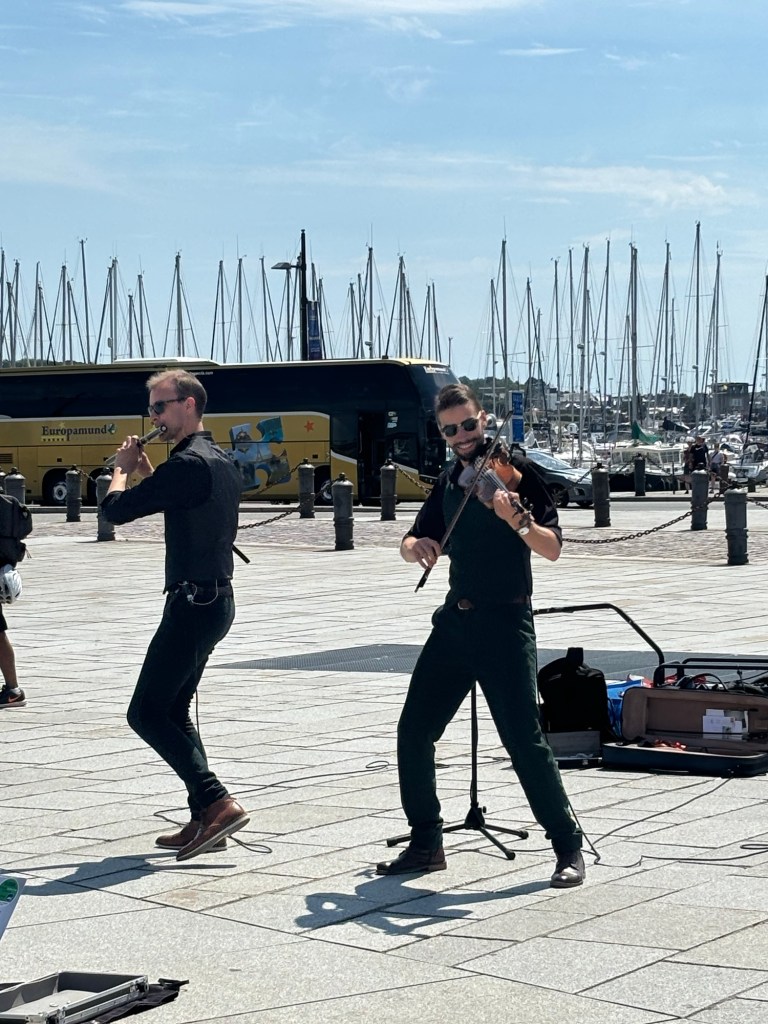
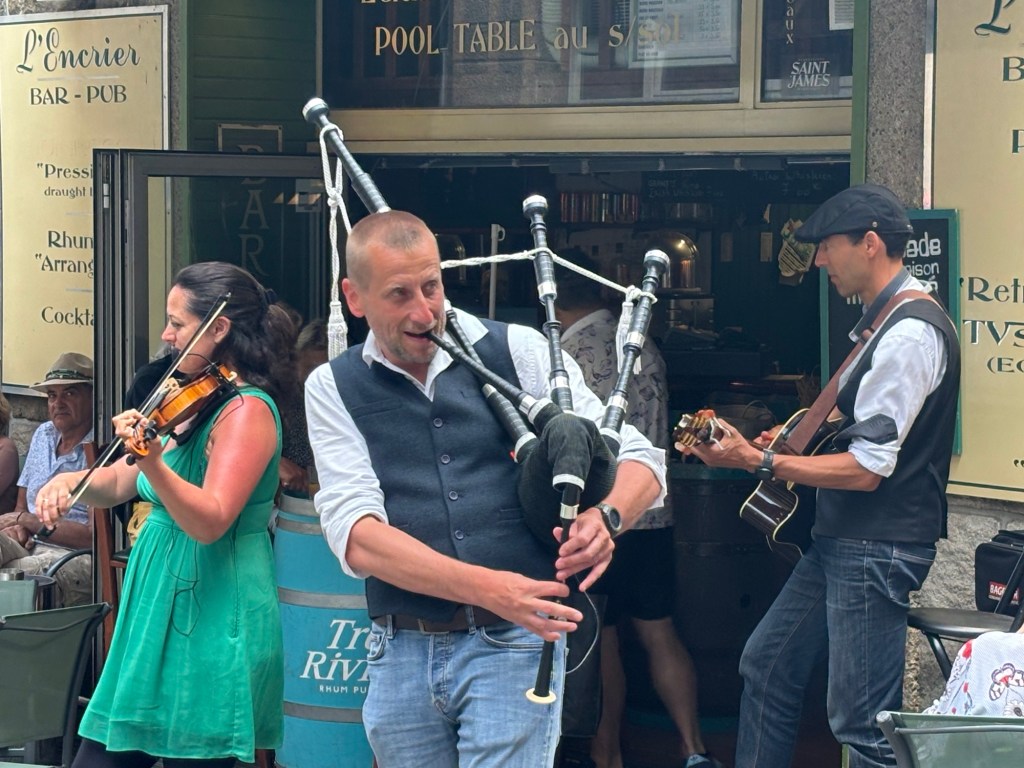
When I arrived yesterday, a local folk band, the Green Lads, were playing a merry medley of familiar folk songs. A few hours later I ran into another trio of buskers, Celtic Whirl, entertaining tourists with a run of similarly Celtic songs, including the theme to Last of the Mohicans. One of the players even whipped out a set of Breton bagpipes, known here as binioรน braz (a 19th century Scottish redesign of the local Breton variety). I stuck around for about half an hour in both spots and couldnโ€™t help tipping generously and tapping my feet. Itโ€™s strange that neither of the two groups have a French name – theyโ€™re both clearly French – but maybe it appeals more readily to the tourist trade (who – he adds with poorly concealed contempt – donโ€™t seem to make much of an effort to speak any French).


Galicia. Brittany. Cornwall. Thereโ€™s obviously something that draws me to these Celtic corners of the world. Maybe itโ€™s the fact that my instrument is the violin (despite all the noise I make about playing the bass guitar), and that I found a sanctuary in jigs, reels and hornpipes when all the studies, scales and exam pieces got too stultifying for my teenage mind. Perhaps thereโ€™s more to it than that, though what it is, I really cannot guess. But I do believe that if I had not taken up the post at Worth seven years ago and instead gone on to a teaching post in Galicia, as was the plan, I might well have stayed there. I think it was the discovery of Galician folk band Luar na Lubre which forced my hand. Galicia is notorious in the British Council auxiliar programme for its charm: few apply for the place, but those who end up there have nothing but gushing praise for the quality of life when they get there.

It just strikes me as odd that, for all my obsessive investigations into the Jewish and Islamic influences on Western Europe, itโ€™s the Celtic corners that I keep coming back to. I wonder why that is? My mother was always very keen to point me in the direction of my Spanish heritage, but I think Iโ€™ve been doomed since the moment I heard the first five notes of The Corrsโ€™ Erin Shore.


Yes. That must be it. I blame the Corrs. Theyโ€™re definitely responsible. I used to listen to Forgiven not Forgotten obsessively on the way to and from school when I was younger, and the fact that they got a shout-out from my favourite childhood author, Michael Morpurgo, probably didnโ€™t help. They have weathered every new wave, every genre, and the aforementioned album remains stubbornly in the top spot of my all-time favourites. I still have the cassette and its case. I think I always will.


I enjoyed a delicious dinner of moules mariniรจres before watching the sunset over Grand-Bรฉ, the larger of the two islets. The French Romantic Chateaubriand is buried there, and when the tide is out tomorrow I will go in search of him, and see why he chose that spot for his forever resting place. As a fellow Romantic, I canโ€™t say I blame him for choosing this town. Saint-Malo is as shining as the shimmering stardust on its shores, when the tide pulls it back out to sea. BB x


Equestrian

Wandering the streets of Paris, itโ€™s easy to understand why the city was surrendered to the Germans without a fight in the summer of 1940. I have been lucky enough to see a number of beautiful cities all around the world, but there is something truly exceptional about the French capital – calm, curated, unspoiled. As the official line went in that dreadful summer, as Britain stood alone on the edge of a darkening Europe, โ€œno valuable strategic result justified the sacrifice of Parisโ€. The West is full of cities scarred by the ravages of war, and while it may have earned them an unfair reputation for cowardice in popular culture, you really have to admire the gall of the French for putting their beloved city above their freedom, the first and foremost of their three sacred values. It gleams to this day.


A personal mission took me to Versailles, on the outskirts of Paris. My Metro pass was only for Zones 1-3, which was one stop shy of the Chรขteau itself, but I was very grateful for the break. The half-hour walk to the famous 18th century palace takes you through the tranquil suburbs of verdant Viroflay, and with the mottled darkness of the Meudon Forest rising up and over the hill behind you, Paris seems a lot more than half an hour away.

I came here in search of a shot glass, of all things, but I found something far more arresting: an exhibition of equestrian paintings of immeasurable beauty. So Iโ€™ll take you on a little tour of the inside of my head as I stood there in awe.

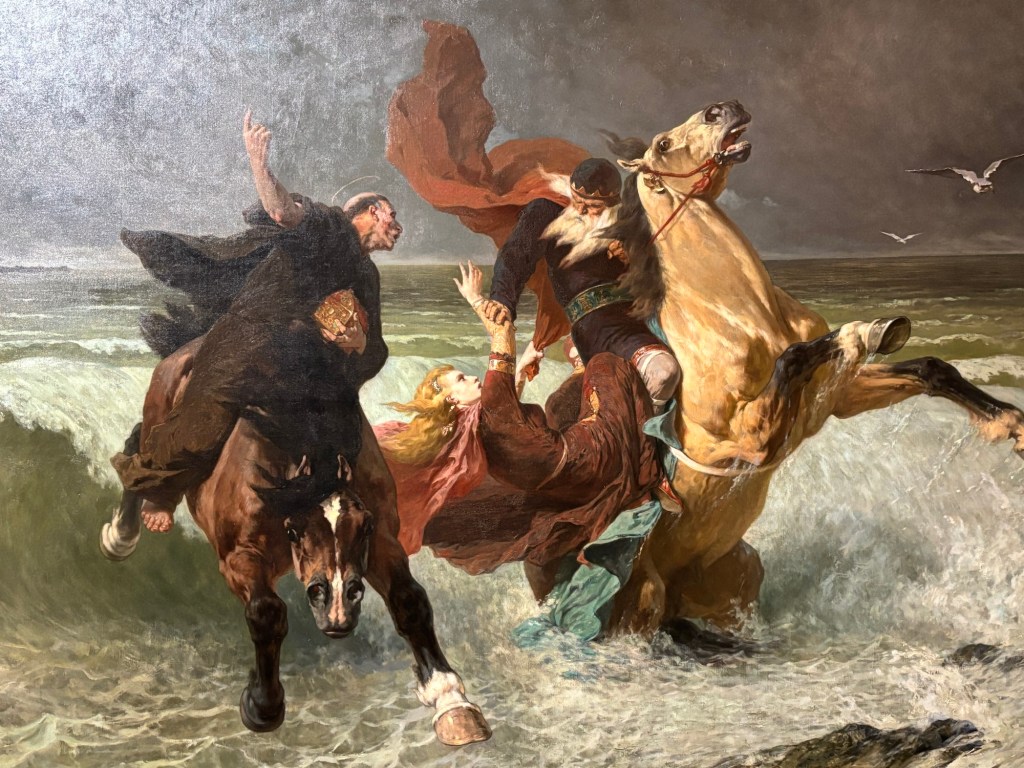
The first one to catch my eye was an enormous tableau by the 19th century artist Evariste-Vital Luminais, known as the painter of the Gauls. Titled La fuite de Gradlon, it tells the story of the escape of King Gradlon from the legendary city of Ys, the Breton counterpart to Atlantis. The tale tells that Ys was destroyed when the kingโ€™s wayward daughter, Dahut, opened the dikes that protected the city from the sea, ostensibly to allow her lover in to see her. Fleeing the destruction across the sinking floodplain, Gradlonโ€™s friend and advisor, Saint Gwรฉnnolรฉ, implored him to cast off the demon he brought out of Ys, or risk losing his own life in the endeavour. Dahut was thrown into the merciless sea, and Gradlon and Gwรฉnnolรฉ escaped with their lives. I guess that makes it the oldest account of the โ€œbegone thotโ€ meme.

I have always been captivated by stories of Atlantis. Dig deep enough and youโ€™ll find stories of sunken cities all over Europe: Tartessos, Akra, Saeftinghe and Rungholt. Tolkienโ€™s Numenor might even be considered a fanciful addition to that list. I should give this Ys legend a closer look.


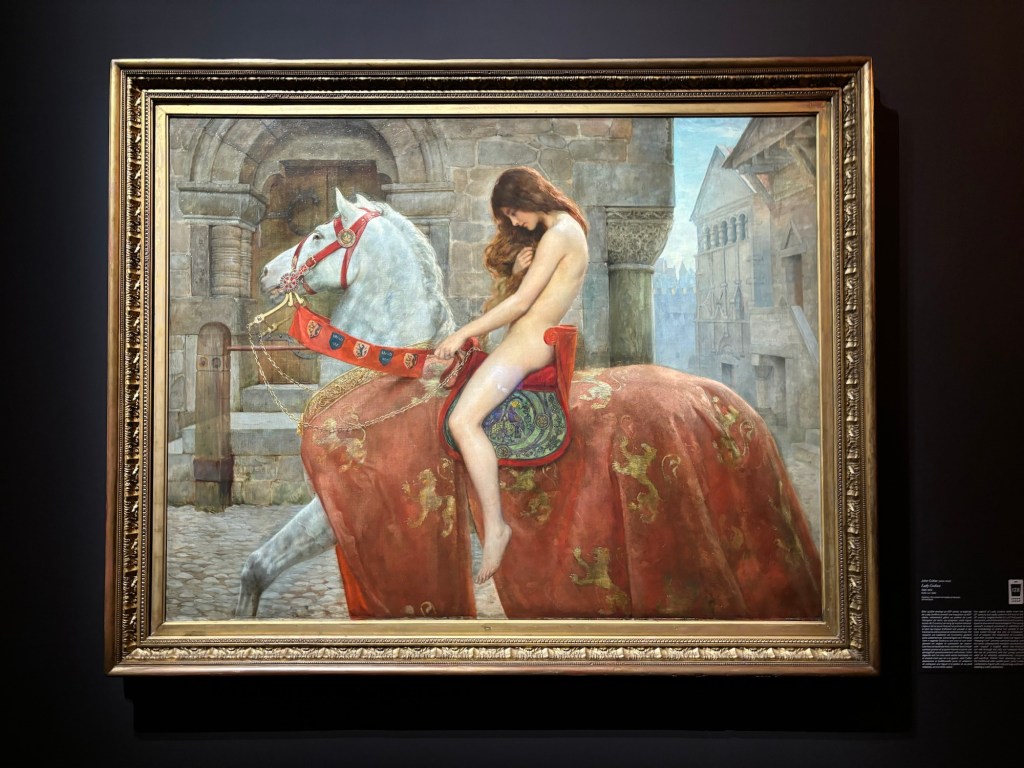
No prizes for guessing the subject of this one: itโ€™s the naked ride of Lady Godiva by the English pre-Raphaelite painter John Collier. Most depictions of this legend have her riding side-saddle, an enduring medieval custom that preserved a womanโ€™s modesty by keeping her knees together while reducing the risk of an accidental tear of the hymen (the age-old proof of virginity). Collier has her riding astride, all the stronger for her position, focusing on her dauntless courage in the face of her husbandโ€™s oppression.

It isnโ€™t easy to remember oneโ€™s sexual awakening, or when and where it began. Iโ€™ve seen various authors ascribe theirs to a range of sources, from the older siblings of friends and schoolteachers to National Geographic magazines and Uma Thurmanโ€™s role in Pulp Fiction. I didnโ€™t exactly gobble up popular culture in the Nineties and Noughties with the same fervour as my classmates, so I think mine started with an illustration of Lady Godiva in a childrenโ€™s book of folktales and legends – if not with the Little Mermaid (setting in motion a lifelong fascination with red hair that has proved impossible to shake).


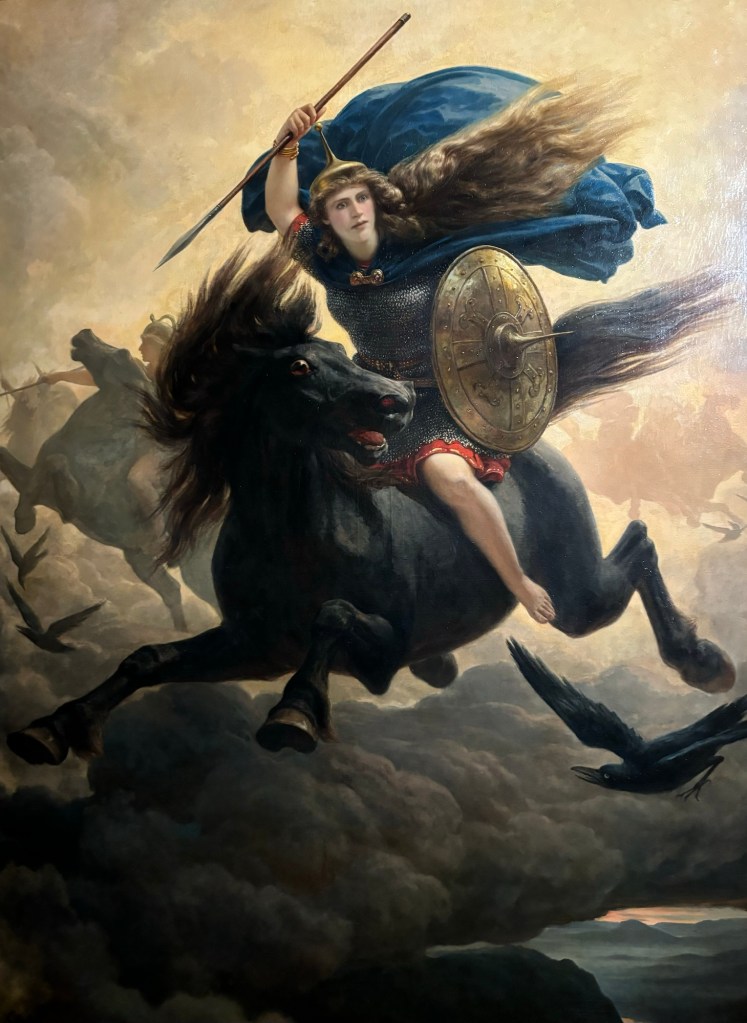
You couldnโ€™t have an equestrian exhibition without at least one painting of the famous Valkyries of Norse legend, shield-maidens and psychopomps that herd the souls of the slain to Valhalla, the Hall of the Dead. Itโ€™s a dark and moody piece, but I would have given a great deal to see Peter Arboโ€™s more famous painting, ร…sgรฅrdsreien, which depicts Odinโ€™s โ€œWild Huntโ€, a spectral apparition said to appear on stormy nights as a herald of woe and disaster for the beholder. Iโ€™ve had a thing for that folktale since I found its equivalent in Cataluรฑa, centred on the doomed Compte Arnau who rides again at night with skin afire, pursued by his hungry hounds. Thereโ€™s even a country song by Stan Jones about the famous โ€œGhost Riders in the Skyโ€ that Johnny Cash went on to cover, which has the Valkyries of old trade in their helmets for stetsons.

I do love it when a myth goes global.


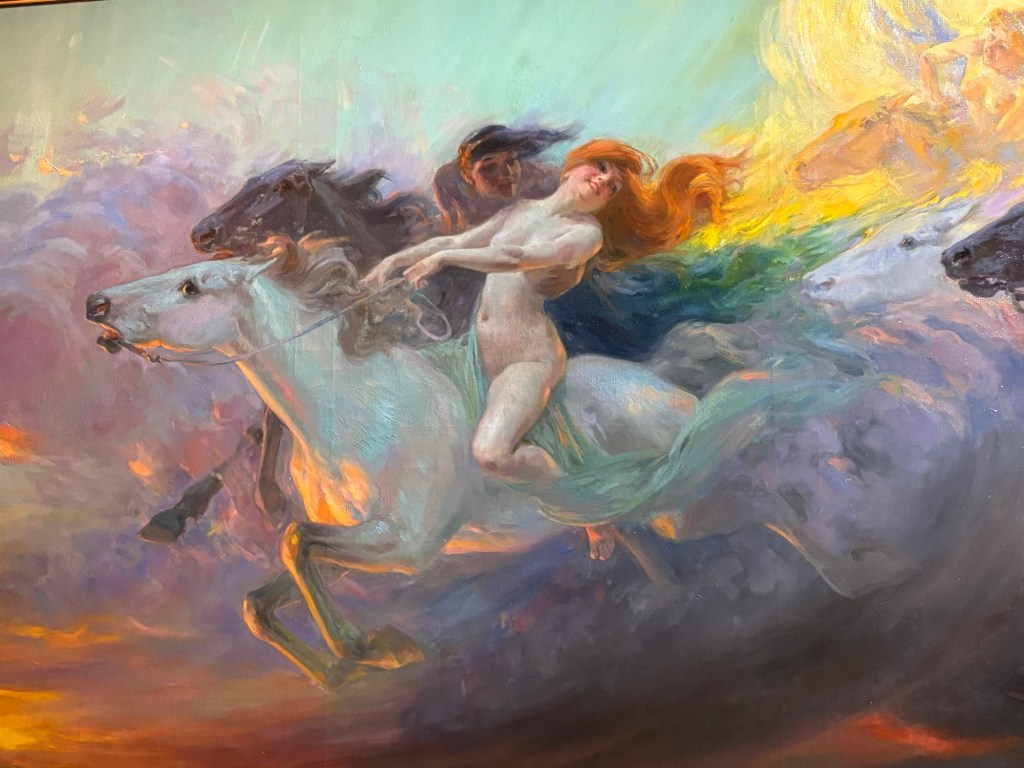
One painting in particular caught my eye (and not just because the leading lady has red hair!): Crepรบsculo by the Spanish painter Ulpiano Checa y Sanz. Even without the aid of the title, you know straight away what youโ€™re looking at by the colours alone: the halcyon flash of twilight, as the last rays of the setting sun scatter across the darkening world in a brilliant array of colours. Am I glad that the painting that really took my breath away was crafted by a Spaniard? You bet. The landscape below reminds of the opening crawl of the Charlton Heston El Cid film, and in its strange and featureless way, it is so very Spanish. Foreign painters of Spanish scenes often play up to the Romantic stereotype of dusky maidens with hooded eyes lounging on street corners with flowers in their hair, so itโ€™s nice to see a native sharing my weakness for a change.


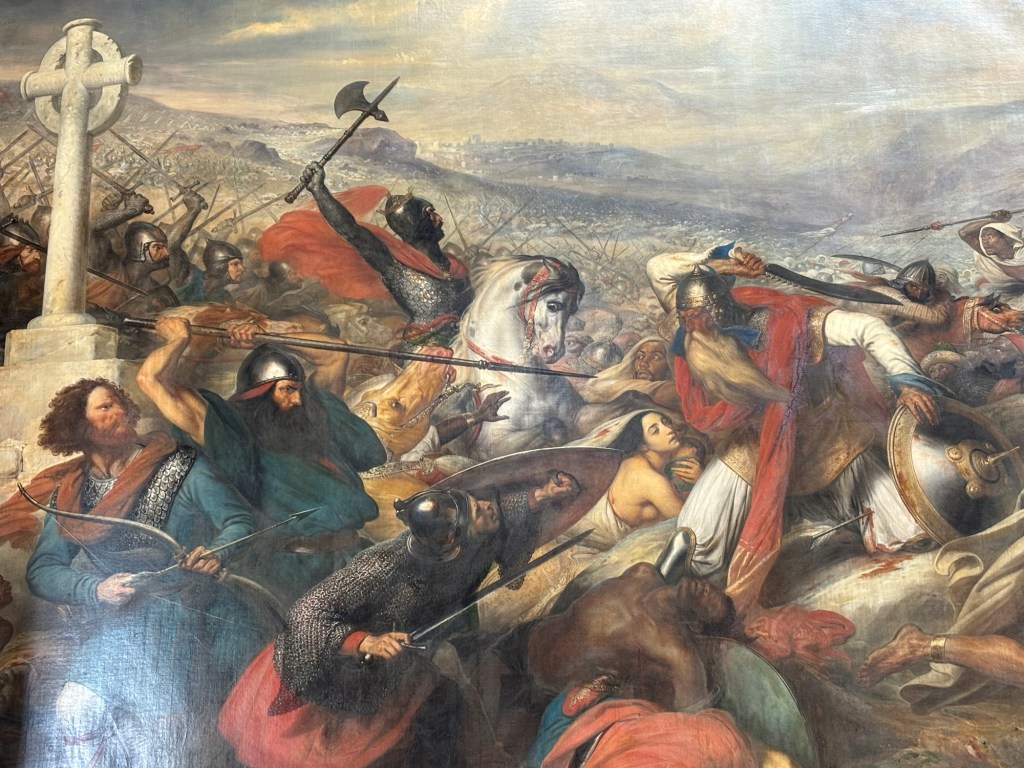
Finally, a painting I really didnโ€™t expect to see, but one that must have been at Versailles for some time, as it was not in the equestrian exhibition but in the palaceโ€™s Galรฉrie des Batailles. As patriotic paintings go, itโ€™s got to be up there with La Libertรฉ guidant le peuple by Delacroix (though perhaps not as widely known). This is Charles de Steubenโ€™s Bataille de Poitiers en octobre 732, and it tells the story of the decisive battle between the Frankish forces under Charles Martel, โ€œthe Hammerโ€, and the invading Umayyad army Abd al-Rahman al-Ghafiqi. I must have seen this painting a thousand times for it is tied up with the history of Spain, and of Europe itself: had the Umayyads not been stopped so decisively, they might well have gone on to conquer the rest of Europe. Itโ€™s one of those real watershed moments that comes around but rarely in history, and I was amazed to see the real thing – which is, like the armies it portrays, vast.

Not a good time to be a horse, or a European for that matter, but what a find!


Well, thatโ€™s quite enough painting perambulations for one post. Iโ€™ve just arrived in the pirate city of Saint-Malo where the sun is shining and the water is crystal clear. I think Iโ€™ll go for a dip while the weather holds! BB x

Up and Down

When Iโ€™m on the road, I have a real complex about fitting in. It must be a side-effect of being a linguist, but I cannot stand the idea that I might stand out as a foreigner, if I can help it. Usually itโ€™s simply a question of dressing appropriately, but it also makes me think very hard about my accent when I speak. This has had some brilliantly cringeworthy outcomes, such as getting into a blazing row with a taxi driver in a French that has never been as fluent since, and defaulting to a makeshift (albeit stateless) American accent while riding the Amtrak train two weeks agoโ€ฆ The worst has to be that two-hour drive in a Luton van with a dyed-in-the-wool Yorkshireman in my university days, where I was so self-conscious about my southern accent that I feigned a northern accent so as not to come across too posh… My housemate, a Wensley lass herself, took an exceptionally dim view of the whole affair. In her own words, my accent had only made it as far as Sheffield.

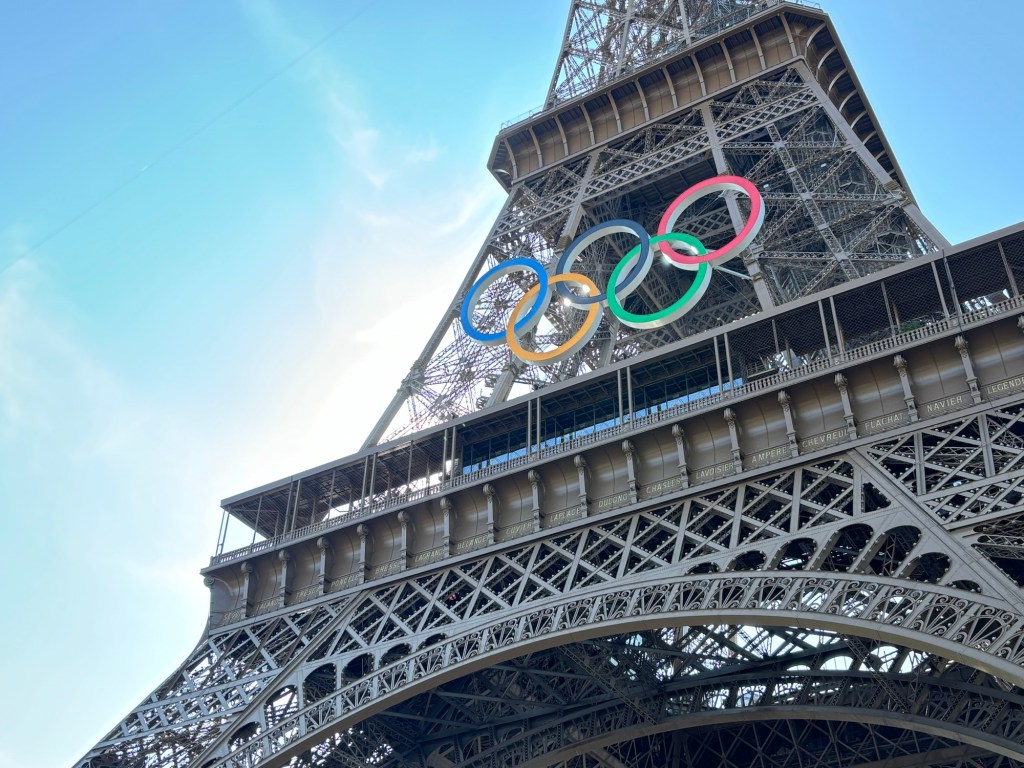
Fortunately, Iโ€™m in France, not Sheffield, and with just over a week to go until the Olympic Games begin, the city is so full of tourists that itโ€™s probably easier to blend in as one of them than to ape any Parisian. So I caved and bought myself an Olympic T-shirt, since itโ€™s unlikely to come back here in my lifetime.


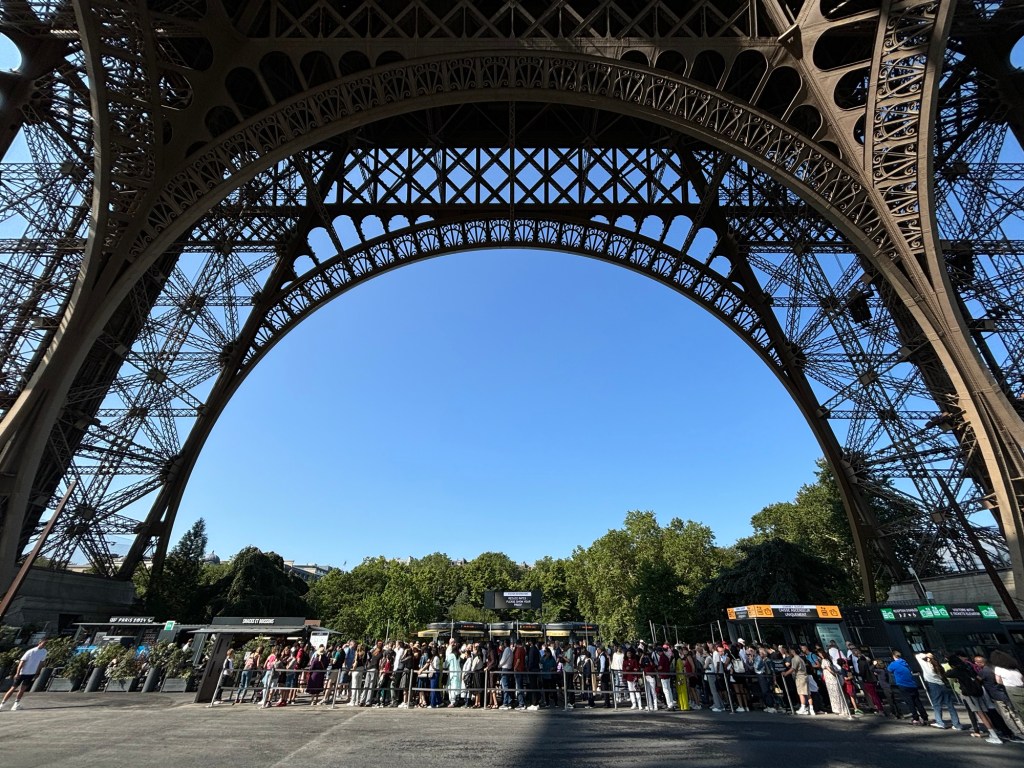
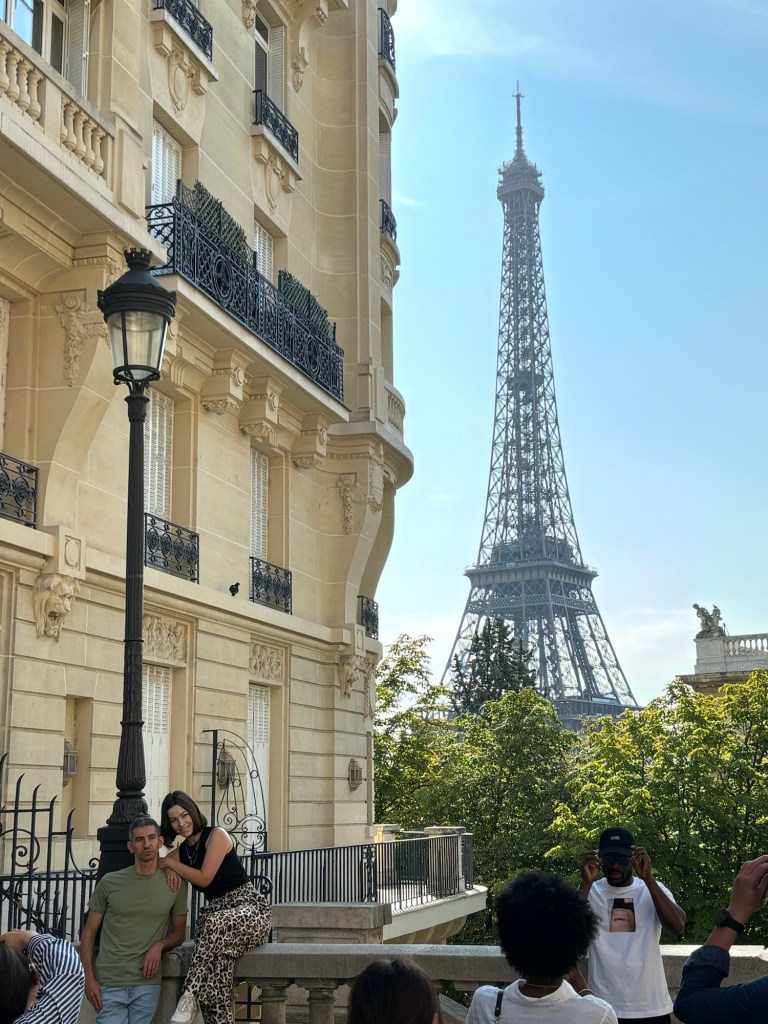
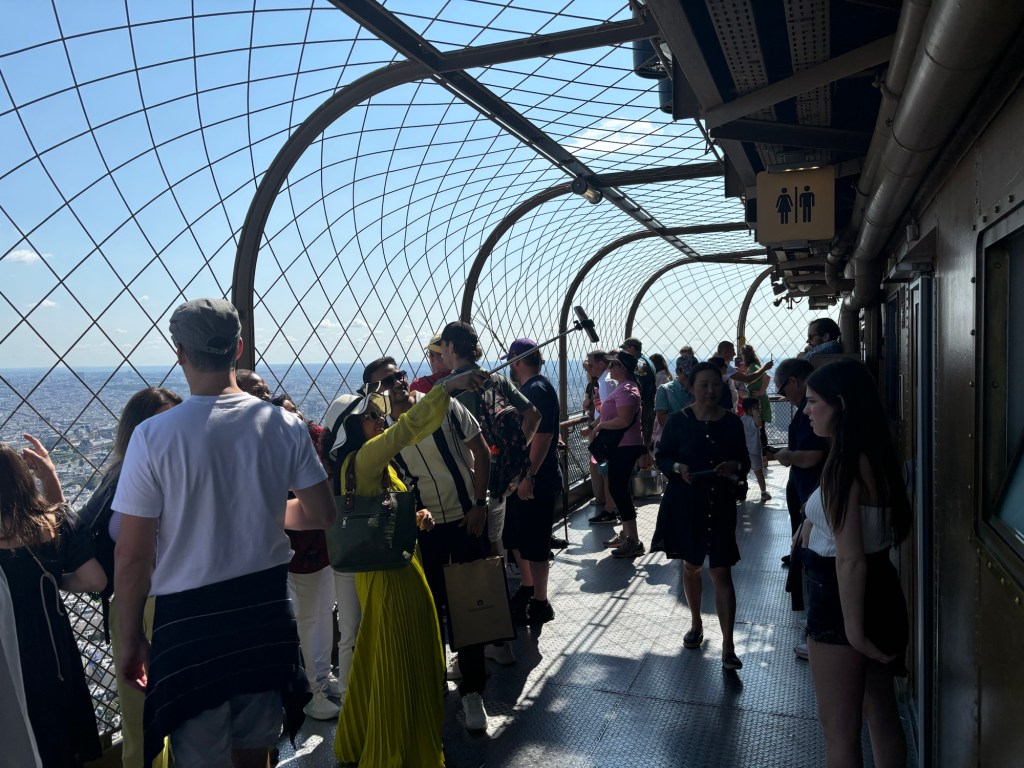
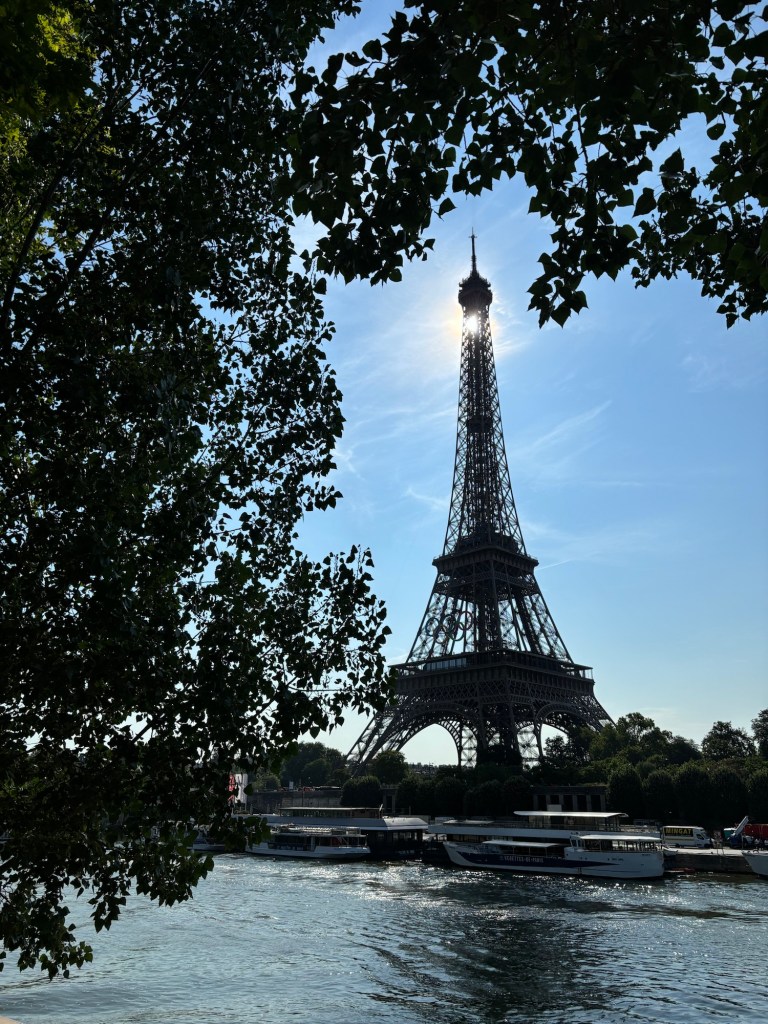
I only have the one full day in Paris, so I decided to make the most of it and go supertouriste for the day. With Nรดtre-Dame still under heavy repairs after the fire of 2019, and the Louvre fully-booked up for days, that left the Eiffel Tower, lโ€™Arche de la Triomphe and the Chรขteau de Versailles. I didnโ€™t really set out with a specific itinerary in mind this morning – I rarely do when Iโ€™m traveling solo – and the decision to join the queue for tickets up the Eiffel Tower was very much a spur-of-the-moment one. After all, the website said that all the summit tickets were sold out, and while the views from the second floor are good, whoโ€™d make the climb and not go all the way up?


Turns out the website doesnโ€™t know jack. The queue was about half an hour long, but when I did get there the ticket seller simply raised an eyebrow when I inquired about the availability of summit tickets and said โ€œbien sรปrโ€. So if youโ€™ve considered seeing the tower on your trip to Paris and you havenโ€™t made any reservations, fret not – they always keep some to sell on the day.


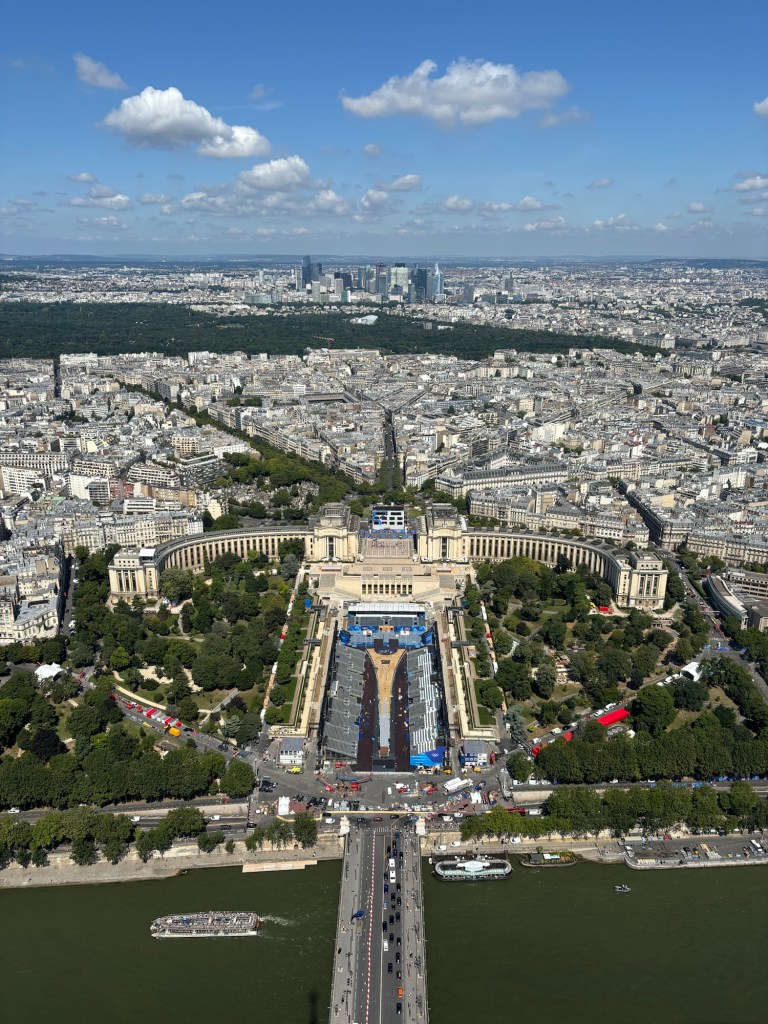
Preparations are well underway for the Olympic Games here in Paris. The Olympic torch has completed its relay of the various dรฉpartements, including far-flung Outremer, and is now circling the city in an ever-shrinking spiral. All around the city, cyclists are coming and going with pink signs in their panniers, pointing visitors in the direction of this or that event. Stadiums and stands have sprung into being like enormous steel mushrooms, and the avenue that stretches from Trocadero to the ร‰cole Militaire now hosts a giant show ground, which looks like a building site from the ground but a lot more like a Roman circus from above.

Itโ€™s also impressive just how big the Bois de Boulogne is. Hyde Park may be a green lung for the heavy London air, but it pales in comparison to the dark forest that has clung on in Parisโ€™ northern district, as though threatening to break the encirclement and rejoin its sister Meudon in the west, given the opportunity.


The summit of the Eiffel Tower really is quite something. Photos donโ€™t really do it justice. Thereโ€™s any number of skyscrapers that have now beaten its giddying record, but none so old, so charming, so immediately recognisable. Itโ€™s quite something to perch high above the City of Light, pigeon-like, and join the ranks of historical characters who have stood in the same spot: kings, shahs and statesmen, warmongers, tribal chiefs and Buffalo Bill. Youโ€™re more likely to be elbowed out of the way by an errant child angling for a better view or jostle for space with a Brazilian family taking every possible angle of each other than you are to meet any of the former, of course, but who knows? With the Olympics converging on the city, nowโ€™s as good a time as any to go stargazing up the Eiffel Tower.


Iโ€™ve been a bit reckless with the traveling this summer. Iโ€™d like to argue that this latest venture is purely tactical, with French being a very valuable commodity where Iโ€™m going, but itโ€™s also methodical: itโ€™s a very good way of keeping busy in the yawning maw of the summer holidays, which can go on and then some if you donโ€™t find some way to keep busy. At the moment, one wedding after another plasters my social media feed as old friends tie the knot. It should make me smile, but on one level it always reminds me just how cut off my career has left me. Thatโ€™s just one of many reasons Iโ€™m moving to a new job and a new part of the country this summer. Itโ€™s high time I hit the reset button and started from scratch.

But until then, I have the joys of the open road. Perhaps itโ€™s my way of justifying my existence in these long, empty stretches we call holidays. I might have missed the boat festival in Brest by a matter of days, but Iโ€™m really quite excited to explore Britanny. After all – itโ€™s supposedly the location of the indomitable Gaulish village of Astรฉrix and Obรฉlix. Between those two comic rascals and St-Maloโ€™s long history of piracy, I should be in for a treat! BB x

Looking for Love in Paris

I started learning French when I was around five or six years old. A lady used to come to my primary school and ran a French class as an after-school club. I remember it so distinctly because the teacher always brought those strawberry-favoured biscuits that I used to devour. I think theyโ€™re called Lulu ยซ barquettes ยป, but ever since one of my school-friends described them as โ€œvagina biscuitsโ€, the unfortunate moniker has kind of stuck.

What Iโ€™m trying to say is that Iโ€™ve been studying French for twenty-five years of the thirty Iโ€™ve been alive. Perhaps thatโ€™s why I burned out at university.


Iโ€™m on the road again, and this time itโ€™s Paris. Iโ€™m very much aware that itโ€™s been years since I had to speak French outside of a classroom setting, so I have come out here to put that right. I also have another quest in hand: I have to kindle the fires of a slow-burning romance with France and the French. Unlike Spanish, which had me at hola, I have never been as besotted by my third language.

There are good reasons for this: I have strong family ties to Spain, the landscape and wildlife were just that much more exotic in my early days as a kid naturalist, and I never had the chance to lose interest due to starting over with the same textbook three times at three different schools like I had to with Encore Tricolore (two more encores than I cared for). It was easy to fall for Spain: she was the new girl on the block and she lit the path to finding my long-lost grandfather once again. But there was a time, and not all that long ago, when I was genuinely considering splitting my year abroad between France and Spain. I know I was at my most intrigued in my sixth form years, thanks primarily to an iron-willed teacher (who scared the living daylights out of us all) and an immensely encouraging language assistant, who never failed to find an angle for me to explore in her lessons. So itโ€™s not like Iโ€™m starting from scratch. The attraction has always been there, albeit buried deep.

And thatโ€™s what Iโ€™m here to do. I had a thing for France once. It might have fizzled out over the years, but I know itโ€™s still there. I just have to find the spark. And where better to start than Paris – the city of light?


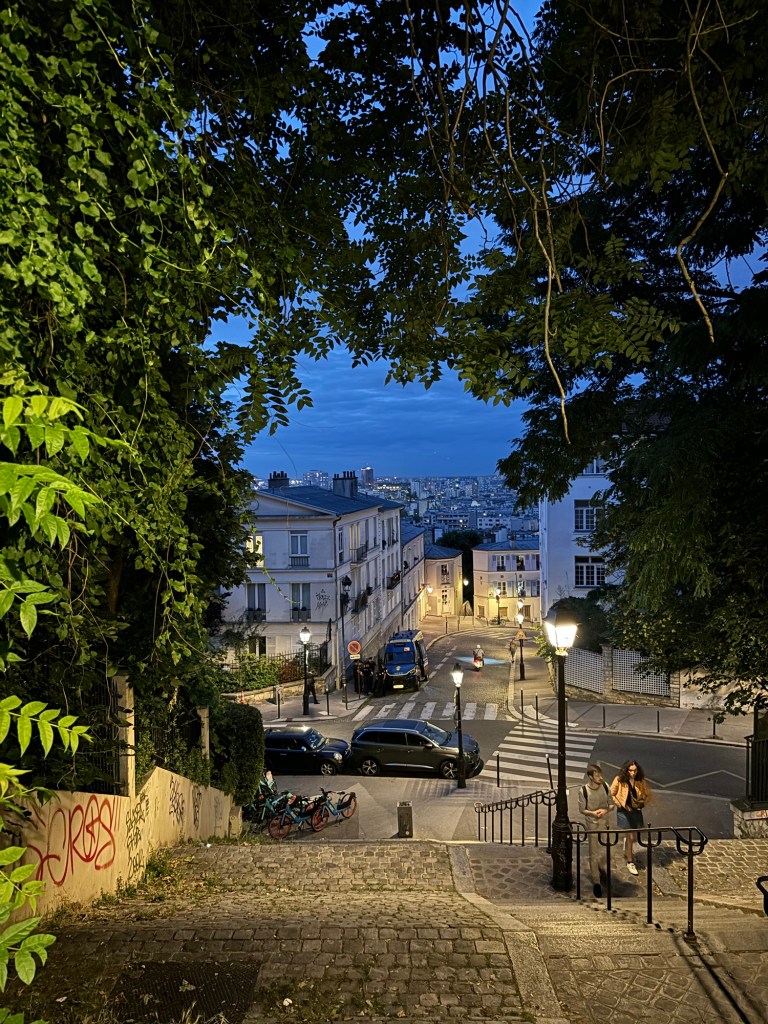
I havenโ€™t been to Paris since I was eleven, and the last time I was here I climbed up the winding steps of Montmartre to the domed towers of Sacrรฉ-Cล“ur, so I figured that would be as good a place as any to start. The gendarmerie were out in force: the Paris Olympics are now only days away, and security in the city seems to be tightening up and fast. That didnโ€™t stop the locals from having a good time, blasting music from the steps of the church, waving off the Indian lovelock vendors and generally having a good time.

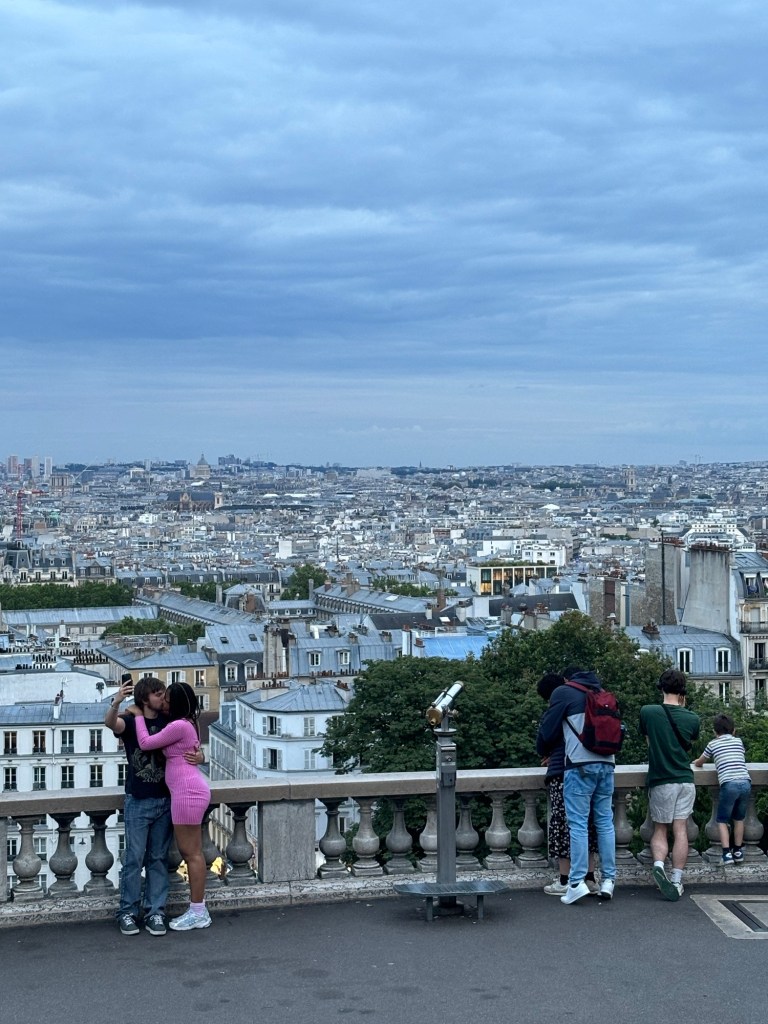
Paris really is a beautiful city, even for the solo traveller, though I feel itโ€™s absolutely a destination best enjoyed with a partner. I got much the same impression in Venice a couple years ago. Everywhere you look thereโ€™s a couple sharing a kiss, taking a selfie, holding hands at a cafรฉ. It makes a welcome change from the awkward coolness of the British. We could learn a lot from these masters of the art.


Letโ€™s play this like a dating profile. Letโ€™s get serious. Monogamy is out of the question since Iโ€™m not about to be unfaithful to Spanish, so Iโ€™m hoping French is willing to share. Distance doesnโ€™t bother me – Paris is only half an hour away by plane – and twenty-five and over would count for every one of those years I have spent grinding French. I am open to a short-term relationship with this language, but a long-term would be preferable (especially as I may well need French as my sledgehammer to get into the Spanish education system someday). Words of affirmation are 100% my love language, so Iโ€™m hoping I can find a warm spark within the infamous chilly disposition of the Parisians. And while my music tastes arenโ€™t likely to be all that compatible, I was a major Stromae fan in my university days, and Iโ€™ve always had a thing for Afro-French artists, like Baloji. Between that and the unsurpassable bandes dessinรฉes of my childhood (Astรฉrix, Tintin et al.), we might just about have enough in common to have a go at it. So – how about a cafรฉ date, to mettre la machine en marche?


I should find a cafรฉ and make it my own while Iโ€™m here. Thatโ€™s a plan for breakfast tomorrow, I think. You canโ€™t really get an eye for Paris unless you spend some time in a cafรฉ, after all. A bientรดt, mes amis. BB x

Help! I Left My Heart in Nashville

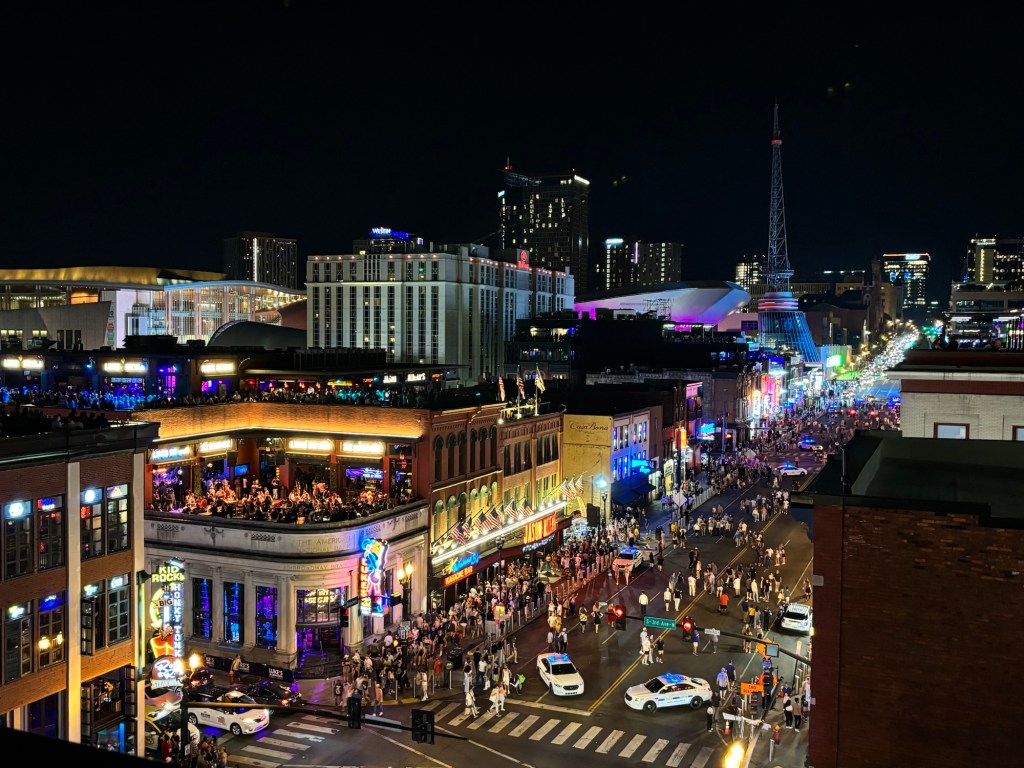
Imagine a city where every third man and woman is dressed in roper boots and ten-gallon hats. Bars with gaudy neon signs line the Main Street, bearing the names of stars of the Country music scene. Live music sails out of the windows of every floor. Every. Floor. A city where, despite its infamous popularity with bachelor and bachelorette parties, the folks still turn a welcoming smile on you and ask how youโ€™re doinโ€™. A city where, as the sun goes down, the streets seem to glitter with the reflected light off the rhinestone-studded outfits worn by revellers in the street.

This is Nashville. And itโ€™s quite unexpectedly captured my heart.


Perhaps itโ€™s only fitting that a self-described country boy with a habit of eschewing cities should find himself very much at home in the Music City where Country music is king. I am so glad I came here. And to think I didnโ€™t even know much about the place beyond the occasional mention in the odd James Brown and Tina Turner numberโ€ฆ! Thank you, Mackenzie, for opening my eyes to this wonder.

But hold on, Iโ€™m getting ahead of myself. Thereโ€™s more to Nashville than just the frenetic delights of Broadway. First, let me take you on a detour to the strangest hotel Iโ€™ve ever seen: the Opryland Resort.


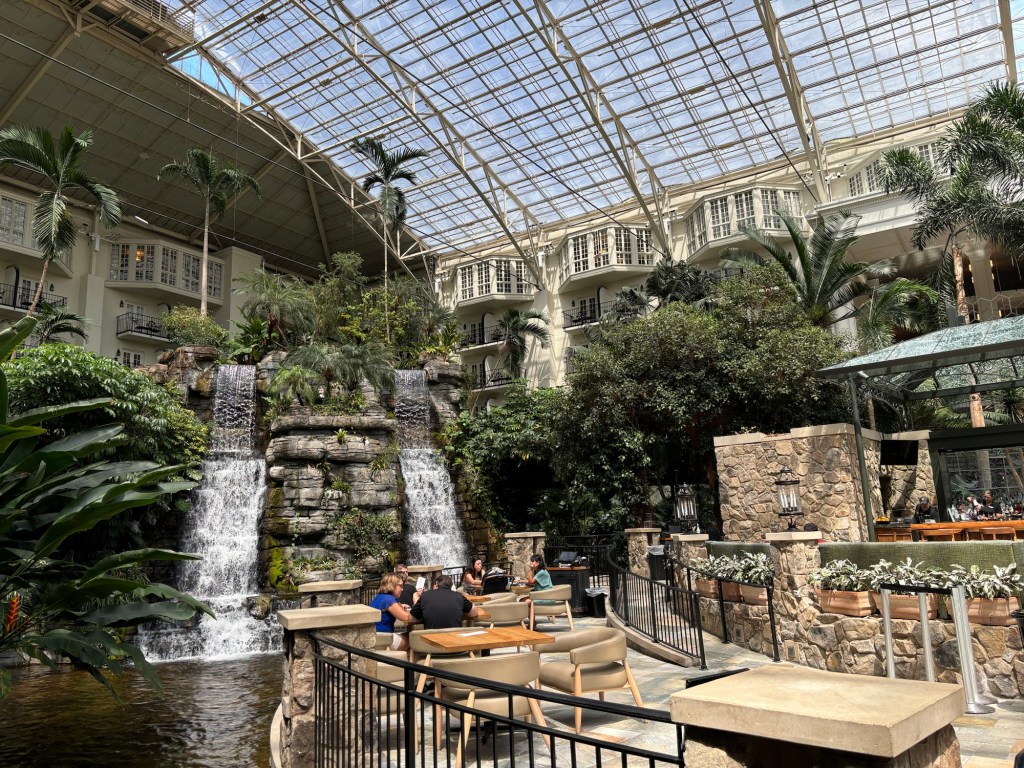
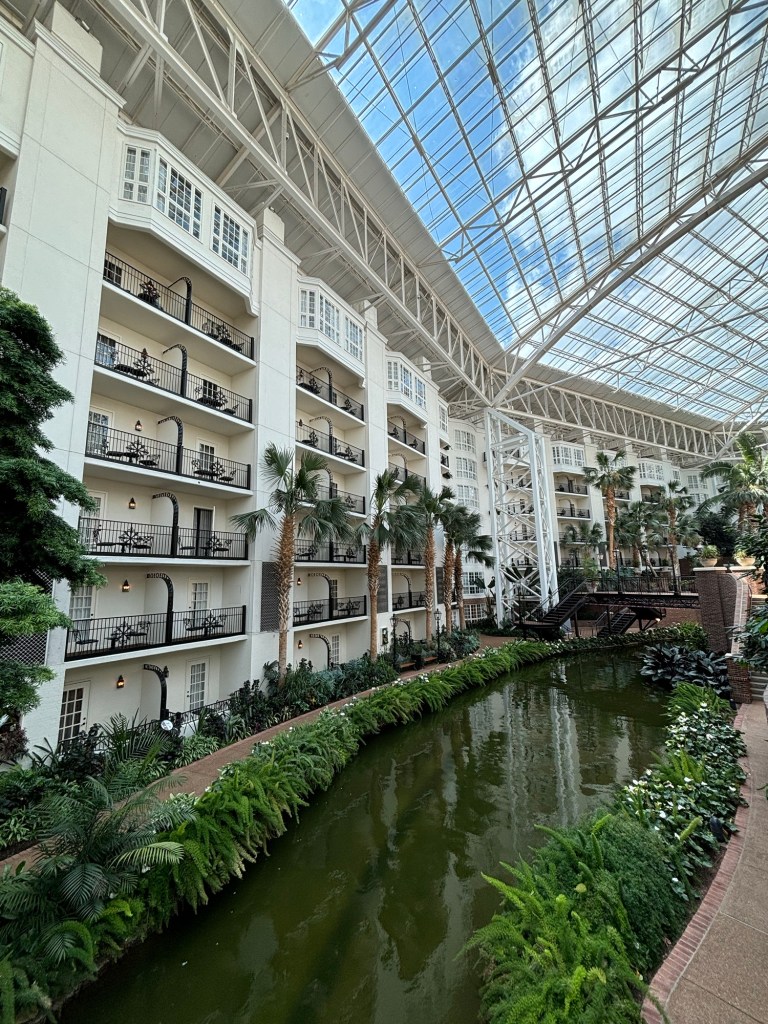
It might look like an enormous walk-in aviary, but itโ€™s actually a vast hotel and spa complex. Itโ€™s free to explore, even if youโ€™re not staying, but what a placeโ€ฆ! Itโ€™s hard to know what is the most bizarre thing of all: the waterfall, the boat tours along the artificial river, the nods to American architecture (up to and including a distinctive New Orleans home) or the fact that all of this can be found within a gigantic glass-roofed building that looks like a recycled film set for Jurassic Park III.

Well, I did want to see the America that most casual tourists donโ€™t get to see, and Iโ€™m not disappointed! Maybe Iโ€™ll be mad enough to spend the night here someday.


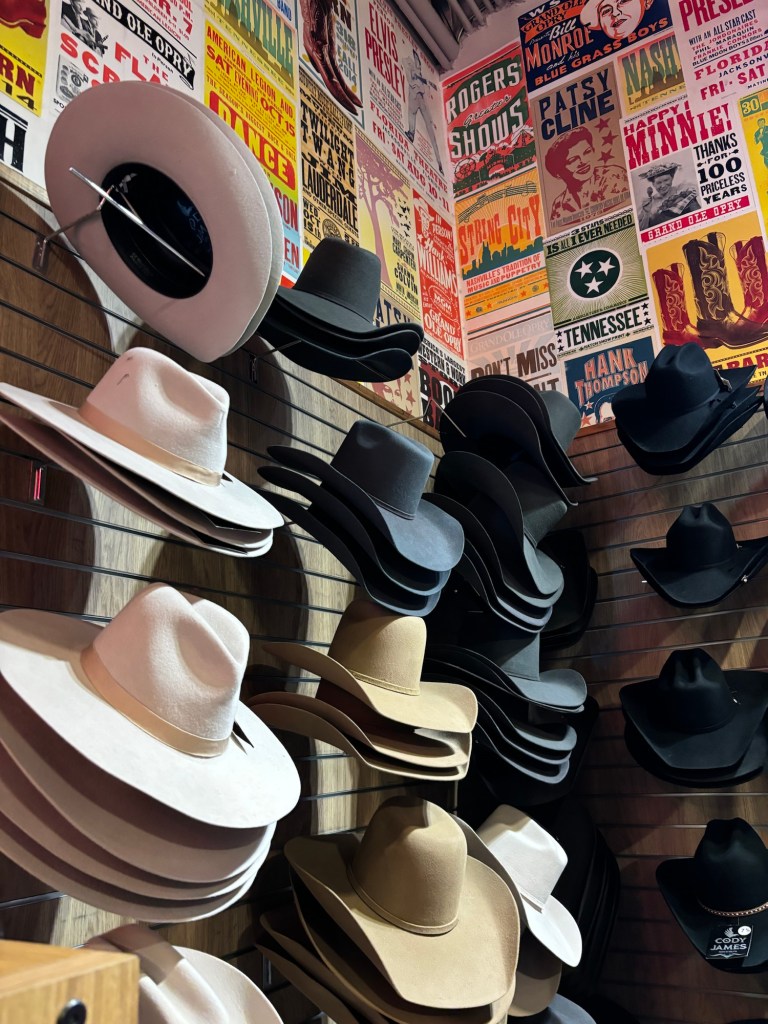
With our things stashed away in a much less outlandish (but nonetheless phenomenal) establishment, Mackenzie took me out onto Broadway for a bit of shopping ahead of a night bar-hopping and soaking in as much live music as a single night can offer. Iโ€™ll admit I was almost tempted to shell out on a pair of boots and/or a hat, but in the end I settled for a Country-style shirt. After all, itโ€™s likely to get a little more mileage than the hat!


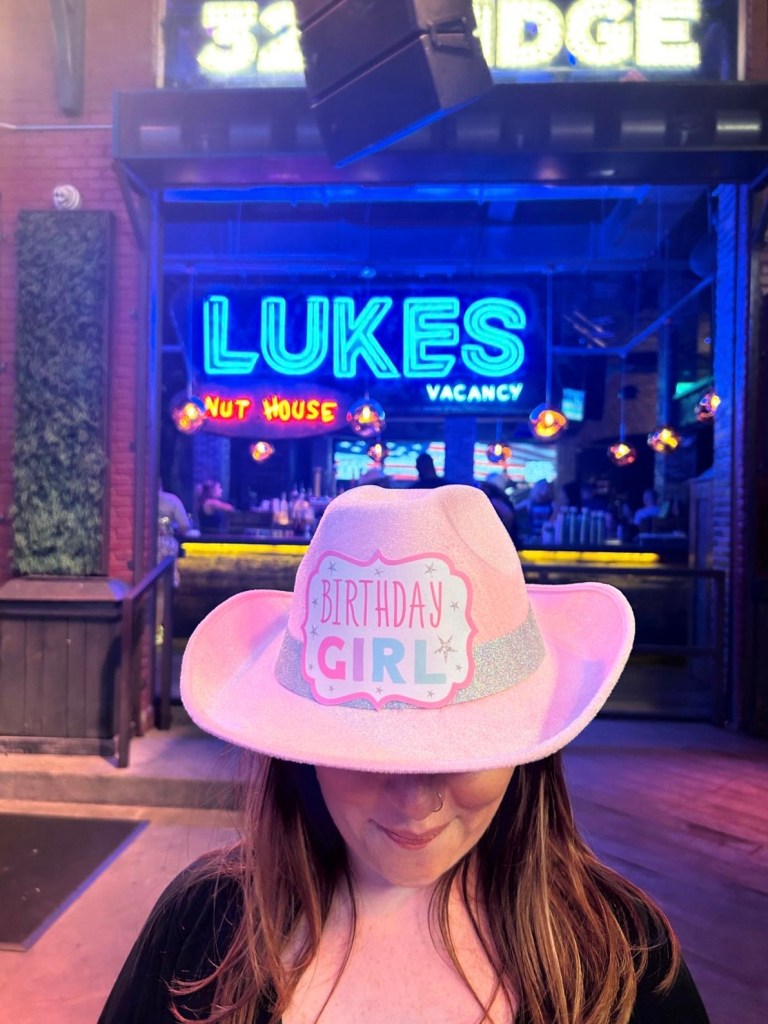
Kitted out in my new Nashville wear, we grabbed a couple of drinks at Lukeโ€™s 32 Bridge, where we met up with the rest of Mackenzieโ€™s friends. One of the local bands was kicking up a storm on the roof with a couple songs I recognised. Iโ€™ve done my homework with this genre, which I confess is relatively new to me!


I caught myself singing along to Country Girl (Shake It For Me), Chicken Fried and Save a Horse (Ride a Cowboy), all of which seem to be crowd favourites (and all of which have now found their way into my golden jukebox playlist on Spotify). More impressively still, they wound up their set for the evening with an almighty medley that included the one and only Play That Funky Music, the song I used to close gigs with back in my schooldays. And what a mashupโ€ฆ! Yes, I was taking notes! I might be on holiday, but Iโ€™d be a fool not to jot some ideas down for house music when it comes around.

We didnโ€™t get any free drinks for the birthday hat, though birthday wishes were flying in from all directions from well-wishers on the street, which was sweet. The drinks we did get, though, were fantastic. It would be madness to come to Tennessee and leave without sampling the famous Jack Danielโ€™s Tennessee whisky, which I had in the form of a Fireball. Yum!


To quote Luke Bryan: I donโ€™t want this night to end. But it did, like all good things do, and in the best possible way: with a little bit of chicken fried to share. I havenโ€™t tried nearly enough of this Southern speciality, so I guess Iโ€™ll have to come back and remedy that someday.

Nashville is something else. If youโ€™re even partially interested in good music, grab your boots and make a pilgrimage here as soon as you can. Itโ€™s got to be the most fun Iโ€™ve ever had in the city and thatโ€™s a fact.


Say, that tower looks like the Eiffel Tower. I wonder if thatโ€™s intentional. If thatโ€™s not a reminder from the universe that I need to spend some time in France this summer before teaching A Level French for the first time (God help me) then I donโ€™t know what is!

See you again sometime, Nashville. I think I left a bit of my heart with you. BB x

Shooting Star

Her father was a man โ€œled by a starโ€ as the natives say, and would follow it over the edge of the world and be no nearer.

Henry Rider Haggard, The Ghost Kings

We travel for all kinds of reasons. Sometimes you set out to see a place because you have a particular place in mind: maybe you heard about it somewhere, or saw it in a magazine, and need to see it with your own eyes. Sometimes it stems from a deep-seated desire to get away from home: โ€œanywhere but hereโ€. And sometimes, when the time is right, the driving force is beyond your control. It starts like a tide coming in, the waves rushing about your feet, warm and wonderful. Before you know it, the waters are racing back the way they came in a cascade of glittering sand and silt, pulling you into their wake, as though youโ€™re standing upon the wake of a shooting star.

That is the force that has carried me here to Alabama. Something like it, anyway. Itโ€™s not exactly on the tourist trail. Iโ€™ve certainly not seen the Heart of Dixie appear in my social media feed over the years, whereas I dare say Iโ€™ve seen enough selfies in New York, Chicago and California to make like Iโ€™ve been there myself by now. But I do like to leave the beaten trail when I can. So here I am.


Independence Day found me on a boat in the Tennessee River, a mighty tributary of the mightier Mississippi, with a merry band of Americans celebrating their countryโ€™s national holiday the right way: beers in hand, country music blasting from the speakers, the immense American sky overhead, and the Stars and Stripes billowing out behind. I could hardly have asked for a more authentic way to celebrate the Fourth of July if I tried.


We spent almost all day out on the river, which may well account for the angry sunburn that has now morphed into one of the darkest tans Iโ€™ve had in years. Or maybe the burn came from standing in the wake of that shooting star, I canโ€™t say. Either way, I had a lot of fun diving into the Tennessee River.

Some sights are so beautiful that you darenโ€™t get too close, afraid that even the lightest touch might drive you mad, but I couldnโ€™t leave America without some kind of contact with one of the two-hundred and fifty daughters of that legendary river that drains the entire continent of North America. Incidentally, itโ€™s almost certainly the first time Iโ€™ve ever swum in a river. What a way to break a habit!


My host, the wonderful Mackenzie, had one all-American experience after another to throw my way. After watching the Fourth of July fireworks in a parking lot in downtown Huntsville, she took me to a diner for a proper American-style brunch of sweet tea with biscuits and gravy – consider me converted! – followed by a visit to Target, Americaโ€™s legendary superstore, where I was amazed by the low cost of clothing. And to top it all off, we went to a baseball game at the local stadium between the Birmingham Barons and the local team, the Huntsville Trash Pandas.

Baseball – at least to this outsider – seems to be more of an event than a game. Nine innings across nearly three hours of play, broken up by a stream of events intended to involve the audience. Along with the opening national anthem, I clocked a kidsโ€™ race against the mascot, a couple of singalongs with a hype man and the sparkly cheerleaders, a cabezudo-style โ€œspace raceโ€ in support of a local enterprise and even a dance-offโ€ฆ all to keep your attention throughout the marathon experience.

With all that going on and more, I was very distracted, so I canโ€™t say Iโ€™m any the more familiar with how baseball works, but it was such an incredible experience!


The fireworks after the game were even more spectacular than those that were set off the night before, which really is something – though deserved, perhaps, given that it was the home team that took home the win. The spectacle lasted a full twenty minutes, which is about as long as it took to leave the car park after the game. Everyone left in a mad scramble via the two exits to the car park, creating a logjam that went on for ages. One stereotype is true: America is a country that has yet to learn how to queue properly.


Nashville calls tomorrow. I have a good feeling about that. BB x