Knowledge – For its Own Sake

Bristol Temple Meads, 9.02am.

The May half term is drawing to a close. I’ve stayed put for a change, using the time to mentally decompress after another very busy term. Four weeks remain of the school year, and while there’s not as much teaching going on, it’s still going to be an intense gauntlet of exams, reports, events and rehearsals. I’ve done a lot of much-needed spring cleaning, idle Camino planning, bouncing ideas off ChatGPT and now, a little stir crazy, I fancy a day out. So I’ve grabbed some Y8 marking and a few books (Adrienne Mayor’s The First Fossil Hunters is my current obsession) and I am now on the train bound for Oxford.

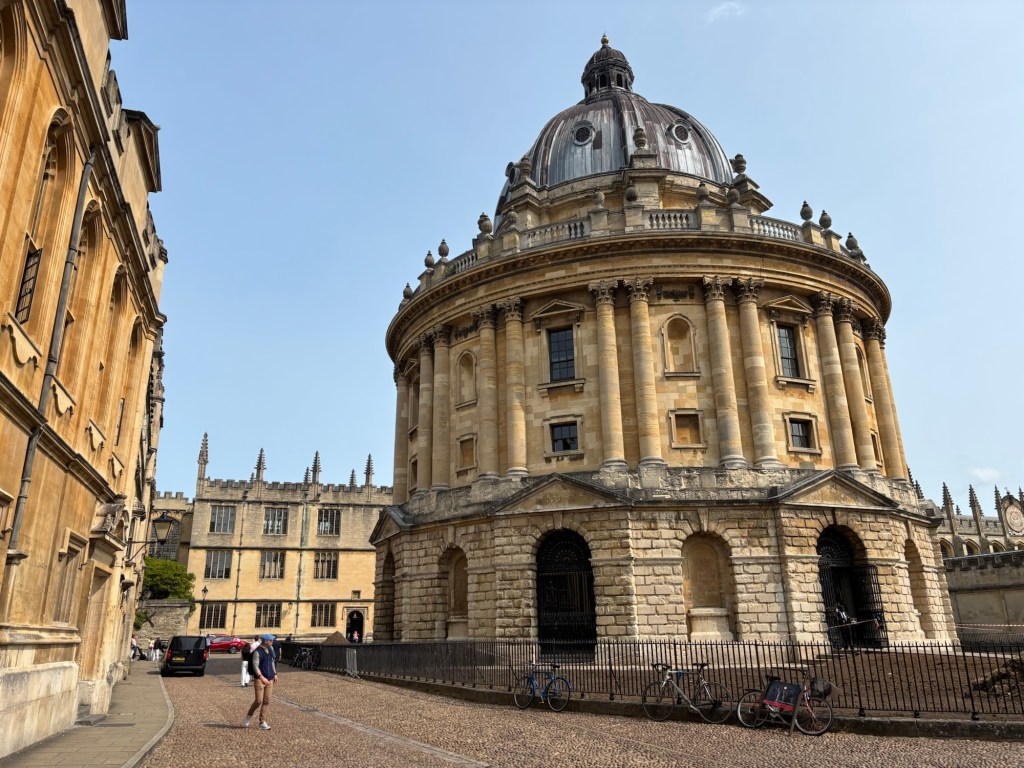
Why Oxford? Partly because I haven’t really been to Oxford before. I was there two months ago for the Oxford Schools Finals Day, but as I was leading a school trip I didn’t really have any time to appreciate the city for itself. It’s also partly for the Museum of Natural History, which is supposed to be exceptional (I never did grow out of the dinosaur phase). But it’s also because over the last few days I have started to flirt with the idea of a possible career change: setting my teaching and boarding duties aside to pursue a Master’s degree in Medieval Studies.

There’s a couple of travelers next to me on the train having a very interesting conversation. They are a curiously paired ensemble: one, with a patchy beard, AirPods in and his shirt unbuttoned to the sternum, talks in a streetwise drawl about how he stole a few cans of Red Bull from Tescos once, and how the worst thing in the world is that parents don’t discipline their kids right anymore – if he’d disrespected his dad, he’d have “had a black eye”. He drops his T’s in the words right and football and drops F bombs in the gaps. The man next to him, a young Asian in a smart shirt with his sleeves rolled up nearly to his elbows, calmly (and without a hint of profanity) explains the difference between Asia’s bullet trains and the UK’s privatised public transport system (which he calls the public torture system), the importance of location when investing in property and celebrates a model aircraft he recently won at an auction. That seems to be their connection – they’re model plane collectors. I was beginning to wonder what could possibly tie these two together.

Why a Master’s degree? Why Medieval Studies? And why has the idea only come to me now, eight years after graduating with a BA in Modern Languages and Cultures? To be honest, I’m not entirely sure. A number of reasons come to mind. Citing my Y9 class seems churlish, but it’s probably part of the bigger picture of just how much of a gear change this year has been. Challenging and engaging, but occasionally uncomfortable. I suppose that’s only natural when you up sticks completely and change schools. Perhaps that’s why some teachers never leave.

It’s a little deeper than that. I do miss academia. I have always loved the pursuit of knowledge for its own sake, and just occasionally, I find that hard to square with a job where success is so often scored against a mark scheme that shifts according to the national skill level.

I’ve just started to sink my teeth into A Level teaching, but I’m both disappointed and mildly alarmed by the lack of general knowledge of my students. Only one of mine could tell me what Scylla and Charybdis were, and that was a child in Year 10. I’ve had sixth formers before to whom I’ve had to spell out the story of Adam and Eve – we’re talking Catholic Europeans here, too – and mine was the only hand to go up in chapel two weeks ago when we were asked if we knew the parable of the man who built his house on the rock.

You could chalk that last one up to nobody wanting to look foolish putting their hand up in church on a Tuesday morning, but classical (and even general) knowledge of even the most basic sort seems to have fallen away by the time our kids reach sexual maturity. They all seem to know who Mr Beast is, though.
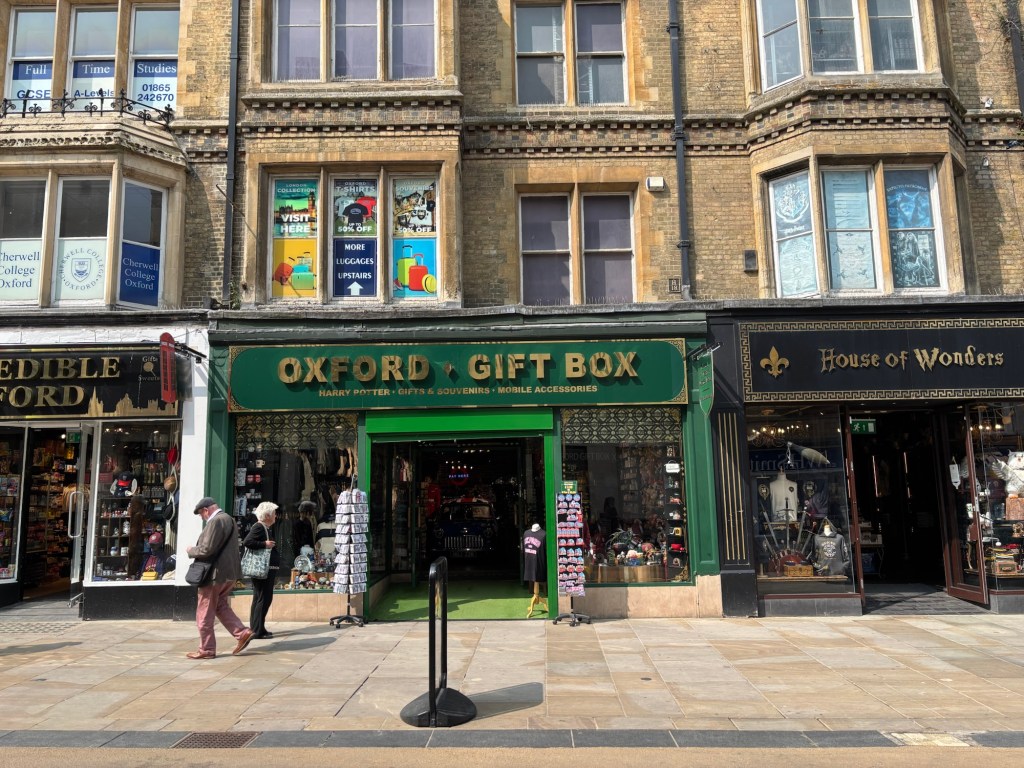

Something I wasn’t expecting in Oxford was the Pottermania. I deliberately haven’t waded in with an opinion on J.K. on here because, as with a number of topics, my thoughts are not in line with those of the rest of my generation. But one thing that is really quite depressing is that I ran into no fewer than five Harry Potter themed tours, pointing out turrets, windows and other locations used during the filming of the saga back in the early 2000s. It seems a little trite that tourists flock to a city that harbours one of the oldest universities in the world just to snap a selfie in the style of a still from a movie… I took a cohort of summer school kids on one of those trips once and they were deeply disappointed (I think they were expecting Harry Potter studios, not a Chinese woman with a ring bound pad of stills).
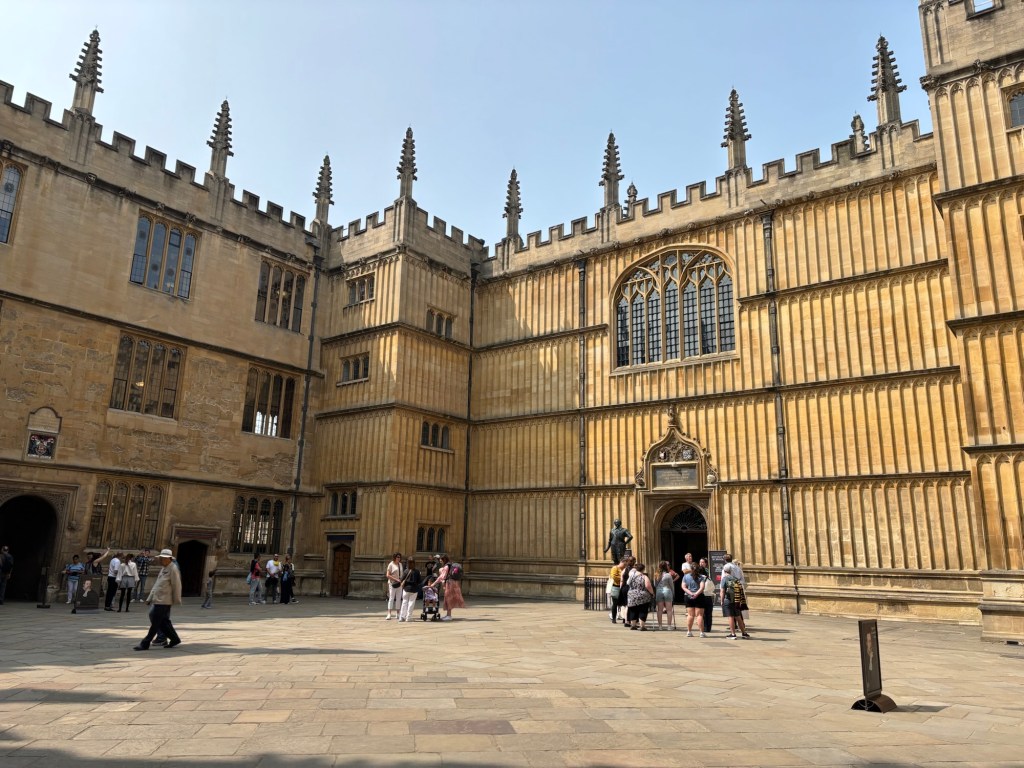

It’s times like this that I need a good kick in the shins – somebody (besides myself) to call me out for being so judgmental. Maybe that’s something I miss about university, too.


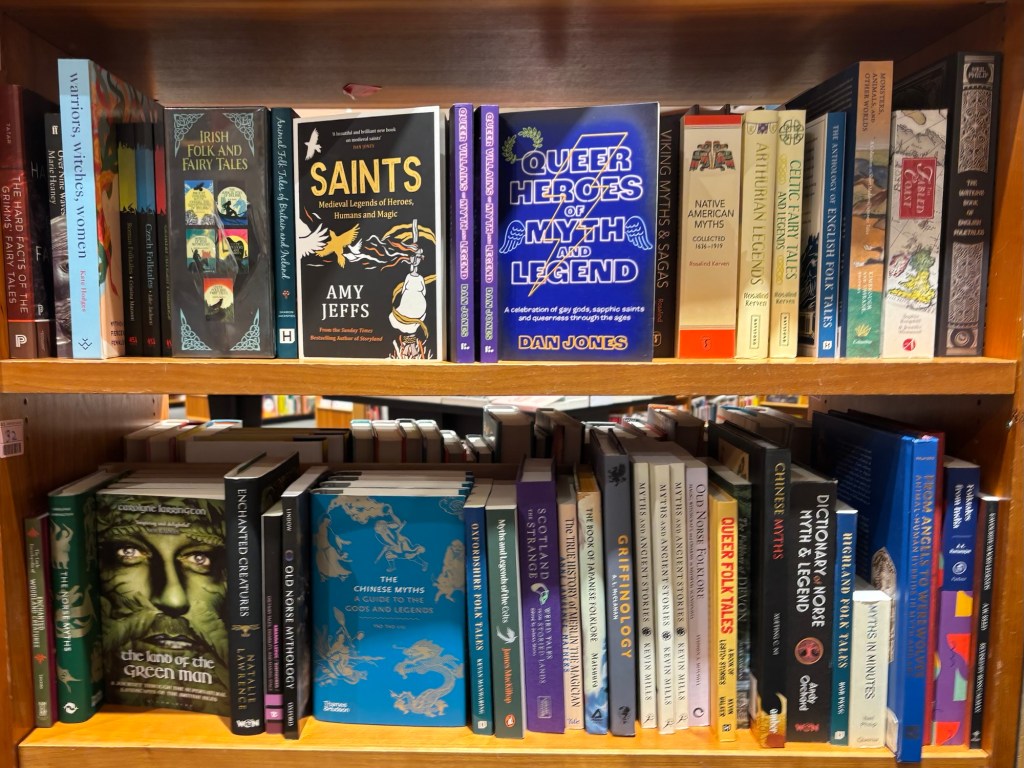
Before checking out the museum, I explored Blackwells, Oxford’s famous bookstore. The shop is particularly well-known for its Norrington Room, a literary Aladdin’s cave beneath the city that seems to have everything. I made a beeline for the Mythology and Folklore section and looked for anything Iberian.

Nothing. Tome upon tome on Norse mythology, endless volumes of British folktales, a beautiful gold-bound compilation of the tales of Anansi the Trickster and no fewer than five collections of Queer Fairytales – whatever those are – but nothing on Spain or Portugal. Nothing at all. Even Google didn’t seem to have anything.

Spain isn’t lacking in colourful folklore of its own. From my reading, it’s apparent that the combined efforts of the Almoravids, the Almohads, the Spanish Inquisition and Franco’s regime weren’t able to snuff it all out. But the literature simply doesn’t appear to exist.

I think somebody should write about it. And I’m starting to think that somebody should be me. Oxford University has a Masters course on Medieval Studies that occasionally covers Iberian founding mythology – the subject I chose for my undergraduate dissertation – and that just might be the way in… if I can get in.


I’m not really Oxbridge material. I got as far as an interview at Cambridge, but my meekness was torn to pieces in the French interview – and I really haven’t read enough of the classics. But I have read a lot of books.

I grew up on a privileged diet of literature. We had more books than anything else at home, largely on account of the fact that my mother rips through books in a single night and was thus always on the hunt for a replacement. The bookshelves in my bedroom were (and still are) crammed full of colourful dinosaurica, but sandwiched in among them was a mountain of mythology and a feast of fantasy. My mother may not have been an outspoken supporter of “fantasy shite” but she did encourage my voracious reading habits. And I know my Dad used to read to me a lot – he even read the Harry Potter books to me when they first came out.

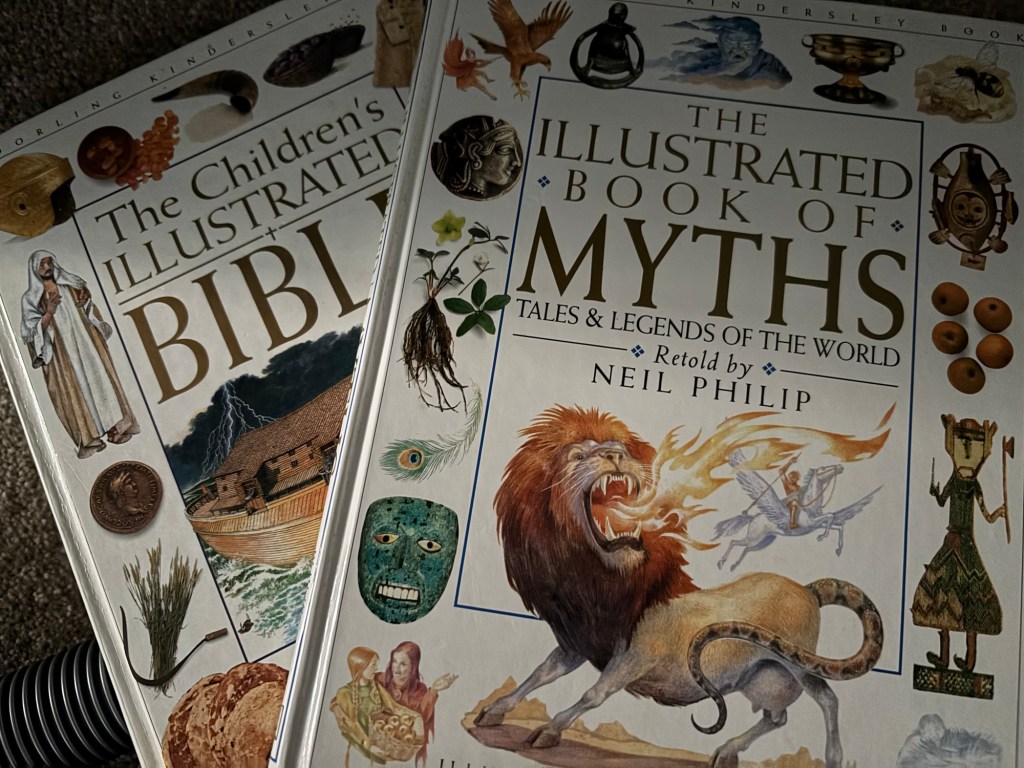
Neil Philip’s Illustrated Book of Myths played an especially large role in all of this. Atticus the Storyteller had a similar hand (and, to a lesser extent, the Age of Mythology games), but the colourful illustrations in the Dorking Kindersley compilation made it especially impactful. I must have spent literal days poring over the pictures in that book, cramming my childish head with stories of Athena and Anansi, Izanagi and Izanami, Glooscap and Gilgamesh. All tremendously important things to know – and none of it serving any practical purpose beyond the pages of the book where they were written. I haven’t even been able to use much of it in the odd pub quiz, which seem to rely on a more grounded understanding of Emmerdale and the last FA cup final than the exploits of Gilgamesh and Enkidu.

If I’m lucky enough to have children of my own someday, I will read to them from that book – even though I know most of the stories by heart. The pictures are so beautifully illustrated that I can see most of them still when I close my eyes, though it may be over twenty years since I last saw them.

Stories are how I make sense of the world. I’ve been writing stories for as long as I could write my own name. There’s not an awful lot of call for storytelling at work, but I do my best to share them with my students when the curriculum allows.

And it’s taken me a long time to realise that, after Spanish interest and natural history, the third largest collection of books in my library is all folklore and mythology – the oldest stories in the world.

Maybe – just maybe – I’m scratching the surface of the real me. I did always want to be a writer. I just didn’t ever think I could do it.

I’m still unsure. So much of my identity has been built upon the rock of being a teacher, and casting off those robes to dive into the world of myths and legends seems… well, childish at best, selfish and reckless at worst. And there’s the question of stability, job security, money and the fact that all I really want to do is find the One, raise a family and tell stories. But the void in all those bookshops is tremendously loud. Stories that aren’t told will eventually disappear, taking their worlds and their characters with them. It would be a terrible shame if the generations of the future looked back on our time and accused us of letting the ancient wisdom of the past slip through our fingers while we were so violently hypnotised by the bewitching glare of this or that Pied Piper of Instagram.

Who will remember Mr Beast five hundred years from now? What stories will they tell of him? Will his legend amaze and inspire, or will it push more and more children toward the worship of Mammon? I worry about that. I worry about that quite a lot.

I’ll give it some more thought. These are not decisions made lightly. The Camino will provide. It always does. BB x
Something Old, Something New

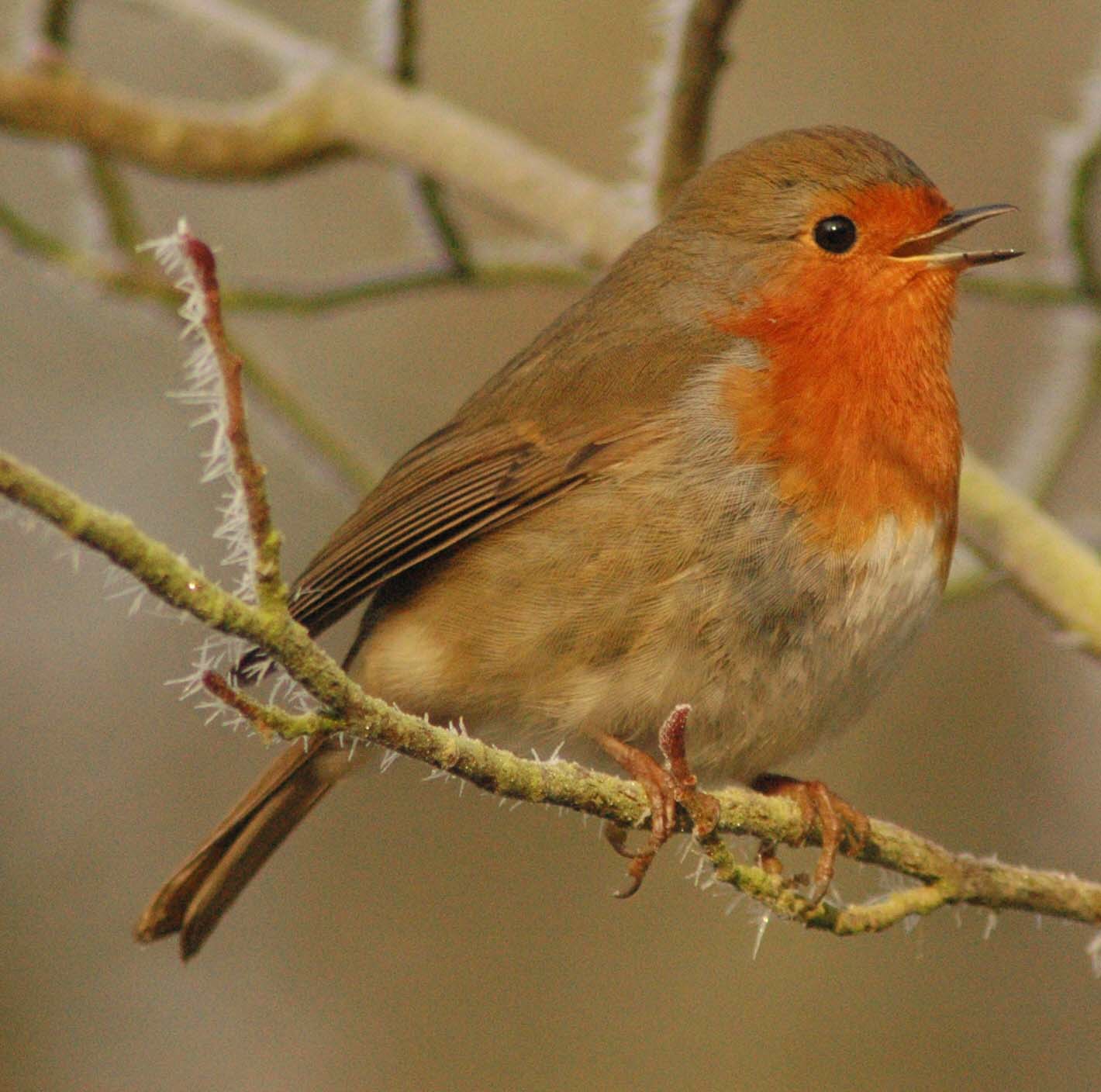
There’s a day in the second or third week of January that, at least in these cloud-ridden islands, marks the turning of the year. Not the first day of spring exactly, but an early harbinger that the dark days of winter are finally on the retreat. For me, it’s always marked by the first real blast of birdsong, and it usually goes hand in hand with a generous glow of sunlight after many days of cloud, or that infinite whitening of the sky that is so very well-known to those of us native to this rock. There’s no calling when exactly that day will fall, but when it does, it’s nothing more or less than exactly what the doctor ordered, as far as I’m concerned. I grab my journal and keys, leave the flat, walk up to the office and – boom. There it is. The dawn chorus is already in its final movement, but still going strong. The voices of robin and blackbird and woodpigeon and sparrow lift my heart skywards. I’m then in an irrepressible good mood for weeks which neither marking nor duty nights nor even thunder, rain and storm can stamp out.

I guess I can only apologise to my colleagues for the nauseous wave of positivity that nature washes over me. It’s almost first-year-of-university-level enthusiasm (which, for those of you who knew me then, you know…).

Perhaps spurred on by that wintry magic, I made two random throws this weekend. I bought a kite, and I decided to re-read one of my favourite childhood stories. The kite is easy enough to explain. I had a kite once, when I was a lot younger, which has Jeremy Fisher emblazoned on its face. If I remember correctly, it didn’t fly very well. I guess we never tried it out on a day when the winds were good. It just seemed to gather dust in one of the cupboards until, one day, it disappeared. Anyway, I’ve got the whimsically romantic notion in my head that kite-flying is one of those things I’d love to do with my kids someday, so I ordered one on that whim. It arrived yesterday, and if I get a moment’s peace this week, I’ll put it through its paces out on the South Downs.

As for the reading – alright, I confess, I didn’t do any reading per se. I had a fair amount of spring cleaning to do, but I wanted a soundtrack while I worked and I figured an audiobook would be just the ticket. I’d had Michelle Paver on my mind after dipping my toes back into her ghost stories a few days ago, which naturally conjured up memories of reading her Chronicles of Ancient Darkness series when I was at secondary school. I remember absolutely adoring the first in the series, Wolf Brother, and motoring through at least the first sequel through my school library. I cannot remember exactly whether I made it as far as Soul Eater, the third in the saga – if I did, I forgot the plot more completely than that of the second – but I remember the books rising out of a videogame-clogged adolescence like icebergs, one of precious few literary stepping stones across a goggle-eyed, pixelated river that ran at full strength for far too many years. Was it Paver’s intense attention to the natural world in her writing that hooked me? Probably. She is one of my favourite authors for precisely that reason: she knows her settings as though she has lived within them her whole life through.

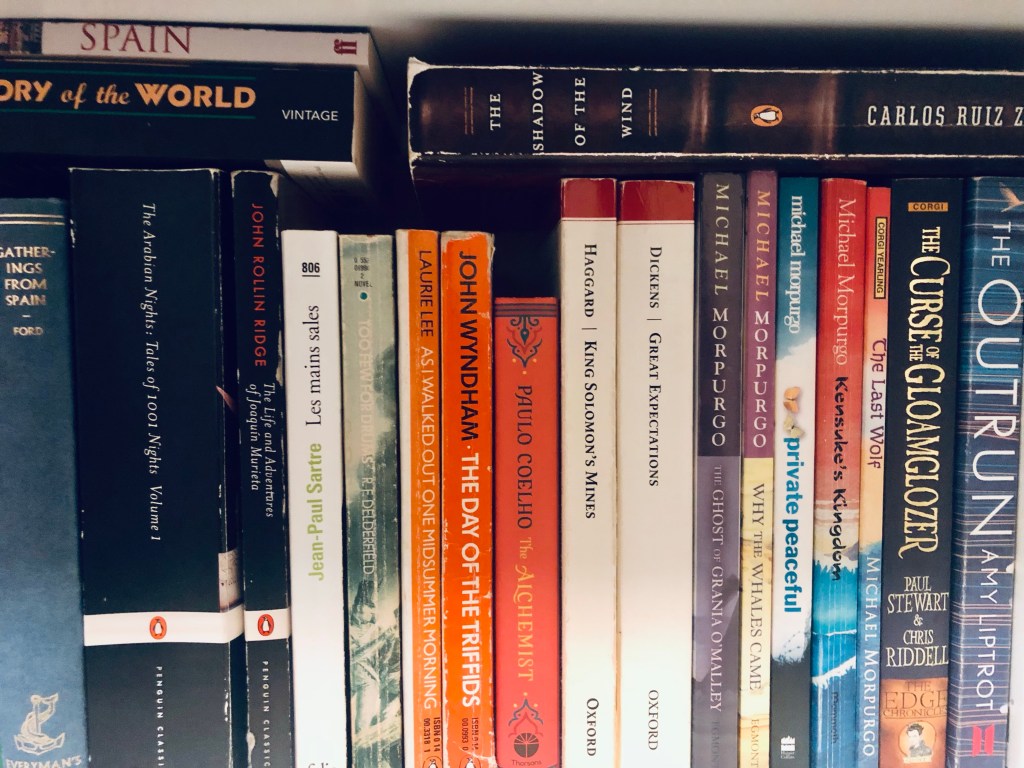
Wolf Brother had a lasting impact on me as a writer, more than I had previously suspected, and it took listening to the masterful narration of Sir Ian McKellen over the weekend to realise just how deep the roots of her magical storytelling stretched into my own creations. Naturally, my own stories have changed a great deal since I started writing them over twenty years ago, but if you look closely, you can see the tell-tale brush strokes of the authors who showed me the way. I could fire up my hard-drive right now, pull up a folder, pull out a chapter and point out the guiding hand of this or that storyteller. Here is some of Paver’s naturalism, and there’s some Rider Haggard gung-ho. Paul Stewart and Chris Riddell had no small part to play in the healthy dose of tragedy, and I’d wager a fair amount that there are traces of Michael Morpurgo spread throughout like watercolour, since at a certain point in my childhood I pretty much read nothing else. There was just something about his writing that spoke to me like no other writer could. He had me hooked on all his animal-centred storylines, his Scilly Isle adventures, and his occasional reference to something on my wavelength (like namedropping The Corrs in Arthur, High King of Britain). Kensuke’s Kingdom and Why the Whales Came rank near the top, and sit in pride of place by my desk alongside the other books that mark certain turning points in my life: Day of the Triffids for traveling solo, King Solomon’s Mines for going mad in Amman, The Arabian Nights from my university days and The Outrun for a dose of reality when I left that world behind… and The Tale of Benjamin Bunny… just because.

What were the stories that had the biggest impact on you as a child? Which authors colour your writing? I’ve ended the last couple of posts with a question, which is a) repetitive and b) pedantic and c) a sign of how much I’ve been teaching and how little I’ve been writing these past three years. But it’s something I love to ask people, when I get the chance. The power of storytelling has been precious to me since I was a bratty kid insisting on the fifteen-minute bedtime stories and not the three-minute tales (I swear I wasn’t just looking for an excuse to stay up late…!), and I hope it’s a joy I can share with my children someday.

When you come back to a book you enjoyed as a child, you see it through two pairs of eyes and two hearts: the eyes of a child embarking on a journey as though for the first time, and the eyes of a parent who knows the dangers ahead but cannot help hoping things turn out for the best. It’s incredible how the magic contained within the pages of those stories never fades, no matter how many times you come back to it. I make a point of re-reading Triffids every time I travel alone, but I’ve neglected the stories of my childhood for too long.

Once I’m done with the rest of Torak’s adventures, you’re next, Morpurgo!

BB x

I Need A Hero: My Favourite Fictional Leads

I’m off on another adventure in a couple of days. A fortnight in Catalunya awaits – because where better to spend the fallout from all this Brexit madness than with a people who have tussled with independence for centuries? I doubt the Catalans will be all that interested in the petty squabbles of a rather recalcitrant Guirilandia – and anyway, I’m a good deal more interested in their own history – but with another adventure looming, my mind turns back to the world of fiction. I always take a book with me when I travel, as it’s pretty much the one time in the year I can guarantee I’ll get some serious reading done. Frankly, given how important fiction is to me, I’m surprised I haven’t turned my hand to it as a topic more often. So tonight’s post is about putting that to rights. And I thought I’d start with an illustrated list of my favourite storybook heroes.

Perhaps the collection below says a lot more about me than I at first thought possible…


8. El Cid (Cantar del Mio Cid, Anonymous)

Kicking off the top ten with a bit of a controversial one, as this particular hero was a man of flesh and blood before he was a fictional character. Whether or not you choose to see him as a hero rather depends on whose account you choose to follow. Certainly, the Muslim chroniclers of the day didn’t exactly paint a very pretty picture of him. All the same, Rodrigo Diaz de Vivar is a larger-than-life character in his epics, and the seesaw story of his rise and fall and rise again is – for want of a better word – one of my favourite tales. And now that I’m not at university anymore and don’t have to analyse him as a masculine image, or a symbol of religious fervour, or any of that academic nonsense, and can instead indulge in boyhood fantasies once again, he’s a damned impressive hero who is good to his men, be they Christian or Moor, loyal to his wife and king, protective of his daughters and a generally wise arbiter. It’s just a shame about the episode involving the Jews Raquel and Vidas, or he might have placed higher on this list. For some reason they didn’t include that little episode in the 1961 film…

H_Cid


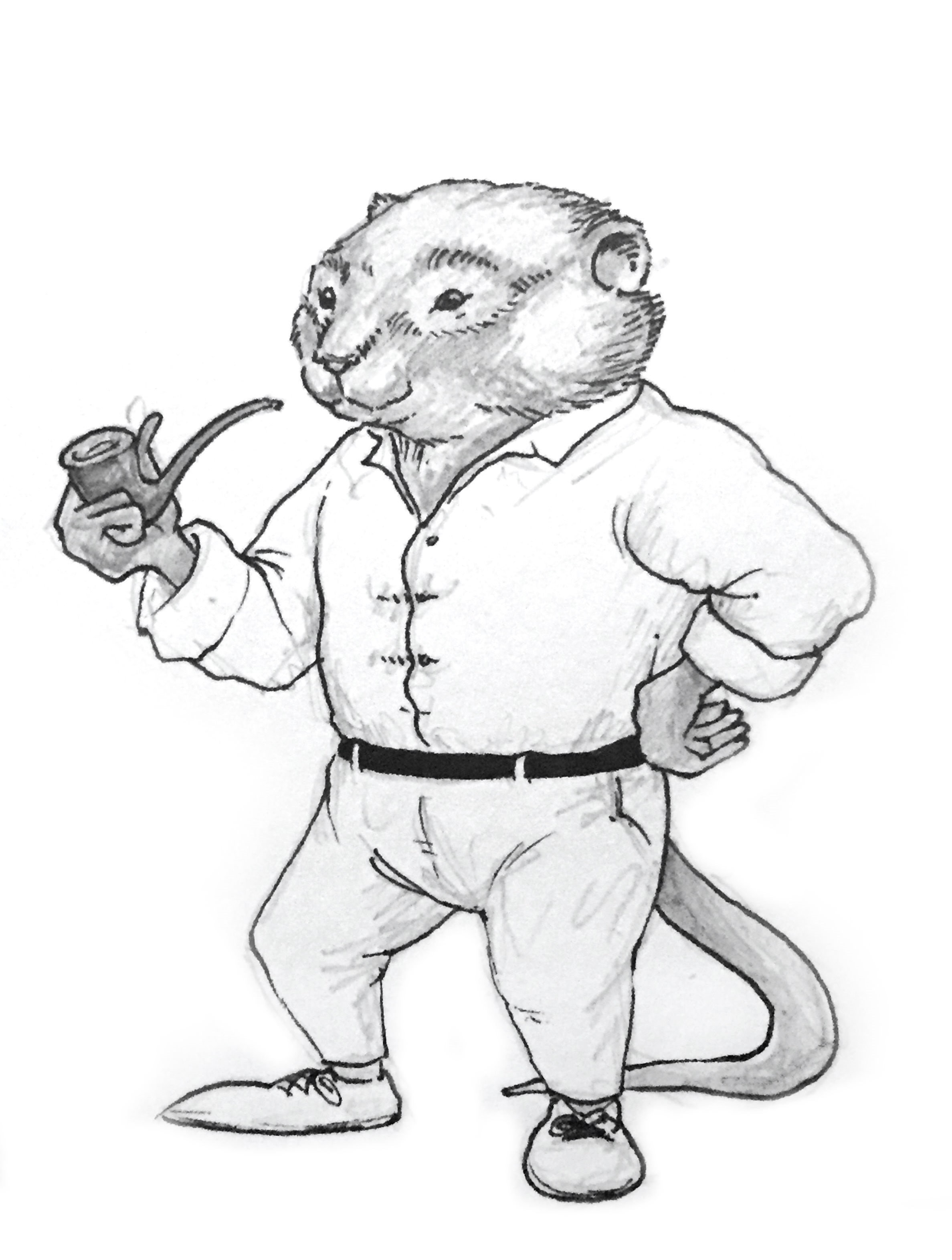
7. Rat (The Wind in the Willows, Kenneth Grahame)

I think one of the things that shocked me most when compiling this list is how quintessentially British most of my favourite heroes are. Come to think of it, there are only really two characters on this list who are not Englishmen by birth or blood. I’d pretty much given up on my homeland for the beauty of foreign lands during my teens. Rediscovering the joy of reading in my early twenties completely turned that around, and made me appreciate on a deeper level characters from my childhood that I’d perhaps not understood fully until that moment. Rat is definitely one of them. An English county gentleman, who balances his seasonal desire to travel and see the world (depicted as a sudden madness) with his unshakeable attachment to his riverside home and his often poetic delight in the countryside around him. Rat always made me think of an England long since gone, albeit much beloved and not entirely forgotten. I could always empathise with Mole stumbling blindly around the new world and Toad still makes me laugh (especially voiced by Rik Mayall),  but I think my heart always did and always will go out to courageous, country-loving Rat.

H_Rat (2)


6. Bill Masen (Day of the Triffids, John Wyndham)

There’s something about the quiet, reflective protagonist of Wyndham’s Day of the Triffids that has always drawn me in. Another Englishman, and in many ways as much a caricature as Rat, Bill Masen takes the apocalypse with just the right amount of melancholic reflection and stiff upper lip that you might expect. For a sci-fi book – and a thumping good one, if I might say so – there’s a refreshing absence of the brash, gun-toting, “gotta save the world” Americanisms of your average apocalypse narrative. When he’s not dodging paramilitary groups or sinister man-eating plants, Bill spends most of the book musing on the state of the world after man, the foolishness of man and the loneliness of the human spirit. Triffids will be one of those books I treasure when I grow old, as it was Bill Masen’s thoughts on loneliness that gave me solace when I travelled solo across Spain.

H_Masen


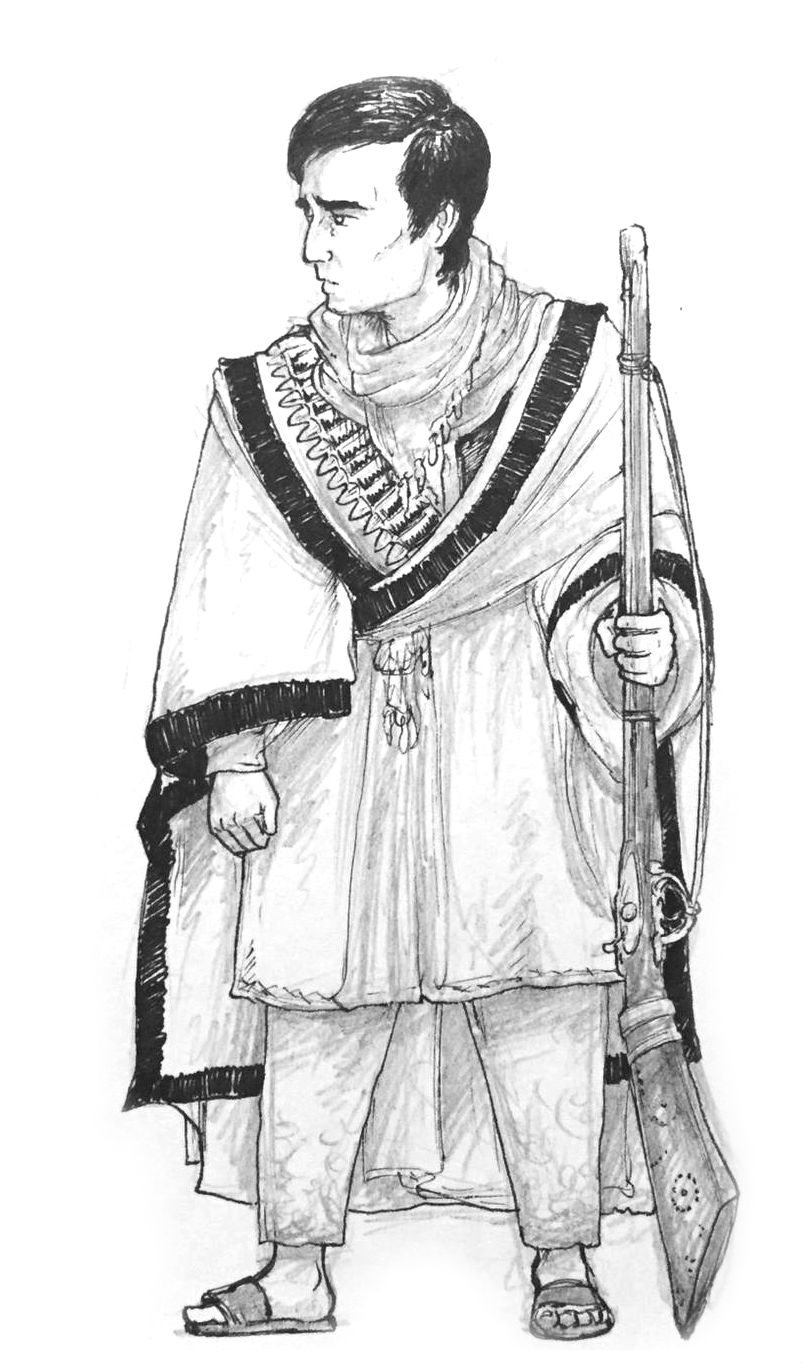
5. Ashton Hilary Akbar Pelham-Martyn (The Far Pavilions, M.M. Kaye)

Let’s be perfectly honest here, to write a list of my favourite fictional heroes and not include the central character of what has always been my favourite book of all time would be nothing short of criminal. Orphaned shortly after birth in an opening that never ceases to chill me, Ashton (Ash) is raised by his father’s syce and spends his childhood under the impression that he’s Indian, before being rudely awakened to his English heritage after a series of adventures. He spends most of the book dealing with the fallout from that revelation, never entirely sure where his loyalties lie, and consequently never truly fitting in anywhere. The only trouble with Ash is he’s just too perfect. He slips up and gets hurt, and you can really feel his pain and his anger when he does, but even as a naïve young man he comes across as just a little bit too good to be true: fluent in more than five languages, an extremely talented sportsman, a natural with the ladies from his first experience and frustratingly good-looking, so much so that he spends most of the book being able to pass for Englishman, Afghan, Nepali or just about anything the plot requires, without having a drop of Pathan blood in him at all. Even so, I confess myself charmed by his tenacity from the beginning and have rarely felt so strongly about a protagonist as I have for Ashton Pelham-Martyn.

H_Ash


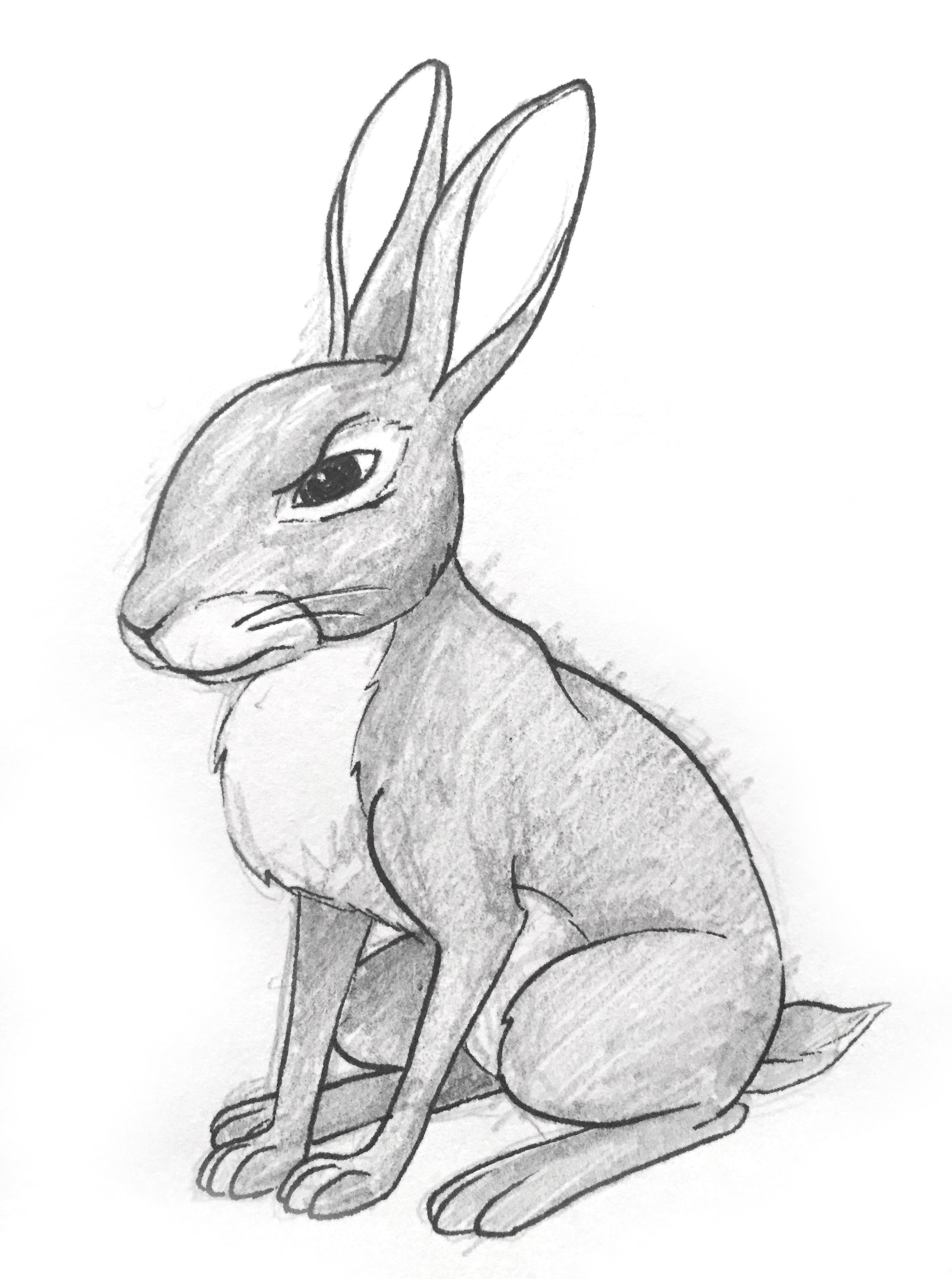
4. Hazel (Watership Down, Richard Adams)

The second anthropomorphic hero on this list is a rabbit, and this one doesn’t even dress like a hero. He’s just a rabbit, and neither the strongest nor the fastest of the rabbits of the Sandleford Warren, but in many ways he’s a greater hero than many of the characters on this list. John Hurt’s voiceover in the 1978 film only sealed the deal. I admit that I saw the animated movie before I read the book, but it evidently didn’t scar me for life as it did to many others as I did go on to read the book (though whoever decided that a visual representation of rabbits being gassed en masse was deserving of a U-rating obviously had some demons). Hazel is wise, caring and self-sacrificing; a true leader, equipped with all the merits of El-Ahrairah, the Prince of Rabbits (a sort of lapine Anansi/Coyote). I know Bigwig has always been the traditional fan favourite, but for me, it’s got to be Hazel, because he’s the kind of leader I could believe in. A hero with no pretensions to glory or leadership, but who looks out for every single member of his clan, and who becomes a leader quite organically as the story develops.

H_Hazel (2)


3. Tintin

Probably the most well-known character on this list, Tintin has been in my heart since I was a lad. His agelessness, his never-ending sense of adventure, the fact that you could essentially paint yourself into his shoes wherever he went… and the fact that I’ve been compared to him in every single line of work I’ve ever had, due in part to my round face and strange quiff-thing going on with my crowns. If we forget his earlier iterations (Tintin au Congo was written by a Belgian in a very different age), Tintin is a young man with a heart of gold. Tintin in Tibet is probably his finest hour, showcasing the Belgian reporter’s winsome determination and hope to find his lost friend, who pretty much everybody else has given up for dead. I had every Tintin book bar one as a kid (Dead Sea Sharks), and he’s one of those rare heroes whom I value above the supporting cast, no matter how colourful and memorable they may be (here’s looking at you Captain Haddock, Cuthbert Calculus and, of course, Thompson and Thomson).

H_Tintin


2. Peekay

The top two spaces go to two heroes who share the same country: South Africa. British by blood, Peter Philip Kenneth Keith – unfortunately named by his parents, more fortunately shortened to Peekay by the author – has a hard lot growing up as a little boy in an adult world. You hardly even notice him age as he often seems mature beyond his years, the result of being forced to land on his feet by his born-again mother and his tormentors, including the Judge and the vile Sergeant Bormann. The way Courtenay has him describe loneliness is every bit as powerful as Wyndham, if not doubly so in that it comes from the voice of a child. And Peekay’s fierce sense of justice and morality – a common feature in Courtenay’s heroes – is exactly the kind of thing I could go for. Throw antiheroes and bad-guys-gone-good at me all day, but I love a hero with a strong moral compass. I wanted to learn to box when I read the book and watched the film, so greatly did I fall under the spell of this particular fighter. All the same, when it comes to the title bout for my favourite fictional hero, there’s one man who just beats Peekay to the punch…

H_Peekay


1. Allan Quatermain

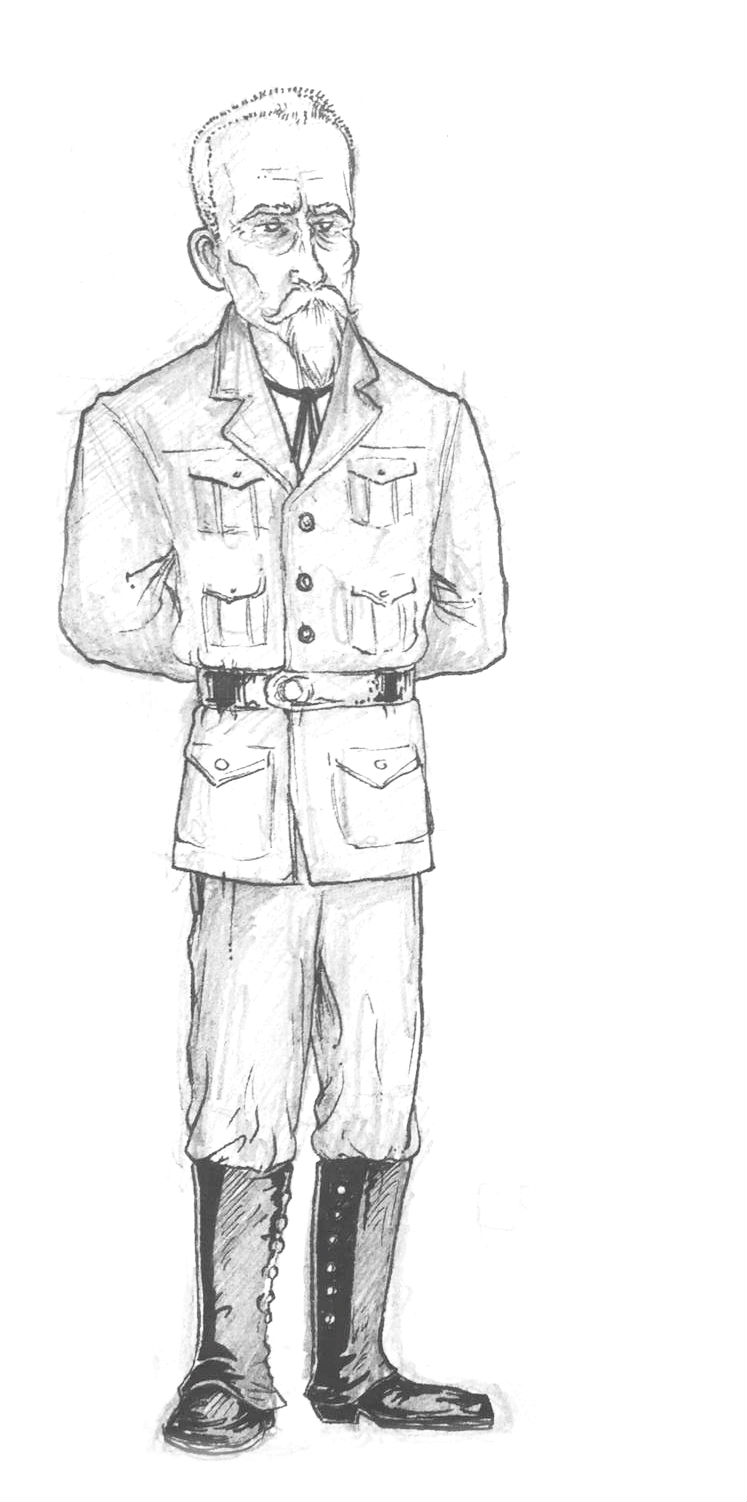
If you’ve read my writing before, this will be no surprise. Allan Quatermain is my favourite fictional character, hands down, no contest. Not the version you might have seen in League of Extraordinary Gentleman movie (though the graphic novel is close enough), I’m talking about the original. Humble. Wise. Melancholic. Cynical, but not unadventurous. And, though modern readers might find his language more than a little antiquated and even offensive, rather advanced and liberal-minded for his day. Allan Quatermain was the inspiration for such legendary figures as Indiana Jones, but I’ve always found the source material a good deal more inspiring. Maybe it’s his undaunting appearance – a wiry old man with bristly hair, a short stature and a shrinking habit – that makes him so likeable. He lives alone, but keeps good company and is a ceaseless fountain of wisdom, whether that wisdom comes from his own mouth or the mouths of his sage companions like Hans, or Umslopogaas, or Indaba-zimbi. Perhaps, above all else, the true quality of Allan Quatermain is the quality of his writer. The old adage, write about what you know, can be a little restrictive for those who enjoy historical fiction. Henry Rider Haggard, however, was at the very heart of the world about which he wrote, seeing the Boer Wars at first hand and even taking an active role in them himself. Quatermain taught me a lot about the world when I started reading again, but most importantly of all, he gave me a reason to embrace my homeland once again. It will be a while before any hero, great or small, topples the great Macumazahn from his seat at the top of this list.

H_Allan

Special mention: Quint & Maris (The Edge Chronicles, Paul Stewart & Chris Riddell), Harry Flashman (Flashman, George MacDonald Fraser), Richard Sharpe (Sharpe’s Tiger, Bernard Cornwell) and Tommo (Private Peaceful – but just about every protagonist from Michael Morpurgo’s books would do)

Did you like this list? Feel free to copy the idea for posts of your own. BB x

The Big Graduation Post

It doesn’t happen like you think it will, graduation. I suppose the same can be said of all those grand rites of passage of life: like as not, you speculate a great deal about how it’s going to be, until the day itself is over before you know it, and a lot less grand an affair than you thought it was.

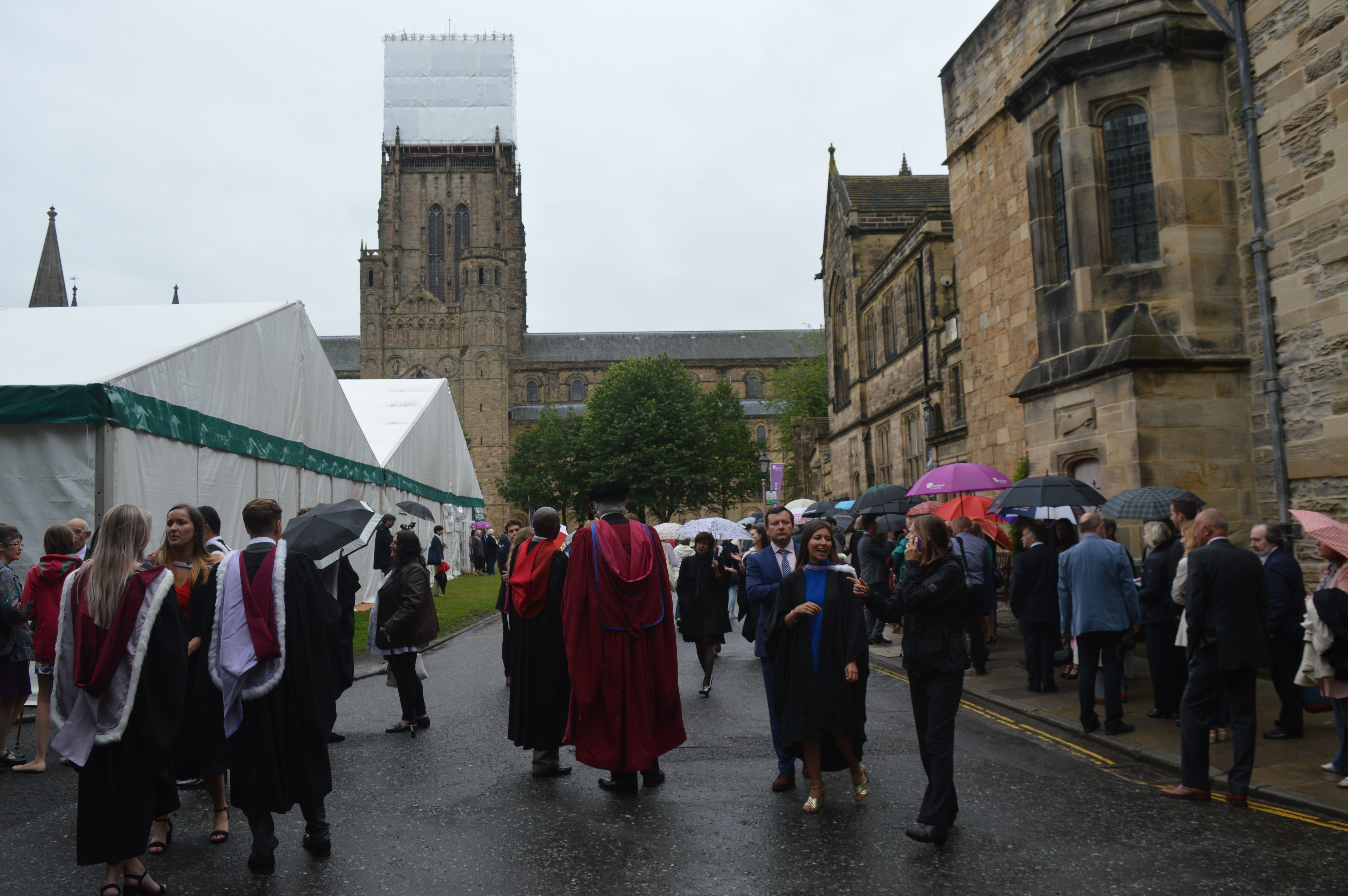
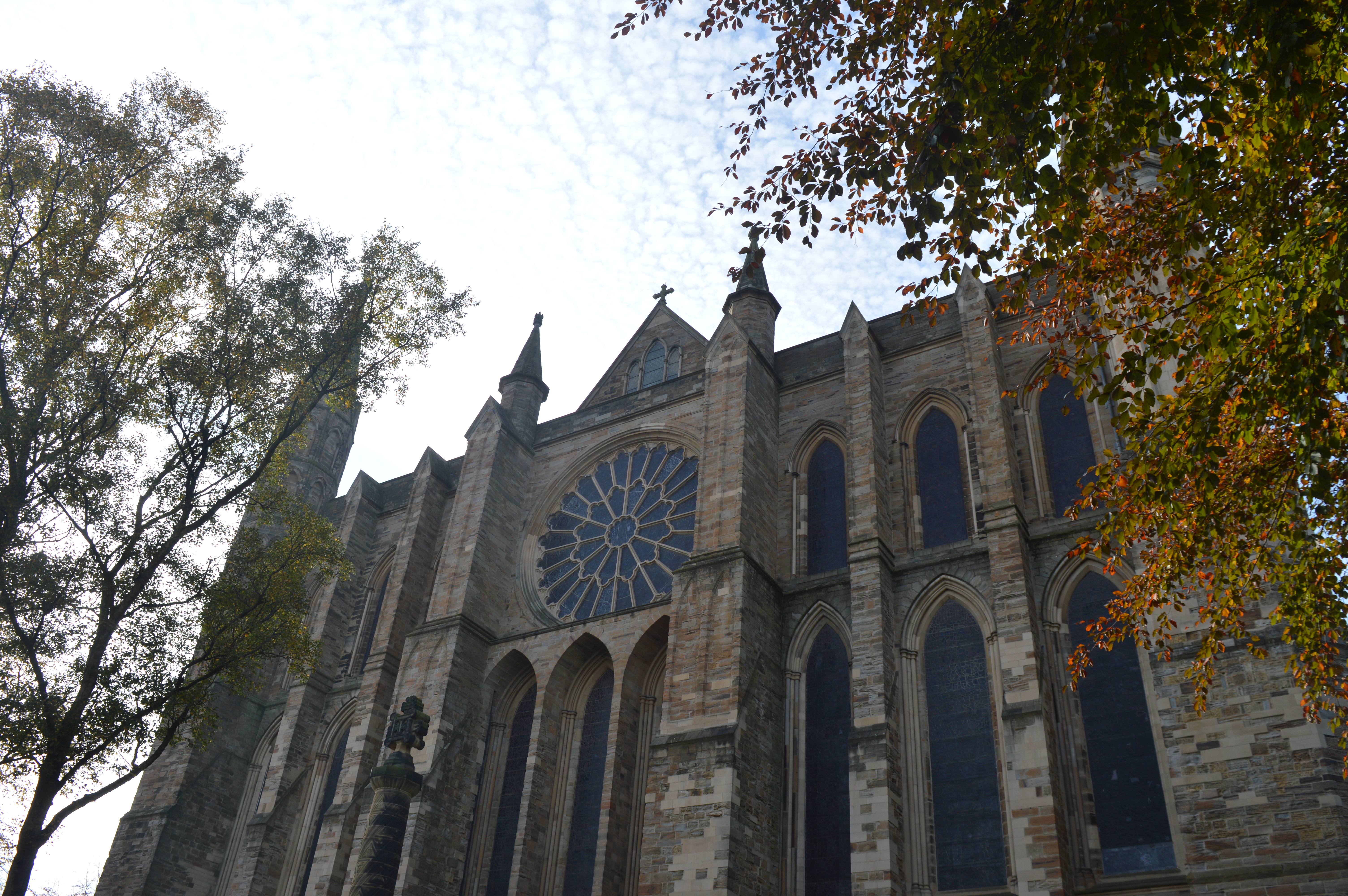
Certainly, when I tried to imagine what graduating from Durham would be like four years ago, I didn’t ever imagine that the cathedral tower would be under scaffolding. You win some, you lose some.

DSC_1071

One of the most difficult things about graduating is that it’s so very easy to use it as your last chance to say goodbye. It makes sense; for some, it might be the last time in a while you see the people who have been your friends through thick and thin for three or four years. Regrettably, for others it might even be the last time you see them at all. That’s a humbling thought. If I have any advice to give, it’s to say your farewells before the big day. Of course there is time for the odd one here or there on the day, but with everybody mingling with friends and family alike, it can be nigh-on impossible to track everybody down in time – especially if you end up on a time limit yourself.

DSC_0042

I’ve had a lot of time to think over the past few weeks, and a lot of things to think about. One of the most enlightening conclusions I’ve come to (and late in the realisation, too) is that, for all of my best efforts, I am not first and foremost a linguist. And if it took missing a First Class degree by less than one percent to realise that, it was a lesson well learned. Language tests, and perhaps grammar in general, have never been my forte, not that that’s ever stopped me from trying. Writing is, was and always will be my trump card. If I hadn’t been so pig-headed about not reading fiction back in Year 13, I might well have let my doubts get the better of me and gone for a degree in English Literature instead.

The fact remains that I didn’t. For all the disparity between my English marks and my marks in French and Spanish, I went for a degree in modern foreign languages. Why? Precisely because of that; because languages were not my strongest point. Talking to people was something I really struggled with. I had no opinions of my own, I felt hopelessly outclassed whenever I had to take part in any kind of intellectual discussion and I tended to avoid any unnecessary socialising.

And in my own particularly sadistic way, I threw myself headlong into the one degree that would give me no choice but to talk to people, to face my fears head-on. And when you’re getting yourself into an extra £9000 of debt per year, it makes no sense whatsoever to go on studying what you’re best at.

Jailbreak

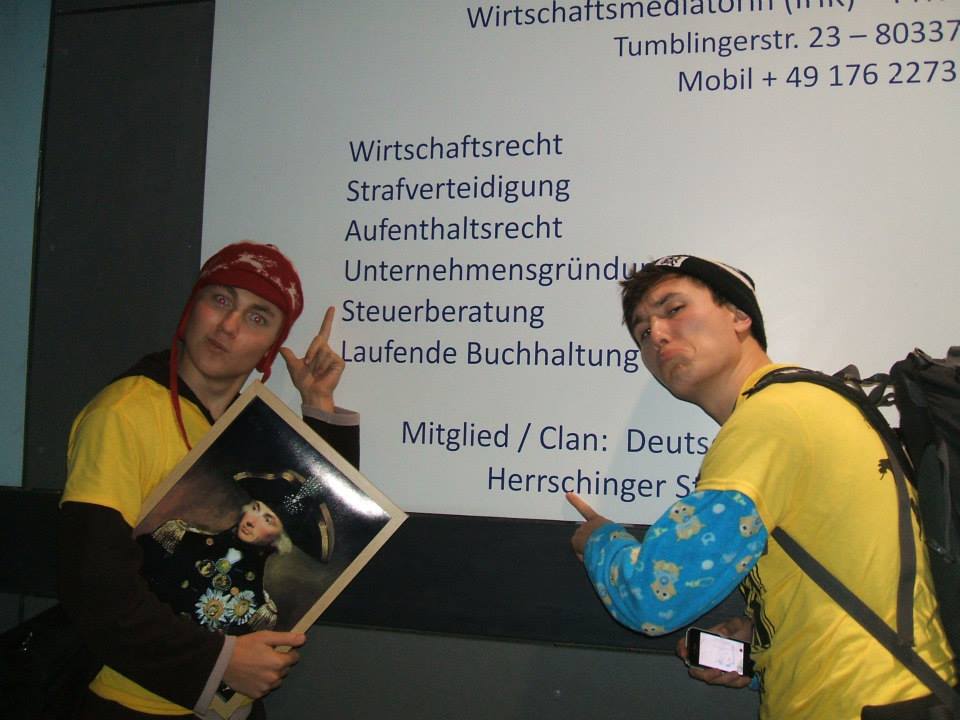
My time as an undergraduate at Durham has been, without a shadow of a doubt, the best four years of my life so far. I might have been to some extraordinary places had I gone for my second choice, St. Andrews, but I most likely would not have found myself in a metro station in Münich with a portrait of Admiral Lord Nelson. I might well have had access to researchers in my primary field of interest, al-Andalus and the Maghreb, but I probably wouldn’t have written such a cracking essay on Spanish banditry. And I might have got involved in a musical, or a choir, or maybe even the funk band I longed for since my schooldays, but I almost certainly would not have found myself wrapped up heart and soul in the collegiate a cappella scene.

Gala Show (35)

Thanks to one last fling with the Northern Lights at the 70th Edinburgh Fringe Festival this summer, graduation was not as final an affair as it otherwise might have been. Knowing that I’d be back in Durham in just over a month took much of the sting out of the farewells, and I left the city dry-eyed and carefree – which is not how I imagined it, but just the way I wanted it. I find that written words often carry meaning a good deal further than the spoken word ever can, and so I made my fondest goodbyes in card form, in case I didn’t get the chance to say so in person. That, too, made the process a lot easier to deal with. In a way, I’d said everything that needed to be said. I could do no more.

YearAbroad (62)

I didn’t have a great deal of say in the matter of coming to Durham. My own mother dropped the name of the place so often as I grew up that by the time UCAS came around, it seemed sacrilegious to even consider anywhere else. And that’s exactly how it panned out, after an initial rejection and a gap year to try again. Bother the prospectuses, there was simply something magical about Durham. I had to go there.

It’s been one long week of thank you’s. To all the friends that supported me, both at home, at university and abroad. To the staff who inspired my interests and discouraged my careless wanderings. To my college principal, who sowed the seed of interest in a PhD in me; to my first Arabic lecturer, who through discipline fashioned a mature love for the language out of nervous enthusiasm; to those who have lived with me these last four years, for putting up with the day-to-day trivial madnesses and misinformed ramblings of yours truly. And of course, to music, for adding so much more to my degree than just books.

The wide world awaits with, at least for now, a smiling, familiar face (and a very strong Villafranqués accent). The far future – the beyond – remains as elusive as ever, but perhaps it doesn’t do to look that far ahead. Three months remain, and then I leave this country for Spain, only this time it will be for a much longer stint than anything I’ve ever attempted before. I can hardly wait.

And you bet I’ll be back to blogging for the whole affair. Just you wait. BB x

Rush Hour

It genuinely took me all of twenty minutes today to find a seat in the library. The place is packed. Every single seat, booth, study room and square inch seemed to be occupied, or worse, occupied in absence. Here in the depths of the ground floor, I finally managed to carve a space for myself on the Palatine floor, and then only after getting a girl to begrudgingly take her feet off the chair. No love lost there.

It must be essay season.

I’ve come here to flesh out an essay myself, on epic and chronicle in medieval Spain. It’s one of those essays that I know I’ll actually really enjoy writing when I get into it – not least of all because I can resurrect El Cid for this one – but starting is always the hardest part. And there’s plenty of reading I could be doing… At least I can be thankful I’m not a mathematician. A sneaky peak over the screen of my laptop and the table beyond is littered with quadratics and algebraic hieroglyphs and other strange runes of that sort. I’m quite happy keeping to the medieval scrawl, thank you very much.

Three weeks left of term. Three gigs. Three deadlines. A total of 7000 words to be written in that time. Add to that the ICCA semifinals the week after term finishes and, of course, the dissertation. I don’t think I’ve ever been busier. But it’s not unmanageable. Busy is happy. Next year may or may not seem quite so hectic by comparison. When I look back and think over all the things I’ve done over the last month alone, I’m frankly amazed that I’m standing here in one piece. It’s been one hell of a ride.

Let’s take a look at the positives:

  • Job application for next year is away.
  • The commissions I had to finish this term are away.
  • The lorry-load of crisps and chocolates for my school is away (don’t ask).
  • Three summatives to go, but at least two are down.
  • 3,000 words into my dissertation. 9,000 remain, but it’s a good start.
  • Ice was forecast, but it’s been glorious sunshine all day.
  • The Lights are going down to London next Monday!
  • Biff’s up for the week. That’s always a cause for celebration.
  • I’m actually writing a blog post. Let this be a sign of new life.

I have so many reasons to smile right now. I didn’t even need to write one of those nauseating ‘2017 reasons to smile’ posts back in January to justify it. I just forget, sometimes, in the face of overwhelming pressure of all the essays I have to do, and the time it actually takes me to beat my brain into submission and focus.

A run to Broompark this morning put everything in perspective. You just can’t be stressed out when the sun is shining, the birds are singing and the light is sparkling in the river. I could have been reading up on Kingship and Propaganda, or on historiographical techniques employed in thirteenth-century Spain, but I decided that twenty minutes by the Deerness river doing absolutely nothing at all would serve me better in the long run. And so it has. Here I am, in the library, having finally conquered a seat for myself, ready to make a start on this essay run.

And unlike the vast majority of grim countenances in this building, I’m actually feeling pretty chipper about it. BB x

The Green Hills of England

It’s drawing near to December, that time of year when, like as not, English hearts across the world look back to Albion. Say what you like, but Christmas just isn’t the same anywhere else. I’ve been told as much by the Spaniards themselves, some of whom know it only from what they’ve seen in books and on TV.

I’ve never been the kind to get too nostalgic about home, probably because I’ve always lived by the creed that home is where the heart is, and if truth be told, my heart is rather portable. I’ve been none too careful with it. There’s pieces of it everywhere; in Olvera, in El Rocio, in Boroboro and in the Lake District. This year is no different. I’ve been working here in Villafranca for exactly two months now, and I’ve yet to feel any desperate pangs for home home. How can I, when there are so many places I want to be? I’m also a natural loner, by habit and by necessity. Spending long periods in my own company has never bothered me all that much. Sometimes I prefer it that way. It’s a lot less complicated. So it’s got a fair amount to do with my personality, but it could well be because I’m simply too busy to get homesick. Being told I wasn’t needed for one of my classes this morning felt so decidedly wrong that I heard myself asking to make up the time later. I’ve told you before, I can’t deal with not being busy up to my eyes. It’s a state I both love and hate. But it’s a damn sight better than having nothing to do, which is the very worst state of all – just short of despair, which, I suppose, it is, in a way.

Enough musing! I’m not completely immune, and after reading several blog posts on a similar theme, I’ve got to wondering what it is that I miss about England when I’m not there, and I came up with a few:

  1. Milk. You know, regular, cold milk, none of this warm UHT stuff. Yes, I get it, we’re the only species that drinks another animal’s milk and it’s unnatural, but it’s a lot nicer in the morning than UHT.
  2. Music. I’ve already elaborated on this one, so I won’t go into it again.
  3. Footpaths. When you’ve grown up in a country so well-stocked with public footpaths across open country, coming to a land where unsigned farm tracks of dubious public status are the only alternative to roads is a little depressing.
  4. Rain. There’s something magical about rain. It makes me feel elated, especially the real storms, the ones where you simply have to rush outside and get soaked to the skin. That’s more of an African thing than an English thing, but we do get a lot of rain in England, and a lot more than Spain, anyway.
  5. Green. It’s not as much of a problem here as it was in Jordan, as Extremadura is actually rather green itself at this time of year, especially in the north. But it extends beyond that. It’s that cold wind in the night, the dewy scent in the morning, the crunch of frosty ground underfoot. An English autumn green and red and gold. As much as I love hot countries, it’s the one thing I truly miss when I’m gone. And nowhere, NOWHERE does it better than the Lakes.

That’s about as much as I can think of. Family, obviously, would be at the top of the list, but that’s a given. That’s the only reason I’m going home for Christmas this year, because I’m rushing straight back out here for January; for the Reyes Magos, for Olvera and for the Lion King in Madrid (I’ll save that for a later post). What with my younger brother at university now, all four of us left in the Young family are living and working in four different places, so it’ll be nice to be home together again for Christmas. As for the things I thought I’d miss – friends, food and life in general – I’ve got plenty of all three out here, and in a few cases it’s better than back home.

But the important thing is this: Christmas is a time for being with your family. Forget Christmas; the end of the year, when it’s dark and cold, and a new year is on the brink – that’s a better time than any to be with your nearest and dearest. I’d have liked to have stuck it out here, in defiance, or maybe gone to Olvera to spend it with my friends, but at the end of the day, they have their own families, and I wouldn’t want to hijack somebody else’s special day. So for England I’ll be bound, mere hours before Christmas Day, and for once, for the first time in as long as I can remember, I’m not ashamed to be British. And I have Allan Quatermain to thank for that. Allan Quatermain, and John Lockley, and Flashman, and all the other British heroes of literature, who in spite of all of my self-imposed angst at the shame of being British, have shown me that there is in fact a fierce integrity in being from Albion.

For the first time in history, I’m an Englishman abroad – and it doesn’t bother me in the slightest. BB x

The End is in Sight

No more Arabic Literature!

No more Arabic Literature!

It’s the last week of exams, which means most people are finished for the year. Most people. Everyone not doing Spanish Texts, that is, which has been lovingly placed on the last Friday of exams. How generous. On the plus side, no more Arabic Literature! What was set to be the toughest exam turned out to be a relative walk in the park, compared to the nefariously difficult Persian and Arabic papers. Though the Dissolute Poets didn’t feature at all – it was never very likely that they would – I still got the chance to quote our favourite poet, Abu Nuwas, in one of the questions, so all’s well that ends well. I’ve also learned from my mistakes, balancing eloquence and originality with the academic writing preferred by one of my lecturers. I take a Beyoncé approach to essays, these days: if you like it, then you need to put a lid on it, because it’s not meant to be an entertaining read, of course. See what I did there? Yeah, it wasn’t exactly inspired. I’ll try to avoid out-and-out humour.

Still, if today’s weather sets a precedent for the rest of the term, I’ll be one happy guy. It was absolutely b-e-a-utiful this afternoon. Exams or no exams, I joined the rest of the lit crew to chill for an hour or so outside the Swan and Three in the sun, if just to revel in the knowledge that we don’t need to read up on Modern Arabic poetry, Jurji Zeydan and the maqamat anymore. I’m not free yet, but with the shackles of a history-based exams removed, I feel like flying. I’ve already been told that originality is valued over quoting in my last exam, which is much more up my street, so I’m not so worried about that. What I should be doing in the meantime is booking those flights to Amman. This time next month, I’ll be there. And that’s a little alarming… BB x

Prebends Cottage on a Summer's Afternoon, Durham

Prebends Cottage in the Afternoon Sun, Durham

Wine, Women and Song

As compensation for far too many hours spent trawling the internet for absolutely anything and everything to do with Extremadura, I’ve finally settled back into the all-too unfamiliar rut of revision. It’s not quite as entertaining as browsing beautiful images of the high sierras, rolling steppe and quaint medieval towns that’ll be my home next year, but I reckon I’ve nearly exhausted all the internet has to offer as far as Extremadura is concerned. Even so, I’m still no closer to having a decent idea as to where I might end up, or what it will really be like to live there. Just goes to show how a little knowledge can only take you some of the way. The rest will come in time.

So I spent most of today back in the armchair in the living room swotting up on the dissolute poets of the Abbasid Caliphate and their ringleader, the infamous Abu Nuwas, lover of wine, music, lewd verse and just about anything that walked on two legs. It seems that the scoundrel managed to carve a niche for himself into the fabric of Arabian myth as a master poet of almost unparalleled skill, along the way chasing slave boys, playing out some of the earliest rap battles, insulting almost everyone and everything and generally being an all-round prankster, for which he is so wittily remembered in several tales of the Arabian Nights. So outrageous a character is he that he is one of the only characters in the Arabian Nights that infuriates Shahriyar to such an extent that he threatens to break the frame narrative and kill Shahrazad (also Scheherezade), the narrator, if she mentions him again. Twice. But he’s obviously just too big a character and crops up time and time again. To give you an idea of his style, here’s a verse from the Mathers translation of the Arabian Nights. Obviously it sounds better in Arabic, but it’s such a high style Nuwas uses that it’s well beyond the comprehension of a second-year Arabist, and the meaning’s clear enough. Here, Abu Nuwas describes one of Caliph Harun al-Rashid’s slave girls, whom the Caliph has ordered to conceal a wine goblet in order to prevent the rapscallion from drinking any more:

Even as I desire the cup
The cup desires
Lips secret and more pleasant
And has gone up
Within her garments hollow
Whither the cup aspires
Nuwas would follow
If only Harun were not present.

Raunchy stuff. His legacy extends beyond the Arabian Nights; most of Baghdad’s nightclubs and restaurants are based in Abu Nuwas Street and the city is home to an immense statue of the rogue, with wine goblet in hand. For a man who is essentially the Arab world’s most glorified scoundrel and bisexual, it’s a miracle IS hasn’t done away with the effigy. And long may that be the case. After all that reading, it’s got to be a life ambition of mine, to see that statue with my own eyes. Let’s just hope the linguistic brilliance of his poetry continues to outweigh his lewd behaviour.

That was a little too informative for a blog post. But, as usual, I thought I’d share it with y’all in case you’re interested. My friend and I have some kind of cult-hero thing going on with Abu Nuwas so I’ve probably got the guy blown way out of proportion, if just in the vague hope that he comes up in the upcoming exam, so that I can use all this knowledge I’ve gleaned. I guess that’s the point of revision.

Oh, but hurry up next year already! I’m chomping at the bit to get teaching, wherever it is that they send me. As if that wasn’t already obvious… Until the next time! BB x

Back to the Drawing Board

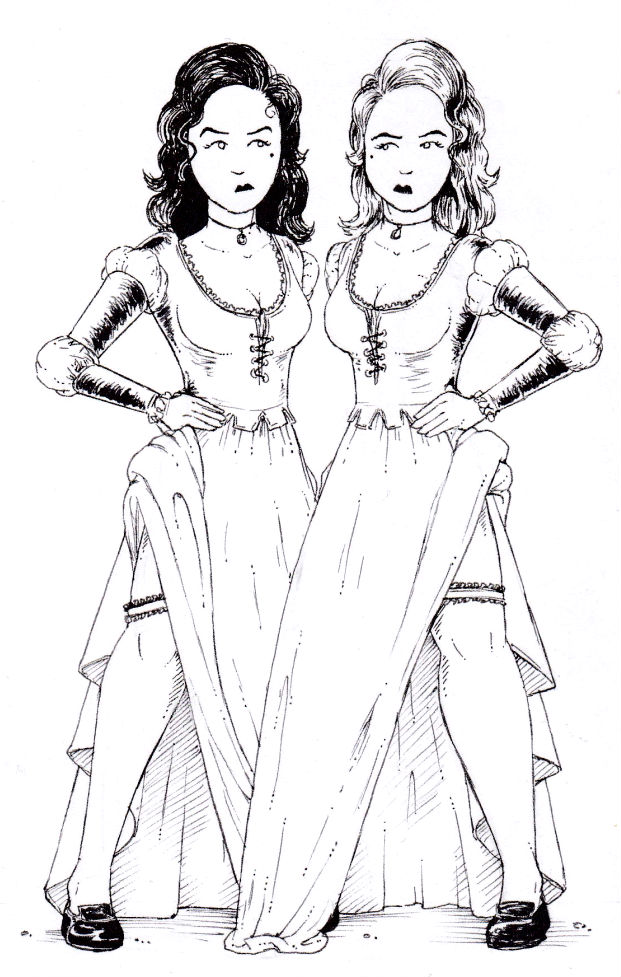
LC_Areusa

The waiting game continues. The last language exam is around the corner and then it’s two essay-based exams and then I’m done on the academic front – for the time being – and it’s headlong into three weeks straight of rehearsals, gigs and parties. Isn’t that what summer’s for? As I explained earlier, there’s quite a bit of admin to get through, and I’ve already set out on that, but I can’t tackle the two most pressing until I have a vague idea exactly where it is I’ll be spending the bulk of my year abroad. So roll on Friday! I’m kind of past caring where the British Council send me now, I’m sure it’ll be an enriching experience wherever it is. How’s that for prefabricated merchandising?

So today, tired of revising Arabic grammar, I shut al-Kitaab for the first time in days, shoved it down the side of the sofa and turned my attention back to La Celestina, one of the texts I’m supposed to be writing about in next week’s exam. I’d quite forgotten how good it is. More than that; by academic standards, it’s praiseworthy to say the least, but even as regular books go, it’s really quite amusing. A lot of the gags and stitch-ups are as true-to-life today as they were then. The birth of satire, or something like that. If I can spin a yarn like that in the exam I should be alright. We’ll see. Long ways to go, really – we’re talking next Friday. When that’s over, I’ll be finished, so it ought to be at the bottom of my priorities. But it’s a heck-of-a-lot easier to revise texts because it means I can doodle and muse to my heart’s content and still call it revision. Brilliant. So I thought I’d share with you one of my revision doodles. Featured are Areusa and Elicia, two subsidiary characters from the tale. Yes, they’re quite clearly based on Margaret from the latest Poldark series. So judge me. I’m hooked. It’s a bloody good job the series ended the weekend before my exams began, or I’d really have been doomed. Small mercies! x