It’s been raining all day again. I was out late with Tasha last night catching up on old times – neither of us could really believe that it’s been nearly eight years since I left – so I didn’t begrudge the downpour for a long and cosy morning in bed. You don’t have to be busy every day of the holidays, even when you’re abroad.
Luckily, I was all over Mérida yesterday with my conjunto histórico ticket, granting access to all the city’s Roman ruins, so the only thing I missed out on was the Alcazaba, which I might visit tomorrow with Tasha and her boyfriend Antonio, if he’s up and about. I don’t think I’ve seen the Alcazaba before – one tends to focus on Mérida’s Roman history rather than its Moorish past, and there are older and more impressive alcazabas (the Spanish rendering of the Arabic qasbah) in Andalucía: Sevilla, Córdoba and Granada, to name just the obvious ones.
Mérida isn’t unique in having a Roman amphitheatre either. There’s a pretty spectacular one (albeit less often seen) in Santiponce that I’ve often seen from the bus on the way in from the north. But there are a few more unique treasures to be found in Extremadura’s administrative capital, and I thought I’d tell you about one such gem below.
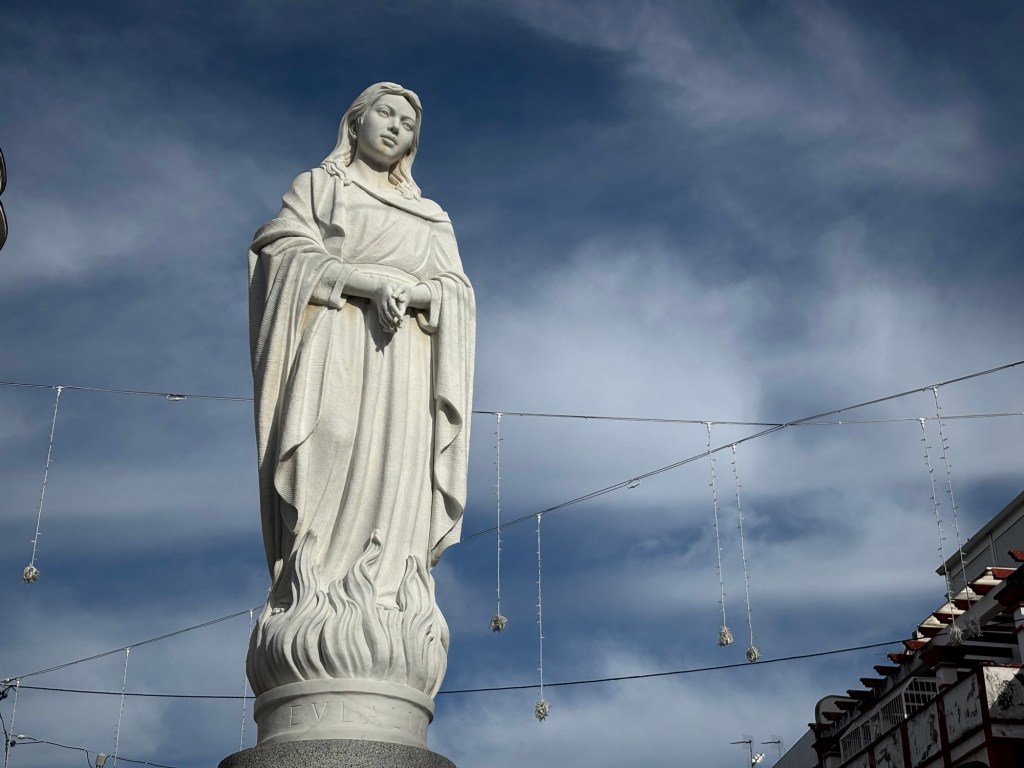
Let’s start with the lady of Mérida – because every Spanish city has its special lady. This one is Santa Eulalia.
Eulalia of Mérida stands tall above the other Christian saints of Spain, which is especially impressive as she only lived to around twelve years of age. A Roman Christian, she and her family were forbidden to worship God under the Persecution of Diocletian. Incensed, and unable to keep her faith to herself, Eulalia fled out of exile to the city of Emerita Augusta, where she openly challenged the local governor, Dacian, insulting the pagan gods whom she was commanded to worship. After a few desperate attempts to reason with her, Dacian had the girl beaten, tortured and burnt at the stake. According to legend, Eulalia is said to have mocked her tormentors until her dying breath, which came out in the form of a dove.
Eulalia was once a great deal more powerful than she is today. Before the rise of the cult of Santiago, it was Santa Eulalia de Mérida in whom the Christian soldiers placed their trust as they made war on the Muslims occupying the lands their ancestors had once held; and it was to her tomb in Mérida that thousands of pilgrims travelled during the Middle Ages, before Santiago Matamoros muscled her out of the picture.
At least one of my Protestant Christian friends has remarked at some point about the thin line between the Catholic Church’s veneration of saints and idol worship. Surely – they have reminded me – it is God and by proxy his son, Jesus Christ, to whom prayers should be made, not the pantheon of mortals who claim to be able to intercede on my behalf?
I can see the argument as plain as day. There are shops up and down this country selling nothing but saint souvenirs: votive candles, icons and fridge magnets, scented rosaries and car ornaments. I have a few myself – a family rosary from Villarrobledo and a more personal one from La Virgen del Rocío, which these days is on my person more often than not.
However, I don’t think it’s as simple as that. How frightfully urbane, to assume that the only true relationship with God is a detached and decidedly modern Western take on prayer. How tremendously big of us to assume that we can comprehend a force that it is, by its eternal nature, beyond our understanding. Community is a powerful agent – it seems only right that the spiritual world, Christian or no, has a network of pomps to streamline the neural network that binds us all together. On Earth as it is in Heaven, as they say.
Spain has a long history of wandering saints. Santiago journeyed beyond death to Galicia, sparking the most famous pilgrimage in Christendom. Guadalupe travelled from her mountain home to México to become one the most venerated Marian cults in the world. Eulalia was dug up and reinterred in Oviedo, where she became a figurehead of the Reconquista (I genuinely had no idea I was standing before her final resting place this summer). Teresa of Ávila’s body parts have travelled all over, most famously her Incorruptible Hand, which used to grace Francisco Franco’s desk.
Tomorrow, I make for Sevilla. Journey’s coming to an end. I’d better make sure I’m fully packed. BB x
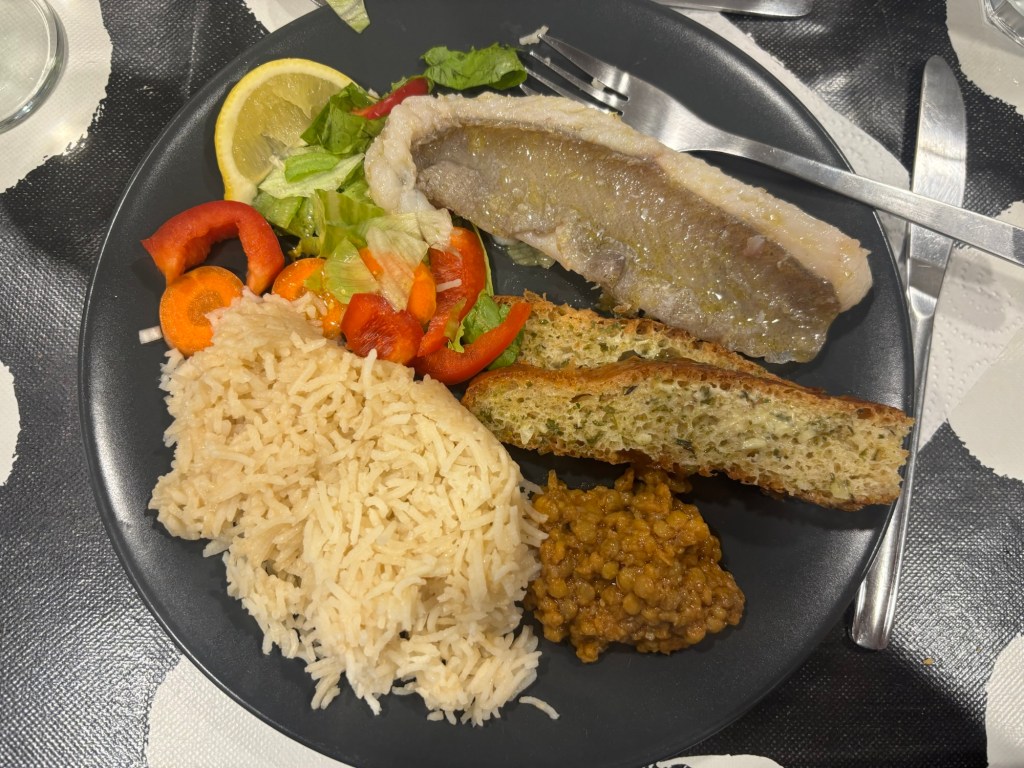
Well, first of all, dinner last night was phenomenal. Heidi, one of our hospitaleros, cooked up an absolute smorgasbord supper, and still under the banner of donativo. I hope the other pilgrims also tipped generously, because it must be really hard to whip up a spread like this without the generous donations of the pilgrims themselves. Remember, donativo doesn’t mean free – pay what you can, and what you feel the place deserves!
I was one of the last to leave this morning, as I was hoping I might score a few more stamps in churches along the way. as a matter of fact, they were all shut – every single one of them – so I needn’t have dawdled. I did only have 19km or so to go today, though, so I was in no hurry.
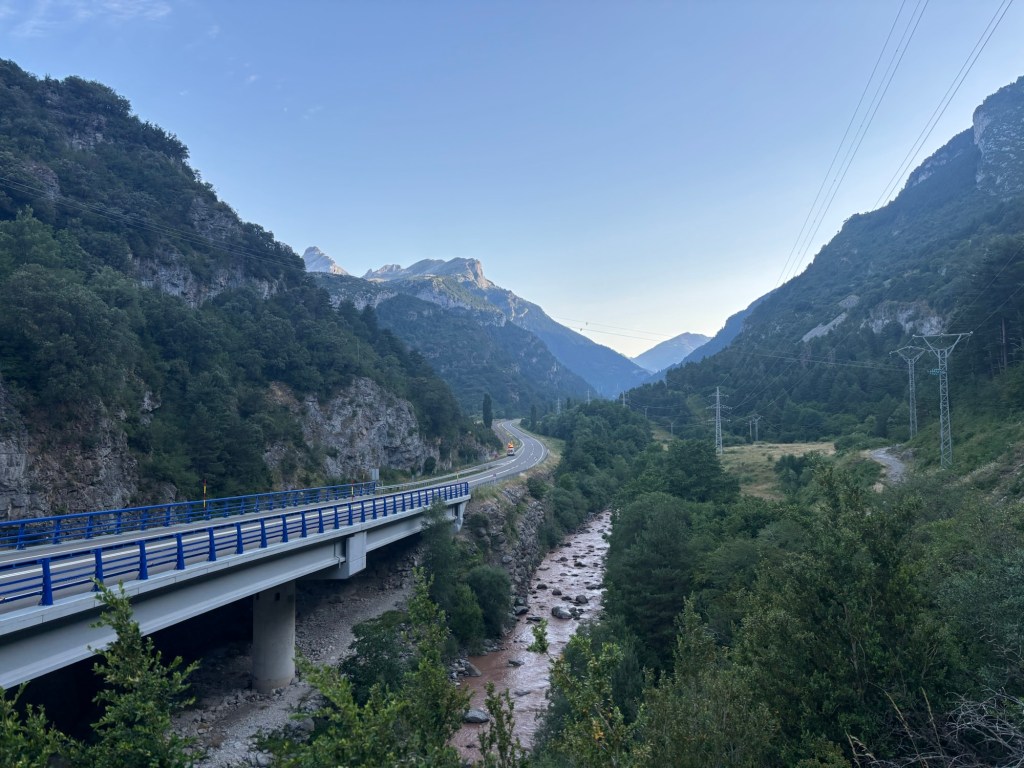
Leaving Canfranc behind, the Camino follows the river through the Valle de Aragón all morning, only turning away for the ascent to Jaca at the end of the road. What was only a mountain stream yesterday is already a powerfully flowing river, carving an impressive series of gorges in the granite along its course.
The next town along is Villanúa, where you are confronted with a strange sculpture in the shape of a many-limbed tree stump. On closer inspection, it’s actually an abstract representation of the women of Aragón who were persecuted for the crime of witchcraft during the Middle Ages. A single face carved into the structure drives the message home. There used to be a rope hanging from one of the branches, in a nod to one of the favoured methods of execution of witches, but it looks like that was removed.
During the Middle Ages, Aragón was knee-deep in tales of witchcraft. The Inquisition tasked itself with purging the region of heretics – a very broad umbrella that encompassed Protestants and “Judaizers” as well as witches – but such was the strength of belief in the occult in this remote and mountainous corner of Spain that witchcraft remained a talking point until as late as the 19th century, as can be seen in the pinturas negras of the Aragonese painter, Francisco de Goya.
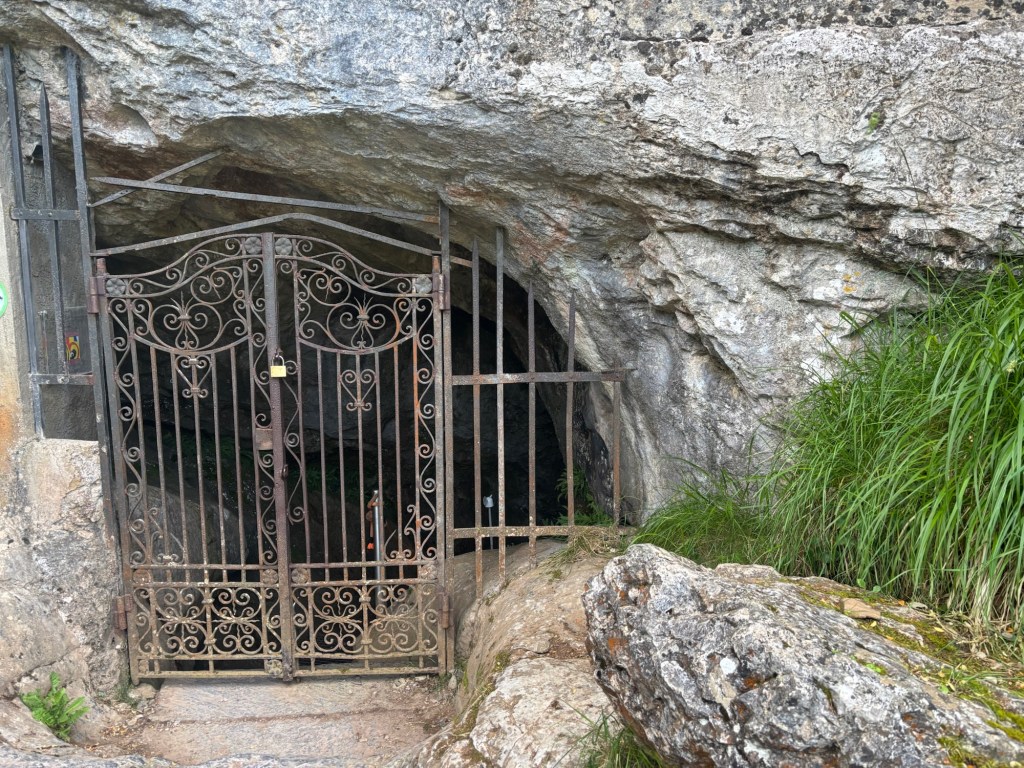
The reason Villanúa comes into this can be found just off the Camino a hundred metres or so before entering the town. A series of steps cut into the rock lead up to a cave, accessible only via a guided tour. You can feel the chill of it as you climb towards it, and while there are plenty of perfectly reasonable scientific explanations for the drop in temperature near a cave mouth, it’s easy to see why such a place might have instilled a sense of fear in the ancients. The steps go deep, and in its heart is a large cavern lit by a great hole in the ceiling. It is believed that this was where the witches of Villanúa came to practice their akelarres – Witches’ Sabbaths – summoning evil spirits and bathing naked in the moonlight.
Of course, it’s just as likely that most (if not all) of those accused of witchcraft in the Middle Ages were completely innocent. Some local pedant seems to think so, anyway, adding a footnote to the information, claiming the accused were “too busy being burned and hanged by the misogynists of their time” (#romantizandomasacres).
It may well be true, even if it does take away from the mystery, but it’s worth bearing in mind that curanderos – folk healers – were frequently called upon throughout the Medieval period, especially in times of environmental stress. It’s plausible that some of the so-called witches really were trying to bring about some kind of change in their own way.
For me, it’s never been about their innocence. Whether or not they were witches is of no consequence (though I’d rather believe they were). The real demons of the story are the ones who were so strangled by their own fear that they saw fit to send these unfortunate souls to their deaths.
Either way, peregrino, if you feel a chill on your approach to Villanúa, it might just be the lingering malice of the Cueva de las Güixas on your left.
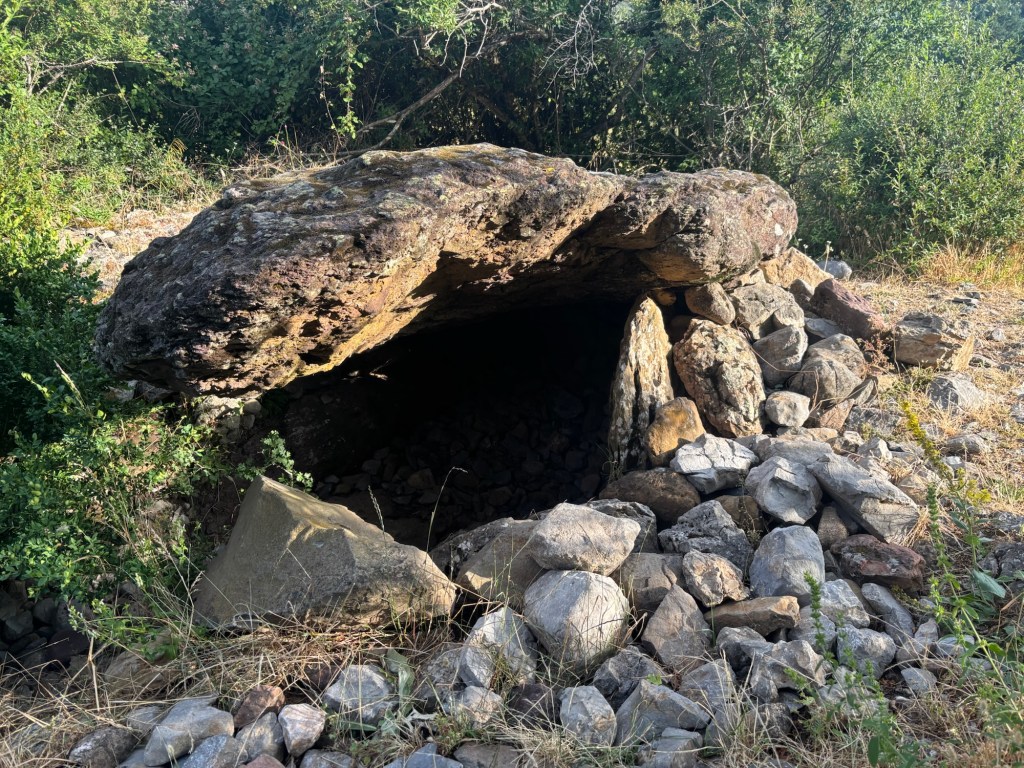
I had to double-back today, not because I’d forgotten something, but because I’d missed something rather special. The boulder-strewn fields before Villanúa harbour more than just witches’ grottos. There are older and more mystical relics by far, though I’d wager the average pilgrim completely passes them by, fatigued as they are from their three-hour climb down from the mountains.
It’s a dolmen – an ancient burial site from the Stone Age. There are quite a few of these in the area – large stones (or megaliths) being plentiful in the Pyrenean basin – but at least one can be visited from the Camino without too much effort. Dolmens like these can be found all over Europe, from the islands of the Mediterranean to northwestern France and Britain. In a way, they are just as much a symbol of the Camino as the yellow arrows, since they mark the westward expansion of our earliest ancestors as they moved west across Europe, until they could go no further.
The remaining fifteen kilometres or so to Jaca are easy to follow, if a little rocky underfoot. I’d spent so much time exploring the caves, dolmens and ruins of long-abandoned villages that I now had quite a long march beneath the risen sun, and my feet were definitely starting to complain after yesterday’s exertions. So, for once, I plugged in and listening to an audiobook – William Golding’s The Inheritors – as a way to push on. I hoped I might pop in on a few churches along the way, but as I suspected, they were all shut, so I got to Jaca by midday without further delay. Mariano, the musical madrileño from the albergue in Canfranc, had got there just before me, but we still had a little wait before the dueña showed up to let us in.
I bought lunch for myself and Mariano (I’ve had an easy ride with others treating me so far, and it’s only fair to share), before giving myself an hour or so to explore Jaca. The cathedral is austere but impressive, as Spanish churches often are, but its real treasures were in its Diocesan museum. At 3€ for pilgrims – with a stamp for the credencial thrown in – it’s a steal, especially when you see what it contains.
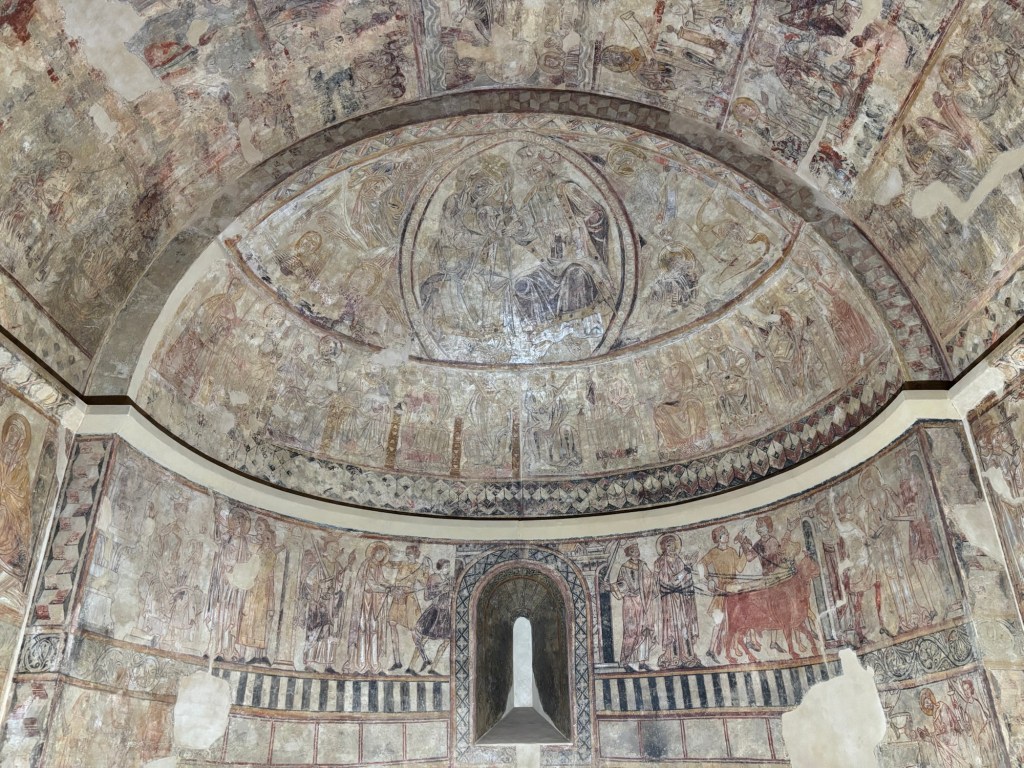
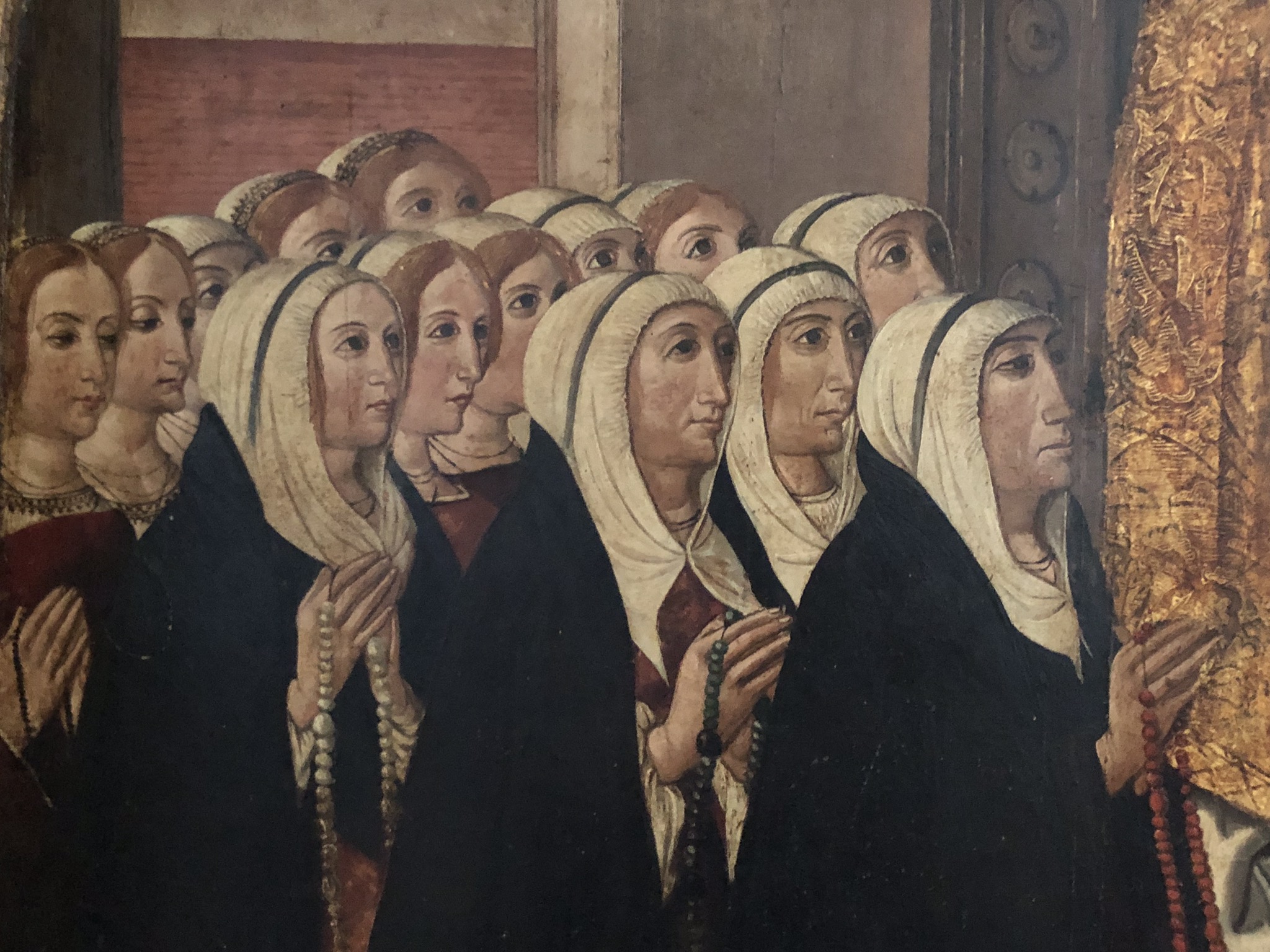
These Halls of Stories are bewitching beautiful, recreating scenes from the Bible for the illiterate masses while the holy words were kept in the jealously guarded secret language of the elite, Latin. I’m not normally one for religious art – the Renaissance obsession with ecstasy in its subjects is a major turn-off for me – but anything Gothic or earlier and I’m all in. The world was a darker and more mysterious place back then – and doesn’t that make it so much more interesting?
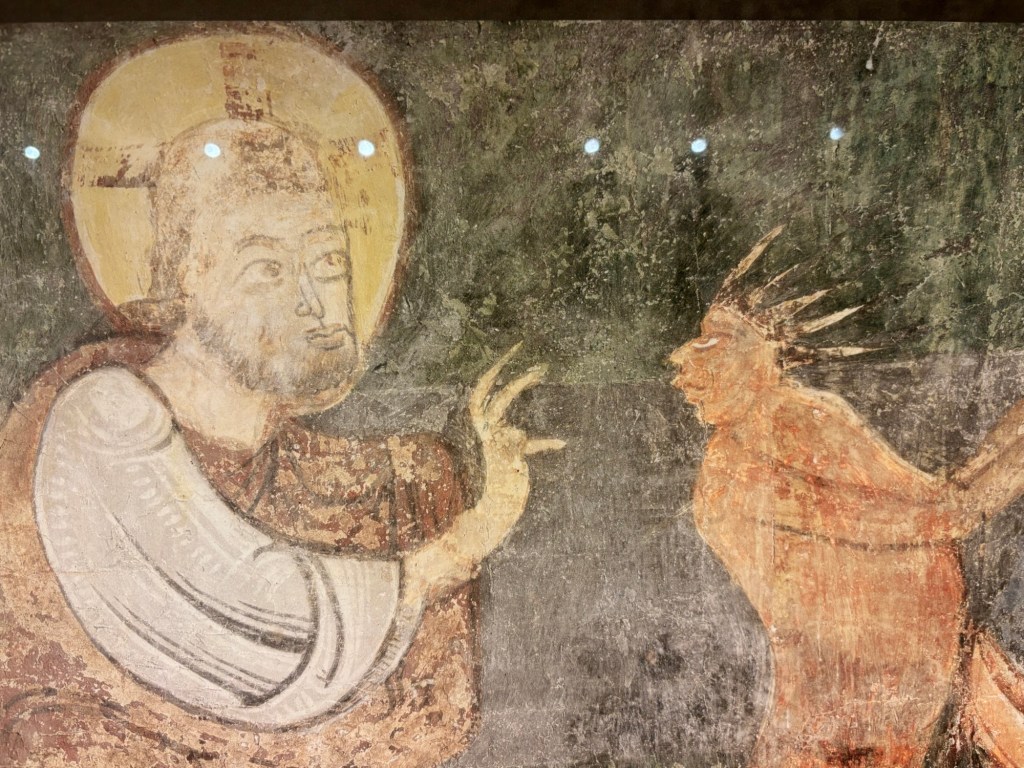
Latterly, I’ve become a lot more interested in ancient depictions of monsters, and the Devil definitely falls into that bracket. It took me a little while to realise the crowned imp in the image above – a detail from the mural of Bagüés – is a representation of Satan. I wonder what their reference was? With the red skin, narrow eyes and the feather-like crown, he almost looks like a Taino Indian, but that would be anachronistic in the extreme – these paintings were created four hundred years before Columbus sailed to the Americas.
Are there elements of Pan, the pagan god of the wilderness? It’s no secret that the goat-legged minor deity had a huge impact on the Christian devil, with the early Christian scholar Eusebius of Caesarea claiming the two were one and the same in the 4th century. Pan represented all that Christianity sought to suppress: vice, sin and animal instincts, crystallised in Pan’s half-beast limbs.
It’s not always goats, either. Traditional depictions of the devil often feature scaly or bird-like legs, akin to a chicken or a hawk. Most paintings of Saint Michael feature the Archangel standing triumphant over the body of a demon, and it’s easy to see the inspiration in these paintings: pigs’ ears for greed, scaly skin for the deception of the serpent, and thick, knotted talons for the eagle, one of the most feared and respected predators of the ancient world (if you’re not convinced, just look at how many world flags feature an eagle).
The references are much clearer here, but what of the Red Devil from the Bagüés mural? He has neither the goatee beard nor the cloven hooves. Who was the artist’s muse? Perhaps we’ll never know.
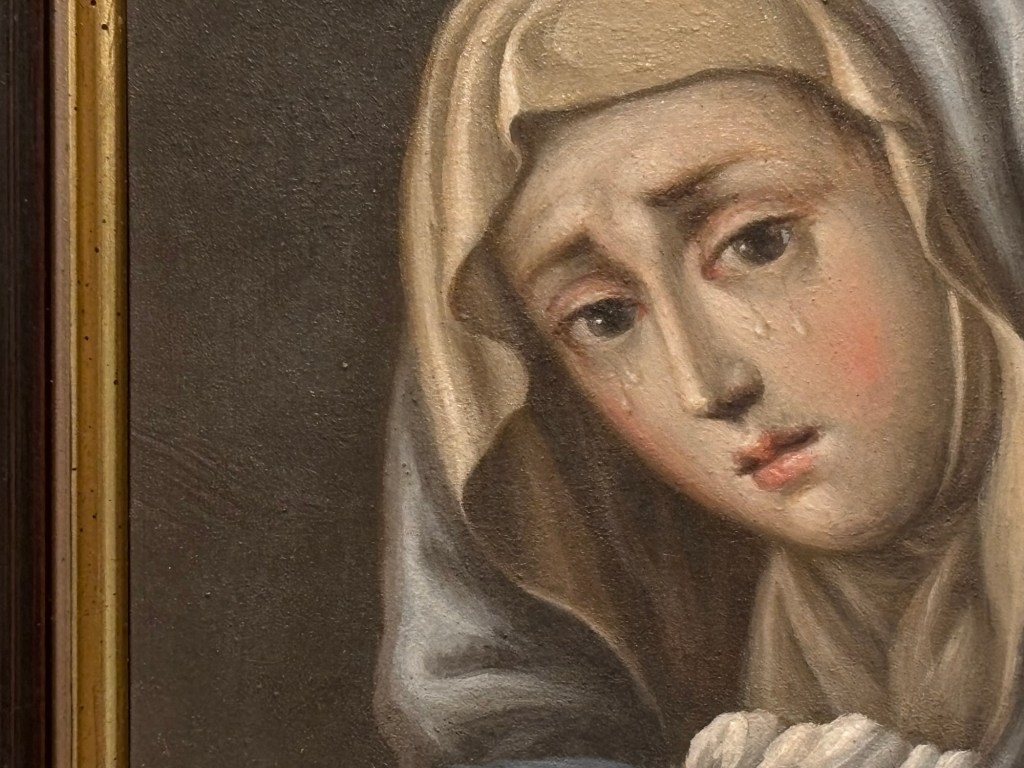
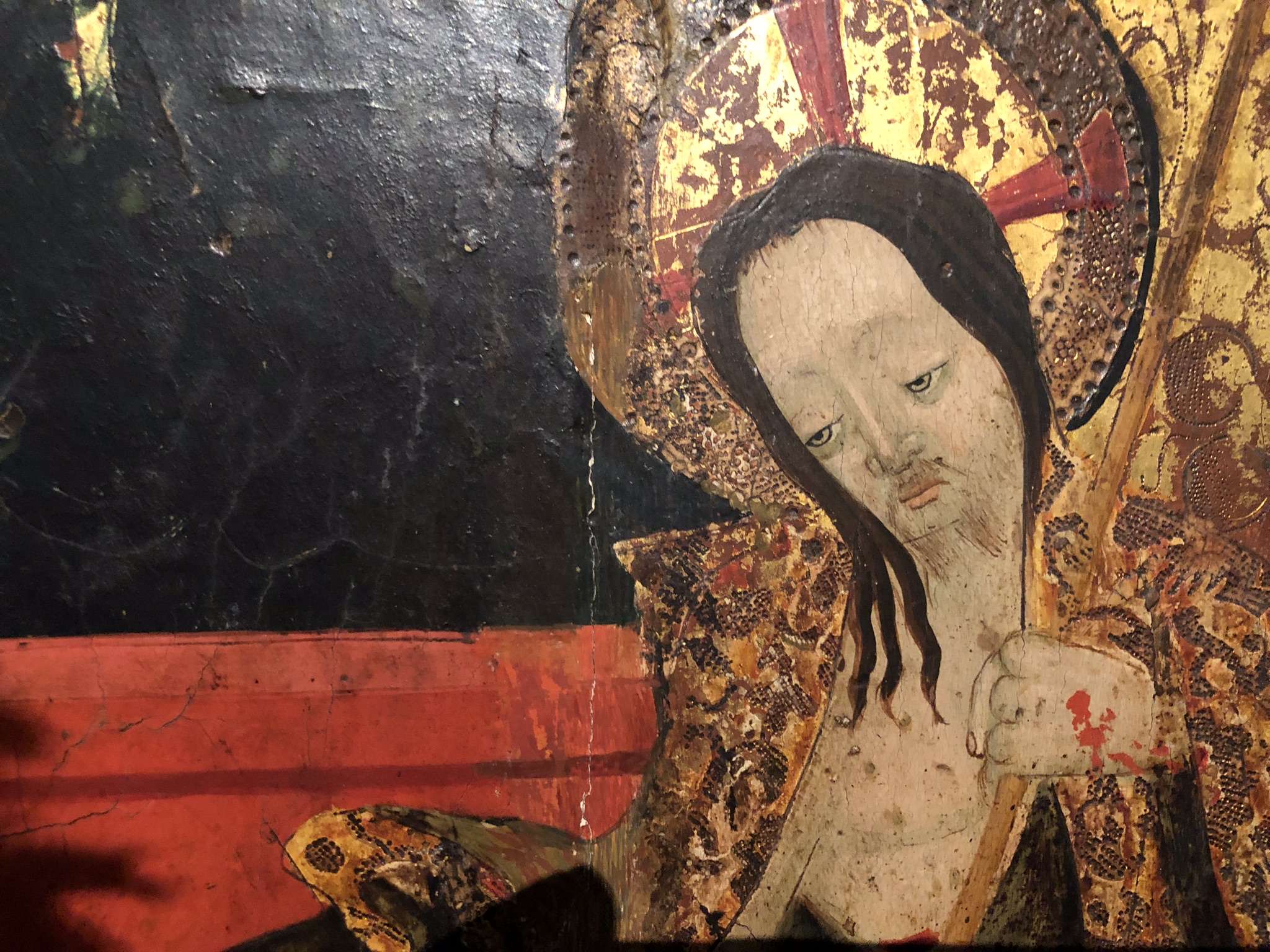
As I worked my way round the exhibit to the exit, a solitary face caught my attention. Or rather, a pair of eyes. Amid a wall of depictions of a saintly and contented Mary – Inmaculada, Asunción, Madre de Diós – a little painting of Dolorosa follows you with its eyes, which are bloodshot and full of tears. Her Son, arrested by the religious authorities and sentenced to death for the crime of working miracles, was crucified before a baying crowd.
Over a thousand years later, the same story played out again and again across Europe, only now it was done in Christ’s name. There must have been a thousand Marys who watched their sons and daughters befall a similar fate. And still it plays on.
Critics may say the Catholic Church puts far too much emphasis on the doom, gloom and damnation, but there is wisdom in the Catholic acknowledgement of the darkness. We might have been created in God’s image, but that does not make us perfect, and history tells us that some of us stray very far from the path when we try to be perfect.
Mary’s grief is eternal: it ripples across time.
Wow, that got pretty heavy. Check back in tomorrow for some more light-hearted adventures across Aragón! BB x
Bloody hell, but that was unnecessarily early start. The trip to Fiumicino Airport (8€ on the shuttle bus from Via Crescenzio 2) was on time and completely hassle-free, so I arrived with four hours to go until my flight – a new record in caution. Still, better early than late! It gives me time to relax and put yesterday morning into words.
All I can say to start with is believe in your own luck for a change. Because Sunday morning’s adventure wouldn’t have happened at all if I hadn’t taken a chance.
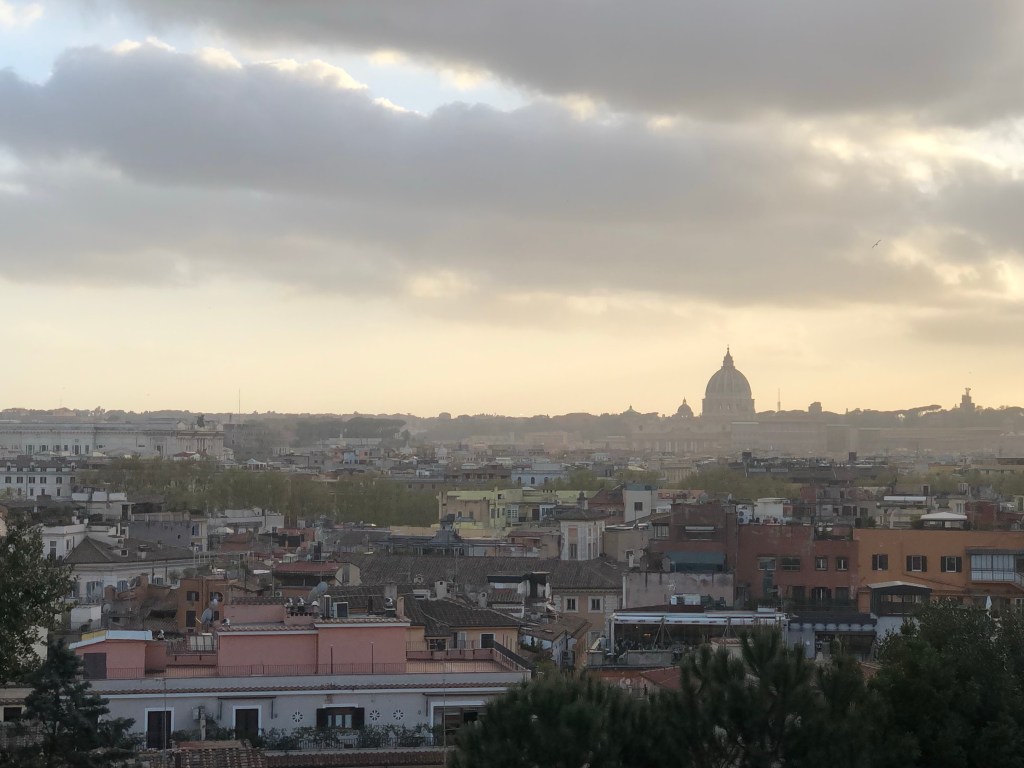
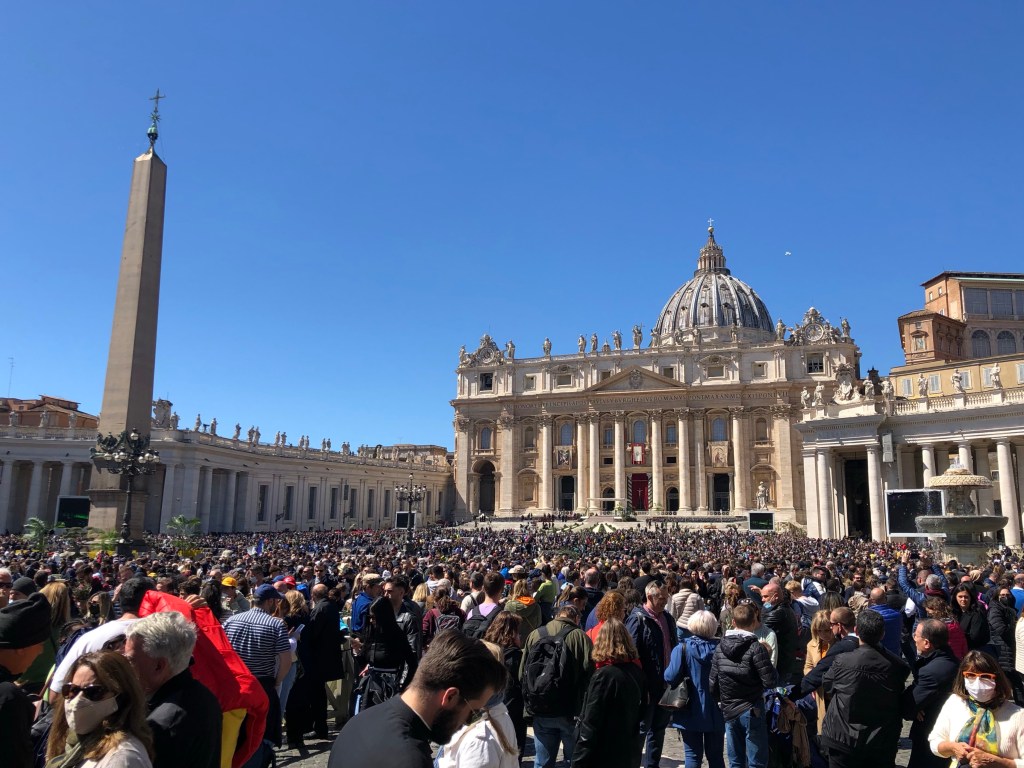
One of the main reasons I came to Rome and stayed until this morning was because of the very real chance of seeing the Pope deliver his Palm Sunday Mass in St Peter’s Square. That’s not the kind of opportunity you pass up on if you can help it. Unfortunately, the information on the internet is vague, conflicting and genuinely quite hard to track down. Most of it implies you need to apply for a ticket directly to the Vatican via fax (!!), sometimes as early as three months in advance, to be in with a chance of securing a “coveted” ticket. At least, that’s what all the tour companies say. By Saturday night, I’d more or less given up on the whole affair and planned to go for a morning walk down the Via Appia instead.
Turns out the internet is wrong. So here’s me setting the record straight.
Contrary to what you may find online, you do not need a ticket to attend the Palm Sunday service in the Vatican City. It’s free and there’s no need to book!!!
I rocked up in my casual clothes with my picnic packed for the Via Appia and thought I’d check to see what was going on in VC and before I knew what I was doing I’d followed a whim and chanced the security barriers. They scanned my bag, found only a punnet of olives, a punnet of strawberries, breadsticks and some other snacks… and let me pass.
As it was still only 8.20am, St. Peter’s Square was still relatively empty. Thousands of chairs had been set up overnight, along with the temporary barriers raised around the central obelisk and the wind rose, but other than a small crowd settling into the first block of seats the pickings were good. I found a seat near the front of the second block, just two rows back from the barrier and strategically positioned behind two families who’d put their children in the seats directly in front, giving me a perfect view over their heads to the Papal seat. If I’d planned to come I could have arrived sooner and snagged the best seats in the house, but for a spur-of-the-moment decision I really lucked out.
By the time the warm-up Ave Marias were being chanted (in Italian, the real lingua franca of the Vatican), the seats on either side of me had been taken: by a diminutive group of Indian nuns on my right and a large Eurasian woman and her daughter on my left. I would have been squashed throughout the service had the nuns not seen on one of the telescreens that there were still five empty seats in the front block and gone charging off for a better seat, and my other neighbour left during the Communion after realising she was holding up the entire row by being the only one not going up for communion. By the end of the service, I had more room than I knew what to do with!
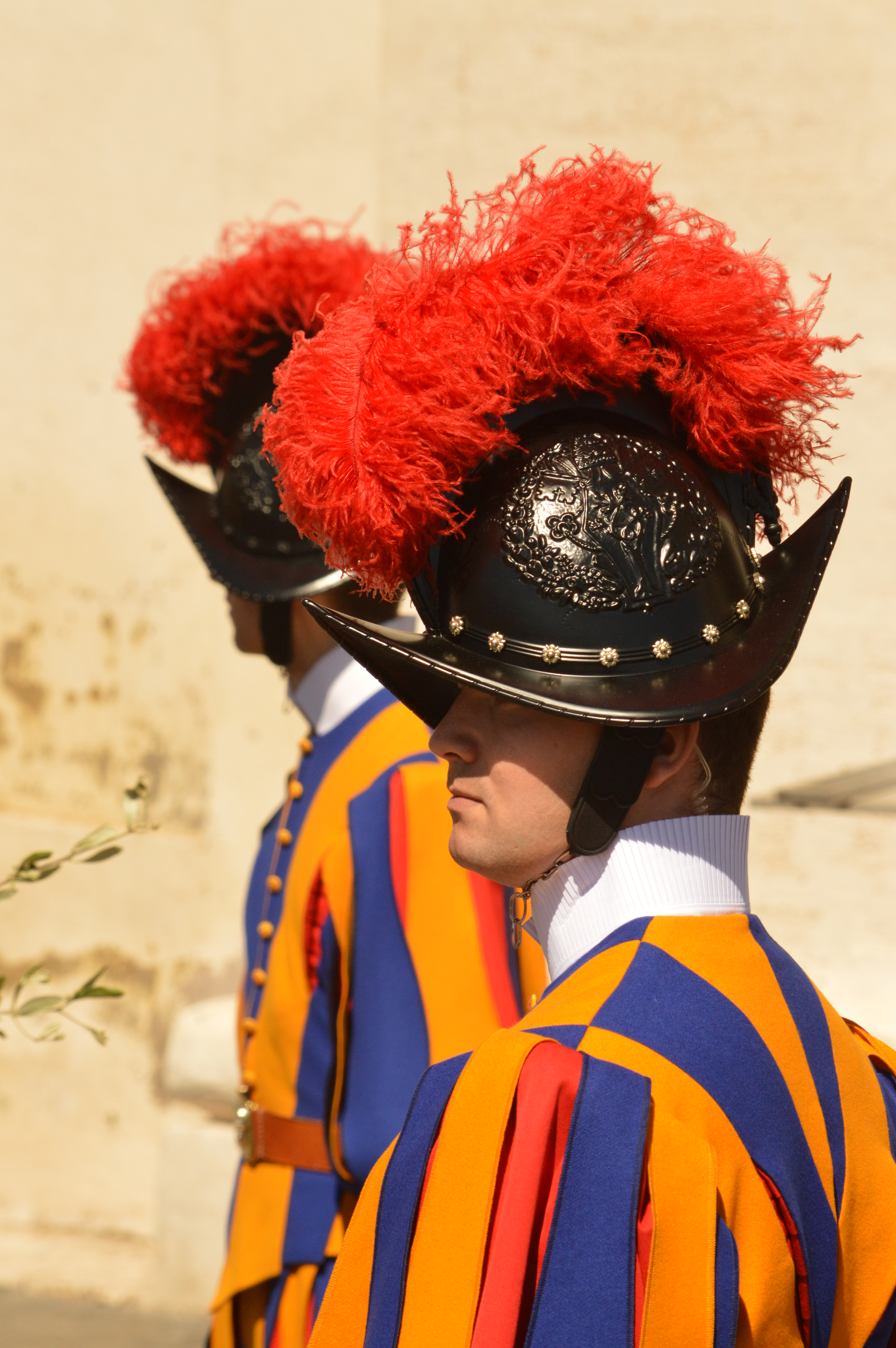
The Swiss Guard were quite a sight to see in their full regalia: plumed morion helmets, black capes worn about their landsknecht-esque striped uniforms and, at least in the hands of those guarding the cardinals’ seating area, impressive halberds, their tips flashing in the sun. I’m not sure if they’re more visible if you take a walk through St Peter’s basilica or the Musei Vaticani, but I certainly hadn’t seen them until now, so it was worth coming even if only for that!
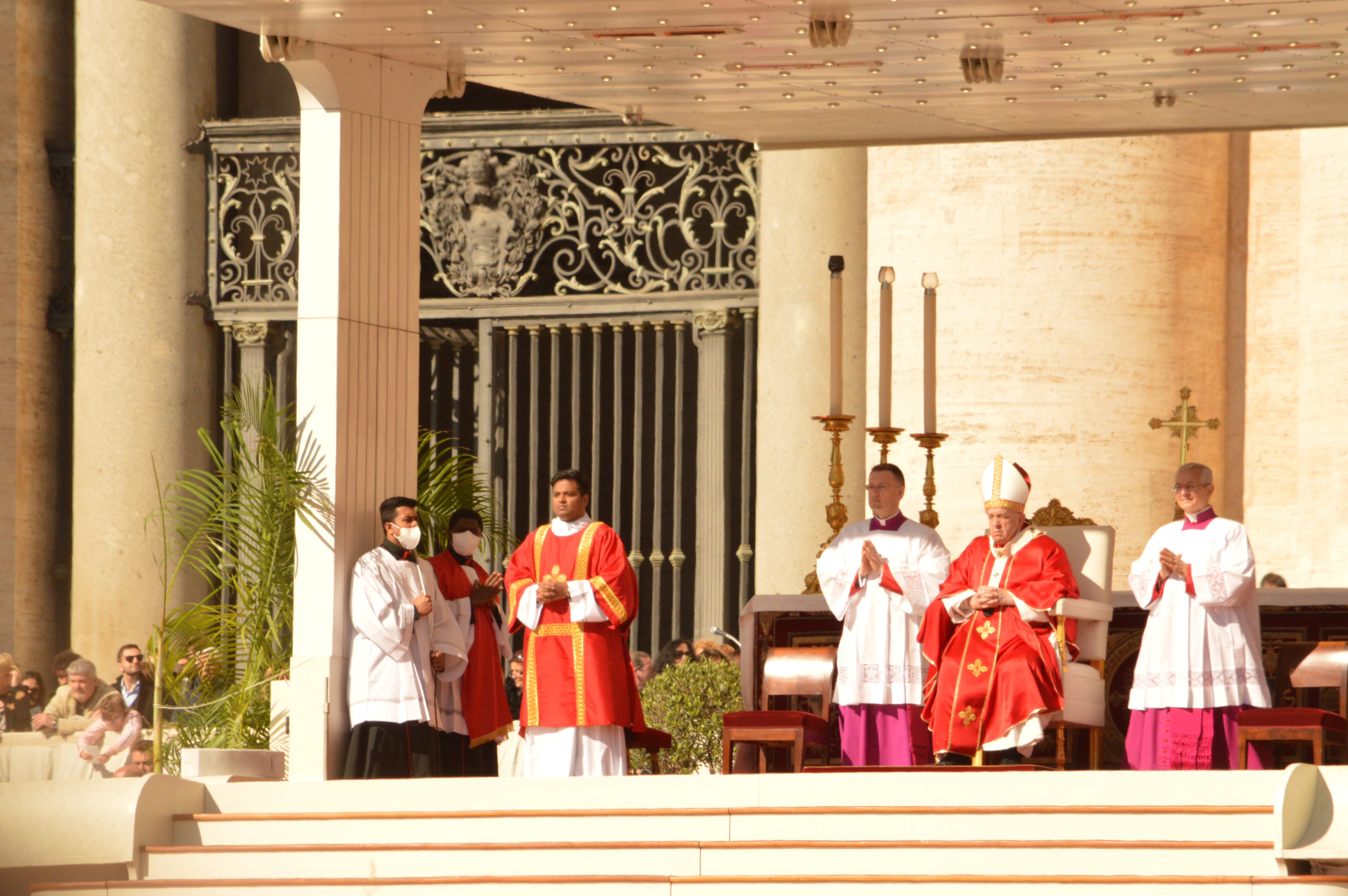
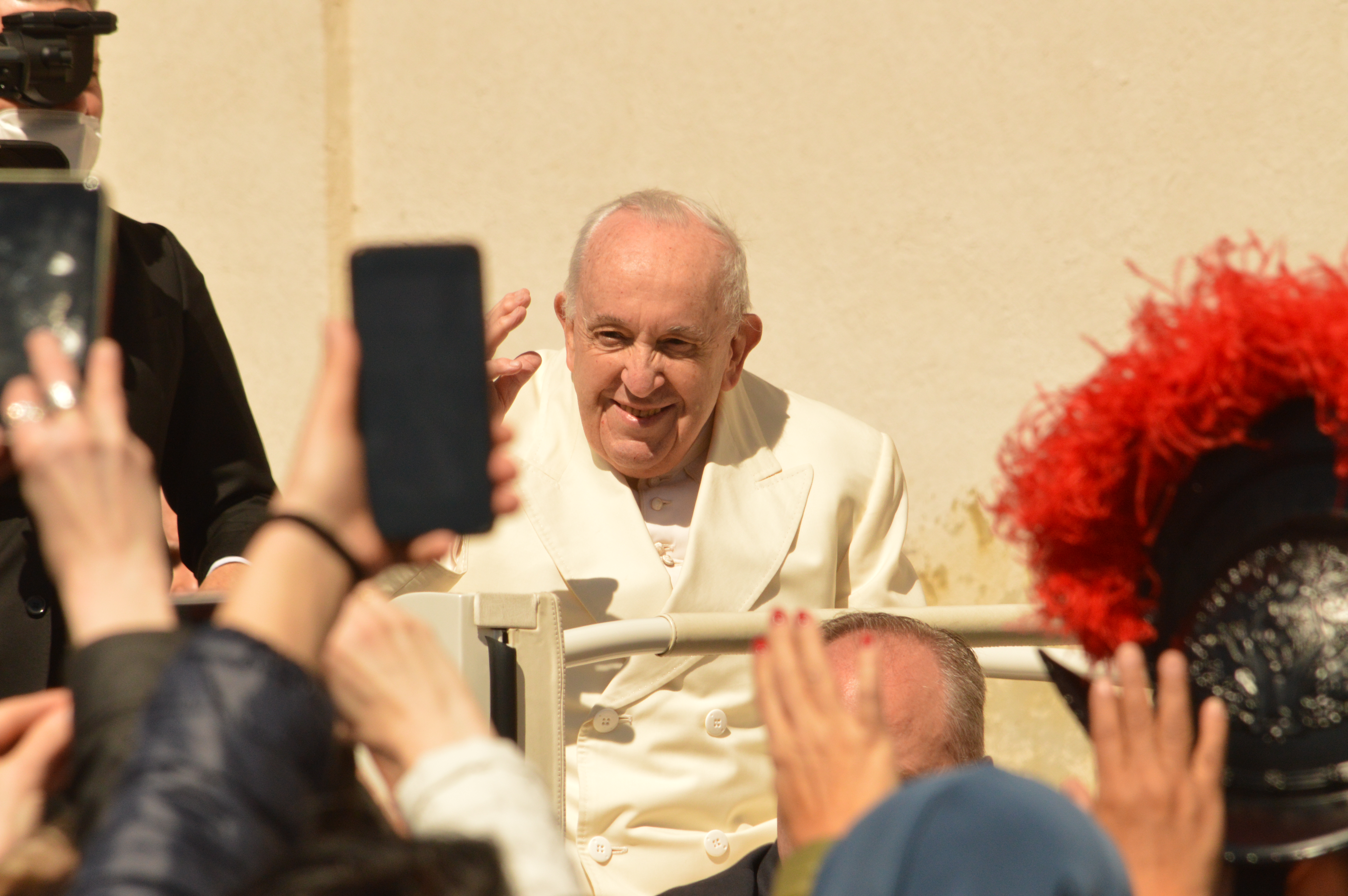
And of course, Pope Francis himself, dressed in regal red until the end of the service. Since my wanderings tend to take me off the beaten track, the list of famous people I’ve encountered is downright pitiful, but this has got to rank right up at the top – like Pope Francis did in 2013’s Time Magazine. Seeing the warm smile of the humble head of the Catholic Church at such close quarters was a once-in-a-lifetime event, truly… I couldn’t help taking up the cry of ‘¡Viva el Papa!’ raised by the Colombian family in front of me. His humility is what makes him so inspirational to me – that a man in so important a position should have no qualms making apologies for centuries-old abuses of power by his institution, or reject the majesty of status outright while still holding true to the core values of the church. I might not have gone to such lengths for a different Pope, but for Francis, my feelings were genuine. What an inspiration!
I’ve also never seen a Palm Sunday service quite like it. Multilingual (there were readings in Spanish, English, French, Portuguese, Mandarin and Malayan, as well as Italian) and multifaceted: the song of Jesus’ arrest by Pilate and his Passion was performed by various cantors with the full choir as the voice of the crowd. Faith through storytelling through song… now that’s more like it! It was like watching a passion play of old – and in a very real sense, I suppose that’s exactly what it was. They’ve been doing the same thing here in this square for well over a thousand years.
The Pope ended the service with a reminder to care for the poor – ever at the heart of his urbi et orbi message. When I left, I saw that in the merry exodus from the square, some misguided pilgrims had smashed right through a street vendors’ wares, knocking them in all directions. As I approached, several strangers gathered round to help the man set his little stall back to rights. Just as there are those who profess to do good and look no further than their own backyards, so too are there people out there prepared to help their fellow man, whoever that may be. That gives me hope. To quote a famous film set in and around the Vatican City:
Religion is flawed, but only because man is flawed.
Dan Brown, Angels and Demons
I’ve made it to the pueblo and a much-needed week with my cousins. It’s been fun wrangling with Italian, but these lips were meant for speaking castellano, hombre. Until next time! BB x
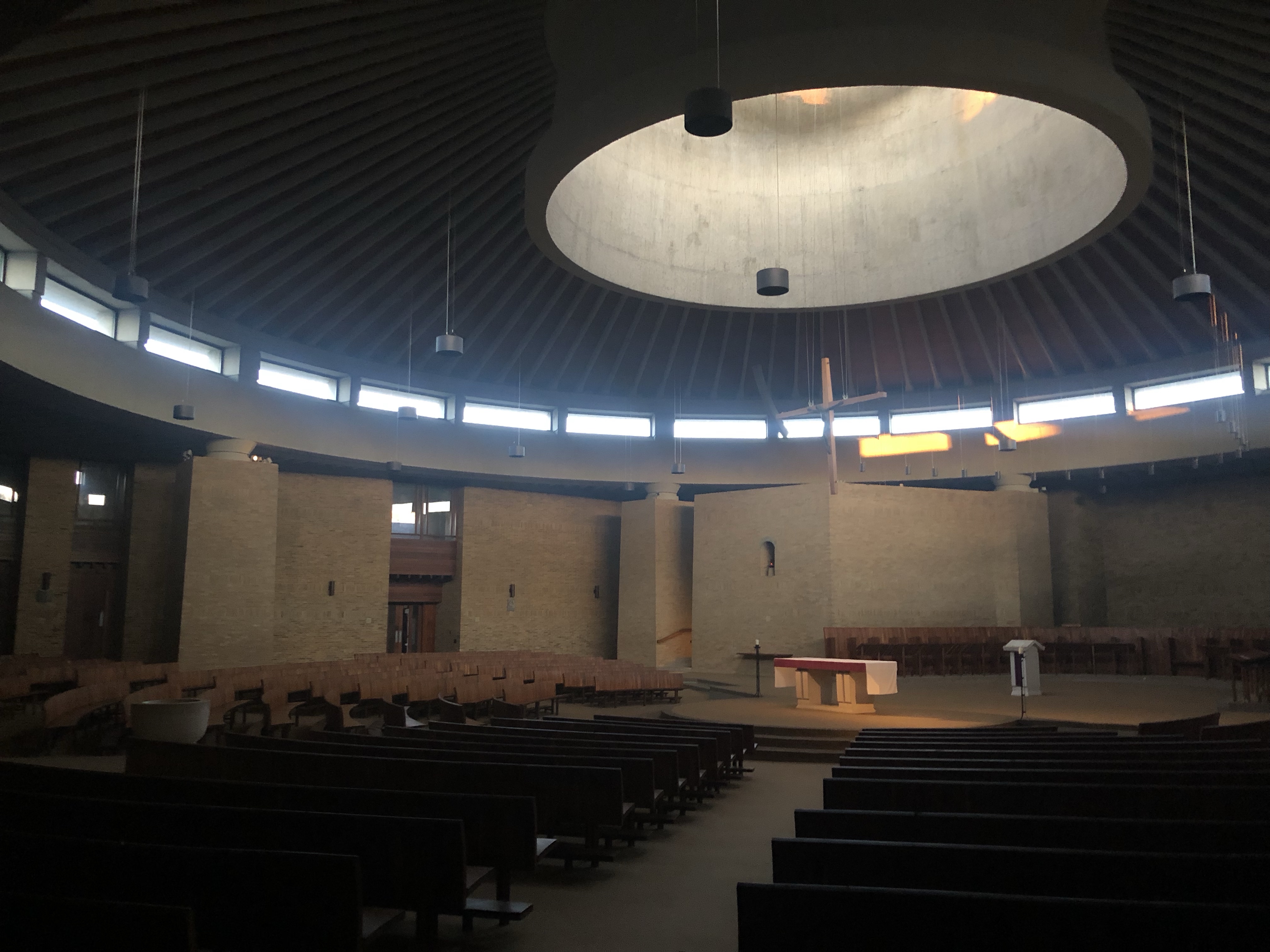
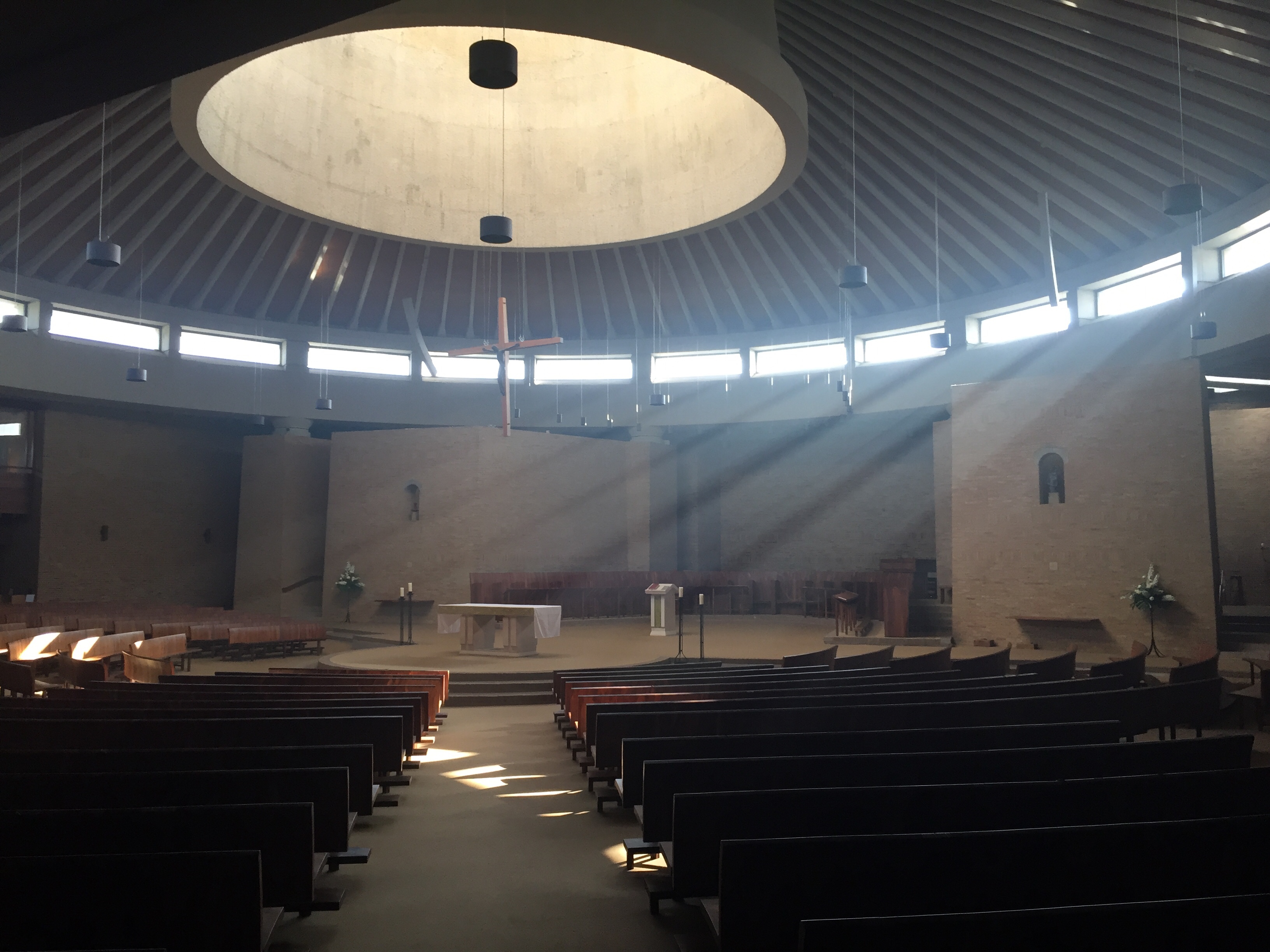
Last night, in a return to pre-COVID tradition, we celebrated Tenebrae in the Abbey Church. With the latest wave of infections sweeping the staff and students, I’ll admit I had my doubts I’d be able to go up and sing as I used to with a house to run, but my housemaster very kindly stepped in, allowing me to bolster the tenor line. It’s hard to overstate the importance of making music in my faith: singing is an act of worship. Perhaps that’s why I didn’t go to Mass when the churches opened last year, while the ban on singing was still in place – how could I practice my faith without lips to speak? I remember saying as much to one of the school’s youth chaplains once, who remarked that I ought to rethink my approach to faith. Was he right? I don’t think so. I think everyone’s path to God is individual. Mine just happens to be through music, which, all things considered, is hardly surprising.
I spent a great deal of my childhood in and out of churches. My mother played the organ for the village church when I was very young, and I remember sitting (probably not so quietly) next to the pedals, listening to the growling hum of the organ long after the last notes faded into the stone walls. Later, during my short spell at a prep school, I spent two nights a week up in the organ loft of Canterbury Cathedral while my father sang for the cathedral choir. What was undoubtedly an incredible privilege became routine – that is, until a Victorian-minded parishioner who happened to look up one week decided that children were better “seen and not heard” and my brother and I were unceremoniously ousted, forced to sit in the quire thereafter.
Perhaps that was God’s will, because twenty years later, I still jump at the chance to stand in just such a stall and tangle with some sacred music. There’s really nothing quite like it.
I have a somewhat unorthodox relationship with God. If it were a Facebook status, I might just go for “It’s complicated”. Somewhere deep within, my spiritual compass spins toward Israel. Maybe it’s the stories my mother brought me up with or the belief we both share that our ancestors were among the many thousands of Spain’s Jews who converted to hide from the Inquisition, many hundreds of years ago. It would go some way towards explaining the ferocious proclivity for the arts borne across the generations by my ancestors, at a time when intellectualism was unwise and even dangerous. Millán-Astray’s battle cry of “muera la inteligencia” in 1936 – around about the time my grandfather was born – hardly seems out of place for a country where, for hundreds of years, it was better to hacer mala letra than open your mouth and betray your wits. Our own Michael Gove gave us an uncomfortable reminder of this dark past when he claimed the British had “had enough of experts” in the lead-up to Brexit.
I can hold my head up high every day as a teacher knowing that I am the next in a long line of teachers, all of whom dabbled in music and poetry and art. Were they really Jews, though? I’d like to think so – I really would – but I have no proof of that. I have barely enough solid proof of my connection to my grandfather, never mind a connection to a Hebrew ancestry that may or may not have ever existed. The silver Star of David I sometimes wear beneath my suit is no heirloom, but rather a keepsake from a Jewish silversmith in Cordoba; a reminder of the terrible fate suffered by the Chosen People in a land far from home that was once their paradise. Will I ever know for sure? I doubt it. But some things you see with your eyes, others with your heart. This is one of those things the heart sees. Something you have always known or believed with little to no provocation. I believe because I cannot be sure. It’s the weakest of arguments, the merest of threads. But about such threads, Faiths are often weaved into being.
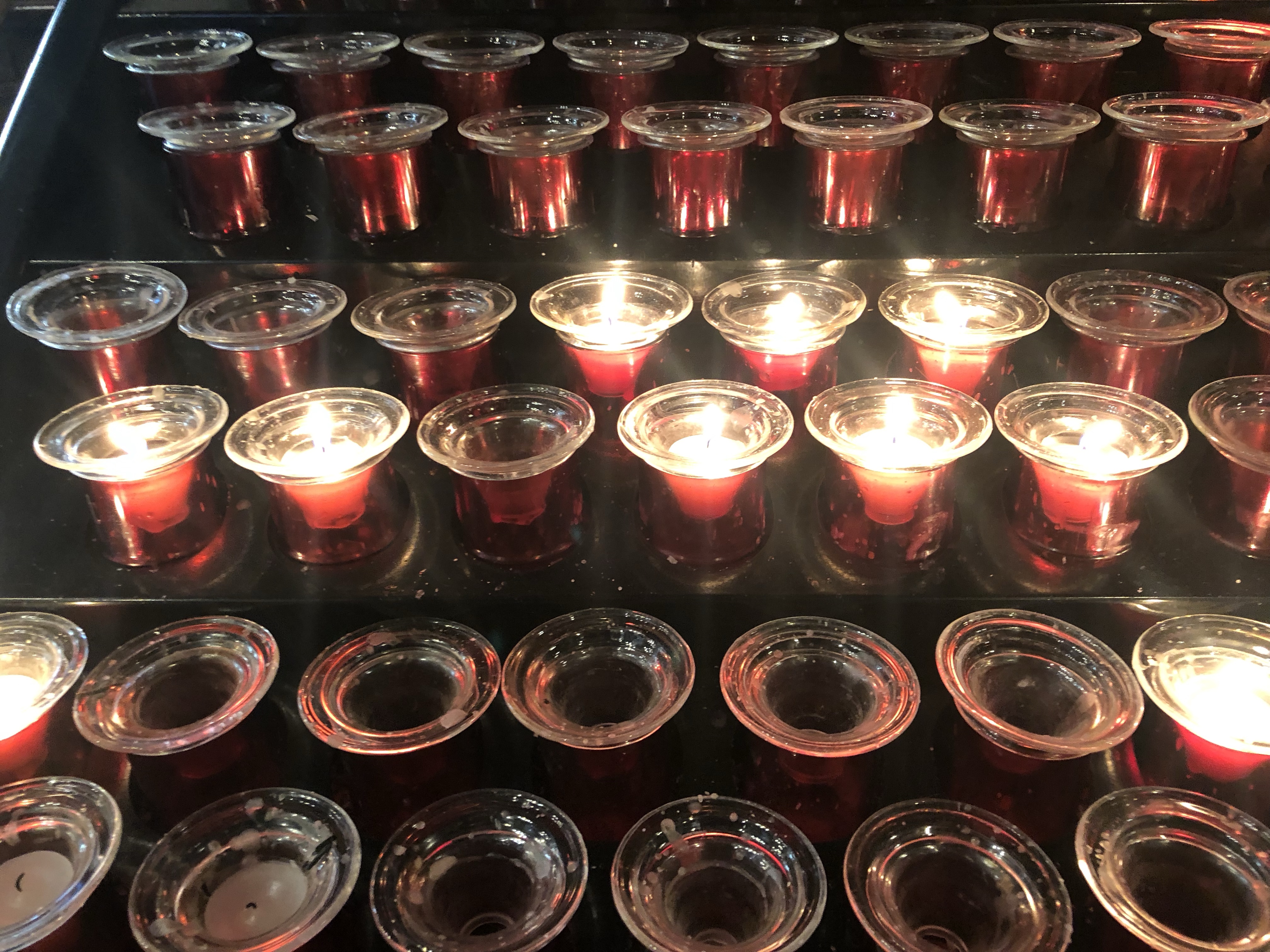
So why am I a Catholic? With such silent conviction, how can I stand there in the darkness, singing Christian verses and watching the candles going out to mark the extinguishing of Jesus’ light and life from the world, a little under two thousand years ago?
I am a Catholic because I would make the same journey as my family. Whether or not my ancestors found their way to the Christian God through awe or terror, I would take that road that they took. And there is something fundamentally grounding about faith. Standing as one with my students and singing songs that have been sung for hundreds of years… you feel a power, there, echoing down the generations. It’s all the more powerful when you see the date at the top of the copy reaching back to the middle ages. One imagines one’s voice reaching up to the heavens and mingling with the voices of those who came before you on its journey across the stars. Perhaps that’s what the choir of Heaven is: the echo of thousands of years of collective prayer through song. I’d like that.
I might also point out that the Catholic church represents an important bastion against the foe, since modern Christian music is, to my ears, quite possibly the wettest, most uninspiring drivel ever produced. It clearly works wonders for some, but it does nothing for me. Give me plainchant any day. A colleague once joked that one of his greatest fears was that he should reach the pearly gates only to find that Mozart and his kin are nowhere to be found, and Hillsong reigns triumphant. It’s a joke (and a nightmare) I share. But that’s a story for another time.
I am also a Catholic because Faith is a journey of forgiveness. Noli mortem peccatoris. Those were the words of power that spoke to me last night, as the last of the candles were snuffed out. I do not want the death of the wicked. I bear no ill will against those shadows who persecuted my people, because there is too much hate in the world already. I wept on the shores of the Dead Sea years ago at the sight of the sun going down over the Holy Land, knowing I was not yet ready to see it with my own eyes. Jerusalem evades me still: the last time I tried to make that journey, a little hiccup called Covid-19 came thundering in.
Finally, I am a Catholic because of what it stands for. Katholikos. Universal. It chimes with me in much the same way that the Arabic expression ahl al-Kitaab – people of the book – called out to me in my Arabic studies, many years ago. The world is immense and no two people are the same, and I think it’s as foolish to expect everyone to share the same faith as it is to expect to find two identical grains of sand on a beach: the closer you look, the more you’ll find yourself doubting. But I have built my faith upon doubt rather than surety, because that, to me, is what faith is all about. Believing in the light when all the world is darkness because your heart tells you to do so. Fate may be the master builder of the temples of our lives, but hope is the cement that holds the stones together. I believe in that light and in that hope. And in my heart I know I would go on hoping, though every light in the world were extinguished as they were last night, one by one.
In three days’ time I set out for Italy on my first solo adventure in a long time. Venice will inspire, no doubt, but it’s Rome I’m especially excited to see. I hope I can catch some music there during my stay. I could use some of that ancient magic after what has been quite a long term. BB x




 The Book of Barnabas