Streets of London

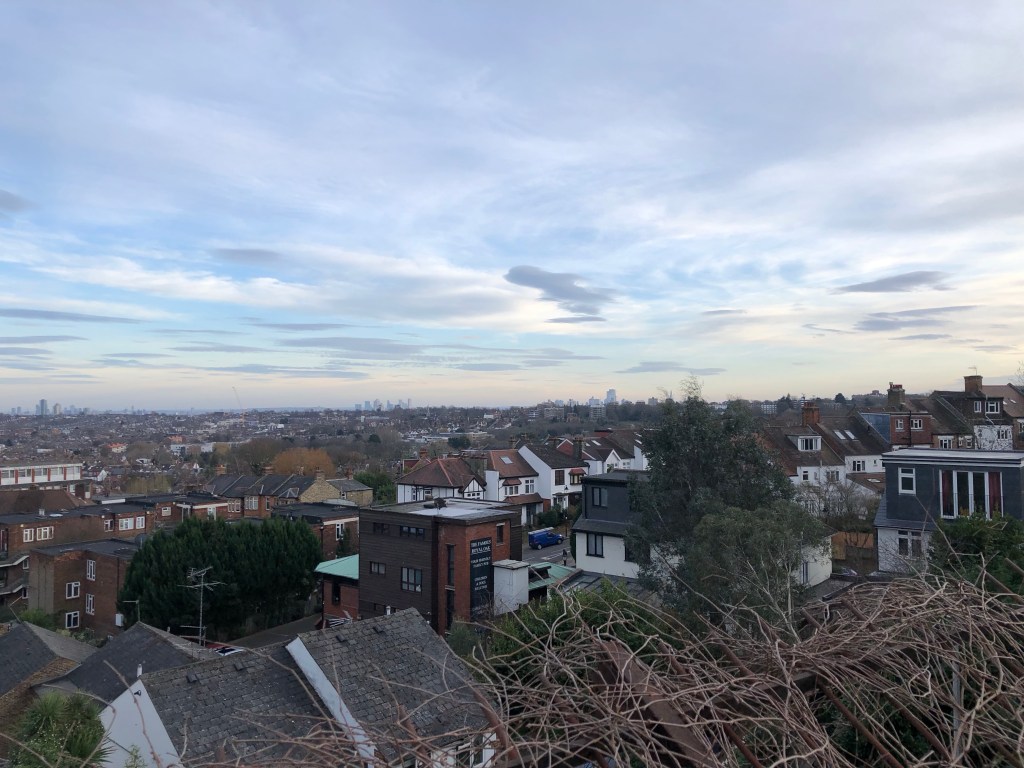
2.20am. I’m riding home on the 2.08 from London Victoria. I didn’t even know trains still ran at that ungodly hour of the morning. Apparently they do: one every hour at eight minutes past the hour. They lock the station until ten minutes or so before the train leaves, and there’s quite a crowd loitering outside the gates just before they open them. Three Bridges is clearly the place to be at two in the morning. Who’d have thought it?

I did some much needed “getting out” today. With a couple of exceptions I’ve more or less turtled for four years or more. I guess that’s the nature of life in a boarding school: whereas most other folks can play their weekends and snatch evenings here and there, in teaching you block out your free time by your holidays…

The chap two seats ahead is fast asleep in his seat. His phone alarm is going off for the third time. The lads on the row of seats opposite looked annoyed at first, but one of them has struck up a conversation with the sleeper and asked if he’s going to get home OK.

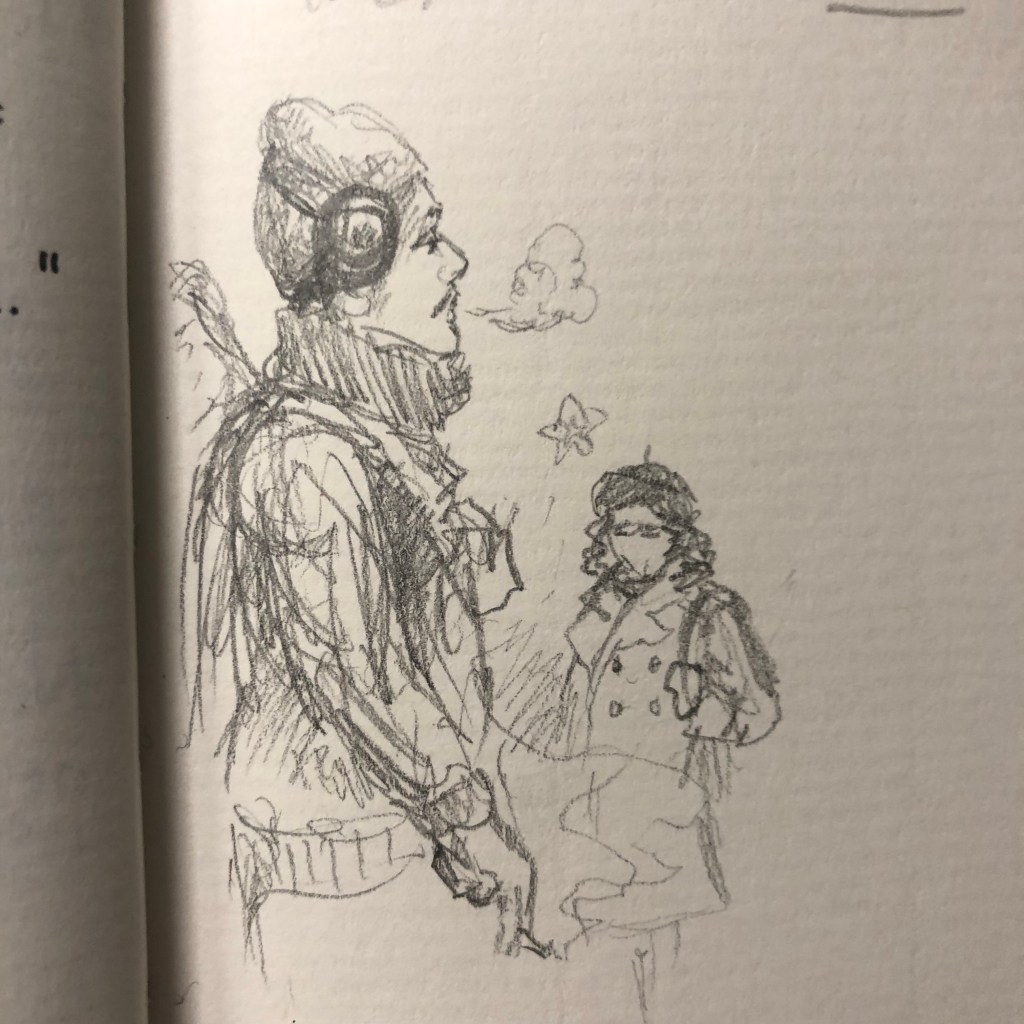
I killed some time with my sketchbook on the Underground this afternoon, and again waiting in the street in Holborn before the party. A homeless man wandered over, cap in hand, to ask for help. Normally I have to admit I’d probably turn a callous blind eye, but something about London draws me in, makes me think differently. I asked for his name and we got talking. He said his name was James, and that he was trying to find a place that would take both him and his dog for the night. I gave him something to start his hunt – for once I happened to have a loose note on me. We shook hands and he set off at a run.

I didn’t have to make the trek home quite so soon. A friend offered me the key to his place for the night, if I could find my way there. I turned it down, partly out of habit, partly out of pride, and partly because of James. Having such an easy solution in London when so many are out on the streets… for some reason it didn’t sit right. You think in a different key in the small hours.

I remember sleeping rough in the wastelands beyond Almeria years ago. Gaunt from a month of under budgeting and undereating and feeling hollow. I remember the fear of that first night, the isolation. It could never compare to the real thing, of course, but I was young, foolhardy, and I wanted to have an idea of how it felt. One night I was curled up in the dunes when a couple of cars rolled up onto the beach around two in the morning. Men with flashlights climbed out and scanned the beach. I got the jitters and decided to move – they were probably night-fishing, but your brain plays all kinds of tricks at night. I don’t think I’ll ever forget the genuine pit-of-my-stomach terror when, barely a few yards down the beach, I saw two of the torch beams slowly sweep the beach and lock onto me. I ran. My God, did I run. I don’t think I’ve ever run so fast in my life. I must have gone at least a kilometre or more before I collapsed in the dunes.

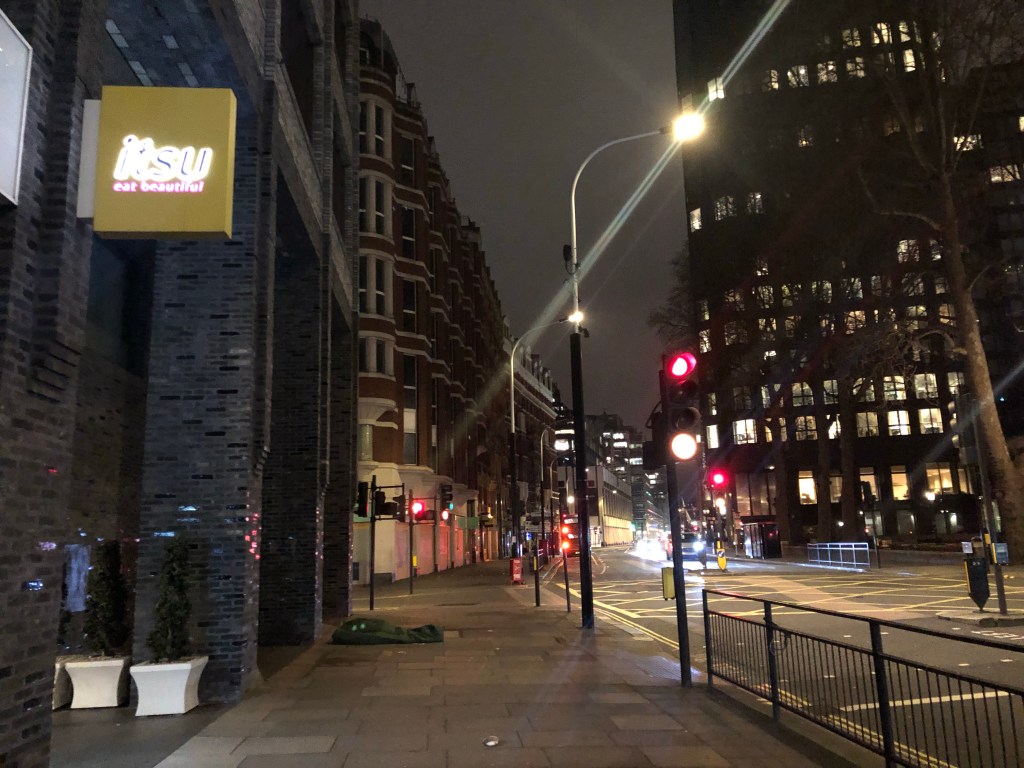
Almeria seems a long way away. London is surprisingly busy in the small hours. Not the city that never sleeps, per se, but one that keeps at least one eye open all night. Offices lit up, calendars and Macs on desks. Lads coming home from the lash. A girl tottering home on heels, makeup streaming, eyes weeping. And many, many sleeping bags in doorways.

It felt good to go out again. I haven’t danced in years – not since university, I shouldn’t wonder. And as it’s London, the music was both a) quality and b) perfect for dancing shoes. I should do this again sometime. Not that I’d make a habit out of catching the 2.08, though.

Gatwick Airport ahead. Only another five minutes or so to go, and then it’s the long walk back through the forest. I’ll probably be in bed by 4, with or without the moonlight to guide me – I’ve made that journey so often I could probably do it blind.

I’ll sign off now so my phone has enough juice for another chapter or so of Michelle Paver’s Ghost Hunter on Audible. That will take me at least as far as the forest – there, at least, I will feel safe again. BB x
Athene noctua

The students have gone home for half term. Silence hangs over the school. The corridors of the boarding house are dark, and a little cold, too. The floorboards creak under my foot with the kind of volume that only darkness can amplify. The dull glow from the torch on my phone casts long shadows. A friend of mine once explored an abandoned hospital on a dare. I did not go with him then, out of some primordial fear of the darkness within. And yet, here I am, haunting the empty corridors of this old house by night, the last man standing. Filling up a water bottle from the cooler on the Year 10 corridor becomes a quest in its own right.

I’ve had a lot of time to think lately. I guess coming out of a long term relationship will do that for you. One of the things I thought I might be able to recover was the fierce reading streak I had on my year abroad, but I just can’t find my mojo for that right now. Time just seems to slip through my fingers when I’m not at work. I wonder what the world does when it’s not working? I guess that’s what television is for, or Netflix, or whatever streaming service is in right now. But then, I’ve never been good at sitting down to movies or TV shows. My brain wants to be involved. There’s a precious few I’d happily watch over and over and over again, but it’s rare that I find a new picture out there that sinks in.

There’s not a day goes by where I don’t feel a genuine fulfilment in my line of work. Teaching is in my blood, a duty that my ancestors have carried out for generations. Knowing that I am the torch-bearer for my generation gives me a sense of purpose that is utterly unshakeable. And it’s not as though that purpose hasn’t been tested over the years. It’s just that, whenever something comes up to shake its fist in my direction, I know instinctively that there’s a greater mission behind it all, and that’s reason enough to persevere – even when my core beliefs are thrown into disarray. I wonder if my great-grandparents, Mateo and Mercedes, ever had such doubts?

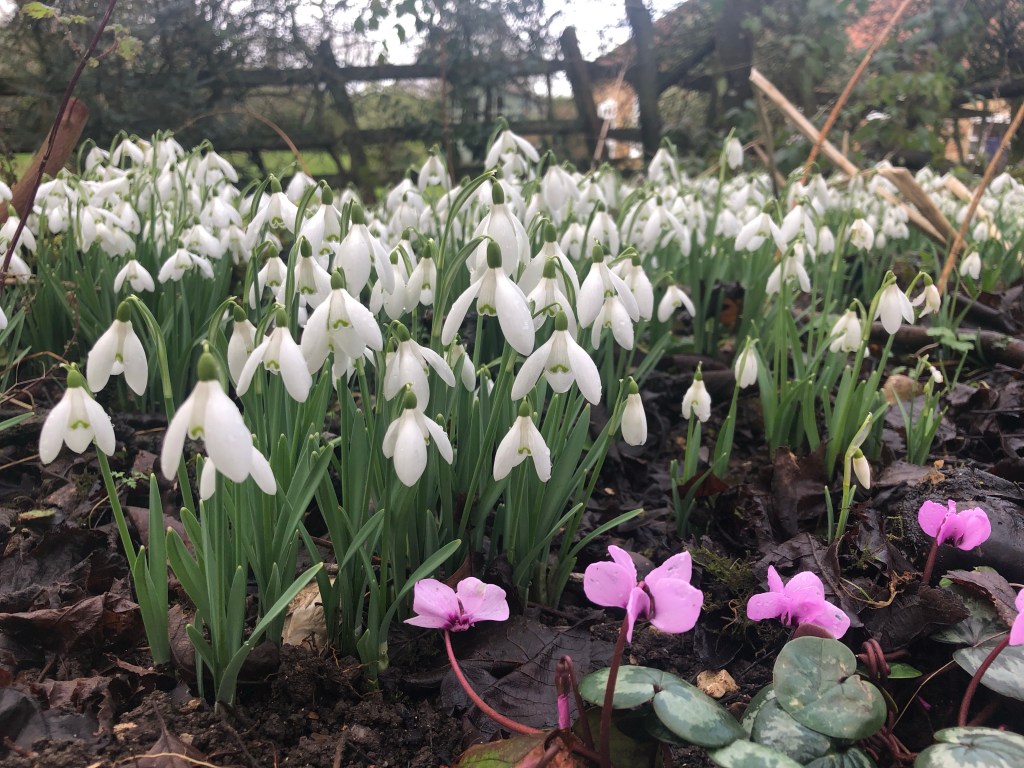
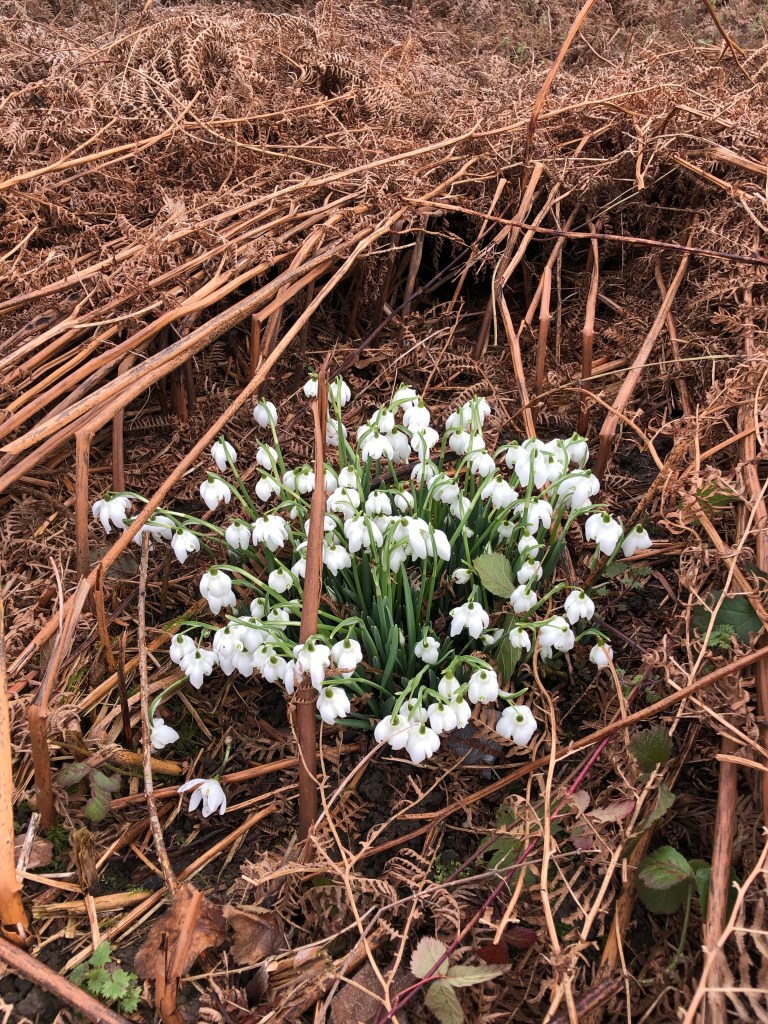
There’s a little owl calling outside. It’s been piping away from the upper branches of the Atlas cedar in the drive for half an hour now. The foxes have been quiet for a week or so now. I suppose their noisy January antics in the front quad are over for the year. Three buzzards were soaring over the grounds the other day during morning break, but none of the students seemed to notice. The redwings and the fieldfares have moved on and the snowdrops are out. The daffodils will be on their heels soon enough. I escaped to Richmond Park a few weekends back, just as the first blooms were sprouting. It was good to see the wide world again, even if only through my own eyes.

No photo description available.

The meltwater of the long Covid winter is starting to run. Just like the birdsong and the subtle shift in the light over the last couple of days, change is in the air. Piece by piece, the last fragments of the old world are coming back. At the request of one of my students, I blew the dust off my long-neglected violin and rocked up to orchestra this week. I’m about as good on the thing as I ever was – that is, haphazard at best – but I’d forgotten how much fun it used to be. It’s one of those things that simply slipped through my fingers over the last couple of years.

I think I’ll take up the guitar this half term. A zealous diet of sevillanas have powered me through the darkness of the winter months this year, and I’m done with being able to sing along but never sing alone. At the very least it will give me something to do until my provisional arrives and I finally confront the long-delayed challenge of learning to drive, which I have put off for far too long.

I’m done with playing games. It’s high time I went on another adventure. The Easter holidays aren’t far off, and I could do with some more writing fuel. And spring is always such a hopeful time of year. BB x
Tzompantli: An Ode to Extremadura

On Monday, I kick off my new role as the middle school gifted and talented programme coordinator with a lecture on the Aztecs. It wasn’t the obvious choice, as Mexico is a country I have neither visited nor researched nearly as extensively as my grandfather’s country. As a matter of fact I made a conscious effort to steer well clear of Latin American affairs at university, cleaving to the Iberian modules even when it meant the pickings would be slim. If Durham’s only Cervantes specialist hadn’t been on maternity leave in my final year, I could have stayed quite happily in my fairy-tale world of knights and princesses and Moorish warlords and binged on ballads, and I wouldn’t have had to go anywhere near strap-on wielding Catalans and metaphysical Madrilenians. Oh Quijote, en mala hora me abandonaste!

Ordinarily, for such a school project I would have stuck to my guns and wheeled out some Moorish magic with a talk about Islamic Spain, something that is close to my heart; or El Cid, a man whose legend (and whose 1961 movie) is embedded, thorn-like, a couple of inches deeper. I even briefly considered whipping up something about pirates, but I haven’t read nearly enough to do that one justice. Not yet.

I landed upon the Aztecs for a couple of reasons. One, because the book I have chosen to read with my IB students is Laura Esquivel’s Malinche. Two, because my school – or rather, the people whose money built the house in which I now live and work – has a long history with Mexico, a connection that is plainly carved into the stone in several places.

But I think the main reason I wanted to explore the Mexica was because it ties me back, through the ruthless conquistadors, to a place that is still very dear to me: Extremadura.

My first contact with Spain was with Andalusia, with her jagged crags and whitewashed mountain villages. If I wasn’t spellbound there and then, my mum and dad must have been, because they made the crazy decision to up sticks and move us there in 2006… right on the eve of the financial crisis that was already driving many of Spain’s expats out. It might not have been the wisest move for three out of the four of us, but after a year of weekend hikes in the surrounding sierras, gecko-hunts in the streets by night, Holy Week spectaculars and vulture-chasing in the misty heights of El Gastor, I was absolutely hooked. Andalusia was my polestar for many years to follow, and her light shone brightest on the paradise of the tierras rocieras of Doñana National Park.

(The author, blinded by the light since ’05)

Over the years I braved her jealousy and flirted with her sisters: a school trip took me from Barcelona and the magical Mediterranean town of Tossa de Mar up and into the clouded dales of Cantabria and the foothills of austere Asturias. Legends of the Cid led me to Burgos and the empty plains of Old Castile, the guiding light of my ancestry led me home to la Mancha, and in recent years I’ve swum in the crystal waters of Mallorca and Menorca. Throw in flying visits to Aragon, Alicante, La Rioja and the Basque Country and it’s getting to the stage where there’s hardly a corner of the country I haven’t explored.

But I don’t think I could ever have anticipated the rawness of my obsession with Extremadura. From the moment I set foot on her soil I was lost. It honestly felt like falling in love for the first time. Not the high school crush kind of falling in love, but that kind of mature depth of feeling, that gut-wrenching, iron-tasting jolt in your upper body that tells you something’s starting functioning inside that was only dormant before.

Oh, cut the poetry already, BB. If you’ve been reading this blog as long as I’ve been writing it, you’ll know I didn’t actually talk like that when I arrived in Villafranca de los Barros on that hot September afternoon seven years ago. But hindsight is a wonderful thing, and any corner of the Earth that could convince me to jettison my plans for taking my teaching game over to South America for a second (and very almost a third) time must have an awesome power.

When Hernan Cortes and his men entered Tenochtitlan, one of the greatest cities of the world at the time, one of the things that shocked them most of all were the dreadful tzompantli, wooden scaffolds nearly two metres in height that carried between them the many thousands of impaled skulls of the sacrificial victims of the Aztecs. They came back to Spain telling wild tales of eagle warriors and war priests with matted hair and bleeding knives, and when one reads of the savagery wielded in the name of Castile upon the Mexica, it isn’t hard to understand why it’s been so popular until recently to discount the stories of tzompantli as a myth invented by the conquistadors to justify their actions. Until 2015, the year I moved to their homeland, when the bases of the huey tzompantli were uncovered in Mexico City, complete with row upon row of human skulls, laid out like so many candy calaveras on Dia de los Muertos. The conquistadors, for all their sins, must have had stories worth telling, if only people would listen.

Extremadura is one of those places I will probably write about again and again for the rest of my life. If Andalusia was my first crush, Extremadura was the lady who captured my heart for good. Not even the knowledge I have now that ties my bloodline more closely to Valencia than la Mancha can put a stain (no pun intended) on my devotion to her. Hers is a story I would tell and tell and tell until my tongue split in two.

Tzompantli: an image which struck no small amount of awe and fear. The presence of a God or Gods unknown (and a word that first threatened to split my tongue in two, but is now so satisfying to say that I have rather awkwardly made it the title of this post).

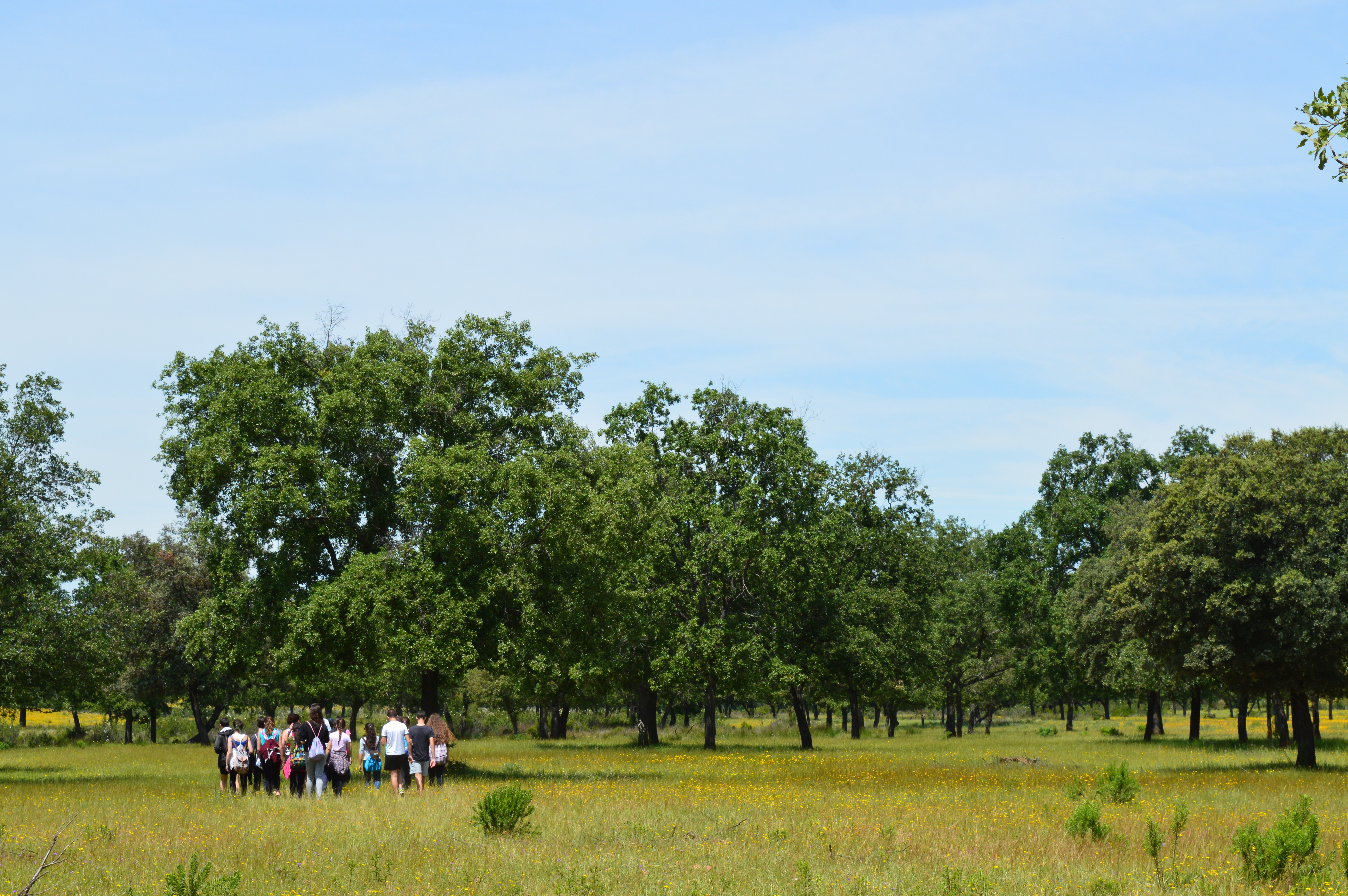
That is my Extremadura. Unknown. Disconnected. Hard to say. Trainless. Abandoned. The conquistadors couldn’t get out fast enough. Malaria festered in her hidden valleys long after it had been extirpated everywhere else, and the Mesta virtually enslaved her very earth to their will, subjecting her people to centuries of poverty. But it is precisely because of these fascinating tales – coupled with her unparalleled natural beauty – that I do believe Extremadura to be the jewel in Spain’s crown.

And oh, look – I started writing about Mexico and here we are, back in Spain. I’m nothing if not predictable. Some of us spend our lives traveling in search of that “something” that is just beyond our reach. I count myself amongst the lucky ones who found what I was looking for and need look no further – at least, no further than the light that shines on Spain’s shores. I can only hope Doña Extremadura forgives my curiosity.

Did Rodrigo, last of the Visigoth kings, truly disappear in her mountains after the fall of Merida? Did an army of ants reduce one of her villages to rubble? Were there really hordes of dwarves in Las Hurdes who descended into the valleys by night to terrify the locals? And what made Carlos, supreme ruler of the Spains, the Americas and all the Hapsburg Empire decide to spend the last years of his life in her wooded hills?

You will only find out if you go. Don’t hold on too tightly to your heart. BB x
P.S. Thinking about sharing some more stories from this part of the world… watch this space.

Something Old, Something New

There’s a day in the second or third week of January that, at least in these cloud-ridden islands, marks the turning of the year. Not the first day of spring exactly, but an early harbinger that the dark days of winter are finally on the retreat. For me, it’s always marked by the first real blast of birdsong, and it usually goes hand in hand with a generous glow of sunlight after many days of cloud, or that infinite whitening of the sky that is so very well-known to those of us native to this rock. There’s no calling when exactly that day will fall, but when it does, it’s nothing more or less than exactly what the doctor ordered, as far as I’m concerned. I grab my journal and keys, leave the flat, walk up to the office and – boom. There it is. The dawn chorus is already in its final movement, but still going strong. The voices of robin and blackbird and woodpigeon and sparrow lift my heart skywards. I’m then in an irrepressible good mood for weeks which neither marking nor duty nights nor even thunder, rain and storm can stamp out.

I guess I can only apologise to my colleagues for the nauseous wave of positivity that nature washes over me. It’s almost first-year-of-university-level enthusiasm (which, for those of you who knew me then, you know…).

Perhaps spurred on by that wintry magic, I made two random throws this weekend. I bought a kite, and I decided to re-read one of my favourite childhood stories. The kite is easy enough to explain. I had a kite once, when I was a lot younger, which has Jeremy Fisher emblazoned on its face. If I remember correctly, it didn’t fly very well. I guess we never tried it out on a day when the winds were good. It just seemed to gather dust in one of the cupboards until, one day, it disappeared. Anyway, I’ve got the whimsically romantic notion in my head that kite-flying is one of those things I’d love to do with my kids someday, so I ordered one on that whim. It arrived yesterday, and if I get a moment’s peace this week, I’ll put it through its paces out on the South Downs.

As for the reading – alright, I confess, I didn’t do any reading per se. I had a fair amount of spring cleaning to do, but I wanted a soundtrack while I worked and I figured an audiobook would be just the ticket. I’d had Michelle Paver on my mind after dipping my toes back into her ghost stories a few days ago, which naturally conjured up memories of reading her Chronicles of Ancient Darkness series when I was at secondary school. I remember absolutely adoring the first in the series, Wolf Brother, and motoring through at least the first sequel through my school library. I cannot remember exactly whether I made it as far as Soul Eater, the third in the saga – if I did, I forgot the plot more completely than that of the second – but I remember the books rising out of a videogame-clogged adolescence like icebergs, one of precious few literary stepping stones across a goggle-eyed, pixelated river that ran at full strength for far too many years. Was it Paver’s intense attention to the natural world in her writing that hooked me? Probably. She is one of my favourite authors for precisely that reason: she knows her settings as though she has lived within them her whole life through.

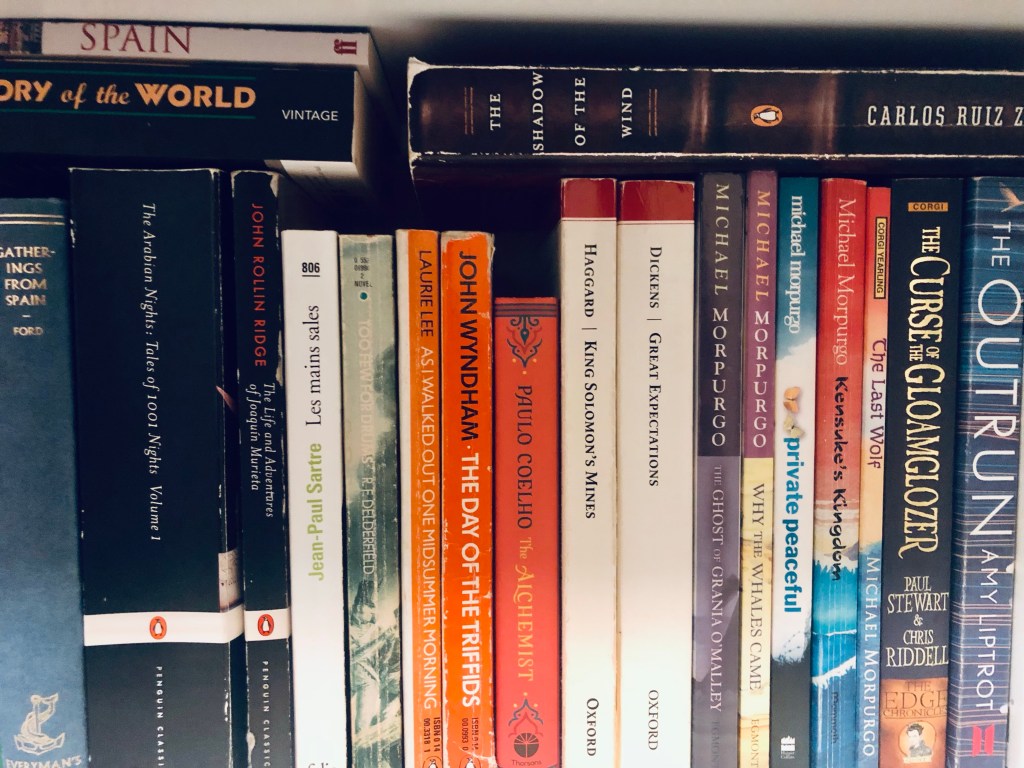
Wolf Brother had a lasting impact on me as a writer, more than I had previously suspected, and it took listening to the masterful narration of Sir Ian McKellen over the weekend to realise just how deep the roots of her magical storytelling stretched into my own creations. Naturally, my own stories have changed a great deal since I started writing them over twenty years ago, but if you look closely, you can see the tell-tale brush strokes of the authors who showed me the way. I could fire up my hard-drive right now, pull up a folder, pull out a chapter and point out the guiding hand of this or that storyteller. Here is some of Paver’s naturalism, and there’s some Rider Haggard gung-ho. Paul Stewart and Chris Riddell had no small part to play in the healthy dose of tragedy, and I’d wager a fair amount that there are traces of Michael Morpurgo spread throughout like watercolour, since at a certain point in my childhood I pretty much read nothing else. There was just something about his writing that spoke to me like no other writer could. He had me hooked on all his animal-centred storylines, his Scilly Isle adventures, and his occasional reference to something on my wavelength (like namedropping The Corrs in Arthur, High King of Britain). Kensuke’s Kingdom and Why the Whales Came rank near the top, and sit in pride of place by my desk alongside the other books that mark certain turning points in my life: Day of the Triffids for traveling solo, King Solomon’s Mines for going mad in Amman, The Arabian Nights from my university days and The Outrun for a dose of reality when I left that world behind… and The Tale of Benjamin Bunny… just because.

What were the stories that had the biggest impact on you as a child? Which authors colour your writing? I’ve ended the last couple of posts with a question, which is a) repetitive and b) pedantic and c) a sign of how much I’ve been teaching and how little I’ve been writing these past three years. But it’s something I love to ask people, when I get the chance. The power of storytelling has been precious to me since I was a bratty kid insisting on the fifteen-minute bedtime stories and not the three-minute tales (I swear I wasn’t just looking for an excuse to stay up late…!), and I hope it’s a joy I can share with my children someday.

When you come back to a book you enjoyed as a child, you see it through two pairs of eyes and two hearts: the eyes of a child embarking on a journey as though for the first time, and the eyes of a parent who knows the dangers ahead but cannot help hoping things turn out for the best. It’s incredible how the magic contained within the pages of those stories never fades, no matter how many times you come back to it. I make a point of re-reading Triffids every time I travel alone, but I’ve neglected the stories of my childhood for too long.

Once I’m done with the rest of Torak’s adventures, you’re next, Morpurgo!

BB x

Under the Shadow of the Stone Pines

On a balmy September afternoon back in 2012, three friends and I were sitting on our suitcases in the bustling complex that is Heathrow Airport. We’d already played the find-the-most-expensive-item-in-duty-free game and were killing time for the gate to flare up on the departures board. We were bound for Uganda, to our partner school in the north, on what could so very easily be construed as your generic gap yah adventure. We were under no illusions as to that. Teddy made a joke about one of us ‘finding ourselves’ out there. Maddie was quick to reply that she’d already found herself right here in the terminal. That made me chuckle – probably because, with good reason, that joke about ‘finding yourself’ was squarely directed at me.

I’ll admit it. I have a habit of falling head over heels for things. Especially places. It goes with the terrain of being a self-confessed Romantic. Naturally, this obsession with location carries over into my reading. Setting is one of the first things that I look for when I read a book. Bother dialogue. Bother clever plot twists. If the cast doesn’t travel any further than their cul-de-sac then I’m out. Any author that can make the setting just as enthralling as the plot has me round their finger. That’s why I’ve always adored M.M. Kaye’s The Far Pavilions. India comes to life through her words, so vividly that at times I could almost hear it, smell it, feel it through the pages. Michelle Paver weaves a similar magic in her writing, and I earnestly try to conjure the same enchantments in my own efforts, though Spain is a fickle mistress and so very hard to please.

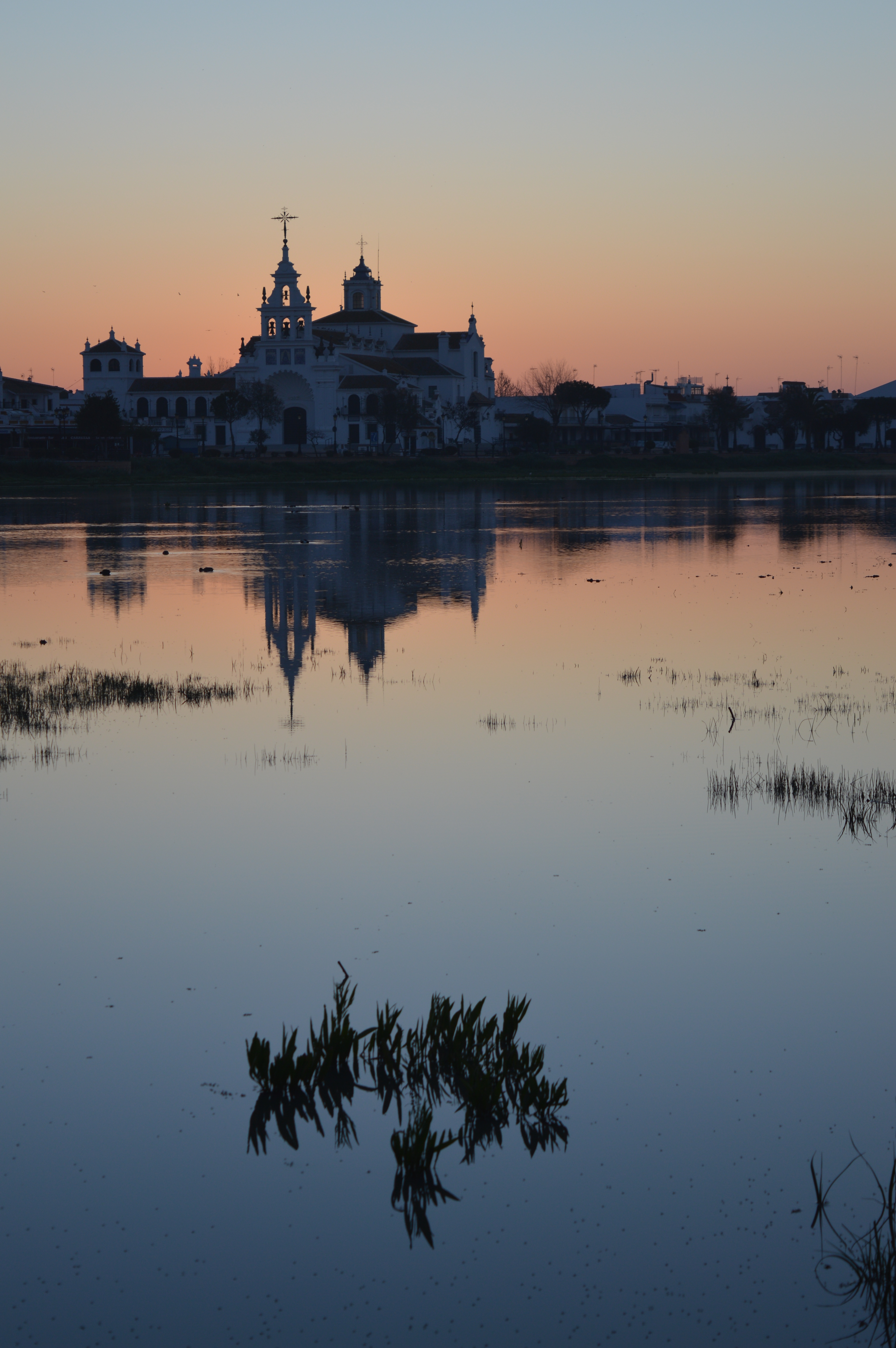
The funny thing about travel and this idea of ‘finding yourself’ is that no two people ever feel the same way about a place. I remember all the raised eyebrows when I used to tell colleagues that my favourite place in all of Spain was a town in the western marshes of Andalusia by the name of El Rocío. Outside of romería season, it’s ostensibly little more than a cluster of whitewashed houses overlooking a seasonal lagoon in arguably the flattest corner of the peninsula, where you can stare across the horizon and see nothing but mile upon mile of shimmering heat. And yet, there is something about that corner of Huelva that calls to me, some spell that weaved its secret magic on me a long time ago.

I’ve had the good fortune to travel across Spain a great deal over the last few years, and there are a number of contenders now for that ever-congested corner of my heart. The gorge at Ronda and the green hills of La Vera. The limestone maw of Zaframagon and the devil’s leap of Monfrague. The vast steppe of Caceres and fair Trujillo, a throne set upon Extremadura’s golden fields. The lonely silhouette of Olvera, and Hornachos, jewel in the Moriscos’ crown and once proud watchtower over the Sierra Grande. Putting my extremely biased affection for Andalusia and Extremadura into a basket, you can add the mysterious heights of Montserrat, the windmill-crowned slopes of La Mancha and the awesome majesty of the Picos de Europa that once guided the weary conquistadors home. All this, and I know I’ve only really scratched the surface.

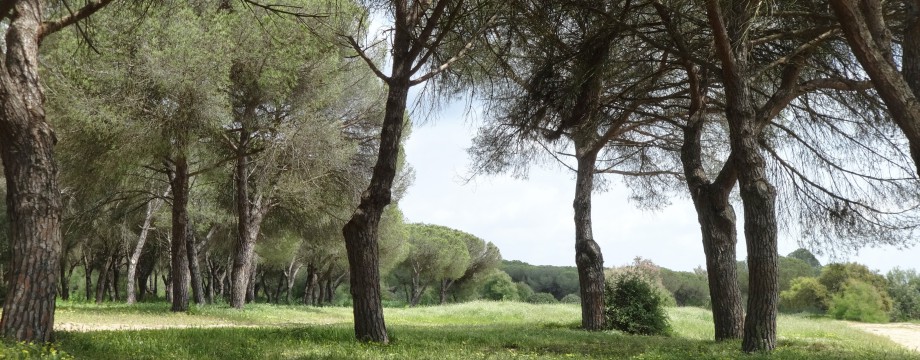
All the same, though my heart is spread across Spain with a rigour that would reduce a piece of toast to crumbs, there is still one spot that reigns supreme over them all. If you’ve been reading this blog since the beginning, you’ll have seen it over and over again in the header up there. But in case you missed it, here it is again.

To the east of the sanctuary town of El Rocío lies the Raya Real, a sandy track that cuts through the heart of the Parque Nacional de Doñana. Once a year, it serves as the primary conduit for almost a million pilgrims who descend upon the town in colourful, bolshy gaiety (as only Spaniards can) to pay homage to the Blanca Paloma herself, the guardian patroness of the marshes. Like most pilgrimages, it’s as much about the journey as the destination, and listen to any one of the many sevillanas sung by the pilgrims and you’ll get a flavour for just how in tune they are with the world around them. What an excuse to journey through some of the most incredible scenery on God’s Earth, all while dressed to the nines!

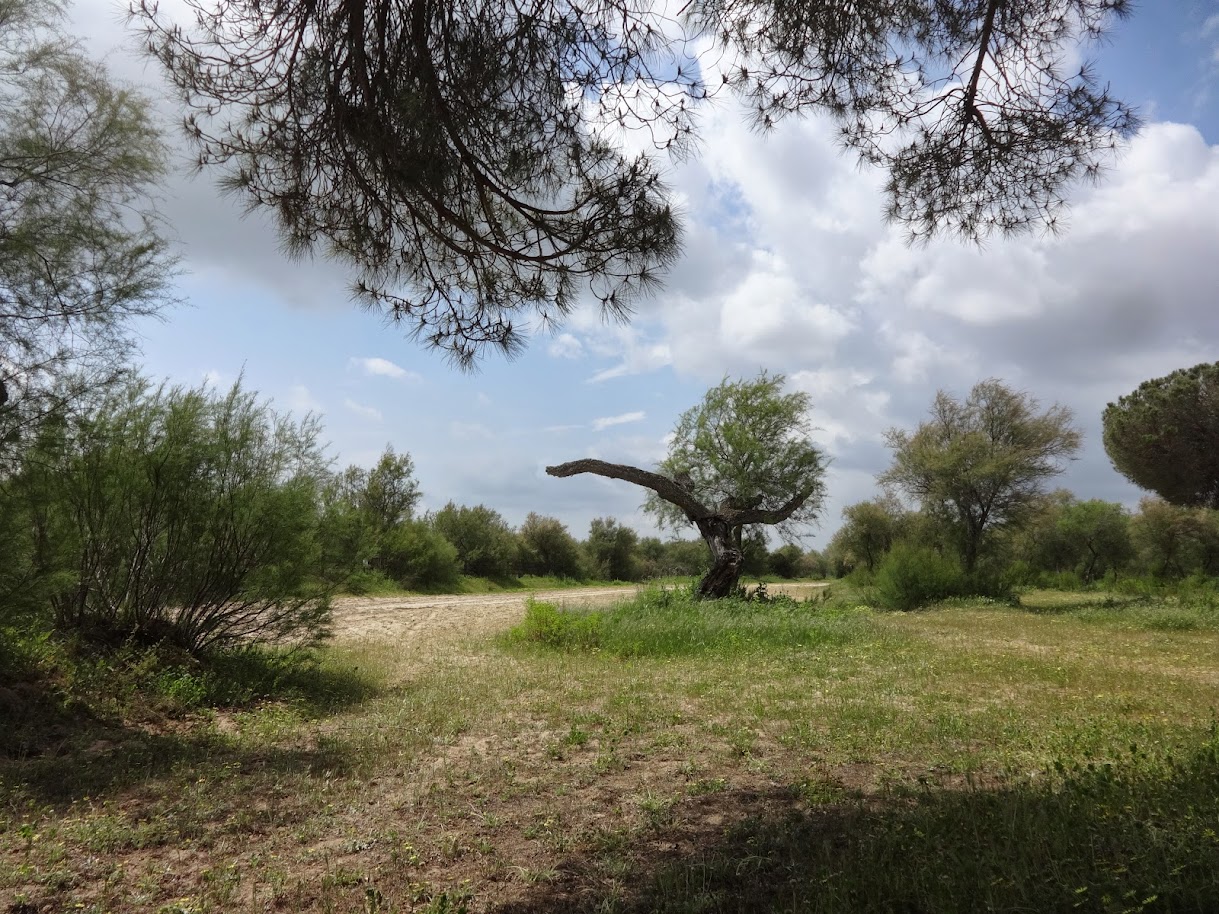
This is all romantically hypothetical, of course. I’ve never seen the Romería in full swing. All the same, there’s this one patch of the Raya Real that I can see in my mind’s eye right now, if I close my eyes for a moment. As for you, dear reader, you need only direct your eyes back up at the top of this post. It’s that tree on the left.

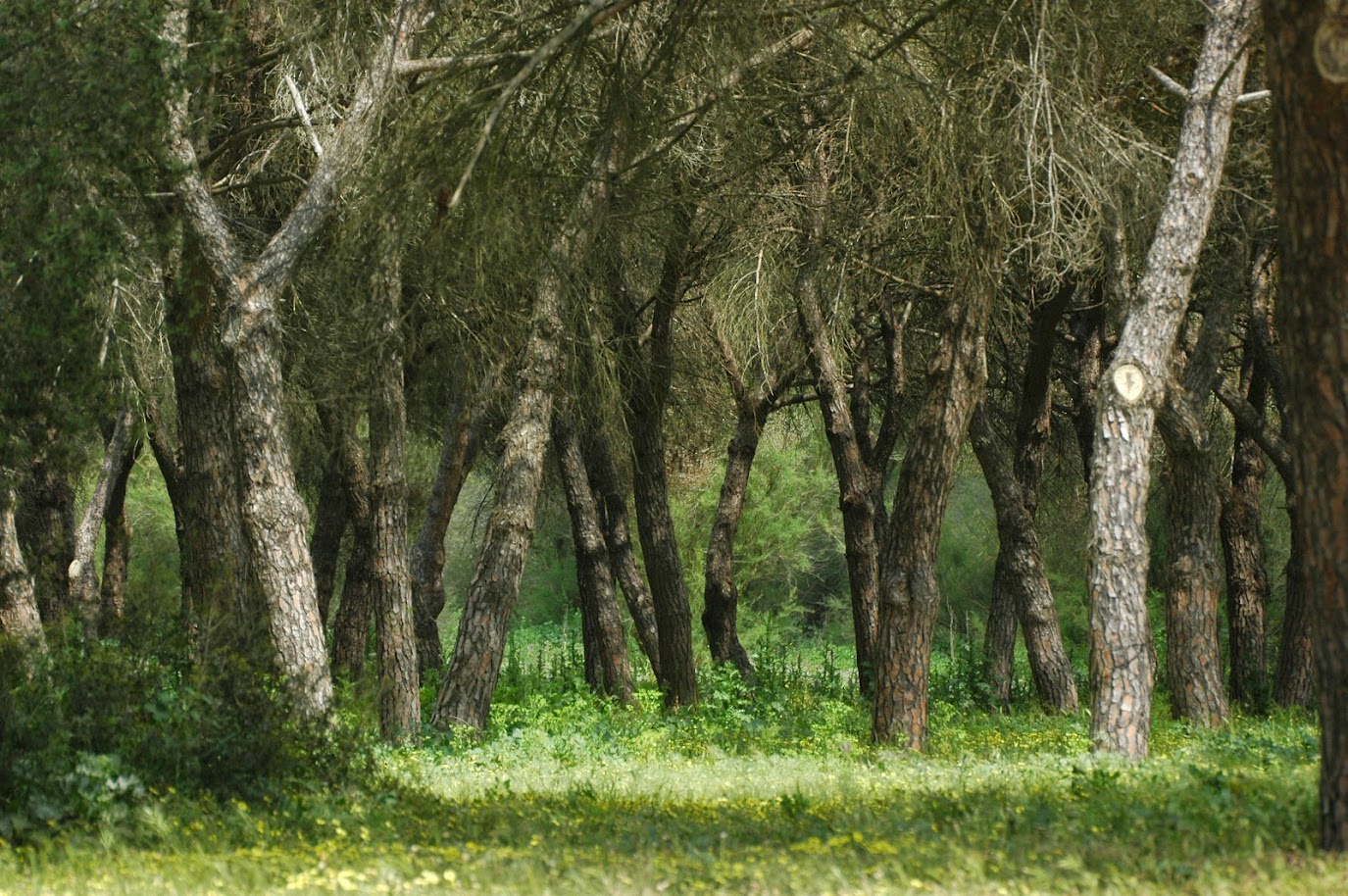
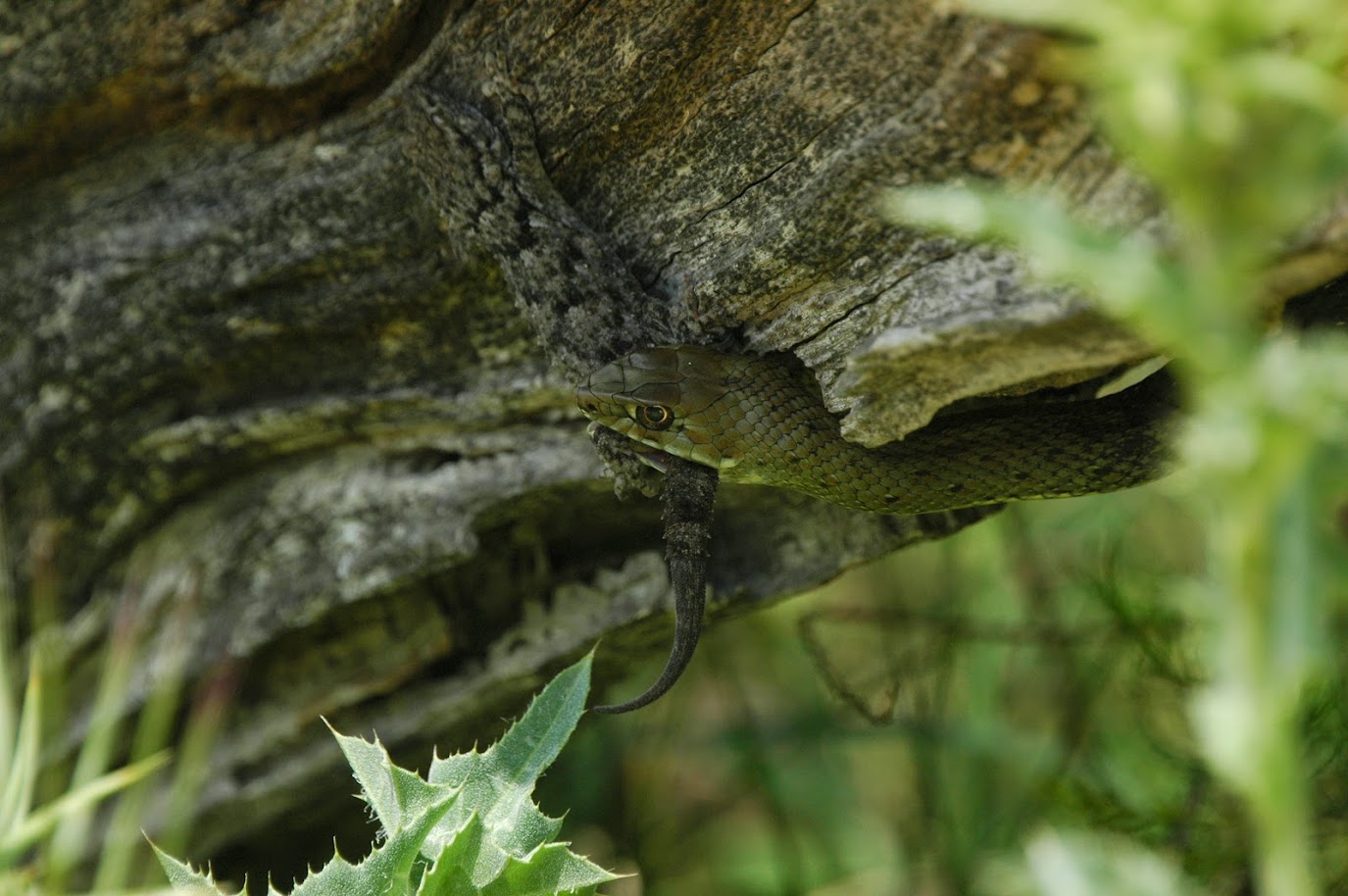
There’s a cluster of stone-pine trees (acebuches) that grow in an island of grass where the Raya Real forks temporarily, before the two tracks converge at the Puente del Ajolí, the last stop on the pilgrimage. A dead tree stands at its westernmost edge, which more often than not hides a gecko or two – I even spooked a Montpelier’s snake mid-hunt here once. A stand of ashes flank the edge of the great pinar, where cuckoos sometimes sing, and in the skies above the Raya Real, bee-eaters go wheeling and soaring in the spring, with bellies like sapphires, backs like rubies and voices like springwater.

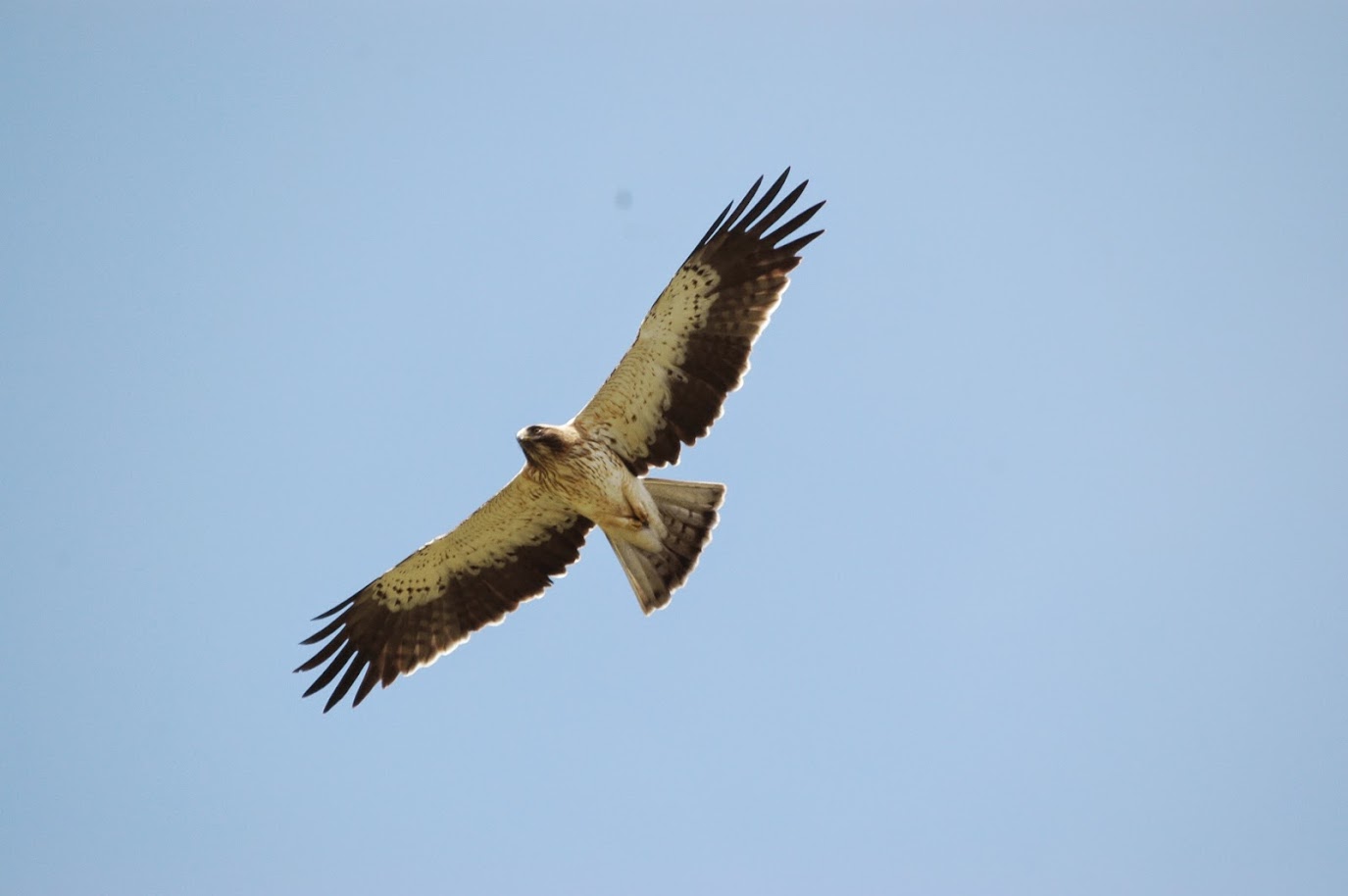
Here, under the shadow of the stone pines, I used to sit when I was a boy and listen. After a few seconds you tune in to the silence and hear it all. The wind over the shimmering plains, the rustle of the ash trees. The whistling kites overhead and the mechanical clang of a butcher-bird in one of the branches nearby. From somewhere far off, a panzorrino (native) calling to his horses, or the bark of a dog. Open your eyes for a moment and stare into the blue, and you might see a tiny speck or two up high in the heavens; a griffon and his mate, perhaps, riding the thermals above the coto below. Just once I saw a Spanish Imperial Eagle here, soaring high above the kites below. Maybe that was the first wave of the wand for me – I was a highly impressionable novice birdwatcher at the time. And though it’s kites and booted eagles that have plied the skies on every return visit, the magic in those splayed wings is always there.

In my eighteenth year, I remember sitting beneath my tree, leafing through a copy of Lorca’s Yerma that I’d picked up in town, when a couple of horses rode down the track nearby, one mounted, one riderless. A local girl had fallen from her horse some way back and tried unsuccessfully to get back into the saddle for a few hundred metres. She asked if I could lend a hand, and so I did, giving her my hands to step up and back into the saddle. I watched them go, I heard them laugh and look back, and I went back to my tree, to Yerma and the kites. A golden opportunity to get to know the town of my dreams through its people slipped through my fingers like the sand on which it stands. I’d make some quip about the Virgen del Rocío being a jealous woman, but I really think I had my head in the clouds then and there.

Fool.

Is there a place you return to in spirit, even if you can’t be there in person? This is mine, beneath the shade of the stone pines on the Raya Real. Millions pass by that tree every year without knowing the connection I have to that singular tree, to the kites that nested in its branches once, to the snakes and geckos and their game of cat-and-mouse about its roots. And why should they, when their goal is in sight? They don’t need to do any soul-searching: la Blanca Paloma waits with open arms.

I’ll leave you with a couple of lines from one of my favourite sevillanas that conjures up some of the magic where my words fail. If you like, you can listen to it here – sevillanas should never be read when they can be sung – performed by that band which takes its very name from the road of my dreams: Raya Real.

Las llanuras ardientes de la marisma
El ganado retinto con paso lento
Se acerca hasta el arroyo que esta sediento
Seco está el monte bajo, seco está el rio
Los pastos del invierno ya se han perdido

El Rocío es un milagro, una mañana lo vi
Cuando Triana cruzaba el Puente del Ajolí

Until next time. BB x
Living out of a Book: Adventures with a Journal

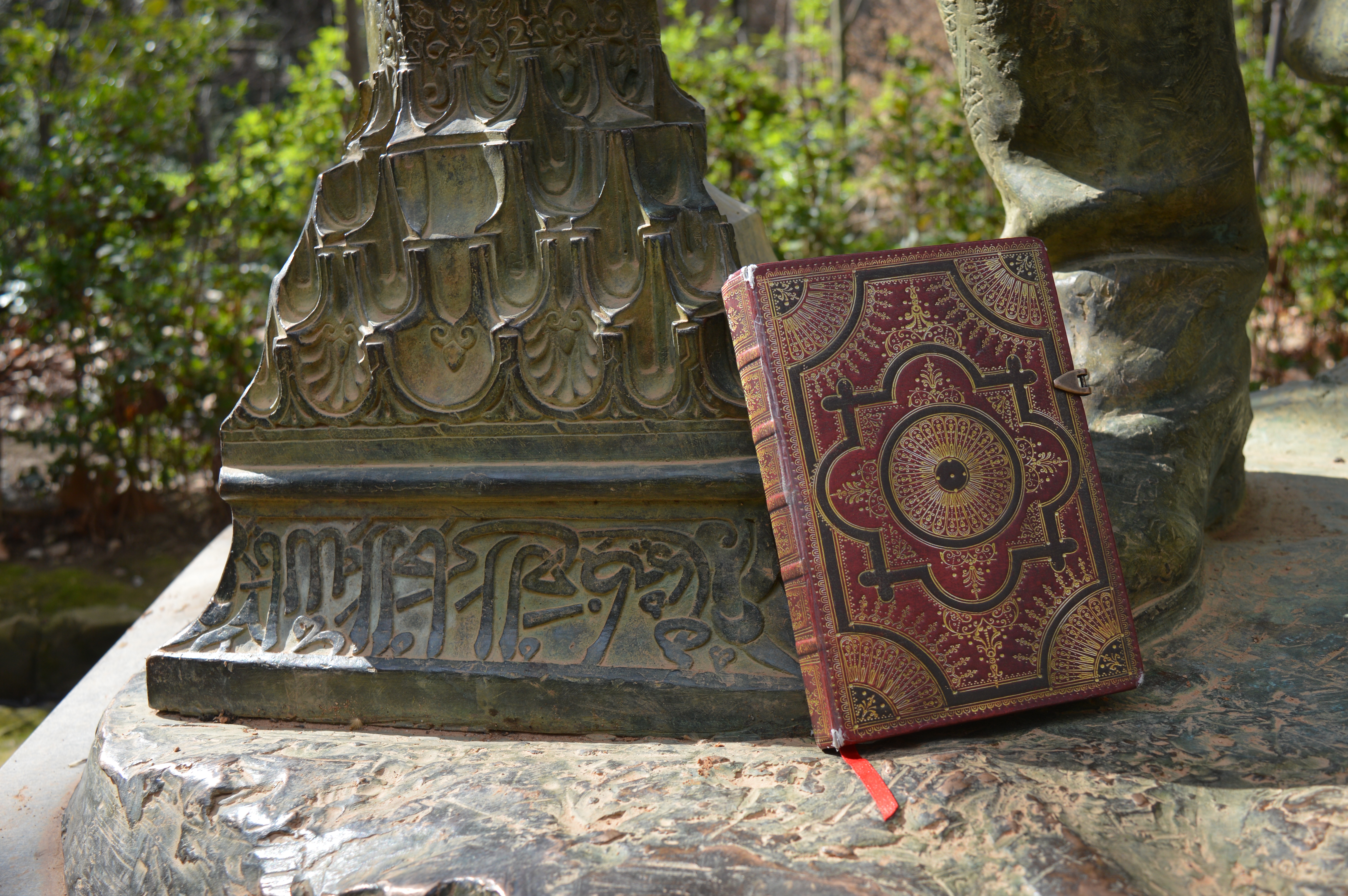
The Red Book (my first “Renaissance” journal) at the feet of Washington Irving, Granada (March 2016)

Let me tell you something for free: full-time employment is a writer’s bane. You knew that already, so neither of us lost anything in that transaction. Except me, and the ever-increasing gaps between the dates in my journal.

I spent so much of this weekend powering through marking after a week of KS3 assessments that it only occurred to me as I filed my Year 9 papers away that last weekend was the first time I’d given my novel some serious thought in a year and a half. Since you can chalk that “blip” up to the first lockdown, it’s probably safe to say the last time I made any real headway with my book was before I took up a post in a boarding school back here in the UK. That is to say, back when I was living in Extremadura, now almost four years ago. If it weren’t for the fact that I still carry a journal around with me, I’d have made no progress in that time whatsoever.

But since I’m more of a glass-half-full kind of guy, I’m going to focus less on the killing instinct of working life and more on the magic of keeping a journal. Because, as always, there’s a story behind it – and in my case, it’s a lot more personal than I ever knew.

I’ve written reasonably extensively about my journalling habit before, but in case you missed it, click here for an earlier piece on one of my favourite journals, the Red Book.

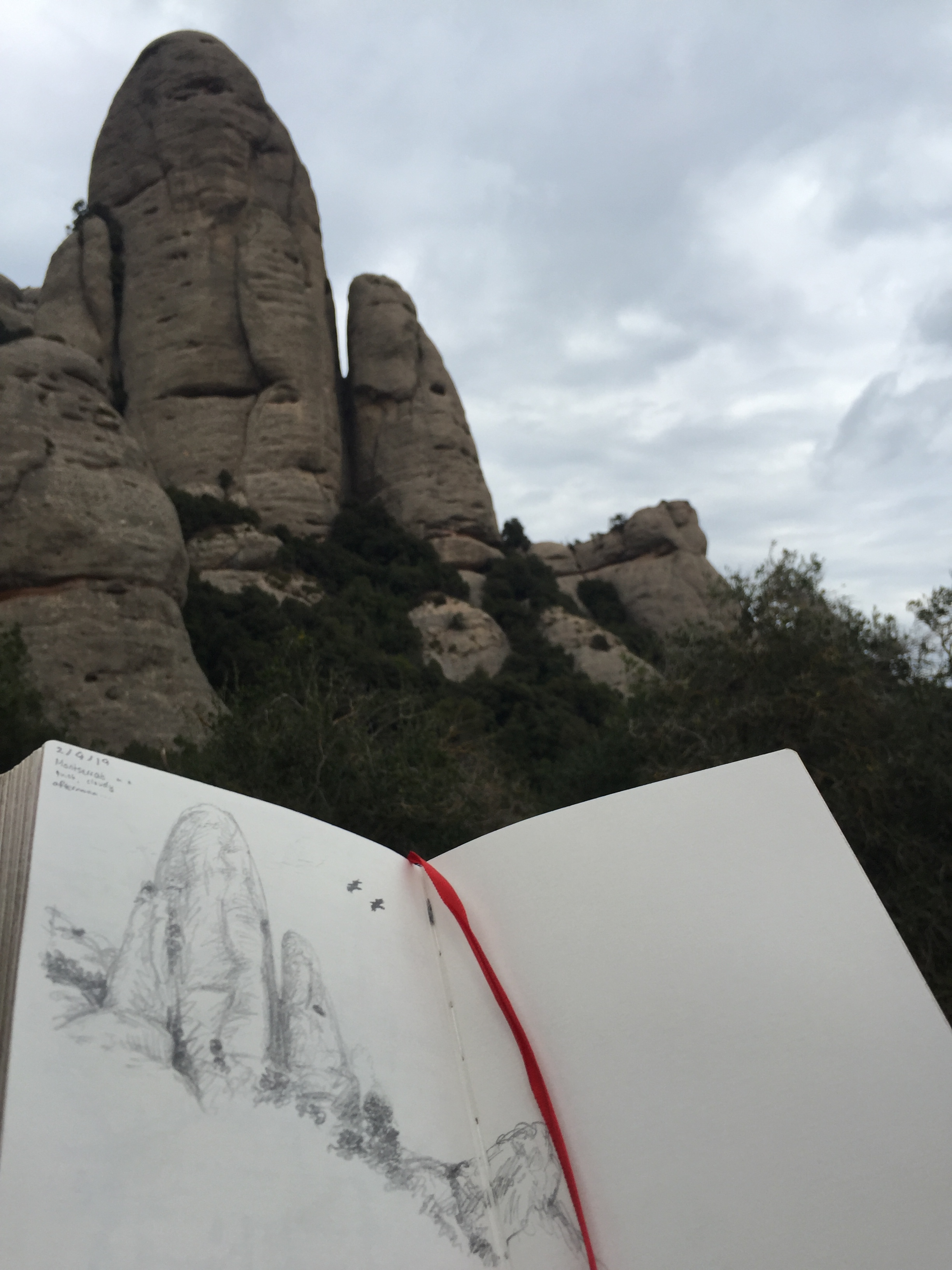
Sketching the windy peaks of Montserrat (April 2019)

I don’t think I’ve ever been without a sketchbook of sorts. Going back to my parents’ place for Christmas turned up quite a few of my oldest surviving books, dog-eared, half-filled and almost all of them featuring the same cast of characters that share a space in my head and my heart to this day. Studying Art for GCSE and A Level naturally fed the habit, though I seem to remember having separate sketchbooks for school and for myself right the way through. I suppose I should reach out to a couple of early inspirations here: to Mr Howe, for his no-holds-barred approach to sketchbook work (“unfinished pieces are often more interesting than finished pieces” has stuck with me); to my old friend Freddie, whose handwriting I secretly admired and have long since adapted into my own; and, of course, to my own mother, who must have kept several journals of her own when she was younger.

These first attempts were more art than word, though. It wasn’t until my eighteenth year that I took the craft of journalling more seriously, riding off the back of having successfully kept a diary for a little over a whole year – to date, the longest successful writing streak in my life. With many long months to go until the first day of my degree, I picked up a small flip-journal from Waterstones and penned some thoughts. At first, it was just lists: locations in my novel, possible pen names, key elements for fantasy fiction. On the second page I branched out and jotted down some facts that I found interesting, for a change of pace (my brother was quick to point out this was a considerably less interesting way to use a journal). I guess not everybody needs to know that the underside of a waterfall is called an undercutting; that Mullah Omar donned the mystical Cloak of the Prophet to drum up support in 1996; and that Dr William Bryden was the sole survivor of the Khyber Pass massacre of 1842.

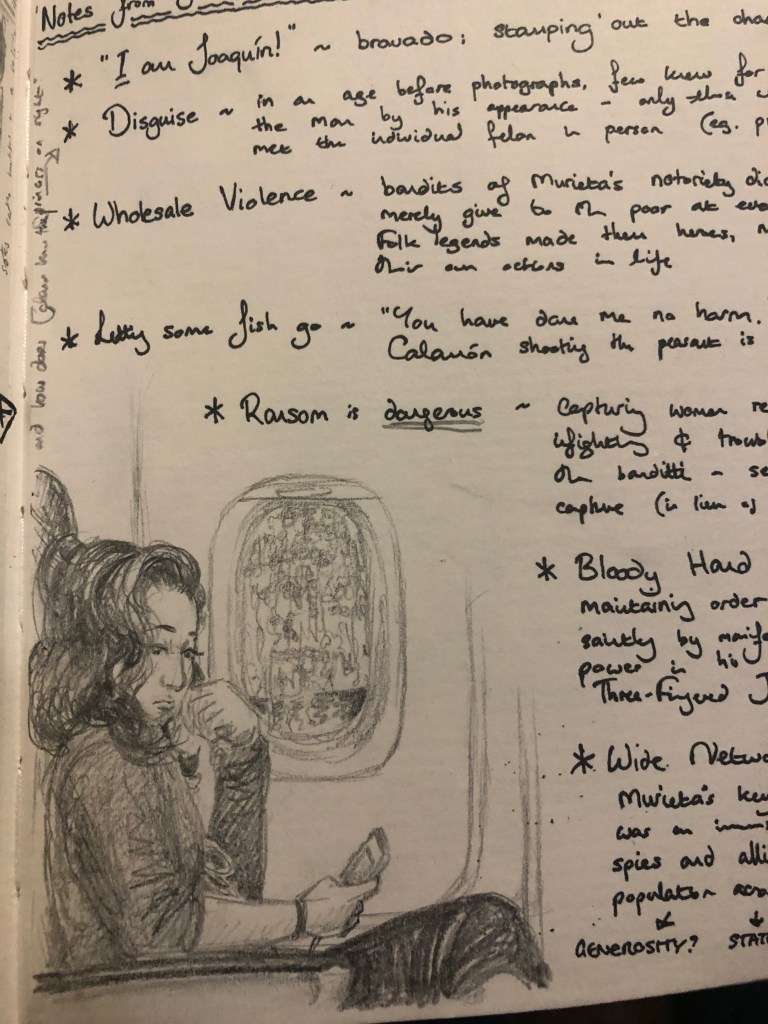
Three pages in and the novel is the back in the limelight – and so it continues. Every so often, I find something in a book or on the news that I deem worthy of recording, but as a rule, the bulk of my pen-and-pencilwork concerns the fate of my cast of characters and the world in which they live, ever-growing, ever-crystallising. Sketches in pencil duck and weave through the gaps like weasels, giving over onto full page illustrations when I really found my mojo. It’s a formula I have deviated from very little for nine years now.

Gypsy Legends and Grenadine Gifts (2020)

When I was younger, and I still had these crazy notions (as the young and reckless always do) of embarking upon death-defying expeditions to Afghanistan and beyond, I remember thinking that, if something should happen to me, the world in my head that I had spent all but the first seven years of my life creating would disappear completely. That is, unless I left enough material behind for somebody to pick up the pieces. I suppose that morbid justification stuck, because there is now enough information spread across my various journals for somebody to put together the various stories I have always wanted to tell.

The rain in Spain on the plane (August 2019)

And perhaps there’s a logical explanation for that mindset.

My great-grandmother Mercedes was a woman ahead of her time. In a Spain teetering on the brink of Civil War, she found love with a poet and musician called Mateo. They corresponded in verse, quoting Oscar Wilde and Keats and Plato and Engels. Their handwritten letters to each other – safeguarded by my family for over fifty years – tell of a truly devoted husband and wife on an equal intellectual footing, flying in the face of the dictadura and the expectations of women outlined in the Guia de la buena esposa. Mercedes was well-known about town for her journal, which was as much a part of her character as her glass of brandy and cigars. Though her locally legendary journals themselves are lost to time, it is chiefly through her precious letters to her Mateo that I can see through a window in that past. It is a past which comes clearer into focus the more I get to know my family out there. The fatalist in me cannot help but wonder at the sequence of events that led to me arriving at my family’s door with little more than my journal in hand, unconsciously carrying the one item that would prove my connection to a great-grandmother I never had the chance to meet. Mercedes left this world the very same year I came into it.

I spent the greater part of my search for my family focused on the grandfather I never knew, but it is my bisabuela Mercedes who guides my hand these days. I’m a strong believer in upholding family traditions, and it doesn’t half lend a sense of purpose to the scribblings in my journals, even if they never lead anywhere. My ancestors left me a literal paper trail and I must follow.

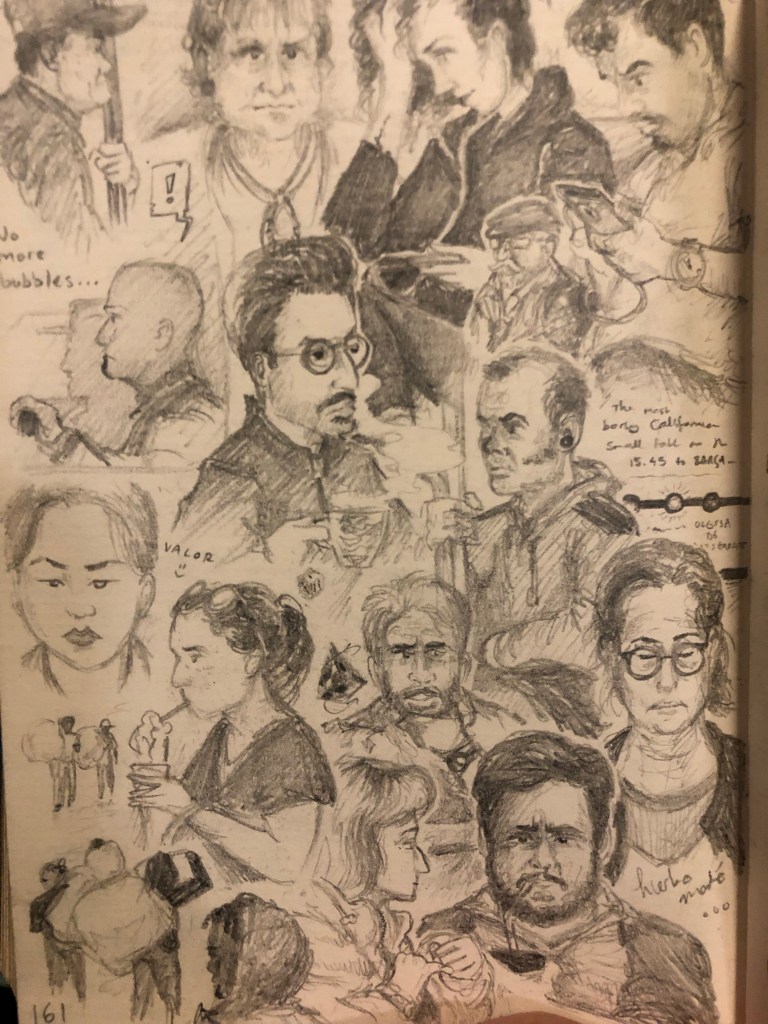
Barcelona vignettes (March 2019)

Have you ever kept a journal? I’d highly recommend it. It’s less onerous than a diary and a beautiful thing to look back on. Through mine, I can read the world around me through the strokes of my pen: the euphoria of success in the a cappella semifinals; my bewilderment at Brexit; the shockwaves of the fire of Notre-Dame; and my bottomless love for the country of my ancestors. It’s all there, and since boarding school life makes it nigh-on impossible to knock out a couple of chapters a week like I used to, my journals do a thumping good job at telling the story.

And maybe, one day, that’s exactly what they’ll do, when they fall into the hands of my grandchildren. I’d like that. I think Mercedes would have liked that, too.

BB x
A Semitone Out of Line

How did your 2022 start? Mine began with a miracle. Not a major one – at least, nothing that brought about anything new in my life. Just the restoration of my hearing.

Since the first day of the Christmas holidays, I’ve been plagued by the after effects of a bad head cold that went to my left ear and decided to wreak havoc there. My first week off was spent largely deaf on one side with a tinnitus so fierce it kept me up at night. It’s not often that an illness gets me down – I’m lucky enough to have a rather robust constitution that withstands most things, bar the seasonal pollen allergies that come around every summer. Personally, I thought I’d done pretty well to make it to the end of term without testing positive for COVID once, despite working in a school where children come and go every week. Perhaps this was the man upstairs showing his fickle hand, where fickleness is another word for fairness.

The tinnitus wasn’t so bad, after I got used to it. But it was what happened once the antibiotics had done their job that was the killer. For the best part of two weeks, everything sounded wrong. It took me a couple of days to realise what it was: the ear infection I had been through had left me with a case of diplacusis dysharmonica, a condition that warps the sounds that you perceive. In my case, while my right ear operated normally, my left ear perceived all sounds a semitone higher. For the musicians out there, I’ll let the ramifications of that sink for in a moment.

In most cases, this is a minor inconvenience and can be ignored a great deal more easily than any tinnitus. That is, unless you have perfect pitch.

It’s hard to talk about the uncanny ability to pluck exact notes and tunes out of the air without prompt without coming across as boasting at worst, or false modesty at best, so I won’t labour the point. What I will say is that, for somebody who notices the instant a piece of music is played in a key in which it was not originally played – even if the pitch has been shifted by a hair – hearing the world in two tones at once for a fortnight was nothing short of maddening. A quick browse of the internet will tell you that diplacusis dysharmonica seems to be especially painful for musicians.

What does it sound like? Try to imagine one of those cassettes you might have had when you were younger, after you rewound them once too often, or somebody (possibly a child) had played around with the spools. The sound eventually warped, keys were bent out of place and voices got the Alvin and the Chipmunks treatment. Now imagine that weird, unnatural effect playing alongside a perfectly functional version of the same audio. A long-winded analogy, but the first one that came to mind – chiefly because of the sheer number of cassettes I must have destroyed as a child before the era of Spotify and the repeat button.

Earphones and headphones were out, as they just exacerbated the problem; higher frequencies seemed to be the biggest triggers. I got into a habit of humming to myself in the morning, just to check, and each time I heard two notes come back to me instead of one. I’d give myself a pat on the back for being one of the few humans capable of singing a chord if I knew it wasn’t a) all in my head and b) an exceedingly ill-chosen chord consisting of two notes barely a semitone apart.

Like many of us, I imagine, I woke up this morning apprehensive about the new year ahead. 2021 was a rough year with just a few golden moments that made it one to remember: spending the summer with a dear friend in Edinburgh and a week in October with my beloved family in La Mancha rank right at the top. But with the sun in the morning comes hope, and hope is what I come back to when the world is dark.

By midday today, the distortion in my left ear had dimmed so much that it was hardly noticeable. By tomorrow, God willing, it may be gone altogether. I can’t begin to describe the feeling of putting a pair of headphones on and hearing music as it should be again, after two weeks of dissonance without resolution. I’ve had album after album of sevillanas by Raya Real on repeat ever since. There’s nothing quite like a sevillana to express reckless joy, and that’s exactly what I’m feeling right now. To quote Sweeney Todd: my arm is complete again.

It’s a shame it had to last from the first day of the holidays right up until the last, but I’m not complaining. I can hear the world again, as it should be. That’s more than enough for me.

BB x

NB. It’s been a while since I flexed my writing muscles. This year, I’m going to blow the dust off the blog and get back into a reasonably regular writing habit again. It’s been too long. Until then!

Waldmusik

Monday night. Five weeks in. The first load of reports are due soon. I close my inbox, tired of leafing through the daily barrage of emails in my windowless office, and open my eyes. Packs of SureSan wipes on every shelf. Seven empty bottles of water from last week’s packed lunches, amassed in quiet protest. The number for the IT department scrawled in pink highlighter on a piece of paper folded and blue-tacked to the wall. A wall planner that hasn’t been updated since lockdown began. A chewed-up biro, an oak leaf and a buzzard feather. Karl Jenkins on Spotify. The ventilator roars overhead.

Tomorrow will be seven months to the day since the music died. Seven months since a final lucky fling at a friend’s wedding, which might as well have been a paean to the love of music itself. In retrospect I suppose “elegy” might be the better word. Rome burning and all that. COVID robbed the world of so much, and in the panic over its impact on work, health and the daily grind, music slipped quietly over the edge into silence.

I can’t think of a point in my life when music hasn’t been a constant. Having two music teachers for parents afforded me an incredibly privileged upbringing with regards to my musical education. I wanted for nothing, except perhaps an escape from Classic FM. Scarlatti and the Spice Girls. Klezmer, Raga and Jazz. The Stranglers, The Bee Gees and The Corrs. By the age of ten I had amassed a real symphony of diversity from all the CDs in the house, with an early preference for folk music and anything from the 1970s.Primary school, secondary school and university were a seamless pageant of choirs, bands and orchestras, with the occasional assignment as a reminder that education was happening somewhere within. Whether in a church or a school hall or a smoking stage, I was always singing.

The ventilator continues to growl. It’s about as close as I get to music without Spotify in here. The government directive against singing felled the school choir, the chamber choir and my gospel choir in a single axe stroke. Christmas waits at the end of the tunnel that is the Michaelmas term, but without the usual musical beacons to light the way, it simply doesn’t feel like it.

The last time I felt like this was half a lifetime ago, during my family’s earnest but ultimately unsuccessful attempt at a move to Spain. Then, too, the years of emerging into the frosty night after choir practice with carols ringing in your head melted away like snow in the sunshine. Spain has many beautiful musical traditions, but the buzz of advent – or, at least, the advent I had always known – isn’t one of them.

“Vosotros los ingleses, os flipáis con la música. No hay ese mismo afán por la música aquí, ¿sabes?”

Do I agree with her? The girl who told me that once? I do not know if I do. Years on, I’m still mulling it over.

Without the music, the days are long. They blur, one into the next. Web players and Bluetooth speakers are a poor imitation, like listening to the sound of the ocean in a seashell. There is nothing – nothing – like the exhilaration that comes from making music. It’s the difference between seeing and doing. Watching a cyclist and feeling the wind in your hair. The gulf is immeasurable. It’s the third half of my brain, the fifth chamber of my heart.

COVID cases continue to rise. Whole areas of the country are retreating back into lockdown. People stagger out of pubs at closing time and complain blindly at the loss of their freedom – or so the pictures in the Press seem to scream. Schools remain defiantly open as children come and go into and out of isolation. How long can it last, the question on everybody’s lips. In the music hall, silence hangs like mist.

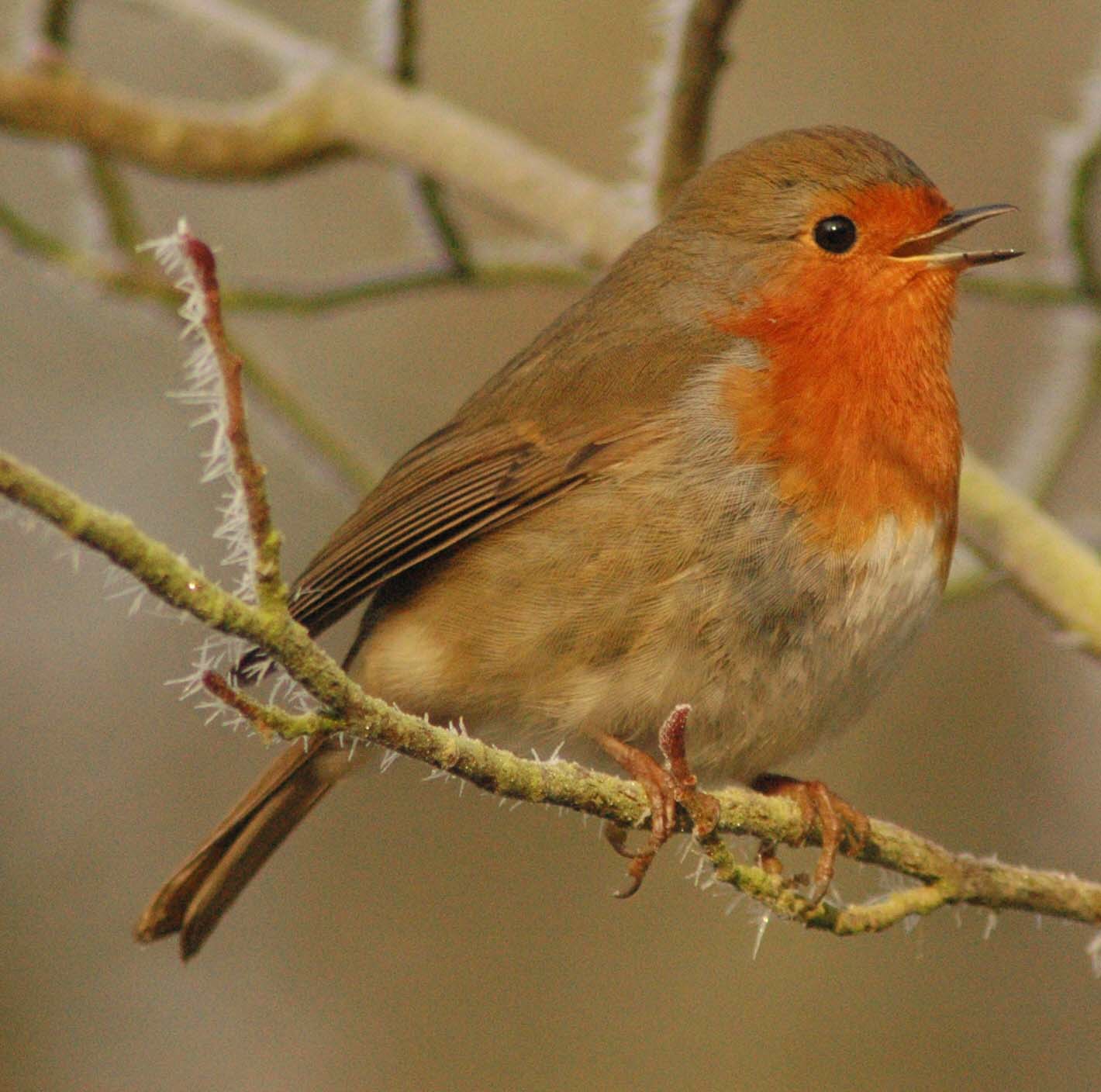
I put on my hat and coat and set out into the evening. Music was always my tonic of choice, but if one elixir is out of stock, the other at least is deathless. It waits out there in the dying light, eternal. Autumn chill is in the air and the martins are long gone. Soon the hedges will be alive with the cackle and chatter of fieldfares, and the liquid sound of redwings traveling by night will follow me home from duty. For now, the old guard plays the same music it has always played in the forest beyond the fields. Blackbirds chatter down in the gully. The staccato of a wren breaking through the hedgerow. And, perched on the exposed branch of a dead tree, cock robin sings his heart out.

The song of the robin is, I think, the most beautiful music that England has ever known. Gentle, melodic, like water – it cannot be put into words. Not by an unqualified amateur such as myself, anyway. The robin for me is a symbol of hope. Maybe it’s his boldness, his charming friendly nature; his defiance of the cold on a January morning, as if to let the world know the darkness cannot last forever. He pays no heed to government directives or social distancing measures. He sings as his ancestors have sung for generations, since the world was cold and dark and unforgiving. Hearing his voice now, at a low ebb, it lifts my spirits again.

Half past nine. Directionless text books. Vocab tests, marked and unmarked. Me and the tuneless ventilator, and the memory of the robin’s song. I think I’ll call it a night.

The Power of Words

Working life in a boarding school doesn’t exactly give me the time to write I crave. It hardly offers much time for reading, for that matter. But, when a moment comes along when I don’t have lessons to plan, PDPs to fill out, reports to write or duties to carry out, I grab a book and my quote diary and escape for as long as my tired brain allows. I’ve kept a quote diary since 2015, charting my progress through the books I’ve been reading and jotting down any particularly wonderful words or beautiful descriptions – writing that stays with you long after you close the book, like the smoke in the night sky left by a magnificent firework. It’s not the most labour-intensive of blog posts, and yet it is the work of five years of reading. Here’s a selection of my favourite lines from the books I’ve read in that time.

Oh, and if looks as though there’s a lot of H.R. Haggard and M.M. Kaye in there… it’s because there is. Together with Bryce Courtenay, Michael Morpurgo and John Wyndham, they’re my all-time favourite authors.


The Garden of Eden, no doubt, looked fair before man was, but I always think that it must have been fairer when Eve adorned it.
Henry Rider Haggard, King Solomon’s Mines

Her father was a man “led by a star”, as the natives say, and would follow it over the edge of the world and be no nearer.
Henry Rider Haggard, The Ghost Kings

It is certain that few build up the temple of their lives upon some firm foundation of hope or hate, of desire or despair… but rather take chance for their architect – and indeed, whether they take him or no, he is still the master builder.
Henry Rider Haggard, Montezuma’s Daughter

Almost every flock of vultures has its king.
Henry Rider Haggard, Marie

“Duty is a fool-word that makes bones of a man before his time and leaves his girl to others.”
Henry Rider Haggard, Marie

“There’s so much human suffering that the whole world should be wailing.”
Joy Chambers, My Zulu, Myself

“A man’s half licked when he says he is.”
Jack London, White Fang

For most of the years of my life I have handled human nature in its raw material, the virgin ore, not the finished ornament that is smelted out of it – if, indeed, it is finished yet, which I greatly doubt.
Henry Rider Haggard, Child of Storm

There is nothing more uninteresting than to listen to other people’s love affairs.
Henry Rider Haggard, Child of Storm

“He who walks into a storm must put up with the hailstones.”
Henry Rider Haggard, Child of Storm

“First serve, then ask for wages.”
Henry Rider Haggard, Allan’s Wife

“What is life but loss, loss upon loss, til life itself be lost? But in death we may find all the things that we have lost.”
Henry Rider Haggard, Allan’s Wife

Complete happiness in this world is not allowed for even an hour.
Henry Rider Haggard, Allan’s Wife

“Music is a living art, ambassador. It’s meant to illuminate the emotions of the one who gives it life. How can written music have any feeling?”
Thomas Hoover, Moghul

“The Infinite will of God is always mysterious, mercifully granting us what we need more often than what we want.”
Thomas Hoover, Moghul

“We are all searching for our own self. But the self is not easy to find, so we travel afar, hoping it lies elsewhere. Searching inward is a much more difficult journey.
Thomas Hoover, Moghul

Kings have frequently lamented the miserable consequence of being born to great things.
Daniel Defoe, Robinson Crusoe

There was something in Johnny’s character that was pure gold without a trace of alloy.
M.M. Kaye, Shadow of the Moon

“No man goes so far as he who knows not where he is going.”
M.M. Kaye, Shadow of the Moon

Conway Barton possessed a love of two things that have never yet failed to ruin those devotees who have worshiped them to excess: Drink and Women.
M.M. Kaye, Shadow of the Moon

It was an age of lavishness. Of enormous meals, enormous families, enormous, spreading skirts and an enormous, spreading empire. Of gross living, grinding poverty, inconceivable prudery, insufferable complacency and incomparable enterprise.
M.M. Kaye, Shadow of the Moon

It is darkest under the lamp.
M.M. Kaye, Shadow of the Moon

Ten men with one heart are equal to a hundred men with different hearts.
M.M. Kaye, Shadow of the Moon

“No sport is worthy of the name that does not include an element of risk.”
M.M. Kaye, Shadow of the Moon

“Though I can feel the wind and hear the thunder, I do not yet despair of avoiding the storm.”
M.M. Kaye, Shadow of the Moon

“I put my hand upon my knife and walked as a cat walks in an alley full of dogs.”
M.M. Kaye, Shadow of the Moon

“The Lord helps those who help themselves.”
M.M. Kaye, Shadow of the Moon

“I have yet to learn that cure is preferable to prevention.”
M.M. Kaye, Shadow of the Moon

Dasim Ali was a placid and pleasant person who harboured no bitterness towards anyone – except on occasion towards God, who had granted him no sons.
M.M. Kaye, Shadow of the Moon

“Fire is a good friend when men are few and foes are many.”
Henry Rider Haggard, The People of the Mist

What a vast gulf there is between love and loved! It is measureless.
Henry Rider Haggard, The People of the Mist

The devil – a very convenient word at that – is a good fisherman. He has a large book full of flies of different sizes and colours and well he knows how to suit them to each particular fish. But white or black, every fish takes one fly or the other, and then comes the question – is the fish that has swallowed the big, gaudy lure so much worse or more foolish than that which has fallen to the delicate white moth with the same sharp barb in its tail?
Henry Rider Haggard, Allan and the Holy Flower

“If the snake had the strength and brain of the elephant, and the fierce courage of the buffalo, soon there would be only one creature left in this world.”
Henry Rider Haggard, Allan and the Holy Flower

“You don’t understand. If only you understood, you would understand.”
Henry Rider Haggard, Allan and the Holy Flower

“You white men are very clever and think that you know everything, but it is not so, for in learning so much that is new, you have forgotten much that is old.”
Henry Rider Haggard, Allan and the Holy Flower

The night is dying, the day is not yet born.
Henry Rider Haggard, Allan and the Holy Flower

“New journey, new stick, Baas!”
Henry Rider Haggard, Allan and the Holy Flower

Love is the best of medicines – if it be returned.
Henry Rider Haggard, Allan and the Holy Flower

“I am a cosmopolitan. But then the gods of nationalism rose up.”
C.J. Sansom, Dominion

In the summer of 1929 he left for England for a year at Oxford; he felt alone and out of place the whole time there, surrounded by people who mostly seemed either to be decadent aristocrats or pretending to be.
C.J. Sansom, Dominion

“This view reminds me of a story I learned at school: He took Jesus to a high place, and showed all the kingdoms of the world, and the glory of them; and said, ‘All these things I will give thee, to have dominion over, if you will fall down and worship me’.” He frowned. “That is not quite right. Was it ‘dominion’ or ‘power’? Anyway, it was something like that.”
“Jesus was a Jew, wasn’t he? Who was it who took Jesus to the high place?”
Gunther shrugged. Then he remembered, with a superstitious shiver, that it had been the Devil.
C.J. Sansom, Dominion

“You don’t see it, do you, people like you? That all you’re doing is standing against the tide of historical destiny. Which, by the way, is about to drown you.”
C.J. Sansom, Dominion

“Love’s a game for the young and lovely, and the mirror, my dear, never lies.”
Aimee Liu, Cloud Mountain

One hundred wireless networks password protected; one thousand humans in an acre holding their wallets close to their genitals.
Amy Liptrot, The Outrun

I heard it said that in London you’re always looking for either a job, a house or a lover.
Amy Liptrot, The Outrun

I wonder if it’s possible to really come back once you’ve lived away for a while, or if it’s called coming ‘home’ when you never belonged.
Amy Liptrot, The Outrun

One day you’ll boast of coming here, but realise you remember nothing about it.
Jane Johnson, Court of Lions

Like eyes they were, and seemed to watch him. The few cliff-dwellings he had seen – all ruins – had left him with haunting memory of age and solitude and something past.
Zane Grey, Riders of the Purple Sage

“Proselyter, I reckon you’d better call quick on that God who reveals Himself to you on earth, because He won’t be visiting the place you’re going to.”
Zane Grey, Riders of the Purple Sage

European women are so cold they give you a chance to say no at every turn, and you feel good about it, too.
Pedro Juan Gutiérrez, Dirty Havana Trilogy

He didn’t worry that the man was going to get him, because the man had got him.
Neil Gaiman, American Gods

Wednesday looked like he had learned to smile from a manual.
Neil Gaiman, American Gods

Ideas are more difficult to kill than people, but they can be killed, in the end.
Neil Gaiman, American Gods

If he were a real woodsman, he would slice off a steak and grill it over a wood fire. Instead, he sat on a fallen tree and ate a Snickers bar and knew that he wasn’t a real woodsman.
Neil Gaiman, American Gods

A salesman in America is naked without his smile.
Neil Gaiman, American Gods

Three may keep a secret, if two of them are dead.
Neil Gaiman, American Gods

That is the tale; the rest is detail.
Neil Gaiman, American Gods

We need individual stories. Without individuals we see only numbers: a thousand dead, a hundred thousand dead.
Neil Gaiman, American Gods

“The Americas just swapped Liberty for sugar.”
Thomas Hoover, Caribee

“What can a man know of wine if he samples only one vineyard?”
“A woman might say it depends on whether you prefer flowers or wine.”
Thomas Hoover, Caribee

“You are hungry and honest, and that is very rare in this country.”
Chimamanda Ngozi Adichie, Americanah

When he was younger he had admired people with moneyed childhoods and foreign accents, but he had come to sense an unvoiced yearning in them, a sad search for something they could never find.
Chimamanda Ngozi Adichie, Americanah

“My name is Gabriel Oak.”
“And mine isn’t. You seem fond of speaking it so decisively, Gabriel Oak.”
Thomas Hardy, Far from the Madding Crowd

Poets must first be hanged, then mourned at the gallows.
Orhan Pamuk, The Red-Haired Woman

My empire is of the imagination.
Henry Rider Haggard, She

“Swift – be swift- death is in the air we breathe.”
Henry Rider Haggard, She

Mediocrity is the best camouflage known to man.
Bryce Courtenay, The Power of One

“My mouth tastes like the splash-board of an Indian lavatory in the mango season.”
Bryce Courtenay, The Power of One

I imaged hundreds of eyes hungrily devouring my freedom as they watched from the prison darkness.
Bryce Courtenay, The Power of One

“Animals, that’s my speciality. You can ask me anything about animals. You name it,” – he brought his hands up as though he were squinting down the barrel of a rifle, pulled an imaginary trigger and made a small explosive sound – “I’ve shot it.” He lowered the imaginary rifle and grinned at me. “I love wild animals.”
Bryce Courtenay, The Power of One

The concept of a white man coming along and forgiving everyone’s sins and then getting nailed to a post for his trouble seemed a highly unlikely story. As Dum pointed out, white men never forgive sins, they only punish you for them, especially if you are black.
Bryce Courtenay, The Power of One

Ruthless logic is the sign of a limited mind. The truth can only add to the sum of what you know, while a harmless mystery left unexplored often adds to the meaning of life.
Bryce Courtenay, The Power of One

“All I know about the Bible is that wherever it goes, there’s trouble.”
Bryce Courtenay, The Power of One

A natural leader, I have found, need never explain. In fact, they less they explain the more desirable they are as leaders.
Bryce Courtenay, The Power of One

“To play black, the music must come from your soul and not from your head.”
Bryce Courtenay, The Power of One

Once a man has lived long enough, every moment is a reflection of some other moment.
Naomi Alderman, The Liar’s Gospel

The name of God is now in the water.
Naomi Alderman, The Liar’s Gospel

Every person wants to feel that some other man can guide them back into the light.
Naomi Alderman, The Liar’s Gospel

Storytellers know that every story is at least partly a lie.
Naomi Alderman, The Liar’s Gospel

“Put your God away. You have one too many loyalties.”
James Clavell, Shogun

“Endeavour” is an abstract word, and unsatisfactory.
James Clavell, Shogun

“Love is a Christian word.”
James Clavell, Shogun

Mutiny breeds in idleness, not in hardship or hard work.
C.S. Forester, The Gun

“The hand of God is at work in León.”
C.S. Forester, The Gun

He had seen for himself, on a brief visit to the interior, one of the slave routes that wound across Africa. A trail that had been clearly marked by hordes of vultures that perched among the flat-topped thorn trees, and the bleached bones and rotting corpses of the innumerable captives who had been unable to go any further, and been left to die where they fell.
M.M. Kaye, Trade Wind

Men were covetous, and the world no longer wide enough.
M.M. Kaye, Trade Wind

“If it is a traveller’s tale, where then are the travellers?”
M.M. Kaye, Trade Wind

One day the old cities, if they were not destroyed by war, would be pulled down and swept away, and in their place would arise a flavourless uniformity of brick and mortar, populated by once-colourful people aping the white men’s dress and speech, so that all cities would in time become identical masses of houses and factories, shops, boulevards, and hotels, linked by trains and steam-ships, and filled with imitation westerners imitating western ways.
M.M. Kaye, Trade Wind

The pinkness overwhelmed a person, as an aphid might feel suddenly thrust into the petals of an overblown rose.
Bryce Courtenay, Tandia

If you went indoors for a moment, you’d sense from the change of light that something had happened and then, when minutes later you came out again, there were the towering castles of grey tinged with white, real estate for gods and frightening giants.
Bryce Courtenay, Tandia

“Altruism costs a great deal.”
Bryce Courtenay, Tandia

Suspicion feeds upon itself like a cancer.
Bryce Courtenay, Tandia

People are people through people.
Bryce Courtenay, Tandia

The law cannot stop a man and a woman.
Bryce Courtenay, Tandia

Doris with the wonderful tits was about as subtle as a meat-axe.
Bryce Courtenay, Tandia

“My people [the Jews] have an instinct for knowing when to move. The only we denied that instinct we paid too big a price.”
Bryce Courtenay, Tandia

“I do not suffer from the affliction of being white.”
Bryce Courtenay, Tandia

Together since the world began, the madman and the lover.
Bryce Courtenay, Tandia

God allows no fragmen tof our souls, no atom of our dust to be lost from his universe.
John Rollin Ridge, The Life and Adventures of Joaquín Murrieta

“The usual trouble with liberal-minded men is that they think others are, too.”
John Wyndham, The Kraken Wakes

A city is a desert of bricks and stones.
John Wyndham, The Kraken Wakes

“There are times when one fails to see why God invented the ostrich.”
John Wyndham, The Kraken Wakes

The Bomb appears to have no other destiny but to be held up and shaken threateningly.
John Wyndham, The Kraken Wakes

Listener, the joy of a story is in its telling.
Laila Lalami, The Moor’s Account

Marmite Man (A London Story)

Marmite Man

Marmite Man arrives in his chariot. He walks into a library, hiding from the autumn sun. He climbs up to the second floor, carrying a weatherworn traveling rucksack on his back, and finds a table hidden away on the west side. It’s eleven o’clock on a Tuesday morning, there are only a few other people in the building: a couple of students, a woman in her mid-twenties looking for jobs on one of the desktop computers, a middle-aged gentleman or two. Anybody who can afford not to be working at eleven a.m. on a Tuesday.

Marmite Man takes off his windbreaker, lays it over his chair and slouches into the seat. His face is red and pockmarked, his beard more of a tired, uniform grey than cultivated salt-and-pepper. He looks about. Once. Twice. Pauses. Then he empties the contents of his rucksack noisily onto the desk.

First, a multipack bag of McCoys ridge-cut crisps. Then two bottles of water and a plastic Pret a Manger cup. A can of spray-on deodorant – no, two cans. A pack of Johnson’s baby wipes. A hairbrush and a bath scrubber. And, finally, four pots of Marmite.

He inspects three of the Marmite pots in turn, looks around, and after some rumination, opens the multipack bag and breaks into a bag of crisps. In the silence of the library, his feasting sounds like the construction work beyond the Bunhill Cemetery: an unhappy ruckus in a place of quiet. He munches and crunches his way through a second bag, then a third, and another, and another. It’s as though he is issuing a deliberate challenge to the librarian downstairs: come up and stop me, if you dare. But the librarian does not hear, or perhaps he does not choose to hear, and still Marmite Man goes on munching, crunching, sniffing, snuffling, belching and clearing his throat. He wipes his fingers, stuffing the empty packets into a plastic Tescos bag, and smacks his lips, looking around. There it is again: the challenge, who’s going to stop me? There are signs everywhere that say that eating is forbidden, and yet here he is, Marmite Man, rattling the sabre with his portable orchestra of sound: percussive plastic bags, guttural brass belches, woodwind grunts and groans. The anteroom stinks of synthetic flavour, a fabrication of burnt and powdered meat. He rubs his hands, his breathing loud and laboured, and applies a baby wipe tissue to his fingers and thighs. He rolls up his trousers and scrubs vigorously at his shins, scraping off a night’s worth of grime – or perhaps more. He stops – smarts – curses under his breath as he hits a sore.

Who are you, Marmite Man? Where have you come from? What brought you into the library today? The world has been unkind to you, I think. You swore at the man who left the anteroom a while ago, repulsed by the stench and the noise. “You got something to say? Fucking pig.” That’s what you said, through a mouth full of crisps. But maybe it was he who threw the first stone, the stone of silent judgment, as he turned his head, lifted his bag over his shoulder and promptly left the room. Perhaps what hurts the most is the silence, the everyday judgment of those who do not wish to see you. A vagabond is a part of the world gone wrong; a cog out of place, a dust blur on a family photograph; a purple brushstroke across the Mona Lisa’s coquettish face. We can choose not to see it if we so desire. But that doesn’t mean it’s not there.

I notice you have not picked up a book since you arrived. To you, perhaps, escapism is dangerous – or maybe you have enough unhappiness in your life without imagining it through the eyes of somebody else. What is fiction, if not an experience of somebody’s else’s misfortunes? It is armchair entertainment for the comfortable, who sympathise enough with the poor to read about them, and would happily become them for a quiet hour or two in the afternoon, with a cup of tea on hand and the day’s work put behind them, only to return to reality as Mr Smith of Fulham, associate, papers due by close of play tomorrow. True misery is intangible to Mr Smith: it is merely something to be considered from behind a glass, and frosted glass if at all possible; the bubbling mire at the bottom of the ladder.

Marmite Man knows the mire. He has been cleaning it from his shins for the last twenty minutes.

Marmite Man counts his coins onto the desk. He is frustrated. He does not have enough. He pockets them again and sighs heavily. He plugs a charger into the socket under the table and wires in his phone, and sits. Looks about. Once. Twice. Then gets up and shuffles off in search of the toilets.

I am no longer hemmed in to my corner of the anteroom. I take my leave, packing my things away quickly and quietly. As I leave, I see Marmite Man again. He is standing in the history aisle, leafing through a book on the First World War. He does not see me go.


The Ladybird Tree

Regent’s Park is wide-open and cold. I have never been here before, except perhaps once when I was a little boy, and London Zoo was the destination. I hear they are closing down the aquarium today. I overheard a man in the London Review of Books talking about it, about how he’d taken his time coming to work because he wanted to see it, before it disappeared. What will they do with the fish, asked his associate. Feeding time for the penguins, he joked. It’ll be another ten years before the new aquarium comes along, so frankly I wouldn’t be surprised.

The benches are taken. It’s early afternoon, but we’re into the half-term holiday and the park is alive with kids on the swings, the climbing frame, running up and down the knolls, whilst mum and dad – but invariably mum – sits beyond the fence. And why not – the weather is gorgeous. The ground isn’t wet, and there are no ants about – none that I can see, anyway – so I sit down beneath a tree to eat my lunch.

I can see a ladybird on the bark. It’s not the kind you grew up with in kids’ picture books, post-box red with big black spots. It’s beetle-black with two red eyes, giving its wing-cases the impression of a cartoonish snake’s head viewed from above.

I don’t think I’ve ever seen a ladybird like that before. Point of fact, I don’t think I’ve seen any of the ladybirds on this tree before either. There are yellow ladybirds with twenty spots or more. Red or orange ladybirds with no spots at all. I believe these might be the so-called harlequins, invading ladybirds from distant Asia. Up and down the trunk they go, in that apparently directionless march that beetles seem to adopt, racing in and out of the grooves in the bark. One stops. Its wings click open in a single motion, like the safety-catch on a gun, and then it takes off from the tree into the sunlight. As it goes, another arrives, jet black with those two red eyes like the first one.

There are no deer in Regent’s Park. I rather hoped there might be, but that just goes to show how little I know London. I think that’s Richmond Park – anyway, there are deer enough in my neck of the woods. I walked right past one the other day; a roe buck, fearless, much like the muntjac I’ve become rather used to encountering there. I did not move so much as a muscle as I walked past, which is doubly impressive as I believe I was singing George Michael’s Freedom ’90 at the top of my voice at the time. It just watched as I walked past, eyes unmoving but always facing me, like that illusion of Mickey Mouse’s ears. Teaching bottom set classes is both physically and mentally draining, but I do get the payoff of working in the countryside, and that’s a major payoff by any standards – but especially by mine.

The ladybirds seem to be increasing in number. I just had to brush one off my shirt. I think it’s time I took my leave. I’m not getting any reading done. It’s hard to read when it’s cold outside, no matter how bright the sun is shining. I remember reading somewhere that you’re supposed to kill harlequin ladybirds, as they’re an invasive species. The trouble is, how can you be sure you’re not killing the native ones? Spain had the same problem with red-eared terrapins, if I remember correctly. I found one as a kid in the national park. It’s not so easy to stomp on a baby terrapin, just because it shouldn’t be there. Easier with ladybirds, I guess. Perhaps size does count. Though that is, was, and always has been a rather unpalatable idea.