Plaza Mayor, León. 21.03.
Tomorrow marks the end of one Camino and the beginning of another. And not a moment too soon. I fear my social battery is at maximum capacity. I got the jitters after showing up late to the dinner the others had arranged at the Royal Tandoori, to find a crowd of fourteen.
Maybe it was the sudden shift from the intimate setting of my haircut the hour before to a busy table of English and Americans holding court over an Indian meal; or maybe it was the location of my Siege Perilous as the final invitee, squashed into the corner; or the fact that they’d started without me.
Whatever it was, I know now that my decision to leave the Camino Francés is a wise one. It’s a little shameful to admit, but I could use a break. I’m not proud of the fact that these social settings continue to throw me every so often, but I am getting better at hitting the escape button before it escalates.
On the walk into León this morning, Talia asked me a question that has genuinely had me thinking all day. I think it was something like this:
When did you decide not to pursue a career in biology?
At first it seemed a pretty straightforward question. My grades in Biology were never all that great, the competition at my school was just too much and it never occurred to me even once to study Biology (or Natural Sciences) at university.
But with a little context, I can see why she asked me that out of the blue – and I’m frankly amazed how much I’ve suppressed what is nothing less than a core memory that might once have changed the course of my life.
Audrey was using an app to identify some of the birds we’d seen since leaving Mansilla de las Mulas – I think it was Seek. I pointed out a few things I could hear: serins in the branches of a nearby tree, a booted eagle circling in a field, the bee-eaters we’d heard the day before.
I guess it was that quickfire succession of names that prompted Talia’s question. My answer was fairly improvised, but I think it checks out.
When did I decide not to pursue a career in biology? When I realised that it was never going to be about zoology – not under the British education system, anyway. That, and my mathematical ability was (and is), quite frankly, dismal.
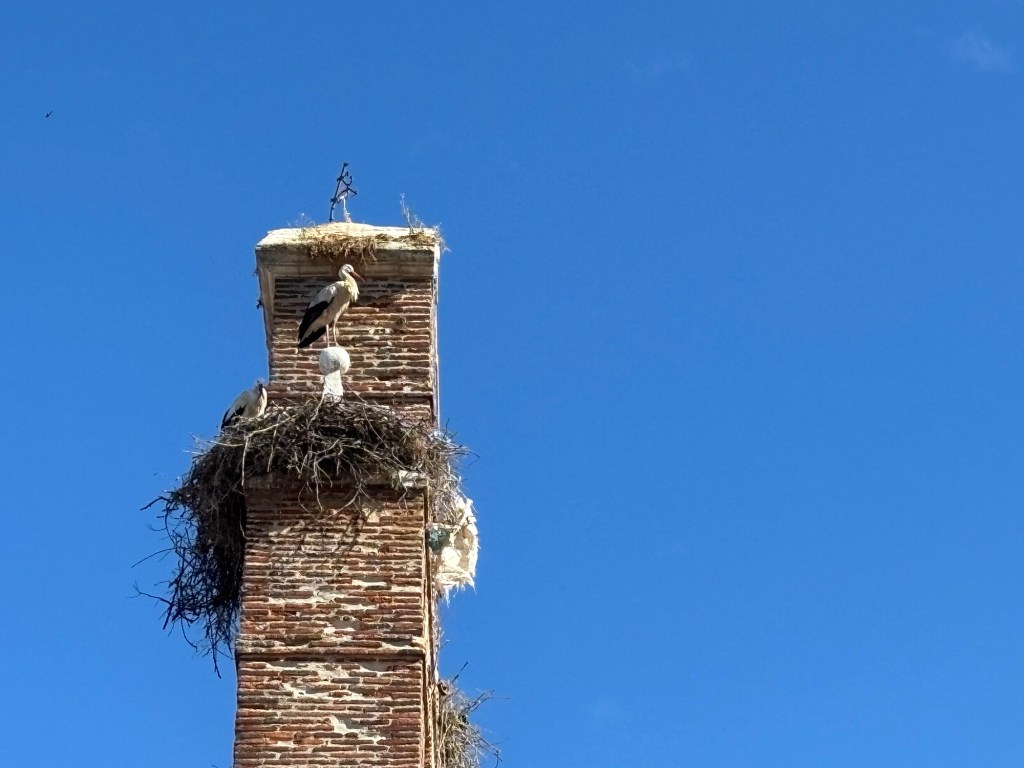
I have various interests. I’m a musician. A linguist. A writer, an occasional poet and a Hispanist. A mimic. A Catholic. But before all of these things, I am a naturalist. Before I found my fluency in Spanish and French, I could already understand the calls of every bird in the British Isles and could tell you what most of them meant: warning, alarm, hunger and mating calls. It was, I suppose, the first language I ever learned.
I was just as obsessive with my childhood interest in dinosaurs: I had to know them all. Where they were found, why they were called what they were called. It wasn’t enough to know the famous ones, like the T-Rex and velociraptors – I had to dig deeper. One such precocious example that comes to mind was my decision to bring along a Eustreptospondylus drawing to Show and Tell at primary school. Doubtless an elephant would have sufficed, but why would I ever have settled for something as basic as that?
I still have discarded exercise books that my parents gave me where I logged all the species mentioned in wildlife documentaries. I always put down the title and locations covered, and I sometimes wrote the date, too. Others I used as scrapbooks, taping in feathers and sketching footprints and writing about when and where I found them.
You’d have thought that these might have been the early indicators of a scientist. Certainly, I wanted nothing more than to be a palaeontologist when I was a kid (which can be gently excused by the fact that the BBC’s peerless Walking with Dinosaurs documentary series came out just in time to capitalise on my five-year-old dinosaur obsession.
When I was a little older, I genuinely considered a career in conservation. I entertained the idea of a degree in Ornithology, or something similar, to allow me to put my fiendishly good memory for birds and their calls to use.
And then, suddenly, that dream died.
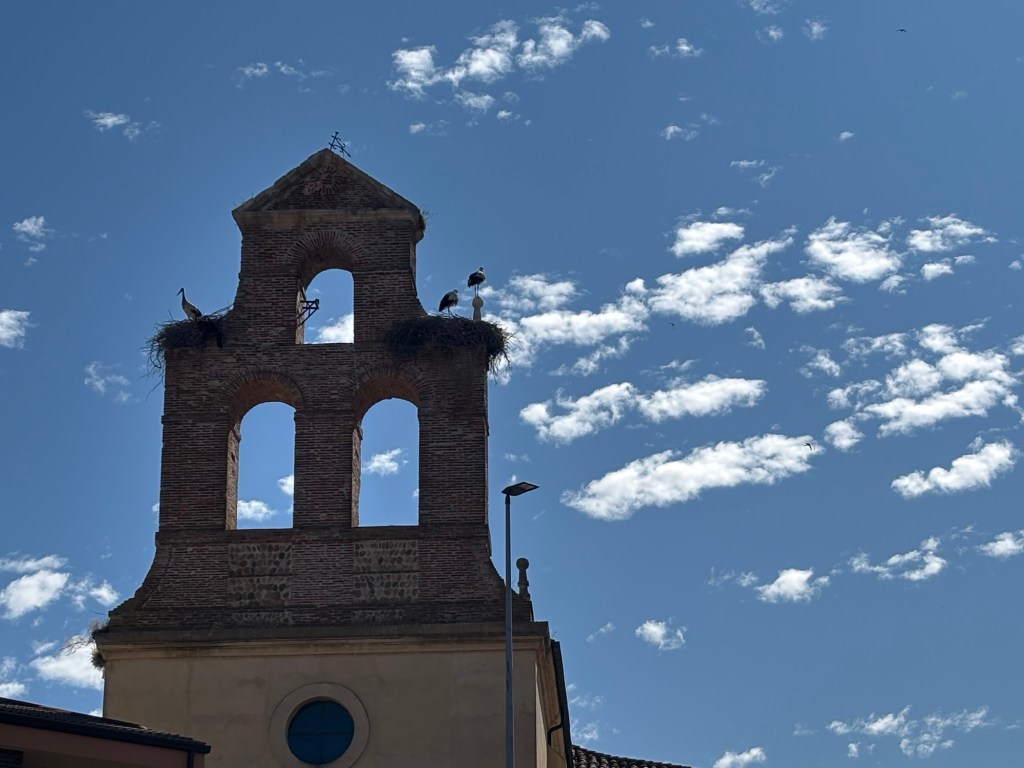
It was probably the maths that killed it. All the natural science degrees I explored required a basic level of mathematical competence and at the time I was struggling to scrape even a passing grade at GCSE. Chemistry, too – a lot of Zoology degrees suggested chemistry as an A Level, and chemistry was far too mathematical for me. Without maths, my conservation aspirations were dead in the water. That was that.
But there was another factor that pushed an old dream out of the nest: the slow decay of a child’s interest as the subject closest to his heart never even materialised in the subject that should have concerned it most intimately.
My memories of Biology center on two things: plant cells and sourdough bread. I was so excited when food chains and food webs came up, until I realised that, within the British curriculum, that was the one and only time that animals would be mentioned. Everything else was so cold, so clinical. Palisade walls and mytochondria. Genomes and inheritance, though usually in plants. The fact that I knew the names of every animal and bird in the British Isles (and most of Europe, for that matter) gave me no advantage whatsoever.
My school was a specialist science school. Our Biology department was doing really exciting things with MS research, and it was one of my Biology teachers who was instrumental in sending me out to Uganda on my first ever teaching post. But somewhere along the way, my aspirations as a conservationist were slowly choked by the strangling vines of the British science curriculum. Zoology, palaeontology, anthropology, ornithology and even primatology were all areas I was desperate to explore, but as the years went by and Biology concerned itself less and less with the natural world and more and more with the minutiae of bacteria and cell structure, the less I cared for it.
It must have been around then that I first entertained the idea of becoming a teacher – once I realised I would never be good enough at two of my weakest subjects to survive to the point when Biology became Zoology. Fifteen years old and already carrying the shards of a shattered dream.
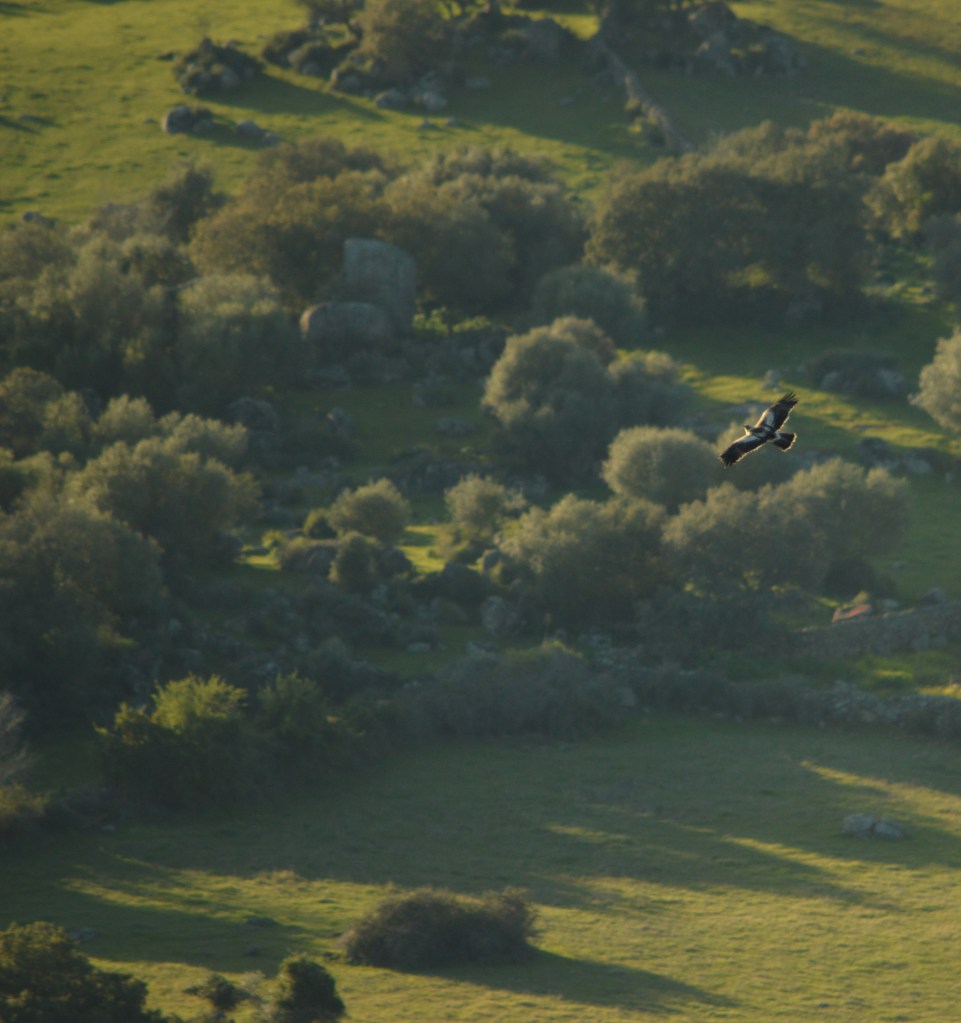
One way or another, I think I realised early on that there was little that a Zoology degree could teach me that I truly desired. I didn’t need to pursue a career in science to justify my greatest love. Knowing the names of every animal and bird gave me a sort of spiritual connection with each and every one of them – no scientific research could work a greater magic than that. Still, it’s interesting to think where my life could have gone if I’d really committed to that path.
Instead, here I am, gone thirty, walking the Camino with a head that twists so quickly when I see the silhouette of a kite or vulture that it’s a miracle I haven’t twisted my neck yet.
It’s hard to say what my experience would be like if I walked all the way to the end of the road with these wonderful people. I will never know, because I have made my choice. And I know it is the right choice. It will take me up into the mountains and back into the natural world, where I am and have always been at my happiest.
Here’s to that – to good health and happiness, and a significantly harder road ahead! BB x

 The Book of Barnabas